
R E V I E W
Open Access
A review of the foot function index and the foot
function index
–
revised
Elly Budiman-Mak
1,2*, Kendon J Conrad
3, Jessica Mazza
4and Rodney M Stuck
5,6Abstract
Background:
The Foot Function Index (FFI) is a self-report, foot-specific instrument measuring pain and disability
and has been widely used to measure foot health for over twenty years. A revised FFI (FFI-R) was developed in
response to criticism of the FFI. The purpose of this review was to assess the uses of FFI and FFI-R as were reported
in medical and surgical literature and address the suggestions found in the literature to improve the metrics of FFI-R.
Methods:
A systematic literature search of PubMed/Medline and Embase databases from October 1991 through
December 2010 comprised the main sources of literature. To enrich the bibliography, the search was extended to
BioMedLib and Scopus search engines and manual search methods. Search terms included FFI, FFI scores, FFI-R.
Requirements included abstracts/full length articles, English-language publications, and articles containing the term
"foot complaints/problems." Articles selected were scrutinized; EBM abstracted data from literature and collected into
tables designed for this review. EBM analyzed tables, KJC, JM, RMS reviewed and confirmed table contents. KJC and
JM reanalyzed the original database of FFI-R to improve metrics.
Results:
Seventy-eight articles qualified for this review, abstracts were compiled into 12 tables. FFI and FFI-R were
used in studies of foot and ankle disorders in 4700 people worldwide. FFI Full scale or the Subscales and FFI-R were
used as outcome measures in various studies; new instruments were developed based on FFI subscales. FFI Full scale
was adapted/translated into other cultures. FFI and FFI-R psychometric properties are reported in this review.
Reanalysis of FFI-R subscales' confirmed unidimensionality, and the FFI-R questionnaires' response categories were
edited into four responses for ease of use.
Conclusion:
This review was limited to articles published in English in the past twenty years. FFI is used extensively
worldwide; this instrument pioneered a quantifiable measure of foot health, and thus has shifted the paradigm of
outcome measure to subjective, patient-centered, valid, reliable and responsive hard data endpoints. Edited FFI-R
into four response categories will enhance its user friendliness for measuring foot health.
Keywords:
FFI, FFI-R, FFI adaptation/translation, FFI scores, Foot health measures
Background
Foot problems commonly arise during our daily living
activities [1,2]. The prevalence of foot problems in
gen-eral ranges between 10% and 24% [3]. Their prevalence
is higher among older individuals and in chronic
rheumatoid arthritis (RA), gout, and diabetes mellitus
with peripheral neuropathy [4]. Foot pain and disability
can affect workers
’
productivity, work absenteeism, and
other issues [5,6]. Because pain and disability are
sub-jective complaints, they are difficult to quantify without
a valid patient report of the degree to which an
individ-ual is experiencing foot pain. Without a valid measure,
problems arise in documenting foot health status,
track-ing the progression of diseases, and establishtrack-ing the
effi-cacy of treatment, including assessment of treatment
satisfaction and of health related quality of life from a
personal perspective.
In 1991, the Foot Function Index (FFI) was developed as
a self-reporting measure that assesses multiple dimensions
of foot function on the basis of patient-centered values.
The FFI consists of 23 items divided into 3 subscales that
* Correspondence:[email protected]1
Center for Management of Complex Chronic Care, Staff Physician, Medical Service, Hines, VA Hospital, 5000 South 5th Ave, Hines, IL 60141-3030, USA
2
Department of Medicine Loyola University Stritch School of Medicine, Loyola University of Chicago, Maywood, IL 60513, USA
Full list of author information is available at the end of the article
quantify the impact of foot pathology on pain, disability,
and activity limitation in patients with RA [7]. The FFI
was developed using the classical test theory (CTT) [8]
method. It has been found to have good reliability and
val-idity and has had wide appeal to clinicians and research
scientists alike [3,9,10]. In the past 20 years, the FFI has
been widely used by clinicians and investigators to measure
pain and disability in various foot and ankle disorders and
its use has expanded to involve children, adults, and older
individuals. Furthermore, the FFI has been widely used in
the study of various pathologies and treatments pertaining
to foot and ankle problems such as congenital, acute and
chronic diseases, injuries, and surgical corrections.
In 2006, the FFI was revised (the FFI-R) on the basis
of criticisms from researchers and clinicians; items were
added, including a scale to measure psychosocial activities
and quality of life related to foot health [11].
A literature review was conducted to develop a
theoret-ical model of foot functioning [12], based on the World
Health Organization International Classification of
Func-tioning (ICF) model. The FFI-R items were developed from
the original 23 FFI items, and more items were added as a
result of the literature review. As a result of clinicians and
patients
’
input, the final draft of the FFI-R, which consisted
of 4 subscales and 68 items, was completed. The results
were the FFI-R long form (FFI-R L; 4 subscales and 68
items) and the FFI-R short form (FFI-R S; 34 items) as total
foot function assessment instruments. Both the 68-item
and 34-item measures demonstrated good psychometric
properties.
The FFI-R in its current form is one of the most
comprehensive instruments available. However, in a
review article [13], questions were raised about the
unidimensionality and independence of FFI-R
sub-scales, and we did not include such reports in our
previous article about the FFI-R [11]. We carefully
reviewed the comments about the FFI-R and assessed
the unidimensionality of the subscales by use of the
Rasch model. On the basis of these critiques, the FFI-R
required a periodic revision of its metrics to ensure it
repre-sented patient-centered health values and state-of-the-art
methodology.
Our aim is to assess the contribution of the FFI and
FFI-R to the measurement of foot health in the fields of
rheumatology, podiatry, and orthopedic medicine. This
assessment should enable us to reflect on and improve
the quality of the measure. Therefore, we conducted a
systematic review of literature pertaining to the FFI and
FFI-R that has been published in the English language
from October 1991 through December 2010. The
objec-tives were to: (i), Assess the prevalence of uses of the
FFI and FFI-R in clinical studies of foot and ankle
disor-ders; (ii), Describe the utility and clinimetric properties
of the FFI and FFI-R as they have been applied in
vari-ous clinical and research settings; (iii), Enumerate the
strengths and weaknesses of the FFI and FFI-R as reported
in the literature; (iv), Address the suggestions found in the
literature for improving the FFI-R metrics.
Methods for systematic search of the literature
This study was about a systematic review of articles in
which the FFI and/or FFI-R were used as measures of a
variety of foot and ankle problems. Relevant studies were
identified by English language publication searches of the
electronic bibliographic databases Pub Med/MEDLINE,
EMBASE, BioMedLib and Scopus from October 1991
through December 2010.
Search terms and eligibility criteria
The key words:
foot function index, FFI scores, foot
func-tion index scores,
and
foot function index revised (FFI-R).
were used as search terms and was applied to all
data-bases.
FFI instruments/measure
and/or
FFI-R
instru-ments/measure
had to be mentioned in the abstracts
and in the full articles to be collected for in-depth
scru-tiny. Articles fulfilling the inclusion criteria were selected
for the review. The article criteria included: (i) the words
foot function index/FFI
or
revised foot function index/FFI-R
in its reports/measures; (ii) full-length articles; (iii) written
in English and published from October 1991 through
December 2010; (iv) the study population described needed
to have foot complaint(s)/problems; and (v) regardless of
the country conducting the study, the full-length article
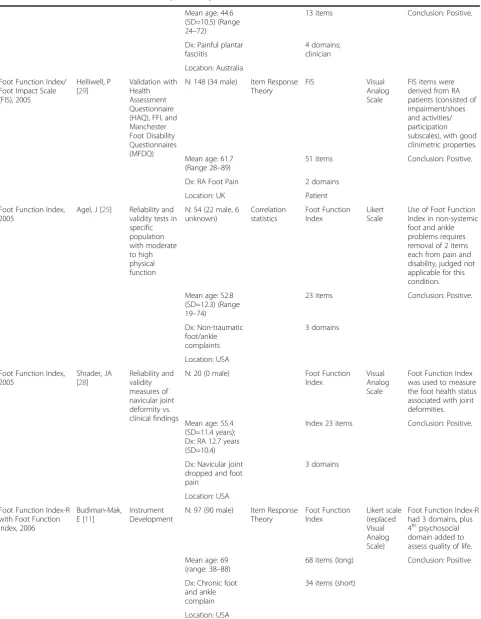
Table 1 Study type, sample size and sample characteristics
Study type Number Sample size (N) N Male N Female Age (SD)
Measurement 17 1236 458 763 54.9 (6.4)
Surgery 30 1512 648 857 45.1 (15.7)
Orthoses 19 1101 493 521 43.0 (15)
Other intervention 4 170 55 115 47.6 (6.1)
Observational 8 695 260 432 52.2 (27.9)
Total 78 4714 1914* (41%) 2688* (57%) 48.58 (4.9)
must have been published in English or in a foreign
lan-guage with the abstract in English.
Objectives with method of data collection and
organization of tables
Selected articles that fulfilled the criteria were
independ-ently reviewed and collected by the authors to address
the objectives and organize collected data into several
tables.
Objective 1. Uses of the FFI and FFI-R
We created four tables to address the first objective of
de-scribing the measurement
’
s uses (Tables 1, 2, 3, and 4).
Objective 2. Utility and clinimetric properties
We designed a data-collection form to address the
sec-ond objective. This form was assessed in a pilot study by
collecting data from ten articles out of the collection of
qualified articles; it was revised before being used in its
current format. The variables used in this
data-collection form were: (i) the instrument and year the
art-icle was published; (ii) the first author
’
s name; (iii) the
objectives of the study; (iv) the population
characteris-tics, sample size, and diagnosis; (v) psychometric analysis
(reliability and validity, etc.); (vi) items/domains/subscales
of the FFI or FFI-R used in the study; (vii) response type;
and, (viii) a short summary evaluation of each study.
There-fore, this data form recorded the analytic statements
extracted from each article, and 6 tables were created
(Tables 5, 6, 7, 8, 9, and 10). Data were arranged in each
table in chronological order.
Objective 3. Enumerate the strengths and weaknesses of
the FFI and FFI-R as reported in the literature
This was a qualitative summary of the results as found
in Table 5 and Table 6.
Objective 4. Improving the FFI-R metrics
Table 11 summarizes results of the Rasch analysis. This
was a reanalysis of the FFI-R database collected in 2002
with the aim of improving FFI-R metrics.
Descriptive analysis methods
Quantitative data were reported using simple statistics
expressed as the sum, means, and standard deviations
for continuous variables and as frequencies for
categor-ical data. (Tables 1, 2, 3, and 4) Analytic statements and
evaluations/comments for each article collected are
summarized in Table 12. This depicts the summary of
Table 2 FFI uses across studies in foot and ankle disorders including diagnoses
Diagnosis Measure Surgery Orthosis Observational Other Total
Rheumatoid arthritis 6 5 7 3 21
Osteoarthritis 2 1 1 4
Juvenile arthritis 1 1
Hallux valgus 2 2 1 5
Hallux rigidus 3 3
Plantar fasciitis/heel pain 2 2 4 3 11
Metatarso phalangeal arthritis 2 2 4
Chronic foot pain 3 2 1 6
Foot and ankle fracture 1 5 1** 1 8
Posterior tibial tendon pain 1 1 2
Bone graft 1 1
Ankle deformity 2 2
Flat foot 1 1
Cavovarus Charcot-Marie-Tooth 2 2
Osteo-chondral lesion of talus-tibia 1 1
Failed total ankle arthrodesis 1 1
Club foot 1 1
Diabetic neuropathy 1 1
Mid foot pain 1 2 3
Paget disease 1 1
Total 17 31* 19 8 4 79*
FFI and FFI-R uses as illustrated in Objective 2, and in
six tables (Tables 5, 6, 7, 8, 9 and 10).
Rasch analysis method
To address specific critiques of the FFI-R found in the
literature, the unidimensionality of the FFI-R and its
subscales were evaluated against the Rasch model. The
statistical package Winsteps version 3.72.3 [14] was used
to conduct a principal components analysis (PCA) of the
standardized residuals to determine whether substantial
subdimensions existed within the items [15-17] and
whether the FFI-R L, the FFI-R S, and the 5 subscales
were unidimensional. The criterion used to define
unidi-mensionality was a large variance (> 40%) explained by
the measurement dimension [18]. Unexplained variance
in the first contrast of the data should be small and fall
under the criterion of 15% for a rival factor. We chose a
ratio of variance of at least 3 to 1 in the first principal
component [19], compared to the variance of the first
component of residuals.
Rasch reliability statistics
Reliability was estimated with Cronbach
’
s Alpha and
Rasch person reliability statistics. Both indices reflect the
proportion of variance of the person scores or measures
to total variance (i.e., including measurement error).
Un-like Cronbach
’
s Alpha, Rasch person reliability is based
on the estimated locations of persons along the
meas-urement continuum, excluding those with measures
reflecting extreme (zero or perfect) scores and including
cases with missing data. For both indices, our criterion
for acceptability was .80.
Table 3 FFI Uses across studies conducted internationally
Country Measure Surgery Orthosis Observational Other Total
Australia 2 1 1 4
Austria 2 2
Brazil 2 2
Canada 2 1 3
Czech Rep. 2 2
France 1 1
Germany 1 1 2 1 5
Japan 1 1
So. Korea 1 1
Netherlands 2 7 9
New Zealand 1 1
Slovenia 1 1 2
Sweden 1 1
Taiwan 1 1
Turkey 1 2 3
UK 2 1 3 2 8
USA 8 12 9 3 32
Total 17 31 18 8 4 78
Table 4 FFI Full scale and subscale used across studies
FFI Measure Surgery Orthosis Observational Other Total
FFI Full scale (3 domains) 10 21 14 6 51
FFI Pain scale 2 1 2 2 3 10
FFI Disability scale 1 1
FFI Pain and Disability scale 3 3 1 1 8
FFI - 5pts 1 4 5
FFI-R Long form 1 2 3
Table 5 Studies of foot function measures
Instrument 1stAuthor Objective Population (N, Sex, Age, Dx, location)
Psychometric analysis
Items/domains/ subscales/item sources
Response type
Summary evaluation
Foot Function Index, 1991
Budiman-Mak, E [7]
Instrument Development
N: 87 (78 male) Classical Test Theory
23 items Visual Analog Scale
Good clinimetrics, applicable to various age groups and varieties of foot and ankle pathologies.
Mean age: 61 3 domains Conclusion: Positive
(Range: 24–79) Pain, difficulty and activity limitation subscales clinician
Dx: RA foot
Location: USA
Foot Function Index Pain (left/right), 1996
Saag, KG [23] Foot Function Index pain scale; Compare right/left foot
N: 63 (13 male) Classical Test Theory
9 items Visual Analog Scale
This measure of right vs. left side of the foot showed good clinimetric properties
Mean age: 57.5 (SD=11.6)
FFI pain subscale Conclusion: Positive.
Dx: RA clinician
Location: USA
Foot Function Index/ Foot Health Status Questionnaires (FHSQ), 1998
Bennet PJ [9] Development of FHSQ, a new measure
N: 111 (25 male) Classical Test Theory
13 items Likert FHSQ has good clinimetrics.
Mean age: 54 (SD=20)
4 domains clinician
Conclusion: Positive.
Dx: Osteoarthritis hallux valgus
Location: Australia
Foot Function Index/ Ankle Osteoartitis Score (AOS), 1998
Domsic, RT [24]
AOS consisted of Foot Function Index pain and disability scales
N: 36 (12 male) Classical Test Theory
18 items Visual Analog Scale
AOS had good clinimetrics.
Mean age: 52.7 (Range: 16–79)
2 Domains clinician
Conclusion: Positive.
Dx: Ankle osteo-arthritis
Location: USA
Foot Function Index/ Foot Function Index-5pts in Dutch, 2002
Kuyvenhoven, MM [3]
Foot Function Index in Dutch
N: 206 (78 male) Classical Test Theory
15 items 5-point Likert
Adaptation of Foot Function Index to 5 point Likert, used as a generic measure in foot and ankle problems.
Mean age: 61 (SD=10)
2 domains: pain & disability clinician
Conclusion: Positive.
Dx: OA with limited mobility and pain
Location: Netherlands
Foot Function Index/ Foot Health Status Questionnaire (FHSQ), 2002
Landorf, KB [10]
Validation of FHSQ to Foot Function Index
N: 17 (4 male) Non-parametric statistics
FHSQ 5-point
Likert
Table 5 Studies of foot function measures
(Continued)
Mean age: 44.6 (SD=10.5) (Range 24–72)
13 items Conclusion: Positive.
Dx: Painful plantar fasciitis
4 domains; clinician
Location: Australia
Foot Function Index/ Foot Impact Scale (FIS), 2005
Helliwell, P [29]
Validation with Health Assessment Questionnaire (HAQ), FFI, and Manchester Foot Disability Questionnaires (MFDQ)
N: 148 (34 male) Item Response Theory
FIS Visual
Analog Scale
FIS items were derived from RA patients (consisted of impairment/shoes and activities/ participation subscales), with good clinimetric properties.
Mean age: 61.7 (Range 28–89)
51 items Conclusion: Positive.
Dx: RA Foot Pain 2 domains
Location: UK Patient
Foot Function Index, 2005
Agel, J [25] Reliability and validity tests in specific population with moderate to high physical function
N: 54 (22 male, 6 unknown)
Correlation statistics
Foot Function Index
Likert Scale
Use of Foot Function Index in non-systemic foot and ankle problems requires removal of 2 items each from pain and disability, judged not applicable for this condition.
Mean age: 52.8 (SD=12.3) (Range 19–74)
23 items Conclusion: Positive.
Dx: Non-traumatic foot/ankle complaints
3 domains
Location: USA
Foot Function Index, 2005
Shrader, JA [28]
Reliability and validity measures of navicular joint deformity vs. clinical findings
N: 20 (0 male) Foot Function Index
Visual Analog Scale
Foot Function Index was used to measure the foot health status associated with joint deformities.
Mean age: 55.4 (SD=11.4 years); Dx: RA 12.7 years (SD=10.4)
Index 23 items Conclusion: Positive.
Dx: Navicular joint dropped and foot pain
3 domains
Location: USA
Foot Function Index-R with Foot Function Index, 2006
Budiman-Mak, E [11]
Instrument Development
N: 97 (90 male) Item Response Theory
Foot Function Index
Likert scale (replaced Visual Analog Scale)
Foot Function Index-R had 3 domains, plus 4thpsychosocial
domain added to assess quality of life.
Mean age: 69 (range: 38–88)
68 items (long) Conclusion: Positive
Dx: Chronic foot and ankle complain
34 items (short)
Table 5 Studies of foot function measures
(Continued)
Clinicians and patients
Foot Function Index, 2006
Bal, A [26] Comparing Foot Function Index with Health Assessment Questionnaires (HAQ) & SFC
N: 78 (11 male) Correlation statistics
Foot Function Index
Visual Analog Scale
Strong correlations of HAQ and Foot Function Index scores, HR and CV also reflected in Foot Function Index scores and were highly correlated with Rand 36 items Short Form Health Survey (SF36).
Mean age: 50.65 (SD=10.7); RA duration 13.96 (SD=8.09)
23 items Conclusion: Positive
Location: Turkey 3 Domains
Foot Function Index & SF36, 2006
SooHoo, N [27]
Validity test in foot health and general physical health
N:69 (25 male) Correlation statistics
Foot Function Index
Visual Analog Scale
The 3 domains of Foot Function Index demonstrated moderate-high correlation with SF36, thus it was reasonable to use Foot Function Index to monitor outcomes.
Mean Age: 46 (Range 16–82)
23 items Conclusion: Positive.
Dx: Foot & Ankle disorder
3 domains
Location: USA
Foot Function Index & American Orthopedic Foot and Ankle Society (AOFAS) hallux module, 2006
Baumhauer, JF [32]
Reliability and validity of test, compared with Foot Function Index
N:11 (1 male) Correlation statistics
AOFAS hallux & lesser toes module
Numeric rating scale
Only AOFAS hallux for pain correlated with Foot Function Index pain scale.
Mean age: 54 (Range: 40–72)
Conclusion: Positive.
Dx: RA without foot complaints
Location: USA
Foot Function Index, 2006
Van der Leeden, M [30]
Measure forefoot damage
N:62 (15 male) Correlation Statistics
Validation with Western Ontario Mac Masters Universities Osteoarthritis Index (WOMAC) and Disease Activity in 44 RA joints (DAS-44)
Numeric rating scale
Foot Function Index function subscale correlated with WOMAC and DAS-44. Foot Function Index pain score correlated with forefoot pain. Foot Function Index function score correlated with hind foot problem.
Mean age: 55.7 (SD=13.11)
Conclusion: Positive.
Table 5 Studies of foot function measures
(Continued)
Location: Netherlands
Foot Function Index, American Orthopedic Foot and Ankle Society (AOFAS) clinical rating component, 2007
Ibrahim, T [33] Testing the criterion validity of clinical rating components of AOFAS with Foot Function Index
N:45 (11 male) Correlation Statistics
Validity of AOFAS scale
Numeric rating scale
The scores of AOFAS clinical ratings and Foot Function Index were moderately correlated based on 41% response rate.
Mean age: 55 years (range=15-81)
Conclusion: Positive.
Dx: Hallux deformities
Location: UK
Foot Function Index,/ Foot Function Index Chinese (Taiwan), 2008
WU, SH [36] Reliability and validity measure of PCS of SF-26, Taiwan version;
N:50 (planta fasciitis); mean age 46.9 (SD=10.6)
Cross-cultural adaptation
Foot Function Index
Visual Analog Scale
Foot Function Index Taiwan Chinese consisted of 21 items. Could measure non-traumatic and traumatic foot and ankle problems. The floor score was 10%, in sample with fractures.
N:29 (ankle/foot fracture); mean age 37.2 (SD=14.8) 25 male
21 items Conclusion: Positive.
Location: Taiwan 3 domains
The order of items was changed.
Clinician and patient
Foot Function Index, Foot Function Index-D, 2008
Naal, FD [34] Foot Function Index-D,
N:53 (14 male) Cross-cultural adaptation
Foot Function Index-D
Numeric rating scale
Foot Function Index underwent German translation. Foot Function Index-D added 3 new items and revised 8 items of the Foot Function Index and had demonstrated good clinimetrics.
Age: 57.2 (SD=13.7) Range (18=77)
Index-D 18 items (pain & disability subscales)
Conclusion: Positive.
Dx: Foot complaints
2 domains
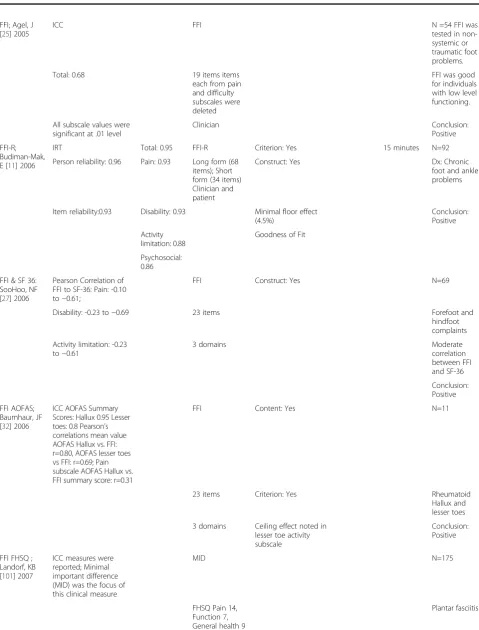
Table 6 Clinimetric properties of patient-reported foot function measures
Instrument; author year
Reliability e.g., IRT, CTT ICC, kappa,
test-retest
Cronbach’s alpha
Instrument /Domain N items/ Item generated sources
Validity (Face, content, criterion or construct) and other measures
Response to change
Completion time
Sample N diagnoses conclusion
FFI; Budiman Mak, E [7] 1991
CTT Total: 0.96 FFI Face: yes Yes 10 minutes N=87
ICC total: 0.87 Pain: 0.70 23 items Criterion: r=0.52 FFI total scores vs 50 ft walked
Early rheumatoid arthritis
ICC (pain): 0.70 Disability: 0.93 Activity
Clinician and patient
Construct: Yes Conclusion:
Positive
ICC (disability): 0.84 Limitation 0.73
ICC (activity limitation): 0.81
FFI pain subscale (R/L foot); Saag, KG [23] 1996
CTT 0.94-0.96 FFI side-to-side; Clinician and patient
Face: Yes N=63
Rheumatoid foot pain
ICC: 0.79-0.89 Content: Yes Conclusion:
Positive
FFI and AOS; Domsic, RT [24]1998
CTT AOS Criterion: AOS vs
WOMAC disability
N=562
ICC: 0.97 18 items;
Clinician
r=0.65 pain r=0.79 Dx: Ankle
Osteoarthritis
Pain: 0.95 Construct: Yes Conclusion:
Positive
Disability: 0.94
FFI & FHSQ. Bennet, PJ [9] 1998
CTT 0.85-0.88 FHSQ Criterion: Yes 3-5 minutes N=255 Dx:
Hallux valgus osteoarthritis
ICC Pain: 0.88 13 items Construct: Yes,
discriminant validity; Goodness of Fit
Conclusion: Positive
0.74-0.92 Function: 0.85 Clinician and Patient
pain 0.86 Footwear: 0.85
function 0.92 Foothealth: 0.87
footwear 0.74
foothealth 0.78
FFI (5 pt); Kuyvenhoven, MM [3] 2002
CTT 0.88-0.94 FFI (5 pt) Concurrent validity: Yes Yes N=206
ICC 0.64-0.79 Total: 0.93 15 items Dx:
Non-traumatic foot complaint
Total: 0.76 Pain: 0.88 Clinician Conclusion:
Positive
Pain: 0.64 Disability: 0.92
Disability: 0.79
FFI & FIS; Helliwell,P [29] 2005
IRT Not performed FIS Face: Yes N=192
ICC 51 items Content: Yes Rheumatoid
arthritis
Impairment/shoes: 0.84 Activities/participation: 0/96
2 subscales Construct: Yes Conclusion:
Positive
clinician and patient
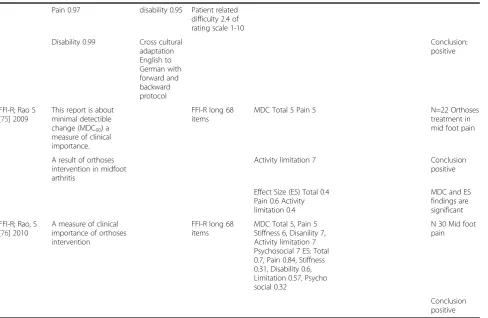
Table 6 Clinimetric properties of patient-reported foot function measures
(Continued)
FFI; Agel, J [25] 2005
ICC FFI N =54 FFI was
tested in non-systemic or traumatic foot problems.
Total: 0.68 19 items items
each from pain and difficulty subscales were deleted
FFI was good for individuals with low level functioning.
All subscale values were significant at .01 level
Clinician Conclusion:
Positive
FFI-R; Budiman-Mak, E [11] 2006
IRT Total: 0.95 FFI-R Criterion: Yes 15 minutes N=92
Person reliability: 0.96 Pain: 0.93 Long form (68 items); Short form (34 items) Clinician and patient
Construct: Yes Dx: Chronic
foot and ankle problems
Item reliability:0.93 Disability: 0.93 Minimal floor effect (4.5%)
Conclusion: Positive
Activity limitation: 0.88
Goodness of Fit
Psychosocial: 0.86
FFI & SF 36: SooHoo, NF [27] 2006
Pearson Correlation of FFI to SF-36: Pain: -0.10 to−0.61;
FFI Construct: Yes N=69
Disability: -0.23 to−0.69 23 items Forefoot and
hindfoot complaints
Activity limitation: -0.23 to−0.61
3 domains Moderate
correlation between FFI and SF-36
Conclusion: Positive
FFI AOFAS; Baumhaur, JF [32] 2006
ICC AOFAS Summary Scores: Hallux 0.95 Lesser toes: 0.8 Pearson’s correlations mean value AOFAS Hallux vs. FFI: r=0.80, AOFAS lesser toes vs FFI: r=0.69; Pain subscale AOFAS Hallux vs. FFI summary score: r=0.31
FFI Content: Yes N=11
23 items Criterion: Yes Rheumatoid
Hallux and lesser toes
3 domains Ceiling effect noted in lesser toe activity subscale
Conclusion: Positive
FFI FHSQ ; Landorf, KB [101] 2007
ICC measures were reported; Minimal important difference (MID) was the focus of this clinical measure
MID N=175
FHSQ Pain 14, Function 7, General health 9
Table 6 Clinimetric properties of patient-reported foot function measures
(Continued)
FFI Pain 12, Function 7, Total 7
Conclusion: Positive
VAS
Pain 9
FFI, AOFAS; Ibrahim, T [33] 2007
Test-retest AOFAS; pre and post operation was no different; 41% response rate. Pearson correlation with FFI was
−0.68 for all the subjective components of AOFAS. Hallux module subjective component was−0.46
AOFAS subjective component; Items dependent on modules
Criterion: yes Yes N=45 Foot
and ankle problems
Clinician Construct: Yes AOFAS
reliability and validity was tested.
Discriminant and predictive validity
Conclusion: positive with caution due to several limitations as mentioned in the paper.
FFI, FFI Taiwan Chinese; Wu, SH [36] 2008
ICC CA Criterion: Yes Floor effect
10%
N=79
Total 0.82 Total 0.94 Traumatic
(fracture) non-traumatic plantar fasciitis foot problems
Pain 0.74 Pain 0.91 Conclusion:
positive with caution, due to limitations (see article)
Disability 0.76 activity limitation 0.88
Disability 0.95
Activity limitation 0.75
Clinician and patients
Pearson’s correlations
FFI total with SF 36 r=−0.59 plan- tar fasciitis r=
−0.61 ankle fracture
FFI, FFI-German Naal FD [34] 2008
ICC CA total 0.97 FFI German 18 items pain and disability subscales 3 items were added to the instrument by patients
Construct yes
Convergent validity FFI-G vs PCS of SF-36, VAS pain, disability UCLA activity scale
Yes 8.3 min N= 53
Total 0.98 pain 0.90 Clinician and patients
Response category analysis
One requirement of the Rasch model is monotonicity: the
requirement that, as person ability increases, the item step
response function increases monotonically [20]. This means
that choosing one categorical response over the prior
—
for
example, moving from selecting
“
2 = A little of the time,
”
to selecting,
“
3 = Most of the time,
”—
increases with person
ability. The proper functioning of the rating scale is
exam-ined using fit statistics, where: (i) outfit mean squares
should be less than 2.0, (ii) average measures advance
monotonically with each category, and (iii) step calibrations
increase monotonically [21,22].
Results
Review of the literature
Articles were obtained by using the search method defined
in the Methods section; the search results included 752
arti-cles from PubMed/MEDLINE and 640 artiarti-cles from
Embase. Further screening and selection procedures, as
detailed in Figure 1, yielded 182 full-text articles. Of these,
53 articles were qualified for review. Twenty-five more
arti-cles were obtained from the search engine BioMedLib and
from manual searches. A total of 78 articles qualified for this
review, summarized and categorized into several tables,
Objective 1: Assessment of the prevalence of the FFI or
FFI-R usage, population characteristics, and study
locations
Among the 78 studies, we identified 4714 study participants
for whom the FFI or FFI-R instrument had been used to
measure foot health. This sample consisted of 1914 (41%)
male participants and 2688 (57%) female participants, with
a mean age of 48.58 years (SD, 4.9 years). There was a
dis-crepancy of 2% between the sums of male and female
parti-cipants, because gender was not reported in three studies
(Table 1). Most of the participants were individuals and
young adults, and a few studies involved juvenile
partici-pants. The types of studies included measurement practice
studies (n=17), surgery studies (n=30), studies of orthotics
(n=19) or other clinical interventions (n=4), and
observa-tional studies (n=8). We identified 20 different diagnoses of
foot and ankle pathology that were measured by FFI and
FFI-R (Table 2). Among them, RA and plantar fasciitis were
the two most common diagnoses and were also noted to be
the most painful and disabling foot conditions. These
stud-ies were conducted by investigators in 17 countrstud-ies; the
United States, the Netherlands, and the United Kingdom
were the three most frequent users of the FFI and FFI-R in
studies involving foot and ankle problems (Table 3).
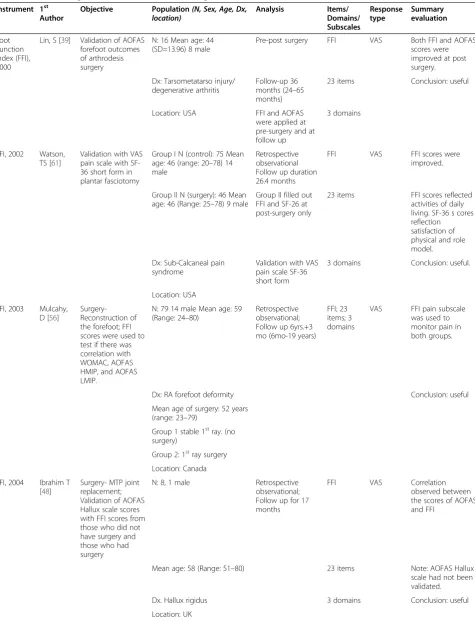
Table 6 Clinimetric properties of patient-reported foot function measures
(Continued)
Pain 0.97 disability 0.95 Patient related difficulty 2.4 of rating scale 1-10
Disability 0.99 Cross cultural adaptation English to German with forward and backward protocol
Conclusion: positive
FFI-R; Rao S [75] 2009
This report is about minimal detectible change (MDC90) a
measure of clinical importance.
FFI-R long 68 items
MDC Total 5 Pain 5 N=22 Orthoses
treatment in mid foot pain
A result of orthoses intervention in midfoot arthritis
Activity limitation 7 Conclusion
positive
Effect Size (ES) Total 0.4 Pain 0.6 Activity limitation 0.4
MDC and ES findings are significant
FFI-R; Rao, S [76] 2010
A measure of clinical importance of orthoses intervention
FFI-R long 68 items
MDC Total 5, Pain 5 Stiffness 6, Disanility 7, Activity limitation 7 Psychosocial 7 ES: Total 0.7, Pain 0.84, Stiffness 0.31, Disability 0.6, Limitation 0.57, Psycho social 0.32
N 30 Mid foot pain
Table 7 Studies using foot function measures in surgical interventions
Instrument 1st Author
Objective Population(N, Sex, Age, Dx, location)
Analysis Items/ Domains/ Subscales
Response type
Summary evaluation
Foot Function Index (FFI), 2000
Lin, S [39] Validation of AOFAS forefoot outcomes of arthrodesis surgery
N: 16 Mean age: 44 (SD=13.96) 8 male
Pre-post surgery FFI VAS Both FFI and AOFAS scores were improved at post surgery.
Dx: Tarsometatarso injury/ degenerative arthritis
Follow-up 36 months (24–65 months)
23 items Conclusion: useful
Location: USA FFI and AOFAS were applied at pre-surgery and at follow up
3 domains
FFI, 2002 Watson, TS [61]
Validation with VAS pain scale with SF-36 short form in plantar fasciotomy
Group I N (control): 75 Mean age: 46 (range: 20–78) 14 male
Retrospective observational Follow up duration 26.4 months
FFI VAS FFI scores were improved.
Group II N (surgery): 46 Mean age: 46 (Range: 25–78) 9 male
Group II filled out FFI and SF-26 at post-surgery only
23 items FFI scores reflected activities of daily living. SF-36 s cores reflection satisfaction of physical and role model.
Dx: Sub-Calcaneal pain syndrome
Validation with VAS pain scale SF-36 short form
3 domains Conclusion: useful.
Location: USA
FFI, 2003 Mulcahy, D [56]
Surgery-Reconstruction of the forefoot; FFI scores were used to test if there was correlation with WOMAC, AOFAS HMIP, and AOFAS LMIP.
N: 79 14 male Mean age: 59 (Range: 24–80)
Retrospective observational; Follow up 6yrs.+3 mo (6mo-19 years)
FFI; 23 items; 3 domains
VAS FFI pain subscale was used to monitor pain in both groups.
Dx: RA forefoot deformity Conclusion: useful
Mean age of surgery: 52 years (range: 23–79)
Group 1 stable 1stray. (no surgery)
Group 2: 1stray surgery
Location: Canada
FFI, 2004 Ibrahim T [48]
Surgery- MTP joint replacement; Validation of AOFAS Hallux scale scores with FFI scores from those who did not have surgery and those who had surgery
N: 8, 1 male Retrospective observational; Follow up for 17 months
FFI VAS Correlation observed between the scores of AOFAS and FFI
Mean age: 58 (Range: 51–80) 23 items Note: AOFAS Hallux scale had not been validated.
Dx. Hallux rigidus 3 domains Conclusion: useful
Table 7 Studies using foot function measures in surgical interventions
(Continued)
FFI, 2004 Vallier, HA [52]
Surgery-Open reduction internal fixation; Correlation of FFI and musculoskeletal function assessment (MFA)
N: 100 60 male Retrospective observational
FFI VAS Scores of FFI and MFA were correlated
Mean age: 32.6 (Range: 13–77) Follow up 36 months (12–74 months)
23 items Conclusion: useful
Dx: Talar neck fracture FFI was applied to N=59 at follow-up
3 domains
Location: USA
FFI, 2005 Taranow, WS [49]
Surgery- metalic hemiarthroplasty: Do FFI scores improve at post-operation
N: 28 17 male Retrospective observational case review
FFI VAS FFI scores from pre to post operation showed significant improvement.
Mean age: 52.9 (Range: 38–71) Follow 33.4 months 23 items Conclusion: useful (3–mo-111mo)
Dx: Hallux rigidus 3 domains
Location: USA
FFI, 2005 Grondal, L [40]
Surgery-Athrodesis vs. Mayo resection of MTP; FFI scores as outcomes
N: 31; 26 male RCT not-blinded, ANOVA and multiple comparisons
FFI VAS FFI scores at post-surgery within groups were improved and there no significant differences between the groups.
Mean age: 54 yrs 23 items Conclusion: useful
(Range: 33–77)
Resection N=: 16 3 domains
Fusion N=: 15
Dx: RA painful forefoot deformity
Location: Sweden
FFI, 2005 Daniels, TR [62]
Surgery -Free tibular graft; FFI scores were validated with MODEMS and SF-36 short form
N: 28, 13 male Observational FFI 21 items (2 items about orthoses were not applicable) 3 domains
Likert The scores of FFI, SF-36 and MODEMS were demonstrating similar improved outcomes at post-surgery
Mean age: 52 (Range: 22–76) Follow-up: 36 months (26–52 months)
Conclusion: useful
Dx: Vascularized fibular bone graft
FFI was applied at pre-surgery and at 6 and between 26–54 month post surgery
Location: Canada
FFI, 2005 Lee, S [63] Surgery -Isolated sesamoidectomy; FFI disability sub-scale validated with
N; 32; 8 male Retrospective observational
Table 7 Studies using foot function measures in surgical interventions
(Continued)
VAS pain scale and SF-36 short form
Mean age: 37.2 (Range: 18–65) 62 month 1 domain: disability scale Post-op N=: 20
Dx: Hallux alignment
Location: USA
FFI, 2006 SooHoo, NF [64]
Surgery- Any type of foot and ankle surgery; Validating AOFAS, SF-36 and measuring Standard Response Mean (SRM) and effect size (ES)
N: 25; 6 Male Pre-post surgery FFI was applied at pre-surgery and 6 months post-surgery
FFI VAS Of the instruments used, scores of the pain subscale was the only measure reflecting high SRM (−0.83) and ES (−0.86). Therefore, pain is the most important outcome in studies regarding chronic foot and ankle pain.
Mean age: 40 (Range: 21–69) 23 items Conclusion: useful Dx: Chronic foot and ankle
conditions requiring surgery
3 domains
Location: USA
FFI, 2006 Van der Krans, A [41]
Surgery- Calcaneal Cuboid arthrodesis; Correlation with AOFAS clinical rating index (CRI) of the hind foot
N: 20; 4 Male Pre-post surgery FFI-Dutch 15 items
5-point verbal scale
FFI and CRI scores showed significant improvements
Mean age: 55 (Range: 30–66) Follow-up 25 months (13–39 months)
Pain and function subscales
Conclusion: useful
Dx: Flat foot FFI was applied at pre-surgery and ad follow-up
Location: Netherlands
FFI, 2006 Harris, M [53]
Surgery- High impact fracture repair; Correlation with
Musculoskeletal function assessment (MFA)
N: 76; 45 Male Pre-post surgery follow up 26 months (24–38 months). FFI was applied at pre-surgery, 6 and 12 weeks and at 6 months by mail, telephone, and was self-administered.
FFI VAS High FFI score occurred in those with the worse fractures and external fixation. This is also reflected in MFA scores.
Mean age: 45 (Range: 17–81) 23 items Conclusion: useful Dx: distal tibial plafond
fracture
3 domains
Location: USA
FFI, 2006 Stegman M [42]
Surgery-Triple arthrodesis; Correlation with AOFAS hind foot scores
N: 81; 38 Male Pre-post surgery FFI Dutch Likert FFI-5pt and AOFAS hind foot scores improved 89%. However, patient did not perceive the benefit of the procedure.
Table 7 Studies using foot function measures in surgical interventions
(Continued)
FFI applied at pre-surgery and 1 yr (1–4) post surgery
Dx: Hind foot disorders 2 domains
Location: Netherlands
FFI, 2007 Jung, HG [45]
Surgery-Fusion of tarso metatarso-joint; Correlation with SF-36, AOFAS
N: 67; 12 Male Retrospective observational
FFI VAS Scores of the FFI, SF-36 AOFAS and VAS pain scale were markedly improved at post-surgery
Mean age: 60.2 (Range: 35–84) Follow for 40.6 months
23 items Conclusion: useful
Dx: Non-traumatic osteoarthritis of the tarso-meta-tarso joints
FFI applied at post-surgery
3 domains
Location: USA
FFI, 2008 Vesely, R [43]
Surgery–Tibio Calcaneal arthrodesis; Correlation with ankle-hind foot score
N: 20; 16 Male Retrospective observational
FFI VAS The scores of FFI and ankle hind foot were improved.
Mean age: 58.7 (Range: 23–72) FFI applied at post-surgery, time unknown
23 items Conclusion: useful
Dx: Traumatic arthritis of the ankles
Article in Czech with English abstract.
3 domains
Location: Czech Republic
FFI, 2008 Stropek, S [37]
Surgery-arthroscopy
N: 26; 6 Male Pre-post surgery observational
FFI VAS FFI pain scale scores were markedly improved at post surgery in 79% of the patients
Age: male: 45; female: 49 FFI applied at pre-surgery and at 3 month follow-up
Pain scale Conclusion: useful
Dx: Calcaneal spur 9 items
Location: Czech Republic
FFI, 2008 Schutte, BG [50]
Surgery-Total ankle replacement; pain and function outcome measure
N: 47; 16 Males Pre-post surgery FFI-Dutch Likert Total scores improved at post– surgery
Mean age: 57.1 (range 37–81) FFI applied at pre-surgery and at follow up
18 items Conclusion: useful
Dx: Ankle joint deformity Duration of follow up 28 months (range 12–67)
Pain and difficulty subscales
Location: Netherlands
FFI, 2008 Ward, CM [57]
Surgery-Reconstruction; Validation of SF 26 with FFI
Table 7 Studies using foot function measures in surgical interventions
(Continued)
than males. FFI activity limitation and disability scores were correlated with SF-36 physical component scores.
Mean age: 15 (Range: 8.7-25) FFI applied at mean age of 41.5 years after 26.1 yrs follow-up
23 items Conclusion: useful
Dx: Flexible Cavovarus Charcot Marie-Tooth
3 domains
Location: USA
FFI, 2009 Castellani, C [65]
Surgery-Fixation with cannulation osteosynthesis; Outcomes of an intervention
N: 21; 11 Male Retrospective observational
FFI VAS At follow-up 3 of the 21 (14%) had poor FFI disability scores
Dx: Transitional fracture of distal tibia
FFI was applied at 3.8 yrs after implants removal
23 items Conclusion: useful
Age 13.7 (1.4) 3 domains
Location: Austria
FFI, 2009 Bonnin, MP [51]
Surgery–Total ankle arthoplasty; Correlations of FAAM (foot and ankle ability measure)
N: 140; 50 Male Pre-post surgery pre at pre-surgery FAAM and FFI was applied, and also at 53.8 ±29 months (12–125) post-surgery
FFI VAS FFI pain scores were no different between OA and RA groups. The FFI scores were improved and were similar to that of FAAM.
Mean age: 60.9 (Range: 26–90) 23 items Conclusion: useful
Dx: OA: 100 RA: 40 3 domains
Location: France
FFI, 2009 Potter, MQ [54]
Surgery-Intraarticular fracture of the Calcaneus; Correlation with AOFAS hind foot scores
N: 73; 52 Male Retrospective observational FFI applied at follow up of 12.8 years (5–18.5)
FFI VAS Scored of FFI, AOFAS hind foot and Calcaneal scores were correlated.
Dx: Calcaneal fracture 23 items Conclusion: useful
Location: USA 3 domains
FFI, 2010 Aurich, M [66]
Surgery-Arthroscopic chondrocyte implant; Correlation with AOFAS hind foot scores and Core Scale of the foot and ankle module of the Academy of Orthopedic Surgeon (AAOS)
N: 18; 13 Male Retrospective observational FFI was applied at pre-arthroscopy and at follow-up, with mean duration of 19 months
FFI 18 items; Pain and function subscales
Likert FFI scores improved comparable with those of AOFAS results and Core Scale scores
Mean age: 29.2 (SD 10.2 years) Limitation: Use of
Table 7 Studies using foot function measures in surgical interventions
(Continued)
caution in individual whose. functional level is better than the level of activities of daily living.
Dx: Osteochondral lesion of talus/tibia
Conclusion: useful
Location:Australia
FFI, 2010 Van der Heide, HJL [59]
Surgery-Correction pes cavo varus; Validation AOFAS lesser toe module
N: 39; 6 Male Pre-post surgery; FFI applied at pre-surgery and 40 month post-surgery
FFI-Dutch VAS FFI pain and function scores improved post-surgery
Mean age: 59 (Range: 29–81) Conclusion: useful
Dx: RA lesser MTP 23 items
Location: Netherlands 3domains
FFI- Dutch, 2010
Kroon, M [60]
Surgery-Correction pes cavo varus; Validation AOFAS hind foot scale
N: 15; 8 Male Pre-post surgery FFI applied at pre and 50 month post surgery
FFI-Dutch Likert Pain and function scores improved post surgery
Mean age:40 (SD 14) 18 items Conclusion: useful
Dx: Cavo varus foot deformity Pain and function subscales
Location: The Netherlands
FFI, 2010 Van Doeselaar, DJ [46]
Surgery-Fusion of MTP; Correlation with VAS pain and satisfaction
N: 62 Pre-post surgery; FFI
applied at pre-surgery and 12 month post-surgery
FFI Dutch; 18 items
Likert FFI-5 pts scores were improved. 2 groups
Dx: H rigidus; N: 27; 9 Male Conclusion: useful
Mean age: 58 (Range: 42–72) Dx: H valgus; N: 35; 6 Male
Mean age: 61 (Range: 37–76) Location: Netherlands
FFI, 2010 Doets, HC [44]
Surgery-Salvage arthrodesis for failed TAA; Correlating with AOFAS and VAS pain scale
N: 18; 4 Male Retrospective observational FFI applied at follow up, 3–12 years
FFI-Dutch 5 point rating scale
FFI scores improved similar to that of AOFAS, VAS pain, disability and satisfaction measure
Mean age: 55 (Range: 27–76) 15 items Conclusion: useful
Dx: Failed TAA Pain and
function subscales
Location: Netherlands
FFI, 2010 Niki, H [47] Surgery-TMT fusion and osteotomy; Concurrent assessment of FFI and SF-36 and Japanese Society for Surgery of the Foot and Ankle Score
N: 30; 1 Male Pre-post surgery FFI was applied at pre-surgery and at 36 mos follow-up
FFI VAS The scores of all instruments were improved at post-surgery.
Mean age: 53.6 (Range: 45–67) 23 items Conclusion: useful Dx: RA fore-foot deformity 3 domains
Table 4 displays the versatility of the FFI with all 3
domains and FFI Subscales and FFI-R uses across the
stud-ies. This shows that clinicians and researchers were
choos-ing the FFI scales dependchoos-ing on the nature of their studies.
Among the various scales of the FFI, we found the FFI with
all 3 domains (full scale), the FFI pain subscale only, and a
combination of the pain and disability subscales to be the
most frequently used, whereas the FFI-R was the least
fre-quently used. The Dutch adaptation of the FFI, the
FFI-5pts, was mostly used in the Netherlands as an outcome
measure in studies of many surgical interventions.
In summary, the FFI with all 3 domains, or as subscales,
was frequently chosen as a measurement instrument across
various studies and countries and among various age
groups and sexes, for the assessment of acute and chronic
foot and ankle conditions.
Objective 2: Uses of the FFI and FFI-R in the field of foot
health research
The uses of the FFI and FFI-R are provided in detail in
Tables 5, 6, 7, 8, 9, and 10. Table 12 describes the study
types, the name of the instruments, and the first author
’
s
Table 7 Studies using foot function measures in surgical interventions
(Continued)
FFI, 2010 Schlegel, UJ [58]
Surgery-Club foot correctional; Post-surgery foot health assessment
N: 98; 72 Male Retrospective observational FFI was applied at 8.2 years (0–11.2); Post surgery N: 46 (50%)
FFI VAS FFI scores indicated good foot health.
Mean follow-up: 4.5M (Range: 1–68)
23 items Conclusion: useful
Dx: Club foot 3 domains
Location: Germany
FFI, 2010 Gaskill, T [55]
Surgery- Internal fixation of the instraarticular Calcaneal fracture; Concurrent evaluation with OAFAS hind foot
N: 146; 99 Male Retrospective observational FFI was applied at post-surgery 8.98 years
FFI VAS FFI scores of Group 1 were better than Group 2 at post surgery.
Group 1 <50 yrs; N: 99; 65 male
23 items Conclusion: useful
Mean age: 36 (Age range) 3 domains
Group 2 >50 years; N: 47; 33 male
Mean age: 58 (Range: 50–84) Dx: Calcaneal fracture
Location: USA
FFI, 2010 Eberl, R [67]
Surgery- Various surgical techniques were applied; Post surgery outcomes
N: 24; 18 Male Retrospective observational
FFI VAS FFI scores improved in both groups. Group 1 scored better than Group 2.
Mean age: 13.2 (Range: 5–17 yrs)
Follow-up 3.2 years (7 months-8.2 years)
23 items Limitation: The author stated that use of self-report in instrument in children may result in spurious outcomes, due to their pronounced potential for compensation.
Group 1 <12 years; N: 9; Age : 9.2
FFI applied at follow up
3 domains Conclusion: useful
Group 2 >12 years; N: 15; Age: 14.6
Dx: Complex ankle injuries
Table 8 Studies using foot function measures in orthotic intervention
Instrument 1stAuthor Study and objective Population (N, Sex, Age, Dx, location)
Methods & Analyses Items/ Domains/ Subscales
Measurement scale
Summary evaluation
FFI,1995 Budiman-Mak, E [74]
Outcome measure of orthotic intervention in hallux valgus deformity
N=102 RCT double blind Intent to Treat Analysis FFI applied at baseline and each follow up visit
FFI VAS This study suggest that foot orthosis can prevent or slowed the progression of hallux valgus deformity
Treatment group (N: 52)
23 items
Mean age: 60.2 (SD 10.6)
3 domains
Male: 46 (88.5%)
Control group (N:50)
Mean age: 58.8 (SD 11.9)
Male: 43 (86%)
DX:RA
Location: USA
FFI, 1996 Conrad, KJ [70]
Outcome measure-Pain and function measures
N:102 RCT double blind Post
–test Random effect model for longitudinal data
FFI VAS This study showed no benefit on pain and disability measures between treatment group and placebo group
Treatment group (N: 52) Mean age: 60.2 (SD 10) 46 male
FFI applied at baseline and at each follow up visit
23 items Conclusion: useful
Control group (N:50) Mean age: 58.8 (SD11.9) 43 male
3 domains
Dx: RA
Location: USA
FFI, 1997 Caselli, MA [77]
Outcome measure -Effectiveness of the intervention
N: 34; Mean age: 43 (28–59) 12 male
RCT, not-blinded FFI was applied at baseline and at 4 weeks
FFI Categorical rating scale
58% (11/19) of participants showed improvement in pain scores Conclusion: useful
Group 1: Group with magnet (N: 19)
23 items
Group 2: Group with no magnet (N: 15)
3 domains
Dx: Heel pain
Location: USA
FFI, 1997 Caselli, MA [68]
Outcome measure -Effectiveness of the intervention
N: 35; Mean age: 42 (23– 65); 18 male
RCT not blinded FFI was applied at baseline and at 4 weeks
FFI Categorical rating scale
Table 8 Studies using foot function measures in orthotic intervention
(Continued)
Group 1: Viscoped (N: 16)
23 items 60% (Group1)
Group 2: Poron (N: 12)
3 domains 43% (Group 2)
Group 3: Control(N: 7)
10% (Group 3)
Dx: Painful submetatarsal hyperkeratosis
Conclusion: useful
Location: USA
FFI, 1999 Pfeffer, G [78]
Outcome measure– primary interest is in pain subscale outcome at 8 weeks
N: 236; Mean age: 47 (23–81); 160 male
RCT not blinded 6 months interventions multi-centers. FFI was applied at baseline and at 8 week intervals At 8 weeks the group response rate was 88.2%
FFI VAS rating scale
Pain subscale scores improved at 8 weeks
Group 1: Stretching only (N: 39) Mean age: 47 (25–81) 11 male
23 items Pain change scores controlled for covariates. Results are reported as the following:
Group 2: Custom orthoses & stretch (N: 34) Mean age: 48.5 (23–69) 11 male
3 domains Group 1: -17.2
Group 3: Silicon & stretch (N: 51) Mean age: 49.5 (30–75) 17 male
Group 2: -16.9
Group 4: Rubber & stretch (N: 43) Mean age: 44 (27–69) 11 male
Group 3: -23.9
Group 5: Felt & stretch (N:42) Mean age: 48 (26–76) 13 male
Group 4: -24.5
Dx: Proximal plantar fasciitis
Group 5: -20.2
Location: USA Conclusion: useful
FFI, 2001 Slattery, M [82]
Outcome measure– effectiveness of the intervention
N: 46; Mean age: 24 (6.2) Sex not reported
Observational 6 weeks FFI applied at baseline
FFI VAS rating scale
FFI scores of pain and disability subscales markedly improved at 6 weeks
Dx: Hemophilic foot and ankle
Table 8 Studies using foot function measures in orthotic intervention
(Continued)
arthropathy at level 1–5 joint damange
Location: Australia
3 domains
FFI, 2002 Gross, MT [79]
Outcome measure– Effectiveness of the intervention correlation with 100 meter walk and VAS pain scale
N: 15; 8 male Pre-post test design FFI was applied at baseline and post orthosis at 12–17 days
FFI 18 items Pain and disability scales
VAS rating scale
Pain and disability improved. The author suggested to modify FFI items if FFI will be used for plantar fasciitis.
Mean age male: 43.8 (SD=6.3)
Conclusion: useful
Mean age female: 45.9 (SD=11.9)
Dx: Plantar fasciitis
Location: USA
FFI, 2002 Woodburn, J [80]
Outcome measure– effectiveness of the intervention
N: 98; Orthosis/ vsControl
RCT double blind; 30 months study. FFI was applied at 3, 6, 12, 18, 24, and 30 months
FFI VAS rating scale
FFI scores improved at the completion of the RCT
Orthosis (N: 50) Mean age: 54 (SD=11.8) 16 male
23 items Conclusion: useful
Control (N: 48) Mean age: 53 (SD=11.1) 17 male
3 domains
Dx: RA rear foot valgus deformity
Location: UK
FFI, 2005 Powell, M [83]
Outcome measure– Validation of The Pediatric Pain VAS Questionnaires, Pediatric quality of life (PedQOL) inventory physical function scale
N: 40; Custom orthoses: N: 15; 2 Male Mean age: 12.14
RCT 3 arms, Single blinded
FFI VAS rating scale
The largest improvement of FFI scores was in the custom orthoses. VAS scoring appears applicable in children
Insert N: 12; 4 Male Mean age: 12.7
Intent to Treat Analysis; ANOVA
23 items Conclusion: useful
Athletic shoes N: 13; 4 Male Mean age: 13.77
FFI was applied at baseline and at 3 months
3 domains
Dx: JRA and foot pain
Location: USA
FFI, 2006 Magalahaes, E [69]
Outcome measure– Concurrent measure with Health
N: 36; 5 Male Prospective observational
FFI VAS rating scale
Table 8 Studies using foot function measures in orthotic intervention
(Continued)
Assessment Questionnaires (HAQ)
correlations with HAQ scores
Orthosis N: 28 2 treatment groups; 6 months trial
23 items Conclusion: useful
Sham N: 8 FFI was applied at baseline, 30, 90, and 180 days
3 domains
Mean age: 46 (32–68) RA years 11 (1–34) Location: Brazil
FFI, 2007 Williams, AE [71]
Outcome measure– Concurrent measure with FHSQ for designed shoes intervention
N: 80; 35 maleAge: N/A
RCT single blinded; 12 weeks trial. FFI was applied at baseline and 12 weeks N:34 completed the study
FFI VAS rating scale
Both scores of FFI and FHSQ were improved at 12 weeks
Group 1: Designed shoes (N: 40); 11 male
23 items Between groups
general health was unchanged
Group 2: Traditional shoes (N: 40) 19 male
3 domains Conclusion: useful
RA 17 years (14.4 yrs)
Dx: Hallux valgus
Location: UK
FFI, 2008 Lin, JL [81] Outcome measure– Validation with AOFAS VAS pain scale SF-36
N: 32; 6 male Observational 7–10 years (mean 8.8 years); FFI was applied at the end of the observation
FFI scores for pain and disability were improved and well correlated with AOFAS scores
Dx: Stage II posterior tibialis tendon dysfunction (PTTD)
Conclusion: useful
Location: USA
FFI, 2009 Cho, NS [72] Outcome measure– Validation with VAS pain scale
N: 42; Semi-rigid insole: N: 22
RCT single blinded 6 month trial FFI was applied at baseline and 6 month At 6 months N34 completed the study
FFI VAS rating scale
Semi-rigid insole group showed markedly improved FFI scores
0 male
11fore foot/11 hind foot
23 items Conclusion: useful
Mean age: 48.7 (SD=11.6)
3 domains
Soft insole: N: 20; 0 male 11 fore/10 hind foot
Table 8 Studies using foot function measures in orthotic intervention
(Continued)
Dx: RA foot deformity, hind or forefoot
Location: Korea
FFI, 2009 Novak, P [84]
Outcome measure– Correlation with 6 minute walk time
N: 40; Mean age: 56.23; 2 male
RCT double blinded 6 months trial FFI was applied at baseline visits 1, 2, and 3 at 6 months
FFI VAS rating scale
Pain improved correlation with 6 minute walk time was moderate
Orthosis (N: 20) Mean age: 55.7 (SD=9.31) RA: 10.5 yrs (SD=8.17)
9 items Conclusion: useful
Control (N: 20) Mean age: 56.75 (SD=11.1) RA: 11.5 yrs (SD=6.86)
Pain scale
Dx: RA
Location: Slovenia
FFI, 2009 Baldassin, V [35]
Outcome measure– pain relief
N: 142; Custom Orthosis: N=72
RCT double blind; 8 weeks trial. FFI was applied at 4 and 8 weeks
FFI VAS rating scale
Less pain was observed in both groups but no significant differences between groups
Mean age: 55.7 (SD=12.4)
23 items Conclusion: useful
RA: 47.2 yrs (SD=8.17) 51 male
3 domains
Prefabricated orthosis: N=70
Pain subscales 9 items (modified)
Mean age: 47.5 (SD=11.5)
Dx: Plantar fasciitis
Location: Brazil
FFI-R, 2009 Rao, S [75] Outcome measure– FFI-R scores translated to clinical measure MDC90, Correlation
with medial mid-foot pressure loading
N: 20; 0 male Intervention 4 weeks FFI-R was applied at pre and post intervention Statistician was blinded from data sources
FFI-R Likert Total FFI-R scores improved correlated with significant reduction in pressure loading of the medial aspect of the midfoot
Mean age: 63 (55–78)
68 items Conclusion: useful
Full length orthosis
Long form
Dx: Midfoot arthritis
name and the reference number. The studies are grouped
by how the instruments were used and ordered
chrono-logically within group.
Measurement, validation and cultural adaptation
Table 12 describes the utility of the FFI and FFI-R in
studies of foot function measures and includes 17
arti-cles.
Category A New Instruments
. Includes four articles
in which foot health measures are described including
the original FFI [7], the FFI-R [11]. The FFI Side to Side
was derived from pain and disability subscales of the FFI
[23]. The Ankle Osteoarthritis Scale (AOS) [24];
mea-sured foot problems related to foot and ankle
osteoarth-ritis. Agel et al. [25] modified the rating scale of the FFI
pain and function subscales from the visual analog rating
scale (VAS) to the Likert categorical scale; this
modifica-tion was tested in a sample of individuals with
non-traumatic foot complaints, and the metric of the Likert
Table 8 Studies using foot function measures in orthotic intervention
(Continued)
FFI-R, 2010 Rao, S [76] Outcome measure– Clinical measure MDC 90 validation with segmental foot kinematic values
N: 30; 2 male Intervention 4 weeks FFI-R was applied at pre and post intervention
FFI-R Likert Full length foot orthoses reduced motion of the 1st
metatarsophalangeal and was significantly correlated with FFI-R scores
Mean age: 62 (47–78)
68 items Conclusion: useful
Full length carbon graphite orthosis
Long form
Dx: Midfoot arthritis
Location: USA
FFI, 2010 Welsh, BJ [73]
Outcome measure– validation with foot kinematic values VAS pain scale
N: 32; 6 male Case series 24 weeks Pre-post test design
FFI VAS rating scale
FFI pain subscale significantly improved and met the criteria of equivalence to analgesic response. This pain reduction was not correlated with that of the biomechanical changes of the 1st metatarsophalangeal joint.
Mean age: 42 (SD=11.5)
9 items Conclusion: useful
Pre-fabricated vs. custom orthosis
Pain subscale
Dx: MTP joint pain
Location: UK
FFI, 2010 Clark H [85] Outcome measure– Orthosis reduced pain and disability and correlated with gait parameter
N: 41; Gender not reported
RCT single blind 16 weeks trial. FFI was applied at baseline, 8 and 16 weeks
FFI VAS rating scale
FFI scores were improved in orthoses and simple insole groups but the intervention did not improve gait parameter.
Orthosis: N: 20; Simple insole: N: 21
23 items Conclusion: useful
Age>18 years; RA>3 years
3 domains
Table 9 Studies using foot function measures in various interventions
Instrument 1st Author
Objective Population (N, Sex, Age, Dx, location)
Analysis Items/
domains/ subscales
Response type
Summary evaluation
Foot Function Index, 2005
Cui, Q [86]
Improvement in pain and function
N: 5; Mean age: 40 (range: 25– 54); 3 male
Retrospective study; Follow-up 24 months (16–30 months). FFI was applied at pre and at post treatment
FFI VAS FFI scores improved on 3 out of 5 patients post surgery.
Cortisone injection and arthroscopic surgery
Dx: Post traumatic ankle adhesive capsulitis
Pain and disability subscales
Conclusion: useful
Location: USA
18 items
Foot Function Index, 2005
Di Giovanni, BF [87]
Reduction of foot pain Stretching exercise and wearing foot insert
N: 101; 33 male
Randomized clinical Trial Longitudinal mixed-model analysis of covariance FFI was applied at baseline and at 8 weeks (N=:82, A=46, B=36). At 2 years (N:=66, A=39,B=27)
FFI VAS FFI pain scores improved at 2 weeks and much improved at 2 years
Mean age: 45 (range 23–60)
Pain subscale
Group A had a better scores than B
Group A: Plantar fascia stretching
9 items Conclusion: useful
Group B: Achillus tendon stretching
DX: Plantar fasciitis
Location: USA
Foot Function Index, 2009
Kulig,K [88]
Validation of physical activity scale (PAS) and 5 minutes walk test, and simple heel raise test.
N=: 10; Gender: NA
Exercise intervention: 10 weeks Follow up: 6 months. FFI was applied at baseline, 10 weeks and 6 months
FFI VAS FFI pain and function subscales were used to monitor pre- and post-intervention outcomes.
Mean age:52.1 (SD6.5)
23 items Conclusion: useful
DX: Posterior tibial tendon dysfunction
3 domains
Location: USA
Foot Function Index, 2010
Rompe, JD [89]
Outcomes: Change scores between observations. Stretching and shock wave therapy
N=54; 18 male
Randomized parallel treatment 15 months trial. Intend to treat analysis FFI was applied at baseline, 4 and 15 months
FFI VAS FFI pain scores were better in stretching exercise group
Mean age: 53.1 (SD =27.7)
Pain subscale
Conclusion: useful
Dx: Plantar Fasciotomy
9 items
Table 10 Studies using foot function measures in observational studies
Instrument 1stAuthor Study and objective Population (N, Sex, Age, Dx, location)
methods & analyses
Items/ domains/ subscales
Response type
Summary evaluation
FFI, 2004 Novak, P [4] Epidemiology of Type II Diabetes Mellitus
Correlation of pain score with 6 minute walk time; Comparing intergroup pain score
Total N: 90; 3 groups;
Cross-Sectional study
FFI VAS scale High pain score correlated with shorter distance walk, group with Type II diabetes neuropathy with symptoms showed the highest pain scores
Descriptive & correlation statistics
Neuropathy with symptoms N: 30 Mean age 64.87 (SD=11)
9 items Conclusion: useful
20 male Pain scale
Neuropathy, no symptoms N:30; Mean age: 64.87 (SD=11)
20 male;
Healthy volunteers N: 30; Mean age: 64.87 (SD=11)
20 male;
Slovenia
FFI, 2004 Williams, AE [90]
Epidemiology Rheumatic diseases
N: 139; 39 male
Cross sectional study
FFI VAS scale FFI scores showed a high prevalence of foot and ankle pathologies, which indicated the need of podiatry care
Descriptive statistics
To assess foot health status
Age: NA 23 items Conclusion: useful
Inflammatory and degenerative joint diseases
3 domains
UK
FFI, 2006 Williams, AE [91]
Epidemiology of Paget diseases of the foot Concurrent measures of FSI and quality of Life 12-items short form
N: 134; 64 male
Cross sectional study Descriptive statistics
FFI VAS scale Correlations of scores were not found between instruments
Mean age: 74.5 (46–91)
23 items Conclusion: not useful
UK 3 domains
FFI, 2006 Rosenbaum, D [95]
Plantar sensitivity assesstment
N:25; 2 male Observational study
FFI 23 items 3 domains
VAS scale FFI was to evaluate foot sensation related to RA
Rheumatoid arthritis foot Mean age: 55 (SD=9.9) RA; 9.6 (SD=7)
Table 10 Studies using foot function measures in observational studies
(Continued)
Evaluate the correlation of painful walking and loss of sensitivity of the plantar surface of the foot
Germany
FFI, 2008 Schmeigel, A [96]
Pedobarography in rheumatoid arthritis
N: 112; Mean age: 55 (SD=11)
Observational FFI VAS scale Higher FFI scores correlated with pedograph scores
To evaluate the function and pedographic impairment
RA1; N: 36; HAQ scores 0–1
23 items; 3 domains
Conclusion: useful
Correlation of foot pain and pedograph
3 male; Mean age: 50.6 (SD=10.5)
RA1: FFI total score: 20.7 (SD=12.9)
RA2; N: 38 HAQ scores 1.1-2
RA2: FFI total score: 28.8 (SD=12.1)
1 male; Mean age: 55.2 (SD=10.4)
RA3: FFI total score: 48.7 (SD=15.9) RA3 N: 38
HAQ scores 2.1-3
2 male; Mean age: 58.5 (SD=11.3)
Control NA
Control N:20 Mean age: 53.2 (SD=12.3)
Germany
FFI, 2010 Kamanli, A [92]
Foot Bone Mineral Density
RA: N: 50; RA<3 yrs1 male, 5 female
Cross sectional study
FFI VAS Moderate-strong correlation of FFI scores with disease duration, VAS pain scale, Stoke index, HAQ, femur bone mineral density (BMD). No correlation with foot BMD. To assess the correlation
of FFI scores with VAS pain scale, HAQ Ritchie articular index, and stoke index
Descriptive statistics
Pain scale 9 items
RA>3 yrs Conclusion: useful.
4 male, 40 female
Mean age: 52 (SD=10.9)
OA: N:40; 3 male
Mean age: 52.4 (SD=11.8)
Healthy volunteers; N: 14
scale was valid.
Category B FFI as Criterion Validity
.
Articles in this category describe several health measures
and use the FFI full scale or subscales to validate these
mea-sures. Bal et al. [26] found a strong correlation of FFI scores
and scores of RA functional measures: the Health
Assess-ment Questionnaire (HAQ) and Steinbrocker Functional
Class (SFC). SooHoo et al. [27] found that the Rand
36-Item Short Form Health Survey (SF-36) scores of a
sam-ple of individuals with foot and ankle disorders were
mod-erately correlated with FFI scores and concluded that FFI
scores can be used to monitor the quality of life of these
patients. Shrader et al. [28] measured the stability of
navicu-lar joint alignment and found that this measure correlated
well with the FFI scores of the sample. Helliwell et al. [29]
developed a new measure, the Foot Impact Scale (FIS), to
measure the impact of foot problems on foot health in a
sample of individuals with RA; the metric of FIS was
validated with the FFI and HAQ. In an RA study, van der
Leeden et al. [30] reported that Western Ontario and
McMaster Universities Osteoarthritis Index (WOMAC)
and Disease Activity Scores in 44 joints (DAS 44) were
cor-related with FFI scores; furthermore, this author discerns
the correlations that the FFI pain subscale scores correlated
with forefoot pain while the FFI function subscale scores
correlated with hindfoot problems. The FFI scores were
also used as validation measures of the American
Ortho-pedic Foot and Ankle Society (AOFAS) clinical rating
scales, an instrument that was widely used by foot and
ankle surgeons [31]. These validation studies were reported
by Baumhauer et al. [32] for the AOFAS hallux clinical
rat-ing scale and by Ibrahim et al. [33] for the AOFAS clinical
rating scale, which was well to moderately correlated with
FFI scores. The latter finding was based on his study with a
41% response rate in a sample consisting of 45 individuals.
Table 10 Studies using foot function measures in observational studies
(Continued)
FFI, 2010 Goldstein, CL [94]
Foot and ankle trauma N: 52; 31 male Cross sectional study the mean duration post trauma 15.5 months (1 month-10 years)
FFI VAS There was a high correlation among FFI scores and the 5 listed instruments.
Correlation of FFI, SF-12, SMFA, FAAM, AAOS, AOFAS
Mean age: 43.3 (18–85)
9 items Conclusion: useful
OA; Foot and ankle trauma
Pain scale
Canada
FFI, 2010 Kavlak, Y [93]
Elderly men Concurrent measure with VAS pain scale, foot problem score, hind foot function scale
N: 53; 53 male Cross sectional study
FFI VAS scale FFI was simple and comprehensive and was significantly correlated with hind foot function scale, and scores of timed up and go.
Mean age: 73.8 (7.08)
23 items Conclusion: useful
Foot problems
3 domains
Turkey
Table 11 Reliability and unidimensionality of the full scale, short form, and subscales
Full scale Short form 1-11 12-19 20-39 40-49 50-68
(68 items) (34 items) (Pain) (Stiffness) (Difficulty) (Limitation) (Social issues)






![Eighteenth annual management report 1986 [Office for Official Publications]](data:image/gif;base64,R0lGODlhAQABAIAAAP///wAAACH5BAEAAAAALAAAAAABAAEAAAICRAEAOw==)