http://www.sciencepublishinggroup.com/j/ajee doi: 10.11648/j.ajee.20190701.15
ISSN: 2329-1648 (Print); ISSN: 2329-163X (Online)
Study on Technological Parameters of Pilot Production of
Ethanol
Zhengheng Huang, Yingjun Xie, Fang Yin
*, Wudi Zhang, Jing Liu
College of Energy and Environment Science, Yunnan Normal University, Kunming, China
Email address:
*
Corresponding author
To cite this article:
Zhengheng Huang, Yingjun Xie, Fang Yin, Wudi Zhang, Jing Liu. Study on Technological Parameters of Pilot Production of Ethanol.
American Journal of Energy Engineering. Vol. 7, No. 1, 2019, pp. 39-44. doi: 10.11648/j.ajee.20190701.15 Received: April 27, 2019; Accepted: June 3, 2019; Published: June 15, 2019
Abstract:
Cassava and corn are the two main ingredients in the process of producing fuel ethanol. This paper is mainly based on experiments. In this experiment, the traditional ethanol fermentation with cassava and corn as raw materials was compared with the the industrial ethanol fermentation with the same raw material, and the technological parameters of ethanol fermentation in traditional ethanol fermentation and industrial ethanol fermentation were compared and studied. The traditional double enzyme method was used for ethanol fermentation. Liquefaction temperature (70 plus or minus 1)°C, Saccharification temperature (60 plus or minus 1)°C, Fermentation temperature (30 plus or minus 1)°C. Experimental results show that: The average alcoholic production rate of corn was 36.64% and the average alcoholic production rate of cassava was 42.46% in the traditional ethanol fermentation, the average alcoholic production rate of corn was 38.22% and the average alcoholic production rate of cassava was 44.76% in the industrial ethanol fermentation. The industrial ethanol fermentation experiment is better than the traditional ethanol fermentation by comparison, because the former has better sealed anaerobic environment and greater capacity. It is suitable for large-scale production parameter study, in order to obtain higher utilization rate of raw materials, it shows a higher rate of alcohol production.Keywords:
Ethanol, Traditional Small Scale Ethanol Fermentation, Industrial Experiment Research, Yield of Liquor1. Introduction
Nowadays, countries all over the world are carrying out continuous research on the utilization of renewable energy. Biomass energy, one of the renewable energy sources, is favored for its advantages of recycling and cleaning. Among them, biomass liquid fuel is a new energy source which all countries are developing vigorously [1]. The heavy use of coal, oil and natural gas not only causes environmental pollution, it also consumes a lot of primary energy, finding an alternative source of clean energy is especially important. Ethanol is produced by fermentation of biomass, after dehydration, purification and denaturation, fuel ethanol can be added into gasoline as an additive.
Fully burning gasoline can also greatly reduce the emission of air pollutants. According to present situation, the two synthetic methods widely used in ethanol production in the world include ethylene water synthetic and biological
example, Zymomonas Mobilis can also carry out ethanol fermentation [4-6].
Yeast belongs to facultative anaerobic bacteria. In the process of fermentation of ethanol, yeasts first undergo aerobic propagation, then it goes into anaerobic breathing, anaerobic metabolic fermentation was performed, a series of biochemical reactions occur in this process [7]. In terms of production technology, fermented mash liquid obtained from simple pretreatment of raw materials, starch and dextrin contained in fermented mash liquid are saccharized by saccharifying enzyme. It is used to hydrolyze starch into sugars, and protein in fermented mash liquid is under the action of protease, the hydrolysis reaction including peptone, peptides and various amino acids, they all exist as small molecules, these hydrolytic products, some are absorbed by yeast cells to form thalli, the other part of the fermentation produces alcohol and carbon dioxide, it also can produce the by-product alcohol oil, glycerol and so on [8-10].
Nowadays, From the overall level of ethanol production in China, there is still a big gap between China and other advanced countries in terms of equipment for large-scale ethanol production and key production and fermentation technologies. Although the research and development applied foreign corresponding production procedures. there is a gap in production technology, it caused a series of problems such as high energy consumption, high cost and high probability of fermentation failure [11]. Therefore, the relevant technologies in China need to be improved. Furthermore, industrial development also faces many problems in domestic, such as the development of non-grain raw materials, research on new production technology, development of new production equipment [12]. Although our country's production equipment is far from a few developed countries complete and advanced so far, but there had one thing is certain, with the continuous progress of domestic science and technology, the scale of ethanol production will prosperity.
2. Traditional Experiment Small Ethanol
Fermentation
2.1. Materials and Experimental Instruments
2.1.1. Materials
Raw material: SF-130 stainless steel high-speed universal crusher production line is adopted to screen corn and cassava powder, crushing fineness through 10-120 mesh, the mixture is crushed and sifted again [13].
Enzyme material: The food additive medium temperature α- amylase: the optimum temperature is 60°C to 70°C, the pH range is 5.2-6.2. Medium temperature saccharifying enzyme: the optimum temperature is 58°C-60°C [14], the pH range is 5.2-6.2.
2.1.2. Experimental Instruments
Stainless steel sink, 10L glass fermentation tank, FA224 electronic balance, pH meter, saccharimeter, shaker, ZX-WK3 high precision temperature controller, the heating rods used for heating, etc.
2.2. Experimental Operation
2.2.1. Soak Raw Material
Weigh 2 kg of raw material to 10L glass fermentation tank according to 30% dry matter concentration, add water which is four times the volume of the raw material. The total system is 10 kilograms. Mix well and let stand for 6 to 7 hours, the starch molecules of the raw materials are fully absorbed and expanded, it is good for gelatinization, liquefaction and saccharification.
2.2.2. Activation of Yeast
According to 0.05% of the raw material, angle wine's highly active dry yeast was taken into the conical bottle, then add some distilled water, 160r/min in the shaker, 35 degrees Celsius for 30 minutes.
2.2.3. Mixing Materials and Liquefying
Place the fermentation tank in the sink, use the heating rod to heat up the water bath and cook until it is gelatinized, cooled to below 70 °C. Subsequently, the medium temperature α- amylase was added according to 0.01-0.02% of the raw material, stir in water bath to liquefy for 15 minutes.
2.2.4. Mixing Materials and Saccharifying
When the liquefaction is complete, up to 90 °C, stir for 30 minutes, and then stop heating, cool the tank to 60 degrees Celsius, medium - temperature saccharification enzyme was added as raw material 0.01-0.02%, stir in the water bath and saccharify for 15 minutes.
2.2.5. Fermentation
After saccharification, cooling to below 40 degrees Celsius rapidly, add yeast activator, enable ZX-WK3 high precision temperature controller, let stand for constant temperature 30°C fermentation for 120 hours.
2.3. Experimental Data Recording
Table 1. Process parameters of corn ethanol production by traditional experiment.
Groups raw material (g)
liquifying enzyme (g)
Saccharif-ying
enzyme (g) Yeast (g)
Degree of sugar
degree of liquor before fermenta-tion
liquor yield after fermenta-tion (%)
1 2143.24 4.05 4.36 11.10 6 - 37.58
2 2206.39 4.10 4.41 10.85 5 - 33.79
3 2173.91 4.11 4.17 12.74 7 1 40.36
4 2232.37 4.23 4.03 11.87 5 - 34.81
Table 2. Process parameters of cassava ethanol production by traditional experiment.
Groups raw material (g)
liquifying enzyme (g)
Saccharif-ying
enzyme (g) Yeast (g)
Degree of sugar
degree of liquor before fermenta-tion
liquor yield
after fermenta-tion (%)
1 2412.51 4.31 4.43 12.84 8 1 42.01
2 2063.15 4.13 4.08 13.12 11 1 45.97
3 2269.84 4.29 4.29 12.88 12 2 41.10
4 2112.53 4.21 4.17 11.96 10 2 40.76
average 2214.51 4.24 4.24 12.70 10.25 1.50 42.46
3. The Pilot-scale Equipment Ethanol
Production
3.1. Materials and Experiment Equipment
3.1.1. Materials
The same experimental materials were used for small ethanol fermentation in the traditional laboratory, enable
SF-130 stainless steel high-speed universal crusher production line is adopted to screen corn and cassava powder, crushing fineness through 10-120 mesh, the mixture is crushed and sifted again.
3.1.2. Experimental Facilities
The complete set of equipment for pilot anaerobic reaction is adopted.
(I) Equipment technical parameters.
Table 3. Technical parameters of pilot process.
Item Mixing tank liquefied tank Saccharify-ing tank fermentation tank vaporized tank
Volume (L) 60 60 50 50 50
Heating area (M2) 0.45 0.8 0.38 0.38 0.38
vacuum degree (MPa) -0.06
Working Pressure (MPa) <= 0.01
Power of stirring (KW) 0.55 0.55 0.37 0.55 0.37
Revolving speed (r/min) 20 36 65 65 36
(II) Introduction to main equipment structure. 1.Mixing tank and liquefied tank.
The mixing tank and the liquefied tank are composed of the tank cover, the tank body, the agitator paddle, the flushing port, the breathing port, the feeding port, the discharge valve and the glass observation port. The tank body is polished internally, and the flushing port is connected to the tap water pipe. The breathing port is equipped with manual valve, which does not contact with the bottom, the tank is equipped with a mixing device, and the top is equipped with a speed reducer to drive the stirring paddle, which can be mounted, dismantled and cleaned. The bottom of the tank is equipped with the upper tensioning manual valve, which can meet no dead angle in the tank, convenient for discharging and cleaning. The temperature meter is set at 1/2 of the tank body, and the temperature sensor is connected to it to display the temperature. The upper part of each tank is equipped with a pressure reading meter to accurately display the pressure value inside the tank.
2.Saccharifying tank.
The structure of saccharifying tank is the same as that of mixing tank and liquefaction tank. However, the liquid tank has an additional pressure limit automatic spring valve compared with the mixing tank, when it is start to sterilize ensure the safety control in high temperature and high pressure.
3.Fermentation tank.
The structure of fermentation tank is the same as that of mixing tank and liquefaction tank. However, its breathing port is different from the mixing tank and the liquid tank, its
breathing port extends directly to the bottom of the tank and comes into direct contact with the material and liquid in the tank.
4.Vaporized tank and fractionating tower.
The structure of evaporation tank is the same as that of mixing tank and liquefaction tank. However, the evaporator has no breathing port and is connected to the fractionating tower by one more through pipe, it used to heat the mixture of ethanol and water in gaseous state after heating up to the fractionator.
The JH-150 distillation column was used, recovery capacity: 5-10kg/h, Processing capacity: 10-20kg/h, concentration: 90-95%. The bottom of the column consists of a cylindrical double tower body, a thermometer and a fractionation temperature control knob. The hollow part of the double tower is connected with a mixture of ethanol and water volatilized from the evaporating tank, tap water is available in the interlayer, and the thermometer shows the top fractionation temperature, the fractionation temperature control knob controls the fractionation temperature by regulating the flow of water through the interlayer.
3.2. Design of Experiment
3.2.1. Preparation Before Starting
1.Clean all parts in contact with materials.
2.Check all water valves, oil valves and circuit switches carefully.
3.2.2. Mixture Stage
The raw materials that have been crushed and sifted are mixed into the mixing tank at a ratio of 1: 4 water to water ratio of the material, and the mixture is heated to 60 degrees Celsius at the same time.
3.2.3. Liquefaction Stage
Transfer the material that has been grouted to the liquefaction tank through the vacuum pump. At the same time, it will rapidly heat up to 95 degrees Celsius and keep warm for 1 hour, keep stirring continuously, and try not to stick the material to the wall of the tank. After liquefaction, it will naturally cool down to 50-60 degrees centigrade, and then add saccharifying enzyme, keep the saccharification for 30 minutes and measure the saccharification degree [15].
3.2.4. Sterilization Stage
Heat up the material from the previous process to 121 degrees Celsius, stir for 30 minutes, then enter the condenser plate to cool down to 30 degrees Celsius and transfer it to the fermentation tank.
3.2.5. Fermentation Stage
In the fermentation tank, keep stirring continuously, and set a constant temperature of 30 to ferment for 120 hours. After the fermentation, the next process is carried out.
3.2.6. Distillation Stage
The fermented liquid is pumped into the distilling evaporator to be heated and evaporated, keeping the temperature between 110 and 118 degrees Celsius. The concentration of the finished product is controlled by fractionation temperature.
3.3. Process Parameters
Table 4. Process parameters of corn ethanol production by pilot production.
Groups raw material (g)
liquifying enzyme (g)
Saccharif-ying
enzyme (g) Yeast (g)
Degree of sugar
Liquor of precision before fermentation
liquor yield (%)
1 8776.90 17.14 16.63 44.42 9 1 38.61
2 4501.65 8.68 8.43 26.83 8 - 37.83
Table 5. Process parameters of cassava ethanol production by pilot production.
Groups raw material (g)
liquifying enzyme (g)
Saccharifying
enzyme (g) Yeast (g) Degree of sugar
Liquor of precision before fermentation
liquor yield (%)
1 8836.24 16.77 18.07 47.11 14 2 40.56
2 4375.14 8.34 8.81 18.04 13 2 48.96
4. Results and Discussion
According to the experiment measured data:
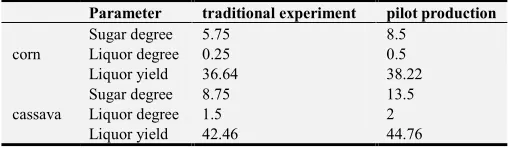
Table 6. Comparison process of ethanol production between corn and cassava used different ways.
Parameter traditional experiment pilot production
corn
Sugar degree 5.75 8.5
Liquor degree 0.25 0.5
Liquor yield 36.64 38.22
cassava
Sugar degree 8.75 13.5
Liquor degree 1.5 2
Liquor yield 42.46 44.76
We can get the information from table 6:
The average saccharinity of traditional ethanol fermentation with corn as raw material was 5.75 and the yield of liquor was 36.64%, the average saccharinity of traditional ethanol fermentation with cassava as raw material was 8.75 and the liquor yield was 42.46%, the average saccharinity of ethanol produced by industrial experiment with corn as raw material was 8.50 and the liquor yield was 38.22%, the average saccharinity of ethanol produced by industrial experiment with cassava as raw material was 15 and the liquor yield was 44.76%.
4.1. Comparison of Sugar Values
Saccharinity is the concentration unit of solids in the sugar solution, which is an important parameter to reflect the degree
of saccharification in the production and fermentation of ethanol.
1.Horizontal comparison of different materials, the average saccharification degree of corn after saccharification was 5.75 and that of cassava after saccharification was 8.75 in the traditional ethanol fermentation, the average saccharification degree of corn after saccharification was 8.50 and that of cassava after saccharification was 15 in the industrial ethanol fermentation. it is observed that, the average sugar of corn was lower than that of cassava in both the traditional ethanol fermentation and the industrial ethanol fermentation, indicating that the degree of saccharification of corn was lower in the process. 2.Vertical comparison with different scale experiment, the
hand. The uneven stirring led to the uneven saccharification and limited degree of saccharification.
4.2. Comparison of Liquor Yield Values
1.Horizontal comparison of different materials. The average liquor yield of corn was 36.64% and that of cassava was 42.46% in the traditional experiment, the cassava was 5.82% higher than corn by comparison. The average yield of corn was 38.22% and that of cassava was 44.76% in the industrial experiment, the cassava is 6.54 percent higher than corn by comparison. It can be seen that cassava produces more ethanol than corn. Analysis of the reasons, the characteristics of cassava starch has the following several aspects: high amylopectin content, the degree of polymerization of molecules, cassava starch and fiber adhesion strong, gelatinization temperature in 51 ~ 65 °C, the gelatinization transparency is good, the mucus is long, the paste has high heat sticking degree but weak coagulability, and the starch has less non-starch impurities (such as ash, protein and grease) [16]. According to the fermentation principle of bioethanol production, higher liquor yield has more fermentable sugar, so cassava starch content is higher, and the starch in it is easier to be liquefied and saccharified, so it is easier to be metabolized and used by yeast.
2.Vertical comparison with different scale experiment. The average liquor yield of corn was 36.64% in the traditional ethanol fermentation and 38.22% in the industrial ethanol fermentation, it was up 4.31 per cent year on year. The average liquor yield of cassava was 42.46% in the traditional ethanol fermentation and 44.76% in the industrial ethanol fermentation, it was up 5.42 percent year on year. The industrial ethanol fermentation of the same raw material is superior to the traditional ethanol fermentation. The reasons may be as follows: In the manual operation of ethanol production, more contact with raw materials will result in greater loss of raw materials and the actual error is large.
Stock of different air. Yeast as facultative anaerobic unicellular fungi, stock in the fermentation tank air will provide good oxygen for yeast, yeast in it for aerobic organisms, yeast aerobic reproduction after using the remaining residual oxygen in the air, into the anaerobic environment, type of yeast fermentation through convert sugars into carbon dioxide and ethanol to obtain energy [17]. Therefore, it is necessary to have a moderate amount of air surplus. The air stock of the 10L glass fermentation tank used in the traditional laboratory for small-scale ethanol fermentation is limited, while the steel fermentation tank used in the production of ethanol by the pilot equipment is equipped with a vent hole, and the air stock is large.
Degree of fermentation with yeast in contact with the raw material have difference, the traditional laboratory small ethanol fermentation by way of 10L fermentation tank fermentation glass belongs to static fermentation, yeast distribution uniformity is limited, lead to inadequate contact
with raw materials, low utilization rate of raw materials. The test equipment for production of ethanol by fermentation tank of the upper rotating device, fermentation methods belong to the static fermentation, makes the yeast evenly dispersed in the raw material, fully contact with the raw material, the maximum use of raw materials, for anaerobic respiration.
Operating outside contact with the raw material is different, the traditional laboratory small ethanol fermentation, the raw material contact with the outside world more, could lead to more bacterial pollution. In the Fermentation system, yeast as the advantage bacterium group, too much miscellaneous bacterium, inhibits the yeast anaerobic respiration, directly affect the utilization rate of raw materials, severe cases can cause the failure of the experiment. The test equipment for production of ethanol, the less raw material contact with the outside world, greatly reduced the possibility of bacterial contamination, and test equipment for production of ethanol, in the saccharifying tank for high temperature and high pressure disinfection sterilization, it can reduce bacterial doping and guarantee the yeast that can make full use of raw materials, it is significantly reduced in the experiment the possibility of failure.
5. Conclusions
materials, but also cassava residue, it is a by-product of a large number of flour mills with a relatively low cost. Therefore, cassava fermented alcohol should be feasible [21]. Except for fuel ethanol, it also can be used as a kind of chemical raw materials and intermediate products are widely used in pharmaceutical, chemical, food and military and other industries, such as used in the production demand of ethylene and polyethylene, polyvinyl chloride, ethyl acetate and other organic chemical products, the by-product of CO2 can be used
in the production of new, safe, biodegradable plastics [22]. We can improve the rate of wine in order to make full use of biomass energy by adjusting the process parameters and optimization of technological process at the same time, the goal is achieve saving energy, economic and environmental protection. In this paper, the aim is to verify and explore the traditional experiment and the industrial experiment of different process parameters with the experiment. Based on the data and method, this study will be used to prepare for the next work, the results of the study for further research of ethanol fermentation process in the future, and it is of great significance to explore new technology.
Acknowledgements
This paper was supported by the Jointly Foundation of National Fund Project (51366015), Renewable Energy Research & Development Collaborative Innovation Center in Southwest (05300205020516009), and Scientific Research Fund Project of Yunnan Provincial Department of Education (2018JS146).
References
[1] Ban Meiling, Zhou Shengmao, Wei Benhui, Lin Weidong, Li Baohui. The advantages, problems and countermeasures of guangxi energy cassava sustainable development [J]. Anhui Agricultural Sciences, 2007 (33): 10824-10827.
[2] Cai Yonghong. The chemical industry innovation of fuel ethanol process [J]. China Chemical Trade, 2013 (12): 370-370. DOI: 10.3969/j. issn.1674-5167.2013.12.350.
[3] Dong Dandan, Zhao Daiqing, Liao Cuiping, Chen Xiansheng, Lin Lin. Technology improvement of cassava fuel ethanol production and analysis of energy consumption of whole life cycle [J]. Agricultural Engineering, 2008 (07): 160-164.
[4] Fei Lan. Study on optimal degradation conditions of enteromorpha biomass and ethanol production by fermentation [D]. Shanghai Ocean University, 2014.
[5] Xu Xiaojing. Study on the construction of high yield ethanol strain of recombinant saccharomyces cerevisiae and its clean fermentation technology [D]. Tianjin University, 2009.
[6] Chen Yuliang. A preliminary study on saccharification fermentation of ethanol from wheat straw [D]. Northwest Agriculture & Forestry University, 2009.
[7] Wei Yingzhi, Huo Hanjun. The temperature of beer
fermentation tank was controlled automatically by PLC [J]. Modern Electronics Technique, 2002 (12): 90-91.
[8] He Juanjuan. SRMBR ethanol continuous fermentation separation and membrane flow field simulation [D]. Sichuan University, 2006.
[9] Han Xiaolong. Study on improving alcohol production rate of cassava raw material [D]. Shandong Polytechnic University, 2007.
[10] Zhang Cheng, Yuan Hongzhi. The effect of temperature on the activity of ethanol dehydrogenase in fermentation process [J]. Shanxi science and technology, 2008 (04): 100+104.
[11] Yue Guojun, Wu Guoqing, Hao xiaoming. Current situation and prospect of fuel ethanol production technology in China [J]. Progress in chemistry, 2007, 19 (7/8): 1085-1090.
[12] Liu Haijun, Li Lin, Bai Dianguo. Analysis on current situation and development prospect of fuel ethanol production technology in China [J]. Chemical Process Technology, 2012, 20 (5): 68-72.
[13] Yuan Jingwei, Cong Zhihui, Liu Hui, Liang Chunhui. Study on technical conditions of corn ethanol biomass fermentation [J]. Liquor-Making Science & Technology, 2017 (12): 88-92.
[14] Chinese academy of agricultural sciences. AMYA4 and its genes and applications: China, CN201010219720.9 [P].2010-11-17.
[15] Xu Huijuan, Wang Shifeng, Long Minnan. Research progress in fuel alcohol production [J]. Journal of xiamen university (natural science edition), 2006 (S1): 37-42.
[16] Wang Huijun. The application and development countermeasure of cassava [A]. Selected excellent papers of yunnan provincial crop association from 2004 to 2006 [C]: 2006: 4.
[17] Deng Likang, Wu Guoqing, Lin Hailong. Cassava fuel ethanol plant and key technologies [C]// Proceedings of the 6th academic conference on petroleum refining of China petroleum institute. 2010: 725.
[18] Ljiljana, Mojović, Dušanka, Pejin, Marica, Rakin, etc. Investigations of the possibilities of stillage utilization from the bioethanol production on corn [J]. Journal on Processing and Energy in Agriculture, 2010, 14 (1): 54-57.
[19] Tristan R, Robert C. A review of cellulosic biofuel commercial scale projects in the United States [J]. Biofuels Bioproducts and Biorefining, 2013, 7 (3): 235-245.
[20] Zhao Peng, Huang Xia. Research progress on lactic acid production by fermentation with renewable resources and organic waste [J]. Food and Fermentation Industries, 2001 (04): 60-65.
[21] Gao Shouqing. The development of biomass fuel ethanol and the problems to be solved [J]. Food and Fermentation Industries, 1991 (01): 54-60.