Page 276
EXPOSURE OF LIVING ORGANISM TO ELECTROMAGNETIC FIELDS – INEVITABLE PART OF MEDICAL CURRICULUM
Eva Kralova
Institute of Medical Physics, Biophysics, Informatics and Telemedicine, Faculty of Medicine Comenius University in Bratislava, Sasinkova 2, Bratislava 813 72, Slovakia
Abstract
The topic of electromagnetic fields in the Earth´s biosphere is now especially important in connection with massive contribution of artificial sources of electromagnetic radiation. From an ethical point of view, it is important that information on the impact of electromagnetic fields on the human health have to be based on scientifically proven facts.
The aim of medical higher education is to provide students with specific professional competences in the informed use of electromagnetic fields in medical diagnostic and therapeutic devices with minimal risk to the health-care professionals and patients.
Key words: artificial electromagnetic fields, medical curriculum, medical biophysics
1. INTRODUCTION
Humankind has been exposed to electromagnetic radiation (EMR) throughout its development. Electromagnetic radiation has a significant impact on the environment and on human. It is divided into: a) natural, e.g. cosmic rays, electrostatic discharges in the atmosphere, solar winds and other natural phenomena. Natural resources of EMR are not risky for the living organisms because the power density of these fields is low and living organisms have adapted to them during evolution; b) artificial, the source of which is high-voltage nets, radio and television transmitters, mobile
transmitters, radars, airport detection equipment, security systems in shops and offices. Radiofrequency electromagnetic fields (RF EMFs) are also used in medicine (e.g. magnetic resonance imaging - MRI, high frequency heating - diathermy).
The issue of electromagnetic fields in the biosphere is quite complex for a wide range of lay public, as it is associated with a particular form of the existence of matter. We do not see electromagnetic energy, we do not feel it, we cannot perceive it with senses. This is probably the main reason for the benevolent attitude of the public towards the potential threat of health by EMR, and it is therefore important that the information disseminated on electromagnetic fields does not support the so-called “electromagnetic phobia”.
The concept of electromagnetic smog (EMS) was developed. It is a sum of the electromagnetic frequencies of electric, magnetic and electromagnetic fields generated by artificial sources.
The population does not have enough knowledge and credible information on electromagnetic radiation, so it is necessary education and training in the field of ecology related to electromagnetic smog.
2. MATERIALS AND METHODS
Page 277
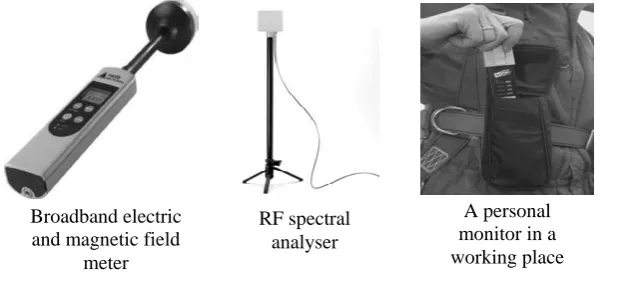
While we do not see, feel, and perceive electromagnetic energy, we can measure it. Exposure from electrical wiring and household appliances, as well as RF fields of microwave ovens and computers can be measured with simple handheld devices.
Three methods are used to measure EMFs using: portable measuring instruments, spectral analysers, personal exposure monitors.
Fig. 1. Detectors of electrosmog
The goal of medical education in this field is to acquire for students some specific professional competences that enable them use EMFs in medical diagnostic and therapeutic facilities with a minimized risk to the patients.
Therefore, in the teaching process at medical faculties, it is essential to highlight the importance of studying this issue and to discuss: the sources of radiofrequency EMFs in living and the working environment, the harmfulness of EMFs for health, the safety of the use of cell phones, microwave ovens, national and international standards for EMFs, physical quantities characterizing EMFs in the terms of environmental quality, instrumentation used to measure RF EMFs intensity, and methods of protection against EMFs negative effects.
3. RESULTS
The analysis of scientific literature on influence of EMFs on human organism with the aim to use them in medical education, e.g. medical biophysics was done.
3.1. Biological effects of non-ionizing electromagnetic radiation
Living organisms do not have a specific receptor to perceive the existence of electromagnetic fields (EMFs) and therefore their effects are manifested in biological processes through physical, chemical and biological changes.
The human organism is a dynamic heterogeneous environment consisting of aqueous electrolyte solutions, various disperse colloids, cells and cell structures, and a large portion of semi-permeable membranes. The amount of energy absorbed by the object increases with the square of its dimensions. This implies an important relationship between the dimensions of the biological object and the wavelength, by which the frequency range can be divided into three areas:
1. f < 30 MHz, in which the wavelength of the EMR is greater than the dimensions of the biological object;
2. f > 10 GHz, in which the wavelength of the EMR is smaller as dimensions of the biological object; Broadband electric
and magnetic field meter
RF spectral analyser
A personal monitor in a working place
Page 278
3. f = 30 – 10 000 MHz, in which the wavelength of the EMR comparable to the dimensions of the human body. Within this frequency range, the absorption level of the EMR level is maximal (Matoušek 2008).
Particular attention in this regard should be given to non-ionizing radiation from artificial sources (microwaves and radio waves). Non-ionizing radiation does not have sufficient energy to tear off the electron from the atom shell and thus does not allow ionization of atoms or molecules.
EMFs are used in a variety of technologies, most often for communication needs (cell phones, base stations, WIFI internet access, radio, television, security devices), and also in medicine (magnetic resonance imaging - MRI) and for high-frequency heating (microwave oven and diathermy in medicine). Radiofrequency electromagnetic fields is a term used to describe a part of the electromagnetic spectrum in the frequency range from 10 kHz to 300 GHz. Electric and magnetic fields, which together form an electromagnetic field, are at high frequencies connected and measured together (Table 1).
Band Wavelength
λ
Frequency f
Non-ionizing radiation
Radiowaves
(TV and radio transmitters, magnetic resonance imaging, sonography)
1 km – 1 m 0,3 – 300 MHz
Microwaves
(Mobile Phones, Base Stations - Base Transceiver Stations, Portable Phones - Digital Enhanced Cordless
Telecommunications, Wireless Phones, WiFi, Bluetooth, Radars)
1 m – 1 mm 0,3 – 300 GHz
Table 1. Non-ionizing electromagnetic radiation bands
Electromagnetic energy is by biological tissue absorbed partially only. The biological effect of non-ionizing electromagnetic radiation on the human body depends mainly on the following factors:
a) physical parameters of electromagnetic field: frequency range, intensity and its other characteristics (wavelength, energy, duration of irradiation, mode and nature of irradiation - continuous, intermittent, pulse-modulated, orientation and polarization of the EMF and irradiation conditions);
b) physico-chemical properties of the organism, its dimensions, anatomical structure, weight, surface layer properties (skin, fat, muscles), irradiated area size, layer thickness, water content, organ or tissue absorption properties, actual physical and mental state of the organism and so on. The degree of tissue energy absorption depends on their ability to reflect it on the interface and is influenced by the water content of the tissues and their other functions.
Current science knows several mechanisms of the influence of electromagnetic radiation on the living organism (Fig. 2):
Page 279
b) non-thermal - the effect of electric currents induced in the human body by the influence of the variable electric and magnetic fields on the content and electric properties of the cells (e.g. DNA damage).
Fig. 2. The mechanism of interaction of electromagnetic waves with living organism (modified by Marha 1968)
The effect of high frequencies with an energy density higher than 1 mW/cm2 on the central nervous system was observed, indicating its high sensitivity to EMR.
Changes in blood are usually observed at higher energy flow densities of about 10 mW/cm2. At lower exposure levels, changes in the number of white blood cells, red blood cells and haemoglobin (often leucocytosis, increased red blood cell amount and haemoglobin) were observed. Long-term exposure to EMFs results in physiological adaptation or attenuation of immune responses.
If EMFs exposure exceeds the permissible level, this may lead to changes in the functional state of the central nervous and cardiovascular system, metabolic disorders, etc. Initial changes in the body are reversible, but may increase and lead to pathology in conditions of permanent action of EMFs.
EMFs are more influential on people sensitive to EMS than on healthy people. These people may emerge some symptoms due to the effects of EMS: long-term fatigue and nervousness, depression, head and eye pain, tinnitus, biorhythms disorders, increased level of stress hormones, decreased concentration, memory deterioration, weakening of immunity and so on. Long-term exposure of EMS to susceptible people may result in neurological, metabolic or genetic changes. For personnel who work with EMFs resources at workplaces, control requirements are stated by specific regulations.
Page 280
Every cell in the human body has an electric potential. This electrical potential can be controlled through ion channels in the cell membrane. External sources of electricity and in particular electromagnetic fields can affect cellular processes and possibly adversely affect the health of humans (Lai, Bearer 2008). Endogenous electromagnetic fields and flows are thought to help guide cell migration during intrauterine development. Research has shown that these internal electromagnetic current in chick embryos have led to abnormalities in tail development. They also produced limb bud and head developmental anomalies. The majority of tail abnormalities included neural tube defects (Hotary, Robinson 1992). In mammals, wounds in rat cornea have endogenous electromagnetic fields that affect the orientation of cell division. These electromagnetic fields also seem to affect the frequency of epithelial cell division. The treatment that supported the endogenous electromagnetic field led to faster healing of the corneal wounds (Song, Zhao, Forrester 2002).
External electromagnetic fields could alter the normal development of animals and humans by interfering with endogenous electromagnetic fields, which is associated with normal cell migration and / or development. Placing the salamander embryos (Axolotl) in an exogenous electromagnetic field led to developmental abnormalities in the head and tail structures depending upon the orientation of the embryos in the electromagnetic field. Defects included absence of the one or both eye, misshapen heads, malformed tails, incomplete closure of neural folds, and various body deformities (Metcalf, Borgens 1994). The influence of electromagnetic fields on frog embryos (Xenopus laevis) has also led to developmental abnormalities including eye deformities, open neural tubes, and malformed heads (Hotary, Robinson 1994).
However, studies in mammals (rats and mice) showed inconsistent results with few adverse outcomes. Some small skeletal anomalies were observed, but their occurrence could not be attributed solely to the action of electromagnetic fields (Juutilainen 2005). Mammals have not shown the same sensitivity to electromagnetic fields as amphibians and birds during embryologic development.
Based on in vitro and in vivo animal observations, scientists have attempted to estimate the potential effects of electromagnetic fields on the human body. There were mostly epidemiological studies. The effects of electromagnetic fields during the development and growth of children have been studied only to a small extent, and even less have been studied if neonates are at risk. However, there were no changes in the rate of low birth weight babies and intrauterine growth retardation in women exposed to electromagnetic fields that used electric blankets compared to women who did not use them (Bracken, Belanger, Hellenbrand 1995). Other studies have shown no relation between cleft defects, anencephaly and spine bifida or other neural tube defects and the use of electrically heated beds or blankets (Dlugosz, Verna, Byer, 1992; Milunsky, Ulcickas, Rothman 1992).
It is possible that electromagnetic fields can contribute to cancer. The International Agency for Research on Cancer, which is part of the WHO, has labelled them as a possible human carcinogen based on epidemiological data that repeatedly showed an association with childhood leukaemia. However, no causal link has been established (IARC, 2002).
Premature babies spend a majority of their time in the NICU (Neonatal Intensive Care Units) v in incubators depending on their gestational age. The maximal electromagnetic field induction measured by Bearer was 126 mG, with this value decreasing with increasing distance from the fan and the heating unit (Bearer 1994). (Note 1 mG = 1.10-7 T)
Page 281
children´s health. However, it is believed that children with long exposure to electromagnetic fields above 3 mG are more likely to develop leukaemia.
Despite the proven effect of electromagnetic fields on some animal models and assumption that electromagnetic fields are carcinogenic to humans, there is little evidence that new-borns are at increased risk of harming their health in the NICU.
The authors of above mentioned studies hope that the modified construction of incubator boxes will bring increased safety to new-borns in the near future. Shielding the electromagnetic field source would be a simple and inexpensive way to reduce potential health risks. To achieve this, it is enough to place a ferromagnetic shield between the incubator and the control unit (fan, heating unit).
4. DISCUSSION
Means and methods of protection against EMFs can be divided into three groups: organizational, engineering-technical and medical-preventive.
Organizational measures are aimed at preventing people from accessing high EMFs areas, creating buffer zones around different transmitters.
The general principles of engineering-technical protection measures are as follows: electro-hermetization of circuit elements, blocks and nodes of the entire system so as to limit or eliminate EMR and protect from workplace exposure or location of work performance at a safe distance from the radiation source. Various types of shields are used to protect the workplace: reflecting and absorbing. Special protective clothing made of metallized material and protection glasses is recommended as personal protective equipment.
Medical-preventive measures should be aimed primarily at early detection of deterioration of workers´ health in exposed workplaces. For this purpose, preliminary and regular medical examinations of persons working in hazardous environments are recommended.
At present, there is a wide range of EMFs protection possibilities based on the radiation shielding principle. For a healthier life, it is advantageous to use personal protective equipment, shorten time of the EMFs resources use and maintain safe distances from them. By using an electrically conductive Faraday cage (metal material, grid, metal) radiofrequency EMFs can be reduced, dimmed and shaded. Safe distance from radiofrequency EMFs sources is the most effective. Especially electrosensitive people, pregnant women and children should be protected.
Based on scientific research, international standards and safety rules were established to limit EMFs exposure to both the population and workers. Institutions issuing standards to limit exposure are International Commission on Non-Ionizing Radiation Protection (ICNIRP), International Committee on Electromagnetic Safety (ICES), state authorities. Slovak standards and regulations are based on the ICNIRP, the Ministry of Health limits exposure to EMFs by its decrees. Control measurements in the environment are carried out by individual regional authorities in public health.
The standards also set limits on emissions from equipment, used especially for technical reasons, e.g. due to possible interference with other equipment (sensitive medical equipment, aircraft, etc.). The standards are set by the WHO, the Institute of Electrical and Electronic Engineers (IEEE), the International Electrotechnical Commission (IEC), the European Committee for Electrotechnical Standardization (CENELEC) and national standardization bodies (Šostronek 2006).
These documents define requirements for the health limits of the mean energy density radiation in W/m2 and the specific absorption rate (SAR) limits in W/kg for residents and employees. Health limits are benchmarks that should not be exceeded. The intensity of EMFs emission is mostly well below the limits set by the relevant standards and guidelines.
Page 282
have to make a balanced judgment between the expected benefits of the treatment and the potential adverse effects. However, ICNIRP recommends that it has be taken into account of a patient´s tolerance to body temperature elevation and the need to avoid nerve stimulation. Special attention should also be given to patients who are pregnant, with a recommendation that the duration of exposure is kept to the minimum. More information for patients is given in the ICNIRP statement on MRI and patients. In relation to personnel working near MRI devices, the main protection issue relates to the static magnetic fields. These can provoke sensory effects such as vertigo and nausea as a result of the generation of small electrical currents in the balance organ. This, in turn, transmits signals to the brain, providing different information to that obtained through vision, resulting in the unwelcome adverse effects. These transient effects may be annoying and impair normal functioning. Thus, for workers - doctors, nurses and other health care staff - the recommendation is to limit the intensity of the EMF so that transient effects such as vertigo and nausea do not occur, and in other cases to provide for a set of site-specific work procedures. In particular, the speed of movement within a static magnetic field should be limited, as body movement induces electric fields and reinforces the sensory effects described above.
5. CONCLUSIONS
The issue of the impact of EMFs on human health has been actual for a long time and it is therefore important to regularly and in particular truthfully inform the public about possible adverse effects of EMF, research results, protection options and so on.
Relevant and scientifically substantiated information on the interaction of EMFs with human organism, possibilities of prevention, education and protection measures in their use should also become an integral part of medical education because EMFs are also used by medicine (magnetic resonance imaging, physiotherapy) and are present in all medical facilities using electric devices.
The discussion of the issues raised will be more effective and will be more interesting in the teaching process at medical faculties if it will be supported it with experimental measurements using instruments. Patient exposure to EMFs is intentional. In the medical practice, a physician constantly encounters situations in which he/she has to assess the risks of harm to the patient, taking full responsibility for the medical exposure.
With the exception of therapeutic applications of radiation, the aim is not to administer a dose of EMR to the patient, but to use its properties to obtain diagnostic information. The issue of medical exposure to EMR to patients is a specific problem in radiation protection, because in this case it is not possible to reduce the dose in accordance with the limits set by the regulatory authorities. Thus, the ultimate responsibility for the patient´s medical exposure rests with the physician, who should be sufficiently informed about the risks and benefits associated with diagnostic and therapeutic procedures. Therefore, the physicians must evaluate the dose-effect relationship, assess exposure and evaluate patient risk based on scientifically based data. Risk assessment for patient health is an important in practical medicine.
ACKNOWLEDGEMENTS
Contribution was supported by GP KEGA of Ministry of Education, Science, Research and Sport of the SR 003UK- 4/2016, 021UK-4/2020 and VEGA 1/0070/16.
REFERENCES
1. Bearer, CF 1994, “Electromagnetic Fields and Infant Incubators”, Arch Environ Health, 1994;49(5):352–354.
Page 283
3. Bracken, MB, Belanger, K, Hellenbrand, K, et al., 1995, “Exposure to Electromagnetic Fields during Pregnancy with Emphasis on Electrically Heated Beds: Association with Birthweight and Intrauterine Growth Retardation”, Epidemiology. 1995;6(3):263–270.
4. Cnattingius, S, Zack, M, Ekbom, A, et al., 1995, “Prenatal and Neonatal Risk Factors for Childhood Myeloid Leukemia”, Cancer Epidemiol Biomarkers Prev. 1995;4(5):441–445
5. Dlugosz, L, Vena, J, Byers, T, et al., 1992, “Congenital defects and electric bed heating in New York State; a Register-Based Case-Control Study”, Am J Epidemiol. 1992;135(9):1000–1011. 6. Hotary, KB, Robinson, KR. 1992, “Evidence of a Role for Endogenous Electrical Fields in Chick
Embryo Development”, Development. 1992;114(4):985–996.
7. Hotary, KB, Robinson, KR, 1994, “Endogenous Electrical Currents and Voltage Gradients in Xenopus embryos and the Consequences of their Disruption”, Dev Biol. 1994;166(2):789–800. 8. International Agency for Research on Cancer, 2002, “IARC Monographs on the Evaluation of
Carcinogenic Risk to Humans. Lyons, France: International Agency for Research on Cancer”, 2002. Non-ionizing Radiation. Part 1: Static and Extremely Low-Frequency Electric and Magnetic Fields; p. 80.
9. Juutilainen, J, 2005, “Developmental Effects of Electromagnetic Fields”, Bioelectromagnetics. 2005;7:S107–S115.
10. Lai, TL, Bearer, CF, 2008, “Iatrogenic environmental hazards in the neonatal intensive care unit”, Clin. Perinatol. 2008, 35(1): 163-81.
11. Matoušek, Z, Jakub, J, Šostronek, M, Liptovský, M, 2008, “Negativnoje vlijanie elektromagnitnogo kolebania na živye suščestva”, 2008. s. 68-71.
12. Marha, K, Musil, J, Tuhá, H, 1968, “Elektromagnetické pole a životní prostředí. 1968. [online]. [cit. 2018-10-17]. Available at: <http://elektro.tzb-info.cz/13319-ucinky-elektromagnetickeho-pole-na-lidsky-organismus >.
13. Metcalf, MEM, Borgens, RB, 1994, “Weak Applied Voltages Interfere with Amphibian Morphogenesis and Pattern”, J Exp Zool. 1994;268:323–338.
14. Milunsky, A, Ulcickas, M, Rothman, KJ, et al., 1992, “Maternal Heat Exposure and Neural Tube Defects”, JAMA. 1992;268(7):882–885.
15. Song, B, Zhao, M, Forrester, JV, et al., 2002, “Electrical Cues Regulate the Orientation and Frequency of Cell Division and the Rate of Wound Healing in vivo”, Proc Natl Acad Sci USA. 2002;99(21):13577–13582.
16. Söderberg, KC, Naumburg, E, Anger, G, et al., 2002, “Childhood Leukemia and Magnetic Fields in Infant Incubators”, Epidemiology. 2002;13(1):45–49
17. Šostronek, M, Kůs, Z, 2006, “Ochrana zdravia pred neionizujúcim žiarením. Základy projektovania a OPaOS elektrických zariadení. Bezpečnosť práce na elektrických zariadeniach”, Liptovský Mikuláš : Akadémia ozbrojených síl gen. M.R. Štefánika. p. 77-82. [online]. [cit.
2018-10-17]. Available at: