A Mixed Methods Study: Assessing and Understanding Technology Pedagogy and Content Knowledge Among College Level Teaching Faculty
A Dissertation Submitted to the Faculty
of
Drexel University By
Heather A. Blackburn In partial fulfillment of the Requirements for the degree
of
Doctor of Education May 2014
© Copyright 2014
Heather A. Blackburn. (as registered with Drexel University) All Rights Reserved
iv
I dedicate my dissertation work to my husband, David Seifert. You have provided me tremendous emotional support, patience, and prodding throughout this long endeavor. I could not have accomplished this without your help, love, and encouragement. I also dedicate the
completion of this work to my late boss and mentor, Dave O’Brien. It was at Dave’s prompting that I entered the doctoral program and through all of the challenges and frustrations encountered I knew that I would always complete this because of my desire to live up to the ideal he set out for me. I was fortunate to share my profound appreciation to Dave prior to his passing. When relaying my thoughts to Dave I shared this Abraham Lincoln quote that captures his impact on my life: I'm a success today because I had a friend who believed in me and I didn't have the heart to let him down.”
v
There are many people to acknowledge and thank for their help and guidance throughout my educational pursuits culminating with my doctoral work. First, I have to thank my parents, Jim and Bev Blackburn for sacrificing so much to provide me with the best education anyone could ever ask for and for always encouraging me along the way.
I would also like to thank my Drexel University Sport Management colleagues, particularly my friend, Amy Giddings for her tolerance of all of my crazy questions and
emotions. Amy provided immense guidance to me throughout this process and celebrated all of my small milestones along the way to get me to the finish line. My other colleague and doctoral cohort member, Brett Burchette was there experiencing every moment right along with me and that made all of this that much easier. I also have to thank Mary Waechter, Jen Valore, Ellen Staurowsky, Jim Reese, and Karen Weaver for all of their support and encouragement, particularly on those days away from the office when I was working on dissertation work.
I also owe much thanks to my Ed.D. cohort members who were in the trenches with me each weekend for three years and provided additional motivation to get this done as well as to Dean William Lynch for extending me the opportunity to enter into the doctoral program.
Lastly, and certainly not least, I want to thank my committee members, Dr. Aroutis Foster, Dr. Allen Grant, and Dr. Ronald Hill for all of your time and attention on my dissertation work from idea to proposal to completion. You are all exceptional at what you do and I was so fortunate to have benefitted from your time and expertise.
vi ABSTRACT………...x LIST OF TABLES……….viii LIST OF FIGURES………...ix CHAPTER 1: INTRODUCTION……….… 1 Statement of Problem……… 1
Purpose of the Study………. 1
Research Questions………... 4
Conceptual Framework………. 5
Definition of Terms………... 6
Assumptions, Limitations, and Delimitations………... 7
CHAPTER 2: LITERATURE REVIEW……….. 9
Conceptual Framework……… 11
Synthesis……….. 33
CHAPTER 3: RESEARCH METHODOLOGY……… 34
Introduction………. 34
Research Design and Rationale………... 34
Site and Population……….. 36
Stages of Data Collection……… 38
Ethical Considerations………. 46
CHAPTER 4: FINDINGS, RESULTS, & INTERPRETATIONS………. 49
Overview………. 49
Quantitative Findings……….. 50
Qualitative Findings……… 63
vii
CHAPTER 5: CONCLUSIONS AND RECOMMENDATIONS……… 96
Conclusions……… 97
Recommended Research and Actionable Solutions……….. 98
Summary……….. 101
LIST OF REFERENCES………. 103
APPENDIX A: TPACK SURVEY……….. 107
APPENDIX B: QUALITATIVE INTERVIEW PROTOCOL……… 116
viii
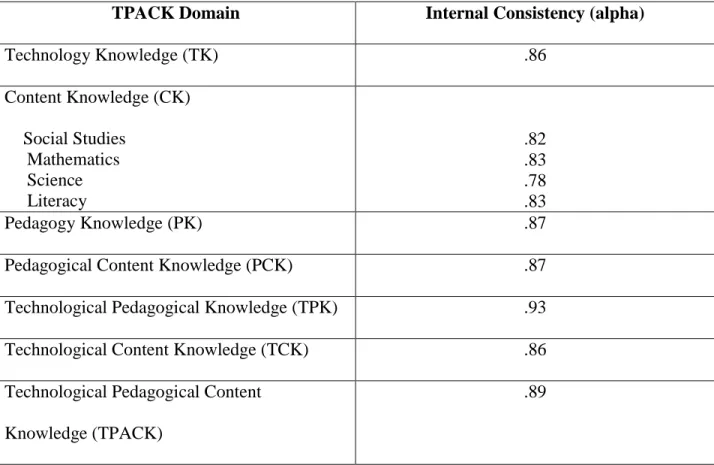
Table 1: Original TPACK Survey Reliability Scores………... 41
Table 2: Revised TPACK Reliability Scores……….41
Table 3: TPACK Domain Measures for All Faculty Types………... 53
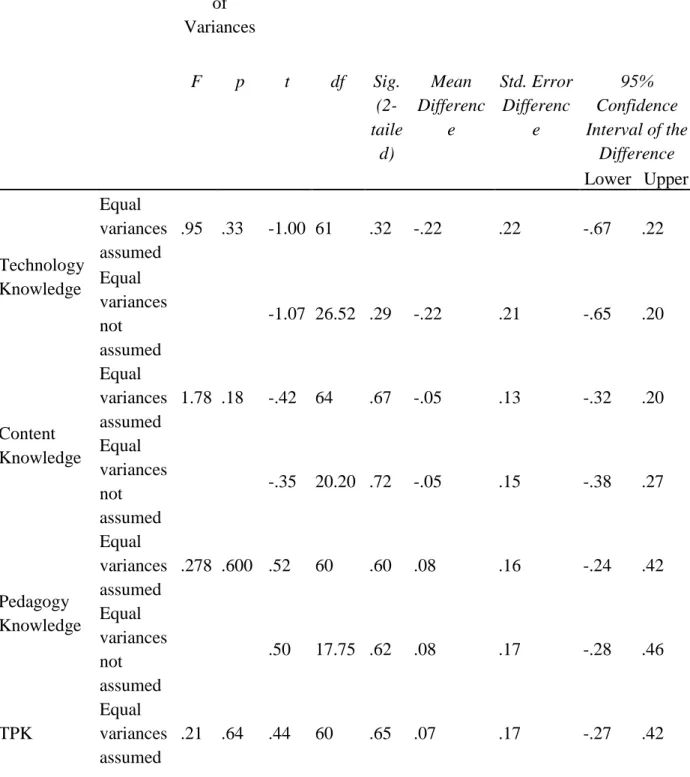
Table 4: T test Results of Faculty Types on Four Knowledge Domains……….. 57
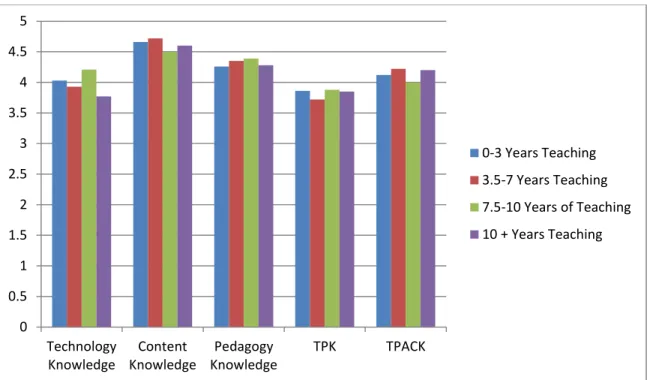
Table 5: TPACK Domain Measures for Years Teaching………... 60
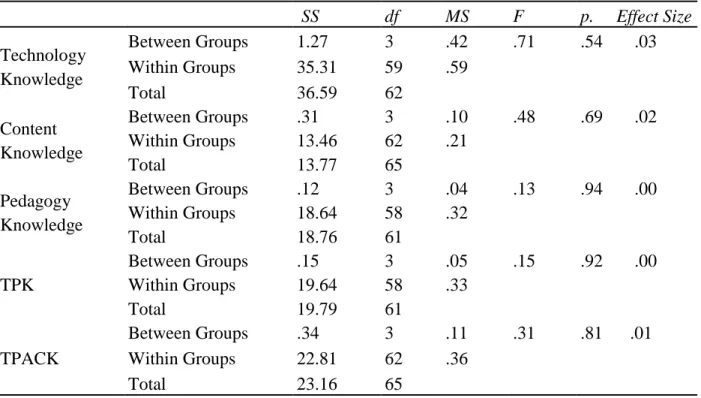
Table 6: ANOVA Results Among the Five Knowledge Domains for Years Teaching……... 62
Table 7: Selected Qualitative Interview Questions for Research Question 2………... 63
Table 8: Areas of Faculty TPK Development of New Technologies………... 65
Table 9: Selected Qualitative Interview Questions for Research Question 3………... 76
ix
Figure 1. Integrated Knowledge Domains of TPACK……….. 28
Figure 2. Integration ofMixed Methods Design………... 35
Figure 3. TPACK Domain Measures for All Faculty Types………. 54
Figure 4. TPACK Domain Measures for Years Teaching……… 61
Figure 5. Components Leading to Faculty TPK Development………. 64
x
A Mixed Methods Study: Assessing and Understanding Technology Pedagogy and Content Knowledge Among College Level Teaching Faculty
Heather A. Blackburn Aroutis Foster, Ph.D., Supervisor
Online higher education has grown rapidly over the last decade. While online higher education has improved access for many students, it suffers from the problem of higher learner attrition. Student persistence engagement in online learning may be enhanced through
improvements in instructor technology and pedagogy knowledge. This mixed-methods study on online learning is an exploration into the online instructional faculty’s knowledge of integrated Technological, Pedagogical, and Content Knowledge (TPACK). TPACK has been used to assess teaching in the K-12 classroom setting and is currently being utilized as an assessment in the U.S. Department of Education’s Race to the Top grant selection process. This study applied the TPACK framework to college level teaching faculty to assess their technology and pedagogy knowledge, their TPK, and TPACK. The primary research questions of this study were, “What is the level of TPACK among college level teaching faculty within a diverse college at a large, private four year university?”, “What processes do online higher education instructors use in developing their technological pedagogical knowledge of new technologies?” and “What techniques do instructors with high TPACK utilize to engage online students?”
The study began as a quantitative study and measured the level of TPACK among college level teaching faculty. A qualitative method followed with one-on-one interviews of nine
selected instructors demonstrating high TPACK components.
Quantitative findings of the study indicate that there is high technology, content, pedagogy, and technological pedagogical knowledge amongst the college level teaching faculty within the
xi
explored due to limited data on content knowledge. Qualitative findings of the study indicate that the college level teaching faculty instructors are engaged in high impact practices with their online students that demonstrate their TPACK skills and that the college level teaching faculty use their TPK to assess inclusion of new technologies tools in the online classroom.
Keywords: TPACK, Technology, Pedagogy, Online Learning, Student Persistence, Learner Engagement
Chapter 1: Introduction
Online higher education has grown rapidly over the last decade. Approximately 30 percent of students took an online course in 2008 compared to fewer than 10 percent of students in 2002 (Allen & Seaman, 2011). While online learning is most often associated with for-profit institutions, 74 percent of public institutions view online learning as critical to their long-term strategy (Allen & Seaman, 2010). Specifically, many types of institutions view online learning as a way to grow their enrollments, extend their presence beyond the traditional boundaries of campus, and provide flexible scheduling to meet the changing student needs (Allen & Seaman, 2010).
Statement of Problem
As more institutions expand online course offerings and as more students enter into online programs, faculty and instructional design professionals need to better understand how instructor pedagogy contributes to online student success, engagement, and learning satisfaction. If instructors and instructional designers fail to recognize the factors that lead to student success, engagement, and satisfaction in online programs then student learning outcomes and
student attrition will negatively impact online degree programs. Online learning programs with weak learning outcomes and high student attrition may subject institutions to increased public and legislative scrutiny, potential loss of public funding, loss of employer tuition reimbursement plans for online programs, and diminished overall brand of the institution. Therefore, the
problem this study sought to address is how to advance online instruction among higher education faculty that can lead to gains in student engagement and degree completion.
Purpose Statement
The purpose of this action research study was to understand how improvements in instructional faculty knowledge can contribute to online student engagement and course
satisfaction of students enrolled in online programs within a diverse college at a large, private four year university.
The college that is being studied offers online degree programs in 22 distinct academic areas including such fields as education, sport management, construction management,
engineering technology, and computing security and technology. Online learning at the college is managed by a collaborative group of people that include the faculty, program managers and directors from the various academic units, and a learning technologies group that includes instructional design experts and learning technologists. The instructional design experts work with the program managers and teaching faculty to develop online course modules that meet program level and course level learning objectives for curricula. The instructional design experts assist faculty by converting course content into online modules and suggesting learning
technologies to enhance course experience. The college’s instructional design team also conducts training workshops on technology tools for faculty as well as provides an online instructional training for faculty who are new to online learning. The online instructional training is a mandate by the college dean for new online faculty to complete.
The culture of online learning within college was well established among academic program staff, the learning technologies group, and many faculty. Many full-time faculty within the college develop and teach online courses. Faculty are incented to develop online courses through a stipend commission that is in addition to regular salary and benefits. The developed courses can then be taught by a variety of course instructors for many terms thereafter, with additional stipends provided to refresh content.
The structure of online learning within the college contains strengths in several areas. Online courses within the college are well organized. The courses utilize a common look and feel
with a consistent layout and structure that benefits both faculty and students. The college is also strong in providing faculty with access to additional technology tools that may enhance the student course experience while also providing training on such tools upon request. Despite these strengths the college could improve and further develop online learning in specific areas. First, it is clear through some course evaluations that not all faculty are adept at teaching online. The faculty within the college have varying levels of abilities to teach online including how they use and apply technology tools, how frequently or infrequently they make contact with students, and how they engage online students. The college could advance online learning through a thorough assessment of faculty online teaching levels and identification of techniques on how faculty learn and apply technology tools to teaching. This study therefore sought to strengthen online learning at the college by assessing the online faculty’s teaching skills with technology. This study utilized the technological, pedagogical, and content knowledge (TPACK) framework developed for teacher education by Michigan State researchers, Mishra and Koehler (2006) and applied it to online higher education to determine if the presence of TPACK among online higher educational instructional faculty can lead to more engaging virtual learning models.
The importance of studying online learning models is attributable to the view that it can be used to change the culture of education by increasing an educated citizenry and expanding education to non-traditional learners. Online and technology based learning is viewed as a vehicle to achieve the U.S. Department of Education’s goal of increasing the percentage of Americans with two and four year degrees from 39 percent to 60 percent by 2025, an increase of 23 million graduates from current rates (U.S. Dept of Education, 2010). The ability to achieve such a goal will require improvements in online learning instruction and a faculty capable of delivering and engaging in high quality instruction.
Increasingly higher education faculty are being measured and assessed by their ability to teach and their students’ achievement of learning outcomes. This is particularly expected in undergraduate education. If faculty are to reach today’s “digital natives” and demonstrate
achievement of course learning outcomes they will need methods and tools to assess and develop their technological instructional skills. The TPACK framework has been successfully utilized in teacher education programs and is currently being utilized to assess grant funding for the U.S. Department of Education’s Race to the Top program (Mishra, 2011). It may similarly
demonstrate applicability and usefulness in higher education online instruction.
The research findings from this study that capture the instructional faculty perspectives will illuminate the factors that contribute to, and impede, online learning engagement and satisfaction in higher education. The research findings will be utilized to create tools and programs that better equip faculty to engage students in an online environment. In addition, the results of this research will allow advisors at the college to better support the needs of their online students and faculty as web-based and technological learning environments grow and expand.
Research Questions
This explanatory mixed-methods research study focused on understanding instructional faculty teaching techniques in online courses by applying the technological, pedagogical, and content knowledge (TPACK) framework to online higher education courses (Mishra & Koehler, 2006). The primary research questions that guided this study were:
1. What is the level of TPACK among college level teaching faculty within a diverse college at a large, private four year university?
2. What processes do online higher education instructors use in developing their technological pedagogical knowledge of new technologies?
3. What techniques do instructors with high TPACK utilize to engage online students? The secondary research questions in this study were:
4. Is there any statistical significance between the faculty instructor’s TPACK score and their full-time or adjunct status within the college?
5. Is there any statistical significance between the faculty instructor’s TPACK score and number of years teaching in higher education?
Conceptual Framework
This study pulled from two distinct theoretical perspectives. The first theoretical
perspective utilized concerns an assessment of the instructional faculty’s knowledge and skills. The theory that was applied to assess the online instructional faculty is the technological, pedagogical, and content knowledge (TPACK) theory developed by Mishra and Koehler (2006) from Michigan State. Mishra and Koehler (2006) founded their TPACK theory on an earlier teacher instructional concept known as pedagogical content knowledge (PCK) developed by Lee Shulman in 1986. Both Shulman’s PCK and Mishra and Koehler’s TPACK concern how
teachers integrate diverse knowledge areas that lead to effective teaching practices.
The second theoretical perspective utilized in the study comes from student retention and persistence theory of distance learners developed by Garland in 1993. Garland’s framework organizes student attrition into four categories, including: 1) situational, 2) dispositional, 3) institutional, and 4) epistemological barriers to student persistence. This study will focus on institutional categories of student attrition.
Definition of Terms
Attrition – The loss of a matriculated student in an academic program.
Content Knowledge (CK) – “Content knowledge is knowledge about the actual subject matter that is to be learned or taught” and includes “knowledge of concepts, theories, ideas,
organizational framework, knowledge of evidence and proof, as well as established practices and approaches toward developing such knowledge” (Shulman, 1986, p. 9-13).
Online education – Based on the definition provided by The Sloan Consortium, online education is defined as “a course where 80 percent or more of the content is delivered online [and where there are] typically no face-to-face meetings” (Allen & Seaman, 2010).
Pedagogical Knowledge (PK) – “Pedagogical knowledge is deep knowledge about the processes and practices or methods of teaching and learning encompasses overall educational purposes, values, and aims” (Shulman, 1986, p. 14).
Pedagogical Content Knowledge (PCK) – “ The most regularly taught topics in one’s teaching area, the most useful representation of those ideas, the most powerful analogies, illustrations, examples, explanations, and demonstrations – in a word, the ways of representing and formulating the subject matter that make it comprehensible to others” (Shulman, 1986, p. 9). Retention – This term is identified as the act of keeping a college student continually enrolled until such time that the student completes his or her intended degree program.
Student Success - Success in online education is defined as course completion with a grade of C or higher, certificate achievement and/or degree attainment.
Technology Knowledge (TK) – “FITness [of technology] goes beyond traditional notions of computer literacy to require that persons understand information technology broadly enough to apply it productively at work and in their everyday lives, to recognize when information
technology can assist or impede the achievement of a goal, and to continually adapt to changes in information technology” (Koehler and Mishra, 2009).
Technological Content Knowledge (TCK) – “TCK, then, is an understanding of the manner in which technology and content influence and constrain one another. Teachers need to master more than the subject matter they teach; they must also have a deep understanding of the manner in which the subject matter (or the kinds of representations that can be constructed) can be changed by the application of particular technologies…[and how] specific technologies are best suited for addressing subject-matter learning in their domains and how the content dictates or perhaps even changes the technology” (Koehler and Mishra, 2009).
Technological Pedagogical Knowledge (TPK) – “TPK is an understanding of how teaching and learning can change when particular technologies are used in particular ways. This includes knowing the pedagogical affordances and constraints of a range of technological tools as they relate to disciplinarily and developmentally appropriate pedagogical designs and strategies” (Koehler and Mishra, 2009).
Technological Pedagogical and Content Knowledge (TPACK) – “TPACK is an emergent form of knowledge that goes beyond all three “core” components…[and] is an understanding that emerges from interactions among content, pedagogy, and technology knowledge” (Koehler and Mishra, 2009).
Assumptions, Limitations and Delimitations
As stated this research focused on the instructional knowledge of college level teaching faculty within a diverse college at a large, private four year university. The college has a tradition of online education dating back to 1996 thus imbuing the college with a culture of the
extensive at other colleges or other institutions. In addition to the college culture is the composition of the teaching faculty. Very few teaching faculty at the college are tenured compared to other private, four year institutions and many faculty are adjunct teaching faculty not physically connected to campus. The lack of tenured faculty may or may not factor into the results of this study. Given these unique conditions the results of this study may not be similar or applicable to online teaching faculty at other private, four year, non-profit institutions.
The sample size being utilized in this study may ultimately make the research findings not generally applicable to other online programs or institutions. Sixty-seven faculty instructors participated in the quantitative phase of the study and nine instructors progressed through the qualitative phase of the study. These sample sizes may not ultimately represent the full range of experience and teaching capabilities of the college’s online teaching faculty.
Summary
Research on online student engagement and satisfaction is growing and contributing to the knowledge of what works in meeting the unique needs of online students. However, research that probes college level teaching faculty is needed to understand what knowledge and skills the online faculty instructors’ possess and how they are putting this to use in engaging ways in online learning environments. The results of this research will allow the university studied to better prepare faculty instructors for online teaching and improve the experience of its students enrolled in online programs. Ultimately this research should lead to a better understanding of effective teaching practices, effective ways to engage and satisfy online learners, and stronger quality of online degree programs at the university and serve as a template for similar institutions to assess their online learning faculty.
Chapter 2 Literature Review Introduction to the Problem
Online higher education has grown rapidly over the last decade. Approximately 30 percent of students took an online course in 2008 compared to fewer than 10 percent of students in 2002 (Allen & Seaman, 2011). While online learning is most often associated with for-profit institutions, 74 percent of public institutions view online learning as critical to their long-term strategy (Allen & Seaman, 2010). Specifically, many types of institutions view online learning as a way to grow their enrollments, extend their presence beyond the traditional boundaries of campus, and provide flexible scheduling to meet the changing student needs (Allen & Seaman, 2010).
As more institutions expand online course offerings and as more students enter into online programs, faculty and instructional design experts need to better understand how
instructor pedagogy contributes to online student success, engagement, and learning satisfaction. If instructors and instructional designers fail to recognize the factors that lead to student success, engagement, and satisfaction in online programs then student learning outcomes and
student attrition will negatively impact online degree programs. Online learning programs with weak learning outcomes and high student attrition may subject institutions to increased public and legislative scrutiny, potential loss of public funding, loss of employer tuition reimbursement plans for online programs, and diminished overall brand of the institution. Therefore, the
problem this study sought to address was how to advance online instruction among college level teaching faculty that can lead to gains in student engagement and degree completion.
The purpose of this mixed methods research study was to understand how improvements in instructional faculty knowledge can contribute to online student engagement and course
satisfaction of students enrolled in online programs within a diverse college at a large, private, four year university. This study utilized the technological pedagogical and content knowledge (TPACK) framework developed for teacher education by Michigan State researchers, Mishra and Koehler (2006) and applied it to online higher education to determine if the presence of TPACK among college level teaching faculty can lead to more engaging virtual learning models.
The importance of studying online learning models is attributable to the view that it can be used to change the culture of education by increasing an educated citizenry and expanding education to non-traditional learners. Online and technology based learning is viewed as a vehicle to achieve the U.S. Department of Education’s goal of increasing the percentage of Americans with two and four year degrees from 39 percent to 60 percent by 2025, an increase of 23 million graduates from current rates (U.S. Dept of Education, 2010). The ability to achieve such a goal will require improvements in online learning instruction and a faculty capable of delivering and engaging in high quality instruction.
Increasingly higher education faculty are being measured and assessed by their ability to teach and their students’ achievement of learning outcomes. This is particularly expected in undergraduate education. If faculty are to reach today’s “digital natives” and demonstrate
achievement of course learning outcomes they will need methods and tools to assess and develop their technological instructional skills. The TPACK framework has been successfully utilized in teacher education programs and is currently being utilized to assess grant funding for the U.S. Department of Education’s Race to the Top program (Mishra, 2011). It may similarly
demonstrate applicability and usefulness in higher education online instruction.
The research findings from this study that capture the instructional faculty perspectives will illuminate the factors that contribute to, and impede, online learning engagement and
satisfaction in higher education. The research findings will be utilized to create tools and programs that better equip faculty to engage students in an online environment. In addition, the results of this research will allow advisors at the college to better support the needs of their online students and faculty as web-based and technological learning environments grow and expand.
Conceptual Framework
Instructional technology development over the last decade has led to new models of learning. Blended, or hybrid learning, and fully online, asynchronous courses represent two models of education that have developed in higher education. These models rely on high-speed Internet access and web-based learning platforms to reach and engage learners in non-traditional ways. While blended and online learning models have expanded access to higher education, concerns about student retention, engagement, and learning outcomes abound. These challenges combined with the planned use of instructional technologies and online learning models to increase the number of American citizens with college education from 39 percent to 60 percent over the next 25 years compels a deep understanding of online teaching, learning, and course design (U.S Dept of Education, 2010). In an effort to understand what leads to online student engagement and satisfaction research from myriad fields must be considered. This literature review will, therefore, present two areas of research that overviews how improvements in online teaching may lead to gains in online student engagement and satisfaction.
First, research on student retention in online learning environments is presented to outline what is currently known about student persistence in technology based learning environments. Retention research that considers the role of the instructors, the course design, and the learners themselves will be presented to better understand the complex interplay among these elements.
Second, research on understanding online course design and instructor pedagogy will be presented to highlight the heightened role these constructs play in the online learning process. Student Success & Retention in Web-Based Environments
Retention of online learners has been reported to be lower than that of traditional, on campus students (Tyler-Smith, 2006). Nationally, traditional on campus student retention is reported to be approximately 50 percent of all entering learners (Tinto, 1993). With more than $20 billion spent by the federal government on higher education it is important to make all learning delivery modes efficient and effective so that increases in student graduation rates and learning outcomes can be recognized (Budget of the U.S. Government quoted in Public Agenda, 2011). Much like traditional student attrition, attrition among non-traditional learners enrolled in distance and online education is also complex and varied. To make sense of the multi-faceted and complex reasons students depart from online education, a framework is needed. Garland’s (1993) framework that considers attrition among distance education students will be utilized to organize and analyze student departures. Garland’s (1993) framework organizes student attrition into four categories, including the following: 1) situational, 2) dispositional, 3) institutional, and 4) epistemological barriers to student persistence.
Garland’s (1993) situational barriers of attrition focus on the external factors that lead a student to leave his/her institution or program of study such as work and family commitments. It is believed that situational barriers are often the most cited reasons for student attrition in online programs (Schaffhauser, 2009). Dispositional barriers of student attrition include a student’s learning style, motivation and attitudes to learning. Institutional barriers of attrition include difficult experiences that may occur between the student and the institution such as poor instructional quality, little academic guidance and poor technical support. Finally,
epistemological barriers of attrition focus on the difficulty and challenge of the course content itself.
This study will focus on the institutional category of student attrition. It is here where the instructional faculty’s teaching expertise and knowledge can impact the student learning
experience and potentially the level of engagement and satisfaction in online courses. While this category may not be the barrier responsible for the majority of student attrition, it is the category that can be impacted by changes in institutional practice and policy. Moreover, while students often cite situational or external reasons for their lack of success in online courses, McGivney reminds us “it is possible that students cite only those [reasons] that do not threaten their self-esteem or that they perceive as ‘acceptable’” (as cited in Nichols, 2010, p. 95). Consequently, understanding institutional barriers may be of more importance to helping students succeed in online environments. The remainder of the literature stream is therefore, primarily organized within this category. Studies that represent institutional efforts in the areas of good course design, instructor engagement, and support services will be presented.
Institutional Factors
Colleges and universities can affect student persistence in a variety of ways. With respect to online students, institutions can create structures and services that promote student success and persistence. For instance, online courses and programs that focus on quality course design and coherence have demonstrated positive impact on student success and persistence (Rovai & Downey, 2010; Morris & Finnegan, 2009; Reisetter & Boris, 2004; Dietz-Uhler, Fisher & Han 2007).
Morris and Finnegan’s (2009) research analyzing four studies of over 500 undergraduate students enrolled in online classes supports the importance of good course design on student
persistence. One study, which was conducted via a mailed survey and follow-up telephone interviews of students, found that the unsuccessful students needed more course management assistance to learn the course layout, understand expectations and assignments, and locate content and resources. Moreover, the authors’ telephone interviews with the students found that the students who withdrew from their courses did so early in the course or term, which the students attributed to feeling lost or overwhelmed by the course. This study may similarly explain early student attrition in online programs as well at the institution studied. Early student dropouts would encompass students who dropout within the first two weeks from their online degree program and cease to return. There are a small, but consistent number of students who enter online programs at the college that fit this description.
Dietz-Uhler, Fisher and Han (2007) also studied the importance of good course design on student retention. The authors report a 95 percent retention rate across 11 offerings of an online introduction psychology and statistics courses. The authors attribute the high retention and completion rate of these two courses due to implementation of a program called Quality Matters, which is a research-based initiative that relies on review standards to assess online courses. Quality Matters is a faculty-driven/ peer review process that assesses online courses using the following standards: course overview and introduction, learning objectives, assessment and measurement, resources and materials, learner interaction, course technology, learner support, and accessibility. Within these eight general standards are 40 specific review standards that are based on research that has shown to positively affect student learning.
The Quality Matters program appears to serve an important function for assessing online courses. Utilizing such a tool in the college’s online programs could prove valuable in better understanding good course design and deficiencies. However, the Quality Matters rubric focuses
only on online course design and content and does not consider any impact online instructors or instructional pedagogy plays in the online learning process. Simply studying content and course layout ignores a substantial element of the online learning process. So while the retention success that the authors report from Quality Matters is impressive, it only considers one element of the online learning process. Other limitations of the Dietz-Uhler, Fisher and Han (2007) study may also have influenced the reported retention results. Most notably, the authors did not report what type of student population was enrolled in these online courses. The authors do not provide a description as to whether these students were traditional students who resided on campus and happened to be taking an online course or if the students were adult learners enrolled exclusively in online courses. Such a distinction as residency can be particularly important when reporting student persistence in an online course. For instance, if the students were on campus students who had face-to-face access to support services and instructors then the high student retention rate could be partially attributed to these factors. For this reason the reported retention rate can limit the understanding and impact Quality Matters has on affecting student retention.
Despite the limitation of the Dietz-Uhler, Fisher and Han (2007) study above, good course design emerges elsewhere as an important factor in student success. In revisiting the Reisetter & Boris (2004) study, the authors provide validation on the importance of good course design for online students through their survey of online graduate students enrolled in education courses at the University of South Dakota. Here the authors report that 95 percent of the student respondents believed that the structure and coherence of the course was very or somewhat important to learning in an online environment.
In addition to good course design, institutions can affect student success and persistence through strong instructor engagement. In his correlation study that examined the relationship
between instructional interaction and student persistence, Tello (2007) found that instructor interaction via asynchronous discussions accounted for 26 percent of variance in course
persistence. His survey instrument included one survey for students who maintained enrollment throughout the course and a separate survey instrument for non-persisters. The study included survey responses from 714 undergraduate and graduate students enrolled in online courses through a continuing education division at a public university. While situational barriers such as work and family accounted for the largest reason students’ reported for withdrawing from a course, 11 percent of non-persisters reported instructor interaction as the reason for dropping out or not continuing in a future online course. The potential to reclaim 11 percent of lost students through improvements in instructor engagement is an appealing and relatively achievable goal. It also provides strong evidence that studying online instructor pedagogy, interaction, and
engagement in online learning is an important construct to be considered when understanding online student engagement and satisfaction.
Similarly to Tello’s findings, Bocchi, Eastman & Swift (2004) found that consistent faculty contact is a vital element for successful online course retention. The authors’ research focuses on use of a cohort model that provides extensive faculty feedback to students enrolled in a part-time online MBA program offered through the University of Georgia. The authors’ report an 89 percent retention rate through three cohorts that began before 2003. The students portrayed in this study are all employed full-time, which matches the profile of many online students at the institution studied.
The students in the study were all surveyed at the beginning of their MBA program when they attended an on campus two-day orientation session. The survey questions were constructed using a range of responses from strongly agrees to strongly disagree. Initially this survey
appeared to have great applicability to online students at the study site given the use of the cohort based model, which is often utilized in the institution’s online programs, and the demographic profile of the students. However, the fact that the students in this survey attended a two day face-to-face campus orientation program makes interpreting the results particular to this institution and less valid to the online student populations at the college study site. Because the college study site utilizes only an online orientation tutorial to the Blackboard Learn system and does not include any on campus component, this survey instrument and persistence rate may not be
similarly achievable within the college’s online programs.
Despite the limitations of the Bocchi, Eastman & Swift (2004), faculty feedback once again emerges as an important factor in the Reisetter & Boris (2004) study. Here the authors find that teacher voice and extensive teacher feedback were important elements for online learner success in their study of online graduate students enrolled in a master’s courses at the University of South Dakota. Ninety-eight percent of the 59 study participants rated the instructor’s level of knowledge and helpfulness as the most important factor in their online course.
In addition to strong course design and instructor engagement, institutions can affect online student success through other support services. Services such as online orientations, mentoring, skills assessments, technology support and personal contact can improve online student success (Moore & Fetzner, 2009; Truluck, 2007; Nichols, 2010). In a case study review of several institutions reporting high online retention rates in both undergraduate and graduate courses, Moore and Fetzner (2009) identify that the institutions successfully retain students by preparing them to succeed in an online environment. The six institutions that Moore and Fetzner (2009) study prepared students for the online environment by orienting them to the online environment, conducting a skills assessment before taking an online class, providing 24/7
technical support and then offering additional support services online such as tutoring, library, and financial aid. These important actions, along with other institutional practices, the authors report, results in an 85 percent course completion rate among the six institutions studied.
The presence of support personnel for online students is an important institutional construct that can promote online student success. Personnel, who may be labeled as instructors, advisors, mentors or coordinators, can maintain regular student contact that lessens the isolation online students often experience and provide an identifiable relationship for points of questions and concerns. These support personnel may function to provide academic plans of study, hold virtual office hours for students, assist with registration and generally orient the students to the online experience. Truluck (2007) reported on the impact of establishing a mentoring plan for online students enrolled in graduate education at the University of Georgia. Services that begin with a personal telephone call between the coordinator and student to discuss an academic plan for the duration of the program, time management techniques and the benefits of receiving a master’s degree commence the student and mentor/ coordinator relationship. The mentor/ coordinator also teaches one of the first courses in the program to learn more about each student’s academic ability and intervene if any academic difficulties arise. Students are also invited to “virtual office hours” with the mentor/ coordinator and telephoned again during mid-semester. All of these support services and interventions have led to an attrition rate of
approximately 18 percent. The author points out that the students who did leave predominantly do so during the first semester and none of them cited dissatisfaction with the program as a reason for leaving. The reasons for leaving were based on change in responsibilities such as a new job, family and/ or personal illnesses.
Similar to Truluck (2007) Nichols (2010) also studied the impact of an academic support coordinator on online student success. Nichols conducted a comparative study of retention rates before and after the hiring of an academic support coordinator for two cohorts. The academic support coordinator focused on four specific interventions with online students that included a student support readiness survey, an online orientation program, personal contact and general messages of support regarding advice on exam techniques and essay writing. Nichols attributes a 20 percentage point gain in retention from first semester 2008 to first semester 2009 based on the four interventions conducted by the academic support coordinator.
Truluck’s and Nichols study are of interest into understanding online student success, engagement, and satisfaction within the college study site’s programs because many online teaching faculty at the college take on such roles and/ or provide students the points of contacts necessary to succeed in online learning environments.
However, Nichols study may prove to be quite limiting for a number of reasons. First, his study took place amongst online undergraduate students enrolled at Laidlaw College, which had changed its name from the Bible College of New Zealand during the first study group. Second, the institution also made changes to the number of teaching weeks from 15 to 12 and
standardized curricula to a 15 credit course load from the previous 2-, 3-, 5-, and 10-credit courses. Finally, the study took place in New Zealand. All of these distinctions make application of the findings to the college’s online programs difficult to ascertain.
Building on all of these studies is the concept of Online Human Touch (OHT) developed by Betts (2009) that uses a framework of instructional social presence to impact learning
engagement and student retention rates in an online master’s degree program. OHT includes the concepts of faculty engagement, community development, personalized communication, faculty
development, and data driven decision making to create robust engaging online learning environments. Through the results of faculty and student surveys and comments shared by students over a three year period Betts (2009) reports an 83 percent master’s program retention rate, program growth, and high level of faculty teaching satisfaction. The use of Betts’ OHT (2009) framework for online instruction may be similarly applicable to the college site being studied because of its large online graduate student population that is similarly cohorted. Teaching and Instruction in Web-Based Environments
Research presented in the retention stream above demonstrates how the elements of course design, location of content, and instructor engagement can positively impact student retention in online learning. Course design and instructor engagement are particularly important elements of the online learning experience because these are the two primary mechanisms by which online learning is facilitated, through course material interaction and course instructor interaction. The elevated importance these elements play in the online learning process compels a review about evidence based approaches regarding online course design and instruction. Therefore, this next section will review several theories related to teaching and instruction utilizing technology and web-based learning environments. Several frameworks exist to evaluate technology education and choosing the proper framework will further our understanding of how online student engagement and satisfaction can be positively impacted in online learning
environments.
The ACTIONS framework by Bates (2005) is a framework that seeks to provide an objective way of applying technology in education. The ACTIONS framework, which stands for Access, Cost, Teaching and learning, Interactivity and user-friendliness, Organizational issues, Novelty, and Speed, provides a structure to move technology integration from a haphazard method to a more purposeful and systematic one (Bates, 2005). Without such a framework of
evaluation, Bates (2005) cautions that technology tools are purchased or applied in education based on political, commercial, or administrative motivations rather than being strategic and purposeful decisions. The ACTIONS framework is useful on several levels, including
understanding the distinction between media and technology structures. Bates (2005) defines media as the generic forms of communication that are used to convey knowledge, such as text, audio, face-to-face communication and video while technologies are considered the vehicles that deliver the media. Examples of technologies include satellite, cable, and video-cassette delivery. Bates (2005) further separates out technologies by distinguishing between one-way and two-way style communication technologies and synchronous and asynchronous technologies. For
instructors considering technology tools, understanding these distinctions and structures
represents the most rudimentary level of evaluating technology usefulness and fit into learning. A critical component of the ACTIONS framework (Bates, 2005) is the consideration it makes regarding the elements of teaching and learning when selecting technologies. Bates (2005) offers the user three criteria to consider when evaluating technology tools. Criteria one concerns itself with considering learning theories such as behaviorism and constructivism to make a conscious decision about the type of learning to be developed. Criteria two considers what instructional strategies will be adopted to enable the learning needs, and criteria three compels an understanding of each technologies’ educational characteristics that would make it a match for the needed learning and teaching requirements (Bates, 2005). In addition to these criteria, Bates (2005) illustrates the various technology tool match ups with educational applications to aid the user/evaluator’s understanding.
Despite the inclusion of teaching and learning as a component of the ACTIONS
that teaching and learning are a weak criterion for selecting media and technology. The author contends that learning and instruction are less important considerations because good instructors can overcome limitations of technology (Bates, 2005). He further states that the complexities of teaching and learning make it too difficult to understand how specific technologies impact learner performance. However, his framework does not provide for an understanding or consideration of how good instructors are to be considered or measured as a component of technology integration. Without consideration on how to measure, assess, or guide instructor teaching activities the framework is limited in its usefulness of teaching and learning. Ultimately, the ACTIONS framework concerns itself more with how learning organizations select
technology tools rather than how individual instructors might select and use such tools to teach. With the ACTIONS framework stated emphasis on access and cost as the most important criterion for selecting and applying technology, the framework does not advance instructional teaching and learning and thus limits its applicability to improving or understanding online student engagement and satisfaction in online learning environments. While the framework may help organizations make efficient strategic based decisions, it does not address the criticism that online learning is a less engaging learning medium or advance individual instructors’ learning knowledge and capabilities in teaching in technology based environments.
The Technology Selection Method (TSM) presents another theoretical framework for evaluating technology based learning activities (Caladine, 2008). The Technology Selection Method is comprised of two sub-frameworks, the Learning Activities Model (LAM) and the Learning Technologies Model (LTM). The LAM framework provides a structure by which all learning events can be described and analyzed (Caladine, 2008). The LAM consists of several categories that help designers of learning events assess their value and fit with potential learning
outcomes. The categories consist of 1) provision of materials, 2) interaction with materials, 3) interaction between learners, 4) interaction with facilitator, and 5) intra-action (Caladine, 2008). According to Caladine (2008) every learning event, course, or program can be assessed using these five categories. Four categories of the LAM represent what Caladine (2008) considers as intentionally designed activities to facilitate learning while the fifth category, what he calls, intra-action, is a description of the learning event as it occurs to the student. Caladine (2008) contends that intra-action cannot be prescribed or guaranteed in learning events because this is completely dependent on the learner and not the instructional designer or facilitator. By
separating out the intentional instructor/facilitator designed learned activities from the student recipient learner’s outcome, Caladine’s LAM framework accounts for what other authors would categorize as self-directed learning, self-regulated learning, learning style, and/or motivation.
The second component of the TSM framework is the Learning Technologies Model (LTM). Much like the LAM, the LTM provides for a structure of categories to assess various types of learning technologies. The LTM assesses both the nature and capabilities of
technologies to determine their value and fit in the learning process. The LTM framework utilizes media richness theories as its basis. The LTM framework first breaks down learning technologies into either one-way representation of materials, called representational, or two-way interactions between humans or dialogues, called collaborative, by Caladine (2008). The LTM framework next assesses technologies based on one of three levels of communication: text, voice and other audio, and voice and moving pictures and then concludes with the final assessment category of synchronous versus asynchronous communication types.
Taken together the LAM and LTM form the Technology Selection Method (TSM). The TSM functions as a step-by-step process for matching learning activities from the LAM to the
appropriate technology in the LTM. Criteria used in the TSM include considerations of 1) the mechanics of the subject, 2) learner and facilitator implications, and 3) costs. Caladine (2008) also recommends an additional step in the TSM, which is a comparison of learning events between the new and old versions. According to Caladine (2008) the TSM is designed to be utilized for designers of learning events who may or may not have training in pedagogical theory or knowledge. Caladine (2008) identifies the human resource development area and higher education faculty particularly fitting audiences of the TSM.
In comparison to the ACTIONS framework by Bates (2005) the TSM (Caladine, 2008) focuses largely on the teaching and design needs of technology based education. The TSM functions more at the individual instructor and course designer level and not the organizational level that the ACTIONS framework considers. The TSM even accounts for theoretical learning approaches in the framework. Caladine (2008) contends that both constructivism and “direct instruction” approaches could be enhanced under the TSM framework because the TSM does not proscribe any particular approach, but rather provides the freedom of approach to the learner designer (2008). Conversely, the ACTIONS framework diminishes the importance of the teacher and learning design in the process by focusing more on access and cost. The TSM with its focus on the teacher, the learner and the learning activities, therefore, is a stronger framework for evaluating and considering student learning engagement and satisfaction than the ACTIONS framework. Other frameworks, however, may also add value and understanding.
Another approach to understanding technology integration into schools is the ecosystem metaphor (Zhao and Frank, 2003). According to Zhao and Frank (2003), the promise of a technology learning revolution never arrived and most schools have failed to recognize a return on investment in the computers they purchased. In their ecosystem metaphor, Zhao and Frank
(2003) equate technology integration as an invading species that threatens the equilibrium of the learning environment. The authors state that schools naturally resist change that challenge existing practices particularly in the area of teaching. While viewing teaching as a transmission of knowledge from teacher to student, Zhao and Frank (2003) highlight that teachers are not equipped to meaningfully adopt technology tools to learning. Teacher attitudes toward and expertise with technology are other factors slowing technology based learning inclusion (Zhao and Frank, 2003). According to the authors, all of these factors that have previously been studied in isolation can be analyzed under the ecosystem metaphor.
Using their ecosystem framework that is based on the analogy of an invading zebra mussel to the Great Lakes, Zhao and Frank (2003) reviewed 19 schools in four districts to evaluate and analyze technology adoption. According to the authors, the framework, much like the zebra mussel invasion of the Great Lakes, is attributable to a variety of systemic and
individual factors. In reviewing technology adoption in schools, these factors include cognitive, social, organizational, technological, and psychological reasons. Following on the ecosystem metaphor, the authors undertook a mixed-method study of the schools using their framework. The authors utilized a quantitative Likert scale instrument to survey teachers from the 19 schools and received a 92 percent response rate. Zhao and Frank (2003) then utilized interviews and observation for their qualitative data collection. The interviews were conducted with principals, technology directors, and teachers while the observation component focused on each school’s technology infrastructure. The authors found that technology based education functions much like an invading species into a new ecological system. This system must account for multiple forces and interactions between existing (teachers) and invading species (technology) to drive co-evolution. In quantifying the influences that impact technology usage, the authors found that
school districts can influence 10-15% of computer usage in schools through decisions made on hiring technology directors, providing resources, and providing a general vision for technology use, but that the majority of the influence on computer usage comes down to individual teachers (Zhao and Frank, 2003).
Zhao and Frank’s (2003) study provides two important connections in understanding technology based education. First, the authors’ approach on studying the complexity of technology based learning in a mixed-methods approach provides a more meaningful understanding of the overall research problem. The mix of Likert scale quantitative data combined with interview and observation provides for a richer understanding of the complex interplay among systemic and individual variables. Such an approach could be adopted to study online student engagement and learning satisfaction in online higher education environments where the complexity of teaching and learning with technology are similarly confounded. Second, with its focus and findings that highlight the importance of individual teachers’ capabilities, attitudes, and pedagogical techniques a vision starts to emerge about how student engagement and learning satisfaction can be influenced in online higher education. By focusing on individual teachers’ willingness and readiness to embrace technology based education, we are able to decipher some of the challenges that confront instructors in online learning environments. The next theoretical framework will therefore, consider situated knowledge integration as a pivotal link in moving individual teachers toward a more focused technology based learning approach.
Technological, pedagogical, and content knowledge (TPACK) is a conceptual framework for understanding and advancing teacher instruction in education technology environments based on three overlapping areas of knowledge: technology, pedagogy, and content. The framework
developed by Michigan State researchers, Mishra and Koehler (2006) and built on Shulman’s “pedagogical content knowledge” was designed to situate learning activities into all three learning domains. According to the framework, the design of learning activities should be based on contextually situated content, or subject matter knowledge, pedagogical expertise, and an understanding of technology tools that achieve learning objectives. The authors’ point out that many uses of technology in education are add-ons and are often not matched to achieving learning objectives, or as Zhao and Frank (2003) point out, are simply underutilized. Moreover, the rapid increase of available technologies makes it difficult for instructors to keep up with technological developments let alone a way to evaluate how such technologies can be used in learning environments and add learning value.
Figure 1: This figure illustrates the integrated knowledge domains of technology, pedagogy, and content. (Koehler, 2011).
The TPACK framework thus concerns itself with teachers becoming well versed in integrated technology education that facilitates learning. The authors recognize that many teachers are knowledge experts in their content areas and pedagogical theory, but often lack conceptual knowledge in technology education. The authors, therefore, provide their framework as a way to reconceptualize teaching and to provide a way to evaluate how and when to use technology tools in education settings.
Using a learning-technology-by-design approach Mishra and Koehler (2006) demonstrate how TPACK can be developed in teacher education courses. Through a qualitative study that required graduate students to become practitioners in technology education, the students, who were predominantly teachers, were tasked to create solutions to learning problems through the use of technology. The students were tasked to create one of three technology based learning activities: an online course, an educational website, and educational movies. Through an end of course assessment that measured each individual learning concept as either, a technology construct, a content construct, or pedagogy construct, the authors’ demonstrated that the student participants acquired TPACK through their course deliverables.
The authors provide a deeper evaluation of TPACK through further course based study. Functioning again as part of a graduate education curriculum, a trained researcher evaluated seminar course participants to determine their acquisition of TPACK. The researcher recorded field observation notes during three points of the course and categorized the learning into three categories of content, pedagogy, and technology. Through quantitative and qualitative analysis, the researcher found that the course participants moved from having content, pedagogy, and technology knowledge function as independent learning constructs to an integrated model where the constructs were codependent on one another, thus demonstrating their TPACK acquisition.
Integrated TPACK has also been demonstrated by other researchers (Archambault & Crippen, 2009). For instance, Archambault and Crippen (2009) found in their review of 596 K-12 teachers that there was strong teacher confidence in the knowledge areas of content and pedagogy, but less knowledge confidence in technology. Because many of these K-12 teachers are increasingly expected to utilize web-based learning environments in education their
environments. However, Achambault and Crippen (2006) also find a weakness with the TPACK framework itself. Through their study the authors found that there was significant lack of
distinction between what teachers considered content knowledge and pedagogy knowledge. According to the authors this “fuzziness” in categories, or inability to separate out domains calls into question the precision of the TPACK framework (Arcambault & Crippen, 2006).
Nonetheless, the authors do believe in the organizational and practical applications of the TPACK framework even though they were not able to specifically validate it themselves.
According to Mishra and Koehler (2006) integrated TPACK is a higher form of knowledge that is necessary to create the robust learning environments needed for today’s learner needs. The fact that TPACK can be difficult to acquire and put to use is recognized by the authors. However, through their learning-by-design approach (Mishra and Koehler, 2006) and through their TPACK assessment survey (Mishra, Koehler, Schmidt, Baran, & Thompson, 2009) the authors have illustrated how TPACK can be acquired and assessed. Nonetheless, simply acquiring or possessing TPACK usefulness is limited if not actionable. To truly understand TPACK one must apply it to actual teaching situations and realities. Therefore, providing evidence that TPACK can be applied to actual teaching and learning environments is essential to validating the framework and advancing its practicality. One illustration of TPACK application was provided through the review of teacher lesson plans (Harris & Hofer, 2011). Seven teachers who were exposed to TPACK through a project based professional development course demonstrated that they advanced their capabilities of designing learning activities for their students (Harris & Hofer, 2011). By reviewing teacher lesson plans before and after the
professional development training as well as reviewing teacher journals differences in how teachers select technology tools was evidenced (Harris & Hofer, 2011). Moreover, the teachers
demonstrated an expanded toolkit of available learning activities and integrated technology at a higher and more engaging level for their students (Harris & Hofer, 2011).
In instances where technology is present in structured learning settings there is still the problem that the technology was added without thought to the needs of the content discipline and pedagogical strategies. Therefore, teachers are in need of a method to integrate the three domains into learning settings. Using the TPACK framework as the theoretical foundation Harris, Mishra and Koehler (2009) designed a learning activities chart that allows teachers to thoughtfully consider the needs of the content discipline when selecting the appropriate learning activity types. The learning activities chart considers both digital and non-digital learning activities. The activity structures that Harris, Mishra, and Koehler (2009) created were based on prior research from ecological psychology, which focuses on the distinct learning segments such as the focus, format, setting, participants, materials, duration, pacing, cognitive level, goals, and level of student involvement. Much like the Technology Selection Method (Caladine, 2008) the learning activities chart by Harris, Mishra and Koehler (2009) allows a matching of activity types,
content, and technology in an integrated way and provides teachers an easier and more accessible way of applying TPACK outside of the project based learning approaches that have been
heretofore the dominant method of acquiring TPACK. This approach of putting TPACK into action helps the framework overcome the limitations of its practicality for teachers while also making it more useful for instructors who are less educated in pedagogical strategies. Professors in higher education fields who are deemed content experts, but often have no formal education in pedagogy, let alone instructional technologies, could utilize the learning activities chart to
The challenge and complexity of selecting the proper technology tool to achieve a desired learning objective can be illustrated through an example of course writing blogs and discussion boards, both popular tools for use in online and blended learning environments. With a reflective writing learning objective in mind, blogs and discussion boards can demonstrate a constructivist learning approach by getting writers to demonstrate and reflect on their learning activity and observations (Jonassen, 2008). However, blogs and discussion boards have advantages and disadvantages when it comes to achieving the learning objective such as the exclusion of outside class participant perspectives in discussion boards, access to the discussion tool after the class has concluded, and topic continuity (Friedhoff, 2008). A three step process approach that identifies pertinent technology principles, evaluates potential technologies, and assesses the technology implementation is advocated by Friedhoff (2008) as a way in which instructors can thoughtfully integrate technologies into teaching. Friedhoff’s (2008) action oriented approach to studying technology utilization relies on the interdependency of TPACK (Mishra and Koehler, 2006). Moreover, Friedhoff (2008) identifies how course management systems present their own learning constraints that need to be considered by instructors and designers of learning activities. How Technology Based Learning Frameworks Can Inform Online Learning Engagement
The research presented here makes it increasingly clear that instructors need a
methodology of thinking about and selecting technology tools to achieve learning objectives. Without such a structure technology goes unutilized or haphazardly applied to learning. The frameworks presented here all provide value in understanding the challenges in technology based education. The ACTIONS framework (Bates, 2005) focuses on the challenges of technology at the organizational level. The TSM framework (Caladine, 2008) provides instructors and learning designers a precise tool in assessing every learning event and technology type. The ecology
framework considers how the system and individual components interact to predict successful adoption. And the TPACK framework (Mishra and Koehler, 2006) provides a mechanism by which to assess individual teachers’ knowledge of technology based education. The strengths of these individual frameworks can form the basis of a more engaging and stimulating online learning environment in higher education. TPACK specifically, can provide a level of
assessment at both the instructor and institutional level that will provide for an understanding of an institution’s and an instructor’s strengths and identify areas for improvements.
Synthesis
The literature presented points to the interplay among retention strategies and technological instructional techniques that impacts online student engagement and learning satisfaction. To advance our understanding of student engagement in online higher education I propose to study how the presence of instructor TPACK applies to online higher education. Ultimately, it is my hypothesis that college instructors and online instructional course designers with TPACK can create more purposeful online learning environments that promote student success, engagement, and course learning satisfaction.
Chapter 3: Research Methodology Introduction
The problem of online higher education teaching faculty knowledge and student engagement in online learning was studied from a methods approach. This mixed-methods research study focused on understanding instructional faculty teaching techniques in online courses by applying the technological, pedagogical, and content knowledge (TPACK) framework to online higher education courses (Mishra & Koehler, 2006). The research addressed the following questions:
1. What is the level of TPACK among college level teaching faculty within a diverse college at a large, private four year university?
2. What processes do online higher education instructors use in developing their technological pedagogical knowledge of new technologies?
3. What techniques do instructors with high TPACK utilize to engage online students? The secondary research questions in this study were:
4. Is there any statistical significance between the faculty instructor’s TPACK score and their full-time or adjunct status within the college?
5. Is there any statistical significance between the faculty instructor’s TPACK score and number of years teaching in higher education?
Research Design and Rationale
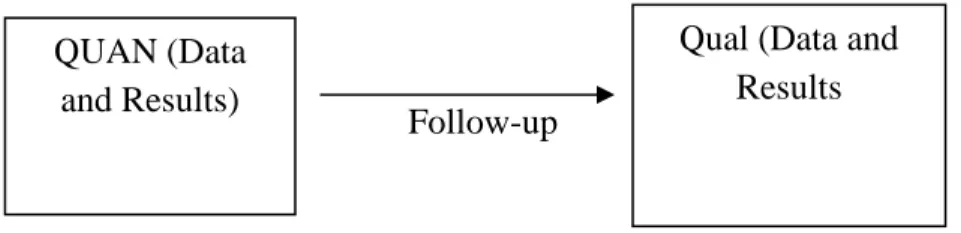
A mixed methods design was selected to address the problem of online higher education teaching faculty knowledge (Creswell, 2008). The sequential mixed methods approach entails collection of quantitative data followed by qualitative data collection (Creswell, 2008). This study therefore began by collecting quantitative survey data administered by a questionnaire that examines aspects of online teaching and learning within the college’s online programs. A