PEER EDUCATORS’ PERCEPTION OF THE ‘100% YOUNG’ PEER EDUCATION TRAINING PROGRAMME
by
NGO IBOM SALOME CLEMENCE
submitted in accordance with the requirements for the degree of
MASTERS OF PUBLIC HEALTH
at the
UNIVERSITY OF SOUTH AFRICA
SUPERVISOR: PROF L ROETS
Student Number: 46270760
DECLARATION
I declare that PEER EDUCATORS’ PERCEPTION OF THE ‘100% YOUNG’ PEER EDUCATION TRAINING PROGRAMME is my own work and that all the sources that I have used or quoted have been indicated and acknowledged by means of complete references and that this work has not been submitted before for any other degree at any other institution.
08 February 2016
... ...
PEER EDUCATORS’ PERCEPTION OF THE ‘100% YOUNG’ PEER EDUCATION TRAINING PROGRAMME
STUDENT NUMBER: 45270760
STUDENT: NGO IBOM SALOME CLEMENCE
DEGREE: MASTERS OF PUBLIC HEALTH
DEPARTMENT: HEALTH STUDIES, UNIVERSITY OF SOUTH AFRICA
SUPERVISOR: PROF L ROETS
ABSTRACT
Preventing teenagers’ pregnancies and improving teenagers’ reproductive health are important as pregnancies in teenagers still represent an important health challenge in Cameroon.
The purpose of this dissertation of a limited scope was to describe the perception of peer educators who underwent the ‘100% young’ peer education training and the effect it had on their own sexual behaviour.
A qualitative descriptive, explorative and contextual research design was conducted. Data collection was done using in-depth interviews. Fifteen peer educators were purposively selected. Two questions were asked namely; please describe how you perceived the peer education training that you underwent and, describe how this training affected your own sexual behaviour.
Findings revealed that participants had a positive education experience, positive personal growth and for many, that was enough to become mentors for their peers and build awareness. Recommendations propose that interventions such as the ‘100% young’ are urgently required to prevent teenage pregnancy.
KEY CONCEPTS
Teenagers; peer education; peer educators; sexual behaviour; teenage pregnancy; perception.
ACKNOWLEDGEMENTS
• May I thank The Almighty God for granting me the opportunity, time, life, health and the enthusiasm to finish the study.
• I would like to acknowledge the comprehensive tutorial guidance and experience of my supervisor Professor Lizeth Roets at UNISA who kept me focused and well informed, ensuring me of an interesting learning experience and guidance throughout the research process.
• I would also like to extend my gratitude to the ‘100% young’ peer education training programme in Douala Cameroon for granting me permission to conduct the study, for their contributions and the information they provided me during the study.
• Thank you to the participants for sharing their perceptions (of the ‘100% young’ peer education training programme they underwent and the effect it had on their own sexual behaviour) with me and trusting me with the information they provided. This made it possible for me to explore their challenges in the training programme and develop strategies to meet these challenges.
• I thank my family: my Father, Ibom Ibom Aloys Marie, my Mother, Nguimbock Odette, my Child, Lindiwe Israelle Bawana, my sisters and brothers for giving me support and encouragement to realise my dream.
Dedication
This dissertation is dedicated to my parents for their love, endless support and encouragement
i
TABLE OF CONTENTS
CHAPTER 1 ... 1
OVERVIEW OF THE STUDY ... 1
1.1 INTRODUCTION ... 1
1.2 BACKGROUND TO THE RESEARCH PROBLEM ... 2
1.3 THE STATEMENT OF THE PROBLEM ... 4
1.4 DEFINITIONS OF KEY CONCEPTS ... 5
1.4.1 Education ... 5 1.4.2 Peer education ... 5 1.4.3 Peer educators ... 5 1.4.4 Peer ... 5 1.4.5 Perception ... 5 1.4.6 Sexual behaviour ... 6 1.4.7 Teenager ... 6 1.4.8 Teenage pregnancy ... 6 1.5 OPERATIONAL DEFINITIONS ... 6 1.5.1 Education ... 6 1.5.2 Peer education ... 6 1.5.3 Peer educators ... 6 1.5.4 Peer ... 7
1.5.5 Perception about ‘100% young’ peer education training ... 7
1.5.6 Sexual behaviour ... 7
1.5.7 Teenagers ... 7
1.6 THE ‘100% YOUNG’ TRAINING PROGRAMME ... 7
1.7 PURPOSE OF THE STUDY ... 9
1.8 OBJECTIVES OF THE STUDY ... 9
1.9 RESEARCH METHODOLOGY ... 10
1.9.1 Research design ... 10
1.9.2 Population ... 10
1.9.3 Unit of analysis (sample and sample selection) ... 10
1.9.4 Research technique ... 11
1.9.5 Exploratory interview ... 11
1.10 DATA ANALYSIS AND LITERATURE ANALYSIS ... 12
1.11 TRUSTWORTHINESS OF THE DATA ... 12
1.12 ETHICAL CONSIDERATIONS ... 12
1.13 SIGNIFICANCE OF THE STUDY ... 13
1.14 CHAPTER LAYOUT ... 13
ii CHAPTER 2 ... 14 METHODOLOGY ... 14 2.1 INTRODUCTION ... 14 2.2 RESEARCH DESIGN ... 14 2.3 POPULATION ... 16
2.4 UNIT OF ANALYSIS (SAMPLE) ... 16
2.5 RESEARCH TECHNIQUE ... 17
2.5.1 In-depth interview ... 18
2.5.2 The interviewer... 19
2.5.3 Field notes ... 19
2.5.4 Exploratory interview pilot study ... 20
2.6 DATA GATHERING ... 21 2.6.1 The interview ... 22 2.7 DATA ANALYSIS ... 23 2.8 TRUSTWORTHINESS ... 24 2.8.1 Credibility ... 24 2.8.2 Transferability ... 25 2.8.3 Dependability ... 25 2.8.4 Confirmability ... 25 2.9 ETHICAL CONSIDERATIONS ... 26
2.9.1 Permission to conduct the study ... 26
2.9.2 Informed consent ... 26
2.9.3 Violation of privacy ... 27
2.9.4 Anonymity and confidentiality ... 27
2.9.5 Freedom from harm ... 27
2.9.6 Restoration of respondents ... 27
2.9.7 Management of the data ... 28
2.10 CONCLUSION ... 28
CHAPTER 3 ... 29
DATA ANALYSIS, INTERPRETATION OF FINDINGS AND ... 29
LITERATURE CONTROL ... 29
3.1 INTRODUCTION ... 29
3.2 FINDINGS ... 35
3.2.1 Biographical profile of participants ... 35
3.2.2 Peer education ... 36
3.2.3 Advantages of peer education ... 37
3.3 POSITIVE EDUCATION EXPERIENCE (THEME 1) ... 38
iii
3.3.2 Anatomy and physiology (category 1.1 ... 40
3.3.3 Family planning (categories 1.2 and 1.3) ... 42
3.3.4 Contraception (category 1.2 continue) ... 43
3.3.5 Barrier methods of contraception ... 44
3.3.5.1 Condoms ... 44
3.3.5.2 Spermicides ... 47
3.3.6 Hormonal methods of contraception ... 48
3.3.6.1 The birth control pill ... 48
3.3.6.2 Injectable hormonal contraceptives ... 52
3.3.6.3 The contraceptive implant ... 53
3.3.6.4 The morning after pill ... 54
3.3.7 Contraceptives not suitable for teens ... 55
3.3.7.1 Hormonal contraceptives ... 55
3.3.7.2 The combined contraceptive vaginal ring ... 56
3.3.7.3 The fertility awareness method ... 56
3.3.7.4 Sterilisation ... 57
3.3.8 Prevention of sexually transmitted diseases (category 1.4 continue) ... 57
3.4 CHALLENGES THAT INFLUENCE CONTRACEPTIVE USE (THEME 2) ... 60
3.4.1 Attitude of nursing staff (category 2.1) ... 60
3.4.2 Accessibility of contraceptives (category 2.2) ... 61
3.4.3 Attitude of partners (category 2.3) ... 61
3.4.4 Lack of knowledge (category 2.4) ... 62
3.4.5 Socio-cultural expectations and contradictions (category 2.5) ... 64
3.5 POSITIVE PERSONAL GROWTH (THEME 3) ... 66
3.5.1 Self-respect (category 3.1) ... 67
3.5.2 Assertiveness (category 3.2) ... 68
3.5.3 Negotiation skills (category 3.3) ... 69
3.5.4 Behaviour change (category 3.4) ... 70
3.6 MENTORING ROLE (THEME 4) ... 72
3.7 CONCLUSION ... 73
CHAPTER 4 ... 75
CONCLUSIONS, RECOMMENDATIONS AND LIMITATIONS ... 75
4.1 INTRODUCTION ... 75
4.2 CONCLUSIONS AND RECOMMENDATIONS ... 75
4.2.1 Positive education experience ... 75
4.2.2 Challenges that influence contraceptive use ... 76
4.2.3 Positive personal growth ... 77
iv
4.3 LIMITATIONS OF THE STUDY ... 79 4.4 CONCLUSION ... 79 REFERENCES ... 80
v
LIST OF TABLES
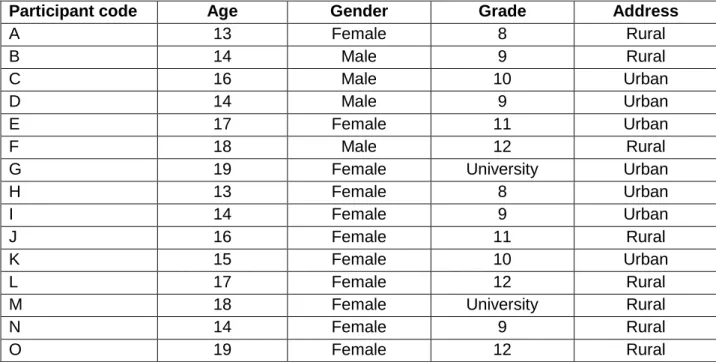
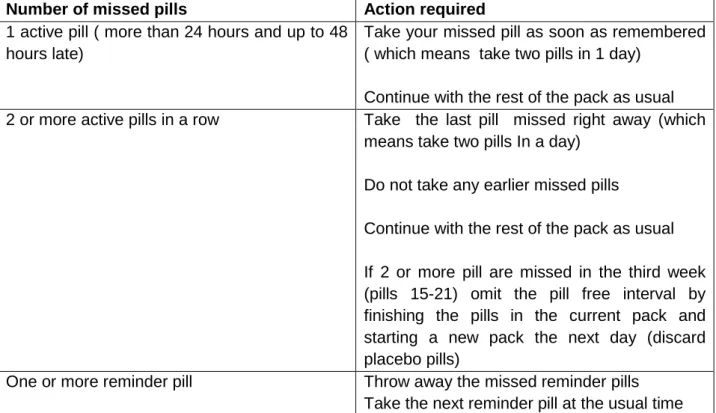
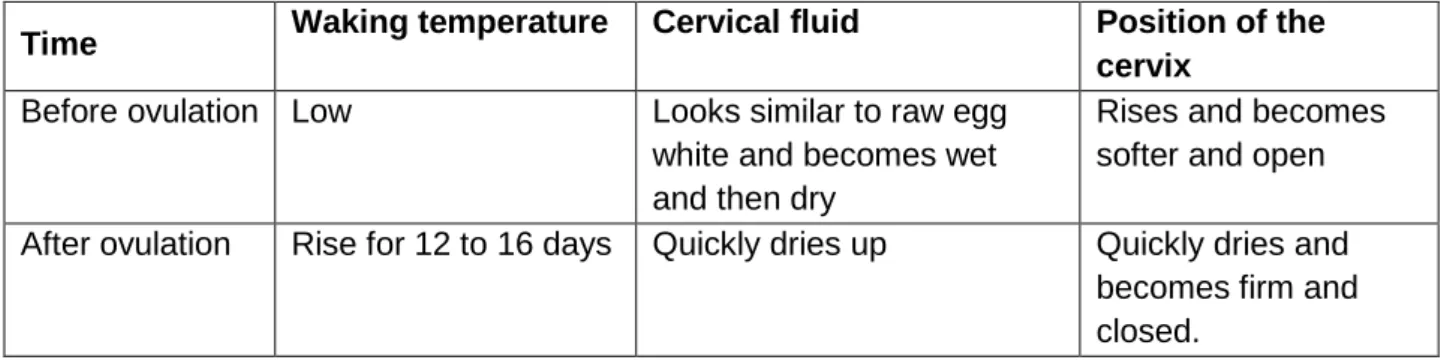
Table 3.1 Themes, categories and sub-themes ... 30 Table 3.2 Biographical data of participants ... 35 Table 3.3 Actions after missing a pill from a 21-28 day pack: Combined hormonal
birth control pills ... 50 Table 3.4 Actions after missed pills from progestin only pills ... 51 Table 3.5 Fertility signs before and after ovulation... 56
vi
LIST OF ANNEXURES
Annexure A Request to the manager of ‘100% young’ for permission to conduct a research study on the ‘100% young’ peer education training
programme ... 99-100
Annexure B Letter of authorisation to conduct the research study on ‘100%
young’ peer education programme ... 101-102
Annexure C Information leaflet to participants ... 103-105
Annexure D Informed consent form ... 106-107
Annexure E Ethical clearance certificate ... 108-109
Annexure F Parents’ permission letter ... 110-111
Annexure G Parents’ permission slip ... 112-113
Annexure H The children accent ... 114-115
Annexure I Grand tour questions ... 116-117
vii
LIST OF ACRONYMS
HIV Human Immunodeficiency Virus
PMSC Programme de Marketing Social au Cameroun
PSI Population Services International
STDs Sexually Transmitted Diseases
STIs Sexually Transmitted Infections
CHAPTER 1
OVERVIEW OF THE STUDY
1.1 INTRODUCTION
Substantial proportions of young people in Sub-Saharan Africa are sexually active (Pradhan, Wynter & Fisher 2015:45). In most countries it is not the age at marriage, but the age at first intercourse outside marriage, which is an important factor determining the occurrence of teenagers pregnancies (Sedgh, Finer, Bankole & Singh 2015:223-225).
In sexual relationships between teenagers, gender imbalances often increase the risk of unwanted pregnancies and sexual transmitted disease (STD) faced by young females. Young females are widely perceived to have premarital sexual experiences with a variety of partners (Ward & Biggs 2009:129-135). The need to conform to these practices may cause young females to fear disclosing their sexual activity, and may result in reluctance among them to report sexual experience. The fear of losing a partner or incurring his anger appear to be important factors inhibiting young females from exercising the choice to engage in sexual activity or negotiating the use of condoms or other contraceptives (Jejeebhoy & Young 2007:15-17).
In 2006 there was evidence in Cameroon that teenager pregnancy rates were rising for the first time since 1993 (Kamtchouing & Takougang 2007:798-801). This is a concern, as the risks and consequences of teenage pregnancies are numerous and babies born to teenage mothers are at risk of abuse and neglect. Poverty also becomes a problem, as the mothers do not finish high school and become stay at home teen parents (Foumane & Chiabi 2013:85-89).
Unplanned pregnancy in Sub-Saharan Africa, and especially in Cameroon, is critical and should be prevented (Population Reference Bureau 2009), because teenage sexuality almost invariability leads to unwanted pregnancy, therefore prevention through education is critically important to prevent unwanted pregnancies. The nature of the message, as well as the nature of a teenager, highlights peer education as an approach
that shows particular promise with young people (Svenson, Burke & Johnson 2008:12-18). Peer education programmes can be a powerful approach to educate youth and change their attitudes (Flanagan & Mahier 2007:12-15). Some studies indicate that teenagers receive most of their information about sexual expression from the media and other youth, and that peer influence becomes increasingly important as teenagers mature (Shonert-Reichi & Howard 2013:165-168). Peers are an important aspect of teenagers’ transition to adulthood as youths move away from dependence on the family, and closer ties with their peers give them the social support they need during these transition years (Kar & Talbot 2009:12-14).
Peer education is one strategy to address both teenage pregnancy prevention and sexual health promotion for this population (Kar & Talbot 2009:19-21). It builds on the strong ties between age mates fostered during socialisation and by-passes adults, who are reluctant to talk to youths about sexual matters (Bastien & Klepp 2008:185-187).
In reaction to the increase in the incidence of teenagers pregnancy in Cameroon, the government has put in place “100% Young”, a peer education programme to address health issues that affect teens, especially HIV, sexually transmitted infections (STIs) and pregnancy prevention (Van Rossem & Meekers 2010:383). These “100% young” peer education programmes involve teenagers (13-19 years old) and tend to follow the peer leader’s model, with some peers acting as assistants to adult trainers or facilitators. It is therefore important to seek an understanding of peer educators’ perceptions regarding the programme they underwent, and whether the training impacted on their own sexual behaviour.
1.2 BACKGROUND TO THE RESEARCH PROBLEM
There is concern about teenage’ pregnancies, particularly in Sub-Saharan Africa, where teenage pregnancy rates are the highest in the world. About 27% of women aged 13-19 years are either pregnant or have children already, while teenage pregnancies in other parts of Africa, like the Middle Eastern countries are only 12% (Demographic and Health Survey 2007).
The incidence of teenage pregnancy remains high in Douala, a city in the Littoral province in Cameroon, where the teenage pregnancy rate is 28% (Neukom & Ashford
2008:75-83). Increased sexual activity among teenagers is manifested in this increased teenage pregnancy rate and an increase in sexually transmitted diseases (Blum 2008:230-238).
In order to address the problems pertaining to unwanted pregnancies and sexually transmitted diseases under teenagers, a number of reproductive health programmes were implemented in Cameroon. One such programme is “100% young”, a social marketing reproductive health programme targeting 13-19 year olds living in Douala and Yaoundé, the two largest cities in Cameroon. This programme, supported by the Bill and Melinda Gates Foundation, was launched in Yaoundé and Douala in 2000 by the programme de Marketing Social au Cameroon (PMSC), an affiliate of Population Services International (PSI). The programme aims to motivate at-risk urban and rural youth to engage in healthier sexual behaviour and focuses on reducing barriers to condom use. The programme focuses on promoting discussions on teenage reproductive health issues within their relationships. Others topics addressed in the programme are sexual history as a risk factor for contracting STDs and HIV, female responsibility for their own reproductive health, abstinence and consistent condom use as strategies to prevent HIV, STIs as well as the risks and implications of unwanted pregnancies. Mass media and radio call-in peer education sessions are used as tools in this programme to deliver the message to youths.
Reproductive health programmes often use popular theories such as a Social Learning Theory, the Theory of Reasoned Action and the Health Belief Model to identify behaviour change programme objectives and activities. The ‘100% young’ peer education training programme is based on a comprehensive theoretical framework that borrows various elements from these behaviour change theories that were perceived to be amenable to change through social marketing and behaviour change programmes. The framework assumes that behaviour change is a function of a combination of individual, environmental and social factors, including perceived severity of sexual risk, perceived personal risk (susceptibility), perceived condom attributes and access, perceived social support and self-efficacy (Blum 2007:230-238).
1.3 THE STATEMENT OF THE PROBLEM
There has been a flurry of media reports currently highlighting teen pregnancy in the Cameroonian community, particularly in schools. Numerous studies have documented that Cameroonian youth experience high rates of unwanted pregnancies, abortion and pregnancy-related school dropouts (Tsala, Dimbuene & Defo 2012:351-361; Foumane & Chiabi 2013:87-90; Sidze & Defo 2013:613).
Girls in Sub-Saharan Africa know little about contraception and the family planning services are frequently unsupportive and refuse to provide them with contraceptives services (Kaufman & Stadler 2008:14-16). In Cameroon, although the major problem appears to be the defective and inadequate practice of contraception, prevention of teen unwanted pregnancies is both biomedical and psychosocial in nature (Ross & Kelley 2008:504-517).
Peers are highly important in influencing teenagers’ values and behaviours. One study on condom use among teenagers found that teen perceptions of other teen’s condom use was the best indicator for determining their own condom use (Davies, Schraudragel & Kajumulo 2014:631-643) and therefore a positive attitude by peers can have a positive influence on condom use and other health behaviour.
A variety of interventions have been developed in an effort to reduce the incidence and ultimately the harmful consequences of teenagers’ pregnancies. Many of these interventions have not been carefully evaluated to determine their efficacy, safety or cost effectiveness (Shreffer & Cox 2015:30-43), despite the fact that teenage pregnancy invariably leads to poverty (Mawer 2008:1713).
In Cameroon, young people involved in the ‘100% young’ peer education training programme are trained by adult facilitators to become future peer educators. This education emphasises participatory methods like small group discussions and role play; workshops on condom education, community outreach, teen theatre, as well as radio shows. The research questions that now arise are: How do these future peer educators perceive the ‘100% young’ peer education training programme they underwent, and how has their own sexual behaviour changed?
1.4 DEFINITIONS OF KEY CONCEPTS
1.4.1 Education
The term ‘education’ refers to the knowledge or abilities gained through being educated (Rooney 2011:32).
1.4.2 Peer education
Peer education is a popular, often ubiquitous, concept that implies an approach, a communication channel, a methodology, a philosophy and a strategy to use the same age and background educators to convey educational messages to target groups (Barr & Layzer 2014:570-577).
1.4.3 Peer educators
The concept peer educators refers to someone who shares characteristics of his or her peers but receives special training to function in a different way; it stands for a group or person, selected or who volunteered to pass on information to others peers (Stevens 2009:19-21).
1.4.4 Peer
The English term ‘peer ‘refers to an equal in civil standing or rank; equal in any respect (Shiner 2009:555-557).
1.4.5 Perception
Bergh and Theron (2009:104) describe perception as a selective process by which people interpret and give meaning to external factors.
1.4.6 Sexual behaviour
Human sexual activities or sexual practices, or human sexual behaviour refer to the manner in which a person experience and express their sexuality (Jemmott & Fong 2010:152-159).
1.4.7 Teenager
The term “teenager” is often used synonymously with “adolescents” and refers to a person between 13 and 19 years, who has not reached full maturity (Mills 2008:243).
1.4.8 Teenage pregnancy
A pregnant teenager is defined as a female person aged between 13-19 years who is pregnant (Pradhan et al 2015:45).
1.5 OPERATIONAL DEFINITIONS
1.5.1 Education
In the context of this study the concept ‘education’ is used to describe the training of a teenager in the ‘100% young training programme and the ‘knowledge’ pertaining to this educational process.
1.5.2 Peer education
In this study, peer education is described as an approach where peer educators, who underwent the ‘100% young’ training actively attempt to inform or influence their peers to adopt healthy sexual behaviour.
1.5.3 Peer educators
Peer educators are teenagers who underwent ‘100% young’ training, trained to initiate informal conversations with their peers, during which they convey educational messages by endorsing “healthy” behaviour within their own peer community.
1.5.4 Peer
Peer, in this study, is a person between 13 and 19 years of age, who is of equal standing with others; belonging to the same societal group and having same mother tongue.
1.5.5 Perception about ‘100% young’ peer education training
In this study, the focus is on perceptions regarding the beliefs, opinions, ideas and views expressed by peer educators living in Douala, who underwent ‘100% young’ peer education training.
1.5.6 Sexual behaviour
Sexual behaviour refers to conduct and activities used by teenagers in their personal sex interactions between each other.
1.5.7 Teenagers
In this study the concept teenager and not adolescent will be used and refers to young females and males between the ages of 13 to 19 years.
1.6 THE ‘100% YOUNG’ TRAINING PROGRAMME
The ‘100% young’ training programme is a social marketing reproductive health programme targeting 13-19 years olds living in Douala, one of the largest cities in Cameroon. This programme is supported by the Bill and Melinda Gates Foundation and was launched in Douala in 2000 by the programme de marketing social au Cameroon (PMSC), an affiliate of Population Services International (PSI). Since 2000, the programme has trained 50 teenagers (peer educators) every year to motivate at-risk teens to engage in healthier sexual behaviour and in an attempt to reduce the cultural barriers to condom use.
This programme is a comprehensive peer driven programme that focuses on sexuality and healthy sexual behaviour, with the purpose of preventing teenage pregnancies and STIs, promoting family planning and reducing personal as well as socio-cultural obstacles associated with teens’ non-use of condoms during intercourse; also it raises teenagers’ awareness of reproduction health. The programme is offered by peers and the information shared with other teenagers in discussion groups, in one-on-one meetings as well as at sport and other gatherings. The specific objectives with the implementation of this programme were to
• reduce the sexual risk behaviours of teens • delay the initiation and frequency of intercourse • increase the use of contraceptives
• motivate the use of condoms, thus reduce the incidence of unprotected sex • increase abstinence among sexually experienced teens
• increase partner communication skills
by demonstrating behavioural impacts among all teens who underwent the ‘100% young’ training programme (Chandra-Mouli et al 2013:517-522).
The programme provides factual information about sexuality, reproduction and sexually transmitted infections. The curricula are delivered in five separate workshops (Tarkang 2013:34-36) with the following content addressed in each workshop:
Human reproductive organs: this session provides teens with information on anatomy and physiology as well as on puberty issues. The content is covered in a four day workshop.
Sexually transmitted infections: the second four day workshop addresses sexual health issues such as: STD; STI including HIV/AIDS. Prevention strategies such as avoiding unprotected sex, by either postponing sexual involvement or using condoms, are emphasised.
Communication skills: the third workshop focuses on supporting teens in the development of specific communication skills to enhance their handling of risky
interpersonal situations, including negotiation skills. This workshop also runs over four days.
Sexual decision-making: the fourth workshop is a four day workshop; where teens are provided with skills to resist peer pressure that led them into early sexual involvement.
Goal setting and making: in the last workshop, peer educators are given a message about the role of education in socio-economic status. In four days they are taught about the benefit of education as a key for a better prospect in life.
The 20 days (five workshops of four days each) are conducted annually during the July holidays to accommodate 50 teens without disturbing the school or university schedule. The workshops are all facilitated by both a male and a female facilitator.
This peer education programme, similar to others, has advantages that ensure that the set objectives, as stipulated, are met.
1.7 PURPOSE OF THE STUDY
The purpose of this study is to describe the perception of peer educators about ‘100% young’ peer education training they underwent and the effect it had on their own sexual behaviour.
1.8 OBJECTIVES OF THE STUDY
The following objectives were formulated in accordance with the purpose of the study:
• To describe peer educators’ perception of the ‘100% young’ peer education training programme.
• To describe the effect of the training on their own sexual behaviour after completion of the ‘100% young’ peer education training programme.
• To write recommendations that could possibly contribute to improvements in teen sexual behaviour.
1.9 RESEARCH METHODOLOGY
1.9.1 Research design
Creswell (2009:301) states that the characteristics of a design should capture a definition of design, the unit of analysis used, data collection process, reporting formats and any other special characteristic of the specific design (Neuman 2008:104). A qualitative, explorative, descriptive and contextual (Babbie & Mouton 2009:133) research design is adopted when attributes likes perceptions or views of human sources are studied (Brink 2009:11; Talbot 2008:93), as was the case in this study. A qualitative design was selected as it focuses on aspects such as experiences and trying to understand the viewpoint of every research participant (Brink 2009:22).
1.9.2 Population
The concept ‘population’ can be defined as the specific pool of cases that the researcher wishes to study (Neuman 2008:220). The population was the total number of participants from which the sample was selected; namely all the peer educators who received peer education in the ‘100% young’ training in Douala. In total, 50 young people underwent the ‘100% young’ training.
1.9.3 Unit of analysis (sample and sample selection)
Sampling is the process used to select cases for inclusion in the research study (Terre Blanche & Durrheim 2009:374). The inclusion criteria were developed to guide the inclusion of participants. The inclusion criteria were:
(1) Teenagers between 13-19 years old
(2) Involved as peer educators at the time of data-gathering (3) Unmarried
(4) More than six months of active involvement in the programme (5) Able to communicate in French or English
Due to the qualitative research design the size of the unit of analysis was based on saturation of data. The sampling technique was purposive sampling (see chapter 2, page 16) and saturation was achieved after 15 interviews were conducted.
1.9.4 Research technique
After receiving ethics approval from the Research Ethics Committee of the Department of Health Studies at UNISA to conduct the research (see annexure E), the researcher obtained approval from the Manager of the ‘100% young’ peer education training programme (see annexure B). Informed consent was obtained from peer educators aged 18 and above (see annexure D), while parents of the minors 13 to 17 gave parental consent and the children accent agreed to participate in the study (see annexure F and H). Data were collected by means of in-depth interviews.
Interviewing is the predominant mode of data or information collection in qualitative research (Kvale & Brinkmann (2009:4). In this study, the researcher, trained as an interviewer, used face-to-face, one-on-one in-depth interviews to collect the data. The interview was conducted in French or in English and attempted to understand the peer educators’ point of view, to unpack the experience of their perceptions and to “uncover their world prior to scientific explanation.”
The following two questions were asked:
• Please describe how you perceived the peer education training that you underwent?
• Please describe how this training affected your own sexual behaviour?
1.9.5 Exploratory interview
An exploratory interview with three (3) purposively selected participants, who met the selection criteria, was conducted. In this way the feasibility of this data collection method as well as the interviewer’s skills and the technique were determined and were confirmed as described (Mc Niff 2013:320). The question could be tested to ensure that the desired information was obtained.
1.10 DATA ANALYSIS AND LITERATURE ANALYSIS
Tesch’s method of open coding (Creswell 2009:142) was employed. All data derived from the verbatim transcribed interviews (Polit & Beck 2011:332) and field notes (Polit & Beck 2011:382) were reviewed in the context of the entire interview sessions with words, phrases descriptions and terms central to research topic noted. These were coded and analysed separately by the researcher as well as an external independent coder who has extensive experience in qualitative research methods.
Themes and sub-themes were established and described according to significant categories, which emerged. To enforce sub-themes and provide referential adequacy, direct quotations of the participants’ responses were used as sub-themes.
A literature analysis was performed and the results of this study were integrated in the light of present literature to establish similarities and differences, as suggested by Morse (2012:44).
1.11 TRUSTWORTHINESS OF THE DATA
In qualitative research, it is important to develop strategies to ensure the trustworthiness of research findings. In this study, the researcher was guided by Guba’s model of ensuring trustworthiness as described in Krefting (1991:214-222) and Marshall and Rossman (2014:323). This model is based on four criteria; namely credibility, dependability, confirmability, transferability (see chapter 2, page 24 for detailed description).
1.12 ETHICAL CONSIDERATIONS
Ethical and legal considerations have to be addressed in any research study. Ethics deal with beliefs about what is right or wrong, proper or improper, good or bad. Research should therefore be conducted in such a way that the rights and welfare of the participants are always protected (McMillan & Schumacher 2014:203). Ethical aspects that were taken into account while conducting the study (Babbie & Mouton 2009:675; Terre Blanche & Durrheim 2009:94; Brink 2009:75) are explained in detail in chapter 2, page 25.
1.13 SIGNIFICANCE OF THE STUDY
This research is of significance as knowledge about peer education, as an intervention for teenage pregnancy, extends the knowledge base that currently exists in that field. Peer education as a strategy is relatively new to the majority of teenage pregnancy prevention programmes (Driscoll 2007:32-35). This study of peer educators’ perceptions can be a learning paradigm for youth in urban and rural communities to enhance educational and health information about their sexual behaviour.
Communities, who choose to embrace this strategy and implement it, can benefit from the educational and health outcomes it has to offer.
1.14 CHAPTER LAYOUT
This research study is presented in four chapters.
Chapter 1: An overview of the study
Chapter 2: A description of the research methodology Chapter 3: The data analysis and the literature analysis
Chapter 4: The conclusions and the recommendations of the study
1.15 CONCLUSION
Teenage pregnancies remain a concern in the modern world and research at various levels in the health care system is needed to address this problem. The focus in this study is on one peer education programme, the ‘100% young’ peer education training programme, as one attempt by the government in Cameroon to address teenage pregnancies. Chapter 2 will described the methodology that was utilised to gather the data from the participants.
CHAPTER 2
METHODOLOGY
2.1 INTRODUCTION
A brief overview of the study was presented in chapter 1. This chapter outlines in more detail the research methodology that was utilised, thus a step by step description of the processes involved.
2.2 RESEARCH DESIGN
Yegidis and Weinbach (2011:99) assert that a research design is a plan for conducting research and informs the researcher what methods to use to study the nature of the problem under investigation. This study assumed a qualitative design to ensure that the purpose and the objectives of this study were achieved.
Qualitative research is a systematic subjective approach used to describe life experiences and give them meaning (Creswell 2009:186). Its subjectivity is due to the fact that participants are able to express their feelings and views about their experience (Tully, Rothery & Grinnelli 2014:62) with no intention to quantify these experiences. The major assumption in qualitative research is that there is no single reality and each narrative is knowledge on its own. A qualitative study is normally conducted when a researcher seeks to “gain understanding of the perspectives of the person being interviewed. It is relevant when the researcher wished to explore experiences, behaviours or feelings” without the intention to quantify findings (Marshall & Rossman 2014:323).
In executing this research, the researcher employed a qualitative explorative descriptive and contextual research design. The researcher sought to understand and describe the perception of peer educators, who underwent the ‘100% young’ peer education training programme and how or whether it affected their own sexual behaviour after completion of the programme.
The focus is on their perceptions about 100% young’ peer education training, as these were ‘experienced’ or ‘felt’ or ‘undergone’ (Welman & Kruger 2011:17; Mitchell & Jolley 2012:34). Qualitative researchers view social phenomena holistically (Creswell 2009:192), thus the researcher utilised qualitative research to explore the perceptions of peer education as perceived and defined by peer educators themselves. Peers educators were allowed to speak for themselves, thereby emphasising their human capacity. Through probing and encouragement by the interviewer (the researcher), they were able to share experiences.
According to Polit and Beck (20011:30), exploratory research is aimed at investigating the full nature of the phenomenon, the manner in which it is manifested and the other factors with which it is related. Burns and Grove (2011:357) indicate that exploratory studies are designed to increase the knowledge of the field of study.
An explorative design was used, as little is known in Cameroon about the peer educators’ experience in the ‘100% young’ peer education training programme, that was researched. Concepts were explored as they were perceived, as indicated by Hoskins (2008:4) and defined by the peer educators themselves.
A descriptive strategy is defined as a collection of accurate data on the problem to be studied; it is defined as a way of discovering new meaning, describing what exists, determining the frequency with which something occurs and categorising information. A researcher who conducts a descriptive investigation observes, counts, describes and classifies (Burns & Grove 2011:339). The descriptive strategy is ideal for discovering new meaning by providing an accurate portrayal or account of teenage pregnancy from the perspective of the peer educators in Douala. In this study, a descriptive design provided a description of the phenomenon of interest, namely the perceptions of peer educators toward the ‘100% young’ peer education training programme they underwent in Douala municipality, Cameroon.
The data for this study was gathered within the context of the district in Douala in Cameroon, for the contextual significance thereof (Babbie & Mouton 2009:143). The methods of data collection involved active participation by peer educators. The researcher sought to build rapport and credibility with the individuals in the study (Creswell 2009:181). The interviews were conduct in a natural setting and therefore this
study was conducted in Douala, in a separate and private room at the Douala Municipality Hall. The participants were familiar with the venue because the ‘100% young’ peer education training programme used it as a youth centre, and they considered it the most natural and comfortable setting.
2.3 POPULATION
Marshall and Rossman (2014:323) describe a research population as a clearly defined set of potential objects or events from which a sample can be drawn.
The population consisted of 50 educators, who already underwent the ‘100% young’ training in Douala. Only 30 of them complied with the set inclusion criteria and could be asked to volunteer to participate in the study.
Due to practical and financial considerations, it is rarely possible to study all the members of the population (Mitchell & Jolley 2012:270) and therefore it is necessary to select a sample of the population; in qualitative research this is called the unit of analysis.
2.4 UNIT OF ANALYSIS (SAMPLE)
A sample is a selected group, out of a large population, to be included in a study (Graziano & Raulin 2009:20-22). According to (Hoskins 2008:42), the concept sample is an element of the population considered for actual inclusion in the study. It can be viewed as a part of measurements drawn from a population from which we want to conduct the study. For the purpose of this study the sample consisted of teenagers that are from different contexts, urban and rural, living in Douala and who underwent the ‘100% young’ peer education training programme. The sample of peer educators who participated in the study was purposively selected to enable the researcher to obtain the richest possible source of information to answer the research question.
Purposive sampling involves the conscious selection by the researcher of certain subjects, elements, events or incidents (Polit & Beck 2011:243). According to Burns and Grove (2011:452), information-rich persons are to be selected for the purpose of the study. The researcher used the coordinator of the ‘100% young’ training programme to
act as a gatekeeper and recruit possible research participants who met the inclusion criteria. Thirty possible participants complied with the inclusion criteria. The gatekeeper ensured that the participants met the following inclusion criteria:
(1) Teenagers between 13-19 years old
(2) Involved as peer educators at the time of data-gathering (3) Unmarried
(4) More than six months of active involvement in the programme (5) Able to communicate in French or English
If the volunteer participant was younger than 18 years of age, the gatekeeper sent an information leaflet and consent form to the parents, and those older than 18 years received these documents from the gatekeeper. The gatekeeper received the signed consent forms of the volunteers and provided the researcher with the contact details of these possible participants. Of the 30 participants who met the criteria, 20 were willing to participate and provided their contact details via the gatekeeper to the researcher.
After receiving the names and contact details of the volunteers, the researcher made an appointment with the participants on a specific date and time at the venue that was agreed on.
The sample size was determined by saturation of data. Saturation refers to the condition where data was collected, thus interviewing participants, at least to the point where the researcher can intuitively say that she had thoroughly explored the data and had acquired a satisfactory sense of what was going on (Terre Blanche & Durrheim 2009:442). Saturation was reached after 13 interviews; two more were conducted, thus 15 interviews were transcribed and analysed.
2.5 RESEARCH TECHNIQUE
2.5.1 In-depth interview
In-depth qualitative interviews are excellent tools to use in planning and evaluating extension programmes because they use an open-ended, discovery-oriented method, which allows the interviewer to deeply explore the respondent’s feelings and perspectives on a subject. This result in rich background information that can shape further questions relevant to the topic (Ekman & Friesen 2010:288). To gather rich information about peer educators’ perceptions, the researcher used in-depth interviews. The in-depth, face-to-face interviews provided the structure to ensure that conversations were well-organised and well-suited for the research.
The researcher used in-depth interviews because they had the following advantages for this study, as was also indicated by Bowling (2014:404):
• The open-ended questions gave the peer educators the freedom to answer questions in their own words.
• Probing questions were possible when these flowed from previous responses which enriched the data.
• Active listening skills were used to reflect upon what peer educators were saying. • The interviews were audio-recorded and complemented with written field notes to
ensure that none of the data was lost.
• The responses was recorded and documented to probe for deeper meaning and understanding.
Although in-depth interviews can have disadvantages, as mentioned by Bowling (2014:450), the following were not experienced as disadvantages:
Although in-depth interviews may require more time than questionnaires due to the detailed nature of the questions and responses, in this study each interview took only about 60 minutes to complete.
The interviewer bias can be disadvantageous as the in-depth interview tends to be less standardised and relies on the interviewer’s own questioning style and choice of subject matter. This interviewer was trained to conduct the interviews, in addition, the questions
to be asked and skill of the interviewer were tested in the exploratory interview to prevent bias.
The interviewer could intentionally or unintentionally introduce her personal biases into the process. To prevent this disadvantage, the researcher used bracketing, thus putting aside her own feeling about the topic and used a co-coder to assist with the coding of the verbatim narrations as evidence of interpretations.
There might be inconsistency between interviews, because the interview is not as standardised as a questionnaire. The researcher used various communication skills to ensure that the formulation of the questions remained consistent, and with probing questions, followed to ensure that all data were captured, as she was speaking appropriately, maintaining good eye contact with the participants as well as listening effectively to their responses.
Each participant could be probed according to their response which may lead the interview in a different direction for each participant. To prevent this, the researcher focused on the two main questions that formed the objectives of the study.
2.5.2 The interviewer
The interviewer was trained to conduct an in-depth interview. Three exploratory interviews were conducted and assessed (see 2.5.4) by an expert in in-depth interviews to ensure that no leading questions were asked and that the interviews were conducted in a trustworthy an ethical manner.
2.5.3 Field notes
Filed notes are a written account of the things the researcher hears, sees experiences and thinks about during the course of the interview (Morse 2012:44). In this study, field notes were taken by the researcher during interviews. These notes assisted the researcher to remember and record the behaviour and the non-verbal communication of the peer educators that were observed during the interviews. When reading the verbatim transcripts thoroughly, these field notes were added to provide meaning and
understanding of, for example, silent periods during the interview, or non-verbal responses that were noted.
The researcher implemented the following important steps when she took the field notes:
• The notes were written down as soon after observation as possible.
• The notes of every interview were written down on a new page in the field note book, with the date and time of the interview and the number of the participant (interview number) on top of the page.
• A few words or short sentences were jotted down just to recall an observation, but without impacting on the flow of the interview. After completion of the interview a preliminary analysis of notes was made while still in the room to enhance self-reflection for emergent themes.
2.5.4 Exploratory interview pilot study
Janesick (2010:33) states that the pilot study (exploratory interview) in qualitative research allows the researcher to focus on specific areas, like testing the question, assessing the skills of the interviewer and the feasibility of the study (Hulley 2009:168). After obtaining permission to conduct the study from all the relevant parties, the Higher Degrees Committee (Ethics) of the Department of Health Studies at UNISA (see Annexure E), and the Manager of the ‘100% young’ peer education training programme (see annexure B), participants were recruited to conduct an exploratory interview. The exploratory interviews were conducted after the relevant ethics approval permission and informed consent and assent letters were signed (see annexure D), as described in section 2.6. Participants for the exploratory interviews were purposively selected by the gatekeeper of the ‘100% young’ peer education training programme, among teens who usually gather in the Douala Municipality Hall and who were willing to participate. (The same process as described in 2.6 was followed, and the first three interviews were done as exploratory interviews.)
With these exploratory interviews, the nature of the questions were tested to ensure that modifications could be made to the questions and to test the ability of the researcher as interviewer to conduct the interviews. The two questions were tested to ensure that the
desired information could be obtained. The verbatim transcript of the first two exploratory interviews had evidence of leading questions as well as gaps, because the researcher did not recognised where probing could have been used to obtain more in-depth understanding. After consultation, and training a third exploratory interview was conducted. After the third exploratory interview was done, the expert was satisfied with the interview skills of the researcher as well as questions that were formulated. The data obtained from all the exploratory interviews were not used in the final study.
2.6 DATA GATHERING
After ethical approval was obtained from the Research Ethics Committee of the Department of Health Studies at UNISA (see annexure E), and the Manager of the ‘100% young’ peer education training programme (see annexure B), the researcher did the following to start with data gathering:
Since the ‘100% young’ peer education training was done regularly in the Municipality Hall, the researcher asked the gatekeeper to arrange for a slot in one of their meetings to introduce herself and explain the extent of the study, the purpose as well as other relevant information pertaining to the ethical aspects of the research. The researcher then left the Hall and the coordinator of the ‘100% young’ peer educators programme, who acted as the gatekeeper, provided the teenagers with the inclusion criteria. She then asked the teenagers who wanted to voluntarily participate in the study, to take the information leaflets (see annexure C) and consent forms for themselves, and/or their parents, where appropriate, to read through. Minors were requested to ask their parents to sign the consent letters (see annexure F) and bring back the signed documents as well as their assent letters to the gatekeeper. Those 18 years and older, were asked to sign the consented forms and give it back to the gatekeeper if they consent to participate. The gatekeeper then provided the details of the willing participants to the researcher, who arranged for a date and time for the interviews to be conducted. It was agreed that the interviews would be conducted in a separate room at the Douala Municipality Hall, from 9:00 to 12:00 from a Tuesday to Friday (2 June 2014 to 30 June 2014).
The coordinator of the ‘100% young’ peer education training programme organised for this separate room for the interviews to be conducted and assisted the researcher with
other logistical arrangements. A private room, to ensure that no interruption took place, was arranged. A table was placed in the middle of the room with two comfortable chairs facing each other. A small table was placed in the back of the room, but out of sight of the participant, with another tape recorder, in case the one placed underneath the table was full or malfunctioning. The participants were made aware of these tape recorders to ensure that they gave informed consent to be tape recorded.
In front of the interviewer a note book was placed to jot down the field notes. Bottled water was provided for both the interviewer and participant.
2.6.1 The interview
After the researcher met with a participant at the door and introduced herself, she allowed the participant to also introduced him or herself. The participant was then accompanied into the room, and the interviewer ensured that the participant was comfortably seated. The room was well ventilated with a comfortable temperature for the participant, there was enough light and the door was kept closed to enhance privacy. The aim of the interview was again explained and the signed consent forms collected. The researcher explained the purpose of the tape recorder, assured the participant about the confidentiality of the information and mentioned that the tape will be kept locked away (security code), and nobody will have access to the key except the researcher. Participants were made aware that the tapes and the transcripts would be destroyed (burned) after the study was completed. They were reminded of their right to withdraw without being victimised. Then the interview stared with the first question, namely:
• Please describe how you perceived the peer education training that you underwent?
After this question was exhausted and no more information emerged after relevant probing and communication skills were utilised, the next question was asked.
• Please describe how, if relevant, this training affected your own sexual behaviour?
The interviewer was open-minded to maintain openness during the interview process so that peer educators openly share their opinions. She was flexible and responsive, thinking on her feet, responding to challenges and making sure that the core purpose was served. She was patient and observant, and allowed participants to speak freely and open up at a pace that was comfortable, while she observed, picking up subtle cues like facial expressions, body language and tone of voice. She demonstrated good listening skills, and focused on what the speaker was saying. Skills like paraphrasing and summarising were used. The researcher reflected back on the peer educator’s emotions inherent in the message, paying attention to tone and emotional content; hence she gained a greater understanding of the verbal messages being delivered by utilising the field notes. The researcher concluded the interviews with general questions such as, “is there anything further that you feel is important?”
When the researcher was satisfied that the interview was complete she thanked the participants, greeted and accompanied them out of the room. The participants were assured that they can contact the researcher if they wished to have a future interview or for any other purpose. None of the participants requested a follow-up interview. The average interview lasted for more or less 40 minutes and the participants were allowed to do must of the talking.
2.7 DATA ANALYSIS
Qualitative data analysis involves an examination of words, and this was done concurrently with data collection (Brink 2009:292). The interviews done in English were audio taped to provide a permanent full record of the question that was asked, the probes, and the peer educators’ responses/reactions to questions.
A verbatim transcript was done immediately after the interview and all the field notes and non-verbal communications were added to the transcription. Four types of field notes were taken in order to help the researcher to synthesise and interpret the data (Polit & Beck 2011:373): observational notes; theoretical notes; methodological notes and personal notes. The data analysis strategy used was open coding (De Vos & Van Zyl 2011:271).
The researcher utilised the eight steps described by Tesch (in Creswell 2009:185) for data analysis. She listened to all the recorded interviews. Then she read through all the transcripts carefully to get the sense of the interview. She grouped topics with the same idea and label, and assigned them to themes. She selected one interesting interview, read again and wrote her thoughts in the margin. Themes, categories, and sub-themes were then identified. Direct words of participants were used as sub-themes, to indicate the real data obtained. The data was also analysed by an independent coder, who met with the researcher to discuss and reach consensus on the identified theme categories, and subthemes.
2.8 TRUSTWORTHINESS
According to Lincoln and Guba in Krefting (1991:218), trustworthiness is a method of establishing rigor in qualitative research without sacrificing relevance. The authors further suggest that the concept of trustworthiness be utilised to guide the quest for quality in qualitative research and propose four alternative constructs that more accurately reflect the assumptions of the qualitative paradigm, namely: credibility, transferability, dependability and conformability.
2.8.1 Credibility
In order to ensure the credibility of the study the researcher had to prove the truth value of the study. Truth value means that the researcher is confident that the findings are a true and honest reflection of the views, thoughts and experiences of the participants in view of the research design, and the setting that was used (Lincoln & Guba in Krefting 1991:115). The strategy used to ensure truth value was credibility, which was achieved by using an experienced, independent co- coder who assisted with coding and analysis. The co-coder received the transcriptions and did the co-ding. The coding of the researcher and that of the co-coder were then compared to identify similarities and to agree upon the final themes, categories, and sub-themes. No translation was done as all the interviews were conducted in English as the participants had no problem speaking English. This was done to confirm the researcher’s own analysis of the transcribed data. The interviews were tape-recorded to capture verbatim accounts by participants (Krefting 1991:218-220). Triangulation of the data sources was achieved
through interviews with participants of different ages, and sexes and from different backgrounds (urban and rural).
2.8.2 Transferability
Transferability was ensured by applicability. It is the extent to which the research finding can be generalised to other populations, contexts and other situations (Krefting 1991:216). This criterion was assured by the detailed background information about the setting, and the context of research. A pure data trail and description were provided to assist with transferability to similar contexts. This will enable other researchers to assess similar groups and contexts. The onus to determine transferability of the findings therefore lies with those who wish to transfer the findings to similar context.
2.8.3 Dependability
Dependability is the strategy used to ensure consistency in qualitative research; to prove that the researcher included a detailed description of the research methodology and the questions that were asked. She also used a code-recode procedure through which she re-checked the accuracy of her coding. She used the services of a co-coder in order to verify her coding and analysis; also the involvement of an experienced researcher (supervisor) in qualitative methods, who followed the progression of the study to analyse and evaluate the decisions made, as well as to determine whether comparable conclusions could be reached given the same data and research context.
2.8.4 Confirmability
Neutrality was ensured through the strategy of confirmability. It means that the findings are a true reflection of the participants’ experiences only and that there are no external influences (Krefting 1991:216). Neutrality entails freedom from bias in the research procedure and findings. It also refers to the degree to which the findings reflect the true data obtained and not the biases of the researcher (Babbie & Mouton 2011:278). The researcher tried to be open minded and made use of a co-coders to limit bias. The findings were also shared with the participants to ensure that the data revealed a true reflection of the opinions of the participants. The researcher made use of reflective thinking by putting aside her own speculations, feelings, problems, ideas, prejudices
and impressions when analysing the data. In her report the researcher put verbatim narrations to substantiate statements made and to provide an audit trail or chain of evidence for interpretations.
2.9 ETHICAL CONSIDERATIONS
Neuman (2008:458) defined ethics as what is or is not legitimate to do in research and what “moral” research is about. The following ethical principles were followed to ensure that ethical research was conducted.
2.9.1 Permission to conduct the study
Institutional approval was obtained from the Research Ethics Committee of the Department of Health Studies at the university where the researcher was enrolled for her study (see annexure E). Approval was also obtained from the Manager of the ‘100% young’ peer education training programme (see annexure B).
2.9.2 Informed consent
The research participants have a legal right to give informed consent. They were provided with an information leaflet with information about the purpose of the study as well as their rights as participants. The participants were informed about the goal and the methodology of the research, what their participation involved. They knew that they may refuse to participate or may withdraw from participating at any stage (Schurink in De Vos, Delport, Fouché & Strydom 2011:16; Tully et al 2014:30). Participants were informed about the duration of the interviews as well as the study and how the information would be recorded. Participants were asked to sign informed consent forms (the process whereby a competent individual agrees to participate in the study) as was the case for participants of more than 18 years. Parental assent was from participants between 13 and 17 years, as is required if minors agree to participate in the study according to the institutional Review Board.
2.9.3 Violation of privacy
Privacy can be defined as “that which normally is not intended for others to observe or analyse” (Levy & Lemeshow 2013:71). The privacy and identity of research participants were respected. Interviews were conducted in a private room, without interruptions. The names of the participants did not appear on any document or field note and therefore the data could not be linked back to any individual. The interviews were conducted in a private room, behind closed doors to prevent interruptions and enhance privacy.
2.9.4 Anonymity and confidentiality
Anonymity and confidentiality are inherent in the concept of privacy, which refers to an agreement between persons that limits others’ access to confidential information. Information that is given anonymously also ensures the privacy of participants (Levy & Lemeshow 2013:87). The researcher was responsible to protect all the data, within the scope of the research, from being divulged. Anonymity was maintained in that no one could link the names of the participants with any information that was given to the researcher although the researcher knew the peer educators. The transcribed interviews were numbered with no identifiable data. It was impossible for anybody to link the data transcript and the final analysis with a specific participant.
2.9.5 Freedom from harm
When research is conducted on any sensitive issue, the researcher must be concerned about the safety of the participants; because the nature of social and health research could be emotionally harmful (Babbie & Mouton 2009:375; Terre Blanche & Durrheim 2008:34), the researcher treated the participants with respect when asking questions about their personal views and they were assured that they would not be exposed to any harm or exploitation (Polit & Beck 2011:76). It was not necessary to refer any of the participants for counseling as the subject was not sensitive in nature.
2.9.6 Restoration of respondents
The researcher convened a meeting with all peer educator volunteers after the completion of the study to clarify any misconceptions that might have been created in
the process of the study. This is necessary to give research participants an opportunity to review and evaluate their experience of the study (Levy & Lemeshow 2013:56). All the participants were present, none of them raised an issue of concern; they showed their positive feelings about their participation in the study.
2.9.7 Management of the data
Management of the data refers to the conservation of the tapes, the field notes and the transcripts both during the study and after it was completed (Tully et al 2014:49). The participants were assured of the proper safe-keeping of information in a locked store for data documents. The only people who had access to it were the researcher, academic supervisor and the independent coder. The tapes and notes were kept for a period of one year and destroyed after the study was completed and examined. Although the research report will become a public document it will not contain any information that can be linked to the identity of an individual participant.
2.10 CONCLUSION
In this chapter the researcher described the methodology that was utilised to gather the data from the participants in an ethical manner. A data trail about data gathering and analysis was given to assist with the possible transferability of the data to similar contexts.
Chapter 3 will focus on the themes, categories, and sub-themes that emerged from the data analysis.
CHAPTER 3
DATA ANALYSIS, INTERPRETATION OF FINDINGS AND
LITERATURE CONTROL
3.1 INTRODUCTION
The data analysis of this dissertation, of limited scope, as well as the literature control will be presented in this chapter in a very integrated way.
The available literature on peer education as well as contraceptives were integrated with the study findings to ensure easy reading and understanding, as well as to provide an overview of where the study findings (83 direct quotes) fit into available literature.
Two open-ended questions were asked to meet the purpose of this study, namely:
1. Please describe how you perceived the peer education training that you underwent, and
2. Please describe how this training affects your own sexual behaviour.
Data analysis, organisation and interpretation were done using Tesch’s eight steps (Creswell 2009:189). The researcher listened to audiotapes to get an overview of the extent of the interviews. Thereafter all interviews were transcribed verbatim. The researcher read and re-read the verbatim transcripts, to yet again get a global understanding of the interviews and to familiarise herself with the data. Thereafter, the researcher read carefully through every individual transcript. Key concepts, key events or ideas were circled and color codes were used to group together the key ideas into themes and categories. This process was repeated with all the transcripts, adding new themes and changing themes as the researcher worked through all the transcripts. After coding, similar ideas were grouped together into four main themes, namely: positive education experience, challenges that influence contraceptive use, positive personal growth and a mentoring role. Under each of the themes, categories were identified, accompanied by sub-themes that were the direct words as expressed by the participants (see Table 3.1). A co-coder also used the raw data to do an analysis and came up with similar themes, categories and sub-themes, as indicated in Table 3.1.
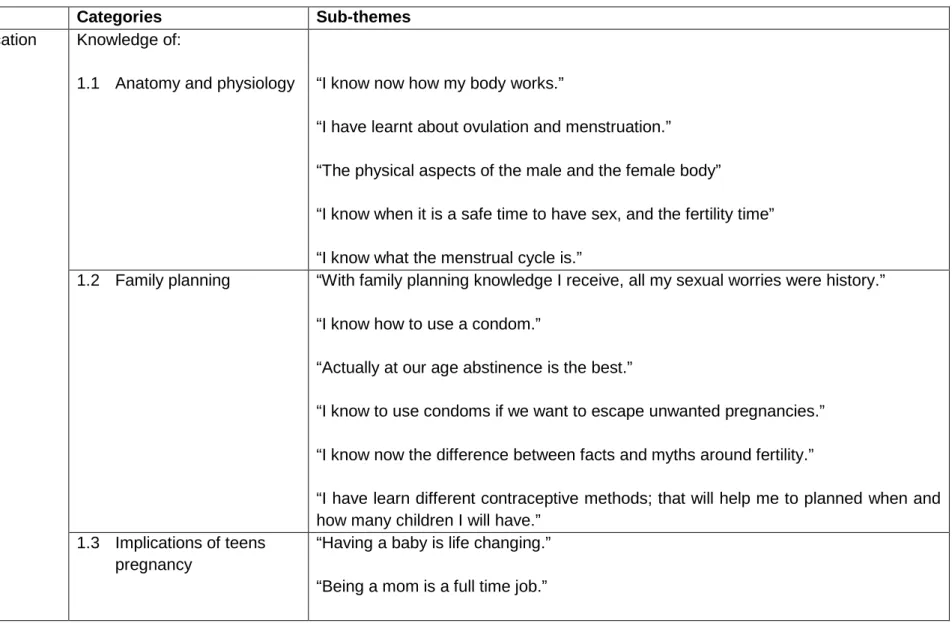
Table 3.1 Categories, themes and sub-themes
Themes Categories Sub-themes
1 Positive education experience
Knowledge of:
1.1 Anatomy and physiology “I know now how my body works.”
“I have learnt about ovulation and menstruation.” “The physical aspects of the male and the female body”
“I know when it is a safe time to have sex, and the fertility time” “I know what the menstrual cycle is.”
1.2 Family planning “With family planning knowledge I receive, all my sexual worries were history.” “I know how to use a condom.”
“Actually at our age abstinence is the best.”
“I know to use condoms if we want to escape unwanted pregnancies.” “I know now the difference between facts and myths around fertility.”
“I have learn different contraceptive methods; that will help me to planned when and how many children I will have.”
1.3 Implications of teens pregnancy
“Having a baby is life changing.” “Being a mom is a full time job.”
Themes Categories Sub-themes
“I learn about the consequences of teen pregnancy.” “Economic and educational implications.”
1.4 Prevention of sexually transmitted diseases
“I know about sexually transmitted disease now, I mean the type, the manifestation and the mode of transmission.”
“I learnt how to prevent against sexually transmitted disease and HIV/AIDS.”
“We learnt to recognise signs and symptoms but to be sure go and check yourself at the clinic if you feel bad after intercourse… or not, sometime it is good to just know where you stand.”
2 Challenges that influence
contraceptive use
2.1 Attitude of nursing staff “At the clinic it is worse there is no privacy, he nurses are rude and chase us.”
“If you come for condoms often at the health clinic, the nurse gets worried that you are having too much sex and can tell you parent.”
2.2 Accessibility of contraceptives
“It is not easy to have contraceptive” “some teens agree on use with their partners but the contraceptives are expensive people are too poor here…sometimes the clinic is out of stock you have to spend on transport to town…it is very expensive.”
2.3 Attitude of the partner “I am scared to talk to my boyfriend about condoms - he will think that I am sick or I am having another man.”
“If I ever find my girl using the family planning it is over…”
“I have heard very bad things about them! What if after that I cannot have a child?” “I do not want my girl to use contraceptives and this can even lead to a separation…I am ready to have a child; I can look after my child if it happens.”
2.4 Lack of knowledge “Condoms are not free where I come from so you can understand how thing are difficult.”
“If my partner is looking beautiful and healthy, there is no method used…even any
Themes Categories Sub-themes
HIV test is done, we check with our eyes…I just look at and I know everything is alright.”
“Condom is difficult to propose; trust me, you can use it at the beginning or with a quick encounter but it reaches a time when you stop.”
“Partners view using a condom as a sign that she is sick or you don’t trust them.” “Over time you stop, also condoms are expensive to obtain…time to stop using condoms depends on the individual you trust.”
“I don’t like anything, pills, condoms, injections, all are dangerous. They go through the tube where eggs come from. When they arrived in the middle of the eggs, they burn them all, the womb is dry, someone may die without a baby.”
“Family planning causes abnormal swelling in the uterus and also cancer…my Aunty was using these methods, and she was operated on because of this.”
“They remove fat and contraceptives in the womb, when you take pills for a long time they stuck in your body…that is why I cannot use family planning.”
“If I ever find my girl using family planning it is over…I have heard very bad things about them! What if after that I cannot have a child?”
“Some guys do not want their girls to use contraceptives and are very tough on that this can even leads to separation.”
“I heard a scenario where a boy reproached the girlfriend who had told him that she was not ready to have a child yet, the boyfriend said he could look after his child and wanted one.”