2018
Developing a Framework to Understand Teachers' Self-efficacy in
Developing a Framework to Understand Teachers' Self-efficacy in
the Teaching of Writing
the Teaching of Writing
Barbara J. WierzbickiFollow this and additional works at: https://researchrepository.wvu.edu/etd
Recommended Citation Recommended Citation
Wierzbicki, Barbara J., "Developing a Framework to Understand Teachers' Self-efficacy in the Teaching of Writing" (2018). Graduate Theses, Dissertations, and Problem Reports. 6947.
https://researchrepository.wvu.edu/etd/6947
This Dissertation is protected by copyright and/or related rights. It has been brought to you by the The Research Repository @ WVU with permission from the rights-holder(s). You are free to use this Dissertation in any way that is permitted by the copyright and related rights legislation that applies to your use. For other uses you must obtain permission from the rights-holder(s) directly, unless additional rights are indicated by a Creative Commons license in the record and/ or on the work itself. This Dissertation has been accepted for inclusion in WVU Graduate Theses, Dissertations, and Problem Reports collection by an authorized administrator of The Research Repository @ WVU. For more information, please contact [email protected].
EFFICACY IN THE TEACHING OF WRITING
Barbara J. Wierzbicki
Dissertation submitted to the
College of Education and Human Services at West Virginia University In partial fulfillment of the requirements for the degree of
Doctor of Education in
Curriculum & Instruction
Malayna Bernstein, Ph.D., Co-Chair Sharon Hayes, Ph.D., Co-Chair Audra Slocum, Ph.D.
Allison Swan Dagen, Ph.D. Cynthia Bolton-Gary, Ph.D.
Department of Curriculum and Instruction/Literacy Studies Morgantown, West Virginia
2018
Keywords: self-efficacy, writing self-efficacy, teaching self-efficacy, teaching writing self-efficacy
Developing a Framework to Understand Teachers’ Self-Efficacy in the Teaching of Writing
Barbara J. Wierzbicki
The purpose of this study was to explore the ways in which the domain specific self-efficacies manifest themselves in the teaching of writing. A teachers’ sense of efficacy is a multidimensional construct and is a significant construct in how teachers’ view
themselves as writers and teachers of writing. This study explored how five elementary classroom teachers viewed these domain specific self-efficacies and the ways in which the various sources of efficacy influenced their self-efficacy as writers and teachers of writing. The researcher collected and analyzed domain specific self-efficacy scales and individual interviews to capture the experiences of these teachers. There was variability across and within the domain specific self-efficacy scales. The most salient source of efficacy as a writer and teacher of writing that emerged was physiological arousals.
Dedication
To my husband, Bill, for your unconditional faith and love. You are my rock and I will forever be grateful for your support in pursuing by life-long dream.
Acknowledgements
I would first like to thank the members of my dissertation committee for their time and support throughout my dissertation journey. I am indebted to Dr. Malayna Bernstein and Dr. Sharon Hayes who served as co-chairs of my committee. You both have set an example of excellence as a researcher, mentor, instructor, and role model. Thank you for challenging me to go beyond my
comfort zone. I would like to thank Dr. Audra Slocum for providing guidance and thoughtful feedback and Dr. Allison Swan Dagen for serving as a member of my committee during the difficult transition to a new research focus. I would also like to thank Dr. Cynthia Bolton-Gary for bringing me into the world of self-efficacy. I will forever be grateful to all these strong women.
I would especially like to thank my family for the love, support, and constant encouragement I have gotten over the years. Particularly, I would like to thank my husband, Bill and my sisters, Debbie, Lisa, and Patti. You are all the salt of the earth, and I undoubtedly could not have done this without you. A special thank you to my nephew, Matthew, for always reminding me to practice what I preach.
I want to extend a heartfelt thank you to my friends who I met along the way. Each of you were brought into my life for a special reason and I have learned so much from you. Thank you for the memories, the conversations, the laughter and tears.
I would like to acknowledge all the students from the Five-Year Teacher Education program who readily provided friendship, support, and words of encouragement. I am blessed to have worked with so many fabulous pre-service teachers.
Most importantly, I want to express my gratitude to the teachers who participated in this study. I sincerely appreciate the time you took from your busy schedules to share your experiences as a writer and teacher of writing.
Lastly, I would be remiss if I did not mention my little Henry. Thank you for listening to countless hours of me talking through my study. You were a gracious listener and always gave me the best feedback possible – your enduring smile and infectious laugher. I will forever be grateful!
Table of Contents
Dedication ... iii
Acknowledgements ... iv
Table of Contents ... v
List of Tables ... viii
List of Figures ... ix
Chapter 1: Introduction ... 1
Purpose of the Study ... 7
Significance of the Study ... 8
Definition of Terms ... 8
Assumptions ... 9
Limitations ... 9
Organization of the Study ... 10
Chapter 2: Literature Review ... 11
Overview ... 11
Theoretical Underpinnings and Conceptual Framework ... 11
Social Cognitive Theory ... 11
The Construct of Self-Efficacy ... 12
The Construct of Writing Self-Efficacy ... 13
The Construct of Teacher Self-Efficacy ... 15
The Construct of Teacher Efficacy in the Context of Writing Instruction ... 18
Previous Studies Exploring Writing Efficacy and Teaching of Writing Self-Efficacy ... 22
Writing Self-Efficacy. ... 23
Writing Self-Efficacy of Practicing Teachers. ... 24
Teacher Self-Efficacy in the Context of Writing Instruction. ... 25
Summary ... 26 Chapter 3: Methods ... 28 Overview ... 28 Researcher Positionality ... 29 Participant Selection ... 31 Introductory Biographies. ... 33 Research Context ... 34 Data Collection ... 34
Data Source: Background Information Questionnaire ... 34
Data Source: Self-Efficacy Surveys ... 35
Data Source: Narrative Interviews ... 37
Data Analysis ... 38
Self-Efficacy Surveys ... 39
Narrative Interview Analysis ... 41
Summary ... 43
Chapter 4: Participant Portraits ... 44
Overview ... 44
Domain Specific Self-Efficacy Scale Results ... 44
Narrative Interviews ... 50
Individual Participant Portraits ... 55
Summary ... 87
Chapter 5: Discussion, Implications, and Conclusion ... 90
Overview ... 90
Summary of Findings ... 90
Discussion of the Findings ... 91
Implications of the Findings ... 98
Implications for Teacher Preparation Programs ... 98
Implications for Professional Development ... 100
Implications for Students and Equity ... 102
Recommendations for Future Research ... 104
Concluding Thoughts ... 105
References ... 107
APPENDIX A – INFORMED CONSENT FORM ... 118
APPENDIX B – BACKGROUND INFORMATION ... 122
APPENDIX C – NEW GENERAL SELF-EFFICACY SCALE ... 124
APPENDIX D – SELF-EFFICACY FOR WRITING SCALE ... 126
APPENDIX E – TEACHERS’ SENSE OF EFFICACY SCALE ... 128
APPENDIX F – TEACHER EFFICACY SCALE FOR WRITING ... 131
APPENDIX G – NARRATIVE INTERVIEW PROTOCOL ... 133
APPENDIX H – DESCRIPTIVE STATISTICS CALCULATIONS ... 135
APPENDIX I – SOURCES OF SELF-EFFICACY AS A WRITER ... 138 APPENDIX J – SOURCES OF SELF-EFFICACY AS A TEACHER OF WRITING . 142
APPENDIX K – CODED SOURCES OF EFFICACY INFORMATION ... 145
List of Tables
Table 1 Sources of Efficacy Information ... 22
Table 2 Participant Background Information ... 32
Table 3 Participant’s Standard z-scores ... 45
Table 4 New General Self-Efficacy Scale Scores ... 46
Table 5 Self-Efficacy for Writing Scale Scores ... 47
Table 6 Teachers’ Sense of Efficacy Scale Scores ... 48
Table 7 Teacher Efficacy Scale for Writing Scores ... 49
List of Figures
Figure 1. Integrated Model of Teacher Self-Efficacy Beliefs ... 17
Figure 2. Conceptualization of the Multiple Domains ... 18
Figure 3. Proposed Integrated Model of Teacher Self-Efficacy Beliefs in the Domain of Writing ... 20
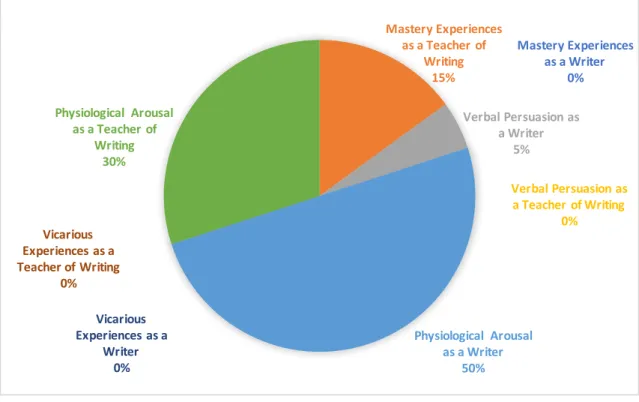
Figure 4. Composite Breakdown of all Participant’s Sources of Self-Efficacy ... 51
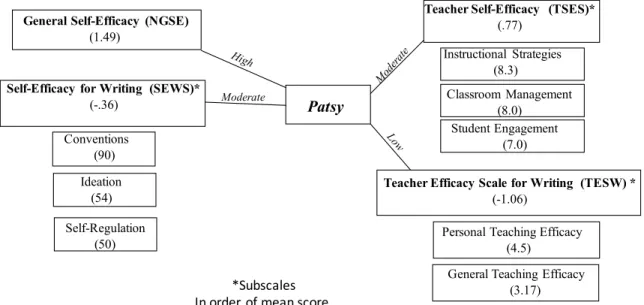
Figure 5. A Portrait of Patsy ... 57
Figure 6. Patsy’s Sources of Efficacy Information ... 58
Figure 7. A Portrait of Daisy ... 63
Figure 8. Daisy’s Sources of Efficacy Information ... 64
Figure 9. A Portrait of Calvin ... 70
Figure 10. Calvin’s Sources of Efficacy Information ... 71
Figure 11. A Portrait of Bella ... 76
Figure 12. Bella’s Sources of Efficacy Information ... 77
Figure 13. A Portrait of Eliza ... 82
Chapter 1: Introduction
I am not really sure how I learned to write. My earliest memories in elementary school are of the handwriting paper (thin wide-spaced newsprint), fat pencils with huge erasers, and touching the lines when forming the letters of the alphabet. In all honesty, writing was a struggle because I am left-handed and I was constantly being forced to write with my right hand, which I remember felt awkward and uncomfortable. I
remember copying Mother’s Day and Father’s Day poems that the teacher wrote on the chalkboard. I remember completing endless phonics, grammar, and spelling worksheets but not once can I recall an authentic writing activity. High school was no different except for a creative writing class. I loved this class because my teacher always had something positive to say about my writing and my paper was not covered with the infamous red ink. I do not think the red ink would have been so bad had it helped me grow as a writer but unfortunately the focus was always on the mechanics of writing, not the content. I never believed my writing was good enough. In fact, I am not sure I knew or even understood what writing was. To this point, for me, the focus was on the physical aspects of handwriting, copying someone else’s words, and responding to prompts. During college, I was devastated because the instructor, whom I really respected, wrote on my paper that he was “somewhat disappointed in the content” of my paper. I have no problem accepting criticism however; there were no suggestions on how to improve the content. It was not until I was in graduate school that I truly believed that I was capable of being a good writer. In a course, specifically focusing on writing, we were asked to write about one special moment in our life that we remembered with absolute clarity, one
that we knew we would hold onto for years and years, and craft a lead using dialogue or sensory details. As I sat there and pondered, this is the lead I crafted:
With the touch of a trembling hand, the sound of steadily beeping machines, the taste of salty tears, and the smell of death, she slipped away to a place where there was no more pain or suffering. Her journey was filled with countless needles, noisy machines, and bruised arms. Cancer had reached out its ugly arms and sucked the precious life right out of her.
Even though it was only a few words from the instructor (“The writing piece about your mom took my breath away. Gorgeous!”), it was at this precise moment that I felt
empowered as a writer. I felt efficacious as a writer. Why had it taken so long? Writing is not only fundamental but learning to write is a “gateway to
empowerment, yet, it is not a natural activity” (Cremin & Myhill, 2012, p. 10). Writing is a complex and demanding task that is unlike other activities. Many other activities, which are hard to learn, improve with practice. However, writing remains a “highly demanding activity even as we become more experienced” (Cremin & Myhill, 2012, p. 10).
The adopted Common Core State Standards (CCSS) have placed writing “at the center of the educational reform movement in the United States, making writing a more integral part of the curriculum and learning” (Graham & Harris, 2015, p. 457). According to the CCSS, students are expected to learn how to write for multiple purposes (e.g., to narrate, to inform, to persuade) and use writing to recall, organize, analyze, interpret, and build knowledge (Graham & Harris, 2013). While it is fundamental, it is really hard. It is not only challenging for students but can be a stressful endeavor for teachers to
in their writing skills, they are less likely to engage in tasks in which writing is required and they will more quickly give up when faced with this challenge (Pajares, 2007). Writing is complex because it involves the use and coordination of numerous cognitive processesthat engage several sub-processes, for example, topic selection, planning, accessing prior knowledge, generating ideas, rehearsing, attending to spelling and handwriting, reading, organizing, editing, and revising (Chapman, 2006). It is a demanding task and as Kellogg (2008) posits engaging in a writing task is as mentally challenging as playing chess. Yet despite having established how difficult writing is, in schools it is often overlooked. In 2003, writing was deemed as the neglected “R”
(National Commission on Writing in America’s Schools and Colleges, 2003). The effects of being “neglected” are clear.
In 2011, the National Assessment of Educational Progress (NAEP) reported that only 27% of assessed students performed at or above the proficient level in writing (National Center for Education Statistics, 2012) continuing a trend of severely low performance from previous years. Prior to 2011, 25-30% of students scored proficient on the annual NAEP writing assessment (National Center for Education Statistics, 2012). Despite these dismal scores, studies have found that students are not provided with the opportunity to write in the context of classroom instruction (Atwell, 1987; Graham & Perin, 2007). Cutler and Graham (2008) found that first, second, and third grade students spent only 21 minutes per day writing, while Graham and Harris (2009) found that elementary students spent 25 minutes per day writing. Based on a six-hour school day, the time spent on writing is minimal.
Acknowledging the many factors that may contribute to our failing scores, this study highlights teacher’s critical role in changing these trends. Teachers play a key role in the academic success of students (Darling-Hammond & Bransford, 2005), yet studies reveal that teachers do not feel confident to teach writing (e.g., Gilbert & Graham, 2010; Graham & Sandmel, 2011; Landon-Hays, 2012; Rapp, 2009). Some teachers do not feel they learned to write well during their own childhood experiences (Graves, 2002), which can possibly lead to a lack of self-confidence in their own writing. Teachers who are less apprehensive about their own writing assign more writing tasks than teachers who are apprehensive (Claypool, 1980). Does this lack of efficacy contribute to a resistance to teach writing?
Various scholars have conceptualized teacher self-efficacy (e.g., Ashton, 1984; Guskey & Passaro, 1994; and Tschannen-Moran, Woolfolk-Hoy, & Hoy, 1998). The conceptualization of teacher self-efficacy that grounded this study is that of scholars Tschannen-Moran, et al. (1998) who state, “the teacher’s belief of his or her capability to organize and execute courses of action required to successfully accomplish a specific teaching task in a particular context” (p. 233).
Teachers’ sense of efficacy is a powerful construct related to a number of positive student outcomes. Students of teachers with high teaching efficacy, compared to their colleagues taught by low efficacy teachers, have improved achievement, higher self-efficacy, positive attitudes regarding school, greater interest in school, more motivation, and a greater likelihood to recognize that what they are learning is essential (Henson, 2002; Tschannen-Moran, et al., 1998). Teachers with a higher sense of efficacy tend to provide better quality instruction, investigate instructional ideas, and implement more
effective classroom management strategies (Graham, Harris, Fink, & MacArthur, 2001; Tschannen-Moran et al., 1998). These teachers are also more likely to work longer with struggling students, are less likely to refer students for special education services (Graham et al., 2001; Poddell & Soodak, 1993; Soodak & Podell, 1996), believe that difficult students are reachable, view classroom issues as manageable by being
resourceful and putting forth extra effort (Ashton & Webb, 1986), and spend more time teaching in content areas where their sense of efficacy is higher (Riggs & Enochs, 1990).
A teachers’ sense of efficacy is a multidimensional construct. Various scholars have labeled these two constructs differently. For example, Ashton and Webb (1986) and Gibson and Dembo (1984) have labeled the two constructs as “teaching efficacy” and “personal teaching efficacy” whereas Hoy and Woolfolk (1990) opted to label these constructs “general teaching efficacy” and “personal teaching efficacy” (Coladarci, 1992, p. 324). Personal teaching efficacy is a teacher’s expectation that he or she will be able to perform the actions that lead to student learning, while general teaching efficacy is the belief that the teacher’s ability to perform these actions is limited by factors beyond school control (Ross, 1994).
Measuring teacher self-efficacy is not without challenges. Over the years several measures have been developed to measure teacher self-efficacy (i.e., Gibson & Dembo, 1984; Guskey, 1981; Riggs & Enochs, 1990; Rose & Medway, 1981) grounded in either Bandura’s (1977) or Rotter’s (1966) work. In their seminal work Tschannen-Moran and her colleagues (1998) reviewed teacher efficacy literature and examined the concepts fundamental to teacher efficacy not only to clarify the construct but also improve how it was measured. They proposed an integrated model of a teacher’s perceived competence,
the task facing the teacher, and the context in which the task was situated (Tschannen-Moran, et al., 1998). A teacher may feel very confident in his or her ability to impact student learning in reading and mathematics but not writing or science.
Although teaching self-efficacy has been recognized as a significant construct associated with teacher competence (Goddard, Hoy, & Woolfolk Hoy, 2000), research is limited to how teachers perceive of themselves as writers (i.e. writing self-efficacy), specifically as it relates to their writing instruction (Rapp, 2009). “Vigorous theoretical support and research evidence supports the hypothesis that teachers should be readers and writers to be effective teachers of reading and writing” (See Atwell, 1987, 1991;
Augsburger, 1998, Calkins, 1993; Graves, 1978, 1984, 1990, 1994; Murray, 1968, 1985, 1989 as cited in Brooks, 2007, p. 178). To be effective teachers of reading and writing, teachers must experience the challenges that their students are confronted with daily. As Bomer (2010) so eloquently posits, “Teaching writing without doing it ourselves is like trying to teach a four-year-old how to tie shoes when we have only worn flip-flops our entire life” (p. 77). Teachers not only have the ability to impact the quality of their student’s writing but also their self-efficacy in their own writing abilities. Pajares (2007) argues, “When academic challenges erode students’ self-efficacy in their writing
capability, it will be difficult to improve this capability without shifting the self-efficacy beliefs that are influential in forming and nurturing it” (p. 246).
It should be noted that the term teacher efficacy can often be confused with the concept of teacher effectiveness. The literature routinely uses the terms teacher’s sense of efficacy or teacher self-efficacy (Shaughessy, 2004) to reduce linguistic and conceptual confusion. This study uses the terms that are routinely used in the literature.
It should also be noted that many times self-efficacy is confused with self-esteem. Self-efficacy and self-esteem are different in that self-efficacy is domain, context, and task specific. Bandura (1997) states:
Perceived self-efficacy is concerned with judgments of personal capability, whereas, self-esteem is concerned with judgments of self-worth. Individuals may judge themselves hopelessly inefficacious in a given activity without suffering any loss of self-esteem whatsoever, because they do not invest their self-worth in that activity. Conversely, individuals may regard themselves as highly efficacious in an activity but take no pride in performing it well (p. 11).
For example, a person may not know how to dance and may have a low self-efficacy for dancing, but that does not result in low self-esteem if dancing is not important in his or her life.
Self-efficacy and self-concept differ in that self-efficacy is context-specific and self-concept includes beliefs of self-worth associated with one’s perceived competence (Pajares & Miller, 1994). Beliefs about confidence are part of an individual’s self-concept, nonetheless Bandura (1986a) claimed that self-concept and self-efficacy
represent different phenomena and must not be mistaken for each other (Pajares & Miller, 1994). In addition, it is important to remember that self-efficacy focuses on individuals’ perceptions of what they believe they can do given their skills and abilities rather than the actual skills and abilities they possess.
Purpose of the Study
The purpose of this study was to investigate how the domain specific efficacies might assemble themselves within an individual. In other words, how might issues relating to a generalized sense of self-efficacy relate to self-efficacy in teaching and how
might those relate to writing? What might be the interaction between these individual self-efficacies? Does one inform the other? Can you have divergent self-efficacies based on different domains?
Significance of the Study
The findings of the study will build upon the research for writing self-efficacy and teaching writing self-efficacy by exploring the experiences of five elementary classroom teachers. Developing an understanding of how the domain specific efficacies manifest themselves in the teaching of writing is an important step in improving teacher quality and positively impacting student outcomes. According to Tschannen-Moran and Woolfolk Hoy (2001),
Exciting possibilities lay ahead as we learn more about this simple yet powerful idea. If the significant effects of teachers’ beliefs in their capabilities were taken seriously, it could provoke significant changes in the way teachers are prepared and supported in their early years in the profession (p. 802).
Cultivating teachers’ self-efficacy as writers and teachers of writing may perhaps be the starting place for developing positive self-efficacies toward writing in our students.
Definition of Terms
In this section key terms used throughout this study are defined for clarification of their meaning.
Self-efficacy: beliefs about his or her personal ability to learn and perform actions to a certain degree; it is specifically related to one’s belief about his or her ability to perform a task, not necessarily one’s knowledge of what or how to perform the task (Bandura, 1977).
Writing self-efficacy: judgments of one’s own writing capabilities and skills needed to perform various writing tasks (Pajares & Johnson, 1993)
Teacher self-efficacy: A teacher’s belief in his or her capability to organize and execute courses of action required to successfully accomplish a specific teaching task in a particular context (Tschannen-Moran, et al., 1998)
Teaching writing self-efficacy: a teacher’s belief in his or her capability to teach writing.
Assumptions
The following assumptions were made in conducting this study:
1. The participants would respond to the surveys and interviews as truthfully and thoroughly as possible in a manner that reveals their self-efficacy and
instructional practices.
2. The researcher is knowledgeable of the writing process. Limitations
The researcher acknowledges the following limitations:
1. As is true of other research about self-efficacy, all data collected in this study will be self-reported data.
2. The participants will be all in-service teachers at the elementary level.
3. This study will focus on the domain specific self-efficacies (general self-efficacy, writing self-efficacy, teacher self-efficacy, and teaching writing self-efficacy) and will not address other factors that might relate to teachers’ resistance to teach writing.
4. This study will also be limited in that the surveys will be delivered through the Internet, allowing for the possibility of misinterpretation of the directions and questions.
Organization of the Study
This dissertation is organized into five chapters. Chapter 1 provides an
introduction to the study, the purpose of the study, the research question, significance of the study, terms and definitions, assumptions, limitations, and organization of the study. Chapter 2 offers the theoretical framework and reviews the literature that has examined other studies of similar context. Chapter 3 explains the participant selection, data collection, and data analysis. Chapter 4 presents individual portraits of the participants. Chapter 5 discusses the conclusions and implications of the study.
Chapter 2: Literature Review Overview
The purpose of this was to understand how the domain specific self-efficacies might assemble themselves within an individual. The first part of this chapter provides a theoretical framework that serves as a basis for understanding the context in which this study is situated. The second part of this chapter reviews the relevant literature that has looked at other studies.
Theoretical Underpinnings and Conceptual Framework
The conceptual framework for this study begins with the general construct of self-efficacy, the specific construct of writing self-self-efficacy, teacher self-efficacy and finally teacher self-efficacy in the context of writing. Each of these constructs plays a role in developing an understanding of how self-efficacy manifests itself in the teaching of writing.
Social Cognitive Theory
Bandura’s (1986a) social cognitive theory is multifaceted and is grounded in a view of human agency in which individuals are agents proactively involved in their own development and can make things happen by their actions (Pajares, Johnson, & Usher, 2007). Fundamental to this sense of agency, individuals have self-beliefs that allow them to control their thoughts, feeling, and actions; in other words, “what people think, believe, and feel affects how they behave” (Bandura, 1986a, p. 25). This theory is composed of four processes of goal realization: self-observation, self-evaluation, self-reaction, and self-efficacy (Bandura, 1995). Self-efficacy is theorized as the most influential mediator in human agency and helps explain why people’s behaviors may differ significantly even when they have similar knowledge and skills (Pajares & Johnson, 1994).
The Construct of Self-Efficacy
Self-efficacy is a key construct of Bandura’s social cognitive theory. Bandura (1997) defines self-efficacy as “beliefs in one’s capabilities to organize and execute the courses of action required to produce given attainments” (p. 3) and clarifies that self-efficacy “is not concerned with the skills one has but with judgments of what one can do with whatever skills one possesses” (Bandura, 1986a, p. 391). An individual’s self-efficacy is shaped and reinforced by two psychological processes: self-efficacy expectations and outcome expectations (Bandura, 1977). Efficacy expectation is the belief that one can successfully implement a behavior required to produce a given outcome. Outcome
expectation is an individual’s approximation that a given behavior will lead to a specific outcome and is determined by self-efficacy.
Bandura (1986a) theorized that individuals are not just efficacious or not, but the level of efficacy is a domain-specific construct that is contingent upon the context. Most people judge themselves to be reasonably efficacious in domains in which they have established their competencies, moderately efficacious in domains in which they are somewhat less established, and inefficacious in domains that severely strain their
capabilities (Bandura, 1997).
Self-efficacy differs from other forms of self-belief in its specificity to a distinct skill, activity, or domain. Distinct from self-concept or self-esteem, which are global traits of the self, self-efficacy varies among different activities, levels of difficulty within the same activity, and under different conditions (Bandura, 1977). Because of this
specificity self-efficacy has been shown to be a more reliable predictor of achievement than other forms of self-belief.
In his seminal research, Bandura (1997) proposed that four sources contribute to the development of self-efficacy: (a) mastery experiences (actively performing tasks), (b) vicarious experiences (seeing others perform), (c) social or verbal persuasion (feedback from others), and (d) physiological or emotional responses (mental and physical
wellness). The most influential source of creating a strong sense of efficacy is based on personal mastery experiences because they provide the “most authentic evidence of whether one can muster whatever it takes to succeed” (Bandura, 1997).
Efficacy beliefs vary in level, generality, and strength (Bandura, 1977). Level refers to the varying degrees of complexity for a certain task. Generality denotes the transfer of efficacy beliefs across different domains. Strength indicates the degree of certainty that one can perform a given task.
Self-efficacy influences task choice, persistence, resilience, and achievement (Bandura, 1977). Research also points to self-efficacy as a predictor of writing outcomes, thus inextricably and inarguably linking the two concepts (Pajares et al., 2007).
Self-efficacy theories serve as the foundation on which the rest of the theoretical framework is developed for this particular study.
The Construct of Writing Self-Efficacy
According to Pajares and Johnson (1993), “writing self-efficacy beliefs are individuals’ judgment of their competence in writing, specifically their judgment of their ability to write different writing tasks and of their possession of varying composition, usage, and mechanical skills” (p. 11). Beliefs of writing self-efficacy are a result of a student’s interpretation of his or her own previous experiences and performance (Pajares et al., 2007). Research supports that students internalize their prior experiences (success
and failures) with writing to form perceptions of their capabilities and willingness to act in accordance with their perceptions of their abilities when engaging in subsequent tasks requiring writing (Pajares, 1996; Pajares et al., 2007; & Wachholz and Etheridge, 1996).
Bandura’s outcome expectancy and efficacy expectations (as discussed above) have an important bearing on understanding how students learn to write (McCarthy, Meier, & Rinderer, 1985). This means that even if an individual knows what is expected to produce an effective piece of writing, as well as the steps necessary to produce the piece, but lacks the belief that he or she can achieve the desired outcome, then effective behavior will likely not result (McCarthy, et al., 1985).
Writing self-efficacy beliefs may vary in level, strength, and generality. For example, when writing an essay, the levels can vary from the lower level of writing a simple sentence with proper punctuation to the higher level of organizing sentences into a paragraph (Pajares & Valiante, 2006). The strength is the belief in the capacity to perform at each of the levels identified while the generality refers to the range of activities
included in the perception of a task (Pajares, 2003). Individuals do not characteristically judge themselves equally efficacious across all types of language arts activities or even across all types of writing (Pajares, 2003; Pajares & Valiante, 2006).
Research has consistently shown that writing self-efficacy beliefs and writing performance are related, writing self-efficacy beliefs are correlated with variables such as writing anxiety, grade goals, depth of processing, and expected outcomes, and neither writing apprehension nor other motivation variables are typically predictive of writing performance in regression models that include self-efficacy (Pajares, 2003; Pajares & Johnson, 1994).
The Construct of Teacher Self-Efficacy
Teacher efficacy is a well-studied field supported by a sizeable body of research. A teacher’s sense of efficacy is typically recognized as an important attribute of effective teaching and has been positively correlated to teacher and student outcomes results (Tschannen-Moran, et al., 1998). Teacher self-efficacy research has emerged from two theoretical strands: Rotter’s (1966) locus of control theory and Bandura’s (1977) social cognitive theory. Rotter’s theory is most often cited as the foundation that guided the first efficacy studies conducted by the RAND researchers (Tschannen-Moran, et al., 1998).
A second and more dominant strand of research grew out of Bandura’s (1977) integrative approach of social cognitive theory and the construct of self-efficacy. Bandura (1977) differentiates locus of control and self-efficacy in that locus of control is
focused on who or what has control of outcomes and self-efficacy is concerned with an individual’s future-oriented evaluation of one’s capabilities in a specific context
(Bandura, 1986a).
Attempting to integrate the two strands of teacher self-efficacy Tschannen-Moran and her colleagues (1998) proposed a cyclical model (see Figure 1) and defined teacher efficacy as “the teachers’ belief in his or her capability to organize and execute courses of action required to successfully accomplish a specific teaching task in a particular context (p. 233). Tschannen-Moran and her colleagues (1998) posit, “It is in making explicit the judgment of personal competence in light of an analysis of the task and situation that our model improves upon previous models” (p. 233).
In examining this model, Bandura’s (1977) four sources of efficacy contribute to both the analysis of the teaching task and to the assessment of personal teaching
competence, while cognitive processing determines what information is attended to, how the different sources of information will be weighed and how they are interpreted (Tschannen-Moran et al., 1998). The analysis of the teaching task requires teachers to determine what will be required of them (resources and contextual factors) in order to determine how challenging the teaching task may be, while the assessment of personal teaching competence relates to the teacher’s belief about his or her current abilities to accomplish the teaching task effectively (Tschannen-Moran et al., 1998). At this point a teacher assesses his or her self-perceptions of personal teaching competence while
considering the assumed requirements of the teaching task. It is the collaboration of these two components that shapes teacher efficacy. The judgments of teacher efficacy impact the teacher’s task performance in areas such as instructional goals, effort put forth in teaching, and persistence and resilience in the face of challenges. Tschannen-Moran and colleagues (1998) theorize:
The proficiency of a performance creates a new mastery experience, which provides new information that will be processed to shape future efficacy beliefs. Greater efficacy leads to greater effort and persistence, which leads to greater performance, which in turns leads to greater efficacy. The reverse is also true (p. 234).
Figure 1. Integrated Model of Teacher Self-Efficacy Beliefs (Tschannen-Moran et al., 1998, p. 228)
The cyclical nature of this model is what makes it so powerful (Tschannen-Moran et al., 1998) in that accomplishing a teaching performance creates a new mastery experience that refers to the sources of efficacy experience and incorporates new information.
It is this integrated model of teacher efficacy that was instrumental in developing the theoretical framework of the current study. This study was designed to explore teacher’s self-efficacy and how it manifests itself in the teaching of writing. This model emphasizes not only the importance of the teachers’ perception of the requirements of the teaching task but also the teachers’ beliefs about her own ability to perform the task. Teachers do not necessarily feel equally efficacious in all situations but feel “efficacious for teaching particular subjects to certain students in specific settings” (Tschannen-Moran et al., 1998, p. 227). Sources of Efficacy Information Verbal Persuasion Vicarious Experiences Physiological Arousal Mastery Experiences --- New Sources of Efficacy Information --- Performance Cognitive Processing Analysis of Teaching Task Assessment of Personal Teaching Competence Teacher Efficacy Consequences of Teacher Efficacy Goals, effort, persistence,
The Construct of Teacher Efficacy in the Context of Writing Instruction
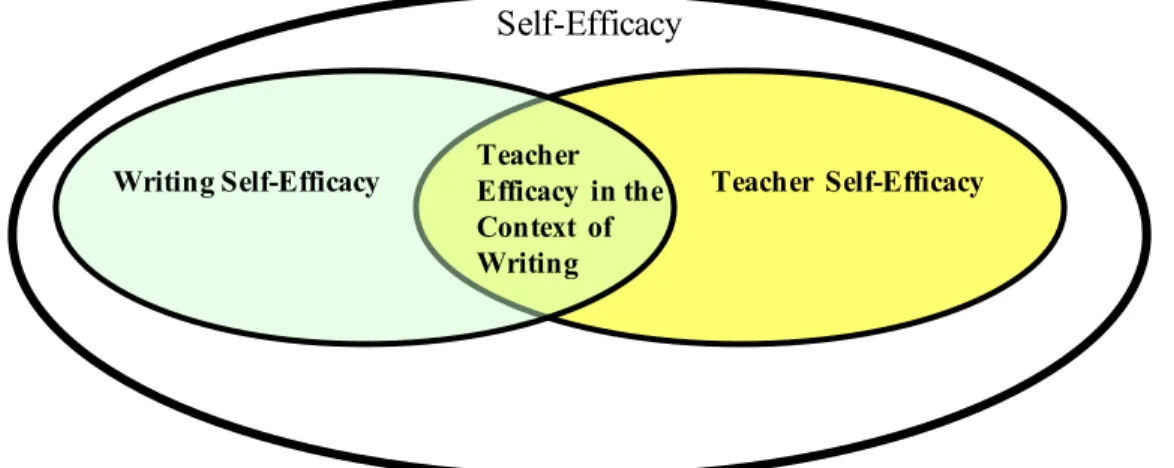
Teacher self-efficacy is specific to the content matter and context, and may vary among the various content areas (Bandura, 1997; Tschannen-Moran et al., 1998). Domain specific efficacy, such as teaching writing, refers to a teacher’s perceived ability to teach writing. I conceptualized this construct as building from multiple domains: general self-efficacy, writing self-self-efficacy, and teacher self-efficacy (see Figure 2).
Figure 2. Conceptualization of the Multiple Domains
The central component of this construct is teacher self-efficacy in the context of writing instruction, a teacher’s belief in her ability to teach writing that is formed in part by her views of herself as a writer in which both positive and negative experiences influence this perception (see Figure 3). Being an effective teacher of writing requires not only content knowledge and skills but also the belief in one’s capabilities to impact student learning (Graham et al., 2001), however, many teachers feel they may lack understanding of the complexities of content knowledge and skill in the domain of writing instruction (Gilbert & Graham, 2010). We know that teachers are the most important component in the classroom (Graves, 1990), and their “past and current writing experiences along with
Teacher Self-Efficacy Teacher Efficacy in the Context of Writing Self-Efficacy Writing Self-Efficacy
their self-efficacy as writers and teachers of writing likely will be keys to their success” (Bruning & Kauffman, 2016, p. 168). Teachers’ writing self-efficacy is a central
component of classroom teachers. Teachers who are apprehensive about their own writing abilities struggle with teaching writing and may give up when faced with student writing challenges (Pajares & Johnson, 1994; Street & Stang, 2009).
The model of self-efficacy described here is applied to the specific context of teaching writing. In this study, I apply the Integrated Model of Teacher Self-Efficacy Beliefs (Tschannen-Moran et al., 1998) to the construct of teacher efficacy in the context of writing instruction. While much of the model stays the same, I propose that there are two levels of the four sources of efficacy information that influence teachers’ cognitive processing: those related to writing and those related to the teaching of writing. These multilayered sources of efficacy can inform the process of evolving efficacy in writing instruction and in addition the interactions between the sources can work to strengthen or weaken each other. Information obtained from these four sources does not automatically influence self-efficacy; rather, it is cognitively appraised by the individual (Bandura, 1986a); in this case the teacher.
Figure 3. Proposed Integrated Model of Teacher Self-Efficacy Beliefs in the Domain of Writing
Adapted from: Integrated Model of Teacher Self-Efficacy Beliefs (Tschannen-Moran et al., 1998, p. 228).
If Tschannen-Moran and her colleagues’ model is applied to teacher efficacy in the context of writing, working through the model, from the teacher’s perspective, is as follows: The teacher has had a range of influential experiences that serve as sources of efficacy information while writing as well as while teaching writing (see Table 1). Although all four sources of efficacy information contribute to the formation of efficacy beliefs, it is the cognitive processing that determines how the sources will be interpreted (Tschannen-Moran et al., 1998). Through cognitive processing, teachers interpret the
Cognitive Processing Analysis of Teaching Writing Task Assessment of Personal Teaching Competence in Writing Teaching Writing Efficacy Consequences of Teaching Writing Efficacy Goals, effort, persistence, etc. Sources of Efficacy
Information while Writing
•Verbal Persuasion •Vicarious Experiences •Physiological Arousal •Mastery Experiences ---New Sources of Efficacy Information
---Sources of Efficacy Information while Teaching Writing
•Verbal Persuasion •Vicarious Experiences •Physiological Arousal •Mastery Experiences ---New Sources of Efficacy Information
information they receive to frame and reframe the task of teaching writing and the assessment of personal teaching competence in teaching writing. Questions asked by the teacher in analyzing the teaching task and its context might include: What does success in the teaching of writing look like? What will be required to teach writing at this particular time in this particular situation? What instructional strategies will best meet the needs of my students? Each teacher must answer these questions for her context, as the criteria for success in one setting might not be the same as in another. Questions asked by the teacher in assessing personal teaching competence in writing might include: Do I have the
knowledge to assess student’s writing performance? Am I able to determine what steps are needed to move this student to the next level? In answering these questions a teacher makes a judgment of his or her sense of efficacy, which is an estimate of whether his or her current knowledge and abilities are sufficient for the task of teaching writing. A teacher who is cognizant of deficits in her capabilities in the teaching of writing and has a conviction about how those deficits can be addressed has a resilient sense of efficacy for teaching writing. The level of efficacy determines the teaching performance, which becomes a new source of efficacy information. Thus, greater efficacy leads to greater effort and persistence, which leads to better performance, which leads to greater efficacy and the cycle continues (Tschannen-Moran et al., 1998). As the model comes full circle, “a teaching performance that was accomplished with a level of effort and persistence influenced by the performer’s sense of efficacy, when completed, becomes the past and a source of future efficacy beliefs” (Tschannen-Moran et al., 1998, p. 234).
If one feels more efficacious they will seek more opportunities that will feed the cycle. They will continue to teach more writing which gives them more potential sources
of efficacy. Conversely, someone who feels less efficacious potentially teaches writing less and generates fewer and fewer sources of efficacy to feed the cycle; therefore, causing self-efficacy to become weaker and weaker.
Table 1
Sources of Efficacy Information
Source of Efficacy
Information Description of Source Influence of Source
Example of Efficacy Information while Writing Example of Efficacy Information while Teaching Writing Mastery Experiences (past performances)
Positive and negative personal experiences that can influence the perception of the ability to perform a task (Bandura, 1997) Strong efficacy expectations are developed through repeated successes, while failures undermine and weaken self-efficacy
Repeated successes on narrative writing assignments Teaching an unsuccessful lesson on poetry Physiological Arousal
Physical and emotional states that individuals experience while performing a particular task
(Bandura, 1997)
Positive energy and emotions will increase self-efficacy, while negative energy (nervousness and anxiety) usually hinders performance
Feeling agitated, anxious, having sweaty palms, when asked to complete a writing assignment
Pride and warmth in seeing a “light bulb” moment for a student
Vicarious Experiences (modeling)
When an individual sees someone with perceived similar ability perform a task (Bandura, 1997)
Seeing an individual succeed can increase self-efficacy to do the same, however, seeing an individual fail can lower self-efficacy
Witnessing another with perceived similar abilities not succeed at writing an expository piece
Observing an individual who is like oneself successfully teach a particular writing strategy.
“If you can do it, I can do it.”
Verbal Persuasion
When individuals are verbally persuaded that they are capable of success (Bandura, 1997)
Self-efficacy is likely to increase when the feedback is supportive and specific, but will diminish with criticism
“The writing piece about your mom took my breath away. Gorgeous!”
Your writing lesson on adding details was difficult for the students to follow.
Previous Studies Exploring Writing Efficacy and Teaching of Writing Self-Efficacy
Because the constructs of self-efficacy and teacher efficacy have a relatively well-established body of research, the studies reviewed here will specifically focus on the constructs of writing self-efficacy and teachers’ writing self-efficacy. Efficacy can vary significantly based on content area, activities, task, students, and classroom situations. Research supports that self-efficacy is task-specific and is influenced by the successful accomplishment of a task (Klassen, 2002; Bandura, 1997). Domain specific teacher
self-efficacy studies have been conducted in the fields of science, reading, and math, however, the studies in the field of writing are limited (Klassen, Tze, Betts, & Gordon, 2011).
Writing Self-Efficacy. Self-beliefs about writing have received limited attention from both researchers in the field of composition and from self-efficacy researchers (Pajares, 2003). Although limited, research studies on student writers from elementary school to college have consistently shown that writing self-efficacy and writing
performance is related (e.g., McCarthy, et al., 1985; Pajares, 2003; Pajares & Johnson, 1994; Pajares & Johnson, 1996; Shell, Murphy, & Bruning, 1989). The level of an individual’s self-efficacy beliefs can have a positive or negative effect on writing performance. An individual who holds a positive self-efficacy may be inclined to view difficult tasks as a challenge, while individuals with a negative self-efficacy may be inclined to avoid tasks that are perceived as too challenging (Bandura, 1994). Kim and Lorsbach’s (2005) study lends support to Bandura’s notion in the specific domain of writing. They found that students in kindergarten and grade one tended to confirm the same results of the research examining older learners. Those students who exhibited a high writing self-efficacy were willing to try, were risk takers, spent longer time to complete a task, were eager to participate in writing, and wanted to get a good grade. Those students with low writing self-efficacy avoided a task when that task was too difficult to accomplish. Researchers have also found that writing self-efficacy beliefs were correlated with variables such as writing anxiety, grade goals, depth of processing, and expected outcomes (Pajares, 2003).
While self-efficacy as a general construct has been explored with children, adolescents, and adults, self-efficacy in the domain of writing has primarily been examined with K-16 students. This work has been helpful for laying the groundwork of understanding self-efficacy in writing; however, it has been looked at almost exclusively in quantitative measures. My study extends this inquiry into writing self-efficacy with adults.
Writing Self-Efficacy of Practicing Teachers. While the studies previously mentioned examined students’ writing self-efficacy, the focus of this study is practicing classroom teachers. The literature related to teacher self-efficacy in respect to themselves as writers is limited. From those studies, we know the following: First, when teachers are provided with the opportunity to become engaged in writing as well as being able to connect to the experiences of other teachers, writing self-efficacy increases (Frank, 2003). Second, writing self-efficacy is a key ingredient to understanding how it is that teachers think about their own writing and what they do when faced with a particular writing task (Lavelle, 2006). Third, teachers must know what writing is like as a writer if they will ever be able to teach their students to write well (Street & Stang, 2009).
There are limitations of the current literature. First, there is very limited work. Second, only one study examined elementary teachers. Third, of the few studies that did examine efficacy and writing, those studies examined the implications for self-efficacy on writing. Through my study I contend that being self-efficacious in writing may have implication for the teaching of writing and this connection has yet to be examined by the literature.
Teacher Self-Efficacy in the Context of Writing Instruction. While there have been some studies that have explored self-efficacy in the teaching of writing most of these studies have looked at the effects of some sort of professional development intervention on teacher self-efficacy and teaching writing. For example, Troia, Lin, Cohen, and Monroe (2011) looked at the effect of writer’s workshop on elementary teachers, while Lock, Whitehead, and Dix (2013) studied high school teachers. Dix and Cawkwell (2011) followed the journey of one primary teacher who was involved in a National Writing Project writing workshop experience. These studies contribute to an understanding of teaching writing self-efficacy in that self-efficacy was enhanced or increased. What these studies lack, however, is a way to provide us information about teachers who have not had an intervention.
There are few studies examining teacher efficacy to teach writing in the elementary classroom (Graham et al., 2001; Lavelle, 2006); more specifically, self-efficacy for teaching writing has mostly been investigated through adaptations of teaching self-efficacy measures or measures to examine literacy in general (Graham, et al., 2001). Only one study was located that examined teacher efficacy in the domain of writing.
In response to very little research concerning teacher efficacy in the domain of writing, Graham and his colleagues (2001) modified the Teacher Efficacy Scale designed by Gibson and Dembo (1984). The Teacher Efficacy Scale for Writing (TESW) was developed to measure teacher efficacy in writing with primary grade teachers (Graham, et al., 2001). The scale was used to examine how high and low efficacious teachers might vary in writing instruction methods. Self-efficacy beliefs impact the teaching of writing,
in that the classroom practices in writing instruction of highly efficacious teachers differ substantially from that of low efficacious teachers (Graham, et al., 2001). Teachers with a high sense of efficacy reported that their students spent more time writing than did
teachers with a low sense of efficacy (Graham, et al., 2001). Teachers with a high sense of personal efficacy reported that they spent more time teaching grammar and usage as well as basic writing processes than those with a low sense of personal efficacy (Graham, et al., 2001). It is imperative to note that these findings “are consistent with prior
investigations showing that teacher efficacy predicts observed teacher practices” (e.g., Allinder, 1994; Ashton & Webb, 1986; Stein & Wang, 1988 as cited in Graham, et al., 2001, p. 197).
Graham and his colleagues (2001) posit that, “Given the apparent value of teachers’ feelings of efficacy, it is surprising that this construct has been largely ignored in writing research” (p. 178). The purpose of my study is to go beyond the notion that self-efficacy exists and that it affects the teaching of writing. While I am informed by the literature on each element of self-efficacy, I want to uncover how these may be different elements of a more coherent sense of self-efficacy that relates to the teaching of writing. My study examines how these different ingredients may work together and how they may help refine my understanding of how multiple self-efficacies manifest themselves in the teaching of writing
Summary
While the referenced studies have been valuable in providing background for the current work, they are limited in helping teachers and teacher educators know how to address the issue of efficacy in teaching writing. For the most part the researchers in the field acknowledge and identify the phenomenon, however, they do not provide tools for
teachers or teacher educators to make change in this area. A study that provides fine-grained descriptions of how they work together and how it is manifested in instruction can move us towards a better understanding of how to support teachers and teacher educators.
It is vital to examine teacher efficacy as it relates to writing as we seek to improve writing instruction provided in our classrooms today. While teacher beliefs and attitudes have been clearly connected to teacher actions, understanding self-efficacy in
combination with the epistemological beliefs of teachers can provide necessary insight into methods for improving teacher writing instruction (Pajares, 2003). As we know self-efficacy is such an impactful factor in so many other domains, it is worth exploring further in this domain. Developing an understanding of teachers’ self-efficacy as it relates to writing could potentially provide college and university instructors, educational
administrators, and policy makers’ valuable information in meeting the challenges teachers of writing face as well as enhancing their practice and efficacy toward teaching writing. Graham (as cited in Zumbrunn & Krause, 2012) stated, “The more prepared our teachers are, the more efficacious they are, the more likely they are to have students write and spend time teaching writing” (p. 348).
Chapter 3: Methods Overview
The purpose of this study was to understand how the domain specific self-efficacies might assemble themselves within an individual. In other words, how might issues relating to a generalized sense of self-efficacy relate to self-efficacy in teaching and how those might relate to writing? What might be the interaction between these individual efficacies? Does one inform the other? Can you have divergent self-efficacies based on different domains? Again, simply identifying high and low efficacious teachers will not provide information on the potential connection between self-efficacy and practice. What is needed is a deep understanding of these connections.
The conceptual framework that guided this study was built from Tschannen-Moran, Woolfolk Hoy and Hoy’s (1998) Integrated Model of Teacher Self-Efficacy Beliefs. In this study, I applied the Tschannen-Moran et al. (1998) model to the context of writing instruction (See Figure 3). I proposed that there are two levels of the four sources of efficacy information that influence teachers’ cognitive processing: those related to writing and those related to the teaching of writing.
A teacher’s sense of efficacy has been recognized as a vital attribute to effective teaching and has been referred to as the most powerful beliefs that teachers might hold (Tschannen-Moran et al., 1998). Research has established a link between teachers’ general perceptions of efficacy and achievement, however, there is limited research regarding how teachers think of themselves as writers, specifically as it relates to the teaching of writing. What is needed in the literature and the profession is a fine-grained description of how efficacy or a lack of efficacy may be manifested in the teaching of writing.
Self-efficacy and the connections between self-efficacy and practice are difficult to capture because self-efficacy is tacit, often not articulated, and because a range of things affect practice, not just self-efficacy. To address these challenges, this study was designed to try to understand these complex and often tacit relationships.
The purpose of this chapter is to describe the methodology that I employed as I conducted this study. This includes my position as a researcher, a description of how the participants for this study were identified as well as the methods used for locating and contacting the individual participants. This chapter also includes a description of the data collected and the methods used for data analysis.
Researcher Positionality
I am approaching this topic as a former elementary classroom teacher, Graduate Teaching Assistant, and adjunct faculty member. As I stated in Chapter 1, my initial experiences with writing were related to handwriting, copying someone else’s words, responding to prompts, and learning the conventions of writing. I did not develop any sort of identity as a writer until graduate school when one of my instructors positioned me as a writer, which made me feel very different about teaching writing. I am reminded of the saying, “If I knew then what I know now.”
As a classroom teacher, writing was not something I looked forward to teaching. I have always implemented the components of a workshop approach; however, I must admit I never fully understood the complexities of writing or teaching writing. My students had a writer’s notebook neatly divided into sections for brainstorming ideas, works in progress, revision and editing checklists, and conferencing notes. In retrospect, my focus was on doing all the right things and not, as Katie Wood Ray (1993) posits, “focusing on writers who use writing to do powerful things in the world in which they
live” (p. 5). I did not see myself as a writer nor did I feel efficacious as a writer or a teacher of writing.
As a Graduate Teaching Assistant and adjunct faculty member, I had the opportunity to work with preservice teachers. Many dreaded the thought of teaching writing and did not feel efficacious enough to do so. I understood where the preservice teachers were coming from because I had been there myself. I recognized the way in which we teach our preservice teachers literacy does not involve teaching them how to be writers or teachers of writing. It was at this point that I became passionate about the need to empower our preservice teachers with this knowledge. I recognize that knowledge and self-efficacy are two different ingredients, however, they are not unrelated. In response to this, I developed a course for preservice teachers that specifically focused on the domain of writing. The structure of the course was designed to have a dual focus on living as a writer and the pedagogy of teaching writing. This dual focus was important because by the time preservice teachers are in their preparation programs, they have “developed a sense of who they are as writers” (Morgan, 2010) through years of experience as students of writing. For those who have had positive experiences, they have developed a passion for writing while those who have had negative experiences do not enjoy writing and avoid it at all costs. The same can be said about the teaching of writing.
These experiences, as well as examining the literature devoted to self-efficacy, writing, and teaching writing, are all influencing how I am making sense of and interpreting the data.
Before proceeding, it should be noted that I have an existing personal relationship with Patsy, Daisy, Bella, and Eliza. In fact, two of the participants are my sisters. These
close relationships provided me with deep knowledge and insight, however, I also had to ensure that the conclusions of the dissertation stemmed from the collected data. I had the pleasure of meeting Calvin through my professional contacts and through this study have had the opportunity to speak with him multiple times.
Participant Selection
The participants for this study were selected by purposeful sampling. Purposeful sampling is when “the researcher intentionally selects participants who have experience with the central phenomenon or the key concept being explored” (Creswell & Plano Clark, 2007, p. 112). Purposeful sampling was employed to ensure that a range of
teachers were included. The criteria for selecting the participants were that they: (a) were elementary classroom teachers during the 2017-2018 school year; (b) were teachers of writing during the 2017-2018 school year; (c) had at least two years of teaching experience; and (d) volunteered to participate.
In locating participants for this study, I relied on my extensive personal and professional network of colleagues, which included contacts with those associated with National Board Certification and the National Writing Project. From the contacts associated with National Board Certification and the National Writing Project, my goal was to identify elementary classroom teachers who had high levels of efficacy for writing and teaching writing. I also sought out elementary classroom teachers with whom I had personal knowledge about their writing experiences as well as teaching writing
experiences. In addition, it was important to include a range of teachers representing diverse communities across the region and a range of years of experience.
The goal was to obtain five elementary classroom teachers for this study. A range of teachers who may have different levels of different forms of efficacy were chosen to
better understand the manner in which the different types of efficacy manifest
themselves. Once the teachers committed to participating in the study, a letter explaining the nature of the research study as well as an Informed Consent Form was provided to each participant (see Appendix A). All five participants completed the study and received a $25 gift card. Two participants teach in the school district in which they attended as public school students. Both these participants have spent their entire career in this district. The remaining participants all teach in different school districts and do not teach in the districts in which they attended as students. Table 2 details the participants
background information. Table 2
Participant Background Information
Participant Years of Experience Highest Educational Level Current Grade Level Certifications Earned Preparation for teaching writing based on pre-service preparation Preparation for teaching writing based on inservice preparation Experience teaching other grade levels
Patsy 30 Masters 3rd PK - 8 Poor Adequate Yes
Daisy 8 Masters 3rd Elementary 1 – 6 Inadequate Minimal No
Calvin 8 Masters Plus 5th
Elementary K - 6 Middle School
Science
Very Good Extensive Yes
Bella 6 Masters Plus 2nd
Elementary K – 6 Special Education K – 12
Poor Minimal Yes
Eliza 3 Masters 3rd
Elementary K - 6 Middle School
English
Introductory Biographies.(The names of all participants have been changed to protect privacy.) To provide a sense of the participants, I introduce them here with short
introductory biographies of their educational and professional backgrounds.
Patsy. Patsy is currently teaching in a rural western Maryland elementary school. During her 30-year career she has taught third grade for 25 years and a third/fourth grade split for five years. Patsy has always taught in the school district in which she is currently employed, and was her own district as a child. She is certified to teach pre-kindergarten through eighth grade.
Daisy. Daisy is currently teaching in a rural western Maryland elementary school and has spent her entire career teaching third grade in the same school district in which she attended as a child. She returned to college and earned her master’s degree in elementary education after running her own business for 20 years. She is certified to teach grades one through six.
Calvin. Calvin is currently teaching in a West Virginia elementary school. He began his career as a long-term substitute teaching fourth grade, ninth grade, and special education. After teaching fourth grade for three years, he is currently looping to fifth grade for the first time. He holds a K-6 elementary certification and a 5-9 middle school science certification.
Bella. Bella is currently teaching in a rural elementary school in Virginia. For the past two years, she has been teaching second grade. Prior to that she spent two years teaching fifth grade. Bella has taught in different school districts as well as different states. She is certified to teach grades one through six and Special Education, K-12.
Eliza. Eliza currently teaches in a suburban elementary school in central Maryland. She has taught third grade for the past two years. Prior to that she spent her first year teaching fifth grade. She holds a K-6 elementary certification and a 5-9 middle school English certification.
Research Context
This work took place in a mid-Atlantic Appalachian region in which the participants come from a range of different types of institutions and communities.
Data Collection
As my study examined the question of how the domain specific self-efficacies might manifest themselves in the teaching or writing, it necessitated a range of data sources. Each of the data sources provided insight about the participants and their experiences with writing and teaching writing. Prior to collecting any data each participant was given the opportunity to read and ask questions about the Consent Information Form. The purpose of the research and the procedures for securing the data was explained to each participant.
Once the participant signed and returned the Consent Information Form, the Background Information Form and Self-Efficacy Surveys were sent to each participant. A detailed description of the quantitative data sources follows.
Data Source: Background Information Questionnaire
To understand how efficacy may have been shaped over time for the participants, it was important to understand their background. The Background Information Form (Appendix B) was designed to acquire the following background information: (a) years of experience, (b) highest educational level, (c) current grade level, (d) certifications earned (e) preparation for teaching writing based on pre-service preparation, (f) preparation for
teaching writing based on inservice professional development. The participants were also asked to describe their overall feelings about their writing experiences as well as their overall feelings about teaching writing.
Data Source: Self-Efficacy Surveys
Each participant completed a survey, which consisted of four different validated instruments (New General Self-Efficacy Scale, Self-Efficacy for Writing Scale,
Teachers’ Sense of Efficacy Scale, and Teacher Efficacy Scale for Writing). These surveys contained ten to fifteen questions each and use Likert scale ratings. There were 52 questions in total. The surveys provided me with a sense of each participant’s perceived level of efficacy. An overview of each of the scales follows.
New General Self-Efficacy Scale (NGSES). The New General Self-Efficacy Scale (NGSES) was developed by Chen, Gully, & Eden (2001). This unidimensional scale was used to capture an individual’s belief of being capable or incapable of meeting task demands in a wide variety of situations (Chen, Gully, & Eden, 2001). The NGSES is included in Appendix C.
Self-Efficacy for Writing Scale (SEWS). The Self-Efficacy for Writing Scale developed by Bruning, Dempsey, Kauffman, McKim, and Zumbrunn (2013) was utilized to ascertain participants’ self-efficacy for writing. Bruning and his colleagues (2013) proposed three dimensions for a model of writing self-efficacy. One dimension of writing self-efficacy is “writers’ beliefs about their abilities to generate ideas, their ideation” (Bruning, et al., 2013, p. 28). A second dimension is conventions which refer to a “set of generally accepted standards for expressing ideas in writing in a given language”