
Design and evaluation of a professional development programme to support activity-based biology teaching and learning in Tanzanian secondary schools
373
0
0
Full text
(2) UNIVERSITY OF SOUTHAMPTON Faculty of Social and Human Sciences Southampton Education School. DESIGN AND EVALUATION OF A PROFESSIONAL DEVELOPMENT PROGRAMME TO SUPPORT ACTIVITY-BASED BIOLOGY TEACHING AND LEARNING IN TANZANIAN SECONDARY SCHOOLS. by. Wadrine Maro. Thesis for the Degree of Doctor of Philosophy. March 2013.
(3) 2.
(4) UNIVERSITY OF SOUTHAMPTON ABSTRACT FACULTY OF SOCIAL AND HUMAN SCIENCES SOUTHAMPTON EDUCATION SCHOOL Doctor of Philosophy DESIGN AND EVALUATION OF A PROFESSIONAL DEVELOPMENT PROGRAMME TO SUPPORT ACTIVITY-BASED BIOLOGY TEACHING AND LEARNING IN TANZANIAN SECONDARY SCHOOLS by Wadrine Maro This study aims to design, implement and evaluate a professional development programme for biology teachers in Tanzania. The proposed activity-based approach to teaching supported by the 5Es instructional sequence (adapted from Bybee et al., 2006) is new in the Tanzanian secondary schools context. Consequently, this study addresses the following research questions.. 1) What are the characteristics of an effective professional development programme that adequately supports learning and teaching of biology in Tanzania? 2) How can a professional development programme be practically designed and implemented to enhance Tanzanian biology teachers’ pedagogical knowledge and skills? 3) What impact does this professional development programme have on teachers’ pedagogy and students’ learning of biology?. The study included 675 students, 35 teachers, 7 student teachers, and 3 experts in the field of science education. A design-based research methodology involved both qualitative and quantitative data collection methods and analysis. Teachers’ reactions to the professional development workshop were positive. They were satisfied with the content and follow-up coaching activities. The new knowledge and skills helped teachers to support students through interaction with materials and discussion in small groups to acquire meaningful learning. i.
(5) Findings of classroom observations, teacher interviews, student evaluation questionnaires, and focus group discussions showed that the adoption of the newly developed excitement stage in the 5Es instructional sequence was useful and relevant to teachers’ instructional approaches. It supported them to move away from overly didactic practices to activity-based and student-centred teaching and learning approaches. Student focus group discussions indicated positive opinions about their teachers’ adoption of the new approaches. Students reported differences from their regular classes, which served to enhance better understanding of the taught concepts. These positive changes included, more student involvement in the lesson activities and teachers being more supportive and open to questions. This study has confirmed findings from previous research about the important role of curriculum materials as a component of teachers' professional development experience. In addition, findings of the study demonstrated that the 5Es instructional sequence provided teachers and students with opportunities to practice effective science teaching and learning approaches. It is hoped that this approach is adopted more widely in Tanzanian secondary schools, so that future students may experience success and be inspired to continue their studies of science.. ii.
(6) Table of Contents. .................................................................................................... iv. List of Figures. .................................................................................................. viii. List of Tables. .................................................................................................... ix. List of Appendices. .................................................................................................... xi. Declaration of Authorship ............................................................................................ xii Acknowledgements. .................................................................................................. xiii. iii.
(7) Table of Contents Chapter 1 Introduction to the Study......................................................................................... 1 1.1. Background of the study ............................................................................................... 1. 1.2. Statement of the problem.............................................................................................. 4. 1.3. Significance of the study .............................................................................................. 5. 1.4. Research questions ....................................................................................................... 6. 1.5. Overview of research methodology .............................................................................. 6. 1.6. The thesis chapters ....................................................................................................... 9. Chapter 2 The Context of the Study ....................................................................................... 10 2.1. Introduction ................................................................................................................ 10. 2.2. General information about the United Republic of Tanzania ..................................... 11. 2.3. Curriculum policies .................................................................................................... 12. 2.3.1. Medium of instruction ........................................................................................ 13. 2.4. Education and training structure in Tanzania ............................................................. 13. 2.5. Secondary education curriculum ................................................................................ 14. 2.5.1 2.6. Science teaching and learning in Tanzanian secondary schools......................... 15. Secondary school teacher education and re-training .................................................. 16. 2.6.1. Pre-service science teachers' programmes .......................................................... 17. 2.6.2. Constraints in pre-service teacher education at diploma level ........................... 18. 2.6.3. In-service teacher education ............................................................................... 18. 2.6.4. Constraints in science teachers’ in-service training............................................ 19. 2.7. Science teachers’ professional development initiatives undertaken in Tanzania ....... 19. 2.8. Preliminary field-based context analysis .................................................................... 22. 2.9. Summary and justifications for the study ................................................................... 25. Chapter 3 The Theoretical Framework of the Study ............................................................ 26 3.1. Introduction ................................................................................................................ 26. 3.2. Why constructivism learning theory? ......................................................................... 26. 3.2.1. Behaviourism ...................................................................................................... 27. 3.2.2. Cognitivism ........................................................................................................ 28. 3.2.3. Constructivism .................................................................................................... 29. 3.3. The constructivist theoretical framework ................................................................... 30. 3.3.1 3.4. Constructivist learning process ........................................................................... 31. The importance of determining students’ prior experiences ...................................... 34. 3.4.1. Eliciting students’ prior ideas and conceptions .................................................. 35. 3.4.2. Working with students’ prior ideas and conceptions .......................................... 35 iv.
(8) 3.4.3 3.5. The 5Es instructional model ...................................................................................... 41. 3.5.1 3.6. Students’ involvement in the lesson................................................................... 38. The impact of the 5Es model in science education ............................................ 45. Summary and implications for the study ................................................................... 47. Chapter 4 Development of the PD Programme..................................................................... 49 4.1. Introduction ................................................................................................................ 49. 4.2. What counts as professional development? ............................................................... 49. 4.3. Teachers’ learning through PD .................................................................................. 51. 4.3.1. Addressing pre-existing knowledge and beliefs ................................................ 51. 4.3.2. Enhancing teachers’ subject matter knowledge and pedagogical content knowledge .......................................................................................................... 52. 4.3.3. Treating teachers as learners with an eye towards principles of adult learning . 53. 4.3.4. Grounding teachers’ learning and reflection on classroom practices ................ 53. 4.3.5. Ample time and support for reflection, collaboration and continued learning .. 54. 4.4. An overview of PD models ........................................................................................ 55. 4.4.1. The training model ............................................................................................. 56. 4.4.2. The coaching/mentoring model ......................................................................... 57. 4.4.3. Transformative model ........................................................................................ 58. 4.5. Characteristics of effective PD .................................................................................. 58. 4.6. Developing a PD model for the study ........................................................................ 60. 4.6.1. The purposes of the PD in the study .................................................................. 64. 4.6.2. Details of the PD model of the study ................................................................. 65. 4.7. Evaluation of the PD programme ............................................................................... 68. 4.8. Summary of the chapter ............................................................................................. 71. Chapter 5 Research Methodology .......................................................................................... 72 5.1. Introduction ................................................................................................................ 72. 5.2. An overview of research methodology used in the study .......................................... 73. 5.3. Design-Based Research (DBR) .................................................................................. 75. 5.3.1. Justifications for DBR methodology .................................................................. 76. 5.3.2. Characteristics of DBR ...................................................................................... 77. 5.3.3. An overview of the three stages of the study ..................................................... 79. 5.4. The quasi-experimental design .................................................................................. 80. 5.4.1 5.5. Limitation of quasi-experimental design ........................................................... 82. The research location ................................................................................................. 82. 5.5.1. The study population, sample and sampling procedures.................................... 83. 5.5.2. Sampling procedures .......................................................................................... 87 v.
(9) 5.6. Data collection methods ............................................................................................. 87. 5.6.1. Data collection instruments and administration ................................................. 88. 5.7. Validity and reliability ................................................................................................ 97. 5.8. Data analysis procedures .......................................................................................... 101. 5.8.1. Quantitative data analysis procedures .............................................................. 101. 5.8.2. Qualitative data analysis procedures ................................................................ 103. 5.9. Ethical issues ............................................................................................................ 107. 5.10. Summary of the chapter............................................................................................ 108. Chapter 6 Design and Formative Evaluation of the Curriculum Materials and Professional Development Programme .............................................................. 109 6.1. Introduction .............................................................................................................. 109. 6.2. Designing the biology curriculum materials ............................................................ 110. 6.2.1. The topics and rationale .................................................................................... 113. 6.2.2. The structural specifications of curriculum materials ...................................... 114. 6.3. Prototyping and the formative evaluation of curriculum materials .......................... 116. Curriculum Representations ................................................................................................. 119 6.3.1. The validity of the curriculum materials .......................................................... 121. 6.3.2. The practicality of implementation of the curriculum materials ...................... 124. 6.4. Formative evaluation of the PD programme ............................................................ 133. 6.4.1. The validity of the PD programme ................................................................... 134. 6.4.2. The practicality of the implementing the trial PD workshop........................... 135. 6.5 Improvements following the try-out of the curriculum materials and PD workshop. ... 143 6.6. Summary of the chapter............................................................................................ 145. Chapter 7 Evaluation of the Implementation of the PD Programme and Impact on Teaching and Learning .............................................................. 147 7.1. Introduction .............................................................................................................. 147. 7.2. Preliminary procedures prior to implementation of the PD workshop ..................... 150. 7.2.1. Pre-test student attitude questionnaires ............................................................ 150. 7.2.2. Pre-intervention classroom observations .......................................................... 152. 7.3. Implementation of the PD workshop ........................................................................ 156. 7.3.1. Evaluation of the PD workshop ........................................................................ 158. 7.4 Implementation of the new approaches in schools ......................................................... 173 7.4.1 The initial school-based coaching ........................................................................... 173 7.4.2. Peer/collegiate coaching ................................................................................... 173. 7.4.3. The final school-based coaching ...................................................................... 174. 7.4.4. Evaluation of the school-based coaching activities .......................................... 175 vi.
(10) 7.5. The impact of the new approaches on teachers’ pedagogy ...................................... 176. 7.5.1. Evaluation of the nature of school support for teachers’ implementation of the new approaches ............................................................................................... 177. 7.5.2. Teachers’ improvement of instructional approaches ....................................... 183. 7.5.3. Differences in teachers’ instructional practices ............................................... 187. 7.5.4. Teachers’ perceptions about the adoption of the new approaches .................. 199. 7.5.5. Students’ perceptions and experiences with the new approaches ................... 202. 7.6. Impact of the new approaches on student learning outcome ................................... 208. 7.6.2. Evaluation of students’ attitudes towards biology ........................................... 211. 7.6.3. Teachers’ perceptions about the changes of students’ attitudes ....................... 214. 7.6.4. Summary of the impact of the new approaches on student learning outcomes 215. 7.7. The summary and reflection of the chapter.............................................................. 216. Chapter 8 Discussion and conclusions ................................................................................. 219 8.1. Introduction and summary of the study ................................................................... 219. 8.2. Discussion of the main findings of the study ........................................................... 221. 8.2.1. Characteristics of the PD programme .............................................................. 221. 8.2.2. Design and implementation of the PD programme .......................................... 226. 8.3. Conclusions and implications of the study............................................................... 234. 8.4. Contribution to educational theory and practice ...................................................... 237. 8.4.1 8.5. Methodological contribution ............................................................................ 242. Limitations of the study ........................................................................................... 245. 8.6 Recommendations for improvement of science teaching and learning in Tanzanian secondary schools ................................................................................................................ 246 8.6.1 8.7. Recommendation for the future work .............................................................. 249. Final reflections on the study ................................................................................... 249. References: .......................................................................................................................... 250 Appendices ……………………………………………………...………………………...278. vii.
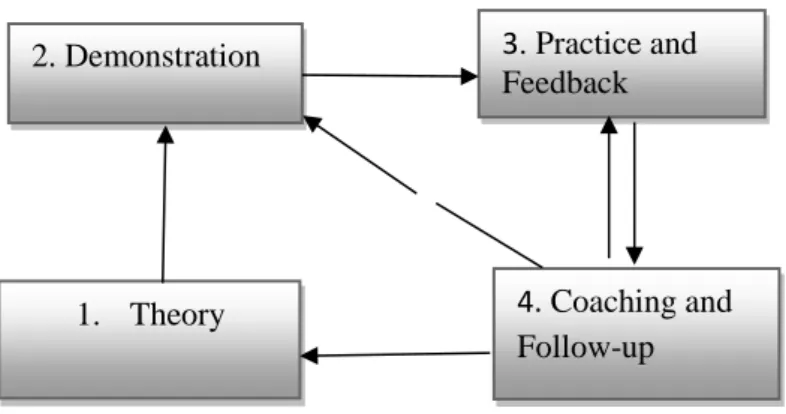
(11) List of Figures Figure. Page. 1.1 The stages of the study. 8. 2.1 Political map of Tanzania. 12. 3.1 The Five Es instructional model. 43. 4.2 Training model from Joyce and Showers (2002). 61. 4.3 A model of the PD programme in the study. 65. 6.1 Evolutionary developments of curriculum material prototypes. 117. 6.2 Prototyping of the PD programme. 133. viii.
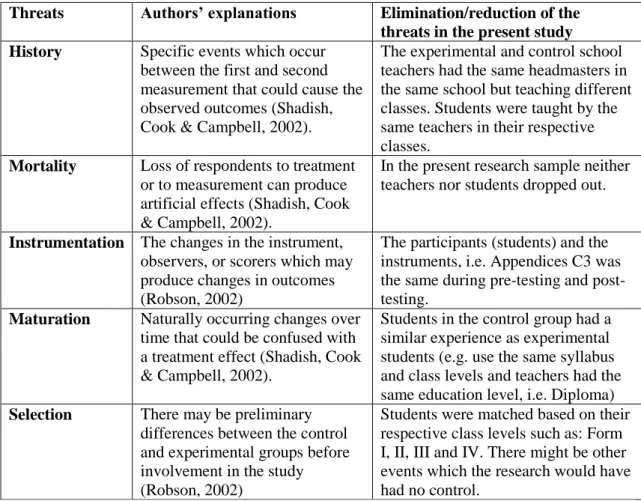
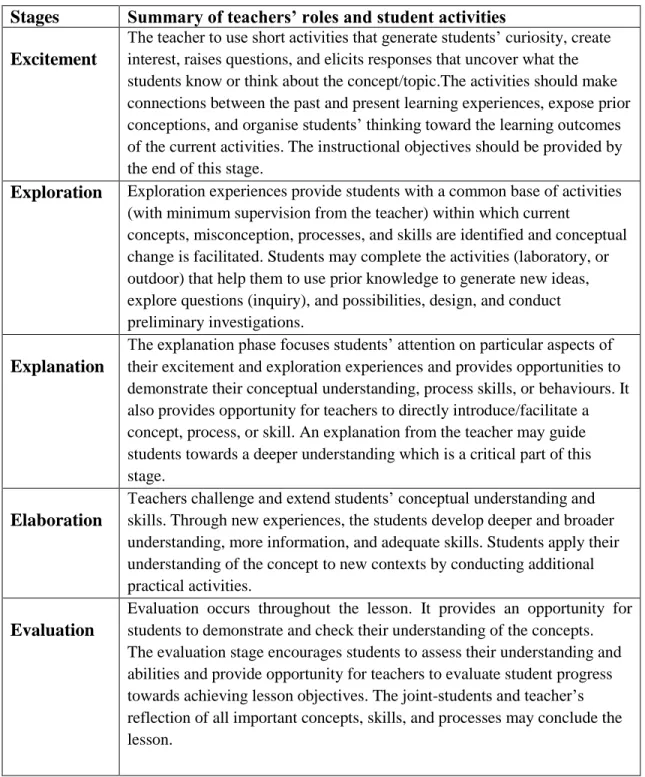
(12) List of Tables Table. Page. 2.1 Students' performance in biology, Form 4 final examination (2006-10) 2.2 The profile of teachers’ involved in the classroom observation during context analysis. 16 22. 4.1 Effectiveness of training components. 63. 5.1 Secondary schools involved in the study.. 83. 5.2 The study sample and data collection instruments. 86. 5.3 Experimental threats to internal validity. 100. 5.4 The emergent and pre-determined themes from the research questions. 105. 6.1 The 5Es Instructional sequence. 115. 6.2 Description of prototyping stages. 118. 6.3 Illustrations of the curriculum representations. 119. 6.4 Quality aspects of curriculum materials. 119. 6.5 The profile of teachers who participated in the try-out of the lessons. 125. 6.6 The try-out stage classroom observations relative practice scores. 126. 6.7 The trial workshop participants’ background information. 136. 6.8 Biology teachers’ expectations regarding the trial workshop. 137. 6.9 Biology teachers’opinions about learning from the trial workshop. 138. 6.10 Teacher C’s relative practice scores from the micro-teaching session 7.1 The key indicators for judgement of the impact of the PD workshop and implementation of the new approaches in schools. 139 148. 7.2 A summary of instruments used to collect data outlined in Table 7.1. 149. 7.3 The modes and percentages of students’ pre-attitudes towards biology. 151. 7.4 Characteristics of biology teachers involved in the implementation of the PD workshop and new approaches in schools. 156. 7.5 The components and activities of the field-based PD workshop. 157. 7.6 Biology teachers overall impression of the workshop. 160. 7.7 Teachers’ opinions about the workshop sessions. 160. 7.8 Teachers’ perceptions of the content, process, and context of the workshop. 162. 7.9 Biology teachers’opinions about learning from the workshop. 164. 7.10 Group A and B relative practice scores from the micro-teaching lessons. 171. 7.11 Teachers’ perceptions of the school-based follow-up coaching. 175. 7.12 Resources support for experimental school teachers. 178. 7.13 Aspects of school culture and collegiate support. 179. 7.14 Teachers’ perceptions about school leadership support. 181. 7.15 Description of Levels of Use (Hall & Hord, 2001). 184. ix.
(13) 7.16 Post-intervention teachers’ relative profile practice scores. 189. 7.17 Students’ lesson activities mostly favoured, with sample reasons. 204. 7.18 Students’ lesson activities less favoured with sample reasons. 205. 7.19 The construction of the achievement test by using a table of specification. 210. 7.20 An independent samples t-test results for achievement test. 211. 7.21 Wilcoxon Signed Rank Test results of students’ pre and post-attitudes towards biology 7.22 The modes and percentages of students’ attitudes towards biology 7.23 The modes and percentages of students attitudes towards teaching and learning biology through the new approaches. x. 212 213. 214.
(14) List of Appendices Appendix. Page. A1. Experts appraisal guiding questions. 278. A2. Curriculum materials. 279. A3. The trial professional development workshop components and activities. 305. B. Biology teachers' evaluation questionnaire. 307. C1. Teachers’ expectation questionnaire. 309. C2. Workshop evaluation questionnaire. 310. C3. Students' attitudes questionnaire. 314. C4. Curriculum profile-classroom observation checklist. 315. C4a. Description of pre-intervention teachers’ classroom observations for individual teachers. 319. C4b. Group A and B micro-teaching practice profile scores. 325. C4c. Post-intervention teachers classroom observation scores. 328. C4d. Description of post-intervention classroom observations for individual teachers. 331. C5. Biology teachers’ reflective interview. 341. C6. Students' evaluation questionnaire. 342. C7. Students’ focus group interview. 344. C8. Teachers’ Level of Use interview (LOU). 345. C9. School support questionnaire. 347. C10. Biology teachers’ focus group interview. 349. C11. Achievement test. 350. C12. School-based follow-up questionnaire. 354. D1. University of Southampton ethical research approval. 355. D2. Research approval in Tanzanian schools. 356. xi.
(15) DECLARATION OF AUTHORSHIP. I, Wadrine Maro, declare that the thesis entitled:. Design and Evaluation of a Professional Development Programme to Support Activity-Based Biology Teaching and Learning in Tanzanian Secondary Schools. and the work presented in the thesis are my own, and have been generated by me as the result of my own original research. I confirm that: . The work was done wholly or mainly while in candidature for a research degree at this University;. . Where any part of this thesis has previously been submitted for a degree or any other qualification at this university or any other institution, this has been clearly stated;. . Where I have consulted the published work of others, this is always clearly attributed;. . Where I have quoted from the work of others, the source is always given with the exception of such quotations, this thesis is entirely my own work;. . I have acknowledged all the main sources of help;. . Where the thesis is based on work done by myself, jointly with others, I have made clear exactly what was done by others and what I have contributed myself; and. . None of this work has been published before submission.. Signed:. Date: March, 2013. xii.
(16) Acknowledgements. Foremost I thank God, the Almighty, for this wonderful blessing, the opportunity to come this far in education. At this moment, I cannot suppress my feelings that I have enjoyed my studies at the University of Southampton, Southampton Education School, and my stay in England. The writing of this thesis has been one of the most significant academic challenges I have ever had to face. Without the support, patience, and guidance of the following people this study would not have been completed on time. It is to them that I owe my deepest gratitude.. I am exceptionally grateful to my supervisors, Dr Marcus Grace and Dr Jenny Byrne, for their valuable guidance. Both of you created an atmosphere of critical but collegiate academic discussions which made me grow academically. Not only I enjoyed their supervision, but I learned from them what good research should be – thank you. I should also like to thank my previous supervisor, Dr Felix Maringe, for his constructive supervision.. I am greatly indebted to Professor Osaki, Dr Tillya, Dr Mafumiko, and Dr Kafanabo whose insights made it possible to implement this study in the Tanzanian secondary school context. I am very grateful to teachers and students in Chang’ombe, Kleruu, Lugalo, Lupanga, and Morogoro secondary schools for participating at different stages of this study. I wish to thank the University of Dar es Salaam, Tanzania, for sponsorship (through the World Bank) and granting me three years’ study leave to pursue PhD studies in the UK.. Last but not least, I appreciated the unlimited patience and sacrifices made by my beloved husband, Linden Kessy, and my sons, Goodluck and Deogratius. Thank you, and certainly I will make up for your willingness to allow me to complete this study.. I have probably omitted many others who have, in one way or another, contributed to the completion of my study. Please forgive me.. xiii.
(17)
(18) Chapter 1. Introduction to the Study This study aims to design, implement and evaluate a teacher professional development programme to support activity-based biology teaching and learning in Tanzanian secondary schools. This chapter presents the background of the study, a statement of the problem, significance of the study and the research questions. Other sections are an overview of the research methodology and a summary of the thesis chapters.. The motivation for conducting this research originated from my own experiences as a classroom science teacher and teacher educator for the past 20 years. It was a great opportunity to participate in the investigation of possible solutions for prevailing problems and challenges in the teaching and learning of science in Tanzanian secondary schools and contribute to the improvement of student learning outcomes.. 1.1. Background of the study. The Tanzanian government recognises the important role of science and technology education. Science education influences the quality of people’s lives and development of people’s standards of living in all of its elements such as economic, social, and environmental aspects (United Republic of Tanzania - URT, 1996). The government of Tanzania believes that schools can play an important role in developing the knowledge and skills of science and technology among its citizens. In the school curriculum it gives emphasis to the teaching of science, mathematics, and computer studies in order to promote technological and scientific development in the country (Ministry of Education and Culture - MOEC, 1995). In 1996, the Tanzanian government implemented a policy stipulating that “science and technology shall be essential components of education and training in the whole education system” (URT, 1996: 3).. 1.
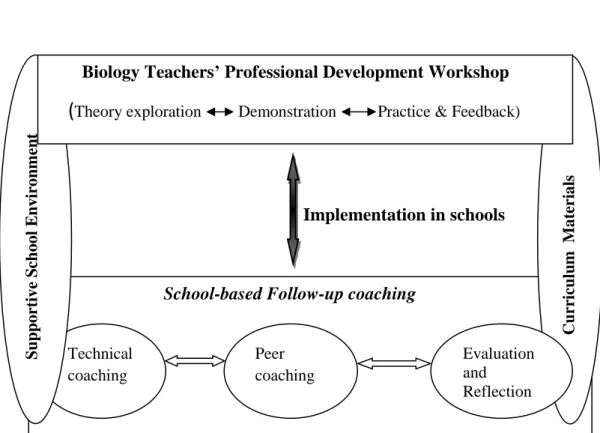
(19) Several studies conducted in Tanzania on teaching and learning of science in secondary schools have revealed that the predominant teaching and learning methods in secondary school science classrooms are traditional and teacher-centred (Bathlomew, 2008; Mafumiko, 2006; Osaki et al., 2002). Such methods do not give much room for critical analysis of concepts, but rather enable students’ to regurgitate facts for teachers. Skills and knowledge are transmitted to students, who remain passive receivers for most of the lesson. The best learner in this context is the one who can reproduce facts in the examinations through memorisation. There is very little interaction between the teacher and students, and the teacher rarely provokes students into asking questions. Though this method of teaching has pedagogical merits such as imparting information, this is not always the reason behind the teacher’s choice. It may quite often be the choice because it is a familiar method, and gives importance to the teacher’s dominance of the teaching and learning process (Osaki et al., 2002; Tillya, 2003). Furthermore, researchers have indicated that teachers use ‘chalk and talk’ methods in the teaching and learning process even when there is a possibility of using other methods (Chonjo & Welford, 2001; Osaki, 2007). The schools involved in these studies had laboratory equipment and science books which were not used by teachers in the teaching and learning process. The studies also revealed that most teachers lacked the skills of how to promote student-centred teaching and learning procedures such as observations, generation and testing of hypotheses through experimentation, discussion of findings from observations and experiments, data organisation and reporting.. According to Dillon and Manning (2010), the teaching of science requires specific teaching and learning techniques because learning scientific concepts and methods involves understanding and conceptual linkage of various scientific representations. Teaching and learning techniques must have the necessary provision for students’ active engagement with explanatory ideas and evidence, so as to enable them to make connections between scientific theories and concepts and the real purposes and practice in the world they live (Millar, 1991; Tytler, 2003). It is from this conception that teaching strategies adopted by teachers to bring about changes in the students’ behaviour, world view, or conceptions of phenomena are regarded as very important.. 2.
(20) Researchers in science education have suggested the use of student-centred teaching strategies Lawrenz et al., (2009) such as activity-based learning with hands-on experiences where the students are not only manipulating the objects, but they are engaged in in-depth investigations with objects, materials, phenomena, and ideas, and draw meaning and understanding from those experiences (Haury & Rillero, 1994; Millar, 2010) . When an activity-based approach (Section 3.4.3.1) is used in the context of inquiry-based instruction, students do not only participate actively in lessons but also gather evidence that helps develop their conceptual understanding (Hewson & Hewson, 1998; Lumpe & Oliver, 1991). Unlike laboratory work, activity-based approaches do not necessarily need any special equipment and medium, they can utilise everyday gadgets, simple set-ups, or low cost items and materials, that can be found and assembled very easily (McGervey, (1995).. Several studies in the literature show that hands-on activities help students to: i). Outperform students who follow traditional, text-based programmes (Bredderman, 1985; Freedman, 1997; Staver & Small, 1990; Stohr-Hunt, 1996; Turpin, 2000);. ii). Enhance their understanding and replace their misconceptions with scientific ones (Ünal, 2008);. iii). Develop positive attitudes toward science (Bergin, 1999; Bilgin, 2006; Kyle, Bonnstetter, & Gadsten, 1988; Hofstein & Lunetta, 2003);. iv). Encourage their creativity in problem solving, promote student independence, improves skills such as reading, arithmetic, and communication (Haury & Rillero, 1994; Staver & Small, 1990).. For students to truly learn science concepts, they need practical opportunities to apply knowledge and help in integrating or exchanging the knowledge they gain (Millar, 2010; Woolnough, 1991).. 3.
(21) 1.2. Statement of the problem. Several problems and challenges have been raised by researchers about ineffective methods of science teaching and learning in Tanzanian secondary schools, which do not cope with the scientific advancement and complexities as advocated by science education reformers. Generally, there are multiple concerns associated with the quality and quantity of teachers, the curriculum, and availability of teaching and learning materials including laboratories, equipment and consumables (Mafumiko, 2006). Problems in these areas often overlap and sometimes it is not easy to explain one problem area without touching on another (Mafumiko, 2006). Teachers often claim that the syllabi are too long to be covered within the available timeframe, thus they are forced to teach didactically to meet examination requirements (Leeuw, 2003). This in turn does not contribute to an understanding of the taught concepts. Another concern is the availability of qualified teachers in schools. Currently there is a critical shortage of science and mathematics subject teachers (Buretta, 2003; Mushashu, 2000; Ministry of Education and Vocational Training – MOEVT, 2010).. According to MOEVT (2010), the recent expansion of the secondary school sector has also increased the number of students per classroom, which is not matched by the supply of teachers and resources. Teachers who are qualified to teach in Ordinary level (O-Level) secondary schools have significant problems due to the poor teaching preparation they received while in colleges, and opportunities for attending in-service programmes are limited due to lack of funds (Babyegeya, 2006; Bathlomew, 2008; Chonjo & Welford, 2001). The majority of teachers lack substantial subject knowledge (Chonjo et al., 1996; Mushashu, 1997; Schizya, 1997), as well as pedagogical content knowledge, i.e. the distinctive body of knowledge for teaching which leads to an understanding of how a particular topic is organised and presented effectively to the diverse interests and abilities of learners (Shulman, 1986;1987). As a result, most students do not perform well in their final examinations which hinder them joining science related courses in higher education (Section 2.5.1).. 4.
(22) Based on these challenges, conducting research for the purpose of supporting both teachers and students in the teaching and learning of science in Tanzanian secondary schools is vital. This study is an attempt to contribute towards the improvement of student learning and understanding of biology as one of the compulsory O-level science subjects in Tanzanian secondary schools. The plan was to design a small scale, locally grounded intervention (a professional development programme) comprising a professional development workshop to enhance biology teachers’ learning and practising an activity-based approach supported by the 5Es instructional sequence Bybee et al., (2006) (Table 6.1). Other components included teachers’ support curriculum materials (Appendix A2), school follow-up coaching to help teachers implement the new approaches in their respective classrooms, and a supportive school environment (Figure 4.3).. 1.3. Significance of the study. Studies on teaching and learning of science and teachers’ professional development (PD) have addressed a number of problems and challenges in these areas, and have suggested measures to alleviate the situation (Kitta, 2004; Teclai, 2006; Tillya, 2003). However little has been done in Tanzania as well as other Sub-Saharan African countries to design a teacher PD programme that embeds curriculum materials to enhance teachers’ learning and bring about conceptual changes, which in turn can benefit student involvement in, and understanding of their lessons. Therefore, this study has both practical and theoretical significance. Practically, this research contributes to in-service learning of teachers through development of a PD programme and teacher support curriculum materials which include specific learning strategies and an instructional sequence. These were designed for use by teachers and implemented (adopted and enacted) with a goal of solving instructional problems or challenges related to science (biology) teaching and learning in Tanzanian secondary schools. Therefore, these outputs are useful to schools and in the broader education community. The further significance of this research is the professional development of participants. Teachers’ participation in the design and research activities was regarded as an important form of professional development because it enhances their knowledge and. 5.
(23) skills about effective science instructional methods, which in turn contribute to the improvement of students’ participation in the learning and understanding of biology.. Findings of this research will provide evidence and challenges to educational stakeholders responsible for designing science teachers’professional development programmes in Tanzania, in the hope that it will stimulate them to further investigate the challenges associated with teaching and learning of science in Tanzanian secondary schools.. 1.4. Research questions. The study was guided by three research questions:. 1) What are the characteristics of an effective professional development programme that adequately supports learning and teaching of biology in Tanzania? 2) How can a professional development programme be practically designed and implemented to enhance Tanzanian biology teachers’ pedagogical knowledge and skills? 3) What impact does this professional development programme have on teachers’ pedagogy and students’ learning of biology?. 1.5. Overview of research methodology. The study adopts Design Based Research (DBR) methodology (Design-Based Research Collective -DBRC, 2003; McKenney & Reeves, 2012; Wang, & Hannafin 2005). This is defined as a systematic but flexible methodology aimed to improve educational practices through iterative analysis, design, development, and implementation, based on collaboration between researchers and practitioners in real-world settings and leading to contextually-sensitive design principles and theories (Wang & Hannafin, 2005). In combination with other research approaches, DBR has the potential to help develop effective educational interventions, and to offer opportunities for learning during the. 6.
(24) research process (Van Den Akker et al., 2006). Studies conducted through DBR methodology in contexts similar to Tanzanian secondary school systems have shown promising benefits ( for example, Kitta, 2004; Mafumiko, 2006; McKenney, 2001; Ottevanger; 2001: Tilya, 2003).. The design and research activities in this study were implemented, and evaluated through the DBR framework. Both qualitative and quantitative methods were used for data collection and analysis which included: classroom observations, interviews, questionnaires, achievement tests, and analysis of documents. Figure 1.1 illustrates the three stages of the study, i.e. the preliminary analysis, design of the intervention, and implementation and evaluation, (Section 5.3.3) together with some anticipated outcomes.. 7.
(25) Preliminary analysis. Design of the intervention (Prototyping approach). Implementation and evaluation. (Front-end analysis). Context analysis Problem identification. Literature review Theoretical framework and Knowledge base for intervention. Intervention requirements e.g. Teachers’ support curriculum materials and PD programme. Curriculum materials and PD programme guidelines, specifications, and frameworks. Design. Formative evaluation. Improved teachers’ classroom instructional practices. Development cycle Revision. Analysis. Improved student learning outcomes (cognitive and attitudes towards biology). Revision Analysis. Improved validity and practicality of prototypes. Improved intervention (PD programme). Changes in teachers’ beliefs and attitudes revealed from PD experiences and practices. Figure 1.1: Stages of the study. Note: Shows the evolution of the three stages of the study and the interrelatedness of the outcomes. Shows the activities and outcomes of the Preliminary analysis stage. Shows the activities and outcomes of the design/prototyping stage Shows the activities and anticipated outcomes from the implementation stage Connects the activities and outcomes of the three stages of the study. 8.
(26) 1.6. The thesis chapters. The thesis is organised into eight chapters that are outlined below:. Chapter 1 situates the research problem in the context and highlights the importance of carrying out the intervention for the improvement of science teaching and learning in Tanzanian secondary schools;. Chapter 2 discusses the context of the study and the preliminary field-based investigation to clarify the nature and extent of problems/challenges in the teaching and learning of science (biology) in Tanzanian secondary schools;. Chapter 3 describes the constructivist theoretical framework of the study and its role in the teaching and learning process; Chapter 4 reviews the literature on teachers’ professional development and describes the development of the professional development programme of the study;. Chapter 5 discusses the rationale for adopting the Design Based Research methodology to guide the study activities. This includes the description of the specific data collection methods and analysis;. Chapter 6 presents the design and formative evaluation of the curriculum materials and professional development programme;. Chapter 7 presents findings of evaluation of the implementation of professional development programme and impact on teaching and learning;. Chapter 8 is the final chapter of the thesis and provides a summary, discussion of the main findings of the study, conclusions, and recommendations.. 9.
(27) Chapter 2. The Context of the Study. 2.1. Introduction. This chapter analyses the context of the study about the design, implementation and evaluation of a PD programme to support activity-based biology teaching and learning. The primary goal of the context analysis was to gain a better understanding of the research problem at hand, clarify contextual boundaries of feasible changes that address the problem, and examine tentative design guidelines and parameters. Findings of the context analysis were obtained with the help of documentary analysis, classroom observations, review of previous studies, projects on science teaching and learning in Tanzania, science teachers’ training, and science teachers’ professional development. This information partly addresses the first research question of the study: What are the characteristics of an effective professional development programme that can adequately supports learning and teaching of biology in Tanzania?. Section 2.1 presents general information about Tanzania. Section 2.2 outlines the Tanzanian education system which includes a historical overview of education and curriculum policies. Section 2.3 illustrates the curriculum policies. Section 2.4 presents the Tanzanian education and training structure. Section 2.5 presents the secondary education curriculum, science teaching and learning and associated constraints. Section 2.6 discusses secondary school teacher education and associated constraints. Section 2.7 outlines science teachers’ professional development initiatives conducted to improve science teaching and learning in secondary schools in Tanzania. Section 2.8 presents provisional findings of the preliminary field-based investigation conducted in two secondary schools, and Section 2.9 presents a summary of the chapter and implications of these findings for the study.. 10.
(28) 2.2. General information about the United Republic of Tanzania. The United Republic of Tanzania was formed from the union of two countries which are Tanganyika (currently Tanzania mainland) and Zanzibar also known as (Tanzania Isles). The Union Government which was formed in 1964 operates under Union Constitution and has full responsibility of some of its main sectors including Foreign Affairs, Defence, Home Affairs and sub-sectors such as Higher Education. Zanzibar has full autonomy for its basic education. This country is located in East Africa and has an area of 945,087 km2 and the population in 2009 was estimated to be 43,739,000 (World Bank, 2009). The landscape of the mainland is flat and low along the coast but rises up to a plateau constituting the greater part of the country. It contains the highest mountain in Africa, the Kilimanjaro Mountain, with an elevation of 5895 metres on its northern border. It has three of Africa’s Great Lakes on its borders, Tanganyika in the west, Victoria in the northwest and Nyasa in the southwest. The Republic of Tanzania is bordered in the north by Kenya, Uganda, Ruanda and Burundi in the northwest, Democratic Republic of Congo (DRC) in the west, Zambia and Malawi in the southwest, Mozambique in the south and in the east it has a coastline bordering the Indian Ocean. The climate of this country varies from tropical along the coast to temperate in the highlands. Figure 2.1 shows the political map of Tanzania. The country’s economy depends heavily on agriculture, which accounts for half of the GDP and employs 80% of the work force. The Tanzanian economy is characterised by its small manufacturing sector, which is hardly competitive in the international market. Rural incomes and living conditions have shown little improvement over the past two decades (Osaki, 2007). Therefore skilled human resources are still one of the barriers for the implementation of many programmes in the country. More investment in human resource development is necessary, especially in the areas of education, agriculture, science, and technology (Mafumiko, 2006; Osaki, 2007).. 11.
(29) Figure 2.1 Political map of Tanzania Source: http://www.mapsoftheworld.com/Tanzania. 2.3. Curriculum policies. Until 1995 Tanzania did not have a comprehensive education and training policy, therefore the Government established the Tanzania and Education and Training Policy (ETP) to improve its education sector (Saunders & Vulliamy, 1983). The major purpose of this policy was to guide, synchronise and harmonise all structures, plans and practices; to ensure access, equity and quality at all education levels, and to act as a mechanism for management and financing of education and training. In addition the policy also provided guidance and direction of school curriculum policies in the country. The policy stipulates clearly that the government will continue to co-ordinate 12.
(30) and supervise the preparation and delivery of curriculum for primary, and secondary school levels, as well as teachers’ colleges (MOEC, 1995). The government undertakes these activities through the Tanzania Institute of Education (TIE) which develops, monitors, and evaluates schools and teacher education curricula.. 2.3.1 Medium of instruction A bilingual policy is another important feature in the Tanzanian formal education structure. This requires children to learn both the National language (Kiswahili) and a foreign language (English). In the government owned primary schools Kiswahili is the medium of instruction, while English is taught as a compulsory subject. In secondary education the medium of instruction is English, and Kiswahili is taught as a compulsory subject. In Advanced secondary and tertiary levels of education Kiswahili appears as one of the subjects used to form subject combinations, but it is not compulsory. There is a great concern about the weakness brought about by this policy and how it relates to the quality of education. Despite the great efforts to improve the use of English in secondary schools, the English proficiency of both teachers and students remains low and the pressure to switch to a Kiswahili medium is mounting (Mafumiko, 2006). For example in the current study English language was mentioned by teachers and students as one of challenges experienced toward effective classroom interactions during implementation of the activity-based lessons (Section 7.5.4).. 2.4. Education and training structure in Tanzania. Education and Training in Tanzania is organised under the Ministry of Education and Vocational Training (MOEVT) and the Ministry of Regional Administration and Local Government. Other ministries are involved in Sector-Specific Professional education and training (Government of United Republic of Tanzania - GURT, 2001a). In addition formal and non-formal education is provided by communities, Non-Governmental Organisations (NGOs), and individuals in co-ordination with central Government Ministries.. The formal education system in Tanzania is the one adapted from the British Colonial education structure after independence in 1961. It is predominantly academic and 13.
(31) hierarchically divided, ranging from Primary to Tertiary levels. The nature of this education system has for a long time shaped the school curricula and examinations that serve as an important device to select students for further education rather than providing feedback on the basic skills and literacy (MOEC, 1995). The existing structure of formal education and training system in Tanzania is 2-7-4-2-3+ - meaning two years of Pre-Primary education; seven years of Primary education; four years of Ordinary Level (O-Level) secondary education; two years of Advanced Level (A-Level) secondary education; and, three to five years of university education depending on the type of degree programme. For example, Engineering and Pharmacy degrees take four years and Medicine takes five years. Other degrees, including Education, take three years. Besides formal schooling there are other channels of post-primary and postsecondary education and training such as: certificate and diploma training colleges/institutions which take less than three years of training.. The criteria used to promote students from one level of education to another are grades obtained from their final examinations, at each level that are usually set by an external examination body. The centralised education provision in Tanzania is administered through two units: the Tanzania Institute of Education (TIE) for curricula matters, and the National Examination Council of Tanzania (NECTA) for examinations. Tertiary education has its own curricula orientations and quality assurance.. 2.5. Secondary education curriculum. The secondary education curriculum was diversified in the early 1970s into streams such as; commerce, home economics, technical and agriculture. The options aside from the compulsory subjects vary from stream to stream, however there is a set of core subjects including Mathematics, English, Kiswahili, Civics and Biology, which are compulsory at O-Level, Physics, Chemistry, History and Geography are core subjects but optional after the second year of secondary education. Computer science is also an additional subject. Religious instruction is obligatory to all students. A- Level students study subject combinations of their choices depending on their performance in the National O-Level examination. Civics education is a compulsory subject to all A-Level students while Basic Applied Mathematics (BAM) is a subsidiary subject to all students 14.
(32) who do not study Advanced Mathematics, with exception of those who are studying languages.. 2.5.1 Science teaching and learning in Tanzanian secondary schools In Tanzania the formal teaching and learning of science begins at primary school level where students are taught general science limited to basic concepts in biology, chemistry and physics. Learning is guided by a science syllabus for each level of primary education from standard 1-7.. Secondary science is based on the individual subject syllabuses. At O-Level biology, chemistry and physics are taught as core subjects. In the first two years (Form 1 and Form 2) of O-Level education all three subjects are compulsory for all students. In Form 3 and 4 chemistry and physics are core subjects and optional for students majoring non-science subjects. Biology remains as a compulsory subject to all O-Level students. The maximum time for O-Level science subjects per week is 2 hours and 40 minutes (4 periods per week, each single period is 40 minutes). For A-Level the maximum time is 6 hours and 40 minutes per week (10 periods per week) each double period is 80 minutes (MOEC, 2002). The time allocated by the government for each level ensures that the respective syllabuses will be covered within the specified time of each level. However classroom realities in schools show that there are several problems affecting the realisation of the school timetable (Chonjo, et al., 1996; Mafumiko, 1998; Osaki, 1999; Bathlomew, 2008).. These problems have created some challenges in teaching and learning secondary science that include lack of, or non-use of laboratories and other teaching and learning materials and resources. In most schools this has resulted in students doing science subjects theoretically, and most achieving poor grades (Ministry of Education and Vocational Training - MOEVT, 2010). Ineffective teaching and learning approaches in the classrooms (such as excessive use of a lecture-style method) resulted in students relying on the teachers’ notes, and the acute shortage of qualified science teachers has exacerbated the problem resulting in poor performance. For example, The Performance Audit Report on school inspection in Tanzania in 2009 indicated that there were high levels of failure in science and mathematics since 2003 (URT, 2009). The percentages 15.
(33) of students who failed in physics, chemistry and biology in 2004 Form 4 examinations were 43%, 35% and 45% respectively. Similarly in 2005 figures were 45%, 35% and 43%. Table 2.1 presents the students’ performance in biology subject in the final Form 4 examinations between 2006 and 2010. Table 2.1 Students' performance in biology Form 4 final examinations (2006-2010) Year. No. of students. Passed. %. Failed. %. 2006. 83,253. 42,795. 51.40. 40,273. 48.6. 2007. 122,532. 70,415. 57.47. 52,117. 42.53. 2008. 161,947. 71,566. 46.28. 83,065. 53.72. 2009. 236,326. 102,982. 43.43. 134,157. 56.50. 2010. 350,601. 103,393. 30.49. 244.208. 69.51. Source: National Examination Council of Tanzania (NECTA, 2011). The data in Table 2.1 shows that as the number of candidates increased yearly, the number of students who failed in biology increased. This situation is similar for subjects such as physics and chemistry. Several studies conducted in Tanzania affirmed that reasons for continuing poor performance of students in science subjects included teachers’ preference in using traditional lecture-style teaching and learning methods (Bathlomew, 2008; Mafumiko, 2006), acute shortage of teaching and learning materials and equipment in most schools especially in the new Government Community schools (Bathlomew, 2008; MOEVT, 2010), shortage of science teachers in some schools, and teachers lack of both content and pedagogical content knowledge (Chonjo & Welford, 2001; Kitta, 2004; Babyegeya, 2006).. 2.6. Secondary school teacher education and re-training. In Tanzania, teachers are educated in teachers’ colleges. The management and provision of teacher education programmes are largely the responsibility of the government through the Ministry of Education and Vocational Education. In its appraisal document, the Education Sector Development Programme (ESDP) recognised 16.
(34) that teaching, like other professions, is in a constant state of renewal and that the initial, induction, and in-service training are different phases of the same generic process, namely teacher education (Government of United Republic of Tanzania - GURT, 2001b). The three categories of teachers prepared are:. i). Certificate teachers for primary schools: Teachers from this category are prepared to teach specific subjects in the primary school curriculum;. ii). Diploma teachers’ teach O-Level in secondary schools: Teachers from this group are trained to teach two teaching subjects in the O-Level secondary school curriculum;. iii). Graduate teachers teach A-Level in secondary schools and teachers’ colleges.. The teachers’ preparation programmes in Tanzania are: pre-service and in-service (GURT, 2001b).. 2.6.1 Pre-service science teachers' programmes There are two levels of pre-service programmes GURT (2001b) one takes place at Diploma teachers' colleges, and the other takes place at the University level. At Diploma level the programme takes two years and it enrols students from A-Level, especially those who have not met the minimum entry qualification for the degree programmes. The pre-service teachers’ curriculum component comprises both academic and professional subjects. Here teachers are prepared to teach two science subjects at O-Level secondary schools. The professional component focuses on provision of pedagogical skills together with foundation knowledge in principles of education, curriculum, psychology, and educational management.. Pre-service teachers who join Universities usually study for three years. Their curriculum comprises two teaching subjects for those who study Bachelor of Science with Education (B Sc.Ed) and one teaching subject for those in Bachelor of Education (B. Ed). The other part of their curriculum is a professional component similar to the Diploma teachers’ with eight weeks of field work (teaching practice) in secondary schools and teachers’ colleges.. 17.
(35) 2.6.2 Constraints in pre-service teacher education at diploma level One of the major obstacles in the preparation of pre-service science teachers’ is the financial constraint. Underfunding or ad hoc funding makes long term planning difficult at institutional level (Kitta, 2004). For example, Diploma colleges are sometimes forced to close earlier for vacation due to lack of funds. While Tanzania has come a long way in restructuring and running of pre-service teacher training programmes have not often been formally evaluated and revised until foreign assistance is available (Osaki, 2007). This factor has affected the quality of the knowledge base of pre-service teachers who graduated from previous programmes that were based on an ineffective curriculum (Meena, 2009). The continuous enrolment of academically weaker students in Diploma teachers’ colleges from A-Level secondary schools has contributed to the problem of having O-Level teachers with little subject content knowledge, and has also affected the selection and use of appropriate methods for classroom discourse (Osaki, 2007; Bathlomew, 2008). These constraints render science teachers who are inadequately prepared and provide inadequate teaching foundations for subsequent in-service education programmes.. 2.6.3 In-service teacher education In-service education programmes are considered an effective way to help teachers grow professionally (MOEC, 2001). Professional inputs for teachers are regarded to have a substantial impact on students ( MOEC, 2001). Emphasising in-service education the Tanzania Government through the Education and Training Policy declares that: “Inservice teacher training and re-training shall be compulsory in order to ensure teachers’ quality and professionalism” (MOEC, 1995: 33).. There are two patterns through which in-service education programmes for secondary school science teachers are conducted (MOEC, 2001). The first one is conducted by Universities such as the University of Dar es Salaam, in collaboration with the Curriculum Development Unit (TIE) and officials from the Ministry of Education. In this collaboration science teachers are provided with knowledge and skills on specific topics by lecturers from departments of the College of Science and School of Education. The second pattern involves individual university lecturers and other facilitators from the Ministry of Education organising in-service training for teachers in their respective 18.
(36) working zones or regions. The Ministry of Education via departments such as teacher education or secondary education are responsible for organising in-service training for teachers and educators.. 2.6.4 Constraints in science teachers’ in-service training Even though there is a policy for in-service teacher education, the current level of support for in-service teacher education in Tanzania is inadequate, mainly due to lack of funds and management problems (Babyegeya, 2006). Running most in-service teachers’ programmes depends on foreign aid and grants (Bathlomew, 2008; Osaki, 2007). The majority of teachers have no access to in-service courses or seminars (Kitta, 2004; Osaki, 2007). Despite several curriculum reforms in primary, secondary and teachers’ colleges, teachers have not refreshed their knowledge to cope adequately with reforms, and as a result new or unfamiliar topics are left untaught or not dealt with effectively (Mushashu, 2000). Mostly, teachers teach as they were themselves taught, and the evidence shows that teachers lack the necessary competencies and confidence to deal with classroom instructional activities. In most cases, this is because they never learned these aspects from their initial teacher preparation and in their schooling (Mafumiko, 2006). This is the area where compulsory in-service education for science teachers’ is most urgent. The following section illustrates professional development initiatives which have been implemented to improve science teaching and learning in Tanzania.. 2.7. Science teachers’ professional development initiatives undertaken in Tanzania. Efforts have been made by the Government of Tanzania, via the Ministry of Education and through private sectors, towards empowering secondary school teachers to improve their teaching methods through in-service training workshops. The established science and mathematics projects included Science Education in Secondary School-SESS (1996-2006). This project was designed to improve classroom performance in secondary science and mathematics by supporting in-service training of teachers, and was jointly financed by the Tanzanian and German Governments. Only 15 secondary 19.
(37) schools were involved in this project which aimed at equipping these schools with science equipment, resources and textbooks and facilitated in-service programmes for science and mathematics teachers.. An internal evaluation of this project in the year 1999 showed that, while textbooks and laboratory facilities had increased in targeted schools, changes to classroom practices were minimal, because teachers hardly used the provided resources in their lessons (Osaki, 1999). In 2006, SESS project was integrated in the secondary education department of the Ministry of Education and Vocational Training (MOEVT) for monitoring and safety of materials and equipment left in schools (Osaki, 2007). Another project, the Science Teacher Improvement Project (STIP), was supported by the German and Tanzanian government organisation GTZ (Osaki, 2007). The STIP project operated in schools owned by the Christian Social Services (CSSE) from 1995 to 2003, and it emphasised strategies for doing science experiments called the Starter Experimental Approach (SEA). In this approach, skills on how to manage scientific experiments were discussed in the trial workshops. This project ended abruptly in 2003, and its ideas integrated into the SESS project for administrative and management reasons, i.e. the project shared the financial support with SESS project.. Another project was the Teacher Education Assistance in Mathematics and Science (TEAMS) which focused on the PD of science and mathematics of A-Level and undergraduate teachers at the University of Dar es Salaam from 1995 to 2004 (Osaki, 2007). The project was jointly funded by the government of Tanzania and the Netherlands. Its major focus was staff development and capacity building in science and mathematics education. The TEAMS project has contributed to the review and introduction of pre-service undergraduate science courses that are closely connected to the secondary school curriculum in order to improve the quality of secondary school teachers’ preparation.. One other project was the Education II Project which was supported by The African Development Bank (ADB) and implemented by the Faculty of Education, University of Dar es Salaam in collaboration with the Ministry of Education and Culture (MOEC, 2002). It focused on capacity building among science teachers’ and educators enabling 20.
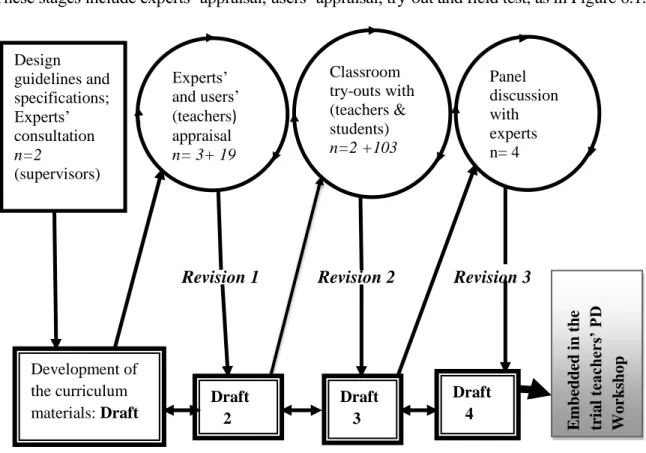
(38) them to identify and use appropriate teaching materials and methods during preparation and execution of lessons. The main outcomes of this project include development of modular training materials for science and mathematics teachers, science and mathematics college educators, secondary and teachers’ college inspectors and headmasters /headmistresses. Even though the Education II project ended in 2006 it has not been evaluated (Osaki, 2007). The lessons learned from implementation of the above mentioned projects include:. i). Increased laboratory supplies in some schools do not necessarily make teachers more inquiry oriented (Chonjo et al., 1996; Osaki, 2007);. ii). Student-centred approaches, laboratory experiments and other innovations taught in the workshops may not be practiced in schools if there were no follow-up strategies including peer coaching, mentoring and effective school management (Kitta, 2004; Osaki, 2007);. iii). The supply of textbooks and other materials were not accompanied by addressing local relevance and teacher support on how to motivate and encourage their use for instructional activities ( Osaki, 1999: 2007);. iv). As enrolment expands students’ diversity increases and teachers need to be prepared for a more constructivist approach to teaching and handling of individual student problems (Osaki, 2007).. Reflection from the above mentioned projects together with other efforts made by the Ministry of Education and Vocational Training emphasises the potential of pedagogical content knowledge in teachers’ education in order to improve science teaching and learning (Osaki, 2007). Furthermore, lessons learned from past projects (Hongoke, 1997; McKenney, 2001; Ottevanger, 2001) indicate that innovation succeeds only if there is a pioneer group of teachers to carry out or catalyse the innovation until the new generation of transformed teachers is ready to continue to carry out the innovation. Similarly, Bransford, Brown, and Cocking (1999: 191-2) found that:. Teachers are the key to enhancing learning in schools, in order to teach consistently with new theories of learning, extensive learning opportunities for teachers are required. We assume what is known about learning apply to teachers as well as students. 21.
(39) The following section presents the findings from the preliminary field-based investigation which was conducted by the researcher prior the present study (in April, 2010).. 2.8. Preliminary field-based context analysis. This section presents a situational analysis of teaching and learning of biology in two schools. The researcher conducted three unstructured classroom observations during the context analysis stage of the study in order to investigate the current situation in the teaching and learning biology in secondary schools. This included how teachers prepared for the teaching and the instructional methods they used in classroom interactions. Another reason was to solicit collaboration with the key participants of the study in order to ascertain potential causes of prolonged use of ineffective instructional approaches in the teaching and learning of science (biology), and gain insights about their possible needs. Three teachers’ in two schools were involved in the classroom observations (Table 2.2) after granting permission to be observed.. Table 2.2: The profile of teachers involved in the classroom observation Schools Participants S1. S2. Sex. Teacher A. F. Qualification Teaching Experience Dip 16 years. No. of students 52. Teacher B. M. B Ed. Sc. 8 years. 55. Teacher C. F. Dip. 10years. 48. The observed lessons and length were: . Transport in living things taught to Form II students (teacher A). Lesson time 80 minutes;. . Classes of division (angiospermophyta ) taught to Form III students (teacher B). lesson time 80 minutes; and. . HIV and AIDS (the causes, transmission and prevention) taught to Form I students (teacher C). Lesson time 40 minutes.. 22.
(40) The lessons were audio-recorded, transcribed, and qualitative content analysis was used to summarise data and categorise them into themes indicating the observed instructional activities such as general observation, lesson introduction, presentation and conclusion. Information from teachers’ lesson plans was sought to support findings from classroom observations and the researcher’s field notes. The following sections provide descriptive analysis of the preliminary field-bsed classroom observations.. General observation. School S1 had one laboratory used by all science subjects while school S2 had two laboratories, one for chemistry and biology subjects and another for physics. A few students in school S2 had biology textbooks on their desks which were not used during the lesson. The nature of interaction between the teacher and students in all classes was unidirectional because most of instructional time was dominated by the teacher’s explanation of the lesson facts and writing notes or diagrams on the blackboard. There were no teaching aids apart from using blackboard illustrations which were meant for students to copy and not for supporting students’ understanding of teachers’ explanations. Students remained passive listeners, they neither asked questions nor were they involved in doing practical work or in discussions. The main student activities were copying notes from the blackboard and teachers’ explanations, and occasionally, answering a few questions from their teachers.. Lesson introduction. The initial activity observed across all teachers was reviewing the previous lesson. Two teachers used a question and answer technique while the other teacher provided students with a summary of the previous lesson on the distinctive features of angiospermophyta. Teachers used 4-6 minutes in the lesson for the introduction before an explanation of the new lessons.. Lesson presentation. Most of the instructional time was used in this part of a lesson (i.e. 25-45 minutes) which was dominated by teachers’ explanations of the lesson facts and writing of short notes on the blackboard. While Teacher A and B drew diagrams on the blackboard to support their explanations of the lessons, Teacher C read her lesson notes, whilst writing on the blackboard. Students remained passive listeners and sometimes, they were copying notes and diagrams.. 23.
(41) Lesson conclusion. The lesson conclusion was characterised by students copying notes from the blackboard; in Teacher C’s class it was hard to differentiate between the previous part of the lesson and the conclusion because the same activities continued throughout. There was no explicit attempt by teachers to summarise or evaluate the taught concepts or to use other techniques to check for students’ understanding. Teacher B asked one question from his lesson content but students’ answers were superficial which did not impress their teacher who continued asking for further information. Qualitative content analysis was used to analyse data from teachers’ lesson plans to find out how teachers prepared for the observed lessons and whether their instructional practices were in line with intentions indicated in their lesson plans. Findings show that all teachers had specific lesson objectives, two teachers’ had indicated that students would be involved in doing experimentation and observations, but there were no specific strategies about how to implement the activities including the required materials stated in their lesson plans. These findings contradicted the observed teachers’ classroom practices.. The findings from this field-based investigation suggested that teachers might have realised the importance of using experiments and observations in their lessons (as also indicated in their syllabuses), but they did otherwise. The informal discussion with teachers after each classroom observation confirmed that teachers preferred to use chalk and talk methods because it helped them to cover a larger amount of lesson content which would enable them to teach all the required biology topics in the syllabus in time available. Two teachers said that they faced challenges in using practical activities including laboratory experiments with students because they were unfamiliar with their preparation and organisation, and the fact that their schools did not have laboratory technicians to provide assistance made it more difficult to conduct experiments with students. They further argued that sometimes, they read about procedures for conducting practical activities from biology textbooks.. 24.
Figure


+7



Outline
Secondary school teacher education and re-training
Preliminary field-based context analysis
Why constructivism learning theory?
The constructivist theoretical framework
An overview of PD models
Details of the PD model of the study
Design-Based Research (DBR)
Data collection instruments and administration
The practicality of the implementing the trial PD workshop
Improvements following the try-out of the curriculum materials and PD workshop
Related documents
For instance, price levels are based on futures prices (for cattle and corn in cattle gross margin insurance, hogs and feed components in swine gross margin insurance and DLV
First, an industry’s dependence on external financing may be a proxy for its human or physical capital intensity, for example, while a country’s endowment of financial
97 Chemplast Sanmar Ltd K A Ramenaathan Deputy Executive Manager - Sales 98 Clariant Chemicals India Ltd Prashant Kulkarni Head - Bu Additives, India (Sub Region) 99 Clariant
It has recognised the link between inclusion, participation and experiencing social citizenship for residents and staff by establishing that the culture in the care home which
The authors [11] made a preliminary discussion on adopting ontology as a new formalized representation of cost standards, and [12] established a framework of ontology for
We first point out the dilemma faced by almost all existing secure cloud storage sharing service based on proxy re-encryption, that is, the malicious delegatee and proxy can collude
Mayo Matched Comparison: Mayo Matched Comparison: Potency Results in Learning Curve Potency Results in Learning
This policy brief examines variations in the time that unemployed people in Switzerland spend looking for work, comparing residents of Swiss nationality who speak German
