COPYRIGHT AND CITATION CONSIDERATIONS FOR THIS THESIS/ DISSERTATION
o Attribution — You must give appropriate credit, provide a link to the license, and indicate if changes were made. You may do so in any reasonable manner, but not in any way that suggests the licensor endorses you or your use.
o NonCommercial — You may not use the material for commercial purposes.
o ShareAlike — If you remix, transform, or build upon the material, you must distribute your contributions under the same license as the original.
How to cite this thesis
Surname, Initial(s). (2012). Title of the thesis or dissertation (Doctoral Thesis / Master’s Dissertation). Johannesburg: University of Johannesburg. Available from:
UNDERSTANDING SCHOOL-BASED SUPPORT PROCESSES FOR LEARNERS EXPERIENCING ADHD AS A BARRIER TO LEARNING
by
Buhle Tshabalala
MINOR DISSERTATION
submitted in partial fulfilment of the
requirements for the degree MAGISTER EDUCATIONIS in EDUCATIONAL PSYCHOLOGY in the FACULTY OF EDUCATION at the UNIVERSITY OF JOHANNESBURG
PRINCIPLE SUPERVISOR: Dr R. Setlhare
ii
EDUCATING LEARNERS WITH NEURODEVELOPMENTAL LEARNING
NEEDS
This research is sponsored through the Teaching and Learning Development Capacity Improvement Programme which is being implemented through a partnership between the Department of Higher Education and Training and the European Union.
iii Acknowledgements
Mama,
Thank you for speaking this qualification into existence. Even in your absence, I've been able to draw strength from your teachings and unconditional love for me.
To my parents, thank you for all the sacrifices that you have made over the years for me to reach my dreams. Thank you for your prayers, understanding and motivation throughout these past two years; I will always be thankful.
To Dr Rubina Setlhare, thank you for your guidance, encouragement and advice throughout my studies. I have been extremely lucky to have a supervisor who was so passionate about my work and held such high expectations for the quality of work I produced. Your pedantic nature, stern teachings and work ethic were determinants for the work presented in this dissertation.
To my friends and colleagues at The Glen High School, thank you all for your unreserved and continued support.
To my friends and children in the Echo Youth Community, I am wholeheartedly thankful for your continued prayers and for encouraging me to continue even when it was difficult.
Special thanks to the teachers who participated in my study. Thank you for all the sacrifices you continue to make for your learners and your willingness to share your experiences and perspectives with me.
Above all, thank you to my Heavenly Father for consistently renewing my strength and ensuring that your grace was abundant throughout this journey.
iv
Abstract
Managing the challenging behaviour that is reflective of ADHD symptoms is a problem faced by teachers all over the world. This study intends to explore and describe the school-based support team's ability to identify and support challenging behaviour that is reflective of the symptoms of ADHD at schools in under-resourced communities.
The display of challenging which behaviour serves as a barrier to effective teaching and learning, is often as a result of undiagnosed and unsupported neurodevelopmental disorders. Unfortunately, not many educators and School Based Support Team (SBST) members have an awareness of challenging behaviour as a barrier to learning. They therefore may not know how to effectively respond to it, resulting in the implementation of harsh , punitive and oftentimes ineffective meth ods in response to the behaviour
Since the introduction of Education White Paper 6 in South Africa, it is a strongly debated issue whether learners with challenging behaviours could be supported in a mainstream school or if placement into specialised schools should be prioritised. Against this background, the SBST members at a full-service school were interviewed to determine their understanding of ADHD in relation to learner behaviour that they found to be challenging and the processes that they implemented to support learners whose display of challenging behaviour served as a barrier to their learning.
The qualitative research design of the study is located in an interpretive paradigm. Data was collected by conducting interviews, observations and analysing inclusive education policy documents. Data was analysed through open coding and three themes emerged. These themes demonstrated the SBST’s ability to identify learning barriers and behaviours that are reflective of ADHD symptoms, highlighted the multifaceted conditions that influenced the SBST’s ability to provide effective support to learners whose challenging behaviour serves as a barrier to their learning as well as identifying the support processes currently implemented for learners exhibiting challenging behaviour that is reflective of ADHD symptoms.
The results indicated that the SBST fulfils a pivotal role in the alleviation of learning barriers reflecting ADHD symptoms, by applying the mandated principles of inclusive education within the school. However, the findings of the study also indicate th at th e teacher participants feel inadequate, inexperienced and under-resourced to support learners’ diverse needs. This perception of their abilities is a contributing factor to what they understand as acceptable procedures when supporting learners – highlighting the interrelated nature of teacher competencies and the procedures an d processes implemented by the SBST to support learners’ needs. Th e urgent need for comprehensive in-service training and resource allocation is highlighted by the findings of this study, which informs the important recommendations for the
v
developmental needs of the SBST to enable them to support learners in fulfilling their potential in accordance with principles of the Inclusive Education policy and th ereby uphold the constitutional human rights of all learners to quality education.
Keywords:
vi
TABLE OFCONTENTS Appendices ... x List of Tables ... x List of figures ... x CHAPTER 1 ... 1
Contextualisation, problem and aim of the study... 1
1.1 INTRODUCTION AND BACKGROUND ... 1
1.1.1 Background to the study ... 1
1.1.2 Barriers to learning ... 2
1.1.3 Neurodevelopmental disorders... 3
1.2 PROBLEM STATEMENT... 6
1.3 RATIONALE FOR THE STUDY... 7
1.4 RESEARCH QUESTION ... 8
1.4.1 Main question ... 8
1.4.2 Sub-questions ... 8
1.5 RESEARCH AIMS AND OBJECTIVES OF THE STUDY... 9
1.5.1 Aims of the study... 9
1.5.2 Objective of the study ... 9
1.6 THEORETICAL FRAMEWORK ... 9
1.7 RESEARCH METHODOLOGY ... 12
1.7.1 Research design ... 12
1.7.2 Sampling design and size ... 14
1.7.3 Data collection... 14
1.7.4 Data analysis ... 15
1.7.5 Trustworthiness ... 16
1.8 ETHICAL CONSIDERATIONS ... 17
1.8.1 Ethical clearance... 17
1.8.2 Voluntary informed consent ... 18
1.8.3 Autonomy... 18
1.8.4 Privacy, confidentiality and anonymity ... 18
1.8.5 Non-maleficence, justice and beneficence ... 19
1.9 CONCLUSION ... 19
vii
CHAPTER 2 ... 22
2.1 INTRODUCTION ... 22
2.2 BARRIERS TO LEARNING ... 23
2.3 NEURODEVELOPMENTAL DISORDERS... 24
2.4 IMPLICATIONS OF ADHD IN THE CLASSROOM... 26
2.5 HISTORICAL BACKGROUND OF ADHD IN SOUTH AFRICA ... 28
2.5.1 Prevalence of ADHD in South Africa ... 33
2.6 INCLUSIVE EDUCATION ... 34 2.7 CONCLUSION ... 38 CHAPTER 3 ... 39 3.1 INTRODUCTION ... 39 3.2 RESEARCH DESIGN ... 39 3.3 RESEARCH PARADIGM ... 40 3.4 THE RESEARCHER ... 42 3.5 THE PARTICIPANTS ... 43 3.6 RESEARCH INSTRUMENT ... 46 3.6.1 Procedures... 46 3.6.2 Data collection... 46 3.6.3 Interviews ... 47 3.6.4 Researcher’s notes ... 48 3.7 DATA ANALYSIS ... 49
3.7.1 Preparing the data for analysis ... 49
3.7.2 Coding of the data ... 49
3.7.3 Colour-coding of interviews ... 51 3.8 DATA VERIFICATION ... 52 3.8.1 Credibility ... 53 3.8.2 Transferability ... 54 3.8.3 Dependability... 54 3.8.4 Confirmability ... 55 3.9 ETHICAL CONSIDERATIONS ... 55 3.10 CONCLUSION ... 56
CHAPTER 4 DATA ANALYSIS AND PRESENTATION OF FINDINGS... 58
4.1 INTRODUCTION ... 58
4.2 DATA-ANALYSIS PROCESS... 60
viii
4.3.1 Identification and understanding of the challenging behaviour that is a result
of ADHD as a learning barrier... 63
4.3.1.1 Teachers’ understanding of learning barriers, ADHD and challenging behaviour. ... 63
4.3.1.2 Teachers’ knowledge of the behavioural manifestation of ADHD in the classroom ... 64
4.3.2 The environmental conditions that influence the SBST’s ability to provide adequate support for learners with ADHD ... 65
4.3.2.1 Teacher competencies... 66
4.3.2.2 Resource constraints... 67
4.3.2.3 Learner characteristics ... 68
4.3.2.4 Emotional strain experienced by teachers when supporting learners with ADHD ... 69
4.3.3 Support provided for learners exhibiting challenging behaviour as a result of ADHD ... 71
4.3.3.1 Current support available to learners exhibiting challenging behaviour as a result of ADHD ... 71
4.3.3.2 Recommended support to learners exhibiting challenging behaviour as a result of ADHD ... 74
4.3.3.3 Obstacles preventing the adequate provision of support to learners exhibiting challenging behaviour as a result of ADHD ... 80
4.4 ALIGNMENT OF THEORETICAL FOUNDATIONS AND FINDINGS ... 87
4.5 CONCLUSION ... 90
CHAPTER 5 CONCLUSIONS... 92
5.1 INTRODUCTION ... 92
5.2 SUMMARY OF THE THEMES IDENTIFIED IN THIS STUDY ... 92
5.2.1 Theme 1: Identification and understanding of challenging behaviour that is a result of ADHD as a learning barrier... 93
5.2.2 Theme 2: The environmental conditions that influence the SBST’s ability to provide adequate support for learners with ADHD... 94
5.2.3 Theme 3: Support provided for learners exhibiting challenging behaviour .... 96
5.3 RECOMMENDATIONS ... 97
5.3.1 Proposed model for change ... 98
5.4 FURTHER RESEARCH POSSIBILITIES ... 103
5.5 REFLECTIONS ABOUT THE RESEARCH STUDY ... 104
5.5.1 Strengths... 104
5.5.2 Limitations ... 105
ix 5.6 CONCLUSION ... 106 REFERENCES... 108 List of appendices List of tables List of figures
x APPENDICES
Appendix 1 Appendix 2
Faculty Higher Degrees Ethical clearance NDD Project Ethical Clearance
Appendix 3 Permission granted by Gauteng Department of Education Appendix 4 Consent letters from teacher participants
Appendix 5 Appendix 6
Researcher field notes
Teacher Participant Interview Questions Appendix 7 Self-designed observation table
Appendix 8 Coded transcriptions Appendix 9 Thematic analysis process Appendix 10 Turn it in report
Appendix 11 Declaration by student Appendix 12
Appendix 12
Declaration by language editor Permission to submit
LIST OF TABLES
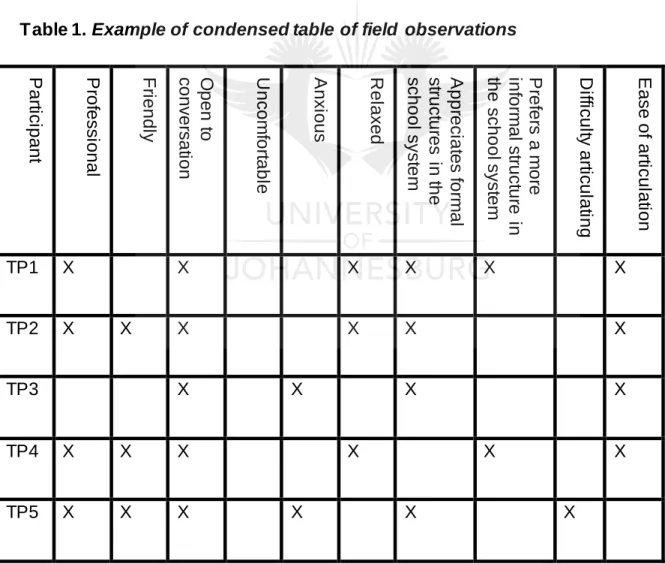
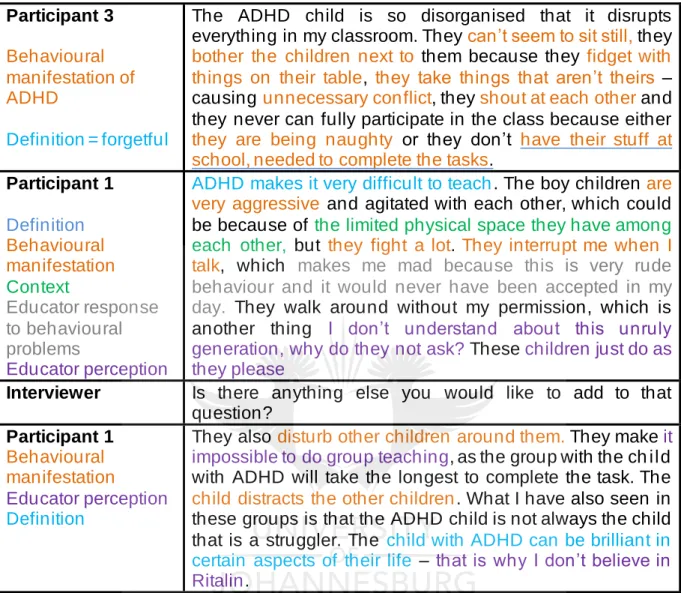
Table 1 Example of condensed table of observations Table 2 Example of colour coded interview
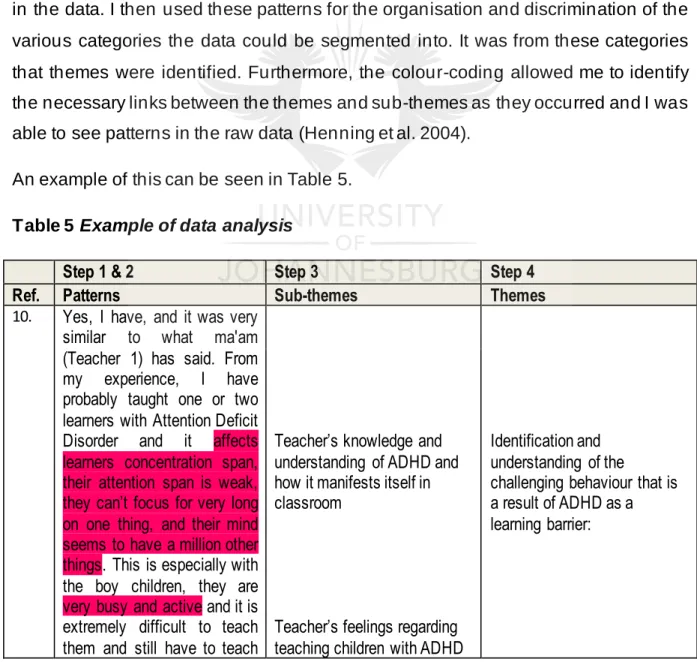
Table 3 Colour codes and code descriptions Table 4 Teacher participant information Table 5 Example of data analysis Table 6 Themes and subthemes
Table 7 Eight steps to effectively support learners in the school system
LIST OF FIGURES
Figure 1 Data verification diagram
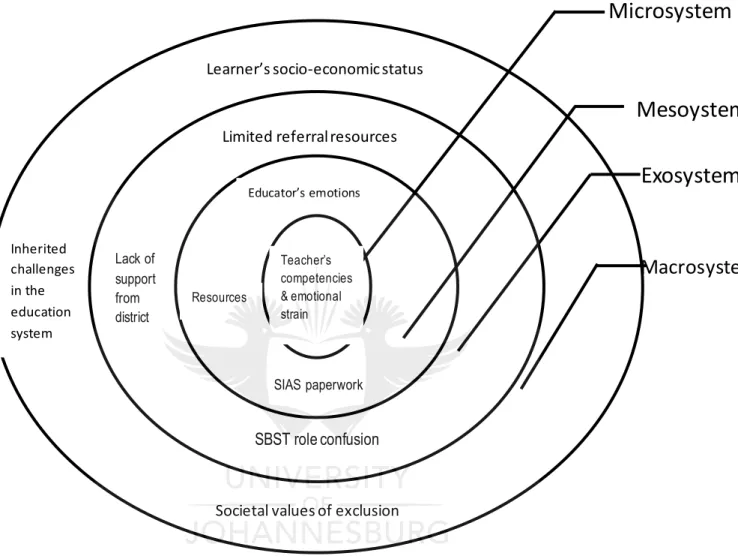
Figure 2 Integration of findings with Bronfenbrenner’s bioecological model of human development
1
CHAPTER 1
CONTEXTUALISATION, PROBLEM AND AIM OF THE STUDY
1.1 INTRODUCTION AND BACKGROUND
A significant proportion of learners attending South African schools exhibit behavioural challenges that serve as a barrier to effective teaching and learning (Joubert & Prinsloo, 2009; Mampane, 2006). These challenges are often as a result of diagnosed or undiagnosed neurodevelopmental disorders (Bornman & Don oh ue, 2014). Unfortunately, not many educators and School Based Support Team (SBST) members are aware of these challenges as barriers, nor do they know how to effectively respond to them, resulting in the implementation of harsh, punitive and oftentimes ineffective methods in response to the behaviour (Joubert & Prinsloo, 2009; Paterson & Perold, 2013). In addition, the under-resourced contexts that characterise many government schools in poverty-stricken communities often leave educators disempowered when confronted with these challenges and unable to adequately respond to the challenges (Lazarus, 2006). The purpose of the study is to identify the SBST members’ understanding of the Screening, Identification, Assessment and Support (SIAS) policy (DBE, 2014). The results will be used to develop programmes that will assist educators to implement the policy and provide support to learners experiencing Attention Deficit Hyperactivity Disorder (ADHD) as a barrier to learning. The research reflects on prior research conducted in the field of neurodevelopmental disorders and addressing barriers to learning, with the South African Department of Basic Education’s policy on the Screening, Identification, Assessment and Support (SIAS) policy as the founding theoretical framework of the study and Bronfenbrenner’s (2005) bioecological framework as the conceptual framework. This chapter also includes the problem statement, the rationale of the study, the research question , the aims and objectives of the study, the research methodology used and ethical considerations.
1.1.1 Background to the study
The end of apartheid in 1994 brought high expectations of radical transformation and growth in the lives of all South Africans, particularly those who were previously oppressed by the apartheid regime (Nortje, 2017). Radical transformation refers to the implementation of policy that will contribute to the building of an equal society
2
through sustainable inclusive growth (Jamieson, Berry, & Lake, 2017) Unfortunately, this radical transformation did not happen at the speed anticipated and this has left many South Africans living a life of inequality, poverty, lack of access to resources and unemployment (Nortje, 2017). This can also be seen in the residential areas that people live in, as even today they are largely representative of areas designated by the Group Areas Act of 1950 (Booyse, Le Roux, Seroto, & Wolhunter, 2011). This Act, implemented by the apartheid government, aimed at assigning racial groups to different residential areas, thus preventing so-called ‘non-whites’ from living in areas with a well-developed infrastructure (Booyse et al., 2011).
One such area that is still reminiscent of the past is the central Johannesburg area, where the study took place. This residential area is still largely occupied by coloured and black people and is still characterised by socioeconomic and psychosocial challenges reminiscent of apartheid, which places significant strain on its residents (Bouwer & Mampane, 2011). Coloured South African people were historically defined as people of a mixed racial and ethnic heritage and black South Africans were historically defined as the indigenous Africans that speak a Bantu dialect (Isaacs-Martin & Petrus, 2012). The challenges experienced by the inhabitants of the area include unequal access to resources and opportunities, an inferior education system, limited career opportunities, increasing unemployment, and exposure to below-standard service delivery (Bouwer & Mampane, 2011). The schools in these communities are inundated with challenges related to poor access to resources th u s negatively impacting on learning and teaching, where the additional barriers related to neurodevelopmental disorders among children exacerbate the existing difficulties at school (Landsberg, Krüger, & Swart, 2016).
1.1.2 Barriers to learning
The term barriers to learning can be defined as the “difficulties that arise that preven t access to learning and development” (Landsberg et al., 2016, p. 19). These difficulties can occur at legislative and instructional levels (i.e. curriculum-centred barriers), at the learning site (i.e. poor infrastructure), within the learner themselves (i.e. an undiagnosed or diagnosed learning barrier) or the context in which they live (i.e. poverty-stricken communities) (Landsberg et al., 2016).
3
In relation to the chosen research site it is important to note that, like those in many townships, the school is host to a myriad of challenges that serve as barriers to effective teaching and learning. These challenges include (but are not limited to ) th e HIV/AIDS pandemic and its effects on learning; language and cultural differences; the underdevelopment that is synonymous to poverty-stricken communities; unemployment; the disintegration of family life; a climate of violence and the variou s forms of child abuse inflicted on the learners (Bouwer & Mampane, 2011; Dhanaraj, 2016). The presence of these psychosocial challenges increase the difficulty placed on learning and these difficulties are often amplified by the presence of a (diagnosed or undiagnosed) neurodevelopmental disorder (De Wet, 2016; Landsberg et al., 2016). The study focuses on understanding participant teachers’ insights into ADHD as a neurodevelopmental disorder and how these participant teachers implement the SIAS policy to support learners with this behavioural challenge.
1.1.3 Neurodevelopmental disorders
Neurodevelopmental disorders are defined by The Diagnostic and Statistical Manual of Mental Disorders (DSM-5) as a group of conditions with an onset in the developmental period (APA, 2013). These disorders are characterised by the presence of developmental deficits that produce impairments to the personal, academic and or occupational functioning of the learner (APA, 2013). Furthermore, these disorders can be identified by the presence of symptoms of excess and or delays in the attainment of developmental milestones (APA, 2013). Neurodevelopmental disorders can be categorised into six categories: Intellectual Disability, Communication Disorders, Autism Spectrum Disorder, Attention Deficit Hyperactivity Disorder, Tic Disorders and Specific Learning Disorder (APA, 2013). This research is based on the DSM-5 descriptions and explanations of ADHD and its related symptoms.
Attention Deficit Hyperactivity Disorder is a neurodevelopmental disorder that is characterised by the presence of a persistent pattern of inattention and/or hyperactivity that interferes with the functioning or development of the individual (APA, 2013). According to the DSM-5, an ADHD with Inattention or ADHD with Hyperactivity and Impulsivity diagnosis can be made if six or more of the symptoms mentioned below are persistently present in more than one context, for at least six months and that the behaviours are inconsistent with the developmental stage of th e
4
individual (APA, 2013). Furthermore, these symptoms must be present before the age of 12 and they must be present in two or more settings. Lastly, clear evidence needs to be provided that the presence of these symptoms interferes with the quality of the social, academic and or occupational functioning of th e individual and that they are not exclusively present during the course of schizophrenia or any bout of psychosis.
ADHD Inattention symptoms (APA, 2013):
- Fails to pay close attention to detail/makes careless mistakes - Difficulty in sustaining attention in tasks or play activities
- Does not seem to listen to instruction or when spoken to directly
- Does not follow through on instructions and fails to complete tasks/duties
- Difficulty organising tasks and activities
- Often avoids and is reluctant to engage in activities that require sustained mental effort
- Often loses things needed for task completion - Easily distracted by external stimuli
- Often forgetful in daily activities
ADHD Hyperactivity and Impulsivity symptoms (APA, 2013): - Often fidgets with hands or taps feet
- Leaves seat in situations where remaining seated is expected - Runs about or climbs in inappropriate situations
- Unable to play or participate in leisure activities quietly - On the go and acts as if driven by a motor
- Talks excessively
- Blurts out answers before a question has been completed - Has difficulty waiting their turn
- Often interrupts or intrudes on others
Although this disorder is one that is often characterised as being ‘over-diagnosed’ and criticised for doctors being overzealous with the prescription of medication to
5
children diagnosed with it, it is important to note that the diagnosis is largely misunderstood (Mwaba, Toplan, & Roman, 2015). This is largely problematic as the learner suffering from the ‘undiagnosed’ disorder remains un-supported or assisted and the educator remains overwhelmed by the functional consequences that arise as a result of ADHD (APA, 2013). These consequences include the increased likelihood for the development of Conduct Disorder and or Oppositional Defiance Disorder; social rejection, poorer academic and vocational achievements and elevated levels of interpersonal conflict (APA, 2013). These elevated levels of interpersonal conflict and social rejection can contribute to the display of robust and disruptive behaviou rs that hinder the effective teaching and learning set out to occur in classrooms (Lou w, Kleynhans, & Perold, 2010). The study set out to identify how SBST members can implement the SAIS policy to offer support to learners who experience behavioural challenges as a barrier to learning. The individual project is embedded in the “Appropriate support for learners with neurodevelopmental disorders” project that is conducted by the Department of Educational Psychology at the University of Johannesburg. The main aim of the larger project is to establish how behavioural challenges linked to neurodevelopmental disorders are identified and supported. Th e information from this research will inform the development of new Short Learning Programmes (SLPs) for learners with ADHD. This study was guided by the South African Department of Basic Education’s policy on the Screening, Identification, Assessment and Support (SIAS) (DBE, 2014) of learners with learning barriers. A policy designed to provide South African schools with a framework that standardi ses the process of screening, identifying, assessing and providing support to all learn ers who require additional support to improve their participation in learning (DBE, 2014). Social justice and inclusive education provide the theoretical framework of the stu dy, as their values inform the SIAS policy. It is intended that the recommendations that emerge from this collaborative research process will benefit educators and SBST members in other schools. Bronfenbrenner’s (2005) bioecological framework was used as the contextual framework guiding this study (Landsberg et al., 2016). This framework will assist researchers to understand how the complex and contextual influences, interactions and interrelationships between the learners and the systems they participate in contribute to their learning experience (Landsberg et al., 2016).
6 1.2 PROBLEM STATEMENT
South African schools and the country’s education system are in a transitional phase (Booyse et al., 2011; Landsberg et al., 2016). This phase is aimed at moving education away from the segregated and unjust systems it previously subscribed to, towards a system that supports democratic values and upholds the South African Constitution (Booyse et al., 2011; Nortje, 2017).
It is during this transition process that the Department of Basic Education is paying attention to the educational challenges faced by learners facing barriers to learning by mobilising the necessary resources to support these learners. The development of Education White Paper 6 (DoE, 2001) has become the roadmap for transforming the education system (Nortje, 2017). This policy outlines how the discriminatory processes of the past can be corrected and how the principles of inclusion can be achieved (DoE, 2001). Education White Paper 6 outlines the systematic changes needed in education and puts forward the idea that these changes should be geared towards accommodating and supporting the diverse learning needs of the South African school-going population (Bornman & Donohue, 2014). The inclusive education policy acknowledges that learners are often faced with challenges in the process of learning (DoE, 2001). These challenges can occur in the classroom, at school, at home or as a result of a medical condition. Included in the ackn owledged barriers to learning are inappropriate behaviour and poorly developed social skills (DBE, 2014). Because of inadequate educator and/or SBST capacity and training, learners displaying a variety of behavioural challenges are often not identified as those needing remedial support (Nortje, 2017). This is as a result of the various stakeholders in education (which include the educators, SBST; District Based Support Team [DBST] members and learners’ parents or caregivers) failing to acknowledge challenging behaviour as a barrier to learning but seeing it rather as an unwanted disruption in classrooms (Mampane, 2016). Although it is true that the challenging behaviours disrupt learning and teaching, stakeholders in education should begin to acknowledge these persistent and pervasive behaviours as barriers to education and provide the necessary support to the learners who display this behaviour (Lazarus, 2006). In doing so, stakeholders will begin to move away from the ordinary isolation and/or detention strategies currently being practised in response to the behaviour and move towards an acknowledgement of the behaviou r
7
as a barrier that needs support and remediation (Moyo & Bayaga, 2014; Mwaba et al., 2015). In pursuing issues related to the acknowledgement of challenging behaviours as a barrier, the study sought to identify how the SBST members can holistically implement the SAIS process and provide support to learners experiencing behavioural challenges as a barrier to their learning. The SIAS policy is a government-implemented policy that is aimed at improving access to quality education for all vulnerable learners in South Africa (DBE, 2014). It is concerned with providing the necessary support to all vulnerable learners and ensuring that learn ers are able to actively participate in an inclusive and high-quality education system (DBE, 2014).
A gap in this area of study led me to seek answers to critical factors that impact on how the display of challenging behaviour is supported by the SIAS policy for effective learning. Currently many learners displaying challenging behaviours are either instructed to sit outside the classroom or are sent to the school’s disciplinarians without exposure to support-oriented interventions aimed at assisting them to overcome these barriers (Chetty & Meyer, 2017; Landsberg et al., 2016). In this study educators and SBST members from the identified primary school were interviewed to gain insight and understand how the SIAS policy can be implemen ted to offer support to said learners and alleviate the challenges placed on both educator and learner.
1.3 RATIONALE FOR THE STUDY
Lack of discipline and general misbehaviour are two of the major challenges that have plagued the effectiveness of learning and teaching in South African schools (De Wet, 2016; Thaba, 2016). Effective learning and teaching cannot take place in a space of fear or pervasive disruptive behaviour, both of which are characteristics of many South African classrooms that have become common sites of violence and disruptive behaviour (Meyer & Chetty, 2017). However, it is unfortunate that while these challenges remain such prominent issues, very few stakeholders in edu cation either acknowledge them as such or see them as barriers to learning (Chetty & Meyer, 2017; Thaba, 2016).
8
The rationale of the study stems from my interest in the display of externalising behavioural challenges and how these challenges serve as a barrier to learning (Louw, Kleynhans, & Perold, 2010), as learners diagnosed with ADHD often experience interpersonal problems with their peers, teachers and family members (Louw et al., 2010). Their behaviours can be robust, unpredictable and disruptive and place additional strain on learning and teaching in challenging contexts (Meyer & Chetty, 2017). Throughout my involvement as a school counsellor at a high school in Pretoria and as an active volunteer at various Child & Youth Care Centres (CYCC), I have observed that many learners show behaviours that make it exceptionally difficult for effective teaching and learning to take place, and more often than not these children are sent “out of class” and ushered to either the discipline team or school counsellor (in well-resourced schools), who are then expected to “fix them” before their next class. This is problematic as this is not an inclusive process but rather a process that is based on the medical model, which identifies the individual as the basis of the problem and not the system the individual participates in (Landsberg, 2016). The shortcomings of the frequently applied medical approach have also sparked the researcher’s interest in identifying how the SIAS process can be implemented by SBST members in schools to acknowledge these pervasive and consistent behavioural challenges, as barriers to learning and provide the adequate support for this reality.
1.4 RESEARCH QUESTION
1.4.1 Main question
- How do School Based Support Team (SBST) members understand the SIAS process to identify and support learners who exhibit disruptive behaviour which reflect Attention Deficit Hyperactivity Disorder?
1.4.2 Sub-questions
- What do SBST members understand about Attention Deficit Hyperactivity Disorder and the support required by learners who experience this challenge? - How do SBST members acknowledge the role of ADHD in the display of
9
1.5 RESEARCH AIMS AND OBJECTIVES OF THE STUDY
1.5.1 Aims of the study
• To identify the support rendered to learners with behavioural challenges by SBST members
• To describe and propose guidelines to improve the efficiency of the SBST as a support structure to learners who display symptoms of ADHD
1.5.2 Objective of the study
To determine how the SIAS process can be more effectively implemented by the SBST to support learners exhibiting symptoms of Attention Deficit Hyperactivity Disorder.
1.6 THEORETICAL FRAMEWORK
The right to basic education is a necessity and a fundamental human right, as stipulated by the South African Constitution (1996). An inclusive education system is seen as the vehicle that can actualise this right. Inclusive education is a theoretical framework that boasts the specific objectives of promoting access to quality education for all learners (Mampane, 2016). UNESCO defines inclusion as “a process of addressing and responding to the diversity of needs of all learners through increasing participation in learning, cultures and communities an d redu cing exclusion within and from education” (UNESCO, 2005). It is by this definition that inclusive education can be understood as a process that is signified by a con tin u um of support provided within inclusive education systems (UNESCO, 2005). The Sou th African backdrop highlights the necessity for inclusive education to address the injustices of the past, as created by the apartheid regime (Bornman & Donohue, 2014). During apartheid, black South Africans were subjected to Bantu Education, an education system that was instituted to direct black people into the unskilled labour force (Mampane, 2016). Furthermore, schools were segregated in terms of ethnicity, residential area and ability (Mampane, 2016). Schools for white children with barriers to learning were easily accessible, well-funded and adequately resourced. Wh ile th e schools catering to the needs of black, coloured and Indian learners with barriers to their learning were either uncommon or poorly resourced (Bornman & Donohue, 2014; Mampane, 2016). Having segregated schools for learners with learning
10
barriers contributed additional challenges to South African society. These challenges include, but are not limited to:
- The high number of children of compulsory school-going age who are out of school or have never enrolled in school due to their learning barrier (DBE, 2014).
- The increasing number of learners in ordinary or special schools who are failing due to their unsupported learning barrier (DBE, 2014).
- The negative and discriminatory attitudes held by members of society around the differently abled (Landsberg et al., 2016; Mampane, 2016).
- A strained government fiscus as the government continues to support the differently abled learners into their adulthood through the provision of grants. This is as a result of the government’s inability to provide a quality inclusive education which has hindered their ability to be productive and financially active members of society (Bornman & Donohue, 2014).
These challenges emphasise the importance of having an inclusive education policy, as its implementation is aimed at levelling the playing field for all learners and ensuring that all learners are afforded the opportunity to participate in an inclusive education system (Landsberg et al., 2016).
In its attempts to actualise the above-mentioned goal of inclusive education in Sou th Africa, the then Department of Education introduced Education White Paper 6 (DoE, 2001). Education White Paper 6 was designed and legislated to transform the Sou th African education system (DoE, 2001). This transformation commitment focuses its attention on systematically redressing the past injustices and removing barriers to learning by:
- Implementing a quality and flexible curriculum
- The conversion of special schools into resources centres - The establishment of full-service schools
- The training and upskilling of educators and education managers to adequately respond to calls for inclusion
- The development of institution and district support structures (DoE, 2001, p. 9-11).
11
Education White Paper 6 arose from the need for changes to be made in the provision of education and training, thereby ensuring that basic education is responsive and sensitive to a diverse range of learning needs (DoE, 2001). Education White Paper 6 acknowledges that although the current mismatch between learners’ needs and the education provided to them is as a result of the apartheid regime (Bornman & Donohue, 2014; DoE, 2001), it is the current government’s responsibility to bridge this gap and contribute to the establishment of a caring, humane and inclusive society (DoE, 2001).
The SIAS policy is a government-implemented policy that is aimed at improving access to quality education for all vulnerable learners in South Africa (DBE, 2014). It is a policy that is based on the theories supporting inclusive education and the objectives of Education White Paper 6. It seeks to provide all stakeholders in education with a standardised framework that outlines the procedures involved in the screening, identification, assessment and support of learners who require addition al support to enhance their participation in learning (DBE, 2014).
The implementation of the SIAS policy can therefore be understood as the actualisation of Education White Paper 6’s objectives on a grassroots level (Nortje, 2017). The policy outlines the processes to be followed when addressing learning barriers throughout the learners’ school career (DBE, 2014). The SIAS policy advocates that learners be understood in the context that they participate in and therefore calls for a system shift (DBE, 2014). This shift acknowledges that all learners have the right to receiving quality basic education and support within their local community (DBE, 2014). This is a move away from a system that focused on the external referral of learners with learning barriers (DoE, 2001) to a system that addresses the learning barriers in the learner’s immediate context (DBE, 2014). The primary focus of the policy is to address the learning barriers experienced by all compulsory school-aged learners who have dropped out of school due to their learning barrier and the school-going children who are not progressing through the system as a result of their unsupported learning barrier (DBE, 2014). This policy was chosen for the study as I believe that its successful implementation may assist in th e identification and support of learners who exhibit behavioural challenges as a resu lt of their specific learning barrier, namely ADHD. In addition, the successful
12
implementation of this policy will further contribute to a socially just and equal society that is reflective of the Constitution of South Africa.
According to Dinga (2014), social justice is a political and philosophical concept that advocates for fair and just relations between an individual and their society. This concept holds that all people should have equal access to wealth, health, well -bein g and opportunity. The actualisation of this philosophical concept requires that the social contract between the individual and its society (the citizen and the state) be steered towards accomplishing the following objectives:
- Ensuring the fair and just distribution of resources - Ensuring the efficient utilisation of all kinds of resources
- The implementation of principles and policies that are steered towards improving individual welfare
- Managing societal changes and transformations in a consistent manner that will promote and achieve sustainability (Dinga, 2014).
In light of these objectives, the implementation of the SIAS policy can be understood as a vehicle for social justice. The implementation of the policy can contribute to a just society where all school-going learners are provided with the opportunity to participate in a good-quality education system that will respond to their needs irrespective of the individual or systemic barriers to learning they may experience. As a consequence of this policy, the Department of Basic Education hopes to ensure that quality educational resources are distributed to all and that they are used to improve the well-being of both the individual and society.
1.7 RESEARCH METHODOLOGY
1.7.1 Research design
This study was based on qualitative research conducted within an interpretive research paradigm. Before I discuss the methodology of the study in more detail, it is important to keep in mind the ontology and epistemology of qualitative research and how they affect its methodology.
Ontology refers to the study of the nature and form of reality (Maree et al., 2013). Qualitative researchers understand reality as being subjective and socially constructed (Schulze, 2009). They accept that the researcher cannot be separated
13
from the research and that the findings obtained from their research is created and not discovered (Maree et al., 2013). Epistemology, on the other hand, focuses on understanding how one comes to know reality (Johnson & Christenson, 2014). Qualitative researchers acknowledge the epistemology of reality by exploring the experiences of others in relation to a particular phenomenon they encounter (Johnson & Christenson, 2014). Qualitative researchers acknowledge the importance of the interactive relationships between the researcher and participants as well as between the participants an d their experiences (Johnson & Christenson, 2014), therefore they focus on how reality has been constructed through these interactions and experiences (Maree et al., 2013).
According to Maree et al. (2013, p. 51) qualitative research is a “research methodology that is concerned with understanding the processes and the social an d cultural contexts which underlie various behavioural patterns”. Qualitative research is mostly interested in answering the ‘why’ questions in research (Maree et al., 2013). Qualitative research typically studies people or systems by interacting with or observing participants in their natural environments (Punch & Oancea, 2011). Th ese observations are then used to obtain a greater understanding of the subjective meanings and interpretations placed on phenomena (Maree et al., 2013). Unlike quantitative research which is concerned with the discovery of general laws, the development of statistically valid samples and the scope of the phenomena, qualitative research focuses on the uniqueness in each situation and on understanding the depth and quality of the phenomena in the context in which it occurs (Maree et al., 2013).
An interpretive research paradigm sets out to understand phenomen a through the meanings that people assign to their experiences (Maree et al., 2013). This paradigm focuses on people’s subjective experiences, how they construct their worlds and the interaction in these experiences (Schulze, 2009). In addition, the interpretive researcher aims to analyse the situation, offer a perspective of the situation and ultimately provide insight into the way people make sense of their situation (Maree et al., 2013). Furthermore, the interpretive researcher, working from a social change platform, understands that for authentic change to occur, a collaborative relationship between the researcher and the researched must be formed (Mertens, 2010). This type of research design is therefore appropriate for the
14
study as the research question asks: “How can the SIAS process be implemented by members of the SBST to identify and support learners who exhibit behavioural challenges as a result of having Attention Deficit Hyperactivity Disorder?” The combination of the research question and the research design provides the researcher with the opportunity to explore the implementation of the SIAS policy by SBST members; it allows the researcher to uncover the meanings the SBST associate with the SIAS policy and the actual lived contexts within which the policy implementation has to occur.
1.7.2 Sampling design and size
Sampling refers to the process used to select a portion of the population study (Maree et al., 2013). This sample group is representative of the population group (Maree et al., 2013). For this study, purposive sampling was used. Purposive sampling refers to the sampling process where participants are selected because they have defining characteristics that make them the holders of the data needed f or the study (Maree et al., 2013). This research aims to interview the SBST members and educators at a full-service primary school in Johannesburg, Gauteng. The defining characteristics of the identified school is that it is a full-service school that has a number of learners who experience neurodevelopmental disorders as barriers to learning within a context that shapes the school dynamics.
1.7.3 Data collection
An initial meeting was held with the head of the SBST at the identified school. This meeting focused on providing a holistic explanation of the research study and acquiring consent to conduct the research at the school. Once consent to conduct the study at the school was obtained, a meeting with all the SBST members was held. The purpose of this meeting was to provide potential research participants with a detailed explanation of the nature of the research, to achieve their voluntary participation and to obtain a general sense of interest in the study. A follow-up meeting was held with participants who showed interest and willingness to participate in the study. The purpose of this meeting was to provide participants with a reminder of the aims and objectives of the research; to obtain consent from participants and to answer all the questions participants may have. In addition, this meeting allowed participants and the research er to schedule up-coming meetings and data collection opportunities.
15
The scheduled data collection opportunities took place in the form of one-on-one semi-structured interviews. Semi-structured interviews make use of a qualitative data-gathering technique that is aimed at obtaining rich and descriptive data that will assist researchers to understand the participants’ constructed reality (Maree et al., 2013). The semi-structured interview requires that participants answer a set of predetermined questions that allow for the probing and clarification of answers (Johnson & Christenson, 2014). Semi-structured interview schedules provide the researcher with the line of inquiry they must explore; it is then the researcher’s responsibility to be attentive to the responses given, and to probe and explore them further (Maree et al., 2013).
The rationale for the choice of this data collection method was to allow me the opportunity to develop a deeper understanding of the participants’ understanding of the SIAS policy. In addition, the structure of the interview allowed me to probe new lines of inquiry that may emerge while ensuring that participants were not side-tracked by trivial aspects not related to the study (Maree et al., 2013). The data collected was transcribed and formed the primary source of data which was directly received from the participants.
1.7.4 Data analysis
According to Maree et al. (2013) data analysis refers to the processes and procedures where researchers extract some form of understanding or interpretation from the collected data. Qualitative data analysis is therefore aimed at extracting the meaningful and symbolic content of the data (Punch & Oancea, 2011). For the purposes of this study, the data analysis was concerned with establishing how participants make meaning of the SIAS policy and how the policy can be implemented to support learners displaying behavioural challenges. This was achieved through the implementation of inductive analysis which ensured that the research findings emerged from the significant themes obtained in the raw data (Johnson & Christenson, 2014).
The data analysis process began with the transcribing of the obtained data. Data transcription is the process of transforming qualitative data into written text (Johnson & Christenson, 2014). The researcher listens to or watches a video of the one-on-one interviews conducted and creates a written account of what transpired in the
16
recordings (Johnson & Christenson, 2014). These transcriptions are written down verbatim as heard in the audio clips. The completion of this process allows for a thematic analysis of the data. Thematic analysis refers to the identification of themes in the research findings (Punch & Oancea, 2011). This thematic analysis uncovered the themes in the data, which were used to develop a short learning programme to support primary school learners with neurodevelopmental disorders as part of the implementation of the SIAS policy at the school.
1.7.5 Trustworthiness
The trustworthiness of the data refers to the way in which data is collected, sorted and classified (Maree et al., 2013). Trustworthiness is comprised of four aspects: credibility, transferability, dependability and confirmability.
The credibility of data refers to factors such as the significance of the results and th e believability of the results to the participants and the readers (Maree et al., 2013). The value of credibility can be upheld by using external verification audits an d member checks. Conducting external verification audits on one’s findings includes submitting all documentation to researchers who did not participate in the study and requesting that they assess the conceptual analysis of your study (Punch & Oancea, 2011). Member checks are carried out after the preliminary analysis of the research report thereby giving researchers the opportunity to explain to participants how the collected data was interpreted (Maree et al., 2013). In this process, participants are able to ensure that the researcher’s interpretation of the collected data is accurate. Member checks were used by the participants of this study, to cross-check and correct their transcripts and ensu re that the information they provided was accurately recorded and understood by the researcher.
Transferability is the extent to which the results obtained can be generalised to oth er contexts (Maree et al., 2013). To achieve transferability, the specific features of the research must be accurately described to enable researchers to assess if the results can be transferred to other contexts or not (Maree et al., 2013). The results of this research are transferable to other full-service schools that have similar demographics and contextual backgrounds.
Dependability refers to the stability and consistency of the research process over time and under different conditions (Punch & Oancea, 2011). In the researcher’s
17
attempts to strengthen the study’s dependability, the researcher should consistently monitor the quality of the recordings, transcriptions and documentation and the observation methods used (Punch & Oancea, 2011). The dependability of this study was upheld by means of an inquiry audit by the research supervisor, who used this audit to examine the process and product of the study.
The confirmability of the study refers to the objectivity of the data and the absence of research errors (Maree et al., 2013). Results are confirmable when they are directly derived from the participants and the research conditions rather than from the subjective opinions of the researcher (Maree et al., 2013). Confirmability is maintained by exposing the data collected to an external researcher, who has not participated in the study and requesting that they assess if the methods and procedures used in the study are described clearly and in sufficient detail to allow f or data verification (Maree et al., 2013). Confirmability was achieved by exposing the collected data to my research supervisor, who thoroughly checked the data and collect methods administered to allow for verification of the data.
1.8 ETHICAL CONSIDERATIONS
According to Christensen and Johnson (2014), research ethics are “the set of principles that are developed to guide and assist researchers in conducting ethical studies” (Johnson & Christenson, 2014, p. 27). The research was conducted according to the ethical requirements of the Health Professions Council of South Africa (HPCSA), as set out in the Health Professions Act (Act no. 56 of 1974) and the ethical requirements of the Ethics Committee at the University of Johannesburg. Throughout the planning of this research, I adhered to the ethical guidelines as stipulated by the above-mentioned ethics structures, to ensure that I continuously protected and upheld the well-being of research participants throughout the research process.
1.8.1 Ethical clearance
Ethical approval was granted by the Ethics Committee of the Faculty of Education for the “Development of a centre for studies on educating children with Neurodevelopmental Disorders” project, which is the umbrella research project that my research falls under. The institutional clearance number obtained is: 2017-023
18 1.8.2 Voluntary informed consent
The Health Professions Act (1974) states that researchers must acquire “informed consent to research” and “informed consent in recording” (HPCSA, 2016). Informed consent can be defined as agreeing to participate in a study after being informed of its purpose, procedures, risks, benefits and limits to confidentiality (Pillay, 2014). This act provides researchers with the necessary guidelines to follow when obtaining informed consent (HPCSA, 2016). These guidelines specify that the language used must be understandable to the proposed participants, it must clearly explain the nature of the research and that all participants must fully understand that their participation in the research is voluntary. Informed consent from the participants for my study was acquired through the completion of consent forms (HPCSA, 2016; Pillay, 2014). These forms were completed at the introductory research session I had with the participants. In this session, I provided participants with a detailed explanation of the nature of the research, the duration and their voluntary participation in the research . After this session, the participants who had chosen to participate in the research voluntarily completed an informed consent form.
1.8.3 Autonomy
According to the HPCSA (2008, p. 2), the principle of autonomy states that “participants who are capable of deliberation about personal choices should be treated with respect for their capacity of self-determination and should be afforded the opportunity to make an informed decision with regard to their participation in the research”. This principle is upheld when participants are able to understand what they are being asked to do and when they are able to make a reasonable judgement about the effects of their participation on their well-being and they make an unsolicited choice to participate in the research (Punch & Oancea, 2011). The research participants were informed of the rights they can exercise throughout the study (Johnson & Christenson, 2014). These rights include, but are not limited to, voluntary participation and the freedom to withdraw from the study at any time. 1.8.4 Privacy, confidentiality and anonymity
Privacy refers to controlling other people’s access to information about a person (Johnson & Christenson, 2014). To uphold this ethical principle, I ensured that all identifying information (such as the participants’ names or the name of the school) was removed and they were given pseudonyms. It is important to note that complete
19
anonymity cannot be ensured. Because of the chosen data collection methods used, the identity of the participants could not be kept away from the researcher (Johnson & Christenson, 2014). The study was, however, conducted in a manner that boasts confidentiality, as I made an agreement with the participants that acknowledges that their identity would not be revealed to anyone other than myself and the research supervisor (Johnson & Christenson, 2014). The role of the research supervisor was explained to research participants to ensure that they understood the reasoning behind the supervisor having access to the data. In addition, the data collected was stored safely and access to data requires a password (Punch & Oancea, 2011), thus ensuring that the information was kept safe even after the publication . Lastly, all research participants were informed about the research process and they will be duly informed when the research study is publicised (Hammersley & Traianou, 2012). 1.8.5 Non-maleficence, justice and beneficence
Christensen and Johnson (2014) define non-maleficence as “doing no harm to others” and beneficence as “acting for the benefits of others” (Johnson & Christenson, 2014, p. 100). These principles were consistently upheld and research participants were well informed about the possible effects of participating in the study. The possibility of the emergence of emotional discomfort during the research process was discussed with participants. Participants were advised of the available professional services in their community that could assist them with processing any discomfort experienced. In addition, all research participants were duly informed about the dates, times and interview processes for the study. These dates were agreed upon by participants according to the school’s calendar and always took place after school, to ensure their participation did not interfere with the functioning of the school. Lastly, all participants were informed of the benefits of their participation in the research. These benefits include assisting the SBST to develop a better understanding of the SIAS policy and how this policy could be implemented to support learners with neurodevelopmental disorders.
1.9 CONCLUSION
This study is interested in understanding the implemented support processes that are adhered to by SBST members when supporting learners with ADHD. In
20
introducing the study, chapter 1 has provided an overview with regards to the context and rationale of the study which included the factors affecting the effective implementation of inclusion in South African government schools. Research methods, for example, research design, research questions, data collection, sampling and trustworthiness were outlined. In the next chapter, I will look at literature on inclusive education and the support of learners displaying challenging behaviour as a result of ADHD in schools.
1.10 CHAPTER OUTLINE
The study is divided into five chapters which are summarised as follows: Chapter One: Background of the study
This chapter outlines the background of the study, the orientation, rationale, motivation, aims and the research approach for the study.
Chapter Two: Literature review
This chapter presents an extended literature review related to the topic of the study. The literature review will focus on the critical factors that impact on the implementation of inclusive education through the implementation of the SIAS policy and how it can be used to support learners displaying behavioural challenges as a result of their neurodevelopmental disorder/s.
Chapter Three: Research methodology and design
This chapter provides a detailed explanation of the research methodology and design that was used in this study. This was achieved by elaborating on the research approach that was used and explaining the methodology and design undertaken during the study.
Chapter Four: Data analysis and findings
This chapter provides an in -depth analysis of all the data collected throughout the study. All the data collected from the interviews and transcriptions will be presented, documented and discussion will follow.
21
This chapter draws conclusions for the finding, with limitations acknowledged. Recommendations based on the findings for improving the functioning of the SBST to render effective support to learners experiencing barriers to learning are suggested.
22 CHAPTER 2 LITERATURE REVIEW
2.1 INTRODUCTION
Challenging behaviour is a significant factor negatively affecting the successful provision of education within the South African public school system (Scarr & Schlosser, 2015). Many learners experience and exhibit challenging behaviours such as disruptive classroom behaviour, fighting and refusing to follow instructions. Although not unique to South African public schools, the occurrence of ch allen ging behaviour is often implicated in the presence of poor infrastructure and educator burnout; a harsh reality in many under-resourced schools (Setlhare, Wood & Meyer; 2016).
Within the classroom, challenging behaviour can be defined as any behaviour that negatively affects learning and teaching by disrupting the teaching and learning process. When expressed, challenging behaviour presents as a threat to the learning, safety and dignity of stakeholders in the learning environment (Meyer & Chetty, 2017). Examples of challenging behaviour in schools include displays of aggression, disobedience, violent peer relations, disruptive and attention -seeking behaviours; all of which can be considered as posing a threat to the physical and or psychological well-being of those in the school environment (Landsberg et al., 2016). It is unfortunate that irrespective of the severity and the frequency of the challen ging behaviour displayed; it remains a phenomenon that is seldom acknowledged as a barrier to learning (Scarr & Schlosser, 2015). Although learners displaying behavioural challenges increase the difficulties in ensuring effective learning and teaching takes place, sadly, the ‘perpetrating’ learners are not seen as needing support as their actions directly infringe on the rights of the other learners around them (Ballantine, 2015). Rather, these learners are temporarily sent out of the classroom, excluded from learning activities, ushered to the disciplinarians or heads of departments and are expected to return with remorse and changed behaviour (Scarr & Schlosser, 2015; Decaires-Wanger, 2017; Nunan & Shantone, 2018). These interventions are exclusionary and go against the principles of inclusive education. According to UNESCO (2005) the principles that support inclusive education include acknowledging inclusion as a process; ensuring that inclusion is
23
concerned with the identification and removal of barriers; ensuring that inclusion is centred around the presence, participation and achievement of all learners and lastly inclusion should address the needs of learners who may be at risk of exclusion or underachievement (O'Raw & Winter, 2010).These principles acknowledge that although all learners can learn; they have different learning needs that should be equally valued and adequately supported in their process of teaching and learning (DoE, 2001). This support should be one that moves away from remediating the identified deficits in the individual learner, towards a holistic approach that respon ds to learner diversity and addresses learner, teacher and school needs (DoE, 2001). 2.2 BARRIERS TO LEARNING
Barriers to learning are defined (Landsberg et al., 2016) as the factors that contribute to a systems’ inability to accommodate to the diverse needs learners have and therefore prevent learners from accessing the educational provisions provided to them (Landsberg et al., 2016). According to Bronfenbrenner’s (2005) bioecological approach to child development, the development of a child is the result of a network of interactions and systems that directly and indirectly affect the child (Shaffer & Kipp, 2010). Bronfenbrenner’s ecological approach to child development organises the contexts of development into five levels of external influence (Eberson & Ferreira, 2012).
The microsystem is the smallest, most intimate and immediate environment that the child occupies (Donald, Lolwana, & Lazarus, 2011). It comprises of the child’s family, peer group, teachers, neighbours and the people who have direct contact with the child (Landsberg et al., 2016). The mesosystem encompasses the interaction of the different microsystems in which the child participates. The exosystem relates to the links that exist between two or more settings; the developing child does not actively participate in this setting but is indirectly affected by the setting nonetheless (Don ald et al., 2011). The macrosystem is the largest and most distant system, it is composed of the children’s cultural patterns, values, dominant beliefs and the political and economic systems that affect their development (Visser & Moleko, 2012). Lastly, the chronosystem is the system that acknowledges the useful dimension of time. This dimension shows the impact of change and consistency in the child’s environment (Donald et al., 2011). The chronosystem includes changes in
24
family structure, parent’s employment status as well as the changes in legislation and economic cycles in the society they participate in (Visser & Moleko, 2012). The bioecological approach to child development, therefore, demonstrates the diversity of interrelated influences on children's development (Ferreria & Eberson, 2012). These interactions, together with the biological resources and attributes inherent in the child, influence the various contexts the child participates in and in turn influences the child's development, and the barriers to learning the child may experience (Shaffer & Kipp, 2010). These barriers occur in the multiple contexts and systems that learners participate in and stand in the way of effective l earning and teaching (Landsberg et al., 2016) These barriers could originate from systemic influences such as parental abuse or neglect, or organic influences resu lting f rom a medical condition (Donald et al., 2011). Burns and Warmbold-Brann (2015) state that to understand the child, the environment that the child lives in must be examined fully, as individual development cannot be validly examined without considering th e multilayer environments in which the child functions (Burns & Warmbold-Brann, 2015). For this dissertation, the neurodevelopmental disorder of Attention Deficit Hyperactivity Disorder (ADHD) will be discussed as a barrier to learning (APA, 2013).
2.3 NEURODEVELOPMENTAL DISORDERS
Neurodevelopmental disorders are defined by the DSM-5 is a group of conditions with an onset in the developmental period (APA, 2013). These disorders typically manifest in the early childhood development phase, even before the child enters formal schooling and often persist throughout adulthood (APA, 2013). Neurodevelopmental disorders are characterised by the abnormal development of the central nervous system and result in developmental deficits that produce impairments of the personal, social, academic or occupational functioning (Pitman, 2014). The range of deficits that emerge from the neurodevelopmental disorder varies from very specific limitations in learning or control of executive functioning to global impairments of social skills or intelligence (APA, 2013). Furthermore, these disorders can be identified by the presence of symptoms of excess or delays in the attainment of developmental milestones (APA, 2013). The DSM-5 categories for
25
neurodevelopmental disorders include ADHD, Autism Spectrum Disorder, Communicative Disorders, Intellectual Developmental Disorders, Motor Disorders and Specific Learning Disorders (APA, 2013). By following the aims and objectives of the study, the study will focus on the behavioural challenges that emerge as a result of an ADHD diagnosis and serve as a barrier to learning.
ADHD is characterised by a chronic and pervasive pattern of developmentally inappropriate levels of inattentiveness, hyperactivity and impulsivity manifesting in early childhood (Doernberg & Hollander, 2016). Individuals with ADHD often show deficits in one or more areas of executive functioning including verbal working memory, emotion regulation, behaviour inhibition, strategy generation and implementation, motivation and self-monitoring (Du Plessis, 2015). According to Hardikar-Sawant & Shroff (2017), children display most of their apparent and difficult-to-manage symptoms in the school setting. At school, children are expected to behave in a socially appropriate manner, actively participate in academic tasks, refrain from causing disruptions and display many of these skills simultaneously (Hardikar-Sawant & Shroff, 2017). Although seemingly straightforward, the above-mentioned expectations are difficult to attain with an ADHD diagnosis (Arrunda, Bigal, & Querido, 2012). ADHD is the most commonly diagnosed childhood disorder that has a South African prevalence of approximately 5% (Du Plessis, 2015). It is characterised by three primary problems of Inattention, Impulsivity and Hyperactivity (APA, 2013). Besides these ‘problems’ numerous studies have indicated that many children with ADHD are of a normal or even high overall IQ, but they experience great difficulty applying this intelligence, because of the disruptions caused by the three primary problems accompanying the diagnosis (Decaires-Wanger, 2017). This difficulty is intensified as children with ADHD are more likely to have co-morbid psychiatric disorders that often intensify the challenges the individual experiences (APA, 2013). Co-morbidity with a learning disability can result in poor academic performance, while co-morbidity with conduct problems may increase the likelihood of interpersonal conflict and the participation in violent and/or deviant activities (Doernberg & Hollander, 2016). The ADHD diagnosis is confirmed by a psychologist or a medical practitioner and often the prescribed treatment of choice includes the integration of psychostimulant medication, educational interventions, behaviour modification interventions and changes to the child’s diet. (Du Plessis, 2015).