How stereotypes are shared through language: a
review and introduction of the aocial categories and
stereotypes communication (SCSC) framework
Camiel J. Beukeboom; Christian Burgers
Veröffentlichungsversion / Published VersionZeitschriftenartikel / journal article
Empfohlene Zitierung / Suggested Citation:
Camiel J. Beukeboom, & Christian Burgers (2019). How stereotypes are shared through language: a review and introduction of the aocial categories and stereotypes communication (SCSC) framework. Review of Communication Research, 7, 1-37. https://doi.org/10.12840/issn.2255-4165.017
Nutzungsbedingungen:
Dieser Text wird unter einer CC BY-NC Lizenz (Namensnennung-Nicht-kommerziell) zur Verfügung gestellt. Nähere Auskünfte zu den CC-Lizenzen finden Sie hier:
https://creativecommons.org/licenses/by-nc/4.0/deed.de
Terms of use:
This document is made available under a CC BY-NC Licence (Attribution-NonCommercial). For more Information see: https://creativecommons.org/licenses/by-nc/4.0
How Stereotypes Are Shared Through Language:
A Review and Introduction of the Social Categories
and Stereotypes Communication (SCSC) Framework
Open Peer Reviewed
Freely available online
doi: 10.12840/issn.2255-4165.017
ISSN: 2255-4165
Camiel J. Beukeboom
Vrije Universiteit Amsterdam,
The Netherlands
Language use plays a crucial role in the consensualization of stereotypes within cultural groups. Based on an integrative review of the literature on stereotyping and biased language use, we propose the Social Categories and Stereotypes Communication (SCSC) framework. The framework integrates largely independent areas of literature and explicates the linguistic processes through which social-category stereotypes are shared and maintained. We distinguish two groups of biases in language use that jointly feed and maintain three fundamental cognitive variables in (shared) social-category cognition: perceived category entitativity, stereotype content, and perceived essentialism of associated stereotypic charac-teristics. These are: (1) Biases in linguistic labels used to denote categories, within which we discuss biases in (a) label content and (b) linguistic form of labels; (2) Biases in describing behaviors and characteristics of categorized individuals, within which we discuss biases in (a) communication content (i.e., what information is communicated), and (b) linguistic form of descriptions (i.e., how is information formulated). Together, these biases create a self-perpetuating cycle in which social-category stereotypes are shared and maintained. The framework allows for a better understanding of stereotype maintaining biases in natural language. We discuss various opportunities for further research.
Suggested citation:Beukeboom, C. J., & Burgers, C. (2019). How Stereotypes Are Shared Through Language: A Review and Introduction of the Social Categories and Stereotypes Communication (SCSC) Framework. Review of Communication
Research, 7, 1-37. doi: 10.12840/issn.2255-4165.017
Keywords: stereotypes; prejudice; discrimination; linguistic bias; social categorization; language; communication; entitativity; essentialism
Received: Mar 16, 2018 Open peer review: Apr. 5 Accepted: May 28 Prepublished online: Jun 1 Published: Jan. 2019
Editor: Giorgio P. De Marchis (Universidad Complutense de Madrid, Spain).
Reviewers: Jake Harwood (University of Arizona, USA), Namkje Koudenburg (University of Groningen, NL)
Abstract
Christian Burgers
Vrije Universiteit Amsterdam,
The Netherlands
Content
• Based on an integrative review we propose the SCSC framework that explicates the linguistic processes through which social-category stereotypes are consensualized.
• We discuss how biases in language use both result from and maintain perceived category entitativity, stereotype content, and essentialism.
• We distinguish biases in both the content and linguistic form of social-category labels.
• We distinguish biases in both communication content and linguistic form in descriptions of behaviors and characteristics of categorized individuals.
• Our integrative framework allows for a better understanding of stereotype maintaining biases in natural language
Highlights
INTRODUCTION ...3
Goals and Approach ...3
FOUNDATIONAL CONSIDERATIONS AND DEFINITIONS ...4
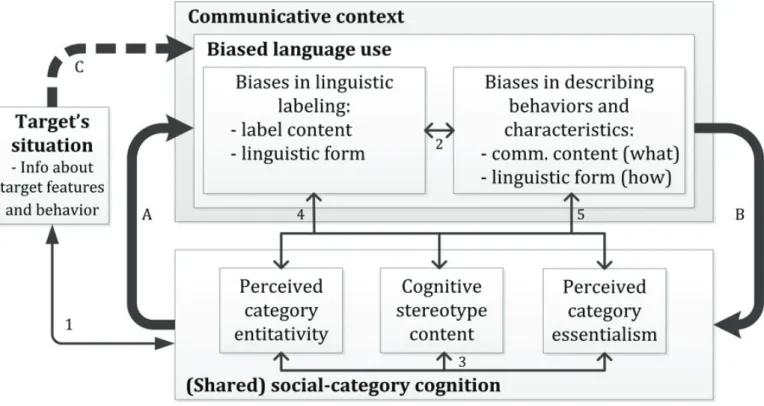
Figure 1. The Social Categories and Stereotypes Communication (SCSC) model. ...6
THE SOCIAL CATEGORIES AND STEREOTYPES COMMUNICATION (SCSC) FRAMEWORK ...6
Input About Target’s Situations...7
(Shared) Social-Category Cognition: Perceived Category Entitativity, Stereotype Content, and Perceived Essentialism ...9
Perceived category entitativity. ...9
Cognitive stereotype content. ...9
Perceived category essentialism. ...10
Mutual relationships among the three variables. ...10
Biased Language Use ...12
(1) Biases in linguistic labeling. ...12
(a) Biases in label content. ...12
(b) Biases in the linguistic form of labels. ...13
Section summary. ...16
The role of biased labeling in the consensualization of social category cognition. ...16
(2) Biases in describing behaviors and characteristics of categorized individuals. ...18
(a) Biases in communication content. ...18
Section summary. ...19
(b) Biases in linguistic form of communications about categorized individuals. ...20
Section summary and integration. ...21
GENERAL DISCUSSION: CONTRIBUTIONS, IMPLICATIONS, AND FUTURE DIRECTIONS...22
Contributions: The Role of Language Use in the Consensualization of Social-Category Stereotypes ...24
Practical implications ...27
Conclusion ...28
REFERENCES ...28
Introduction
An abundance of research has demonstrated the perva-sive and fundamental role of social categorization and stereotypes in social perception, judgment, and interaction (Allport, 1954; Mackie, Hamilton, Susskind, & Rosselli, 1996; Moskowitz, 2005; Dovidio, Hewstone, Glick, & Es-ses, 2010). Social categories and their associated stereotypes are generally considered to be highly functional for people as they allow us to quickly and efficiently make sense of our complex social environment. Simultaneously, however, reliance on social-category stereotypes may promote preju-dice, discrimination and intergroup conflict when people pre-judge categorized individuals on the basis of general-ized (negative) stereotypic beliefs (Fiske, 1998; Macrae & Bodenhausen, 2000). As such, stereotypes play a funda-mental role in many pressing societal problems relating to racism, sexism, ageism and intergroup tensions.
Stereotypes are particularly consequential because they are socially shared across large groups of people. That is, people in the same context (i.e., within the same [sub-] cultures) appear to hold similar beliefs and expectancies about social categories (Hogg & Reid, 2006; Oakes, Haslam, & Turner, 1993). The question of how stereotypes become shared knowledge, however, received relatively little research attention, as most of the stereotyping litera-ture has focused on cognitive and individual-level pro-cesses (Haslam, Turner, Oakes, McGarty, & Reynolds, 1997; Klein, Tindale, & Brauer, 2008). Except for the asser-tion that the sharing of stereotypes is usually assumed to somehow occur through communication, research on the exact means, and the general underlying principles is rela-tively scarce and scattered across various subfields in the literature. Focusing on these dynamics, however, is crucial to understand how stereotypes evolve, are maintained, and how they can possibly change (Collins & Clément, 2012; Mackie et al., 1996).
In this article, we argue that, to understand how stereo-types become shared knowledge, it is crucial to focus close-ly on language use in communications about socialclose-ly categorized people. Language reflects which groups are singled out as targets for stereotyping, and is the main car-rier of stereotypic information we come to associate with these groups. In often quite subtle ways, our language re-flects, constructs and maintains beliefs about social catego-ries. By studying language use, we can thus gain important
insight in the occurrence and development of social catego-ry stereotypes within cultural groups. Current research on this topic has so far mainly focused on specified stereotype-maintaining linguistic biases in experimental settings, most-ly by manipulating artificial sentences in isolation. This research provided valuable insights into the link between categorization, stereotypic expectancies and both the pro-duction and inferential consequences of specific linguistic features. Yet, for a complete understanding of these mecha-nisms and their real-life impact, the required next step is to focus on natural language in which various biases may occur in combination. Such an approach is even more interesting in light of current developments in computational linguistics that provide more and more opportunities for automated analysis of natural language (Caliskan, Bryson, & Naray-anan, 2017; Pennebaker, Mehl, & Niederhoffer, 2003; Fok-kens, Ruigrok, Beukeboom, Gagestein, & Van Atteveldt, 2018). To enable this type of research, a theoretical integra-tion of the ways through which social-category knowledge is shared through language is much needed.
Goals and Approach
In this article, we integrate the major strands of literature on stereotyping and biased language use into one frame-work: The Social Categories and Stereotypes Communica-tion (SCSC) framework. The SCSC framework shows how communication about categorized individuals determines the formation, dissemination, and maintenance of social-category stereotypes within cultural groups. The framework distinguishes different types of communicative biases (focus-ing on content and l(focus-inguistic form of category labels and behavior descriptions), which have hitherto been studied in largely independent fields. Within each bias type, we focus on a number of (often implicit) linguistic means through which people share their social-category stereotypes. The SCSC framework specifies how these bias types feed and maintain three fundamental cognitive variables in (shared) social-category cognition: perceived category entitativity, stereotype content, and perceived essentialism of associated characteristics and traits. Integrating both the linguistic means and the cognitive antecedents and consequences within one comprehensive framework creates a number of important insights. An integrated understanding of the role of language use in the formation and use of stereotypes al-lows one to monitor their occurrence and evolvement and
Based on a literature review, we present an integrative framework on the formation and maintenance of social-category knowledge that explains how specific, observable linguistic aspects relate to these fundamental cognitive vari-ables of perceived category entitativity, stereotype content and essentialism as both antecedents and consequences. Our specific focus on language use and its connections to these three cognitive variables provides a unique contribution that complements previous attempts to elucidate the mechanisms through which stereotype consensuality is achieved (e.g., Bigler & Liben, 2006; Haslam et al., 1997; Kashima, Klein, & Clark, 2007).
For our review, we searched for studies within the litera-ture on social and developmental psychology and commu-nication studies – focusing on social categories or stereotypes that included linguistic variables (i.e., language content or form) as independent or dependent variables. Rather than aiming to include all studies about a limited number of bi-ases, we aimed to maximize the variety of linguistic means in available research. As most of the work on category enti-tativity and essentialism is not explicitly linked to linguistic variables, we independently searched for literature on these topics. Before we turn to reviewing the literature as the basis for the SCSC framework, we provide a foundational context and definitions.
Foundational Considerations and Definitions
Grouping individuals into categories is a fundamental human tendency. Social categories and their associated ste-reotypes help people to make sense of the social world and to gain some predictability (Allport, 1954). The term stereo-type refers to the cognitive representation people hold about a social category, consisting of beliefs and expectancies about probable behaviors, features and traits (Dovidio et al., 2010). This cognitive component can be distinguished from an af-fective or evaluative response towards a social category (Amodio & Devine, 2006). The term ‘prejudice’ usually re-fers to negative affective evaluations of a social category and its members. These cognitive and affective associations may can be translated into interventions to change stereotypic
views. The theoretical and practical contributions will be explored in the general discussion.
The different sub-fields of (psychological) research on stereotype bias in language use we integrate exist quite in-dependently with little cross-reference, even though they are in fact closely related. Based on their focus, we distinguish these sub-fields as (1) biases in linguistic labeling and (2) biases in describing behaviors and characteristics of catego-rized individuals. Both sub-fields in turn are further speci-fied in terms of (a) content (i.e., meaning of labels, what is communicated) and (b) linguistic form (i.e., word classes, formulations).
With the terms “linguistic bias”, or “biased language use”, we refer to instances in which language use reflects (shared) social-category cognition1. Thereby, we define a
linguistic bias as a systematic asymmetry in language choice that
reflects the social-category cognitions that are applied to (a) described category(ies) or individual category member(s) (adapted from
Beu-keboom, 2014). This means that language choice, in referring to and describing a target, varies as a function of the social category in which this target is categorized, or to whether the target’s characteristics and behaviors fit with an acti-vated stereotype or not. Furthermore, the word ‘systematic’ indicates that these differences in language choice are gen-eral patterns, as opposed to anomalies by individual speak-ers. As noted, the different bias types manifest this systematic asymmetry in different ways, through language content (e.g., word meaning, topic choice) and/or linguistic forms (e.g., nouns vs. adjectives, negations vs. affirmations, etc.).
A number of the reviewed linguistic bias types were previously linked to perceived category entitativity, stereo-type content and perceived essentialism, mainly in the in-ferential consequences of biased formulations in recipients (Beukeboom, 2014; Carnaghi et al., 2008). Perceived cate-gory entitativity and essentialism are regarded as two fun-damental variables in category perception and stereotyping, yet in the literature the terms are often conflated and vary in meaning (McGarty, Yzerbyt & Spears, 2002; Prentice & Miller, 2007).
1 We use the term “(shared) social category cognition” to refer to the social categories that are considered meaningful (i.e., perceived
entitativity of social categories), their associated stereotypes and perceived essentialism, which are organized in a category taxonomy, and which may or may not (yet) be shared between communication partners.
stereotypic beliefs are consensually shared within an ingroup bolsters one’s stereotypic views (Haslam et al., 1997; Haslam et al., 1996), increases the expression of prejudice and dis-crimination (Crandall et al., 2002) and even increases ste-reotype accessibility (Sechrist & Stangor, 2001). Together, these processes ensure that members of subcultures internal-ize shared stereotypes and thereby create a shared social reality (Kashima, 2004; Thompson & Fine, 1999; Semin, 2008).
Communication plays a crucial role in the emergence, maintenance and change of consensually shared category stereotypes within (sub)cultures (Brauer, Judd, & Thomp-son, 2004; Haslam et al., 1997; Schaller & Latené, 1996; Klein et al., 2008). Category representations are shared and maintained through mass media (e.g., Ramasubramanian 2011; Schemer, 2012; Saleem, Prot, Anderson, & Lemieux, 2017) and in interpersonal conversation (Barr & Kronmüller, 2006; Bigler & Liben, 2006; Bratanova & Kashima, 2014; Ruscher & Hammer, 2006). Although stereotypes may be acquired from other sources than linguistic communication (e.g., direct interaction or observations of others’ interactions with category members, visual depictions of groups in the media, or perceived segregation of groups within a society), even these factors likely co-occur with linguistic categoriza-tion in communicacategoriza-tion. When observable social groups are labeled and discussed in communication, they are more likely to become the target of stereotyping than social groups that are not (Bigler & Liben, 2006). Communication can thus function as a carrier, confirmer, as well as an accelerator in stereotype formation and maintenance.
Research by Thompson, Judd, and Park (2000) showed how the mere act of communicating category impressions can increase stereotypicality. That is, after category impres-sions had been discussed in several triads along a serial communication chain, participants endorsed a more extreme stereotype content; they ascribed many stereotype-consistent traits, and few inconsistent traits to the group as a whole, and category members were seen as more alike. Moreover, consensus about these impressions between participants in triads became greater in later triads, and was also greater compared to groups who did not discuss their impressions (Thompson et al., 2000). This study illustrates how com-munication is front and center in the formation and consen-sualization of stereotypes.
In our integrative review, we focus specifically on the role of language in the consensualization of social category (in concert or independently) induce discriminatory
behav-iors (Amodio & Devine, 2006).
Identifying a new individual as a member of a category allows one to draw on knowledge and experiences with similar individuals from that category and thus provide us with inferred properties that go “beyond the information given” (Allport, 1954). Yet, the simplification this brings has serious downsides. First, when relying on categories, perceiv-ers both exaggerate similarities between individuals within categories (i.e., they are seen as all alike) and differences between categories (Allport, 1954; Brewer & Harasty, 1996; Taylor, Fiske, Etcoff, & Ruderman, 1978). Second, while judging a categorized person based on stereotypic expectan-cies associated with the category provides information gain (i.e., stored category cognition is applied to this individual), it also involves information loss, because the individuality and situational constraints of category members are ignored (Mackie et al., 1996). Discrimination occurs when individu-als or groups are treated, described and/or judged based on generic social category associations, rather than on available individuating information.
Stereotypes have mostly been defined (and studied) as intrapersonal phenomena, as belief systems that are the product of mental processes in the mind of individuals. This focus has neglected the fact that stereotypes are in essence products of collections of individuals, as they become con-sensually shared across large numbers of people within (sub) cultures (Haslam et al 1996; Haslam et al., 1997; Holtgraves & Kashima, 2007; Kashima et al., 2010; Semin, 2008). Learning which social categories are meaningful and learn-ing the shared expectancies with these social categories is part of an enculturation process in which we acquire the norms, values and appropriate behaviors of the culture we are immersed in. Creating and maintaining shared social categories and associated expectancies is thus rooted in our cultural upbringing and in childrens’ development. When growing up, we learn to categorize objects (e.g., animal types, toys) and people (e.g., based on professions or gender), and we learn what is expected of objects and individuals belonging to such categories (Bigler & Liben, 2006).
Likewise, when joining a new subgroup or (sub)culture, the socialization process involves internalizing the norms and social-category stereotypes that prevail within this sub-culture (Crandall, Eshleman, & O’Brien, 2002). This is il-lustrated by research that shows powerful effects of perceived consensus on this internalization process. Learning that
other people and their behavior, our language echoes the (shared) cognitive representations of any activated social categories associated with these people. Stereotypic beliefs surface in (often subtle and largely implicit) linguistic biases that reflect the existing stereotypic expectancies we have with discussed categorized individuals (Fig. 1, Arrow A). Moreover, linguistic biases feed shared social-category cog-nition by sharing and confirming these existing stereotypic views (Fig. 1, Arrow B). These forces create a self-perpetu-ating cycle in which social-category cognition is continu-ously shared and maintained.
As argued in the previous section, intrapersonal and in-terpersonal processes go hand in hand during this process. The reflection of social-category cognition in biased lan-guage use is usually regarded as a product of an intraper-sonal process in a speaker/sender (Fig. 1, Arrow A). This reflection in language has immediate interpersonal conse-quences when recipients draw (stereotypic) inferences from biased descriptions. Moreover, in an interactive communica-tive situation, speaker and recipient continuously switch roles, and biased communication patterns become interper-sonal as well. One person may introduce stereotypic bias in stereotypes. Language reflects and maintains which
catego-ries are considered as meaningful distinctive entities (i.e., category entitativity) and consequently become relevant dimensions for comparison. Second, language use in com-munications about categorized individuals reflects and feeds which stereotypic characteristics are associated with a given category (i.e., stereotype content), and the extent to which these associated characteristics are perceived to be essential for a given category (i.e., category essentialism).
The Social Categories and Stereotypes
Communication (SCSC) Framework
The Social Categories and Stereotypes Communication framework (SCSC framework, see Figure 1) integrates the linguistic means through which social-category cognition is communicated and maintained. The framework presents language use as the main vehicle through which shared so-cial-category cognition is transmitted and maintained (cf. Beukeboom, 2014; Collins & Clément, 2012; Maass, 1999; Wigboldus & Douglas, 2007). When communicating about
of stereotypes through biased language use is most likely within (sub)cultures, or specifically, when sender and re-cipient are ingroup members or share a social identity. More specific related factors therein are the presence of shared social category knowledge, and norms and conventions about how to communicate about discussed targets. A third important factor concerns the relation of communication partners (i.e., speaker and recipient) to the discussed target. In much of the research reviewed below, the discussed target is an absent (member of a) social category to which speaker or recipient do not belong. Research on intergroup commu-nication, however, shows that the social identity of the com-munication partners vis a vis the category of a discussed target (i.e., ingroup, outgroup, minority?) brings an addi-tional factor that may influence language use. We will relate the SCSC framework to the intergroup perspective in the general discussion.
In the following sections, we further explain the different building blocks of the SCSC framework and their mutual relationships. Before we get into linguistic variables, we discuss how communication and language use relate to both the described target’s perceived situations in reality and relevant social-category cognition. After all, when commu-nicating about other people, our language alludes both to situations in reality and social-category cognition.
Input About Target’s Situations
Social-category stereotypes are generalized impressions, which implies that features and characteristics associated with a particular social category are –depending on per-ceived category entitativity, stereotype content, and essen-tialism, as we will discuss– expected to apply to all individual category members and to be stable across situa-tions. Communication plays a crucial role in the formation of such generalized impressions. To understand how this works, it is important to note that the extent to which com-munication about categorized people refers to specified people acting in particular situations (depicted in the ‘Tar-get’s situation’ box in Figure 1), or instead generalizes across individuals and across situations, can vary.
Beike and Sherman (1994) distinguished three levels of social information. These are usually discussed as cognitive levels, but we will argue they are also reflected in language use. The lowest, most specific, level of information refers to the situational behaviors of specified individual(s) or category an interaction, in which the other joins. One person’s
utter-ances may activate social-category cognitions in the other person and subsequently induce biased language use in this person, and so on. Also, biased utterances by speakers may not only induce cognitive inferences in recipients, but also in the speakers themselves (Fig. 1, Arrow B). That is, people’s cognitive representations can be shaped by how they ver-bally describe them, for instance when they tailor their de-scriptions to assumed beliefs of their audience (Higgins & Rholes, 1978; McCann & Higgins, 1990; Marsh, 2007).
The SCSC framework (Fig. 1) explains the consensualiza-tion of social-category cogniconsensualiza-tion through biased communica-tion about categorized targets. It consists of three main parts: (I) Target’s situation: Information about discussed target’s features and behavior (II) (Shared) social-category cognition (perceived category entitativity, stereotype content, per-ceived essentialism), and (III) The different types of biases in language use. These different bias types in communica-tions about categorized individuals both reflect and feed shared social-category cognition (hence the bidirectional arrows 4 and 5). These are:
(1) Biases in the type of linguistic labels used to denote and distinguish categories, in which we distinguish biases in: a) label content (i.e., meaning of the used terms)
b) linguistic form of labels
(2) Biases in describing behaviors and characteristics of catego-rized individuals, in which we distinguish biases in a) communication content (i.e., what information about cat-egorized individuals is communicated (i.e., topic promi-nence).
b) linguistic form of descriptions (i.e., how is information about categorized individuals formulated (e.g., grammar, predicate types).
The different biases used in communication about catego-rized targets are always embedded in a communicative con-text. The inclusion of the communicative context in the framework acknowledges that biased language use may dif-fer as a function of factors in the social context in which the (biased) communication takes place. These factors include, first, constraints and affordances of the communicative situ-ation like, for instance, interactivity between communicsitu-ation partners: Is a recipient present, can s/he respond immedi-ately to a speaker (e.g., face-to-face; online chat) or with a delay (e.g., email)? A second important factor relates to the relationship between communication partners. We argue (see above and following sections) that the consensualization
instance, when information about a category’s characteristics leads to the inference of the existence of associated charac-teristics (e.g., they are helpful, so they must be nice).
These inferences are usually considered as cognitive pro-cesses, but they are reflected in, and mediated by, commu-nication and language use. In Figure 1, this is visualized in the path from arrow C to arrow B. For instance, an observer of a specified target situation (e.g., a policeman beating a person) may communicate her perception to others in differ-ent ways. She may directly communicate the observed infor-mation (i.e., verbalize the low-level target behaviors; e.g., This policeman was beating a man) and/ or verbalize the high level cognitive inference she made (e.g., Policemen are aggressive). In turn, recipients of the communicated informa-tion may draw their own inferences from the communicated information they receive, but, we will argue, this inference process is influenced by the ways in which information is verbalized. When information is formulated at a low level, recipients can draw their own inductive inferences or refrain from doing so. When information is formulated at a high level (e.g., Policemen are aggressive), the stereotypic infer-ence is readily presented, while the actual situation on which an inference was based is not. Thus, the route from actual target situations to social-category cognition is often medi-ated by communication and language use, but the input of information from target’s situations (Fig. 1, arrow C) may vary in weight (hence the dashed visualization of arrow C). It should be noted that, in natural language, descriptions of a target’s situational behavior and generic statements about a category as a whole can go back and forth. A single utterance may contain information at different levels of so-cial information. Descriptions of the situational behavior of an individual category member, for instance, can be used as evidence or illustration for inferences about a generic social category (e.g., Lucy helped her mother yesterday; girls are really helpful). Individual category exemplars and their be-havior may thus be invoked as evidence for the stereotypic characteristics of a social category (Ruscher, 1998). Depend-ing on the communicative context, these dynamics can be-come interactive. In dyadic conversation, a speaker’s utterances at one level can induce cognitive inferences and linguistic utterances at another level in a conversation member(s) (e.g., This girl helped her mother yesterday). Here,
a clear link to a specific person(s) acting in a specified situ-ation is drawn. Note that this informsitu-ation can either be self-observed (currently or retrieved from memory), or it may be learned second-hand through communication. At the intermediate level of information, personality characteristics (i.e., traits) of individuals (e.g., This girl is helpful) are men-tioned. Such information still refers to specified individual(s), but is more abstracted in that it generalizes behavioral char-acteristics across situations and is therefore not observable in a single actual situation. At the highest level of informa-tion (Beike and Sherman, 1994), one refers to qualities and characteristics of social categories (e.g., Girls are helpful). At this high level of generalization, the information is sepa-rated from both specified persons and behavioral situations. It refers both to a general category of unspecified individuals and to characteristics in generic abstracted terms that gen-eralize across situations. Communication can thus general-ize along two dimensions: in referring to a target (from specified individual[s] to a generic social category) and in describing behaviors (from specified situational behavior to enduring characteristics and traits of categorized individu-als).
Importantly, information at one level can lead to infer-ences at another level. Beike and Sherman (1994) propose that there are three directions of inferences. First, Beike and Sherman (1994) refer to the process of using information from lower levels to draw inferences at a higher level of in-formation as ‘induction.’ The inductive process of drawing inferences from the situational behaviors (lowest level) or traits (intermediate level) of individual category members to form generalized expectancies about social categories (high-est level) corresponds to stereotype formation2 . Second, the
process of using higher-level information to draw inferences about specified individuals (lower levels) is called ‘deduction’ (Beike & Sherman, 1994). Deduction occurs when informa-tion at the highest level (i.e., a category stereotype) is applied to draw conclusions about individual category members (i.e., usually called stereotyping). In Figure 1, these processes are visualized in arrow 1. Thirdly, Beike and Sherman (1994) refer to the process of using information at any level to draw inferences at the same level as ‘analogy’. This occurs, for
2 Drawing inferences from the lowest to intermediate level corresponds to impression formation of persons (e.g., spontaneous trait
ilton & Sherman, 1996; Moskowitz, 2005). On the one hand, perceived entitativity may arise from the perceptual features of the category members that are observed in actual target’s situations. That is, Campbell (1958) originally argued that perceived category entitativity is derived from perceptual Gestalt principles similarity (e.g., in group members’ appear-ance like skin color or physique), physical proximity, collec-tive movement, and common fate among category members. Later research confirmed that such perceptual cues indeed determine the perception of category entitativity (Abelson, Dasgupta, Park, & Banaji, 1998; Hamilton & Sherman, 1996).
On the other hand, more recent broader definitions, state that perceived category entitativity may also, in addition to observable perceptual features of group members, arise from assumed commonality in unobservable aspects of group members (Brewer, Hong & Li, 2004). This could include a common origin or history (e.g. ancestry, cultural socializa-tion), shared experiences or life events, common goals and coordinated collective action, and also common attributes like innate, internal dispositions (i.e. genetics, traits, person-ality disorders; Brewer et al., 2004; Yzerbyt et al., 2004; Kashima, 2004; Rothbart & Park, 2004). Thus, even when there are no perceptual features that call for grouping, a group of individuals may be perceived to be high in entitativ-ity. Based on this, we use the following operational defini-tion: Perceived category entitativity is the extent in which a
category is perceived as a meaningful, unified and coherent group, as opposed to a loose set of individuals.
Cognitive stereotype content.
Our operational definition of cognitive stereotype content, as
noted above, is: the content of the cognitive representation people hold about a social category, consisting of beliefs and expectancies about probable behaviors, features, and traits (Dovidio et al., 2010).
This cognitive representation may include observable, per-ceptual features of the category members (e.g., skin color, clothing). However, much of the work on the consequences of stereotypes has focused on the influence of trait attributes (e.g., emotional, reckless, competent) that are part of a ste-reotype, which corresponds to high-level social information that generalizes across individuals and situations.
Notably, stereotypes are often argued to contain more complex knowledge beyond simple beliefs about the presence or absence of attributes or characteristics. That is, stereo-types can include a causal structure that links various partner (Ruscher & Hammer, 2006).
Conversations or stories may develop from discussing situational behaviors of one or a few categorized individuals to generalizations about the category as a whole, which, in turn, can induce inferences about (future) behavior of indi-vidual category members. Importantly, communication can also occur at the highest level without any link to actual target situations. That is, people may often communicate generic category impressions without any reference to spec-ified persons or situations (e.g., the Japanese are really in-dustrious). We will argue that such high-level (versus low-level) communications are most likely used to convey existing (shared) social-category stereotypes, which in turn contributes to their consensualization and maintenance. In the next sections, we get into more detail about the specific linguistic variables that relate to the different levels of infor-mation, and the ways through which they reflect and induce social-category cognition of senders and recipients.
(Shared) Social-Category Cognition: Perceived
Category Entitativity, Stereotype Content, and
Perceived Essentialism
Before turning to biases in language use, we discuss how (shared) social-category cognition is structured. We distin-guish three fundamental variables in social-category cogni-tion: (a) perceived category entitativity (Campbell, 1958; McGarty, Haslam, Hutchinson, & Grace , 1995) (b) stereo-type content, and (c) perceived category essentialism (Medin, 1989; Medin & Ortony, 1989). In general, there is consensus that perceived category entitativity and essentialism play a fundamental and crucial role in the formation and use of social category stereotypes (i.e., induction and deduction), yet simultaneously there are different views on the defini-tions of and reladefini-tions between the constructs (see Haslam, Rotschild, & Ernst, 2000; McGarty et al., 2002; Prentice & Miller, 2007; Yzerbyt, Corneille, & Estrada, 2001; Yzerbyt, Judd, & Corneille, 2004), which we explain below.
Perceived category entitativity.
Perceived category entitativity (Campbell, 1958; McGar-ty et al., 1995) refers to the extent to which a social category is perceived as a coherent, unified and meaningful entity, and as “having real existence.” In other words, it refers to the perceived “groupness” or “unity” of a group or category, or how closely tied together its members seem to be
(Ham-in common that essentialism relates to beliefs that category members have stable characteristics in common, that they are, to some extent, basically the same (Haslam et al., 2000). This means that higher levels of perceived essentialism per-mit richer inferences about category members. That is, high perceived essentialism means that the properties and char-acteristics that are associated with a category are perceived to have a high degree of immutability (Kashima, 2004). One believes that category members possess a set of internal, dispositional and immutable characteristics that are stable across individual members and situations. Categorizing a person to a highly essentialized category thereby provides a rich source of inferences (i.e., much “information gain”) as it allows one to understand and predict a categorized target person’s behavior across situations.
For the purpose of the present article, we are interested in how perceived essentialism of a set of characteristics and traits that one associates with a category comes about. Rath-er than looking at whethRath-er one believes in an innate undRath-erly- underly-ing essential core (e.g., as in a genetic make-up of natural kinds, cf. Rothbart & Taylor, 1992) that explains common-alities among category members, we are interested in the perceived content of the perceived commonalities (i.e., per-ceived stereotype content), and the extent in which these commonalities are perceived to be immutable (perceived essentialism). We, thus, relate perceived category essential-ism to the perceived immutability of the stereotypic charac-teristics and traits associated with a given category (i.e., stereotype content). This approach aligns well with how essentialism has been conceptualized within the literature on language and stereotyping (see Beukeboom, 2014). Our operational definition is: Perceived category essentialism refers
to the extent in which an associated set of characteristics is perceived to be immutable to its members, and stable across time and situa-tions.
Mutual relationships among the three variables.
As can be derived from the above definitions, perceived category entitativity, stereotype content, and essentialism are closely related to each other. First, all three variables are usually considered to positively relate to perceived homoge-neity of category members. Perceived group entitativity in-creases with perceived homogeneity, and decreasing diversity or variability, in one or more visible or non-visible aspects among group members (Brewer et al., 2004; Mc-Garty et al. 1995; Yzerbyt et al., 2004). Likewise, stereotype attributes to each other and to other knowledge about the
world. For instance, stereotypes about minorities may in-clude assumptions regarding underlying causes about at-tributes like ‘poor’ or ‘uneducated’. A stereotype can thus become ‘theory-laden’ in that it includes rich and complex information about the interconnectedness and causal rela-tionships among both observable and unobservable charac-teristics of category members (Gelman, Coley, Rosengren, Hartman, & Pappas, 1998; Medin, 1989). Some have argued that perceived essentialism about a category can serve as an underlying explanation for the attributes and characteristics that are associated with it (Yzerbyt, Rocher & Schadron, 1997).
Perceived category essentialism.
Perceived category essentialism (Medin, 1989; Medin & Ortony, 1989) has been defined and measured in various ways. A common view of essentialism (Rothbart & Taylor, 1992) is that some social categories, such as race and gender, are perceived to possess a deeper, underlying biological es-sence or nature, that gives rise to their surface appearances and behaviors, and causal connections among them. Such an assumed essence may be perceived to cause category members to be fundamentally similar to one another, and to behave consistently across situations (Gelman, 2003; Haslam et al., 2000). Rothbart and Taylor (1992) argued that such beliefs arise because people treat social categories like race and gender as if they were natural kinds rather than social constructs. Hence, the characteristics people assign to a particular social category can be perceived as if they were genetically inherited or so entrenched that they are almost impossible to change (Rothbart & Taylor, 1992; Kashima, 2004).
However, social categories that do not share an obvious genetic core – like plumbers or hipsters – can also be en-dowed with perceptions of essentialism. Essentialism has often been studied with respect to perceptions about spe-cific characteristics associated with social categories (e.g., emotional, artistic, likes to draw paintings; e.g., Wigboldus, Semin, & Spears, 2000; Beukeboom, Finkenauer, & Wig-boldus, 2010; Carnaghi et al. 2008). Higher perceived es-sentialism then relates to beliefs that these specified characteristics are stable, unchangeable, and dispositional, and have a high repetition likelihood across category mem-bers and situations (see Beukeboom, 2014 for an overview).
group as a whole. In other words, for categories high in en-titativity, participants draw a general essentialistic impres-sion about the group a whole, and seize to view members as individuals (i.e., high-level inference; Beike & Sherman, 1994). Once this generic group impression is formed, it is applied (i.e., deduction) to all other individual group mem-bers (Crawford et al., 2002). In contrast, information about members of low entitative groups (i.e., aggregates of indi-viduals) must be processed and learned individually. Here, members are treated as unique individuals, and information related to specific individuals is stored separately in memo-ry. Once a behavior–trait association is made for one indi-vidual, no further generalizations, to other individuals or to the group as a whole, are made (Crawford et al., 2002). Thus, with low entitativity, information remains at a low or inter-mediate level (Beike & Sherman, 1994) and is processed in an individuated piecemeal manner (Fiske & Neuberg, 1990).
In sum, with increasing perceived entitativity, it is more likely that a generalized stereotypic impression consisting of a set of associated essential characteristics is formed. This stereotype is then associated with all individual members of the group, which allows perceivers to generalize beyond the characteristics of the individual members. However, this information gain comes with a loss; recollection of specific information about individual members becomes more dif-ficult. It is more difficult to remember which of the members of the group performed a behavior that initially induced the inference of the trait, as all of the group members are associ-ated with the trait implied by the behavior. Several other studies confirm these ideas (e.g., Yzerbyt et al. 2001; Yzerbyt, Rogier & Fiske, 1998).
In this article, we argue that specific aspects of language use relate in a predictable way to the formation and mainte-nance of perceived category entitativity, stereotype content and essentialism. In the following section, we review and integrate research from various fields to elaborate and sup-port these ideas.
content by definition includes generalizations across indi-vidual members, and this perception increases to the extent that perceivers assume that the set of associated character-istics are essential (immutable) to the group as a whole.
Although there are quite different views on the defini-tions of, and reladefini-tions between these constructs3 , in general
scholars agree that it is valuable to consider entitativity and essentialism as distinct constructs (Yzerbyt et al., 1997, 2004). That is, social categories may independently vary in the extent to which they are perceived to have entitativity, the stereotype content they become associated with, and the extent in which associated stereotypic characteristics are perceived to be essential (Haslam et al., 2000; Prentice & Miller, 2007). Simultaneously, the constructs are closely and causally related to each other, in a reciprocal manner (Fig. 1, arrow 3). On the one hand, a minimal level of perceived entitativity is needed before a category can acquire a stereo-typic impression and essentialism. The more a collection of individuals is perceived to have high (as compared to low) entitativity, the more perceivers tend towards an inductive process to find the stereotypic characteristics considered to be essential to its members (Hamilton & Sherman, 1996; Spencer-Rodgers, Hamilton & Sherman, 2007; Yzerbyt et al., 1997). On the other hand, high essentialism may also induce higher perceived entitativity. That is, believing that a set of essential, shared characteristics exists for a category may, in turn, be taken as evidence to believe in the categories unity and real existence (i.e., its entitativity; Kashima 2004; Yzerbyt et al., 2004).
Treating entitativity and essentialism as distinct con-structs also helps to explain their crucial role in the forma-tion and use of social category stereotypes. For instance, using a savings-in-relearning paradigm, Crawford, Sherman, and Hamilton (2002) showed that for groups high (compared to low) in entitativity, trait inferences drawn from individu-al group members’ behaviors (i.e., induction) were more likely to be generalized to other group members and the
3 In the literature, social category entitativity and essentialism have been defined in quite different ways and the terms are sometimes
used interchangeably (Yzerbyt et al., 2004; Haslam et al., 2000; 2004). Depending on how broad the constructs are defined, they can either be considered to share a nested, hierarchical, or overlapping structure (Yzerbyt et al., 2004). Note that when entitativity is defined according to the mentioned broad definition (i.e., as arising from assumed unobservable common attributes; Brewer et al., 2004) entita-tivity begins to overlap with essentialism. Assumed shared essential traits among a group of individuals (e.g., extraverts) could induce perceived entitativity (i.e., they are seen as a coherent group).
entitativity (McGarty et al., 1995).
More direct evidence comes from research in child de-velopment. Linkages between linguistic labels and category perception and formation already emerge early in language acquisition (Waxman & Markow, 1995). Simply introducing a label in conjunction with a number of individual items facilitates pre-school children to form categories, as shown in a better performance in a sorting task compared to chil-dren who hear no labels. These effects occur both for famil-iar English labels (e.g., animals, clothing, food) as well as for foreign Japanese words (e.g., dobutzus, kimonos, gohans; Waxman & Gelman, 1986). Once a linguistic label is used to refer to a group of objects or individuals, this group is perceived as a more unified and coherent whole that is dis-tinguished from other categories within a conceptual hier-archical taxonomy. Labeling thus appears to be related to higher perceived category entitativity. Other research also suggests relationships of category labeling with stereotype content and perceived essentialism. These linkages become more apparent when we specifically focus on two aspects of labels; (a) their content (i.e., label meaning) and (b) their linguistic form.
(a) Biases in label content.
As noted above, a label functions to refer to a category of people that exists in reality. The label content thus commu-nicates which category of people is referred to, and thereby conveys category boundaries and the category’s position in a hierarchical social-category taxonomy. Labels vary in how broad or narrow they are (Anderson, 1991; Rosch, Mervis, Gray, Johnson, & Boyes-Braem, 1976). They can range from superordinate broad levels (e.g., gender, age groups, racial and ethnic groups), to more narrow subordinate levels of aggregation (e.g., specific and specialized professions; Rich-ards & Hewstone, 2001).
Aside from referring to a given category and conveying category boundaries, a label functions to convey meaning about a category and its members. First, conveying meaning (cf. information gain) occurs because labels become associ-ated with a set of stereotypic characteristics. When a group of individuals is repeatedly referred to with a given linguistic label (e.g., immigrants), it will gain in entitativity, which in turn facilitates stereotype formation (cf. Crawford et al., 2002). Hearing or reading a given linguistic category label can, in turn, activate (i.e., prime) the stereotype content that has become associated with this label (Dijksterhuis & Van
Biased Language Use
Based on our integrative review, we argue that social-category cognition (i.e., the perceived entitativity, stereotype content, and essentialism of social categories) is both re-flected in, and maintained by, language use, specifically by (1) biases in linguistic labeling, and (2) biases in describing the behaviors and characteristics of categorized individuals. Thereby, language use plays a crucial role in the consensu-alization of social category cognition within cultural groups.
In Figure 1, these bias types are embedded in a
‘Communi-cative context’ box. This acknowledges that biased language use may differ as a function of factors related to the social context and relationships between communication partners and the target. We will elaborate on this in the following sections and the general discussion.
(1) Biases in linguistic labeling.
The first bias type deals with the category labels used to refer to individuals or groups. Different label types (in con-tent and linguistic form) will be used depending on existing social-category cognition that may or may not (yet) be shared within a given subculture. Specifically, we will argue that label use both results from perceived category entitativity, stereotype content, and essentialism in speakers, and also feeds and maintains this in message recipients, and arguably also in speakers (Figure 1, arrows 4).
A first indication for the link between category labeling and perceived category entitativity comes from research on category perception. Several studies (e.g., Corneille & Judd, 1999; McGarty & Turner, 1992) have shown that the use of even a trivial category label in referring to judged objects or individuals induces perceivers to exaggerate similarities within categories (i.e., assimilation) and to accentuate the differences between categories (i.e., contrast). For instance, Foroni and Rothbart (2011, 2013) showed that the presence of a label (compared to no label) with silhouette drawings of body types (e.g., anorexic, normal, obese) reduced perceived differences between members of the same category (i.e., they are judged as more alike), while the perceived differences between members of different labeled categories increased. Labels thus play an important role in conveying category boundaries (Rothbart, Davis-Stitt & Hill, 1997). It appears that once a (observable) group is linguistically labeled, it is explicitly defined and distinguished from other groups, and it thereby gains in its apparent reality and perceived
type content, is demonstrated by cases in which group labels with an offensive connotation are substituted by politically correct labels (Maass et al., 2014). Such politically correct substitute terms usually have a euphemistic connotation, but tend to lose their positive meaning over time when the label becomes associated with the same negative stereotypic as-sociations, thus creating the need for repeated replacements. Examples for this process, known as a “euphemism tread-mill”, can be found in labels for mental disability (moron, mentally retarded, mentally challenged, learning difficulties, special needs) or race (from the use of the N-word as a de-rogatory group label to the use of the label ‘people of color’; Maass et al., 2014).
In sum, the label content functions to identify a given category of people, and thereby conveys category boundaries and a position in a hierarchical taxonomy. We argue that referring to a category using different label types goes hand in hand with perceived category entitativity. When a cate-gory is conventionally labeled within a subculture, it gains in perceived entitativity, and vice versa.
Second, the label content plays a role in communicating the content of the set of stereotypic characteristics associ-ated with a given category. As noted, this relationship is two-directional. On the one hand, the use of linguistic cat-egory labels can activate (i.e., prime) the stereotype content that has become associated with this label, or bring an ad-ditional semantic meaning that eventually becomes part of the (shared) category representation. On the other hand, existing stereotype content can induce the use of associated linguistic category labels. That is, people who hold negative stereotype views are expected to be more likely to use de-rogatory labels. Importantly, however, the choice to use such labels depends on social norms and whether it is considered appropriate in the communicative context (Crandall et al., 2002; Croom, 2013). In social groups in which negative stereotypes prevail, the use of derogatory labels or slurs will be relatively acceptable (Crandall et al., 2002; Croom, 2013; Fasoli et al., 2015), and this, in turn, can contribute to the consensualization of such negative stereotypic views.
(b) Biases in the linguistic form of labels.
A second aspect of linguistic labels lies in their linguistic form. Interestingly, different linguistic forms of labels are related to different cognitive inferences about categories. Around preschool age, children become sensitive to the grammatical form of words (nouns, verbs, adjectives) and Knippenberg, 1996). Linguistic labels thus function as verbal
tags for social stereotypes (Mullen, 2001).
Second, the semantic meaning or conceptual content of the used linguistic term may bring an additional meaning. Often, different labels can be used to refer to the same social category. For instance, to refer to soccer spectators one can use various labels, like ‘fans,’ ‘supporters’ or ‘hooligans.’ To refer to ‘immigrants,’ one can use negative labels like ‘for-tune-seekers,’ ‘aliens,’ ‘outsiders,’ or highly negative meta-phorical terms like ‘parasites’ (Musolff, 2014). Some labels will be used mainly as a descriptive term, to refer to and identify individuals or groups in an affectively neutral man-ner (e.g., spectators, plumbers). Other labels, however, have a stronger positive or negative connotation. Derogatory la-bels and social slurs, are more likely used when one intends to convey negative prejudice, and to qualify categories or category members in a disparaging manner (Croom, 2013; Fasoli, Carnaghi, & Paladino, 2015).
Different labels for the same category may thus be associ-ated to a different cognitive representation (i.e., stereotype content) and may convey different affective evaluations (i.e., prejudice; see the distinction between cognitive complexity and valence of ethnophaulisms; Mullen, 2001; Mullen and Johnson, 1993). Derogatory group labels or stigma are obvi-ously associated with a different more negative stereotype content and associated affective response than neutral labels (Carnaghi & Maass, 2007; Dovidio, Major, & Crocker, 2000; Maass, Suitner, & Merkel, 2014; Smith, 2007). Sexist de-rogatory slurs (e.g., “bitch,” “whore”; see Fasoli et al., 2015), for instance, derogate women by conveying hostile stereo-typic expectancies about women (i.e., promiscuity, sexual looseness, low morality), while simultaneously conveying negative affect (e.g., contempt and disgust).
In a text or conversation about a category and its mem-bers, various terms may be used. After identifying a catego-ry using a (more or less neutral) descriptive label (e.g., immigrants) one may introduce additional labels (e.g., para-sites, fortune-seekers) to qualify the category or specified members. By means of metaphorical (e.g., parasite) and non-metaphorical label-terms (e.g., outsider), speakers can convey a semantic meaning that is applied to (members of) the category. Such negatively or positively connotated terms may, in turn, induce new stereotypic associations with the category immigrants.
The fact that linguistic labels both bring a semantic meaning, and over time becomes associated with a
stereo-less likely categorized into alternative categories (e.g., an artist). By contrast, adjectival descriptions (e.g., athletic) more easily allow alternatives (i.e., somebody can be both
athletic and artistic; Carnaghi et al., 2008; see also Waxman,
1990). Nouns thus function as stronger category labels, and, compared to adjectives, can be expected to relate to higher perceived category entitativity.
Moreover, nouns induce stronger inferences regarding the perceived essentialism or immutability of associated stereotypic characteristics. When persons are described with a noun (e.g., Kevin is a traditionalist), compared to a cor-responding adjective (e.g., Kevin is traditional), category-congruent behavioral preferences (e.g., sends Christmas postcards) are seen as a more profound and unchangeable, to have a higher enduringness, and higher likelihood of fu-ture repetition (Carnaghi et al., 2008). Likewise, Gelman and Heyman (1999) showed that children of ages five and seven inferred that a person’s characteristics (e.g., Rose eats a lot of carrots) were more stable and enduring when they were described with a noun label (e.g., She is a carrot eater) compared to when they were presented in a descriptive phrase (e.g., She eats carrots whenever she can).
The above studies show effects of a label’s linguistic form on recipients’ inductive inferences (Figure 1, Arrow B). Car-naghi et al. (2008, study 6) also showed experimental effects of speakers’ label use as a result of perceived category es-sentialism (Figure 1, Arrow A). For instance, participants who were led to believe that athletic abilities are genetically determined (high essentialism) were more likely to choose a noun label than an adjective to describe an individual target person active in athletic sports (athlete), compared to participants who believed athletic abilities are a transient characteristic and the result of training (low essentialism). Perceptions of high essentialism thus also induce the use of stronger noun labels.
Another important distinction in the linguistic form of labels lies in whether labels are formulated as generic (e.g., Germans are …), subset (e.g., these Germans are …), subtype (e.g., female Germans are …) or individual (e.g., This Ger-man is…) references. Although references can be expressed in different and quite complicated ways (Cimpian & Mark-man, 2008), preschool children are already sensitive to cues assign particular types of meanings to them (Brown, 1957).
When children hear nouns, they take these as referring to entities. That is, they see common nouns (e.g., mothers, teachers) either as a reference to the category to which per-sons, locations or objects belong (Waxman, 1990; Waxman & Markow, 1995) or as a reference to unique individual objects, locations or persons (i.e., proper nouns; Lucy, Lon-don). Nouns thus function to denote taxonomic relations and distinctions among classes or categories in a conceptual hierarchy with various levels of abstraction (Waxman, 1990). In contrast, other linguistic forms like adjectives serve other purposes. Children soon learn that, while nouns refer to categories, adjectives refer to properties of objects and to subordinate level distinctions (Hall, Waxman & Hurwitz, 1993; Markman & Hutchinson, 1984; Waxman & Gelman, 1986). Indeed, nouns can be used to refer to entities (indi-viduals or categories) in the function of sentence subject or object, while single adjectives4 cannot. Adjectives typically
function to denote one of many qualities that a person or category may possess (Carnaghi et al., 2008). Nevertheless, even though, in most situation, single adjectives strictly are not used as referring labels, the comparison between nouns and adjectives is interesting, because in person descriptions nouns and adjectives can be used in an exceedingly similar manner (e.g., she is an athlete [noun] vs. she is athletic [adjec-tive]). In such descriptions, nouns and adjectives induce different inferences that relate to both category entitativity, stereotype content, and essentialism (Carnaghi et al., 2008). First, noun labels activate the stereotype content that is associated with the labeled category, while adjectives do not. That is, when a target person is labeled using a noun (vs. adjective), this more strongly induces stereotype-congruent inferences about the target, while simultaneously inhibiting counter-stereotypical inferences. For instance, when a target person is described as “a Jew,” recipients tend to more strongly expect other typically Jewish habits compared to when he or she is described as “Jewish” (Carnaghi et al., 2008).
Second, nouns have an either-or quality (e.g., one either is or is not an athlete) while adjectives can vary in degree (e.g., one can be a little or very athletic). Consequently, once a person is classified using a noun (e.g., an athlete) they are
4 When adjectives are used in labels referring to individuals or categories they are usually combined with a noun, as in subtype labels
thereby also imply that a category is a coherent, stable en-tity (Gelman et al., 2004).
A number of studies have shown the important role of generics in forming perceptions of category entitativity and essentialism. Both Gelman et al. (2010) and Rhodes et al. (2012) conducted a series of experiments in which pre-school children and adults were introduced to a novel and fictional category labeled “Zarpies” via an illustrated picture book. The characteristics were presented on separate pages with pictures of Zarpie exemplars accompanied by either generic noun labels (e.g., Zarpies hate ice cream), individual noun labels (e.g., This Zarpie hates ice cream), or no-label (e.g., This hates ice cream; Gelman et al., 2010).
First, using various methods, these studies demonstrate that generics, compared to both individual and no-label, induced stronger category–characteristics links (i.e., stereo-type content). When Zarpie characteristics were learned by means of generic sentences, respondents were likelier to mention these characteristics as explanations for behavior of Zarpie exemplars, to generalize them to novel Zarpie exemplars, and to expect that category members are alike in other unmentioned characteristics as well (Gelman et al., 2010).
Second, the studies show that generics led to stronger perceived essentialism. When characteristics were learned from generic noun labels, compared to individual noun label and no-label, they were expected to be innate and inevitable, and stable across time (Gelman et al., 2010; Rhodes et al., 2012). Moreover, after being exposed to descriptions with generics, respondents were likelier to provide dispositional, rather than situational, explanations for Zarpie behaviors (Gelman et al., 2010). The individual noun label still induced stronger category essentialism compared to no label, but the use of a generic label led to the highest level of perceived category essentialism (Gelman et al., 2010; Rhodes et al., 2012).
Interestingly, Rhodes et al. (2012) also showed that the
use of generic labels is related to perceived entitativity.
Par-ents who were first led to believe that Zarpies are a distinct kind of people with many biological and cultural differences from other social groups (i.e., high entitativity), rather than a non-distinct kind (i.e., low entitativity5), used more generic
that indicate whether a label refers to a generic category (i.e., a kind) a specific subset of exemplars, or a specific exemplar (e.g., cats have tails, the cats have tails, the cat has a tail; Gelman & Raman, 2003). Note that such generic versus specific exemplar labels respectively correspond to the high and low levels of target references described above (Beike & Sherman, 1994).
Generic references have received particular research in-terest in developmental psychology, as these are considered to play a crucial role in the transmission of category knowl-edge (Cimpian & Markman, 2008, 2009; Gelman et al. 1998). Generic sentences combine generic labels with a char-acteristic and thereby express generalizations both across individual category members and situations (e.g., Boys play with trucks; Girls are sweet). These utterances thus corre-spond to the high level of social information as described by Beike and Sherman (1994). Generic sentences, or generics, explicitly convey that a characteristic applies to an entire category. Importantly, this type of category–characteristic mapping cannot be observed directly, nor can this informa-tion be illustrated for someone else without the use of lan-guage (Gelman, Taylor, Nguyen, Leaper, & Bigler, 2004). Generics are frequent in child-directed speech, and argued to be important in children’s conceptual development (Gel-man, 2003; Gel(Gel-man, Ware, & Kleinberg, 2010).
In the English language (and many other languages), generic sentences can be expressed with bare plural nouns (e.g., Boys play with trucks), but also with definite singulars (e.g., The elephant is found in Africa and Asia), or indefinite singular articles (e.g., A girl wears pink), and are accompa-nied by present-tense verbs (Gelman et al., 2004; Rhodes, Leslie, & Tworek, 2012). Unlike utterances containing uni-versal quantifiers such as all, every, or each, generic state-ments allow for exceptions. That is, while a single counterexample would disprove the generalization “All boys play with trucks”, the generic statement “Boys play with trucks” remains true even after an encounter with a single boy who does not. This feature makes generic sentences ide-ally suited to convey characteristics that are typical for a category but that can nevertheless admit exceptions. They convey qualities that are stable (non-accidental), enduring, and persistent across time and situations (i.e., essential), and
5 Note that Rhodes et al. (2012) use a broad definition of essentialism and use the term essentialism here to include perceptions of
ry knowledge determines which categories are applied, which in turn is reflected in the labels used. Research on the categorization process demonstrates that people are most likely to apply categories that are cognitively salient (Fiske & Neuberg, 1990; Mackie et al., 1996). These findings sug-gest that categories that are part of existing (shared) social category knowledge, particularly chronically salient catego-ries with high perceived entitativity7 that are regularly
acti-vated, have an advantage of being activated again, and to be linguistically labeled. By means of label use subcultures thus develop their own taxonomy of social categories that are consensually considered as distinct and meaningful “kinds” (cf. Rosch et al., 1976). Some cultures may distinguish a given category of people by conventionally labeling it, while other subcultures do not label and distinguish it.
Second, label use is simultaneously shaped by available information about the target’s situation. Research on the categorization process shows that category activation also depends on fit, which is the degree of overlap between the observed or discussed features and behaviors of a target and the characteristics denoted in a given cognitive category representation (Fiske & Neuberg, 1990; Mackie et al., 1996). Category activation and label use are thus shaped by avail-able information (e.g., observed or communicated) about features and behaviors of a discussed target (Fig. 1, Arrows 1 and C). People are expected to seek the strongest category with the most information gain in a given situation, in order to maximize the accuracy of predictive inference (Anderson, 1991; Hamilton & Sherman, 1996).
This cognitive search for the most fitting categorization to apply to a given target situation can be characterized as a narrowing process. When inconsistencies are perceived be-tween a target person’s features and behavior and an acti-vated category representation (i.e., fit is low; e.g., a person does not behave in stereotypical ways), this will prompt a perceiver to process more deeply. First, inconsistencies may prompt perceivers to search for a more sensible or specified references when they talked about them to their child from
a picture book without accompanying text (Rhodes et al., 2012, Study 3).
Section summary.
In sum, research shows clear linkages between the con-tent and linguistic form of labels and perceived category entitativity, stereotype content, and essentialism. First, the use of any category label (compared to no label) both reflects and induces a higher level of category entitativity. Second, particular types of labels (in content and linguistic forms) reflect and induce differences in perceived category entitativ-ity, stereotype content, and essentialism. Verbal descriptions and adjectival references imply lower entitativity and essen-tialism than noun labels. Noun labels, particularly in ge-neric form, imply the highest entitativity and perceived essentialism of specified characteristics. To the extent that a category is labeled as a stronger entity, the likelier it is to acquire a set of associated characteristics, and the likelier these characteristics will be seen as essential to all members of the category6.
The role of biased labeling in the consensualization of social category cognition.
The SCSC framework explains how label use contributes to the consensualization of social category cognition. In this section we further discuss three important aspects of this process: (a) label use reflects and shapes social category cognition; while (b) label use is simultaneously shaped by a perceived reality (the target’s situation), and (c) by processes in the communicative situation.
First, the above sections show that the use of different labels is biased by social-category knowledge, by reflecting (and inducing) perceived category entitativity, stereotype content, and essentialism. Thus, when we communicate about other people (about targets in specified target situa-tions, but also in generalized terms), existing
social-catego-6 Note that, in natural text or conversation, after an initial categorization using a linguistic label, other linguistic cues may further
determine perceived category entitativity and essentialism. The use of pronouns, for instance can provide further verbal cues about targets’ category membership (e.g., he vs. she), their position in a category hierarchy (e.g., he vs. they) and the boundaries between groups (e.g., we, they, us vs. them).
7 It seems reasonable to assume that perceived category entitativity and essentialism, and the use of stronger noun labels, are positively