CAPTURING THE SUCCESS OF YOUR
RDP:
G
UIDELINES FOR THE
EX POST
EVALUATION OF
2007-2013
RDP
S
Copyright notice
© European Communities, 2014
Reproduction is authorised provided the source is acknowledged.
Manuscript June 2014
The contents of this publication do not necessarily reflect the official views of the European Commission.
The European Evaluation Network for Rural Development (abbreviated to “Evaluation Expert Network”) operates under the responsibility of the European Commission’s Directorate-General for Agriculture and Rural Development, Unit E.4 (Evaluation of measures applicable to agriculture; studies). The overall aim of the Network is to increase the usefulness of evaluation as a tool for improving the formulation and implementation of rural development policies by helping to establish good practice and capacity building in the evaluation of Rural Development Programmes up until 2013.
Additional information about the activities of the Evaluation Expert Network and its Evaluation Helpdesk is available on the Internet through the Europa server (http://enrd.ec.europa.eu/evaluation/)
CAPTURING THE SUCCESS OF YOUR
RDP:
G
UIDELINES FOR THE
EX POST
EVALUATION OF
2007-2013
RDP
S
CONTENT
Introduction ... 1
What is
ex post
evaluation for? ... 3
1.
Scope of
ex post
evaluation ... 7
2.
2.1. Policy objectives ... 72.2. Focus of evaluation ... 8
2.3. Legal requirements regarding the scope and content of ex post evaluation ... 11
2.4. Common and programme-specific elements of the ex post evaluation ... 12
PART I: MAINLY FOR MANAGING AUTHORITIES ... 1
1.
THE PROCESS OF
EX POST
EVALUATION ... 3
1.1 Who is involved? ... 3
1.2 Key steps ... 3
PART II: MAINLY FOR EVALUATORS ... 1
1
INTERVENTION LOGIC ... 5
1.1. Intervention logic in the EU rural policy ... 5
1.2. What are the major challenges in the intervention logic review? ... 10
1.3. What should be reviewed in relation to intervention logic in the ex post evaluation? ... 15
1.4. How should the intervention logic be reviewed or assessed during the ex post evaluation? ... 17
1.5. Specificities with respect to TA, NRN ... 22
1.6. “Dos and don´ts” in relation to assessment of intervention logic (based on experience) ... 23
2.
EVALUATION QUESTIONS ... 25
2.1. The role of evaluation questions in the ex post evaluation ... 25
2.2. Common evaluation questions proposed for the ex post evaluation of 2007-2013 RDPs ... 28
2.3. Programme-specific evaluation questions ... 30
2.5. What are the specificities with respect to NRN and TA? ... 34
2.6. “Dos and don´ts” in relation to use of evaluation questions (based on experience) ... 35
INDICATORS ... 37
3.
3.1. CMEF indicators ... 373.2. Programme-specific indicators ... 39
3.3. Experiences in using indicators in the MTE ... 41
3.4. How to use indicators in evaluation of RDPs? ... 42
3.5. Specificities with regard to Leader ... 45
3.6. Specificities with respect to TA, NRN ... 46
3.7. “Dos and don´ts” in relation to the use of indicators (based on experience) ... 48
METHODS ... 49
4.
4.1 Introduction ... 494.2 Methodological challenges in assessing programme effects in ex post evaluation of RDPs ... 49
4.3 How to design evaluation to address methodological challenges ... 56
4.4 Do’s and don’ts in relation to the assessment of evaluation methodologies (based on experience) ... 101
DATA ... 103
5.
5.1. Major challenges in data management and data collection during the evaluation of the RDP ... 1035.2. Which data is necessary for the evaluation of RDP results at beneficiary or micro level? ... 104
5.3. Which data is necessary for the evaluation of RDP results and impacts at RDP and national level? ... 105
5.4. Specificities in relation to TA and NRN ... 112
5.5. “Dos and don´ts” in relation to using specific data in answering evaluation questions (based on experiences) ... 114
PART III: TOOLBOX ... 115
1
Objective trees as part of the RDP intervention logic by axis ... 117
3
Outline of the
ex post
evaluation report ... 122
4
Example of a quality assessment grid for the evaluation report ... 124
5
Example outline of the technical specification of the terms of reference for
the
ex post
evaluation ... 127
6
Retro plan in the
ex post
evaluation ... 130
7
Examples of Leader-specific additional indicators ... 131
8
Examples of evaluation methods ... 134
8.1 Estimation of direct programme effects by means of ATT indicator (Ex post evaluation RDP 2000-2006, Hessen, Germany) ... 134
8.2 Estimation of direct programme effects occurring at the level of SAPARD programme beneficiaries (Slovakia) ... 136
8.3 Estimation of leverage effects for RDP farm investment measure (Schleswig-Holstein, Germany) ... 139
8.4 Estimation of multiplier effects using input-output model (Castilia y Leon, Spain, RDP 2007-2013) ... 140
8.5 Assessment of Axis 1 impacts on the competitiveness of agriculture sector (Slovakia RDP 2007-2013) ... 142
8.6 Model-based assessment on impacts of the RDP on growth and employment (Austria) ... 145
8.8 Effects of selected Axis 2 measures on carbon sequestration in relation to climate change (Czech Republic) ... 153
8.9 Propensity score matching ... 157
FOREWORD
Dear Reader,
Some ninety billion Euros will have been spent on rural development by the EAFRD by the end of the programming period 2007 – 2013. An amount of which every politician (not only within rural policy), any controlling institution on national or EU level and indeed every taxpayer in Europe will want to know what were the effects of this expenditure. Evaluations in general and ex post evaluation in particular serve to provide this knowledge. The ex post evaluation also serves to summarise the success of each and every Rural Development Programme and to demonstrate what has worked well in the implementation of these programmes. As rural development policy is necessarily a continuous effort, not confined to budgetary periods, these evaluation findings are indispensable inputs into the further evolvement of policy making, hence a major source of policy learning.
For these reasons ex post evaluation of Rural Development Programmes (RDP) is required as a
compulsory step in the implementation of each programme. With these guidelines the European Evaluation Network for Rural Development is now providing a tool for RDP stakeholders, in particular
Managing Authorities (MA) and evaluators to facilitate the indeed very complex task of ex post
evaluation.
The ex post evaluation guidelines draw strongly on the experience with the application of the Common monitoring and evaluation framework (CMEF) so far and on successful guidance provided earlier. It also incorporates the considerable progress of evaluation methodology made by the evaluation community during the last years (e.g. the spreading of counterfactual analysis).
The intention of these guidelines is to help the evaluation stakeholders
to save resources for the individual programme by providing ready-to-use tools,
to produce better and more sound findings, and last but not least
arrive at more meaningful aggregations of evaluation findings at EU level.
Hence, the ex post evaluation guidelines should make the ex post evaluation an easier and more rewarding exercise with which the MA will be able to meet their own and EU policy needs as well as the legal requirements.
The ex post evaluation guidelines have been drafted by a team of evaluation experts of the European Evaluation Network for Rural Development in close collaboration with the relevant services of the European Commission and the Evaluation Expert Committee for Rural Development. Experts of the Helpdesk of the European Evaluation Network for Rural Development have contributed their evaluation experience to the text, namely John Grieve, Robert Lukesch, Jerzy Michalek, Enrique Nieto, Sari Rannanpää, Angelos Sanopoulos, Bill Slee, Peter Schneidewind, Jela Tvrdonova, Hannes Wimmer. Members of the Evaluation Expert Committee acted as a sounding board to check whether successive drafts of the text were adapted to the needs of the target audience. Representatives of DG Agriculture and Rural Development, in particular Zelie Peppiette, have ensured the coherence of the guidelines with the EU policy framework. The Helpdesk of the European Evaluation Network for Rural Development coordinated and facilitated the drafting process.
LIST OF ABBREVIATIONS
AEM
AIR
Agro-environmental Measures
Annual Implementation Report
AWP Annual Work Plan
AWU
CAP
Annual Work Unit
Common agricultural policy
CCI Common Context Indicators
CEQ Common Evaluation Question
CF
CGE
Cohesion Fund
Computable Generals Equilibrium
CLLD Community-Led Local Development
CMEF Common monitoring and evaluation framework
CMO Common Organisation of the Markets
CSF Common Strategic Framework
DG AGRI Directorate-General for Agriculture and Rural
Development
DG BUDG Directorate-General for Budget
DG EMPL Directorate-General for Employment Social Affairs and
Inclusion
DG ENV Directorate-General for the Environment
DG MARE Directorate-General for Maritime Affairs and Fisheries
DG REGIO Directorate-General for Regional Policy
EAE Ex ante evaluation
EAFRD European Agricultural Fund for Rural Development
EC European Commission
EIP European Innovation Partnership
EMFF European Maritime and Fisheries Fund
ENRD European Network for Rural Development
EP Evaluation plan
ERDF European Regional Development Fund
ESI Funds European Structural and Investment Funds
ESF European Social Fund
EU European Union
FADN
FBI
Farm Accountancy Data Network
FSS Farm Structure Survey
GAEC
GPSM
GVA
Good Agricultural and Environmental Condition
Generalised Propensity Score Method
Gross Value Added
HNV High Nature Value
IACS Integrated Administration and Control System
ICT Information and Communication Technology
LAG Local action group
LDS Local development strategy
LULUCF Land Use, Land Use Change and Forestry
MA Managing Authority
MC Monitoring Committee
M&E Monitoring and evaluation
MS Member State
NRN National Rural Network
PA Paying agency
PSEQ
PPS
Programme-specific evaluation question
Purchasing Power Standard
RDP Rural Development Programme
SEA Strategic Environmental Assessment
SME Small and medium enterprise
SWOT Strengths, Weaknesses, Opportunities, Threats
TA Technical assistance
ToR Terms of Reference
TWG Technical working group
WHAT IS
EX POST
EVALUATION FOR?
1.
Ex post evaluation is a summative evaluation of a Rural Development Programme after it has been completed. It is conducted at a point where it is possible to assess impacts and the added value of the programme funding, both at EU and programme level. The impact and added value of the interventions are important means to show programme achievements with the funds spent, justify the programme budget and enhance the transparency and accountability of EU rural policy to stakeholders and taxpayers. Demonstration of the policy achievements, thus legitimising funding for rural development measures, is important at European, national and regional levels, especially when
budgets are tight. The ex post evaluation also provides the opportunity to see whether the policy was
designed and implemented appropriately to address the most relevant needs in the programme area. The ex post evaluation is a policy learning tool, which enables to use the evaluation results to improve the design, quality and implementation of the policy in the future. Utilising evaluation in policy design, via drawing relevant conclusions and lessons, is an important aspect of evidence-based
policy-making. Even though the ex post evaluation is conducted at the end of a programming period, when
the new policy is already designed and partly implemented, it has an important role in bridging the old and new programming periods. Relevant information and recommendations can be used to improve the implementation of the new programme, especially for measures which continue across
programming periods. In this respect the results of ex post evaluation of 2007-2013 can be used as a
reference in the time of preparation of enhanced Annual Implementation Reports of 2017 and 2019.
Furthermore, the success and failure factors identified through the ex post evaluation may prove to be
useful in improving the new programme and its implementation. In addition, the ex post evaluation can also be seen as validating or finalising the baseline values that are set for the programming
period 2014-2020, since the ex ante evaluations were conducted before information for 2013 was
available.
Although self-standing the ex post evaluation of Rural Development Programmes is the final part of ongoing evaluation of the programming period of 2007-2013, built upon its monitoring and evaluation activities conducted throughout the programme implementation period. The ongoing evaluation is used by evaluation stakeholders to improve the quality of Rural Development Programmes and their implementation, to justify the proposals for substantive changes during the programme life cycle and
as the basis to prepare mid-term and ex post evaluations.
Why do we need guidelines for the ex post evaluation of 2007-2013 RDPs?
The assessment of the mid-term evaluation (MTE) reports conducted by DG AGRI and the Evaluation
Helpdesk1 in 2011 revealed the need to enhance the quality of evaluation since frequently the MTEs
did not succeed in adequately demonstrating the achievements, results and impacts of the RDP. Therefore it was suggested to revise and reduce the number of the current set of evaluation questions outlined in the CMEF in order to better define the focus of the ex post evaluation. In addition, the assessment showed that Member States are actively seeking the European Commission’s support in
carrying out the process of the ex post evaluation as well as in evaluation methods.
These guidelines are drafted with significant collaborative input from the Member States, to ensure a
common understanding of the requirements for the ex post evaluation of Rural Development
Programmes and to assist Managing Authorities, evaluators and other evaluation stakeholders in preparing, steering and conducting the ex post evaluation. The goal is to create synergies and increase efficiency by reducing workload of the MAs and evaluators.
1Evaluation Helpdesk (March 2012), Methodological Assessment of Mid-Term Evaluation Reports of 2007-2013 Rural Development Programmes
The guidelines aim to provide a good understanding and a comprehensive interpretation of the legal texts in practical terms. This will save time and effort of those responsible for managing and
conducting the ex post evaluations while ensuring that all aspects and required elements are
adequately addressed. It will also help ensure consistency and comparability of evaluations among
Member States and regions and facilitate the ex post evaluation summary2 to be conducted by
Commission services in 2017.
Despite the European Commission’s involvement in the development of the guidelines, this document itself remains non-binding. Legally binding requirements mentioned in the guidelines are highlighted. Who are target group(s) for these guidelines?
The ex post guidelines for the evaluation of Rural Development Programmes 2007-2013 have been drafted for different groups of rural development stakeholders:
1) Representatives of Managing Authorities will find information on the purpose and scope of the ex
post evaluation, including an exhaustive list of legal references, which have to be fulfilled by Member
States/regions. Furthermore, they will find the guidance and practical tools that will help them to
manage, coordinate and steer the ex post evaluation, as well as to disseminate the evaluation results.
2) For evaluators, the guidelines provide further explanations of the legal texts and rationale behind the requirements, with the aim of creating a common understanding of the task. The document also offers a revised set of Common Evaluation Questions, clarifies the role of the evaluation questions and indicators. It also proposes evaluation methods and approaches for collecting evidence for conducting the assessment of Rural Development Programmes’ impacts.
3) Other evaluation stakeholders, such as monitoring committee members, paying agencies, programme beneficiaries, etc. can use the ex post evaluation guidelines as a source of information, when contributing to the evaluation through data/information collection, or when debating or
commenting on the ex post evaluation report.
4) Officials within DG Agriculture and Rural Development concerned with Rural Development Programmes 2007-2013 who may find it helpful to have a reference point summarising the common
understanding of the purpose and the tasks of the ex post evaluation.
How to use the ex post evaluation guidelines?
The ex post evaluation guidelines have been structured with a common introduction, followed by three parts, which can be used as stand-alone documents, interlinked through cross-links provided in the text. Although each part concentrates on particular aspects of the ex post evaluation, which are covered in depth, in order to maintain the stand-alone nature of each part, there is inevitably a certain amount of repetition, particularly in relation to the legal requirements, in order to ensure readability and comprehension for all stakeholders involved in the evaluation of Rural Development Programmes.
The contents of the different parts are described briefly below:
Introduction introduces the guidelines and explains what the ex post evaluation should be conducted for.
The Scope of Evaluation explains the focus and scope of the ex post evaluation in terms of policy objectives, issues to be analysed and legal provisions, highlighting what must be covered. The chapter also explains common and programme-specific evaluation elements such as evaluation questions and indicators.
2
PART I: Mainly for Managing Authorities
Chapter 1 explores the process through which the ex post evaluation should be conducted, providing practical guidance on the key steps of the process (planning, implementing and disseminating), the
role and responsibility of each evaluation stakeholder and the timing-related issues for ex post
evaluation.
Chapter 2 focuses on the ex post evaluation of National Rural Network Programmes, highlighting the differences and similarities with the evaluation of NRNs planned under the RDPs, and with the overall ex post evaluation process of the RDPs.
PART II: Mainly for evaluators
This part covers the ex post evaluation of Rural Development Programmes in more detail: intervention
logic, evaluation questions, indicators, evaluation methods and data.
Chapter 1 deals with the intervention logic as the starting point of the evaluation of a programme, considering its composition, coherence between objectives and expected outputs, results and impacts, relevance in relation to addressing needs, expected and unexpected side effects of intervention logic, its effectiveness and efficiency. The chapter also provides what should be assessed about the intervention logic asking important questions and how the assessment should be approached. The chapter also provides examples of intervention logic to illustrate the proposed assessment approaches.
Chapter 2 explains the purpose and role of evaluation questions and judgement criteria in evaluation, and their links to indicators; it proposes a revised set of common evaluation questions, provides advices for developing programme-specific evaluation questions and gives guidance on how
to use and answer evaluation questions in ex post evaluation.
Chapter 3 explains the purpose and role of indicators in evaluation and describes how to develop programme-specific indicators. The chapter also provides advice on how to use indicators in the ex post evaluation, including linking indicators to policy objectives and evaluation questions, balancing importance and measurability, screening indicators from the point of data requirements, etc.
Chapter 4 is dedicated to evaluation methods to be used in the ex post evaluation. The chapter starts with description of various challenges in assessing the programme impacts, is about addressing these challenges via appropriate evaluation design, highlighting importance of using the counterfactual. Further it describes qualitative, quantitative and mixed approaches in evaluation and methods to be used in the proper assessment of programme impacts. The chapter also elaborates on how to choose evaluation methods in relation to rural development axes, technical assistance and national rural networks.
Chapter 5 deals with proper use of data, necessary for the assessment of programme results and impacts. It also debates challenges of data management and collection and describes the role of various institutions in it.
PART III: Toolbox
The toolbox contains practical tools such as draft Terms of Reference for ex post evaluation, a
revised set of evaluation questions, an outline of an ex post evaluation report, quality assessment grid
for evaluation reports, examples of additional indicators for the Leader axis, and other useful tools, which will facilitate for both, evaluators and Managing Authorities, the conduction and implementation of the ex post evaluation.
SCOPE OF
EX POST
EVALUATION
2.
The ex post evaluation of Rural Development Programmes should be anchored in the rural development policy objectives and focus on relevance, efficiency, effectiveness and achievements, results, impacts, as well as success and failure factors. It should be conducted using the Common
monitoring and evaluation framework (CMEF). The ex post evaluation must, as a minimum, cover the
legal requirements, which are discussed in Chapter 2.3.below.
2.1.
Policy objectives
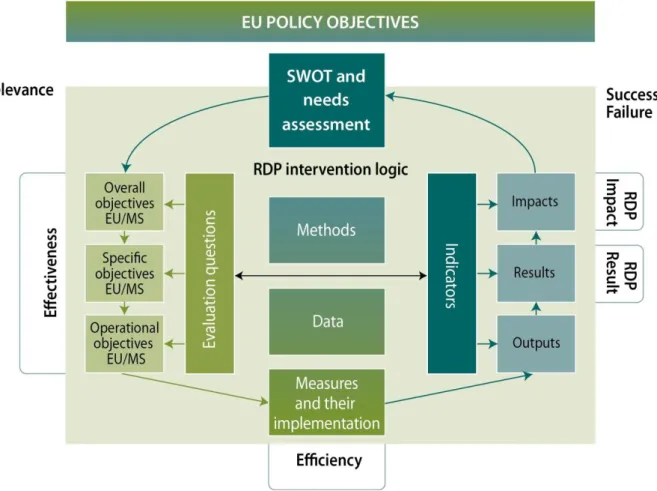
The subject of the evaluation is the rural policy developed in the form of policy objectives set up at EU, national and regional level. The policy objectives are the core of the programme intervention logic. They are linked to evaluation questions and indicators in order to conduct the evaluation.
At EU level, the policy derives from Council Regulation (EC) No 1698/2005 and is structured through
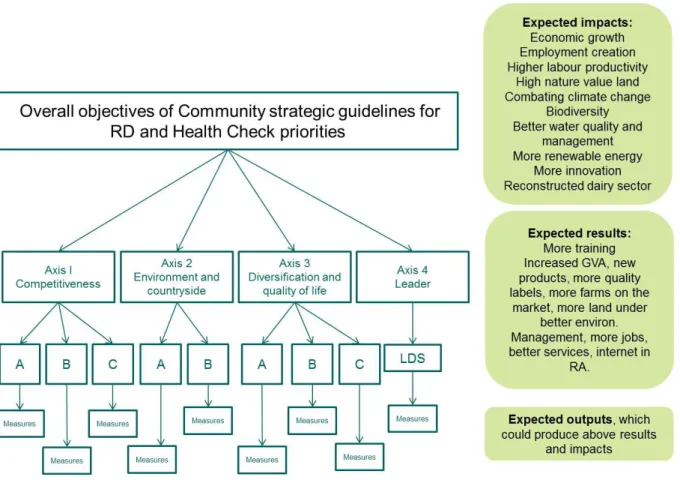
a hierarchy of objectives3, rooted in the overall objectives set up by Community strategic guidelines
for rural development4, backed by more specific objectives linked to axes and sub-axes, and
continuing to operational objectives at measure level as laid down in Council Regulation (EC) No 1698/2005. As a consequence of the Health Check of the Common Agricultural Policy reform, a new set of rural development priorities reflecting recent challenges for EU agriculture and rural areas, were added to the policy priorities5.
3CMEF, Guidance B, 2.2 Intervention logic and indicators 4
Council Regulation (EC)No 1698/2005, Art. 9 and Council decision 2006/144/EC of 20 February 2006 on Community strategic guidelines for rural development
5
The objectives of rural development policy set up by Community strategic guidelines for rural development in the programming period 2007-2013 are:
Improving the competitiveness of the agricultural and forestry sector;
Improving the environment and the countryside;
Improving the quality of life in rural areas and encouraging diversification of the rural
economy;
Building local capacity for employment and diversification;
Ensuring consistency in programming (maximise synergies between axes);
Complementarity between Community instruments.
Health Check of the CAP, Council Regulation (EC) No 74/2009, Art. 16a:
“From 1 January 2010, Member States shall provide in their Rural Development Programmes, in accordance with their specific needs, for types of operations having the following priorities as described in the Community strategic guidelines and specified further in the national strategy plans:
a. Climate change,
b. Renewable energies,
c. Water management,
d. Biodiversity,
e. Measures accompanying restructuring of the dairy sector,
At national and regional level, the EU policy objectives set up by the Community strategic guidelines and Health Check of the CAP are transferred into Rural Development Programmes, taking into consideration specificities of the respective Member States or regions. In addition, national and regional programme authorities might include additional policy objectives addressing the specific needs of the programme territory.
2.2.
Focus of evaluation
The evaluation should be an assessment at programme, axis and measure level, of the programme’s:
Relevance in terms of addressing the most important needs in the programme area;
Effectiveness and achievements towards policy objectives;
Efficiency in terms of receiving best value for money;
Results in terms of programme achievements within the group of direct programme
beneficiaries;
Impacts in terms of programme contributions to the change observed in the programme area;
and
Success and failure factors and lessons learned for the future policy design.
Relevance
Programme relevance is assessed by looking at the extent to which the objectives and design of the programme are consistent with (a) challenges and concerns in a particular rural sector or programming area and (b) the needs and priorities of target groups. The assessment of relevance should include analysis of whether the objectives and the design of the programme are still appropriate at the time of the evaluation, given that circumstances may have changed since the
programme was started or its objectives last revised. The appraisal should consider the programme’s
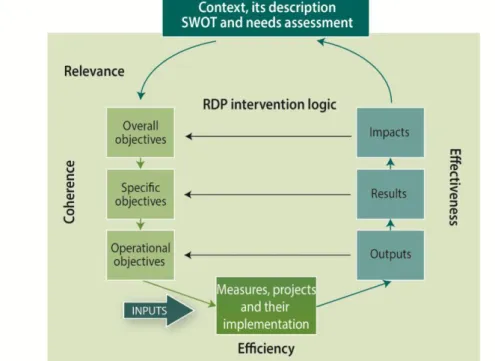
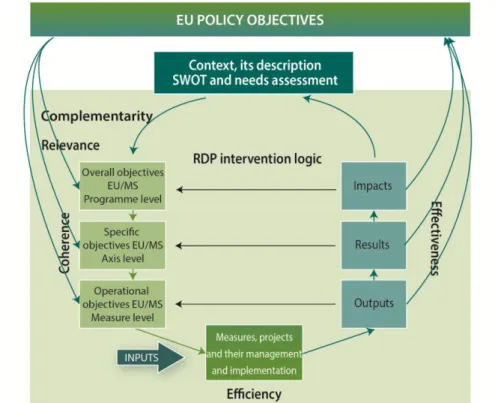
intervention logic: objectives, measures, activities and allocated funds, and how they address the programme area’s needs identified in the SWOT analysis and needs assessment.
In evaluating the relevance of a programme it is useful to consider the following questions:
To what extent have the programme’s objectives, measures, activities and resource allocation
been addressing the most important needs of the programme area over the time of programme implementation?
To what extent has the programme generated changes which address the programme area’s
needs?
To what extent are the activities and outputs of the programme consistent with the attainment
of its overall objectives?
To what extent are the activities and outputs of the programme consistent with the intended
results and impacts?
To what extent have programme activities generated/provided public goods (or
addressed/corrected specific market failures) in the agricultural and rural sectors, and: Are there alternative and more efficient ways in which these could be delivered?
Effectiveness and achievements
The core of the assessment of effectiveness and achievements is the analysis of the extent to which the intervention of Rural Development Programme is heading towards the expected changes in addressing most relevant needs within the programme area and whether policy objectives and
priorities defined at EU6, national and regional level have been achieved.
The following questions guide the evaluation of effectiveness of a programme and its achievements in relation to the EU, national and regional policy objectives:
To what extent were the objectives of the programme achieved?
What were the major factors influencing the achievement or non-achievement of the
objectives?
To what extent has the RDP contributed to the EU rural development priorities for 2007-2013?
Efficiency
When assessing the programme efficiency, the evaluation looks at the relationship between the allocated resources and achieved programme outputs and consequently results. An analysis of programme efficiency reveals whether more outputs and results could have been obtained with the same budget, or whether the same outputs and results could have been reached with a lower cost. Efficiency is studied by looking at the size of the budget and its division between axes and individual measures, as well as the examination of budget sufficiency to achieve policy objectives and contribute to the Community priorities. The efficiency of the RDP is also affected by the delivery mechanisms and implementation procedures, so these factors should also be taken into account in the ex post evaluation. The results achieved through individual measures, sub-axes, axes and by the entire programme, in relation to the programme implementation costs, could also be a subject of study. In evaluating the efficiency of a programme it is useful to consider the following questions:
To what extent were the allocated resources able to produce expected programme results and
impacts?
Could the obtained results/impacts be produced at lower costs?
To what extent was the contribution to the Community priorities and objectives achieved with
allocated funds?
What are the factors influencing cost efficiency of programme implementation?
Results
Assessing programme results means examining the changes happening within the group of programme beneficiaries due to the programme’s interventions, in relation to the area needs, programme objectives and Community priorities. The examination can be conducted at axis, sub-axis and/or measure level in relation to specific sectors/groups of beneficiaries, or territories. The assessment of results is an essential input for the assessment of programme impacts.
In evaluating the programme results it is useful to consider the following questions:
To what extent has the programme addressed the needs of direct programme beneficiaries?
To what extent were the programme objectives achieved for the group of direct beneficiaries?
To what extent have the results achieved reflected the Community priorities for rural
development?
6
Impacts
The ex post evaluation assesses the RDP impacts by scrutinising the extent to which the change observed in the programme area can be attributed to the programme and to what extent the programme has addressed Community priorities for rural development, bearing in mind the influence of other intervening factors. In the assessment of RDP impacts intervening factors also include CAP Pillar I interventions.
Impacts are linked to the wider objectives of the programme and can be observed at the programme area, macro-economic or global level (increase of incomes, employment or improvement of the quality of life in the assisted programming area). Impacts produced by a programme intervention are expressed in “net terms” after subtracting effects that cannot be attributed to the intervention (e.g. confounding factors, double counting, deadweight), and by taking into account indirect effects (displacement and multipliers). However the proportionality issue should be considered when assessing impacts of very small programmes (e.g. in case of some small regional programmes the evaluation may consider the assessment of gross impacts or programme results).
Impacts might be positive or negative, primary and secondary, expected or unexpected, intended or unintended.
The impact is typically assessed for the whole programme on axes level. In some cases the assessment of programme impacts can be also focused on a group of measures or a single measure if these contribute significantly to particular Community priorities, RDP policy objectives or if they generate substantial impacts.
In evaluating the programme impacts it is useful to consider the following questions:
To what extent can the change in the programme area be attributed to the programme?
What are direct and indirect effects of the programme?
What multiplier effects has the programme produced?
What are the intervening, confounding or external factors which influenced the programme
effects?
Success and failure factors, good practice
The ex post evaluation also offers the opportunity to provide important lessons for designing future policies and programmes through looking at factors which contributed to the success or failure of the
RDP and its interventions. This way the ex post evaluation plays an important role in the policy cycle
and can be used for shaping policy instruments and resource allocation.
The evaluation identifies success and failure factors by analysing inherent and contextual issues which might foster or weaken the effects of the intervention. Amongst the most important inherent issues are the programme delivery mechanisms, administration and management and the effectiveness and efficiency of its operation. Other inherent issues include the level of assistance to potential beneficiaries and their capacity to absorb funds, targeting of support, information dissemination, and support in building capacity of rural development beneficiaries to develop projects. Contextual issues include the overall macro-economic situation, the ability of beneficiaries to co-finance projects, and the regional socio-economic differences.
The following questions can guide the evaluation of the success and failure factors of a Rural Development Programme:
What were the major inherent/contextual factors fostering the RDP interventions, positively
What are the major objective/subjective factors weakening the RDP interventions, negatively influencing the achievement objectives?
To which extent have objective/subjective factors fostered/weakened the programme
achievements of objectives and contribution to Community priorities?
To what extent have objective/subjective factors affected programme results/impacts?
2.3.
Legal requirements regarding the scope and content of
ex post
evaluation
Ex post evaluation of Rural Development Programmes is a legal requirement7 built on ongoing
evaluation.8 The generic aim of evaluation, including the ex post, is three-fold: namely, to improve the
quality, efficiency and effectiveness of the implementation of Rural Development Programmes.9
The legal texts spell out the scope of the evaluations. In general, evaluations should assess the
impact of the programmes with regard to the Community strategic guidelines10 and the rural
development objectives specific to the Member States and regions concerned. Here sustainable
development requirements and environmental impacts should be taken into account.11
More specifically, the ex post evaluation, similarly to the MTE, must examine12:
the degree of utilisation of resources;
the effectiveness and efficiency of the programme;
the socio-economic impact of the programme; and
the programme’s impact on the Community priorities, including new challenges1314
. The ex post evaluation, similar to the MTE, should further15
cover the goals of the programme16;
aim to draw lessons concerning rural development policy17;
identify the factors which contributed to the success or failure of the programme’s
implementation, including as regards sustainability18; and
identify best practice19.
In addition to setting out what the ex post evaluation must examine, the legal framework also specifies how it should be achieved, through the legal provisions establishing the CMEF. In particular, the legal framework sets out a hierarchy of indicators which must be used in the evaluation. Quantification of all the indicators included in the implementing act (Regulation 1974/2006) in line with
the definitions established as part of the CMEF is therefore an essential part of the ex post evaluation.
7
Council Regulation (EC) No 1698/2005, Art. 84.1 and 86.6 8
Council Regulation (EC) No 1698/2005, Art. 86.1 and 86.5 9
Council Regulation (EC) No 1698/2005, Art. 84.2 10
Council decision 2006/144/EC of 20 February 2006 on Community strategic guidelines for rural development 11Council Regulation (EC) No 1698/2005, Art. 84.2
12
Council Regulation (EC) No 1698/2005, Art. 86.6 13
Council Regulation (EC)No 1698/2005, Art. 9 and Council decision 2006/144/EC of 20 February 2006 on Community strategic guidelines for rural development
14
Council Regulation (EC) No 74/2009, The Health Check of the CAP reform 15Council Regulation (EC) No 1698/2005, Art. 86.6
16Council Regulation (EC) No 1698/2005, Art. 4.1 17
Council Regulation (EC) No 1698/2005, Art. 86.6 18
Council Regulation (EC) No 1698/2005, Art. 86.6 19
The values for these indicators should be analysed in conjunction with the other evaluation elements to provide the required overview of the RDP and its achievements.
Consequently, the ex post evaluation must contain answers to common and programme-specific
evaluation questions, which are derived from an assessment of the effectiveness, efficiency, and relevance of the Rural Development Programme and provide solid conclusions and recommendations
in order to improve the quality and the implementation of future programmes. The ex post evaluation
also has to include judgements on the degree to which measures and the programme as a whole met their targets and contributed to achieving the objectives set out in the national strategy as well as the Community strategy.
The legal requirements for the ex post evaluation cover interventions only under Council Regulation (EC) No 1698/2005. Thus, Pillar I interventions do not need to be included. It should be noted however that inclusion of Pillar I interventions is not precluded by the legislation, and may be appropriate where complementary activities are undertaken (e.g. in relation to the Fruit and Vegetables CMO, the Wine CMO or Article 68 measures).
2.4.
Common and programme-specific elements of the
ex post
evaluation
The Common monitoring and evaluation framework (CMEF) establishes an evaluation system to beused in conducting the ex post evaluations. The evaluation system consists of common and
programme-specific elements. Common elements create a basis of the monitoring and evaluation system, and enable the comparability of information across all Rural Development Programmes in the EU. Programme-specific elements complement the common elements by addressing the specificities of the RDP in question. The programme-specific elements are designed by the programming authorities in order to highlight those aspects of the RDPs which reflect the specificities of the RDP territory, are of specific interest to rural policy stakeholders or which are not covered by the common elements.
The common and programme-specific elements comprise:
EU common intervention logic for rural development including the hierarchy of objectives for
rural development20, the rural development measures and sub-measures;
Common Evaluation Questions (CEQs), which are part of the CMEF and relate to Community
strategic priorities, Health Check objectives, the 7 impact indicators, specific issues such as technical assistance and national rural networks, RDP efficiency, Leader and measures of the four rural development axes21. The CEQs focus the evaluation on the effects of programme interventions towards the EU rural development objectives and facilitate the assessment of impacts;
Following the experience of the MTE, and in line with requests from Member States, the
Commission has decided to reduce the number of Common Evaluation Questions for the ex
post evaluation of Rural Development Programmes 2007-2013. This simplification of the
common component should strengthen the comparability of the evaluation reports and facilitate aggregation at EU level, as well as providing greater opportunity for Member States/regions to use programme-specific evaluation questions designed for their particular circumstances.
Programme-specific evaluation questions (PSEQs), are formulated by the MA to focus the
evaluation on programme-specific objectives and interventions. For instance, if a programme has a specific environmental focus, the MA may wish to include additional PSEQs in the ex
post evaluation to assess environmental effects. The PSEQs can also be used to assess
20
Council Regulation (EC) No 1698/2005, Art. 4.1
21Further information on the CEQs can be found in Explanatory Notes to the Common Evaluation Questions & Recommendations on Mid-term Evaluation Reporting, European Evaluation Network for Rural Development, July 2010
elements of particular interest to the MA, such as programme implementation, delivery mechanisms, national rural network, or communication strategy.
Common indicators22 on the financial execution (inputs), baseline, output, results, impacts, are
used to measure the programme efficiency, effectiveness, results and impacts. As stated above, these form part of the legal requirements of the system and values for them must be provided in the ex post evaluation.
Programme-specific indicators23 are specific to the Rural Development Programme in question.
The programme-specific indicators are designed to answer PSEQs. In addition, they can be developed to answer CEQs, in cases where the common indicators are considered insufficient. Common and programme-specific evaluation elements are described and explained in the CMEF in
order to ensure a common approach towards the evaluation of RDPs. The Guidelines for the ex post
evaluation of 2007 – 2013 RDP complements the CMEF and the legal framework, and has a
non-binding character24.
Additional guidance documents on the CMEF have been published during the programming period of 2007 – 2013 on specific issues, such as assessing impacts of RDP, capturing impacts of Leader and of measure to improve the quality of life, evaluating NRN programmes, gross value added indicator,
and the HNV indicator, which could also be helpful in conducting the ex post evaluation.25
22Council Regulation (EC) No 1698/2005, 80 and 80.1, Commission Regulation (EC) No 1974/2006, Annex VIII 23Council Regulation (EC) No 1698/2005, 81.5
24
Common monitoring and evaluation framework for rural development policy 2007-2013 25
PART I: MAINLY FOR MANAGING
AUTHORITIES
1.
THE PROCESS OF
EX POST
EVALUATION
1.1
Who is involved?
There are a number of actors taking part in the ex post evaluation. Some of them, such as the Managing Authority, the paying agency, the delegated implementing bodies (e.g. local authorities, regional development bodies, and public agencies), the Monitoring Committee, the LAGs and NRNs are obliged to take part in the evaluation. The beneficiaries, and data providers (national statistical office, relevant ministries, research institutes) are also involved in the ex post evaluation, and of course the evaluators are responsible for conducting it.
1.2
Key steps
Evaluation is an ongoing process that has to be considered during the whole implementation of the
programmes. Within this process, ex post evaluation can be seen as a separate project by itself and
as such be divided into separate steps with tasks that follow each other in sequence. The main steps
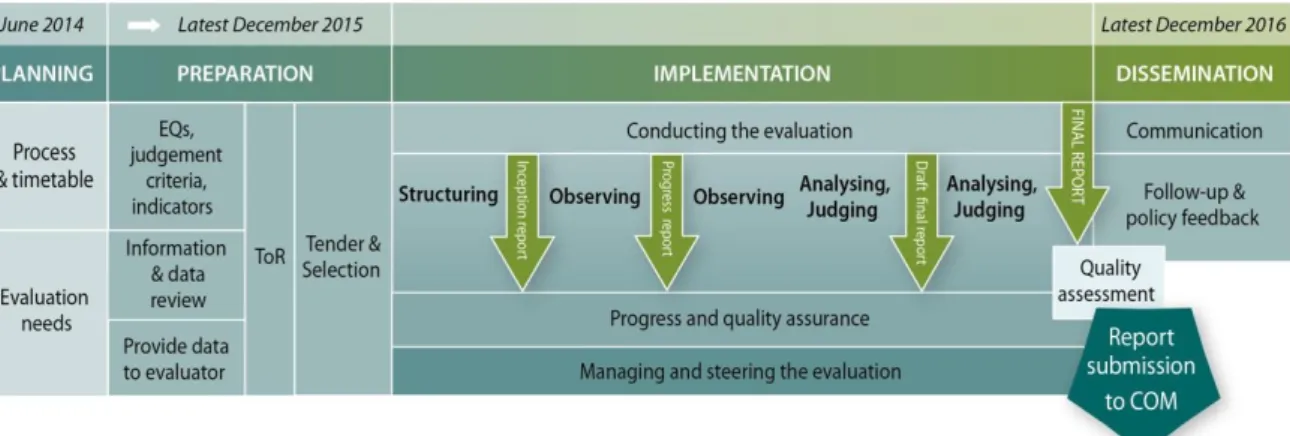
of the ex post evaluation are planning and preparation, implementation, and dissemination. Each
phase contains several tasks, which will be described below together with the tasks of the main actors involved.
Evaluation steering group
Evaluation steering groups (SG) are not mandatory. However, an evaluation steering group is one of the ways to facilitate and coordinate stakeholder consultation and manage the evaluation process. Evaluation steering group members can contribute with their skills and expertise and help ensure the availability of data, information and relevant contacts with evaluators. An engaged evaluation steering group also enables a more effective interaction with and between partners and other stakeholders. It can therefore be considered as good practice.
An evaluation steering group is typically convened and chaired by the MA. The composition of the group depends on the specificities of the programme (priorities, scale and delivery) and the specific tasks assigned to the group. As a minimum, the group would be expected to include representatives from the MA (representing relevant departments/units) and others involved in programme delivery, representatives from the PA, those responsible for programme design and policy-making and, if applicable, members of the evaluation unit. It may also be useful to include representatives of EU Structural Funds and experts from research institutions. There is no fixed size for the evaluation steering group. It should be large enough to cover the necessary skills and knowledge, but not as large as to hamper its effectiveness.
Some RDPs use a different steering group for each evaluation, whereas others have a single
group which follows the entire ongoing evaluation process of the RDP, including the ex post
Figure 1 Steps, tasks and timetable related to the ex post evaluation
1.2.1. Planning and preparation
The MA is the main driver of the planning and preparation of the ex post evaluation. The better the planning and preparation are done, the clearer the implementation of the evaluation will be.
Planning the process and timetable for the evaluation
Conducting an evaluation takes a considerable amount of time. An adequate planning is vital to prevent deficiencies for instance in the collection of information to conduct the evaluation. If most information is available the evaluator would save a lot of time. Hence, the planning of the evaluation should start well in advance of the desired finalisation of the final report. Together with timetabling, it is vital to make a process plan which considers the different actors involved and which covers the entire duration of the evaluation.
The Member States must submit the ex post evaluation to the Commission by 31 December 2016 at
the latest.26 The Commission has a duty to complete the summary of ex post evaluations by 31
December 2017.27
The complexity, in terms of number of tasks and actors involved, necessitates timely planning in order to help anticipation of workloads and management of deadlines. Advanced planning is essential, as the whole process from evaluation planning to results dissemination can take up to three years. A lack of available data may considerably lengthen the evaluation process and it cannot be stressed enough how important it is to start planning an evaluation well in advance.
The entire ex post evaluation scheduling process can be managed, for instance, by using a
scheduling method called retro planning, also known as backward scheduling. Retro planning means
creating a schedule by starting from the last step of the process: the deadline (See example in Part
III: Item 6). This is a useful tool in estimating the timeline for the ex post evaluation. Experience from previous programming periods will be helpful in determining the length of time required for each action.
The Managing Authority is responsible for planning the process, setting up the timetable and for
ensuring that the ex post evaluation is finished in time for the submission of the final report to
the Commission.
Identification of evaluation needs
Each evaluation provides information aimed at the programme stakeholders. The first step in starting an evaluation process is to consider what kind of information needs to be produced by the evaluation.
For the ex post evaluation of the Rural Development Programmes certain evaluation obligations are
26
Art. 18 of the Delegated Act for Regulation (EU) No 1305/2013 27
required by the legal framework28. The evaluation needs are also linked to common or programme-specific policy objectives or programme-specific policy interests (e.g. generation of employment), and to the programme delivery and administration systems.
When identifying evaluation needs, it is important to consult the rural development stakeholders as well as to review existing evaluations and studies, produced earlier on in the programming period. It is then possible to identify gaps, as well as to build on the conclusions of the previous work.
The Managing Authority, in collaboration with other actors involved in the implementation of the
RDP, reviews the results of ongoing evaluation and identifies the legal and programme-specific evaluation needs.
Review of evaluation questions and indicators
Once the kind of information the ex post evaluation must cover has been decided, it is necessary to
think about how to obtain this information. This is done through framing appropriate evaluation
questions (EQs) and linking them to indicators29.
The evaluation questions define the focus of the evaluation and thus direct the work of the evaluator. The EQs also serve as a basis for defining the kind of information to be collected. Hence, it is vital that all evaluation questions (CEQs and PSEQs) are established and taken into account in the planning phase of an evaluation. As the number of CEQs has been reduced to a minimal set for the ex post evaluation, it is essential to develop PSEQs so that all identified evaluation needs are covered. It is necessary to review the CEQs and PSEQs against the specificities and objectives of the RDP so as to ensure that they will capture and reflect the effects of the RDP interventions30. (See
Part II: Chapter 2 Evaluation questions)
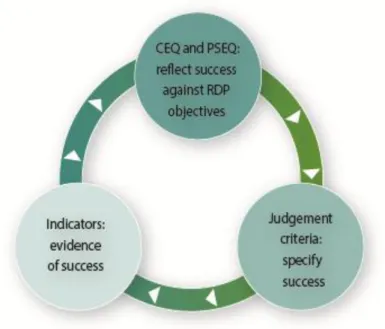
Judgement criteria should be defined for all evaluation questions to facilitate answering them in a structured manner, enhancing transparency by making the judgement explicit, and improving the
objectivity of evaluations31. The judgement criteria specify the aspects against which the merits of the
intervention are judged. They will be used in conjunction with evidence collected (indicators and other
relevant information), to answer the evaluation questions. (See Part II: Chapter 2 Evaluation
questions)
Along with reviewing EQs and developing appropriate judgement criteria, it is important to examine the indicators needed to answer the EQs. This will give a good overview of the type and scope of the information that needs to be collected. The starting point is the set of CMEF common indicators, which must be included in the ex post evaluation, together with any programme-specific indicators included in the RDP. However, where some aspects are not covered by the common indicators and programme-specific indicators (e.g. new challenges introduced by the Health Check), additional programme-specific indicators may be required to collect additional information needed to answer the
common and programme-specific evaluation questions. (SeePart II: Chapter 3 Indicators)
28
See Introduction: The scope of ex post evaluation 29
See Part II: Chapter 2 on Evaluation Questions and Chapter 3 on Indicators
30 Further information on screening evaluation questions can be found at Guidelines on the Mid-Term Evaluation of the Rural Development Programmes 2007-2013, European Evaluation Network for Rural Development, July 2009
Table 1 Example: Judgement criteria linking the EQ and indicators
Evaluation Question Judgement Criteria Common indicator (2014-2020)
Programme-specific indicator/additional
information To what extent has the
intervention contributed to preventing soil erosion and improving soil management?
Soil erosion and management has improved as a result of the intervention.
% of agricultural land under management contracts improving soil management.
% of forestry land under management contracts to improve soil
management.
Additional information on soil erosion of the land under management contracts.
Information on soil erosion within the RDP territory.
Information on links between management practices and soil erosion.
The Managing Authority, in collaboration with other actors involved in the implementation of the
RDPs (e.g. PA and intermediate bodies), reviews the common evaluation questions and common and programme-specific indicators, develops programme-specific evaluation questions and additional programme-specific indicators as necessary, and identifies appropriate judgement criteria for all evaluation questions. This task typically has to be revisited later, especially in relation to indicators, after screening the data and identifying data gaps. Where the evaluator is already selected the evaluation team can also help with this task. It is necessary to preliminarily propose and agree on an evaluation design once evaluation questions, judgement criteria and related indicators are decided upon and once the screening of data and information, needs and potential sources and provision of data are done; It is then possible to be more precise concerning the kind of data and information sources (both qualitative and quantitative) needed to complete the evaluation, i.e. to answer the common and programme-specific evaluation questions and to provide values for all common and programme-specific indicators. The experiences on data gaps and data quality from ongoing evaluation and MTE should be taken in consideration. The evaluation design will typically be finalised only after the evaluator has been contracted.
Ensuring the availability of appropriate and high-quality data for evaluation is one of the key tasks of
the Managing Authority. Its presence or absence will have a significant impact on the quality of the ex
post evaluation exercise. The following data and information sources are typically used in RDP
evaluations:
Monitoring data, collected on RDP beneficiaries (including LAGs and NRNs) throughout the
RDP life-cycle, related to programme inputs, outputs, and results. These data are collected from the monitoring system of the paying agencies or implementing bodies from application forms, payment requests, etc.;
Disaggregated data from sector representative samples via regular surveys (e.g. Farm
Accountancy Data Network (FADN), Farm Structure Survey (FSS), national surveys) or from non-beneficiaries (counterfactual analysis);
Specific relevant data collected regularly by national institutions;
Statistical data aggregated in suitable manner;
Face-to-face interviews, stakeholder seminars and workshops; and
Apart from data normally collected via the monitoring system or existing “in house” data (within the competence of the Ministry of Agriculture), the Managing Authority should screen all possible external data sources needed for evaluation. In this respect, it is essential to identify potential data providers. A lot of the data required for the ex post evaluation is collected through institutions within the competence of the ministry responsible for the implementation of the RDP. However, some data may only be accessible through external institutions32. In these cases, accessing the required data may prove to be challenging without inter-institutional communication, legal procedures, or funds reserved for data purchase. The agreements to purchase data should be concluded at an early point to ensure the evaluator’s timely access to the data. These agreements should contain provisions on clarity of responsibility for ensuring access to data to the evaluator, as well as making sure that the evaluator can access the software or reporting tools or receive relevant extracted data from databases.
Especially when handling data related to beneficiaries or individual interviewees, it is necessary to
consider the legal aspects related to data protection. In addition to Directive 95/46/EC33 and
Regulation 45/200134, some national rules may apply.
In connection with identification of data needs and data providers, it is often necessary to examine that the data collection methods of the data providers are suitable for providing the data required for the indicators. For the common indicators, the EU level indicator fiches should be followed.35 All programme-specific indicators should have accompanying indicator fiches, presenting the indicator and defining the data to be collected. (See Part II, Chapter 5: Data)
In spite of implementing monitoring and ongoing evaluation throughout the programming period, it is possible that data for some indicators is not available. There are various reasons for this: either insufficient effort has been devoted to the issue within the ongoing evaluation system, or the existing data is not in line with the CMEF requirements or data has not been collected. To fill these data gaps two approaches are possible: either the necessary work could still be carried out by the ongoing
evaluator before the ex post contract, or the work should be included in the ToR as a specific task for
the ex post evaluator. In this case appropriate time and resources will need to be allocated.
The Managing Authority is responsible for ensuring access to available data sources to the
evaluator at the beginning of the ex post evaluation.
The Managing Authority, in collaboration with other actors involved in the implementation of the
RDPs (e.g. PA and intermediate bodies), identifies data and information needs, as well as potential data providers. As there are legal and financial aspects involved in this step, different departments of the MA/PA may have to be involved. It is also beneficial to involve data providers (e.g. institutions and research institutes) early on, especially if agreements to purchase data need to be concluded.
The Managing Authority should ensure clear guidance on or description of the various data
sources and indicators.
This step will have to be done iteratively a couple of times over the course of the evaluation planning and implementing, also with the help of the evaluator, as the chosen evaluation methods will have an effect on the data requirements.
32
Institutions which are outside of the ministry/authority responsible for RDP
33Directive 95/46/EC of the European Parliament and of the Council of 24 October 1995 on the protection of individuals with
regard to the processing of personal data and on the free movement of such data.
34Regulation (EC) No 45/2001 of the European Parliament and of the Council of 18 December 2000 on the protection of individuals with regard to the processing of personal data by the Community institutions and bodies and on the free movement of such data.
Terms of Reference
The ex post evaluation should be conducted by independent evaluator. It can be outsourced together with the ongoing evaluation in one tender procedure or it can be tendered out separately (the same evaluator as for the ongoing or a different evaluator). Each of the choices shows some advantages and disadvantages, and MAs should choose the most suitable option according to their specific
context. In contracting the ex post evaluation, Terms of Reference (ToR) is the key document in the
evaluation process. The previous tasks of the evaluation planning step described above form the basis on which the ToR can be drafted. Writing good ToR is one important thing, if not the most
important one, that a Managing Authority can do to ensure a good ex post evaluation.
The ToR should contain a description of the context, scope and objectives of the evaluation, as well as a clear distribution of roles and responsibilities. The ToR should list and clearly describe the evaluation tasks and activities that must be conducted by the evaluator during the course of the evaluation. Evaluation questions and already available information should be specified in the ToR. Good ToR also contain the characteristics required from the evaluator, criteria for choosing the evaluator, as well as the quality assessment criteria for the final report. ToR should leave space for the evaluator to suggest evaluation methods and approaches. In a way, the drafting of the ToR is part of structuring the evaluation, a task to which the chosen evaluator will subsequently contribute as well once the contract is awarded.
The EU has not set legal requirements for the content of the ToR. However, the Guidelines on the
mid-term evaluation of the 2007-2013 RDPs36 include the recommended main elements which reflect
common good practice standards.
The Managing Authority is responsible for drafting the ToR, associated quality assessment
criteria and guidelines for scoring (See Part III: Item 5), and ensures that the ToR reflect the realities of the RDP in question;
The Managing Authority is charged with ensuring that sufficient human and financial resources
are available for conducting the evaluation;
The evaluation steering group (if such a body exists) supports the MA in defining and drafting
the ToR. Tendering
There are some major issues that need to be considered prior to launching the tender for the ex post
evaluation. The main consideration for undertaking a good quality evaluation is to reserve sufficient
36
Further information from the Guidelines on the Mid-Term Evaluation of the Rural Development Programmes 2007-2013, Evaluation mandate
If the MA decides to use the evaluation steering group, it is advisable to draft an evaluation mandate prior to the drafting of the Terms of Reference. The evaluation mandate is a document, which gives a
brief and overall description of the evaluation that will be carried out. It should specify the scope (what
is going to be evaluated), context and motives (what are the background and motives for doing an
evaluation), responsibilities and timing (how will the work be organised and in what kind of schedule),
and the objectives (what is the expected use of evaluation). The evaluation mandate guides the
preparation of the ToR, as well as the work programme of the evaluation steering group.
The evaluation mandate is typically initiated and approved by the MA, and the evaluation steering group assists the MA in the drafting process.
resources for it, which is the task of Member States37. The technical assistance budget of 2014-2020
RDPs can be used to finance the ex post of 2007-2013 RDPs. In practice the ToR should reflect the
size and scope of the programme to be evaluated. It is also crucial to allocate sufficient time for the evaluation process and each evaluation stage and task. Furthermore, it is particularly important to make sure that there is enough time allocated for preparation, primary research, delays in data access and other problems, as well as interaction with the evaluation steering group (optional). The tender appraisal process (selection of the contractor) should take into account the resource requirements, seeking a contractor with an appropriate range of expertise who proposes to allocate sufficient time to the exercise
Before launching the tender, it is also important to set out clear rules and procedures on how the evaluator and responsible management bodies will interact. This could be done through an evaluation steering group, the evaluation unit, or a dedicated project manager.
Finally, the MA must choose the tendering procedure. This depends on the specific approach taken to engaging the evaluator (a single open call, establishment of a framework panel, direct contracting). In each case, it is fundamental to respect the relevant national procurement procedures and allocate
sufficient time so that the final ex post evaluation is submitted to the European Commission within the
deadline. Prior to the call for tender, it is important to ensure that all legal aspects related to tendering are respected.
The Managing Authority is responsible for reserving the funds for evaluation, choosing the
tendering procedure, and the management of the tendering procedure. Checklist: Can the tendering process be launched yet?
The importance of planning the ex post evaluation is fundamental for the success of the evaluation. Here are a few questions which can be of help for the MA to determine whether the ex post evaluation planning has reached the point when the tendering process can be started.
Have sufficient resources (human and financial) been reserved for the evaluation? Have the evaluation needs been thoroughly considered?
Have the evaluation questions been looked through and PSEQs developed to cover the information needs?
Have the indicators been scrutinised and additional programme-specific indicators developed where needed to answer all the EQs?
Have data and information needs been examined?
Have data gaps been identified and strategies to cover them designed?
Have the steering and management of the ex post evaluation process been designed?
Has a comprehensive ToR, reflecting the programme evaluation needs and appropriate evaluator profiles, been drafted?
Have quality assessment criteria for the final report been drafted? Have the assessment criteria and process for the tenders been drafted?
37