AN EXAMINATION OF ACADEMIC OUTCOMES FOR STUDENTS WHO ATTEND A SCHOOL-BASED AFTERSCHOOL PROGRAM
by
Karen J. Dreyer
Bachelor of Arts, Calvin College, 1994 Master of Arts, Geneva College, 1997
Submitted to the Graduate Faculty of the School of Education in partial fulfillment
of the requirements for the degree of Doctor of Philosophy
UNIVERSITY OF PITTSBURGH SCHOOL OF EDUCATION
This dissertation was presented
by
Karen J. Dreyer
It was defended on March 25, 2010 and approved by
Dr. William E. Bickel, Professor/Senior Scientist LRDC, Administrative and Policy Studies Dr. Joyce A. D’Antonio, Adjunct Assistant Professor, Behavioral and Community Health
Sciences
Dr. Louis A. Pingel, Associate Professor/Associate Dean, Psychology in Education Dissertation Advisor: Dr. Stephen J. Bagnato, Professor, Psychology in Education
Copyright © by Karen J. Dreyer 2010
While most research on the benefits of afterschool programs has shown positive behavioral outcomes, the results on academic outcomes have been mixed. This study focused on academic outcomes to further explore whether students who regularly attended a school-based afterschool program showed greater academic gains than students who did not attend. Previous research has shown mixed results in academic outcomes from afterschool programs depending on gender, program location and grade level; therefore, these variables were examined to evaluate where group differences may exist. Afterschool attendance was considered and narrowly defined to provide more understanding about dosage in afterschool outcomes research.
Students in this study were in grades 3 through 8 during the 2008-2009 school year, and they attended two charter schools in Western Pennsylvania. The afterschool programs operated within the charter schools. This is a secondary data analysis, using data that were collected for a program evaluation of the afterschool programs. To measure academic gains, a difference score was calculated from students’ pretest and posttest scores on the 4Sight reading and mathematics assessments. The design of this study was a quasi-experimental design comparing students who regularly attended the afterschool programs (50% or greater attendance) with a randomly selected comparison group from the same population of charter school students.
An overall Analysis of Variance (ANOVA) on the difference scores showed that AN EXAMINATION OF ACADEMIC OUTCOMES FOR STUDENTS WHO
ATTEND A SCHOOL-BASED AFTERSCHOOL PROGRAM Karen J. Dreyer, PhD
mathematics but not in reading. Further ANOVAs on the mathematics difference scores found no differences in gain scores by gender. Elementary students showed greater mathematics gains than middle school students, and students who attended the afterschool program at School M showed greater mathematics gains than students at School H. The reading gain scores were also further analyzed with ANOVAs, and boys showed greater gains than girls, elementary students showed greater gains than middle school students, and students at School M showed greater gains than students at School H. No correlation was found between the number of days of afterschool attendance and reading or mathematics gain scores. Findings are related to future directions for afterschool research and implications for afterschool providers.
ACKNOWLEDGEMENTS
I would like to thank the staff and faculty of the School of Education at the University of Pittsburgh, with special thanks to my committee members Dr. Stephen Bagnato, Dr. William Bickel, Dr. Joyce D’Antonio, and Dr. Louis Pingel for supporting me during the final leg of this Ph.D. marathon. I would also like to thank the schools and staff of the afterschool programs from this study for their generous responses to my many questions. I am grateful to Dr. Jennifer Salaway for her assistance during the data collection process and to Dr. Sharon Carver for providing feedback on this paper. Thanks to all of the Educational Psychology students who unknowingly reminded me of why I was so motivated to finish this degree.
Many friends have made this journey possible by encouraging me when I was ready to give up and by having faith that I would finish. Thanks to Karen Moore for supporting me in so many ways. Thanks to Saleem and Patti Ghubril; Kim Carter; Anita Harnish; Greg, Rebecca, Justina, Eddy, Sofia, and Alia Sparks; Michael Barbato; Ken Bumbrey; Lamont Allen; Jason Colbourne; George and Lisa Foose; Amy Gee; Brooke Kirsch; Herb Kolbe; Kristina Maldre; Brad Richards; Stephanie Santarosa; Jason Schulte; Karen Shumaker; Tricia Tanis; and Alan and Katie Tomo. I am also thankful for the Blizzard of 2010, which provided me with valuable writing time when I had crucial deadlines to meet.
I would have never become interested in this topic if it were not for The Pittsburgh Project. Thanks to the many students and parents who have shared their lives and stories with me
and who have showed me why afterschool programs are important. Thanks to the trailblazers who have graduated from The Pittsburgh Project and who continue to encourage us with their lives: Keith, James, Rachel, Dorothy, J’Vonn, JR, Lauren, Mac, Oliver, Kelsey, Tra-Linn, Sad’e, Kayla, Desirea, Joe, DeOndra, Brandi, Charnice, Janay, Tasha, Robin, Dominique, and many others. Thanks to my colleagues there, especially Lib, Bryan, Will, Karen, Steve, Donnie, Lorenze, Bruce, Julie, Dionne, Rick, Sara, and all of the youth development team.
Finally, I thank my family who has lovingly pushed me along at countless points on this journey. Thanks to my parents, Con and Beth, for valuing learning and for supporting me in my education. Thanks to Kevin, Ruth, Matt, Chris, Dave, Kristine, and Kaitlyn for the big ways and little ways you made it possible for me to finish this degree. A special word of thanks to Kevin Shave for being available at all hours of the day and night to assist with editing and formatting this paper.
This study is dedicated to all the kids of The Pittsburgh Project, including Jolesa Barber who taught us about living and loving generously during her brief twelve years.
TABLE OF CONTENTS
1.0 INTRODUCTION... 1
1.1 RESEARCH QUESTIONS... 4
2.0 LITERATURE REVIEW... 5
2.1 DEVELOPMENT IN MIDDLE CHILDHOOD... 5
2.2 BRONFENBRENNER'S ECOLOGICAL THEORY OF DEVELOPMENT 7 2.3 REVIEW OF AFTERSCHOOL STUDIES ... 10
2.4 UNDERSTANDING DIFFERING RESULTS IN AFTERSCHOOL STUDIES ... 23
2.5 RATIONALE FOR THIS STUDY... 28
2.6 RESEARCH QUESTIONS AND HYPOTHESES ... 29
3.0 METHOD ... 32
3.1 RESEARCH DESIGN... 32
3.2 PARTICIPANTS ... 33
3.3 RECRUITMENT ... 39
3.4 DESCRIPTION OF THE AFTERSCHOOL PROGRAM... 40
3.5 DATA COLLECTION PROCEDURES ... 45
3.6 MEASURES ... 48
4.1 RESEARCH QUESTION 1 ... 52 4.2 RESEARCH QUESTION 2 ... 62 4.2.1 Mathematics Outcomes ... 63 4.2.1.1 Gender ... 63 4.2.1.2 Grade Level ... 65 4.2.1.3 Program Site... 67 4.2.2 Reading Outcomes ... 70 4.2.2.1 Gender ... 70 4.2.2.2 Grade Level ... 71 4.2.2.3 Program Site... 73 4.3 RESEARCH QUESTION 3 ... 76 5.0 DISCUSSION ... 78 5.1 SUMMARY OF STUDY ... 78
5.2 UNDERSTANDING THE RESULTS ... 81
5.3 LIMITATIONS, IMPLICATIONS, AND DIRECTIONS FOR FUTURE RESEARCH ... 85
APPENDIX A ... 89
TEN ELEMENTS OF PROGRAM QUALITY IN AFTERSCHOOL PROGRAMS . 89 APPENDIX B ... 91
LIST OF TABLES
Table 1. Summary of Studies Examining Academic Outcomes From Afterschool Programs .... 18
Table 2. Frequency Distribution for all Students at Both Schools by Curriculum Code... 36
Table 3. Frequency Distribution for all Students at Both Schools by Gender... 36
Table 4. Frequency Distribution for all Students at Both Schools by Income Code ... 37
Table 5. Frequency Distribution for all Students at Both Schools by Ethnic Code... 37
Table 6. Frequency Distribution for Afterschool Participants by Curriculum Code ... 38
Table 7. Frequency Distribution for Afterschool Participants by Gender ... 38
Table 8. Frequency Distribution for Afterschool Participants by Income Code ... 38
Table 9. Frequency Distribution for Afterschool Participants by Ethnic Code ... 39
Table 10. Typical Weekly Afterschool Program Schedule ... 41
Table 11. Data Collection Table ... 47
Table 12. Pennsylvania General Performance Level Descriptors ... 51
Table 13. Demographic Information for Nonparticipants ... 56
Table 14. Demographic Information for Afterschool Participants With a 50% or Greater Mathematics Attendance... 57
Table 15. Demographic Information for Afterschool Participants With a 50% or Greater Reading Attendance ... 58
Table 16. One-Way ANOVA Comparing Mathematics Difference Scores of Afterschool Program Participants and Nonparticipants... 59 Table 17. One-Way ANOVA Comparing Reading Difference Scores of Afterschool Program Participants and Nonparticipants ... 60 Table 18. Two-Way ANOVA on Gender and Afterschool Participation for Mathematics Difference Scores... 64 Table 19. Two-Way ANOVA on Grade Category and Afterschool Participation for Mathematics Difference Scores... 66 Table 20. Two-Way ANOVA on Program Site and Afterschool Participation for Mathematics Difference Scores... 68 Table 21. Two-Way ANOVA on Gender and Afterschool Participation for Reading Difference Scores... 70 Table 22. Two-Way ANOVA on Grade Category and Afterschool Participation for Reading Difference Scores... 72 Table 23. Two-Way ANOVA on Program Site and Afterschool Participation for Reading Difference Scores... 74 Table 24. Correlations Between Days of Subject Specific Attendance and Mathematics Gain Scores by Subgroups... 77 Table 25. Correlations Between Days of Subject Specific Attendance and Reading Gain Scores by Subgroups ... 77
LIST OF FIGURES
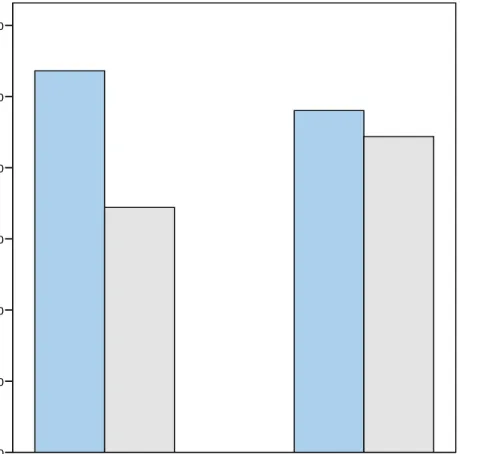
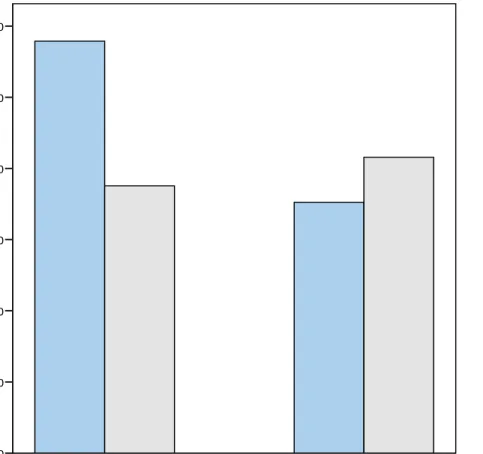
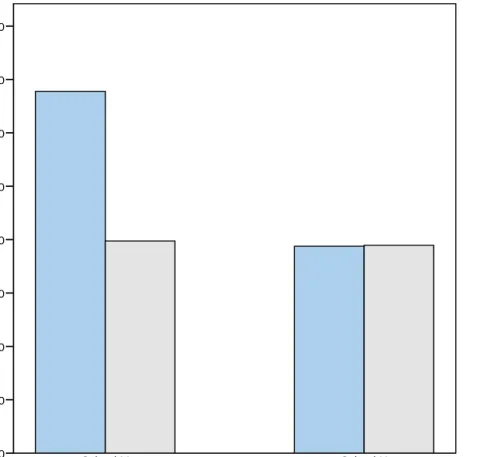
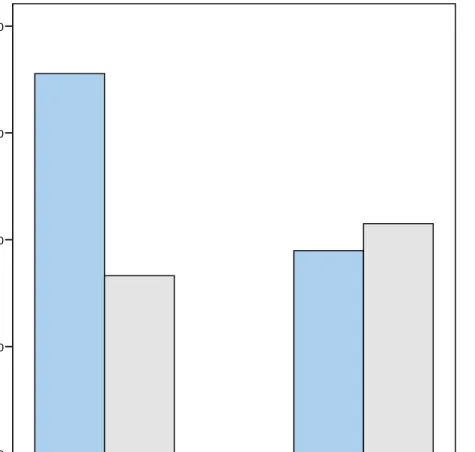
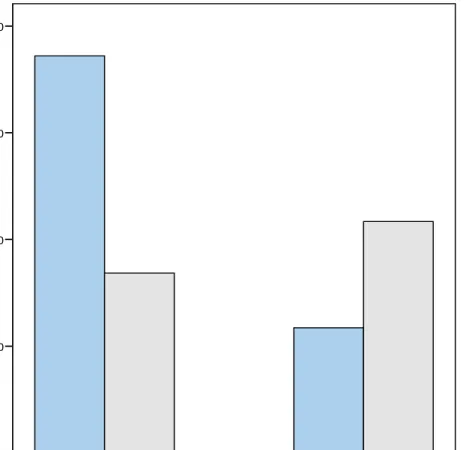
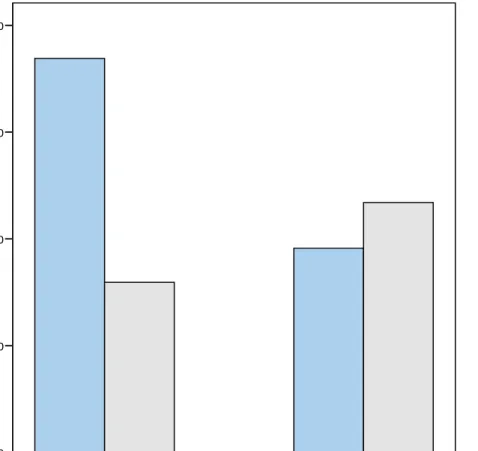
Figure 1. Theoretical linkages between afterschool experiences and student outcomes in the elementary and middle grades. Source: Vandell, Reisner and Pierce, p. 1 (2007). ... 9 Figure 2. Mathematics pretest and posttest scores for afterschool participants and nonparticipants ... 61 Figure 3. Reading pretest and posttest scores for afterschool participants and nonparticipants... 62 Figure 4. Means of mathematics difference scores comparing afterschool participation and gender... 65 Figure 5. Means of mathematics difference scores comparing afterschool participation and grade level... 67 Figure 6. Means of mathematics difference scores comparing afterschool participation and program site ... 69 Figure 7. Means of reading difference scores comparing afterschool participation and gender .. 71 Figure 8. Means of reading difference scores comparing afterschool participation and grade level ... 73 Figure 9. Means of reading difference scores comparing afterschool participation and program site ... 75
1.0 INTRODUCTION
“In every neighborhood, all across our country, there are good people insisting on a good start for the young, and doing something about it” (Rogers, 2003, p. 155).
“We must not, in trying to think about how we can make a big difference, ignore the small daily differences we can make which, over time, add up to big differences that we often cannot foresee” (Edelman, 1987, p. 107).
Afterschool programs have been in existence for over a century in various forms (Halpern, 2002). They began in the late 1870s, initially with volunteers providing activities for boys in churches or in vacant spaces within buildings. Eventually settlements began to organize activities for girls also (Halpern, 2000). Between 1900 and 1910, public schools provided additional recreational and play activities that were not part of the structured school day (Simkhovich, 1904). During World War II, programs increased temporarily as women began working while men were serving in the military (Dryfoos, 1999). In the 1950s and 1960s funding for programs grew gradually through social welfare federations, government funding, and the commencement of the United Way (Halpern, 2000). Within the last twenty years, children’s involvement in afterschool programs has grown exponentially. Between 1991 and 1997, the number of children
(ASPA-NHES: 2005), 20% of children ages 5 through 12 are involved in afterschool programs (Lawrence, Kreader, & National Center for Children in Poverty, 2006).
A number of factors have contributed to the considerable growth of afterschool programs. First, in the 1980s many women began working outside the home, which increased the need for childcare arrangements after school (Hollister, 2003; Vandell & Shumow, 1999). A decade later, the passage of the Welfare Reform Act in 1996 also increased the number of parents working, because it required people who were receiving public assistance to work a designated amount of time to remain eligible for assistance (Dryfoos, 1999; Hollister, 2003). A second reason for growth in afterschool programs was the decline in safety in neighborhoods, especially in urban, low-income areas (Halpern, 2000). The lack of adult supervision and youth development activities often resulted in increased risky behaviors and youth crime (Carnegie Council, 1992). Finally, afterschool programs have increased in numbers because funding from foundations, the private sector, and from state and federal agencies has grown considerably (Riggs & Greenberg, 2004a). In fiscal year 1998, the United States Congress authorized $40 million dollars in funding to schools to create 21st Century Community Learning Centers (21st CCLCs), which are school and community based afterschool programs (Hollister, 2003). In 2008, this amount had grown to $1.08 billion dollars (Weiss, Little, Bouffard, Deschenes, & Malone, 2009). Even the American Recovery and Reinvestment Act, which was passed in February 2009, allocated over $1 billion dollars towards afterschool programs (Afterschool Alliance, 2009).
Afterschool programs are heterogeneous, serving a variety of purposes, involving a variety of activities and existing in various locations, such as schools, religious organizations, and community centers (Riggs & Greenberg, 2004a). Halpern (2000) suggests that the primary purpose of afterschool programs should be to provide opportunities for youth to develop their
autonomy and to learn experientially. Parents with school-age children support this idea, expressing that they want afterschool activities for their children that foster interests, values, and growth (Duffett, Johnson, Farkas, Kung & Ott, 2004). Others propose that afterschool programs are best suited to develop children’s social and emotional skills (Durlak & Weissberg, 2007) and to reduce juvenile crime (Goldschmidt & Huang, 2007). Many others propose that afterschool programs should focus on academic outcomes, to assist students who lag behind their peers (Hock, Pulvers, Deshler, & Schumaker, 2001; Mahoney, Lord, & Carryl, 2005; Posner & Vandell, 1994). Some have hoped that afterschool programs could be the panacea for poor educational systems and could assist in reducing the achievement gap (Lauer, et al., 2006).
In human development, the impetus for change often results from a combination of internal forces and external ones, and this has been true for the field of afterschool programs also. While those within the field have different ideas about what outcomes afterschool programs should be attempting to reach, funders from outside the field have required programs to specify outcomes and to measure them to determine the effectiveness of their investments (Mahoney & Zigler, 2006). The C. S. Mott Foundation published resources to assist programs with selecting short-term and long-term outcomes and various methods for measuring them (2005), and the Harvard Family Research Project created an online database of research and program evaluations specific to out-of-school time. Results about the effectiveness of afterschool programs have been mixed with some showing encouraging academic and social gains for children (Durlak & Weissberg, 2007; Jenner & Jenner, 2007; Posner & Vandell, 1999) and others showing little to
1.1 RESEARCH QUESTIONS
This study will contribute to current research by examining reading and mathematics outcomes for elementary and middle school-aged children who participate in a school-based afterschool program. It will focus on academic outcomes because school success is one of the primary developmental tasks for children in middle childhood and because afterschool programs have shown inconclusive results on the academic benefits of afterschool programs. In this study, regular afterschool attendance will be defined as having an attendance rate of at least 50% at the subject specific (i.e., reading or mathematics) component of the afterschool program. The following research questions will guide this study.
1. Do elementary and middle school students who regularly attend school-based afterschool programs show greater academic gains than students at the same schools who do not attend the school-based afterschool programs?
2. For elementary and middle school students who regularly attend a school-based afterschool program, are there variations in academic outcomes based on gender, grade level, or program site?
3. Is the afterschool program attendance rate at a school-based afterschool program related to academic outcomes?
The developmental tasks of middle childhood will be outlined and connections will be made to Bronfenbrenner’s ecological theory of development. Key studies of afterschool programs will be summarized and differences between study results will be explored. The results of this research study will be analyzed and presented, connections between it and further research will be discussed, and implications for afterschool programs will be described.
2.0 LITERATURE REVIEW
2.1 DEVELOPMENT IN MIDDLE CHILDHOOD
The focus of this study will be the developmental period of middle childhood, which generally includes children ages 6-12 years old. At the beginning of these years, children are beginning formal schooling and their families are still the primary source of identity for them. As they progress through middle childhood, other people outside of the family, new settings, and institutions become increasingly important to the child (Halpern, 2000). While this is not a time of radical physical growth, such as in early childhood or adolescence, children are going through fundamental changes in cognitive and emotional development. According to Erikson’s eight “stages” (1950), children in middle childhood are at the stage of industry, where their goals are to create and produce things, to learn to use the tools of their society, and to develop their individual skills. When children do not accomplish these tasks, they may deal with a sense of inferiority. Learning about their individual skills and talents during this period lays the foundation for youth to explore their identities as they enter adolescence and to begin to establish committed, meaningful relationships. Middle childhood is a time where children’s social
with them and when they learn practical skills for completing tasks and emotional skills for expressing their feelings.
Many theorists gain understanding into different developmental periods by identifying the primary developmental tasks within each stage. Masten and Coatsworth (1998) identify the primary tasks of middle childhood as school adjustment, including attendance and appropriate conduct; academic achievement, including becoming competent in reading and mathematics; getting along with peers; and following societal rules and demonstrating prosocial behavior. Eccles (1999) proposes that when children experience success in these tasks, it can give them a sense of accomplishment as they face increasingly complex tasks through their middle school and high school years. It sets them on a course towards achievement that will shape their success in school and work (Eccles, 1999). When students do not feel competent in the main tasks and environments of their lives, they report negative feelings and behaviors, such as depression, social isolation, and aggression more often than their peers (Eccles, Wigfield, & Schiefele, 1998; Harter, 1998).
Changes in cognition and social relationships contribute to students developing either feelings of success or inferiority during middle childhood (Eccles, 1999). These cognitive changes include gaining the abilities to increase in their metacognition, reflecting on their successes and failures, and becoming better at learning how to remember and retrieve information. With these new modes of thinking, children begin to develop perspective taking and to understand differences between themselves and others (Piaget & Inhelder, 1973). As children begin to spend more time in environments outside of their family, such as schools and peer groups, they are exposed to social comparison and competition in these new environments (Eccles, 1999). Their identities may be based around their competence in a sport, in school, or in
another activity, such as arts or music (Higgins & Parsons, 1983). As children experience success and failures, they become more realistic about their abilities during these years.
As more children have begun attending afterschool programs, these contexts have become an important environment for development in middle childhood. They provide another setting where children can learn about themselves, about interacting with peers and adults, and about accomplishing goals. For children who are not finding success in the other environments in their lives, afterschool programs may provide opportunities for them to experience success in activities such as sports or arts that may not be available during the regular school day or to strengthen academic skills, so that they can be successful in school (Eccles, 1999).
2.2 BRONFENBRENNER'S ECOLOGICAL THEORY OF DEVELOPMENT
Besides considering the primary tasks of development for middle childhood, it is also important to understand children’s development in contexts and the connections that exist between these contexts. Bronfenbrenner (1979) proposed that human development must be understood in the complexity of relationships and structures in which people participate and which influence them. The analogy that he uses to describe his theory of development is that each person is like a set of Russian nested dolls. The first layer of development consists of microsystems, which are contexts that include the person. For example, for elementary or middle school children,
person but that affect the person. For example, the faculty of a school makes a decision about curriculum that affects the child, but the child is not a member of the faculty of the school. Finally, there are macrosystems, which are structures that exist on a larger scale, such as socioeconomic, ethnic, or religious groups, that have belief systems that influence the person’s development and environment (Bronfenbrenner, 1979). For example, children in the United States live in a country where individual achievement is emphasized, compared to children in some countries where the collective group is emphasized over the individual.
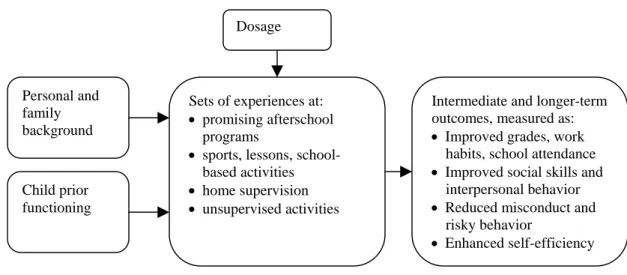
Bronfenbrenner’s theory is ideal for understanding afterschool programs because of his interest in how the context and the relationships between contexts affect the individual. Afterschool programs are different from schools and families, and they possess unique qualities that need to be considered when examining outcomes for students who attend programs. Bronfenbrenner’s theory has been used by a number of researchers to understand the changes that happen in students who attend programs. Posner and Vandell used Bronfenbrenner’s theory to recognize that afterschool environments are not static for students and that there are connections between children’s activities during the afterschool hours and their behavior at school and at home (1999). Mahoney, Lord, et al. (2005) also used Bronfenbrenner’s model to identify connections between individual characteristics of students, specifically engagement in afterschool activities, and behavioral and academic outcomes. Vandell, Reisner, and Pierce (2007) have implemented Bronfenbrenner’s theory in a useful and visible way by proposing the following model to illustrate the connections between individual factors, afterschool experiences and student outcomes (see Figure 1).
Figure 1. Theoretical linkages between afterschool experiences and student outcomes in the elementary and middle grades. Source: Vandell, Reisner and Pierce, p. 1 (2007).
While this model is helpful for visualizing the microsystems and processes that matter for understanding children’s development in afterschool experiences, measuring outcomes in children as a result of participation in afterschool programs is difficult. As Meyers et al. (2007) caution, afterschool program evaluators should avoid the simplified “single-dose-main-effect model” in which the “dose” needed to realize outcomes from the intervention is oversimplified, the relationship between the intervention and the outcome is oversimplified, and important mediating and moderating variables are excluded from the outcomes analysis. “Perhaps the thorniest problem is attributing outcomes to the afterschool program itself, as distinguished from the influences that family, school and community all have on young people” (Dryfoos, 1999, p. 130). Along with these complexities, many afterschool programs serve children living in
low-Personal and family background
Child prior functioning
Sets of experiences at: promising afterschool
programs
sports, lessons, school-based activities home supervision unsupervised activities
Intermediate and longer-term outcomes, measured as: Improved grades, work
habits, school attendance Improved social skills and
interpersonal behavior Reduced misconduct and
risky behavior
Enhanced self-efficiency Dosage
Meyers et al. (2007) provide a number of guidelines for how afterschool programs should be evaluated. First, programs should be studied in context and viewed as having a complementary role in children’s lives and not a primary role. “Afterschool programs can be thought of as having a synergistic effect on child development by responding to and encouraging developmental experiences promoted in other settings, as well as a source for generating positive new experiences”(Meyers et al., 2007, p. 2). Second, there should not be unrealistic expectations for the outcomes of afterschool programs. The original objective of the afterschool movement was to encourage healthy development of children within safe and supervised settings. Finally, afterschool programs need to be evaluated on specific program objectives that are based on sound developmental theory and on actual services being delivered to children attending the program. For example, the program evaluation should not use grades as an outcome measure for an afterschool program that focuses primarily on sports or the arts.
In the next section some of the major studies that have examined outcomes in children who attended afterschool programs will be reviewed, and some specific variables that may explain the discrepancies in results among program evaluations will be highlighted.
2.3 REVIEW OF AFTERSCHOOL STUDIES
Many studies and evaluations of afterschool programs have found positive social and emotional outcomes in children who attended programs. Durlak and Weissberg (2007) completed a meta-analysis of 73 program evaluations and studies, all of which had some type of control group and which were programs focused on developing personal and social skills. They found that youth who participate in afterschool programs improve significantly in feelings of self-confidence and
self-esteem, school bonding, positive social behaviors, and they exhibit reduced problem behaviors including aggression, noncompliance, conduct problems, and drug use. In a longitudinal study, Goldschmidt and Huang (2007) found that students who consistently attended an afterschool program in Los Angeles demonstrated a significant reduction in juvenile crime compared to students who attended the program sporadically or compared to the control group. Others have found positive results for social adjustment and peer relations (Marshall et al., 1997; Posner & Vandell, 1994).
While much of the literature shows healthy developmental results for social and emotional outcomes, the literature on academic outcomes for children attending afterschool programs has been inconclusive. Posner and Vandell (1994) were some of the first researchers to show positive academic outcomes for youth from afterschool programs. They studied low-income children in third grade who attended nine different schools in Milwaukee, Wisconsin. They compared 34 students who attended a formal afterschool program with 182 students who had other afterschool care arrangements such as mother care, informal adult supervision, and self-care. When they controlled for maternal education, race, and family income, they found that attending a formal afterschool program was associated with better grades and conduct in school.
Posner and Vandell conducted a follow-up study with the same group of children, following them through fourth and fifth grades (1999). They were not able to continue to compare the afterschool program students to the other students, because only 17 children attended the afterschool program for all three years. However, they focused on differences in
including afterschool programs in fifth grade. Similarly, children who had higher rates of behavior problems in third grade were more likely to spend time outside in unstructured activities during fifth grade. They analyzed the results for this study separately for African- American and White children, because they found significant ecological differences between the groups in neighborhood, income, and family structure.
Mahoney, Lord, et al. (2005) studied afterschool participation of low-income children by examining four patterns of care that children in first grade through third grade experienced. Children primarily participated in one of the following types of care: afterschool program care, parent care, combined parent/self-sibling care, and combined other-adult/self-sibling care. They examined the relationship between the types of afterschool care and academic performance, as measured by school grades and reading achievement. They found that children who participated primarily in afterschool program care showed significantly higher reading achievement at the end of the year than children in the other care arrangements, even after considering baseline academic functioning and demographic factors. They considered the students’ level of engagement in the afterschool program and found that students who had low engagement in the program did not show as strong of academic results as children who were highly engaged.
Jenner and Jenner (2007) studied at-risk children who were participants in 21st CCLC programs in Louisiana during the 2003-04 school year. The children were in Grades 3 and 5 and the programs were located in urban and rural settings. Program participants showed greater gains than nonparticipants on mean Spring standardized test scores that included a composite score of reading, mathematics, and language. One focus of their study was whether variations in afterschool attendance affected academic outcomes. The results of their study were based on students who had attended the program for at least 30 days during the school year, which is the
federal government’s guideline for measuring outcomes of program participants in 21st CCLC programs. They also examined the results based on whether students attended 30 to 59 days, 60 to 89 days, and 90 days or more, and they found that higher levels of participation were associated with higher levels of academic growth, even while controlling for prior functioning. When they examined their results based on students’ initial academic achievement, they found that the academic differences were significant for students who initially fell between the 25th and 75th quartiles, but they were not significant for students below or above that range.
Lauer et al. (2006) compiled a meta-analysis of research on out-of-school-time programs for at risk youth, including afterschool programs and summer programs. They analyzed 35 studies of programs that involved control or comparison groups and that met other criteria essential for a valid analysis. They found small but statistically significant positive effects of out-of-school-time programs on student achievement in reading and mathematics and larger positive effect sizes for programs with specialized instruction, such as reading tutoring. Of the 24 studies that were measuring both reading and mathematics outcomes, only three showed positive effects on both outcomes. Of the remaining 21 studies, 12 showed null effects for reading and mathematics, four found a positive effect for mathematics and five found a positive effect for reading.
Vandell et al. (2007) conducted the Study of Promising Afterschool Programs, a longitudinal study in which they followed 3000 low-income, ethnically diverse, elementary and middle school students from urban and rural areas, about half of whom participated in
not have other afterschool options; Program Plus included students who participated in the program 2 to 3 days a week but also participated in another afterschool activity, such as organized sports or a church activity; Low Supervision included students who spent 1 to 3 days a week unsupervised by adults after school and who had sporadic participation in other activities such as sports, arts, or school-based activities. After examining students for 2 years, they found that elementary students in the Program Only or Program Plus groups demonstrated significant gains in standardized mathematics test scores and they also showed gains in teacher reports of work habits and task persistence, compared to the Low Supervision group. Middle school students in the Program Only or Program Plus groups also demonstrated significant gains in standardized mathematics test scores, compared to the Low Supervision group.
In one of the most recent evaluations of afterschool programs, students who attended a regular afterschool program that provided students with homework help and locally assembled educational materials were compared to students who attended an afterschool program that utilized highly structured instructional lessons on reading or mathematics (Black et al., 2008). Students in grades two through five who were performing below grade level were randomly assigned to a regular afterschool program or to a program where they would receive 45 minutes of specialized instruction in either reading or mathematics four days a week. After the first year of implementation, Black et al. (2008) found positive and statistically significant impacts for the enhanced mathematics program, representing 8.5% more growth over the school year than students who participated in the regular afterschool program. After the second year of implementation, they again found that one year of enhanced instruction in mathematics produced positive and statistically significant impacts on student achievement, as measured by Stanford Achievement Test, 10th edition mathematics scores, but they did not find any additional benefit
to participating in the program for two consecutive years (Black et al., 2009). Despite the positive results from the mathematics program, Black et al. (2009) found no statistically significant results in reading achievement for students who attended one year of the afterschool program with enhanced reading instruction. They found that participation in the enhanced reading program did not produce statistically significant results on a standardized reading test or results in students’ academic and behavior outcomes. They also found that participating in the enhanced reading program for two years resulted in fewer gains on students’ total reading scores, when compared to students who participated in the regular afterschool program (Black et al., 2009).
While many studies and evaluations have had positive or mixed results, some studies have found null results when evaluating academic outcomes in youth who attended afterschool programs. The landmark study that is cited the most as verification for afterschool programs not affecting academic outcomes is a study that was commissioned by the United States Department of Education (2003) to evaluate the 21st CCLCs. The study included data for 1,000 elementary students in 7 school districts and 4,300 middle school students in 32 school districts. At the elementary level, students participating in afterschool programs were compared with those in randomly assigned control groups, and at the middle school level students participating in afterschool programs were compared with those in a matched comparison group. At the elementary level, reading test scores and grades in most subjects were no higher for program participants than for nonparticipants. On average, programs also had no impact on whether or not
outcomes including reading test scores or grades (Dynarski et al., 2004). The only academic outcome that they found for middle school students was that program participants had higher grades in social studies, but not in English, mathematics, or science.
The release of the first-year findings from this evaluation resulted in considerable discussion and critique. This evaluation was used to propose that funding for the 21st CCLC afterschool programs should be reduced by 40% from 1 billion to 600 million for fiscal year 2004, since the afterschool programs were not reaching their intended outcomes. This funding reduction did not occur, but the response to limitations of the evaluation served to influence future studies of afterschool programs. One critique of the 21st CCLC evaluation is that the researchers evaluated programs that were in their initial stages of implementation, in which the programs were still addressing startup issues such as staff training and communication between afterschool programs and the school (Riggs & Greenberg, 2004a). It would have been better if only well established programs were studied. Second, the evaluators did not control for baseline differences in academic achievement and behavior in the middle school component, and it was later found that the middle school students in the intervention group were at higher risk than those in the control group (Mahoney & Zigler, 2006). Third, elementary students who attended the afterschool program had low levels of program attendance and high levels of attrition, which could explain the lack of difference between afterschool participants and the control group (Mahoney & Zigler, 2006). Fourth, some of the schools involved in the evaluation ran other afterschool programs simultaneously that were funded with different monies, so some of the participants in the control group were receiving treatment similar to the intervention group (Riggs & Greenberg, 2004a). Finally, a limitation of the evaluation that could not have been anticipated is the lack of generalizability of the evaluation’s findings. The study was conducted
during the 2000-2001 and 2001-2002 school years, before the No Child Left Behind Act was passed in January 2002 (Mahoney & Zigler, 2006). The passage of this act reauthorized the funding for 21st CCLCs and it resulted in significant changes in the design and evaluation of these afterschool programs. To highlight a few of the most salient changes for the 21st CCLC afterschool programs, program administration and evaluation was transferred from the federal to the state level and programs were required to have a stronger focus on academic enrichment activities (Mahoney & Zigler, 2006).
A second study that did not find academic benefits for students is a meta-analysis conducted by Zief et al. (2006) on five experimental studies of afterschool programs. Their purpose was to understand the effects of typical afterschool programs that included academic support services, since much of the funding for afterschool programs requires them to have academic components. The studies included programs that served students in kindergarten through twelfth grade. Zief et al. (2006) found no effects and no differences between youth in the program group and youth in the control group. When they examined subgroups of students, they found small but insignificant results. It should be noted that for some of the outcomes they were examining, only two of the studies addressed those outcomes, so the pooling of study results on specific questions was not based on five studies for each of the specific areas. Also, one of the five studies was the United States Department of Education (2003) study, which was described previously. Table 1 summarizes the salient features from prior research that are relevant to the current study.
Table 1.
Summary of Studies Examining Academic Outcomes From Afterschool Programs Study authors and year Children in study Type of program(s) Academic outcomes Measure of attendance Posner and Vandell, 1994
Children were in third grade, and they were from low-income, urban families. Thirty-four students attended the afterschool program and 182 were not in the program.
There were eight program sites, and different sites offered different program components including specialized academic instruction, homework help, academic enrichment activities, and recreation activities.
After controlling for maternal education, race, and family income, attending the afterschool program was associated with better grades and conduct in school.
Children reported on their afterschool activities, which could include the formal afterschool program or informal activities. They reported on three occasions between February and June. Mahoney,
Lord, and Carryl, 2005
The study included 599 children in grades 1 through 3 from a large city, mostly from low-income families.
The afterschool programs were part of an initiative by the city’s public school district. There were a number of program sites throughout the city, and they were all designed to provide a safe space for students, to promote academic and social competence, and to promote physical health.
After controlling for prior academic functioning, children who were actively engaged in a formal afterschool program showed higher reading achievement than children who were cared for by a parent, other adult, or nonadult. No differences were found in school grades of afterschool participants.
Parents reported on children’s
afterschool care arrangements at one point in the fall of the school year, although the study examined results over the course of the whole school year.
Study authors and year Children in study Type of program(s) Academic outcomes Measure of attendance Jenner and Jenner, 2007
This study included 1,192 children in grades 3 and 5 from urban and rural locations in Louisiana, primarily from low-income and/or minority families.
The programs were 21st CCLC programs that offered academic assistance.
After controlling for prior academic functioning, afterschool participants showed greater gains on a composite academic score of mathematics, reading, and language than nonparticipants. Higher levels of attendance were associated with greater academic gains.
Program staff recorded daily attendance. Afterschool participants needed to attend at least 30 days to qualify as a participant, and results from participation were based on attending 30-59 days, 60-89 days, and 90 or more days.
Study authors and year Children in study Type of program(s) Academic outcomes Measure of attendance Lauer et al., 2006 Youth in grades K-12 who had at least one risk factor for school failure, which could include low
performance on standardized tests, low socioeconomic status, and low maternal education.
This was a meta-analysis of 35 program evaluations,
dissertations, conference presentations, or research articles. All studies included a control or comparison group in their analysis and all studies provided some type of out of school time
programming, which included afterschool and summer enrichment programs.
Participation in out of school time programs showed small but statistically significant positive effects on reading and mathematics achievement.
Attendance was measured in various ways and was not considered for the meta-analysis.
Vandell, Reisner, and Pierce 2007
This study included 1,434 elementary students in grades 3 through 5 and 855 middle school students in grades 6 through 8. The students were from ethnically diverse, low-income, urban, and rural communities.
Nineteen high quality programs that serve elementary students and 16 programs that serve middle school students were included.
Programs offered a variety of learning opportunities including academic, recreational, arts, tutoring, games, and service
Elementary students and middle school students who attended the program approximately two or more days a week over two years showed significant gains in mathematics standardized test scores when compared to students who were not
involved in afterschool programs. No differences were found for reading standardized test scores.
Children typically attended the
afterschool program two to three days a week.
Study authors and year Children in study Type of program(s) Academic outcomes Measure of attendance Black et al., 2009 Students in grades 2 through 5 who were performing below grade level. There were 1,936 students in the
mathematics analysis and 1,531 students in the reading analysis.
Students were randomly assigned to an
afterschool program that used a structured
curriculum for
specialized mathematics and reading tutoring or an afterschool program that provided homework help with occasional supplemental
instruction.
Students who participated in the focused mathematics tutoring program for one year showed greater gains on standardized tests than students in the regular afterschool program, but students who received two years of mathematics instruction showed no additional gains. Students who participated in the specialized reading tutoring program for one year showed no difference in standardized test scores than students in the regular afterschool
program. Students who participated in the reading tutoring program for two years showed fewer gains than students who participated in the regular afterschool program.
Daily attendance was collected at both programs for all days when the specialized instruction was offered.
Study authors and year Children in study Type of program(s) Academic outcomes Measure of attendance U.S. Department of Education, 2003
This study included 1,000 elementary students in seven school districts and 4,300 middle school students in 32 school districts.
The programs were 21st CCLC programs which operated in public school buildings and offered academic, recreational, and cultural activities.
Elementary students showed no difference on reading test scores than nonparticipants. Elementary students showed higher social studies grades compared to nonparticipants and middle school students showed
increased mathematics grades compared to nonparticipants.
Attendance was measured by the number of days a student was present. For elementary students, students who attended at least one day were included in the analysis, and for middle school, students who attended at least three days in the first four weeks were included in the analysis. Zief, Lauver, and Maynard, 2006 Youth in K-12 programs.
This was a meta-analysis of five
experimental studies of afterschool programs. All of the programs combined youth development programming with academic support services.
Two of the studies measured academic achievement through standardized reading test scores, and no differences were found between afterschool participants and nonparticipants. No differences were found in school grades between
participants and nonparticipants, except that elementary students had higher social studies grades. (Note: This meta-analysis included the U.S. Department of Education study, 2003).
Attendance was measured in various ways and was not considered for the meta-analysis.
2.4 UNDERSTANDING DIFFERING RESULTS IN AFTERSCHOOL STUDIES
As the previous studies show, results of academic outcomes from afterschool programs have not been definitive, and as Scott-Little, Hamann and Jurs (2002) note, the field of afterschool research is emerging. Riggs and Greenberg (2004a) recommend that the heterogeneity in programs and in students who attend them should prompt more researchers to consider variations when examining outcomes in students who attend programs. The question they raise is “for whom are afterschool programs most effective and under which circumstances?”(Riggs & Greenberg, 2004a, p. 179). In this section, some of the salient variables for understanding the differences in academic outcomes will be described. The differences fall under three primary categories: program qualities, demographic variables and group differences, and study design issues.
Afterschool programs differ in many qualities, including various locations for programming (e.g., community centers, libraries, churches or schools). Some have said that afterschool programs that are located in schools have benefits such as not needing transportation to the program and access to resources within the schools (Riggs & Greenberg, 2004a), whereas others have said that programs located in schools might not be as successful because students view the program as similar to school, which may be perceived negatively by them (Halpern,
hours, and they include activities such as arts and crafts and homework time, where children are supervised but there may not be intentional design to the activities. Youth development programs exist primarily to promote positive development within specific areas such as academic success, computer skills, the arts or physical fitness. Within programs that have an academic focus, some are designed to reach academic outcomes by providing specialized instruction and tutoring, whereas others are designed to assist with homework completion, which will then hopefully lead to improved grades. A third way that programs differ is in the length of the program day and the number of days per week the program is offered. Some afterschool programs run two to three days per week and others run for five days a week; some may be one hour in length whereas others are three or more hours in length. A fourth characteristic of afterschool programs that may be influential in explaining student outcomes is program quality. Some researchers who have examined academic outcomes from programs have only included programs that have met certain quality standards to increase the validity of their findings (Black, et al., 2008; Vandell, et al., 2007) whereas other studies have not addressed program quality as a primary component of their studies (Mahoney, Lord, et al., 2005; Posner & Vandell, 1994).
Since the field of afterschool research is still emerging, there is not yet a uniform standard for program quality, but some researchers and organizations have begun to define these criteria. Beckett, Hawken, & Jacknowitz (2001) surveyed the research literature to determine what qualities were associated with high-quality afterschool programs, and they grouped these practices into three categories: staff management practices, program management practices, and community contacts. Staff management practices included hiring and retaining educated staff, training staff, and providing attractive compensation. Some examples of good program management practices include programs that provide a variety of age-appropriate activities,
programs that have a low child-to-staff ratio, programs that are connected to but also complement the regular school day, and programs that have clear goals and evaluation methods. Examples of strong community contacts would include involving families in the program, using volunteers in the program, and connecting with community-based organizations. In the Study of Promising Afterschool Programs, Vandell et al. (2007) defined high-quality afterschool programs as those in which staff and children have supportive relationships, program participants have healthy relationships with each other, and children have wide-ranging opportunities for academic support, recreation, art, and other enrichment activities. The New York State Afterschool Network has identified 10 essential elements of quality afterschool programs (See Appendix A). A single program may have varying levels of quality for different components of the program (Lauer et al., 2006). For example, a program that has strong relationships between staff and students might not be as strong in academics or a program that excels in academics and relationships might not be as strong at family and community connections.
Another way of considering program quality is Durlak and Weissberg’s approach (2007), which identified four evidence-based qualities (sequenced, active, focused, and explicit) that are essential for programs to show positive academic and social outcomes. Sequenced means that program activities are being taught in a logical, orderly fashion, where small steps and accomplishments lead to larger, more complex learning. Active refers to students having opportunities to put their learning into practice through hands-on activities and to receive regular feedback from program staff about their learning. Focused and explicit means that the program
academic and social outcomes, including improved feelings of self-confidence and self-esteem, school bonding, positive social behaviors, school grades and achievement test scores, and reduced problem behaviors and drug use. The 27 programs that did not have all four qualities did not produce statistically significant results.
A second category of differences that may explain varied outcomes from afterschool programs is demographic variables and group differences. Grade level may be an important aspect to consider when determining who shows the greatest academic success from afterschool programs. It may be that younger children in the early elementary years show greater growth in afterschool programs, because if they started the program with an academic delay, they do not have as much to progress to catch up with their peers as middle school students, who may have a two to three year delay behind their peers in a specific academic area (Riggs & Greenberg, 2004a). In one study, Riggs and Greenberg (2004b) found that Latino children younger than 8 years who attended an afterschool program with intensive academic support increased their spelling and mathematics achievement at significantly greater levels than children 8 years and older. This would lend support to the idea that programs are more beneficial for younger students. However, in another study researchers found differences in social studies grades for middle school students who regularly attended afterschool programs, but they found no differences in grades for elementary students who attended programs (Dynarski et al., 2004). Based on these studies, it seems that grade level may explain some of the differences in outcomes from afterschool programs. However, it is unclear whether participation in afterschool programs in the early grades is more, less, or equally as beneficial as participation in the later grades.
Socioeconomic status is another demographic variable to consider. It has been postulated that students who are at-risk or who live in poorer neighborhoods benefit more from afterschool programs because the programs serve as a protective factor against greater safety risks in these areas, and there are fewer afterschool options for these students compared to middle class students (Mahoney, Larson, et al., 2005). Evaluations of programs who serve only low-income or at-risk children have shown positive academic outcomes (Hock et al., 2001; Posner and Vandell, 1994) whereas studies involving middle class children or economically heterogeneous populations have shown no statistically significant results in academic outcomes (Vandell & Corasaniti, 1988). Pettit, Laird, Bates, and Dodge (1997) found that socioeconomic status and gender were moderators for the impact of various types of afterschool care. Related demographic variables that may result in different academic outcomes for students in afterschool programs are family characteristics, such as maternal education and neighborhood characteristics (Riggs & Greenberg, 2004a).
Another individual difference that affects academic outcomes is program attendance, which could also be described as the dosage of the intervention. An evaluation of the TASC afterschool program shows that those who attend programs the most consistently and for the longest period of time experienced the greatest gains in mathematics as assessed by standardized achievement tests (Welsh et al., 2002). Miller's (2003) overview of afterschool program results also found a link between positive academic outcomes and participation levels. Students who attended programs regularly for months or even years showed greater benefits than those who
comparison groups, so it is unknown whether differences in outcomes are a result from the intervention or from natural maturation and development (Riggs & Greenberg, 2004a). Similarly, many studies have not used a baseline measurement to control for prior academic performance, which also limits the conclusions that can be made about the program’s impact (Kane, 2004). Another explanation for differences in afterschool program outcomes is the multiple ways that program participation or program attendance has been measured. In some studies, attendance is defined as being at the program for at least 30 days of the school year (Dynarski, et al., 2004), whereas others have defined more specific categories of attendance: 30-59 days; 60-89 days; and 90 or more days (Jenner & Jenner, 2007). Finally, some studies have been designed with unrealistically high expectations for results considering the limited time students spend in afterschool programs. Kane (2004) proposes that the size of the impact of the program should be commensurate with the nature of the program being evaluated.
2.5 RATIONALE FOR THIS STUDY
While most research on afterschool programs has shown positive behavioral benefits for youth, the results on academic outcomes have been mixed. The focus of this study is academic outcomes to add to the discussion discerning whether there is a relationship between attending a school-based afterschool program and academic outcomes, specifically examining mathematics and reading achievement. Since previous research has shown mixed results based on program and group differences, program site, grade level, and gender will be examined in this study to determine if they result in different academic outcomes for afterschool participants. Attendance
at the afterschool program will be considered and narrowly defined to provide more specification and understanding about the issue of dosage in afterschool outcomes research.
The following definitions are included to provide clarity to the study.
Participants: Students who attended at least one day of the afterschool program. Two afterschool program sites were included in this study at two separate charter schools that were run by the same charter school organization. The afterschool programs were run collaboratively, even though they were at different sites.
Nonparticipants: Students who attended one of the two charter schools but who did not participate in the afterschool program.
Subject specific attendance: Afterschool program attendance was calculated as the total number of days students attended when specific instruction for reading and mathematics was scheduled. Reading activities were offered two days a week, and mathematics activities were offered one day a week. Each student has a different reading program attendance rate and a different mathematics program attendance rate.
Regular afterschool attendance: In this study, students were considered to have regular afterschool attendance if they attended the subject specific (i.e., reading or mathematics) portion of the afterschool program for at least 50% of the time.
2. For elementary and middle school students who regularly attend a school-based afterschool program, are there variations in academic outcomes based on gender, grade level, or program site?
3. Is the afterschool program attendance rate at a school-based afterschool program related to academic outcomes?
There are three main study expectations. First, afterschool program participants will have greater academic gains on mathematics and reading test scores than nonparticipants. Some studies have found differences between afterschool participants and nonparticipants when outcomes are analyzed for students who have higher program attendance rates, so this analysis will compare only students with subject specific program attendance of at least 50% to nonparticipants. Considering that some studies have not found differences in academic outcomes for participants and nonparticipants and that expectations for afterschool outcomes need to be commensurate with the amount of time and focus of the intervention, this question will be measured at the alpha level of .05, since it is unlikely that differences would be found at a higher level of significance.
Second, it is expected that there will be no differences in academic outcomes by gender or program site, but there will be variations based on grade level. In previous research, few differences have been found in outcomes from afterschool programs based on gender, so this variable will be included to provide us with more understanding. It is expected that students attending programs at the two different sites will not have variation in their academic gains. Even though prior research has found differences at program sites, those differences were at sites that had separate leadership. Both of these afterschool program sites are being run by one organization and the school populations from both sites are similar, so differences are not
expected. It is expected that students in the lower grades will show greater gains than students in the upper grades.
Third, it is expected that by defining attendance more narrowly rather than simply considering program participation as a dichotomous variable, students with higher program attendance will show greater academic gains than students with lower program attendance rates. A subject specific (i.e., reading or mathematics) measurement of program attendance will be used to provide a more precise measurement of the dosage of the intervention.
3.0 METHOD
3.1 RESEARCH DESIGN
In social science research, many propose that randomized controlled experiments are the best method to study whether an intervention causes change in students. While randomizing increases internal validity by increasing the researcher’s ability to infer that treatment outcomes resulted from the intervention, in many real world situations randomization cannot occur. People self-select into programs and services and they utilize them or do not utilize them for a variety of reasons (McCall & Green, 2004). When a study is randomized and the change in groups of participants can be attributed to the intervention, the external validity may be weakened because of the study conditions that were necessary for randomization to occur. For example, people who choose to be in a research study where they will receive some form of reimbursement may not be the same people who would choose to participate in an afterschool program, where they may not receive a financial benefit and may even need to pay for the program. McCall and Green (2004) summarize a variety of reasons outlining why methods such as quasi-experimental designs have value for research in addition to what is learned through randomized experiments.
The design of this quasi-experiment was a nonequivalent comparison group design with a pretest and a posttest. While the internal validity of this design was not as high as a randomized design, this study included features that attempted to eliminate alternate explanations for possible
differences in the academic outcomes. First, students’ pre-intervention academic achievement was considered by using a difference score between the posttest and the pretest. Kane (2004) proposed that it is best to control variables related to the outcome, and since this study was examining academic outcomes, it was essential to consider baseline academic achievement. Second, many researchers have proposed that poor measurement of the dosage of the intervention has brought about suspect results for afterschool program outcomes. In previous studies, researchers measured afterschool participation either as a dichotomous variable, participation or nonparticipation or as the total number of days of participation, without defining a more exact measure of the amount of time actually spent receiving specific academic assistance. This study used a more precise definition of program attendance to better examine any differences in academic outcomes. Rather than measuring program attendance as the total number of days in the program, attendance was measured as the number of days in subject specific instruction. The reading, writing, and mathematics enrichment activities were offered only on certain days of the week, so for each student a separate reading program attendance, which included the reading and writing instruction, and a mathematics program attendance were calculated.
community’s residents were high school dropouts. School M was in a community that has a 38% poverty rate and 19% of the community’s residents were high school dropouts. Table 2 through Table 5 provide student demographic information for each school including gender, ethnicity, IEP status, and low-income status. From these tables, it can be seen that School H had a higher percentage of students with IEPs than School M. Both schools had similar numbers of boys and girls, and both schools served a majority of students who qualified for free or reduced-cost lunch. School H had more African-American students than School M, and School M had more Caucasian students than School H.
Since the No Child Left Behind Act was passed in 2001, schools that receive federal funds are measured each year on how well their students perform on standardized achievement tests. Adequate Yearly Progress (AYP) is the term used to describe whether the schools are progressing sufficiently to have all students reach proficiency by the 2013-2014 school year. School M made AYP in the 2007-2008 school year, the year prior to this study. School H did not, because it missed target percentages for students with Individualized Educational Plans (IEPs) on the state’s reading and mathematics tests. Both schools made AYP for the 2008-2009 school year, the year of this study.
Participants and nonparticipants were drawn from students in third grade through eighth grade at School H and from third grade through seventh grade at School M, which did not have an eighth grade class yet. School M began as a school that enrolled only students in kindergarten through fifth grade, and it was adding one additional grade level each year until it would include kindergarten through eighth grade. Consent for involvement in the study was received when parents registered their students for the charter schools and for the afterschool programs. The
research was conducted in an established educational setting involving normal educational practices.
The afterschool programs had 188 participants during the 2008-2009 school year, 106 at School H and 82 at School M. Of this group, 94 were in kindergarten through second grade. Since the dependent variable of this study was being measured by the 4Sight tests, which are administered only to third-grade through eighth-grade students, students in kindergarten through second grade were not included in this study. Also, there were nine students in third through eighth grade who started the afterschool program after February 20, 2009, which was when the 4Sight posttest was administered, so these students were eliminated from the afterschool participant group.
Table 6 through Table 9 provide detailed demographic information for the remaining 85 afterschool participants. From these tables, it can be seen that the afterschool participants at School H had more IEPs than the afterschool participants at School M. Both programs enrolled more males than females, both programs served a majority of students who qualified for free or reduced-cost lunches, and both programs served a majority of African-American students. A goodness-of-fit test was conducted to test whether the afterschool participants reflected demographic characteristics similar to the general student population. The afterschool participants and the nonparticipants did not differ on gender, ethnicity, IEP status, and low-income status (all tested at the .10 level). However, because parents enroll students in afterschool programs for a wide variety of reasons that are not measured here, it cannot be assumed that the
intrinsically different from those who do not attend afterschool programs (Mahoney, Lord, et al., 2005; Posner & Vandell, 1994).
Table 2.
Frequency Distribution for all Students at Both Schools by Curriculum Code
School H School M Cumulative
Curriculum Code N % N % N %
Regular Education 167 77.7 162 84.8 329 81.0
IEP 48 22.3 29 15.2 77 19.0
Total N=215 100.0 N=191 100.0 N=406 100.0
Table 3.
Frequency Distribution for all Students at Both Schools by Gender
School H School M Cumulative
Gender N % N % N %
Females 113 52.6 91 47.6 215 50.2
Males 102 47.4 100 52.4 191 49.8