ANEESAH: A Novel Methodology and
Algorithms for Sustained Dialogues and
Query Refinement in Natural Language
Interfaces to Databases
Khurim Shabaz
A thesis submitted in partial fulfilment of the
requirements of the Manchester Metropolitan
University for the degree of Doctor of Philosophy
School of Computing, Mathematics and Digital
Technology
the Manchester Metropolitan University
i
Abstract
This thesis presents the research undertaken to develop a novel approach towards the development of a text-based Conversational Natural Language Interface to Databases, known as ANEESAH. Natural Language Interfaces to Databases (NLIDBs) are computer applications, which replace the requirement for an end user to commission a skilled programmer to query a database by using natural language. The aim of the proposed research is to investigate the use of a Natural Language Interface to Database (NLIDB) capable of conversing with users to automate the query formulation process for database information retrieval. Historical challenges and limitations have prevented the wider use of NLIDB applications in real-life environments. The challenges relevant to the scope of proposed research include the absence of flexible conversation between NLIDB applications and users, automated database query building from multiple dialogues and flexibility to sustain dialogues for information refinement. The areas of research explored include; NLIDBs, conversational agents (CAs), natural language processing (NLP) techniques, artificial intelligence (AI), knowledge engineering, and relational databases.
Current NLIDBs do not have conversational abilities to sustain dialogues, especially with regards to information required for dynamic query formulation. A novel approach, ANEESAH is introduced to deal with these challenges. ANEESAH was developed to allow users to communicate using natural language to retrieve information from a relational database. ANEESAH can interact with the users conversationally and sustain dialogues to automate the query formulation and information refinement process. The research and development of ANEESAH steered the engineering of several novel NLIDB components such as a CA implemented NLIDB framework, a rule-based CA that combines pattern matching and sentence similarity techniques, algorithms to engage users in conversation and support sustained dialogues for information refinement. Additional components of the proposed framework include a novel SQL query engine for the dynamic formulation of queries to extract database information and perform querying the query operations to support the information refinement.
ii
Furthermore, a generic evaluation methodology combining subjective and objective measures was introduced to evaluate the implemented conversational NLIDB framework. Empirical end user evaluation was also used to validate the components of the implemented framework. The evaluation results demonstrated ANEESAH produced the desired database information for users over a set of test scenarios. The evaluation results also revealed that the proposed framework components can overcome the challenges of sustaining dialogues, information refinement and querying the query operations.
iii CHAPTER 1 - INTRODUCTION ... 8 1.1 INTRODUCTION ... 8 1.2 BACKGROUND ... 8 1.3 RESEARCH AIM ... 9 1.4 RESEARCH QUESTIONS ... 10 1.5 RESEARCH HYPOTHESIS ... 10 1.6 RESEARCH OBJECTIVES ... 10 1.7 CONTRIBUTIONS ... 11 1.8 THESIS OUTLINE ... 13
CHAPTER 2 - STATE OF THE ART ... 15
2.1 INTRODUCTION ... 15
2.2 NATURAL LANGUAGE INTERFACES TO DATABASES ... 15
2.2.1 NLIDB Development Challenges and Limitations... 17
2.2.1.1 Syntax-based Approach ... 18
2.2.1.2 Semantic Grammar Approach... 18
2.2.1.3 Pattern Matching Approach ... 19
2.2.2 Datasets used for NLIDBs Evaluation ... 20
2.2.3 Current known weaknesses in the field of NLIDBs ... 22
2.2.3.1 Linguistic Coverage ... 22
2.2.3.2 Domain Coverage Failure ... 22
2.2.3.3 Users Assumption of System’s Intelligence ... 22
2.2.3.4 Interface Problems ... 23
2.2.3.5 Configuration and Maintenance ... 23
2.2.4 Challenges for NLIDBs ... 23
2.2.5 Existing Methods of Evaluating NLIDB ... 24
2.3 CONVERSATIONAL AGENTS ... 26
2.3.1 Pattern-matching Text-based CAs ... 29
2.3.2 Background... 30
2.3.3 Review of Challenges for CAs... 33
2.3.4 Existing Methods of Evaluating CA ... 34
2.3.5 Formulation of Evaluation Metrics ... 36
2.4 EXISTING CONVERSATION ENABLED NLIDBSYSTEMS ... 38
2.5 CONCLUSION ... 40
2.6 CHAPTER HIGHLIGHTS ... 41
CHAPTER 3 - A METHODOLOGY FOR DEVELOPING A CONVERSATIONAL NATURAL LANGUAGE INTERFACE TO DATABASE (NLIDB) ... 43
iv
3.2 ANEESAHCONVERSATIONAL NLIDB ... 43
3.2.1 Phase 1: Components Development ... 44
3.2.1.1 Adopt a NLIDB Building Approach ... 44
3.2.1.2 Selection of a Domain Database ... 45
3.2.1.3 Analyse Real Life Information and Query Requirements ... 45
3.2.1.4 Determine Conversation Scope and Structure ... 46
3.2.1.5 Develop Knowledge Base Structure ... 46
3.2.1.6 Devise Methodology for ANEESAH’s Evaluation ... 47
3.2.2 Phase 2: Conversation Scripting and Query Formulation ... 47
3.2.2.1 Selection of a scripting methodology ... 47
3.2.2.2 Map/Organisation of Conversation Scripts ... 48
3.2.2.3 Develop Technique to Determine System Responses ... 48
3.2.2.4 Develop a Layered Based Request Matching Approach ... 49
3.2.2.5 Develop/Adopt a SQL Query Formulation and Refinement Engine ... 49
3.2.3 Phase 3: Design Architecture for ANEESAH NLIDB ... 50
3.2.3.1 ANEESAH NLIDB Architecture ... 50
3.2.3.2 Graphical User Interface (GUI) ... 51
3.2.3.3 Conversation Manager ... 51
3.2.3.4 Conversational Agent (CA) ... 51
3.2.3.5 Knowledge base ... 51
3.2.3.6 Information Refinement Module ... 52
3.2.3.7 SQL Engine ... 52
3.3 CONCLUSION ... 52
CHAPTER 4 - ARCHITECTURE FOR DEVELOPING ANEESAH NLIDB ... 54
4.1 INTRODUCTION ... 54
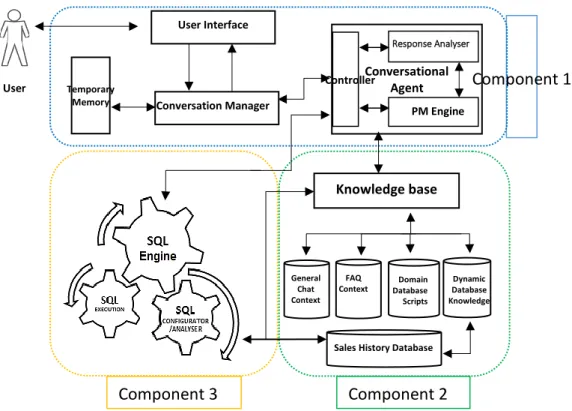
4.2 OVERVIEW OF ARCHITECTURE ... 55
4.3 COMPONENTS DEVELOPMENT FOR ANEESAHNLIDB(COMPONENT 1) ... 58
4.3.1 Controller ... 59
4.3.2 Pattern Matching (PM) Engine ... 60
4.3.3 Sentence Similarity Feature ... 63
4.3.4 Dice Coefficient Algorithm ... 64
4.3.5 Pattern Matching Scripting Language (PMSL) ... 65
4.3.5.1 Regular Expression based Pattern Matching ... 67
4.3.6 Utterance Processing Flow ... 68
4.3.7 Utterance Processing for Database Information Mapping ... 70
4.3.8 Conflict Resolution ... 74
4.3.9 Response Analyser for Query-based Responses ... 76
4.3.10 Conversation Manager (CM) ... 77
v
4.3.12 Log file ... 80
4.3.13 User Interface ... 81
4.4 KNOWLEDGE ENGINEERING THE DOMAIN (COMPONENT 2) ... 81
4.4.1 Adapting a Domain Database for System Evaluation ... 83
4.4.2 Knowledge Base Structure for the Scope of Conversation ... 85
4.4.3 Domain Database Scripts ... 86
4.4.4 Frequently Asked Question (FAQ) Domain ... 86
4.4.5 General Chat Domain ... 86
4.4.6 Dynamic Database Knowledge (DDK)... 87
4.4.7 Domain Grammar ... 88
4.4.8 Knowledge Engineering the Domain for Query Scenarios ... 88
4.5 SQLENGINE (COMPONENT –3) ... 92
4.5.1 SQL Configurator ... 93
4.5.2 SQL Execution ... 97
4.5.3 SQL Analyser ... 98
4.6 CONCLUSION ... 99
CHAPTER 5 - ANEESAH PROTOTYPE ONE – EVALUATION METHODOLOGY AND RESULTS ... 101
5.1 INTRODUCTION ... 101
5.1.1 Hypothesis ... 102
5.2 EVALUATION METRICS ... 102
5.3 EXPERIMENTAL METHODOLOGY FOR ANEESAHNLIDB ... 104
5.4 EVALUATION SCENARIOS ... 105
5.5 EXPERIMENT 1 ... 105
5.5.1 Experiment 1 Results ... 107
5.5.2 Experiment 1 Discussion (Group-A) ... 108
5.5.3 Experiment 1 Discussion (Group-B) ... 109
5.6 DATA ANALYSIS AND SELECTION OF STATISTICAL TEST ... 110
5.6.1 Inferential Statistics (Mood’s Median Test) ... 111
5.6.2 Descriptive Statistics (Test of Normality) ... 113
5.7 EXPERIMENT 2 ... 114
5.7.1 Interactive Sessions ... 114
5.7.2 ANEESAH’s Dialogue Responses ... 117
5.7.3 Precision, Recall and Accuracy ... 119
5.8 DISCUSSION ... 120
5.9 CHAPTER SUMMARY ... 121
vi
6.1 INTRODUCTION ...123
6.2 REVISED ARCHITECTURE OF ANEESAHNLIDB ...124
6.3 FURTHER DEVELOPMENT OF ANEESAHNLIDB(OVERVIEW) ...125
6.4 EXTENDED FEATURES OF ANEESAH’S CA ...126
6.4.1 Date/Time Matching Feature ...127
6.4.2 User Response Agreement ...128
6.4.3 English Language Dictionary ...129
6.5 INFORMATION REFINEMENT FEATURE ...130
6.5.1 Refinement Request Detection...131
6.5.2 SQL Query Refiner Module ...132
6.5.2.1 Add Information ... 132
6.5.2.2 Remove Information ... 134
6.5.2.3 Replace Information ... 135
6.5.2.4 Aggregation Function ... 136
6.5.2.5 Restrict Information... 138
6.5.3 ANEESAH NLIDB with Information Refinement ...140
6.6 KNOWLEDGE BASE EXPANSION ...141
6.7 GRAPHICAL USER INTERFACE (GUI) ...142
6.8 SESSION MANAGER MODULE ...144
6.9 DATABASE INFORMATION SELECTION TOOL ...145
6.10 CONCLUSION ...146
CHAPTER 7 - ANEESAH 2 EVALUATION RESULTS AND DISCUSSION (PHASE TWO) ... 148
7.1 INTRODUCTION ...148
7.2 EXPERIMENTAL DESIGN ...148
7.3 HYPOTHESIS ...149
7.4 EXPERIMENTS ...150
7.5 PARTICIPANT INTERACTION ...151
7.6 EVALUATION METRICS FORMULATION ...151
7.7 EVALUATION METRICS ...152
7.8 DATA COLLECTION ...154
7.8.1 Subjective Data Collection...154
7.8.2 Objective Data Collection ...154
7.9 DATA ANALYSIS ...154
7.10 SCENARIOS ...155
7.11 PARTICIPANTS SAMPLE ...156
7.11.1 Sample Distribution by SQL Knowledge ...156
vii
7.12.1 Experiment 1 ... 157
7.12.2 Experiment 1 Results ... 159
7.12.3 Experiment 1 Discussion (Group-A) ... 160
7.12.4 Experiment 1 Discussion (Group-B)... 162
7.12.5 Descriptive Statistics (Test of Normality) ... 163
7.12.6 Selection of Statistical Test ... 164
7.12.7 Inferential Statistics (Mood’s Median Test) ... 164
7.12.8 Analysis of Questionnaire Results for Prototype (one and two) ... 168
7.13 EXPERIMENT 2 ... 176
7.13.1 Interactive Sessions... 177
7.13.2 Utterance Distribution ... 178
7.13.3 AEESAH’s Responses ... 179
7.13.4 Robustness and Accuracy ... 183
7.13.5 Queries Distribution Between Group A and B Participants ... 184
7.13.6 Precision, Recall and F-Measure ... 185
7.13.6.1 Precision, Recall and Accuracy for Group A ... 185
7.13.6.2 Precision, Recall and Accuracy for Group B ... 185
7.13.6.3 F-Measure Comparison for Prototype one and two ... 186
7.14 RESULTS CONCLUSION ... 186
CHAPTER 8 - CONCLUSIONS, KEY FINDINGS, CONTRIBUTIONS AND FUTURE WORK ... 189
8.1 OVERVIEW ... 189
8.2 KEY FINDINGS AND LIMITATIONS ... 192
8.3 RESEARCH CONTRIBUTIONS... 195
8.3.1 ANEESAH - Conversational NLIDB Development ... 196
8.3.2 Framework and Methodology for Conversational NLIDB Development... 196
8.3.3 The PM engine ... 197
8.3.4 Scripting Language ... 197
8.3.5 Query Formulation and Refinement Algorithm ... 198
8.3.6 The SQL Engine ... 198
8.4 FUTURE RESEARCH ... 198
8.4.1 Voice Recognition ... 199
8.4.2 Universal Web Service ... 199
8.4.3 Dynamic Knowledgebase for Link Responses/Analysis... 200
8.4.4 Graphical Representation of Query Results ... 200
8.4.5 Knowledge base expansion ... 201
8.4.6 Evaluation Framework for Conversational NLIDB ... 201
viii
8.5 TAKE HOME MESSAGE ...202
REFERENCES...203
APPENDICES ...213
APPENDIX –A-QUESTIONNAIRE FOR PHASE TWO EVALUATION PROTOTYPE ONE ...213
APPENDIX –B-TEST SCENARIOS FOR THE EVALUATION PROTOTYPE ONE ...215
APPENDIX –C–PHASE ONE EVALUATION DATA HISTOGRAMS ...217
APPENDIX –D-QUESTIONNAIRE FOR PHASE TWO EVALUATION ...222
APPENDIX –E-TEST SCENARIOS FOR THE EVALUATION ...224
APPENDIX –F–PHASE TWO EVALUATION DATA HISTOGRAMS ...227
APPENDIX –G–ANEESAH’S LOG FILE ...234
1 List of Figures
Figure 1.1: Thesis chapters in relation to the research objectives Figure 2.1: Goal Question Metric model
Figure 3.1: Generic ANEESAH NLIDB Architecture
Figure 4.1: High-level overview of proposed architecture (prototype one) Figure 4.2: CA Components of ANEESAH NLIDB
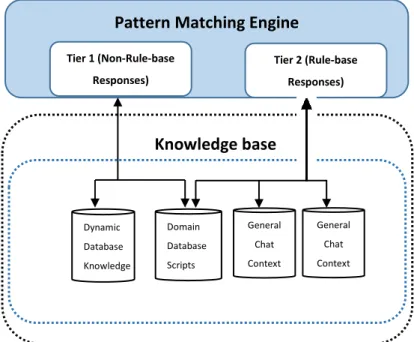
Figure 4.3: Pattern Matching Engine
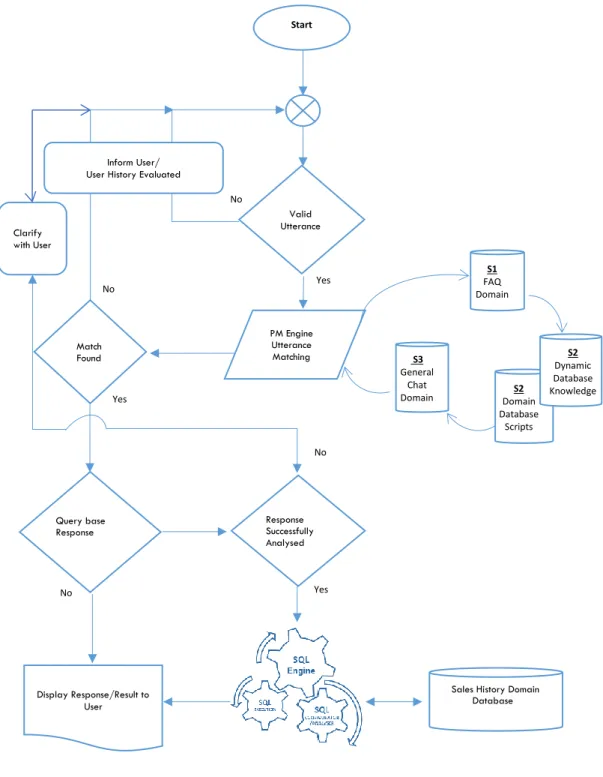
Figure 4.4: High-Level Overview of ANEESAH’s functional flow diagram Figure 4.5: Example pattern with regular expression
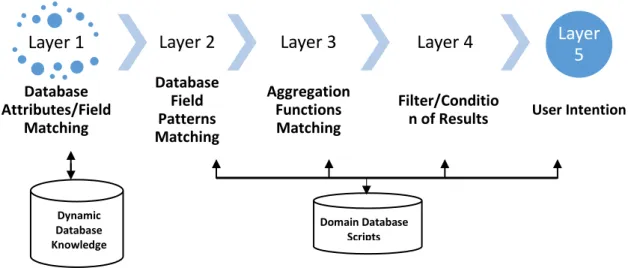
Figure 4.6: Overview of user utterance flow in ANEESAH
Figure 4.7: Layer-based Database Information Mapping/Discovery Figure 4.8: Matched attribute values in database tables
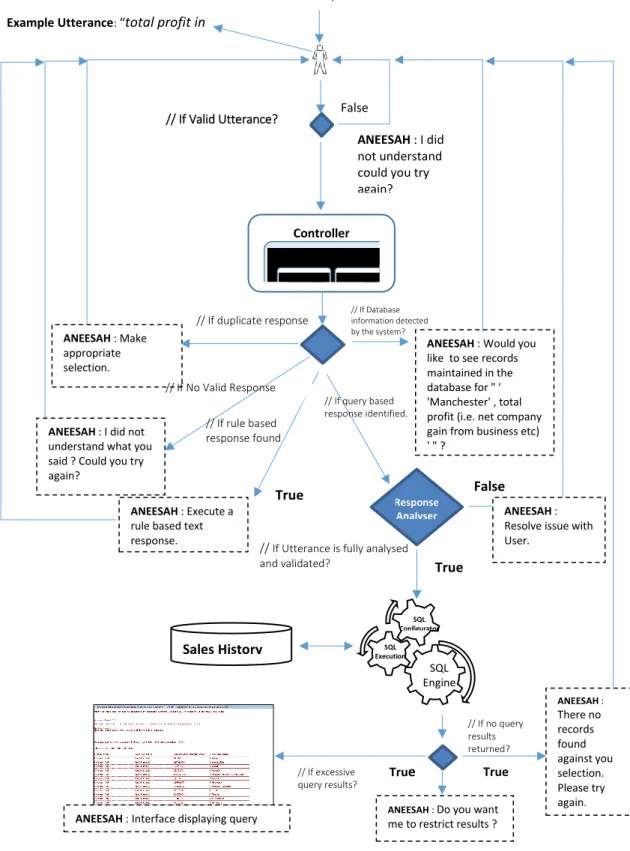
Figure 4.9: Example duplicate records maintained in database Figure 4.10: Example duplicate records match situation Figure 4.11: Response analyser working flow
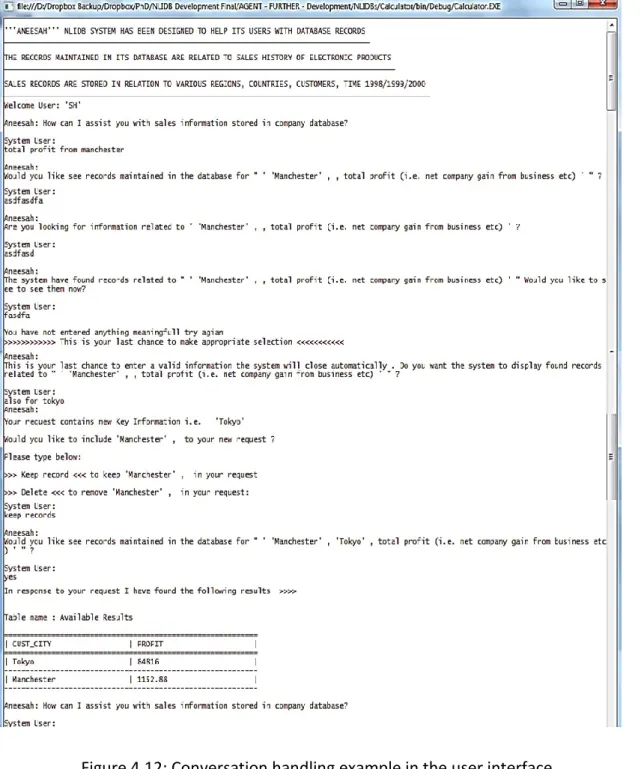
Figure 4.12: Conversation handling example in the user interface Figure 4.13: ANEESAH’s User Interface
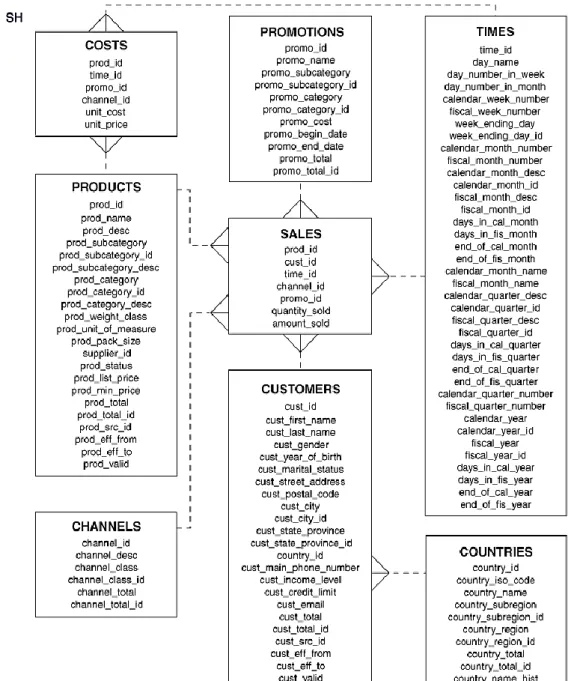
Figure 4.14: Information universe of an example organisation Figure 4.15: Information universe of an example organisation
Figure 4.16: Sample table records stored in the Sales History database Figure 4.17: ANEESAH’s knowledge base structure
Figure 4.18: Dynamic Database Knowledge update process
Figure 4.19: Query required syntax extraction from user utterance Figure 4.20: SQL query formulation flow
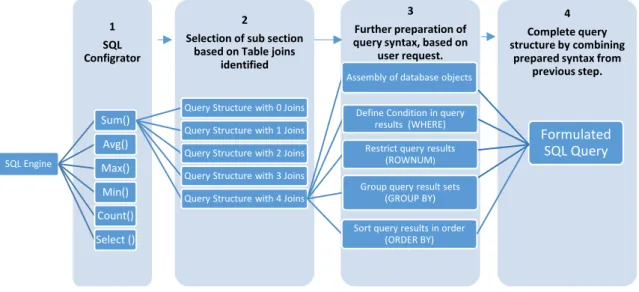
Figure 4.21: SQL Configurator’s working flow
Figure 4.22: Selection of tables relevant to captured database objects Figure 4.23: Selection of tables in relational structure
Figure 4.24: Assembly of database objects with source table identification Figure 4.25: Syntax prepared to restricted database results to user’s desire Figure 4.26: Aggregation function integrated in SQL query syntax
Figure 4.27: Formulation of syntax to group query results
Figure 4.28: Formulation of syntax to sort query results in specific order Figure 4.29: Formulated query by the SQL configurator
Figure 4.30: SQL Query Execution within ANEESAH
Figure 4.31: Example query returned results display in user interface Figure 4.32: Error code showing failed execution of a SQL query Figure 5.1: Formulation evaluation metrics for the ANEESAH system Figure 5.2: Participants Rating from Experimental Group-A
Figure 5.3: Participants Rating from Experimental Group-B Figure 5.4: Normality Histograms
2 Figure 5.5: Level of difficulty for each scenario
Figure 5.6: Example dialogues between ANEESAH and user Figure 5.7: Example dialogues between ANEESAH and user Figure 5.8: Example dialogues between ANEESAH and user Figure 5.9: Example dialogues between ANEESAH and user Figure 6.1: Improved Architecture of ANEESAH NLIDB
Figure 6.2: Graphical User Interface of ANEESAH prototype two Figure 7.1: Pie chart of sample distribution by SQL knowledge Figure 7.2: Participants rating from experimental Group A Figure 7.3: Participants rating from experimental Group B Figure 7.4: Phase two evaluation data histograms
Figure 7.5: Comparison of results for question 1 Figure 7.6: Comparison of results for question 2 Figure 7.7: Comparison of question 4 results Figure 7.8: Comparison results for question 5 Figure 7.9: Comparison of results for question 7 Figure 7.10: Comparison results for question 10 Figure 7.11: Comparison of results for question 11 Figure 7.12: Comparison of results for question 12
Figure 7.13: Utterance Distribution for Each Participant Group
Figure 7.14 - Queries distribution for each scenario between both groups
List of Tables
Table 2.1: Sample datasets used for NLIDBs evaluation Table 2.2: Example AIML Category
Table 2.3. An example Pattern Script Rule
Table 4.1: Rule scripts using PM and sentence similarity
Table 4.2: Algorithm to for utterance processing and query formulation Table 4.3: SQL query syntax used for successful query results
Table 4.4: SQL query syntax implemented in ANEESAH Table 5.1: Evaluation Questionnaire
Table 5.2: Overall Questionnaire Results from Group-A & Group-B Table 5.3: Mood’s median test results
Table 5.4: Number of utterances and results for each test scenario Table 5.5: Experiment results for Group-A & Group-B
Table 6.1: Example of user input match against time pattern
Table 6.2: Algorithm for addition of information in query refinement scenario Table 6.3: Algorithm for deletion of information in query refinement scenario Table 6.4: Algorithm to replace information in query refinement scenario Table 6.5: Algorithm for function in query refinement scenario
3
Table 6.6: Algorithm to restrict information in query refinement scenario Table 6.7: Algorithm for sustained dialogue and query refinement Table 6.8: ANEESAH’s responses based on short-term memory Table 7.1: List of objective metrics
Table 7.2: Goal, questions, metric model for phase two evaluation Table 7.3: Participants groups for data analysis
Table 7.4: Questionnaire for phase two evaluation
Table 7.5: Questionnaire results from both participant groups Table 7.6: Mood ‘median test results
Table 7.7: Questionnaire results from both participant groups for Prototype-2 Table 7.8: Questionnaire results from both participant groups for Prototype-1 Table 7.9: Mann-Whitney u test statistics
Table 7.10: Log file analysis of data collected during phase two evaluation Table 7.11: Number of utterances and results for both groups for each scenario Table 7.12: Example dialogue during phase two evaluation
Table 7.13: Example dialogue during phase two evaluation Table 7.14: Example dialogue during phase two evaluation Table 7.15: System produced queries for each scenario
List of Equations
Equation 2.1: Accuracy Equation Equation 2.2: Recall Equation Equation 2.3: Precision Equation Equation 2.4: F-Measure Equation Equation 4.1: Dice Coefficient Equation
Equation 4.2: Dice Coefficient similarity match between two words
List of Appendices
Appendix – A - Questionnaire for phase two evaluation prototype one Appendix – B- Test Scenarios for the evaluation prototype one Appendix – C – Phase one evaluation data histograms
Appendix – D - Questionnaire for phase two evaluation prototype two Appendix – E- Test Scenarios for the evaluation prototype two
4 Dedication
بِسْمِِ بِِ بِر َّحْمٰن ِ بِسْحِمٰن ِ
“In the name of God, the Most Gracious, the Most Merciful"
This thesis is dedicated to my mother (deceased) and father. Both of whom are like a candle – It consumes itself to light the way for others.
5
Acknowledgements
I must express my very profound gratitude to my parents (Mohammed Aslam and Ghulam Safia), my wife (Sadia Noreen), my two daughters (Aneesah and Afifa) and other family
members for providing me with unfailing support and continuous encouragement throughout the research process. This accomplishment would not have been possible
without them.
I would also like to acknowledge Dr James O’Shea, Dr Keeley Crockett and Dr Annabel Latham of the Manchester Metropolitan University as the supervisory team for this research, and I am gratefully indebted to them for their very valuable support, guidance and
help throughout the research. Thank you.
6 List of Publications
SHABAZ, K., O'SHEA, J. D., CROCKETT, K. A. & LATHAM, A. ANEESAH: A Conversational Natural Language Interface to Databases. Proceedings of the World Congress on Engineering, 2015. (Appendix H)
7 List of Abbreviations
AI Artificial Intelligence
NLIDB Natural Language Interface to Database
CA Conversational Agent
CM Conversation Manager
DOMAIN Sample Database/Dataset Used for Evaluation
FAQ Frequently Asked Question
GC General Chat
GQM Goal Question Metric
GUI Graphical User Interface
KB Knowledge Base
NLP Natural Language Processing
PARADISE Paradigm for Dialogue System Evaluation
PM Pattern Matching
STS Short Text Similarity
XML Extensible Mark-up Language
AIML Artificial Intelligence Mark-up Language
NLI Natural Language Interface
System ANEESAH NLIDB
8
Chapter 1 -
Introduction
1.1 Introduction
This thesis presents research investigating whether a Natural Language Interface to Database can mimic a human query expert by conversationally interacting with users, and formulate queries to extract and refine desired database information. The research entails a thorough analysis of Natural Language Interfaces to Database (NLIDBs) and Conversational Agents (CAs) as well as inherent challenges involved in implementing conversational NLIDBs such as social adaptability, sustained dialogues, information refinement and querying the query operations. The research has led to the development a novel conversational Natural Language Interface to Database, called ANEESAH. The ANEESAH NLIDB is designed to model a database expert by directing the conversation and translating the user's requirements into database query language (e.g. Structured Query Language). The architecture of ANEESAH comprises several new components, which have been specifically developed to address the unique challenges involved in implementing NLIDBs. This chapter provides the background and motivation of the proposed research, aims and objectives, along with a summary of the research contributions, and brief description of thesis structure.
1.2 Background
Information has its fundamental importance in decision making at any level. The largest sources of information storages are databases in public or commercial environments. The databases servers are constantly evolving with not only information but in terms of complexities of structures and designs (Hamaz and Benchikha, 2017). Retrieving information from a database normally requires querying the database using specialised programming code not accessible to the inexperienced users, known as structured query language (SQL). There exists a need for creating computer applications that permit inexperienced users to extract desired information stored in a database (Yaghmazadeh et al., 2017). Natural Language Interfaces to Databases (NLIDBs) are computer programmes that replace the requirement for an end user to commission a skilled
9
programmer to query a database by using natural language (Pazos R et al., 2013; O’Shea et al., 2011).
The primary focus of NLIDB development has been intended to process a single query response transaction. The conversational capabilities of NLIBDs have received little attention in research, among other aspects such as social adaptability and sustained interaction to elicit what an end user envisages about the domain (Owda et al., 2007; Androutsopoulos et al., 1995). NLIDB development attempts span decades. However there remain unsolved key challenges for their wider acceptance in public and commercial environments (Pazos R et al., 2013). Despite many development approaches, NLIDBs have failed to achieve 100% user satisfaction. There are a number of challenges have been identified by researchers such as linguistic problems, conversational abilities, query translation, information refinement, domain independence and ease of configuration. Also, the lack of generally accepted evaluation benchmarks that can be used to test effectiveness and reliability of NLIDBs adds to the existing challenges and those of building similar applications (Castillo et al., 2014; O’Shea et al., 2011).
The motivation for this research came from the need for a conversational NLIDB that could mimic a human structured query language expert by employing conversation with users to dynamically formulate queries to extract and refine database information. The research aim, questions, hypothesis and objectives are discussed as follows.
1.3 Research Aim
The main aim of this research is to contribute to the understanding of existing NLIDBs by developing a novel conversational NLIDB architecture for sustained dialogues to automate query formulation and information refinement processes and perform an evaluation of the implemented prototype through a sample database. The following research questions are investigated as part of this research.
10
1.4 Research Questions
The research questions are as following:
1. Can a NLIDB allow users to retrieve desired information from a database conversationally?
2. Can a NLIDB allow users to engage in sustained dialogues to refine query produced information from a database?
3. Can a Pattern Matching approach be used to successfully develop a conversational NLIDB, capable of automating complex query formulation process?
4. Can a conversational NLIDB generate comparable results to those produced conventionally by a database expert?
1.5 Research Hypothesis
The null hypothesis (H0) is that a general user cannot interact with a NLIDB to formulate a query to retrieve and refine desired information from a relational database.
The (H1) hypothesis is that a general user can interact with a NLIDB to formulate a query to retrieve and refine desired information from a relational database, successfully.
1.6 Research Objectives
The objectives of this research are:
1. Investigate state of the art (SOA) on existing NLIDBs and CAs, based on approaches and architectures adopted for developments.
2. Research and identify historical challenges that have prevented progress and wider adaptability of NLIDBs in real-life environments.
3. Specify a methodology for the development and implementation of a novel NLIDB framework, scripting language and evaluation framework to measure features implemented in the proposed prototype system.
4. Review and investigate knowledge engineering techniques to generate and implement a NLIDB knowledge base.
11
5. Build a conversational NLIDB architecture with CA components and conversational abilities to allow users to extract and refine information stored in a database.
6. Design an appropriate evaluation methodology for the proposed conversational NLIDB, and determine its ability to handle conversation with the users, usability and usefulness (such as user experience, user acceptance, information accuracy, reliability) through specific experiments.
Figure 1.1 illustrates each objective of the proposed research and how it is addressed in this thesis. An overview of each chapter is detailed below thesis structure section (1.8).
Figure 1.1: Thesis chapters in relation to the research objectives
1.7 Contributions
The most significant contributions of this research are:
Objective 1 Objective 2 Objective 3 Objective 4 Objective 5 Objective 6 Chapter 2 Chapter 3 Chapter 4 Chapter 5 Chapter 6 & 7 Chapter 8 Chapter 9
12
A novel architecture for a conversational NLIDB (ANEESAH) and a generic development methodology for creating similar NLIDBs for other databases/domains.
A new scripting methodology designed specifically to allow fine control of the conversation, dynamic query formulation and information refinement during the scripting process.
Proof of concept that it is possible for an inexperienced user to conversationally interact with a NLIDB to dynamically formulate a query to retrieve desired information stored in a database.
Proof of concept that a conversational NLIDB can engage users in sustained dialogues to further refine query produced information from a database.
A novel evaluation methodology that can be utilised to perform an evaluation of similar conversation-based NLIDBs from the subjective and objective perspectives.
Development of ANEESAH prototype one and results from empirical studies that validate the generic architecture and methodology for a NLIDB with conversational abilities to provide an interactive and friendly environment to assist users in extracting desired database information.
Development of ANEESAH prototype two and results from empirical studies on the further developed and modified architecture and improved methodology as well as enhanced conversational abilities to sustain dialogues for information refinement and dynamic querying the query operations (i.e. reformulation of an existing query to reflect different/refined results etc.)
The contributions listed above are expected to be of value to researchers and developers in the fields of CAs and NLIDBs. Researchers and developers can utilise these contributions as a starting point for their future projects/research. The proposed methodology and architecture can be used as a foundation to build conversational NLIDBs, which can conversationally engage users to extract desired information stored in a database by dynamic query formulation process as well as sustain dialogues to perform further information refinement.
13
1.8 Thesis Outline
The nature of the research and development of the ANEESAH conversational NLIDB resulted in the substantial amount of documentation and experiment work. Chapter 2 provides a current state of the art of NLIDBs and CAs, the background of the field, different approaches to building similar applications, challenges and limitations relevant to the scope of this research followed by a review of existing conversational NLIDBs. Chapter 3 presents the development methodology adopted for creating a conversational ANEESAH NLIDB. The development methodology has been described in three phases. Phase one will give an overview of the proposed ANEESAH NLIDB prototype and details on the development of different components. Phase two of the development methodology will highlight the development of scripting methodology and knowledge base. Subsequently, phase three will also provide details on a generic architecture for ANEESAH NLIDB.
Chapter 4 of this thesis presents an implementation of ANEESAH conversational NLIDB prototype.
Chapter 5 presents details on evaluation methodology adopted to evaluate the developed prototype ANEESAH NLIDB, empirical results and statistical tests undertaken to answer research hypothesis and research questions. Chapter 5 will also highlight experimental results based on users’ interaction with the developed ANEESAH NLIDB, followed by a survey/questionnaire-based evaluation data highlighting whether the developed prototype was comparable to a human expert with respect to assisting users in task completion. Chapter 5 also provides a detailed discussion of experiments results from an evaluation of the initial prototype initial ANEESAH NLIDB prototype. This chapter also highlights different aspects of the initial prototype’s architecture, areas highlighted for improvement (such as spelling mistakes), robustness and information accuracy measures recorded during evaluation. Chapter 5 also bring to light gaps (such as sustained dialogues for information refinement, querying the query operations) leading to the further development of an initial prototype, to evaluate and answer all research questions.
14
Chapter 6 presents further research and development conducted to improve and strengthen ANEESAH’s architecture to address the weaknesses and areas of improvements outlined through the first stage evaluation. Chapter 6 also provides details on modifications made to the existing architecture (of the initial prototype ANEESAH NLIDB), and new components developed to strengthen its abilities further and overcome shortcomings noted through first stage evaluation.
Chapter 7 reflects on the evaluation methodology and results gathered during the evaluation of ANEESAH prototype two. Chapter 7 also presents a statistical analysis of empirical results to determine if enhancement and further development have led to improvements in ANEESAH’s abilities such as conversational control, query refinement, weaknesses highlighted during first phase evaluation.
Chapter 8 highlights the conclusions drawn from findings, contributions, discussion and comparison of results to evaluate the effectiveness of both prototypes, and describe its limitations and provide recommendations for the direction of future work.
15
Chapter 2 -
State of the Art
2.1 Introduction
The idea of a computer taking the role of a human in a conversation was first proposed by Alan Turing (Turing, 1950). This idea led to the proposal of Turing’s test which spurred the research community to develop prototypes that could mimic humans to fool a judge. The research attempts to pass Turing’s test appeared in the form of computer programs called chatterbots, which used tricks to create the delusion of intelligence during a conversation. Adding goal-oriented intelligence to chatterbots led to a new generation of conversational partners referred to as “Conversational Agents” (Weizenbaum, 1966). Conversational Agents (CAs) are computer applications that enable people to communicate with computers using natural language (Russell et al., 1995). The term CA comprises a description of different types of CA applications such as text-based, embodied or spoken systems. The implementation of CAs in various domains assist users to achieve their goal easily and rapidly (O’Shea et al., 2011).
Natural Language Interfaces to Databases (NLIDBs) are computer programs, which replace the requirement to react with a skilled programmer to query a database by using natural language. This chapter represents a review of NLIDBs both historical and the current state of the art and contrasts the strengths and weaknesses of existing approaches. Finally, a review of existing NLIDB and CA building techniques, the need for alternative approaches and evaluation methodologies adopted for testing are also discussed in this chapter.
2.2 Natural Language Interfaces to Databases
Natural Language Interfaces to Databases (NLIDBs) are computer applications, which replace the requirement for an end user to commission a skilled programmer to query a database by using natural language. Among early development of NLIDBs, the most popular NLIDB was LUNAR (Woods, 1972). LUNAR was built to perform moon rocks analysis based on an underlying database, but it had functional limitations and could not be generalised to other domains (Woods, 1973). Later, the development of RENDEZVOUS was intended to simulate open dialogues to users in order to formulate
16
database queries. RENDEZVOUS required user anticipated inputs to closely match its knowledge base text for the system to understand the entered text, for processing. LADDER development (Hendrix et al., 1978) was developed to target big data and distributed databases. However, LADDER NLIDB required substantial customisation (e.g. new grammar, domain knowledge) to work with new domains. PLANES designed features were based on the principals of RENDEZVOUS, which used flights and an airport database to answer users’ questions (Waltz, 1978; Walts, 1975). PLANES NLIDB also required new grammar and extensive customisation to work with new domains. In the 80s, research on NLIDBs increased with the main focus on portability and interface designs (Owda et al., 2007). Several NLIDB systems were developed by this time such as CHAT80, which translated natural language in Prolog language and TEAM, which translated natural language queries into Simple Object Database Access query language (Warren and Pereira, 1982; Grosz et al., 1987). Other systems such as PARLANCE (Bates, 1989), were built to resolve domain configuration issues and allow users to configure underlying domains manually. ASK also appeared as a cross application NLIDB that allowed users to input their requests in natural language to generate appropriate responses from the underlying database (Thompson and Thompson, 1985; Thompson and Thompson, 1983).
In the 90s, fewer NLIDB systems made their way to the commercial market with a primary development focus on learning approaches. Despite the lack of acceptance in real-life environments, work on NLIDBs continued to evolve with research on various systems such as CHILL. This was built to analyse the implications of Inductive Logic Programming, which comprised of paired questions with respective parsing (Zelle and Mooney, 1996). INTELLECT’s entry in the commercial market was perceived as a motivational step to amplify development of similar NLIDB systems. Some buyable NLIDB options in the market were IBM’s Language Access, Q&A Symantec, DATALINKER, and LOQUI from IBM English Wizard (Ott, 1992; Sijtsma and Zweekhorst, 1993).
More recently, the development of NLIDBs continues to evolve with the implementation of advanced technologies in the Natural Language Processing field, integrating language and graphics to take the benefits available from all modalities (Revuelta-Martínez et al.,
17
2013). In recent years some online system also appeared such as Wolfram Alpha, Powerset and TrueKnowledge(Lopez et al., 2012). These were designed to rely and work on initial information imported during their development stage. Recent developments show further efforts to create limited interaction between the user and NLIDBs. The ITG system was developed to offer train ticket information. However, it urged users to repeatedly validate predictive text generated based on their inputs (Revuelta-Martínez et al., 2013).
PRECISE was developed to address issues such as natural language translation and overcome parser errors (Popescu et al., 2004). GeoDialogue was developed to handle conversational grounding and dialogue generation challenges (Cai et al., 2005). NLPQC was implemented to work through templates for translating natural language inputs into queries for a relational database system. NLPQC also employed WordNet feature that would generate from the database schema (Stratica et al., 2005a). C-Phrase was developed on Codd’s tuple calculus to allow context-free grammar (Mooney, 2006). NaLIX implementation focused on serving as a search tool to query the web-based datasource (Li et al., 2007).
NaLIR a keyword-based search interface for web developed using Natural Language Processing (Li and Jagadish, 2014). Other developments include NL2CM, which was built to provide an interface that translates the user inputs into the formal query languages that covered mining platforms support (Amsterdamer et al., 2015). ATHANA translated user requests into an intermediate query language over the ontology and later translated them into database queries (Saha et al., 2016).
2.2.1 NLIDB Development Challenges and Limitations
According to (Church and Patil, 1982), development of Natural Language Interfaces (NLIs) for information retrieval from structured data requires a deep understanding of different factors e.g. Natural Language complexities, ambiguities, etc. Some architectural techniques have been adopted to use limited natural language to generate logical queries for structured data. Such techniques include the Syntax-Based Family of
18
Architectures (Woods, 1972), the Semantic-Grammar Family of Architectures and Pattern Matching (Cui et al., 2007).
2.2.1.1 Syntax-based Approach
Syntax-based systems utilise syntactic parsers to process a user utterance and produce a corresponding to natural language query with the help of generated parsed tree, often referred as a constituent tree (Androutsopoulos et al., 1995). In Syntax-based systems, a user utterance is parsed and analysed syntactically to formulate a relevant query for a database. The LUNAR system is an example NLIDB built using the Syntax-based approach (Woods, 1972). A language specific parser generates a constituent tree in a shape of a syntactic representation based on the user utterance. The parser extracts phrases and words from the user utterance and uses a set of rules to create a relationship between phrases and words. Later, the constituent tree is translated to the database query language (e.g. SQL) with the help of designed rules. The constituent tree contains deep information to formulate a query (Pazos R. et al., 2013).
The syntax-based approach has several problems for its use in natural language interface developments. The NLI systems designed with the Syntax-based approach are dependent on grammatically correct utterances and with correct structure. Poorly structured sentences can lead to system failures (O’Shea, et al., 2011). Domain independence is also a concern highlighted for systems developed with the Syntax-based approach. The possibility of multiple syntactic trees which create various interpretations of user utterances is also highlighted as one of the major problems in adopting this approach (Owda et al., 2011). Defining mapping rules that transform users’ utterances to database queries is often difficult (Androutsopoulos et al., 1995), and portability of syntax-based systems is also difficult due to in-depth designed (domain specific) syntactic structures (Pazos R. et al., 2013).
2.2.1.2 Semantic Grammar Approach
Semantic grammar systems (Karande and Patil, 2009) work on a similar principle to Syntax-based systems. The users’ utterances are parsed to generate a constituent tree.
19
However, the difference in this technique is that it uses pre-defined grammar categories for mapping the constituent tree to a SQL query. In semantic grammar based systems, unlike Syntax-based systems, pre-defined grammar categories do not necessarily relate to syntactic concepts but correspond to domain knowledge and help to enforce semantic constraints (Androutsopoulos et al., 1995). The NLIDB systems developed using semantic grammar architecture tend to process user inputs with less complex constituent trees, when comparing to conventional Syntax-based NLIDBs. The semantic grammar approach also makes NLIDB systems flexible in allowing assignment of semantic information to the tree nodes, which reduces elliptical problems during query formulation process. PLANES, LADDER, REL, PRECISE, NLPQC, WYSIWYM are some example semantic grammar-based systems (Karande and Patil, 2009).
The main disadvantage of using this technique is portability, due to its reliance on domain specific knowledge, which is hardwired in the form of semantic grammar. A new semantic grammar is required to configure a given system to work on a different domain. Moreover, the syntactic tree developed using this approach cannot be adapted to other databases. The NLIDB systems developed using semantic grammar approach mostly relied on a corpus of query templates manually created by developers. This approach has been adopted more recently in a system called NLDBI developed by (Rao et al., 2010; Androutsopoulos et al., 1995).
2.2.1.3 Pattern Matching Approach
Some of the early NLIDBs relied on the pattern matching approach (Pazos, et al., 2013). The pattern matching approach is based on a method, which explores all matched occurrences of scripted patterns against user utterance. This approach is also described as the act of evaluation for an input sequence of tokens for the presence of constituents of some pattern. In contrast to pattern recognition, the match usually has to be exact (Liapis, 2013). The patterns are formed in either a tree structure or sequences (Fader et al., 2013). In this pattern matching approach, a user utterance is not required to be grammatically correct, as the pattern matching technique works on a different principle from that of syntax-based approach. Furthermore, the wildcard matching method parses a user utterance to yield matched words and relationships to formulate a ruled
20
based response. The pattern matching approach can be adopted in the development of Chatbots, CAs and NLIDBs based on precise methodologies (Crockett et al., 2009). The pattern matching approach has shown effectiveness and flexibility to develop extended dialogue applications (O’Shea et al., 2011; Pazos R. et al., 2013). SAVVY (Johnson, 1984), InfoChat (ConvAgent, 2001) are examples of NLIDB systems which employ the pattern matching approach. This approach using a rule-based matching algorithm produces controlled responses and offers flexibility to sustain dialogues with users (ConvAgent, 2005;Crockett et al., 2009). The NLI-RDB system employed the pattern matching approach for its development, discussed in section 2.4 (Owda et al., 2007). According to (Kerry et al., 2009), the pattern matching approach has revealed impressive results in systems with clearly defined domains. However, this approach due to its shallowness can lead to system failures. The pattern scripting is a laborious and time-consuming task (discussed in more detail below).
2.2.2 Datasets used for NLIDBs Evaluation
There exists no agreement on what sample databases (datasets) should be used as evaluation benchmarks for building and testing NLIDB systems. Most NLIDB developments have relied on three main example datasets with sample records namely; jobs domain dataset with jobs related information, a restaurant information dataset and a geo-base dataset containing locational information. Inherently, these datasets are simple due to basis or non-relational structure and contain fewer records. Therefore, the selection of one or more of these datasets often required researchers to modify its structure in order to evaluate their NLIDB applications (Tang and Mooney, 2001). Historically, researchers have also used custom created datasets to evaluate their NLIDB applications. Table 2.1 gives an overview of few example datasets used for NLIDB developments and evaluation, in the past decade.
21
Prototype System
Author(s) Development
Approach
Database Used Accuracy Recorded NL Query Custom/Domain ontology Custom 89% NLI-RDB (2) (Alghamdi et al., 2017) PM Custom (Unknown) Unknown NaLIR (Li and Jagadish,
2014)
NLP Microsoft
Academic Search database
89.79%
CPC-NLIDB (Akula et al., 2013) Semantic Grammar Unknown Database 96.6% ITS (Revuelta-Martínez et al., 2013) NLP Trains Database (Unknown) 80% AskMe (Llopis and Ferrández,
2013)
NLP A subset of
Northwind Database
94.8%
PNLIDB (Kaur and Bhatia, 2010)
PM Generic
Agriculture (Unknown)
Unknown
GINLIDB (Faraj et al., 2009) NLP Generic Employees Database (Unknown) Unknown NLI-RDB (1)
(Owda et al., 2007) Knowledge Trees - PM
Generic Sales Database (Unknown)
Unknown
NaLIX (Li et al., 2007) NLP Timber XML
Database
Unknown Table 2.1: Sample datasets used for NLIDBs evaluation
Some NLIDB systems have been evaluated using Northwind Traders’ dataset (Microsoft.com, 2017), Pubs Books dataset or the CINDI library dataset (Stratica et al., 2005b) that either have a simple structure or fewer example records. Moreover, the ATIS dataset with airline flights information is regarded as most complex in a relational structure comprising 27 tables and 123 columns. There are only a few NLIDBs evaluated with ATIS dataset or similar databases due to elliptical and complexity of structure (Pazos R. et al., 2013; Castillo et al., 2014). The selection of an appropriate dataset is fundamental to the testing and evaluation of a NLIDB capable of conversationally interacting with users to automate query formulation process and allowing access to desired information with query refinement abilities.
22
2.2.3 Current known weaknesses in the field of NLIDBs
There have been many attempts to develop NLIDB systems in the past decades. However, these attempts have yet not received a wider acceptance in real-life environments. There are several factors involved leading to the lack of acceptance and widespread use of NLIDB systems in real-life environments.
2.2.3.1 Linguistic Coverage
The linguistic coverage problem has been one of the major weaknesses, as users are often ignorant of the linguistics abilities of NLIDBs (Cohen, 1992). In real-life environments, it is not practical for users to remember what questions an NLIDB system can or cannot cope with/handle. An NLIDB system will only give a definitive answer after it has understood user utterance (Ramasubramanian and Kannan, 2004).
2.2.3.2 Domain Coverage Failure
In the case of NLIDB’s failure to answer user question, it is often not clear for users to determine whether the system failure was caused due to linguistic limitations or domain coverage (Copestake and Jones, 1990). The users in this situation try to rephrase their utterances to make the system understand, staying unknown of the actual problem. In some cases, a few NLIDBs respond through error messages (i.e. unknown answer, unknown syntax, etc.), which adds to the lacking abilities of such systems (Carbonnell et al., 1982; Crockett et al., 2011).
2.2.3.3 Users Assumption of System’s Intelligence
The users’ assumption of system intelligence is also among factors associated with the weaknesses of NLIDBs. The users naturally assume NLIDBs to be intelligent, sensible and active enough to understand and extract facts from their utterances. However, the existing NLIDBs lack conversational and reasoning abilities, which ultimately adds to the disadvantages of NLIDBs from a user perspective (Hendrix et al., 1978; Crockett et al., 2013).
23
2.2.3.4 Interface Problems
The use of natural language in communicating with computers has been disputed by some researchers, who have regarded its use as inappropriate. The basis for these arguments is related to the inability of computer applications to understand and cope with user’s requirements when using natural language. The users are often displeased by having to express their requests formally, with correct grammar, and in short sentences, etc. (Binot et al., 1991).
2.2.3.5 Configuration and Maintenance
One of the major factors hindering the acceptance of NLIDBs is referred to post implemented configuration and maintenance. Most commercially available NLIDBs were later cancelled from parent companies purely due to the issues related configuration, maintenance and portability to a different environment (O’Shea et al., 2011; Pazos R. et al., 2013).
2.2.4 Challenges for NLIDBs
The development of Natural Language Interfaces has been around for over 50 years, but to date, these systems are not in wider use. There are a number of associated factors which led to discouraging the industry from accepting NLIDB systems as useful real-life tools (Pazos R et al., 2013). Amongst note able discouraging factors are the unsolved issues and weaknesses in developed systems, as researchers who worked in this area, did not further improve their prototypes. Some of the common challenges and concerns identified by most NLIDB researchers are: conversational/linguistic problems, domain independence issues, poor translation processes (database query formulation), poor result refinement, multimodality issues and ease of configuration (Pazos R. et al., 2013; O’Shea et al., 2011). In line with the scope of this research, challenges can be summarized below:
Lack of conversational abilities in NLIDBs has been outlined as a frequent problem by the users (Carbonnell et al., 1982; Tennant et al., 1983; Cohen, 1992). For users to remember or memorise what kind of questions a NLID system can answer or cannot
24
answer is not ideal. In the case where a NLIDB fails to understand user requirement, it is often difficult for that user to judge the reason behind system failure (i.e. scope of the system, system abilities or coverage of domain, etc.). In complex and distributed databases, many NLIDB systems have revealed ellipsis problems. Selection of conceptual models in constructing NLIDBs is also highlighted as an issue for linguistic problems (Tennant et al., 1983). Other problems such as anaphora (i.e. repetition/mentioning of same word/term in a one sentence etc), grammatical utterances, quantifier scoping are some of the linguistic problems that a NLIDB has to tackle when attempting to interpret a user utterance. The query translation process has also been described as one of the major aspects of an NLDB (Androutsopoulos et al., 1995).
The query translation process undertakes the understanding of natural language in contrast to syntax and query. Query formulation problems that originate are relevant to the adopted NLIDB development approach. Major problems confronting NLIDBs in the formulation of queries can be defined as semantic ellipsis and wrong words or phrases (i.e. missing key information, adjectives, verbs prepositions), coverage capabilities of SQL such as several tables, aggregative functions, excessive information and user errors (Androutsopoulos et al., 1995). The results produced by NLIDBs can contain encoded information such as department identification number instead of department name (Pazos R. et al., 2013; Binot et al., 1991).
There are a number of other challenging areas that are relative to the lack of advancement of NLIDB technology. These areas can be described namely; achieving high accuracy rates with domain independent architecture, portability of knowledge domain and underlying database to work in a different environment, the ability to read and explore big data in real-time (Giordani and Moschitti, 2009; Pazos R. et al., 2013).
2.2.5 Existing Methods of Evaluating NLIDB
There has been a substantial amount of work done on the evaluation of NLIDBs. However, unlike other mature areas of research, evaluating NLIDBs is regarded as a challenging task due to lack of generally accepted evaluation frameworks. The lack of evaluation standards are considered to be one of the main problems that have
25
prevented the progress of NLIDBs. Many researchers have relied on evaluation metrics such as precision and recall to determine the accuracy and performance of their NLIDBs (Castillo et al., 2014; Sujatha and Raju, 2016). Equation 2.1, Equation 2.2 and Equation 2.3 show accuracy, recall and precision equations used for NLIDBs evaluation:
Equations (2.1, 2.2 and 2.3) make use of correct queries produced by NLIDBs, in determining the appropriate measured values. The accuracy equation is the percentage of correctly formulated and executed queries with respect to the total number of queries including queries with inadequate and excessive results. The recall equation measures are based on correctly formulated/executed queries with respect to the total number of queries attempted including incorrect or failed queries, incomplete or inadequate results. There are other evaluation metrics that can be used to determine the performance of NLIDB e.g. Precision, F measure etc. (Castillo et al., 2014).
The F-Measure value combines the metric of Recall and Precision. This measuring technique has been widely used to evaluate NLIDB systems for their accuracy (Lopez et al., 2013; Srirampur et al., 2014). Following is the equation Eq. (2.4) for F-Measure calculation.
Accuracy =
Total number of correct queries generated by NLIDB
Total number of queries parsed/attempted/Failure X 100
Equation 2.1: Accuracy Equation (Castillo et al., 2014; Sujatha and Raju, 2016)
Recall =
number of correct system answers (with excessive info) number of gold standard/correct answers
X 100
Equation 2.3: Precision Equation (Lopez et al., 2013) Precision =
number of correct system answers number of system answers
Equation 2.2: Recall Equation (Lopez et al., 2013)
26
𝒇 =𝟐 × 𝑷𝒓𝒆𝒄𝒊𝒔𝒊𝒐𝒏 × 𝑹𝒆𝒄𝒂𝒍𝒍
𝑷𝒓𝒆𝒄𝒊𝒔𝒊𝒐𝒏 + 𝑹𝒆𝒄𝒂𝒍𝒍
Equation 2.3: F-Measure Equation (Lopez et al., 2013)
Unfortunately, the definition of “correct query” lacks uniformity as some researchers consider a query containing requested results only, as a correct or an ideal query. Others have regarded, a query that contains results in excess of requested results, as a correct query (Castillo et al., 2014). Considering all aspects of evaluation is important in relation to the expected outcome from NLIDB. Comparing performance of different NLIDBs is difficult, as there is no uniformity on what benchmark should be used for evaluation. For a business, the term “correct query results” is very important if NLIDB was to be deployed and used as an information tool in decision-making (Castillo et al., 2014; Pazos R. et al., 2013). Historically, the evaluation of NLIDB has focused on determining conventional measures such as accuracy, precision, recall and F measure, and very little attention has been given to evaluate to subjective metrics e.g. social adoptability, interaction and user experience etc (O’Shea et al., 2011).
Furthermore, research on evaluation of other conversational systems has produced number of models, methodologies and evaluation frameworks, which can be combined with conventional measures (accuracy, precision, recall and F measure) to take a holistic view of a NLIDB. The evaluation metrics can be divided into two categories namely; subjective metric and objective metrics. The subjective metrics help in determining system’s overall performance from user satisfaction perspective. Objective metrics are measured by employing a different approach (O’Shea et al., 2011; Forbes-Riley and Litman, 2011).
2.3 Conversational Agents
Conversational Agents (CAs) allow users to communicate with computer systems using natural language. CAs have been implemented in various domains to assist users to achieve their goals easily and rapidly. CAs have the advantage of replacing skilled, expensive human advisors with a consistent 24/7 service (O’Shea et al., 2014). CAs offer the conventional benefits of computer systems. CA applications are available for use at
27
all times and they present consistent advice do not require rest. CAs have been used effectively in many applications, such as web-based guidance and database interfaces (Latham et al., 2010). CAs have been used effectively across many fields i.e. advice & guidance, customer services, computerised learning (Reis et al., 1997). Following are the three main types of CA:
Text-based CAs were originally intended to hold conversation with users, often referred as chatbots (Carpenter, 2007). Other type of text-based CAs are goal-oriented designed to address specific problems in a specific domain or environment. Goal-oriented textual CAs adopt goal achievement methodology such as “InfoChat” (Michie and Sammut, 2001), supported by an AI decision making component.
Embodied conversational agents (ECA) are computer-based graphical characters that impersonate represent several properties of humans when engaged in face-to-face conversation. ECA are capable of producing and responding to verbal and non-verbal interaction (Cassell, 2000).
Spoken dialogue-based CA applications employ speech as communication method for interaction. The possibility of using spoken language is attractive for several reasons as speech is natural method of communication. Spoken dialogue systems are also goal driven (Sadek, 1999).
In the context of this thesis, the term CAs refers to text-based CA systems to separate the signal processing challenges of automatic speech recognition (ASR) from the semantic requirements of NLIDB. The implementation of voice feature to a CA helps in widening access and giving demonstration of more human-like interface. CA applications engage users in conversation by accepting their inputs in natural language and producing an appropriate answer. The answers are usually pre-defined “generic text” that can be dynamically changed with variable information to reflect the conversation context. For example, in a pre-defined greeting response variable information can be used to replace name e.g. Nice to meet you ‘Craig’. However, there are several different techniques to understand user utterances in CAs:
28
The natural language processing (NLP) technique attempt to parse/understand user input by analysing constructs, meaning of natural language, sentence structure and by application of rules to process important parts of sentences. NLP understand user input based on a hierarchy of parts-of-sentence that makes this technique dependent only on the sentence’s structure rather than on context and domain-specific information. The users’ utterances are expected to be grammatically correct that is often not the case. NLP technique also require huge amount of computational power ultimately impacting on scalability and speed for real-time user in different environments such as web, office (Khoury et al., 2008), particularly if repair mechanisms are used to correct grammar etc.
The pattern matching approach has also been adopted for the development of CAs. As discussed in section 2.2.1.3, rather than attempting to understand the input; this approach utilises an algorithm to match scripted patterns and key words within an utterance to pattern-based stimulus-response pairs. Whilst developing a set of scripts is a laborious and time consuming task, this approach can understand/translate grammatically incorrect and incomplete inputs (Wallace, 2009). For example, the InfoChat , ADAM (Convagent, 2005), OSCAR (Latham et al., 2012) and UMAIR (Kaleem et al., 2014) are few CA applications, built using pattern matching technique.
Another approach used in CAs to translate and understand user inputs is AI driven, which utilises a semantic similarity measure. Research in semantic similarity measures is at its earlier stage. This method intends to reduce the development time required to build CA applications and efforts of scripting. However, the benefits of this approach are not yet fully realised (O’Shea et al., 2011).
CAs are regarded as good for question and answering systems because of intuitiveness to utilise and enable users to access desired information. However, for an environment requiring sustained dialogues (such as application in database operating environment), expertise and time required to create sophisticated CA scripts that impersonate human conversation is a challenge rarely evaluated.
29
2.3.1 Pattern-matching Text-based CAs
Most text based CAs rely on the pattern matching approach as it supports sustained dialogues (O’Shea et al., 2011). This approach works by requiring development of conversation scripts. The example of conversation scripts used for pattern matching approach similar to the scripts used in call centre enviornments where key input words and phrases are matched to appropriate responses. The conversation scripts often comprise numerous patterns leading to many stimulus response pairs in the CA’s knowledge base. Scripts are initially developed by anticipating user utterances followed by writing response (stimulus) pairs to match them. The development of conversation scripts for a CA is a time consuming and complex task. The maintenance of CA scripts requires continuous improvement by reviewing incorrect CA responses from conversation logs and altering or enhancing stimulus response pairs to address the issues. This is labour intensive, time consuming and requires considerable language experties.
A CA script contains collection of pattern-based stimulus-response pairs called rules. The rules represent current status and a response pattern. A script pattern contains wildcards that are used to match any number of words or characters, increasing the matching probabilities of rules to match utterances containing specific words and key phrases. The pattern matching process does not grammatically correct input or complete sentence structure. However, non-specific/declarative user utterances (e.g. “what do you mean?”) remain one of the major challenges. Different conversation histories and topic groups are utilised to help discover appropriate matches i.e. the meaning of an example user utterance “Yes, let me take a look” can only be understood with respect to the previous utterance and current context.
Rule execution/selection (as CA response) is driven through an algorithm, which works through scripts grouped into categories and linked in a tree structure (Sammut, 2001). The grouping of categories is sometimes structured over various levels such as a filter script for capturing abusive words. The efficiency of the matching algorithm and the organisation of the scripts have a direct impact on the real-time use of CAs as interfaces. CA systems built with pattern matching approach can be applied to social (chatbots) or
30
goal-based conversations (e.g. conducting a sales), depending on the development methodology chosen (Crockett et al., 2009).
2.3.2 Background
Most general-purpose CA’s were developed with the restrictive knowledge base to engage in shallow conversations only. Nevertheless, ELIZA received the global endorsement, as being the first best Chatbot prototype, which convinced users to believe that it was listening and understanding their inputs. Parry (theparanoind) chatbot which was also convincing because it implemented a narrow domain (Pereira and Coheur, 2013). Among best known early developments were ALICE (Artificial Linguistic Intelligent Computer Entity) and ADAM (Wallace, 2008). These agents were developed and implemented in several fields. ALICE was designed on the same principle as ELIZA to share one built purpose of using questions to draw a conversation out of the user. ALICE and ELIZA were intended to keep the conversation going by asking users common questions (Rzepka and Araki, 2015). ALICE was developed to work with knowledge base stored in Artificial Intelligent Markup Language (AIML). AIML is a pattern scripting language derived from Extensible Markup Language (XML).
The use of AIML helped symbolic reduction in order to analyse user utterances and generate responses. The symbolic reduction process broke user inputs in constituent parts to find appropriate matches against patterns. Approximately 41,000 elements (referred as categories) were scripted/developed later referred as ALIC’s brain. Each element comprised of a question (stimulus) and answer (response) known as the “pattern” and “template” respectively. The scripted patterns were stored in a tree-like structure and managed by an object called “graphmaster” (Wallace, 2009). The AIML technology was also responsible for pattern matching and to relate a user input with a response in the chatterbot’s Knowledge Base (Marietto et al., 2013).
Table 2.2 illustrates an example AIML category that comprises a pattern and a template. The pattern consists of a key pattern that has a wildcard (*) character to match any word or number of words at its position. In the example template, a variable (known as predicate) value is retrieved to prepare the response. The predicate will have been set