on––
2014 Activity Report
2014 Activity Report
Table of contents
Abbreviation list ... 3 1. Overview ... 5 1.1. Objective ... 5 1.2. Activities ... 5 1.3. Main achievements of 2014 ... 6 2. Orphanet consortium ... 72.1. The Orphanet Europe Joint Action ... 7
2.2. Expansion of the consortium ... 8
2.3. List of partners and scope of their activity ... 8
3. Orphanet: Products and Services ... 10
3.1. The Orphanet website ... 11
3.2. The Orphanet servers ... 14
3.3. Orphanet inventory of rare diseases ... 14
3.4 Orphanet inventory of genes ... 17
3.5 Orphanet encyclopaedia ... 19
3.6. Orphanet directory of expert resources ... 24
3.7 Orphanet directory of orphan drugs ... 26
3.8 Orphadata ... 26
3.9. Orphanet Report Series ... 29
3.10. The Orphanews Newsletter ... 30
3.11. Orphanet Journal of Rare Diseases ... 30
4 Users ... 30
4.1. Types of users and use ... 30
5 Network: Orphanet’s national and international collaborations ... 35
5.3 Collaboration with the WHO ... 35
5.4 Collaboration with Health Authorities ... 36
5.5 Scientific collaborations and partnerships ... 38
6 Funding ... 39
6.3 Orphanet’s core activity funding ... 40
6.4 Financial and non-financial partnerships for national activities ... 43
7 Communication ... 56
2014 Activity Report – Orphanet 3
7.4 Invitations to give lectures at conferences in 2014 ... 57
7.5 Booths at conferences in 2014 ... 57 8 The Orphanet team as of December 2014 ... 58
Abbreviation list
BNDMR: French Rare Diseases Data Repository
CEQAS : Cytogenetic European Quality Assessment Service CHMP : the Committee for Medicinal Products for Human use CNSA: French National Solidarity Fund for Autonomy
COMP : the Committee for Orphan Medicinal Products DG Santé : Directorate General Health and Consumers
DIMDI: German Institute of Medical Documentation and Information ECRIN: European Clinical research Infrastructure Network
EJHG: the European Journal of Human Genetics EMA: the European Medicines Agency
EMBL - EBI: European Bioinformatics Institute
EMQN: European Molecular genetics Quality Network EQA: external quality assessment
EUCERD: the European Union Committee of Experts on Rare Diseases HGNC : Human Genome Organisation Gene Nomenclature Committee HPO : Human Phenotype Ontology
ICD: International Classification of Diseases ICD-10GM: German ICD-10
ICHPT: International Consortium of Human Phenotype Terminologies INSERM: the French National Institute of Health and Medical Research IRDiRC: The International Rare Diseases Research Consortium
ISO : International Organization for Standardization
IUPHAR: The International Union of Basic and Clinical Pharmacology MA : marketing authorisation
MedRA: Medical Dictionary for Regulatory Activities MeSH: Medical Subject Headings
NFU: the Netherlands Federation of University Medical Centres OD: orphan drugs
OJRD: Orphanet Journal of Rare Diseases OMIM: Online Mendelian Inheritance in Man ORDO: Orphanet Rare Disease ontology ORS: Orphanet Report Series
RD: rare diseases
RD-TAG: The Rare Diseases Topic Advisory Group RNA: Ribonucleic acid
SNOMED-CT: Systematized Nomenclature of Medicine-Clinical Terms UMLS: Unified Medical Language System
UniProtKB : Universal Protein Resource Knowledgebase URL: uniform resource locator
2014 Activity Report – Orphanet 5
1.
Overview
1.1.
Objective
Orphanet endeavours to provide the community at large with a comprehensive set of information and data on rare diseases and orphan drugs in order to contribute to the improvement of the diagnosis, care and treatment of patients with rare diseases.
1.2.
Activities
Orphanet is currently the most comprehensive repertory of information and data on RD, notably in terms of referenced documents. It is also the only project that establishes a link between diseases, the existing textual information concerning RD and the appropriate services for patients, researchers and healthcare professionals. Moreover, Orphanet database content is robust as it is expert validated, updated continuously and quality controlled. These unique features make Orphanet the reference in the field of RD as it allows different stakeholders, and in particular health professionals and researchers, to keep up to date with the constantly evolving knowledge concerning RD.
The site gives access to:
A comprehensive inventory of rare diseases classified according to a polyhierarchical classification system. Each disease is indexed with ICD-10, Online Mendelian Inheritance in Man (OMIM), Medical Subject Headings (MeSH), Unified Medical Language System (UMLS), Medical Dictionary for Regulatory Activities (MedRA),and associated genes, its ‘identity card’ includes the relevant prevalence class, age of onset class, mode of inheritance.
An encyclopaedia covering more than 6600 rare diseases or group of diseases, written by science writers and reviewed by world-renowned experts. Abstracts are produced in English and are then translated into French, German, Italian, Portuguese, Spanish, Dutch, Polish, Slovak, Greek and Finnish. For some selected diseases, emergency guidelines and articles for general public are produced in French and translated.
An inventory of review articles on rare diseases and of clinical guidelines.
Quality articles published by other journals or learned societies. More than 1000 articles have been published, with the permission of authors and editors, comprising national and international clinical guidelines produced by learned societies that are not published in peer-reviewed journals but available as reports.
An inventory of orphan drugs and of drugs intended for rare diseases, at all stages of development, from orphan designation to market authorisation.
A directory of expert resources in the 39 partner countries, validated by national experts and providing information on: specialised expert centres and centres of expertise, medical laboratories, research projects, clinical trials, registries, networks, technological platforms and patient organisations.
A range of other services:
A support-to-diagnosis tool (search by signs and symptoms).
OrphaNews, the newsletter of rare diseases community in English covering both scientific and political news. This newsletter is also published in French and in Italian.
Thematic studies and reports on overarching subjects: the “Orphanet Report Series” (ORS), published as PDF documents.
1.3.
Main achievements of 2014
New data has been incorporated to offer more information on rare diseases and new
functionalities have been added to make it easier for users to find the information they are
looking for. The additional data and tools aim to fine-tune and improve the accuracy of disease
categorisation, disease epidemiology and the genetic contribution to disease ethiopathology. Most of the new data is accessible for download on Orphadata for reuse by investigators, policymakers and industry. The new data includes:
oA better categorisation of diseases and a better characterisation of their equivalence in otherterminologies:
Entries in the diseases database are now characterised as diseases, syndromes, anomalies, particular clinical situations, group of disorders or subtypes. Users can now see whether a terminology’s equivalence is exact or partial. This information improves interoperability between databases that use different nomenclatures. The alignment between Orphacodes and ICD-10 has now been completed.
oExtended genetic data:
Genetic entries have also been expanded to provide information on the typology of the gene (i.e. gene with protein product, non-coding RNA, disorder-associated locus), its chromosomal location and all former symbols and synonyms. In addition to the relationship between genes and diseases, functional information has been added, where available, on germline causal loss-of-function or gain-of-function mutations. Such information is of particular interest for therapeutic research.
oLarge quantity of new and more accurate epidemiological data:
These new epidemiological entries are available for a large number of rare diseases and constitute a unique and global source of information which we hope are useful to all concerned users, namely policymakers, the research community and industrial actors involved in orphan drug development. These include incidence, point prevalence, birth prevalence and lifetime prevalence for a geographical area.
Release of the V2.0 of the Orphanet rare diseases ontology (ORDO) produced in
collaboration with the European Bionformatic Institute (EMBL-EBI). The ontology is available
on Bioportal, Orphadata and the EBI Ontologies Lookup Service. It represents a powerful research tool.
The directory of expert centres, medical laboratories, clinical trials, research projects,
networks, registries, platforms, networks and patient organisations has been expanded and updated.
Most of the Orphanet Report Series have been updated: List of Rare Diseases, Prevalence of
Rare Diseases, Lists of Orphan Drugs, Registries, Orphanet Activity Reports, and Satisfaction Surveys.
The Orphanet Activity report 2013 was translated into French, Italian and Spanish.
Orphacodes have been implemented in national health information systems: They are
currently being used in the French and Italian (regional) health information systems. Orphacodes have been added to the German modification of the ICD-10 (ICD-10-GM) in order to be able to code all RD within the German coding system. Orphacodes are being piloted in
2014 Activity Report – Orphanet 7 health information systems in Germany, Hungary, Latvia and Norway. Orphacodes are being used in centres of expertise in the Netherlands and Slovenia. The use of Orphacodes as a complement to existing coding systems is being explored in most EU Member States, as recommended by the European Commission Expert Group on Rare Diseases.
Availability of 85 summaries in Russian
APP of the day! On Rare Disease Day 2015 the Orphanet mobile application was "app of the
day" on http://myhealthapps.net/ (a PatientView website).
Users are satisfied with the utility of the services provided by Orphanet: in the 2014
satisfaction survey 75% of respondants stated that the services they used were very useful or useful.
Further actions to ensure transparency: In addition to the general SOPs available online since
last year and updated regularly, the procedures used for the indexation with ICD-10 and those used to carry out the linearisation of disorders, were published online. Indeed disorders can be multi-classified in Orphanet classifications. For analysis purposes, each disorder is attributed to a preferred classification (linearisation) by linking it to the head of classification entity. As some decisions could be made somewhat arbitrarily, a set of rules has been elaborated to make sure attributions are consistent. The list of Orpha signs and symptoms used to annotate the diseases, cross-referenced with other nomenclatures: HPO, PhenoDB, LDDB, were also made available online. .
The Orphadata user guide was also updated.
2.
Orphanet consortium
2.1.
The Orphanet Europe Joint Action
Orphanet is mentioned in the documents of the European Union on rare diseases (The Commission Communication “Rare diseases: Europe’s challenge” of 11 November 2008 and the Recommendation of the Council on an Action in the field of rare diseases of 8 June 2009) as the source of current information on rare diseases in the European Union and also as a strategic element of any national plan/strategy on rare diseases that each Member State is encouraged to develop by the end of 2013. It is also mentioned as a key tool for information on rare diseases in the Directive on the application of patients’ rights in cross-border healthcare (2011).
In 2011, the Orphanet Europe Joint Action was launched under the EU Health Programme. This instrument combines funding from the European Commission and each of the participating Member States, as well as from Switzerland, as a collaborating partner. The Joint Action began on the 1st of April 2011 and ended on the 31st December 2014. The overarching aim of the Joint Action was to improve and adapt the presence of Orphanet in each participating country.
To ensure optimal governance of the Joint Action and efficient management of the workflow, and also to reflect the new involvement of the health authorities of the Member States, Orphanet’s governance was organised through three different boards:
The Steering Committee composed of representatives from the funding agencies/health authorities contributing to the funding of the core project (diseases database, encyclopaedia, database structure, infrastructures, and coordination of activities);
The International Advisory Board composed of international experts.
These boards discuss the evolution of the project in scope and depth; ensure its coherence, its evolution in relation to technological developments and to the needs of its end-users, as well as its sustainability.
In 2013, future funding instruments for Orphanet were discussed and several options were analysed: it was decided to prolong the Orphanet Europe Joint Action until December 2014. A new Joint Action for rare diseases activities (RD-ACTION) which will support, amongst other activities in the rare disease field, the Orphanet database, will start in early 2015 for a three-year period. During this next Joint Action, Orphanet will be evaluated and a sustainability plan for its activities will be defined.
2.2.
Expansion of the consortium
Since its creation, the quality of the data provided by Orphanet has built its reputation and as a result Orphanet has grown as a European consortium, gradually expanding into 35 neighbouring countries to the East and the South. In 2011, Orphanet went further west to include Canada. In 2012, the consortium expanded towards Australasia with the joining of Western Australia. In 2014 Georgia and Tunisia have joined the consortium. Discussions have started with other countries but the lack of resources at a central level to support the coordination, training and quality control workload generated by new partners prevents the expansion of the network until a sustainable economic model is found.
2.3.
List of partners and scope of their activity
2.3.1. COORDINATING TEAM
The coordination of the consortium is managed by the coordinating team, Orphanet France, located in Service Unit 14 of INSERM (the French National Institute of Health and Medical Research). INSERM has been the coordinator of the Orphanet consortium since 2001.
The coordinating team is responsible for the coordination of consortium activities, the hardware and software aspects of the project, the database of rare diseases and the production of the encyclopaedia, as well as the quality control of the directory of resources in the participating countries.
The coordinating team is also in charge of updating the database in regards to medicinal products in development, from the designation stage to their marketing authorisation.
2.3.2. PARTNERS
The establishment of a Directory of Resources can only be achieved by the consolidation of data collected at the country level. The identification of expert resources requires a very good knowledge of the national research and health care institutions and their organisation. All national coordinators are located in high-profile institutions which can provide a suitable environment for the information scientists to work, in terms of documentation, secretarial facilities and access to the network.
2014 Activity Report – Orphanet 9 The partners are responsible for collecting, validating and submitting data on clinical trials, medical laboratories, expert centres, research projects, registries, platforms, networks and patient organisations.
Translations of the Orphanet content in the national language are also managed by the national teams when they have a sufficient budget. Currently Belgium, France, Germany, Italy, Spain and Portugal are undertaking the translation of the entire website’s content into their national language, while the Polish, Finnish, Slovak and Greek teams are translating the encyclopaedia.
Management of the national website/entry point to the Orphanet portal is also carried out by every national team in their national language.
2.3.3. LIST OF ORPHANET PARTNER INSTITUTIONS
3.
Orphanet: Products and Services
Fig.2 Orphanet relational database
Orphanet is an evolutive relational knowledge database with added value as scientific content produced in-house is expert-validated and integrated to other available resources as shown in the diagram presented in Figure 2 and described hereafter.
Entries in the Orphanet diseases database correspond to rare diseases, rare forms of common diseases, or, in some particular cases, non-rare diseases considered to be orphan because their diagnosis or management remains particularly difficult or information on these diseases is very often requested of Orphanet.
The updating of the scientific content of the database is based on a literature survey of international journals that helps to identify new syndromes, genes or treatments, update classifications of diseases, and is the basis for the production of various texts (encyclopaedia, guidelines, etc.). All texts are produced in collaboration with internationally recognised experts, learned societies and patient organisations.
All the teams that make up the Orphanet consortium are responsible for the collection, validation and submission of data on expert resources. To publish data which are relevant and accurate (complete, valid, consistent with other data from the database), validation and quality control is carried out by the coordinating team, and regular updates are performed with other country teams via an intranet.
Also, additional services and new collaborations are developed regularly to resolve the issue of information dispersion and to address specific needs of the different stakeholders.
2014 Activity Report – Orphanet 11
3.1.
The Orphanet website
The Orphanet website provides a user-friendly homepage with ergonomics that have been designed to provide easier access to the numerous services offered
by Orphanet and to enhance usability, with specific emphasis on improving accessibility for visually impaired users (Figure 3). Indeed, the typeface is magnified and information is organised in easy-to-spot blocks that allow users to more readily navigate the site. The disease search function is in the centre of the homepage, while the tabs for Orphanet’s other principal resources are organised into a table of contents. The popular Orphanet Report Series, which address relevant rare disease and orphan drug topics, are highlighted in a specific area. Finally, OrphaNews, the newsletter of the rare disease community, produced jointly by Orphanet and the Commission Expert Group on Rare Diseases (via the EUCERD Joint Action) is easily identified near the top right of the homepage.
Fig.3 The Orphanet portal homepage in 2014
To help users navigate the website, a list of our principal services is proposed on the “Help” page. Services are categorised to accommodate different user profiles.
3.1.1. INDEXATION BY SEARCH ENGINES
According to Google, the prominence of the www.orpha.net site can be assessed by the number of results obtained by using the site name as a query, for which there are 4,970,000 responses.
Users mainly access the www.orpha.net site through search engines (76.9% of visits according to Google Analytics) and Google alone accounts for 73.5% of queries (figure 4). Other sites generating traffic to Orphanet represent 4.9% of visits. The remaining visits are made via direct access (bookmarks, 17,9%). Organic search corresponds to listing on search engine results pages that appear because of their relevance to the search terms, as opposed to them being advertisements.
Fig. 4 Distribution of the traffic sources
The wealth of information available on our site attracts a substantial number of visits due to a sizable corpus of keywords (rather than just certain predominant keywords). The keyword primarily used to access our site is simply “Orphanet”. The indexation of our site is of the “long tail” type: more than 300,000 different keywords generate traffic to the site.
Google Analytics allows users to trace visits made from mobile devices (smartphones, tablets): these visits represented 20% of all visits during 2014: in 2013, 23% of visits were from mobile devices and in 2012, it represented only 12%.
3.1.2. THE WEBSITE’S AUDIENCE
In 2014, around 32.4 million pages were viewed, thus on average around 90,000 pages viewed per day (figure 5). This figure has increased by 64% in comparison to 2013 (54,000 page viewed per day). This significant increase can perhaps be explained by a number of changes made to Google’s algorithms since September 2012, which seems to have improved the referencing of Orphanet in Google and by the several improvements of services and products implemented during the years. The Google Analytics tool does not include direct access to PDF documents. However, PDF documents are an important entry point and generate a consistent volume of visits: each month, around 950,000 PDF documents are consulted on the Orphanet website. This represents more than 11,824,447 downloads in 2014, which is higher than in 2013 (around 10,000,000 downloads).
The users come from 226 countries. The top ten countries are: France, Italy, United States, Germany, Spain, Mexico, Brazil, Canada, Belgium and Switzerland.
At the end of July 2014, the way in which a session is counted changed at Google, thus explaining the increase in numbers of pages seen/sessions and a reduction in the number of sessions. Globally since 2011 the numbers of users has increased 3 times (Figure 6).
3.1.3. ORPHANET NATIONAL WEBSITES
In order for Orphanet to become an instrument in national plans or strategies for rare diseases, the international portal in seven languages has evolved towards customised websites by each country in their national language(s).
National websites dedicated to each partner country enable them to have an entry point in their national language(s). The national pages include information on national events, news and access to national policy documents concerning rare diseases and orphan drugs. Beyond the scope of national information, these pages provide access to the international database in seven languages.
As of 31 December 2014, 39 national websites are online. Some of these national websites are published completely in their national language while for other countries, the layout of the national webpage is in English and the mandatory texts (General Information) are in their respective national language.
2014 Activity Report – Orphanet 13
Fig.5 Orphanet website consultations in 20141
(Source: Google Analytics, 1st January 2014 to 31st December 2014)
Fig.6 Number of page views and users of the Orphanet website since 2011
2011 2012 2013 2014 2,543,517 3,116,967 5,601,866 3,667,003 11,245,243 12,207,186 19,691,139 32,425,302 Pageviews Users
3.2. The Orphanet servers
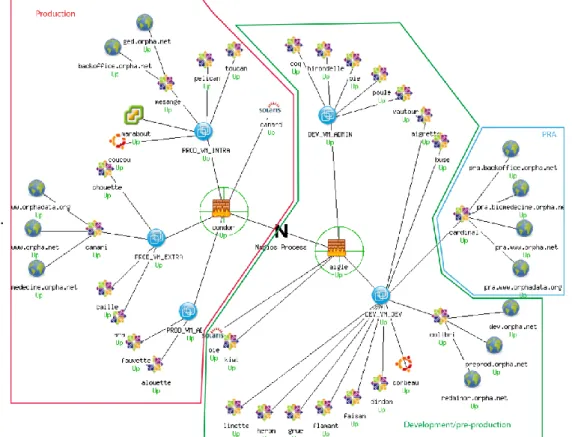
The production servers are located to the largest civil data centre in France, the CINES (Centre Informatique National de l’Enseignement Supérieur). To ensure structural security, the development servers are located in an INSERM building close to the CINES and linked to it by a fiber optic connection. This allows an excellent connectivity between production servers, development servers and backup environments. The architecture of the servers is represented in Figure 7.
Many production environments are in place: back office, pre-production, preservation and development environments. This makes the Activity Recovery Plan (PRA) of the Orphanet website highly efficient.
Back-office tools used by the coordinating team in France and other teams internationally are accessed through VPN (Virtual Private Network) servers and deployed VPN clients to the teams. No major problems were encountered in 2014 and the www.orpha.net website was highly available despite an increasing amount of visitors, which now reaches over 3 million pages viewed per month.
.
Fig. 7 The Orphanet IT architecture in 2014
3.3. Orphanet inventory of rare diseases
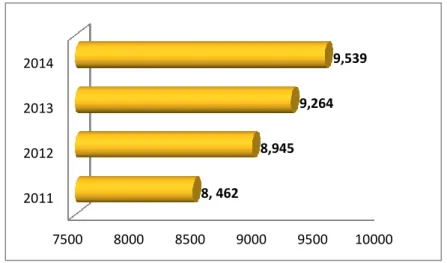
Orphanet provides a comprehensive inventory of rare diseases classified according to a polyhierarchical classification system of rare diseases. As new scientific knowledge issues arise, the Orphanet RD inventory and classification system is maintained with regular additions/updates of diseases employing two non-exclusive sources: documented sources and/or expert advice (Figure 8). The diseases database contains 9,539 diseases or groups of diseases and their synonyms as of 2014. This extensive and evolutionary system consists of classifications organised according to the medical
2014 Activity Report – Orphanet 15 and/or surgical speciality that manages specific aspects of each rare disease within a healthcare system. The diseases have been classified within each speciality according to clinical criteria or etiological criteria when diagnostically or therapeutically relevant. The Orphanet classification provides the scope and level of granularity needed by health professionals and can be viewed directly on the www.orpha.net website and/or extracted from Orphadata in XML format.
Fig. 8 Evolution of the inventory of RD since 2010
Within this classification entries are diseases, syndromes, anomalies, malformations, particular clinical situations, groups of diseases and disease sub-types. From 2014, each clinical entity is assigned precisely one of these categories, allowing more accurate information on their typology and exact number. Other precisions include updates on diseases now recognised as part of another disease. Orphanet redirects users towards the disease that is now accepted according to the literature.
Rare diseases are indexed with ICD-10 codes (see Table 2). This follows a set of rules depending on whether rare diseases are mentioned or not in the tabular list or in the index of ICD-10. Rules for attribution of an ICD-10 code for diseases that are not listed in the ICD are established. More details on the process can be found in Orphanet’s ICD-10 indexation procedure. The ICD-10 indexation is manually curated.
Indexation by clinical signs uses an in-house thesaurus of phenotypic terms and is carried out with the aim of supplementing the Orphanet assistance-to-diagnosis tool. For each phenotypic term associated with a rare disease, the frequency of its occurrence (very frequent, frequent and occasional) is annotated. The search facility to retrieve diagnoses through signs and symptoms is available for 2,689 RD as of 31 December 2014.
Disease ‘identity cards’ have been improved with additional mappings and indexations. Diseases are mapped to one or more OMIM numbers (please refer to table 2). Exact mappings between the Orpha nomenclature and other terminologies (UMLS, MeSH and MedDRA) are available online (see Table 1). Mappings to SNOMED-CT are produced in collaboration with IHTSDO and will be available upon request to IHTSDO. Mappings are carried out in a semi-automatic way and are manually curated. Updates follow every UMLS release.
7500 8000 8500 9000 9500 10000 2011 2012 2013 2014 8, 462 8,945 9,264 9,539
All mappings are qualified (exact; narrow-to-broad; broad-to-narrow) and information on the validation status is now available. Further annotations are carried out for ICD-10 terms: specific code, inclusion or index term, code attributed by Orphanet, with indication of the validation status.
Terminologies/resources Mapped diseases
UMLS 2,969
MeSH 1,816
SNOMED CT 2,725
MedDRA 1,229
OMIM 4,229
Table 1. Number of mapped diseases per terminology as of 31 December 2014
Codes Indexed diseases
ICD-10 6,657
Table 2. Number of indexed diseases with ICD-10 codes as of 31 December 2014
Information on epidemiological data is available. Disease hereditary patterns and age of onset categories have been refined for more accurate information. Prevalence, annual incidence, prevalence at birth and lifetime prevalence data are now available for download on www.orphadata.org, in addition to prevalence intervals already available. Minimum, maximum and mean figures for each item are documented according to geographic zones where the information is available. The number of cases or families reported in the literature is also indicated for very rare diseases. Data sources and validity are supplied for all these datas. These new epidemiological data are available for 4,726 rare diseases and constitute a unique and global source of information which we hope are useful to all concerned users, namely policymakers, the research community and industrial actors involved in orphan drug development.
3.3.1 ORPHANET RARE DISEASES ONTOLOGY
In January 2014 the Orphanet Rare Disease ontology (ORDO) was released on three websites Bioportal, Orphadata and the EBI Ontologies Lookup Service .
ORDO was jointly developed in 2013 by Orphanet and the European Bioinformatics Institute (EMBL-EBI) to provide a structured vocabulary for rare diseases capturing relationships between diseases, genes and other relevant features which will form a useful resource for the computational analysis of rare diseases. It is derived from the Orphanet database. It integrates a nosology (classification of rare diseases), relationships (gene-disease relations, epidemiological data) and connections with other terminologies (MeSH, UMLS, MedDRA), databases (OMIM, Universal Protein Resource Knowledgebase (UniProtKB), Human Genome Organisation Gene Nomenclature Committee (HGNC), ensembl, Reactome, IUPHAR, Genatlas) or classifications (ICD-10). The ontology is maintained by Orphanet and further populated with new data. Orphanet classifications can be browsed in the EBI's ontology lookup service (OLS) view. ORDO is updated monthly and follows the OBO guidelines on
2014 Activity Report – Orphanet 17 deprecation of terms. It constitutes the official ontology of rare diseases. ORDO Version 2.0 was launched at the end of 2014 to include new content from Orphanet including complete epidemiological data, mappings and genetic annotations as indicated below. The availability of such relationships between medical terminologies allows RDs to be used as a "pivot" to connect different biological, clinical or genetic ontologies. This interoperability allows to associate new contents and to establish new research hypothesis on data that were not initially related.
3.4 Orphanet inventory of genes
Genes involved in rare diseases are entered in the database and updated regularly according to new scientific publications. Genes are associated with one or more diseases, with one or more genetic tests, mutation databases and/or research projects. The data registered includes: indexation with the main name and symbol of the gene (from HGNC), its synonyms, and its HGNC, UniProtKB, Genatlas and OMIM references (in order to reference these websites). Moreover, genes are now cross-referenced with Ensembl (an EMBL-EBI database that maintains automatic annotations for selected eukaryotic genomes), Reactome (an EMBL-EBI open-source, open access, manually curated and peer-reviewed pathway database) and IUPHAR (International Union of Basic and Clinical Pharmacology) database. The relationship between a gene and a disease is qualified according to the role that the gene plays in the pathogenesis of a disease.
3.4.1 ADDITIONAL FUNCTIONALITIES IN 2014
Genetic entries have also been expanded to provide information on the typology of the gene (i.e. gene with protein product, non-coding RNA, disorder-associated Locus), its chromosomal location and all former symbols and synonyms. Genes are also annotated as causative, modifiers (both from germline or somatic mutations), major susceptibility factors, or playing a role in the phenotype (for chromosomal anomalies). For the disease-causing germline mutations the information, whether pertaining to a gain or loss of function for the protein, is also available. Candidate genes are also included but only when they are tested for in a clinical setting. These annotations represent a unique, added-value service for diagnostic and therapeutic research.
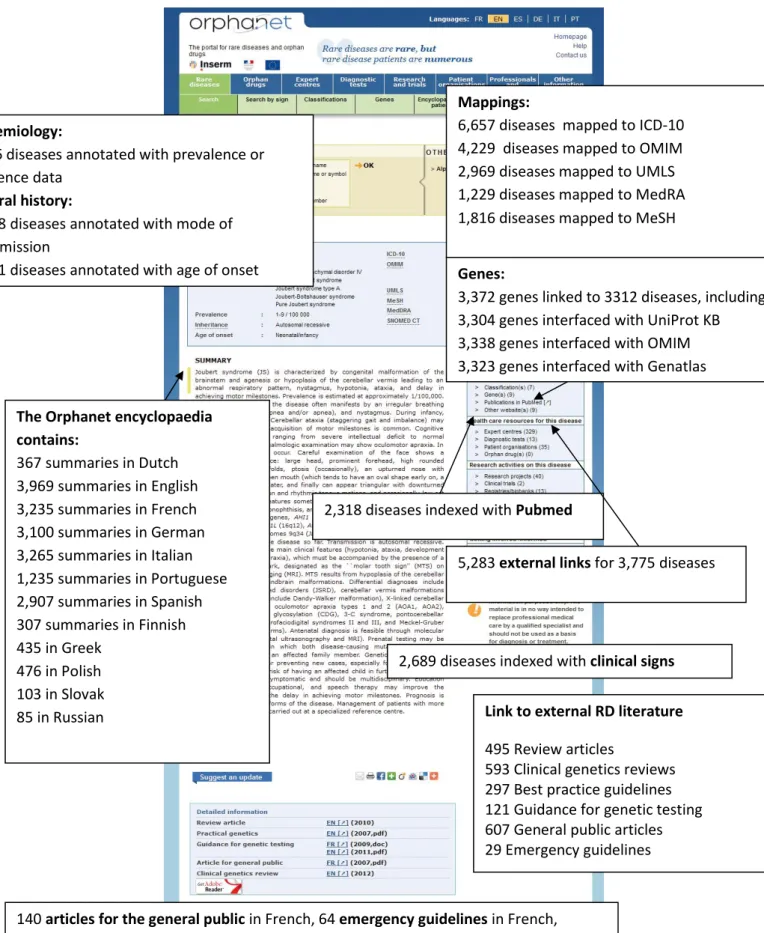
Fig. 9 The disease database content as of 31 December 2014
2,689 diseases indexed with clinical signs
2,318 diseases indexed with Pubmed Mappings:
6,657 diseases mapped to ICD-10 4,229 diseases mapped to OMIM 2,969 diseases mapped to UMLS 1,229 diseases mapped to MedRA 1,816 diseases mapped to MeSH
140 articles for the general public in French, 64 emergency guidelines in French, German, English, Spanish, Italian, Portuguese, and Polish. 24 Disabilities factsheets in French
5,283 external links for 3,775 diseases
The Orphanet encyclopaedia contains: 367 summaries in Dutch 3,969 summaries in English 3,235 summaries in French 3,100 summaries in German 3,265 summaries in Italian 1,235 summaries in Portuguese 2,907 summaries in Spanish 307 summaries in Finnish 435 in Greek 476 in Polish 103 in Slovak 85 in Russian Epidemiology:
4,726 diseases annotated with prevalence or incidence data
Natural history:
4, 508 diseases annotated with mode of transmission
4, 541 diseases annotated with age of onset
Link to external RD literature
495 Review articles
593 Clinical genetics reviews 297 Best practice guidelines 121 Guidance for genetic testing 607 General public articles 29 Emergency guidelines
Genes:
3,372 genes linked to 3312 diseases, including: 3,304 genes interfaced with UniProt KB 3,338 genes interfaced with OMIM 3,323 genes interfaced with Genatlas 3154 genes interfaced avec HGNC
3.5 Orphanet encyclopaedia
Three distinct encyclopaedias are provided on the Orphanet website: one for health professionals one for the general public and one related to disabilities.
3.5.1 HEALTH PROFESSIONALS ENCYCLOPAEDIA Summary information
The textual information on a disease can be provided as an abstract, definition or as automatically generated texts.
The Orphanet texts are unique, originally written in English by a member of the Paris-based editorial team and abstracts and definitions are reviewed by an invited world-renowned expert. Additional information on the diseases (i.e. annotations on epidemiological data, clinical signs, functional consequences of the disease, genes, etc.) is requested from the expert if not already documented in the database, or validation of the existing data is requested. Abstracts and definitions are structured in up to 10 sections : Definition of the disease – Epidemiology – Clinical description – Aetiology – Diagnostic methods – Differential diagnosis – Antenatal diagnosis (if relevant) – Genetic counselling (if relevant) – Management and treatment – Prognosis.
As of December 2014, summary information for 3,969 RD is available online.
They are systematically translated into the six other languages of the website (French, Italian, Spanish, German, Portuguese and Dutch). In addition, as of 31 December 2014, 307 abstracts are available in Finnish, 476 in Polish, 103 in Slovak and 435 in Greek. For additional 2661 entries in the disease inventory textual information is provided through automatically generated texts (for diseases labelled as a group of diseases, deprecated entries, subtype of disorders, particular clinical situation for which there is an orphan designation and conditions for which there is a pharmacogenetic test in the inventory).
Practical genetics articles
These articles are co-produced by Orphanet and the European Journal of Human Genetics (EJHG), the official journal of the European Society of Human genetics. Freely-accessible articles are published in the EJHG (Nature Publishing Group) and accessible from Orphanet.
Orphanet Emergency Guidelines
These guidelines are intended for pre-hospital emergency health care professionals (a dedicated section is included for their use) and for hospital emergency departments. These practical guidelines are produced in collaboration with French reference centres and patient organisations, and are peer-reviewed by emergency health care physicians from learned societies: 64 emergency guidelines in French are now online. They are being translated into six languages (English, German, Italian, Portuguese, Spanish and Polish). Currently, 21 emergency guidelines are available in English, 36 in Italian, 26 in German, 23 in Spanish, 19 in Portuguese, and 18 in Polish.
Fig. 10 Downloads of the emergency guidelines by language in 2014
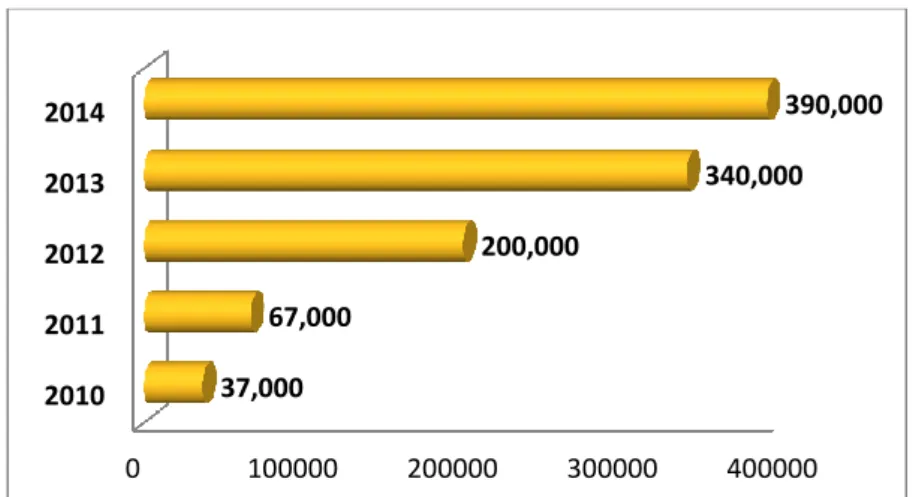
Emergency guidelines were viewed approximately 380,000 times in 2014, versus 340,000 in 2013, representing an increase of 11% in one year (figure 11).
The ratio of the number of consultations for each language to the number of guidelines shows that this collection is a success in several languages such as French, Italian, Spanish and Portuguese (figure 10). On the other hand, the disappointing number of consultations in English can be explained by the existence of a larger number of equivalent documents elsewhere in this language that are produced by learned societies. To avoid dissipation of time and work, Orphanet has established collaborations with these learned societies to provide links to these already existing and valuable resources (please refer to 0). In addition, consultation of the guidelines in Polish reached 9,000 downloads in 2014.
Fig. 11 Downloads of the emergency guidelines since 2010 in all languages
3.5.2 GENERAL PUBLIC ENCYCLOPAEDIA
The general public encyclopaedia was initially a French project intended to give complete, honest, and up-to-date information to patients and their relatives on the diseases that concern them.
0 2000 4000 6000 8000 10000 12000 14000 16000 German English Spanish French Italian Portuguese 0 100000 200000 300000 400000 2010 2011 2012 2013 2014 37,000 67,000 200,000 340,000 390,000
2014 Activity Report – Orphanet 21 Starting from 2011, the general public encyclopaedia texts have been enriched with paragraphs on functional consequences of rare diseases including: disabilities resulting from the disease, medical and social measures to prevent/limit them and consequences of these disabilities in daily life.
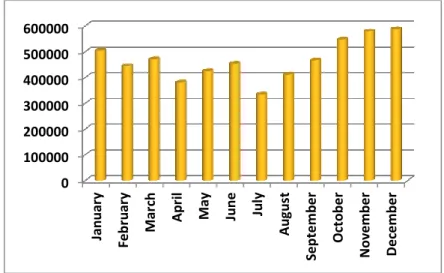
As of 31 December 2014, 140 in-house French texts are available online. Documents from this encyclopaedia are downloaded more than 467,000 times per month, which corresponds to more than 5.6 million downloads in 2014 (figure 13). This represents an increase of 25% compared to the 4.3 million downloads in 2013.
Fig. 12 Total number of downloaded Orphanet general public encyclopaedia texts in 2014
Fig. 13 Downloads of the general Public encyclopaedia since 2011
3.5.3 DISABILITIES ENCYCLOPAEDIA
As part of the collaboration between CNSA (French National Solidarity Fund for Autonomy) and INSERM, Orphanet now provides a new collection of texts named “disability factsheets” in the Orphanet Encyclopaedia of Disability devoted to the disabilities associated with each rare disease. This new collection is addressed to the professionals in the field of disability as well as to the patients and their families. These texts have been elaborated in order to better understand and to assess the needs of people with disabilities associated with a rare disease and to promote guidance and
0 100000 200000 300000 400000 500000 600000 Jan u ar y Feb ru ar y M ar ch A p ri l M ay Ju n e Ju ly A u gu st Se p te m b e r Oct o b e r N o ve m b e r D e ce m b e r 0 2000000 4000000 6000000 2011 2012 2013 2014 4,950,000 4,000,000 4,300,000 5,605,936
appropriate support in the national health care system as well as in the care and social support system.
Each text contains a description of the disease (adapted from the corresponding text from the Orphanet encyclopaedia for professionals) and a focus on disability-related measures and consequences in everyday life (taken from the corresponding text of the Orphanet general public encyclopedia).
These texts are available on the Orphanet website via the link "Disability factsheet" at the bottom of the page describing the disease as well as from the tabs "Encyclopaedia for professionals" and "Encyclopaedia for general public." 24 of these texts are available online since November 2013. They have been dowloaded approximately 20,000 times in 2014.
3.5.4 ADDITIONAL PRODUCTS IN 2014
Information on diagnostic criteria is presented in 13 concise documents intended to avoid serial misdiagnosis and facilitate early therapeutic management. This information is extracted from peer-reviewed journals and validated by international experts, with reference to the original paper given at the top of the page.
3.5.5 LINKS TO EXTERNAL RARE DISEASES LITERATURE
With the purpose of expanding the number of articles available online and to disseminate articles matching Orphanet’s quality criteria, the editorial team is also in charge of identifying articles suitable for publication on the website produced by other journals or learned societies. Authorisations from the copyright holder are requested so as to give access to the full text.
We can distinguish seven distinct externally produced texts accessible from the Orphanet website: Review articles
As of 31 December 2014, 495 review articles (excluding those published in the Orphanet Journal of Rare Diseases) were available on the website.
Clinical Genetics Review
These are peer-reviewed disease descriptions focus on genetic aspects with an implication in the diagnosis, management, and genetic counselling of patients and families with specific inherited conditions.
As of 31 December 2014, the clinical genetic review collection comprised 593 articles from GeneReviews.
Best practice guidelines
These guidelines are recommendations for the management of patients, issued by official organisations. There are two kinds of best practice guidelines: anaesthesia guidelines and clinical practice guidelines. They are both produced by learned societies and published either in scientific journals or on learned societies or health agency websites. A methodology of assessment has been
2014 Activity Report – Orphanet 23 developed to review the guidelines based on the AGREEII instrument in order to link only the most accurate ones. As of 31 December 2014, 297 best practice guidelines were available on the website. Guidance for genetic testing
This collection comprises summary recommendations intended to disseminate best practice in genetics testing. They include Gene Cards (published in the EJHG). As of 31 December 2014, 121 recommendations were available on the website.
Articles for general public
Publication of general public-intended texts, externally produced by expert centres or patient organisations (produced in compliance with a reliable methodology), in all languages are now selected.
607 articles are available on the website as of 31 December 2014. Emergency guidelines
Orphanet has established acollaboration with the British Inherited Metabolic Disease Group (BIMDG) to provide links to the emergency guidelines they produce. Currently 23 external emergency guidelines are available in English and in other languages.
Disabilities factsheets
21 additional disability factsheets in Danish are available produced by Sjaeldenborger the Danish Rare Diseases alliance.
Language External review articles Clinical genetics review Best practice guidelines Guidance for genetic testing General public articles English 392** 593 103 120 179 French 62 --- 91 1 22* German 5 --- 82 --- 33 Italian 33 --- 1 --- 24 Portuguese --- --- --- --- 6 Spanish 2 --- 16 --- 16 Dutch --- --- 2 --- 2 Hungarian --- --- 1 --- Greek 1 1 --- 5 Russian --- --- --- --- 5 Polish --- --- --- --- 2 Swedish --- --- --- --- 294 Arabic --- --- --- --- 4 Croatian --- --- --- --- 2 Czech --- --- --- --- 2 Finnish --- --- --- --- 13 Total 495 593 297 121 607
**including 213 OJRD reviews * not including the in-house produced
Table 4. Total number of Orphanet external content in 2014: type of text per language
3.6. Orphanet directory of expert resources
Orphanet provides a directory of:
Centres of expertise/genetic counselling clinics Medical laboratories Patient organisations Clinical trials Patient registries Mutation registries Biobanks
Ongoing research projects Platforms
Networks
Data is collected either from national official sources, or proactively from non-official sources by information scientists in each country. Data follows a validation process before publication, and is quality controlled. The aim of this multi-step process is to generate high-quality, accurate and robust data: complete, valid, consistent, unique, and uniform with other data of the database. For data from official sources, no pre-release validation is required, but quality control is performed. When issued from non-official sources, data is submitted to a pre-release validation process that is defined by each country following rules established at the national level and eventually with health authorities, to ensure data relevance for the rare disease community. A second round of validation is performed at the Orphanet coordination level against the criteria of relevance for rare diseases, coherence across the database and proper indexing with disease classification system. A third round of quality control is carried out on online published data following a process defined at national level (i.e. annual revision by the Scientific Advisory Board, or by competent authorities). At least once a year, professionals are invited to verify and update the expert resources they are involved in.
The 39 countries in which Orphanet collects data are the following:
Armenia, Austria, Belgium, Bulgaria, Canada, Croatia, Cyprus, Czech Republic, Denmark, Estonia, Finland, France, Georgia, Germany, Greece, Hungary, Ireland, Israel, Italy, Latvia, Lebanon, Lithuania, Luxembourg, Morocco, the Netherlands, Norway, Poland, Portugal, Romania, Serbia, Slovakia, Slovenia, Spain, Sweden, Switzerland, Tunisia, Turkey, the United Kingdom and Western Australia. Additionally, are collected from countries outside the consortium research-related activities (research projects, clinical trials, infrastructures, patient registries, biobanks and mutation databases) for which the funding bodies belong to the IRDIRC consortium (i.e. USA and South Korea).
Data collection and/or annual updates are managed either by the teams at country level when they have sufficient funding for a dedicated professional, or by the coordinating team on behalf of the Orphanet national team.
In 2014, all countries managed both data collection and updates at country level except: Bulgaria, Cyprus, Denmark, Georgia, Lebanon, Luxembourg, Norway, Romania and Turkey.
2014 Activity Report – Orphanet 25 The directory of expert resources in 39 countries in the Orphanet consortium contains the following data:
Fig.14 2014 Directory of expert resources in 39 countries
3.6.1 ADDITIONAL FUNCTIONALITIES IN 2014
It is now possible to indicate if an expert centre has two heads of clinic, and if it has both a medical management and genetic counselling role.
The research-related activities funded by an International Rare Diseases Research Consortium (IRDiRC) member as also marked with an IRDiRC logo.
3.6.2 DATA QUALITY VALIDATION OF MEDICAL LABORATORIES
Medical laboratories listed in Orphanet are those offering tests for the diagnosis of a rare disease or a group of rare diseases, and those performing genetic testing whatever the prevalence of the disease. Information on quality management for medical laboratories and diagnostic tests is provided in Orphanet. Medical laboratories can be accredited and this involves a procedure by which an authoritative body gives formal recognition that a body or person is competent to carry out a specific task (ISO 9000, 2000 Quality management systems – fundamentals and vocabulary). Moreover, medical laboratories can undergo an external quality assessment (EQA) whereby a set of reagents and techniques are assessed by an external source and the results of the testing laboratory are compared with those of an approved reference laboratory (WHO). This allows a laboratory to compare its performance for an individual test or technique against that of other laboratories.
Information on EQA participation is provided annually by Cystic Fibrosis Network, Cytogenetic European Quality Assessment Service (CEQAS) and European Molecular genetics Quality Network 2,562 patient organisations
2,959 Research laboratories
5,287 Research projects on 2,381 diseases
3,912 Clinical trials for 757 diseases 651 Patient
registries
616 Mutation databases
137 Biobanks
137 Biobanks
6,631 expert centres1,674 Medical laboratories dedicated to diagnosis 38,165 diagnostic tests
(EMQN) with the consent of the concerned laboratories. For other EQA providers, information is validated by Orphanet upon reception of an EQA participation certificate; otherwise the information provided on the Orphanet website is deemed ‘not validated’ and associated with a [!] sign.
3.7 Orphanet directory of orphan drugs
The list of orphan drugs includes all those substances that have been granted an orphan designation for a disease considered as rare in Europe, whether they were further developed to become drugs with marketing authorisation (MA) or not. The Orphanet database also includes drugs without an orphan designation as long as they have been granted a marketing authorisation issued by the European Medicines Agency (EMA - centralised procedure) with a specific indication for a rare disease. Some drugs (substance and/or trade name) are included in the database because they are tested in a clinical trial performed on a rare disease, but they do not have a regulatory status.
Drugs with a regulatory status in Europe are collected from reports issued by the two Committees of the EMA: the COMP (Committee for Orphan Medicinal Products) and the CHMP (Committee for Medicinal Products for Human use).
Orphan drugs are published on the Orphanet website, under the Orphan drugs tab and data is also released within an Orphanet Report Series that is updated every trimester.
The database of orphan drugs and substances contains the following data:
For Europe:
- 1219 substances linked to 1198 orphan designations (regarding 548 diseases).
- 187 European marketing authorisations (of which 83 already had an orphan designation and 104 had no previous without orphan designation) (regarding 199 diseases).
For the USA:
- 786 substances linked to 896 orphan designations (regarding 419 diseases)
- 193 USA marketing authorisations after orphan designation (regarding 187 diseases)
3.8 Orphadata
Since Orphanet is increasingly well-known as the reference source for documentation on rare diseases, a growing number of requests for its high quality data are received. To meet the needs of massive data extraction, Orphadata was created. Orphadata is intended to contribute to accelerating R&D and to facilitate the global adoption of the Orphanet nomenclature.
On this website, the whole Orphanet dataset has been directly accessible in a reusable format since June 2011. Orphadata was developed within the context of the Rare Diseases Portal project and the Orphanet Europe Joint Action contract funded by DG Santé. The dataset is a partial extraction of the data stored in Orphanet and is updated monthly.
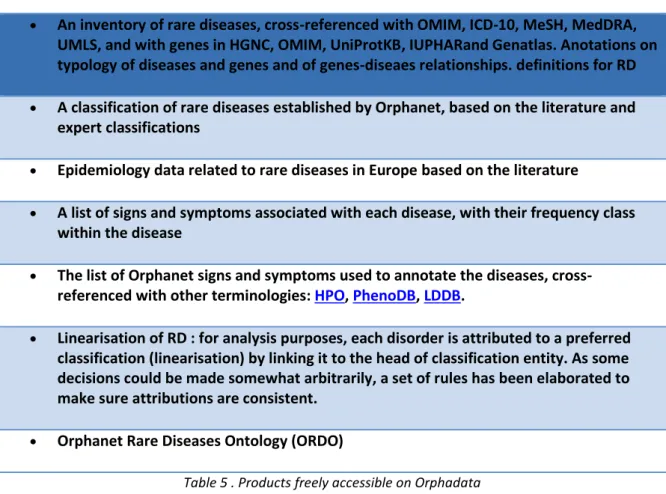
Freely accessible in six languages (English, French, German, Italian, Portuguese and Spanish) the Orphadata dataset encompasses:
2014 Activity Report – Orphanet 27 An inventory of rare diseases, cross-referenced with OMIM, ICD-10, MeSH, MedDRA,
UMLS, and with genes in HGNC, OMIM, UniProtKB, IUPHARand Genatlas. Anotations on typology of diseases and genes and of genes-diseaes relationships. definitions for RD
A classification of rare diseases established by Orphanet, based on the literature and expert classifications
Epidemiology data related to rare diseases in Europe based on the literature
A list of signs and symptoms associated with each disease, with their frequency class within the disease
The list of Orphanet signs and symptoms used to annotate the diseases, cross-referenced with other terminologies: HPO, PhenoDB, LDDB.
Linearisation of RD : for analysis purposes, each disorder is attributed to a preferred classification (linearisation) by linking it to the head of classification entity. As some decisions could be made somewhat arbitrarily, a set of rules has been elaborated to make sure attributions are consistent.
Orphanet Rare Diseases Ontology (ORDO)
Table 5 . Products freely accessible on Orphadata
Only non-nominative data are accessible in accordance with personal data protection laws. The dataset is updated once a month. The date of the last release is indicated.
An inventory of Orphan Drugs at all stages of development, from EMA orphan designation to market authorization, cross-linked with diseases.
Summary information on each rare disease in six languages (English, French, German, Italian, Spanish, Portuguese)
URLs of other websites providing information on specific rare diseases
A directory of specialised services, providing information on centers of expertise, medical laboratories, diagnostic tests, research projects, clinical trials, patient registries, mutation databases, biobanks and patient organizations in the field of rare diseases, in each of the countries in Orphanet network.
Table 6 . Products accessible on Orphadata after signature of a Data Transfer Agreement
Orphadata provides a guide for users that defines and describes the elements of the
dataset.
In 2014,
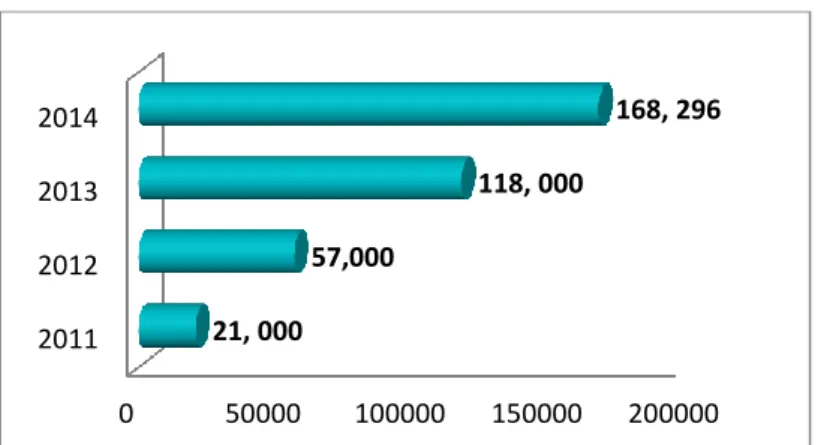
Orphadata products were downloaded more than 168,000 times
, with an
average of 14,000 times per month. This represents an increase of 800% since its release
mid-2011 (Figure 15).
Fig. 15 Number of downloads from the Orphadata website since mid-2011
The most requested Orphadata product is the inventory of diseases with clinical signs (figure 16).
Fig. 16.Distribution of the downloads of Orphadata datasets in 2014 a) Freely available datasets [total of 166933 downloads] b) Datasets accessible on demand [total of 1363 downloads]
3.8.1. ADDITIONAL FUNCTIONALITIES IN 2014
In late 2014, Orphadata provided access to Orphanet’s newly incorporated data (as described in the additional products in 2014 sections previously) and an updated user guide was also released online. 0 50000 100000 150000 200000 2011 2012 2013 2014 21, 000 57,000 118, 000 168, 296 20% 5% 21% 45% 6% 3% RD inventory and cross referencing Epidemiology Classifications Indexation of RD with Clinical signs Thesaurus of clinicla signs Indexation of RD with genes 23% 10% 10% 9% 6% 42% Encyclopaedia PO inventory Expert centres inventory Clinical labs inventory Orphan drugs inventory
2014 Activity Report – Orphanet 29
3.9. Orphanet Report Series
Orphanet Reports are a series of texts (ORS) providing aggregated data covering topics relevant to all rare diseases. New reports are regularly put online and are periodically updated. These texts are published as PDF documents accessible from the homepage and from every other page of the Orphanet’s website.
New versions of these publications are advertised in OrphaNews.
The ORS are heavily downloaded: in 2014, more than 2,250,000 ORS were consulted (table 7). This represents an increase of 34% compared to 2013 (approximately 1,675,000 downloads) (figure 17).
Title English French German Italian Portuguese Spanish Dutch
Activity Report 2012 52,275 1,542 n.a. 4,720 n.a. 5,327 n.a.
Activity Report 2013 86,737 9,732 n.a. 7,484 n.a. 3,670 n.a.
List of orphan drugs in Europe 153,747 39,760 n.a. 22,693 3,822 27,957 11,082 List of RD in alphabetical order 273,313 251,118 n.a. 38,155 7,636 152,367 n.a Prevalence of RD by alphabetical
list 158,346 39,857 19,222 17,816 15,711 68,784 n.a
Prevalence of RD by decreasing
prevalence or cases 47,044 33,453 9,788 12,983 25,040 35,150 n.a. Diseases registries in Europe 71,574 n.a. n.a. n.a. n.a. n.a. n.a. Research Infrastructures for RD
in Europe 15,592 n.a. n.a. n.a. n.a. n.a. n.a.
Table 7. Number of downloads of selected Orphanet Report Series in 2014 by language
n.a. ORS not available in this language
Comparison of the number of downloads of the ORS translated in all 6 languages shows that this collection is most heavily downloaded in English and French.
Fig. 17 Number of downloads of the Orphanet Report Series in all languages since 2010
0 500000 1000000 1500000 2000000 2500000 2010 2011 2012 2013 2014 570, 000 710, 000 810, 000 1, 675, 000 2, 250, 172
3.10. The Orphanews Newsletter
A literature review is performed twice a month in order to update the database and to collect news to report in OrphaNews, a bi-monthly electronic newsletter, to which the subscription is free. OrphaNews presents an overview of scientific and political news about rare diseases and orphan drugs. It is the communication tool of the Rare Disease community and is produced jointly by Orphanet and the Commission Expert Group on Rare Diseases through support provided by the EUCERD Joint Action, co-funded in the framework of the European Union Health Programme.
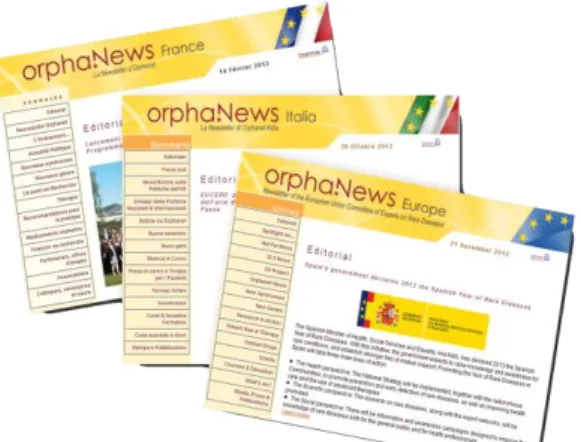
Fig. 18 Orphanews homepage
OrphaNews in English has more than 15,700 subscribers. Orphanews in French has more than 9,400 subscribers and OrphaNews in Italian has more than 4,600 subscribers.
3.11. Orphanet Journal of Rare Diseases
Orphanet Journal of Rare Diseases (OJRD) is an open access, online journal that encompasses all aspects of rare diseases and orphan drugs. The journal publishes high quality reviews on specific rare diseases. In addition, the journal may consider articles on clinical trial outcome reports, either positive or negative, and articles on public health issues in the field of rare diseases and orphan drugs. OJRD was indexed in Medline at the end of its first year of existence (2006) and was selected by Thompson Scientific after only two years in publication. Its current impact factor is 3.96. In 2014, 495 publications were submitted to the journal. Of these, 214 were accepted for publication.
4
Users
4.1.
Types of users and use
2014 Orphanet user satisfaction survey
An online survey was carried out for 5 weeks from 18 December 2014 to 22 January 2015. The satisfaction of the portal users was assessed by asking them to respond to a short online questionnaire.
The following results present the responses collected in all languages (Dutch, English, French, German, Italian, Portuguese and Spanish). For this analysis, the users who answered “other” in
2014 Activity Report – Orphanet 31 question 1 were not reattributed to another category. More results from this survey, with reattribution, will be available in the Orphanet Report Series dedicated to the 2014 survey.
Q
UESTION1
I
N WHAT CAPACITY ARE YOU CONSULTING THEO
RPHANET WEBSITETODAY?
P
LEASE SELECT A CATEGORY.
(N=3224)
Fig. 19 Distribution of the 2014 user survey respondents amongst the proposed categories
The largest category of respondents was the health professionals’ category (47%). The second largest category of respondents was patients and their entourage (including patient organisations, alliances and support groups) with 24% of responses.
Then, for each category, respondents were asked to choose the sub-category that would best describe them. The results for health care professionals (Fig. 20) and researchers (Fig. 21) are presented below. The majority of users in the health care professionals sub-category (Figure 20) were hospital specialists (40%), followed by general practitioners (12%). Experts in the field of rare diseases represented 4% of respondents to this question.
Health professional 47% Patient/entourage/ patient organisation 24% Research 4% Industry 1% Health care manager/ policy maker 1% Education/ communication 2% Student 16% Other 5%
Fig. 20 Distribution of the 2014 user survey respondents in the health care professional category
The majority of users coming from the field of research (Figure 21) were academic, clinical researchers (40%), with those working in basic research also fairly well represented (19%).
Fig. 21 Distribution of the 2014 user survey respondents in the research category
Q
UESTION2
H
OW OFTEN DO YOU VISITO
RPHANET?
(
N=3151)
Over 75% of those who answered this survey are regular users whereas 25% were visiting Orphanet for the first time.
Hospital specialist 40% General practitioner 12% Independent specialist 8% Expert in rare diseases 4% Public health services 4% Health service / health insurance 2% Other healthcare professionals 30% Academic/ clinical researcher 40% Academic/basic researcher 19% Industry researcher 10% Bioinformatician 8% Health economist 3% Social sciences 2% Other 18%
2014 Activity Report – Orphanet 33
Q
UESTION3
W
HAT SORT OF INFORMATION ARE YOU LOOKING FOR DURINGTHIS
CONNECTION
TOO
RPHANET?
(
N=3136)
As in previous years, most users are looking for information on a specific rare disease (87% of respondents). They are also looking for information on rare diseases in general, followed closely by information on expert services including laboratory tests (16%), specialist clinics (12%), research projects (12%), as well as clinical trials (11%) and patient organisations (10%).
Fig. 22 Information sought on Orphanet by the 2014 user survey respondents
Q
UESTION6
H
AVE YOU DOWNLOADED THEO
RPHANET APPLICATION?
(
N=3113)
Answer options Response percent Response count
Yes 7,1% 222
No 92,9% 2891
Table 8. Download of the Orphanet application by the 2014 user survey respondents
The respondents accessing Orphanet via a mobile device to whilst answering the survey
have increased from 10 to 15% in the past year. This reflects the trends identified with
Google Analytics concerning the increase in use of the site via mobile devices. However,
only a small percentage of respondents have downloaded the Orphanet mobile
application suggesting that most users a majority of mobile device users navigate the site
via a traditional web browser.
29 56 66 97 104 144 234 310 341 368 382 503 675 2746 0 500 1000 1500 2000 2500 3000
Visit to register your activity in Orphanet Don’t know – just curious Information on the newsletter Information on the Orphanet project Information on registries Other Information on orphan drugs in general Information on patient organisations Information on clinical trials Information on research projects Information on specialist clinics Information on laboratory tests Information on rare diseases in general Information for a specific disease
Q
UESTION8
H
OW USEFUL AREO
RPHANET’
S PRODUCTS FOR YOUR OWN USE?
(
N=2852)
The usefulness of Orphanet products was evaluated through this question. Only one response was possible for each product. The results show that Orphanet products are highly appreciated, but some are not sufficiently well known, in particular the more recent products, such as the Orphanet Rare Disesases Ontology and Orphadata.
Orphanet product Very
useful Useful Fairly useful Not useful No opinion I didn’t know Orphanet offered this service Texts on diseases 1636 691 179 18 62 153
List of diseases and classifications 1527 689 158 31 96 273
Emergency guidelines 768 565 302 99 256 624
Search by sign facility 750 602 278 98 236 639
Orphanet Report Series on epidemiology of Rare Diseases
628 582 261 67 253 731
Directory of patient organisations 621 621 386 107 294 530
Directory of medical laboratories 585 498 350 147 315 649
Directory of clinics 547 549 373 109 315 662
Directory of orphan drugs 530 559 279 120 346 664
Directory of clinical trials 518 578 370 112 313 645
Directory of research projects 517 595 371 105 322 633
Orphanet Report Series on Orphan Drugs 445 491 260 93 345 838
Orphanet national websites 414 470 269 80 380 845
OrphaNews newsletter 341 375 276 105 403 947
Directory of registries 336 515 339 131 416 737
Orphadata (downloadable Orphanet datasets)
317 331 211 76 362 1168
ORDO: Orphanet Rare Diseases ontology 262 308 218 75 415 1159
Table 9. Opinion of the 2014 user survey respondents on the utility of Orphanet products for their needs (all languages except Dutch)
2014 Activity Report – Orphanet 35 64% 65% 66% 69% 69% 69% 69% 70% 72% 72% 73% 73% 77% 78% 79% 92% 92% 0% 20% 40% 60% 80% 100% Directory of registries OrphaNews newsletter ORDO: Orphanet Rare Diseases ontology Directory of medical laboratories Orphadata (downloadable Orphanet datasets) Directory of clinics Directory of clinical trials Directory of research projects Directory of patient organisations Orphanet national websites Orphanet Report Series on Orphan Drugs Directory of orphan drugs Emergency guidelines Search by sign facility Orphanet Report Series on epidemiology of Rare Diseases List of diseases and classifications Texts on diseases
The usefulness of Orphanet’s products for the needs for those answering the survey were calculated using the percentage of ‘very useful’ and ‘useful’ replies. The ‘no opinion’ and ‘I didn’t know Orphanet offered this service’ answers were subtracted from the total results to calculate this percentage to more faithfully represent the utility of the products, according to those aware of the services.
Fig. 22 Most useful Orphanet products in the opinion of the 2014 user survey respo