8-2019
Algorithmic Discrimination Is an Information
Problem
Ignacio N. Cofone
Follow this and additional works at:
https://repository.uchastings.edu/hastings_law_journal
Part of the
Law Commons
This Article is brought to you for free and open access by the Law Journals at UC Hastings Scholarship Repository. It has been accepted for inclusion in Hastings Law Journal by an authorized editor of UC Hastings Scholarship Repository. For more information, please contact
Recommended Citation
Ignacio N. Cofone,Algorithmic Discrimination Is an Information Problem, 70 Hastings L.J. 1389 (2019). Available at: https://repository.uchastings.edu/hastings_law_journal/vol70/iss6/1
[1389]
Articles
Algorithmic Discrimination Is an Information
Problem
IGNACIO N.COFONE†
While algorithmic decision-making has proven to be a challenge for traditional antidiscrimination law, there is an opportunity to regulate algorithms through the information that they are fed. But blocking information about protected categories will rarely protect these groups effectively because other information will act as proxies. To avoid disparate treatment, the protected category attributes cannot be considered; but to avoid disparate impact, they must be considered. This leads to a paradox in regulating information to prevent algorithmic discrimination. This Article addresses this problem. It suggests that, instead of ineffectively blocking or passively allowing attributes in training data, we should modify them. We should use existing pre-processing techniques to alter the data that is fed to algorithms to prevent disparate impact outcomes. This presents a number of doctrinal and policy benefits and can be implemented also where other legal approaches cannot.
† Assistant Professor, McGill University, Faculty of Law. [email protected]. I’m indebted to Ian Ayres, Jack Balkin, Miriam Buiten, Richard Gold, Claudia Haupt, Ido Kilovaty, Joshua Kroll, David Lehr, Amanda Levendowski, Yafit Lev-Aretz, Asaf Lubin, Mark MacCarthy, Ethan Macdonald, John Nay, Helen Nissenbaum, Madelyn Sanfilippo, Andrew Selbst, Julia Powles, Adriana Robertson, Clare Ryan, Colleen Sheppard, Katherine Strandburg, Felix Wu, and Angela Zorro Medina for their helpful comments to different versions of this piece. This Article also benefited from comments received at the Privacy Law Scholars Conference and internal presentations at the NYU Privacy Research Group and the Yale Law School Information Society Project. I also thank Fonds de Recherche du Québec for their financial support, the editors at the Hastings Law Journal for their excellent editorial work, and Ana Qarri and Michael Beauvais for their outstanding research assistance.
TABLE OF CONTENTS
INTRODUCTION ... 1391
I.
ALGORITHMS CAN DISCRIMINATE ... 1394
A. KNOWLEDGE-BASED,MACHINE LEARNING, AND DEEP LEARNING ... 1394
B. THE UNFULFILLED PROMISE OF UNBIASED DECISION-MAKERS ... 1396
C. BIASED PROCESS ... 1399
D. BIASED SAMPLE DATA ... 1402
E. DATA THAT REFLECT A BIASED SOCIETY ... 1404
II.
AN INFORMATION APPROACH TO ALGORITHMIC DISCRIMINATION .... 1406
A. PRIVACY RULES THAT PREVENT DISCRIMINATION ... 1406
B. WHY PRIVACY RULES ARE ESPECIALLY SUITED FOR ALGORITHMS ... 1408
C. IT IS ALL IN THE DATA ... 1410
D. THE KEY CHALLENGE FOR PRIVACY RULES:THE ENDLESS LINE OF PROXIES OBJECTION ... 1412
III.
FOCUS ON DATA REGULATION,NOT ALGORITHMIC REGULATION ... 1416
A. NOT ALL PROXIES ARE BAD PROXIES ... 1416
B. WHEN TO BLOCK INFORMATION DESPITE PROXIES ... 1419
C. LEARNING FROM UTOPIA:SHAPING THE DATA ... 1421
D. ACTIONABLE PRIVACY:ENCODING THE DATA ... 1424
IV.
DOCTRINAL AND POLICY CONSEQUENCES ... 1427
A. OVERCOMING THE DISPARATE-IMPACT-DISPARATE-TREATMENT TENSION ... 1427
B. THE ANTISUBORDINATION PRINCIPLE IN ALGORITHMIC DISCRIMINATION ... 1431
C. AN ALTERNATIVE TO THE ALGORITHMIC FAIRNESS IMPOSSIBILITY ... 1433
D. AVOIDING ALGORITHMIC OPACITY ... 1436
E. THE VALUE AND COST OF EX-ANTE REGULATION ... 1440
INTRODUCTION
Algorithmic decisions affect everyone, often without their knowledge. Increasingly, algorithms make impactful decisions for people’s daily lives, from determining whether someone will receive a loan,1 to determining the type of
healthcare a person will receive,2 to predicting whether someone should be
granted parole.3 While, thirty years ago, decisions that shaped people’s lives
were made by other people, key decisions in finance, criminal law, employment, health, politics, and online speech, to name just a few, are increasingly made by machines.4 For example, for the question “will this candidate be a good
borrower?” an algorithm compares his or her characteristics with the characteristics of those who have paid their debts. For “will this person recidivate if given parole?” it compares his or her characteristics with those that recidivated during parole.
Algorithmic decision-making offers multiple benefits to society.5 For
many tasks, algorithms surpass human abilities, and the set of those tasks is constantly expanding.6 Given their potential, the ideal is thus not to ban
algorithms, but to regulate them appropriately.7 To help us learn how to do so,
this Article focuses on one of the central promises that comes with a change from human to algorithmic decision-makers: a decrease in the prevalence of bias and discrimination.8 The promise that is often attached to these systems is that,
1. FRANK PASQUALE, THE BLACK BOX SOCIETY:THE SECRET ALGORITHMS THAT CONTROL MONEY AND INFORMATION 4–6 (2015).
2. HANNAH FRY, HELLO WORLD:BEING HUMAN IN THE AGE OF ALGORITHMS 109–12 (2018). 3. Id. at 54–56.
4. AJAY AGRAWAL ET AL., PREDICTION MACHINES: THE SIMPLE ECONOMICS OF ARTIFICIAL INTELLIGENCE 1–5 (2018); VIRGINIA EUBANKS, AUTOMATING INEQUALITY:HOW HIGH-TECH TOOLS PROFILE, POLICE, AND PUNISH THE POOR 9–10 (2018).
5. Benjamin Alarie, The Path of the Law: Towards Legal Singularity, 66 U.TORONTO L.J. 443, 450–51 (2016).
6. Vasant Dhar, Should We Regulate Digital Platforms?, 5 BIG DATA 277 (2017); Vasant Dhar, When to Trust Robots with Decisions, and When Not to, HARV.BUS.REV. (May 17, 2016), https://hbr.org/2016/05/when-to-trust-robots-with-decisions-and-when-not-to. There seems to be a limitation to this principle: those processes that are automated within ourselves. If you ask a computer and a human to make a simple algebra calculation such as the square root of eighty-seven, the computer will obviously be able to do this faster. But if you grab and throw a ball and ask a human and a robot designed for this purpose to catch it, you will find that no robot exists so far that can do this as well as an average person. The distinction between one process and the other is normally referred to as a distinction between System 1 and System 2. See Keith E. Stanovich & Richard F. West,
Individual Differences in Reasoning: Implications for the Rationality Debate, 23 BEHAV.BRAIN SCI. 645, 658 (2000); Jonathan St. B. T. Evans, Dual-Processing Accounts of Reasoning, Judgment, and Social Cognition, 59 ANN.REV.PSYCHOL. 255 (2008); see also IN TWO MINDS:DUAL PROCESSES AND BEYOND, (Jonathan St. B. T. Evans & Keith Frankish eds., 2009).
7. See Andrew D. Selbst, A Mild Defense of Our New Machine Overlords, 70 VAND.L.REV.EN BANC 87, 87–89 (2017) (arguing that we need a realistic picture of what humans and machines can accomplish, which includes being aware of machines’ defects but also seeing where machines can improve human decision-making). Cf. Andrew Tutt, An FDA for Algorithms,69ADMIN.L.REV.83,92–104 (2017) (describing the advantages, disadvantages, and likely future implications using algorithms).
8. CATHY O’NEIL, WEAPONS OF MATH DESTRUCTION:HOW BIG DATA INCREASES INEQUALITY AND THREATENS DEMOCRACY 1–13 (2016).
while bias and prejudices plague us humans, algorithms are impartial, fair, and unbiased decision-makers.9
This promise has gone unfulfilled. Researchers continue to find that algorithms disproportionately disadvantage members of vulnerable minorities.10
This makes it crucial to determine when algorithmic decisions are discriminatory and, especially given concerns about the effectiveness of traditional remedies that flow from discrimination, explore how to prevent their discriminatory outcomes. Given the increasing prevalence of algorithms in socially significant decisions, making progress on this front stands to change the daily lives of thousands of citizens.
Traditional antidiscrimination law deals with the regulation of (human) behavior around the use of information about others as the basis for discriminatory practices.11 There is, however, benefit from additionally
regulating the acquisition of such information.12 Information rules, or privacy
rules, that prevent a decision-maker from knowing the potentially discriminatory information, can prevent them from discriminating in the first place.13
This Article explores the relevance of this idea for artificial intelligence (A.I.) discrimination.14 There is a growing body of literature that examines the
social problems generated by algorithmic bias, the ethical dilemmas introduced by A.I., and whether the use of A.I. should be limited against disadvantaged groups,15 but the role that the law can take in shaping how these systems are
formed to reduce such harm remains under-explored. While a rich body of legal literature to date has focused on the potential harms that the increased reliance on A.I. poses, little has been said about how the law can prevent these harms.16
9. But see infra Subpart I.B.
10. See, e.g., EUBANKS, supra note 4 at 9; SAFIYA UMOJA NOBLE, ALGORITHMS OF OPPRESSION:HOW SEARCH ENGINES REINFORCE RACISM 1–3 (2018); see also Mary Madden et al., Privacy, Poverty, and Big Data: A Matrix of Vulnerabilities for Poor Americans, 95 WASH.U.L.REV. 53, 64–67 (2017) (making a similar argument for big data).
11. Ignacio N. Cofone, Antidiscriminatory Privacy, 72 SMUL.REV.139,140–141 (2019).
12. Jessica L. Roberts, Preempting Discrimination: Lessons from the Genetic Information Nondiscrimination Act, 63 VAND.L.REV.439, 483–84 (2010) [hereinafter Preempting Discrimination]; Jessica L. Roberts, Protecting Privacy to Prevent Discrimination, 56 WM.&MARY L.REV. 2097, 2147–56 (2014) [hereinafter Protecting Privacy]. See Anupam Datta et al., Correspondences Between Privacy and Nondiscrimination: Why They Should be Studied Together (2018), https://arxiv.org/pdf/1808.01735.pdf (showing that key aspects of privacy and nondiscrimination mirror each other at a formal level).
13. See generally Cofone, supra note 11.
14. Here, I refer to machine learning discrimination and A.I. discrimination indistinctly. See Ignacio N. Cofone, Servers and Waiters: What Matters in the Law of A.I., 21 STAN.TECH.L.REV. 167, 179 (2018) (arguing that, for the problem of non-contractual harms, the law should treat robots, A.I. agents, and algorithms indistinctly).
15. See, e.g.,Melissa Hamilton, The Biased Algorithm: Evidence of Disparate Impact on Hispanics, 56 AM.CRIM.L.REV.(forthcoming 2019);Joshua A. Kroll et al., Accountable Algorithms, 165 U. PA. L.REV. 633 (2017); Madden et al., supra note 10.
16. Amanda Levendowski, How Copyright Law Can Fix Artificial Intelligence’s Implicit Bias Problem, 93 WASH.L.REV. 579, 587 (2018). Amanda Levendowski has addressed this effort in the cited article, exploring how copyright law can be used for these purposes. See id. at 619–30 (arguing that copyright law is the most powerful branch of law impacting AI bias and offering solutions through the doctrine of fair use); see also
In particular, as David Lehr and Paul Ohm write, “almost all of the significant legal scholarship to date has focused on the implications of the running model . . . and has neglected most of the possibilities and pitfalls of playing with the data.”17 This proliferation of scholarship has led the A.I. Now Institute to
state that “[t]he question is no longer whether there are harms and biases in A.I. systems. That debate has been settled: the evidence has mounted beyond doubt . . . . [t]he next task now is addressing these harms.”18 In a similar vein, a
White House report from 2016 called for “manag[ing A.I.’s] risks and challenges . . . [in] ensur[ing] that everyone has the opportunity . . . to participate in its benefits,”19 and called for “equal opportunity by design.”20
Recent literature has shown that algorithmic discrimination works differently from purely human discrimination.21 However, while it is true that
human and algorithmic discrimination differ in many ways, they have a similar underlying information dynamic. The crucial task in preventing discrimination through information rules in both cases is identifying not only information about the protected category, but also information that acts as proxies for the protected category.22 Antidiscriminatory information rules must focus on the information
that can be used as proxies to shift discrimination to other groups,23 both for
human and machine discrimination.
For both forms of discrimination, information rules can offer short-term protection from discrimination by altering the data that the law deems harmful to use in a decision-making process. In this way, information rules can aid antidiscriminatory efforts. However, this altering of the data works differently for algorithms than it does for humans.24 For algorithms, the solution is neither
more data nor less data. It is more meaningful data. And more meaningful data means, counterintuitively, a data sample that is unrepresentative of the pool, because it looks like what we believe the pool would look like had it not embedded structural inequalities.
Because of the difficulties that it poses to antidiscrimination law, antidiscriminatory information rules are particularly useful to address
Matthew T. Bodie et al., The Law and Policy of People Analytics, 88 U.COLO.L.REV. 961, 1007–14 (2017).
See generally Margaret Hu, Algorithmic Jim Crow, 86 FORDHAM L.REV. 633 (2017).
17. David Lehr & Paul Ohm, Playing with the Data: What Legal Scholars Should Learn About Machine Learning, 51 U.C.DAVIS L.REV. 653, 655 (2017).
18. MEREDITH WHITTAKER ET AL., AINOW REPORT 2018 42 (2018).
19. NAT’L SCI.&TECH.COUNCIL,EXEC.OFFICE OF THE PRESIDENT,PREPARING FOR THE FUTURE OF ARTIFICIAL INTELLIGENCE (Oct. 2016).
20. EXEC.OFFICE OF THE PRESIDENT,BIG DATA:AREPORT ON ALGORITHMIC SYSTEMS,OPPORTUNITY, AND CIVIL RIGHTS (May2016).
21. Solon Barocas & Andrew D. Selbst, Big Data’s Disparate Impact, 104 CALIF.L.REV. 671, 673–76 (2016); Pauline T. Kim, Big Data and Artificial Intelligence: New Challenges for Workplace Equality, 57 U. LOUISVILLE L.REV.313,321 (2019) [hereinafter Big Data and Artificial Intelligence]; Pauline T. Kim, Data-Driven Discrimination at Work, 58 WM.&MARY L.REV. 857, 860-61 (2017) [hereinafter Data-Driven Discrimination].
22. Cofone, supra note 11, at 151–58. 23. Id.
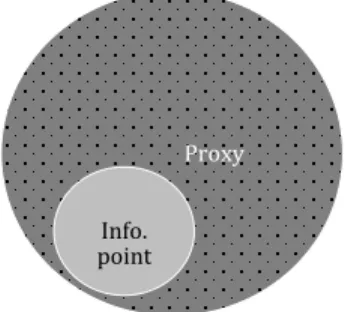
algorithmic discrimination. The algorithmic discrimination literature identifying these harms and challenges has so far brought useful legal approaches to an information problem (the problem of an information point being misused). This Article takes a different but complementary approach, and proposes that we must also establish an information solution to the informational problem that is algorithmic discrimination.
Part I explains the difference between knowledge-based, machine learning and deep learning algorithms, as well as the different ways in which these algorithms can lead to discriminatory outcomes: bias in the process, bias in the sample data, and social bias reflected in the data. Part II introduces the idea of an information approach to reduce discrimination. It explains how the law deploys such approach for human decision-makers and the specific challenges in applying this approach to algorithms. Part III develops how the information approach can be used with algorithmic decision-making. It separates between reducing, expanding, and transfer proxies, and it argues that we can and should deploy pre-processing techniques to either encode or shape training data. Part IV analyzes the doctrinal consequences of such a proposal: it overcomes the algorithmic fairness impossibility and the tension between disparate impact and disparate treatment in antidiscrimination law, it avoids the problem of algorithmic opacity to apply antidiscrimination measures, and it reaps the benefit of ex-ante regulation as a complement to ex-post liability.
I. ALGORITHMS CAN DISCRIMINATE
It is as dangerous as it is inaccurate to believe that, because algorithmic decision-making is computational, it cannot discriminate. Algorithms can be classified in knowledge-based and machine learning, which is the type this Article is centrally concerned with. These (machine learning) algorithms present the unfulfilled promise of unbiased decisions. The resulting discrimination can be classified along three categories. There can be bias among the people who create the algorithm that gets translated into the data-processing mechanism, there can be bias in the sample that is used by the algorithm, and there can be data that have inequality embedded in a way that leads to disparate impact. The first is a bias in the process, the second is a bias in the input (sample), and the third is a societal bias captured in representative data.
A. KNOWLEDGE-BASED,MACHINE LEARNING, AND DEEP LEARNING
Knowledge-based systems are traditional algorithms, which work when a computer scientist designs a list of decision rules for the algorithm to walk data points through, and can be visualized in the form of a flowchart. Machine
learning algorithms, on the other hand, extract those rules from their training data.25
Machine learning is a way of training an algorithm. While it became popular in the mid-2000s, its first definitions appeared much earlier. In 1959, Arthur Samuel notably called it an algorithm’s “ability to learn without being explicitly programmed.”26 While knowledge-based algorithms are built on
decision trees and detailed instructions indicating how to process data, machine learning algorithms are given large amounts of data with output variables for the algorithm to self-adjust. Instead of determining decision rules, human intervention is limited to selecting features for the training data and attaching labels to the output data.27 There are many ways to do this, such as decision tree
learning, reinforcement learning, clustering, and Bayesian networks.28
Regardless of the mode in which the algorithm learns, the characteristic that is central to our purposes is that the model can learn decision rules.
Deep learning is a type of machine learning that became popular in 2012.29
Deep learning uses a layered structure called an artificial neural network, which simulates a biological brain’s neural network.30 Like other forms of machine
learning, deep learning algorithms collect training data, learn from it, and then apply what they learned to larger datasets to determine or predict something about reality. The difference is that, whereas machine learning requires feature selection, deep learning has automatic feature extraction. The algorithm engages in its own feature selection, adding layers of features that are used to map real-world data to a specific outcome.31 That is, they adjust the weight given to each
neuron and type of information.32 This means that deep learning does not require
a data scientist to intervene where its predictions are unsatisfactory—the neural network will make decisions about how its approach should change.33 For
example, self-driving cars use deep learning algorithms to recognize obstacles. The more that you “drive” your self-driving car, the better it will get at recognizing obstacles. While deep learning is not currently used in decision-making applications as are other machine learning models, it is by no means a
25. Karen Hao, What is Machine Learning? We Drew You Another Flowchart, MITTECH.REV.(Nov. 17, 2018), https://www.technologyreview.com/s/612437/what-is-machine-learning-we-drew-you-another-flowchar t/.
26. MARIETTE AWAD,RAHUL KHANNA, EFFICIENT LEARNING MACHINES:THEORIES,CONCEPTS, AND APPLICATIONS FOR ENGINEERS AND SYSTEM DESIGNERS 1(2015); A. L. Samuel, Some Studies in Machine Learning Using the Game of Checkers, 3 IBMJ.RES.DEV. 210 (1959).
27. Sandra G. Mayson, Bias In, Bias Out, 128 YALE L.J. 2218, 2225 (2019). 28. FRY, supra note 2, at 56–59.
29. Dave Gershgorn, The Data that Transformed AI Research—and Possibly the World, QUARTZ (July 26, 2017), https://qz.com/1034972/the-data-that-changed-the-direction-of-ai-research-and-possibly-the-world/.
30. See Lehr & Ohm, supra note 17, at 670.
31. IAN GOODFELLOW ET AL.,DEEP LEARNING 8(2016). 32. Id.
33. Id. (“Deep learning is a particular kind of machine learning that achieves great power and flexibility by representing the world as a nested hierarchy of concepts, with each concept defined in relation to simpler concepts, and more abstract representations computed in terms of less abstract ones.”).
stretch of the imagination to see it increasingly applied to decision-making in the near future.
B. THE UNFULFILLED PROMISE OF UNBIASED DECISION-MAKERS
Algorithmic decision-making is sometimes taken to imply that the prevalence of biases for discrimination decreases. While we humans are flawed and, even when well-meaning, host a wide array of implicit biases, algorithms are often presented as fairer and unbiased decision-making agents.34
However, in the last few years, piles of documented cases have appeared regarding decision-making processes in which algorithms also produce a discriminatory outcome—even assuming no discriminatory intent.35 Examples
of this exist in almost any area of decision-making, but perhaps the most prevalent are criminal procedure and employment.
The first example, as well-known as it is illustrative, pertains to criminal procedure. A few years ago, Northpointe (now called Equivant) developed a risk assessment algorithm called COMPAS to use as a recidivism indicator: the algorithm was designed to predict the likelihood of a person to re-offend within two years.36 COMPAS is widely used to predict the likelihood that people who
have been arrested will commit future crimes, and to determine parole. In a now classic article, ProPublica accused COMPAS of producing racially biased results, having almost twice as many false positives for black defendants than for white defendants and more frequent false negatives for white defendants than for black defendants.37 In other words, the algorithm mistakenly identified as
high risk twice as many black individuals than it did white individuals, and
34. There are many academic references that illustrate this position but perhaps the most interesting illustration is one of popular culture. In the movie, MONEYBALL (Columbia Pictures 2011), Billy Beane (Brad Pitt) was hired to help choose baseball players for a team. At the beginning of the movie, there is a scene in which he observes the previous coaches choose the next player based on factors such as whether they look confident, are good looking, or have a girlfriend. Beane condescendingly suggests, instead, to have an “automated” process based on the performance statistics of each player. This is presented in the movie, and outside of it, as a fair and impartial process—and more often than not, it is one.
35. Barocas & Selbst, supra note 21; Toon Calders & Indrė Žliobaitė, Why Unbiased Computational Processes Can Lead to Discriminative Decision Procedures, in DISCRIMINATION AND PRIVACY IN THE INFORMATION SOCIETY:DATA MINING AND PROFILING IN LARGE DATABASES 43, 55–56 (Bart Custers et al. eds., 2013); Nizan Geslevich Packin & Yafit Lev-Aretz, Learning Algorithms and Discrimination, in RESEARCH HANDBOOK ON THE LAW OF ARTIFICIAL INTELLIGENCE (Woodrow Barfield & Ugo Pagallo eds., 2018); Danielle Keats Citron & Frank Pasquale, The Scored Society: Due Process for Automated Predictions, 89 WASH.L.REV. 1, 8–18 (2014); Tal Z. Zarsky, An Analytic Challenge: Discrimination Theory in the Age of Predictive Analytics, 14 I/S: J.L.&POL’Y INFO.SOC’Y 11, 15–22 (2017).
36. Tim Brennan et al., Evaluating the Predictive Validity of the COMPAS Risk and Needs Assessment System, 36 CRIM.JUST.&BEHAV. 21, 22–24 (2009).
37. Julia Angwin et al., Machine Bias: There’s Software Used Across the Country to Predict Future Criminals. And it’s Biased Against Blacks,PROPUBLICA (May 23, 2016), https://www.propublica.org/article/ machine-bias-risk-assessments-in-criminal-sentencing (finding the false positives to be 23.5% for white defendants and 44.9% for black defendants, and finding the false negatives to be 47.7% for white defendants, and 28.0% for black defendants); Jeff Larsen et al., How We Analyzed the COMPAS Recidivism Algorithm, PROPUBLICA (May 23, 2016), https://www.propublica.org/article/how-we-analyzed-the-compas-recidivism-algorithm.
mistakenly identified as low risk more white individuals than it did black individuals.38 Since then, dozens of papers have been written criticizing
COMPAS. 39
COMPAS is not the only algorithm to have a disparate impact when making risk assessment predictions. A different risk assessment algorithm, used at the federal level to make probation decisions, was also found to give a higher average score of post-conviction risk assessment to black individuals.40 Even if
the study may conclude that bias is unlikely because 66% of the racial difference was attributable to criminal history, and criminal history is not a proxy for race, criminal history does affect the relationship between race and future arrest; this is because, for the same criminal activity, black individuals are more likely to be arrested than white individuals.41
An illustrative employment example is a machine learning system that Amazon recently developed to rank job candidates. The system displayed a significant bias against female candidates, justifiably triggering public outcry.42
38. In addition, COMPAS was accused of being as accurate as a simple predictor based on prior count both on false positives and on false negatives—even when COMPAS and the prior count predictor may disagree. While the inaccuracy problem and the discrimination problem are distinct, the accusations of inaccuracy should raise eyebrows. See Alexandra Chouldechova, Fair Prediction with Disparate Impact: A Study of Bias in Recidivism Prediction Instruments, 5 BIG DATA 153, 153, 156 (2017).
39. Anupam Chander, The Racist Algorithm?, 115 MICH.L.REV. 1023 (2017); Fiona Doherty, Obey All Laws and Be Good: Probation and the Meaning of Recidivism, 104 GEO.L.J. 291 (2016); Jessica M. Eaglin,
Constructing Recidivism Risk, 67 EMORY L.J. 59 (2017); Melissa Hamilton, Risk-Needs Assessment: Constitutional and Ethical Challenges, 52 AM.CRIM.L.REV. 231 (2015); Hamilton, supra note 15; Kelly Hannah-Moffat, Algorithmic Risk Governance: Big Data Analytics, Race and Information Activism in Criminal Justice Debates, THEORETICAL CRIMINOLOGY, 2018; Aziz Z. Huq, Racial Equity in Algorithmic Criminal Justice, 68 DUKE L.J. 1043 (2019); Richard F. Lowden, Risk Assessment Algorithms: The Answer to an Inequitable Bail System?, 19 N.C.J.L.&TECH. 221 (2018); Sonja B. Starr, Evidence-Based Sentencing and the Scientific Rationalization of Discrimination, 66 STAN.L.REV. 803 (2014); Danielle Kehl et al., Algorithms in the Criminal Justice System: Assessing the Use of Risk Assessments in Sentencing,RESPONSIVE COMMUNITIES INITIATIVE,BERKMAN KLEIN CTR. FOR INTERNET &SOC’Y (July 2017), https://dash.harvard.edu/bitstream/ handle/1/33746041/2017-07_responsivecommunities_2.pdf.
40. Jennifer L. Skeem & Christopher T. Lowenkamp, Risk, Race, and Recidivism: Predictive Bias and Disparate Impact, 54 CRIMINOLOGY 680,685(2016).
41. Id. at 700.
42. James Cook, Amazon Scraps “Sexist AI” Recruiting Tool that Showed Bias Against Women, TELEGRAPH, (Oct. 10, 2018), https://www.telegraph.co.uk/technology/2018/10/10/amazon-scraps-sexist-ai-recruiting-tool-showed-bias-against/; Jeffrey Dastin, Amazon Scraps Secret AI Recruiting Tool that Showed Bias Against Women, REUTERS, (Oct. 9, 2018), https://www.reuters.com/article/us-amazon-com-jobs-automation-insight-idUSKCN1MK08G; Jeffrey Dastin, Amazon Scraps Secret AI Recruiting Tool that Showed Bias Against Women, STAR ONLINE, (Oct. 10, 2018), https://www.thestar.com.my/tech/tech-news/2018/10/10/amazon-scraps-secret-ai-recruiting-tool-that-showed-bias-against-women/; Roberto Iriondo, Amazon Scraps Secret AI Recruiting Engine that Showed Biases Against Women, MEDIUM, (Oct. 11, 2018), https://medium.com/datadriveninvestor/amazon-scraps-secret-ai-recruiting-engine-that-showed-biases-against-women-995c505f5c6f; Cathy O’Neil, Amazon’s Gender-Biased Algorithm Is Not Alone, BLOOMBERG, (Oct. 16, 2018), https://www.bloomberg.com/opinion/articles/2018-10-16/amazon-s-gender-biased-algorithm-is-not-alone; James Vincent, Amazon Reportedly Scraps Internal AI Recruiting Tool that Was Biased Against Women, VERGE, (Oct. 10, 2018), https://www.theverge.com/2018/10/10/17958784/ai-recruiting-tool-bias-amazon-report; Jordan Weissmann, Amazon Created a Hiring Tool Using AI. It Immediately Started Discriminating Against Women., SLATE, (Oct. 10, 2018), https://slate.com/business/2018/10/amazon-artificial-intelligence-hiring-discrimination-women.html.
Because the algorithm was trained using Amazon’s existing hiring data under the idea that Amazon’s current employee choices are a good proxy for Amazon’s desired employee choices, the algorithm reflected existing hiring practices. These practices, however, to the surprise of the algorithm’s programmers, ended up being sexist.43
The Amazon algorithm illustrates a key concern of algorithmic discrimination: not only does automated decision-making mirror existing biases, but it has the potential to amplify them.44 The types of societal biases held among
human makers are, to a large extent, consistent. Yet, human decision-makers exercise decisions on a case-by-case basis, implicating different levels of bias. Automated decision-making, on the other hand, brings perfect consistency across decisions. With this consistency, it brings the potential to discriminate systemically.45 In such a way, existing patterns of discrimination
embedded in machine learning models leads them to not only perpetuate, but directly contribute to, further marginalization.46
Many examples of algorithmic bias seem to indicate that algorithmic bias is most likely to affect disadvantaged populations: those who are more likely to find themselves asking for parole or who are more likely to apply for the type of jobs that use an algorithm to screen candidates.47 While it is true that
disadvantaged populations are disproportionately affected, it is not true that they are the only ones affected. Several examples illustrate this, most commonly in allocating healthcare, particularly by determining health insurance quotas,48 and
financial instruments, particularly through credit scores.49 The Amazon
43. The algorithm, for example, panelized resumes that contained explicitly gendered words such as “woman,” and candidates who went to colleges that were identified as all-women institutions. See id.
44. Seesupra Mayson, note 27, at 2251 (“[P]rediction functions like a mirror. The premise of prediction is that, absent intervention, history will repeat itself. So what prediction does is identify patterns in past data and offer them as projections about future events.”); Big Data and Artificial Intelligence, supra note 21, at 320 (“If the employer’s prior hiring practices excluded certain groups—for example, the hypothetical Tech Co., which hired very few women as computer programmers in the past—the algorithm will simply reproduce the previously existing biases. . . . [t]he selection tool might operate to exclude racial or ethnic minorities.”).
45. Indrė Žliobaitė, A Survey on Measuring Indirect Discrimination in Machine Learning 4 (Oct. 2015), (unpublished manuscript), http://arxiv.org/abs/1511.00148 (“While human decision makers may make biased decisions on case by case basis, rules produced by algorithms are applied consistently, and may discriminate more systematically and at a larger scale.”); Big Data and Artificial Intelligence, supra note 21, at 322 (discussing the making of decisions on a large scale, affecting whole groups rather than individual cases).
46. Barocas & Selbst, supra note 21, at 677–93; Data-Driven Discrimination, supra note 21, at 883–92;
Big Data and Artificial Intelligence, supra note 21, at 321–22 (“If an algorithm erroneously predicts that I am pregnant and sends me coupons for diapers, I can simply ignore them. If, however, it predicts—erroneously— that I will not be a good employee and I am denied a job as a result, it has created a much more significant problem for me. And if an algorithm not only makes an erroneous prediction about an individual worker, but makes predictions across cases or populations in a way that is systematically wrong or biased—that raises much broader social concerns.”); NOBLE, supra note 10.
47. See, e.g., EUBANKS, supra note 4. See Latanya Sweeney, Discrimination in Online Ad Delivery, 11 ACMQUEUE, Apr. 2, 2013, at 1 (showing that arrest records advertisements are more likely to appear on searches for black-sounding names).
48. PASQUALE, supra note 1.
49. FED.TRADE COMM’N, BIG DATA:ATOOL FOR INCLUSION OR EXCLUSION?UNDERSTANDING THE ISSUES 12 (2016),
https://www.ftc.gov/reports/big-data-tool-inclusion-or-exclusion-understanding-issues-ftc-algorithm example, moreover, illustrates that the use of A.I. is not restricted to low-income employment.50 The everyday life of every American citizen is
affected by automated decision-making, whether they know it or not.
The promise of fair and unbiased algorithmic deciders has not delivered. It has failed to deliver not because algorithms are not useful to make decisions and we must get rid of them. Rather, it has failed to deliver because algorithmic discrimination is a discrimination problem among humans that, because it introduces a different type of interaction, must be regulated differently.51
C. BIASED PROCESS
The most evident type of algorithmic bias is a bias in the way in which an algorithm processes information: a bias in the model itself, or a classification bias. A biased process is the type of bias that traces most clearly to traditional antidiscrimination law, as treating two groups differently maps onto disparate treatment.52
We sometimes believe that we are interacting with an A.I. For example, when we have our credit score calculated for loans or credit card applications, our car speeds monitored for fines, or our risk determined for airport security checks. But instead, we are interacting, through the algorithm, with the humans that design and apply it.53 Algorithms are not a new type of agent, but a new way
in which we interact with other people. This insight has crucial implications for understanding discrimination. As Nick Seaver puts it, “[w]hile some proponents of algorithms—or machine learning, or artificial intelligence, or whatever complexly responsive software is called by the time you read this—may claim that their systems are autonomous, there are [people] everywhere, tweaking and tuning, repairing and refactoring.”54
Realizing this fact is highly consequential. It means that, when analyzing how interactions with algorithms are structured, we can build on our knowledge
report; Tracy Alloway, Big Data: Credit Where Credit’s Due, FIN. TIMES (Feb. 4, 2015), https://www.ft.com/content/7933792e-a2e6-11e4-9c06-00144feab7de.
50. See Amit Datta et al., Automated Experiments on Ad Privacy Settings, 1 PROC.PRIVACY ENHANCING TECH.92, 95, 105 (2015) (showing that advertisements for high-income jobs are shown to men more than they are to women).
51. Kate Crawford & Jason Schultz, Big Data and Due Process: Toward a Framework to Redress Predictive Privacy Harms, 55 B.C.L.REV. 93, 124–28 (2014) (arguing that the predictive nature of big data changes the assumptions of current legislation and a right to procedural data due process is needed); Pauline T. Kim & Sharion Scott, Discrimination in Online Employment Recruiting, 63 ST.LOUIS U.L.J. (forthcoming 2019) (questioning whether current law of Title VII and the Age Discrimination in Employment Act are able to cover all forms of targeted recruitment given their outdated archetype of recruitment models); Mark A. Lemley & Bryan Casey, Remedies for Robots 104–07 (Stan. Law & Econ. Olin, Working Paper No. 523, 2019) (arguing that artificial intelligence and robots complicate the question of the appropriate remedy).
52. Barocas & Selbst, supra note 21, at 694–98; see alsoinfra Subpart IV.A.
53. Jack M. Balkin, 2016 Sidley Austin Distinguished Lecture on Big Data Law and Policy:The Three Laws of Robotics in the Age of Big Data, 78 OHIO ST.L.J.1217,1221 (2017); Zachary C. Lipton, The Mythos of Model Interpretability, ACM QUEUE, July 17, 2018, at 2–6.
54. Nick Seaver, What Should an Anthropology of Algorithms Do?, 33 CULTURAL ANTHROPOLOGY 375, 378 (2018).
of interactions with other humans.55 When used to make decisions, algorithms,
simply put, are tools for a person to use a large dataset to predict the desired output.56
Algorithms are never entirely autonomous.57 Any decision-making
algorithm requires a human to determine the desired output under a conditional probability (“given input X produce this output Y”).58 Under the examples
mentioned above, supervised learning would consist of a person ordering “here is an email, output the probability of this email being spam” or “here is a potential tenant’s data, output the probability of this tenant defaulting on payment.” The same can be said under unsupervised learning, given that humans must choose the input data to develop (unlabeled) features and the output variable that serves as a proxy for the desired characteristic.
While bias in machine learning algorithms is often a data bias, humans must frame the problem and make a choice about what the algorithm should predict before any data are processed.59 For an algorithm to be used,
“recidivism” or “employability” must translate into something measurable.60
Moreover, after determining the prediction’s goal, humans must also decide which attributes they want the algorithm to consider in order for the algorithm to determine whether and how much each of the attributes is predictive of the stated goal.61
55. See Cofone, supra note 14 (arguing that the legal problems posed by A.I. are problems among humans intermediated by A.I. and, based on that idea, proposing different analogies to address those problems).
56. AGRAWAL ET AL., supra note 4; see also Bryan Pfaffenberger, Fetishised Objects and Humanised Nature: Towards an Anthropology of Technology, 23 MAN 236, 241 (1988) (“Technology is not an independent, non-social variable that has an ‘impact’ on society or culture. On the contrary, any technology is a set of social behaviours and a system of meanings. To restate the point: when we examine the ‘impact’ of technology on society, we are talking about the impact of one kind of social behaviour on another.”); Seaver, supra note 54, at 382 (“[A]nthropology’s greatest contribution to contemporary critical discourse about algorithms may be the corrosive potential of anthropological attention itself, which promises to break down the apparent solidity and coherence of the algorithm.”).
57. Seaver, supra note 54, at 378 (“[P]ress on any algorithmic decision and you will find many human ones: people like Brad or his manager deciding that a certain error threshold is acceptable, that one data source should be used over another or that a good recommendation means this, not that. These systems are, as a former head of recommendation at Spotify put it, ‘human all the way down’ (citation omitted). There is no such thing as an algorithmic decision; there are only ways of seeing decisions as algorithmic.”).
58. This claim is often made for machine learning more generally. See Lipton, supra note 53. See Seaver,
supra note 54, at 378 (“While discourses about algorithms sometimes describe them as ‘unsupervised,’ working without a human in the loop, in practice there are no unsupervised algorithms. If you cannot see a human in the loop, you just need to look for a bigger loop.”). While there are some examples of unsupervised learning, such as clustering and dimensionality reduction, none of them pertain predictive algorithms used for decision-making. 59. Barocas & Selbst, supra note 21, at 677–84 (explaining that programmers may introduce bias into the algorithm when choosing training data or choosing a target variable); see also Balkin, supra note 53, at 1223 (“But in most cases, the problem isn’t the robots; it’s the humans.”).
60. Samir Passi & Solon Barocas, Problem Formulation and Fairness, in PROC. OF THE CONF. ON FAIRNESS,ACCOUNTABILITY, AND TRANSPARENCY 39–48 (2019), http://doi.acm.org/10.1145/3287560.3287567 (explaining how bias is generated in the process of identifying goals).
61. Citron & Pasquale, supra note 35, at 14 (“Software engineers construct the datasets mined byscoring systems; they define the parameters of data-mining analyses; they create the clusters, links, and decision trees applied; they generate the predictive models applied. The biases and values of system developers and software
The biases of humans that program and apply the algorithm can translate into the algorithm, and sometimes stereotypes and negative associations can be codified in and amplified by the algorithm.62 Algorithms, after all, are built,
trained, and implemented by people that, like everyone else, have prior beliefs and goals determined by social factors.63
Researchers have known for a long time that people’s prior beliefs translate into the algorithms that they generate.64 Common behavioral biases that could
turn into a model’s assumptions are, for example, reporting bias, selection bias, and availability bias. These could be translated, for example, into faulty labeling, faulty personalization that leads to filter bubbles or tunnel vision, incorrectly assuming causation, or one side of the matching incorrectly given an advantage over the other side. Facial recognition machine learning software, for example, have been shown to be affected by the demographics of the people who design them.65 This issue is exacerbated if programmers are disproportionately male,
white, and heterosexual.66
A key reported challenge to applying disparate treatment to a biased algorithmic process is developing a theory of intent.67 But the relevant intent
programmers are embedded into each and every step of development.”); Seaver, supra note 54, at 378-79 (“Take, for instance, the case of the programmer Jacky Alciné (2015), who discovered that Google Photos had automatically tagged a picture of him and a friend as containing ‘gorillas.’ . . . By the next day, the objectionable tag was gone. If we grant algorithms autonomy, treating them as though they are external to human culture, then we cannot make any sense of this story—why it happened in the first place, how it was resolved, and why similar problems might happen again. Tales of autonomous algorithms cannot explain why the system works differently now than it did then. To explain what happened, we need to talk about the makeup of technical teams, the social processes by which those teams define and discover problems, how they identify acceptable solutions, and their culturally situated interpretive processes.”).
62. Stephanie Bornstein, Antidiscriminatory Algorithms, 70 ALA.L.REV. 519, 553–58 (2018) (discussing the potential applicability of Title VII’s stereotype theory of liability to algorithms).
63. NOBLE, supra note 10, at 1–2 (pointing out that humans are behind the algorithm); see also Barocas & Selbst, supra note 21, at 677–84 (explaining that programmers may introduce bias into the algorithm when choosing training data or choosing a target variable).
64. Langdon Winner, Do Artifacts Have Politics?, 109 DAEDALUS 121, 128–35 (1980); see also
WHITTAKER, ET AL., supra note 18, at 38–40.
65. P. Jonathon Phillips et al., An Other-Race Effect for Face Recognition Algorithms, 8 ACM TRANSACTIONS APPLIED PERCEPTION, Jan. 2011, at 14:1, 14:7; Joy Buolamwini & Timnit Gebru, Gender Shades: Intersectional Accuracy Disparities in Commercial Gender Classification, 81PROC. OF MACHINE LEARNING RES.1(2018), 1–2, http://proceedings.mlr.press/v81/buolamwini18a.html [https://perma.cc/HRR9-69HX].
66. Kate Crawford, Opinion, Artificial Intelligence’s White Guy Problem, N.Y.TIMES (June 25, 2016), https://www.nytimes.com/2016/06/26/opinion/sunday/artificial-intelligences-white-guy-problem.html. This over-representation appears to be largest in terms of gender. See Yoan Mantha & Simon Hudson, Estimating the Gender Ratio of AI Researchers Around the World, MEDIUM (Aug. 17, 2018), https://medium.com/element-ai-research-lab/estimating-the-gender-ratio-of-ai-researchers-around-the-world-81d2b8dbe9c3 (estimating a cross-country average of 88% of AI researchers being male, the number being 86.57% in the US); Tom Simonite,
AI Is the Future—But Where Are the Women?, WIRED (Aug. 17, 2018), https://www.wired.com/story/artificial-intelligence-researchers-gender-imbalance/ (estimating that only 10-15% of A.I. research staff in Facebook and Google are women, and only 12% of researchers at major A.I. conferences are women).
67. Sam Corbett-Davies & Sharad Goel, The Measure and Mismeasure of Fairness: A Critical Review of Fair Machine Learning 4 (Aug. 14, 2018) (unpublished manuscript), http://arxiv.org/abs/1808.00023 (arguing that law’s reliance on intent is unsuited to deal with algorithmic systems).
comes from the humans involved in programming, training, and applying the algorithm.68 Even if there is no direct human intent over the outcome, there is
always human involvement in how the decision is made. Also in machine learning algorithms, through data-gathering, feature selection, and choice of target variable, there is human involvement in any algorithmic model—trained or untrained. People must select what data can predict the relevant features, what features are important enough for the algorithm to consider in order to determine the output and, perhaps most importantly, people must choose the target variable that serves as a proxy for the desired output.69
In sum, there is always, at some level, a human decision-maker that impacts the process. Biases in an algorithmic process often exist because human biases were translated into the system. These biases are inevitable, but they can be reduced when the environment forces them to be made explicit.
D. BIASED SAMPLE DATA
An algorithm can only be as good as the data that it is fed. If an algorithm is mining in a section of the dataset that, for any reason, is unrepresentative of the population, it will produce a non-representative output.
Bias in the data has been explored by prior research, in particular by Solon Barocas and Andrew Selbst.70 The problem of biased data exists for both
individual records in a dataset and for the dataset as a whole. Individual records may suffer from quality problems due to partial or even incorrect data. The entire dataset might have quality problems at higher rates for an entire protected class compared to others or might be unrepresentative of the general population.71
These variations in the quality and representativeness of data may correlate with class membership and, in turn, negatively impact historically disadvantaged groups when used to make decisions about members of these groups.72 Since
datasets involving historically disadvantaged groups can suffer data quality problems for a variety of reasons, such as underrepresentation, the use of these datasets can increase discriminatory outcomes.73
This is a more sophisticated version of a standard statistics problem that is usually solved by obtaining more data as, according to the law of large numbers, when the sample is large enough it will resemble the population.74 In this
68. Data-Driven Discrimination, supra note 21, at 884.
69. Because there are theories of human behavior behind every algorithm, disparate treatment is applicable.
Cf.id at 890–911 (arguing a different position: that disparate impact is, most of the time, inapplicable to machine learning algorithms, but Title VII includes a prohibition of classification bias that is consequence-based, but distinct from antisubordination).
70. Barocas & Selbst, supra note 21, at 684–86. 71. Id. at 684–87.
72. Id.
73. Jonas Lerman, Big Data and Its Exclusions, 66 STAN.L.REV.ONLINE 55, 61 (2013); Kate Crawford,
Think Again: Big Data, FOREIGN POL’Y (May 10, 2013), http://www.foreignpolicy.com/articles/2013/ 05/09/think_again_big_data.
74. STEWART J.ANDERSON,BIOSTATISTICS:ACOMPUTING APPROACH 60 (2012). This is, of course, as long as the sample is large enough that is unbiased with respect to the population.
context, however, obtaining more data often fails to solve the problem, either because the algorithm uses an already existing biased database or because it works through a machine learning process that continues to obtain biased samples. 75 Oftentimes, the data fed to algorithms suffer from a self-selection
problem.
To see how this may work in the analogue world, imagine that the New York Police Department decided to engage in predictive policing based solely on prior arrest numbers. If it had more of its police force in the Bronx than in other boroughs, then it would be likely to make more arrests there than anywhere else. This would lead to more comparative police presence in the Bronx, leading to more comparative arrests, and so on and so forth, independent of the actual crime rates.76
This self-selection issue is more severe in algorithmic decision-making because any bias risks becoming systematic.77 This leads to an unhelpful
feedback loop problem whereby algorithms find correlations in a biased dataset and then predict outcomes without taking into account the fact that bias tainted the training data. In successive rounds of analysis and prediction, the bias that began in the dataset then determines future outcomes. These predictions are then fed back into the algorithm, creating a vicious circle.78
Predictive policing algorithms such as HunchLab and PredPol often work in a similar way: the algorithm detects crime patterns in a city, it predicts the likelihood of future crime per geographic area based on such patterns, and the police patrol not randomly, but according to such predictions.79 Because the
police will invariably find more crime where it is looking for crime than where it is not, and the new data on arrests will be fed to the algorithm, this will lead
75. Citron & Pasquale, supra note 35, at 5 (“Although software engineers initially identify the correlations and inferences programmed into algorithms, Big Data promises to eliminate the human ‘middleman’ at some point in the process. Once data-mining programs have a range of correlations and inferences, they use them to project new forms of learning.” (footnote omitted)).
76. Rashida Richardson et al., Dirty Data, Bad Predictions: How Civil Rights Violations Impact Police Data, Predictive Policing Systems, and Justice, 94 N.Y.UL.REV.193, 193 (2019) (discussing how systemic data manipulation, falsifying police reports, unlawful use of force, planted evidence, and unconstitutional searches lead to systemic biases in datasets used for predictive policing); Andrew D. Selbst, Disparate Impact in Big Data Policing, 52 GA.L.REV. 109, 118–19 (2017) (showing how data-driven policing risks perpetuating discrimination and proposing algorithmic impact statements to inform about potential disparate impact).
77. See, e.g.,Tolga Bolukbasi et al.,Man Is to Computer Programmer as Woman Is to Homemaker? Debiasing Word Embeddings 3 (July 21, 2016) (unpublished manuscript), https://arxiv.org/pdf/1607.06520.pdf (discussing how word embeddings can amplify gender bias); see also O’NEIL, supra note 8, at 200.
78. Lemley & Casey, supra note 51, at 57(discussing the difficulties in granting effective remedies for discriminatory algorithmic decision-making due to this kind of feedback loop).
79. Aaron Shapiro, Reform Predictive Policing, 541 NATURE 458, 458 (2017) (“Geospatial modelling generates risk profiles for locations. Jurisdictions are divided into grid cells (each typically around 50 square metres), and algorithms that have been trained using crime and environmental data predict where and when officers should patrol to detect or deter crime.”); see alsoNew Model Police, ECONOMIST (June 7, 2007), https://www.economist.com/united-states/2007/06/07/new-model-police. Like COMPAS, HunchLab (as well its main competitors such as PredPol) is a proprietary algorithm, so it is not possible to know exactly how it makes predictions.
to a feedback loop problem.80 A dataset with a feedback loop problem such as
this one will be likely to adversely affect vulnerable minorities.81
E. DATA THAT REFLECT A BIASED SOCIETY
On January 22, reporter Ryan Saavedra attempted to ridicule Rep. Alexandria Ocasio-Cortez by sharing a video of her in which, in his words, she “claims that algorithms, which are driven by math, are racist.”82 In the over
7,000 replies to the tweet (more than what tweets about algorithms usually receive), several researchers who work on algorithmic decision-makers, along with members of the public who linked to their articles, attempted to explain that she was correct. A few years ago, his statement would have gone unnoticed, but the public and policy attention to the ways in which algorithms can discriminate is on the rise.83
A machine learning algorithm’s training data not only can be biased or incomplete, as discussed in the last Subpart, but can also reflect prior discrimination.84 If the training data are biased, as was the Amazon hiring
algorithm’s data—which reflected the existing male dominance in the tech industry—the outcome will be biased.85
An algorithmic process can produce a disparate impact even when trained with representative data.86 The difference between the biased data from the last
Subpart and this type of bias is that, here, the data are representative of the
80. Kristian Lum & William Isaac, To Predict and Serve?, SIGNIFICANCE Oct. 2016, at 16 (running a simulation on PredPol that seems to indicate that the algorithm amplifes database biases due to feedback loops); Danielle Ensign et al., Runaway Feedback Loops in Predictive Policing 1–2 (Dec. 22, 2017) (unpublished manuscript), http://arxiv.org/abs/1706.09847 (exploring when feedback loops occur).
81. See, e.g., Nathan Munn, Police in Canada Are Tracking People’s ‘Negative’ Behavior in a ‘Risk’ Database, VICE (Feb. 27, 2019), https://www.vice.com/en_us/article/kzdp5v/police-in-canada-are-tracking-peoples-negative-behavior-in-a-risk-database (“[T]he algorithm underpinning PredPol, one of the most widely used predictive policing technologies, is fundamentally flawed in a way that can contribute to over-policing, particularly for marginalized communities.”). The Chicago Police Department’s Strategic Subject List is another example of the same problem. The Strategic Subject List’s algorithm predicts the likelihood of a person being involved in gun violence in the future, either as a victim or perpetrator. However, because the list was allegedly used by the police department as an informal suspect list for crimes involving gun violence, it was shown to be predictive not of involvement in future gun violence but of probability of being arrested in the future. See Jessica Saunders et al., Predictions Put into Practice: A Quasi-Experimental Evaluation of Chicago’s Predictive Policing Pilot, 12 J.EXPERIMENTAL CRIMINOLOGY 347, 363–64 (2016).
82. Ryan Saavedra (@RealSaavedra), TWITTER (Jan. 22, 2019, 12:27 AM), https://twitter.com/ RealSaavedra/status/1087627739861897216.
83. See, e.g., John Burn-Murdoch, The Problem with Algorithms: Magnifying Misbehaviour, GUARDIAN (Aug. 14, 2013), https://www.theguardian.com/news/datablog/2013/aug/14/problem-with-algorithms-magnifying-misbehaviour; Claire Cain Miller, When Algorithms Discriminate, N.Y.TIMES (July 9, 2015), https://www.nytimes.com/2015/07/10/upshot/when-algorithms-discriminate.html.
84. See generally Calders & Žliobaitė, supra note 35.
85. Cook, supra note 42; Dastin, Amazon scraps secret AI, supra note 42; Dastin, Amazon scraps “sexist AI,” supra note 42; Iriondo, supra note 42.
population, but this representative data still produce a disparate impact outcome because of embedded social inequalities.87
To understand why a model trained with representative data may lead to disparate impact discrimination, we can refer to the idea of statistical discrimination.88 Imagine an employer-deployed algorithm that cannot observe
each worker’s skill level, drawn from a normal, bell-shaped skill distribution. The algorithm, however, can observe two things. First, it can observe their group identity. We can define such identity in any way, such as P for purple hair and G for green hair. Second, it can observe a noisy or imprecise signal about each person’s productivity. Under the model, the question of statistical discrimination is the question of why two workers with the same productivity signal, but from different groups, are treated differently.89
This differential treatment would take place under two scenarios: stereotyping and differential observability. Stereotyping takes place when all signals are equally informative of each individual’s productivity, but one group, P, has a lower average human capital investment, potentially leading to lower average skill. Because the algorithm will take both group membership and the signal to be informative of each individual’s expected productivity, it will consider an employee from P to have a lower expected productivity than an employee from G that has the same signal.90 Therefore, P workers will receive
a lower salary under the same signal, or they will be offered fewer jobs. Differential observability takes place when the skill distributions are identical in both groups, but the signals for P workers’ skills are less informative than those of G workers. This will lead the algorithm to consider the expected productivity of a P worker with any signal to be closer to that of the population average than the expected productivity of a G worker with the same (although less noisy) signal because the signals for G and for P will be given different weights. This, in turn, will lead highly qualified P workers to receive a lower salary than their G equivalents, and low qualified P workers to receive a higher salary than their G equivalents.91
87. Aylin Caliskan et al., Semantics Derived Automatically from Language Corpora Contain Human-Like Biases, 356 SCI. 183, 183 (2017). See generally NOBLE, supra note 10; DANIEL ROSENBERG, ET AL., “RAW DATA”IS AN OXYMORON (Lisa Gitelman ed., 2013).
88. Edmund S. Phelps, The Statistical Theory of Racism and Sexism, 62 AM.ECON.REV. 659, 661 (1972); Kenneth. J. Arrow, The Theory of Discrimination, in DISCRIMINATION IN LABOR MARKETS (Orley Ashenfelter & Albert Rees eds., 1973).
89. See Shelly Lundberg & Richard Startz, On the Persistence of Racial Inequality, 16 J.LAB.ECON. 292, 292–95 (1998) (introducing a model showing that statistical discrimination in competitive markets and without differences in average human capital introduces inefficiencies in the system; due to statistical discrimination, minorities face lower incentives to invest in human capital, community social capital is lowered, and they develop lower levels of productivity).
90. As noted above, algorithms can only make predictions about the likelihood of a future event, and cannot predict any event: it can determine the likelihood of someone to be a productive employee, but not whether they will be one.
91. Hanming Fang & Andrea Moro, Theories of Statistical Discrimination and Affirmative Action: A Survey, in 1A HANDBOOK OF SOCIAL ECONOMICS 133, 137–40 (Jess Benhabib et al. eds., 2011).
While it is difficult to infer the type of statistical inference without looking at the data and how they were processed, one could imagine the COMPAS algorithm falling in stereotyping and the Amazon hiring algorithm falling in differential observability. COMPAS, as detailed below,92 was working with a
dataset where black individuals had more arrests on average than white individuals due to embedded societal inequalities, and this fact led to its discriminatory outcome. Amazon’s algorithm had a database that was mostly male and could therefore learn about expected productivity for male candidates better than it did for female candidates,93 resulting in a discriminatory outcome
of its own. If the data sample is representative of reality, it will also reflect the existing prejudices that exist.
Some historically disadvantaged groups (including along the dimensions of race and gender) are protected from these types of statistical discrimination under Title VII of the Civil Rights Act,94 even when the generalizations are
true.95 There is agreement that statistical discrimination should be eradicated,
but we lack ways of doing so effectively. As will be explored in the rest of this Article, antidiscriminatory information rules help inform efforts to address algorithmic discrimination.
II. AN INFORMATION APPROACH TO ALGORITHMIC DISCRIMINATION
Because algorithmic decision-making is still human decision-making mediated by algorithms, we can build on our knowledge about how humans operate to evaluate how to regulate algorithms optimally.96 This Part explains
when blocking information can prevent discrimination in human decision-making and why these privacy rules blocking information are especially suited for algorithms. Antidiscriminatory information rules are especially warranted when it comes to algorithms because algorithmic bias is based directly on the information that algorithms are fed. It then explores the key challenge to apply this framework to algorithmic decision-making: data that are proxies for protected categories. The framework shows that the relationship between privacy and discrimination depends on the types of proxies that decision-makers rely on.
A. PRIVACY RULES THAT PREVENT DISCRIMINATION
Law often blocks personal information from human decision-makers in many areas (including in employment, health care, and banking) to prevent discrimination. In prior research, I proposed a framework for determining when personal information should flow and when it should not in order to prevent
92. See infra Subpart IV.C.
93. Seesupra Subpart I.A for an explanation of how machine learning algorithms learn. 94. 42 U.S.C. 2000e (2012).
95. City of L.A. Dep’t of Water & Power v. Manhart, 435 U.S. 702, 716–17 (1978). 96. See infra Subpart II.A.
discrimination by humans. The success of these measures depends on what types of proxies exist for the information blocked.97
While traditional approaches to discrimination respond to the way a decision-maker used information, a preventive approach bars decision-makers from even acquiring the information. This prevents the decision-maker from taking an action in violation of antidiscrimination law.98 It is therefore key to
determine when personal information should flow in order to design privacy rules that prevent discrimination effectively. 99
There are three conditions under which privacy rules reduce discrimination in a way that giving decision-makers more information does not.100 These
scenarios help determine when an antidiscriminatory information rule is warranted.
First, blocking certain data points can be useful when people do not update prior beliefs cleanly101—perhaps due to representativeness heuristics and
confirmation biases.102 People have limited time and attention to receive
information, even when the information is unlimited.103 Moreover, once people
form a belief, most do not update their prior beliefs as cleanly as an ideal rational actor would when new information arrives.104 The importance of this effect will
be different depending on context and on the informational demands of the decision. In algorithmic decision-making, this translates into bias in the process.105
Second, blocking future information is useful when information samples are expected to be skewed and only a non-infinite amount of information can be gathered.106 In algorithmic decision-making, this translates into bias in the
sample data.107
97. Cofone, supra note 11.
98. Lisa Austin, Privacy and the Question of Technology, 22 L.&PHILOS. 119, 144 (2003); Preempting Discrimination, supra note 12, at 440–41; Protecting Privacy, supra note 12, at 2100.
99. Cofone, supra note 11, at 40–41.
100. Id. at 13–15. This differs from the standard economic approach to the relationship between privacy and discrimination. See Lior Jacob Strahilevitz, Privacy Versus Antidiscrimination, 75 U.CHI.L.REV. 363, 364 (2008) (presenting such approach); see also infra Subpart II.B.
101. Cofone, supra note 11, at 150.
102. See generally David M. Grether, Bayes Rule as a Descriptive Model: The Representativeness Heuristic, 95 Q.J.ECON. 537 (1980); Raymond S. Nickerson, Confirmation Bias: A Ubiquitous Phenomenon in Many Guises, 2 REV.GEN.PSYCHOL. 175 (1998).
103. JEFFREY ROSEN, THE UNWANTED GAZE:THE DESTRUCTION OF PRIVACY IN AMERICA 9–10 (2001); Lawrence Lessig, Privacy and Attention Span, 89 GEO.L.J. 2063, 2063–64 (2001).
104. Jennifer L. Eberhardt et al., Seeing Black: Race, Crime, and Visual Processing, 87 J.PERSONALITY & SOC.PSYCHOL. 876, 877 (2004); Brian A. Nosek et al., Pervasiveness and Correlates of Implicit Attitudes and Stereotypes, 18 EUR.REV.SOC.PSYCHOL. 36 (2007).
105. See infra Subpart II.B; see also Andrew D. Selbst & Solon Barocas, The Intuitive Appeal of Explainable Machines, 87 FORDHAM L.REV. 1085, 1129 (2018).
106. Cofone, supra note 11, at 149–50. Therefore, the law of large numbers would not solve the biased data problem.
107. See infra Subpart II.C; see also Andrea Roth, Machine Testimony, 126 YALE L.J. 1972, 1995–97 (2017).