Intention to adopt standard business
reporting in Australia:
an application of the
technology-organization-environment
framework
A Thesis Submitted
In fulfilment of the requirement of the degree of Doctor of Philosophy
Md. Saiful Azam
BBA (Dhaka)
MBA (Adelaide)
M. Acct (UniSA)
School of Accounting
College of Business
RMIT University
January 2012
DECLARATION
I, Md. Saiful Azam, declare that:
(i) except where due acknowledgement has been made, the work completed is mine alone;
(ii) the work has not been submitted previously, in whole or in part, to qualify for any academic award;
(iii) the content of the thesis is the result of work which has been carried out since the official date of the approved research programme;
(iv) any editorial work, paid or unpaid, carried out by a third party is acknowledged;
(v) and relevant ethics procedures and guidelines have been followed.
Md Saiful Azam January 2012
ACKNOWLEDGEMENTS
I would like to start by giving my thanks to Allah Almighty for giving me the strength and courage to reach this stage. I would also like to extend my respect to Prophet Muhammad, peace be upon him.
I would like to extend my utmost gratitude to my principal supervisor Professor Dennis Taylor for his valuable guidance and timely counsel throughout my research. He has put time and effort into my research from start to finish. His support and guidance made me feel confident during my entire candidature.
I am also thankful to my second supervisor, Dr. Paul Myers, for his assistance in finalising the thesis. Thanks are also due to the School of Accounting at RMIT University for the facilities provided during my candidature.
Finally, I would like to express my thanks to my dearest parents, my wife and other members of my family for their continuous support and encouragement throughout my candidature. To my wonderful wife, Rehana Pervin and lovely children, Rusafa Tasneen & Raisan Azam, this dissertation is lovingly dedicated.
KEY ABBREVIATIONS
APRA: Australian prudential regulations authority ASIC: Australian securities and investment commission ASX: Australian securities exchange
ATO: Australian taxation office CFO: Chief financial officer CIO: Chief information officer DOI: Diffusion of innovation IT: Information technology IS: Information systems
ICT: Information and communication technology PBC: Perceived behavioural control
SEC: Securities and exchange commission SBR: Standard business reporting
TAM: Technology acceptance model
TOE: Technology, organization, environment TPB: Theory of planned behaviour
TRA: Theory of reasoned action
UTAUT: Unified theory of acceptance and use of technology XBRL: Extensible business reporting language
TABLE OF CONTENTS
LIST OF TABLES i - ii
LIST OF FIGURES iv
ABSTRACT v– vii
CHAPTER ONE: INTRODUCTION
1.1Introduction to the study 1
1.2 Background on financial reporting and 3
communication technology development
1.3The XBRL – SBR adoption issues 5
1.4Problem statement 7
1.5Objectives of the study 9
1.6Contribution of the study 10
1.7Outline of the methodological approach & 11 conceptual model for the study
1.8Structure of thesis 13
1.9 Summary of the chapter 14
CHAPTER TWO: SBR AND ITS BACKGROUND
2.1 Changing media for financial reporting 15
2.2 The nature of XBRL 22
2.3 Government responses to the emergence of XBRL 24
2.4 SBR initiative in Australia 27
2.5 Summary of the chapter 30
CHAPTER THREE: NORMATIVE EVALUATION OF CLAIMED XBRL/SBR IMPACTS
3.1 Introduction 32
3.2 Potential SBR (or XBRL) impact on investor- users 33 of company financial information
3.3 Potential impact of SBR (or XBRL) on preparers 36 of company statutory reports
3.4 Potential impact of SBR (or XBRL) on regulators 43 3.5 Prospects for voluntary take-up of the recently 47 activated SBR facility in Australia
3.6 Summary of the chapter 49
CHAPTER FOUR: TECHNOLOGY ADOPTION LITERATURE REVIEW, CHOICE OF FRAMEWORK AND DEVELOPMENT OF HYPOTHESES
4.1 The need to model adoption of the changes in 52 financial reporting media
4.2 Adoption theories/models 56
4.2.1 Theory of reasoned action 57
4.2.2 Theory of planned behaviour 61
4.2.3 Technology acceptance model 63
4.2.4 Unified theory of acceptance and 69
use of technology
4.2.5 Diffusion of innovation theory 74
4.2.6 The T-O-E framework 81
4.3 Applicability of adoption theories/models 88
4.4 Research model & development of hypotheses 89
4.4.1 Technology perspective 91
4.4.2 Organization perspective 95
4.4.3 Environmental perspective 100
CHAPTER FIVE: RESEARCH METHOD
5.1 Research approach 107
5.2 Data collection method 110
5.3 Sampling procedure 113
5.4 Instrument development 115
5.4.1 Survey item selection & construction 116
5.4.3 Ethics approval 125
5.5 Administration of survey 126
5.6 Response bias test 127
5.7 Data analysis techniques 129
5.8 Summary of the chapter 130
CHAPTER SIX: RESULTS AND DISCUSSION
6.1 Sample and data characteristics 131
6.2 Construct validity and reliability 133
6.2.1 Relative advantage 133
6.2.2 Compatibility 137
6.2.3 Complexity 140
6.2.4 Organizational alignment 142
6.2.5 Top management support 145
6.2.6 Perceived financial cost 148
6.2.7 Competitive pressure 150
6.2.8 Government pressure 155
6.2.9 Communication in the industry 157
6.2.10 Intent to adopt SBR 159
6.3 Regression analysis 160
6.4 Discussion of the results 168
6.4.1 Technology perspective of intent to adopt SBR 171 6.4.2 Organizational perspective of intent to adopt SBR 178 6.4.3 Environmental perspective of intent to adopt SBR 185
6.5 Summary of the chapter 195
CHAPTER SEVEN: CONCLUSIONS
7.1 Introduction 196
7.2 Setting and objectives revisited 196
7.3 Major findings 199
7.4 Implications 203
7.5 Limitations & future directions 204
REFERENCES 207-233
i
LIST OF TABLES
No. Title Page no
2.1 Technologies used in corporate reporting 17
5.1 Data collection Method employed in Technology 112 adoption studies
5.2 Studies used to develop questionnaire items 115
5.3 Response bias test results 128
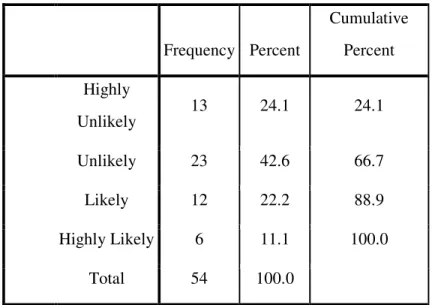
6.1 Frequency Distribution of Likelihood of adoption in 2011 132
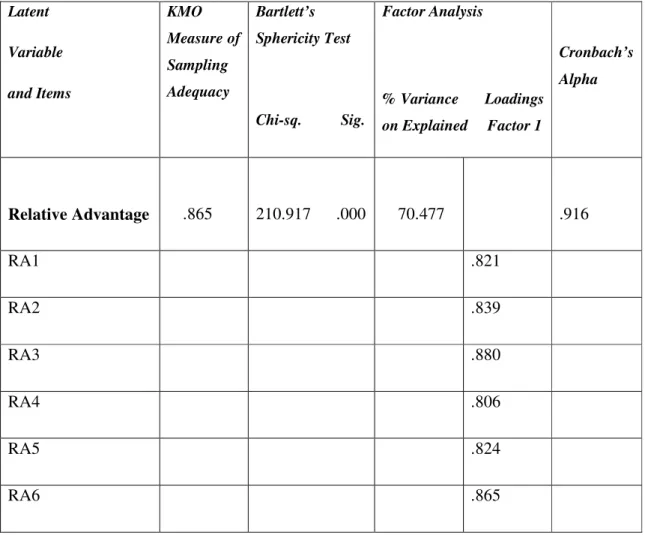
6.2 Validity and Reliability tests for ‘Relative Advantage’ 134 6.3 Comparison of Means of Familiarity for Dimensions of 135
Relative Advantage
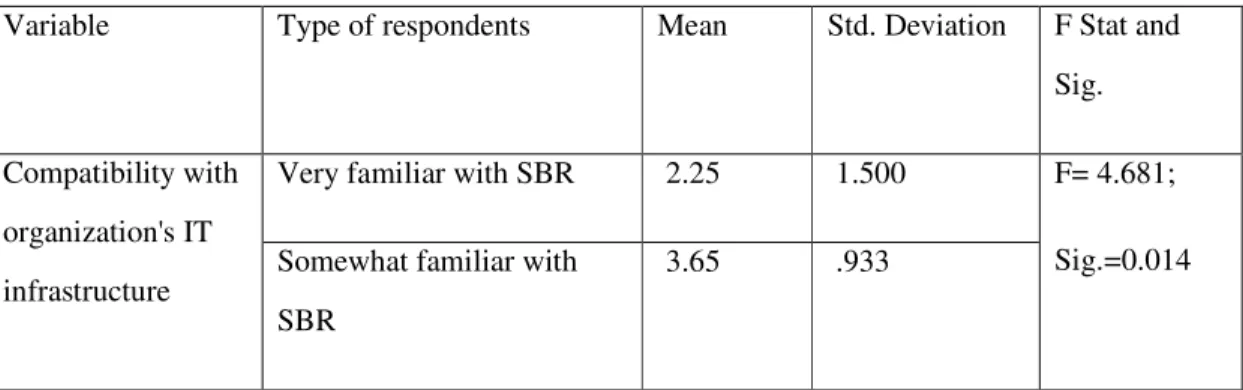
6.4 Validity and Reliability tests for ‘Compatibility’ 138 6.5 Comparison of Means of Familiarity for Dimensions of 138
Compatibility
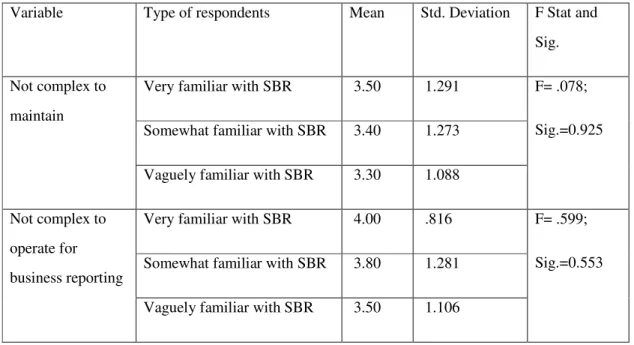
6.6 Validity and Reliability tests for ‘Complexity’ 141 6.7 Comparison of Means of Familiarity for Dimensions of 141
Complexity
6.8 Validity and Reliability tests for ‘Organizational Alignment’ 143 6.9 Comparison of Means of Familiarity for Dimensions of 143
Organizational alignment
6.10 Validity and Reliability tests for ‘Top Management Support’ 146 6.11 Comparison of Means of Familiarity for Dimensions of 147
Top management support
6.12 Validity and Reliability tests for ‘Perceived financial cost’ 149 6.13 Comparison of Means of Familiarity for Dimensions of 149
ii
LIST OF TABLES (CONTD)
No. Title Page no
6.14 Dimensions of the two factors - Competitive pressure 151 6.15 Validity and Reliability tests for ‘Competitive pressure’ 152 6.16 Comparison of Means of Familiarity for Dimensions of 153
Competitiveness
6.17 Comparison of Means of Familiarity for Dimensions of 154 Industry force
6.18 Validity and Reliability tests for ‘Government pressure’ 156 6.19 Comparison of Means of Familiarity for Dimensions of 156
Government pressure
6.20 Validity and Reliability tests for ‘Communication in the 157 industry’
6.21 Comparison of Means of Familiarity for Dimensions of 158 Communication in the industry
6.22 Validity and Reliability tests for ‘Intent to adopt SBR’ 159
6.23 Descriptive Statistics of variables 161
6.24 Pearsons correlation coefficients 161
6.25 Technology perspective and intent to adopt SBR (Block 1) 162
6.26 Technology + Organization perspective and 163
intent to adopt SBR (Block 2)
6.27 The three perspectives and intent to adopt SBR (Block 3) 165 6.28 The three perspectives + control variables and 166
intent to adopt SBR (Block 4)
6.29 Relative advatage the Stated Likelihood 173
of First Wave Adoption of SBR
6.30 Compatibility and the Stated Likelihood 176
of First Wave Adoption of SBR
6.31 Complexity and the Stated Likelihood 177
iii
LIST OF TABLES (CONTD)
No. Title Page no
6.32 Organisational Alignment and the Stated Likelihood 180 of First Wave Adoption of SBR
6.33 Top management support and the Stated Likelihood 182 of First Wave Adoption of SBR
6.34 Perceived financial cost and the Stated Likelihood 184 of First Wave Adoption of SBR
6.35 Competitveness and the Stated Likelihood 186
of First Wave Adoption of SBR
6.36 Industry force and the Stated Likelihood 188
of First Wave Adoption of SBR
6.37 Government pressure and the Stated Likelihood 190 of First Wave Adoption of SBR
6.38 Communication in the industry and the Stated 192 Likelihood of First Wave Adoption of SBR
iv
LIST OF FIGURES
No. Title Page no
1.1 Research outline 12
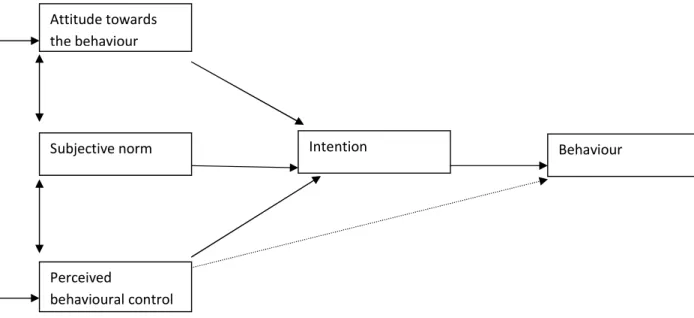
4.1 The Theory of Reasoned Action 58
4.2 The Theory of Planned Behaviour 61
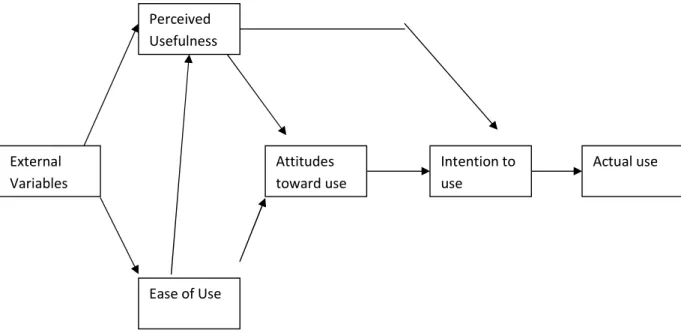
4.3 Original TAM 64
4.4 UTAUT 70
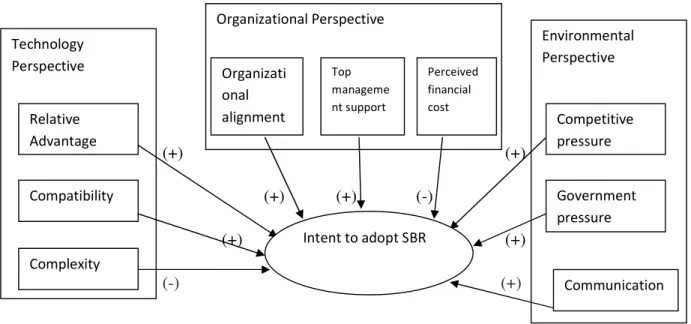
4.5 Conceptual research model 90
v Abstract
The medium for processing and reporting corporate financial and business information through the supply chain from the manager-preparer to government regulators and to external users has been evolving. In Australia, some major regulatory agencies of federal and state governments recently went ‘live’ with a coordinated on-line reporting facility called Standard Business Reporting (SBR), based on Extensible Business Reporting Language (XBRL) taxonomies, for electronic data exchange. The take up by businesses of this medium of compliance reporting of financial, tax and other business data to government regulators, is initially voluntarily. The intention to voluntarily adopt SBR by ASX listed companies is the research issue of this study.
The SBR project represents a technology innovation offered to businesses that has been led by government (i.e., the Australian Treasury with the co-operation of major business regulators, the ASIC, ASX, ATO, ABS and State government Revenue Offices), with the preceding support of IT consultants, software developers and accounting/auditing firms. The Australian Treasury’s SBR project has substantially drawn on the XBRL taxonomy project designed and implemented by the government in the Netherlands. XBRL, a variant of Extensible Mark up Language (XML), defines the financial data on the web with explicit semantics in a machine readable format. Each financial item in XBRL documents is assigned a unique, predefined tag. These tags are established to be compatible with current financial accounting standards. A major benefit claimed for XBRL is the ease with which usable information can be obtained from companies as part of a reporting process. The use of the taxonomies to underpin the reports means that the XBRL information garnered from any company will be comparable to the XBRL information from any other company around the world that is using the same taxonomy. Despite the potential benefits that the XBRL developer community claim will result from its use, few organisations have consciously adopted XBRL in the UK (Dunne et al., 2009). In the US, under the voluntary XBRL filing program (2005 – 2008) only 137 companies (out of over 10000) had decided to adopt XBRL in the SEC’s program (Bonson et al., 2009). This low level of adoption occurred despite the SEC’s commitment to the voluntary program. SBR is a case of XBRL adaptation in
vi
Australia backed by a government initiative. This study seeks to understand the prospect of SBR adoption and the underlying factors that could be the determinants of intention to adopt in Australia. In particular, the objectives of this study are to:
• To assess the prospects for the Australian government’s SBR initiative
achieving net benefits for each separate participant in the company financial reporting supply chain
• To hypothesize and empirically test factors driving the intentions of the top
management of ASX listed companies, as perceived by the Chief Financial Officer (CFO) to adopt SBR for financial and compliance reporting
In addressing these objectives, the study reports findings from both the evaluation of normative claims made in the professional and academic literature about the virtues of using XBRL, and quantitative analysis of data collected from a survey designed to model the determinants of the extent of intention of companies, as perceived by their Chief Financial Officer, to voluntarily adopt SBR.
The conclusion from normative assessment (after a review of both scholarly literature and practitioner comments) on XBRL/SBR is that both users (mainly investors/securities analysts) and regulatory bodies have most to gain out of the SBR implementation. Users are expected to benefit by more timely and reliable information from companies at less information gathering and processing cost to users. The regulators are expected to benefit by having better analytic capabilities with more up-to-date data. In contrast, evaluation of the preparers’ viewpoint (especially company accountants and financial managers) suggests that prepares have much to weigh up. It is expected that compliance reporting costs of the preparers would be reduced in the long run but there will be short-term costs associated with installing the SBR platform, with potential disruption to information processing and reporting systems, and with management and operating staff training. In the longer-term, preparers are likely to face pressure to meet users’ expectation for continuous, real-time, financial reporting that the SBR facility would have the capability to fulfil. This longer-term prospect for continuous, audited financial information that can be reported in flexible ways has the
vii
potential to reveal corporate proprietary information that competitors can use for competitive advantage against the reporting entity.
The empirical part of this study, based on data from a survey of listed companies, finds that there is a low degree of intention to adopt SBR. This finding suggests that the voluntary take-up by listed companies of the Australian government’s SBR initiative will not succeed, as was the similar experience in the UK and the US. Yet there has been limited published evidence on the factors inhibiting the voluntary adoption of XBRL (SBR) by senior management of listed companies. Drawing on an innovation adoption framework that embraces factors from the technology, organization and environment perspectives, the results from the survey conducted in this study reveal that only factors from the environment perspective, namely, industry force and communication, are significantly related to intention to adopt SBR. The study, therefore, concludes that, unlike most other innovations in information technology, technological arguments favouring SBR (or XBRL) as a reporting medium are not expected to induce adoption of SBR by listed companies in Australia; rather entities are most likely to respond to industry wide initiatives and communication about SBR before making a decision to adopt SBR. The study goes on to provide implications for practice in the light of this finding. The results of this study in the Australian SBR setting are also likely to be of interest to regulatory bodies in other countries that have had disappointing XBRL adoption rates.
The study contributes to the gap (i.e. investigation of factors leading to XBRL adoption) of growing research on XBRL which tended to concentrate mainly on technological arguments. The benefits of XBRL can only be achieved and the cost reduction associated with XBRL can only be realized when XBRL is adopted by organizations in the industry. This study provides an analysis of survey data on intention to adopt SBR that is more generalizable. However the finding of this study is subject to limitations that are noted in the thesis.
1
CHAPTER 1: INTRODUCTION
1.1 Introduction to the Study
Technology is now available to change the means of processing, reporting and assessing financial and other compliance information of reporting entities. It is called XBRL – Extensible Business Reporting Language. XBRL is a dialect of XML (Extensible Mark-up Language), a relatively new internet language, developed by World Wide Web Consortium (W3C) in 1998, that defines and names data in order to facilitate electronic data exchange (DiPiazza & Eccles, 2002). The potential consequence of this new communication technology to the discipline of accounting is that it can change the forces of supply and demand for accounting information amongst parties in the corporate reporting supply chain. This notion of a corporate reporting supply chain begins with company executives and goes through auditors, government agencies/regulators and security analysts before reaching shareholders and other end users.
Following government-led initiatives in the US and European countries to implement an XBRL-based financial reporting medium between businesses and regulatory agencies, the Australian government, through a task group under the Australian Treasury, developed a version of XBRL-facilitated on-line reporting which has been called Standard Business Reporting (SBR). This SBR facility went live in July 2010, allowing reporting entities to submit their financial reports, taxation returns and other required reports to the Australian Securities and Investments Commission (ASIC), Australian Taxation Office (ATO) and other regulatory agencies through this facility. To take it up, a reporting entity needs to adopt a version of XBRL as an interface with its accounting and financial and compliance reporting systems. Despite the many espoused benefits of adopting the XBRL-based SBR platform, the voluntary take-up since July 2010 has been very low at only 6 listed companies and a small number of non-listed entities. Without adoption of SBR by reporting entities, the expected net benefits to players in the financial reporting supply chain cannot be fulfilled. The prospect that reporting
2
entities in Australia will voluntarily adopt the SBR facility can be gauged by the extent of their intention to adopt, as viewed by their relevant executive, the Chief Financial Officer (CFO). Moreover, evidence of factors inhibiting or encouraging the intention to adopt SBR is lacking.
There are multiple benefits claimed in the professional and academic literature for the XBRL technological in terms of enhancing cost-efficiencies for business organisations in their external compliance reporting, auditing and internal financial reporting. Yet there has been a poor voluntary take-up of this newly available technological innovation in accounting reporting. This raises the research question as to what factors drive or inhibit the voluntary adoption, or intention to voluntarily adopt, this new business reporting technology. Findings about the determinants of senior managements’ intention to adopt SBR can help the Australian Treasury’s SBR Project Group and IT/Software/Accounting consultants to develop strategies that can be more effective in achieving the voluntary adoption of SBR by businesses, especially by ASX listed companies whose compliance reporting processes are onerous. More widely, published research findings on the determinants of XBRL adoption in other countries are lacking, so such findings in the Australian SBR setting are likely to be of interest to regulatory bodies in other countries that have had disappointing XBRL adoption rates. For example, in the European Community, an XBRL facility has been made available by many individual regulatory bodies for the receiving of business information (Locke and Lowe, 2007). However it had been reported by these regulators that voluntary adoption rates by businesses has varied but are generally low (Cordery et al., 2011). In the US, under the voluntary XBRL filing program (2005 – 2008) only 137 companies (out of over 10000) had decided to adopt XBRL under the Securities and Exchange Commission’s (SEC) program (Bonson et al., 2009). This low level of adoption occurred despite the SEC’s commitment to the voluntary program.
The intention to voluntarily adopt SBR by Australian Stock Exchange (ASX) listed companies is the research issue of this study. This will be approached by both the evaluation of normative claims made in the professional and academic literature about
3
the virtues of using XBRL, and quantitative analysis of data collected from a survey designed to model the determinants of the extent of intention of companies, as perceived by their CFOs, to voluntarily adopt SBR.
1.2 Background on Financial Reporting and Communication Technology Developments
The tradition of annual financial reporting has allowed the opportunity for management to engage in accounting policy choice that creates income smoothing or earnings management. This can make the financial statements less decision useful. The corporate collapses and reporting scandals during the early 2000s (led by Enron) resulted in demands by investors and governments for higher levels of transparency, reliability and assurance in corporate reporting. More recently, with volatility in capital markets, the push by governments is to go further with corporate reporting by challenging corporations to provide the appropriate information in a timely, frequent, assured and customized manner to particular regulatory agencies and other users, while controlling the costs of complying with new requests. Due to these developments, there have been technological advances in the communication media through which companies can potentially convey financial information to investors, customers, suppliers and regulatory bodies. Computer technology greatly facilitates in this change by bringing new and improved tools. This study investigates the adoption of one such technologically advanced tool initiated by regulators in Australia to enhance business-to-government reporting in Australia.
The field of information and communication technology (ICT) has generated a lot of innovative products in the past two decades. This has attracted a diverse body of theoretical and empirical work on the adoption of ICT based innovations (Jeyaraj et al., 2006). The pace of change in information technology (IT) can also be felt in the field of accounting and it has been commented that IT has radically changed the manner in which accounting information is produced, disseminated and used (Sutton, 2010). Companies generally have an IT based structure to store accounting information for
4
further use. IT based tools enable businesses to extract the information, to have it audited, to use it for data input in management decision-modelling, or to share it with stakeholders. Users of external financial reports have shifted to technology driven processes for retrieving and analyzing corporate information (Sutton, 2010). The internet enables the spread of electronic information in an easy and economical way. It makes physical and national boundaries less meaningful and thus provides a seamless information delivery channel (Xiao et al., 2005). Companies generally use the World Wide Web as one of the primary means for reporting corporate information (Debreceny and Gray, 2001; Yoon et al., 2011). The early step taken in the use of the internet for electronic business reporting was the presentation of documents like annual in Hyper Text Mark-up Language (HTML) or Portable Document Format (PDF). However, as these communication media for presenting documents only provided text and multimedia for the human eye, important functions such as intelligent search and data exchange were not possible. Therefore, despite the conveniences with presenting information on the internet, the absence of a generally accepted computer understandable format for exchange of business information makes human interaction necessary, creating costs and space for human errors (Bergeron, 2003). Therefore, it was argued that corporate information on the web could not adequately meet the needs of the stakeholders in the financial reporting supply chain and additional technical capabilities must be deployed to corporate reporting to support decision-making capabilities of stakeholders (Yoon et al., 2011). What the financial reporting supply chain needed it was argued, was a new, universal language in which to report, and a way to use that language that does not require years of study by preparers and users (DiPiazza & Eccles, 2002).
The language now exists. XBRL, a variant of XML, defines the financial data on the web with explicit semantics in a machine readable format (Yoon et al., 2011). Each financial item in XBRL documents is assigned a unique, predefined tag. These tags are established according to financial accounting standards. Using these tags, every data element is fully described in terms of its definition, format, location, calculation, and
5
labelling (Li et al., 2006). XBRL can also tag non-financial, industry-specific, and company-specific information. It goes even further by facilitating the collection of information not only inside a company but outside as well. The tagging structure of XBRL provides interoperability of the data and the whole objective of using XBRL is to improve the disclosure, management and analysis of corporate data (Bonson et al., 2009). The framework of XBRL facilitates the easy automated production of financial data (Debreceny et al., 2010; Vasarhelyi and Alles, 2007) and the availability of software applications makes the analysis of such information possible (Silveira et al., 2007). Some researchers (like Yoon et al., 2011) find that XBRL reduces information asymmetry, thereby enhancing the decision-making of stakeholders. All these attributes of XBRL are expected to benefit different stakeholders in a corporate reporting supply chain. Preparers of business reports should be able to overcome incompatibilities between different information systems and provide more timely business information. Auditors gain from easier integration of XBRL documents into their own systems. Governments can more easily obtain access to detailed information for regulatory purposes, while shareholders and analysts can benefit from more timely corporate reports.
1.3 The XBRL-SRB Adoption Issue
In regard to the impact of IT on accounting, it is claimed that “never before have we experienced a technology that has evolved so rapidly increasing in power by a hundredfold or more every decade, radically changing the constraints of space and time, and reshaping the way the we communicate, think, and learn” (Duderstadt, Atkins, & Van Houweling, 2002, p. 7). But accounting change is lagging the change in IT. In the case of external financial and compliance reporting, the ‘paper-based or pdf report’ is still use as a primary medium for financial reporting in Australia, even though the new technology, XBRL, is operationally available (Troshani & Doolin, 2005).
Mostly modelled around the Dutch taxonomy project, the XBRL-based SBR project in Australia is a specific case of technology adoption. The use of XBRL for business
6
reporting was aired in professional circles in Australia in the early 2000 when a private body XBRL Australia Inc. was formed to actively promote XBRL. But the new reporting language (XBRL) received concerted support from government leading up to the launch of the live SBR facility in 2010. The Australian Treasury’s SBR project group, with the engagement of both large government agencies (ASIC, ATO, the Australian Bureau of Statistics and State Government Revenue Offices) and endorsements from professional bodies (CPA Australia and the Institute of Chartered Accountants in Australia) undertook a strategy to promote the voluntary adoption of XBRL for compliance reporting by entities (Bonson et al., 2009). In Europe, XBRL has been installed by many regulators in order to facilitate the reporting of required information from business entities (Locke and Lowe, 2007). In Korea, all the publicly-held firms have been required to report financial statements in XBRL format since October 1, 2007 (Yoon et al., 2011). However it has been found that adoption rates by reporting entities tend to be low unless the adoption has been mandated by regulators (Cordery et al., 2011). As stated earlier, under the voluntary XBRL filing program in USA (2005–2008) only 137 companies (out of over 10000) decided to adopt XBRL in the SEC’s program (Bonson et al., 2009). This low level of adoption occurred despite the US’s Securities Exchange Commission’s (SEC) commitment to making a success of a voluntary program (Cordery et al., 2011). In the end, the SEC made it mandatory for the 500 largest companies in the US to report in XBRL format (Bonson et al. 2009). These efforts around the world surrounding the adoption by business entities of XBRL have endured since the mid-2000s.
Prior to and during this period of endeavours by government regulators to bring in the use of XBRL-based reporting, a substantial body of research literature has addressed the technical capabilities and challenges of XBRL, and the prospective consequences to organizations’ financial reporting arising in the short-term and longer-term from adopting it (e.g. Hodge et al., 2004; Wagenhofer, 2003). This literature has focused on either the technological complexities of the XBRL language and its applications, or a normative evaluation of its advantages and weaknesses to different players in the
7
financial reporting supply chain. There is limited empirical research on the familiarity, perceptions, preferences or intentions of the key participants in the financial reporting supply chain in relation to XBRL-based reporting systems. Troshani & Doolin (2005), Doolin & Troshani (2007) and Cordery et al. (2011) have published empirical research about the adoption of XBRL. These studies have taken a case study approach or conducted interviews of managers across a small number of businesses and regulators. Empirical evidence that can be generalized to a wider population of prospective adopters of XBRL is lacking.
1.4 Problem Statement
As SBR is a fairly recent phenomenon in the Australian context, there is a lack of knowledge about its likely success (if any) in the medium-term in relation to take up by Australian business entities. While actual adoption of SBR during the first year of its availability has been minimal, the prospect of this facility being taken up by entities in the medium-term can be gauged by evidence on intention to adopt. Ratings from CFO on their entity’s intention to adopt, however, will be affected by the CFO’s extent of familiarity with the XBRL-based SBR facility and its capabilities. By collecting and analysing data on both the familiarity of relevant management with SBR and the extent of intention to adopt SBR by listed companies, this study can be informative to the Australian government and its regulatory agencies concerning the policy decision whether to persevere with a voluntary approach or to phase in a mandatory approach to adoption.
Another research problem is the fact that any take up of SBR by business entities will not only affect the regulatory agencies that are participating in the SBR scheme, but also other parties in the financial/compliance reporting supply chain. Many benefits are claimed for SBR (which is XBRL enabled), but are these benefits less applicable to the business entities that supply their proprietary financial information, than to the parties in the supply chain that make use of this information? There is a substantial body of
8
research in the information technology/systems literature that looks at the technological aspects of XBRL design and implementation. This academic literature is partly normative and is added to by writers in the professional literature who have given their normative evaluation of the advantages/disadvantages of implementing XBRL. Such literature seeks to influence parties in the business information supply chain through claims the various benefits of XBRL associated with the easy, accurate, timely and cost-efficient automated production of financial data (Debreceny et al., 2010) and the availability of software applications to execute sophisticated analysis of such data (Silveria et al., 2007). More generally, Yoon et al. (2011) find that XBRL reduces information asymmetry which enhances the decision making of different stakeholders in a corporate reporting supply chain. However, a synthesis of the various normative claims made in this literature in terms of comparing the implications that XBRL has or is likely have on alternative parties in the supply chain has not previously been undertaken. By undertaking this comparative review of the normative literature in this study, conclusions can be drawn about whether claimed net benefits of SBR are more likely to accrue to professional service providers (auditors and software consultants), the regulatory agencies and securities analysts and investors, than to the business entities that adopt SBR as the medium to supply their financial information.
The final research problem is a lack of systematic evidence about the key factors that determine the intentions of relevant top managers of business entities to adopt SBR. There is a lack of empirical research on XBRL adoption that has investigated perceptions and preferences of preparers of financial or other business reports. Only a handful of studies (Troshani & Doolin, 2005; Doolin & Trosahni, 2007; Cordery et al., 2011) investigate perceptions to XBRL adoption of report preparers. These studies have been case oriented, so are limited in their generalisability. The adoption of SBR (or XBRL) in Australia may relate to many factors. Adoption of new technology does not depend only on the attractiveness of technical benefits that the new technology promises, but importantly on perceptions of the key manager decision-maker for financial/business reporting who is typically a non-IT-expert (i.e., the CFO), and the
9
degree of organisational and external pressure they face towards adoption of the new technology. There is a gap in the research literature on behavioural intentions of CFOs and how this affects their entity’s take up of the benefits that XBRL technology (which enabled the SBR medium) promises. Technology adoption is complex and context sensitive with various models and theories having been posited in the past (Wolfe, 1994; Jeyaraj et al., 2006). This study addresses a literature gap by invoking a broadly-based framework known as the technology-organisation-environment (TOE) framework developed by Tornatzky & Fleischer (1990) to explain the adoption of technology innovations. Evidence on the effects of this broad range of factors on the intention to adopt SBR in Australia will provide insights to the Australian government and its regulatory agencies in considering their strategies for increasing the voluntary adoption of the SBR facility by listed companies.
1.5 Objectives of the Study
The central research question of this study is why has the costly establishment by governments of an XBRL-based facility for use by businesses as a medium for compliance reporting to regulatory agencies failed to be voluntarily taken up, despite its widely articulated and promoted technical and cost-saving benefits?
By investigating this question, this study seeks to contribute to the research on XBRL by shifting the focus from technological issues to behavioural issues. To this end, the main objectives of the study are:
Objective 1: To assess the prospects for the Australian government’s SBR initiative achieving net benefits for each separate participant in the company financial reporting supply chain, assuming that widespread adoption of SBR will eventually occur by voluntary or mandatory means. Widespread adoption of SBR will engage corporate financial/tax/audit report preparers (including company financial/accounting officers, professional accounting/tax advisors, and external auditor), users (including investors and lenders) and regulators (particularly ASX, ASIC and ATO). A synthesis and critique of normative claims about XBRL is undertaken to achieve this objective.
10
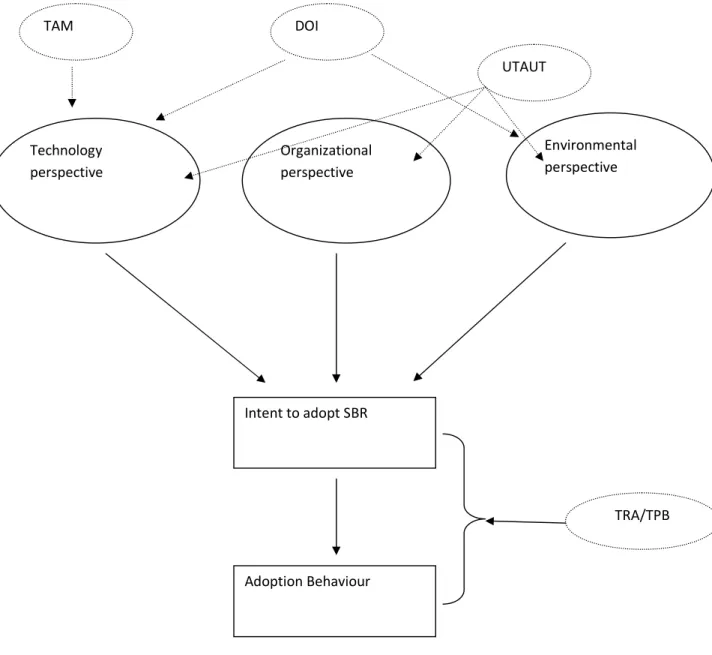
Objective 2: To hypothesize and empirically test factors driving the intentions of the top management of ASX listed companies, as perceived by the Chief Financial Officer (CFO) to adopt SBR for financial and compliance reporting to government agencies. The broad-based TOE framework is chosen to identify factors affecting intention to adopt SBR. This framework embraces facilitating or inhibiting factors within business environments that can influence the diffusion of SBR (or XBRL) as a reporting medium.
1.6 Contribution of the Study
By addressing the above objectives, this research complements the current volume of technical research on XBRL. Although the field of behavioural research in accounting has, according to Sutton (2010), flourished over the past 40 years, the large majority of this research has excluded current technology developments that influence the behaviour of accounting professionals. One such factor that has largely been ignored by behavioural accounting researchers is the rapidly increasing impact of IT on accounting (Sutton, 2010), especially the impact of an XBRL-based medium for assembling, reporting and analysing accounting information. This study seeks to contribute towards filling this gap.
This study also contributes to the operationalisation of theory used in the technology adoption literature. Prior technology adoption research has invoked the psychology-based theoretical model known as Technology Acceptance Model (TAM) and the sociology-based theory known as Diffusion of Innovation Theory (DOI). A broader-based organisational behaviour view used in technology adoption research is known as the Technology-Organisation-Environment (TOE) framework. The three components of the TOE framework have been defined and operationalised in qualitative research in terms of theme areas drawn from the text of interviews by Troshani & Doolin (2005), Doolin & Troshani (2007) and Cordery et al (2011). But prior research has not developed quantifiable multi-item scales that can operationalize the dimensions within
11
these three components of TOE and validate these measures of constructs on data from a questionnaire survey. This study seeks to develop and test the validity and reliability of constructs that have been conceptualized in the TOE framework. To this end, this study has the potential to contribute to broader information systems research by reaffirming the applicability of TOE framework which constitutes a high level theoretical basis for technology adoption.
Finally, in terms of its contribution to policy and practice, the findings from this study can contribute insights about the factors driving or hindering the intention to adopt SBR in Australia. Knowledge on these factors might inform the Australian government and its regulatory agencies in their decisions on how to more effectively motivate listed companies to voluntarily adopt SBR.
1.7 Outline of the Methodological Approach and Conceptual Model for the Study
The study adopts a 4 stage methodological approach. These stages are:
Stage 1: A critique of claims about XBRL/SBR and their potentially impact of company reporting supply chain participants
Stage 2: A review of the technology adoption literature to identify a suitable conceptual model and develop hypotheses
Stage 3: The construction and administration of a mail questionnaire to collect data for hypotheses testing.
Stage 4: Analyses on the data
12 Stage 1 Stage 2 Stage 2 Stage 3 Stage 3 Stage 3 Stage 3 Stage 4
Step Objective Activity
Understanding and evaluation of SBR
Gain a comprehensive
Anylysis of SBR, XBRL and related technologies
Literature search & review
Identify gap, develop conceptual
Literature: database search, review printed practitioner comments
Conceptual model devlopment
Integration and
synthesis of Comparison of models Exploratory survey Design a survey to
test the model
Survey on listed companies; Sample size 500
Item generation To operationalise the framework in the
Items drawn from literature; Items adapted for the study
Data analysis & discussion
To test the model;
identify factors that Univariate and Multivaraite analyses
Conclusion Instrument testing
To establish acceptable levels of validity & reliability
Validated in (i) pretesting amongst discipline experts and (ii) pilot testing
amongst a sample of ten companies
Apply Instrument To gather data from
the sample Postal survey
13
The conceptual model for the empirical phase of this study is developed from Tornatzky & Fleisher’s (1990) TOE framework. To achieve Objective 2 of this study, nine independent variables and one dependent variable are identified in the model. The dependent variable in the model is “intent to adopt SBR” and the nine independent variables are developed from the TOE framework as follows:
(i) Technology perspective:
Relative advantage; Compatibility; Complexity (ii) Organizational perspective:
Organizational Alignment; Top Management Support; Perceived Financial cost (iii) Environment perspective:
Competitive pressure; Government pressure; Communication
From these nine independent variables, nine hypotheses are formulated.
1.8 Structure of thesis
This thesis consists seven chapters.
Chapter 1 has provided a general introduction to the thesis.
Chapters 2 and 3 provide discussion on SBR and its technology enabler, XBRL. Discussion on SBR’s impacts on users, businesses (preparers) and regulators is provided. The discussion ends with a normative comment on prospective of SBR adoption in Australia.
Chapter 4 presents a literature review and development of hypotheses used in this study. The need to model adoption is discussed first in Chapter 4 followed by a review of relevant theories/models of adoption. The chapter then goes on to discuss applicability of those models for the current study followed by the hypotheses developed for this study.
14
Chapter 5 describes and justifies methodologies used in this study. The development of the instrument, data collection procedure and analysis procedure adopted in this study are discussed in Chapter 5.
Chapter 6 presents the analysis of the data. The analysis is facilitated through the use of SPSS software. The results from the analyses are then discussed to provide insight about the potential adoption of SBR.
Chapter 7 presents the major conclusions of this research. The results are over-viewed. The implications of this research are put forward. Finally, the limitations of this research are discussed, along with future research recommendations.
1.9 Summary of chapter
The purpose of this chapter has been to lay the foundation for this research. This chapter has introduced the background on financial reporting and communication technology developments, the XBRL-SBR adoption issue, the problem statement, the objectives of the study and its contribution to the literature and practice, and the methodological approach that will be taken.
15
CHAPTER 2: STANDARD BUSINESS REPORTING AND ITS BACKGROUND
Financial and business reporting is at the core of the activities of the public accounting profession. The output of this reporting process is a number of documents for intended users (shareholders and stakeholders). The centrepiece of the reporting process is the annual report, which contains the annual audited financial statements, along with other statements and reports (Assurance Working Group of XBRL, 2006). This reporting process which is underpinned by the financial accounting process, is defined as the process through which financial information on business transaction is recorded, verified, and disseminated to wider audiences, mostly other businesses, investors, governments or employees (Volmer et al., 2007). The main structured financial information that flows from the reporting process is contained in financial statements. This structured information permits analysis of a wide range of trends and relationship among quantitative data. Such trends and relationships in turn, provide considerable insight into a company’s opportunities and risks, including growth and market acceptance, costs, productivity, liquidity, and collateral. The advent of the computer and the popularization of the internet in the late 1990s caused reporting processes and information handling to evolve radically beyond the traditional scope of paper-based presentation.
As background to the emergence of SBR, the evolution of business reporting in the light of changes in information and communication technology (ICT) is outlined in this chapter. Then details of the SBR initiative itself are given.
2.1 The changing media for financial reporting
Traditionally, the main medium used by companies to present financial and business information has been in paper format. The issue with the paper-based reporting system is that a human must read the reports in order to process them (Assurance working
16
group of XBRL, 2006). A paper-based medium of transmission means the reliance on manual processes leaving the entire supply chain, from managers to business partners, to auditors, to regulators, to financial analysts and investors, in a situation in which the processes for getting information to the point at which it can be used are:
- slow
- labour intensive
- costly
- error prone; and
- inefficient
(Jones & Willis, 2003)
Due to the dynamic business environment, increasing sophistication of securities markets and changing regulatory demands on businesses, alternative financial reporting medium to disseminate corporate information is sought by securities markets and corporate regulators (Ashbaugh et al., 1999). The advent of the internet prompted companies to use their website as an additional reporting channel. There has been an increasing trend of using internet technologies within businesses as the basis of internal and external corporate communications (PWC, 2002). This trend is in line with the spread of internet access (Xiao, Jones & Lymer, 2003). The growing importance of the internet prompted the accounting profession to assess its future position in an internet environment. It was predicted by Jones and Xiao (2003) that internet reporting would be more sophisticated and interactive, whereas hard copy reports would be supplied on demand only. Users would use search facilitating technology to extract required information (Jones & Xiao, 2003). This prediction was supported by the assurance working group of XBRL International who found in 2006 that financial reporting had been increasingly carried out on the internet, through corporate websites and also through regulatory websites. They also found that there had been an expansion of the
17
scope of financial reporting that goes well beyond the traditional financial statements, such as performance reporting and corporate governance (Assurance working group of XBRL, 2006).
But the use of the internet was not the only technology that the preparers of corporate reports had contemplated for making a change in the way they reported to external users. Since the early 1990s preparers had been trying several technologies to streamline the accounting information flow within the corporate reporting supply chain. Table 2.1 lists the major technologies used:
TABLE 2.1: Technologies used in corporate reporting
Technology Overview Uses in (or implication for) corporate
reporting
CD-ROM Low cost medium for the distribution of large quantities of information since each CD-ROM can store 0.65gB of data.
In the early 1990s a small number of corporations, most notably IBM Corporation, experimented with CD-ROMs for the distribution of accounting
Electronic Paper
Technologies that allow conversion of print documents into electronic version which can be read in computer screen. Of course, the documents can be printed to paper for offline reading and archiving. The best-known product of this type is Adobe’s Acrobat, which is based upon Adobe’s PostScript technology.
A large number of corporations now use Adobe Acrobat to provide
electronic versions of their printed reports. It is very inexpensive for companies to produce an Adobe Acrobat version of a printed report and to provide the report in this form via their Web site.
HTML (Hyper text
In a simple language, HTML technology allows communication of client computer
Almost all the companies now a days have websites, where they use HTML
18 Mark-up
Language)
with server computer. HTTP protocol sets the standard method of communication by which the client computer does a
handshake (exchanges initial
identification and protocol information) with the server, requests transfer of information and then disconnects after the transfer has been completed. The client relies on the browser to interpret the HTML layout language to display information to the end-user.
to report accounting and related information. The use of hyperlinks provides navigation between the various pages of the financial report. Use of website started quite a few years ago.
Plug in When first released, the HTML language allowed only simple textual representation and basic graphic capability. Subsequently, Web browser developers, and others, created so-called “plug-ins” to add functionality to the basic browser to enable it to efficiently handle a wider range of data types. An example of a ‘plug-in’ is “Shockwave” from Macromedia, which allows animation created in Macromedia’s Director program to be incorporated into Web sites.
A number of financial reporting Web sites use plug-ins. The most popular are Macromedia’s Shockwave and Flash graphics plug-ins. Adobe Acrobat is also available as a plug-in, so that Acrobat files can be viewed from within the browser.
Multimedia This technology allows the compression and/or streaming of audio across the Internet. The best known of these technologies are RealPlayer, Microsoft’s
A smaller number of corporations are using Real Video or QuickTime to distribute the annual and other corporate meetings. Making quarterly
19 Media Player and, more recently, Apple’s QuickTime.
earnings calls available on the Internet significantly enhances the flow of information to a wider audience than was possible previously.
Databases The interconnection between Web pages and databases is well established. This relationship can range from simple retrieval of information from corporate databases, as when customers of TNT or Federal Express query the status of shipments or customers of Amazon Books search for particular books, to the generation of tailored Web pages.
The technology is relatively simple and well understood. There are a number of standard interfaces between HTML forms and a variety of databases including all major commercial relational databases.
Search tools and
Metadata
This can range from simple, site specific search tools such as “SWISH” (Simple Web Indexing Systems for Humans) to
large-scale indexing tools such as Compaq’s AltaVista, which indexes many, but by no means all, publicly available Web pages. Metadata provides information about a specific data. When combined with Metadata, search engines have a great potential to be used by investors.
Currently used in a small scale but growing.
Java script, Java and Active/X
Today’s Internet is characterised by browsers running on high performance personal computers but still
Providing interactivity within Web-based annual report pages can greatly enhance the user experience. An
20 communicating with servers over limited bandwidth communication links. These applications can undertake a number of different tasks. They can add a variety of interactions to a Web page. JavaScript can also be used to provide validity checking on Web forms, before they are sent to the HTTP server.
example of use of both JavaScript and Java is by IBM in their 1997 Annual Report. The online report allowed users to graph results for a number of Income Statement and Balance
Sheet items and to display the results either by quarter or by year.
Push The oldest example of Internet push technology is email, which remains an important conduit for rapid and cheap distribution of knowledge to a predefined audience. There are a number of newer examples of Web-based push technologies like PointCast and Marimba. These services allow the information consumer to establish a profile of information needs. Then as vast amounts of information come into an information distributor, it is filtered against each user’s profile and only the appropriate information is subsequently pushed to each user.
This technology has some important implication on business reporting. Push technology, as with all Internet technologies, radically changes the economics of information distribution. Corporate press releases, quarterly results, and new product information can all be pushed to curious user list at effectively zero cost. When there is more widespread adoption of push technologies, information consumers can subscribe to a corporate Web site that will then push the requested information to the consumers.
Intelligent agents
An intelligent agent, which is built upon long-standing research in artificial intelligence, is software that undertakes predetermined tasks in an independent fashion. The agent will react to its external environment in a quasi-intelligent fashion.
Very limited use in corporate reporting but widely used in e-commerce.
21
Lymer et al. (1999) concluded that no new technology gained preference over the current paper based medium of annual reporting at the time of their study. All of the technologies above were found to contain some issues or did not provide any extra advantage over paper based financial statements. But it is evident from the table that the use of the internet is increasingly being considered by businesses. The internet offers easy access to firms’ information (Wagenhofer, 2003). Speed of disclosure is also enhanced by use of the internet. Information can be published at a time that is under control of firm (Dipiazza & Eccles, 2002). Some researchers (e.g. Dunne et al., 2009; Cobb, 2008) use the term “first generation digital reporting” to describe this early use of internet for the purpose of corporate reporting. The role of the majority of first-generation internet reports was merely complementary as these reports were (and still are) generated by companies using PDF files or Hyper Text Mark-Up Language (HTML) software to display online versions of the hard-copy financial statements on the internet (Allam and Lymer 2003; Bónson and Escobar 2006). The use of both HTML and PDF has allowed many organisations to create a presence on the Web (Debreceny and Gray 1997) and, therefore, provided stakeholders with more general company information in a more interactive environment (Beattie and Pratt 2003).
But the question is whether these HTML and PDF technologies avoid the problems associated with hard copy reports? The nature of both these technologies suggests that they lack the ability to deal with internal searches in a detailed report or to unveil the meaning or context of information (Bergeron 2003); in other words, the input is treated simply as data and not as information (Dunne et al., 2009). Typically, HTML and PDF-based documents are just converted pages from hard-copy reports (Malhotra and Garritt 2004), and so no additional insight is gained by stakeholders. Essentially, this means that the internet is primarily used as another medium for disseminating the published financial statements (Lymer et al. 1999), rather than offering a new communication channel for interested parties. The transition from the first generation digital reporting was then necessary to find a better alternative. What the financial reporting supply chain has needed is a new, universal language in which to report, and a way to use that
22
language that does not require years of study (DiPiazza & Eccles, 2002). Nordberg (1998) discussed the possible transition in terms of: (i) the move away from pure HTML and PDF-based reporting formats to more advanced reporting languages; (ii) the incorporation of more detailed graphical and audio displays in financial statements; and (iii) the changing format of financial statements and the provision of greater detail for corporate stakeholders (Dunne et al., 2009). The availability of more advanced technologies such as XML (eXtensible Mark-Up Language) facilitated the transition to overcome the difficulties associated with first-generation tools. A second-generation reporting technology exists now, called XBRL.
2.2 The nature of XBRL
XBRL is a data description language that enables the exchange of understandable, uniform business information. The language takes the advantage of an open standard which is used for the preparation, exchange and publishing of financial information among disparate computer platforms, software applications and accounting standards (Hannon, 2003; Hasegawa et al., 2003; Jones & Willis, 2003). XBRL delivers corporate information along with identification tags that make the information self-describing to a computer. For example, when a piece of data is tagged as “asset”, then XBRL enabled applications know that it adheres to a strict definition of asset (satisfying required accounting definition and recognition criteria) and can use it accordingly. Therefore the receiving computer can allow the tagged data to flow automatically and seamlessly into its proper place. Another advantage of XBRL is that it tags both financial and nonfinancial information in standardized, computer and human readable format (Jones & Willis, 2003). Through this exchange and extraction processes, XBRL usage links “backend” accounting tasks to daily business operations in ways other current accounting systems cannot. The elegance of XBRL is that the technology required for XBRL enabled data resides in the middle of the current IT infrastructure (Troshani & Doolin, 2005). Organizations can utilize their existing infrastructure, such as back-end relational databases and front-end applications like Excel. XBRL is based on an internet language known as XML. The world wide web consortium (W3C) developed XML in
23
1998 to facilitate electronic publishing. XML is described as “a mark-up language that focuses on describing the content of the data as opposed to the structure of the document or display as in HTML (Malhotra and Garritt, 2004, p.64)”. XML is a general language for integration purposes. It was not designed for specific types of data. This means that XML is particularly helpful with the integration of data sources of different types. Lymer and Debreceny (2003, p.116) notes that XML enables information to be marked in such a way as to encapsulate not just numbers or sequences of words for display, but as objects containing information – numbers and words with attached meaning and context. This particular attribute of XML attracted the professionals and ultimately XBRL is born. XBRL, therefore, builds on XML as a special-purpose variant aimed at meeting the specific needs involved in manipulating business and financial reporting information (Dunne et al., 2009).
The history of XBRL dates back to 1999 when a non-profit consortium known as XBRL International was founded comprising companies like the AICPA, IASB, Microsoft and PWC. Formally established XBRL jurisdictions include Australia, Canada, Germany, International Accounting Standards Committee Foundation (IASCF), Ireland, Japan, Korea, Netherlands, New Zealand, Spain, United Kingdom and United States. Provisional jurisdictions have been formed in Belgium, Denmark, France, Poland, South Africa, Sweden and the United Arab Emirates (XBRL International, 2006). There is a growing interest in XBRL by many other countries around the world. As such, the XBRL organization has been growing rapidly (from 13 founding members in 1999 to more than 250 in 2004). It was noted in 2006 that approximately 450 companies, association and governments were working collaboratively to develop XBRL (Assurance working group of XBRL, 2006).
XBRL consists of three main parts: the specification, taxonomies, and instance documents. The specification contains technical grammatical rules for creating taxonomies and instance documents. Taxonomies are referred to as dictionaries and define all the concepts to be used in a particular instance document that follows the
24
taxonomy. The specification and the taxonomy set out the framework for constructing instance documents. Instance documents contain the actual information in a machine-readable format. Surrounding all data items are tags that provide a context to the information.
Taxonomies exist for several financial reporting standards. In addition to containing a dictionary of agreed terms, XBRL taxonomies come with a basic set of ‘grammar’ rules (known as ‘specification’) describing how to link these terms (Hussein and Tam 2002, Bergeron 2003). This is the most important difference between XBRL and earlier generations of internet communications languages used for financial information, such as HTML or PDF. In these earlier languages tagging also occurs to link data items contained in the document to further information about those data. The tags are not there primarily to aid the understanding of the data; instead, they control the display of the data for a human user (eg by a Web browser in the case of HTML documents, or in a PDF reader in the case of PDF documents). XBRL tags are assigned to specific data items in the financial information to identify their specific characteristics as pieces of financial information. This allows the figures to be automatically read, understood and manipulated by a variety of computer programs that can understand the same collection of tags (i.e. use a common taxonomy). Thus, XBRL allows organisations to describe and deliver rich, structured data easily in a standard, consistent way, using predefined tags (Bergeron 2003; Deshmukh 2006).
The ability of XBRL to gather contextually relevant information from outside the company offers previously unattainable benefits to the corporate reporting supply chain. Hailed as the “digital language of business”, XBRL-enabled software transforms completed files into digital bits of information that are reusable and interoperable. Specifically it is claimed that XBRL -
• Creates more confidence in data through limiting the risk of erroneous data entry
25
• Minimizes costs by allowing easier, more automatic composition and processing
of reports to different clients
• Accelerates financial decision making by institutions such as banks and rating
services
• Improves the process of publishing analyst and investor report
• Allows consumers unprecedented access, comparison and analysis capabilities. • Detects error at the source of data rather than at receiving party.
(Software AG, 2002)
Both the professional and academic literatures contain articles outlining the potential benefits that could be realised from the adoption of XBRL (Carey and Foster, 2001; Gray, 2001; Teixeira, 2002; Boritz et al., 2003; Jones and Willis, 2003; MacDonald et al. 2003; Willis, 2005; Carter, 2006). Many of these articles argue that claims for the main benefits of XBRL are based on the promise of the development of a more efficient, better controlled and more detailed financial reporting process (Dunne et al., 2009). Similar claims are made by Henderson et al (2012) in a recent article where the authors find that technological benefits of XBRL are related to inhouse adoption of XBRL. Troshani and Lymer (2010) suggest that the benefits of XBRL cannot be achieved without supporting software applications necessitating the development of such softwares by developers.
2.3 Government responses to the emergence of XBRL
Considering the benefits that XBRL provides, several regulatory bodies worldwide have already adopted or plan to adopt XBRL in their reporting infrastructure. While some governments or their agencies have already mandated XBRL report filings, a few others have started voluntary XBRL programs (Cordery et al., 2011). Examples of countries that have adopted XBRL-based reporting facilities include the US, Canada, the UK, Singapore, the Netherlands, Spain, China. The Securities Exchange Commission (SEC) has played a vital role in accelerating adoption of XBRL in the US. Companies in USA were phased into EDGAR (the Electronic Data-Gathering, Analysis, and Retrieval)