CHARACTERIZING AND EXPLORING DIFFERENCES IN PHARMACY STUDENTS’ MOTIVATION AND MOTIVATION CO-CONSTRUCTION IN COLLABORATIVE
LEARNING
Kayley M. Lyons
A dissertation submitted to the faculty of the University of North Carolina at Chapel Hill in partial fulfillment of the requirements for the degree of Doctorate of Education in the School of
Education (Learning Sciences and Psychological Studies).
Chapel Hill 2019
Approved by:
Jacqueline E. McLaughlin Jeffrey A. Greene
iii ABSTRACT
Kayley M. Lyons: Characterizing and Exploring Differences in Pharmacy Students’ Motivation and Motivation Co-Construction in Collaborative Learning
(Under the direction of Jacqueline E. McLaughlin)
The purpose of this study was to characterize types of motivation and motivation co-construction during collaborative learning, as well as explore differences in motivation between two extreme cases of student project groups. In an entrepreneurship course, six groups of four to five pharmacy students worked on a collaborative project to solve a variety of authentic ill-defined health care problems. I selected two student project groups; a group in which all members rated their motivation high throughout the group project and a group in which most members rated their motivation average to start and low at the end of the semester. The data analysis included semester-long video observations paired with weekly surveys of students’ perceptions. I conducted a directed content analysis of transcribed student statements for the occurrence of several types of motivational states, beliefs, values, goals, and behavioral expressions. I coded each instance that students expressed a motivation construct for
co-construction mechanisms. The specific co-co-construction mechanisms determined the level of the motivation construct (e.g., group-level). Also, the students’ co-construction of motivation constructs could follow either a negotiation or motivation regulation pathway.
iv
themselves, their peers, and the group, 3) similarities and differences between group member’s motives, achievement goal orientations, social goal orientations, and standards, 4) negotiation and regulation of motivational beliefs, values, goals, states, and behavioral expressions, 5) students’ impression management and psychological safety.
v
vi
ACKNOWLEDGEMENTS
I was inspired to pursue a Ph.D., because I witnessed Jacqueline McLaughlin transform the pharmacy education field. My career is forever changed by her model, advising, and support. I remember beginning my journey while a pharmacy resident at the UNC Medical Center. Their support and training, along with Bob Blouin’s, made the decision to pursue a Ph.D much easier. The professors in the School of Education challenged me and supported me to rise to next level, especially Eileen Parsons, Kelly Ryoo, and Sharon Derry. Judith Meece was instrumental in developing my research interests and writing progression. Jeff Greene was patient and provided tremendous feedback and support. I hope to be the type of researcher that all these professors have become.
vii
TABLE OF CONTENTS
LIST OF TABLES ... xiii
LIST OF FIGURES ... xv
LIST OF ABBREVIATIONS ... xvi
CHAPTER 1: INTRODUCTION ... 1
Motivation in Collaborative Learning ... 4
Focus and Purpose of Study ... 7
Research Questions ... 9
CHAPTER 2: REVIEW OF THE LITERATURE ... 10
Collaborative Learning ... 10
Theoretical Basis ... 12
Cognitive perspective of motivation. ...13
Situative perspective of motivation ...14
Combining both perspectives ...18
Mechanisms: Motivation Co-Construction ... 21
Motivational Beliefs and Cognitions ... 26
Achievement goal orientations. ...27
Achievement goal orientations in collaborative learning ... 30
Summary of achievement goal orientations ... 35
Causal attributions ...35
viii
Identity ...41
Summary of motivational beliefs and cognitions ...45
Group Behavioral Engagement ... 46
Context Appraisals ... 49
Task appraisals ...49
Subjective task value and cost ... 49
Task difficulty ... 52
Teacher perceptions ...53
Peer appraisals ...53
Summary of context appraisals ... 55
Motivation Regulation ... 55
Individual motivation regulation ...57
Social regulation of motivation in collaborative learning settings ...60
Measuring challenge episodes ... 65
Social motivation regulatory statements and take up ... 67
Social motivation regulation strategies ... 70
The accurate measurement of regulation strategies ... 74
Summary of motivation regulation processes ...74
Conclusion ... 75
CHAPTER 3: METHODS ... 76
Participants and Study Context ... 79
Participants ...79
Group project-based learning task ...80
Direction instruction on collaboration skills ...83
ix
Data Collection ... 86
Data selection ...87
Data Analysis ... 89
Intermediate representations ...89
Directed content analysis ...91
Coding procedures ... 91
A priori code development ...94
Coding for motivation regulation ... 95
Coding for achievement goal orientations ... 97
Inductive code development ...98
Categorizing motivation challenges ... 98
Creating sub-types under established codes ... 99
Deriving emerging motivation constructs ... 100
Post-coding analysis ...100
Framing of the Results ... 103
CHAPTER 4: RESULTS ... 104
Re-Organization of Constructs and Mechanisms ... 104
Brief summary of the organizing framework ...107
Characterizing Motivation Co-Construction Mechanisms ... 109
Two motivation co-construction pathways ...118
Motivational Task Beliefs, Values, and Goals ... 120
Characterizing types of motivational task beliefs, values, and goals ...120
Project task or course content beliefs or values ... 120
Student cognition or task strategy beliefs or values ... 122
x
Causal attribution statements ... 125
Achievement goal orientation statements and motives ... 126
Characterizing the regulation of motivational task beliefs, values, and goals. ...132
Stimulus events. ... 134
Motivation challenges. ... 138
Emergent theme: Students negotiated and regulated towards their goal orientation and standards ... 142
Exploring differences between the two groups’ negotiation and regulation of motivational task beliefs, values, and goals. ...146
Differences in negotiation ... 146
Differences in regulation ... 149
Summary of group differences ... 152
Motivational Social Beliefs, Value, and Goals ... 153
Characterizing types of motivational social beliefs, values, and goals ...153
Beliefs or values about the self ... 153
Beliefs or values about peers ... 155
Beliefs or values about the group ... 158
Social goal orientation statements ... 159
Characterizing the regulation of motivational social beliefs, values, and goals ...161
Negative peer beliefs about a peer ... 163
Interpersonal attributions following a peer norm violation ... 165
Negative beliefs about the group ... 166
Differences in social goal orientations ... 167
Exploring differences between the two groups’ negotiation and regulation of motivational social beliefs, values, and goals ...168
xi
Differences in negotiation ... 169
Summary of group differences ...178
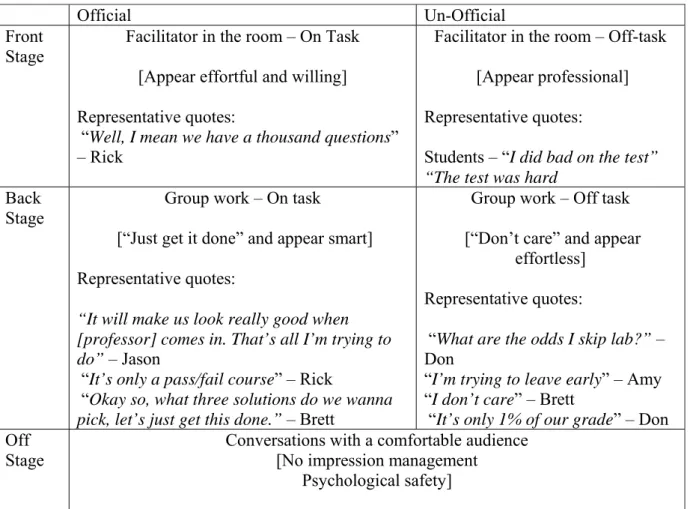
Emergent theme: Students managed their impression of whether they care or put forth effort ...178
Offstage – Psychological safety ... 180
Front stage – Students appear effortful, willing, and professional ... 181
Back stage, official work – Students attempt to appear to just want to get it done and appear smart ... 182
Back stage, un-official work – Students appear effortless and uncaring ... 183
Motivational States and Behavioral Expressions ... 184
Characterizing motivational states and behavioral expressions ...184
Characterizing the regulation of motivational states and behavioral expressions ...189
Exploring differences between the two groups’ motivational states and behavioral expressions ...200
Summary of Results ... 205
CHAPTER 5 DISCUSSION ... 208
Summary and Contributions ... 209
The co-construction of motivational beliefs, values, and goals ...210
Students’ beliefs and values about the self, their peers, and the group ...212
Similarities and differences between group member’s goal orientations and standards ...214
Negotiation and regulation of motivational beliefs, values, goals, states, and behavioral expressions ...216
Contributions and implications for pharmacy and health professions education ...218
Strengths ... 223
Directions for Future Research ... 225
xii
xiii
LIST OF TABLES
Table 1 - Differences Between Cognitive and Situative Perspectives in Motivation ...20
Table 2 – Categories of Motivation Co-Construction ...23
Table 3 - The 3 x 2 Theoretical Model for Achievement Goals ...29
Table 4 - Social Motivation* Regulation Types Defined by Levels of Statements, Take-up, and Outcome ...68
Table 5 - Description of Social Motivation* Regulation Statements ...70
Table 6 - Descriptions of Social Motivation Regulation Strategies from the Social and Individual Motivation Regulation Literature ...72
Table 7 - Collabucate Web App Sections and Components Accessible by Users ...85
Table 8 - Resulting Categories of Motivation* Co-Construction (Revised from Table 2) ...110
Table 9 - Types of Project Task or Course Content Beliefs or Values ...121
Table 10 - Types of Student Cognition or Task Strategy Beliefs or Values ...124
Table 11 - Types of Achievement Goal Orientation Statements and Motives ...128
Table 12 - How Students Regulated Motivational Task Beliefs, Values, and Goals Following Stimulus Events ...136
Table 13 - How Students Regulated Motivational Task Beliefs, Values, and Goals Following Motivation Challenges ...140
Table 14 - Differences Between the Groups’ Negotiation of Motivational Task Beliefs, Values, and Goals ...147
Table 15 - Collabucate Motivation Challenge Selections Per Group Over Six Time Points ...150
Table 16 - Types of Beliefs or Values about the Self ...155
Table 17 - Types of Beliefs or Values about Peers ...157
Table 18 - Types of Beliefs or Values about the Group ...159
xiv
Table 20 - How Students Regulated Motivational Social Beliefs,
Values, and Goals Following Motivation Challenges ...162
Table 21 – Differences in Self Identity Statements ...170
Table 22 – Differences in Peer Identity Statements ...172
Table 23 – Differences in Group Identity Statements ...175
Table 24 – Differences in Social Goal Orientation Statements ...177
Table 25 - Off-task talk and Meeting Length According to Group and Session Number ...189
Table 26 - How Students Regulated Motivational States and Behavioral Expressions Following Stimulus Events ...193
Table 27 - How Students Regulated Motivational States and Behavioral Expressions Following Motivation Challenges ...196
xv
LIST OF FIGURES
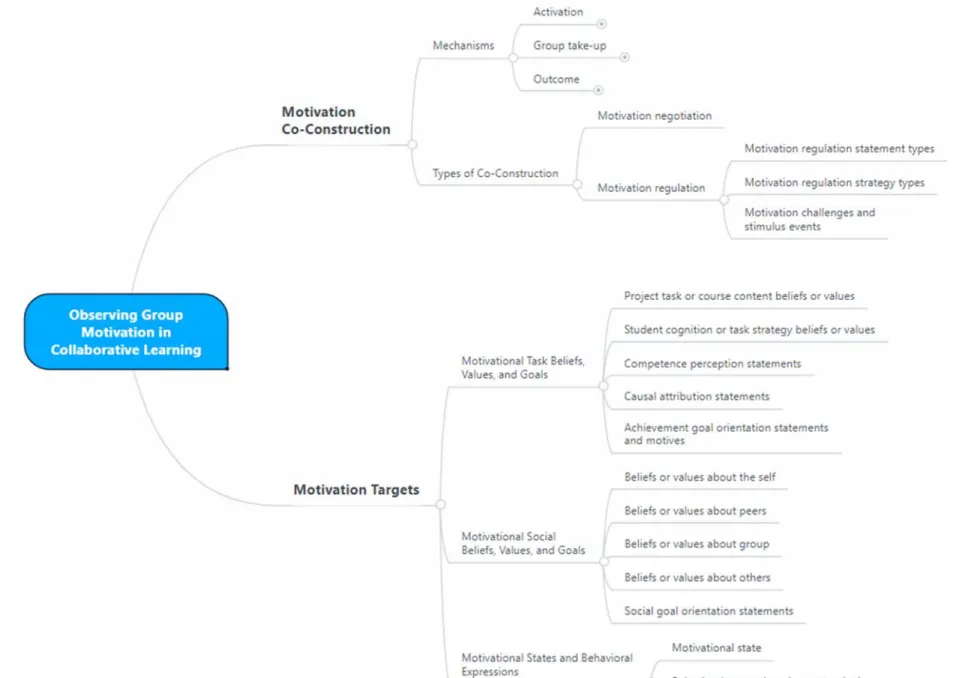
Figure 1 - Concept map of upcoming motivation co-construction mechanisms
motivation targets, and an example of how motivation targets are co-constructed ...26
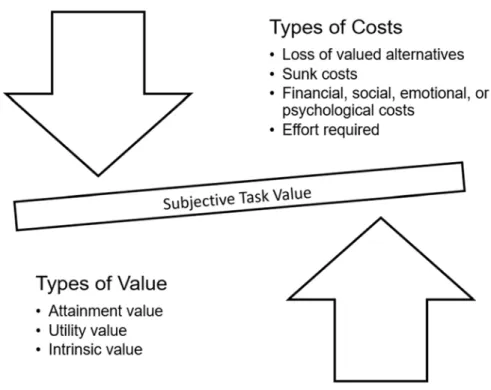
Figure 2 - How Wigfield and colleagues (2017) depict the relationship between value and cost components ...50
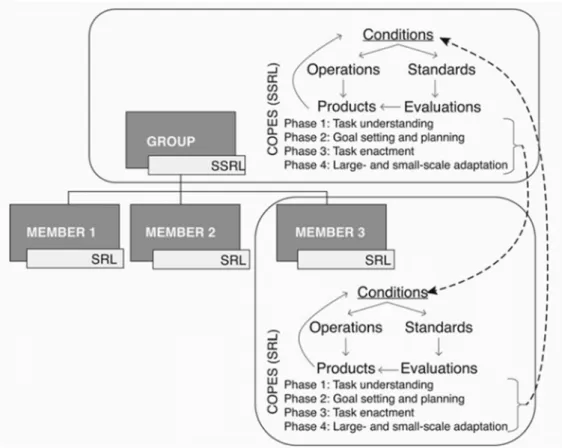
Figure 3 – Hadwin et al. (2018) model of SRL, CO-RL, and SSRL in collaborative learning ...61
Figure 4 - The average motivation ratings by group ...84
Figure 5 – Resulting concept map of study constructs (organizing framework) ...88
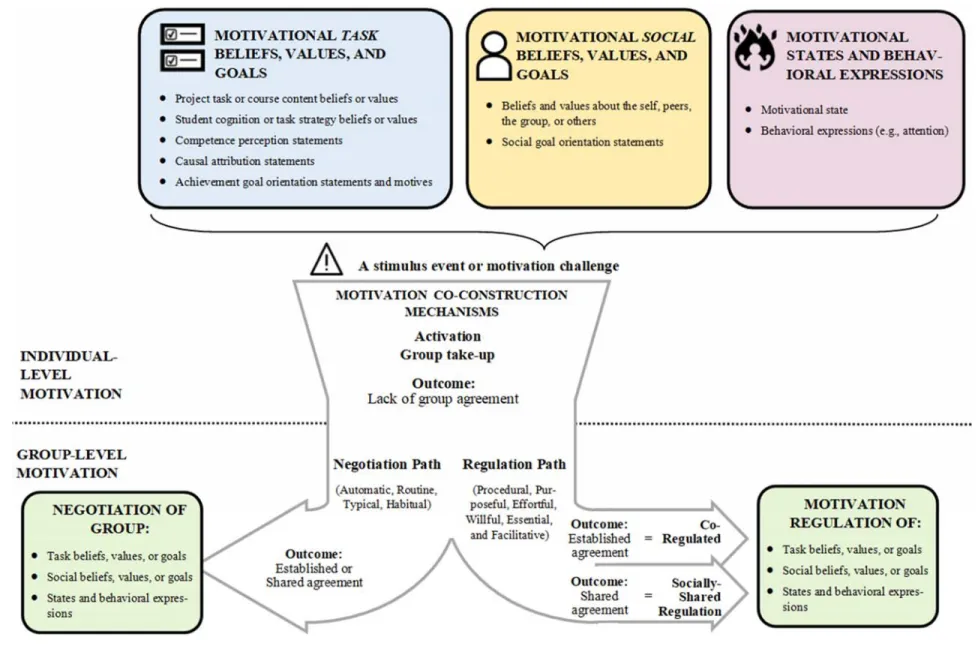
Figure 6 - How the co-construction of motivation constructs leads to negotiation or regulation ...106
Figure 7 - Subthemes according to settings in Impression Management theory ...180
Figure 8 - Ratings of “my will” for the low self-rated group’s members ...186
Figure 9 - Ratings of “our will” for the low self-rated group’s members ...186
Figure 10 - Ratings of “my will” for the high self-rated group’s members ...187
Figure 11 - Ratings of “our will” for the high self-rated group’s members ...188
xvi
LIST OF ABBREVIATIONS CSCL Computer-Supported Collaborative Learning
Co-RL Co-Regulated Learning
DBR Design-Based Research
PBL Problem-Based Learning
SRL Self-Regulated Learning
SSRL Socially-Shared Regulated Learning
1
CHAPTER 1: INTRODUCTION
Health care professionals must increasingly work in teams to provide patient care and implement health care system improvements (Berwick & Finkelstein, 2010). As the number of treatments and diagnoses exponentially increase, it is imperative that health professionals can work together and utilize each other’s diverse expertise. Currently, patient care teams and health care improvement teams report many collaboration challenges. In practice, healthcare teams often fail to achieve smooth coordination, equal participation, and balanced power (Freeth, 2001; Schaik, O'brien, Almeida, & Adler, 2014). Team members report difficulty with aligning goals, sharing power, communication, and superficially mundane matters such as scheduling meetings, practical communication, and reporting (Freeth, 2001). Poor teamwork affects patient care (Kripalani et al., 2007), safety (Kripalani et al., 2007), and communication (Alvarez & Coiera, 2006) whereas dysfunctions in health care quality improvement teams limit much needed progress in the health care system.
2
learning (TBL) (Michaelsen, Sweet, & Parmelee, 2011), interprofessional education (Reeves et al., 2008), and group improvement projects (Berwick & Finkelstein, 2010). Educators have assumed that by using these models, students will instinctively develop collaboration skills as a byproduct of engaging in team-based activities (Michaelsen et al., 2011).
Health professions schools increasingly use group learning to not only practice collaboration skills, but also to foster deeper thinking and learning. When students engage in collaborative learning, they are prompted to elaborate on their thinking and receive feedback from other students (Dillenbourg, 1999). Building arguments with other students should strengthen ideas, make new connections for the material, and ultimately lead to long term retainment. Also, given that most practicing health professionals work in groups and teams, group learning should be closer to the real-world environment, thereby decreasing the gap for students between school learning and job performance.
Theoretically, group learning should foster collaboration skills and provide deep learning outcomes, but the empirical evidence is mixed. For example, in studies comparing group
3
These systematic reviews revealed that knowledge outcomes were mixed; some studies had positive outcomes for group learning, whereas others did not show a significant difference compared to individual learning. In addition, these review papers revealed mixed learner satisfaction. Some health professions students valued group learning, compared to others who reported that they would rather attend lectures or work on their own than collaborate with their peers (Bick et al., 2009; Espey, 2010; Houlden, Collier, Frid, John, & Pross, 2001).
4
Motivational and social tensions in group learning may affect students’ development of collaboration skills, perceptions of teamwork, and learning outcomes (Kempler Rogat,
Linnenbrink-Garcia, & DiDonato, 2013). As a result, motivational and social tensions in group learning may impede health professional students’ future ability to perform in health care teams. Therefore, student motivation in collaborative learning is a critical component of group learning. Students are unlikely to engage in deep learning processes and collaboration practices without motivation (Howe et al., 2007; S. Veenman, Denessen, van den Akker, & Van Der Rijt, 2005).
As students’ motivation appears to be a variable and crucial aspect of group learning, researchers should uncover how and why this occurs. Specifically, the field would benefit from the understanding of how different types of motivation constructs emerge and occur in group learning. For example, does student motivation in groups vary because individual students value the task differently? What types of strategies do students use to overcome social and
motivational tensions? Answers to questions such as these would improve the understanding of motivation in collaborative learning.
Motivation in Collaborative Learning
In comparison to cognitive factors (e.g., questioning, knowledge building), motivation is an underexplored domain in collaborative learning research (Järvelä & Järvenoja, 2011; Kempler Rogat et al., 2013). Motivation is a broad concept that is defined and positioned according to the researcher’s theoretical perspective. Motivation research was once dominated by the
5
(Zimmerman & Schunk, 2008b). Cognitive motivation theorists have defined motivation as the emergence, influence, and maintenance of goal-orientated behavior (Wigfield et al., 2015) and measure the construct as a set of relatively stable motivational beliefs and cognitions (e.g, motives, attributions). When students want to learn and are confident in their abilities, they are more likely to put forth effort and persist in the learning process.
An emerging perspective, the situative motivation perspective, extended beyond the cognitive perspective to also include social interactions as motivation. Specifically, situative theorists included participation and the taking up of valued cultural practices in their definition of motivation. Situative theorists focus more on how context and social environment affords and constrains student cognitions. In research on individuals’ motivation, situative motivation researchers have most frequently focused on student identity and engagement as central to student motivation (S. B. Nolen, Horn, & Ward, 2015).
Both cognitive and situative theorists have investigated how qualities of the context affect student motivation. What has emerged is the significance of students’ appraisals; categorizations of people, events, and objects based on their defining features (Boekaerts & Minnaert, 1999). Students appraise their learning context based on their knowledge and experience of optimal and suboptimal context features and motivational beliefs (Boekaerts & Minnaert, 1999). Not all types of student appraisals affect student motivation and engagement to the same extent. Students’ appraisal of the task, specifically the perceived difficulty (Paris, Byrnes, & Paris, 2001) and value (Wigfield, Rozenzweig, & Eccles, 2017), are especially important determinants of student engagement. In addition to task appraisals, students appraise their educators (Juvonen, 2006) and their peers (Juvonen & Knifsend, 2016), which may further affect their engagement.
6
underexplored domain with potential insights into group motivation dynamics. Wolters (2003) defined motivation regulation as activities that students enact to intentionally start, maintain, or supplement their motivation to activate, sustain, or complete a particular activity or goal. Group motivation regulation may emerge whenever there is a challenge to the groups’ motivation or engagement. Challenges may include low interest in the topic, unequal motivation amongst the group, or motivational beliefs that are interfering with the task. When a motivation challenge occurs, students may create a learning intention (e.g., “let’s be efficient”), observe their
motivational beliefs or states, evaluate their motivational beliefs or states, or intentionally enact a motivation regulation strategy (Boekaerts, 1996; Wolters & Benzon, 2013). Motivation
regulation strategies are procedures students purposefully use to influence their motivation. For example, a student may suggest that the group should go out for ice cream if they finish the task early. In general, motivation regulation may occur at either the individual, peer, or group level. In other words, students may regulate their own, other’s, or the group’s motivation. When it occurs on a group level, students share and negotiate their individual motivational beliefs, thoughts, and behaviors to create group motivational beliefs, thoughts, and behaviors (Hadwin, Järvelä, & Miller, 2011).
7
researchers to examine how shared, group level motivation relates to productive group engagement and how this develops throughout time (Kempler Rogat et al., 2013).
In addition, previous researchers have focused on one target or a sub-target of a
motivation construct; either motivation regulation, a motivational belief construct (e.g., efficacy) or a type of student appraisal. There is evidence that many of these motivation targets affect student learning (Hijzen, Boekaerts, & Vedder, 2007), group performance (Wentzel & Wigfield, 1998), or engagement. However, it is unknown how these factors co-emerge and co-occur as part of group dynamics. By using several motivation constructs, researchers may provide a more comprehensive examination of how and why students engage and become motivated in group learning. The underlying mechanisms and causes behind motivation and engagement are vast. Highly motivated groups may be motivated because of their task perceptions, emotions, interest, goal orientations, regulation processes, attributions, or more. Group motivation is probably due to varying combinations of these constructs, but researchers have not yet utilized them all to identify the most salient differences between collaborative learning groups. Using multiple theories provides a deeper, broader analysis and decreases alternative hypotheses for why phenomenon occurred (Banik, 1993; Lewis & Grimes, 1999).
Focus and Purpose of Study
8
processes manifested in student behavior and statements. I use the word “manifest” to contrast this study with studies that solely used motivation belief inventories or retrospective interviews to focus on underlying student beliefs and hidden thoughts. Inventories and retrospective
interviews are also important, but they are limited by social desirability and recall bias. Students may provide answers on inventories or interviews that are socially desirable but not accurate (Duckworth & Yeager, 2015). Also, students may forget the reasoning behind their actions or statements. Through my approach, I was able to watch and re-watch how motivational beliefs and regulation unfolded throughout time without relying on students’ recall. Most importantly, video observation allowed for the study of how the students interacted with one another over time.
In this study, I utilized multiple motivation and regulation theories that were
complementary to each other and did not overlap. As outlined in Chapter 2, I describe theoretical constructs under four targets: 1) motivational beliefs and cognitions (e.g., achievement goal orientation), 2) group behavioral engagement, 3) student appraisals of context features that affects motivation and engagement (e.g., task difficulty), and 4) motivation regulation (e.g., motivation regulation strategy types). As this is an observational study, I positioned each construct in terms of observations. For example, previous researchers often measured achievement goal orientations using survey instruments, but I measured achievement goal orientations in terms of statements. Whereas survey instruments asked students directly about their beliefs, I interpreted students’ beliefs by analyzing their statements to each other.
9
groups, future researchers, designers, and educators will be able to identify and then influence these processes in the future. Characterizing motivation and social constructs will allow future researchers to investigate which of these constructs is important and how the constructs relate to each other and learning outcomes. After this and future studies, educators will be able to design better group learning tasks, tools, instruction, and content for educator training.
Research Questions
The research questions are as follows:
R1: What types of motivational beliefs and cognitions, group behavioral engagement, context appraisals, motivational challenges, and motivation regulation emerge in two extreme cases of collaborative learning groups?
R2: In a group who rated their motivation as high and another group who rated their motivation as low, what types of mechanisms emerge to co-construct their motivational beliefs and
10
CHAPTER 2: REVIEW OF THE LITERATURE
This chapter includes a review of collaborative learning literature and then the theoretical basis of this study, which is a combination of cognitive and situative motivation perspectives. Next, I synthesize findings from studies of knowledge co-construction mechanisms and mechanisms of group motivation to propose a new concept called motivation co-construction. After establishing a potential framework for how groups co-construct motivation targets, I dive deeper into each potential motivation target. The review of motivation targets includes cognitive and situative motivation constructs, and the research relevant to how student project groups afford and constrain their motivation and engagement. I describe each theoretical construct, including how it relates to collaborative learning. In addition, a synthesis of the research and gaps in the current research with regards to this study are included.
Collaborative Learning
Collaborative learning researchers have used a vast number of theoretical perspectives, methods, and instructional models derived from several disciplines including social, cognitive, developmental, educational psychology, learning sciences, and sociology (O’Donnell & Hmelo-Silver, 2013). Learning scientists are concerned with how cognitive processes interact with the educational ecosystem to afford students with opportunities to engage in deep learning (Sawyer, 2015). Within the learning sciences discipline, collaborative learning is a rich field of study (Hmelo-Silver, Chinn, Chan, & O'Donnell, 2013). Learning scientists view collaborative
learning through information processing, socio-cultural, developmental, and cognitive theoretical lenses (Hmelo-Silver et al., 2013).
11
study collaborative learning from a macro-level to in-depth explorations of turn-by-turn
interactions between students. One methodological approach to studying collaborative learning that has been prominent in the learning sciences is the analysis of video observation data. By studying video case studies, learning scientists have described how deep learning occurs during the process of collaborative learning.
12
Project-based learning is an example of a learning model that includes collaboration as a cornerstone. Krajcik and Shin (2014) described project-based learning environments according to the following six key features: driving questions, learning mastery goals, student engagement in scientific practices, engagement in collaborative activities, scaffolding with learning
technologies, and creation of a set of tangible products. Project-based learning can yield greater rewards for learning but also requires greater support (Krajcik & Blumenfeld, 2006). Education researchers have described the challenges of sparking, generating, and sustaining individual students’ motivation and cognitive engagement in project-based learning (Blumenfeld et al., 1991).
True collaborative interactions require motivation and motivation regulation (Järvelä & Järvenoja, 2011). Coordinating group attention and negotiating have transaction costs such as communication, coordination of activities, and increased cognitive load (Kirschner, Paas, & Kirschner, 2009). As a result, many groups often underuse regulatory process (Malmberg, Järvelä, Järvenoja, & Panadero, 2015), metacognition (Hurme, Palonen, & Järvelä, 2006), and knowledge co-construction (Roschelle & Teasley, 1995). Groups need both the “will and skill.” Without the group “will” (i.e., motivation), groups fail to enact the groups “skills” needed to learn and be successful. In other words, it is futile to teach students how to critically think, reason with each other, or think deeply if individual students and groups of students are not motivated to do so.
Theoretical Basis
In this study, I view motivation as both an individual psychological process and a social process of engagement and participation in the activity. I adopted this view based on the
13
individual students who are interdependent, self-regulating, and self-motivated (Järvelä, Volet, & Järvenoja, 2010). There are motivation processes occurring at both an individual and a group level (Volet, Summers, & Thurman, 2009). For example, an individual student may have low self-efficacy in the course, which causes him to be more likely to disengage and give up easily in the group activity (i.e., individual level); yet a situation could occur, in which another group member encourages that student to deeply engage with the material (i.e., group level). In this chapter, I present a review of the cognitive view of motivation and then the situative view of motivation. I first describe the cognitive perspective because it is the most prevalent perspective today in comparison to the emerging situative perspective on motivation. In the end, I advocate for combining both perspectives as the cognitive perspective provides concepts for studying individual’s motivation and the situative perspective offers concepts for studying group motivation.
Cognitive perspective of motivation. The cognitive view of motivation is the most prominent perspective of motivation research today (Schunk, Meece, & Pintrich, 2012). The cognitive perspective emphasizes underlying student cognitive structures, motivation beliefs, and information processing, which drive goal-directed behavior. Motivation beliefs include students’ beliefs about their competency (e.g., self-efficacy, self-concept, and conceptions of intelligence) and their values (e.g., interest, goals, utility). In this literature review, I include the following cognitive and socio-cognitive motivation constructs: achievement goal orientations (Elliot & Hulleman, 2017), competence perceptions (Marsh, Martin, Yeung, & Craven, 2017), causal attributions (R. P. Perry & Hamm, 2017), and students’ context appraisals.
14
performance. Researchers typically use self-report data to build variable-centered generalizable models to investigate and gather evidence for these relationships (S. B. Nolen et al., 2015). The mechanisms and models are based on Bandura’s (1986) theory of reciprocal determinism. In these models, motivation, behavior, and the social environment influence and are influenced by each other.. For example, cognitive researchers now have a large field of study from measuring self-efficacy on self-report surveys and then modeling self-efficacy to potential sources (i.e., precursors) and effects (Zimmerman, Schunk, & DiBenedetto, 2017).
Overall, the cognitive perspective of motivation provides value in investigating why, to what extent, and the nature of engagement in collaborative learning because it accounts for the mediating role of individual’s beliefs, cognitions, and motives. However, the cognitive
perspective does not offer flexibility in analyzing real-time, ever-evolving, states of motivation and engagement in collaborative learning activity as most of the cognitive motivation constructs are believed to be relatively stable across time (Järvelä et al., 2010). When cognitive researchers only use individual motivational constructs, they ignore the significance of emerging social processes (Järvelä et al., 2010). Therefore, adding a situative approach to the cognitive approach enables a more authentic picture of group motivation to be captured.
Situative perspective of motivation. The situative view of motivation blends well with learning in activity (Greeno & Engestrom, 2015) and group-level processes (Järvelä et al., 2010) because it accounts for the messy complexity of group activity. In comparison to the more cognitive views of motivation, situative motivation may be the most relevant because its theoretical origins began with a dual focus on the individual and group.
15
motives and engagement according to situated learning (Lave & Wenger, 1991). Situative motivation theorists often also include perspectives from Engeström (2001), Greeno (1998), and Holland, Lachicotte, Skinner, and Cain (1998). In situated learning (Lave & Wenger, 1991), theorists define learning as a change in social practice (Greeno, 1989). Social practice is “doing in a historical and social context that gives structure and meaning to what we do” (Greeno, 1998, p. 47). By this definition, social practices can include reading, writing, and solving problems.
16
encourage, or support student motivation (Greeno, 1998). The same collaborative learning task may afford engagement one day but not the next (Paris & Turner, 1994).
In terms of motivation, situative theorists focus on engaged participation that is when students take up and display valued cultural practices of the community of practice (S. B. Nolen et al., 2015). In a lecture hall, this may be an individual student actively thinking about the material, paying attention, taking notes, and asking questions. In collaborative learning, valued cultural practices may include on-task behavior, using the language of the discipline, and persisting through challenges. Engle and Conant’s (2002) theory of productive disciplinary engagement (PDE) has been especially influential in this emerging field. In PDE, engagement is culturally relative such that the context and community of practice inform what the researchers consider as engagement. For example, PDE in a business course may include the use of business vocabulary, cognitive processes in line with business concepts, and full attention. Engle and Conant (2002) described engagement as disciplinary when it was related to the task and productive when it was about “getting somewhere” (p. 403). Accordingly, students persisting and contributing to a discussion not related to the assignment (e.g., the weather) would not be PDE.
17
students’ cognitions and the environment. In this manner, a student is not “motivated”, and an optimally difficult task is not “motivating” because either alone are not sufficient to produce the joint interaction of engagement (Paris & Turner, 1994). Situative theorists believe that students become motivated to engage when the social practice supports the students’ developing identity or the practice is encouraged by central members of the students’ community (Greeno, 1998). For example, students’ engagement in a group task may be afforded or constrained by what their peer community encourages or they may see teamwork as a valuable skill to have as a future health care professional.
The process of group engagement and participation in the social activity occurs through emergent co-construction between the individuals and the greater social and cultural system. Joint creation is a subtle yet critical distinction of situative approaches (Greeno, 1998). Cognitive approaches perceive individuals and context as cause-and-effect, but situative approaches see individuals and context as tightly bound and practically inseparable (Lave & Wenger, 1991). Motivation is not an influence on learning but something that is inseparable from learning (Gresalfi, Martin, Hand, & Greeno, 2009). Motivation is not a cause or an effect of learning but an interaction between individuals and the context. Any student thought, such as “this task looks very difficult,” is constructed inside of a greater cultural and social environment. This is not to deny the occurrence of individual differences in motivational orientation and the power of extrinsic reinforcement, but to place them in a minor role to the interactions between students and the situation (Paris & Turner, 1994).
Also, situative motivation differs from previous motivation theories due to the unit of analysis. The situativist shift to conceive learning as a change in social practice allows
18
on students’ motivation to learn but examines motivation-in-context (S. B. Nolen et al., 2015). Motivation is “stretched across” and distributed among people, settings, and time (Hickey & Granade, 2004; S. B. Nolen et al., 2015). Due to this perspective, motivation is measurable at the group-level. However, this does not infer that group-level motivation is the sum of each
individual because the influence of an individual’s motivation is rarely evenly distributed due to
power and positionality. Positionality is someone’s social standing derived from culture, racial and ethnic groups, gender, profession, age or more that influence someone’s status (Nolen et al., 2015). Individuals’ power and positionality are influenced by the context, which is why the unit of analysis is motivation-in-context (Nolen et al., 2015).
Overall, the situative perspective provides a paradigm shift for thinking of motivation beyond cause and effects. Motivation can be stretched across group members, the group task, learning environment, educator, the setting, and time. However, the perspective de-emphasizes the effect of individual motivation beliefs on individual student learning.
Combining both perspectives. My view corresponds to Jarvela and colleagues’ (2010) argument to combine cognitive and situative perspectives when studying motivation in groups. This argument follows a wider ongoing debate of whether these two perspectives are
theoretically compatible and ontologically incommensurate (Greeno, 2015). Ultimately, I take a pragmatic approach (Anderson & Shattuck, 2012; Dewey, 1938) of viewing both cognitive and situative perspectives, constructs, and methods as valuable resources for solving education problems. I believe the perspectives are complementary as they use different foci and definitions (Sfard, 1998) for motivation; socio-cognitivists viewing motivation as an individuals’ “appetitive energization and direction of behavior with regard to effectiveness, ability, sufficiency or
19
of engagement and participation in social activity (S. B. Nolen et al., 2015). Further differences between cognitive and situative perspectives are displayed in Table 1.
20 Table 1
Differences Between Cognitive and Situative Perspectives in Motivation (Adapted from Nolen et al., 2015)
Cognitive perspective Situative perspective Language Influence, inhibit, mediator,
precursor, outcome
Afford, constrain, sustain, emerge, attunements
Definition of motivation
“Motivation to learn” – goal- directed behavior
“Engaged participation” – taking up valued practices
The role of the “social”
Motivation as socially influenced by context
Motivation as socially constructed through interactions; individuals and context are inseparable
Unit of analysis
Psychological motivation processes; individuals
influenced by the social system
Individuals in social systems of activity; motivation-in-context
Domains of motivation
Cognitive beliefs and thoughts, affective states
Cognitive, affective, interactional
Constructs Motivational beliefs,
achievement motivation, goals, appraisals
Identity, communities of practice, engaged participation, activity systems
Main
mechanism
Reciprocal determinism (Bandura 1989)
Social and emergent co-construction
Research methods
Variable- centered models Analyzing the same students across context (e.g., interviews, observation)
activity-21
system level. By analyzing separate cases of giving an individual and an entire group authority to resolve learning issues, the authors concluded that providing students with authority is a guiding principle for fostering student engagement.
Mechanisms: Motivation Co-Construction
By combining cognitive and situative perspectives, I propose mechanisms for how students co-construct motivational beliefs, cognitions, and appraisals, potentially reaching a shared agreement around the motivational belief, cognition, or appraisal. To my knowledge, there are no collaborative learning studies that discuss the process of how groups co-construct motivational beliefs, cognitions, and appraisals. Nieswandt and McEneaney (2017) presented an unpublished study investigating whether group-level interest occurs. In their presentation, the researchers described diffusion as a group-level motivation process. Occasionally, one group member’s interest would diffuse throughout the entire group. I believe Weinberger and Fischer (2006) analytical categories for knowledge co-construction may further delineate this vague process by deconstructing each step and positioning it as a social phenomenon. For instance, a more detailed account of diffusion would include the sub-processes of a student displaying their interest (i.e., externalization) and another student taking up the first student’s emotions and thinking (i.e., integration).
22
cognition, motivation, and emotions (Hadwin et al., 2018). In these separate literature bodies, the theorists focus on types of individual and social dialogue moves and the targets of these dialogue moves. For example, Weinberger and Fischer (2006) targeted argumentation discourse. Within this target, Weinberger and Fischer (2006) proposed an analytical framework that included how individual students make argumentative dialogue moves according to the following types or categories: a simple claim, grounded claim, a question, or coordinating move. Also, Weinberger and Fischer’s (2006) framework included the following social dialogue moves: externalization, eliciting, integrating, and consensus building. The individual moves were collected and analyzed irrespective of other group member’s reactions while the social dialogue moves are the result of how the students interact with each other. By including both individual and social dialogue moves, researchers were able to distinguish which knowledge was at the individual level and then which knowledge was created, accepted, or shared at the group-level.
Researchers focused on motivation in collaborative learning groups have the opportunity to distinguish between individual and social dialogue moves and the motivation targets of these dialogue moves. In Table 2, I have applied concepts from knowledge co-construction
(Weinberger & Fischer, 2006) and social regulation (Hadwin et al., 2018) to what I propose as
motivation co-construction.
23
determined collective efficacy, but may not discuss it with the group. If a group member said, “I think we will do well on this assignment,” then that individual is externalizing a motivational belief targeting the group-level as that individual used the word “we.” At this point, the group has not taken up the individual activation statement, so it is not a shared group-level belief. However, if group members did converse and elaborate on each other’s confidence in the group, then they would be using motivation co-construction processes. In the end, the group may agree or disagree that they will do well.
Table 2
Categories of Motivation* Co-construction
Category
Level of the Co-construction
Description and Examples
Activation Externalization of motivation target pertaining to self Individual level
Externalizes a motivation target pertaining to the self through behavior or statements
Example: “This assignment is too hard” “I will do well on this assignment”
Externalization of motivation target
pertaining to a peer
Individual level
Externalizes a motivation target pertaining to a peer through behavior or statements
Example: “You will do well on this assignment”
Externalization of motivation target pertaining to the group Individual level
Externalizes a motivation target pertaining to the group through behavior or statements
Example: “We will do well on this assignment”
Eliciting motivation target
Individual level
Questioning the motivation target of a group member or provoking a motivational reaction from a group member Example: “Do you think this assignment is too hard?”
24
Group Take-Up
Quick building Group level The statement is met with simple agreement (e.g., “uh huh”, “yea”, head nod) by members of the group (at times to simply move on). Individual group members portray that they hold similar goals, plans, and evaluations Elaboration
building
Group level Another group member either builds on, relates to, or refers to the reasoning of the activation statement. Does not reject the previous statement
Examples: “Yes, and…” “We could also try…”
Conflict-orientated building
Group level Disagreeing with, modifying, or replacing the motivational orientated statement of another group member
Examples: “No, I don’t think…” “Actually, I think it is…” Outcome
Shared
agreement
Group level Members of the group reach a negotiated agreement that was more than one individual’s contribution
Example: “Ok, so this task is going to be hard, but we think we can do well on it.”
Ignored Individual level (i.e., no
co-construction)
No communicated agreement from other group members. Either other members do not respond directly to the statement or do not respond at all.
Established agreement
Group level Passive agreement due to individuals either reluctantly agreeing to or spontaneously holding the same idea Example: "Ok, let's go with Sharon's idea"
Lack of group agreement
Group level Agreement was not met
Individual integration
Individual level
Taking over, integrating, and applying the motivation of another group member into one’s own motivation Example: A student switches from wanting to learn the
material to only caring about completing the task when all the other group members voice their motives
25
26
Figure 1. Concept map of upcoming motivation co-construction mechanisms, motivation targets, and an example of how motivation targets are co-constructed
Motivational Beliefs and Cognitions
The mechanisms and processes for motivation co-construction are not unlike how groups co-construct knowledge or share in group regulation. What makes this type of co-construction specifically motivation co-construction is that the targets of the construction are motivation related. As demonstrated in Figure 1, I have reviewed the mechanisms and theoretical
27
four relevant motivational beliefs and cognitions: achievement goal orientations, competence perceptions, causal attributions, and identity.
Achievement goal orientations. Originating from a cognitive perspective of motivation, achievement goal theory is a framework for how students perceive, experience, and choose learning tasks, behaviors, and strategies (C. S. Dweck, 1986; Elliot & Hulleman, 2017). Achievement goal theory began in the 1980s by researchers studying students’ reactions to challenge (C. S. Dweck, 1986; Nicholls, 1984). Now, it is one of the most frequently applied motivation theories.
Achievement goal theorists assume that individuals’ behavior is a result of their reasons for learning and their definitions of ability and success. Aligning with other perspectives (Ryan & Deci, 2000a), achievement goal theories focus on the quality of motivation and not the level of motivation. In other words, achievement goal theoriest do not divide students into high or low levels of motivation. Rather, theorists emphasize qualitative differences in students reasons underlying students’ goals, and the purpose of their goals (Elliot & Hulleman, 2017).
The theoretical model for achievement goals has gone through several iterations; starting with a dichotomous model of mastery goals compared to performance goals (C. S. Dweck, 1986). Students create mastery goals to learn and develop their expertise; whereas performance goals are intended to attain or demonstrate the students’ competence (Elliot & Hulleman, 2017). For example, a student may study for a test either because they want to get a good grade (i.e., performance goal) or because they want to become a better doctor (i.e., mastery goal). Based on this distinction, every student could attain their mastery goal, but not every student can attain a performance goal (Nicholls, 1979, 1984).
28
243 correlational studies of self-reported achievement goals for individual students. In that study, the researchers found that the mastery or performance goal distinction is mainly unrelated to academic grades and test scores. However, students with mastery goals reported greater motivation outcomes and reported the use of deeper learning processes. In other self-report studies, students with mastery goals report greater interest, positive emotions, task value, self-regulation processes, use of deep learning strategies than students with performance goals (Elliot & Hulleman, 2017).
The dichotomous model then expanded to a 2 x 2 model by separating mastery and performance orientations into approach and avoidance forms (Elliot, 1999; Pintrich, 2000). Researchers described approach goals as striving towards a goal such as appearing better, improving skills, or attempting to learn whereas avoidance goals are when students’ motive is to prevent either looking bad, a decline in their skills, or failure (Elliot et al., 2017). For example, a student may approach an assignment by saying “let’s get a 90% on this next assignment”
compared to a student with an avoidance orientation who would say “let’s not get a bad grade on the next assignment.” Unlike the mastery or performance goal type research, correlational research that further distinguishes between approach or avoidance orientations has demonstrated varying levels of academic performance (Moller & Elliot, 2006). Researchers have found that performance and mastery avoidance goals are associated with poor academic performance, most likely due to other related behaviors such as high anxiety, help-avoidance, self-handicapping, and low self-efficacy (Elliot & Hulleman, 2017). Between performance approach and mastery approach goals, they share associations with effort and persistence (Elliot, 1999), but
29 Table 3
The 3 x 2 Theoretical Model for Achievement Goals
Performance (other) Mastery Self-based Mastery Task-based Approach To do or look
better than others
To develop one’s ability by doing something better, quicker, or more enjoyable than the student did before (improve skills)
To complete the absolute demands of a mastery task (striving to learn)
Avoidance To not do or look worse than others
To avoid losing one’s ability by not doing something worse, slower, or less enjoyable than the student did before or (avoid skill decline)
To not complete the absolute demands of the task incorrectly (avoid learning failures) Note: Adapted from Elliot, Murayama, and Pekrun, 2011.
As shown in Table 3, the most recent model is a 3 x 2 model proposed by Elliot, Murayama, and Pekrun (2011). In the 3 x 2 achievement goal questionnaire, mastery approach goals are further separated by whether the goal is self-based or task-based (Elliot et al., 2011). Students with self-based mastery goals aim to improve their skills based on their competence trajectory. By contrast, students with task-based mastery goals aim to complete the absolute demands of the task such as turning in an assignment or understanding a concept (Elliot et al., 2011). In previous research using the 3 x 2 model of achievement goal theory, researchers have tested whether the 3 x 2 model of achievement goal theory is a better fit for self-reported achievement goals than the 2 x 2 model by conducting confirmatory factor analysis,
intercorrelations, and deriving internal consistencies (Elliot et al., 2017). Several researchers (Diseth, 2015; Elliot & Hulleman, 2017; Elliot et al., 2011) have concluded that the 3 x 2 model is indeed a better fit for self-reported achievement goal data than the 2 x 2 model. These
30
approach orientation (Elliot & Hulleman, 2017). Thus far, the outcome differences between task-based and self-task-based goals are not apparent, although the research is in its infancy.
Overall, the research and theory of achievement goal orientations are promising and evolving, yet much of this research is self-reported correlational research investigating individual student motivation for entire courses. What remains unclear is whether these achievement goal orientations have implications when students are situated in collaborative learning tasks and environments. Although researchers have applied achievement goal orientation theory more often to individual student learning, there are some studies and insights that apply to group settings.
Achievement goal orientations in collaborative learning. Kim, Kim, and Svinicki (2012)
developed and tested a self-report achievement goal orientation scale that measured achievement goals on the following three levels: a) individual, b) individual-within-a-group, and c) group. The individual level contained similar items to the traditional scale, decontextualized goal
orientations for mastery, performance approach, or performance avoidance. The individual-within-a-group level consisted of items written with “my” but situated in collaborative learning. For example, a mastery orientation for individual-within-a-group student would align with the statement, “my purpose for engaging in the task is to contribute to developing competence as a group.” Lastly, the group level was written using the word “our” and signifies shared goals that a group has for the group’s competence. For example, a group with a performance approach engages in the task to demonstrate competence compared with other groups. In addition to Kim et al. (2012) study results, other study results and theoretical perspectives can be organized according to these three levels of achievement goal orientations.
31
collaborative learning, a students’ default goal orientation may affect collaborative learning and vice versa. In fact, a prominent goal orientation theorist proposed collaborative learning as a means to encourage students’ mastery goal orientation as goal orientations are thought to be malleable (Ames, 1992; Meece, Anderman, & Anderman, 2006). Theoretically, mastery orientation is advantageous for group learning and peer teaching because students with a performance-approach may be more focused on looking good in comparison to others (Rogat, Linnenbrink-Garcia, & DiDonato, 2013). Also, students with a performance-avoidance approach may exhibit behaviors aimed at avoiding looking bad; hindering the likelihood that they ask important questions in the group (Middleton & Midgley, 1997; Rogat et al., 2013).
By conducting post collaborative learning interviews, observations, and surveys,
researchers have distinguished behavioral differences between individual students with a mastery goal and performance goal orientation in collaborative learning. Students with a mastery goal orientation promote more effective collaboration and satisfaction with group learning (Hijzen et al., 2007; Kristof-Brown & Stevens, 2001; Sins, van Joolingen, Savelsbergh, & van Hout-Wolters, 2008). Throughout the group learning process, students with a mastery goal orientation are more open to others’ ideas, both weak or strong ideas (Marijn Poortvliet, Janssen, Van Yperen, & Van de Vliert, 2007) and those that oppose their own views (Darnon, Muller,
Schrager, Pannuzzo, & Butera, 2006). Also, students with a mastery orientation were observed to use more collective pronouns “we” and “us” (Harris, Yuill, & Luckin, 2008); a socioemotional interaction linked to fostering group cohesion (Rogat & Adams-Wiggins, 2015).
32
& Teasley, 1995). For instance, these results-orientated students exhibit cautious opinions (Marijn Poortvliet et al., 2007), criticism (Harris et al., 2008), and favoritism (Levy, Kaplan, & Patrick, 2004). Also, these students uphold their success above others as they are dismissive of other members’ weak ideas (Darnon, Butera, & Harackiewicz, 2007; Darnon et al., 2006), but are accepting to strong ideas (Marijn Poortvliet et al., 2007). It is unknown whether these behaviors are productive for the groups’ learning or performance, but more research is needed (Senko, Hulleman, & Harackiewicz, 2011; Sins et al., 2008).
Nolen’s (2007) study of class-wide engagement may offer potential mechanisms for how individual students take up goal orientations within groups. In Nolen’s 2007 study, the class positioned certain students as a “more capable other” and others as “struggling.” Because of this positioning, the struggling students took up a performance avoidance goal orientation. Due to ego involvement, these students would withdraw from the learning to avoid looking incompetent in front of others. Although this study was not conducted in small group learning, the same type of mechanisms may occur. For example, a collaborative learning group may position a mastery orientated student as struggling that causes the student to switch to a performance avoidance orientation to protect their self-worth.
33
avoidance goal orientation still hold this same orientation for collaborative learning (Kim et al., 2012). Although these results further situate goal orientations within collaborative learning, there were several limitations with this study. It was a one-time lab-based study in which participants grouped together to solve crossword puzzles. It would be beneficial to study whether actual students’ goal orientations differ between individual goals, individual within a group, and the group level and then relate them to motivational and learning outcomes.
Rarely do studies conceive of mastery and performance orientations at the level of the group. Kim et al. (2012) developed an instrument to test for group-level achievement goal orientations, but researchers have not used the instrument in other studies. In another study, Rogat presented a paper at the American Educational Research Association in 2004 that used a hierarchical linear model to examine group level goal orientation (Rogat et al., 2013). She asked students to perceive whether their group was mastery or performance focused. She found that mastery focused students who perceived their group as mastery were more behaviorally engaged. Hijzen and colleagues (2007) found evidence for group-level achievement goal orientations by interviewing what they called “effective” and “ineffective” collaborative learning groups. The researchers determined the dichotomy between effective and ineffective by differences in how the students rated the quality of their groups’ collaborative learning. They found a higher incidence of mastery goal related statements in interviews of the effective groups compared to the ineffective groups. Hijzen et al. (2007) used content analysis to classify students’ statements into performance or mastery goal orientation.
group-34
level goal orientations. One potential conjecture is that students perceive what the goal orientation is of the class and the group and align their goal orientation with these. Based on prior experiences, students completing individual tasks perceive whether they think a classroom supports a mastery goal orientation and then are more likely to adopt a mastery orientation (Meece et al., 2006). Rogat and colleagues (2013) argued that students eventually come to hold common achievement goals while working together. The students’ and group’s goal may lead to engagement or disengagement depending on the group task. Kaplan (2004) proposed that students engage with group work depending on how they perceive the match between the group task and their personal achievement goals.
Little is known about the changes in goal orientation over time. One study (Middleton, Kaplan, & Midgley, 2004) surveyed the same students’ goal orientations over two years and found it was a relatively stable construct. However, it may be that students’ goal orientations change throughout each semester as students are required to increase their effort. Hazley, Soh, Miller, Chiriacescu, and Ingraham (2014) measured goal orientations of college first-year
35
Summary of achievement goal orientations. Despite a rigorous research body on how achievement goal orientation affects individual students’ learning and performance in the classroom, there is a dearth of empirical research on how achievement goal orientation affects individuals and groups in collaborative learning. What is still unknown is how these goal
orientations emerge in moment to moment interactions between the student and the task and how these progress over time. To my knowledge, researchers have not coded for achievement goal statements by observing collaborative learning sessions. However, Harris et al. (2008)
encouraged future researchers to explore how to characterize an interaction as mastery- or performance-orientated by identifying patterns of participation. Measuring achievement goal statements would contribute to the discourse of whether achievement goals are more context-dependent or dispositional (Harris et al., 2008) or whether this differs for each student as Pintrich (2000) argued that some students may have strong dispositions for one type of goal while others may show greater variability depending on the context. Researchers who argued for a context-dependent achievement goal orientation (Ames, 1992; Blumenfeld, 1992; Harris et al., 2008) have theorized how differences in contextual classroom or task factors afford students’ goal orientations. Overall, goal orientation theory has yielded important insights to date on how categorical differences in students’ motives influence other motivation and learning outcomes. However, the theory does not address how students’ motivation is affected during positive or negative events.
Causal attributions. Causal attribution theory addresses how students differ in their interpretation of positive and negative events and how these interpretations affect other
36
interpretations causal attributions. Attribution theory has been a seminal line of research in individual students’ motivation processes and has potential implications for collaborative learning (R. P. Perry & Hamm, 2017).
When a learning outcome occurs such as receiving low marks, students create attributions according to three dimensions (Weiner, 1985). First, students determine the locus of causality. The locus of causality implies whether the cause was the student's fault or it was outside of the person (e.g., skill vs. luck). Second, the students examine whether the cause was stable or unstable (e.g., effort or natural ability). Last, students’ interpretations differ on the degree of control. For example, a student group could attribute a low grade to how the teacher graded their work or the effort they put forth.
The types of attributions students create determines their subsequent cognitions and emotions. Based on attribution theory, students who ascribe a failure to internal, stable, and uncontrollable cause (e.g., the student has low natural aptitude) will have depleted motivation, less persistence, and poor performance (R. P. Perry & Hamm, 2017). If the student thinks the cause is stable, it is expected that their expectations for future success would decrease and they would feel hopeless, because they see the cause as stable. Also, the student would decrease their level of responsibility for the task if they perceive the cause as uncontrollable. Meanwhile, they might feel shame if they believe the cause was their fault.
37
their expectations for success when they perceive the cause of the previous failure as unstable because then students see an opportunity to change the cause of failure.
Causal attributions are directly related to achievement goal orientations. Students with a mastery goal orientation are more likely to carry adaptive causal attributions; attributing failures to unstable and controllable factors such as lack of effort (Ames, 1992). In contrast, students with performance goal orientations attribute failures to lack of ability (i.e., stable, uncontrollable, internal).
Although individual-level attributions are more commonly studied, Weiner also theorized that individuals create attributions for other’s behavior at the peer-level (Weiner, 2006).
Interpersonal attribution theory (Weiner, 2006) may be especially relevant for motivation
dynamics in collaborative learning. Weiner suggested that people judge other’s poor behavior on whether one thinks the other was in control or not. Based on whether a person believes the other person was in control or not, individuals determine whether that person is responsible (Weiner, 2006). Comparable to how individuals are always asking “why” outcomes occurred to them, individuals are also asking “why” other people behave in non-pervasive manners.
38
dislike aggressive peers more because they have a greater impact on their classmates. Their classmates shun these students and receive less academic support from their peers. However, peers will give support and feel sympathetic to students with non-pervasive behavior that they attribute their behavior as uncontrollable (Juvonen & Weiner, 1993).
Although the peer relationship research originates from studies of elementary and secondary students, there are connections to studies of group work in schools for the health professions. In several studies of group work problems, health professions students claimed the largest barrier is personality conflicts (Edmunds & Brown, 2010; Houlden et al., 2001; Virtanen et al., 1999). They described students they labeled as “dominant,” “know it all,” or “aggressive” as a significant group work challenge (Tipping et al., 1995). Also, Weiner has investigated how adults and college students create interpersonal attributions, regulate conflict, and manage their social image (Juvonen & Weiner, 1993).
Students who are aware of how other’s judge them, according to whether other students believe their behavior is controllable, conduct impression management by using the following two strategies: excuse making and eliciting social approval (Weiner, 1985). Students deflect judgments of responsibility by making excuses that reveal that the cause was uncontrollable. Weiner tested this phenomenon with college students in a clever lab experiment (Weiner, Amirkhan, Folkes, & Verette, 1987). In a group setting, Weiner arranged for an actor to come in late to the experiment and either give no excuse or an excuse revealing a controllable or
39
responsibility for positive events (Weiner & Kukla, 1970).
To my knowledge, researchers have not studied interpersonal attribution theory in group learning settings. However, the interpersonal theory is relevant to commonly reported problems that health professions students experience in group settings such as personality conflicts and unequal participation (Houlden et al., 2001; Virtanen et al., 1999). Students may be making different types of attributions towards other students’ behaviors while they work together in a group. In addition, collaborative learning groups may co-construct attributions after positive and negative events. Attributions may play a key role in motivation dynamics in groups, but this construct would need to be coupled with other motivation theories as it just covers how student interpret positive and negative events.
Competence perceptions. Another potentially important factor for understanding motivation dynamics in collaborative learning is how students judge their own competence. In this review, I operationalize competence self- and group-perceptions as an umbrella term for the following related constructs: academic concept (Shavelson, Hubner, & Stanton, 1976), self-efficacy (Bandura, 1977), expectations for success (Wigfield & Eccles, 2000) and need for competence satisfaction (Ryan & Deci, 2000b). Most of these concepts originated from work by White (1959) who established students’ sense of competence as a foundational source of
motivation. Students with high competence self-perceptions succeed in schools, social settings, and daily living (Marsh et al., 2017) because these perceptions affect students’ choices, effort, and persistence (Schunk & Pajares, 2005).