#BlackGirlMagic: The Influence of Identity Expression on STEM Identity and Retention for Black Females in Undergraduate Research Experiences
Terrell Roderick Morton
A dissertation submitted to the faculty at the University of North Carolina at Chapel Hill in partial fulfillment of the requirements for the degree of Doctor of Philosophy in Education
Chapel Hill 2017
Approved by:
Eileen Parsons, Chair Judith Meece
George Noblit
© 2017
ABSTRACT
Terrell Roderick Morton: #BlackGirlMagic: The Influence of Identity Expression on STEM Identity and Retention for Black Females in Undergraduate Research Experiences
(Under the direction of Eileen C. Parsons)
Research and reports promote targeted interventions such as the undergraduate research experience to address issues with Black student retention and matriculation in Science, Technology, Engineering, and Math (STEM). The effectiveness of these
I dedicate this work to my grandparents, the late Rev. Dr. Nilous M. Avery, I, Mrs. Christine W. Avery, Mr. Felix Morton, II, and Mrs. Wadye G. Morton. Thank you for being the
ACKNOWLEDGEMENTS
First and foremost, I thank my Lord and Savior, Jesus Christ, without whom, none of this would have been possible! I would like to thank my village for all of the prayers,
messages of love, support, and encouragement. Without them, I would not have been able to complete this journey. I especially want to acknowledge my mother, CiCi Weston, who has loved and supported me since day one. I thank my father, Roger Morton, for his love and support. I also thank my stepfather, Randy Weston, for his love and support.
I thank my family: the Bridget Crew (Uncle Kin, Aunt Kryste, Uncle Nian, Jaha, Kyla, Ciana, Kai, Warren III, Nian II, Tian, and Serenity), the Morton Family (Uncle Reggie, Uncle Felix, Uncle Steve, Aunt Wadye, Aunt Michele, Aunt Anne, Tony, Misha Jerel, Felix IV, Bruce, DJ, Destini, and Camden), the Watson Family, and the Weston Family (Mama Anne, Aunt Robbie, Uncle Oscar, Uncle Cecil, Uncle Steve, Michelle, Little Randy, Michael, JayAmi, Selim, Johnathon, Paris, Chandler, Randi, and Michaela) for all of your love and support over the years.
I am thankful for my friends who have loved and supported me throughout my life. I thank my Hill Street Family; my A&T Family; my BGMM Family; my fraternity brothers in Kappa Kappa Psi National Honorary Band Fraternity, Inc. and Omega Psi Phi Fraternity, Inc.; my Miami Family; and my UNC Family. Special thanks to Dr. Kenneth Ruff, Dr. Margaret Kanipes, Kiera Vargas, The Brothas, my Line brothers, La’Tisha Price, Nicole Williams, Todgi Dozier, Domonique Bulls, Mariah Murrell, Daphne Mills, Jessie Cain, Monica Faulkner, and Henry Willis. I am grateful for Dr. Cynthia Demetriou, Dr. Abigail Panter, Candice Powell, and the undergraduate retention family. I am also grateful for my ASPSA.
To my many little brothers and mentees that I have gathered along the way, I am thankful for you. You inspire me and motivate me to be better. To my students, thank you for being a source of encouragement and a daily reminder of the joy that comes with molding young minds. To my goddaughter, Kadence Agape Hudson, I love you. You represent #BlackGirlMagic in every way. To my study participants, I appreciate your willingness to share your story.
TABLE OF CONTENTS
LIST OF TABLES………....…………...xiii
LIST OF FIGURES……….……….…………...xiv
LIST OF ABBREVIATIONS……….……….………xv
CHAPTER 1: INTRODUCTION……….………1
Statement of Problem………4
Purpose of Study………...……….……5
Black Student Retention, Matriculation, and Persistence……….….…....8
Context-Related Literature……….………9
Individual-Centric Literature……….………12
Relationships………...13
Self-Efficacy……….………….…....16
Performance Indicators……….………....….16
Messages of Support……….……….………18
Research Questions……….……….….…….……19
Significance of Study……….………….…...21
Positionality……….……….….23
Critical Race Theory……….……….24
Racial Realism………...25
Counter-Storytelling……….….26
Summary………....28
Chapter 1 Summary and Dissertation Overview………...29
CHAPTER 2: URE AND STEM IDENTITY DEVELOPMENT………30
STEM Undergraduate Research Experiences………...31
Benefits of URE………33
Outcomes of URE……….34
Experiences of URE……….……….34
Summary………...35
The Majoritarian Narrative: URE – STEM Identity Development………...36
STEM Identity……….………….……….………36
Social Capital Theory………37
Social Cognitive Career Theory………39
Sociocultural Theory……….40
Science Identity Framework………...42
Limitations of URE Theoretical Orientation……….43
Exclusion of Race……….……….44
Racial Identity Expression……….45
Positive Associations from Race………45
Negative Associations from Race………….……….46
Intersection of Race and Gender Identity Expression………47
Summary………50
Race and Culture as Mutually Exclusive………...53
Summary………54
Phenomenological Variant Ecological Systems Theory………55
Research using PVEST………. 59
Identity in PVEST………. 60
Developing a Counter-Story: PVEST in URE………...62
CHAPTER 3: RESEARCH DESIGN………65
Research Design……….66
Transformative Paradigm……….….…….……...67
Qualitative Strategies of Inquiry (Methodologies)………69
Phenomenology……….71
Research Methods……….73
Research Context……….……….75
Participants………75
Data Sources……….……….78
Observations……….……….79
Interviews……….……….81
Journal Prompts……….………82
Data Analysis……….…………83
Rigor……….……….84
Trustworthiness……….……….85
Research Ethics……….……….87
Part I: Presentation of Finding……….….……….………....93
Identity Conceptualization……….………94
I Am… ………...95
Demographics Identified………99
Meanings Inferred……….……….105
Question 1 Summary………. 112
Positioning of Identity as Strength or Asset……….……….113
TENACI-SHE………115
Identity as Strength………117
Oppositions and the Motivation to Overcome Them………117
Seeking New Opportunities………...121
Incurring New Challenges……… 122
Identity as an Asset………128
Question 2 Summary……….132
Perception of STEM and STEM URE………...133
Sisters of the Struggle………135
Perception of STEM………. 141
Perception of URE……… 147
Resources through Networks……….……148
Resources through Experience……….…. 149
Resources through Financial Assistance and Other Support………...150
Influence of Identity on Perception………153
Questions 3 Summary………156
Associations with STEM………...………156
STEM as Part of Their Identity……….……….157
STEM as an Activity and Not Part of Their Identity………….……158
STEM as Both………158
Summary………159
Part II: Discussion of the Findings……….………161
Net Vulnerability………...……….……...…161
Race and Gender Identity………….……….……….162
Religious Identity………...…165
Summary………166
Stress Engagement……….………167
Reactive Coping Mechanism……….168
Emergent Identity……….…….……….171
Life-Stage Outcome……….……….……….174
Chapter 4 Summary………...………176
CHAPTER 5: IMPLICATIONS………179
Story/ Counter-Story……….……….182
Contributions of the Study……….184
Limitations……….186
Implications………187
APPENDIX A: OBSERVATION PROTOCOL……….……….…………196
APPENDIX B- 1: INTERVIEW PROTOCOL 1……….……….…………...197
APPENDIX B-2: INTERVIEW PROTOCOL 2……….……….………201
APPENDIX C: JOURNAL PROMPTS……….……….……….204
APPENDIX D: EXTERNAL AUDIT……….……….206
APPENDIX E: MEMBER CHECK RESPONSES……….……….208
LIST OF TABLES
LIST OF FIGURES
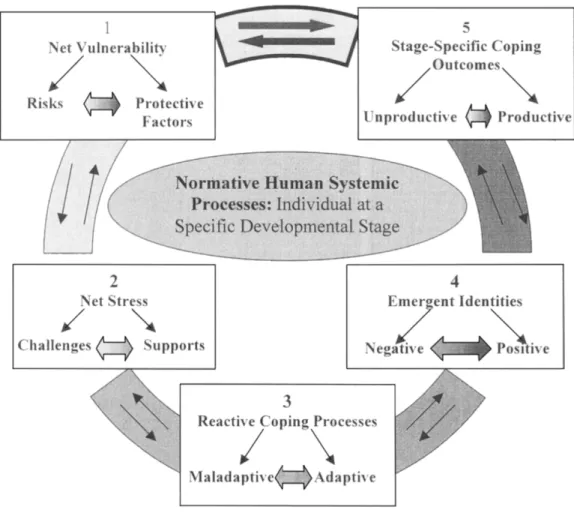
Figure 1 – Phenomenological Variant Ecological Systems Theory……….57
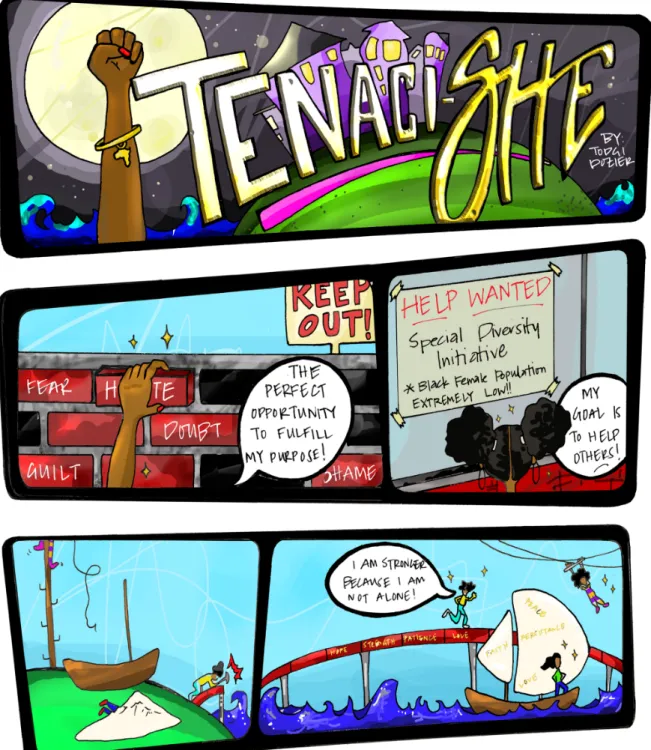
Figure 2 – TENACI-SHE……….………116
Figure 3 – Oppositions and the Motivation to Overcome Them……….……….118
Figure 4 – Seeking New Opportunities………121
Figure 5 A&B – Incurring New Challenges……….………123
LIST OF ABBREVIATIONS
STEM Science Technology Engineering Mathematics U.S. United States
URE Undergraduate Research Experience
Chapter 1: Introduction
Currently, the United States lags behind several of its competitor countries in science, technology, engineering, and mathematics (STEM) in secondary and postsecondary
education. According to the Programme for International Student Assessment, an
international assessment that examines mathematics and science competencies in 15-year-olds across 65 countries, the United States is ranked 27th out of 34 countries in mathematics literacy and 20th out of 34 countries in science literacy (Organisation for Economic Co-Operation and Development, 2012). In 2012, the United States (U.S.) produced nine percent of the overall first university degrees in science and engineering globally, compared to China at 33%, India at 23%, and the European Union at 21% (National Science Board, 2016). The U.S. also realized very little growth in science and engineering degree production from 2000 to 2012 compared to China’s 300% growth (National Science Board, 2016).
development and prosperity of the nation (U.S. Department of Commerce Economics and Statistics Administration, 2011) and the country’s overall global economic standing (World Economic Forum, 2011), improving STEM engagement and participation in the U.S. is of paramount importance.
Since the 1960's, leaders in the U.S. have pushed and advocated for increased attention and focus on STEM education, achievement and advancement (Basile & Lopez, 2015). Their increased attention to STEM has been considered a response to Russia’s launching of Sputnik and the country’s fear of losing its stance as a global superpower
(Basile & Lopez, 2015). Recognizing the many contributions that STEM afforded the nation, such as increased human capital, advanced global economic positioning, dominance and power over other countries, the U.S. increased its efforts in promoting and advancing STEM education for its citizens (Basile & Lopez, 2015).
As the country became informed of the state of STEM education within the U.S. and the lack of available human capital to achieve its goals, researchers and policy makers turned their efforts towards increasing the number of underrepresented individuals in STEM
Drezner, 2010; Hernandez, Schutz, Estrada, Woodcock, & Chance, 2013; Thiry, Laursen, & Hunter, 2011).
Although efforts were implemented to increase all underrepresented students’
participation, retention, and matriculation in STEM, this research project focused specifically on Black1 students in STEM at the postsecondary education level. Specifically, this study’s primary objective is to develop a counter-story regarding Black females’ retention in STEM, STEM identity, and undergraduate research experiences situated in the perspectives and stories of the participants. To uncover the counter-story, this study seeks to:
1. Characterize the perceptions of Black females’ race, gender, and other salient identity in STEM undergraduate research experiences.
2. Gather the meaning they ascribe to their identity and how it informs their engagements with STEM.
3. Understand their perception of STEM and their undergraduate research experience.
4. Acknowledge their perceived associations as well as any predispositions to STEM to infer if STEM undergraduate research experiences are
transformative experiences for them.
1 In the literature specific to Black students’ matriculation and retention in STEM
In this study, race is a socially constructed category that is used to classify or group people based on, “historically contingent, socially significant elements of their morphology and/or ancestry.” (Haney López, 1994, p. 7). As well, gender encompasses a belief, acceptance, and practice of activities, roles and responsibilities that society assigns to a biological sex (Egan & Perry, 2001). Gender is contingent upon the individuals’ “knowledge of membership…felt compatibility…felt pressure…attitudes” (Egan & Perry, 2001, p. 451).
Statement of Problem
Despite its popularity in educational research, student matriculation and retention in STEM is still a major concern within the U.S. (Chang, Sharkness, Hurtado, & Newman, 2014). Forty-eight percent of bachelor degree students and 69% of associate’s degree students that were enrolled in a STEM major between 2003 and 2009 left STEM by 2009, with approximately one-half of those students leaving school altogether without earning a degree (Chen, 2013). In 2012, 71% of graduated high school students in the U.S. enrolled in a college or university (Organisation for Economic Co-operation and Development, 2014) and 45% of these students revealed that they intended to major in a STEM discipline (Eagan, Stolzenberg, Ramirez, Aragon, Suchard, & Hurtado, 2014); however, only 18% declared a STEM major (National Science Board, 2016). Not only is there a significant percentage of students who are STEM majors in college leaving STEM, but there are also very few students initially pursuing STEM majors when they first enter college, creating a cycle that perpetuates an increased reduction in STEM engagement, retention and matriculation over time.
and other (17.7%) counterparts (National Science Board, 2016). Black students also had higher STEM attrition rates in both the bachelor and associate degree-seeking populations, as compared to other races and ethnicities (Chen, 2013). Although the overall college
enrollment rates for Black students had increased from 11% to 13% over a 13-year period (2000-2013), the conferral rate of STEM bachelor degrees remained consistent at nine percent (National Science Board, 2016). Collectively, these statistics indicate an issue with STEM matriculation and retention both during the transition from secondary to
postsecondary education, and during postsecondary studies. These statistics also disclose that despite any targeted efforts put forth, the on-going issues with STEM matriculation and retention in the U.S. dramatically affect Black students more than other racial and ethnic populations.
Purpose of the Study
The current trend in educational research surrounding STEM retention and
matriculation is to focus on targeted efforts such as the undergraduate research experience, exploring the various affordances that environments of this nature provide its participants and how these affordances aid in their retention and matriculation. Arguments that promote those targeted efforts as being viable remedies for problems with STEM retention and
of their research experience” (Hurtado, Cabrera, Lin, Arellano, & Espinosa, 2009, p. 201). One particular construct noted in the research literature is STEM identity.
Research specific to STEM identity highlights the importance of factors such as competence, efficacy, confidence, performance and recognition (Adedokun, Bessenbacher, Parker, Kirkham, & Burgess, 2013; Carlone & Johnson, 2007; Hunter, Laursen, & Seymour, 2007; Hurtado et al., 2009; Perez, Cromley, & Kaplan, 2014; Seymour, Hunter, Laursen, & Deantoni, 2004; Thiry, Weston, Laursen, & Hunter, 2012). Not only is the environment in which a person experiences STEM important in helping to foster a STEM identity, but the perception of resources and support (both tangible and intangible) aid in the formation of a STEM identity (Carlone & Johnson, 2007; Lee, 2002; Merolla, Serpe, Stryker, & Schultz, 2012; Merolla & Serpe, 2013). For many researchers, structured undergraduate research experiences (programmatic efforts incorporating academic and financial support with supervised research) serve as a prime environment and experience where all the previously mentioned factors are operating (Pender, Marcotte, Sto Domingo, & Maton, 2010).
shape students’ learning but also shape their identity as a STEM researcher” (National Academies of Science, Engineering, and Medicine, 2017, p. 3-4).
Though undergraduate research experiences can establish associations with STEM and contribute towards students developing a STEM identity (Hurtado et al., 2009; Merolla & Serpe, 2013), the research literature does not consider students’ predispositions to STEM or conceptualizations of their salient identities (e.g., race, gender) within the STEM
undergraduate research social setting that can inform the development of their associations. Recognizing and understanding the influence of race, gender, and other salient identities within the STEM undergraduate research context is necessary to fully understand students’ development of associations with STEM. It is important to understand the aforementioned constructs because identity, in general, is essentially the negotiation of self with society’s value; it is developed over time as one transitions through different phases in life (French, Seidmen, Allen, & Aber, 2006; Miller, 2011). A STEM identity, specifically, is contingent upon factors like the recognition of self by self and others in STEM (Carlone & Johnson, 2007).
STEM identity. Additionally, the study examines the extent to which those identities, salient to the study participants, influence the students’ retention and matriculation in STEM
postsecondary education.
Retention is a term used to describe the enrollment behaviors and patterns of students within the postsecondary context (Berger & Lyon, 2005). Like retention, matriculation often refers to students’ continued participation and engagement as they transition from one stage or phase in a particular process to the next (Brown, Morning, & Watkins, 2005; Merolla & Serpe, 2013). Given that both terms focus on students’ prolonged engagement or
participation within a specific entity, I use the label “continued participation” throughout the remainder of this research project to succinctly refer to retention and matriculation.
Black Student Retention, Matriculation, and Persistence
Retention and matriculation are traditionally viewed from an institutional or
contextual lens; being contingent upon contextual affordances and restraints imposed on the individual engaged in the environment and the individual’s own volition (Bowen, Chingos, & McPherson, 2009; Lang, 2001-2002; Lau, 2003). Research specific to Black student retention and matriculation in STEM fit within those two categories, context and individual. In their investigations, researchers delineate the influence or impact that the environment and the individual has on a student’s continued participation and engagement in STEM within the postsecondary educational context. Environmental influences are measured in terms of the students’ perception of support within the educational context (Carter, Mandell, & Maton, 2009; Thiry et al., 2011). Research measures individual influences in terms of student persistence (Toven-Lindsey, Levis-Fitzgerald, Barber, & Hasson, 2015).
Context-Related Literature. Three types of studies exist within the literature on environmental factors that influence or impact Black student retention and matriculation in STEM within the postsecondary educational context. These three types of studies either investigate a particular programmatic effort targeted to improve STEM retention and
matriculation, investigate institutional effects on STEM retention and matriculation from pre-identified institution types, or identify successful factors in general that influence STEM retention and matriculation. Collectively, the resources afforded to the students and the influential people that students identify are two common factors found to significantly influence or impact Black student retention and matriculation (Thiry et al., 2011; Ong, Wright, Espinosa, & Orfield, 2011; Tsui, 2007).
of these programs include learning communities, the Meyerhoff Scholarship Program, the Minority Engineering Program, TheScienceStudy, and a K-12 Family Model (Freeman, Alston, & Winborne, 2008; Good, Haplin, & Haplin, 2001-2002). Researchers attempt to determine the overall success of the program offered, with students’ perception of the program and their expressed intention to stay in STEM being the determining factors of success. The next group of studies looks at the institution that African American students attend and the particular components of the institution that influence STEM matriculation and retention (Burrell, Fleming, Fredericks, & Moore, 2015; Lundy-Wagner, 2013). This group mainly investigates Historically Black Colleges or Universities (HBCUs) to determine if the experiences of African American students at HBCUs differ from the experience of students at a Predominantly White Institution (PWI). The last group of studies seeks to identify successful factors that contribute to STEM retention through obtaining the students’ perception of their STEM experience while in college (Gayles & Ampaw, 2014; Ong et al., 2011). This group does not pre-identify institutional differences before their study, but rather waits to determine the possibility of an institutional effect or influence on the basis of
collected student responses.
environmental messages and cues (Freeman et al., 2008; Good et al., 2001-2002; Ong et al., 2011). Program environments that successfully retain students are designed to help students learn STEM and develop associations with STEM through hands-on inquiry, peer support, collaboration, and mentoring (Stolle-McAllister, Sto. Domingo, & Carillo, 2011).
Likewise, studies that pre-identified institutional contexts and services, or studies that organically discovered influential institutional settings and services, suggest similar ideas regarding the influence of the environment (Brown et al., 2005; Perna, Lundy-Wagner, Drezner, Gasman, Yoon, Bose, & Gary, 2009). Researchers reveal that HBCUs produce more supportive and encouraging environments for African American students in STEM (Brown et al., 2005). The cooperative and collaborative culture that HBCUs provide scaffold the supportive and encouraging environments (Essien-Wood & Wood, 2013; Perna et al., 2009). These studies also suggest that institutional selectivity influences STEM
matriculation, matriculation being determined by graduation rates: more selective institutions have higher STEM matriculation rates despite the fact that students’ overall experience with STEM in more selective institutions is not the best due to perceived discrimination and racism on campus (Brown et al., 2005). Overall, the type of environment constructed has implications for African American students’ continued participation in STEM, with supportive and collaborative environments being more favorable for student retention.
Creators of the supportive STEM programs or campus environments (i.e., faculty and staff) reported they intentionally developed conditions that would generate feelings of
2011; Maton et al., 2000). Holistic approaches are not only dependent on the people in the environment, but they also depend upon the services provided to the participants. Services rendered to the students are determining factors in the students’ overall perception of the program and its ability to influence their retention in STEM.
A majority of the services offered by these particular programs or institutions that African American students find beneficial are undergraduate research experiences, peer tutoring, and clustered learning opportunities (Espinosa, 2011; Freeman et al., 2008; Thiry et al., 2011). Some programs, such as the Meyerhoff Scholars Program, offer these services in conjunction with financial aid and support for the students (Maton et al., 2000; Stolle-McAllister et al., 2011). These identified resources are beneficial in helping retain students by supporting the family-like structure and facilitating the development of associations with STEM through a complete immersion into the STEM community via active participation in research and conferences (Seymour et al., 2004; Tsui, 2007). Financial assistance is
perceived as a valued resource as well, as it helps alleviate the stress and pressure that students face regarding paying for college (Stolle-McAllister et al., 2011). Financial support allows the students to be more engaged in the STEM environment rather than being
disengaged in STEM because of having to work an off-campus job to pay for school (Stolle-McAllister et al., 2011).
to the same phenomenon of interest, which is student continued participation (Berger & Lyon, 2005). Relationships and self-efficacy (i.e., belief in one’s capabilities to succeed) in STEM are two common factors found within the literature that investigates Black student persistence in STEM (Chang et al., 2014; McClain, 2014; Schultz, Hernandez, Woodcock, Estrada, Chance, Aguilar, & Serpe, 2011; Zhang & Barnett, 2015). These factors promote persistence by influencing Black students’ interest in and association with STEM.
Relationships. Relationships established among Black students and their peers,
faculty, and other university personnel are essential in helping Black students maintain and retain in STEM. Research demonstrates that these relationships develop during their collegiate experience, particularly within the STEM environment (Chang et al., 2014;
Charleston, 2012; Palmer, Maramba, & Dancy II 2011). Non-college based relationships that are beneficial in helping Black students maintain and retain in STEM are relationships that these students have with their family, secondary school teachers and staff, friends, and other identified significant individuals. Specific studies demonstrate the relationships status between the Black students and other significant individuals (e.g., peer, mentor, family, community, etc.), and the influence these relationships have on the students’ STEM
persistence (Russell & Atwater, 2005; Zhang & Barnett, 2015). Overall, these relationships and their perceived benefits are best discussed by dividing them into two groups: school-based relationships and home-school-based relationships.
School-based relationships include the relationships between Black students and their peers, teachers, and other staff, that are established either during their secondary or
learn the content necessary for success, as well as serving as companions (Freeman et al., 2008; Ong et al., 2011; Palmer et al., 2011). Peers may also act as competitors for Black students, being sources of encouragement when the competitors are also Black, or discouraging and detrimental to the ego, confidence, and sense of belonging when the competitors are non-Black (Harper, 2006; Hernandez et al., 2013; McClain, 2014). These types of peer relationships occur on both the secondary and postsecondary level, whereas in secondary education, peer influence has greater implications for students demonstrating a STEM interest (Charleston, 2012). On the postsecondary level, peer influence deals more with students’ connection or association with STEM (Palmer et al., 2011).
Other staff relations found to be supportive and encouraging to the students are relationships established with individuals such as program personnel, campus administration, and school counselors. These identified persons serve as gatekeepers for access to STEM programming and services, pertinent knowledge, finances, and information that can help students continue and persist in STEM (Moore III, 2006; Zhang & Barnett, 2015). Teacher and faculty relationships are also crucial relationships for African American students regarding success in education in general (Brown, Kaney, & Johnson, 2014). Countless research studies demonstrate the effect of teacher relationships and expectations on student performance (Corprew III & Cunningham, 2011; Solórzano, 1997; Stewart, 2007-2008). Findings that reveal teacher expectations to have grave implications for student learning and engagement carry over to the STEM literature as well. Teacher relationships during the secondary education process shape African American students’ pursuit of STEM
creating a situation that does not foster strong associations with STEM for African American students (Burrell, Fleming, Fredericks, & Moore, 2015; Ong et al., 2011).
On the collegiate level, faculty attitudes can influence African American students’ persistence in STEM (Beasley & Fischer, 2012; Chang et al., 2014). Negative attitudes towards African American students lead students to develop oppositional beliefs towards STEM (Beasley & Fischer, 2012; Chang et al., 2014). This is especially true when faculty attempt to weed out students in introductory STEM courses (Hurtado et al,2009). Faculty can also support the development of positive STEM associations for African American students as they serve as guides and mentors for the students, particularly for those who participate in undergraduate research (Adedokun, Zhang, Parker, Bessenbacher, Childress, & Burgess, 2012). Faculty may serve as nurturers, caregivers, or “extended parents,” providing African American students with the necessary love, support, and guidance to overcome challenges and obstacles faced when engaged with STEM (Kendricks & Arment, 2011; Maton et al., 2000).
can determine how students engage with STEM over time. Black families and Black communities also serve as protective mechanisms and factors for Black students in STEM, teaching lessons of self-worth, self-efficacy, and self-confidence (McGee & Spencer, 2013).
Overall, the type of relationships that Black students establish with people from school, home, or their larger community has implications for STEM retention and
matriculation in postsecondary education by way of STEM interest and STEM associations. These relationships provide Black students with various forms of support and resources, as well as the motivation necessary to persist through the challenges and barriers surrounding STEM achievement and attainment. Additionally, these relationships assist Black students in developing stronger associations with STEM.
Self-efficacy. Self-efficacy is the degree to which an individual believes that they are
capable of handling and addressing a specific task or goal (Bandura, 1989). Literature specific to Black student persistence in STEM suggests that self-efficacy is an outcome established from students’ confidence, experience, and exposure in STEM (Hurtado et al., 2009; Moore III, 2006). Black students are able to develop confidence and obtain experience and exposure through their engagement and achievement in various STEM settings.
Performance indicators and messages of support from significant individuals (i.e., STEM professionals, family, and community members) provide Black students with the opportunity to establish confidence within STEM as well as the belief that they have the necessary exposure and experience in STEM to feel efficacious (Griffith, 2010; Hunter et al., 2007; McClain, 2014; Schultz et al., 2011).
Performance indicators. Performance indicators, such as students’ prior academic
2012; Espinosa, 2011; Griffith, 2010) contributing to their persistence in STEM (Chang et al., 2014). Prior academic achievement refers to students’ pre-college academic performance. Researchers investigating the influence of prior academic achievement for Black students reveal that it serves as a mediating factor for demographic effects or cultural influences on STEM persistence (Burrell et al., 2015; Chang et al., 2014; Gayles & Ampaw, 2014; McClain, 2014).
There are discrepancies within the research literature regarding which pre-college academic factor is most influential in Black students’ persistence in STEM. Some research indicates SAT score as the only significant variable associated with STEM persistence (Chang et al., 2014) whereas other studies suggested high school GPA to be the only
important pre-college indicator of STEM persistence (Espinosa, 2011). Others argue that it is the number of STEM-based advanced placement courses completed that has implications for STEM persistence beyond the sophomore year in college (Griffith, 2010). Despite
differences in research findings of which factor is most important, high school preparation in its multifaceted forms moderates the relationship between race and STEM persistence, where race predicts lower STEM persistence for Black students compared to White and Asian Americans (Beasley & Fischer, 2012; Chang et al., 2014). High school preparation also moderates a gender effect on STEM participation; it has a greater influence on the STEM persistence of females in comparison to males (Gayles & Ampaw, 2014).
Black students’ perception of their prior academic achievement also influences their confidence in STEM (McClain, 2014; Moore III, 2006). McClain (2014) found that students felt more efficacious and confident in their STEM abilities when they were able to
scores in their STEM classes did not impact their desire to continue in STEM. It was the lessons of hard work, perseverance, and persistence demonstrated by their improvement in the courses, which helped them feel more confident in their abilities to succeed in STEM over the long haul (McClain, 2014). High academic achievement in high school informs Black students’ confidence and decision to persist in STEM as high performance led students to believe that they had a high aptitude in STEM despite no initial interest in STEM or effort put forth to be successful in STEM (Moore III, 2006).
STEM exposure and experience obtained from prior academic achievements also influences Black students’ persistence in STEM (Beasley & Fischer, 2012; Palmer et al., 2011; Moore III, 2006). Moore III (2006) found that continued experiences and exposure in STEM, for those students who had high aptitudes in STEM, gradually increased their interest in STEM, contributing to their persistence in STEM. Palmer et al. (2011) revealed that exposure and experience in STEM during elementary and secondary schooling increased Black students’ awareness and efficacy in STEM, helping to foster a stronger association with STEM. Experience in STEM also brought about negative connotations for Black student persistence, as Beasley and Fischer (2012) show that Black students demonstrated higher measures of performance anxiety in their STEM experiences compared to other races. High performance anxiety resulted in higher attrition rates in STEM for Black students (Beasley & Fischer, 2012).
Messages of support. Supportive messages and cues from identified, significant
support, and teachings that Black students are able to garnish a better understanding of STEM, STEM careers, and STEM conceptual and procedural knowledge (Hunter et al, 2007; Hurtado et al., 2009). Likewise, supportive messages and cues from home and their home community assist Black students in developing self-efficacy in STEM, as these messages often teach the students how to handle and address challenges that may arise within STEM fields that are due to their race or racism (McGee & Spencer, 2013).
Research Questions
Educational research surrounding STEM retention and matriculation focus on the various affordances of targeted efforts such as the undergraduate research experience (Adedokun et al., 2012; Carter et al., 2009; Freeman et al., 2008; Good et al., 2001-2002; Hunter et al., 2007; Hurtado et al., 2009). Individual contributions to STEM retention and matriculation (i.e., student persistence), by way of these targeted efforts are not thoroughly investigated beyond factors deemed contributory to students’ development of a STEM identity (Hurtado et al., 2009; Merolla & Serpe, 2013). Information gathered from the previously discussed studies are limited: they do not include students’ predispositions to STEM or conceptualizations and understandings of their existent salient identities. Additionally, these studies investigate underrepresented racialized students from a deficit perspective.
The following questions inform this research:
1. How do Black female students participating in STEM undergraduate research programs conceptualize their race, gender, and other salient identities within their STEM experiences?
2. How do Black females in STEM undergraduate research experiences position their race, gender, and other salient identities? Does their identity positioning inform their persistence in STEM? If so, how?
3. How do Black females in STEM undergraduate research programs perceive STEM and their STEM undergraduate research experience? To what extent does their identity inform these perceptions?
4. To what extent does Black females’ conceptualization of their race, gender, and other salient identities inform their expressed association with STEM? Answers to these research questions address gaps in the research literature concerning salient identifiers, especially as they relate to STEM identity and the undergraduate research
experience. Additionally, the use of an asset-based perspective, specifically
Phenomenological Variant Ecological Systems Theory (PVEST) to discuss the findings, offers an alternative perspective to what is pervasive in the existent research. This research contributes to the growing literature regarding the importance of investigating and
Significance of Study
Research conducted to understand the impact and influence of efforts to increase the retention and matriculation of Black students in STEM (i.e., the undergraduate research experience) focus on the contributions that the research experience provides Black students and how those contributions inform their STEM identity (Adedokun et al., 2011; Hurtado et al., 2009). The literature contains very few studies that investigate the contributions of individual factors such as students’ understanding and positioning of their racial, gender and other salient identities within STEM, in general, and undergraduate research experiences, in particular, thereby, creating a majoritarian narrative for underrepresented students. With respect to Black students, the majoritarian narrative is “colorblind” and excludes the influences and impacts of race and racism. The complexities of retaining traditionally underrepresented groups in STEM and the increasing demand for STEM professionals warrant the investigation of salient identifiers like race and gender.
assets, and value that their traditionally marginalized identities afford them in their STEM persistence. This approach is different from the previous studies, which do not look at individual contributions to the research experience, but rather focus on how context shapes, molds, and transforms Black students into society’s perception of a successful person in STEM.
Little is known about the strengths or assets that Black students bring into their research experiences that contribute to their STEM identity and decision to remain in STEM (Harper, 2009b, 2010). Understanding the value and influence of identifiers and experiences associated with them creates a different narrative from what is currently presented regarding Black females’ perceptions and experiences during the undergraduate research experience. Furthermore, investigating the strength and power behind identifiers creates a socially just situation where Black females can feel empowered and valued within the STEM environment rather than marginalized or stereotyped (Chapman, 2013; Nicolas, Helms, Jernigan, Sass, Skrzypek, & DeSilva, 2008). Allowing students to open up about their past experiences and development to reveal how they have positively contributed to their understanding of themselves within the STEM context gives students a voice (Delgado, 1989). This information may prove useful to researchers and practitioners in re-conceptualizing influential constructs on STEM retention and matriculation, leading to the formation of optimal learning environments for STEM retention and matriculation.
that I have gained over time through my own trajectory and experience as a Black male who studied the physical and biomedical sciences.
Positionality
Positionality is the perspective that a researcher brings into the research context; this perspective is based on the researcher’s knowledge and experience of the world (Glesne, 2011). A researcher’s positionality is influenced by their “fixed” personal characteristics (e.g., skin color, age, size, gender, etc.) and overall subjective stance based on ascribed (e.g., nationality and ancestry), or achieved characteristics, such as an individual’s educational level, economic level, or institutional affiliation (Glesne, 2011). When conducting qualitative research, it is important for researchers to understand their positionality as it shapes their overall research design and perspective of the study. Scholars suggest researchers should examine themselves, their relations to others, and participate in engaged reflection with individuals from the population of interest, particularly when working with individuals from different races and cultures (Milner IV, 2007).
perform, utilize, and express. Lastly, critical race theory elucidates the underlying premises of my positioning, informing how I perceive, interpret, and understand the research literature and problem, in addition to the methodological approach I pursue.
Critical race theory. Critical Race Theory (CRT) is both a theoretical and
methodological framework that investigates and uncovers issues of oppression and power as experienced by individuals from racialized groups (Harper, 2009a; Lynn & Dixson, 2013). CRT acknowledges racism, pointing out how racist ideology is perpetuated throughout society; and, how racism is maintained and promoted in social structures through their policies, procedures, and practices (Lynn & Dixson, 2013). Parsons, Bulls, Atwater, Butler, and Freeman (2016) define racism as:
a hierarchical superior-inferior relationship among races that is established and maintained by power enacted through social and institutional practices (Bonilla-Silva, 1997). The hierarchical superior-inferior relationships are founded on perceived genetically-based differences, visible differences consciously and subconsciously believed to be linked to socially relevant abilities and characteristics (van den Berghe, 1967). These differences are considered a legitimate basis for the arrangement and positioning of groups in society (Byng, 2013).
CRT promotes racial-awareness and equity throughout society and its structures, challenging researchers and practitioners to be more critical in their behaviors and actions to promote socially just services and opportunities (Lynn & Dixson, 2013).
Tate, 1995). CRT tenets and assumptions that inform my perspective, directly shaping this research study, are racial realism, the myth of colorblindness, and counter-storytelling.
Racial realism. One of the main tenets or constructs of CRT is that race and racism
are endemic to American society (Bell, 1992). Critical analyses of the United States’ governing documents and laws demonstrate that the concept of race is socially constructed (Gotanda, 1991; Haney López, 1994). Negative connotations of race stem from
discriminatory and racist ideology that perpetuated and legalized the enslavement and marginalization of people from African descent based solely on morphology and ancestry (Haney López, 1994; Harris, 1993; Omi & Winant, 1994). In accepting and understanding the deep-rootedness of racism within American society, CRT suggests that individuals determined to improve society must work to combat racist and discriminatory ideologies and practices. Derrick Bell (1992) coined this belief as racial realism. Racial realism purports that racism is permanent and racial equality is not a realistic goal within the current structure; but rather than submit to an oppressive society or align with its ideals, people should resist and fight, with the hope of improving society. Having a racial realistic perspective, I recognize that race and racism are prevalent and present in all social structures, influencing my perspective on any information I ascertain regarding STEM retention and matriculation.
Myth of colorblindness. Colorblind approaches assume all things are equal when it
comes to lived experiences and society. That is, it assumes racial neutrality as a goal and the ideal. Analyzing Supreme Court cases over the years, Gotanda (1991) reveals that a
therefore suggests that a colorblind approach disenfranchises non-white individuals, perpetuating social stratification in America based on race. Harris (1990), providing the historical context of the governing documents such as the Declaration of Independence, reveals that statements such as “We the people” do not include the voices and thoughts of individuals of color or women due to the white supremacist, patriarchal ideologies of the era. She also argues that “one voice” does not represent the people since individuals are not comprised of a single consciousness, but are made up of “multiple consciousness” or “multiple selves” that are products of intersecting identities and experiences (Harris, 1990). Her belief in intersectionality challenges the concept of colorblindness as she states that a colorblind approach creates an essentialist point of view regarding individuals and their capabilities or abilities (Harris, 1990).
Like Harris (1990) and others, I too believe that awareness of and embracing
intersectionality and multiple consciousness generate a better understanding of people, their thought process and subsequent behaviors. Like Gotanda (1991) and Harris (1990), I also believe colorblindness does not exist. Due to the embeddedness of racism in the U.S, individuals see race, they either acknowledge it or not. Consequently, a race consciousness perspective is warranted when investigating human development and performance.
Counter-storytelling. Critical race methodology is a research approach grounded in
white privilege (Solórzano & Yosso, 2002). Majoritarian narratives portray the white, middle-class male as the norm and “good”, with men and women of color and people in poverty stereotyped as being the “other” and “bad” (Solórzano & Yosso, 2002). To dispel such notions, critical race methodology uses counter-storytelling. Counter-storytelling elevates and validates the voices and experiences of people of color. I describe how I used counter-storytelling in chapter 3, the chapter on methodology.
The use of storytelling reflects my positionality in two ways. First, counter-storytelling provides a methodological framing that allows me to address the dominant perspective constructed within the research literature regarding Black student retention, STEM identity, and undergraduate research experiences. In acknowledging the racism inherent within the dominant perspective – a racial realistic approach – counter-storytelling provides the outlet to explore the perceptions and experiences of Black females as a way to construct their narrative (Solórzano & Yosso, 2002).
Secondly, counter-storytelling is applicable to my decisions regarding how I choose to present the findings obtained for this study. Throughout my educational tenure, I have had the opportunity to learn about the trials and tribulations Black faculty in the academy face, particularly those who take a critical stance with their research agenda. Research literature demonstrates the inherent racism and bias that occurs within the academy regarding the scholarship created by Black scholars; this scholarship is challenged on the basis of Eurocentric epistemological norms (Bernal & Villalpando, 2002; Diggs, Garrison-Wade, Estrada, & Galindo, 2009).
considered legitimate knowledge and traditional norms of presenting it. Embracing the ideologies of counter-storytelling, I choose to take an alternative approach to represent the study’s findings. Alternative reporting styles allow researchers, “to work out and spotlight particular ironies or paradoxes inherent in particular positions and cultural conventions” (Coffey & Atkinson, 1996, p. 123). My representation of the study’s findings is situated within my cultural resources (Bernal & Villalpando, 2002) of artistic expression. Situating the findings in my cultural resources, explicating them in an empirical manner while simultaneously challenging the norms of traditional presentation, is a form of
transformational resistance – critiquing social oppression and seeking social justice reform (Solórzano & Bernal, 2001).
My upbringing, experiences, beliefs, and knowledge are the basis of my positionality. I believe that all individuals are both lovable and capable! I have a strong desire to not only address the oppression and injustice Black people have faced within the US, but I feel obligated to advocate and fight for change. Not just for my people, but for all people facing injustice and oppression. My positionality shapes this research proposal, informing my perspective on the problem, the existent research, my questions, and proposed method of inquiry.
Chapter One Summary and Dissertation Overview
Chapter 2: URE and STEM Identity Development
Chapter two presents a review and critique of the literature on the undergraduate research experience, setting the stage for the counter-story regarding the perception and influence of race, gender, and other identity expression for Black females’ STEM identity development and retention via undergraduate research experiences. Situating race and racism at the forefront of my synthesis and critique (Solórzano & Yosso, 2002), I uncover the limitations of the literature exposing the disseminated majoritarian narrative regarding Black students in STEM undergraduate research experiences. Theoretical and conceptual
frameworks used within the varying studies promulgate the majoritarian narrative regarding the influence research experiences have on STEM retention and matriculation via STEM identity. Chapter two also introduces the conceptual framework for this study,
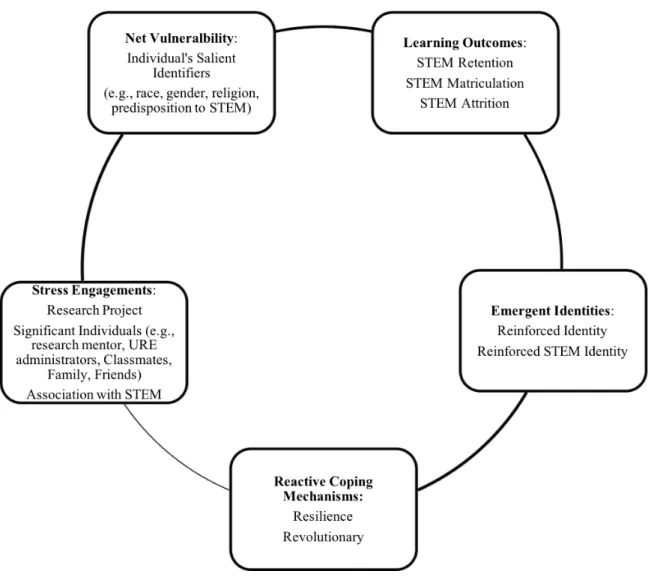
Phenomenological Variant Ecological Systems Theory. I present Phenomenological Variant Ecological Systems Theory as the appropriate framework for producing the counter-story regarding Black females’ perception and conceptualization of their race, gender, and other identities influence on their STEM identity and retention. I provide an overview of the theory, research using the theory, and the theory’s stance on identity.
programs and careers (Carter et al., 2009; Lopatto 2004; National Academies of Science, Engineering, and Medicine, 2017; Thiry et al., 2012). Based on theoretical orientations, researchers position the undergraduate research experience to be a transformative context for Black students’ identity. Undergraduate research experiences are presumed to be
transformative for Black students as they address “race-based deficiencies” to incorporate aspects related to STEM (Marlone & Barabino, 2009; Hurtado et al., 2009) via the capital they provide, developing the necessary skills through immersive programs (immersion into STEM culture) that promote a STEM identity.
STEM Undergraduate Research Experience
The promises and the perils of undergraduate research experience2 (URE) have been topics of national interest since 1998, with the release of the Boyer Commission report that called for research-based learning to occur in American colleges and universities (Pender et al., 2010). This report positioned URE to be beneficial in not only improving and enhancing students’ learning through inquiry but also in ensuring more students matriculated to and through graduate programs (Pender et al., 2010). The Boyer Commission report specifically highlighted research-intensive universities, suggesting that all colleges and universities take
on more creative approaches to teaching that “draws on the mode of inquiry that is
fundamental to [research universities’] research and scholarly activities and their training of graduate students” (Katkins, 2003, p. 22). In response to this report, funding agencies and universities invested more efforts and resources to provide students with the opportunity to participate in URE, ushering in a wave of research to investigate the outcomes of this endeavor (Hunter et al., 2007).
As a result of the increased attention to undergraduate research, a large corpus of educational research literature exists regarding URE. To locate research on this information, I conducted a comprehensive investigation on terms such as undergraduate research
(experience), STEM research, research programs, STEM retention, STEM matriculation, etc. I selected and reviewed more than 20 articles. The articles were published in peer-reviewed journals, with journal quality determined by their journal index or specificity (i.e., journals specific to STEM or STEM education). Articles whose authors are experts in the field (determined by frequent publication and citing on this topic) were included despite the type of the journal that published the study.
Benefits of URE
In investigating the overall benefits of URE, educational researchers have employed a variety of approaches to determine what participation affords students. Based on the
literature, students who participate in URE report faculty mentorship, peer relationships, hands-on inquiry, and immersion within the STEM community as facilitating their
continuation in STEM (Seymour et al., 2004). Research indicates each particular component benefits the students differently. Having a hands-on learning experience provides students with the opportunity to increase their conceptual and practical knowledge of the particular STEM discipline (Craney et al., 2011). Students report the relationships they establish with their faculty mentors, peers, and other members of the STEM community function to affirm their identity in STEM (Hurtado et al., 2009). Researchers have also determined the benefit of multi-year participation in URE, discovering that individuals who have multiple
engagements in URE have higher-order conceptualizations in STEM and better critical thinking skills as compared to those who do not have multiple research experiences (Thiry et al., 2012).
Participating in URE affords individuals exposure to STEM careers and possibilities beyond their immediate STEM engagement (Adedokun et al., 2012; Thiry et al., 2011). URE immerses participants into STEM through their engagement in research projects and
pertinent activities with their mentors and other lab members (Craney et al., 2011).
recognition by others in STEM increases (Hurtado et al., 2009; Seymour et al.,2004; Tsui, 2007). UREs that contain additional resources such as financial support benefit students by helping alleviate the stress and pressure they may face regarding paying for college (Stolle-McAllister et al., 2011). To determine the impact of URE’s benefits, researchers have investigated the overall outcomes of student engagement in URE.
Outcomes of URE
Studies interested in determining the outcomes of URE participation examine the educational and career trajectories of individuals who participated in URE and how those paths mirror or are different from persons who did not take part in URE. Researchers determined that students who participate in URE are more likely to be involved in a STEM graduate program or STEM career than individuals who do not (Bauer & Bennett, 2003; Carter et al., 2009; Lopatto 2004). Participation in URE leads to an increase in task and performance goals and a decrease in avoidance goals regarding continued participation in STEM (Hernandez et al., 2013). Researchers have developed models to determine the probability of intending to enroll in a STEM professional or graduate program; these models reveal participation in URE increases the probability of students continuing in STEM after their undergraduate education (Eagan Jr. et al., 2013; Pender et al., 2010). Eagan Jr. and colleagues (2013) also determined that faculty and graduate student interactions during the URE lead to increased graduate program attainment for the undergraduate students. Experiences in URE
et al., 2012; Bauer & Bennett, 2003; Hunter et al., 2007). Students describe their overall perception of URE. They report differences in faculty treatment based on the race and gender of the faculty (Frierson Jr., Hargrove, & Lewis, 1994), and express the belief that URE aids in their personal and professional development because of the training they receive and the expectations imposed on them (Thiry et al., 2011). Students also report that participating in URE leads to an increased concept (i.e., overall confidence and belief in self) and self-efficacy (i.e., belief in one’s capabilities to succeed) in STEM, providing a transformative experience that helps them develop a science or STEM identity (Hunter et al., 2007). Summary
is an inference based on the theory, model, or conceptual framework that the authors use to inform their thinking and study.
The Majoritarian Narrative: URE – STEM Identity Development Link and Theory In educational research, theory is an analytic tool that is used to inform the
researcher’s perspective on “what is important and what is superficial” when it comes to the data obtained from the research study (Suppes, 1974, p. 4). Theory has the propensity to organize or “reorganize [a researcher’s] way of thinking” (Suppes, 1974, p.4). Like theory, models and conceptual frameworks serve in this same capacity when it comes to
investigating, interpreting, and understanding the data gathered (Gall, Gall, & Borg, 2003). Studies examining URE employ a variety of theoretical frameworks, conceptual frameworks, or models to analyze and interpret their findings. Social capital theory, social cognitive career theory, and sociocultural theory dominate the literature. These frameworks promulgate the majoritarian narrative regarding undergraduate research experiences transforming Black students; UREs promoting a STEM identity by incorporating aspects related to STEM to address “race-based deficiencies” via the capital they provide that develops research knowledge through STEM-immersive programs (Hunter et al., 2007; Hurtado et al., 2009; Marlone & Barabino, 2009; Seymour et al., 2004; Thiry et al., 2012).
STEM Identity
Research specific to STEM identity suggest a STEM identity to be strong associations or affiliations with STEM. These associations are exhibited by competence, efficacy, and confidence in STEM content and procedures; and confirmed by individuals’ STEM
2014; Seymour et al., 2004; Thiry et al., 2012). Not only is the environment in which a person experiences and engages with STEM important in helping foster a STEM identity, but the perception of resources and support (both tangible and intangible) aid in the formation of a STEM identity (Carlone & Johnson, 2007; Lee, 2002; Merolla et al., 2012; Merolla & Serpe, 2013).
For many researchers, structured undergraduate research experiences (programmatic efforts that incorporate academic and financial support with supervised research) serve as a prime environment where students have access to all of these factors (Pender et al., 2010). UREs “enhance students’ learning experiences and increase persistence during college, boost interest in STEM careers, and encourage pursuit of graduate education in STEM disciplines” (Pender et al., 2010, p. 4). As a result of their participation and engagement in the
undergraduate research experience, studies suggest that students are more prone to retain, persist, and matriculate in STEM (Good et al., 2001-2002; Palmer et al., 2011; Tsui, 2007).
Within these particular studies using social capital theory, the authors are interested in determining the extent to which URE contributed to the students’ success in continued
participation, under the presumption that URE provides an added benefit or advantage over non-participation in URE and this advantage contributes to the development of a STEM identity (Bauer & Bennett, 2003; Carter et al., 2009). Other frameworks used are social learning theories, including social cognitive and sociocultural theories, and Carlone and Johnson’s (2007) science identity framework. These studies are mostly qualitative studies taking a constructivist paradigmatic approach, using phenomenology to reveal the student experience (Hunter et al., 2007; Hurtado et al., 2009).
Multiple versions of social capital theory exist. Social capital refers to the
relationships, social networks, and interpersonal interactions between families, community members, peers, and other group members (Bourdieu, 1986). As a theoretical concept, social capital, “accepts the principle of rational or purposive action and attempts to show how that principle, in conjunction with particular social contexts, can account not only for the actions of individuals in particular contexts but also for the development of social organizations” (Coleman, 1988, p. S96). Most prevalent and pertinent to the URE research literature are Bourdieu’s social capital theory (1986) and Coleman’s social capital theory (1988). Researchers use social capital theory to suggest URE provides resources, tools, and
knowledge that are an added benefit for continued participation in STEM (Jones, Barlow, & Villarejo, 2010; Lopatto, 2004; Strayhorn, 2010b), where individuals who participate in URE are more likely to remain in STEM post-college than people who do not (Bauer & Bennett, 2003, Craney et al., 2011; Lopatto, 2004, 2007).
STEM, developing a sense of self-confidence in their STEM academic ability, increasing their desire to remain in STEM (Craney et al., 2011; Seymour et al., 2004).
The acquisition of capital from participation in URE over not participating in URE (e.g., Bourdieu) and the transformative qualities of the various types of capital (e.g., Coleman) are frameworks used to infer how URE contributes to STEM retention. Social capital theory thus identifies specific components of URE that positively advances the students who participate in it (Frierson Jr. et al., 1994; Seymor et al., 2004). Additionally, social capital studies provide empirical evidence of URE contributing to continued participation in STEM (Lopatto, 2004, 2007).
Social Cognitive Career Theory
Social cognitive career theory is a theoretical framework that investigates the
relationships between cognitive and interpersonal factors and internal and external influences on career behavior and choice among individuals (Lent, Brown, & Hackett, 2005). Derived from social cognitive theory,3 the primary constructs associated with social cognitive career theory are self-efficacy (and the role it plays in determining behavior), outcome expectations, and personal goals. In social cognitive career theory, self-efficacy is seen as, “a dynamic set of beliefs that are specific to particular performance domains, and that interact in a complex way with other person, behavior, and environmental factors” (Lent et al., 2005, p. 262).
Researchers employ social cognitive career theory to investigate the extent to which self-efficacy beliefs and self-confidence, obtained through participation in URE, serve as mediating factors to STEM career interest (Adedokun et al., 2013).
Researchers conclude that research skills obtained from participation in URE have both a direct and indirect effect on STEM career aspirations post-graduation (Adedokun, et al., 2013). Research self-efficacy – perceived confidence to successfully conduct scientific research (Adedokun, et al., 2013, p. 946) – positively relates to aspirations for STEM careers. Adedokun and colleagues also show a direct, positive relationship between research skills and research self-efficacy (2013), leading them to surmise that research self-efficacy mediates the indirect effect between research skills and aspirations for a STEM career. Efficacy and confidence – elements of a STEM identity (Carlone & Johnson, 2007; Hunter et al., 2007) – therefore, contribute to students’ association with STEM, as they relate to and predict STEM career aspirations (Adedokun, et al., 2013).
Sociocultural Theory
Communities of practice, the zone of proximal development, and cognitive
apprenticeship are the types of sociocultural theory4 used in URE literature. A community of practice is a situative learning environment that focuses on the development of the individual and the reproduction of a particular community through a master-apprentice model (Lave, 1991). Learning is socially constructed as the learner changes their role or identity within the
4 Sociocultural theory, first developed by Russian psychologist Lev Vygotsky in the 1920’s suggests that human activity takes place in a cultural context, is mediated by semiotic
acting society through engagement in an activity with a teacher (Wegner, 2001). Research using this theory suggests that participation in URE is like participating in a community of practice. Students not only increase their knowledge and understanding of the research process and potential STEM careers, but are able to obtain concepts (e.g., knowledge or experience) that contributes to their desire to continue in STEM. Acquisition of knowledge and experience is due to their engagement with the context and key individuals within the context (Pender et al., 2010). This desire to continue is based on the students’ ability to see his or herself as an active participant in the URE community or a “scientist” (Hunter et al., 2007).
The zone of proximal development and cognitive apprenticeship are concepts within sociocultural theory used to unpack how URE functions as a community of practice. The zone of proximal development is defined as the distance between the actual level of
development that an individual can display without assistance and the level of development that a person can present with the help of an instructor or guide (Vygotsky, 1978). Cognitive Apprenticeship is the idea of learning factual and conceptual knowledge in a problem-solving context, through which an expert “master” models, coaches and scaffolds the novice towards the appropriate understanding (Collins, 2006). Use of these sociocultural theoretical
components informed researchers on the influence of the experiences and perceptions of students in URE as well as the implications of any benefits proposed for continued participation in STEM (Hunter et al., 2007). Application of the zone of proximal
Science Identity Framework
Heidi Carlone and Angela Johnson (2007) introduced the science identity framework in 2007 as a part of their research study that investigated the science experiences of
successful women of color. Science identity as an analytic framework was developed on their understanding of the limitations of the literature to explain the experiences of women of color in science, and their belief of the science community being a community of practice (Carlone & Johnson, 2007). According to their framework, science identity is based on three main, interacting components: performance, recognition, and competence, with these
components being influenced by an individual’s race, gender and ethnic identity (Carlone & Johnson, 2007). A science identity is socially constructed. This construction involves the “local meanings of an activity of phenomenon and global context that enable and constrain those meanings” (Carlone & Johnson, 2007, p. 1192). Carlone and Johnson use this
framework to understand the various forms of a science identity an individual may express (altruistic, disrupted, or research) within the science context, but also the process that leads to the development of those said identities
Hurtado and colleagues (2009) used this particular framework to examine the benefits and challenges that underrepresented racial minorities experience in URE as a way to
determine how these benefits and challenges contributed to students’ formation and
in research gained (Hurtado et al., 2009). With identity being the focal point of this framework, this framework supports the inference of UREs facilitating STEM identity by demonstrating the way in which STEM identity is conceptualized and operationalized within URE.
Limitations of URE Theoretical Orientation
Application of sociocultural theories in the URE literature in addition to social cognitive career theory and social capital theories provide a comprehensive perspective of URE, specifically its influence upon the continued participation in STEM through the
development of a STEM identity. Whereas social capital theory points out the affordances of URE and their long-term outcome (Bennett & Bauer, 2003; Frierson Jr. et al., 1995; Lopatto, 2004, 2007), and social cognitive career theory reveals how the participants interpret
affordances and their connection to STEM careers (Adedokun et al., 2013), sociocultural theory uncovers the application of the developed understanding and corresponding affordances. Collectively, application of these four frameworks, including the science
identity framework previously discussed, positions URE to be a context for and influential in identity transformation that facilitates continued STEM participation.
Findings garnished from studies utilizing social cognitive career theory or