THE EFFECTS OF DIFFERENT CUPPING THERAPY TECHNIQUES ON HAMSTRING EXTENSIBILITY IN COLLEGE AGE MALES
Lauren Taylor Holt
A thesis submitted to the faculty of the University of North Carolina at Chapel Hill in partial fulfillment of the requirements for the degree of Master of Arts in the Department of Exercise
and Sport Science (Athletic Training) in the College of Arts & Sciences.
Chapel Hill 2019
Approved by:
iii ABSTRACT
Lauren Taylor Holt: The Effects of Different Cupping Therapy Techniques on Hamstring Extensibility in College Age Males
(Under the direction of Meredith Petschauer)
iv
TABLE OF CONTENTS
ABSTRACT ... iii
TABLE OF CONTENTS ... iv
LIST OF TABLES ... ix
LIST OF FIGURES ... x
LIST OF ABBREVIATIONS ... xi
CHAPTER 1: INTRODUCTION ... 1
Aims and Hypothesis ... 2
Aim 1: ... 2
Aim 2: ... 3
Aim 3: ... 3
CHAPTER 2: REVIEW OF LITERATURE ... 4
Increasing Range of Motion ... 4
Stretching ... 4
Self-Myofascial Release ... 5
Instrument Assisted Soft Tissue Mobilization ... 6
Cupping ... 7
Techniques ... 7
Pain ... 8
Perceived function ... 9
Blood Flow ...10
Range of Motion ...11
ix
Design ...13
Participants ...13
Instrumentation and Variables ...14
Range of Motion ...14
Questionnaires ...15
Cupping ...16
Procedure ...17
Data Analysis ...18
CHAPTER 4: RESULTS ...19
Participants ...19
Range of Motion ...19
Perceived Tightness ...20
CHAPTER 5: DISCUSSION ...21
Range of Motion ...21
Perceived Tightness ...22
Clinical Implications ...23
Limitations ...23
Conclusion...24
LEGEND TO FIGURES ...26
ix LIST OF TABLES
Table 1. Treatment Protocols ...27
Table 2. Movement Intervention Timing ...28
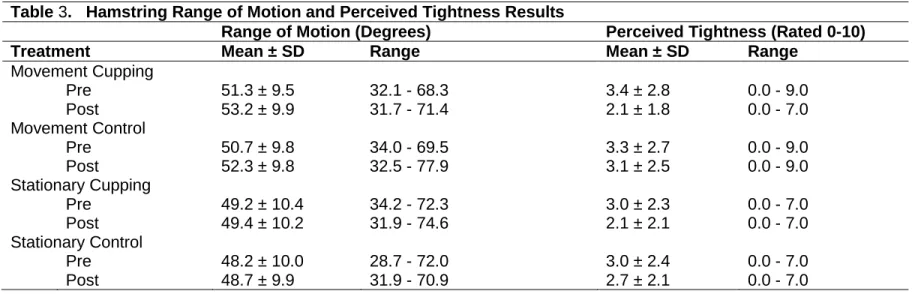
Table 3. Hamstring Range of Motion and Perceived Tightness Results ...29
x
LIST OF FIGURES
Figure 1: Group Randomization and Cross-Over Design. ...31
Figure 2: Range of Motion Starting Position. ...32
Figure 3: Cupping Locations. ...33
Figure 4: Cupping Application. ...34
Figure 5: Range of Motion Mean Results Pre to Post. ...35
Figure 6: Perceived Tightness Mean Results Pre to Post. ...36
xi
LIST OF ABBREVIATIONS ANCOVA Analysis of Covariance
DS Dynamic Stretching
EQ-5D EuroQol Health Index FAT Fascial Abrasion Technique
IASTM Instrument Assisted Soft Tissue Mobilization LEFS Lower Extremity Functional Score
NDI Neck Disability Index
PNF Proprioceptive Neuromuscular Facilitation ROM Range on Motion
SF-36 Short Form Survey SMR Self Myofascial Release SS Static Stretching
1
CHAPTER 1: INTRODUCTION
Hamstrings injuries are among the most common in sport.2–4 Decreased flexibility and a previous history can increase the risk for hamstring injuries.1 Males are also more at risk due to increased hamstring stiffness compared to females.5,6 Full hamstring range of motion (ROM) must be maintained to return to play post injury4 and decrease risk of hamstring injury over all.
Many techniques have been proposed to aid in the management of hamstring injuries, primarily focused on improving ROM. Common techniques used to increase ROM are
stretching, self-myofascial release (SMR ), and instrument assisted soft tissue mobilization (IASTM). The literature supports stretching as a technique to increase ROM in multiple joints throughout the body.7–9 The most common types of stretching are static (SS), dynamic (DS), and proprioceptive neuromuscular facilitation (PNF). Another treatment that allows patients to treat themselves is self-myofascial release (SMR), a type of myofascial release involving rolling or sustained compression applied to the muscle and fascia.10,11 Research supports SMR as a technique to acutely increase ROM;10,11 however the long term effects are inconclusive.107 A popular treatment is instrument-assisted soft tissue mobilization (IASTM). Research has supported IASTM for increasing ROM in the ankle, hamstring, and shoulder in the average population and athletes.12 The research supports IASTM as a technique for increasing ROM but it requires one on one time with a clinical to apply the treatment. Evidence exists for all three methods increasing ROM but is inconclusive as to which technique is the best or most efficient. Further research needs to examine a technique that can increase ROM objectively and
2
Cupping therapy is a technique common in Eastern medicine and currently gaining popularity in Western medicine. Current research is limited, which may limit clinician use of this technique. The main objective is to place a cup on the skin and create a vacuum causing the skin to be pulled into the cup which is then left for 5-10 minutes.13,14 The negative pressure causes cellular reactions that help bring new blood to the area and promote muscle relaxation that aids with increasing ROM.
The majority of available studies examine cupping effects on pain, function, and ROM. Pain is one of the most studied outcomes in cupping literature, including low back,13,15–17 neck,16–22 knee,23–25 and shoulder pain,13,16 along with ankle sprains, headaches, and carpal tunnel syndrome.16 Another aspect of cupping previously studied is that of perceived function, disability, and quality of life. The hamstrings have not been specifically examined, but studies have also measured blood flow changes before, during, and after cupping therapy in the back26 and posterior shoulder.27 Therefore, cupping can be used to aid in tissue healing along with treatment goals including pain relief and increasing ROM. Only a few studies have supported cupping as a technique for increasing ROM in the back,15,28 knee,25 hip,29 and neck.18 Although cupping has shown positive results for increasing ROM in some muscles, further research is necessary to support the effect on lower extremity muscles including the hamstring.
Aims and Hypothesis Aim 1:
What is the effect of stationary cupping compared to a resting control on passive hamstring range of motion?
Hypothesis 1:
Stationary cupping will increase range of motion more than a patient laying at rest without cups.
Variables 1:
3 Aim 2:
What is the effect of cupping with movement compared to only movement on passive hamstring range of motion?
Hypothesis 2:
Cupping with movement will increase range of motion more than a participant going through the same movements with no cups.
Variables 2:
IV – Intervention (cupping or control), DV – Range of motion Aim 3:
What is the effect of cupping with movement compared to only movement, stationary cupping, and rest on perceived hamstring tightness pre- and post- intervention?
Hypothesis 3:
Cupping with movement will decrease perceived tightness more than movement only, stationary cupping, and rest.
Variables 3:
4
CHAPTER 2: REVIEW OF LITERATURE
Hamstrings injuries are among the most common in sport.2–4 Research suggests the most common risk factors are old age, increased quadriceps peak force, and a past history of hamstring injury. 1 Hamstring stiffness and lack of range of motion (ROM) were not identified as key risk factors based on inconclusive results. Freckleton et al1 performed a systematic review of hamstring muscle strain risk factors in sport. Two studies supported reduced knee flexor ROM increasing risk for hamstring injuries in soccer players and one study reported recurrent hamstring injuries were more likely with active knee extension deficits upon return.1 Full hamstring ROM must be maintained to return to play post injury4 and decrease risk of injury over all. Many techniques have been proposed to aid in the management of hamstring injuries, primarily focused on improving ROM. The current study will focus on the effects of cupping on ROM in males due to increased resting hamstring stiffness compared to females.5,6
Increasing Range of Motion
Common techniques used to increase range of motion (ROM) for the hamstring and other body regions are stretching, self-myofascial release (SMR), and instrument assisted soft tissue mobilization (IASTM).
Stretching
5
joint. Dynamic stretching has become more popular in athletics due to the movements being more functional and sport specific.7 PNF stretching involves a series of muscle contraction and relaxation techniques that utilizes neuromuscular mechanisms to increase ROM.7,9
A review comparing all three techniques (SS, DS, and PNF) supported the use of stretching in general to acutely increase ROM, although controversy exists in the literature regarding if one method outperforms the others.7 A review on increasing ankle dorsiflexion over two weeks included studies comparing joint mobilizations, stretching, local vibration, electric stimulation, and mental relaxation.9 The strongest effect for increasing ROM was SS and a home exercise program.9 Farquharson et al8 compared kinesio taping, SS, and PNF for increasing hamstring ROM in recreational male athletes at 1, 10, and 30 minutes post
intervention. The PNF stretching group experienced significant immediate increases in ROM.8 Although stretching is widely used, research is lacking to express the most beneficial and efficient technique warranting further exploration.
Self-Myofascial Release
Self-myofascial release (SMR) is a type of myofascial release involving small
undulations of rolling or sustained compression applied to the muscle and fascia performed by the individual.10,11 Typically the individual uses a tool such as a foam roller or hand held roller. The use of SMR has been increasing due to treatment being noninvasive, inexpensive, easily accessible, and efficient.11 Sullivan et al30 showed increases in sit and reach ROM after two bouts of 5 and 10 seconds on a foam roller. Other studies supported foam rolling for increasing ROM in the quadriceps, plantar flexors, and hamstrings, however other studies showed no acute improvement.10
Research has also found mixed results for chronic effects of SMR. Two studies examined three bouts of one minute of foam rolling the hamstring.31,32 One study used a
6
flexion ROM.32 The research overall supports SMR as having potential to acutely increase ROM;10,11 however the long term effects are inconclusive.
Instrument Assisted Soft Tissue Mobilization
Another treatment used to increase ROM is instrument-assisted soft tissue mobilization (IASTM). The technique involves a custom-made tool being rubbed along the skin parallel or perpendicular to muscle fibers depending on treatment goals. IASTM is thought to stimulate connective tissue remodeling, repair, regeneration, and realignment by breaking down scar tissue and fascial restrictions.12,33 Research has supported IASTM for increasing ROM in the ankle, hamstring, and shoulder in the average population and athletes.12 A review of IASTM investigated seven randomized controlled trials involving 220 subjects;33 however, only two studies specifically addressed the effects of IASTM on ROM. One study compared fascial abrasion technique (FAT) to a control on hip and knee ROM. FAT uses a contoured instrument to scan the body and locate fascial abrasions and apply precise pressure to reduce fascial tension. FAT had no significant acute increases in ROM, but after 24 hours the FAT group did show significant improvement compared to controls.33 Another study showed significant increases in glenohumeral ROM when comparing the Graston Technique to a control.33 The research supports IASTM as a technique for increasing ROM but it requires one on one time with a clinician to apply the treatment. Other techniques should be examined that provide greater efficiency for clinicians while maintaining effectiveness of treatment.
Standard methods for increasing ROM include stretching, SMR, and IASTM. The research supports all three but is inconclusive as to which technique is the best or most
7 Cupping
Cupping is a centuries old treatment that has, only recently, gained popularity in Western medicine. The technique originated in China, but has documented use in many nations
throughout the world.1434 A survey study of 6 Korean doctors for the Korean national volleyball teams reported using cupping to treat about 8% of all injuries.35 Cupping was used on 12 joint injuries and 16 muscular injuries. Although the overall number is small, when treating muscular injuries the doctors used cupping about 15% of the time.35 Cupping is thought to improve microcirculation, capillary endothelial repair, and granulation in regional tissue.13 The cellular reactions help bring new blood to the area and promote muscle relaxation which aids with increasing ROM.
Despite the benefits shown via cupping, research and evidence is limited, particularly within American athletes, which may limit the ability of clinicians to utilize a potentially effective technique. Of the research available, most of the studies examine the effects of cupping on pain, function, and ROM. Common sites for treatment include the neck, back, thigh, knee, ankle, shoulder, and areas of layered muscles.13
Techniques
8
nature of the treatment. Both flash16 and empty cupping13 involve the cup being removed immediately after suction application. Moving,16 sliding,13 or gliding36 cupping are characterized by an area being lubricated, having a cup applied, and then a clinician moving the cup over the treatment area while maintaining suction. Moving cupping allows for a massage like feeling and effect to the area.36 Lastly, needle cupping starts with acupuncture followed by a cup placed over the needle.13 Cupping often causes erythema, edema, and ecchymosis after the cups have been removed and can last up to a week.37 Little to no negative long-term effects have been noted.
Pain
9
chronic neck pain. They found significant reductions in pain with movement and an increase in pain pressure thresholds post treatment.21,22 Kim et al,18 Lauche et al,20 and Markowski et al15 found significant decreases in neck pain after cupping treatments. Decreasing pain may contribute to patients feeling better overall and able to function at higher levels.
Perceived function
Another aspect of cupping previously studied is that of perceived function, disability, and quality of life. Some have shown significant improvements in function after the
intervention17,18,20–22 and up to 718 to 1223 weeks post-treatment. Outcome measures used include the Neck Disability Index (NDI),18,19,21,22 EuroQol health index (EQ-5D),18 Short Form survey (SF-36),19,22,23,39 Lower Extremity Functional Score (LEFS), Foot Ankle Ability Measure (FAAM),40 general health outcomes, and perceived health status. The research has examined cuppings’ effect on various conditions, although not the hamstring specifically. A systematic review of cupping compared to acupuncture reported no significant difference in SF-36 scores between the groups.39 Therefore, the study found no difference in the emotional well-being, social function, pain, and general health of the patients in each group. Ge et al40 reported improvements in FAAM and LEFS in patients with plantar fasciitis after cupping treatments compared to an interferential current control, however the results were ultimately inconclusive. A significant increase in SF-36 scores occurred at 4 and 12 weeks after 8 pulsatile cupping
treatments on the knee of 21 patients with osteoarthritis.23
Several studies have examined the perceived function of patients with chronic neck pain after a cupping treatment. Lauche et al,21 Saha et al,22 and Kim et al18 found significant
decreases in NDI and increases in overall health after a series of cupping treatments. The results indicated improvements in perceived disability (NDI) and overall health. Another study followed a 12 week protocol of partner administered cupping treatments compared to
10
changes in function for 82 patients with chronic neck pain. The researchers collected follow up data 2 years post-treatment and found a significant decrease in NDI, an increase in SF-36, and 49% of patients reporting feeling “very much improved” or “somewhat improved” (22% and 27% respectively) compared to baseline19. However, the follow-up being conducted two years later may limit interpretation due to the potential for confounding factors. Overall the research supports using cupping for increasing perceived function in addition to other treatment effects. Another positive side effect or treatment goal is increasing blood flow.
Blood Flow
11
Therefore, cupping can be used to aid in tissue healing along with treatment goals including pain relief and increasing function.
Range of Motion
Limited research exists about the effects of cupping on ROM compared to standard treatments such as stretching, IASTM, etc. A handful of studies have supported cupping as a way to increase ROM in the back,15,28 knee,25 hip,29 neck.18 Williams et al29 examined the acute effects of stationary cupping over 4 trigger points in the hamstring of DIII soccer players
compared to no treatment. The cupping group did show a greater change in hip ROM measured pre- and post- using passive straight leg raise, but not statistically significant.29 Ma et al28 found increases in lumbar ROM while using cupping to treat intervertebral disc pathologies. Another study used 4 stationary cups bilaterally at L2 and L4 for 10 minutes in healthy males and
females (ages 30-56).15 Post-cupping, the researchers measured significant increases in lumbar flexion and straight leg raise ROM.15 Wet cupping lateral to the quadriceps tendon of 15
subjects (age 20-80) showed significant increases in active and passive knee flexion 3 weeks post treatment.25 Kim et al18 examined the different effects of six dry or wet cupping sessions over 2 weeks compared to a heat pack control for neck ROM in 22-42 year old video display terminal (VDT) users. Subjects were characterized by working at a VDT, or computer, for at least 20 hours per week and suffered work-related neck pain for at least 3 months. ROM was measured for neck flexion, extension, lateral flexion, and rotation immediately post-treatment, 3 weeks post, and 7 weeks post. Only neck extension at 7 weeks post showed significant ROM improvements compared to the heat pack control.18
12
stretching, SMR, and IASTM. PNF stretching and IASTM requires a lot of time and attention from the clinician which can decrease efficiency when attempting to treat multiple patients. Static stretching and SMR can be done by the patient, but often patients do not follow the proper protocol for best results. Cupping could provide deep tissue stretching and the ability for patients to do a treatment on their own after the clinician has placed the cups. Therefore, cupping could be a beneficial and efficient method for increasing ROM while increasing clinical efficiency.
13
CHAPTER 3: METHODS Design
This experimental cross-over study examined the effects of: 1) movement cupping, 2) a movement control, 3) stationary cupping, and 4) a stationary control. Participants were randomly divided into two groups, Stationary and Movement. Within the separate groups, each
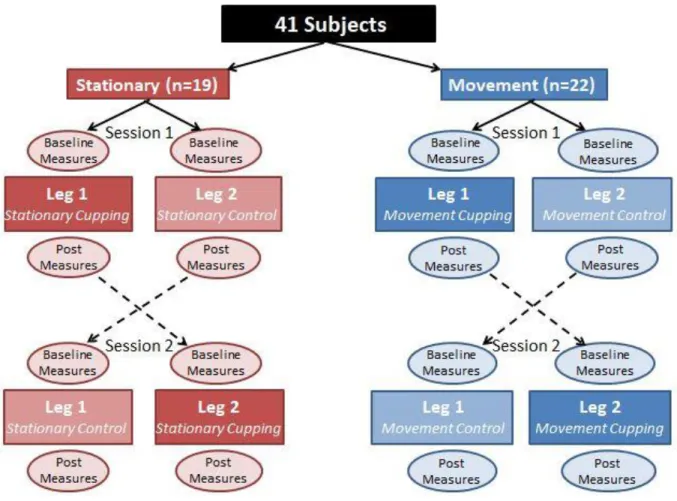
participant’s legs were randomly assigned as Leg 1 or Leg 2. During the first session, Leg 1 received the cupping treatment, either stationary or with movement, depending on initial group assignment. Leg 2 received the control treatment, either stationary or movement as assigned. After 1 week, the participants returned and Leg 1 received the control while Leg 2 received the cupping intervention (Figure 1). The independent variables included movement (yes/no) and cupping (yes/no) treatments to the hamstring muscle group. The dependent variables were range of motion during a 90/90 passive knee extension and perceived tightness (rated 0-10). The study was approved by the University of North Carolina IRB prior to recruitment.
Participants
Participants were recruited using a convenience sample of recreationally active male university students. An email message was sent to club sport captains for distribution to
14
were female, had received cupping before or were an active Division 1 NCAA varsity athlete. People with past cupping experience were not included due to possible bias or preconceived notions about treatment effects based on past experiences. Active Division 1 athletes were not included because they participated in training loads above the average population and the loads can differ greatly between teams.
A power analysis was performed using 0.05 error probability, 3 degrees of freedom, 4 covariates, and a predicted moderate effect size of f=0.25. To achieve 80% power for a moderate effect, the study needed a total of 179 legs (90 participants) across all four groups. Due to limited research on cupping and time constraints of a master’s thesis, the primary investigator aimed to recruit a total of 40 participants (80 legs).
Instrumentation and Variables Range of Motion
For measuring ROM, a digital inclinometer from Baseline Evaluation Instruments was used. At the beginning of each session, the inclinometer was “zeroed” to the horizontal axis (the floor) following the manufacturer’s instructions (Fabrication Enterprises, Inc. White Plains, NY). Therefore, when the participant was in the starting 90/90 position, the shin was at zero degrees and the maximum possible range of passive knee extension was 90 degrees.
15
measurement was recorded. Three trials of the measurement were taken with the average used as their overall measurement for that session’s pre and post intervention ROM. Participants were not told their recorded measurements to decrease bias during post-intervention questionnaires.
The researchers were blinded to which intervention the participant received (cupping or control). All ROM measurements were performed by an athletic training student trained in the use of a digital inclinometer by the primary investigator. Interrater reliability was assessed prior to testing to ensure training was effective. After baseline measurements were taken, the student left the room while a certified athletic trainer (primary investigator) applied the intervention (cupping or control) to each leg. At the conclusion of the treatment, the participant was provided with a pair of paper shorts to cover the posterior thigh from sight. The student returned to the room and took post-intervention ROM measurements.
Questionnaires
Each participant filled out a demographic questionnaire including age, leg dominance, and activity level. Activity level included average total hours of physical activity per week and average days per week. At the start of each session, participants answered a pre-intervention question for each leg; What is your perceived hamstring tightness? (0 = no tightness, 10 = very tight). At the end of each session participants answered 4 post-intervention questions for each leg; What is your perceived hamstring tightness? (0 = no tightness, 10 = very tight), Were you satisfied with your treatment? (0 = very dissatisfied, 10 = very satisfied), Do your hamstrings feel
looser? (yes, no, unsure), and Would you recommend cupping to a friend? (yes, no, unsure).
During the week before Session 1 and the week between sessions, participants kept an activity log. After recruitment, participants were scheduled for Session 1 at least one week in the future and sent an activity log to fill out. At the beginning of Session 1 the researcher reviewed the log to ensure the participant fit the “physically active” criteria described previously.
16
during the week. At the end of Session 1 the participant was given a second log to track activities during the week between sessions. When the participant came in for their second round of treatment, they again filled out the pre-intervention question as well as all post-intervention questions. They did not fill out any additional demographic information.
Cupping
An AcuZone Premium Cupping Set was used for the cupping intervention. Three #1 hard plastic cups with a diameter of 5cm were applied to the hamstring using a handheld pump. Two pumps were used to standardize the pressure applied between participants. Depending on each individual’s skin elasticity, the amount of tissue pulled into the cup could have varied. For people with looser skin a standardized amount of displacement into the cup may not be effective at reaching deeper tissue. Individuals with tighter skin may report additional discomfort if the clinician tries to suction too much skin into the cup. Therefore, applying the same amount of pressure (via 2 pumps) standardized the suction between individuals.
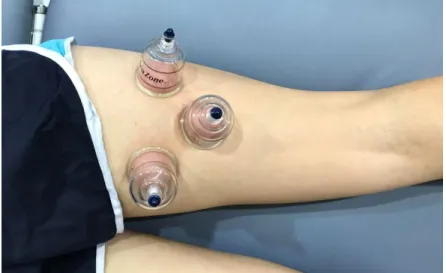
Participants in the stationary cupping treatment group lay prone and actively flexed their knee to approximately 90 degrees to identify the popliteal crease. The clinician measured the distance between the gluteal fold and popliteal crease (bend of the knee). A marker dot was made at the midpoint. From that mark, the clinician measured 10 cm at a 45 degree angle superior medially and superior laterally. The three marks were where each cup was centered during the intervention (Figure 3). A thin layer of ultrasound gel was applied to the area for ease of cup application. One at a time, a cup was placed over a mark and suction applied (Figure 4). Cups were left in place for 5 minutes and 30 seconds while the participant remained resting in the prone position. After treatment time was complete, suction was released and the cups were removed. The stationary control treatment involved the patient lying prone for a total of 6 minutes at rest (30 seconds for cup application and 5:30 minute treatment time).
17
movement shown in Table 2 and the pace to actively flex the knee. The clinician used cuing phrases (“Ready, and, go”) to ensure proper timing. During the 30 seconds of movement, the participant completed 10 repetitions (up and down) of knee flexion at a rate of 1 per 3 seconds. Each beat of the metronome was 1.5 seconds apart and was an end point in the motion: beep = bend, beep = extend, beep = bend, etc. The participant was asked to show two repetitions of the movement pattern with their leg to ensure understanding of pace. Then cups were applied as described previously and the timer was started. The cups were left on for 5:30 minutes following the alternating movement and rest pattern in Table 2. After treatment time was complete, suction was released and cups were removed.
The movement control treatment mimicked the cupping with movement treatment, but with no cups. Participants lay at rest for 30 seconds to account for the time for cup application. After the 30 seconds, the metronome and a timer were started at the same cadence (40 BPM). Participant followed the same 5:30 minute movement pattern of alternating rest and movement shown in Table 1.
Procedure
18
participants received the cupping intervention to one leg and the control intervention to the other simultaneously. After completion of the treatment, both legs were measured for
Post-Intervention ROM. Then, participants answered the Post-Post-Intervention questions described in Instruments. After 1 week, the participant returned to receive the cross-over intervention. The cross-over occurred between a participant’s legs, not the type of treatment (group) they were receiving (Figure 1).
For example, a participant in the Movement group followed the movement protocols as described in Interventions for both legs at the same time, but Leg 1 had the cupping treatment and Leg 2 had the control. Since both legs went through the intervention at the same time, for consistency “Leg 1” always had ROM measured first. During Session 2, Leg 2 received the movement cupping treatment and Leg 1 received the movement control. See Figure 1 below for a visual representation of group randomization and cross-over. During the week in between, participants kept an activity log as described in Instrumentation.
Data Analysis
19
CHAPTER 4: RESULTS Participants
The participants for this study included 41 physically-active male volunteers
(age=20.9±1.0 years) from a university student population. We recruited males only due to their increased occurrence of tight hamstrings and hamstring injury compared to females. “Physically active” was defined as a person who participates in at least 30-60 minutes of moderate activity 5 days per week, with a minimum of 2.5 and maximum of 12 hours per week.41 Participants
completed an average of 6.5 (± 2.7; range=3-12) hours of activity per week. The majority of participants were right leg dominant (n = 38, 92.7%), played sports in high school (n = 39, 95.1%), and had no history of lower extremity injury (n = 29, 70.7%) or surgery (n = 39, 95.1%). About half of the participants reported stretching regularly (n = 22, 53.7%) but there was no difference between group presentation. Groups were homogenous for age, hours of activity weekly, rate of past injury, leg dominance, and general stretching habits. At baseline, the perceived tightness of the participants was also homogeneous (p = 0.9873). Participants were excluded if they had a current injury restricting them from activity, a history of hip or knee surgery within the last year, were female, or were an active Division 1 NCAA varsity athlete. Additionally, people with past cupping experience were not included due to possible bias or preconceived notions about treatment effects based on past experiences. Each participant completed a demographic questionnaire and gave written informed consent before participating in the study.
Range of Motion
20
52.3°±9.8°; p=0.991; Table 3; Figure 5). For the stationary group, the mean hamstring ROM had slight increases from pre- to post-intervention regardless of treatment (cupping: 49.2°±10.4° vs. 49.4°±10.2°; control: 48.2°±10.0° vs. 48.7°±9.9°; p=0.977). The comparison of means showed no significance for group (movement vs. stationary; p=0.306) or treatment (cupping vs. control; p=0.072) interactions. A significant time interaction was present (p=0.025), with post hoc analyses showing differences in pre-intervention control and post-intervention cupping for both the movement and stationary groups. Additionally, post hoc testing revealed a difference in ROM between dominant and non-dominant legs (dominant greater, p=0.041). Perceived Tightness
21
CHAPTER 5: DISCUSSION Range of Motion
The primary purpose of this study was to compare the effects of movement cupping, movement control, stationary cupping, and a stationary (resting) control on hamstring range of motion (ROM). We hypothesized that within each group, stationary and movement, the cupping treatment would produce a greater increase in ROM post-treatment compared to control. The data analysis found ROM did increase in all groups, but not significantly. Therefore, the data did not support our hypothesis. We did find ROM to be greater on the participant’s dominant side compared to non-dominant. Previous literature has found either no difference42,43 or varying differences depending on which joints were being measured throughout the body.44,45 For the purpose of the current study, our finding was not clinically significant.
For the effects of cupping on ROM, our results were consistent with some previous literature. Williams et al29 measured straight leg raise hamstring range of motion in DIII soccer players pre- and post-intervention using 4 stationary cups on the hamstring. They found that overall ROM increased, but not significantly.29 Kim et al18 noted increases in ROM while examining the effects of wet and dry cupping on neck ROM in video display terminal users. However, only neck extension showed a significant difference, while neck forward flexion, lateral flexion, and rotation did not.18 Unlike the current study, Ma et al28 and Markowski et al15 were able to find significant changes in lumbar ROM. We were unable to draw conclusions regarding ROM due to the lack of statistical significance, small sample size, and large confidence
22 Perceived Tightness
The secondary purpose of this study was to compare the effects of stationary cupping, a resting control, movement cupping, and a movement control on perceived hamstring tightness pre- and post-treatment. We hypothesized that cupping with movement would decrease perceived tightness more than stationary cupping, movement only, and rest. No differences were found between all four treatment groups, but when comparing cupping, both movement and stationary, to the controls significant increases occurred. The data suggests a cupping treatment decreases perceived tightness more than the rest or movement only.
To our knowledge, a measure of perceived hamstring tightness has not been previously noted in other research about cupping. The most related metric used before is perceived function based on quality of life and disability scales. Having less hamstring tightness would be related to having better perceived function and less disability. Previous literature examined the effects of several cupping treatments on participants with chronic neck pain and found
significant increases in reported overall health.18–21 Teut et al23 also found significant increases in function (SF-36 scores) after participants with knee osteoarthritis received 8 pulsatile cupping treatments. One study from Zhang et al39 found no difference in perceived function between groups receiving cupping or acupuncture. The literature has also examined the effects of
cupping on perceived disability. Some studies have noted significant decreases in disability after cupping treatments for chronic neck pain18,19,21 No previous studies have suggested that
cupping could increase disability or decrease function.
23
was 1.157 (out of 10). That is greater than the previously proposed MCID, meaning the cupping caused a meaningful difference to the patients.
Clinical Implications
The current study supported cupping as a technique to decrease perceived tightness, even though there was not a significant change in ROM for cupping specifically. Previously discussed techniques including IASTM, SMR, and stretching have not balanced being both effective and efficient for use clinically. IASTM requires hands on work meaning the clinician can only be with one person during the 5-10 minute treatment. Patients can perform SMR and stretching on their own, but often technique is not proper causing mixed results to the patients. The cupping protocols described in this study allow a clinician to place cups on a patient and still have their hands available for other tasks. Previous literature has used different cupping methods and protocols with inconsistent findings. Even though ROM changes were not statistically significant, no literature has suggested cupping decreases ROM or causes harm. Therefore, further research is needed to continue developing cupping treatment protocols optimizing effectiveness. Methods to explore include changing the length of treatment, sets and reps of movements, adding more cups, the cup positions, and patient position (i.e. standing, supping 90/90). This study has shown cupping can have a positive impact on how a patient is feeling, but we are still in the early stages of developing protocol suggestions for increasing ROM.
Limitations
24
to examine hamstring ROM, which presented a challenge since the muscle crosses two joints. We used a 90/90 passive knee extension technique however some could argue a straight leg raise takes the hip into more consideration. Due to increased prevalence of tightness and hamstring injury, only males were tested. Therefore, results can only be generalized to this population. Also, we used a small sample size and did not have enough subjects for sufficient power. This could be one of the reasons we did not find significance.
Conclusion
25
26
LEGEND TO FIGURES
Figure 1: Group Randomization and Cross-Over Design: This study was a cross-over experimental design. Participants were randomly divided into two groups, Stationary and Movement. Within the separate groups, each participant’s legs were randomly assigned as Leg 1 or Leg 2. During the first session, Leg 1 received the cupping treatment, either stationary or with movement, depending on initial group assignment. Leg 2 received the control treatment, either stationary or movement as assigned. After 1 week, the participants returned and Leg 1 received the control while Leg 2 received the cupping intervention.
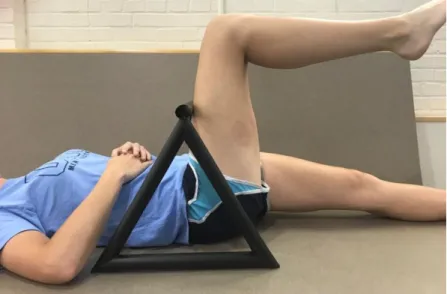
Figure 2: Range of Motion Starting Position: Participants lay supine with the leg to be
measured at 90 degrees of hip flexion and 90 degrees of knee flexion. A frame was placed over the participant’s hips to act as a “blocker” to keep the hip flexed to 90 degrees during
measurements.
Figure 3: Cupping Location: To determine the location of each cup, the clinician measured the distance between the gluteal fold and popliteal crease (bend of the knee). A marker dot was made at the midpoint. From that mark, the clinician measured 10 cm at a 45 degree angle superior medially and superior laterally. The three marks were where each cup was centered during the intervention.
Figure 4: Cupping Application: For application, cups were centered over the previously made marks (Figure 3) and 2 pumps of suction were applied. Cups were then left in place for 5
minutes and 30 seconds.
Figure 5: Range of Motion Mean Results Pre to Post: A 4 (group) x 2 (time) analysis of covariance (ANCOVA) was performed to compare the mean range of motion (ROM) measurements between pre and post time points and between the 4 groups: movement cupping, movement control, stationary cupping, and stationary control.
Figure 6: Perceived Tightness Mean Results Pre to Post: A 4 (group) x 2 (time) analysis of covariance (ANCOVA) was performed to compare the mean perceived tightness measurements between pre and post time points and between the 4 groups: movement cupping, movement control, stationary cupping, and stationary control.
Figure 7: Perceived Tightness Means Comparing Cupping and Control: Pre-intervention tightness was homogeneous between treatments, but post-intervention tightness was
27 Table 1. Treatment Protocols
Treatment Description
Movement Cupping A metronome was played at 40 beats per minute to indicate the rate of movements. Cups were left on for 5:30 minutes following the
alternating movement and rest pattern in Table 1.During the 30 seconds of movement, the participant completed 10 repetitions (up and down) of knee flexion at a rate of 1 per 3 seconds.
Movement Control Participants laid at rest for 30 seconds to account for the time for cup application. After the 30 seconds, the metronome and timer were started at the same cadence (40 BPM). Participants followed the same 5:30 minute movement pattern of alternating rest and movement shown in Table 1.
Stationary Cupping Cups were left in place for 5 minutes and 30 seconds while the participant rested in the prone position. After treatment time, suction was released and the cups were removed.
28 Table 2. Movement Intervention
Timing
29
Table 3. Hamstring Range of Motion and Perceived Tightness Results
Range of Motion (Degrees) Perceived Tightness (Rated 0-10)
Treatment Mean ± SD Range Mean ± SD Range
Movement Cupping
Pre 51.3 ± 9.5 32.1 - 68.3 3.4 ± 2.8 0.0 - 9.0
Post 53.2 ± 9.9 31.7 - 71.4 2.1 ± 1.8 0.0 - 7.0
Movement Control
Pre 50.7 ± 9.8 34.0 - 69.5 3.3 ± 2.7 0.0 - 9.0
Post 52.3 ± 9.8 32.5 - 77.9 3.1 ± 2.5 0.0 - 9.0
Stationary Cupping
Pre 49.2 ± 10.4 34.2 - 72.3 3.0 ± 2.3 0.0 - 7.0
Post 49.4 ± 10.2 31.9 - 74.6 2.1 ± 2.1 0.0 - 7.0
Stationary Control
Pre 48.2 ± 10.0 28.7 - 72.0 3.0 ± 2.4 0.0 - 7.0
Post 48.7 ± 9.9 31.9 - 70.9 2.7 ± 2.1 0.0 - 7.0
29
30 Table 4. Post-Intervention Questionnaire
Treatment Does your leg feel looser? Would you recommend cupping to a friend?
Yes No Unsure Yes No Unsure
Movement Cupping 38 0 6 18 0 4
Movement Control 12 19 13 16 0 6
Stationary Cupping 28 1 9 9 1 4
Stationary Control 6 16 16 8 2 4
3
0
31
Figure 1: Group Randomization and Cross-Over Design. This study was a cross-over experimental design. Participants were randomly divided into two groups, Stationary and Movement. Within the separate groups, each participants’ legs was randomly assigned as Leg 1 or Leg 2. During the first session, Leg 1 received the cupping treatment, either stationary or with movement, depending on initial group assignment. Leg 2 received the control treatment, either stationary or movement as assigned. After 1 week, the participants returned and Leg 1 received the control while Leg 2 received the cupping
32
Figure 2: Range of Motion Starting Position. Participants lay supine with the leg to be measured at 90 degrees of hip flexion and 90 degrees of knee flexion. A frame was placed over the participants’ hips to
33
34
35
Figure 5: Range of Motion Mean Results Pre to Post. A 4 (treatment) x 2 (time) analysis of covariance (ANCOVA) was performed to compare the mean range of motion (ROM) measurements between pre and post time points and between the 4 groups: movement cupping, movement control, stationary cupping, and stationary control.
45.0 46.0 47.0 48.0 49.0 50.0 51.0 52.0 53.0 54.0
Pre Post
Ra
ng
e
of
M
ot
ion
(°
)
Movement Cupping
Movement Control
Stationary Cupping
36
Figure 6: Perceived Tightness Mean Results Pre to Post. A 4 (treatment) x 2 (time) analysis of covariance (ANCOVA) was performed to compare the mean perceived tightness measurements between pre and post time points and between the 4 groups: movement cupping, movement control, stationary cupping, and stationary control.
0.00 0.50 1.00 1.50 2.00 2.50 3.00 3.50 4.00
Pre Post
P
e
rc
e
iv
e
d
T
ight
nes
s
(Rated 0
-10)
Movement Cupping
Movement Control
Stationary Cupping
37
Figure 7: Perceived Tightness Means Comparing Cupping and Control: Pre-intervention tightness was homogeneous between treatments, but post-intervention tightness was significantly different between the cupping and control treatments (p=0.0005). For the cupping treatment, there was a significant difference from pre- to post-intervention (p<0.0001).
0 0.5 1 1.5 2 2.5 3 3.5
Pre Post
P
e
rc
ie
v
e
d
T
ight
nes
s
(Rated 0
-10)
Cupping Treatments
Control Treamtents
p=*0.0005 P<*0.0001
38 REFERENCES
1. Freckleton G, Pizzari T. Risk factors for hamstring muscle strain injury in sport: a systematic review and meta-analysis. Br J Sports Med. 2013;47(6):351-358.
2. Guillodo Y. Clinical predictors of time to return to competition following hamstring injuries. Muscles Ligaments Tendons J. 2014;4(3):386-390.
3. Marshall PWM, Lovell R, Siegler JC. Changes in passive tension of the hamstring muscles during a simulated soccer match. Int J Sports Physiol Perform. 2016;11(5):594-601.
4. Chu S, Rho M. Hamstring injuries in the athlete: Diagnosis, treatmnet and return to play. Curr Sports Med Rep. 2016;15(3):352-359.
5. Marshall PW, Siegler JC. Lower hamstring extensibility in men compared to women is explained by differences in stretch tolerance. BMC Musculoskelet Disord.
2014;15(1):223.
6. Blackburn JT, Bell DR, Norcross MF, Hudson JD, Kimsey MH. Sex comparison of hamstring structural and material properties. Clin Biomech. 2009;24(1):65-70. 7. Behm DG, Blazevich AJ, Kay AD, McHugh M. Acute effects of muscle stretching on
physical performance, range of motion, and injury incidence in healthy active individuals: a systematic review. Appl Physiol Nutr Metab. 2016;41(1):1-11.
8. Farquharson C, Greig M. Temporal efficacy of kinesiology tape vs. traditional stretching methods on hamstring extensibility. Int J Sports Phys Ther. 2015;10(1):45-51.
9. Terada M, Pietrosimone BG, Gribble PA. Therapeutic interventions for increasing ankle dorsiflexion after ankle sprain: A systematic review. J Athl Train. 2013;48(5):696-709. 10. Beardsley C, Škarabot J. Effects of self-myofascial release: A systematic review. J
Bodyw Mov Ther. 2015;19(4):747-758.
11. Kalichman L, Ben David C. Effect of self-myofascial release on myofascial pain, muscle flexibility, and strength: A narrative review. J Bodyw Mov Ther. 2017;21(2):446-451. 12. Kim J, Sung DJ, Lee J. Therapeutic effectiveness of instrument-assisted soft tissue
mobilization for soft tissue injury: Mechanisms and practical application. J Exerc Rehabil. 2017;13(1):12-22.
13. Mehta P, Dhapte V. Cupping therapy: A prudent remedy for a plethora of medical ailments. J Tradit Complement Med. 2015;5(3):127-134.
14. Aboushanab TS, AlSanad S. Cupping Therapy: An Overview from a Modern Medicine Perspective. JAMS J Acupunct Meridian Stud. 2018;11(3):83-87.
doi:10.1016/j.jams.2018.02.001.
39
subacute low back pain on relieving pain, improving range of motion, and improving function. J Altern Complement Med. 2014;20(2):113-117.
16. Cao H, Li X, Yan X, Wang NS, Bensoussan A, Liu J. Cupping therapy for acute and chronic pain management: a systematic review of randomized clinical trials. J Tradit Chinese Med Sci. 2014;1(1):49-61.
17. Bridgett R, Klose P, Duffield R, Mydock S, Lauche R. Effects of cupping therapy in amateur and professional athletes: Systematic review of randomized controlled trials. J Altern Complement Med. 2017.
18. Kim T, Kang J, Kim K, et al. Cupping for treating neck pain in video displayterminal (VDT) users: A randomized controlled pilot trial. 2012:416-426.
19. Leem J. Long-term effect of cupping for chronic neck pain. Integr Med Res. 2014;3(4):217-219.
20. Lauche R, Materdey S, Cramer H, et al. Effectiveness of home-based cupping massage compared to progressive muscle relaxation in patients with chronic neck pain-A
randomized controlled trial. PLoS One. 2013;8(6).
21. Lauche R, Cramer H, Choi K-E, et al. The influence of a series of five dry cupping treatments on pain and mechanical thresholds in patients with chronic non-specific neck pain - a randomised controlled pilot study. BMC Complement Altern Med. 2011;11(1):63. 22. Saha FJ, Schumann S, Cramer H, et al. The Effects of Cupping Massage in Patients with
Chronic Neck Pain - A Randomised Controlled Trial. Complement Med Res. 2017;24(1):26-32. doi:10.1159/000454872.
23. Teut M, Kaiser S, Ortiz M, et al. Pulsatile dry cupping in patients with osteoarthritis of the knee - a randomized controlled exploratory trial. BMC Complement Altern Med.
2012;12(1):184.
24. Li J-Q, Guo W, Sun Z-G, et al. Cupping therapy for treating knee osteoarthritis: The evidence from systematic review and meta-analysis. Complement Ther Clin Pract. 2017;28:152-160.
25. Ullah K, Younis A, Wali M. An investigation into the effect of Cupping Therapy as a treatment for Anterior Knee Pain and its potential role in Health Promotion. Internet J Altern Med. 2007;4(1):1-9.
26. Liu W, Pioa S, Meng X, Wei L. Effects of cupping on blood flow under skin of back in healthy human. World J Acupunt. 2013;23(3):50-52.
27. Li T, Li Y, Lin Y, Li K. Significant and sustaining elevation of blood oxygen induced by chinese cupping therapy as assessed by near-infrared spectroscopy. Biomed Opt Express. 2017;8(1):223.
40
29. Williams J, Gard H, Gregory J, Gibson A, Austin J. The effects of cupping on hamstring flexibility in collegiate soccer players. J Sport Rehabil. 2018:1-17.
30. Sullivan KM, Silvey DBJ, Button DC, Behm DG. Roller-massager application to the hamstrings increases sit-and-reach range of motion within five to ten seconds without performance impairments. Int J Sports Phys Ther. 2013;8(3):228-236.
31. Miller JK, Rockey AM. Foam rollers show no increase in the flexibility of the hamstring muscle group. UW-LJournal Undergrad Res. 2006:1-4.
32. Mohr AR, Long BC, Goad CL. Effect of foam rolling and static stretching on passive hip-flexion range of motion. J Sport Rehabil. 2014;23(4):296-299.
33. Cheatham SW, Lee M, Cain M, Baker R. The efficacy of instrument assisted soft tissue mobilization: a systematic review. J Can Chiropr Assoc. 2016;60(3):200-211.
34. Qureshi NA, Ali GI, Abushanab TS, et al. History of cupping (hijama): a narrative review of literature. J Integr Med. 2017;15(3):172-181.
35. Yang C, Lee E, Hwang EH, Kwon O, Lee JH. Management of sport injuries with korean medicine: A survey of korean national volleyball team. Evidence-based Complement Altern Med. 2016.
36. Abbas Zaidi SM, Jameel SS, Jafri K, Khan SA, Ahmad E. Ilaj bil hijamah (cupping therapy) in the unani system of medicine: anecdotal practice to evidence based therapy. Acta Med Hist Adriat. 2016;14(1):81-94.
37. Kim SB, Lee YH. Numerical Analysis of the Change in Skin Color due to Ecchymosis and Petechiae Generated by Cupping: A Pilot Study. JAMS J Acupunct Meridian Stud.
2014;7(6):306-317. doi:10.1016/j.jams.2013.09.004.
38. Cao H, Han M, Zhu X, Liu J. An overview of systematic reviews of clinical evidence for cupping therapy. J Tradit Chinese Med Sci. 2015;2(1):3-10.
39. Zhang Y-J, Cao H-J, Li X-L, et al. Cupping therapy versus acupuncture for pain-related conditions: a systematic review of randomized controlled trials and trial sequential analysis. Chin Med. 2017;12(1):21.
40. Ge W, Leson C, Vukovic C. Dry cupping for plantar fasciitis : a randomized controlled trial. J Phys Ther Sci. 2017;29(5):859-862.
41. ACSM Releases New Exercise Guidelines. https://greatist.com/fitness/acsm-releases-new-exercise-guidelines. Accessed March 18, 2019.
42. Oliveira ASC, Barbieri FA, Gonçalves M. Flexibility, torque and kick performance in soccer: Effect of dominance. Sci Sport. 2013;28(3):65-68.
doi:10.1016/j.scispo.2013.01.004.
41
Motion. Int J Sports Phys Ther. 2018;12(7):1087-1094. doi:10.26603/ijspt20171087. 44. Macedo LG, Magee DJ. Differences in Range of Motion Between Dominant and
Nondominant Sides of Upper and Lower Extremities. J Manipulative Physiol Ther. 2008;31(8):577-582. doi:10.1016/j.jmpt.2008.09.003.
45. Moromizato K, Kimura R, Fukase H, Yamaguchi K, Ishida H. Whole-body patterns of the range of joint motion in young adults: masculine type and feminine type. J Physiol Anthropol. 2016;35(1):23. doi:10.1186/s40101-016-0112-8.
46. Dennis A, Myles PS, Chew C, et al. Measuring acute postoperative pain using the visual analog scale: the minimal clinically important difference and patient acceptable symptom state. Br J Anaesth. 2016;118(3):424-429. doi:10.1093/bja/aew466.
47. Lauridsen HH, Hartvigsen J, Manniche C, Korsholm L, Grunnet-Nilsson N. Responsiveness and minimal clinically important difference for pain and disability instruments in low back pain patients. BMC Musculoskelet Disord. 2006;7:1-16. doi:10.1186/1471-2474-7-82.
48. Lauche R, Langhorst J, Dobos GJ, Cramer H. Clinically meaningful differences in pain, disability and quality of life for chronic nonspecific neck pain - A reanalysis of 4