TYPE 2 DIABETES SELF-MANAGEMENT: INFLUENCES ON NUTRITIONAL PRACTICES AND PHYSICAL ACTIVITY AMONG SPANISH-SPEAKING,
LIMITED-ENGLISH-PROFICIENT HISPANICS
Cheryl Ann Smith-Miller
A dissertation submitted to the faculty of the University of North Carolina at Chapel Hill in partial fulfillment of the requirement for the degree of Doctor of Philosophy in the School of
Nursing
Chapel Hill 2012
ii ©2012
ABSTRACT
CHERYL A. SMITH-MILLER: Type 2 Diabetes Self-Management Practices: Influences on Nutritional Practices and Physical Activity among Spanish-Speaking,
Limited-English-Proficient Hispanics
(Under the direction of Diane C. Berry)
The purpose of this study was to better understand the influences of and the
relationships between the social environment, health literacy, diabetes knowledge, and self-efficacy of Spanish-speaking Hispanics with limited English proficiency on their type 2 diabetes self-management. This study used social cognitive theory as a theoretical framework and a mixed-methods design. Semistructured interviews focused on participants‘ diabetes self-management practices and personal and family experiences. Clinical measures indicated participants‘ current health status, and instruments were used to assess health literacy, diabetes knowledge, health behaviors, and diabetes, eating, and exercise self-efficacy.
iv
DEDICATION
ACKNOWLEDGEMENTS
This research would not have been possible without the support and encouragement of faculty, friends, fellow students, coworkers, and family. I would like to acknowledge those who helped in this process.
I give my sincerest thanks to my committee chairperson and advisor, Diane C. Berry, PhD, who guided this project, provided access to the Hispanic community, and contributed to my growth as a researcher. Special thanks to my committee members—Darren DeWalt, MD; Jennifer Leeman, DrPH; Gwen Sherwood, PhD; and Anne Skelly, PhD—who generously shared their time and expertise.
I want to acknowledge my funding sources: the Society for Otorhinolaryngology and Head-Neck Nurses Scholarship, the Sigma Theta Tau Alpha-Alpha Chapter Small Research Grant, the Pauline W. Brown Diversity Scholarship, the Triangle Region North Carolina Nurses Association Research Grant, and the Academy of Medical-Surgical Nurses Research Grant. Thank you to the University of North Carolina (UNC) School of Nursing
vi
Thank you to my dear friends who continued to support me even when I didn‘t answer e-mails or see you for months.
Thank you to my fellow UNC-Chapel Hill School of Nursing classmates. Your guidance and friendship facilitated this journey more than you know.
To my UNC Hospitals work family, thank you for your flexibility, understanding, and encouragement. Special thanks to my colleagues in Nursing Professional Development, Practice, and Research for your support during the last year.
TABLE OF CONTENTS
LIST OF TABLES ... xix
LIST OF FIGURES ... xxi
LIST OF ABBREVIATIONS ... xxii
Chapter 1 INTRODUCTION ...1
Statement of the Problem ...1
Purpose ...2
Prevalence ...4
Complications ...5
Population Identification ...5
Language ...6
Literacy ...7
Health Literacy...8
Diabetes Knowledge ...9
Social Influences ...9
Vicarious Learning...11
Self-Efficacy ...11
Self-Management ...12
Conceptual Framework ...14
viii
REFERENCES ...17
2 LITERATURE REVIEW ...28
Introduction ...28
Background ...28
Health Literacy...30
Limited English-Language Proficiency ...31
Self-Efficacy ...32
Methods ...33
Results ...36
Quality Assessment ...43
Cross-Sectional Studies ...44
Intervention Studies ...46
Discussion ...52
Hispanic Populations ...52
Language ...53
Health Literacy...53
Recruiting Methods ...54
Intervention ...55
Measurement ...56
Self-Management ...57
Self-Efficacy ...57
Recommendations ...58
REFERENCES ...60
3 METHODS ...70
Introduction ...70
Aims ...71
Philosophical Assumptions ...72
Design ...74
Population ...75
Recruiting ...76
Screening ...77
Pilot Study ...79
Sample ...79
Measurement ...80
Physiologic Measures ...82
Instruments ...85
Semistructured Interviews ...87
Data Collection ...89
Quantitative Data Analysis ...90
Data Immersion ...91
Qualitative Data Analysis ...92
Data Display...93
Data Reduction...93
Directed Content Analysis ...94
x
Codes. ...96
Standards for the Quality of Conclusions ...96
Objectivity and Confirmability ...97
Reliability, Dependability, and Auditability ...98
Internal Validity, Credibility, and Authenticity ...99
External Validity, Transferability, and Goodness of Fit ...100
Utilization, Application, and Action Orientation ...100
Analysis Summary ...101
Conclusions ...101
REFERENCES ...103
4 FINDINGS ...111
Introduction ...111
Aims ...111
Sample ...111
Quantitative Findings ...112
Physiologic Measures ...112
Instruments ...116
Descriptive Analysis ...119
Health literacy ...119
Diabetes knowledge. ...120
SAHLSA and diabetes knowledge...120
Healthy Promoting Lifestyle Profile II ...120
Discriminate Analysis ...122
Health literacy and diabetes knowledge ...124
Health literacy, diabetes knowledge and health-promoting behaviors ...125
Health-promoting behaviors ...128
Health-promoting behaviors and HbA1c. ...129
Self-efficacy. ...132
Quantitative Analysis Summary ...135
Qualitative Data ...135
Interviews ...135
Data Analysis ...137
Numbness and panic ...139
Pining and protest ...139
Disorganization and disrepair ...140
Restabilization and reintegration ...140
Information Seeking and Knowledge Acquisition ...141
Question 1A: Initial diabetes knowledge acquisition ...141
Theme 1: Receiving the diagnosis. ...141
Theme 2: Seeking medical care. ...141
Theme 3. Awareness of the risk of developing diabetes. ...142
Theme 4: Incorrect information. ...143
Theme 5: Lack of disease trajectory awareness. ...144
Question 1B: First thoughts at diagnosis. ...145
xii
Theme 2: Fear of death. ...146
Theme 3: Disbelief and shock. ...146
Theme 4: Perseverance. ...147
Question 2A: Receiving information about diabetes. ...148
Theme 1: Information needs. ...148
Theme 2: Individuals providing information ...149
Theme 3: Written materials in Spanish ...151
Theme 4: Technology. ...151
Question 2B: Applying information. ...153
Theme 1: Nutrition. ...153
Theme 2: Exercise...154
Theme 3: Medication. ...154
Theme 4: Listening to their bodies. ...155
Question 3A: Current knowledge and beliefs ...155
Theme 1: Overall health...155
Theme 2: Causes of diabetes. ...155
Theme 3: Nutrition. ...157
Theme 4: Exercise...157
Theme 5: Taking care of themselves. ...157
Question 3B: Additional knowledge needed. ...158
Theme 1: Information about nutrition...158
Theme 2: Blood pressure and blood glucose monitoring ...159
Question 4: Information givers. ...160
Theme 1: Credible professionals. ...160
Question 5: Help with diabetes. ...161
Theme 1: Doctors for disease management. ...162
Theme 2: Culturally defined boundaries. ...162
Information Seeking and Knowledge Acquistion Summary ...163
Family Influences and Vicarious Learning ...164
Question 6A: Community knowledge of type 2 diabetes. ...164
Theme 1: Family members. ...164
Theme 2: Diabetes and death. ...165
Theme 3: Helping others ...166
Question 6B: Family members with diabetes. ...168
Theme 1: Family members. ...168
Theme 2: Stigma and secrecy. ...170
Theme 3: Care in the country of origin ...171
Theme 4: Immigration. ...172
Question 7A: How family members managed ...173
Theme 1: Managed well...173
Theme 2: Did not manage well. ...174
Question 7B: Status of family members‘ health. ...176
Question 8A. Diabetes practices learned from family members. ...176
Theme 1: Positive. ...176
xiv
Family Influence and Vicarious Learning Summary ...179
Self-Management Practices ...179
Question 9: Daily self-management...179
Theme 1: Eating. ...179
Theme 2: Alcohol ...182
Theme 3: Exercise...184
Theme 4: Glucose monitoring. ...188
Theme 5: Weight...189
Theme 6: Medication. ...190
Theme 7: Complementary therapies. ...191
Theme 8: Symptoms. ...191
Theme 9: Foot care ...192
Question 10: Difficulty with self-management. ...192
Theme 1: Eating ...192
Theme 2: Cultural context of food ...193
Theme 3: Exercise...194
Theme 4: Financial constraints. ...195
Theme 5. Work environment ...195
Question 11: Successes in self-management. ...196
Theme 1: Eating ...196
Theme 2: Exercise...197
Theme 3: Weight and other habits. ...197
Question 12: Self-efficacy and self-management. ...198
Theme 1: Control. ...198
Theme 2: Family support. ...199
Question 13: Most important self-management behaviors. ...200
Theme 1: What I perform. ...200
Theme 2: Reasons why what I perform is important. ...200
Appearance, Financial Issues, Environment ...201
Question 14: Other issues related to diabetes. ...201
Theme 1: Appearance. ...201
Theme 2. Comorbidities...201
Theme 3: Finances. ...201
Self-Management Practices Summary ...202
Summary of Findings ...203
REFERENCES ...205
5 DISCUSSION ...207
Overview ...207
Data Analysis: Tranformative Learning Theory ...210
Receptivity ...211
Recognition ...211
Grieving ...212
Phase 1: Numbness and panic. ...212
Phase 2: Pining and protest. ...213
xvi
Phase 4. Restabilization and reintegration ...214
Aim 1 ...215
Dietary Practices ...215
Physical Activity ...218
Summary ...222
Aim 2 ...222
Diet Practices and Family ...222
Help and Family ...224
Physical Activity ...225
Work Environment...226
Barriers ...227
Vicarious Learning...227
Summary ...228
Aim 3 ...228
Health Literacy...229
SAHLSA ...229
Health literacy skills. ...230
Health Literacy and Self-Efficacy ...231
Self-Efficacy ...231
Physiological Measures ...234
Summary ...235
Aim 4 ...235
Self-Efficacy ...237
Social Environment ...238
Alcohol ...238
Stigma ...239
Vicarious Learning...240
Culture...240
Summary ...241
Limitations ...241
Strengths ...242
Conclusions ...243
Diagnosis ...243
Knowledge ...244
Social Influences ...244
Diabetes Self-Management ...245
Physiologic measures ...246
Recommendations ...246
Communities ...246
Clinical settings. ...247
Health-care professionals ...247
Diabetes education ...248
Medication ...249
Nutrition ...249
xviii
Implications for Research ...250
Summary ...251
Appendices A RECRUITING MATERIALS ...252
Flyer ...252
Postcard ...253
B CONSENT FORMS...254
English Version ...254
Spanish Version ...261
LIST OF TABLES Table
2.1 Literature Search: Inclusion and Exclusion Criteria ...33
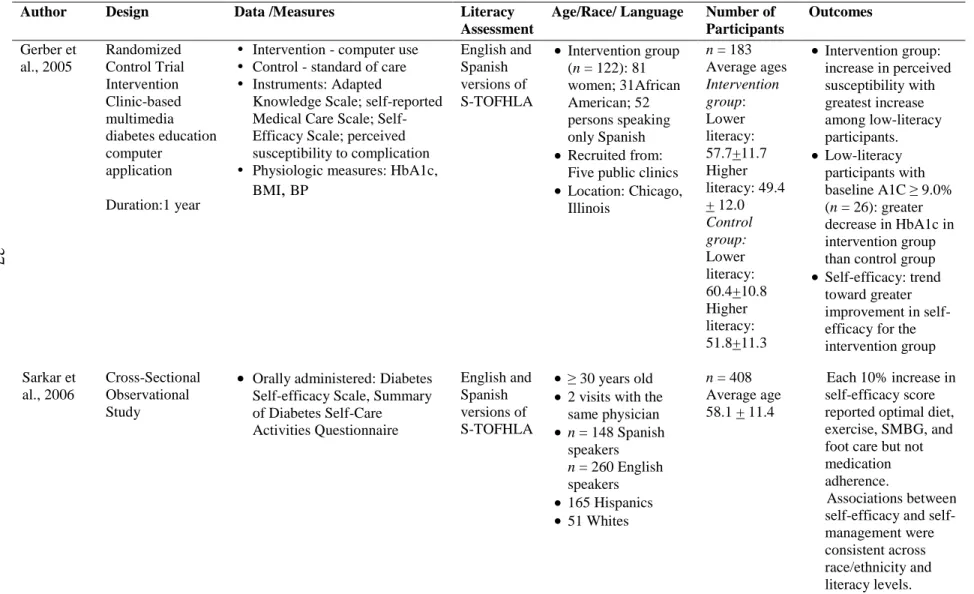
2.2 Summary Table ...37
2.3 Characteristics of Cross-Sectional Studies ...41
2.4 Characteristics of Intervention Studies ...42
2.5 Global Ratings of Reviewed Studies ...43
3.1 Screening Criteria ...78
3.2 Language and Acculturation ...78
3.3 Participants‘ Educational Achievement ...80
3.4 Data Collection Measures and Psychometrics ...81
3.5 Gender Specific, Age-Adjusted Body Fat Percentage Recommendations ...83
3.6 Semistructured Interview Guide in English ...88
3.7 Example of Directed Content Analysis...94
4.1 Physiologic Measures by Gender...113
4.2 Gender-Based, Age-Adjusted Percentage Body Fat Recommendations Body Fat Chart...114
4.3 Waist-to-Height Ratio Categories—Gender Frequency in Each Category ...115
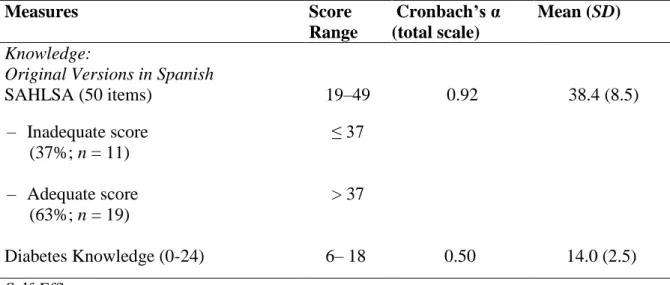
4.4 Instrument Psychometrics ...116
4.5 Instrument for Sample by Gender ...117
4.6 Correlations Between Self-Efficacy Scales ...121
4.7 Discriminate Analysis of HbA1c Groups ...122
4.8 Model Summary: Health Literacy and Diabetes Knowledge ...124
xx
4.10 Model Summary: Health Literacy, Diabetes Knowledge, and Health-
Promoting Behaviors ...126 4.11 Coefficients for the Health Literacy, Diabetes Knowledge, and Health-
Promoting Behaviors Model ...126 4.12 Model Summary: Health Literacy, Diabetes Knowledge, and HPLP II Nutrition
Subscale ...127 4.13 Coefficients for the Health Literacy, Diabetes Knowledge, and Nutrition
Models...128 4.14 Correlations for the Six Health-Promoting Lifestyle Profile II (HLPL II)
Subscales ...129 4.15 Model Summary: Health Responsibility, Physical Activity, Nutrition to
HbA1c ...130 4.16 Coefficients for the HPLP II Health Responsibility, Physical Activity, Nutrition
Subscales, and HbA1c Model ...131 4.17 Model Summary: HPLP II Nutrition Subscale, Physical Activity Subscale, and
HbA1c ...132 4.18 Coefficients for the HPLP II Nutrition Subscale, Physical Activity Subscale,
and HbA1c Model ...132 4.19 Model Summary: Exercise Efficacy, Eating Efficacy, Diabetes
Self-Efficacy, and Physical Activity...133 4.20 Coefficients for the Eating Self-Efficacy, Diabetes Self-Efficacy, and Physical
Activity Model ...133 4.21 Model Summary: Exercise Efficacy, Eating Efficacy, Diabetes
Self-Efficacy, and Nutrition...134 4.22 Coefficients for the Exercise Efficacy, Eating Efficacy, Diabetes
LIST OF FIGURES Figure
1.1 Model of study aims and measurement tools. ...4
1.2 Model of the examined constructs.. ...14
1.3 Reciprocal determinism and how these qualities were measured or explored ...15
2.1 Flow diagram of the methods used to determine the included studies.. ...35
3.1 Model of study aims and measurement tools ...72
3.2 Overview of mixed methods ...74
3.3 Components of qualitative data analysis...92
xxii
LIST OF ABBREVIATIONS
CHAPTER 1 INTRODUCTION Statement of the Problem
Globally, an estimated 285 million people aged 20-79 years were living with diabetes in 2010 (International Diabetes Federation [IDF], 2010). In the United States (U.S.), Type 2 diabetes mellitus (T2DM) accounts for 94.3% of the 18.8 million diagnosed diabetes cases. Ethnic and racial minorities are disproportionately affected having prevalence rates 2-to-6 times those of non-Hispanic whites (7.1%), higher complication rates, and worse clinical outcomes (Office of Minority Health & Health Disparities [OMHHD], 2011). Hispanic populations have a high T2DM prevalence rate at 11.8%, second only to non-Hispanic
Blacks (12.6%; Centers for Disease Control and Prevention [CDC], 2011b). Among Hispanic populations (i.e., Mexicans, Puerto Ricans, Cubans, Central and South Americans) the
prevalence rate for Mexican Americans aged 20 and over is 13.3% , second only to Puerto Ricans at 13.8% (CDC, 2011b). When compared to non-Hispanic white adults, Mexican Americans have an 87% higher risk of being diagnosed with T2DM. Men and women of Mexican heritage suffer higher rates of end-stage renal disease, retinopathy, neuropathy, and lower limb amputations secondary to diabetes than other Hispanic subgroups and are more likely than non-Hispanic Whites to die from diabetes (Umpierrez, Gonzalez, Umpierrez, & Pimentel, 2007). Additionally, immigrant populations also experience higher T2DM
2
Langer, & Reuter, 2010; Ujcic-Voortman, Schram, Jacobs-van der Bruggen, Verhoeff, & Baan, 2009). The largest U.S. immigrant population is from Mexico, comprising
approximately two-thirds of the foreign-born population (Batalova, 2008b; Pew Hispanic Center [PHC], 2010). This immigration pattern is also reflected in North Carolina (NC) as the Hispanic population increased 394% from 1990 to 2002; the majority, 60%, immigrating from Mexico (Gill, 2010; U.S. Census Bureau, 2010).
Low levels of health literacy and diabetes knowledge, and lack of self-efficacy are thought to contribute to worse diabetes self-management and the resulting disparities in diabetes outcomes (PHC, 2010; Pleis, Lucas, & Ward, 2009; Rustveld et al., 2009).
However, the relationship of these factors on Spanish-speaking, limited-English-proficient Mexican immigrants‘ T2DM self-management practices are only beginning to be studied.
Purpose
the relationship between low health literacy and high glycosylated hemoglobin (HbA1c) levels have been mixed.
Studies including Spanish-speaking subjects found a relationship between low health literacy and HbA1c levels (Schillinger et al., 2002) while research with only
English-speaking subjects found no association (DeWalt, Boone, & Pignone, 2007; Morris, MacLean, & Littenberg, 2006). These results suggest health literacy alone may not account for the disparities in T2DM outcomes. Lack of self-efficacy, in the presence of low health literacy, may contribute to poor self-management practices in limited-English-proficient Hispanic populations (Bandura, 2004; Wen, Shepherd, & Parchman, 2004). However, to what degree health literacy, diabetes knowledge, and self-efficacy together relate to this populations‘ diabetes self-management practices has not been examined. Therefore, the purpose of this dissertation was to explore how the social environment influences T2DM self-management and clarify the relationship of health literacy, diabetes knowledge, and self-efficacy with Spanish-speaking limited-English-proficient Mexican immigrant‘s T2DM self-management (Figure 1.1). Specific study aims are:
Aim 1: Describe the diet practices and physical activity of participants related to T2DM self-management.
Aim 2: Describe how the social environment and vicarious learning influence T2DM self- management related to diet practices and physical activity.
Aim 3: Describe the relationships among health literacy, diabetes knowledge, self-efficacy, and diet practices and physical activity.
4 Type 2 Diabetes Knowledge Diabetes Knowledge Test Health Literacy Short Assessment of Health Literacy for Spanish Adults Key
= tentative path relationship
= pathway of influence
Health Promoting Behaviors Health Promoting Lifestyle Profile II Social Influences Vicarious Learning Semistructured Interviews
Type 2 Diabetes
Self-Management Diet Exercise BGSM Medication Foot care Physiologic Measures Hemoglobin A1c Blood Pressure Weight Height Waist Circumference Self-Efficacy Self-Efficacy to Regulate Exercise Scale Eating Self-Efficacy Scale Diabetes Self-Efficacy Scale
Figure 1.1. Model of study aims and measurement tools (bulleted items). BGSM = Blood glucose self-monitoring.
Prevalence
The number of new diabetes cases in the U.S. more than tripled from 493,000 in 1980 to over 1.7 million in 2010 (CDC, 2011b). In 2007, diabetes was the seventh leading cause of death in the U.S., and the fifth leading cause of death among U.S. Hispanics (OMHHD, 2011). The diabetes prevalence rate in NC increased from 8.4% in 2004 to 9.8% in 2010 making it fifteenth in the nation for adults responding, ―Yes‖ to, “Have (you) ever been told by a doctor that (you) have diabetes?‖ (Behavioral Risk Factor Surveillance System, 2010).
45-64 years are diagnosed with T2DM compared to 11.4% of non-Hispanic Whites of the same age (CDC, 2011a). These higher prevalence rates have been attributed to a number of factors including biologic and physiologic differences, language differences, socio-economic and education levels, and access to health care services (Herman et al., 2007; Umpierrez et al., 2007). However, lack of diabetes specific knowledge was also identified as contributing to poorer T2DM self-management and worse clinical outcomes (Mann, Ponieman,
Leventhal, & Halm, 2009).
Complications
Not only do diabetes prevalence rates vary among racial and ethnic populations, considerable differences exist in the management and the types of complications among these groups (Jiang, Andrews, Stryer, & Friedman, 2005). The complications of poor glycemic control occur at both the microvascular and macrovascular level, and result in a variety of consequences including cardiovascular disease, stroke, hypertension, retinopathy, blindness, renal disease, and nervous system damage (American Diabetes Association [ADA], 2012; NIDDK, 2011). Mexican Americans experience worse microvascular complications in the form of lower extremity disease, end stage renal disease, and have an 84% higher prevalence rate of diabetic retinopathy compared to non-Hispanic Whites (Karter et al., 2002; Umpierrez et al., 2007).
Population Identification
Efforts to gather accurate, comprehensive information about Hispanic populations are plagued by inconsistent identification, language barriers, incomplete data collection,
6
groups and especially those of recent immigrants (Hector et al., 2009; Lorant, Demarest, Miermans, & Van Oyen, 2007; National Center for Health Statistics, 2010).
Misidentification and inconsistencies in reporting Hispanic origin on death certificates, censuses, and surveys can lead to population under- and over-identification, mask health trends, and under or over represent disease prevalence, illness incidence, and estimated health risks (Borrell, 2005; Hunt & Bhopal, 2004).
The term Hispanic and Latino describe individuals or populations whose heritage can be traced to Spanish-speaking countries or who have immigrated to the U.S. from Mexico, Puerto Rico, Cuba, Central or South America, or other Spanish-speaking countries (Office of Management and Budget, 1997). Data classification using these terms in reference to T2DM suggest a homogenous population when, in fact there is a great deal of variability in
prevalence rates and types of complications based on country of origin. For example, collective classification conceals the differences in T2DM prevalence rates among Hispanic subgroups: Cubans 7.6%, Mexicans 13.3%, and Puerto Ricans 13.8% (CDC, 2011b). In this document, Hispanic refers to non-specific populations as previously described and Mexican refers to persons living in the U.S. who have emigrated from Mexico or are of Mexican heritage.
Language
significant issue for recently immigrated Mexicans because an estimated 75% have limited English proficiency (PHC, 2009). Lack of English proficiency is a marker for poor health status and presents a significant barrier to effective T2DM self-management (Nam, Chesla, Stotts, Kroon, & Janson, 2011; Martinez, 2007).
The majority of recent Hispanic immigrants from Mexico face significant obstacles related to language and literacy (PHC, 2009; U.S. Census Bureau, 2008). In NC, a reported 34% of Mexican immigrants speak English poorly or not at all and 49% report not speaking English very well, figures that exceed the national rates of 22% and 36% respectively (U.S. Census Bureau, 2008). Limited-English proficiency in combination with low literacy
increase individuals‘ difficulties accessing health services, acting on health information, and self-managing chronic conditions such as diabetes (Ding & Hargraves, 2009; Garcia & Duckett, 2009; Sarkar et al., 2008; Sudore et al., 2009). In this research we targeted Spanish-speaking persons with limited-English proficiency in exploring their T2DM self-management (Martinez, 2007; Powell, Hill, & Clancy, 2007; Schillinger et al., 2002).
Literacy
Literacy encompasses a broad range of skills including the ability to identify,
understand, interpret, communicate, and use printed and written materials in varying contexts (Barton, 2007; Brandt, 2001), skills that many individuals do not possess or have difficulty with (Kutner, Greenberg, & Baer, 2006). For Hispanic populations low literacy is a
8
Overall Hispanic persons consistently report lower educational achievement and higher HbA1clevels than African Americans or non-Hispanic Whites (Goldman & Smith, 2002; Heisler, Piette, Spencer, Kieffer, & Vijan, 2005; Nielsen-Bohlman et al., 2004; Rosal et al., 2005; Smedley, Stith, & Nelson, 2003). For persons with low literacy, tasks required for successful T2DM self-management such as adjusting medication dosing based on blood glucose test results can quickly exceed their literacy skills (Cavanaugh et al., 2008; Osborn, Cavanaugh, Wallston, White, & Rothman, 2009; White, Osborn, Gebretsadik, Kripalani, & Rothman, 2011). Heightened anxiety and stress due to language difficulties, current health status, and low confidence may further impair their ability to self-manage. The following sections describe the constructs of the Model Aims and Measurement Tools as illustrated in Figure 1.1.
Health Literacy
Literacy is the ability to understand and use the dominant symbols of a culture (alphabet and numbers) to construct meaning (reading and writing; Barton, 2007; Brandt, 2001; Scribner & Cole, 1999). Health literacy is context specific and requires all the previous noted competencies as well as the ability to access, understand, and act upon health
information (Nielsen-Bohlman et al., 2004; Peerson & Saunders, 2009).
Low health literacy is most often measured as reading ability and has been
research with English-speaking participants did not find an association (DeWalt, Boone, & Pignone, 2007; Morris et al., 2006). Although the definition is broad, when the exploration of health literacy is limited to reading ability its psychological and social domains, and their influences on self-management behaviors, remain unexplored (Lerman et al., 2004; Parker, Baker, Williams, & Nurss, 1995).
Diabetes Knowledge
Successful diabetes self-management requires sufficient knowledge of the condition and its treatment (American Association of Diabetes Educators [AADE], 2012; Carbone, Rosal, Torres, Goins, & Bermudez, 2007). Although the benefits of diabetes
self-management education (DSME) on outcomes (e.g., HbA1c levels, weight) are well documented, the percentage of persons receiving DSME remains suboptimal, especially among racial and ethnic minorities, the poor, and the uninsured (Brown et al., 2005; Funnell, 2009; ODPHP, 2009; Peyrot, 2009). Diabetes knowledge is positively correlated with health literacy levels; persons with inadequate health literacy have significantly less knowledge about diabetes than those with adequate health literacy. However, the evidence linking health literacy, diabetes knowledge, and self-management outcomes among Spanish-speaking Hispanics is limited (Cavanaugh et al., 2008; Fransen, 2011; Hector, 2009).
Social Influences
10
Two components of Hispanic culture relevant to diabetes self-management and social cognitive theory are familialism (familismo) and fatalism (fatalismo). Familial traditions are central to Hispanic culture. Familialism subordinates personal interests and prerogatives to the needs and values of the family. Family members act as consultants for health-care decisions and serve as behavioral referents (Weiler & Crist, 2009). Family members also serve as models for T2DM self-management behaviors and influence beliefs about the etiology and course of diabetes (Alcozer, 2000; Caban & Walker, 2006; Comellas et al., 2010). Fatalism is the belief that an outcome cannot be altered, a perspective that can potentially undermine the value of long-term diabetes self-management (Rustveld et al., 2009). This belief may contribute to Mexicans experiencing more hopelessness related to T2DM compared to other Hispanic subgroups. It is suggested that this hopelessness is related to the high number of familial references for poor diabetes outcomes, stronger fatalistic attitudes, or both (Alcozer, 2000; Beard, Al-Ghatrif, Samper-Ternent, Gerst, & Markides, 2009; Caban & Walker, 2006).
Successful diabetes self-management requires lifestyle changes and adapting a number of new behaviors (ADA, 2012). Social cognitive theory proposes that a person‘s decision to engage in different health habits is based on evaluation of the expected costs and outcome expectations of these behaviors (Bandura, 2004). In this study, individuals‘
Vicarious Learning
Vicarious learning occurs over time by observing referent social models‘ behavior and the consequences of this behavior (Bandura & Locke, 2003; Sarkar, Fisher, &
Schillinger, 2006). Observation of others (e.g., role models, family members) diabetes self-management practices can influence individual self-self-management practices (Alcozer, 2000; Bandura, 1998; Caballero, 2006; Hunt & de Voogd, 2005; Ingram et al., 2007). Vicarious learning experiences can improve or worsen an individual‘s self-efficacy to perform T2DM self-management behaviors, but exploring what has been learned from others can offer explanation of current, possibly incongruent, self-management practices (Bandura & Locke, 2003; Sarkar et al., 2006).
Self-Efficacy
Self-efficacy is the confidence an individual has in his ability to perform a behavior or
accomplish a goal; the degree of self-efficacy influences the amount of perseverance and effort that will be made (Bandura, 1989). However, self-efficacy focuses on individual effort and as such may not be applicable for persons from cultures that privilege the group over the individual (Bandura, 2000). It is suggested that collective efficacy, or the belief in group or collective effort, may be a more appropriate theoretical construct in familial-centered cultures (Bernal, Woolley, Schensul, & Dickinson, 2000; Ingram, Ruiz, Mayorga, & Rosales, 2009).
12
Self-Management
Optimal T2DM self-management decreases morbidity and saves billions of dollars in health-care costs (ADA, 2012; Dall et al., 2010; Minshall et al., 2005). Poor T2DM self-management increases morbidity, strains the health care system, and decreases one‘s
productivity and ability to contribute to society (ADA, 2012; Spector, 2009; Von Korff et al., 2005). Self-management are the actions and behaviors in which an individual engages to manage the symptoms, treatment, physical and psychosocial consequences and life style changes in order to maintain health and minimize negative outcomes in the future (AADE, 2012; Barlow, 2002). However, prevention, to minimize future negative health outcomes, in the absence of present symptoms, is not a universally held belief (Carlson, 2000).
knowledge of recommended behaviors but the consistent performance of these behaviors (Powell et al., 2007; Sarkar et al., 2006; Schillinger et al., 2006).
Culturally, time orientation can also shape self-management behaviors. Many Hispanic cultures focus on the present, not the future, a perspective that can impair the performance of behaviors that are intended to minimize future complications (Borrell, Dallo, & White, 2006; Caballero, 2006; Giger & Davidhizar, 2007; Leininger & McFarland, 2006). The consequences of successful diabetes self-management are not immediately evident making the benefits of daily adherence to nutrition and exercise recommendations difficult to appreciate and maintain (Mainous, Diaz, Geesey, 2008; Paz et al, 2006, Perez-Escamilla, & Putnik, 2007).
Diet and physical activity have been identified as the most difficult domains of T2DM self-management to initiate and continue (Allen, 2004; DeWalt et al., 2009: Glasgow, Toobert, & Gillette, 2001). While daily medication adherence is unrelenting, following a medication regimen appears to be easier than engaging in recommended diet and exercise behaviors (Lerman et al., 2004; Rustveld et al., 2009). As previously described, Spanish-speaking, Mexican immigrants with limited-English proficiency face unique barriers to achieving glycemic goals and successful T2DM self-management (ADA, 2012; Lerman et al., 2004; OMHHD, 2011; PHC, 2009). Barriers impede or obstruct progress and include low health literacy, lack of diabetes knowledge, or low self-efficacy (Ingram et al., 2009; Latham & Calvillo, 2009; Vega, Rodriguez, & Gruskin, 2009). Although these factors can exacerbate poor T2DM management practices, their relationships and affect on the
14
Conceptual Framework
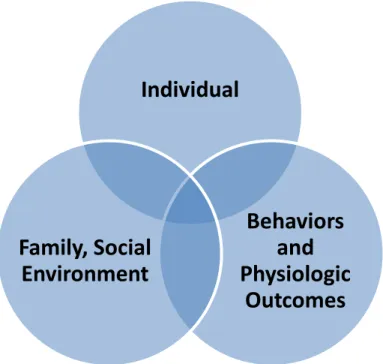
The theoretical foundation for this study was social cognitive theory. Social cognitive theory is based on reciprocal determinism and is represented in Figure 1.2. This model describes behavior as the result of continuous interactions between the environment, personal factors, and behaviors.
Figure 1.2. Model of the examined constructs. Individual includes personal attributes of knowledge and efficacy. Behaviors and physiologic outcomes represent diabetes self-management behaviors and outcomes. Family and social environment includes individuals‘ past and current experiences with diabetes management.
The following figure (Figure 1.3) represents how the relationships among Family, Individual, and Behavior were conceptualized in the study, although the degree of association
among the components is expected to vary among the 30 participants. The following section briefly explains how the constructs above were examined using a social cognitive theory framework.
Individual
Behaviors
and
Physiologic
Outcomes
Family, Social
Figure 1.3. Reciprocal determinism and how these qualities were measured or explored (Bandura, 1986).
For the purposes of this study environment was limited to the social environment and the influence of family, friends, and other referents related to T2DM self-management. Semistructured interviews explored the ways in which participants learned about diabetes, their current social environment in relation to their diabetes self-management practices, and their vicarious learning experiences. Interview questions and probes were designed to explore how and to what degree participants‘ self-management practices were influenced by their social environment.
The personal qualities, knowledge and self-efficacy, were examined. Measurements focused on health literacy level and diabetes knowledge. Self-efficacy, identified as a
predictor of the initiation and maintenance of behaviors, was measured with diabetes, eating, and exercise self-efficacy scales (Figure 1.1; Allen, 2004; Ingram et al., 2009). Health
Environment Social environment, family friends, and other referents for diabetes self-management Measure:
Semistructured interviews
Behavior
Type 2 diabetes self-management behaviors
Measure:
Health Promoting Lifestyle Profile II
Physiologic Measures Personal Qualities
Knowledge, cognitive abilities Measure:
16
promotion practices were examined using a health-promoting lifestyle profile instrument and the efficacy of current self-management practices were assessed with physiologic measures.
Summary
REFERENCES
Alcozer, F. (2000). Secondary analysis of perceptions and meanings of type 2 diabetes among Mexican American women. Diabetes Educator, 26, 785–795. doi:10.1177 /014572170002600507
Allen, N. A. (2004). Social cognitive theory in diabetes exercise research: An integrative literature review. Diabetes Educator, 30, 805–819. doi:10.1177 /014572170403000516 American Association of Diabetes Educators. (2012). Diabetes education. Retrieved from http://www.diabeteseducator.org/DiabetesEducation/Definitions.html
American Diabetes Association. (2012). Standards of medical care in diabetes–2012. Diabetes Care, 35(Suppl. 1), S11–63. doi:10.2337/dc12-s011
Aranda, J. M., Jr., & Vazquez, R. (2004). Awareness of hypertension and diabetes in the Hispanic community. Clinical Cornerstone, 6, 7–13. doi:10.1016/S1098-3597(04)80060-7
Bandura, A. (1986). Social foundations of thought and action: A social cognitive theory. Englewood Cliffs, NJ: Prentice Hall.
Bandura, A. (2000). Exercise of human agency through collective efficacy. Current Directions in Psychological Science, 9, 75–78. doi:10.1111/1467-8721.00064
Bandura, A. (1989). Human agency in social cognitive theory. American Psychologist, 44, 1175–1184. doi:10.1037/0003-066X.44.9.1175
Bandura, A. (1998). Health promotion from the perspective of social cognitive theory. Psychology & Health, 13, 623–649. doi:10.1234/12345678
Bandura, A. (2004). Health promotion by social cognitive means. Health Education & Behavior, 31, 143–164. doi:10.1177/1090198104263660
Bandura, A., & Locke, E. A. (2003). Negative self-efficacy and goal effects revisited. Journal of Applied Psychology, 88, 87–99. doi:10.1037/0021-9010.88.1.87
Barlow, J., Wright, C., Sheasby, J., Turner, A., & Hainsworth, J. (2002).
Self-management approaches for people with chronic conditions: A review. Patient Education and Counseling, 48, 177–187. doi:10.1016/s0738-3991(02)00032-0
18
Batalova, J. (2008a). Mexican immigrants in the United States. Retrieved from the Migration Information Soure website: http://www.migrationinformation.org/USfocus /display.cfm?id=679#9
Batalova, J. (2008b). US in focus: Mexican immigrants in the United States. Retrieved from the Migration Information Source website: http://www.migrationinformation.org /USFocus/display.cfm?ID=679
Beard, H. A., Al Ghatrif, M., Samper-Ternent, R., Gerst, K., & Markides, K. S. (2009). Trends in diabetes prevalence and diabetes-related complications in older Mexican Americans from 1993–1994 to 2004–2005. Diabetes Care, 32, 2212–2217. doi:10.2337 /dc09-0938
Behavioral Risk Factor Surveillance System. (2010). North Carolina–2010 Diabetes. Retrieved from the Centers for Disease Control, Division of Nutrition and Physical Activity website: http://apps.nccd.cdc.gov/BRFSS/display.asp?yr=2010&cat=DB &qkey=1363&state=NC
Bernal, H., Wooley, S., Schensul, J. J., & Dickinson, J. K. (2000). Correlates of self-efficacy in diabetes self-care among Hispanic adults with diabetes. Diabetes Educator, 26, 673–680. doi:10.1177/014572170002600415
Borrell, L. N. (2005). Racial identity among Hispanics: Implications for health and well-being. American Journal of Public Health, 95, 379–381. doi:10.2105/AJPH.2004.058172 Borrell, L. N., Dallo, F. J., & White, K. (2006). Education and diabetes in a racially and ethnically diverse population. American Journal of Public Health, 96, 1637–1642. doi:10.2105/AJPH.2005.072884
Brandt, D. (2001). Literacy in American lives. Cambridge, MA: Cambridge University Press.
Brown, S. A., Blozis, S. A., Kouzekanani, K., Garcia, A. A., Winchell, M., & Hanis, C. L. (2005). Dosage effects of diabetes self-management education for Mexican
Americans: The Starr County border health initiative. Diabetes Care, 28, 527–532. doi:10.2337/diacare.28.3.527
Caballero, A. E. (2006). Building cultural bridges: Understanding ethnicity to improve acceptance of insulin therapy in patients with type 2 diabetes. Ethnicity & Disease, 16, 559–568.
Carbone, E. T., Rosal, M. C., Torres, M. I., Goins, K. V., & Bermudez, O. I. (2007). Diabetes self-management: Perspectives of Latino patients and their health care providers. Patient Education and Counseling, 66, 202–210. doi:10.1016/j.pec.2006 .12.003
Carlson, E. D. (2000). A case study in translation methodology using the Health-Promotion Lifestyle Profile II. Public Health Nursing, 17, 61–70. dio:10.1046/j.1525-1446.2000.00061.x
Cavanaugh, K., Huizinga, M. M., Wallston, K. A., Gebretsadik, T., Shintani, A., Davis, D., . . . Rothman, R. L. (2008). Association of numeracy and diabetes control. Annals of Internal Medicine, 148, 737–746.
Centers for Disease Control and Prevention. (2011a). Age-adjusted percentage of civilian, noninstitutionalized population with diagnosed diabetes, Hispanics, United States, 1980–2010. Retrieved from http://www.cdc.gov/diabetes/statistics/prev/national /figbyhispanic.htm
Centers for Disease Control and Prevention. (2011b). National Diabetes Fact Sheet: National estimates and general information on diabetes and prediabetes in the United States, 2011. Retrieved from the Unites States Department of Health and Human Services website: http://diabetes.niddk.nih.gov/dm/pubs/statistics/
Comellas, M., Walker, E. A., Movsas, S., Merkin, S., Zonszein, J., & Strelnick, H. (2010). Training community health promoters to implement diabetes self-management support programs for urban minority adults. Diabetes Educator, 36, 141–151.
doi:10.1177/0145721709354606
Creatore, M. I., Moineddin, R., Booth, G., Manuel, D. H., DesMeules, M., McDermott, S., & Glazier, R. H. (2010). Age- and sex-related prevalence of diabetes mellitus among immigrants to Ontario, Canada. Canadian Medical Association Journal, 182, 781–789. doi:10.1503/cmaj.091551
Dall, T. M., Zhang, Y., Chen, Y. J., Quick, W. W., Yang, W. G., & Fogli, J. (2010). The economic burden of diabetes. Health Affairs, 29, 297–303. doi:10.1377/hlthaff.2009.0155 DeWalt, D. A., Boone, R. S., & Pignone, M. P. (2007). Literacy and its relationship with self-efficacy, trust, and participation in medical decision making. American Journal of Health Behavior, 31(Suppl. 1), S27–35. doi:10.5993/AJHB.31.s1.5
Ding, H., & Hargraves, L. (2009). Stress-associated poor health among adult immigrants with a language barrier in the United States. Journal of Immigrant and Minority
20
Dorsey, R. R., Eberhardt, M. S., Gregg, E. W., & Geiss, L. S. (2009). Control of risk factors among people with diagnosed diabetes, by lower extremity disease status. Preventing Chronic Disease, 6(4). Retrieved from http://www.cdc.gov/pcd/issues/2009 /oct/08_0224.htm
Everett, B., Salamonson, Y., & Davidson, P. M. (2009). Bandura‘s exercise self-efficacy scale: Validation in an Australian cardiac rehabilitation setting. International Journal of Nursing Studies, 46, 824–829. doi:10.1016/j.ijnurstu.2009.01.016
Fransen, M. P., von Wagner, C., & Essink-Bot, M. (2011). Diabetes self-management in patients with low health literacy: Ordering findings from literature in a health literacy framework. Patient Education and Counseling. Advanced online publication.
doi:10.1016/j.pec.2011.11.015
Franzini, L., & Fernandez-Esquer, M. E. (2004). Socioeconomic, cultural, and personal influences on health outcomes in low income Mexican-origin individuals in Texas. Social Science & Medicine, 59, 1629–1646. doi:10.1016/j.socscimed.2004.02.014
Fry, R. (2010). Hispanics, high school dropouts and the GED. Washington, DC: Pew Hispanic Center. Retrieved from http://pewhispanic.org/files/reports/122.pdf
Funnell, M. M., Brown, T. L., Childs, B. P., Haas, L. B., Hosey, G. M., Jensen, B., . . . Weiss, M. A. (2009). National standards for diabetes self-management education. Diabetes Care, 32(Suppl. 1), S87–S94. doi:10.2337/dc09-S087
Garcia, C. M., & Duckett, L. J. (2009). No te entiendo y tu no me entiendes: Language barriers among immigrant Latino adolescents seeking health care. Journal of Cultural Diversity, 16, 120–126.
Garcia, V., & Marinez, J. (2005). Exploring agricultural census undercounts among immigrant Hispanic/Latino farmers with an alternative enumeration project. Journal of Extension, 43(5). Retrieved from http://www.joe.org/joe/2005october/a2.php
Gazmararian, J. A., Williams, M. V., Peel, J., & Baker, D. W. (2003). Health literacy and knowledge of chronic disease. Patient Education & Counseling, 51, 267–275.
doi:10.1016/S0738-3991(02)00239-2
Giger, J. N., & Davidhizar, R. (2007). Promoting culturally appropriate interventions among vulnerable populations. Annual Review of Nursing Research, 25, 293–316.
Gill, H. (2010). The Latino migration experience in North Carolina: New roots in the Old North State. Chapel Hill, NC: The University of North Carolina Press.
Glasgow, R., Toobert, D., & Gillette, C. (2001). Psychosocial barriers to diabetes self-management and quality of life. Diabetes Spectrum, 14, 33–41. doi:10.2337
Goldman, D. P., & Smith, J. P. (2002). Can patient self-management help explain the SES health gradient? Proceedings of the National Academy of Sciences USA, 99, 10929– 10934. doi:10.1073/pnas.162086599
Hector, M., González, H., Vega, W. A., Rodríguez, M. A., Tarraf, W., & Sribney, W. M. (2009). Diabetes awareness and knowledge among Latinos: Does a usual source of healthcare matter? Journal of General Internal Medicine, 24(Suppl. 3), S528–533. doi:10.1007/s11606-009-1076-8
Heisler, M., Piette, J. D., Spencer, M., Kieffer, E., & Vijan, S. (2005). The relationship between knowledge of recent HbA1c values and diabetes care understanding and self-management. Diabetes Care, 28, 816–822. doi:10.2337/diacare.28.4.816
Herman, W. H., Ma, Y., Uwaifo, G., Haffner, S., Kahn, S. E., Horton, E. S., . . . Barrett-Connor, E. (2007). Differences in A1C by race and ethnicity among patients with impaired glucose tolerance in the Diabetes Prevention Program. Diabetes Care, 30, 2453–2457. doi:10.2337/dc06-2003
Heron, M. P., Hoyert, D. L., Murphy, S. L., Xu, J. Q., Kochanek, K. D., & Tejada-Vera, B. (2009). Deaths: Final data for 2006. National Vital Statistics Reports, 57(14).
Retrieved from the Centers for Disease Control website: http://www.cdc.gov/nchs/data /nvsr/nvsr57/nvsr57_14.pdf.
Hunt, L. M., & de Voogd, K. B. (2005). Clinical myths of the cultural ―other‖: Implications for Latino patient care. Academic Medicine, 80, 918–924. doi:10.1097 /00001888-200510000-00011
Hunt, S. M., & Bhopal, R. (2004). Self report in clinical and epidemiological studies with non-English speakers: The challenge of language and culture. Journal of Epidemiology and Community Health, 58, 618–622. doi:10.1136/jech.2003.010074
Ingram, M., Ruiz, M., Mayorga, M. T., & Rosales, C. (2009). The Animadora Project: Identifying factors related to the promotion of physical activity among Mexican Americans with diabetes. American Journal of Health Promotion, 23, 396–402. doi:10.4278/ajhp.08021915
Ingram, M., Torres, E., Redondo, F., Bradford, G., Wang, C., & O‘Toole, M. L. (2007). The Impact of Promotoras on social support and glycemic control among members of a farmworker community on the US-Mexico border. Diabetes Educator, 33(Suppl. 6), 172S–178. doi:10.1177/0145721707304170
22
Jiang, H. J., Andrews, R., Stryer, D., & Friedman, B. (2005). Racial/ethnic disparities in potentially preventable readmissions: The case of diabetes. American Journal of Public Health, 95, 1561–1567. doi:10.2105/AJPH.2004.044222
Karter, A., Ferrara, A., Liu, J. Y., Moffet, H. H., Ackerson, L. M., & Selby, J. V. (2002). Ethnic disparities in diabetic complications in an insured population. Journal of the American Medical Association, 287, 2519–2527. doi:10.1001/jama.287.19.2519
Kirk, J., Passmore, L., Bell, R., Narayan, K. M., D‘Agostino, J. R., Arcury, R., & Quandt, S. (2008). Disparities in A1C levels between Hispanic and Non-Hispanic White adults with diabetes. Diabetes Care, 31, 240–246. doi:10.2337/dc07-0382
Kutner, M., Greenberg, E., Jin, Y., & Paulsen, C. (2006). The health literacy of America’s adults: Results from the 2003 National Assessment of Adult Literacy. Washington, DC: National Center for Education Statistics.
Latham, C. L., & Calvillo, E. (2009). Predictors of successful diabetes management in low-income Hispanic people. Western Journal of Nursing Research, 31, 364–388. doi:10.1177/0193945908328263
Leininger, M., & McFarland, M. (2006). Culture care diversity & universality: A worldwide nursing theory. Boston, MA: Jones and Bartlett.
Lerman, I., Lozano, L., Villa, A. R., Hernandez-Jimenez, S., Weinger, K., Caballero, A. E., . . . Rull, J. A. (2004). Psychosocial factors associated with poor diabetes self-care management in a specialized center in Mexico City. Biomedicine & Pharmacotherapy, 58, 566–570. doi:10.1016/j.biopha.2004.09.003
Lorant, V., Demarest, S., Miermans, P. J., & Van Oyen, H. (2007). Survey error in measuring socio-economic risk factors of health status: A comparison of a survey and a census. International Journal of Epidemiology, 36, 1292–1299. doi:10.1093/ije/dym191 Mainous, A. G., 3rd, Diaz, V. A., & Geesey, M. E. (2008). Acculturation and healthy lifestyle among Latinos with diabetes. Annals of Family Medicine, 6, 131–137. doi:10 .1370/afm.814
Manderson, L., & Kokanovic, R. (2009). ―Worried all the time‘‘: distress and the circumstances of everyday life among immigrant Australians with type 2 diabetes. Chronic Illness, 5, 21–32. doi:10.1177/1742395309102243
Mann, D. M., Ponieman, D., Leventhal, H., & Halm, E. A. (2009). Misconceptions about diabetes and its management among low-income minorities with diabetes. Diabetes Care, 32, 591–593. doi:10.2337/dc08-1837
Minshall, M. E., Roze, S., Palmer, A. J., Valentine, W. J., Foos, V., Ray, J., & Graham, C. (2005). Treating diabetes to accepted standards of care: A 10-year projection of the estimated economic and health impact in patients with type 1 and type 2 diabetes mellitus in the United States. Clinical Therapeutics, 27, 940–950. doi:10.1016/j.clinthera.2005.06 .006
Morris, N., MacLean, C., & Littenberg, B. (2006). Literacy and health outcomes: A cross-sectional study in 1002 adults with diabetes. BMC Family Practice, 7, 49. doi:10 .1186/1471-2296-7-49
Nam, S., Chesla, C., Stotts, N. A., Kroon, L., & Janson, S. L. (2011). Barriers to diabetes management: Patient and provider factors. Diabetes Research and Clinical Practice, 93, 1–9. doi:10.1016/j.diabres.2011.02.002
National Center for Health Statistics.(2010). Health, United States, 2009: With special feature on medical technology (pp. 574). Retrieved from http://www.cdc.gov/nchs/data /hus/hus09.pdf
National Institute of Diabetes and Digestive and Kidney Diseases. (2011). National Diabetes Fact Sheet: National estimates and general information on diabetes and prediabetes in the United States, 2011. Retrieved from http://diabetes.niddk.nih.gov/dm /pubs/statistics/
Nielsen-Bohlman, L., Panzer, A., & Kindig, D. (Eds.). (2004). Health literacy: A prescription to end confusion. Washington, DC: Institute of Medicine, the National Academies Press.
Office of Disease Prevention & Health Promotion. (2009). Healthy People 2020: The Road Ahead. Retrieved from the Healthy People.Gov website: http://www.healthypeople .gov/hp2020/default.asp
Office of Management and Budget. (1997, October 30). Revisions to the standards for the classification of federal data on race and ethnicity. Federal Register Notice. Retrieved from the White House website: http://www.whitehouse.gov/omb/fedreg_1997standards/ Office of Minority Health & Health Disparities. (2011). Fact sheet: Hispanic health disparities. Retrieved from http://www.cdc.gov/omhd/Populations/HL/HL.htm
Osborn, C. Y., Cavanaugh, K., Wallston, K. A., & Rothman, R. L. (2010). Self-efficacy links health literacy and numeracy to glycemic control. Journal of Heatlh
Communication, 15(Suppl. 2), 146–158. doi:10.1080/10810730.2010.499980
24
Paz, S. H., Varma, R., Klein, R., Wu, J., & Azen, S. P. (2006). Noncompliance with vision care guidelines in Latinos with type 2 diabetes mellitus: The Los Angeles Latino Eye Study. Ophthalmology, 113, 1372–1377. doi:10.1016/j.ophtha.2006.04.018
Peerson, A., & Saunders, M. (2009). Health literacy revisited: What do we mean and why does it matter? Health Promotion International, 24, 285–296. doi:10.1093/heapro/dap014 Perez-Escamilla, R., & Putnik, P. (2007). The role of acculturation in nutrition, lifestyle, and incidence of type 2 diabetes among Latinos. Journal of Nutrition, 137, 860–870. Pew Hispanic Center. (2009). Mexican immigrants in the United States, 2008. Retrieved from http://pewresearch.org/pubs/1191/mexican-immigrants-in-america-largest-group Pew Hispanic Center. (2010). Statistical portrait of Hispanics in the United States, 2008. Retrieved from http://pewhispanic.org/factsheets/factsheet.php?FactsheetID=58
Peyrot, M., Rubin, R. R., Funnell, M. M., & Siminerio, L. M. (2009). Access to diabetes self-management education: Results of national surveys of patients, educators, and physicians. Diabetes Educator, 35, 246–248. doi:10.1177/0145721708329546 Pleis, J. R., Lucas, J. W., & Ward, B. W. (2009). Summary health statistics for U.S. adults: National Health Interview Survey, 2008. National Center for Health Statistics, 10(242), 158.
Plockinger, U., Topuz, M., Langer, M., & Reuter, T. (2010 ). Problems of diabetes management in the immigrant population in Germany. Diabetes Research and Clinical Practice 87, 77–86. doi:10.1016/j.diabres.2009.07.009
Powell, C. K., Hill, E. G., & Clancy, D. E. (2007). The relationship between health literacy and diabetes knowledge and readiness to take health actions. Diabetes Educator, 33, 144–151. doi:10.1177/0145721706297452
QSR International Pty Ltd. (2010 ). NVivo (Version 9) [Qualitative Data Analysis Software]. Cambridge, MA: QSR International (Americas) Inc. Retrieved from http://www.qsrinternational.com
Rustveld, L., Pavlik, V., Jibaja-Weiss, M., Kline, K., Gossey, J. T., & Volk, R. (2009). Adherence to diabetes self-care behaviors in English- and Spanish-speaking Hispanic men. Patient Preference and Adherence, 3, 123–130.
Sarkar, U., Fisher, L., & Schillinger, D. (2006). Is self-efficacy associated with diabetes self-management across race/ethnicity and health literacy? Diabetes Care, 29, 823–829. doi:10.2337/diacare.29.04.06.dc05-1615
Sarkar, U., Piette, J. D., Gonzales, R., Lessler, D., Chew, L. D., Reilly, B., . . .
Schillinger, D. (2008). Preferences for self-management support: Findings from a survey of diabetes patients in safety-net health systems. Patient Education and Counseling, 70, 102–110. doi:10.1016/j.pec.2007.09.008
Saydah, S., Cowie, C., Eberhardt, M. S., De Rekeneire, N., & Narayan, K. M. (2007). Race and ethnic differences in glycemic control among adults with diagnosed diabetes in the United States. Ethnicity & Disease 17, 529–535.
Saydah, S. H., Fradkin, J., & Cowie, C. C. (2004). Poor control of risk factors for vascular disease among adults with previously diagnosed diabetes. Journal of the American Medical Association, 291, 335–342. doi:10.1001/jama.291.3.335
Schillinger, D., Barton, L. R., Karter, A. J., Wang, F., & Adler, N. (2006). Does literacy mediate the relationship between education and health outcomes? A study of a low-income population with diabetes. Public Health Reports, 121, 245–254.
Schillinger, D., Grumbach, K., Piette, J., Wang, F., Osmond, D., Daher, C., . . . Bindman, A. B. (2002). Association of health literacy with diabetes outcomes. Journal of the American Medical Association, 288, 475–482. doi:10.1001/jama.288.4.475
Scribner, S., & Cole, M. (1999). The psychology of literacy. New York, NY: Harvard University Press.
Smedley, B., Stith, A., & Nelson, A. (Eds.). (2003). Unequal treatment: Confronting racial and ethnic disparities in health care. Washington, DC: Institute of Medicine, The National Academies Press.
Spector, R. (2009). Cultural diversity in health and illness. Upper Saddle River, NJ: Pearson Prentice Hall.
26
U.S. Census Bureau. (2008). Facts on the Hispanic or Latino population. Retrieved from http://www.census.gov/population/www/socdemo/hispanic/files/Internet_Hispanic_in_U S_2006.ppt
U.S. Census Bureau. (2010). North Carolina American Community Survey demographic and housing estimates: 2007–2009. Retrieved from http://factfinder.census.gov/servlet /ADPTable?_bm=y&-geo_id=04000US37&-qr_name=ACS_2009_3YR_G00_DP3YR5 &-ds_name=ACS_2009_3YR_G00_&-_lang=en&-redoLog=false
U.S. Department of Health & Human Services. (2003). Civil rights: Guidance to federal financial assistance recipients regarding Title VI prohibition against national origin discrimination affecting limited English proficient persons, 2010. Retrieved from http://www.hhs.gov/ocr/civilrights/resources/laws/summaryguidance.html
Ujcic-Voortman, J. K., Schram, M. T., Jacobs-van der Bruggen, M. A., Verhoeff, A. P., & Baan, C. A. (2009). Diabetes prevalence and risk factors among ethnic minorities. European Journal of Public Health 19, 511–515. doi:10.1093/eurpub/ckp096
Umpierrez, G. E., Gonzalez, A., Umpierrez, D., & Pimentel, D. (2007). Diabetes mellitus in the Hispanic/Latino Population: An increasing health care challenge in the United States. The American Journal of the Medical Sciences, 334, 274–282. doi:10.1097/MAJ .0b013e3180a6efe3
Vega, W. A., Rodriguez, M. A., & Gruskin, E. (2009). Health disparities in the Latino population. Epidemiologic Reviews, 31, 99–112. doi:10.1093/epirev/mxp008
Von Korff, M., Katon, W., Lin, E., Simon, G., Ciechanowski, P., Ludman, E., & Young, B. (2005). Work disability among individuals with diabetes. Diabetes Care, 28, 1326– 1332. doi:10.2337/diacare.28.6.1326
Wallace, A. S., Seligman, H. K., Davis, T. C., Schillinger, D., Arnold, C. L., Bryant-Shilliday, B., . . . DeWalt, D. A. (2009). Literacy-appropriate educational materials and brief counseling improve diabetes self-management. Patient Education and Counseling, 75, 328–333. doi:10.1016/j.pec.2008.12.017
Weiler, D. M., & Crist, J. D. (2009). Diabetes self-management in a Latino social environment. Diabetes Educator, 35, 285–292. doi:10.1177/0145721708329545 Wen, L. K., Shepherd, M. D., & Parchman, M. L. (2004). Family support, diet, and exercise among older Mexican Americans with type 2 diabetes. Diabetes Educator, 30, 980–993. doi:10.1177/014572170403000619
Wilson, E., Chen, A. H., Grumbach, K., Wang, F., & Fernandez, A. (2005). Effects of limited English proficiency and physician language on health care comprehension.
CHAPTER 2
LITERATURE REVIEW
Introduction
The prevalence of T2DM is increasing in both developed and developing countries (van Dieren, van der Schouw, Grobbee, & Neal, 2010). The rise is attributed to cultural and societal changes, aging populations, changing dietary habits, decreased physical activity, and increasing obesity rates (International Diabetes Federation [IDF], 2010). Globally, an
estimated 285 million people aged 20 to 79 years were living with diabetes in 2010 (IDF, 2010). By the year 2034, this number is expected to increase to 438 million (Egede, 2010; van Dieren et al., 2010). Although public health programs promoting healthy lifestyle habits have been initiated, immigrant populations remain at higher risk for developing T2DM than native populations (IDF, 2010; Roglic et al., 2005). Investigators in Germany, Canada, the Netherlands, Australia and the United States (US) found immigrant populations experienced higher prevalence rates and had greater difficulty managing T2DM than native-born
populations (Creatore, 2010; Manderson & Kokanovic 2009; Plockinger, Topuz, Langer, & Reuter, 2010; Choi, Chow, Chung, & Wong, 2011; Ujcic-Voortman, Schram, Jacobs-van der Bruggen, Verhoeff, & Baan, 2009).
Background
Native and foreign born Hispanics are the largest ethnic minority in the US;
Hispanic Center, 2010b). Hispanics aged 20 years and older, living in the US, have a diagnosed diabetes prevalence rate of 11.8%, higher than that of non-Hispanic Whites at 7.1% (National Institute of Diabetes and Digestive and Kidney Diseases, 2011). Diabetes prevalence rates vary among Hispanic subgroups with persons of Mexican descent at particularly high-risk. Of Mexicans aged 45 to 74 years and living in the US, 24% are diagnosed with diabetes, compared to 12% of non-Hispanic Whites (Centers for Disease Control and Prevention, 2010; Umpierrez, Gonzalez, Umpierrez & Pimental, 2007). Diabetes is the fifth leading cause of death for Hispanics in the US (Heron et al., 2009). Compared to non-Hispanic Whites Hispanics have higher rates of renal disease, retinopathy, neuropathy, and lower limb amputations secondary to diabetes (Umpierrez et al., 2007).
Effective self-management of T2DM, defined as glycated hemoglobin (HbA1c) less than 7% and maintaining a healthy weight through diet and exercise, can reduce or prevent these complications (American Diabetes Association [ADA], 2012; Sabaté, 2003). Mexican immigrants face substantial barriers to attaining this goal including low academic
achievement in their country of origin, low health literacy, limited-English proficiency, lack of diabetes knowledge, and low self-efficacy (ADA, 2012; Batalova, 2008; Fry, 2010; Office of Minority Health & Health Disparities, 2009). Despite high prevalence rates and the size of the Mexican immigrant population in the US, we have insufficient knowledge of T2DM self-management of limited-English proficient Hispanic immigrants (Saydah, Cowie, Eberhardt, De Rekeneire, & Narayan, 2007).
30
America, or other Spanish speaking cultures (Office of Management and Budget, 1997). Hispanic and Latino are ethnic classifications and are contingent on individuals self-identifying; those same individuals may be of any race. In this article, the term Hispanic is used when collective data are provided and countries of origin are given when specific subgroup data are provided.
Health Literacy
Low health literacy contributes to disparities in self-care management and health outcomes among Hispanics with limited proficiency in English (Brach & Chevarley, 2008; Sarkar et al., 2010; Schillinger et al., 2002). Health literacy is the ability to access,
understand, and act on health information. Commonly, researchers use reading ability as a proxy for the broader construct of health literacy (Nielsen-Bohlman, Panzer, & Kindig, 2004; Schwartzberg, VanGeest, & Wang, 2005).
The most recent National Assessment of Adult Literacy (NAAL) evaluated health literacy tasks in the clinical, preventive, and navigational domains (Kutner, Greenberg, Jin, & Paulsen, 2006). The evaluative materials were designed to represent real-world,
and responsibilities within it. Examples include understanding what a health insurance plan‘s inclusions and exclusions mean, appraising one‘s eligibility for public insurance or assistance programs, and the ability to give informed consent for a health-care service.
The assessment found that 41% of Hispanics scored below basic health literacy, a level lower than any other racial or ethnic group (Kutner et al., 2006). Tasks at that level required locating straightforward information within simple texts such as circling an appointment date on an appointment slip or identifying how often a person should have a medical test based on information in a pamphlet. However, while the NAAL questions were orally administered in either English or Spanish, they were based upon written materials presented in English only; thus, respondents were not evaluated in their language of choice making this a major limitation of the NAAL.
For adults with less than a high school education, 49% had below basic health literacy; the number for those with a high school education was 15%. These disparities substantiated previous findings associating low academic achievement with low health literacy (Kutner et al., 2006). Overall, Hispanic adults had lower average health literacy than any other racial or ethnic group. With three in five Mexican immigrants having less than a high school education, they are at a particular high risk for low health literacy (Batalova, 2008).
Limited English-Language Proficiency
32
speak English as their primary language and have a limited ability to read, speak, write, or understand English (Civil Rights Division, 2000; U.S. Government, 1964). Language skills are a significant issue because 75% of recently immigrated Mexicans have limited English proficiency (Pew Hispanic Center, 2009). Limited English language proficiency and low literacy increases individuals‘ difficulties in acting on health information and self-managing diabetes (Sarkar et al., 2010; Sudore et al., 2009). Although low literacy and lack of diabetes knowledge play a role in poor self-management outcomes, they are insufficient to explain all domains of diabetes self-management such as diet, exercise, self-monitoring of blood glucose (SMBG), and medication management (Latham & Calvillo, 2009).
Self-Efficacy
Self-efficacy is a person‘s confidence in his or her ability to perform a behavior or
accomplish a goal, and it influences the degree of perseverance and effort a person will put forth (Bandura, 2004). Self-efficacy is an established predictor of the initiation and
Methods
Research focusing on literacy, self-efficacy, T2DM self-management, and included Spanish-speaking participants was explored. The search was conducted using electronic databases, reference lists of selected articles, related citations, and government reports. The Cumulative Index to Nursing and Allied Health, PubMed, the Cochrane Library, and the
Education Resources Information Center were searched for original research articles. The
search was limited to articles published in English and the following search terms were used: diabetes, literacy, self-efficacy. To limit the search results all three search words were
required to be positive, using AND in Boolean logic. The following Medline Medical Subject Headings terms were also used: diabetes mellitus, literate, illiteracy, readability, and reading level. No date restrictions were placed on the search. The full inclusion and exclusion criteria
are summarized on Table 2.1. Table 2.1
Literature Search: Inclusion and Exclusion Criteria
Included Studies Criteria
Population Spanish-speaking adults with type 2 diabetes
Focus The relationship between literacy, efficacy, and management outcomes or domains (i.e., diet, exercise, self-monitoring of blood glucose, medication)
The measures of the focus variables and outcomes were evaluated
Measures Literacy level determined using a validated instrument Numeracy
Self-efficacy
Physiological or reported self-management behavior Publication Criteria English language
34
Excluded Studies Criteria
Focused on gestational diabetes or type 1 diabetes Focused on program development
Used academic achievement level as a literacy measure Focused on instrument psychometrics
Evaluated diabetes information or patient education materials
Opinion pieces, commentaries, or editorials Focused on physician–patient communication Used an adolescent or pediatric population Focused on health-care access or utilization
Reference lists of works selected from the online search were reviewed for additional manuscripts. The search results from each database and the reference lists were screened for duplicate manuscripts. This resulted in 43 titles and abstracts published between March 2001 and December 2011. All 43 titles and abstracts were screened based on whether the subject population included Spanish-speaking adults and examined the relationship of the literacy and/or self-efficacy on a diabetes self-management outcome (e.g., HbA1c level, weight, SMBG). A total of 24 articles were excluded after the review of titles and abstracts. Of those, six were excluded because they did not focus on literacy or self-efficacy (Abdoli, Ashktorab, Ahmadi, Pravizy, & Dunning, 2011; Cho et al., 2010; Levin-Zamir & Peterburg, 200;
Seligman et al., 2007) or diabetes specifically (Carolan, Steele, & Margetts, 2010). Two unpublished dissertations and one review were excluded (Fransen, von Wagner, & Essink-Bot, 2011). Six studies were excluded due to a lack of Spanish-speakers in the study population (Fernandez et al., 2011; Khan et al., 2011; McCleary-Jones, 2011; Peek et al., 2009).