Evidence-Based Guidelines for Cardiovascular Disease
Prevention in Women: 2007 Update
Lori Mosca, MD, MPH, PhD, Chair; Carole L. Banka, PhD; Emelia J. Benjamin, MD;
Kathy Berra, MSN, NP; Cheryl Bushnell, MD; Rowena J. Dolor, MD, MHS;
Theodore G. Ganiats, MD; Antoinette S. Gomes, MD; Heather L. Gornik, MD, MHS;
Clarissa Gracia, MD, MSCE; Martha Gulati, MD, MS; Constance K. Haan, MD;
Debra R. Judelson, MD; Nora Keenan, PhD; Ellie Kelepouris, MD; Erin D. Michos, MD;
L. Kristin Newby, MD, MHS; Suzanne Oparil, MD; Pamela Ouyang, MD; Mehmet C. Oz, MD;
Diana Petitti, MD, MPH; Vivian W. Pinn, MD; Rita F. Redberg, MD, MSc; Rosalyn Scott, MD;
Katherine Sherif, MD; Sidney C. Smith, Jr, MD; George Sopko, MD, MPH; Robin H. Steinhorn, MD;
Neil J. Stone, MD; Kathryn A. Taubert, PhD; Barbara A. Todd, MSN, CRNP; Elaine Urbina, MD;
Nanette K. Wenger, MD; for the Expert Panel/Writing Group*
*Representing the following participating organizations and major cosponsors: the American Heart Association (L.M., C.L.B., E.J.B., K.B., C.B., R.J.D., A.S.G., H.L.G., E.K., E.D.M., L.K.N., S.O., P.O., M.C.O., R.F.R., R.H.S., N.J.S., K.A.T., E.U., N.K.W.), American Academy of Family Physicians (T.G.G.), American College of Obstetricians and Gynecologists (C.G.), American College of Cardiology Foundation (M.G.), Society of Thoracic Surgeons (C.K.H.), American Medical Women’s Association (D.R.J.), Centers for Disease Control and Prevention (N.K.), Ad Hoc Writing Group Member (D.P.), Office of Research on Women’s Health (V.W.P.), Association of Black Cardiologists (R.S.), American College of Physicians (K.S.),† World Heart Federation (S.C.S.), National Heart, Lung, and Blood Institute (G.S.), and American College of Nurse Practitioners (B.A.T.).
In addition, this report has been endorsed by the American Academy of Physician Assistants; American Association for Clinical Chemistry; Amer-ican Association of Cardiovascular and Pulmonary Rehabilitation; AmerAmer-ican College of Chest Physicians; AmerAmer-ican College of Emergency Physi-cians; American Diabetes Association; American Geriatrics Society; American Society for Preventive Cardiology; American Society of Echocardio-graphy; American Society of Nuclear Cardiology; Association of Women’s Health, Obstetric and Neonatal Nurses; Global Alliance for Women’s Health; The Mended Hearts, Inc; National Black Nurses Association; National Black Women’s Health Imperative; National Women’s Health Re-source Center; North American Menopause Society; The Partnership for Gender-Specific Medicine at Columbia University; Preventive Cardiovascu-lar Nurses Association; Society for VascuCardiovascu-lar Medicine and Biology; Society for Women’s Health Research; Society of Geriatric Cardiology; Women
in Thoracic Surgery; and WomenHeart: the National Coalition for Women with Heart Disease.
W
orldwide, cardiovascular disease (CVD) is the largest
single cause of death among women, accounting for
one third of all deaths.
1In many countries, including the
United States, more women than men die every year of CVD,
a fact largely unknown by physicians.
2,3The public health
impact of CVD in women is not related solely to the mortality
rate, given that advances in science and medicine allow many
women to survive heart disease. For example, in the United
States, 38.2 million women (34%) are living with CVD, and
the population at risk is even larger.
2In China, a country with
a population of approximately 1.3 billion, the
age-standardized prevalence rates of dyslipidemia and
hyperten-sion in women 35 to 74 years of age are 53% and 25%,
respectively, which underscores the enormity of CVD as a
global health issue and the need for prevention of risk factors
in the first place.
4As life expectancy continues to increase
and economies become more industrialized, the burden of
CVD on women and the global economy will continue to
increase.
5The human toll and economic impact of CVD are difficult
to overstate. In the United States alone, $403 billion was
estimated to be spent in 2006 on health care or in lost
†Representation does not imply endorsement by the American College of Physicians.
The online-only Data Supplement is available with this article at http://circ.ahajournals.org/cgi/content/full/CIRCULATIONAHA.107.181546/DC1. The American Heart Association makes every effort to avoid any actual or potential conflicts of interest that may arise as a result of an outside relationship or a personal, professional, or business interest of a member of the writing panel. Specifically, all members of the writing group are required to complete and submit a Disclosure Questionnaire showing all such relationships that might be perceived as real or potential conflicts of interest.
This statement was approved by the American Heart Association Science Advisory and Coordinating Committee on January 9, 2007. A single reprint is available by calling 800-242-8721 (US only) or writing the American Heart Association, Public Information, 7272 Greenville Ave, Dallas, TX 75231-4596. Ask for reprint No. 71-0401. To purchase additional reprints, call 843-216-2533 or e-mail [email protected].
This article has been copublished in the March 20, 2007, issue of theJournal of the American College of Cardiology.
Expert peer review of AHA Scientific Statements is conducted at the AHA National Center. For more on AHA statements and guidelines development, visit http://www.americanheart.org/presenter.jhtml?identifier⫽3023366.
Permissions: Multiple copies, modification, alteration, enhancement, and/or distribution of this document are not permitted without the express permission of the American Heart Association. Instructions for obtaining permission are located at http://www.americanheart.org/presenter.jhtml? Identifier⫽4431. A link to the “Permission Request Form” appears on the right side of the page.
(Circulation.2007;115:1481-1501.) © 2007 American Heart Association, Inc.
Circulationis available at http://www.circulationaha.org DOI: 10.1161/CIRCULATIONAHA.107.181546
1481
by guest on March 29, 2018
http://circ.ahajournals.org/
Downloaded from
by guest on March 29, 2018
http://circ.ahajournals.org/
Downloaded from
by guest on March 29, 2018
http://circ.ahajournals.org/
productivity as a result of CVD, compared with $190 billion
for cancer and $29 billion for human immunodeficiency virus
(HIV).
2In addition to population-based and macroeconomic
interventions, interventions in individual patients are key to
reducing the incidence of CVD globally.
6Prevention of CVD
is paramount to the health of every woman and every nation.
Even modest control could have an enormous impact. It is
projected that a reduction in the death rate due to chronic
diseases by just 2% over 1 decade would prevent 36 million
deaths.
6Fortunately, most CVD in women is preventable. In 1999,
the American Heart Association (AHA) published a scientific
statement titled “A Guide to Preventive Cardiology in
Women,” which was based on a 1997 review of the literature
that documented unique aspects of risk factor management
and the occurrence of CVD in women.
7,8Over the subsequent
decade, many landmark clinical trials in the prevention of
CVD altered the practice of medicine. In 2003, a systematic
literature search was conducted to develop evidence-based
guidelines for the prevention of CVD in women.
9Demand for
clinical trial evidence increased in the wake of the Women’s
Health Initiative’s discordant findings with observational
studies of hormone therapy.
10Some commonly used
preven-tive interventions lacked clinical trial data for women, and it
was unclear whether results of studies conducted in men
could be generalized to women. Since the 2003 literature
review, numerous clinical trials that have a bearing on CVD
prevention in women have been completed (see Appendix).
These new research findings must be interpreted in the
context of existing data and as-yet missing information so
they can be translated appropriately into practice. With few
exceptions (eg, the use of aspirin for primary prevention of
heart disease), recommendations to prevent CVD in women
do not differ from those for men. Healthcare providers should
be aware that in some instances, the risk-reducing
interven-tions recommended in these guidelines (eg,
angiotensin-converting enzyme inhibitors and angiotensin receptor
block-ers for blood pressure control) are contraindicated in women
contemplating pregnancy or in those who are pregnant.
This 2007 update provides the most current clinical
rec-ommendations for the prevention of CVD in women
ⱖ
20
years of age and is based on a systematic search of the
highest-quality science, interpreted by experts in the fields of
cardiology, epidemiology, family medicine, gynecology,
in-ternal medicine, neurology, nursing, public health, statistics,
and surgery. These guidelines cover the primary and
second-ary prevention of chronic atherosclerotic vascular diseases.
More acute management of vascular disease in the
peripro-cedural or immediate posthospital settings and of valvular
heart disease is covered in other AHA guidelines.
Manage-ment of heart failure, atrial fibrillation for stroke prevention,
and CVD risk factors during pregnancy is beyond the scope
of the present document.
CVD Risk Assessment in Women
The 2004 guidelines emphasized the importance of
recogniz-ing the spectrum of CVD and thus classified women as berecogniz-ing
at high risk, intermediate risk, lower risk, and optimal risk.
Classification was based on clinical criteria and/or the
Fra-mingham global risk score.
11These criteria are still used to
help guide lipid therapy. The 2007 update recommends a
scheme for a general approach to the female patient that
classifies her as at high risk, at risk, or at optimal risk (Table
1). The rationale for the change includes several factors: (1)
The average lifetime risk for CVD in women is very high,
approaching 1 in 2, so prevention is important in all
wom-en
12,13; (2) most clinical trial data used to formulate the
recommendations included either women at high risk because
of known CVD or apparently healthy women with a spectrum
of risk, which allowed the current scheme to align the
guidelines with the evidence; and (3) there has been a
growing appreciation of the limitations of risk stratification
with the Framingham risk function in diverse populations of
women, including the narrow focus on short-term (10-year)
risk of myocardial infarction and coronary heart disease
death, lack of inclusion of family history, overestimation or
underestimation of risk in nonwhite populations, and the
documentation of subclinical disease among many women
who score as being at low risk.
14The panel believed that a Framingham global risk score
⬎
20% could be used to identify a woman at high risk but that
a lower score is not sufficient to ensure that an individual
woman is at low risk. Even the presence of a single risk factor
at 50 years of age is associated with a substantially increased
lifetime absolute risk for CVD and shorter duration of
TABLE 1.
Classification of CVD Risk in Women
Risk Status Criteria
High risk Established coronary heart disease
Cerebrovascular disease
Peripheral arterial disease
Abdominal aortic aneurysm
End-stage or chronic renal disease
Diabetes mellitus
10-Year Framingham global risk⬎20%*
At risk ⱖ1 major risk factors for CVD, including:
Cigarette smoking
Poor diet
Physical inactivity
Obesity, especially central adiposity
Family history of premature CVD (CVD at⬍55 years of age in male relative and⬍65 years of age in female relative)
Hypertension
Dyslipidemia
Evidence of subclinical vascular disease (eg, coronary calcification)
Metabolic syndrome
Poor exercise capacity on treadmill test and/or abnormal heart rate recovery after stopping exercise
Optimal risk Framingham global risk⬍10% and a healthy lifestyle, with no risk factors
CVD indicates cardiovascular disease.
*Or at high risk on the basis of another population-adapted tool used to assess global risk.
by guest on March 29, 2018
http://circ.ahajournals.org/
survival.
13Women who are at risk of CVD because they have
ⱖ
1 risk factor for heart disease, evidence of subclinical
disease with or without risk factors, poor exercise capacity, or
unhealthy lifestyles may have a broad range of risk for CVD.
For example, a woman found to have coronary calcification
or increased carotid intimal thickness may be at low absolute
risk of CHD on the basis of the Framingham score, but she
may actually be at intermediate or high risk of a future CVD
event. Healthcare providers should take several factors into
consideration, including medical and lifestyle history,
Fra-mingham risk score, family history of CVD, and other genetic
conditions (eg, familial hypercholesterolemia), as they make
decisions about the aggressiveness of preventive therapy. The
optimal risk category has been maintained in the present
update and emphasizes the importance of optimizing
modifi-able risk, especially with regard to maintaining a healthy
lifestyle, and may reassure some women or motivate others.
The role that novel CVD risk factors (eg, high-sensitivity
C-reactive protein) and novel screening technologies (eg,
coronary calcium scoring) should play in guiding preventive
interventions is not yet defined. Further research is needed on
added benefits, risks, and costs associated with such
strate-gies before they can be incorporated into guidelines. Unique
opportunities to identify women’s risk (eg, during pregnancy)
also deserve further exploration. For example, preeclampsia
may be an early indicator of CVD risk.
15,16Women with
preeclampsia/eclampsia are significantly more likely to
de-velop hypertension and cerebrovascular disease.
15,16In
addi-tion, maternal placental syndromes in combination with
traditional cardiovascular risk factors, such as prepregnancy
hypertension or diabetes mellitus, obesity, dyslipidemia, or
metabolic syndrome, may be additive in defining CVD risk in
women.
16Future research should evaluate the potential for
events or medical contact during unique phases in a woman’s
lifespan, such as adolescence, pregnancy, and menopause, to
identify women at high risk and to determine the
effective-ness of preventive interventions during critical time periods.
Several important changes from the 2004 guidelines should
be noted. First, the approach to risk stratification of women
places greater emphasis on lifetime risk than on short-term
absolute risk, defined by the Framingham global score, in part
because of the limitations described above. The panel
ac-knowledged that nearly all women are at risk for CVD, which
underscores the importance of a heart-healthy lifestyle.
Ad-ditionally, some women are at high risk of future events
because of established CVD and/or multiple risk factors.
These women are candidates for more aggressive preventive
therapy. Second, more definitive data about menopausal
therapy, aspirin therapy, and folic acid therapy have been
published in recent years, and the guidelines have been
revised accordingly. Of note is that aspirin therapy should be
considered for all women for stroke prevention, depending on
the balance of risks and benefits. Finally, an algorithm is
provided to assist healthcare providers in evaluating CVD
risk in women and prioritizing preventive interventions.
Methods
Selection of Expert Panel
The AHA Manuscript Oversight Committee commissioned
the update of the guidelines and approved the chair of the
expert panel, who was a nonvoting member of the panel. The
leadership of each AHA scientific council and
interdiscipli-nary working group was asked to nominate a recognized
expert in CVD prevention who had particular knowledge
about women. Major professional or government
organiza-tions with a mission consistent with CVD prevention were
solicited to serve as cosponsors and were each asked to
nominate 1 representative with full voting rights to serve on
the expert panel. Each panel member completed a
conflict-of-interest statement and was asked to abstain from
discus-sion of or voting on any recommendations they deemed to be
a potential conflict of interest. Panelists also suggested
diverse professional and community organizations to endorse
the final document after its approval by the AHA Science
Advisory and Coordinating Committee and cosponsoring
organizations.
Selection of Topics and Systematic Search
The expert panel reviewed the list of recommendations in the
2004 guidelines and suggested additional topics to be
re-searched to determine whether they warranted discussion or a
clinical recommendation. The methods for the systematic
search were similar to those for the research conducted in
2003 and described previously.
9The time period for the
updated search was January 2003 through June 7, 2006. New
topics were searched electronically on 3 databases from their
inception (Medline, 1966 through June 7, 2006; CINAHL,
1982 through June 7, 2006; and PsychInfo, 1872 through
June 7, 2006).
Briefly, studies were included if they were randomized
clinical trials or large prospective cohort studies (
⬎
1000
sub-jects) of CVD risk–reducing interventions, meta-analyses that
used a quantitative systematic review process, or surrogate
end-point studies with at least 10 cases of major clinical CVD
end points reported. The systematic search was conducted by the
Duke Center for Clinical Health Policy Research, Durham, NC.
Table 2 lists the number of articles included/excluded for each
category of recommendation. A total of 5774 articles were
initially identified; 828 were included for full-text screening, and
246 met the inclusion criteria and were included in the evidence
tables. Some proposed new topics were searched but not
included in the guidelines because the expert panel determined
the data were insufficient to make clinical recommendations (eg,
yoga/stress reduction) or because the topic had been covered in
other recent guidelines (eg, treatment of atrial fibrillation for
stroke prevention).
17,18The summary evidence used by the
expert panel can be obtained online as a Data Supplement at
http://circ.ahajournals.org/cgi/content/full/CIRCULATIONAHA.
107.181546/DC1.
Evidence Rating and Recommendation Procedures
A series of conference calls to discuss recommendations was
conducted. Primary and secondary reviewers were assigned
to each recommendation to modify any wording and to ensure
that the evidence tables were complete for that topic. Each
expert received a final copy of the evidence tables and voted
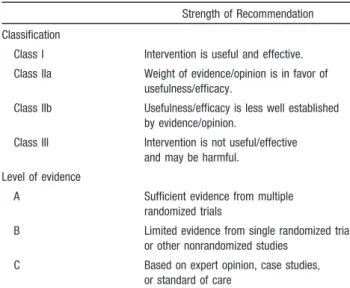
independently on the strength of the recommendation (Class
I, IIa, IIb, or III) and level of evidence (A, B, or C) as outlined
in Table 3. The final rating of evidence was determined by a
by guest on March 29, 2018
http://circ.ahajournals.org/
majority vote. Modifications to text and clinical
recommen-dations were made on the basis of peer review comments and
cosponsor reviews. The guidelines were then finalized and
approved by the expert panel.
Clinical Recommendations and Limitations
Evidence-based recommendations for the prevention of CVD
in women are listed in Table 4. Each recommendation is
accompanied by the strength of recommendation and the
level of evidence to support it. The strength of the
recom-mendation is based not only on the level of evidence to
support a clinical recommendation but also on other factors,
such as the feasibility of conducting randomized controlled
trials in women. Recommendations are grouped in the
fol-lowing categories: lifestyle interventions, major risk factor
interventions, and preventive drug interventions. Table 5 lists
Class III interventions that are not recommended for the
prevention of CVD, or myocardial infarction in particular, on
the basis of current evidence.
The expert panel tried to simplify the guidelines as much as
possible while attempting to preserve the integrity of the
evidence-based process. This required the assumption of a
class effect for most therapeutic interventions, and it should
be noted that data are limited with regard to gender
differ-ences in any potential class effects. Although most agents in
a single therapeutic class share similar efficacy in reducing
CVD risk, the safety profiles and costs may vary significantly
among agents; healthcare providers should take these factors
into consideration as they prescribe pharmacotherapy to
prevent CVD.
The panel also emphasizes that the effectiveness of
thera-pies prescribed in the actual office or hospital setting may
vary substantially from the efficacy and safety profiles
observed in clinical trials because of wide variations in
TABLE 2.
Summary of Articles Identified From Systematic Literature Review, by Topic (2006)
Topic
Abstracts Identified
Articles Included for Full-Text Screening
Meta-Analyses Identified
Articles Included for Evidence Tables
Hyperlipidemia 166 27 5 9
Physical activity 298* 53† 1 11
Smoking 281 71 0 1
Antiplatelet therapy 402 95‡ 7 12
Hypertension 78 32 1 10
-Blocker therapy 234 17 1 4
Cardiac rehabilitation 298* 53† 3 3
ACE/ARB therapy 251 44 7 13
Weight management 52 4 0 1
Diabetes mellitus 119 14 2 8
Hormone replacement therapy/SERMs§ 154 24 1 10
Diet modification 144 123‡ 1 28
Warfarin, antiplatelet therapy,§ and antiarrhythmic therapy§ in atrial fibrillation
460 73 23 27
Aspirin for primary prevention 7 95† 2 1
Psychosocial§/depression 409 42 0 10
Antioxidant supplementation 48 13 3 5
Omega-3 fatty acid supplementation 87 23 3 4
Folic acid supplementation, vitamin B6,§ vitamin B12§ 192 36 0 8 New search terms
Alcohol 325 123‡ 0 57
CHF rehabilitation 388 31 4 3
PVD rehabilitation 94 22 0 0
Yoga/stress reduction 83 20 2 6
Aldosterone blocker 239 7 0 4
Stroke rehabilitation 1263 57 11 11
Total 5774 828 77 246
ACE indicates angiotensin-converting enzyme; ARB, angiotensin receptor blocker; SERMs, selective estrogen-receptor modulators; CHF, congestive heart failure; and PVD, peripheral vascular disease.
*Physical activity and cardiac rehabilitation were combined during the initial literature search and full-text screening phase. This number reflects the total number of abstracts identified and articles included at full text as physical activity or cardiac rehabilitation. †Antiplatelet therapy for coronary artery disease and aspirin for primary prevention were combined during the full-text screening phase. This number reflects the total number of articles included at full text as antiplatelet therapy for coronary artery disease or aspirin for primary prevention.
‡Diet modification and alcohol were combined during the full-text screening phase. This number reflects the total number of articles included at full text as diet modification or alcohol.
§New search term for 2006 combined with previous 2003 topic.
by guest on March 29, 2018
http://circ.ahajournals.org/
patient characteristics and adherence to therapy as prescribed.
Guideline development has limitations related to the
gener-alizability of results from one population to another. The net
clinical impact of an intervention may not be reflected in the
scope of CVD outcomes evaluated in these guidelines.
Moreover, many studies used to formulate recommendations
did not include older women, especially those
⬎
80 years of
age, in whom CVD and comorbidities are common.
Health-care providers should use clinical judgment about the
aggres-siveness of preventive interventions in all women, especially
older women.
Guideline Implementation
A suggested algorithm for the prevention of CVD in women
that incorporates the updated guidelines is presented in the
Figure. Although a comprehensive plan to maximize
imple-mentation of the guidelines in various practice settings is
beyond the scope of this document, barriers to CVD
preven-tion should be discussed with women. A previous study by
the AHA has documented numerous barriers to heart health in
women; chief among them was confusion by mixed messages
from the media.
21Other barriers that healthcare providers can
address were as follows: 36% of women did not perceive
themselves to be at risk, 25% said their healthcare provider
did not say heart health was important, and 1 in 5 said
healthcare providers did not clearly explain how they could
change their risk status.
21Physicians have cited lack of
insurance coverage as a barrier to assisting their patients with
lifestyle changes.
3Widespread documentation of lack of adherence to CVD
prevention guidelines is available, even among women at
high risk of CVD in managed-care settings in the United
States in which access and medication coverage are
avail-able.
22Policy makers, healthcare providers, and patients all
have roles to play in maximizing adherence to preventive
interventions and reducing the burden of CVD. It is also
important to recognize that although the causes of CVD are
common to all parts of the world, the approaches to its
prevention at the societal or individual level will differ among
countries for cultural, social, medical, and economic
reasons.
23Research Needs and Future Directions
The expert panel suggested several gaps in knowledge related
to the prevention of CVD that must be addressed to optimize
the cardiovascular health of women. More rigorous testing of
the impact of guidelines themselves on prevention of risk
factors, slowing the progression of risk factors, and reducing
the burden of CVD is needed. The development and testing of
effective methods to implement guidelines in various
health-care settings, at work sites, and in communities are also
research priorities. The role of communication of risk and
barriers to CVD prevention should be studied and
incorpo-rated into creative methods to disseminate and implement
guidelines among diverse populations of women.
The role of genetics in risk stratification and in the
responsiveness to preventive interventions is an active and
important area of research. Likewise, the role of gender and
sex hormones requires further study to understand how they
affect outcomes after interventions and how female sex may
modify the prognostic value of new biomarkers and measures
of subclinical CVD.
Population-wide strategies are necessary to combat the
pandemic of CVD in women, because individually tailored
interventions alone are likely insufficient to maximally
pre-vent and control CVD. Public policy as an interpre-vention to
reduce gender-based disparities in CVD preventive care and
improve cardiovascular outcomes among women must
be-come an integral strategy to reduce the global burden of
CVD.
TABLE 3.
Classification and Levels of Evidence
Strength of Recommendation
Classification
Class I Intervention is useful and effective.
Class IIa Weight of evidence/opinion is in favor of usefulness/efficacy.
Class IIb Usefulness/efficacy is less well established by evidence/opinion.
Class III Intervention is not useful/effective and may be harmful.
Level of evidence
A Sufficient evidence from multiple randomized trials
B Limited evidence from single randomized trial or other nonrandomized studies
C Based on expert opinion, case studies, or standard of care
by guest on March 29, 2018
http://circ.ahajournals.org/
TABLE 4.
Guidelines for Prevention of CVD in Women: Clinical Recommendations
Lifestyle interventions
Cigarette smoking
Women should not smoke and should avoid environmental tobacco smoke. Provide counseling, nicotine replacement, and other pharmacotherapy as indicated in conjunction with a behavioral program or formal smoking cessation program(Class I, Level B).
Physical activity
Women should accumulate a minimum of 30 minutes of moderate-intensity physical activity (eg, brisk walking) on most, and preferably all, days of the week (Class I, Level B).
Women who need to lose weight or sustain weight loss should accumulate a minimum of 60 to 90 minutes of moderate-intensity physical activity (eg, brisk walking) on most, and preferably all, days of the week(Class I, Level C).
Rehabilitation
A comprehensive risk-reduction regimen, such as cardiovascular or stroke rehabilitation or a physician-guided home- or community-based exercise training program, should be recommended to women with a recent acute coronary syndrome or coronary intervention, new-onset or chronic angina, recent cerebrovascular event, peripheral arterial disease(Class I, Level A), or current/prior symptoms of heart failure and an LVEF⬍40%(Class I, Level B).
Dietary intake
Women should consume a diet rich in fruits and vegetables; choose whole-grain, high-fiber foods; consume fish, especially oily fish,* at least twice a week; limit intake of saturated fat to⬍10% of energy, and if possible to⬍7%, cholesterol to⬍300 mg/d, alcohol intake to no more than 1 drink per day,† and sodium intake to⬍2.3 g/d (approximately 1 tsp salt). Consumption oftrans-fatty acids should be as low as possible (eg,⬍1% of energy)(Class I, Level B).
Weight maintenance/reduction
Women should maintain or lose weight through an appropriate balance of physical activity, caloric intake, and formal behavioral programs when indicated to maintain/achieve a BMI between 18.5 and 24.9 kg/m2and a waist circumferenceⱕ35 in(Class I, Level B).
Omega-3 fatty acids
As an adjunct to diet, omega-3 fatty acids in capsule form (approximately 850 to 1000 mg of EPA and DHA) may be considered in women with CHD, and higher doses (2 to 4 g) may be used for treatment of women with high triglyceride levels(Class IIb, Level B).
Depression
Consider screening women with CHD for depression and refer/treat when indicated(Class IIa, Level B).
Major risk factor interventions
Blood pressure— optimal level and lifestyle
Encourage an optimal blood pressure of⬍120/80 mm Hg through lifestyle approaches such as weight control, increased physical activity, alcohol moderation, sodium restriction, and increased consumption of fresh fruits, vegetables, and low-fat dairy products(Class I, Level B).
Blood pressure—pharmacotherapy
Pharmacotherapy is indicated when blood pressure isⱖ140/90 mm Hg or at an even lower blood pressure in the setting of chronic kidney disease or diabetes (ⱖ130/80 mm Hg). Thiazide diuretics should be part of the drug regimen for most patients unless contraindicated or if there are compelling indications for other agents in specific vascular diseases. Initial treatment of high-risk women‡ should be with-blockers and/or ACE inhibitors/ARBs, with addition of other drugs such as thiazides as needed to achieve goal blood pressure(Class I, Level A).
Lipid and lipoprotein levels— optimal levels and lifestyle
The following levels of lipids and lipoproteins in women should be encouraged through lifestyle approaches: LDL-C⬍100 mg/dL, HDL-C⬎50 mg/dL, triglycerides⬍150 mg/dL, and non–HDL-C (total cholesterol minus HDL cholesterol)⬍130 mg/dL(Class I, Level B). If a woman is at high risk‡ or has hypercholesterolemia, intake of saturated fat should be⬍7% and cholesterol intake⬍200 mg/d)(Class I, Level B).
Lipids—pharmacotherapy for LDL lowering, high-risk women
Utilize LDL-C–lowering drug therapy simultaneously with lifestyle therapy in women with CHD to achieve an LDL-C⬍100 mg/dL(Class I, Level A)and similarly in women with other atherosclerotic CVD or diabetes mellitus or 10-year absolute risk⬎20%(Class I, Level B).
A reduction to⬍70 mg/dL is reasonable in very-high-risk women§ with CHD and may require an LDL-lowering drug combination(Class IIa, Level B).
Lipids—pharmacotherapy for LDL lowering, other at-risk women
Utilize LDL-C–lowering therapy if LDL-C level isⱖ130 mg/dL with lifestyle therapy and there are multiple risk factors and 10-year absolute risk 10% to 20% (Class I, Level B).
Utilize LDL-C–lowering therapy if LDL-C level isⱖ160 mg/dL with lifestyle therapy and multiple risk factors even if 10-year absolute risk is⬍10%(Class I, Level B).
Utilize LDL-C–lowering therapy if LDLⱖ190 mg/dL regardless of the presence or absence of other risk factors or CVD on lifestyle therapy(Class I, Level B).
Lipids—pharmacotherapy for low HDL or elevated non–HDL, high-risk women
Utilize niacin储or fibrate therapy when HDL-C is low or non–HDL-C is elevated in high-risk women储after LDL-C goal is reached(Class IIa, Level B).
Lipids—pharmacotherapy for low HDL or elevated non-HDL, other at-risk women
Consider niacin储or fibrate therapy when HDL-C is low or non–HDL-C is elevated after LDL-C goal is reached in women with multiple risk factors and a 10-year absolute risk 10% to 20%(Class IIb, Level B).
Diabetes mellitus
Lifestyle and pharmacotherapy should be used as indicated in women with diabetes(Class I, Level B)to achieve an HbA1C⬍7% if this can be accomplished
without significant hypoglycemia(Class I, Level C).
by guest on March 29, 2018
http://circ.ahajournals.org/
TABLE 5.
Class III Interventions (Not Useful/Effective and May Be Harmful) for CVD or MI Prevention in Women
Menopausal therapy
Hormone therapy and selective estrogen-receptor modulators (SERMs) should not be used for the primary or secondary prevention of CVD(Class III, Level A).
Antioxidant supplements
Antioxidant vitamin supplements (eg, vitamin E, C, and beta carotene) should not be used for the primary or secondary prevention of CVD(Class III, Level A).
Folic acid*
Folic acid, with or without B6 and B12 supplementation, should not be used for the primary or secondary prevention of CVD(Class III, Level A).
Aspirin for MI in women<65 years of age†
Routine use of aspirin in healthy women⬍65 years of age is not recommended to prevent MI(Class III, Level B).
CVD indicates cardiovascular disease; MI, myocardial infarction.
*Folic acid supplementation should be used in the childbearing years to prevent neural tube defects.
†For recommendation for aspirin to prevent CVD in womenⱖ65 years of age or stroke in women⬍65 years of age, please see Table 4.
TABLE 4.
Continued
Preventive drug interventions
Aspirin, high risk
Aspirin therapy (75 to 325 mg/d)¶ should be used in high-risk‡ women unless contraindicated(Class I, Level A).
If a high-risk‡ woman is intolerant of aspirin therapy, clopidogrel should be substituted(Class I, Level B).
Aspirin— other at-risk or healthy women
In womenⱖ65 years of age, consider aspirin therapy (81 mg daily or 100 mg every other day) if blood pressure is controlled and benefit for ischemic stroke and MI prevention is likely to outweigh risk of gastrointestinal bleeding and hemorrhagic stroke(Class IIa, Level B)and in women⬍65 years of age when benefit for ischemic stroke prevention is likely to outweigh adverse effects of therapy(Class IIb, Level B).
-Blockers
-Blockers should be used indefinitely in all women after MI, acute coronary syndrome, or left ventricular dysfunction with or without heart failure symptoms, unless contraindicated(Class I, Level A).
ACE inhibitors/ARBs
ACE inhibitors should be used (unless contraindicated) in women after MI and in those with clinical evidence of heart failure or an LVEFⱕ40% or with diabetes mellitus(Class I, Level A). In women after MI and in those with clinical evidence of heart failure or an LVEFⱕ40% or with diabetes mellitus who are intolerant of ACE inhibitors, ARBs should be used instead(Class I, Level B).
Aldosterone blockade
Use aldosterone blockade after MI in women who do not have significant renal dysfunction or hyperkalemia who are already receiving therapeutic doses of an ACE inhibitor and-blocker, and have LVEFⱕ40% with symptomatic heart failure(Class I, Level B).
LVEF indicates left ventricular ejection fraction; BMI, body mass index; EPA, eicosapentaenoic acid; DHA, docosahexaenoic acid; CHD, coronary heart disease; ACE, angiotensin-converting enzyme; ARB, angiotensin receptor blocker; LDL-C, low-density lipoprotein cholesterol; HDL-C, high-density lipoprotein cholesterol; CVD, cardiovascular disease; and MI, myocardial infarction.
*Pregnant and lactating women should avoid eating fish potentially high in methylmercury (eg, shark, swordfish, king mackerel, or tile fish) and should eat up to 12 oz/wk of a variety of fish and shellfish low in mercury and check the Environmental Protection Agency and the US Food and Drug Administration’s Web sites for updates and local advisories about safety of local catch.
†A drink equivalent is equal to a 12-oz bottle of beer, a 5-oz glass of wine, or a 1.5-oz shot of 80-proof spirit.
‡Criteria for high risk include established CHD, cerebrovascular disease, peripheral arterial disease, abdominal aortic aneurysm, end-stage or chronic renal disease, diabetes mellitus, and 10-year Framingham risk⬎20%.
§Criteria for very high risk include established CVD plus any of the following: multiple major risk factors, severe and poorly controlled risk factors, diabetes mellitus.19
储Dietary supplement niacin should not be used as a substitute for prescription niacin.
¶After percutaneous intervention with stent placement or coronary artery bypass grafting within previous year and in women with noncoronary forms of CVD, use current guidelines for aspirin and clopidogrel.20
by guest on March 29, 2018
http://circ.ahajournals.org/
Acknowledgments
We are grateful to the Duke Center for Clinical Health Policy Research, Durham, NC, for conducting and summarizing the sys-tematic literature searches. Persons from Duke who contributed to this project include: Rowena J. Dolor, MD, MHS, L. Kristin Newby, MD, MHS; Lori A. Bastian, MD, MPH; Jeffrey S. Berger, MD, MS; Laura Leigh Fitzpatrick, MD, MPH; Camille G. Frazier, MD; R. Julian Irvine, MSM; Radha Goel Kachhy, MD; Wanda Lakey, MD; Lillian F. Lien, MD; Chiara Melloni, MD; Viranga Pathiraja, MPH; John L. Petersen, MD; Zainab Samad, MD; Svati H. Shah, MD, MHS; Tracy Y. Wang, MD, MS; and Karen L. Ziegler, RN, MSN,
FNP. The chair also thanks Donna Stephens for her assistance in coordinating the expert panel and Lisa Rehm for assisting with the preparation of the manuscript. The Expert Panel appreciated the thoughtful comments from peer reviewers and sponsoring and endorsing organizations.
References
1. Women. World Heart Federation Web site. Available at: http://www. worldheart.org/awareness-women.php. Accessed October 6, 2006. 2. Thom T, Haase N, Rosamond W, Howard VJ, Rumsfeld J, Manolio T, Zheng
ZJ, Flegal K, O’Donnell C, Kittner S, Lloyd-Jones D, Goff DC Jr, Hong Y,
Is Woman at High Risk of Cardiovascular Disease?
Established coronary heart disease Cerebrovascular disease
Peripheral arterial disease Abdominal aortic aneurysm Diabetes mellitus
Chronic renal disease Global 10-year risk >20%
Implement Class I Lifestyle Recommendations (Implement in Women at All Risk Levels):
Smoking cessation Heart-healthy eating pattern Regular physical activity Weight management
Recent cardiovascular event, procedure, or congestive heart failure symptoms?
Yes
No
Refer to rehabilitation
Implement Class I Recommendations:
BP control
LDL therapy (goal <100 mg/dL) Aspirin/antiplatelet agents
-Blocker
Angiotensin-converting enzyme/ angiotensin receptor blocker Glycemic control in diabetic women Aldosterone blocker in select women
Consider Class II Recommendations:
LDL <70 mg/dL in very-high-risk women HDL/non-HDL therapy
Omega-3 fatty acids
Depression referral/treatment No
Implement Class I Recommendations:
BP control
LDL therapy in select women Yes
Consider Class II Recommendations:
HDL, non-HDL, and triglyceride therapy in select women
Aspirin
Evaluation of Cardiovascular Disease Risk:
Medical/family history
Symptoms of cardiovascular disease
Physical examination including BP, body mass index, waist size Labs including fasting lipoproteins and glucose
Framingham risk assessment if no cardiovascular disease or diabetes Depression screening in women with cardiovascular disease
Figure.Algorithm for CVD preventive care in women. Labs indicates laboratory tests; BP, blood pressure; LDL, low-density lipoprotein cholesterol; and HDL, high-density lipoprotein cholesterol.
by guest on March 29, 2018
http://circ.ahajournals.org/
Adams R, Friday G, Furie K, Gorelick P, Kissela B, Marler J, Meigs J, Sidney S, Sorlie P, Steinberger J, Wasserthiel-Smoller S, Wilson M, Wolf P; American Heart Association Statistics Committee and Stroke Statistics Sub-committee. Heart disease and stroke statistics—2006 update: a report from the American Heart Association Statistics Committee and Stroke Statistics
Subcommittee [published corrections appear inCirculation. 2006;113:e696
andCirculation. 2006;114:e630].Circulation. 2006;113:e85– e151. 3. Mosca L, Linfante AH, Benjamin EJ, Berra K, Hayes SN, Walsh BW,
Fabunmi RP, Kwan J, Mills T, Simpson SL. National study of physician awareness and adherence to cardiovascular disease prevention guidelines
in the United States.Circulation. 2005;111:499 –510.
4. Gu D, Gupta A, Muntner P, Hu S, Duan X, Chen J, Reynolds RF, Whelton PK, He J. Prevalence of cardiovascular disease risk factor clustering among the adult population of China: results from the Inter-national Collaborative Study of Cardiovascular Disease in Asia
(InterAsia).Circulation. 2005;112:658 – 665.
5. Yusuf S, Reddy S, Ounpuu S, Anand S. Global burden of cardiovascular diseases: part 1: general considerations, the epidemiologic transition, risk
factors, and impact of urbanization.Circulation. 2001;104:2746 –2753.
6. Strong K, Mathers C, Leeder S, Beaglehole R. Preventing chronic
dis-eases: how many lives can we save?Lancet. 2005;366:1578 –1582.
7. Mosca L, Grundy SM, Judelson D, King K, Limacher M, Oparil S, Pasternak R, Pearson TA, Redberg RF, Smith SC Jr, Winston M, Zinberg S. Guide to preventive cardiology for women: AHA/ACC Scientific
Statement Consensus Panel statement.Circulation. 1999;99:2480 –2484.
8. Mosca L, Manson JE, Sutherland SE, Langer RD, Manolio T, Barrett-Connor E. Cardiovascular disease in women: a statement for healthcare professionals from
the American Heart Association.Circulation. 1997;96:2468–2482.
9. Mosca L, Appel LJ, Benjamin EJ, Berra K, Chandra-Strobos N, Fabunmi RP, Grady D, Haan CK, Hayes SN, Judelson DR, Keenan NL, McBride P, Oparil S, Ouyang P, Oz MC, Mendelsohn ME, Pasternak RC, Pinn VW, Robertson RM, Schenck-Gustafsson K, Sila CA, Smith SC Jr, Sopko G, Taylor AL, Walsh BW, Wenger NK, Williams CL; American Heart Association. Evidence-based guidelines for cardiovascular disease
prevention in women.Circulation. 2004;109:672– 692.
10. Rossouw JE, Anderson GL, Prentice RL, LaCroix AZ, Kooperberg C, Stefanick ML, Jackson RD, Beresford SA, Howard BV, Johnson KC, Kotchen JM, Ockene J; Writing Group for the Women’s Health Initiative Investigators. Risks and benefits of estrogen plus progestin in healthy postmenopausal women: principal results from the Women’s Health
Ini-tiative randomized controlled trial.JAMA. 2002;288:321–333.
11. National Cholesterol Education Program (NCEP) Expert Panel on Detection, Evaluation, and Treatment of High Blood Cholesterol in Adults (Adult Treatment Panel III). Third report of the National Choles-terol Education Program (NCEP) Expert Panel on Detection, Evaluation, and Treatment of High Blood Cholesterol in Adults (Adult Treatment
Panel III) final report.Circulation.2002;106:3143–3421.
12. Lloyd-Jones DM, Larson MG, Beiser A, Levy D. Lifetime risk of
developing coronary heart disease.Lancet. 1999;353:89 –92.
13. Lloyd-Jones DM, Leip EP, Larson MG, D’Agostino RB, Beiser A, Wilson PW, Wolf PA, Levy D. Prediction of lifetime risk for cardiovascular disease by risk
factor burden at 50 years of age.Circulation. 2006;113:791–798.
14. Sibley C, Blumenthal RS, Bairey Merz CN, Mosca L. Limitations of
current cardiovascular disease risk assessment strategies in women. J
Womens Health (Larchmt). 2006;15:54 –56.
15. Wilson BJ, Watson MS, Prescott GJ, Sunderland S, Campbell DM, Hannaford P, Smith WC. Hypertensive diseases of pregnancy and risk of hypertension and
stroke in later life: results from cohort study.BMJ. 2003;326:845–852.
16. Ray JG, Vermeulen MJ, Schull MJ, Redelmeier DA. Cardiovascular Health After Maternal Placental Syndromes (CHAMPS): population-based retrospective
cohort study.Lancet. 2005;366:1797–1803.
17. Goldstein LB, Adams R, Alberts MJ, Appel LJ, Brass LM, Bushnell CD, Culebras A, Degraba TJ, Gorelick PB, Guyton JR, Hart RG, Howard G, Kelly-Hayes M, Nixon JV, Sacco RL; American Heart Association/American Stroke Association Stroke Council; Atherosclerotic Peripheral Vascular Disease Interdisciplinary Working Group; Cardiovascular Nursing Council; Clinical Car-diology Council; Nutrition, Physical Activity, and Metabolism Council; Quality of Care and Outcomes Research Interdisciplinary Working Group; American Academy of Neurology. Primary prevention of ischemic stroke: a guideline from the American Heart Association/American Stroke Association Stroke Council.
Stroke. 2006;37:1583–1633.
18. Fuster V, Ryden LE, Cannom DS, Crijns HJ, Curtis AB, Ellenbogen KA, Halperin JL, Le Heuzey JY, Kay GN, Lowe JE, Olsson SB, Prystowsky EN, Tamargo JL, Wann S, Smith SC Jr, Jacobs AK, Adams CD, Anderson JL, Antman EM, Halperin JL, Hunt SA, Nishimura R, Ornato JP, Page RL, Riegel B, Priori SG, Blanc JJ, Budaj A, Camm AJ, Dean V, Deckers JW, Despres C, Dickstein K, Lekakis J, McGregor K, Metra M, Morais J, Osterspey A, Tamargo JL, Zamorano JL; American College of Cardiology/American Heart Association Task Force on Practice Guidelines; European Society of Cardiology Committee for Practice Guidelines; European Heart Rhythm Association; Heart Rhythm Society. ACC/AHA/ESC 2006 guidelines for the management of patients with atrial fibrillation: a report of the American College of Cardiology/American Heart Association Task Force on Practice Guidelines and the European Society of Cardiology Committee for Practice Guidelines (Writing Committee to Revise the 2001 Guidelines for the Management of Patients With Atrial Fibrillation): developed in collaboration with the European Heart Rhythm Association and the
Heart Rhythm Society.Circulation. 2006;114:e257–e354.
19. Grundy SM, Cleeman JI, Merz CN, Brewer HB Jr, Clark LT, Hunninghake DB, Pasternak RC, Smith SC Jr, Stone NJ; National Heart, Lung, and Blood Institute; American College of Cardiology Foundation; American Heart Association. Implications of recent clinical trials for the National Cholesterol Education Program Adult Treatment Panel III guidelines [published correction appears in
Circulation. 2004;110:763].Circulation. 2004;110:227–239.
20. Smith SC Jr, Allen J, Blair SN, Bonow RO, Brass LM, Fonarow GC, Grundy SM, Hiratzka L, Jones D, Krumholz HM, Mosca L, Pasternak RC, Pearson T, Pfeffer MA, Taubert KA; AHA/ACC; National Heart, Lung, and Blood Institute. AHA/ACC guidelines for secondary pre-vention for patients with coronary and other atherosclerotic vascular
disease: 2006 update [published correction appears inCirculation. 2006;
113:e847].Circulation. 2006;113:2363–2372.
21. Mosca L, Mochari H, Christian AH, Berra K, Taubert K, Mills T, Burdick KA, Simpson SL. National study of women’s awareness, preventive action, and
barriers to cardiovascular health.Circulation. 2006;113:525–534.
22. Mosca L, Bairey-Merz N, Blumenthal RS, Cziraky MJ, Fabunmi RP, Sarawate C, Watson K, Willey VJ, Stanek EJ. Opportunity for intervention to achieve American Heart Association guidelines for optimal lipid levels in high-risk
women in a managed care setting.Circulation. 2005;111:488–493.
23. Smith SC Jr, Jackson R, Pearson TA, Fuster V, Yusuf S, Faergeman O, Wood DA, Alderman M, Horgan J, Home P, Hunn M, Grundy SM. Principles for national and regional guidelines on cardiovascular disease prevention: a scientific statement from the World Heart and Stroke
Forum.Circulation. 2004;109:3112–3121.
by guest on March 29, 2018
http://circ.ahajournals.org/
Disclosures
Writing
Group
Disclosures
Writing Group Member Employment Research Grant Other Research Support Speakers’ Bureau/ Honoraria Ownership Interest Consultant/Advisory Board Other Lori Mosca Columbia University NIH (Pfizer†) (no salary) Cholestech (in kind)*; Didexus (in kind)*; Lipo Science Inc (in kind)* Abbott*; Fornier*; Kos*; Merck*; Schering-Plough* None Eli Lilly†; McNeil*; NIH*; Novartis*; Pfizer*; Sanofi-Aventis*; Schering-Plough*; Unilever*; Waterfront Media* Educational grants to Columbia University from Cholestech*; Fact Foundation†; Organon*; Pfizer†; Reliant†; Unilever*; Waterfront Media* Carole L. Banka La Jolla Institute for Molecular Medicine None None None None None None Emelia J. Benjamin Boston University School of Medicine None None None None None None Kathy Berra Stanford Center for Research & Disease Prevention None Kos Pharmaceuticals* None None None None Cheryl Bushnell Duke University Medical Center None None None None None None Rowena J. Dolor Duke University Medical Center None None None None Pfizer*; Wyeth* None Theodore G. Ganiats University of California, San Diego None None None None Pfizer None Antoinette S. Gomes University of California at Los Angeles None None None None None None Heather L. Gornik The Cleveland Clinic Foundation BMS-Sanofi*; Pfizer† None None None None None Clarissa Gracia University of Pennsylvania None None None None None None Martha Gulati Northwestern University None None None None None None Constance K. Haan University of Florida None None None None None None Debra R. Judelson Cardiovascular Medical Group of Southern California None None Biovail*; Kos*; Novartis*; Pfizer* None Novartis*; Pfizer* Expert Witness* Nora Keenan Centers for Disease Control and Prevention None None None None None None Ellie Kelepouris Temple University School of Medicine None None None None None None Erin D. Michos Johns Hopkins School of Medicine None None None None None None L. Kristin Newby Duke University Medical Center BMS–Sanofi†; Millennium†; Schering-Plough†; Inverness Medical*; Roche Diagnostics† BMS–Sanofi*; Millennium* None Biosite*; Eli Lilly*; Inverness Medical*; Proctor & Gamble*; Johnson & Johnson* None Suzanne Oparil University of Alabama, Birmingham Abbott Laboratories*; AstraZeneca*; Aventis*; Biovail*; Boehringer Ingelheim*; Bristol-Myers Squibb*; Forest Laboratories*; GlaxoSmithKline*; Novartis*; Merck & Co*; Pfizer*; Sankyo Pharma*; Sanofi-Synthelabo*; Schering-Plough* None None None Bristol-Myers Squibb*; Merck & Co*; Pfizer*; Sanofi*; Novartis*; The Salt Institute* Encysive Pharmaceuticals BOD* Pamela Ouyang Johns Hopkins Bayview Medical Center None None None None CV Therapeutics* None Mehmet C. Oz Columbia University None None None None None Noneby guest on March 29, 2018
http://circ.ahajournals.org/
Writing
Group
Disclosures
Continued
Writing Group Member Employment Research Grant Other Research Support Speakers’ Bureau/ Honoraria Ownership Interest Consultant/Advisory Board Other Diana Petitti; Ad Hoc Member Kaiser Permanente Southern California National Institutes of Health* None None None None None Vivian W. Pinn Department of Health and Human Services (NIH) None None None None None None Rita F. Redberg University of California at San Francisco Medical Center None None Estrasorb* None CV Therapeutics* None Rosalyn Scott Drew Medical Center, Los Angeles, Calif None None ABC Center for Women’s Health Annual Symposium* None ABC Center for Women’s Health* None Katherine Sherif‡ Drexel University College of Medicine Novartis† None Novartis* None None None Sidney C. Smith, Jr University of North Carolina, Chapel Hill None None Bayer*; BMS*; Sanofi* None Eli Lilly*; GlaxoSmithKline*; Merck*; Pfizer*; Sanofi-Aventis* AstraZeneca (DSMB)* George Sopko National Heart, Lung, and Blood Institute None None None None None None Robin H. Steinhorn Children’s Memorial Hospital, Chicago, Ill None None None None INO Therapeutics* None Neil J. Stone Northwestern University, Chicago, Ill None None Abbott*; AstraZeneca*; Merck*; Pfizer*; Sanofi*; Schering-Plough* None Abbott*; AstraZeneca*; Merck*; Pfizer*; Reliant*; Schering-Plough*; Sonosite* None Kathryn A. Taubert American Heart Association None None None None None None Barbara A. Todd University of Pennsylvania None None None None None None Elaine Urbina Cincinnati Children’s Hospital None None None None None None Nanette K. Wenger Emory University School of Medicine Eli Lilly†; AstraZeneca*; Pfizer* None Bristol-Myers Squibb*; Eli Lilly*; Merck*; NitroMed*; Novartis*; Pfizer* None BMS*; CV Therapeutics†; Eli Lilly*; GSK*; Kos Pharmaceuticals*; Merck*; NitroMed*; Pfizer*; Sanofi-Aventis*; Schering-Plough* None This table represents the relationships of writing group members that may be perceived as actual or reasonably perceived conflicts of interest as rep orted on the Disclosure Questionnaire, which all members of the writing group are required to complete and submit. A relationship is considered to be “significant” if (1) the person receives $10 000 or more during any 12-mon th period, or 5% or more of the person’s gross income; or (2) the person owns 5% or more of the voting stock or share of the entity, or owns $10 000 or more of the fair market value of the entity. A relationship is considered to be “modest” if it is less than “significant” under the preceding definition.*Modest. †Significant. ‡Representation
does not imply endorsement by the American College of Physicians.
by guest on March 29, 2018
http://circ.ahajournals.org/
Reviewer
Disclosures
Reviewer Representation Research Grant Other Research Support Speakers’ Bureau/ Honoraria Ownership Interest Consultant/ Advisory Board O ther Jeffrey L. Anderson American College of Cardiology Foundation Clinical Expert Consensus Document Task Force None None Bristol-Myers Squibb*; Merck* None None None Vera Bittner American College of Cardiology Foundation Prevention Committee National Heart, Lung, and Blood Institute†; Pfizer†; A therogenics†; National Institutes of Health/Kos† None None None Pfizer*; Reliant*; CV Therapeutics* None Roger S. Blumenthal American College of Cardiology Foundation Prevention Committee, American Heart Association Pfizer*; Merck*; General Electric* None None None None None Ann Bolger American Heart Association None None None None None None Charles Bridges Society for Thoracic Surgeons None None None None None None Doug Campos-Outcalt American Academy of Family Physicians None None None None None None Vincent F. Carr American College of Cardiology Foundation Board of Governors None None None None None None James I. Cleeman National Heart, Lung and Blood Institute None None None None None None Darla E. Danford National Heart, Lung and Blood Institute None None None None None None Karen A. Donato National Heart, Lung and Blood Institute None None None None None None Mark J. Eisenberg American College of Cardiology Foundation Clinical Expert Consensus Document Task Force None None None None None None Victor Ferraris Society for Thoracic Surgeons Aventis*; THG Med Co*; Bayer†; BioMarin†; Guilford†; Medtronic† None AstraZeneca*; Bayer*; NATA*; THG Med Co* None None None Valentin Fuster World Heart Federation None None None None Kereos*; Vasogen* GlaxoSmithKline Research & E ducation Foundation for Cardiovascular Disease* Deborah Grady American College of Physicians Eli Lilly* None None None None None Sharonne Hayes American Heart Association None None None None None None David Herrington American Heart Association None None None None None None Mark Hlaty American College of Cardiology Foundation Board of Trustees None None None None None None Suzanne Hughes American College of Cardiology Foundation Board of Trustees None N one B iosite*; Kos*; Pfizer* None Guidant*; Johnson & Johnson*; Merck* Associate editor, Cardiosource Darwin Labarthe Centers for Disease Control and Prevention None None None None None None Robert Lichtenberg American College of Cardiology Foundation Board of Trustees None None None None None None Edward J. Roccella National Heart, Lung and Blood Institute None None None None None None Samuel J. Shubrooks, Jr American College of Cardiology Foundation Clinical Expert Consensus Document Task Force None None None None None None Cynthia Tracy American College of Cardiology Foundation Clinical Expert Consensus Document Task Force None None None None None None Janet S. Wright American College of Cardiology Foundation Board of Trustees None None None None None None Stanley Zinberg American College of Obstetricians and Gynecologists None None None None None None This table represents the relationships of reviewers that may be perceived as actual or reasonably perceived conflicts of interest as reported on the Disclosure Questionnaire, which all reviewers are required to complete and submit. A relationship is considered to be “significant” if (a) the person receives $10 000 or more during any 12-month period, or 5% or more of the person’s gross income; or (b) the person owns 5% or more of the voting stock or share of the entity, or owns $10 000 or more of the fair market value of the entity. A relationship is considered to be “modest” if it is less than “significant” under the preceding definiti on. *Modest. †Significant.by guest on March 29, 2018
http://circ.ahajournals.org/
Appendix—Bibliography by Topic
Hyperlipidemia
Brophy JM, Brassard P, Bourgault C. The benefit of cholesterol-lowering
medications after coronary revascularization: a population study. Am
Heart J. 2005;150:282–286.
Foody JM, Rathore SS, Galusha D, Masoudi FA, Havranek EP, Radford MJ, Krumholz HM. Hydroxymethylglutaryl-CoA reductase inhibitors in older persons with acute myocardial infarction: evidence for an age-statin
interaction.J Am Geriatr Soc. 2006;54:421– 430.
Keech A, Colquhoun D, Best J, Kirby A, Simes RJ, Hunt D, Hague W, Beller E, Arulchelvam M, Baker J, Tonkin A; LIPID Study Group. Secondary prevention of cardiovascular events with long-term pravastatin in patients with diabetes or impaired fasting glucose: results from the LIPID trial.
Diabetes Care. 2003;26:2713–2721.
Keough-Ryan TM, Kiberd BA, Dipchand CS, Cox JL, Rose CL, Thompson KJ, Clase CM. Outcomes of acute coronary syndrome in a large Canadian cohort: impact of chronic renal insufficiency, cardiac interventions, and
anemia.Am J Kidney Dis. 2005;46:845– 855.
Koren MJ, Hunninghake DB; ALLIANCE Investigators. Clinical outcomes in managed-care patients with coronary heart disease treated aggressively in
lipid-lowering disease management clinics: the Alliance Study.J Am Coll
Cardiol. 2004;44;1772–1779.
Liem AH, van Boven AJ, Veeger NJ, Withagen AJ, Robles de Medina RM, Tijssen JG, van Veldhuisen DJ; Folic Acid on Risk Diminishment After Acute Myocardial Infarction Study Group. Efficacy of folic acid when added to statin therapy in patients with hypercholesterolemia following
acute myocardial infarction: a randomized pilot trial. Int J Cardiol.
2004;93:175–179.
Pan W, Pintar T, Anton J, Lee VV, Vaughn WK, Collard CD. Statins are associated with a reduced incidence of perioperative mortality after
coronary artery bypass graft surgery. Circulation. 2004;110(suppl
I):II-45–II-49.
Sever PS, Poulter NR, Dahlof B, Wedel H, Collins R, Beevers G, Caulfield M, Kjeldsen SE, Kristinsson A, McInnes GT, Mehlsen J, Nieminen M, O’Brien E. Reduction in cardiovascular events with atorvastatin in 2,532 patients with type 2 diabetes: Anglo-Scandinavian Cardiac Outcomes
Trial-Lipid-Lowering Arm (ASCOT-LLA). Diabetes Care.
2005;28:1151–1157.
Smith CS, Cannon CP, McCabe CH, Murphy SA, Bentley J, Braunwald E. Early initiation of lipid-lowering therapy for acute coronary syndromes improves compliance with guideline recommendations: observations from the Orbofiban in Patients with Unstable Coronary Syndromes (OPUS-TIMI
16) trial.Am Heart J. 2005;149:444 – 450.
Hyperlipidemia Meta-Analyses
Baigent C, Keech A, Kearney PM, Blackwell L, Buck G, Pollicino C, Kirby A, Sourjina T, Peto R, Collins R, Simes R; Cholesterol Treatment Trialists’ (CTT) Collaborators. Efficacy and safety of cholesterol-lowering treat-ment: prospective meta-analysis of data from 90,056 participants in 14
randomised trials of statins [published correction appears in Lancet.
2005;366:1358].Lancet. 2005;366:1267–1278.
Chen JT, Wesley R, Shamburek RD, Pucino F, Csako G. Meta-analysis of natural therapies for hyperlipidemia: plant sterols and stanols versus
policosanol.Pharmacotherapy. 2005;25:171–183.
Corvol JC, Bouzamondo A, Sirol M, Hulot JS, Sanchez P, Lechat P. Differential effects of lipid-lowering therapies on stroke prevention: a
meta-analysis of randomized trials.Arch Intern Med. 2003;163:669 – 676.
Tonelli M, Isles C, Curhan GC, Tonkin A, Pfeffer MA, Shepherd J, Sacks FM, Furberg C, Cobbe SM, Simes J, Craven T, West M. Effect of pravastatin on
cardiovascular events in people with chronic kidney disease.Circulation.
2004;110:1557–1563.
Vrecer M, Turk S, Drinovec J, Mrhar A. Use of statins in primary and secondary prevention of coronary heart disease and ischemic stroke:
meta-analysis of randomized trials. Int J Clin Pharmacol Ther.
2003;41:567–577.
Physical Activity
Blumenthal JA, Babyak MA, Carney RM, Huber M, Saab PG, Burg MM, Sheps D, Powell L, Taylor CB, Kaufmann PG. Exercise, depression, and
mortality after myocardial infarction in the ENRICHD trial. Med Sci
Sports Exerc. 2004;36:746 –755.
Conroy MB, Cook NR, Manson JE, Buring JE, Lee IM. Past physical activity,
current physical activity, and risk of coronary heart disease.Med Sci Sports
Exerc. 2005;37:1251–1256.
Hambrecht R, Walther C, Mobius-Winkler S, Gielen S, Linke A, Conradi K, Erbs S, Kluge R, Kendziorra K, Sabri O, Sick P, Schuler G. Percutaneous coronary angioplasty compared with exercise training in patients with
stable coronary artery disease: a randomized trial. Circulation.
2004;109:1371–1378.
Hillsdon M, Thorogood M, Murphy M, Jones L. Can a simple measure of vigorous physical activity predict future mortality? Results from the
OXCHECK study.Public Health Nutr. 2004;7:557–562.
Knoops KT, de Groot LC, Kromhout D, Perrin AE, Moreiras-Varela O, Menotti A, van Staveren WA. Mediterranean diet, lifestyle factors, and 10-year mortality in elderly European men and women: the HALE project.
JAMA. 2004;292:1433–1439.
Lee IM, Sesso HD, Oguma Y, Paffenbarger RS Jr. Relative intensity of
physical activity and risk of coronary heart disease. Circulation.
2003;107:1110 –1116.
Li TY, Rana JS, Manson JE, Willett WC, Stampfer MJ, Colditz GA, Rexrode KM, Hu FB. Obesity as compared with physical activity in predicting risk
of coronary heart disease in women.Circulation. 2006;113:499 –506.
Noda H, Iso H, Toyoshima H, Date C, Yamamoto A, Kikuchi S, Koizumi A, Kondo T, Watanabe Y, Wada Y, Inaba Y, Tamakoshi A; JACC Study Group. Walking and sports participation and mortality from coronary heart
disease and stroke.J Am Coll Cardiol. 2005;46:1761–1767.
Sjol A, Thomsen KK, Schroll M, Andersen LB. Secular trends in acute myocardial infarction in relation to physical activity in the general Danish
population.Scand J Med Sci Sports. 2003;13:224 –230.
Sundquist K, Qvist J, Johansson SE, Sundquist J. The long-term effect of physical activity on incidence of coronary heart disease: a 12-year
follow-up study.Prev Med. 2005;41:219 –225.
Yu S, Yarnell JW, Sweetnam PM, Murray L. What level of physical activity protects against premature cardiovascular death? The Caerphilly study.
Heart. 2003;89:502–506.
Physical Activity Meta-Analysis
McGrath PD. Review: exercise-based cardiac rehabilitation reduces all-cause
and cardiac mortality in coronary heart disease. ACP J Club.
2004;141:62– 63.
Smoking
Godtfredsen NS, Osler M, Vestbo J, Andersen I, Prescott E. Smoking reduction, smoking cessation, and incidence of fatal and non-fatal
myo-cardial infarction in Denmark 1976 –1998: a pooled cohort study. J
Epidemiol Community Health. 2003;57:412– 416.
Smoking Meta-Analyses
None reported.
Antiplatelet Therapy
Yusuf S, Mehta SR, Zhao F, Gersh BJ, Commerford PJ, Blumenthal M, Budaj A, Wittlinger T, Fox KA; Clopidogrel in Unstable angina to prevent Recurrent Events Trial Investigators. Early and late effects of clopidogrel
in patients with acute coronary syndromes. Circulation.
2003;107:966 –972.
Bhatt DL, Fox KA, Hacke W, Berger PB, Black HR, Boden WE, Cacoub P, Cohen EA, Creager MA, Easton JD, Flather MD, Haffner SM, Hamm CW, Hankey GJ, Johnston SC, Mak KH, Mas JL, Montalescot G, Pearson TA, Steg PG, Steinhubl SR, Weber MA, Brennan DM, Fabry-Ribaudo L, Booth J, Topol EJ; CHARISMA Investigators. Clopidogrel and aspirin versus
aspirin alone for the prevention of atherothrombotic events.N Engl J Med.
2006;354:1706 –1717.
Collet JP, Montalescot G, Blanchet B, Tanguy ML, Golmard JL, Choussat R, Beygui F, Payot L, Vignolles N, Metzger JP, Thomas D. Impact of prior use or recent withdrawal of oral antiplatelet agents on acute coronary
syn-dromes.Circulation. 2004;110:2361–2367.
Frilling B, Schiele R, Gitt AK, Zahn R, Schneider S, Glunz HG, Gieseler U, Jagodzinski E, Senges J; Maximal Individual Therapy in Acute Myocardial Infarction Study Group. Too little aspirin for secondary prevention after acute myocardial infarction in patients at high risk for cardiovascular
events: results from the MITRA study.Am Heart J. 2004;148:306 –311.
Herlitz J, Holm J, Peterson M, Karlson BW, Evander MH, Erhardt L; LoWASA Study Group. Factors associated with development of stroke long-term after myocardial infarction: experiences from the LoWASA trial.
J Intern Med. 2005;257:201–207.
Herlitz J, Holm J, Peterson M, Karlson BW, Haglid Evander M, Erhardt L; LoWASA Study Group. Effect of fixed low-dose warfarin added-aspirin in
the long term after acute myocardial infarction: the LoWASA Study.Eur
Heart J. 2004;25:232–239.
Lee SW, Park SW, Hong MK, Lee CW, Kim YH, Park JH, Kang SJ, Han KH, Kim JJ, Park SJ. Comparison of cilostazol and clopidogrel after successful
coronary stenting.Am J Cardiol. 2005;95:859 – 862.
by guest on March 29, 2018
http://circ.ahajournals.org/