DANA J. WINDHORST. Occupational Exposure to Ethylene Oxide,
Myelodysplasia Syndrome, and Acute Leukemia: A Case Report.
(Under The Direction of Dr. MARK D. SOBSEY)
Myelodysplastic syndromes (MDS) are a group of hematopoietic
neoplasms manifest as cytopenia, and which frequently
progress to leukemia. Certain agents, primarily alkylating
drugs used as chemotherapy for various malignancies, can
induce cytogenetic and chromosomal damage, thereby causing
the MDS/leukemia progression. Ethylene oxide (EtO), an
alkylating agent and suspected human leukemogen, may cause
leukemia via a similar mechanism, but epidemiological
studies thus far have been inconclusive. EtO exposure in
association with MDS has not been previously reported. The
case of an MDS/leukemia patient with an occupational history
of EtO exposure is presented, the syndrome of MDS/leukemia
is discussed, and cytotoxic properties of EtO are reviewed.
The possible impact of this case on the question of whether
TABLE OF CONTENTS
I. INTRODUCTION ...1
II. CASE REPORT...3
III. MYELODYSPLASTIC SYNDROMES ...14
IV. ETHYLENE OXIDE...:...19
V. EPIDEMIOLOGY OF ETHYLENE OXIDE AND LEUKEMIA...24
VI. DISCUSSION...32
VII. CONCLUSIONS...35
APPENDIX___...___...38
Ethylene oxide (EtO), a gas at temperatures above 10.7
degrees C (51.3 degrees F), is a colorless, flammable,
mucous membrane irritant, a highly reactive epoxide and
alkylating agent. It is a known animal carcinogen suspected
of being a human carcinogen as well. EtO is a potent
biocide and is used in sterilizing medical equipment and
supplies which cannot be steam sterilized without being
damaged by the process. Workers are exposed to EtO in the
gas sterilization setting as well as in the commercial
production of EtO.
Three cohorts of Swedish workers exposed to EtO were
found to have a greater than expected incidence of leukemia
in reports published in 1979 and 1986 (20, 21, 22).However, subsequent studies have largely failed to confirm
these findings and the question of whether such exposures
result in human malignancy remains unresolved. Acute
leukemia known to be caused by certain chemical exposures
are frequently preceded by a myelodysplastic syndrome. The
following case of an EtO-exposed worker who was diagnosed
A. Clinical History
The occupational medicine service at Duke University
Medical Center was consulted in the case of a 56 year old American Indian male with a 17 year history of intermittent occupational exposure to EtO, who developed amyelodysplastic syndrome (MDS) and, later, acute
nonlymphocytic leukemia (ANLL).
The patient's initial complaints began in January, 1992, with an appearance of white patches on his tongue and an onset of pruritus involving both forearms. There was no associated rash. He sought advice from his family physician on 1/31/92. Evaluation included a complete blood count
(CBC) which showed leukopenia, thrombocytopenia with giant platelets, and a mild anemia (WBC count 2,200/cubic mm, platelets 73,000/cubic mm, hemoglobin 13.9 g/dl and
hematocrit 40.8%). He had been taking phenytoin for 2 1/2
years for a stuttering condition; the phenytoin wasdiscontinued and the presumed oral thrush treated with
nystatin solution. The CBC was repeated on 2/17/92 and was
ͣ ''-*-H**^
4
The patient was referred to a hematologist for further evaluation. An extensive workup on 2/26/92 showed an
unchanged CBC and a hypercellular, nondiagnostic iliac crest
bone marrow aspirate and biopsy. Results of cytogeneticstudies on the bone marrow sample were returned several
weeks later showing a partial chromosome deletion (5q-) in
one metaphase out of 3 0 metaphases. This suggested anabnormal clone, but such a diagnosis requires at least two
cells having the same abnormality. Repeat bone marrow aspirate and biopsy on 6/29/92 showed 4.3% blasts, megaloblastic and dysplastic erythrocytic maturation, impaired hemoglobinization and decreased granulopoiesis.
This was interpreted as being consistent with MDS the
refractory anemia (RA) classification. Apparently, the cytogenetic study was not repeated. He was restricted from
work at that time because of concerns that his neutropenia
might render him susceptible to hospital-acquired infection. He was placed on granulocyte colony stimulating factor (G-CSF) therapy, administered subcutaneously twice weekly.
Granulopoiesis responded well, with a normal, sustained
maintenance of a normal WBC count. A six week trial of
erythropoietin resulted in no improvement in RBC count or
hemoglobin.
Despite an improved WBC count on G-CSM, his anemia
unit transfusions of packed red blood cells (PRBCs) through
the summer and fall of 1992. Symptoms continued to increase
in variety and intensity despite the response to G-CSM, and
included weakness, malaise, fatigue, nausea, dizziness, headaches and occasional low-grade fevers. His activity became quite limited due to rapid fatigue marked byshortness of breath, diaphoresis and weakness. Other
symptoms included decreased erectile function, mild weight
loss, and orthostatic dizziness. Anxiety and worry became marked, with a short attention span, poor concentration anda mild decrease in short-term memory.
The patient was evaluated by the occupational medicine
service at Duke University Medical Center on 10/15/92.
Medications at that time were G-CSM and astemizole, a
histamine HI-receptor antagonist. He reported allergies to
cephalexin (pruritis, rash) and sulfa medications. He
smoked 1/2 packages of cigarettes per day for 15 years and
quit 10 years ago. He used alcohol "a lot" while in theNavy; felt he was overdoing it, and quit drinking 10 years
ago. He denied any known family history of hematologic
diseases or cancer. He denied a history of eye, nose,
throat, or bronchial irritation associated with the
workplace.
6 with a ruddy facial complexion, appropriate affect and
normal mental status. No cervical, supraclavicular or
inguinal lymph nodes were palpable. The thyroid, liver and spleen were not palpable. Pulmonary, cardiovascular and
neurological examination were normal. No dysarthria or
dysphasia was noted.
His hematology evaluation continued on 11/5/92 with a
bone marrow aspirate and biopsy showing a progression of disease with 6% blasts, marked hypercellularity (cellularity to fat ratio of 100:0), markedly increased erythropoiesis with impaired hemoglobinization, decreased plasma cells and megakaryocytes, and abnormal, decreased granulopoiesis. The histologic features were considered consistent with an
evolving erythroleukemia. Cytogenetic analysis on this date, and on all subsequent studies, showed no chromosomal
abnormalities. CBC showed 2,100 WBCs, 51,000 platelets and hemoglobin 10.2. Repeat aspirate and biopsy on 1/21/93
showed a similar picture with 8% blasts and appearance of
myelofibrosis, and was interpreted as meeting the criteria of ANLL, M6 type (erythroleukemia).
The patient was admitted to the hospital by his
hematologist in February, 1993, for remission-induction chemotherapy consisting of a combination course of
hospital course was difficult, with persistent fevers and a deep perivascular, perifollicular hemorrhagic rash presumed
to be secondary to one or more of the antibiotics used for broad spectrum antimicrobial coverage. He received several
units of PRBCs and platelets. Bone marrow aspirate and
biopsy on 2/25/93 confirmed a massive kill-off, with no
cells seen. He was able to return home on 3/10/93. By late
March he reported feeling the best he's felt "in several
years." Repeat bone marrow aspirate and biopsy on 3/25/93
showed regenerative, hypercellular, left-shifted marrow with less than 5% blasts, normal amount of erythropoiesis with megaloblastoid erythrocytic maturation and impaired
hemoglobinization, increased granulopoiesis with abnormal maturation, with normal plasma cells and megakaryocytes, and no myelofibrosis. This was interpreted as suggestive of persistent MDS. CBC showed 4,500 WBCs, 193,000 platelets
and a hemoglobin of 11.5. Because of the difficult hospital
course, the patient and his hematologist scheduled
consolidation chemotherapy to follow induction by two months (late May, 1993) rather than the more typical one month.
The patient continues to be asymptomatic.
B. Occupational and Exposure History
8
Aviation Electrician. Following a two year active duty
tour, he spent a brief time as a civilian, then joined the
Navy. He was an Aviation Electrician for the following
twenty years until retirement. His naval duties included
maintenance and repair of aircraft instruments and electrical systems. This included essentially all
electrical systems on the airplanes, as well as weapons control and delivery systems. He did not work on radar or microwave source systems. He feels his radiation exposure
on his two carrier tours was minimal, as restrictions on use
of radar on the carrier deck was extremely strict. All
planes had to be pointing out to sea prior to engaging radar
systems.
In 1977, following his Navy tour, he joined a hospital
equipment manufacturing company as a service representative,
where he worked until the spring of 1992. Although he
worked in several locations in the southeastern United
States, his job description and exposure history was
essentially uniform through the 17 years he held this
position. The locations included Statesboro, Georgia, for
the five years prior to this evaluation; Nashville,
Tennessee, for six years; Virginia Beach, Virginia, for
three years; and Savannah, Georgia, for two years. His job description included installation, repair and preventive
9
company. This consisted, in his case, almost exclusively of autoclave units. Ninety-five percent of these units were of
the steam sterilization design, while about five percent
used EtO. The gas mixture was 88% freon, 12% EtO.
Nearly all of the units were of intermediate size, 20 x
20 X 36-48", built in with the door and controls flush with
the wall. The maintenance room was behind the wall, and
contained the greater part of the autoclave units, as well
as EtO bottles and the individual boiler units for the steam
autoclaves.
This was the area where nearly all of his maintenance and
repair work was done. Ventilation in this room in all the
hospitals he serviced was modified as needed in the mid
1980s to ensure 10 air changes per hour.
He described his potential sources of EtO exposure: 1)
When disconnecting the EtO line at the autoclave to replace
the filter; 2) unplanned gas leaks from the cylinder and
pressurized line; 3) an unknown potential for exposure to
EtO from possible undetected leaks (none were documented) of the pressurized EtO systems of other manufacturers while carrying out his autoclave maintenance work; and 4) lack of knowledge prior to 19 81 that EtO exposure presented a
10
The filter changing procedure was done on each EtO autoclave every three months. This worked out to
approximately one filter changing procedure per week. He
gave a brief description of the procedure, which involved
turning off the EtO pressure at the gas cylinders main
valve, followed by venting the pressure in the line to a
dedicated exhaust system vented to the outside. After
closing the venting valve to prevent backflow into the room,
he would disconnect the line at the autoclave and leave the
room for ten to twenty minutes to allow EtO from the line to disperse. The length of the gas line was generally 10 to 15 feet (ranged up to 40 feet) with an inside diameter of 3/8",
He used a freon detector which he identified as a TIP 5500
pump-style automatic halogen leak detector (TIP Instruments, Inc., Miami, PL) to test room air before re-entering to
complete the maintenance work, which generally took 1-1/2 to 2 hours. The freon gas detection threshold of the sniffer
is 3 ppm, which would correspond to an EtO level of 0.41 ppm
with the 88:12 freon:EtO mixture.
The second source of exposure occurred infrequently,
three to four times per year, when a leak developed
somewhere in the freon/EtO system and he was sent to find
and repair it. He would enter the room, turn off the
freon/EtO gas at the tank and leave the room if the sniffer
job only when he could re-enter the room without setting off
the sniffer. On all jobs, except in unusual instances where
he had no access to freon, he would pressurize the system with freon-12 (not freon/EtO mix) and use the sniffer to locate the leak and fix it. Leaks were usually detected by
a built-in alarm on the gas sterilizer units, tripped by a
computerized monitor. The sterilization cycle was under a
5-6 psi positive pressure, usually lasting about 2 hours.
The automatic system would periodically draw more
pressurized gas from the supply system to maintain this
pressure, and an alarm would sound when this occurred above a set volume of gas. When the leak occurred, not in the
sterilizer, but somewhere along the supply system itself,
there was no such alarm, and a leak was generally detected when the supply system reached a low pressure faster than
usual. Leaks were usually caused by a deteriorated seal on
one of the automatic valves in the sterilizer unit or, occasionally, in the gas supply system. ^
The third exposure scenario is theoretical. During the
last two years of his employment, two of his contract
hospitals acquired autoclaves which used 100% EtO. He did
no maintenance or repair work on these, as they were
manufactured by another company. His concern was that, due
to the high odor threshold of EtO, he would not have been
12
on his own company's autoclaves. One of these two hospitals
had a non-specific area hydrocarbon sensor set at a
threshold of 10 ppm. This monitor never went off during his presence. Although hospital personnel working in the
central supply areas were periodically monitored for EtO
exposure, those maintaining the sterilizers were not, nor
was the air in the maintenance rooms ever monitored
specifically for EtO levels to his knowledge.
Finally, the patient took no precautions whatsoever against exposure to EtO prior to 1981. He did not use the freon detector, nor was he concerned about breathing the gas during maintenance operations or fixing system leaks. He
recalls frequently noting an ether-like odor, particularly following the purge cycle of the sterilizers and while
fixing leaks. There is no information of what his exposures were in those early years of his employment other than the presumption that he was indeed detecting the odor of EtO.
EtO has an odor threshold of 700 ppm (38). However, he
denied symptoms of mucous membrane or respiratory tract
irritation, which appear at concentrations as low as 200 ppm
(38) .During his 17 years with this company he never wore a
respirator. This was apparently never discussed. He dida single eight hour shift once in 1991. This monitor was developed and marketed by his company, and he actually acted as a sales representative for this instrument. The
monitored shift included a routine filter changing operation
on a gas autoclave. The personal monitor showed an
undetectable level of exposure. The lower limit sensitivity of this instrument was 0.08 ppm for an 8-hour time-weighted average, but its accuracy and reliability is unknown.
The patient did not operate the sterilizers, although
he was frequently present while gas sterilizers were in operation. He was occasionally present at the end of a gas
sterilization cycle when the sterilizer door was opened by a
hospital employee. At that time, he usually noted an odor
of ethylene glycol emanating from the open unit.
His work week was 40 hours, of which, on the average,
2 8 hours were spent in hospitals doing maintenance work, and approximately 12 hours travel time. Nearly all of thein-hospital time was spent working on autoclaves. Rarely, he
III. MYELODYSPLASTIC SYNDROMES
A- Primary and Secondary Myelodysplastic Syndromes
Myelodysplastic syndromes refer to a group of clonal
hematologic disorders characterized by cytopenia resulting
from ineffective hemopoiesis. Recognized for several
decades, they were thought to progress to leukemia 50-70% of
the time and were referred to by such names as "pre¬
leukemia, " "smoldering leukemia" and "preleukemic acute
leukemia." However, as they came to be diagnosed at less
advanced stages, it became apparent that progression
occurred much less often, about 19% of the time (range 5% to
48% depending on the subtype) (40).
It became apparent that specific morphologic
characteristics were predictive of different outcomes, and
the "French-American-British group" proposed a new
classification system which has been accepted and is
referred to as the FAB classification of MDS. This has been
expanded from two subtypes to five: refractory anemia (RA),
Refractory anemia with ringed sideroblasts (RARS),
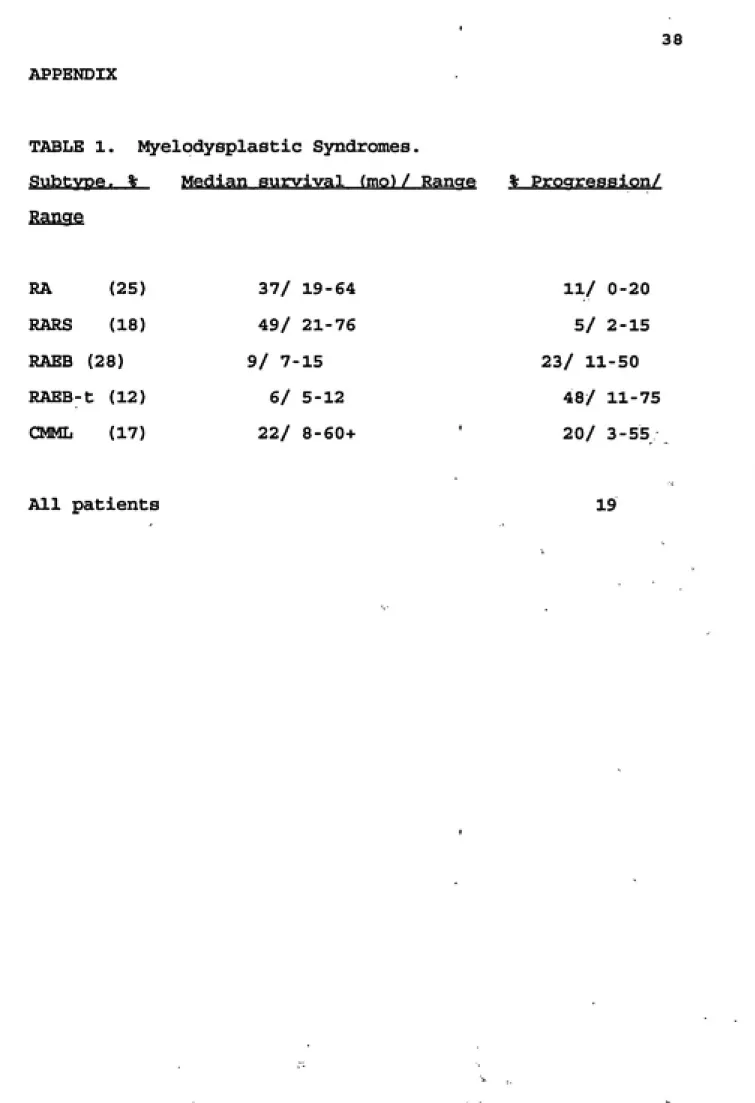
chronic myelomonocytic leukemia (CMML) (31). RAEB-t has the
highest rate of leukemic transformation (mean 48%) and
shortest median survival (6 months), while RARS has the most
favorable prognosis (5% and 49 months). RA has a median
survival of 37 months (range 19-64 mo) and an 11%
progression rate (Table 1) (40) .
Incidence data on the U.S. population as a whole is not
available, as tumor registries do not have a code for MDS
(10). The best data currently available is from a 5 year
study, from 1982 through 1986, of incidence in whites and
hispanics on the upper Texas Gulf Coast (26). From this
data it appears that MDS is primarily a disease of the
elderly, the median age being 65 years, and less than 10% of
cases occurring in patients younger than 50 years. Age
specific incidence: 0.06/100,000 (20-29 yrs), 7.4/100,000
(60-69 yrs), 19.6/100,000 (70-79 yrs). Individuals with a
history of cytotoxic drug therapy or exposure to ionizing
radiation or leukemogenic chemicals may be younger (17).
Cases which arise without apparent cause (de novo, or
primary, MDS) represent the majority of cases, and are
thought to reflect a genetic predisposition (32) . MDS in
16
B. Secondary MDS and Acute Leukemia
The pathogenesis of secondary MDS and acute leukemias
(AL) occurring after treatment of a variety of malignancies
with alkylating agents or radiation, and those associated
with environmental exposures, has been extensively reviewed
by Levine and Bloomfield (32). Median latencies from
exposure to development of MDS/AL ranged from 4-5 years but
the range included some as long as 25 years. In contrast to
primary MDS, 55-84% of secondary MDS progresses to AL (32).
The risk of developing secondary MDS/AL after chemotherapy
is 10-17% at 4 to 6 years for nitrogen mustard-treated
myeloma and 2-10% at 7 to 10 years for Hodgkin's Disease
(15) .
The mechanism of cytotoxic agents in the genesis of
secondary MDS/AL appears to involve alkylation of DNA.
There is little disagreement that treatment with alkylating
agents plays a causative role in MDS/AL. The alkylating
cytotoxins implicated include the nitrogen mustards,
chlorambucil, cyclophosphamides and melphalan. On the other
hand, MDS/AL is not associated with use of the
non-alkylating cytotoxic drugs: 5-fluorouracil, cytarabine,
methotrexate, vincristine, vinblastine, dactinomycin,
Secondary MDS/AL appears to be a heterogenous disorder
with a subset of cases having a latency between 3 0 and 60
months. These cases appear to have biological differences
from those with longer and shorter latency periods. The 30
to 60 month latency subset is more likely to present with
MDS prior to AL (88% vs 47%), to have an abnormal karyotype
(100% vs 33%), and to be resistant to treatment. Most cases
of secondary AL are ANLL, with a very small percentage being
acute lymphatic leukemia (ALL) or chronic myelogenous
leukemia (CML) (32).
C. The Clonal Nature of MDS/AL
Although the clone is not always apparent in
cytogenetic studies, it is clear that essentially all MDS/AL
are clonal in nature (37). Neoplastic transformation of a
single hematopoietic precursor cell is followed after a
variable time period by autonomous proliferation,
interfering with normal hematopoiesis (34). The abnormal
clone also appears to be the same from MDS through
progression to AL, despite the occasional appearance of
further chromosomal abnormalities (24). The mechanism is a
primary defect of the DNA of one or more chromosomes of a
hematopoietic cell, probably at the pluripotential stem cell
level (7). That MDS and leukemia represent a progression of
18
molecular genetic studies (42).
Cytogenetic findings have been reported in
approximately 50% of patients with non-therapy related MDS
(7). About one-half of these consist of 5q- (a loss of the
long arm of chromosome 5), -5 (monosomy 5) and -7. In
contrast, clonal chromosome abnormalities are found in
76-97% of cases of secondary MDS/AL, with 50-90% involving all
or part of chromosomes 5 and/or 7 (7, 39).
The presence of clonal abnormalities visible on
karyotype is closely associated with a worse prognosis.
Survival with a normal karyotype is longer than with a
single chromosomal abnormality, and survival with a single
aberration is longer than with complex karyotypic
A. Characteristics and Uses
In the United States, EtO is produced by oxidation of
ethylene by air or oxygen in the presence of silver oxide (a
catalyst). An older method using ethylene chlorohydrin, was
discontinued by 1980 (11). Its reactivity makes it an ideal
intermediate in the production of a variety of commercially
valuable chemicals such as ethylene glycol, glycol ethers
and glycols, ethanolamines and surfactants. Though over 99%
of commercially produced EtO is used in this setting, its
reactive, explosive nature means most processes take place
in tightly contained, automated systems where, barring
malfunctions, worker exposure is minimal (30).
As a biocide it is used in sterilization of medical
equipment and materials, spices and cosmetics.
B. Occupational Exposures to Ethylene Oxide
20
also set an action level (AL) of 0.5 ppm as an 8 hour TWA
and a 15 minute short term exposure limit (STEL) of 5 ppm
(38). The National Institute of Occupational Safety andHealth (NIOSH) recommends that exposures not exceed 0.1 ppm
as an 8 hour TWA and 5 ppm as a 10 minute STEL (36). TheAmerican Conference of Governmental Industrial Hygienists
(ACGIH) recommend a threshold limit value (TLV) of 1 ppm as
an 8 hour TWA, and makes no recommendation regarding a STEL
(1) .
Workers in the sterilization process rooms of hospitals
may be routinely exposed to high air concentrations of EtO.Industrial hygiene measurements of such exposures in recent
years have varied from non-detectable to 7.8 ppm with shortterm exposures from 103 to 795 ppm (5, 6, 10 16).
C. Genotoxicity of Ethylene Oxide
EtO is a strong alkylating agent and an established
mutagen. Mutagenic tests of EtO have shown gene mutations
and chromosomal damage in a wide variety of plants,bacteria, fungi, insects, mammals, and humans (43). Adducts
are formed via irreversible covalent binding to DNA basesand heme proteins. The central role of mutagenic DNA
adducts in the genesis of various human malignancies,
related lung cancer and others, is well-established (15).
The DNA alkylation reaction caused by EtO in vivo, causing
mutations via base-pair substitution, yields
N7-{2-hydroxyethyl)guanine (7-HCG) (9). It forms hydroxyethyl
adducts to N-terminal valine (HOEtVal) in hemoglobin (16). EtO acts as a direct-acting mutagen via base-pair
substitution in the Ames Salmonella assay, cultured
mammalian cell assays (mouse lymphoma and V79 Chinese
hamster lung cells), and in vivo (Drosophila melanogaster.
via oral or inhalation administration) (2).
In male mice, heritable translocations were induced by
intraperitoneal injection of 150 mg/kg EtO, and dose-related
dominant lethal mutations resulted from EtO inhalation at
levels of 225 ppm, 6 hours per day, 5 days per week, for
either 2 or 11 weeks (13, 14).
Sister chromatid exchanges (SCE) in human and other primate peripheral leukocytes has been shown in several
studies to correlate with occupational exposure to EtO, and
that this relationship is dose-dependent (dose based on breathing zone exposure) (27, 44). A study of 34 hospital sterilization unit workers exposed to concentrations of EtO
at or below the current OSHA time weighted average (TWA) of
22
EtO-hemoglobin adducts correlated highly (p < 0.02) with
frequency of SCE (33).
D. Carcinogenicity of Ethylene Oxide
EtO is classified 2A by the International Agency for
Research on Cancer (lARC), a probable human carcinogen with
"almost sufficient" evidence for human carcinogenicity (25).
E. Other Risk Factors
This patient has a relatively minimal 7 1/2 packyear
smoking history, ceasing about 10 years ago. Smoking as a
risk factor for the development of leukemia is plausible, as
cigarette smoke contains benzene and radioactive compounds,
both of which cause leukemia in humans (3). However, doses
of both are low. The delivered dose of the main radioactivesubstance, polonium-210 is much lower than from food
consumption, and contributes only a small percentage to
marrow irradiation from background sources. The delivered
dose of benzene from cigarette smoking, 10-100 ug per
cigarette is low in comparison to the benzene PEL (10 ppm or
32 mg/m^) (1, 29) . Epidemiological evidence of smoking as a
This patient was exposed to an unknown, but probably minimal, amount of microwave radiation (radar) while in the Navy. This has not been associated with an increase in
leukemia among radar-exposed Navy personnel, nor is there an
apparent mechanism of secondary MDS/AL as there is with
•m^'f.
V, EPIDEMIOLOGY OF ETHYLENE OXIDE AND LEUKEMIA
In 1979, Hogstedt et al. reported two cases of leukemia
among 240 Swedish factory workers exposed to EtO from an EtO/methyl formate sterilizing process (21). 77 of these
workers were exposed during their entire work shift, while
163 were exposed while passing through a hallway where newly
sterilized boxes were stored and where EtO concentration
ranged from 2 to 70 ppm. The TWA EtO concentration for all workers was 20 + 10 ppm. Only 0.2 cases were expected based on population norms (RR = 10.0).
Hogstedt et al. also, in 1979, reported an excess of neoplastic disease among 89 Swedish workers in an EtO
production plant which used the older ethylene chlorohydrin method (22). Two cases of leukemia were diagnosed with 0.14 expected based on Swedish national average rates (RR =
14.3). Three cases of stomach cancer occurred with an
expected 0.4 (RR = 7.5). The average TWA EtO concentration was 25 ppm but the odor threshold of 700 ppm was
occasionally reached. These workers were also exposed to a
number of other chemicals, including ethylene chlorohydrin,
ethylene dichloride (1,2-dichloroethylene), chloroform and
DDT. They were also reported to have monitored the EtO
(18).
In 19 86, Hogstedt reported updated incidence and
mortality data from the two previous cohorts and added a
third cohort, a group of 355 Swedish production process
workers in an EtO production facility which used the newer, direct ethylene oxidation process (20). The third group had
estimated 8 hour TWA EtO exposure ranging from 1 to 8 ppm
during 1963-19 76, and from 0.4 to 2 ppm during 19 77-1982,
with short term (several minute) exposures of 333 to 1000
ppm in some individuals. A total of 733 EtO-exposed workers
was included in this report, with data starting in 19 68, 1961 and 1964 for the three cohorts, respectively. A total
of eight cases of leukemia occurred with an expected rate of
0.83 (RR = 9.6), and 6 cases of stomach cancer occurred with 0.65 expected RR = 9.2). Five of the six stomach cancer
cases were from the second cohort, those EtO production
workers using the ethylene chlorohydrin method. Of the leukemia cases, three were from the first cohort (0.14 expected; RR = 21.4), four from the second (0.52 expected;
RR = 7.7) and one from the third (0.16 expected; RR = 6.2).
Five were chronic leukemias, three acute (Table 2).
Morgan et al. studied 767 men with "potential" exposure
to EtO (35) . This retrospective cohort consisted of workers
26
December, 1977, who had been employed there for at least
five years. Apparently, EtO was the plant's only product.
There were 46 deaths with 80 expected; there were no deaths
from leukemia. Standard mortality ratios were elevated, but
not significant at the 5% level, for deaths from othercancers: pancreas (3; 4 expected; SMR = 4.1), bladder (1;
SMR = 3,5), brain (2; SMR = 3.1) and Hodgkin's disease (2;
SMR = 6.3), and fewer than expected from all malignant
neoplasms (11; SMR =0.8). The small size of the cohort
meant that only a large excess in leukemia would have been
detected. The authors calculated that, based on the cohort
sample size (13,969 person years of observation) a 10.5 fold
or greater excess would have been detected at a 95% confidence level with a power of 80%. Estimated EtO
exposures were extrapolated from a single industrial hygiene
suirvey. The EtO reaction systems were out of doors, and
enclosed in a sealed, automated system. Air samplingmeasurements in the reaction area detected "virtually no"
EtO. The text does mention some questionable sources,
indicating that concentrations at these sources were "less
than 10 ppm." Readings at the tank car loading operations
area were approximately 6,000 ppm, caused by a leak (which
was subsequently stopped) around a slip tube used to gauge
the level of EtO in the tank.
a retrospective cohort of 1,971 male Italian chemical workers, covering the time period of 1938 to 1984 (19,000
person years) (4). No actual industrial hygiene or personal
monitoring records were used. Italian law requires workers
handling toxic gas to be licensed for each specific gas. The subjects were all chemical workers in two regions innorthern Italy who had held a license to handle EtO for at
least one year between 1938 and 1984. Some exposure ofthese workers to EtO was presumed; exposure levels were not
estimated. The 76 total deaths were not significantly
different from expected (82.6 expected, SMR = 0.9), but deaths from all cancers were (43 deaths; 23,9 expected; SMR = 1.8; p < 0.05). Deaths from lymphoma were increased (4;
0.5 expected; SMR = 8.4; p < 0.01). There were two leukemia
deaths, more than expected, but not statisticallysignificant (0.9 expected; SMR = 2.1; p > 0.05). There was
no upward trend based on length of time the licenses wereheld.
A larger study was published by Gardner et al. in 1989 (12) of 2876 factory and hospital workers with direct
exposure to EtO. No excess leukemia or stomach cancer were
found. The period covered was from the early 19 60s
: : > 28
surges up to several hundred ppm during the unloading of
sterilizers (routine) and occasional operations problems atthe manufacturing facilities. Prior to 1977 monitoring
requirements, exposures were thought to have been muchhigher, and peak exposures were over the odor threshold.
There were three leukemia deaths (2.09 expected; SMR = 1.4;
ns) and 5 stomach cancers (5.95 expected; SMR = 0.8). All
three leukemia deaths were within the factory subcohort,
where 1.33 were expected (SMR = 2.2; ns). Total deaths were
less than expected. There was a slight excess of all
several malignancies but non were significant at the 5% level. This study was felt by the authors to suggest that then-current levels of EtO exposure posed no significant
cancer risk.
A similar study was done in Germany by Kiesselbach et
al. with 2658 male chemical plant workers, covering the period from 1928 to 1981, except that an internal matched
control group was selected (28) . No exposure measurements were taken, but subject selection criteria included having a
record of working predominantly and exclusively with EtO
apparatus for a minimum of 12 months. There were nostatistically significant differences between the control
and exposed groups in total mortality or mortality frommalignancy (the trend was higher in the exposed group).
one in the control group.
Greenberg et al. reported in 1990 a large retrospective
mortality study of 2174 male workers at a large U.S.
chemical company from 1940 to 1978 (18). The subjects
worked in a department which used or produced EtO.
Comparison groups were the general U.S. population, the
regional population, and a group of 26,965 unexposed males
from the same plant. Three exposure groups were defined, high, medium and low. Large scale industrial hygiene
monitoring was begun in 1976. EtO based chemical production areas averaged less than 1 ppm EtO for 8 hour TWAs, although the TWA was sometimes as high as 66 ppm. Since no data was available for the pre-1976 period, assignment to the
relative exposure groups was based on estimated exposures
based on production processes and changes in these over
time. All cause mortality were less than expected for the exposed cohort (SMR = 0.8). There were seven leukemia
deaths with 3.0 expected (SMR = 2.3; ns) and seven
pancreatic cancer deaths with 4.1 expected (SMR = 1.7; ns).
In the highest EtO exposure subcohort there were no leukemia
deaths with 0.7 expected, and one pancreatic cancer death with 0.9 expected. Four of the leukemia deaths (0.7
expected; SMR = 5.7; p < 0.05) and six of the pancreatic
carcinoma deaths were in men who worked in the ethylene
30
was estimated to have been low. Compared to the control group (no EtO exposure), the RR among the chlorohydrin
workers for pancreatic carcinoma was 14.0, and for leukemia 8.7. Among those EtO workers not in the ethylene
chlorohydrin subcohort, the leukemia SMR was 1.4 (3
observed/2.1 expected; ns). The authors noted from their
review of the literature that ethylene chlorohydrin has notbeen found to be carcinogenic in rats or mice with gavage or
dermal application and only inconsistently with subcutaneous
injection.
Steenland et al. reported on the largest retrospective
mortality study to date of EtO exposed workers. The cohort
consisted of 18,254 EtO exposed workers at 14 different
medical supply and spice manufacturing companies in theUnited States. Subjects averaged 4.9 years of exposure to
EtO with an average of 16 years of follow-up. Time period
studied varied with the plants with the first year ranging
from 1943 to 19 69, with personnel records review through 1987 for all subjects. Exposure monitoring began in the late 1970s and early 1980s; TWA EtO exposures averaged 4.3 ppm for sterilizer operators and 2.0 ppm for other workers.Mortality from all causes was decreased in the cohort as a
whole. There was no increase in deaths from leukemia (13;SMR = 1.0), Hodgkin's disease (4; SMR = 1.1), all
SMR = 0.9) or pancreatic cancer (16; SMR = 0.9). Among men,
however, there was more than expected mortality from all
hematopoietic cancers (27; SMR = 1.6; p < 0.05). There was
a significant trend among both men and women of increased risk of death from hematopoietic cancer with increasing time
VI. DISCUSSION
While it is clear that patients treated with alkylating
cytotoxic drugs for certain malignancies are at greatly
increased risk of developing secondary MDS/AL, the role of occupational exposure to EtO, an alkylating agent which has
been clearly shown to be carcinogenic in animals, and
mutagenic and genotoxic in animals and humans, is not clear.
The reports of greatly increased cases of leukemia and stomach cancer in EtO workers in Sweden, the suggestive animal and human data, and the model of human
carcinogenicity by DNA-alkylating agents stimulated not only a number of retrospective mortality studies by other
investigators, but also regulatory changes decreasing EtO exposure limits and an upgrading of the lARC human
carcinogenicity classification. However, the question of
human carcinogenicity is still uncertain (28).
The subsequent studies of EtO-exposed workers have not
verified a human cancer risk. Limitations of some of these
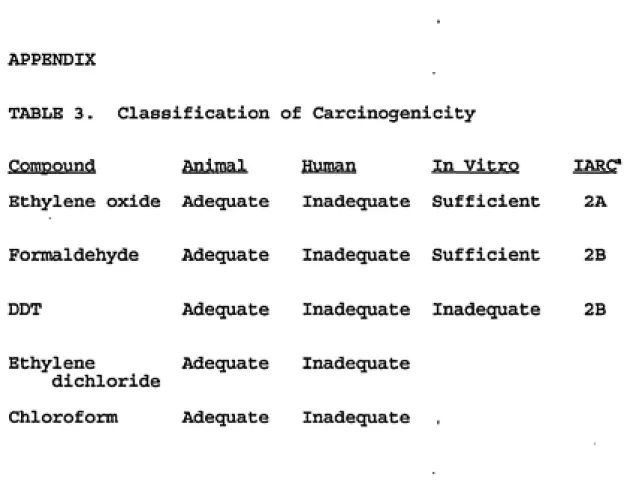
studies include exposures to other chemicals, some of which are themselves suspected human carcinogens (Hogstedt, et al., 1979 studies and Greenberg, et al.) (Table 3). The
excess of stomach cancer in the second Hogstedt, et al.
mixture containing, among other chemicals, the suspected
carcinogen ethylene dichloride (Table 3) (18). One of these
studies (Greenberg et al.) showed no statistically
significant increase in leukemia for the entire cohort but
did show an increase in leukemia among workers exposed to
ethylene chlorohydrin, a group with the lowest estimated EtO exposures. The author noted, however, that there is little evidence for carcinogenicity of ethylene chlorohydrin, and exposure to other chemicals was quite limited. Other study limitations include possible insufficient length of exposure
(Steenland, et al.) and inadequate to nonexistent exposure measurements or estimates (particularly Bisanti, et al. and
Kiellelbach, et al.). Table 4 summarizes the results of
these studies.
The Hogstadt, et al. cohorts may have been exposed to
EtO air concentrations one to two orders of magnitude higher than in some of the negative and inconclusive studies, most of which appeared to have exposures, at least in recent
years, well below 10 ppm. Hertz-Picciotto and Neutra
extrapolated dose-response data from animal studies to
"predict" leukemia deaths in some of these human cohorts
(19). Despite some limitations which the authors discuss,
the predictions were similar to, and consistent with, the EtO-related leukemia incidence and mortality data from two
34
The subject of this case study presented with MDS/AL
which is quite suggestive of a secondary process, similar to
that seen in secondary MDS/AL following treatment with
cytotoxic drugs. The presence of a preleukemic stage, the trilineage cell involvement on the bone marrow biopsy, and the aggressive transformation over less than a year from a normal bone marrow biopsy to frank acute leukemia are
strongly suggestive of a secondary, rather than a primary, MDS/AL process. The early leukopenia preceding anemia is
This patient had prior high exposures to EtO, an
alkylating agent which is a known animal carcinogen, during
a time frame which corresponds to the known range of latency
periods associated with secondary MDS/AL, His lack of
awareness, prior to the early and mid 1980s that EtO was a potential health hazard, resulted in a lack of respiratory exposure precautions prior to that period. Exposures during that 1977 to mid 1980s period were frequently above the odor threshold (700 ppm) of the EtO, certainly in the same order of magnitude as the workers in the Hogstedt, et al. cohorts which did have extremely high relative risk for development of leukemia.
EtO is known to cause, in humans, gene mutations and
chromosomal damage by a mechanism (DNA adducts) similar to the known carcinogenic mechanism of cytotoxic alkylating
agents. Such agents are known to cause an MDS/AL
progression indistinguishable from the clinical course taken
by this patient. His limited smoking history is considered an unlikely factor in the etiology of his MDS/AL. Nor is
his occupational exposure to microwave (radar) radiation considered a factor. Although it is not be possible
3 6
this patient's malignant hematopoietic transformation was caused by occupational exposure to EtO.
This gives support to the hypothesis that the
leukemogenic risk of occupational EtO exposure is related to
the cytotoxic drug model of human leukemogenesis, and that a dose-response relationship, rather than a cluster of
leukemia with an unrelated cause, would explain the negative
and inconclusive studies which followed the original Swedish
cohorts published by Hogstedt, et al.
The impending phasing out of freon production and use will soon require a change from the current EtO:freon
gaseous mixture used for most current hospital equipment
sterilization procedures. A new EtO:inert gas mixture hasbeen tested at Duke University Medical Center, as well as at
several other centers (8) and will be available on the
market as early as the summer or fall of 1993. EtO will continue to be the only acceptable alternative to steam
sterilization for the foreseeable future. It does, in all
probability, pose a significant carcinogen hazard at exposure levels above the current exposure limits.
38
APPENDIX
TABLE 1. Myelodysplastic Syndromes.
Subtype. % Median survival (mo) / Range % Progression/
Range
RA (25) 37/ 19-64 11/ 0-20 RARS (18) 49/ 21-76 5/ 2-15 RAEB (28) 9/ 7-15 23/ 11-50 RAEB-t (12) 6/ 5-12 48/ 11-75 CMML (17) 22/ 8-60+ 20/ 3-55
APPENDIX
TABLE 2, Types of Leukemia Observed. (Hogstedt et al. Reference R)
Cohort Type of Leukemia Year of Diagnosis
1 Chronic myelogenous ' 1972
Acute myelogenous 1977 Acute blast cell leukemia* 1979
2 Chronic lymphocytic 1961
Acute myelogenous 1971
Chronic lymphocytic 1972 Chronic myelogenous 1979
3 Chronic myelogenous 1976
40
APPENDIX
TABLE 3. Classification of Carcinogenicity
Compound Animal Human In Vitro lARC*
Ethylene oxide Adequate Inadequate Sufficient 2A
Formaldehyde Adequate Inadequate Sufficient 2B
DDT Adequate Inadequate Inadequate 2B
Ethylene Adequate Inadequate
dichloride
APPENDIX: TABLE 4. Summary of Ethylene Oxide Cohort
Studies.
# Leukemia Cases
Author Exposure (ppm) (RR or SMR) Other Ca Other Exposure Hogstedt 1979a Hogstedt 1979b Hogstedt 1986; 1+ 2 3
20 ± 10
Peaks to 70 25
Peaks > 700
2 (10)
2 (14)
20 25 0.4 - 8
Peaks 333 ͣ
3 (21.4) 4 (7.7) 1 (6.2)
1000
Methyl formate
Stomach Eth. dichloride
Eth chlorohydrin
chloroform, DDT
Stomach Stomach
Morgan < 10
1981
Bisanti ?
1988
Gardner < 5
1989
Kiesselbach ?
1990 ++ Lymphoma Others Greenberg 1990 < 1
Peaks to 66
2 (ns)
3 (ns)
0
7 (ns)"^"^"^ Pancreatic* Eth. chlorohy.
Steenland 2.0 4.3 13 (ns)
+1 and 2 are updates of the 1979a and 1979b cohorts,
respectively; 3 represents a new cohort (see text).
"^"^Out of doors, enclosed system, most measurements
non-detectable; spot measurement of 6000 ppm at tank car loading
area.
ͣ
^ͣ^ͣ^Four leukemia deaths occurred in a subcohort with
ethylene chlorohydrin exposure and relatively low EtO
exposure, RR = 8.7, SMR =5.7,p<0.05.
*In the ethylene chlorohydrin subcohort, RR = 14.0.
"Increase in all hematological cancers, men (27, SMR = 1.6,
42
BIBLIOGRAPHY
1. ACGIH, "1992-1993 Threshold Limit Values for Chemical
Substances and Physical Agents and Biological Exposure
Indices," American Conference of Governmental Industrial Hygienists, Cincinnati, OH, 1992.
2. ATU, "Health Effects of Ethylene Oxide," Report of The Air Toxics Unit, Dept. of Health Services, Berkley, CA,
Aug., 1987.
3. Austin, H., Cole, P., "Cigarette Smoking and Leukemia," Journal of Chronic Disease." Vol. 39, No. 6, pp. 417-421,
1986.
4. Bisanti, L., Maggini, M., Raschetti, R., Alegiani, S. S., Ippolito, F. M., "A Cohort Study on Cancer Mortality of
Ethylene Oxide Workers," Epidemiology in Occupational Health, Sixth International Symposium, Stockholm, Sweden,
Aug., 1988.
5. Burgone, F., Perbellini, L., Faccini, G., "Concentration of Ethylene Oxide in the Alveolar Air of Occupationally
Exposed Workers," American Journal of Industrial Medicine.
Vol. 8, pp. 67-72, 1985.
6. Cowles S. R., Bennett, J. M., Ross, C. E., "Medical Surveillance for Leukemia at a Petrochemical Manufacturing
Complex: Four-Year Summary," Journal of Occupational
Medicine, Vol. 33, No. 7, 1991.
7. Deiss, A., "Non-Neoplastic Diseases, Chemical Agents,
and Hematologic Disorders That May Precede Hematologic Neoplasms," Clinical Hematology. 9th Ed., Vol. 2, Lea and
Febiger, Philadelphia, 1993, pp. 1946-1968.
8. Dennis, B., Personal Communications, Materials
Management Department, Duke University Medical Center,
Durham, North Carolina, April 26, 1993.
9. Ehrenberg, L., Hiesche, K., Osterman-Golkar, S.,
Wennberg, I., "Evaluation of Genetic Risks of Alkylating
Agents," Mutation Research. Vol. 24, pp. 83-103.
10. Elliott, L. J., Ringenburg, V, L., Morelli-Schroth, P., Halperin, W. E., Herrick, R. F., "Ethylene Oxide Exposures in Hospitals," Applied Industrial Hygiene. Vol. 3, No. 5,
1988.
Office of Research and Development, 19 85.
12. Gardner, M. J., Coggon, D., Pannett, B., Harris, E., C, "Workers Exposed to Ethylene Oxide: a Follow Up Study,"
British Journal of Industrial Medicine. Vol. 46, pp.
860-865, 1989.
13. Generoso, W. , Cain, K. , Krishna, M. , Sheu, C, Gryder,
R., "Heritable Translocation and Dominant-Lethal Mutation
Induction With Ethylene Oxide in Mice," Mutation Research,
Vol. 73, pp. 133-142. ,
14. ____________, Cuitiming, R. , Bandy, J., Cain, K. ,
"Increased Dominant-Lethal Effects Due to Prolonged Exposure of Mice to Inhaled Ethylene Oxide," Mutation Research. Vol.
119, pp. 377-379.
15. Gerson, S. L., "Molecular Epidemiology of
Therapy-Related Leukemias," Current Opinion in Oncology. Vol. 5, pp.
136-144, 1993.
16. Hagmar, L., Welinder, H., Linden, K., Attewell, R.,
Osterman-Golkar, S., Tornquist, M., "An epidemiological
Study of Cancer Risk Among Workers Exposed to Ethylene Oxide Using Hemoglobin Adducts to Validate Environmental Exposure Assessments," International Archives in Occupational and
Environmental Health. Vol. 63, pp. 271-277, 1991.
17. Hamblin, T., "Clinical Features of MDS," Leukemia
Research. Vol. 16, No. 1, pp. 89-93, 1992.
18. Greenberg, H. L., Ott, M. G., Shore, R. E., "Men
Assigned to Ethylene Oxide Production or Other Ethylene Oxide Related Chemical Manufacturing: a Mortality Study," British Journal of Industrial Medicine. Vol. 47, pp.
221-230, 1990.
19. Hertz-Picciotto, I., Neutra, R. R., "Ethylene Oxide and
Leukemia," (letter), Journal of the American Medical Association. Vol. 257, No. 17, p. 2290, 1987.
20. Hogstedt C, Aringer L., Gustavsson A., "Epidemiologic Support for Ethylene Oxide as a Cancer Causing Agent," Journal of the American Medical Association. Vol. 255, pp.
1575-1578, 1986.
21. ____________, Malmquist N., Wadman B, "Leukemia in
Workers Exposed to Ethylene Oxide," Journal of the American Medical Association. . Vol. 241, pp. 1132-1133, 1979a.
44
Production Workers," British Journal of Industrial Medicine, Vol. 36, pp. 276-280, 1979b.,
23. Hogstedt, L. C, "Epidemiological Studies on Ethylene Oxide and Cancer: an Updating, " Methods for Detectincr DNA
Damacring Agents in Humans: Applications in Cancer
Epidemiolocry and Prevention. lARC Scientific Publications No. 89, International Agency for Research on Cancer, Lyon,
France, pp. 265-270.
24. Hook, C. C, Personal communications, Dept. of
Hematology/Oncology, Mayo Clinic, Jacksonville, FL, Apr. 16, 1993.
25. lARC, "Overall Evaluations of Carcinogenicity: An Updating of lARC Monographs," lARC Monographs on the Evaluation of Carcinogenic Risks to Humans. Vol. 1-42
(Supplement 7), World Health Organization, Lyon, France, 1987.
26. Irons, R. D., "Benzene and Other Hemotoxins," Hazardous Materials Toxicology, p. 720, Williams and Wilkins,
Baltimore, 1992.
27. Kelsey, K. T., Wiencke, J. K., Eislen, E. A., Lynch, D. W., Lewis, T. R., Little, J. B., "Sister Chromatid Exchange
in Chronic Ethylene Oxide-Exposed Primates: Unexpected
Effects of In Vitro Culture Duration, Incubation
Temperature, and Serum Supplementation," Cancer Research.
Vol. 49, pp. 1727-1731, 1989.
28. Kiesselbach, N., Ulm, K., Lange, H.-J., Korallus, U., "A
Multicentre Mortality Study of Workers Exposed to Ethylene
Oxide," British Journal of Industrial Medicine. Vol. 47, pp.
182-188, 1990.
29. Kinlen, L. J., Rogot, E., "Leukaemia and Smoking Habits Among United States Veterans," British Journal of Medicine.
Vol. 297, pp. 657-659, 1988.
30. Koketsu, M., Ethylene Oxide Industry-Wide Industrial
Hygiene Study, contract no. 210-76-0162. National Institute
of Occupational Safety and Health, SRI International, Menlo
Park, CA, 1978.
31. Kouides, P. A., Bennett, J. M., "Morphology and
Classification of Myelodysplastic Syndromes,"
Hematology/Oncology Clinics of North America. Vol. 6, No. 3, W. B. Sanders, Philadelphia, June, 1992, pp. 485-499.
32. Levine, E. G., Bloomfield, C. D., "Leukemias and
Environmental Exposure," Seminars in Oncology. Vol. 19, No.
1, pp. 47-84, Feb., 1992.
33. Mayer, J., Warburton, D., et al, "Biologic Markers in
Ethylene Oxide-Exposed Workers and Controls," Mutation
Research, Vol. 248, pp. 163-176, 1991.
34. McCauley, D. L., "Treatment of Adult Acute Leukemia,"
Clinical Pharmacology. Vol. 11, No. 9, pp. 767-796, 1992. 35. Morgan, R. W., Claxton, K. W., Divine, B. J., Kaplan, S. D., Harris, V. B., "Mortality Among Ethylene Oxide Workers," Journal of Occupational Medicine. Vol. 23, No. 11, pp.
767-770, 1981.
36. NIOSH, "NIOSH Pocket Guide to Chemical Hazards," U. S.
Department of Health and Human Services, Public Health
Service, Centers for Disease Control, National Institute for Occupational Safety and Health, 1985.
37. Nowell, P. C, "Chromosome Abnormalities in
Myelodysplastic Syndromes," Seminars in Oncology. Vol. 19,
No. 1, pp. 25-33, Feb., 1992,
38. OSHA, "Ethylene Oxide," Occupational Safety and Health
Standards for General Industry. 29 CFR Part 1910.1047, U.S.
Department of Labor, Occupational Safety and Health Administration, Washington, D.C., Dec, 1991.
39. Rowley, J. D., Golomb, H., Vardiman, J., "Nonrandom
Chromosomal Abnormalities in Acute Non-Lymphocytic Leukemia
in Patients Treated for Hodgkin's Disease and Non-Hodgkin's
Lymphomas," Blood. Vol. 50, pp. 759-770, 1977.
40. Sanz, G. F., Sanz, M. A., "Prognostic Factors in
Myelodysplastic Syndromes," Leukemia Research. Vol. 16, p.
77.
41. Steenland, K., Stayner, L., Greife, A., Halperin, W.,
"Mortality Among Workers Potentially Exposed to Ethylene
Oxide," New England Journal of Medicine. Vol. 324, No. 20, pp. 1402-1407, 1991.
42. Vogel, V. G., Fisher, R. E., "Epidemiology and etiology of leukemia," Current Opinion in Oncology, Vol. 5, No. 1,
pp. 26-34, 1993.
43. WHO, "Ethylene Oxide," Environmental Health Criteria 55,
World Health Organization, Geneva, pp. 39-44, 1985.
44. Yager, J. W., Hines, C. J., Spear, R. C, "Eposure to
46
in Human Peripheral Lymphocytes," Science. Vol. 219, pp.