ARTIGO ORIGINAL
FATA Study: Prevalence of Atrial Fibrillation and
Antithrombotic Therapy in Primary Health Care
in a Northern City of Portugal
Estudo FATA: Prevalência de Fibrilhação Auricular e Terapêutica Antitrombótica
nos Cuidados de Saúde Primários de um Concelho do Norte de Portugal
1. Unidade de Saúde Familiar Nova Via. ACeS Grande Porto VIII Espinho/Gaia. Vila Nova de Gaia. Portugal. Recebido: 03 de Junho de 2014 - Aceite: 21 de Janeiro de 2015 | Copyright © Ordem dos Médicos 2015
Eva GOMES1, Rui CAMPOS1, Renata MORAIS1, Marta FERNANDES1 Acta Med Port 2015 Jan-Feb;28(1):35-43
RESUMO
Introdução: A fibrilhação auricular é a arritmia sustentada mais prevalente. Está provada a eficácia da anticoagulação oral na preven-ção do acidente vascular cerebral nestes doentes. Contudo, este parece ser um tratamento subutilizado.
Objectivos: determinar a prevalência de fibrilhação auricular conhecida numa população dos Cuidados de Saúde Primários; identi-ficar as principais comorbilidades, a terapêutica antitrombótica em curso e avaliar a sua adequação segundo as recomendações da European Society of Cardiology.
Material e Métodos: Estudo observacional transversal analítico. População: todos os utentes com idade igual ou superior a 30 anos, inscritos em oito Unidades de Saúde Familiar de Vila Nova de Gaia, com diagnóstico de fibrilhação auricular.
Resultados: A prevalência de fibrilhação auricular foi de 1,29% (n = 940), sendo superior no género masculino (p = 0,01) e aumentan-do com a idade (p < 0,001). As comorbilidades mais frequentes foram a hipertensão arterial (76,4%), a insuficiência cardíaca (32,0%) e a diabetes mellitus (28,2%). Um total de 52% realizava terapêutica anticoagulante, 29% antiagregantes plaquetários e 4% ambas as terapêuticas. Dos utentes com baixo risco trombótico, 63,6% estava a fazer erradamente algum tipo de terapêutica antitrombótica; dos utentes com elevado risco ou doença valvular 56,8% estava adequadamente sob terapêutica anticoagulante.
Conclusão: A prevalência de fibrilhação auricular bem como a frequência das principais comorbilidades estão de acordo com a maio-ria dos estudos. Apesar de a maiomaio-ria dos doentes se encontrar sob anticoagulação oral, apenas 56,8% dos utentes com fibrilhação auricular fazia terapêutica antitrombótica adequada segundo as recomendações da European Society of Cardiology, verificando-se uma subutilização acentuada deste tratamento.
Palavras-chave: Fibrilhação Auricular; Anticoagulantes; Acidente Vascular Cerebral; Cuidados de Saúde Primários; Portugal. ABSTRACT
Introduction: Atrial fibrillation is the most prevalent sustained arrhythmia. The efficacy of oral anticoagulation has been proved in prevention stroke in these patients. However, this seems to be an underutilized treatment.
Objectives: to determine the prevalence of known atrial fibrillation in a Primary Health Care population; to identify major comorbidities, current antithrombotic therapy and evaluate their suitability according to the European Society of Cardiology guidelines.
Material and Methods: Observational cross-sectional analytical study. Population: all patients aged 30 or above, enrolled in eight Family Health Units of Vila Nova de Gaia and diagnosed with atrial fibrillation.
Results: Prevalence of atrial fibrillation was 1.29% (n = 940), being higher in males (p = 0.01) and increasing with age (p < 0.001). The most common comorbidities were hypertension (76.4%), heart failure (32.0%) and diabetes mellitus (28.2%). A total of 52% was performing anticoagulant therapy, 29% antiplatelet agents and 4% both therapies. Of those with low thrombotic risk, 63.6% was wrongly performing some kind of antithrombotic therapy; among patients with high risk or valvular disease 56.8% was properly undergoing anticoagulant therapy.
Conclusion: The prevalence of atrial fibrillation as well as the frequency of the main comorbidities associated with it are in line with the majority of studies. Although most patients are undergoing oral anticoagulation, only 56.8% of those with atrial fibrillation was performing adequate antithrombotic therapy as recommended by the European Society of Cardiology guidelines, which denote a marked underutilization of this treatment.
Keywords: Atrial Fibrillation; Fibrinolytic Agents; Stroke; Primary Health Care; Portugal.
INTRODUCTION
Atrial fibrillation (AF) is the most prevalent sustained arrhythmia in clinical practice, with a 1.5-2% global preva-lence in developed countries;1 however, this may not
oc-cur everywhere.2 There are two published studies on the
AF prevalence in the Portuguese population. The Sentinel Physicians Network (Rede dos Médicos Sentinela), pub-lished in 2003, found a 0.53% AF prevalence in primary healthcare (Cuidados de Saúde Primários [CSP])3 and
the study FAMA, published in 2010, estimated a 2.5% AF
prevalence in the Portuguese population aged or above 40.4 The prevalence increases with ageing and it is
esti-mated to at least double in the next 50 years in line with population ageing.5 As an age-related pathology, it is
es-timated that its incidence doubles for each decade of life from the age of 502 and that one in each four by the age
of 40 will develop AF.6
ARTIGO ORIGINAL hyperthyroidism, pulmonary embolism (PE) and several cardiovascular pathologies. From these, it is
worth mentioning congestive heart failure (CHF), high blood pressure (hypertension – HBP), especially when associated to left ventricular hypertrophy (LVH), dilated or hypertrophic cardiomyopathy, coronary heart disease (CHD), especially with an history of acute myocardial infarction (AMI), heart valve disease and more frequently mitral valve and diabetes mellitus (DM).2
Hospital admissions related to AF have increased by approximately 60% over the last 20 years due to population ageing, an increase in both chronic cardiac disorders and use of ambulatory electrocardiographic monitoring,7 corresponding to increasingly more important
causes for health expenditure.8 Most costs are related
to hospital admissions. In the presence of AF, hospital admissions, multiple admissions and cardiovascular-related admissions increase by a factor of 2, 3 and 4, respectively.9 In addition, the medication itself in patients
with AF corresponds to a small part of the costs with this disease.10
AF is ranked as 1) first episode of AF – when the arrhythmia presents for the first time, regardless of its duration; 2) recurrent paroxysmal AF – when the arrhythmia ends spontaneously and last less than seven days (usually below 48 hours); 3) recurrent persistent AF – when it lasts over seven days and may persist in the long-term (over a year); 4) persistent AF – when the arrhythmia becomes permanent, diagnosed for years and with unsuccessful or non-attempted cardioversion.5 The designation ‘isolated
AF’ is used for people aged under 60 with no clinical or echocardiographic evidence of cardiopulmonary disorder, including HBP.5 The designation ‘non-valvular AF’ is used
for cases of AF in the absence of rheumatic mitral disease, a prosthesis or valve repair.5
AF may produce major haemodynamic changes although its outcome is mainly related to thromboembolic events to which AF is associated, with significant impact in terms of morbidity and mortality. It is also an independent risk factor for global mortality as well as for cardiac-related sudden death.2
AF-related embolism is responsible for 15% of stroke events11, which are the most severe and with a
worst outcome.12 An annual 5% stroke incidence in
non-rheumatic AF was found (four to five times higher than in general population regardless of the age group),11,13
increasing to 13-14% in valvular AF.14 An increase in the
percentage of AF-related ischaemic stroke related to patient’s age was also found: 1.5% in the 50-59 age group and 23.5% in the 80-89 age group.14
As the prevalence of high blood pressure and high cholesterol are similar, if not lower, in Portugal, when
compared to the remaining countries in the European Union, the high prevalence rate of stroke in Portugal may be related to the presence of a high prevalence of AF, which is often inappropriately treated.2
The efficacy of oral anticoagulation with vitamin K antagonists like warfarin is well proven for stroke prevention in patients with AF (64% reduction in the risk of stroke vs. placebo).15 As regards antiplatelet treatment
with acetylsalicylic acid (ASA), its efficacy is lower (21% reduction in non-fatal stroke vs. placebo).16 Other drugs
are not recommended.7 However, the ASA/clopidogrel
dual antiplatelet therapy has a higher efficacy when compared to ASA monotherapy, despite a higher bleeding risk when compared to ASA and to oral anticoagulation17
and this option should only be used in patients refusing any kind of anticoagulation; ASA monotherapy should be used in these patients as well as in those who are not able to tolerate the ASA/clopidogrel dual antiplatelet therapy due to a high bleeding risk. There is no benefit in using the combination of oral anticoagulants (OAC) with antiplatelet agents when compared to OAC monotherapy with an adjusted dosage.7
New therapeutic approaches to prevent thromboembolic events in AF have recently arisen, such as the direct thrombin inhibitors such as dabigatran and the factor Xa inhibitors like rivaroxaban and apixaban. These novel drugs have shown to be more efficacious in thrombotic prevention when compared to warfarin,18,19
showing a marked reduction in the incidence of brain haemorrhage 20 and with the advantage of a daily fixed dose
intake. In addition, INR (International Normalized Ratio) levels periodic monitoring is not required. They also have some disadvantages such as dose adjustment according to kidney function, a need for rigorous compliance and the lack of a specific antidote in the case of a bleeding event.1
However, despite strong evidence regarding the benefit of the use of OAC in stroke prevention in most patients with AF, this therapy is unfortunately underused and INR levels are often below therapeutic levels in the case of warfarin.21
The ranking of thromboembolic risk is a crucial component in clinical evaluation of the patient with AF and represents an indicator of the quality of healthcare delivered to these patients. In a recent update of AF guidelines, the European Society of Cardiology (ESC) strongly recommends a change in clinical practice towards identifying AF patients in ‘real low risk’ category (i.e. ‘aged under 65 and the presence of isolated AF’, not in need for any antithrombotic therapy), instead of trying to identify the patients at ‘high risk’.1 Therefore, in all the patients
ARTIGO ORIGINAL
is mandatory.1 In patients with non-valvular AF, as the
annual risk of thromboembolic complications is variable, it is necessary to calculate the level of thromboembolic risk in order to identify the patients with AF in ‘real low risk’ that do not need any antithrombotic therapy. The ESC recommends the use of CHA2DS2-VASc score to calculate this risk.1,5 The bleeding risk, together with
the thromboembolic risk, must also be assessed. The ESC recommends the use of the HAS-BLED scorel.1,5
Nevertheless, the result of this score must not be used by itself to exclude the use of anticoagulant therapy. The score result allows for a correct evaluation of AF patient’s bleeding risk and to identify bleeding risk factors for each case allowing for a personalized control intervention. As stroke represents the major cause for mortality and disability related to cardiovascular diseases in Portugal7
and AF one of its major risk factors, any preventive measure is clearly important. Considering that cardiovascular pathology corresponds to the first cause of death in the
Agrupamentos de Centros de Saúde (ACeS) of Gaia and Espinho/Gaia (in 2008-2010),22 knowledge on the
local prevalence of this pathology and the characteristics of the affected population is crucial in order to improve healthcare strategies.
The prevalence of known AF in a group of patients attending to eight Unidades de Saúde Familiar (USF) from the municipality of Vila Nova de Gaia was the primary endpoint in our study.
The secondary endpoints included: a) quantification of the major comorbidities associated to AF; b) identification of the antithrombotic therapy currently in use; c) assessment of adequacy of such therapy according to 2012 ESC guidelines.1
MATERIAL AND METHODS
This was an observational, cross-over and analytical study carried out in eight Health Units (USF) from the municipality of Vila Nova de Gaia: USF Arco do Prado, USF Nova Salus, USF Saúde no Futuro (Health units from the ACeS Grande Porto VII – Gaia), USF Além D’Ouro, USF Canelas, USF Nova Via, USF São Félix da Marinha and USF São Miguel (Health units from the ACeS Grande Porto VIII – Espinho/Gaia), with the approval of both ACeS as well as from the Ethics Committee of the Administração Regional de Saúde (ARS) do Norte.
Our group of patients involved all the patients aged 30 or above attending the described eight health units. Every patient diagnosed with AF in the clinical record was considered as a case of AF, corresponding to the presence of code K78 – Atrial Fibrillation / Flutter from the International Classification of Primary Care 2nd edition
(ICPC-2)23 in patient’s health problem list.
The studied variables included: Patient’s age
Patient’s gender
Comorbidities associated to AF – ranked as “Present” or “Absent”, according to the presence or absence of the following comorbidities: HBP, CHF, previous stroke or transitory ischaemic attack (TIA), DM, mitral stenosis or intracavitary thrombus, left ventricular ejection fraction (LVEF) ≤ 40%, AMI, peripheral artery disease (PAD) and the presence of aortic atheromatous plaques. These diagnoses were identified through the patient diagnosis list in the electronic clinical record and/or record of the result of echocardiogram.
Thrombotic risk – obtained through the HA2DS2-VASc score.
Antiplatelet therapy – ranked as ‘ASA’, ‘clopidogrel’, ‘ticlopidine’, ‘triflusal’, ‘dipyridamole’, ‘ticagrelor’, ‘none’ or ‘not available’, according to the therapy followed by the patient at the time of the last medical visit to the USF.
Anticoagulant therapy – ranked as ‘acenocumarol’, ‘warfarin’, ‘dabigatran’, ‘rivaroxaban’, ‘none’ or ‘not available’, according to the therapy followed by the patient at the time of the last medical visit to the USF. The Módulo de Informação e Monitorização das Unidades Funcionais (MIM@UF®) system was used to
obtain the list of patients with AF. The remaining data were obtained from the electronic clinical record through the
Sistema de Apoio ao Médico (SAM) and the Plataforma de Dados da Saúde (PDS) software.
These data were coded and recorded into a database built by the authors in Microsoft Excel® 2010 software.
Informed consent was dismissed as no patient identification element was recorded. In addition, as it was a prevalence study and not an interventional study, it did not directly or indirectly interfere with patient care. Data statistical analysis was made using Microsoft Excel® 2010 and SPSS® version 20.0 software. Data
descriptive analysis was based on frequency distribution and on central tendency and absolute dispersion measures. Data inferential analysis was made using contingency tables and chi-square test and a 5% significance level was used.
RESULTS
ARTIGO ORIGINAL
Tabela 2 – Distribution of patients with AF and CHA2DS2-VASc score = 0 by antithrombotic therapy
On antiplatelet therapy No antiplatelet therapy Total
On OAC (4.5%)1 (22.7%)5 (27.2%)6
No OAC (36.4%)8 (36.4%)8 (72.8%)16
TOTAL (40.9%)9 (59.1%)13 (100%)22
AF – Atrial fibrillation; OAC – Oral anticoagulant therapy.
statistically significant difference (p = 0.01).
An increase in AF’s prevalence was also found, related to ageing (p < 0.001) (Table 1).
HBP was the most frequent comorbidity found (76.4%), followed by CHF (32.0%) and DM (28.2%); 15.9% of the patients presented with previous stroke or TIA history and 9.5% with AMI history. The presence of PAD/aortic atheromatous plaque was found in 8.1% of the patients and valvular disease in 7.3%; 3.1% of these had LVEF of 40% or below. Only one patient had a record of the presence of an intracavitary thrombus.
Patient’s thrombotic risk was assessed by CHA2DS2 -VASc score and the 69 patients with valvular disease were excluded, as this corresponds by itself to high thrombotic risk. We found that 2.9% or four patients presented with low risk (score = 0), while 7.4% had a score = 1 and 89.6% had a score ≥ 2.
As regards the distribution according to antithrombotic therapy, we found that 52% of our patients were on OAC therapy, 29% were on antiplatelet medication and 4% were on dual OAC + antiplatelet therapy; 7% of the patients did not follow any antithrombotic therapy and in 8% of the patients therapy was undetermined.
Regarding the specific OAC drugs used, we found that warfarin was the most prescribed OAC (75.4%); 20.6% of the patients were on acenocumarol and 4.1% on dabigatran; no patient was on rivaroxaban. As regards antiplatelet therapy, 76.2% of the patients were on ASA, 13.6% on clopidogrel, 7.2% on triflusal, 1.5% on dipyridamole and 1.5% on ticlopidine; no patient was on ticagrelor.
As the indication for antithrombotic therapy depends on patient’s thrombotic risk, assessed by CHA2DS2 -VASc score, we studied the adequacy of antithrombotic medication according to the most recent ESC guidelines, issued in 2012.1
From the 25 patients with a score = 0 (patients with ‘real low risk’ and with no indication for antithrombotic therapy), therapy was undetermined in 3 patients. The antithrombotic therapy of the patients with AF and a score = 0 is shown in Table 2.
From the 919 patients with high thrombotic risk (97.4%) and therefore with an indication for antithrombotic therapy (patients with valvular AF and patients with non-valvular AF with CHA2DS2-VASc score ≥ 1), we found that only 56.8% of these patients were appropriately
hypo-Table 1 – Prevalência de FA conhecida por género e faixa etária
Male Female Total
Population PatientsN.º Percentage %
(95% CI) Population N.º
Patients Percentage %(95% CI) Population N.º
Patients Percentage %(95% CI) p-value
Faixa etária (anos)
30-39 8173 2 0.02
(0-0.05) 8904 0
0,00
- 17077 2
0.01 (0-0.02)
< 0.001
40-49 8397 14 0.17
(0.08-0.26) 9208 3
0.03
(0-0.07) 17605 17
0.10 (0.05-0.15)
50-59 7096 36 0.51
(0.34-0.68) 7879 19
0.24
(0.13-0.35) 14975 55
0.37 (0.27-0.47)
60-69 5532 98 (1.42-2.12)1.77 6239 72 (0.89-1.41)1.15 11771 170 (1.22-1.66)1.44
70-79 3328 188 5.65
(4.87-6.43) 4244 181
4.26
(3.65-4.87) 7572 369
4.87 (4.39-5.35)
≥ 80 1557 138 8.86
(7.45-10.27) 2866 193
6.73
(5.81-7.65) 4423 331
7.48 (6.70-8.26)
Total 34083 476 1.40
(1.28-1.52) 39340 468
1.19
(1.08-1.30) 73423 944
1.29 (1.21-1.37)
p-value 0.01
ARTIGO ORIGINAL
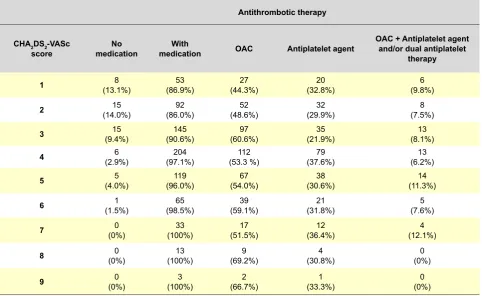
Table 4 – Distribution of patients with AF by the CHA2DS2-VASc score, according to the antithrombotic therapy
Antithrombotic therapy
CHA2DS2-VASc
score medicationNo medicationWith OAC Antiplatelet agent
OAC + Antiplatelet agent and/or dual antiplatelet
therapy
1 (13.1%)8 (86.9%)53 (44.3%)27 (32.8%)20 (9.8%)6
2 (14.0%)15 (86.0%)92 (48.6%)52 (29.9%)32 (7.5%)8
3 (9.4%)15 (90.6%)145 (60.6%)97 (21.9%)35 (8.1%)13
4 (2.9%)6 (97.1%)204 (53.3 %)112 (37.6%)79 (6.2%)13
5 (4.0%)5 (96.0%)119 (54.0%)67 (30.6%)38 (11.3%)14
6 (1.5%)1 (98.5%)65 (59.1%)39 (31.8%)21 (7.6%)5
7 (0%)0 (100%)33 (51.5%)17 (36.4%)12 (12.1%)4
8 (0%)0 (100%)13 (69.2%)9 (30.8%)4 (0%)0
9 (0%)0 (100%)3 (66.7%)2 (33.3%)1 (0%)0
AF – Atrial fibrillation; OAC – Oral anticoagulant therapy.
coagulated (Table 3).
This percentage increases to 57.7% when we excluded the patients with a score = 1, in whom antithrombotic therapy is recommended albeit no absolute indication. However, as this therapy is also recommended for these patients, the patients with score = 1 were always considered as patients with high thrombotic risk in our study.
The correlation between CHA2DS2-VASc score and antithrombotic therapy allows for the conclusion that the greater the score the greater the possibility that the patient
is on a medication (Table 4). However, it is not possible to establish a relationship between the score and the type of antithrombotic therapy (Table 4).
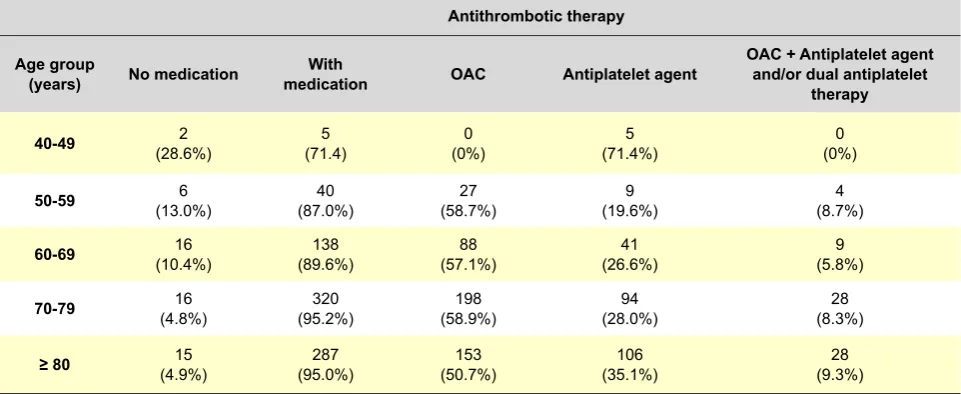
We found that the decision to start an antithrombotic therapy is also influenced by patient’s age, i.e. the use of this therapy increases with ageing (Table 5). However, it is also not possible to establish a relationship between patient’s age and the type of antithrombotic therapy, despite a clear preference for antiplatelet agents having been found at the age extremes (71.4% percentage in youngest patients and 35.4% lower expression in the
Table 3 –Distribution of patients with AF in high thrombotic risk, according to the antithrombotic therapy
CHA2DS2-VASc score ≥ 1 Valvular AF Total
Non-treated (5.9%)50 (5.8%)5 (6.0%)55
OAC (49.7%)422 (63.8%)44 (50.7%)466
Antiplatelet agent (28.5%)242 (18.8%)13 (27.7%)255
Dual antiplatelet therapy (1.1%)9 (5.8%)4 (1.4%)13
OAC + Antiplatelet agent (6.3%)54 (2.9%)2 (6.1%)56
Undetermined (8.5%)72 (2.9%)2 (8.1%)74
Total (100%)849 (100%)70 (100%)919
ARTIGO ORIGINAL
eldest as shown in Table 5).
DISCUSSION
The AF global prevalence found in our study was above the prevalence found in the study of the Sentinel Physician’s Network (Rede Médicos-Sentinela)3 although
below the study FAMA,4 with 0.53% and 2.5% global
prevalence, respectively. However, we should mention that the study Rede Médicos-Sentinela3 followed a similar
methodology regarding data collection that was similar to the one used in our study – where the prevalence is based in the cases of AF already diagnosed, i.e. with a known AF. In contrast, the study FAMA4 used included a
representative sample of the Portuguese population from which the prevalence of AF was estimated. We should also mention that the study Rede Médicos-Sentinela3
involved patients of all ages (including children), while the study FAMA4 only included patients aged 40 or below and
our study involved patients aged 30 or above (this was the age at which the youngest case of AF was diagnosed). When the population aged 35 or above was considered in the study Médicos Sentinela, a 0.94% prevalence of AF was found.
As regards international studies, the prevalence of AF is also variable, namely according to methodology: a 1.12% prevalence was found in the population covered by the USA state insurance system in 2009,24 involving
people aged above 20; a 0.85% prevalence was found in the study ATRIA25 involving an adult population aged
above 20; a 4.4% prevalence was found in the Spanish study OFRECE,26 following a similar methodology to the
study FAMA,4 which was above the estimated prevalence
found until now, pointing to an estimated 2% prevalence of AF in developed countries.1
When comparing ours to the prevalence obtained in the study FAMA4 and OFRECE26 (that actively searched
for the cases of AF in the studied population based on the electrocardiogram) – 1.29% versus 2.5% and 4.4%, respectively, we consider that our study may have underdiagnosed AF.
AF is recognized as an ageing-related pathology1 and
our study showed a statistically significant increase in the prevalence of AF with ageing, in line with what was found in the studies Médicos-Sentinela,3 FAMA,4 study by
Naccarelli,24 ATRIA25 and OFRECE.26
A statistically significant higher AF prevalence in male patients was also found (1.40% versus 1.29%, p = 0.01), in line with the study Rede Médicos-Sentinela3 and with
the study ATRIA.25 In the latter, beyond the higher AF
prevalence in male patients (1.1% versus 0.8%, p < 0.01), this difference was also found in all age groups, as found in our study. The studies FAMA4 and OFRECE26 did not
find any differences regarding the AF prevalence between genders.
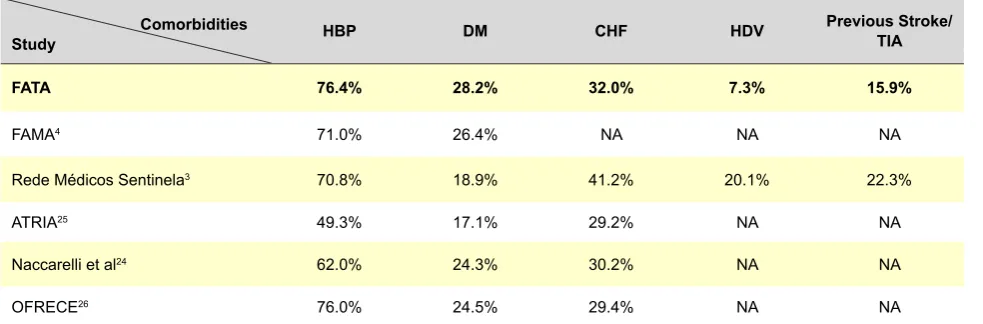
As regards co-morbidities, differences between the different studies were also found (Table 6): in our study, 76.4% of the patients with AF had HBP, a higher frequency than most of the studies that were considered; the frequency of CHF found in our study was below the frequency found in the study Rede Médicos-Sentinela3
and in line with the frequency found in international studies, namely the study ATRIA,25 the study by Naccarelli
et al.24 and the study OFRECE;26 as regards DM, a higher
frequency was found in our study when compared to the study Rede Médicos-Sentinela,3 to the study FAMA4 and
the study ATRIA25 and was in line with the frequencies
found in the study by Naccarelli24 and the study OFRECE.26
The CHA 2DS2-Vasc score was used for the evaluation
Table 5 –Distribution of patients with AF with high thrombotic risk by age group, according to the antithrombotic therapy
Antithrombotic therapy
Age group
(years) No medication medicationWith OAC Antiplatelet agent
OAC + Antiplatelet agent and/or dual antiplatelet
therapy
40-49 (28.6%)2 (71.4)5 (0%)0 (71.4%)5 (0%)0
50-59 (13.0%)6 (87.0%)40 (58.7%)27 (19.6%)9 (8.7%)4
60-69 (10.4%)16 (89.6%)138 (57.1%)88 (26.6%)41 (5.8%)9
70-79 (4.8%)16 (95.2%)320 (58.9%)198 (28.0%)94 (8.3%)28
≥ 80 (4.9%)15 (95.0%)287 (50.7%)153 (35.1%)106 (9.3%)28
ARTIGO ORIGINAL
of the thrombotic risk, according to the 2012 ESC guidelines1 and we found that only 2.3% of the patients
with non-valvular AF in our study had a low thrombotic risk (score = 0). By contrast, a 32.3% percentage of low-risk patients were found in the study Rede de Médicos Sentinela.3 However, this value was obtained by using
a different risk score – the CHADS2 score, which was in use at the time when the study was carried out (2003) – and therefore preventing a direct comparison between these results. Nevertheless, this difference may show that a high number of patients with AF that were considered in low risk of thrombotic events, when using the CHADS2 score, would be excluded when using the new CHA 2DS2 -Vasc score.
In our study, only 56.8% of the patients were adequately treated with OAC (regardless of whether a combined antiplatelet therapy was followed), which is in line with the study REACH27 that showed that approximately 40% of the
patients diagnosed with AF were not on any antithrombotic therapy. Several hypothesis were established: the recently updated international guidelines regarding the antithrombotic therapy,1 which may have still not allowed
for direct clinical translation; the refusal of patients/carers to follow anticoagulant therapy when informed of the risks; the difficult handling of anticoagulant drugs in primary care or even the excessive fear of bleeding events associated to these therapies by physicians, mainly when caring for older patients.
Our study showed that 56% of the patients with non-valvular AF and in high risk of thrombotic events (score ≥ 1) were on adequate oral anticoagulation (regardless of whether a combined antiplatelet therapy was followed), in line with what was found in the study REACH27 (54%).
In addition, the single use of antiplatelet agents was found in 29.6% of our patients with high thrombotic risk (score ≥ 1), lower when compared to the study Rede de Médicos Sentinela3 (48.8%). However, this comparison
Table 6 – Comparison of comorbidities in patients with AF in different studies
Comorbidities
Study HBP DM CHF HDV Previous Stroke/ TIA
FATA 76.4% 28.2% 32.0% 7.3% 15.9%
FAMA4 71.0% 26.4% NA NA NA
Rede Médicos Sentinela3 70.8% 18.9% 41.2% 20.1% 22.3%
ATRIA25 49.3% 17.1% 29.2% NA NA
Naccarelli et al24 62.0% 24.3% 30.2% NA NA
OFRECE26 76.0% 24.5% 29.4% NA NA
AF– Atrial fibrillation, DM – Diabetes mellitus, CHF – Congestive Heart Failure, HVD, Heart Valve Disease, TIA – Transitory Ischaemic Attack, NA – Not assessed.
must be carefully considered as the results were based in different risk scores – the CHA 2DS2-Vasc score was used in our study and the CHADS2 score was used in the other two studies it remains useful to demonstrate that a high percentage of patients are not following therapy according to the current guidelines.
As regards antithrombotic therapy, lack of data that allows for establishing whether due to lack of prescription or non-compliance may be considered a limitation which may have biased the results. Some patients may have not be on antithrombotic therapy for a justified reason or may have been on therapy with an alternative diagnosis to AF. Our study allowed for the conclusion that the greater the thrombotic risk the higher probability that the patients with AF were on antithrombotic therapy and therefore corresponding to a quality indicator for the follow-up of these patients, as the risk of cardiovascular events (beyond thrombotic) increases with the risk score, reaching 40% in 4 years.27
Our study involved a large sample of patients attending different Healthcare units (USF) in the municipality of Vila Nova de Gaia and the most recent ESC guidelines were used in its design. Therefore, it may be useful in primary care as Outpatient Hypo-coagulation units have been recently introduced, increasing health professional’s awareness towards these issues.
The use of a convenience sample of the population and the fact that the study is based on the clinical record of AF (known AF) instead of based on new diagnosis, should be mentioned as limitations to our study, which may have biased clinical data.
CONCLUSION
ARTIGO ORIGINAL The most frequently found comorbidities included HBP, CHF and DM. These should be adequately monitored and
controlled due to the increased bleeding or thrombotic risk related to these pathologies.
As regards therapy, most patients were on OAC. However, according to the new guidelines regarding the use of antithrombotic therapy in AF, we found that only 56.8% of the patients were adequately hypocoagulated and therapy was highly underused. Therefore, medical training on the recent updates regarding the antithrombotic therapy of patients with AF is needed in order to minimize the risk of thromboembolic and/or bleeding events. The AF screening namely above 65 years of age, according to the recent ESG guidelines, is particularly important, due to underdiagnosed AF found in our study.1
ACKNOWLEDGMENTS
The authors wish to acknowledge the General Practitioners involved in the study: Ana Rita Maia and Maria José Oliveira (USF São Miguel), Ana Sofia Nogueira and Rui Costa (USF São Félix da Marinha), Célia Oliva
(USF Além D’Ouro), Joana Santos and João Fernandes (USF Arco do Prado), Mariana Fidalgo Leite (USF Saúde no Futuro), Sílvia Sacramento (USF Canelas), for their readiness and collaboration at their Unidades de Saúde Familiar.
The authors also wish to acknowledge Luísa Sá, Assistente de Medicina Geral e Familiar at the USF Nova Via, for her help in the review of this study.
OBSERVATIONS
This study was presented as a Poster at the “Update em Medicina 2014” held in Albufeira in 1-4 May 2014 and won an award.
CONFLICTS OF INTEREST
The authors declare there were no conflicts of interest in writing this manuscript.
FINANCIAL SUPPORT
The authors declare there was no financial support for writing this manuscript.
REFERENCES
1. Camm AJ, Lip GY, De Caterina R, Savelieva I, Atar D, Hohnloser SH, et al. 2012 focused update of the ESC Guidelines for the management of atrial fibrillation: an update of the 2010 ESC Guidelines for the man-agement of atrial fibrillation – developed with the special contribution of the European Heart Rhythm Association. Eur Heart J. 2012;33:2719-47. 2. Bonhorst D, Mendes M, De Sousa J, Primo J, Adragão P, Andra-de S, et al. EpiAndra-demiologia da fibrilhação auricular. Rev Port Cardiol. 2010;29:1207-17.
3. Ascensão P. Fibrilhação auricular e prevenção do tromboembolismo: estudo numa população de utentes de Centros de Saúde. Rev Port Clin Geral. 2006;22:13-24.
4. Bonhorst D, Mendes M, Adragão P, De Sousa J, Primo J, Leiria E, et al. Prevalence of atrial fibrillation in the Portuguese population aged 40 and over: the FAMA study. Rev Port Cardiol. 2010;29:331-50.
5. Camm AJ, Kirchhof P, Lip GYH, Schotten U, Savelieva I, Ernest S, et al. Guidelines for the management of atrial fibrillation: The Task Force for the Management of Atrial Fibrillation of the European Society of Cardiol-ogy – endorsed by the European Association for Cardio-Thoracic Sur-gery. Eur Heart J. 2010;31:2369-429.
6. Lloyd-Jones DM, Wang TJ, Leip EP, Larson MG, Levy D, Vasan RS, et al. Lifetime risk for development of atrial fi brillation: the Framingham Heart Study. Circulation. 2004;110:1042-6.
7. Aguiar C, De Macedo ME, De Sousa J, Ferro J, Henriques IL, Rodri-gues V, et al. Terapêutica antitrombótica da fibrilhação auricular [e--book]. Coordenação Nacional para as Doenças Cardiovasculares. Alto Comissariado da Saúde; 2009 [consultado em 2013 Jan 30]. Disponível em: http://www.portaldasaude.pt/NR/rdonlyres/6B7EB2F9-CF0B-4368-A073-01C0D72998E1/0/TerapeuticaAntitromboticaFibrilhacaoAuricular. pdf.
8. Ringborg A, Nieuwlaat R, Lindgren P, Jönsson B, Fidan D, Maggioni AP, et al. Costs of atrial fibrillation in five European countries: results from the Euro Heart Survey on atrial fibrillation. Europace. 2008;10:403-11. 9. Kim MH, Johnston SS, Chu BC, Dalal MR, Schulman KL. Estimation of
total incremental health care costs in patients with atrial fibrillation in the United States. Circ Cardiovasc Qual Outcomes. 2011;4: 313-20. 10. Stewart S, Murphy N, Walker A, McGuire A, McMurray JJ. Cost of an
emerging epidemic: an economic analysis of atrial fi brillation in the UK. Heart. 2004;90:286-92.
11. Wolf PA, Abbott RD, Kannel WB. Atrial fibrillation; a major
contribu-tor to stroke in the elderly. The Framingham study. Arch Intern Med. 1987;147:1561-4.
12. Hannon N, Sheehan O, Kelly L, Marnane M, Merwick A, Moore A, et al. Stroke associated with atrial fibrillation – incidence and early out-comes in the North Dublin Population Stroke Study. Cerebrovasc Dis. 2010;29:43-9.
13. Benjamin EJ, Levy D, Varizi SM, D’Agostino RB, Belanger AJ, Wolf PA. Independent risk factors for atrial fibrillation in a population-based co-hort: The Framingham Heart Study. JAMA. 1994;271:840-4.
14. Wolf PA, Abbott RD, Kannel WB. Atrial fibrillation as an independent risk factor for stroke: the Framingham Study. Stroke. 1991;22:983-8. 15. Hart RG, Pearce LA, Aguilar MI. Meta-analysis: antithrombotic therapy
to prevent stroke in patients who have nonvalvular atrial fibrillation. Ann Intern Med. 2007;146:857-67.
16. You JJ, Singer DE, Howard PA, Lane DA, Eckman MH, Fang MC, et al. American College of Chest Physicians Evidence-Based Clinical Practice Guidelines: Antithrombotic therapy for atrial fibrillation. Antithrombotic therapy and prevention of thrombosis. Chest. 2012;141:e531S-75. 17. Connolly SJ, Pogue J, Hart RG, Hohnloser SH, Pfeffer M,
Chrolavi-cius S, et al. Effect of clopidogrel added to aspirin in patients with atrial fibrillation. N Engl J Med. 2009;360:2066-78.
18. Connolly SJ, Ezekowitz MD, Yusuf S, Eikelboom J, Oldgren J, Parekh A, et al. Dabigatran versus warfarin in patients with atrial fibrillation. N Engl J Med. 2009;361:1139-51.
19. Patel MR, Mahaffey KW, Garg J, Pan G, Singer DE, Hacke W, et al. Rivaroxaban versus warfarin in nonvalvular atrial fibrillation. N Engl J Med. 2011;365:883-91.
20. Fang MC, Go AS, Chang Y, Hylek EM, Henault LE, Jensvold NG, et al. Death and disability from warfarin-associated intracranial and extracra-nial hemorrhages. Am J Med. 2007;120:700-5.
21. Aguiar C. Prevenção do tromboembolismo na fibrilhação auricular. Rev
Port Cardiol. 2012;31:S17-26.
22. Perfil Local de Saúde 2012: ACeS Gaia e Espinho/Gaia [homepa-ge na Internet]. ARS Norte, IP. [Consultado em 2013 Jan 30]. Dispo-nível em: http://portal.arsnorte.min-saude.pt/ARSNorte/dsp/ACES/ PLS2012_1914_GaiaEspinho.pdf.
ARTIGO ORIGINAL 24. Naccarelli GV, Varker H, Lin J, Schulman KL. Increasing prevalence
of atrial fibrillation and flutter in the United States. Am J Cardiol. 2009;104:1534-9.
25. Go AS, Hylek EM, Philips KA, Chang YC, Henault LE, Selby JV, et al. Prevalence of diagnosed atrial fibrillation in adults. National Implications for rhythm management and stroke prevention: the AnTicoagulation and Risk Factors in Atrial Fibrillation (ATRIA) Study. JAMA.
2001;285:2370-5.
26. Gomez-Doblas JJ, Muñiz J, Martin JJ, Rodríguez-Roca G, Lobos JM, Awamleh P, et al. Prevalencia de fibrilación auricular en España. Resul-tados del estudio OFRECE. Rev Esp Cardiol. 2014;67:259-69. 27. Ruff CT, Bhatt DL, Steg G, Gersh BJ, Alberts MJ, Hoffman EB, et al.