MODIFYING EFFECTS OF OXIDATIVE STRESS AND DNA REPAIR VARIANTS ON PHYSICAL ACTIVITY AND BREAST CANCER RISK
Lauren E. McCullough
A dissertation submitted to the faculty of the University of North Carolina at Chapel Hill in partial fulfillment of the requirements for the degree of Doctor of Philosophy in the Gillings
School of Global Public Health (Epidemiology).
Chapel Hill 2012
Approved by: Marilie Gammon Regina Santella Andrew Olshan Kari North
ii
ii
© 2012
iii
iii
Abstract
LAUREN E. MCCULLOUGH: Modifying Effects of Oxidative Stress and DNA repair Variants on Physical Activity and Breast Cancer Risk
(Under the direction of Marilie Gammon)
Purpose. The mechanisms driving the inverse association between recreational physical activity (RPA) and breast cancer risk are unclear. Exercise both increases reactive oxygen species production, which may transform normal epithelium to a malignant
phenotype, and enhances antioxidant capacity, which could protect against subsequent oxidative insult. Physical activity may also improve damage repair systems, particularly those that operate on oxidative damage. Given the paradoxical and complex effects of physical activity both oxidative stress and DNA repair pathways are of interest.
Polymorphisms in these pathways may modify the association between RPA and breast cancer incidence. Methods. We estimated interactions between RPA and several polymorphisms in oxidative stress-related genes (CAT, COMT, GPX, GSTP1, GSTA1, GSTM1, GSTP1, MPO, and MnSOD) as well as DNA repair genes (ERCC1, MGMT, MLH1, MSH2, MSH3, OGG1, XPA, XPC, XPD, XPF, XPG, and XRCC1). Data were from the Long Island Breast Cancer Study Project, a population-based, case-control study with interview and biomarker data available on 1053 cases and 1102 controls. Results. Six variants in antioxidant and DNA repair pathway genes (CAT rs1001179, GSTP1-Ile105Val, XPC -Ala499Val, XPF-Arg415Gln, XPG-Asp1104His and MLH1-lle219Val) interacted with
iv
iv
v
v
To my mother, who believed in me when I couldn’t believe in myself.
To my father, who lost his battle with cancer but whose spirit continues to work through me. To my husband, who has accompanied me on this long journey and who has always been
vi
vi
Acknowledgements
This dissertation is something I am deeply proud of and is a product of the numerous people who have supported me over the past several years.
I would like to first give praise and honor to my Lord and Savior Jesus Christ. For without him none of this would be possible.
I acknowledge the members of my dissertation committee who challenged me when appropriate, provided thoughtful feedback at every step, and supported me always. I am particularly grateful to my advisor Marilie Gammon whose dedication to my education and development as an independent scientist far surpassed any expectation. She has enriched my educational experience at UNC beyond measure and I am forever indebted to her.
The support and encouragement of my parents and extended family throughout the years has played an incredible role in this achievement. When faced with adversity and failure they picked me up and cheered me on. I am forever grateful. I am thankful to my friends Sirin Yaemsiri, Christina Ludema, and Sarah Reah who know the difficulties and challenges of this process first hand. Your friendship has made this process bearable. I appreciate all the criticism, guidance and distractions you three have provided throughout the years.
vii
vi
i
Table of Contents
List of Tables ... xii
List of Figures... xvi
List of Abbreviations ... xviii
Chapter I: Background ... 1
1.1 Breast Cancer Biology and Epidemiology ... 2
1.1.1 Trends in Breast Cancer Incidence ... 2
1.1.2 Mechanisms of Breast Cancer Risk ... 3
1.1.3 Breast Cancer Risk Factor Epidemiology ... 4
1.1.4 Conclusions ... 8
1.2 Recreational Physical Activity ... 9
1.2.1 Definitions and Measures of Physical Activity ... 10
1.2.2 Epidemiology of Physical Activity and Breast Cancer ... 11
1.2.3 Physical Activity Mechanisms ... 16
1.2.4 Conclusions ... 22
1.3 Oxidative Stress ... 23
1.3.1 Endogenous Responses to Oxidative Stress ... 23
1.3.2 Biologic Plausibility of the Oxidative Stress-Breast Cancer Association ... 24
1.3.3 Epidemiology of Catalase and Breast Cancer Risk ... 25
1.3.4 Oxidative Stress and Physical Activity ... 26
1.3.5 Conclusions ... 28
1.4 DNA Repair ... 29
viii
vi
ii
1.4.2 Epidemiology of Mismatch Repair and Breast Cancer ... 33
1.4.3 Biologic Plausibility of the Mismatch Repair-Breast Cancer Association ... 35
1.4.4 DNA Repair and Physical Activity ... 37
1.4.5 Conclusions ... 38
1.5 Summary and Specific Aims ... 39
Chapter II: Methods ... 42
2.1 Study Rationale, research aims and Hypothesis ... 42
2.2 Long Island Breast cancer Study Project ... 44
2.2.1 Eligibility ... 44
2.2.2 Case Identification ... 45
2.2.3 Control Identification ... 46
2.2.4 Subject Recruitment and Participation ... 46
2.2.5 Study Interview ... 47
2.2.6 Medical Record Retrieval and Abstraction ... 48
2.2.7 Population Characteristics ... 49
2.2.8 Conclusions ... 49
2.3 Genotyping ... 50
2.3.1 Genetic Approach ... 50
2.3.2 SNP Selection and Tests of Hardy Weinberg Equilibrium ... 52
2.3.3 Genotyping Procedures and Quality Control ... 56
2.4 Variable Construction and Covariates ... 57
2.4.1 Exposure Variable Construction ... 57
2.4.2 Effect Modifier Variable Construction ... 58
2.4.3 Confounders ... 61
ix
ix
2.5.1 Descriptive Statistics ... 62
2.5.2 Main Effect of SNPs ... 62
2.5.3 Interactions... 63
2.5.4 Sample Size and Power ... 65
2.6 Strengths and Limitations ... 66
2.6.1 Study Design ... 66
2.6.2 Exposure Assessment ... 67
2.6.3 Data Analysis ... 69
2.6.4 Data Interpretation ... 70
2.7 Summary ... 70
Chapter III: Polymorphisms in oxidative stress genes, recreational physical activity and breast cancer risk ... 72
3.1 Introduction ... 72
3.2 Materials and Methods ... 73
3.2.1 Study population... 73
3.2.2 SNP Selection and Genotyping ... 74
3.2.3 Recreational Physical Activity and Covariate Assessment ... 76
3.2.4 Statistical Methods ... 77
3.3 Results... 79
3.3.1 Hardy Weinberg Equilibrium ... 79
3.3.2 Main SNP Effects ... 79
3.3.3 SNP-SNP Interactions ... 80
3.3.4 Gene-Environment (GxE) Interactions ... 80
3.4 Discussion ... 81
x
x
4.1 Introduction ... 91
4.2 Materials and Methods ... 93
4.2.1 Study population... 93
4.2.2 Single Nucleotide Polymorphism (SNP) Selection and Genotyping ... 94
4.2.3 RPA and Covariate Assessment ... 95
4.2.4 Statistical Methods ... 96
4.3 Results... 97
4.3.1 Hardy Weinberg Equilibrium ... 97
4.3.2 Main SNP Effects ... 98
4.3.3 Gene-Gene (GxG) Interactions ... 98
4.3.4 Gene-Environment (GxE) Interactions ... 98
4.4 Discussion ... 100
Chapter V: Discussion ... 113
5.1 Summary of Results... 113
5.2 Generalizability of the Study Sample ... 115
5.3 Study Power ... 115
5.4 Selection Bias ... 116
5.5 information Bias ... 117
5.5.1 Genotyping ... 117
5.5.2 RPA Assessment ... 118
5.6 Multiple Comparisons ... 120
5.7 Future Directions ... 121
5.8 Significance ... 122
5.9 Conclusions ... 124
Appendix I: Tables ... 126
xi
xi
List of Tables
Table 3.1 Age Adjusted Odds Ratios and 95% Confidence Intervals
for the Association between Catalase Variants and Breast Cancer Risk.
The Long Island Breast Cancer Study Project (1996-1997) ... 86 Table 3.2 Age Adjusted Odds Ratios and 95% Confidence Intervals for the
Association between Catalase SNP rs4756146 and Breast Cancer Risk by Menopausal Status. The Long Island Breast Cancer Study
Project (1996-1997) ... 87 Table 3.3 Age Adjusted Odds Ratios and 95% Confidence Intervals for
Multiplicative Effects of Oxidative Stress SNPs and Postmenopausal Recreational Physical Activity on Postmenopausal Breast Cancer Risk.
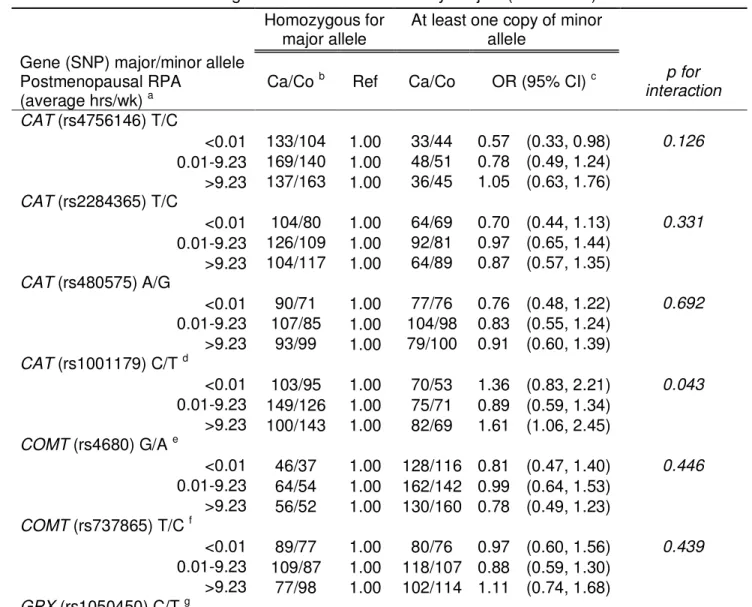
The Long Island Breast Cancer Study Project (1996-1997) ... 88 Table 4.1 Age Adjusted Odds Ratios and 95% Confidence Intervals for
the Association between Mismatch Repair Genes and Breast Cancer
Risk. The Long Island Breast Cancer Study Project (1996-1997) ... 105 Table 4.2 Age Adjusted Odds Ratios and 95% Confidence Intervals for the
Main Effects of DNA Repair Genes on Postmenopausal Breast Cancer Risk. The Long Island Breast Cancer Study Project
(1996-1997) ... 106 Table 4.3 Age Adjusted Odds Ratios and 95% Confidence Intervals for
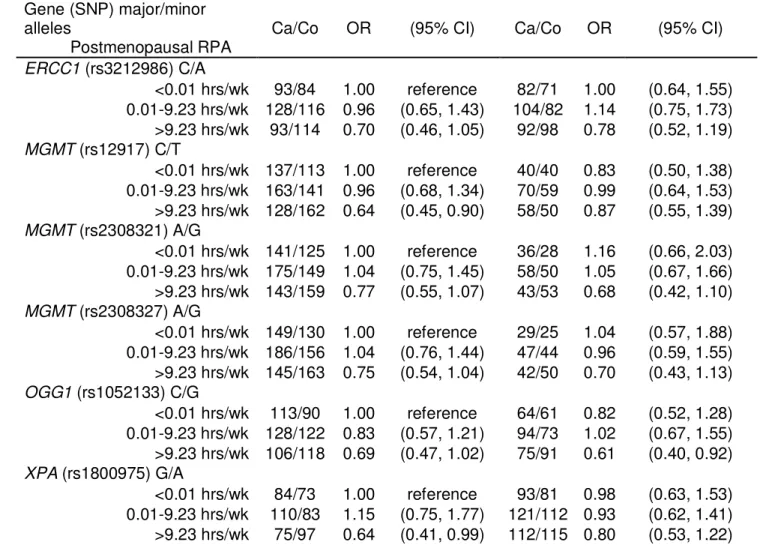
Multiplicative Effects of DNA Repair SNPs and Recreational Physical Activity on Postmenopausal Breast Cancer Risk.
The Long Island Breast Cancer Study Project (1996-1997) ... 107 Table 4.4 Age Adjusted Odds Ratios and 95% Confidence Intervals for
Multiplicative Effects of DNA Repair SNPs and Lifetime Recreational Physical Activity on Breast Cancer Risk. The Long Island Breast Cancer
Study Project (1996-1997) ... 110
T
able
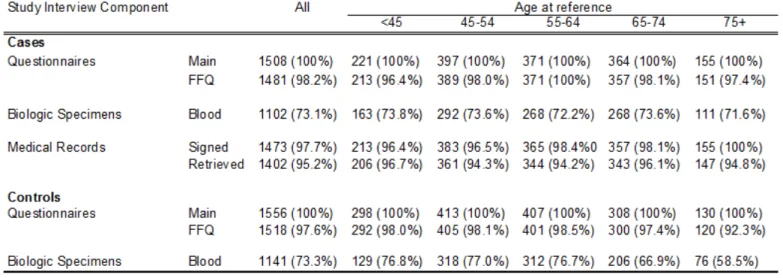
A.1 Risk Factors for Breast Cancer ... 126 Table A.2 Summary of DNA Repair Mechanisms ... 127 Table A.3 Response Rates by Study Interview Component and Age atReference among Respondents. The Long Island Breast Cancer Study
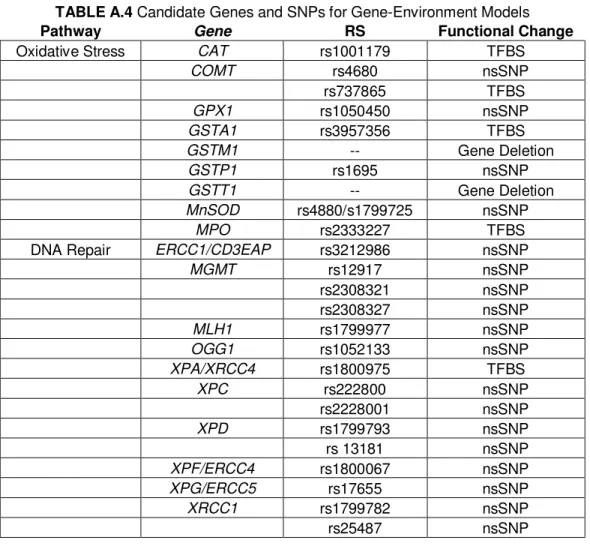
Project, 1996-1997 ... 128 Table A.4 Candidate Genes and SNPs for Gene-Environment Models ... 129 Table A.5 SNP Selection for Main Effects Models... 130 Table A.6 Pairwise LD for all Newly Genotyped CAT and Mismatch
Repair SNPs. The Long Island Breast Cancer Study
Project (1996-1997) ... 131
xiii
xi
ii
Table A.7 Hardy Weinberg Equilibrium for Newly Genotyped Catalase
SNPs. The Long Island Breast Cancer Study Project (1996-1997) ... 132 Table A.8 Hardy Weinberg Equilibrium for Newly Genotyped Mismatch
Repair SNPs. The Long Island Breast Cancer Study Project
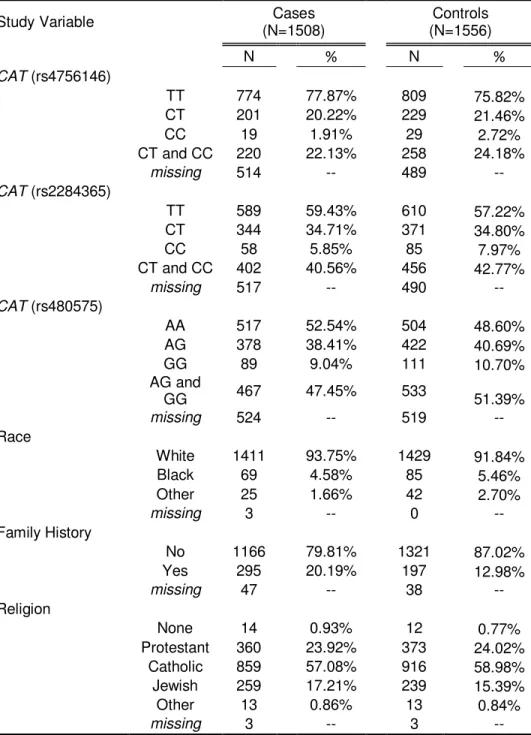
(1996-1997) ... 133 Table A.9 Distribution of Outcome, Main Exposure, and Key Covariates
for CAT Analysis. The Long Island Breast Cancer Study Project
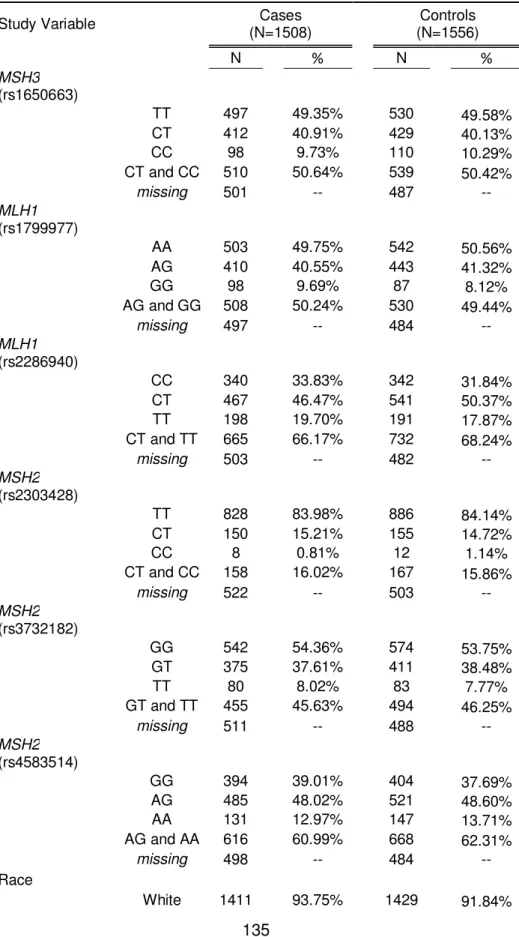
(1996-1997) ... 134 Table A.10 Distribution of Outcome, Main Exposure, and Key Covariates
for Mismatch Repair Analysis. The Long Island Breast Cancer Study
Project (1996-1997) ... 135 Table A.11 Distribution of Outcome and Main Exposure for CAT Analysis
Among Whites. The Long Island Breast Cancer Study Project
(1996-1997) ... 137 Table A.12 Distribution of Outcome and Main Exposure for Mismatch
Repair Analysis among Whites. The Long Island Breast Cancer Study
Project (1996-1997) ... 138 Table A.13 Age Adjusted Odds Ratios and 95% Confidence Intervals
for the Association between CAT Genes and Breast Cancer Risk. The
Long Island Breast Cancer Study Project (1996-1997) ... 139 Table A.14 Age Adjusted Odds Ratios and 95% Confidence Intervals
for the Association between Mismatch Repair Genes and Breast Cancer Risk. The Long Island Breast Cancer Study Project
(1996-1997) ... 140 Table A.15 Age Adjusted Odds Ratios and 95% Confidence Intervals
for the Association between CAT Genes and Breast Cancer Risk Among Whites. The Long Island Breast Cancer Study
Project (1996-1997) ... 141 Table A.16 Age Adjusted Odds Ratios and 95% Confidence Intervals
for the Association between Mismatch Repair Genes and Breast Cancer Risk among Whites. The Long Island Breast Cancer
Study Project (1996-1997) ... 142 Table A.17 Comparison of CAT Crude and Adjusted Odds Ratios by
each Covariate. The Long Island Breast Cancer Study
Project (1996-1997) ... 143 Table A.18 Comparison of Mismatch Repair Crude and Adjusted Odds Ratios
by each Covariate. The Long Island Breast Cancer Study
xiv
xi
v
Table A.19 Assessment of Effect Measure Modification in Strata of Covariates for CAT. The Long Island Breast Cancer Study
Project (1996-1997) ... 145 Table A.20 Assessment of Effect Measure Modification in Strata of
Covariates for Mismatch Repair. The Long Island Breast Cancer
Study Project (1996-1997) ... 147 Table A.21 Age Adjusted Odds Ratios and 95% Confidence Intervals
for the Association between CAT SNPs and Hormone Receptor Status.
The Long Island Breast Cancer Study Project (1996-1997) ... 150 Table A.22 Age Adjusted Odds Ratios and 95% Confidence Intervals
for the Association between Mismatch Repair Genes and Hormone Receptor Status. The Long Island Breast Cancer Study Project
(1996-1997) ... 151 Table A.23 Likelihood Ratio Test for SNP*SNP Interactions in the CAT
Gene. The Long Island Breast Cancer Study Project (1996-1997)... 152 Table A.24 Likelihood Ratio Test for Gene*Gene and SNP*SNP
Interactions in the Mismatch Repair Pathway. The Long Island
Breast Cancer Study Project (1996-1997) ... 153 Table A.25 Decision for Inclusion - Combined Effects of Polymorphisms
in the CAT Gene on Breast Cancer Risk. The Long Island Breast
Cancer Study Project (1996-1997)... 154 Table A.26 Decision for Inclusion - The Analysis of Combined Effects of
Polymorphisms in the MMR Pathway on Breast Cancer Risk.
The Long Island Breast Cancer Study Project (1996-1997) ... 155 Table A.27 Association between Number of High-Risk Alleles in the CAT
gene and Breast Cancer Risk. The Long Island Breast Cancer
Study Project (1996-1997) ... 156 Table A.28 Association between Number of Variant Alleles in the Mismatch
Repair Pathway and Breast Cancer Risk. The Long Island
Breast Cancer Study Project (1996-1997) ... 157 Table A.29 Age Adjusted Odds Ratios and 95% Confidence Intervals for
the Multiplicative Effect of Oxidative Stress SNPs and Lifetime Recreational Physical Activity on Breast Cancer Risk in the
Long Island Breast Cancer Study Project (1996-1997) ... 158 Table A.30 Age Adjusted Odds Ratios and 95% Confidence Intervals
for Multiplicative Effects of Oxidative Stress SNPs and
Postmenopausal Recreational Physical Activity on Postmenopausal Breast Cancer Risk. The Long Island Breast Cancer Study
xv
xv
Table A.31 Age Adjusted Odds Ratios and 95% Confidence Intervals
for Multiplicative Effects of DNA Repair SNPs and Lifetime Recreational Physical Activity on Breast Cancer Risk. The Long Island Breast Cancer
Study Project (1996-1997) ... 162 Table A.32 Age Adjusted Odds Ratios and 95% Confidence Intervals
for Multiplicative Effects of DNA Repair SNPs and Postmenopausal Recreational Physical Activity on Breast Cancer Risk. The Long Island
Breast Cancer Study Project (1996-1997) ... 165 Table A.33 Age Adjusted Odds Ratios and 95% Confidence Intervals
for the Additive Effect of Oxidative Stress SNPs and Lifetime Recreational Physical Activity on Breast Cancer Risk in the Long
Island Breast Cancer Study Project (1996-1997) ... 168 Table A.34 Age Adjusted Odds Ratios and 95% Confidence Intervals for
the Additive Effect of Oxidative Stress SNPs and Postmenopausal Recreational Physical Activity on Postmenopausal Breast Cancer
Risk in the Long Island Breast Cancer Study Project (1996-1997) ... 170 Table A.35 Age Adjusted Odds Ratios and 95% Confidence Intervals for the
Additive Effect of DNA Repair SNPs and Lifetime Recreational Physical Activity on Breast Cancer Risk in the Long Island Breast
Cancer Study Project (1996-1997) ... 172 Table A.36 Age Adjusted Odds Ratios and 95% Confidence Intervals
for the Additive Effect of DNA Repair SNPs and Postmenopausal Recreational Physical Activity on Breast Cancer Risk in the Long Island
Breast Cancer Study Project (1996-1997) ... 175 Table A.37 Distribution and Main Effects of Oxidative Stress Genes for
Gene-Environment Interactions among all Women and Postmenopausal
Women. The Long Island Breast Cancer Study Project (1996-1997) ... 178 Table A.38 Age Adjusted Odds Ratios and 95% Confidence Intervals
for the Multiplicative Effect of CAT SNPs on Breast Cancer Risk.
The Long Island Breast Cancer Study Project (1996-1997) ... 181 Table A.39. Age Adjusted Odds Ratios and 95% Confidence Intervals
for the Multiplicative Effect of MMR Genes on Breast Cancer Risk.
xvi
xvi
List of Figures
Figure A.1 Female Breast Cancer - Incidence and Mortality Rates by
Age and Race, US, 2002-2006 (American Cancer Society, Breast
Cancer Facts and Figures 2009-2010) ... 183
Figure A.2 Commonly Cited Physical Activity Mechanisms ... 184
Figure A.3 Physical Activity Mechanisms and Carcinogenesis (Adapted from Rundle 2005) ... 185
FigureA.4 Interactions between complexes of MutS and MutL related proteins during mismatch repair (Adapted from Kolodner and Marsischky 1999) ... 186
Figure A.5 Contact, Cooperation, and Response Rates among case and controls, Long Island Breast Cancer Study Project. 1996-1997 ... 187
Figure A.6 Linkage Disequilibrium Plot CAT (CEU HapMap population) ... 188
Figure A.7 Linkage Disequilibrium Plot MLH1 (CEU HapMap population) ... 189
Figure A.8 Linkage Disequilibrium Plot MSH2 (CEU HapMap population) ... 190
Figure A.9 Linkage Disequilibrium Plot MSH3 (CEU HapMap population) ... 191
Figure A.10 Simple Continuous Plot of Postmenopausal Recreational Physical Activity and Risk of Breast Cancer, Long Island Breast Cancer Study Project. 1996-1997 ... 192
Figure A.11 Quadratic Plot of Postmenopausal Recreational Physical Activity and Risk of Breast Cancer, Long Island Breast Cancer Study Project. 1996-1997 ... 193
Figure A.12 Postmenopausal Recreational Physical Activity and Risk of Breast Cancer Categorized by Deciles among Controls, Long Island Breast Cancer Study Project. 1996-1997 ... 194
Figure A.13 Postmenopausal Recreational Physical Activity and Risk of Breast Cancer Categorized by Quartiles among Controls, Long Island Breast Cancer Study Project. 1996-1997 ... 195
Figure A.14 Linear Spline of Postmenopausal Recreational Physical Activity and Risk of Breast Cancer, Long Island Breast Cancer Study Project. 1996-1997 ... 196
xvii
xvi
i
Cancer Risk and Genetic Variants ... 198 Figure A.17 Power Curves for Main Effects of Genotype and Breast Cancer
(All women Combined), Long Island Breast Cancer Study
Project. 1996-1997 ... 199 Figure A.18 Power Curves for Multiplicative Interactions and Breast Cancer
(All women Combined), Long Island Breast Cancer Study
Project. 1996-1997 ... 200 Figure A.19 Power Curves for Additive Interactions and Breast Cancer
(All women Combined), Long Island Breast Cancer Study
Project. 1996-1997 ... 201 Figure A.20(a) Stratum Specific Effects of CAT CC genotype using Linear
Spline for Postmenopausal Recreational Physical Activity,
Long Island Breast Cancer Study Project. 1996-1997 ... 202 Figure A.20(b) Stratum Specific Effects of CAT CT or TT genotype using
Linear Spline for Postmenopausal Recreational Physical
Activity, Long Island Breast Cancer Study Project. 1996-1997 ... 203 Figure A.21(a) Stratum Specific Effects of GSTP1 AA genotype using Linear
Spline for Postmenopausal Recreational Physical Activity,
Long Island Breast Cancer Study Project. 1996-1997 ... 204 Figure A.21(b) Stratum Specific Effects of GSTP1 AG or GG genotype using
Linear Spline for Postmenopausal Recreational Physical
xviii
xvi
ii
List of Abbreviations 8-oxo-dG 8-oxodeoxyguanosine
95% CI 95% confidence interval ADP Adenosine diphosphate AP Apurinic/apyrimidinic APE1 AP endonuclease
ATM Ataxia telangiectasia mutated ATP Adenosine triphosphate BER Base excision repair BMI Body mass index (BMI) BRCA1 Breast cancer 1 BRCA2 Breast cancer 2
BRFSS Behavioral Risk Factor Surveillance System
CAT Catalase
CDC Centers for Disease Control and Prevention CHEK2 CHK2 checkpoint homolog
CRP C-reactive protein DAG Directed acyclic graphs DSB Double strand break EPT Estrogen-progestin therapy ER Estrogen receptor
ERCC DNA excision repair protein GPx Glutathione peroxidase GST Glutathione S-transferases
xix
xi
x
HER2 Human epidermal growth factor receptor 2 HNPCC Hereditary non-polyposis colorectal cancers
HR Hormone receptor
HRT Hormone replacement therapy HWE Hardy-Weinberg equilibrium ICR Interaction contrast ratio IGF Insulin-like growth factor
IGF-BP Insulin-like growth factor binding protein IL-1β Interleukin-1-beta
IL-6 Interleukin-6
LD Linkage disequilibrium
LIBCSP Long Island Breast Cancer Study Project LRT Likelihood ratio test
MAF Minor allele frequencies
MET Metabolic equivalents of energy expenditure MLH1 MutL homologue 1
MLH3 MutL homologue 3 MMR Mismatch repair
MnSOD Manganese superoxide dismutase MPO Myeloperoxidase
MSH2 MutS homologue 2 MSH3 MutS homologue 3 MSH6 MutS homologue 6 MSI Microsatellite instability MUTYH MutY homologue
xx
xx
NHEJ Non-homologous end joining OC Oral contraceptives
OGG1 8-oxoguanine glycosylase
OR Odds ratio
P53 Tumor protein 53
PAH Polycyclic aromatic hydrocarbon PCNA Proliferating cell nuclear antigen PCR Polymerase chain reaction
PMS2 Postmeiotic segregation increased 2 PR Progesterone receptor
PTEN Phosphatase and tensin homolog RDD Random digit dialing
RNS Reactive nitrogen species ROS Reactive oxygen species RPA Recreational physical activity
RR Relative Risk
SHBG Sex-hormone-binding globulin SNP Single nucleotide polymorphisms STK11 Serine/threonine kinase 11 TNF Tumor necrosis factor
US United States
XRCC X-ray repair cross-complementing protein
1
1
Chapter I: Background
This dissertation aimed to examine effect modification of the physical activity-breast cancer association by single nucleotide polymorphisms (SNP) in two different pathways: (1) oxidative stress and (2) DNA repair. This investigation began by estimating the associations between genetic variants in catalase (CAT); mismatch repair (MMR) and breast cancer risk, using resources from the Long Island Breast Cancer Study Project (LIBCSP), a population-based, case-control study with detailed data on recreational physical activity (RPA) and genetic markers. I subsequently examined how functional variants in candidate genes from the aforementioned pathways modified the effect of physical activity on breast cancer incidence. Secondary aims involved examining the effects of multiple genetic
polymorphisms on breast cancer risk using SNP*SNP analyses, gene*gene analyses and a pathway based approach, as well as evaluating associations between genetic
polymorphisms and breast cancer risk in hormonally distinct case groups (e.g. hormone receptor positive and hormone receptor negative).
Chapter one provides a detailed review of the relevant literature, to inform discussion of the study rationale and approach. Specifically, this chapter summarizes the breast
2
2
1.1 Breast Cancer Biology and Epidemiology
Although much of what is understood about the etiology of breast cancer has evolved from risk factor epidemiology, many of the underlying mechanisms of the disease remain unknown. Many established breast cancer risk factors, such as reproductive characteristics, are not easily modifiable but known to play an important role in breast cancer development. A large proportion of breast cancer risk may, however, be attributed to factors which are amendable to intervention. The case for these modifiable or lifestyle risk factors are most clearly revealed by the large differences in breast cancer incidence between countries [1] and the monotonic increase in risk among immigrants across generations. Physical activity and obesity have emerged as two important, potentially
modifiable, targets for breast cancer risk reduction and may account for a large proportion of breast cancer cases. Identifying pathways through which these factors operate could play an important role in advancing the knowledge of breast cancer etiology, and improving risk reduction strategies for breast cancer. The following section outlines the trends in breast cancer incidence, potential mechanisms, and risk factors for the disease.
1.1.1 Trends in Breast Cancer Incidence
3
3
1.1.2 Mechanisms of Breast Cancer Risk
Prolonged exposure to circulating estrogens and progestins has long been
suspected as a primary mechanism in breast cancer carcinogenesis. Increased endogenous hormone levels are proposed to elevate risk through enhanced cell proliferation which occurs at multiple points along the cancer continuum from initiation to tumor metastasis [4]. Increased cellular proliferation is likely to result in a greater number of deleterious mutations that, if un-repaired, could result in breast malignancy [5].Estrogen may directly influence cell proliferation via induction of proteins involved in nucleic acid synthesis or through the
activation of oncogenes. It can, similarly, indirectly impact proliferation by stimulating the secretion of prolactin or enhancing growth factor production [6]. Closely linked to estrogen are insulin and insulin-like growth factor (IGF).They have been proposed to work with estrogen to influence breast cancer risk by both increasing cell proliferation and preventing apoptosis [7]. Insulin is additionally known to reduce synthesis of sex-hormone-binding globulin (SHBG), a transporter of testosterone and estradiol, in the liver [7]. Reduced levels of SHBG result in increased availability of bioavailable estradiol.
4
4
While mid to high penetrant genetic polymorphisms have been implicated in the etiology of heritable breast cancer, these variants are relatively uncommon in the population.Focus has shifted to finding common, low penetrance, polymorphisms which may contribute only a slight increase in risk.Alterations in these genes can serve as triggers for genomic
instability, increased mutation, and could mediate, in part, the effects of physical activity and other breast cancer risk factors.
1.1.3 Breast Cancer Risk Factor Epidemiology
5
5
Exogenous Hormones.Oral contraceptives (OC) are the most commonly used contraceptive method for US women. Oral contraceptives generally contain 20 to 35 µg of ethinyl estradiol and are thus a frequent source of exposure to exogenous hormones in premenopausal women [19]. The most comprehensive assessment of the association between OC use and breast cancer risk is the 1996 Oxford pooled analysis of 54
epidemiologic studies with 53,297 breast cancer cases and 100,239 controls. The analysis showed a slightly increased risk of breast cancer among current users (RR=1.24; 95% CI: 1.15-1.33) compared to never users [20]. A risk reduction was observed after stopping OC use (Relative Risk [RR]=1.16 for 1-4 years after stopping and 1.07 for 5-9 years after stopping). No increased risk was found 10 or more years after discontinuation of OCs (RR=1.01; 95% CI: 0.96-1.05) [20]. A more recent 2002 study [21] reported no excess breast cancer risk among current or former OC users (OR=1.0; 95% CI: 0.8-1.3 and
OR=0.9; 95% CI: 0.8-1.0, respectively). Differences in study results may be due to changes in OC formulations with newer contraceptives having lower-dose estrogen.
Hormone replacement therapy (HRT) may be another source of exogenous
hormones. It is frequently used among postmenopausal women to delay bone density loss and alleviate menopausal symptoms. A 2009 review of postmenopausal hormone therapy and breast cancer risk reported that while combined estrogen-progestin therapy (EPT) moderately increased the risk of breast cancer (20-40%), the evidence for unopposed estrogen showed no increase in risk [22]. This study did not account for relative duration of use. The Nurses’ Health Study found monotonic increases in breast cancer risk with current use of unopposed estrogen (p for trend <0.001) and a 42% increased risk among women with 20+ years of use compared to never users [23]. Exogenous hormone use was
6
6
that the timing of exogenous hormone use is important in understanding risk, specifically among postmenopausal women.
Environmental Factors. While a considerable number of risk factors have been linked to estrogen the etiology of breast cancer is multi-factorial and increased breast cancer risk could occur through many other pathways. It is well established that exposure to
ionizing radiation leads to increased cancer risk. Women exposed to the atomic bomb in Nagasaki and Hiroshima Japan experienced as much as a 9-fold increase in breast cancer risk [25].
Polycyclic aromatic hydrocarbon (PAH)-DNA adducts are among the most consistently reported environmental factors associated with breast cancer. Human PAH exposure primarily comes from byproducts of fuel burning, cigarette smoke, and the consumption of grilled and smoked foods [26]. LIBCSP investigators reported a 50% increased risk (95% CI: 1.04, 2.20) among women with highest PAH quantile compared to women in the lowest quantile [26].
Cigarette Smoking. The association between cigarette smoking and breast cancer risk has been inconsistent, likely due to competing biologic mechanisms. Smoking is known to increase exposure to carcinogens. However, it has been suggested that smoking is related to appetite suppression, early initiation of menopause, and altered hormone metabolism which would therefore decrease overall exposure to estrogens [25]. The exact association between smoking and breast cancer remains to be elucidated, as active smoking has not consistently been found to be associated with breast cancer in the
7
7
Alcohol Consumption. The consumption of alcohol has been associated with a modest increased risk of breast cancer [28]. It is suggested that the alcohol-breast cancer association may be directly related to alcohol metabolism and its effects on the levels of estrogen and estrogen receptors in breast cells [29]. Other mechanisms of the alcohol-breast cancer relationship have been proposed. Mechanisms include an increase in reactive oxygen species (ROS), hydroxyl radicals, and DNA modification [28]. Reports from a 2006 meta-analyses of high quality studies showed a 22% (95% CI: 1.09, 1.37) increased risk of breast cancer among women classified as drinkers, compared to abstainers [30]. Contrary to these results Long Island investigators found no association between ever alcohol use and never users [18].
Diet.A number of dietary factors including: fat, fiber, and fruit and vegetable
consumption have been evaluated in association with breast cancer risk. However, the role of diet in breast cancer etiology remains controversial [31] as the magnitude and direction of effect are known vary by study design [32]. Moreover, studies which observe an association between diet and breast cancer incidence show that dietary factors may only slightly modify risk. There are several rationales for null or weak associations in the diet-breast cancer literature. Lof and Widerpass (2009) suggest that: (1) measurement error may disguise existing associations, (2) dietary exposures may not be ascertained during the etiologically relevant time period, and (3) there may be differences in risk according to tumor
characteristics or genetics [33]. Alternatively, there may also be no causal association between diet and breast cancer risk.
8
8
postmenopausal women [35]. The positive association between obesity and
postmenopausal breast cancer is thought to occur through the aromatization of androgens in adipose tissue. These androgens are subsequently converted to estradiol, the most metabolically active form of estrogen, thereby increasing breast cancer risk [7, 36]. Compared to ovarian estrogen production among premenopausal women, adipose
mediated estrogen production is highly unregulated [36]. In combination with reductions of SHBG (a frequently observed phenomena of obesity-related hyperinsulemia), unregulated estrogen production results a greater than 2-fold increase in free estradiol among
postmenopausal women [36].
Physical Activity. There has been an overwhelming amount of epidemiological literature describing the beneficial effects of exercise in breast cancer risk reduction [37-45]. Studies suggest that risk reduction is approximately 25% when the most physically active woman is compared to the least physically active woman, even among high risk populations [44, 46]. The most obvious mechanism through which physical activity may influence cancer risk is by reducing adipose tissue, and consequently the hormonal milieu that occurs with postmenopausal obesity (discussed above) [41]. However, physical activity has been shown to reduce the risk of premenopausal breast cancer and the inverse association with
postmenopausal breast cancer risk persists even upon controlling for body weight [47, 48]. These observations indicate that in addition to an obesity-mediated pathway, physical
activity is likely to influence breast cancer carcinogenesis through independent mechanisms. 1.1.4 Conclusions
Breast cancer remains an important public health concern in both the US and abroad. There has been considerable research in identifying the epidemiologic risk factors associated with breast cancer, but the underlying mechanisms of the disease remain unknown. While many of the established risk factors have been linked to hormone
9
9
number of non-reproductive risk factors known to play a role in breast cancer development. While they may not be as predictive as those which are reproductive, they can ultimately be controlled, aiding in the reduction of breast malignancy development. Physical activity appears to play an important role in the reduction of both pre- and postmenopausal breast cancer risk. Given the widespread accessibility of physical activity, identifying mechanisms through which it acts, independent of obesity, has become increasingly important.
This dissertation focused on pathways relevant to breast cancer and physical activity, specifically oxidative stress and DNA repair. In the following sections I describe the current state of knowledge of the inverse association observed between physical activity and breast cancer risk, summarize the mechanistic pathways which have been evaluated to date and present a conceptual model of the hypothesized mechanisms through which physical activity is proposed to act. Finally, I review two pathways (i.e. oxidative stress and DNA repair) that play a potential role in the etiology of breast cancer, as well as provide a rationale for examining these two pathways in the molecular epidemiology of physical activity.
1.2 Recreational Physical Activity
Physical activity has been associated with reduced incidence of a number of chronic diseases including heart disease [49, 50], diabetes [50, 51], stroke [50], osteoporosis [52] and cancer [50]. Increased activity has also been proposed to counter disability, and
10
1
0
Elucidation of the underlying mechanism linking physical activity inversely to breast cancer risk would strengthen the biologically plausibility of the association. Mechanistic insight could additionally aid in identifying targets for intervention, inform the recommendations for lowering breast cancer risk, and provide new clues to cancer biology.
1.2.1 Definitions and Measures of Physical Activity
Physical activity is defined as bodily movement produced by skeletal muscles resulting in a quantifiable form of energy expenditure [54]. Physical activity can be broadly classified as either cardiorespiratory (aerobic activity) or resistance (anabolic activity), each distinct in their physiological effects. Aerobic activities profoundly impact the cardiovascular and respiratory systems while anabolic activities influence the neural and muscular systems [55]. All individuals are exposed to physical activity in several domains across the life span. The Centers for Disease Control and Prevention (CDC) defines regular physical activity among adults as at least 150 minutes a week of moderate-intensity aerobic activity or 75 minutes a week of vigorous-intensity aerobic activity. These recommendations are based on the Healthy People 2010 physical activity objectives and the 2008 Physical Activity
Guidelines for Americans. The CDC’s analysis from the Behavioral Risk Factor Surveillance System (BRFSS) indicated that 76% of the US population participated in some type of physical activity during month prior to interview [56]. With a nationwide prevalence of approximately 75% physical activity may conceivably be one of the most pervasive modifiable exposures associated with breast cancer risk.
11
1
1
or hours per episode). The final element is the intensity or rate of energy expenditure required to execute the activity. Metabolic equivalents of energy expenditure (MET) are commonly used to assess intensity. One MET unit is defined as the energy expended sitting quietly. This is equal to 3.5 millimeters of oxygen per kilogram of body weight per minute [57]. According to the CDC and the American College of Sports Medicine, light, moderate, and vigorous activities are classified as <3 METs, 3-6 METs, and >6 METs, respectively [58]. A summary measure of the three components is MET-hours, obtained by multiplying all three dimensions of activity. MET-hours may reflect the activity dose of one session, day, week, or month and is useful when grouping participants or comparing activity levels across populations. The type of activity may also be important in quantifying physical activity as recreational activities tend to be higher intensity and shorter duration compared to activities related to occupation or daily living which are traditionally low intensity and longer in
duration.
Due to the heterogeneity of physical activity and little standardization in assessment methods, it is often difficult to obtain valid estimates of energy expenditure [55]. While physiological measures of physical activity (e.g. resting heart rate and aerobic capacity) perform particularly well and are commonly regarded as a gold standard, they are not frequently employed in epidemiologic studies because they fail to capture the etiologically relevant time period and are often too expensive for large population-based designs [59]. Questionnaire based assessments are common practice in observational epidemiology and may query participants all three dimensions of physical activity. While there are qualitative differences in physical activity assessment across studies, the physical activity-breast cancer literature overwhelmingly supports an inverse association.
1.2.2 Epidemiology of Physical Activity and Breast Cancer
12
1
2
in these studies range from 20-40% among active women [40, 41, 43, 44]. Generally slightly stronger associations have been found in case-control compared with cohort studies [37, 42], although the Nurse’s Health Study reported a slightly stronger association for lifetime activity in the prospective design (prospective OR=0.58, 95% CI: 0.37, 0.93 versus
retrospective OR=0.80; 95% CI: 0.50, 1.29) [60]. While early reports show risk reductions for both occupational and recreational activity, a comprehensive 2008 review of physical activity parameters and breast cancer risk [42] showed the greatest risk reductions for RPA (20% risk reduction). Activity related to occupation, transportation, and daily living each resulted in approximately 14% reduced risk. The same review reported similar risk reductions from vigorous activities (average 26%) and moderate intensity activities (average 22%).
Timing. Determining the time period during which physical activity most influences breast cancer risk is of paramount importance in making recommendations for lowering incidence. The strength of the physical activity-breast cancer association may vary across the life course, as is observed for other established risk factors. In a 2001 review Latikka and colleagues [45] assessed the effect of physical activity at various phases of life on breast cancer outcomes. The literature primarily focused on current activity, of which the vast majority of studies (~82%) reported inverse associations. Two of three studies showed adolescent activity or activity during college may protect against breast cancer while
13
1
3
cancer risk (RR=0.84; 95%CI=0.76, 0.93). The associations for activities performed during other periods of life were near null (RR=1.03, 1.01, and 0.97 for 15-18, 19-29, and 35-39 years of age, respectively), and lifetime activity was not assessed [62]. Although the optimal timing of physical activity for breast cancer protection remains to be resolved, it appears that activity performed through adulthood and the postmenopausal years provide the greatest risk reductions. This was particularly true in our own study population [63]. In the only other study known to use the same comprehensive physical activity assessment as the LIBCSP only lifetime activity was reported [64] and exercise was shown to be inversely associated with breast cancer risk.
Dose Response. There is some evidence for a dose response relationship between increasing activity levels and decreasing breast cancer risk. Thune and colleagues [43] observed graded dose-response relationships in 57% of studies evaluated (N=28). The proportion is as high as 87% in some reviews [40]. Evidence of dose-response relationships are more frequently observed in case-control compared to cohort studies [42, 43]. One review reported that 47% of case-control studies and 39% of cohort studies found linear tends for decreasing risk with increasing activity [42]. Linear trend analysis performed by Monninkhof and colleagues indicated a 6% (95% CI: 3%, 8%) decrease in breast cancer risk for each additional hour of physical activity per week [38]. In the LIBCSP we found a non-linear dose response association between exercise and breast cancer with the greatest risk reductions observed among women in the third quartile of RPA [63].
14
1
4
identify at-risk subgroups, but they may aid in further understanding the biology driving the physical activity-breast cancer association.
The body of literature to date indicates that there are stronger and more consistent effects of physical activity among postmenopausal women compared to premenopausal women [61, 65-67], although CIs overlap in many studies. A 2004 review study [41] showed that among 26 studies examining the association between physical activity and
premenopausal breast cancer risk 50% found no association. Thirteen studies reported risk reductions, with seven being statistically significant. Among the 27 studies conducted in postmenopausal women, 22 (81%) found risk reductions when comparing the most active women to women who were least active. Sixteen of these studies reported statistically significant risk reductions. More recent reviews observed similar trends among pre and postmenopausal women [38]. While it is clear that an effect of physical activity persists in both pre and postmenopausal strata, risk reductions are greater in magnitude for
postmenopausal women (40% average risk reduction) compared to premenopausal women (33% average risk reduction) [42].
Both independent and review studies demonstrate a protective effect of physical activity in low and high BMI categories. However, the magnitude of effect within strata of BMI has been shown to vary. One study reports significant decreases in invasive breast cancer risk with increasing levels of long-term strenuous recreational physical activity among women with a BMI < 25 (P trend=.03) but not among women with BMI ≥ 25 [68].
15
1
5
kg/m2). There were near null effects of physical activity on breast cancer risk among women classified as obese (≥30 kg/m2), although few studies reported effects in this strata [42]. Data from the LIBCSP showed that among postmenopausal women who engaged in more than 9 hrs/wk of RPA (on average) risk reductions were 27% for normal BMI, 15% for overweight women, and near null (OR=0.99) for women with BMI ≥30 kg/m2 [63].
Few studies have assessed modification by family history, but the greatest risk reductions have been reported for women without a family history of breast cancer. Dallal et al. [68] reported significant decreases in breast cancer risk with increasing levels of strenuous recreational physical activity among women with no first-degree family history of breast cancer (P trend=.01). This trend was not observed among women with a family history of breast cancer (P trend=.72). Similar associations for family history have been observed in other studies [64, 70] and Friedenreich [42] reported an average risk reduction of 6% among women without a family history, compared to an average increased risk of 20% for women with a family history of breast malignancy. Contrary to these findings, Pijpe and colleagues [71] reported a reduced risk of breast cancer among BRCA1/2 mutation carriers engaging in sports participation (HR=0.59, 95%CI=0.36-0.95 among women with a medium versus low level of sport intensity and duration). Additionally, one study reported delayed onset of breast cancer among BRCA1 mutation carriers who were physically active [72].
Energy intake and energy expenditure together determine an individual’s overall energy balance which greatly affects adiposity and breast cancer risk. It is therefore important to determine if energy intake modifies the physical activity-breast cancer
relationship. Studies which have been able to control for energy report no difference in the effects of physical activity for high vs. low consumers of total energy [42, 59]. An average risk reduction of 21% has been reported for both groups [42].
16
1
6
activity-breast cancer association within strata of these breast cancer outcomes. Inconsistencies have been observed in the literature. Dallal and colleagues [68] report significant decreases in breast cancer risk with increasing levels of both moderate (P trend=0.003) and strenuous (P trend=0.003) RPA among women with estrogen receptor (ER) negative tumors. No associations were observed for ER+, ER+/progesterone receptor (PR)+, or ER+/PR- cancers. These results are contrary to similar analyses which report no difference in the physical activity-breast cancer association by receptor status [64], and still others showing stronger associations for ER+ tumors [73]. Friedenreich and colleges reported risk reductions of 29% and 14% for hormone receptor negative and positive tumors, respectively [42].
1.2.3 Physical Activity Mechanisms
The biologic pathways influencing the physical activity-breast cancer association are less understood than its epidemiology. While it is consistently observed that physical activity aids in the reduction of breast cancer risk, there has been little molecular evidence
demonstrating the physical activity cancer prevention paradigm [44, 74, 75]. The lack of information on the molecular epidemiology of physical activity and the strong potential for confounding effects emphasize the need for mechanistic data to facilitate causal inference and identify new targets for intervention. There are several mechanisms that may mediate the association between physical activity and breast cancer risk. While reduction in
hormonal pathways and obesity related mechanisms offer the most convincing explanation to date, other physiological effects of exercise may prove beneficial as well. Mechanisms commonly cited in the literature include: changes in body weight, sex steroid hormones, insulin, growth factors, inflammation, and immune functioning (Figure A.2) [74-78].
17
1
7
estrogens are well documented. Research has shown that visceral fat (fat accumulated over the central abdomen) is metabolically active and has numerous physiological corollaries thought to influence carcinogenesis [79]. Physical activity is known to preferentially reduce central obesity [59] and is likely one mechanism through which exercise may prevent cancer development. It is, however, difficult to disentangle physical activity dependent mechanisms from those associated with obesity, as the two are closely linked.
Sex Steroid Hormones. Sex steroid hormones (particularly estrogens) are known to play an important role in pathogenesis of breast cancer. Physical activity has been shown to influence the amount circulating reproductive hormones in both pre- and postmenopausal women.
The total number of menstrual cycles is a well-established risk factor for breast cancer. Among premenopausal women some epidemiologic studies have shown that excessive amounts of energy expenditure can cause temporary suppression of gonadal hormones, delayed menses, menstrual cycle irregularities, anovulation, and amenorrhea[80-83], primarily as a result of luteal phase inadequacy [39]. While these data suggest that exercise reduces cumulative exposure to sex steroid hormones thereby decreasing the risk of breast cancer [45, 80], more recent research indicates that beyond its effect on energy availability exercise has little disruptive effect on the hormonal milieu of premenopausal women [84]. Moreover, there is little evidence of a direct association between disturbances in menstrual characteristics and breast cancer incidence.
Among premenopausal women the ovaries are the principal source of estrogens (primarily estradiol). Following menopause the ovaries produce very little estrogen.
18
1
8
estradiol forms a reversible redox reaction with estrone which is subsequently metabolized along one of two pathways: 2-hydroxyestrone or 16α-hydroxyestrone [87]. Adipose
mediated estrogen production is preferential to the bioactive 16α-hydroxyestrone pathway and is associated with decreased levels of the less bioactive 2-hydroxyestrone [88]. Among obese postmenopausal women the increased propensity for the 16α-hydroxyestrone pathway results in an even greater amount of circulating estrogen. In contrast,
premenopausal women experience consistently high levels of estrogen from menarche, regardless of weight, so any additional exposure from the aromatization of androgens or 16α-hydroxyestrone metabolizing pathway would not greatly impact overall estrogen levels.
Bioavailability of sex steroids also increases after menopause as the levels of SHBG, the predominant carrier of estradiol, decreases [89]. This is of particular importance among women who are obese because circulating triglycerides from fat stores are able to dislodge estradiol from SHBG thereby increasing bioavailability of sex steroids [90]. Physical activity has been shown to reduce serum concentrations of both estrogens and androgens among postmenopausal women [83, 91-93], although there may be the possibility of a U-shaped relation between activity and hormone levels [92]. These changes are likely to occur through indirect effects of physical activity on obesity.
Insulin. Insulin, a peptide hormone secreted by the beta cells of the pancreas, is primarily responsible for the regulation of blood glucose. Insulin is positively associated with breast cancer risk [94] and influenced by both central adiposity and physical activity [95]. Increases in visceral fat are associated with elevated levels of serum free fatty acids in the blood. These fatty acids are thought to cause a reduction in glucose uptake and an
19
1
9
IGF-1 are proposed to inhibit apoptosis and stimulate the progression of neoplastic
mammary cells from the G1 to S phase of the cell cycle [99]. Reduced SHBG increases the fraction of bioavailable estradiol and testosterone. These mechanisms, collectively, provide an opportunity for tumor development and progression.
Insulin resistance occurs when insulin becomes less effective at lowering blood sugars. Physical activity may influence insulin resistance in multiple ways. Acute bouts of exercise are reported to increase glucose uptake by skeletal muscle resulting in improved insulin sensitivity [100, 101]. However, intervention studies show comparable improvements in insulin resistance for diet-induced or exercised-induced weight loss [101] suggesting that an overall reduction in adiposity, irrespective of the mechanism, increases insulin resistance. In addition to a reduction of insulin levels from physical activity, regular exercise has been proposed to influence cancer risk through its effects on IGF-1 [102]. The relation between physical activity and IGF-1 is not clear however; experimental studies have not shown an effect of exercise on circulating IGF-1 levels [103]. Similarly, animal models indicate that exercise training does not affect basal levels of IGF-1 [78]. The evidence is more consistent that physical activity increases levels of IGF-BP resulting in a decrease in overall IGF-1 bioavailability and activity [99, 102]. Greater levels of physical activity could result in lower levels of endogenous sex hormones via any number of metabolic events including: reduced insulin resistance, reduced IGF-1, and increased production of SHBG. The overall effect is a lower risk of hormone-related cancers. These changes are also observed for reduced adiposity and may not be independently related to physical activity.
20
2
0
healing. Pro-inflammatory cytokines TNF-α and interleukin-1-beta (IL-1β) are produced at the infection site in response to leptin. These markers stimulate the release of IL-6 and collectively activate C-reactive protein (CRP) during acute phase response. Following clearance signal transduction of IL-1β and TNF- α are blocked by the release of IL-1 receptor antagonist and soluble TNF- α receptors [99]. Chronic inflammation is a condition that results in an increase in the circulating levels of pro-inflammatory markers TNF-α, IL-6, and leptin (often highly expressed in adipose tissue) and a decrease in anti-inflammatory markers, such as adiponectin, which are inversely correlated with adiposity [105]. Chronic inflammation is not only a risk factor for obesity, but has been associated with several other conditions including metabolic syndrome [106], type 2 diabetes [107], and some cancers [108, 109].Increases in cancer risk due to chronic inflammation may occur because of changes in the microenvironment, increased proliferative activity, and oxidative stress [110]. These factors are likely to work together to deregulate normal cell development thus
increasing the propensity for malignancy.
21
2
1
Immune Function. It is hypothesized that the immune system aids in cancer risk reduction by recognizing and eliminating abnormal cells [114]. It is also probable that the immune system modulates susceptibility to tumor formation by hindering cell growth or by counteracting the effects of tumor growth promoters [87]. Regular moderate physical activity may therefore reduce risk of cancer by stimulating components of the innate immune
response. Studies indicate that in response to moderate physical activity a number of innate immune parameters (i.e. macrophages, monocytes, lymphocytes, neutrophils, eosinophils, killer cells, and acute-phase proteins) increase in function and/or quantity [78, 115, 116]. These effects are transient, with levels of immune parameters dropping below pre-exercise levels following activity [116].The improved immune function that is hypothesized to occur with physical activity may vary by exercise type, intensity, or duration. An inverted ‘J’-shaped dose-response relationship between intensity of physical activity and immune function is frequently reported with the greatest benefit occurring among individuals who undertake regular moderate exercise [44, 87]. Depression of immune function may be induced by excessive exercise at high intensity levels [44]. While there appears to be evidence for the immune system contributing to the association between physical activity and breast cancer susceptibility, this relationship is largely untested and requires further investigation.
Other Mechanisms. The physical activity-breast cancer mechanisms described above primarily involve targets of adiposity and weight loss. It is likely that many of these mechanisms work synergistically acting through a common obesity related pathway, but even early epidemiologic studies show that upon control for body weight an effect for physical activity persists [47, 48]. Similarly, animal models have shown that the negative energy balance induced by exercise does not, alone, explain the cancer preventive effects of physical activity [78]. These results suggest that while physical activity and weight
22
2
2
related to the promotion and progression of postmenopausal breast cancer. Physical activity may, however, influence risk at multiple points along the cancer continuum (Figure A.3). Exercise may influence the development of cancer by decreasing the rates of genetic and epigenetic alterations or by shifting the equilibrium of growth and death in cancer cells.
There have been few attempts to disentangle the effect of exercise from those of energy balance. While obesity related pathways are biologically plausible and likely to influence the physical activity-breast cancer association, other pathways important in
carcinogenesis should be considered. Some investigators propose that physical activity may work through mechanisms further upstream including pathways related to early stages of malignant transformation [74, 75]. Markers associated with oxidative stress and DNA repair have been shown to be pertinent to breast cancer, but they may also be modifiable by exercise [42, 74, 83]. To date there are no epidemiologic studies which have evaluated the biologic plausibility of these pathways.
1.2.4 Conclusions
It is well established that physical activity reduces the risk of breast cancer. While the epidemiologic literature shows decreases in risk from all types of physical activity, moderate recreational activity appears to have the strongest association with risk reduction. Similarly, activities done throughout the lifetime have been consistently associated with breast cancer risk reduction compared to activities performed around the time of diagnosis [42]. Several mechanisms have been proposed to mediate the association between physical activity and breast cancer risk. They include sex steroid hormones, insulin resistance, growth factors, inflammation, and immune function. While these mechanisms are biologically plausible and likely to contribute to the inverse association between physical activity and breast cancer risk, they are greatly influenced by body weight – a consistent risk factor for
23
2
3
explore the role of oxidative stress and DNA repair in the physical activity-breast cancer association
1.3 Oxidative Stress
Reactive oxygen species may be generated through any number of endogenous or exogenous processes. The term ROS is commonly used to describe certain reactive oxygen metabolites containing unpaired electrons in their outer orbit [117, 118]. ROS includes free radical derivatives of molecular oxygen (e.g. superoxide radical O2●-, hydrogen peroxide H2O2, hydroxyl radical ●OH) which are continuously generated within a cell as a result of oxidative metabolism [119, 120]. ROS may be produced by other endogenous processes such as estrogen metabolism, peroxisomes activity, or inflammatory cell activation. ROS and ROS-generating compounds are ubiquitous in the environment commonly found in inhaled smoke, alcohol, and ingested goods [121, 122]. While modest levels of ROS are useful for cell signaling processes [123] excess ROS may result in DNA damage, lipid peroxidation, and protein modification [121, 124-126]. These changes are known as oxidative stress, a term used to refer to the global burden of harmful reactive biochemical species present in tissue as a consequence of the regular cellular oxidative metabolism of endogenous and exogenous compounds [127].
1.3.1 Endogenous Responses to Oxidative Stress
24
2
4
These enzymes form the first line of defense against superoxide and hydrogen peroxide. Secondary defenses include reduced GPx and GST [128, 129], which play a central role in the defense against free radicals, peroxides, as well as a wide array of xenobiotics and carcinogens [130]. If peroxide or other free radical derivatives of molecular oxygen are not neutralized by the above mechanisms, they may contribute to additional ROS generation by myeloperoxidase (MPO) [131]. MPO generates ROS endogenously performing as an antimicrobial enzyme, catalyzing a reaction between H2O2 and chloride to generate
hypochlorous acid [132]. Hypochlorous acid further reacts with other biological molecules to generate secondary radicals [133]. Endothelial nitric oxide synthase is also responsible for the generation of reactive nitrogen species (RNS), catalyzing the production of the NO radical [134]. The levels of potentially cytotoxic reactive species within the body may therefore depend on the balance between endogenous pro- and anti-oxidants. 1.3.2 Biologic Plausibility of the Oxidative Stress-Breast Cancer Association
Oxidative stress may play an important role in the risk of many chronic diseases including cardiovascular disease, aging, and human cancer [135-138]. The function of oxidative stress in carcinogenesis has been widely demonstrated in small human and animal studies, providing increasing evidence that it may be involved in the pathophysiology of breast cancer [127, 139-141]. Oxidative damage has been suggested to contribute to the formation of DNA adducts [142] and has been implicated in neoplastic transformation [143]. Oxidative damage has frequently been reported to be higher among women with breast cancer, compared to controls [127]. Similarly, studies have observed enhanced lipid peroxidation in breast tumor tissue compared to uninvolved adjacent tissue. Elevations in both enzymatic (SOD, CAT, GPx, GST) and nonenzymatic (GST) antioxidants in tumor cell lines have been observed in some [126, 144-146] but not all [126, 147] studies.
25
2
5
variants that influence pro or anti-oxidant mechanisms may therefore play an important role in breast cancer carcinogenesis [127]. CAT is a heme enzyme that has a primary role in neutralizing ROS by converting H2O2 into H2O and O2 [127]. Mouse models have shown that acatalasemic mice (C3H strain), with approximately one tenth the CAT blood and tissue levels of normal mice, were more susceptible to spontaneous mammary carcinoma after feeding on regular laboratory chow for 15 months [149]. While these studies are limited to the animal literature such associations could be assessed by evaluating the impact of catalase activity (using genotype as a proxy) on breast cancer risk.
1.3.3 Epidemiology of Catalase and Breast Cancer Risk
Activity levels of the CAT enzyme is likely affected by functional polymorphisms in the gene. A common 262 C/T polymorphism (rs1001179) has been identified in the
promoter region of the human CAT gene [150]. Endogenous variability associated with this SNP may play an important role in host response to oxidative stress. Studies have shown that the variant CAT allele (T) is associated with hypertension [151] and vitiligo [152], both conditions related to oxidative stress. The 262 C/T polymorphism has been shown to affect the transcriptional activity of the promoter [150] and is thought to result in reduced enzyme activity [153-155]. Using a sample of 420 controls Ahn and colleagues examined the functional effects of this variant on catalase enzyme activity. They found a dose-response reduction in activity by CAT genotypes, with geometric means of 115.4, 82.1, and 73.5 units/mg hemoglobin for CC, CT, and TT genotypes, respectively. The reported % activity difference for CT genotype versus CC genotype was 28.8% (P = 0.002) and was 36.3% (P = 0.02) for TT genotype versus CC genotypes [153]. These associations were also observed in a smaller, yet independent, study population [156].
26
2
6
breast cancer (95% CI: 0.69, 1.00) compared to women with at least one T allele (CT and TT genotypes) [156]. Follow-up studies reported approximately null associations between CAT genotypes and breast cancer risk [157, 158], although there were less participants in both studies (N=569 and N=505 for Quick et al., 2008 and Li et al., 2009, respectively). While no other CAT variants have been reported in the epidemiologic literature, other polymorphisms may be independently associated or act, in combination, with this functional variant to influence breast cancer incidence.
1.3.4 Oxidative Stress and Physical Activity
Several risk factors associated with breast cancer (i.e. alcohol consumption, cigarette smoking, exposure to environmental tobacco smoke, and reduced estrogen metabolism) may exert their harmful effects via generation of ROS [144, 159-161] while others (i.e. consumption of fruits vegetables and antioxidants) are suggested to oppose ROS formation [127] therefore reducing the risk of breast malignancy. Several studies have examined the association between ROS related risk factors, genetic variants and breast cancer risk – hypothesizing that ROS generating risk factors act, in combination, with reduced antioxidant expression to increase the risk of breast cancer. Ahn and colleagues reported that current smokers with at risk GSTA1 polymorphisms (B/B genotypes) had a 1.89-fold increase in risk (OR=1.89; 95% CI=1.09–3.25), compared with never smokers with the common A/A genotype [162]. Among ever users of HRT the increased risk of breast cancer was more pronounced among women with variant CT or TT CAT genotypes (OR=1.88; 95% CI=1.29-2.75) than among women with the CC genotype (OR=1.15; 95% CI=0.86-1.54) although CAT genotype alone was not associated with breast cancer risk [157]. Exposures known to oppose ROS generation have been shown to obliterate the increased risk associated with genotype. Among women with the at risk B/B GSTA1
27
2
7
common CAT genotype (CC) have been shown to have the lowest risk of breast cancer (OR=0.59; 95%CI=0.38-0.89). Women who were low consumer/common genotype or high consumer/variant genotype had OR’s (95%CI’s) = 0.94 (0.65-1.37) and 1.06 (0.66-1.73), respectively [156]. These data indicate that genotypes related to reduced antioxidant expression may be associated with increased breast cancer through risk factors that increase ROS generation.
Studies have shown that physical activity is a strong inducer of lipid peroxidation and free radicals [119, 163, 164]. While the dimensions of exercise-induced ROS production are unknown, there is some evidence that strenuous activity [165-167], endurance and
resistance training [168] increase lipid peroxidation. Three mechanisms of exercise induced ROS production have been proposed [169]. One mechanism is via an electron ‘leak’ of the mitochondrial electron transport chain. During activity whole body oxygen consumption increases 10 to 20-fold and local muscle consumption 100 to 200-fold. While the majority of oxygen binds to hydrogen transforming it to water through the electron transport chain, an electron leak at the ubiquinone–cytochrome b level may result in the formation of superoxide radicals. Thus, as oxygen consumption increases during exercise there is a parallel increase in free radical production and lipid peroxidation. Another possible mechanism is ischaemia-reperfusion. During exercise, blood flow is restricted in many organs and tissues (e.g.
kidneys, splanchnic region) to increase blood supply to the working muscles. As a result, the regions with restricted blood flow may experience a hypoxic state which heightens as the intensity of exercise increases. At the cessation of exercise these regions undergo
re-oxygenation, which may lead to a burst of ROS production typical of ischemia-reperfusion. A third mechanism is auto-oxidation of catecholamines, whose levels are amplified many-fold during exercise leading to increased oxidative stress.