THE POTENTIAL EFFECTS OF EXERCISE-INDUCED CORTISOL RELEASE ON EXECUTIVE FUNCTIONING IN PREADOLESCENTS
A Thesis presented to
the Faculty of California Polytechnic State University, San Luis Obispo
In Partial Fulfillment
of the Requirements for the Degree Master of Science in Kinesiology
by
Ó 2018
COMMITTEE MEMBERSHIP
TITLE: The Potential Effects of Exercise-Induced Cortisol Release on Executive Functioning in
Preadolescents
AUTHOR: Kory Matthew Bettencourt
DATE SUBMITTED: January 2018
COMMITTEE CHAIR: Cory Jackson Greever, Ph.D. Assistant Professor of Kinesiology
COMMITTEE MEMBER: Todd Hagobian, Ph.D.
Associate Professor of Kinesiology
COMMITTEE MEMBER: Kelly Bennion, Ph.D.
Assistant Professor of Psychology and Child
ABSTRACT
The Potential Effects of Exercise-Induced Cortisol Release on Executive Functioning in Preadolescents
Kory Matthew Bettencourt
Purpose: Moderate-intensity aerobic exercise (MAE) has been shown to elicit improvements in cognition and subsequent academic performance among preadolescents. Aerobic exercise has also shown to increase cortisol release in response to increasing exercise intensity. However, it is unknown if increased cortisol levels following exercise are related to acute improvements in executive function following a bout of MAE in preadolescents. The purpose of this study was to examine the potential effects of increased cortisol release after acute MAE on attention and working memory among preadolescents. Methods: Eleven preadolescents [6 males, 5 females] volunteered to participate in this study (age=9.45±1.03). Participants were randomized in a
counterbalanced fashion to 30 minutes of rest or 30 minutes of treadmill MAE (60-70% HR max). Immediately pre-post each condition, participants completed a cognitive battery consisting of tests of attention (Flanker Test) and working memory (List Sorting Working Memory Test), as well as salivary samples for the analysis of cortisol. Linear Regression models were used to assess significance of covariates. Generalized linear models were used to assess significance of changes in each dependent variable against time, condition, time*condition and change in cortisol. Tukey’s HSD post-hoc tests for multiple comparisons were used to assess the effect of condition on working memory, attention, and salivary cortisol. Results: There was a significant effect of condition on working memory (F=3.16, p =0.04), with no change from pre-post rest (p=0.93) and improving from pre-post exercise (p=0.04). There was no effect of condition on attention or salivary cortisol, most likely due to a small sample size. Multiple linear regression models showed a significant effect of age (p=0.03) and change in cortisol (p=0.007) on working memory. Conclusion: Exercise had a positive effect on working memory, however, we were unable to relate this improvement to changes in salivary cortisol due to a lack of statistical power. This study could provide insight into the physiological effects of increased cortisol release on cognition, specifically in regard to working memory. However, more data are needed to achieve sufficient statistical power to detect these relationships.
ACKNOWLEDGMENTS
First and foremost, I would like to sincerely thank Dr. Cory Greever for all of the support and help he has provided me throughout the time of this project. Without his guidance and expertise in this area, there is no way I could have finished this project in a timely and professional manner. I would also like to thank Dr. Todd Hagobian and Dr. Kelly Bennion for their input and help with the project. Each of them is leader in their respected field and their contributions to this project were invaluable.
I want to also thank the undergraduate and graduate students who put their time and effort into helping with this project. I am truly grateful to have had such hard-working individuals who were excited and willing to donate their time to this project.
To all the faculty and staff in the Kinesiology Department who helped me throughout this time, I am truly grateful to have been part of such a great department. Your help, support, and funding on this project was truly unbelievable and it helped me out immensely.
The parents and children who volunteered their time to be a part of this research project were truly amazing. Without these individuals and their willingness to be a part of scientific research, this project could not have been possible. For that I thank you.
TABLE OF CONTENTS
Page
LIST OF TABLES ix
LIST OF FIGURES x
CHAPTER
1. INTRODUCTION 1
Statement of Purpose and Research Hypotheses 6
Assumptions 7
Limitations 7
Definition of Terms 7
2. LITERATURE REVIEW 10
Objectives 10
The Effects of Acute Aerobic Exercise in Relation
to Executive Functioning 10
Neural Mechanisms Effecting Executive Functioning 12 Neuroendocrine Responses and Executive Functioning 14
Exercise and Cortisol Levels 18
The Relationship Between Acute Exercise and 19 Executive Functioning in Relation to Cortisol
Summary 23
3. METHODS 25
Overview and Design 25
Screening and Informed Consent/Assent 26
Experimental Conditions 28
Experimental Protocol 28
Visit 1 29
Visit 2 30
Measures 33
Cognitive Tests 33
Inhibition/Attention 33
Working Memory 34
Hormone Analysis 36
Salivary Cortisol 36
Statistical Methods 37
4. RESULTS 39
Participants 39
Generalized Linear Models 40
Eriksen Flanker Test of Inhibitory Control
And Attention 40
List Sorting Working Memory Test 41
Salivary Cortisol 42
Multiple Linear Regression 45
5. DISCUSSION AND CONCLUSION 47
Discussion 47
Conclusion 51
REFERENCES 52
APPENDICES
A. Informed Consent Form 67
B. Informed Assent Form 70
C. Health Screener 72
D. Child Stress Disorder Checklist (CSDC) 75
E. Exercise Protocol Data Sheet 80
F. RPE Scale for Kids 85
LIST OF TABLES
Table Page 3.1 Schematic Representation of the Study Protocol 32
4.1 Participant Characteristics 39
LIST OF FIGURES
Figure Page 2.1 Effect of stress on the HPA-axis and subsequent
glucocorticoid release (Constantini & Hackney, 2013) 15 2.2 Salivary cortisol levels before, during, and after exercise
among male children (Del Corral et al., 1994) 19 2.3 Topographic representation of the P3 component as a
function of session and task (Hillman et al., 2009) 21 3.1 Representation of Eriksen Flanker Test of Attention on iPad
(NIH.gov) 34
3.2 Examples of One-List and Two-List Sorting Task in the
LSWMT (Tulsky et al., 2014) 36
3.3 SalivaBio Oral Swab (SOS) used to collect salivary cortisol
(Salimetrics) 37
4.1 Mean List Sorting Working Memory Score by Condition 43
4.2 Mean Salivary Cortisol Levels by Condition 44
4.3 Relationship Between Change in LSWMT Score and
Chapter 1 INTRODUCTION
Academic performance among preadolescents continues to be an important issue to parents, teachers, and schools (Wilson, Olds, Lushington, Petkov, & Dollman, 2016). Physical activity is a growing area of interest in part because of its potential to improve academic performance through enhancing cognition in children (Castelli, Hillman, Buck & Erwin, 2007; Centers for Disease Control and Prevention, 2010). However, despite a large body of evidence suggesting the potential cognitive benefits of physical activity, physical education classes and other opportunities for physical activity continue to be cut from schools across the United States (Coe et al., 2006).
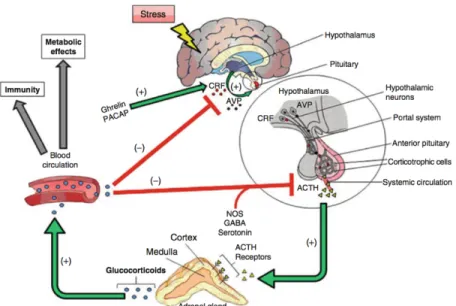
(Ulrich-Lai & Herman, 2009). Stressors serve as stimuli that have a host of physiological effects including up-regulation of activity in the paraventricular nucleus (PVN) of the hypothalamus. This activation then stimulates secretion of corticotropin releasing hormone (CRH), which acts on the pituitary gland by promoting the release of
adrenocorticotropic hormone (ACTH). ACTH then signals the adrenal gland to stimulate the synthesis and release of cortisol (McEwen, 2004). A proposed inverted-u relationship exists between cortisol and cognition, with peak benefits seen at moderate concentrations of cortisol. Conversely, higher and lower levels of cortisol release can signify a state of hyper-arousal or hypo-arousal, which can be detrimental to cognition (Lupien et al., 2005). It is possible that modulation of this neuroendocrine pathway following exercise can mediate the relationship between exercise and aspects of cognitive function, however these relationships are understudied in preadolescent populations (Shields, Bonner, & Moons, 2015).
Working memory and attention/inhibition are two aspects of cognitive
functioning, an important measure of cognitive ability among all ages (Shields, Sazma, & Yonelinas, 2016). Working memory is defined by the ability to temporarily store
information in mind and update or integrate current contents with new information (Shields, Sazma, & Yonelinas, 2016). Inhibition refers to the ability to inhibit thoughts or responses allowing one to selectively attend to task-relevant information and engage in goal-directed rather than recurrent actions (Shields, Sazma, & Yonelinas, 2016).
resources appropriately (Eysnck & Keane, 2005). Several studies have investigated the aspects of acute exercise on working memory and attention/inhibition, with many showing positive results among preadolescents (Alves et al., 2012; Budde et al., 2008; Pontifex et al., 2009; Tsukamoto et al., 2016). However, none of these studies have examined the role of HPA-axis modulation on working memory and attention/inhibition in preadolescent children. Therefore, it is important to gain a better understanding of the possible effects of exercise-induced cortisol release on working memory and attention in preadolescents, as it has not been documented among this population.
Exercise intensity may also play a crucial role in the relationship between acute exercise and executive functioning, as different intensities produce different results in terms of cognition (Wang et al., 2013) and cortisol levels (Hill et al., 2008). Previous studies have indicated that as exercise intensity increases, circulating levels of cortisol within the body increase linearly, indicating heightened HPA-axis activity (Hill et al., 2008). As previously mentioned, an inverted-u shape relationship exists among cortisol and working memory in preadolescent children, with higher and lower levels of cortisol being linked to smaller improvements in working memory compared to moderate levels of cortisol release (Lupien et al., 2005). However, the potential mediating role of changes in HPA-axis activity following exercise in improving cognition in preadolescent children remains unknown.
The underlying physiological mechanisms driving the acute benefits of moderate intensity aerobic exercise on executive functioning may be related to the rise in
incrementally as intensity increases (Hill et al., 2008). As previously mentioned, stress induces a state of allostasis which causes a cascade of events, eventually leading to the release of cortisol from the ACTH. It has been proposed that an inverted-u shape relationship exists among cortisol and cognition, specifically pertaining to working memory in preadolescent children (Tsukamoto et al., 2016). This inverted-u may directly correlate with exercise at more vigorous intensities (80%), which show very large and immediate increases in cortisol levels, while lighter intensities (40%) show a very low rise in cortisol levels (Hill et al., 2008). The higher and lower intensities may promote too much or too little a cortisol spike to yield significant increases in cognitive performances following acute exercise. Yet moderate intensities (60-70%) appear to correlate with the peak of the inverted-u, and may be the ideal intensity for best increasing cognitive performance. Studies have shown that moderate intensity exercise can increase cortisol levels immediately after exercise among preadolescent children (Engel et al., 2014; Del Corral et al., 1994), yet the literature is lacking regarding the mediating role of cortisol on executive functioning after acute bouts of exercise. Only two studies have examined the role of cortisol on working memory after an acute bout of exercise (Budde, Pietrassyk-Kendziorra, Bohm, & Voelcker-Rehage, 2010; Hotting et al., 2016. Yet these studies examined young adults and adolescents respectively, and were unable to find a
subjects between the age of 20 and 29. Still, the effect of cortisol on attention and working memory after acute aerobic exercise is unknown among preadolescents.
One potential theory for improvements in cognition due to exercise-induced cortisol could be due to the increases in cerebral blood flow (CBF) to the brain, creating a cascade of events that may improve cognition. Therefore, it is vital to understand the mediating role of the HPA-axis on working memory and attention after an acute bout of moderate intensity aerobic exercise given that stress-induced neuroendocrine responses cannot be generalized across varying age groups. The developmental stages of the human lifespan alter neuroendocrine activity, therefore, findings from post-pubertal populations cannot be generalized to preadolescents (Constantini & Hackney, 2013). In fact, pre-pubertal and post-pre-pubertal populations of the same sex will not typically display the same neuroendocrine responses to exercise (Hackney, McMurray, Judelson, & Harrell, 2003; Horswill, Zipf, Kien, & Kahle, 1997). For this reason, it is important to differentiate between hormonal findings among adult populations and preadolescent populations. Cortisol levels typically increase with age (Isurugi et al., 1974; Orentreich, Brind, Rizer, & Vogelman, 1984; Purifoy, Koopmans, & Tatum, 1980). These differences between ages can exist at rest, in response to exercise, or after completing an exercise training program (Constantini & Hackney, 2013). As humans age, they are subjected to progressively higher cortisol levels, which eventually compromises hippocampal integrity and cognitive-dependent hippocampal tasks (Lupien et al., 1998).
in preadolescents relate to cognitive performance after moderate intensity acute aerobic exercise.
In summary, acute aerobic exercise at moderate intensity has been shown to improve executive functioning in domains such as working memory and attention in preadolescents. It is currently undocumented how changes in cortisol following exercise influence cognition in preadolescents. To our knowledge this is the first study to examine the mediating effects of the HPA-axis on executive functioning after a bout of acute moderate-intensity aerobic exercise among preadolescents.
Statement of Purpose and Research Hypotheses
The primary purpose of this study is to examine the effects of exercise-induced cortisol release following an acute bout of moderate intensity aerobic exercise on
inhibition/attention and working memory in preadolescent children. We hypothesized the following:
When compared to 30 minutes of seated rest, exercising for 30 minutes at 70% maximum heart rate will exhibit:
1. Increases in response accuracy and reaction time on the Eriksen Flanker Test of attention compared to rest.
2. Increased scores on the List Sorting Working Memory Test. 3. Increased salivary cortisol levels.
Assumptions
This study was based in the following assumptions:
1. It was assumed that the parent(s) of the child participating honestly answered relevant health information pertaining to their child.
2. It was assumed all research assistants followed the protocol outlined in this study.
Limitations
The study was limited by the following factors:
1. Several other physiological mechanisms may play a role in enhanced cognition after exercise. This study only examines one of those potential physiological mechanisms.
2. We did not include a gold-standard method of measuring aerobic fitness or body composition, but we did attempt to address these by measuring moderate-vigorous physical activity and calculating body mass index (BMI).
3. The small sample size is not generalizable to a preadolescent population. 4. Predicted heart rate maximum is not the gold standard method for measuring
maximum heart rate.
5. We did not counterbalance the cognitive tests.
Definition of Terms
Acute exercise: Exercise that is brief in duration.
Aerobic: Exercise that is intended to require oxygen.
Adrenal Cortex: Outer part of the adrenal gland that produces hormones such as cortisol.
Adrenal Gland: Endocrine glands that produce a variety of hormones including cortisol.
Adrenocorticotrophic hormone (ACTH): A hormone that regulates the levels of cortisol. Cerebral blood flow (CBF): Blood supply to the brain in a given period of time.
Cognition: The mental process of acquiring knowledge and understanding thought.
Congruent: Facing the same direction.
Corticotropin-releasing hormone (CRH): A peptide hormone involved in the stress response
Cortisol: Hormone released by the neuroendocrine system in response to stress.
Eriksen Flanker Inhibitory Control and Attention Test: Cognitive test that modulates inhibitory control by having participants attend and respond to a focal stimulus amid an array of other distracting stimuli.
Event Related Potential (ERP): Reflect covert aspects of information processing.
Executive Function: General cognitive ability comprised of inhibition, working memory, and shifting.
Hypothalamic Pituitary Adrenal Axis: Major neuroendocrine system component that controls reaction to stress.
Hypothalamus: Region of the forebrain that controls the autonomic nervous system and the pituitary
Incongruent: Facing opposite directions.
Inhibition: The ability to attend to task-relevant information while gating out distractors at the same time.
List Sorting Working Memory Test: This test assesses working memory by recalling visual stimuli.
Maximum Heart Rate: The upper limit of what your cardiovascular system can handle during physical activity.
Moderate intensity exercise: Physical activity where individual’s heart rate is 50-70% of their maximum
Neuroendocrine system: Maintenance of physiological mechanisms through the hypothalamus
P300 Wave: Positive going component observed in the stimulus-locked ERP waveform and is believed to represent the updating of cognitive processes.
Pituitary: Endocrine gland located below the hypothalamus
Physical Stress: Any metabolic, neurological, or endocrinogical changes to the body brought on by physical exertion.
Preadolescents: Stage of human development following early childhood and preceding adolescence
Prefrontal Cortex: The cerebral cortex which covers the front part of the frontal lobe.
Saliva Oral BioSwab: Salivary cortisol collection method via swab held under the tongue for 1-2 minutes.
Chapter 2
LITERATURE REVIEW
Objectives
The objectives of this chapter are to provide an overview of: 1) The effects of acute bouts of aerobic exercise in relation to executive functioning, 2) Neural
mechanisms affecting executive functioning 3) neuroendocrine responses in relation to executive functioning in children, specifically in regards to levels of the hormone cortisol, 4) the relationship between exercise and cortisol levels among preadolescent children and 5) the potential mediating effect of increases in cortisol levels following acute exercise improvements in executive functioning.
The Effects of Acute Aerobic Exercise in Relation to Executive Functioning
It has been well documented that physical activity results in improvements in cognitive performance (Sibley & Etnier, 2003; Tomporowski, 2003b). Sibley & Etnier (2003), state in their meta-analysis that effect sizes for improvements in executive functioning are larger in children than in adults, suggesting that children may stand to benefit more cognitively from exercise (Sibley & Etnier, 2003). Moderate intensity aerobic exercise improves executive functioning among all age groups (Audriffen, Tomporowski, & Zagrodnik, 2008; Lambourne & Tomporowski, 2010, Pesce &
Audriffen, 2011; Pesce et al, 2011). Exercise intensity is thought to influence executive functioning in an inverted-u effect, with moderate-intensity eliciting greater
2002; McMorris & Hale, 2012). Tests of executive functioning including inhibition, working memory, and task shifting have all shown improvements after a bout of acute physical exercise among preadolescents (Chen et al., 2014; Ellemberg & St-Louis Deschenes, 2010; Hillman et al., 2009; Lambrick et al., 2016). Still, the underlying physiological mechanisms behind these improvements remain unclear.
Inhibition or attention, refers to the ability to inhibit thoughts or proponent responses in order to selectively attend to task-relevant information and engage in goal directed behavior rather than habitual action (Shields, Sazma, & Yonelinas, 2016). Several studies have examined the effects of an acute bout of physical activity on inhibition, with most the data indicating short bouts of exercise improve this area of cognition. Hillman et al. (2009), reported increases in response accuracy after a 20-minute bout of moderate-intensity treadmill exercise among preadolescent children (Hillman et al., 2009). Ellemberg & St-Louis Deschenes (2010), demonstrated similar results among 36 7-year olds and 36 10-year olds, reporting improvements in tasks of inhibition after 30-minutes of ergometer cycling at 63% of maximum heart rate as compared to a resting control group (Ellemberg & St-Louis Deschenes, 2010). These results are consistent with research findings in older populations. For example, Kamijo et al. (2009), found improvements in inhibition among 12 older (60-74) and 12 younger (19-25) males after 20 minutes of moderate intensity exercise at 50% VO2max (Kamijo et al., 2009). The existing literature indicates that acute bouts of moderate intensity exercise can increase performance regarding inhibition among preadolescent children.
information and update or integrate current contents with new information (Shields, Sazma, & Yonelinas, 2016). However, the effects of exercise on this aspect of cognition in preadolescents has received little attention. Chen et al. (2014), reported that moderate intensity jogging at 60-70% of max heart rate for 30-minutes improved three primary aspects of cognitive function, including working memory, among 34 3rd grade and 34 5th grade students (Chen et al., 2014). A much larger body of research has focused on understanding acute exercise and working memory among adolescents and adults.
Pontifex et al. (2009), found that 30 minutes of aerobic exercise on a treadmill at 60-70% of VO2max resulted in shorter response times on a working memory test compared to pre-exercise baseline among 21 young adult participants (Pontifex et al., 2009). In a similar fashion, Soga et al. (2015), also reported improvements in working memory among 55 15-16-year-olds after exercising on a treadmill at 60% and 70% maximum heart rate compared to a seated control group (Soga et al., 2015). While the existing literature indicates that working memory can potentially be improved following an acute bout of exercise in adults, these results are less established in preadolescent children. The physiological mechanisms underlying improvements in cognition after exercise also remain unclear among the preadolescent population.
Neural Mechanisms Effecting Executive Functioning
(1991) found that arterial pressures of the cerebral artery increased 103%-108% during light physical exercise among 29 children aged 6-17 years of age (Bode, 1991). This increase in blood flow may positively affect specific brain regions such as the prefrontal cortex, a neocortical brain region known for its diverse and flexible behavioral repertoire (Miller & Cohen, 2001). Exercise-induced increases in CBF in the prefrontal cortex is commonly associated with tasks of executive functions (Roberts, Robbins &Weiskrantz, 1998). It has been suggested that the activation of the prefrontal cortex due to increases in CBF may play an important role in executive functioning among humans. Diamond (2000), concluded that the prefrontal cortex seems to be an important component of complex cognitive functions (Diamond, 2000). Research has shown that children and adults display significant activation of the prefrontal cortex when performing cognitive tasks such as inhibitory control and working memory (Moriguchi & Hiraki, 2013). It is possible that heightened activation of the prefrontal cortex following exercise
corresponds to improvements in cognitive performance (Byun et al., 2014). A potential mechanism underlying heightened activation of the prefrontal cortex and subsequent improvements in cognition may be due to communication between the prefrontal cortex and the neuroendocrine system. The prefrontal cortex is rich in cortisol receptors
(Bennion et al., 2013b). The increase in CBF following exercise may cause a
between acute exercise and executive functioning due to increased activation of the prefrontal cortex remains relatively unknown among preadolescents.
Neuroendocrine Responses and Executive Functioning
At the onset of stress, the neuroendocrine pathways begin to set forth
physiological responses that trigger the release of certain hormones into circulation. One particularly important stress response pathway is the HPA-axis. After the detection of a perceived threat, the brain enters a state of allostasis, which in turn activates the
Fig. 2.1. Effect of stress on the HPA-axis and subsequent glucocorticoid release (Constantini & Hackney, 2013)
Cortisol, released from activation of the HPA-axis, may play an important role in executive functioning. Lupien et al. (2005), demonstrated significant changes in
executive functioning in relation to cortisol levels in preadolescent children noting that when cortisol levels were too low or too high, cognition was lower, while moderate amounts of cortisol seemed to elicit the largest improvements in cognition (Lupien et al., 2005). This inverted-u relationship may be essential to understanding how moderate physical stress induces changes in circulating cortisol levels and improves cognition in preadolescent children.
and Hackney (2013), state that different developmental stages in the human life promote different ranges and amounts of hormones, therefore findings cannot be generalized to preadolescents (Constanini & Hackney, 2013). For instance, pre-pubertal and post-pubertal children of the same sex will not display the same hormonal exercise responses or relationships (Hackney, McMurray, Judelson, & Harrell, 2003; Horswill, Zipf, Kien, & Kahle, 1997). It is also well known that as humans age, cortisol levels will increase (Isurugi et al., 1974; Orentreich, Brind, Rizer, & Vogelman,1984; Purifoy, Koopmans, & Tatum, 1980). As humans age, they are subjected to higher glucocorticoid levels which may slowly compromise hippocampal integrity and cognitive-dependent hippocampal tasks (Lupien et al., 1998). Preadolescents, less subjected to the long-term effect of cortisol, may not display the same impairments when performing cognitive tasks as older populations. Given this information, it is imperative to not generalize how cortisol effects aspects of executive functioning across the lifespan.
et al., 2007; Plessow et al., 2011) but enhances inhibition (Schwabe, 2013). Contrary to this evidence, there are studies that demonstrate stress does not impair or even slightly improves working memory (Duncko et al., 2009; Giles et al., 2014; Luethi et al., 2009; Pesce et al., 2009; Schoofs et al., 2013; Yuen et al., 2009). A potentially important variable that may explain the discrepancy in these studies is the delay between the onset of stress and working memory assessment. Shields et al. (2015), found that exogenous cortisol administration impaired working memory with a short delay between
administration and testing, but enhanced working memory with a longer delay (over 1-hour post-cortisol administration) among adults (Shields et al., 2015). However, these findings cannot be generalized to preadolescents, and may have yielded different results due to a cortisol being administered exogenously rather than inducing cortisol release endogenously through psychosocial or physical stress stimuli.
al., 2016). Acute physical stress at moderate intensities may be ideal for provoking improvements in inhibitory control. Studies using acute bouts of moderate intensity acute aerobic exercise have shown post-exercise improvements in inhibition (Chang et al., 2013; Chen et al., 2014; Ellemberg & St-Louis-Deschenes, 2010; Hillman et al., 2009). However, none of these studies examined cortisol release following exercise and its mediating role in improving inhibition. Currently, there is not sufficient evidence to understand if increases in cortisol release enhances aspects of executive functioning after acute bouts of moderate intensity aerobic exercise.
Exercise and Cortisol Levels
Exercise can be a potent stimulator of circulating cortisol levels among
preadolescents (Budde et al., 2010; Del Corral et al., 1994) and adults (Engel et al., 2014; Harris et al., 2016; Hill et al., 2008; Killian et al., 2016). Hill et al. (2008), demonstrated that blood cortisol levels increased among 12 moderately trained men after 30-minutes of aerobic exercise on a cycle ergometer. While circulating cortisol levels increased from rest (-6.6%) to 40% of maximal aerobic capacity (+5.7%), the most significant increases occurred between 60% (+39.9%) and 80% (+83.1%) of maximal aerobic capacity (Hill et al., 2008). Interpreting these findings in the context of the proposed inverted-u
as intensity increases, cortisol is unable to inhibit these hormones, thereby compromising cognitive performance (McMorris, 2009). Del Corral et al., (1994), found that serum cortisol concentrations increased 43% and 57% above resting levels at 15 and 30 minutes of exercise at 70% of maximal capacity in ten healthy preadolescents, which is similar to the 39.9% increase in cortisol observed at 60% of maximal capacity in the Hill et al., (2008) study (Del Corral et al., 1994). Therefore, it is possible that moderate intensity exercise triggers an optimal release of cortisol that partially mediates acute improvements in cognition among preadolescents.
Fig 2.2. Salivary cortisol levels before, during, and after exercise among male children (Del Corral et al., 1994)
The Relationship Between Acute Exercise and Executive Functioning in Relation to Cortisol
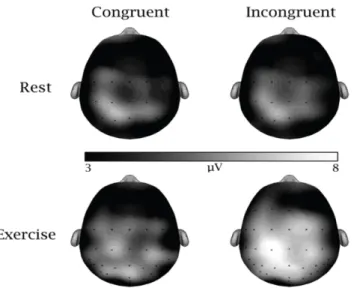
endogenous component of the event-related potentials (ERP) that occurs approximately 300-800 milliseconds after the onset of a stimulus (Polich et al., 1990). ERP’s reflect covert aspects of information processing that provide insight into mechanisms underlying executive functioning (Hillman, Kamijo, & Scudder, 2011). It is theorized that the P3 wave can index processes involved in the allocation of attention and working memory (Donchin, 1981). The P3 wavelength originates in the central, parietal, and fronto-central regions of the brain, the latter of which includes the prefrontal cortex (Best, 2010). As previously mentioned, activation of the prefrontal cortex plays an important role in executive functioning among children and adults potentially due to an increase in uptake of oxygen supply from a rise in cerebral blood flow after exercise (Budde et al., 2008; Diedrichsen et al., 2007; Ellemberg & St. Louis-Deschenes, 2010; Serrien et al., 2006, 2007; Tomporowski, 2003a). It is possible that activation of the prefrontal cortex after an acute bout of exercise can trigger increase in P3 wave amplitude, increasing attentional focus and memory. Furthermore, it is possible that increased cortisol release after
exercise can activate the cortisol receptor-rich prefrontal cortex, stimulating activation of the P3 wave amplitude, thereby improving cognition. Research has shown that adults who engage in regular aerobic exercise exhibit greater P3 amplitude (Polich & Lardon, 1997) and P3 latency (Dustman et al., 1990; Hillman et al., 2004). Shorter latency
and decreases in P3 amplitude were detected flowing cycling until exhaustion (Kamijo et al., 2004) among older populations. However, the underlying neuroendocrine
mechanisms that may link acute exercise and neuroelectrical activity remains unknown. One unifying theory suggests that responses in P3 activity following acute aerobic
exercise and subsequent improvements in cognition may be dependent on neuroendocrine regulation, however this theory is untested.
Fig 2.3. Topographic representation of the P3 component as a function of session and task (Hillman et al., 2009)
While the little research exists regarding the relationship between P3 activity and cortisol, there is some evidence suggesting that cortisol might in fact increase the
response of the P3 wavelength. Van Peer, Roelofs, & Spinhoven (2008), discovered that exogenous cortisol administration resulted in increased response of slow and fast
increased activation of the prefrontal cortex, a brain region rich in cortisol receptors. Given this information, cortisol may be an important stimulator of P3 activation which, as Hillman et al. (2009) demonstrated, is activated after acute aerobic exercise among adults and preadolescents, and could be pivotal to the improvements seen in cognition after exercise. However, there are timing differences between these two physiological processes, as increases in cortisol after exercise are seen up to 30 minutes after an acute bout of exercise and P3 responses occur 300 milliseconds after stimulus. These timing differences reflect a general lack of understanding between how these two responses interact after the onset of physical stress. To better understand this connection, studies concurrently examining the effects of acute exercise on cortisol and cognition all together must be conducted.
Very few studies have concurrently examined the impact of acute exercise on cognition and cortisol levels. Tsai et al. (2014), studied the effects of 40 minutes of moderate and high-intensity resistance exercise on inhibitory control and attention and the mediating effects of cortisol (Tsai et al., 2014). The results indicated that inhibitory control and attention improved for both moderate and high intensity resistance exercise conditions, but there were not significant changes in cortisol levels (Tsai, 2014). The two remaining studies examined acute exercise in relation to working memory and the
group (Budde et al., 2010). Finally, Hotting et al. (2016), exposed 81 healthy college-aged university students to either 30-minutes of high intensity exercise (80% heart rate max), low intensity exercise (<57% heart rate max), followed by a task involving encoding a list of words. The high- intensity exercise group displayed increased cortisol levels after exercise compared to baseline, and recalled a greater number of words 24 hours post-exercise compared to the resting group. However, there was not a significant relationship between cortisol and memory scores (Hotting et al., 2016). There were limitations to these studies that may impact interpretation of the results. First, Tsai et al., (2014) used resistance exercise instead of aerobic, which induces a completely different set physiological responses. Additionally, none of the studies investigated a preadolescent population, meaning it is still unclear as to whether activation of the HPA-axis and the release of cortisol through physical stress can improve cognition among children.
Summary
Improvements in executive functioning following bouts of acute aerobic exercise have been demonstrated in children (Chen et al., 2014; Hillman et al., 2009; Sibley & Etnier, 2003; Verburgh et al., 2013). Moderate intensity exercise seems to elicit the greatest improvements in cognition, with lower and high intensities being seeming less effective (Chang, Chen, & Wang, 2011; Chang & Etnier, 2009). One potential
Chapter 3 METHODS
Overview and Design
The purpose of this study was to examine the effects of 30-minutes of moderate-intensity aerobic exercise on aspects of executive functioning, specifically
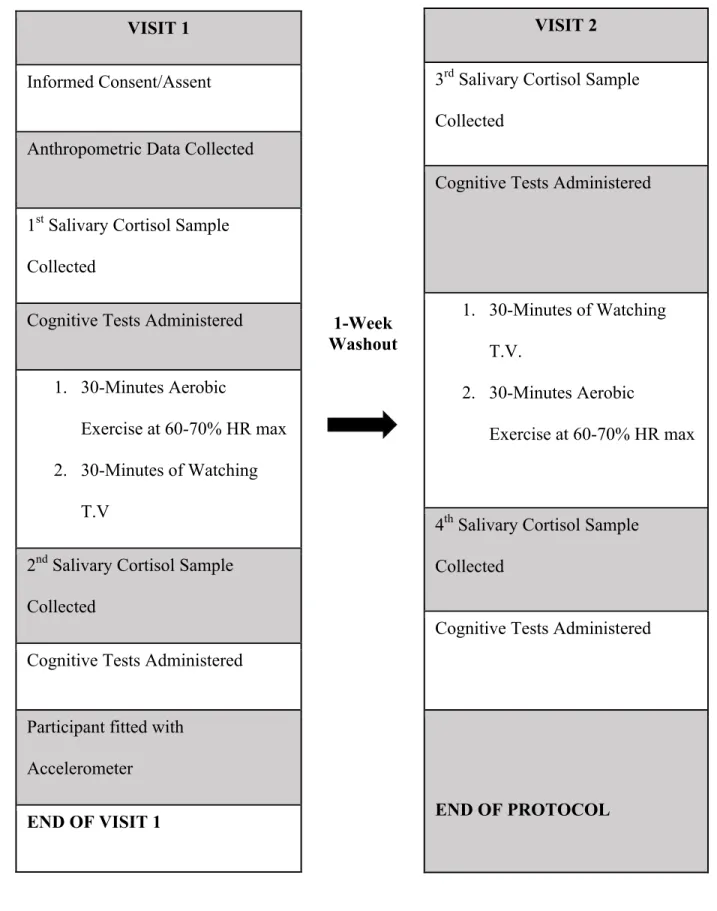
attention/inhibition and working memory, and the potential mediating role of cortisol release among preadolescent children compared to a resting condition. An experimental, randomized and counterbalanced, within-subject design was used, where participants served as their own control. The conditions were divided into two visits to the Cal Poly Human Performance Laboratory on two separate days, with a one-week washout period separating the two visits. The visits were conducted as follows: Visit 1) Participants were randomized to either an exercise condition or a control condition. Each participant completed the assigned condition (rest or exercise). Visit 2) Participants then switched conditions (rest to exercise, exercise to rest). Hormonal measurements were taken immediately before and immediately after both the resting or exercise condition.
Immediately before and after the resting and exercise condition the Eriksen Flanker Test of Attention and the List Sorting Working Memory Test (LSWMT) were administered.
Participants
Eleven preadolescents [6 males, 5 females] enrolled in 3rd to 5th grade were
Inclusion criteria included: 1) Children currently enrolled within grades 3rd-5th, 2) Participants attend school within San Luis Obispo County, 3) Children can participate in 30 minutes of moderate aerobic exercise. Exclusion criteria included: 1) Any pre-existing heart conditions, 2) any pre-pre-existing lung conditions, 3) any metabolic
conditions, 4) emotional or mental disorders, 5) major medical condition that prohibits physical activity, 6) Being left-handed, 7) Spanish speakers, 8) participating in other studies utilizing the same stimuli.
All inclusion and exclusion criteria were reported by a parent of the subject being tested. Informed Consent was obtained from a parent during the 1st visit to the
laboratory. The parent(s) were also asked to fill out additional screening forms including a questionnaire regarding socioeconomic status, and a life stress questionnaire.
Participants being tested were informed of the risks, benefits, and requirements of the study through an informed assent form that was signed by every child. IRB approval for all protocols and documents was granted by the Human Subjects Committee at Cal Poly.
Screening and Informed Consent/Assent
Two separate documents were handed out to both the parent(s) and the
the procedures regarding the research protocol, they were given the right to not sign the consent form without loss of benefits.
An informed assent form was given and read to each child participating in the study. The assent form is written in a language that was understandable to elementary school-aged children. The form provided information to the child about the testing procedures, the risks associated with the test, discomforts they may feel, and individuals they can talk to if they have questions about the research process. If the child felt
uncomfortable about any of these procedures, they had the right to forego signing the form and allowed to discontinue their participation in the study without loss of benefits. If the child felt comfortable about all the procedures and signed the form, they became an eligible participant in the study.
Legal guardians were also asked to complete the Child’s Stress Disorder
Checklist (CSDC). The CSDC questionnaire determines stress over a 2-year period using a points system, with higher scores indicating a higher level of stress. Finally,
socioeconomic status (SES) was determined using a trichotomous index based on (a) participation in free and reduced lunch, (b) highest level of education obtained by the mother and father, and (c) number of parents who work full time (Birnbaum et al., 2002). These questions were included in the screening process.
Experimental Conditions
The experimental conditions consist of: 1) A resting condition, where subjects sit quietly for 30 minutes while watching an age appropriate television show, and 2) An exercise condition where subjects exercised at a corresponding moderate intensity (70% HR max) for 30 minutes on a treadmill. During both conditions, salivary cortisol samples were collected immediately before and immediately after the 30 minutes of rest/exercise. Also, immediately after both conditions, subjects completed two separate cognitive tests. Subjects were told to wear comfortable clothes and were constantly monitored, especially during the exercise session. Each participant was told they could stop at any point during any of the procedures if they did not feel comfortable.
Experimental Protocol
Upon arrival to the Human Performance Lab, after appropriate forms were obtained, parent(s) and participants were asked if they had engaged in any physical activity prior to arrival. If they indicated they had, participants were instructed to sit quietly for 30 minutes to allow circulating cortisol levels to return to resting levels. This protocol was also followed upon arrival to the laboratory for the second visit.
Visit 1
The participants assigned to the exercise condition were informed of the protocol and provided detailed instructions of how the exercise condition would be conducted. A heart rate max equation was used to estimate each participant’s maximum heart rate. We used this estimation to calculate 70% maximum heart rate corresponding to moderate intensity. A Polar heart rate monitor was attached to each participant to ensure heart rate stayed within +/- 5% of 70% of their max heart rate during the exercise. Participants completed a 3-minute warmup consisting of walking on the treadmill at 1.5 miles per hour. After the warm-up, the participant began their 30 minutes of exercise. Trained research assistants constantly monitored and collected measurements of heart rate after every minute and ratings of perceived exertion (RPE) at 3, 6, 9, 12, 15, 18, 21, 24, and 27 minutes. The Children’s RPE Scale was used as it is specifically designed to assess RPE among children using a 1-10 scale which is easier to understand for children. If at any time the participant felt uncomfortable or could no longer continue the exercise due to any sort of pain they could immediately terminate the exercise protocol without loss of benefits.
Visit 2
The protocol for Visit 2 was exactly the same as Visit 1 with only a few
Table 3.1. Schematic Representation of the Study Protocol
1-Week Washout
VISIT 2
3rd Salivary Cortisol Sample Collected
Cognitive Tests Administered
1. 30-Minutes of Watching T.V.
2. 30-Minutes Aerobic
Exercise at 60-70% HR max
4th Salivary Cortisol Sample Collected
Cognitive Tests Administered
END OF PROTOCOL VISIT 1
Informed Consent/Assent
Anthropometric Data Collected
1st Salivary Cortisol Sample Collected
Cognitive Tests Administered
1. 30-Minutes Aerobic
Exercise at 60-70% HR max 2. 30-Minutes of Watching
T.V
2nd Salivary Cortisol Sample Collected
Cognitive Tests Administered
Participant fitted with Accelerometer
Measures
Cognitive Tests
Two cognitive tests were administered to every subject immediately before and after each condition. The tests were administered and completed on an iPad in a quiet room while comfortably sitting. The Erikson Flanker Inhibitory Control and Attention Test measured attention and The List Sorting Working Memory Test tested working memory. Each cognitive test was chosen specifically to examine certain aspects of executive functioning that may be affected by exercise induced activation of particular areas of the brain such as the prefrontal cortex. All data were saved to secure file and treated as confidential, with access only available to the primary investigators. If the parents or participants wish to see the results, they were made available only to them.
Inhibition/Attention
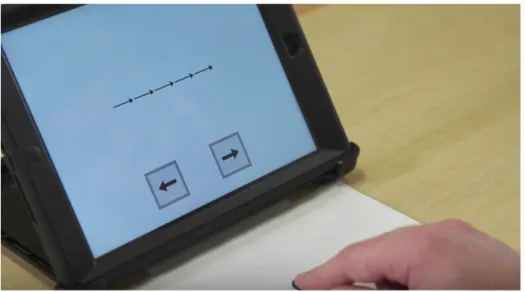
To test inhibition, or attention, The Flanker Inhibitory Control and Attention test was administered during both visits, before and after the 30-minutes of exercise and resting conditions. This test is NIH certified and measures participants’ ability to attend to a certain stimulus while inhibiting others. This test consists of a series of arrows presented on the screen, with two arrows on the bottom of the screen pointing left and right. The participant is told to focus only on the middle arrow and press the
corresponding arrow for the direction the middle arrow is pointing using the index finger. The test consists of congruent trials, in which arrows all point the same direction
become familiar with the testing protocol with a research assistant providing directions and answering any questions. After the practice was completed, the participant began the task without help from any research assistants. The participants were told to place their finger at a “home base” button which serves as a constant starting and ending place for each participants index finger. When it was time to respond, they were instructed to answer as quickly and accurately as possible, and then to return their finger back to home base. The accuracy and reaction time of each answer was measured and recorded.
Accuracy was measured as the percentage of correct responses out of 20. Reaction time was measured as an average of all 20 times in milliseconds. The test was conducted via iPad and will took between 10-15 minutes to complete.
Fig 3.1. Representation of Eriksen Flanker Test of Attention on iPad (NIH.gov)
Working Memory
Figure 3.2. Example of One-List and Two-List Sorting Task in the LSWMT (Tulsky et al., 2014)
Hormone Analysis
Salivary Cortisol
To investigate the impact of acute moderate intensity aerobic exercise on HPA-axis activation, salivary cortisol was measured to see if there were significant differences after exercise as compared to after a resting condition, and to determine if these potential differences mediated changes in executive functioning. Salivary cortisol was collected through SalivaBio Oral Swab (SOS) Saliva Collection Method. A trained research
Immediately after the collection, the samples were labeled and then frozen at or below -20 degrees Celsius in a freezer. The samples were shipped to Salimetrics for hormone analysis by trained lab technicians assuring accurate and valid inspection. The samples contained no identifying personal information, and only primary investigators had access to them. Figure 3.3 shows the tube and swab used in the collection of salivary cortisol.
Figure 3.3. SalivaBio Oral Swab (SOS) used to collect salivary cortisol (Salimetrics).
Statistical Methods
our executive function variables with relevant covariates and changes in cortisol. Final models revealed significant covariates for each dependent variable as follows: Working Memory [Cortisol change, age]; Reaction Time [Average Sleep Time,
Moderate-Vigorous Physical Activity].
Chapter 4 RESULTS
Participants
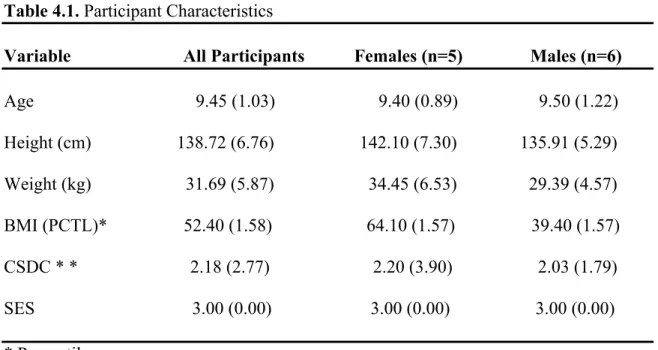
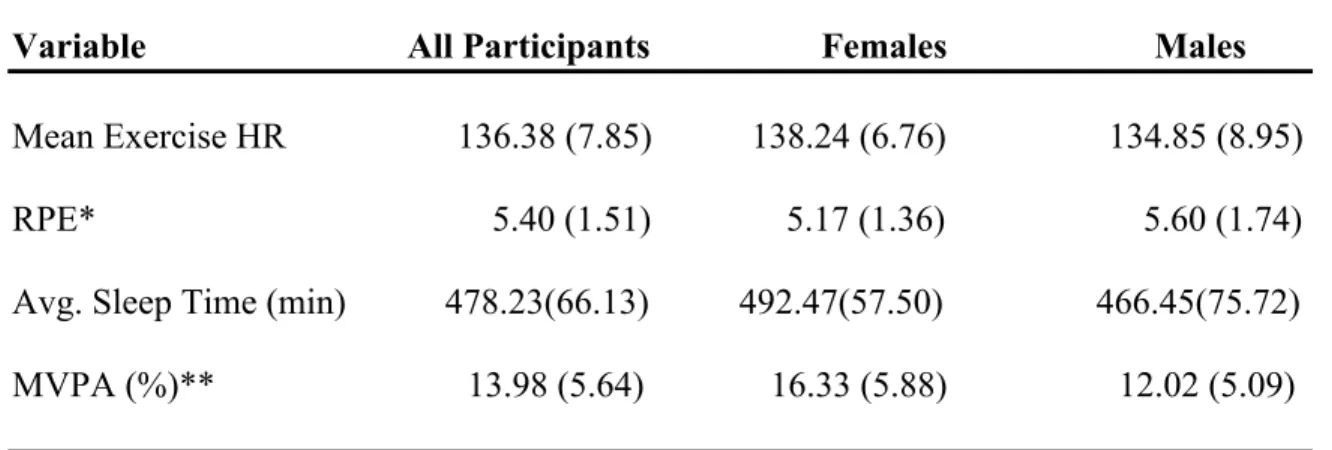
Participant characteristics for age (years), height (cm), weight (kg), body mass index (BMI), child stress disorders checklist score (CSDC), and socioeconomic status (SES) were reported in means and standard error in table 4.1. Participant exercise and sleep characteristics were reported in means and standard error in table 4.2.
Table 4.1. Participant Characteristics
Variable All Participants Females (n=5) Males (n=6)
Age 9.45 (1.03) 9.40 (0.89) 9.50 (1.22) Height (cm) 138.72 (6.76) 142.10 (7.30) 135.91 (5.29) Weight (kg) 31.69 (5.87) 34.45 (6.53) 29.39 (4.57) BMI (PCTL)* 52.40 (1.58) 64.10 (1.57) 39.40 (1.57) CSDC * * 2.18 (2.77) 2.20 (3.90) 2.03 (1.79) SES 3.00 (0.00) 3.00 (0.00) 3.00 (0.00) * Percentile
**Child Stress Disorder Checklist (CSDC)
BMI percentile was calculated using the Center for Disease Control calculator
(CDC.gov). SES was measured using a trichotomous index based on (a) participation in
free and reduced lunch, (b) highest level of education obtained by the mother and father,
and (c) number of parents that work fulltime (Birnbaum et al., 2002). Score ranges were
Table 4.2. Participant Exercise and Sleep Characteristics
Variable All Participants Females Males
Mean Exercise HR 136.38 (7.85) 138.24 (6.76) 134.85 (8.95) RPE* 5.40 (1.51) 5.17 (1.36) 5.60 (1.74) Avg. Sleep Time (min) 478.23(66.13) 492.47(57.50) 466.45(75.72) MVPA (%)** 13.98 (5.64) 16.33 (5.88) 12.02 (5.09) *Rating of Perceived Exertion
**Moderate to Vigorous Physical Activity Percentage [time spent in percentage per day during one-week washout period]
Covariates (age, BMI, SES, CSDC score, MVPA%, and average sleep time) were
tested for significance by using a backward selection regression analysis. A complete
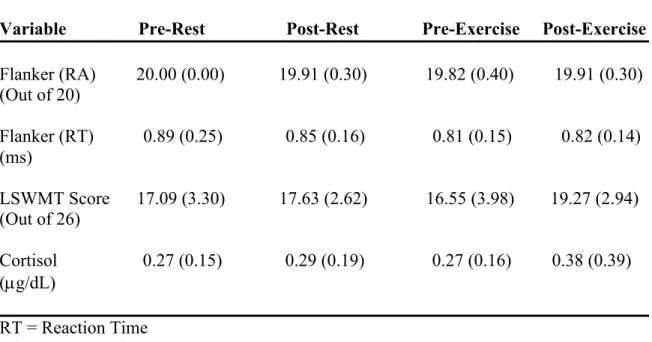
overview of the mean values for each dependent variable by condition from this study
can be seen in Table 4.3.
Generalized Linear Models
Generalized Linear Models were used to determine the effect of time, condition,
and time*condition on our executive function variables. The Generalized Linear Model
was utilized to determine potential differences before and after exercise among our
dependent variables.
Eriksen Flanker Test of Inhibitory Control and Attention
It was hypothesized that, when compared to the resting condition, the exercise
condition would decrease participants’ average reaction time and increase the number of
would correspond to these potential decreases in reaction time and increases in correct
responses.
There was no effect of time [pre, post] (p=0.8), condition [rest, exercise] (p=0.3),
or cortisol (p=0.9) on reaction time. There was also no effect of an interaction between
time and condition (p=0.6). Similarly, there was no effect of time (p=0.4), condition
(p=0.9), cortisol (p=0.8), or the interaction of time and condition (p=0.2) on reaction
accuracy. These findings suggest that neither exercise or cortisol significantly affected
these two aspects of the Eriksen Flanker Task of attention.
List Sorting Working Memory Test
It was hypothesized that, when compared to the resting condition, the exercise
condition would increase participants’ scores on the LSWMT. It was also hypothesized
that increases in salivary cortisol would correspond to these potential increases in test
scores.
A significant effect of time [pre, post] (p=0.04) on change in LSWMT scores was
observed after 30 minutes of moderate intensity aerobic exercise. However, similar to the
Eriksen Flanker Task, there was no significant effect of cortisol change on LSWMT score
(p=0.9); and no significant effect of condition [rest, exercise] (p=0.09), or the interaction
of time*condition (p=0.1). This finding indicates that moderate intensity aerobic exercise
for 30 minutes improved working memory and retention among preadolescents, which is
congruent with previous findings. Yet these improvements in test scores cannot be
correlated to increases in salivary cortisol levels. The results from the LSWMT can be
Salivary Cortisol
It was hypothesized that, when compared to the resting condition, the exercise
condition would increase participants’ salivary cortisol levels.
There was no significant effect of time [pre, post] (p=0.3), condition [rest,
exercise] (p=0.4), or time*condition interaction (p=0.6) on change in salivary cortisol
levels, suggesting exercise did not significantly increase cortisol levels enough to
correlate with changes in Eriksen Flanker Task scores or LSWMT scores. Although
exercise did significantly increase the change in LSWMT scores, we were unable to say
that is was due to increases in salivary cortisol, suggesting cortisol had no significant
effect as a mediating variable on both the Eriksen Flanker Task and the LSWMT. The
relationship between condition and cortisol level can be seen in figure 4.2.
Table 4.3. Mean Dependent Variable Values by Condition
Variable Pre-Rest Post-Rest Pre-Exercise Post-Exercise
Flanker (RA) 20.00 (0.00) 19.91 (0.30) 19.82 (0.40) 19.91 (0.30) (Out of 20)
Flanker (RT) 0.89 (0.25) 0.85 (0.16) 0.81 (0.15) 0.82 (0.14) (ms)
LSWMT Score 17.09 (3.30) 17.63 (2.62) 16.55 (3.98) 19.27 (2.94) (Out of 26)
Cortisol 0.27 (0.15) 0.29 (0.19) 0.27 (0.16) 0.38 (0.39) (µg/dL)
Figure 4.1. Mean List Sorting Working Memory Test Scores by Condition
*p < 0.04
15 16 17 18 19 20 21
1
LS
W
M
T
S
C
O
R
E
CONDITION
*
Figure 4.2. Mean Salivary Cortisol Levels by Condition
0 0.1 0.2 0.3 0.4 0.5 0.6
1
S
A
L
IV
A
R
Y
C
O
R
T
S
IO
L
(
ug/
dL
)
CONDITION
Multiple Linear Regression
To understand which covariates had an effect on the change in our dependent
variable scores, Multiple Linear Regression models were run with a backward selection
technique to identify significant covariates. Backward selection technique was performed
by deleting the least significant variable until only significant covariates are left. It was
hypothesized that changes in executive function scores would correlate to changes in
salivary cortisol, lending to the idea that cortisol mediates potential improvements in
executive function after an acute bout of exercise.
Changes in List Sorting Working Memory Test Score
After backward selection technique was applied to the change in LSWMT, there
was a significant correlation between two covariates; change in salivary cortisol
(p=0.007) and age (p=0.03). Figure 4.3 shows the relationship between change scores on
the LSWMT and change in salivary cortisol levels separated by age.
Changes in Reaction Time and Response Accuracy
There were no significant correlations between changes in reaction time and
changes in cortisol. However, there was a significant correlation between changes in
reaction time and two covariates; time spent in moderate to vigorous physical activity
(p=0.02) and average sleep time (p=0.0001). No covariates showed significant
Figure 4.3. Relationship Between Change in LSWMT Score and Change in Salivary Cortisol by Age
-4 -1 2 5 8 -4 -1 2 5 8 -4 -1 2 5 8 -4 -1 2 5 8
R²: 0.363
R²: 0.354
R²: 0.110
R²: 0.002
8
9
10
11
Age
-0.4 -0.2 0.0 0.2 0.4 0.6 0.8 1.0
CH A N G E I N L S W M T S CO RE
Chapter 5
DISCUSSION AND CONCLUSION
Discussion
The purpose of the present study was to examine to potential effects of
exercise-induced cortisol release on two aspects of executive functioning - attention and working
memory – among preadolescents. It was hypothesized that, when compared to the resting
condition, 30 minutes of moderate intensity aerobic exercise would elicit greater:
increases in salivary cortisol immediately after the exercise; improvements in reaction
time (RT) and reaction accuracy (RA) scores on the Eriksen Flanker Task; and increases
in List Sorting Working Memory Test scores. We also hypothesized that there would be a
positive relationship between increases in cortisol and increases in executive function
scores, indicating a potential mediating relationship of cortisol between acute aerobic
exercise and executive functioning. Results suggest that 30 minutes of moderate intensity
exercise may increase working memory, as these test scores were significantly increased
following the bout of acute exercise compared to a resting condition. Yet we cannot say
that these increased test scores corresponded to an increase in salivary cortisol after an
acute bout of exercise due to lack of significance. No effect of exercise or cortisol was
seen on reaction time or response accuracy.
With the onset of stress, the neuroendocrine system activates a series of hormonal
pathways, one such being the activation of the axis. In response to stress, the
HPA-axis sets forth a cascade of physiological events that eventually lead to an increase in
exercise increases cortisol release linearly as exercise intensity increases (Hill et al.,
2008). Furthermore, exercise has shown exercise increases cortisol levels among
preadolescents (Del Corral et al., 1994; Budde et al., 2010). Our findings show that there
was no significant increase in salivary cortisol levels after an acute bout of exercise
among our preadolescents population. The discrepancy in results could be due to our
small population size, or a workload that was not intense enough to elicit such increases,
yet further research is warranted to fully understand the relationship between exercise and
cortisol levels among preadolescents.
There were no differences observed among reaction time or reaction accuracy,
two aspects of attention tested by the Eriksen Flanker Test, after the exercise condition.
This is in disagreement with previous research findings indicating moderate intensity
aerobic exercise decreases reaction time and increases reaction accuracy in tests of
attention and inhibition among preadolescents (Hillman et al., 2009; Ellemberg &
St-Louis Deschenes, 2010; Chen et al., 2014). The reasoning behind these differences in
results are unknown.
Perhaps the most significant finding from this study was the significant increase
in List Sorting Working Memory Test Scores after an acute bout of aerobic exercise
(19.28) compared to rest (16.55). Previous research has also demonstrated improvements
in working memory after an acute bout of exercise among preadolescents (Chen et al.,
2014; Pontifex et al., 2009; Soga et al., 2015). However, none of these studies used the
LSWMT as a method for their measurements of memory, meaning this study may
highlight the validity of such a measurement for future studies. Our regression analysis
salivary cortisol, and age, lending to the idea that increased cortisol after acute bouts of
aerobic exercise may enhance executive functions. One potential theory supporting this
idea could be the activation of the prefrontal cortex and subsequent activation of the P3
wavelength. With the onset of exercise, there is an increase in cerebral blood flow and
subsequent oxygen uptake by the brain (Budde et al., 2008; Diedrichsen et al., 2007;
Ellember & St. Louis-Deschenes, 2010; Serrien et al., 2006, 2007; Tomporowski, 2003a). The prefrontal cortex, an important brain component for memory consolidation, is rich in cortisol receptors (Bennion et al., 2013b), lending to the idea that an increase in cortisol may increase activation of the prefrontal cortex. Hillman et al. (2009), showed that acute exercise enhances P3 wavelength activation among preadolescents, yet it is still unclear as to how the activation of these wavelengths improve aspects of executive functioning such as attention and working memory. Age was also correlated to change in LSWMT scores and change in cortisol, with nine and ten-year old participants seeing the most linear trend among cortisol and working memory changes, likely due to the fact that this age range made up a majority of the sample size of this study.
Although this study was unable to correlate salivary cortisol levels to
Hillman et al. (2009), found that activation of the P3 wavelength, which originates in specific regions of the brain, including the prefrontal cortex, was associated with
significant improvements in tests of attention. Because the prefrontal cortex is known to be rich in cortisol receptors (Bennion et al., 2013b), it is still possible that increases in cerebral blood-flow and subsequent increases in cortisol to the prefrontal cortex may activate the P3 wavelength, thereby increasing specific components of executive functions. This study was unable to prove this theory, yet further research with larger samples sizes are needed in order to fully understand the role of the HPA-axis and subsequent cortisol release on aspects of cognition after an acute bout of exercise among preadolescents.
There were several limitations to this study. First, there are several physiological mechanisms that may play a role in enhanced cognition after exercise, this study only focused on cortisol. Second, this study had a small sample size (n=11), which may have been the reason for the discrepancy in these results compared to the existing body of literature. For this reason, this sample size is not generalizable to a preadolescent
population as a whole. Third, the parent of the participant was told of restrictions before arriving to the laboratory, yet it is unknown if these recommendations were followed strictly enough. For instance, the parent was told to have the child refrain from physical activity at least two hours prior to the laboratory visit, yet what the child did at school may have differed from our recommendations. Fourth, predicted heart rate maximum is not the gold standard for measuring maximum heart rate. While this equation is
convenient, maximal tests of oxygen uptake, VO2max would be more precise at
did not include a measure of IQ or other academic competency tests that would have allowed us insight into where these participants were academically compared to national averages. Sixth, we did not counterbalance the cognitive tests, which may have had an effect on test scores due to the timing of when these tests were taken after each condition. Counterbalancing these would have controlled for this factor. Finally, we set our exercise intensity between 60-70% of HRmax, yet this may have not been a high enough intensity to see significant increases in salivary cortisol.
Conclusion
In conclusion, an acute bout of aerobic exercise at 60-70% of heart rate max
improved scores on a test of working memory, compared to a resting condition, which
showed no such improvements. There were no significant increases in salivary cortisol
levels after the acute bout of exercise compared to the resting condition, yet this may be
due to a lack of statistical power due to a small sample size. Our regression analysis
revealed a correlation among changes in LSWMT, changes in salivary cortisol, and age.
This finding suggests that there may be a potentially strong correlation between working
memory and increases in cortisol levels, yet further research is warranted to fully
understand these relationships. Tests of attention yielded no significant results in regard
to reaction time and response accuracy. This study provides further evidence to an
existing body of literature that suggests preadolescents may be able to improve memory
and retention after an acute bout of moderate intensity aerobic exercise, which may
REFERENCES
Alexander, J. K., Hillier, A., Smith, R. M., Tivarus, M. E., & Beversdorf, D. Q. (2007).
Beta-adrenergic modulation of cognitive flexibility during stress. Journal of cognitive
neuroscience, 19(3), 468-478.
Alvarez, J. A., & Emory, E. (2006). Executive function and the frontal lobes: a meta-analytic
review. Neuropsychology review, 16(1), 17-42.
Alves, C. R., Gualano, B., Takao, P. P., Avakian, P., Fernandes, R. M., Morine, D., &
Takito, M. Y. (2012). Effects of acute physical exercise on executive functions: a
comparison between aerobic and strength exercise. Journal of sport &
exercise psychology, 34(4), 539-549.
Ando, S., Yamada, Y., & Kokubu, M. (2010). Reaction time to peripheral visual stimuli during
exercise under hypoxia. Journal of Applied Physiology, 108(5), 1210-1216.
Anish, E. J. (2005). Exercise and its effects on the central nervous system. Current sports
medicine reports, 4(1), 18-23.
Arnsten, A. F. (2009). Stress signalling pathways that impair prefrontal cortex structure and
function. Nature Reviews Neuroscience, 10(6), 410-422.
Audiffren, M., Tomporowski, P. D., & Zagrodnik, J. (2008). Acute aerobic exercise and
information processing: energizing motor processes during a choice reaction time
task. Acta Psychologica, 129(3), 410-419.
Bennion, K. A., Ford, J. H., Murray, B. D., & Kensinger, E. A. (2013). Oversimplification in
the study of emotional memory. Journal of the International Neuropsychological
Bennion, K. A., Steinmetz, K. R. M., Kensinger, E. A., & Payne, J. D. (2013). Sleep and cortisol
interact to support memory consolidation. Cerebral Cortex, bht255.
Best, J. R. (2010). Effects of physical activity on children’s executive function: Contributions
of experimental research on aerobic exercise. Developmental Review, 30(4), 331-
351.
Bode, H. (1991). Cerebral blood flow velocities during orthostasis and physical
exercise. European journal of pediatrics, 150(10), 738-743.
Brisswalter, J., Collardeau, M., & René, A. (2002). Effects of acute physical exercise
characteristics on cognitive performance. Sports medicine, 32(9), 555-566.
Buchanan, T. W., & Lovallo, W. R. (2001). Enhanced memory for emotional material
following stress-level cortisol treatment in humans. Psychoneuroednocrinology,
26(3), 307-317
Budde, H., Pietrassyk-Kendziorra, S., Bohm, S., & Voelcker-Rehage, C. (2010). Hormonal
responses to physical and cognitive stress in a school setting. Neuroscience
letters, 474(3), 131-134.
Budde, H., Voelcker-Rehage, C., Pietraßyk-Kendziorra, S., Ribeiro, P., & Tidow, G.
(2008). Acute coordinative exercise improves attentional performance in
adolescents. Neuroscience letters, 441(2), 219-223.
Byun, K., Hyodo, K., Suwabe, K., Ochi, G., Sakairi, Y., Kato, M., ... & Soya, H. (2014). Positive
effect of acute mild exercise on executive function via arousal-related prefrontal