ANION EXCHANGE RESINS AS SOURCES OF NITROSAMINES AND NITROSAMINE PRECURSORS
Riley Christopher Flowers
A dissertation submitted to the faculty of the University of North Carolina at Chapel Hill in partial fulfillment of the requirements for the degree of Doctor of Philosophy in the
Department of Environmental Sciences and Engineering.
Chapel Hill 2012
Approved by: Philip C. Singer Rose M. Cory
Abstract
RILEY C FLOWERS: Anion Exchange Resins as Sources of Nitrosamines and Nitrosamine Precursors
(Under the direction of Philip C. Singer)
Nitrosamines are a family of potent chemical carcinogens including, among others, N-nitrosodimethylamine (NDMA), N-nitrosodiethylamine (NDEA), N-nitrosodi-n-propylamine (NDPA) and N-nitrosodi-n-butylamine (NDBA). NDMA and other nitrosamines have been identified as disinfection byproducts. They are regulated in the State of California and are candidates for Federal regulation.
Anion exchange resins, used for the removal of anionic contaminants from drinking water, consist of polymer networks with positively charged amine groups. Resins are often synthesized using trimethylamine (TMA), triethylamine (TEA), tri-n-propylamine (TPA) or tri-n-butylamine (TBA) which can react with chloramines to form NDMA, NDEA, NDPA and NDBA, respectively. Drinking water treatment plants using anion exchange resins have been found to have higher levels of NDMA in finished waters.
batch contact experiments, bench-scale continuous-flow column experiments, and measurements at water utilities using anion exchange for treatment.
In the batch experiments, resins were found to release nitrosamines and their precursors after one hour of contact. Resins manufactured with TEA or TBA were found to release NDMA precursors in addition to NDEA or NDBA precursors. In column experiments, resins released high nitrosamines and precursors in the first 10 bed volumes of flow. Regeneration with NaCl resulted in a spike in precursor release, as did flow interruptions. The introduction of chlorine or preformed monochloramine resulted in increases in nitrosamines. Explanations for the presence of precursors and their increased release during regeneration and flow interruption are offered, and a mechanism for nitrosamine formation via reactions with free chlorine and monochloramine is proposed.
Table of Contents
List of Tables ... vi
List of Figures ... vii
Chapter 1. Introduction ...1
Background ... 1
Objectives ... 12
Chapter 2. Anion Exchange Resins as Sources of Nitrosamines and Nitrosamine Precursors. I. Batch Contact Experiments ...15
Introduction ... 15
Materials and Methods ... 18
Results and Discussion ... 23
Chapter 3. Anion Exchange Resins as Sources of Nitrosamines and Nitrosamine Precursors. II. Simulated Treatment Operations...29
Introduction ... 29
Materials and Methods ... 32
Results and Discussion ... 35
Chapter 4. The Impact of Anion Exchange Treatment on Nitrosamine and Nitrosamine Precursor Concentrations in Full-Scale Drinking Water Treatment Plants ...52
Introduction ... 52
Materials and Methods ... 55
Results ... 60
Discussion ... 71
Conclusions ... 73
Conclusions ... 75
Recommendations for Future Research ... 79
Appendix B. Additional Column Investigations ...90
Appendix C. Column Experiment Reproducibility ...94
Appendix D. Results of All Continuous-flow Column Contact Experiments ... 95
List of Tables
Table 1.1. Nitrosamines. ...1
Table 2.1. Characteristics of resins investigated. ...20
Table 2.2 Precursor and product ions for nitrosamine analysis. ...22
Table 3.1. Characteristics of resins investigated. ...33
Table 3.2. NDMA precursor release by TMA and DMEA resins during continuous-flow column experiments. ...43
Table 3.3. NDMA, NDEA and NDBA precursor release by TEA, TBA and bi-functional TEA/TBA resins during continuous-flow column experiments. ...43
Table 3.4. Nitrosamines in first 10 BV after introduction of monochloramine to feedwater...47
Table 3.5. Nitrosamines in first 10 BV after introducing free chlorine to feedwater...50
Table 4.1. Summary of sampling sites. ...56
Table 4.2. Precursor and product ions for nitrosamine analysis. ...59
Table A.1 Precursor and product ions for nitrosamine analysis. ...83
Table A.2. Analyte limits of quantitation. ...88
List of Figures
Figure 1.1. Mechanism of NDMA formation from dichloramine
and dimethylamine (Schreiber and Mitch, 2006). ...4 Figure 1.2. Addition of quaternary amine group to polystyrene
resin. ...9 Figure 1.3. Addition of quaternary amine group to polyacrylic
resin. ...10 Figure 2.1. Addition of quaternary amine group to polystyrene
resin. ...16 Figure 2.2. Addition of quaternary amine group to polyacrylic
resin. ...16 Figure 2.3. Nitrosamines released by selected anion exchange
resins during 1 hour contact experiments at pH 7...23 Figure 2.4. Nitrosamine precursors released by anion exchange
resins during 1 hour contact experiments at pH 7...25 Figure 2.5. Release of NDMA and NDEA precursors at
different pH levels...27 Figure 3.1. NDMA release by Resin A300E during a typical
continuous-flow column experiment. ...35 Figure 3.2. NDMA precursor release by Resin A300E during a
typical continuous-flow column experiment. ...37 Figure 3.3. Nitrosamine release by Resin A530E during a
typical continuous-flow column experiment. a)
NDMA release; b) NDEA release; c) NDBA release ...39 Figure 3.4. Nitrosamine precursor release by Resin A530E
during a typical continuous-flow column experiment. a) NDMA precursor release; b) NDEA
precursor release; c) NDBA precursors release. ...40 Figure 3.5. General chemical structures of
styrene-divinylbenzene and polyacrylic resins. ...48 Figure 3.6. Proposed pathway for formation of nitrosamines
from dialkylamine groups bound to
Figure 4.1. NDMA in Site 1 effluent samples. a) NDMA; b)
NDMA formation potential...61
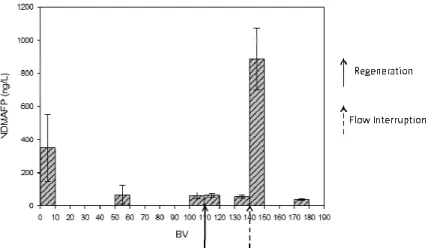
Figure 4.2. Release of nitrosamine precursors by fresh and spent A532E during column experiments. a) NDMA precursors from fresh resin; b) NDMA precursors from spent A532E; c) NDEA precursors from fresh resin; d)NDEA precursors from spent resin; e) NDBA precursors from fresh resin; f) NDBA precursors from spent A532E. ...70
Figure A.1. Representative chromatograms of nitrosamine analytes and internal standards. ...84
Figure A.2. Representative NDMA calibration curve. ...85
Figure A.3. Representative NDEA calibration curve. ...85
Figure A.4. Representative NDPA calibration curve. ...86
Figure A.5. Representative NDBA calibration curve. ...86
Figure A.6. Representative d6-NDMA calibration curve. ...87
Figure A.7. Representative d10-NDEA calibration curve. ...87
Figure A.8. Representative d14-NDPA calibration curve...88
Figure A.9. Representative d18-NDBA calibration curve. ...88
Figure B.1. Release of nitrosamine precursors by Resin A530E during multiple-regeneration column experiments. a) NDMA precursor release; b) NDBA precursor release. ...90
Figure B.2 Release of NDMA precursors by Resin PWA5 during multiple-regeneration column experiments. ...91
Figure B.3. Release of nitrosamine precursors by Resin PWA5 during continuous-flow column experiments. a) NDMA precursor release, t=0; b) NDMA precursor release, t=6 months; c) NDEA precursor release, t=0; d) NDEA precursor release, t=6 months. ...92
Figure C.1. Release of NDMA precursors by Resin PWA15 during 3 identical continuous-flow column
experiments. ...94 Figure D.1. NDMA release by Resin A300E during a
continuous-flow column experiment. ...95 Figure D.2. NDMA precursor release by Resin A300E during a
continuous-flow column experiment. ...95 Figure D.3. NDMA release by Resin A400E in a
continuous-flow column experiment. ...96 Figure D.4. NDMA precursor release by Resin A400E during a
continuous-flow column experiment. ...96 Figure D.5. Nitrosamine release by Resin A520E in a
continuous-flow column experiment. a) NDMA
release; b) NDEA release. ...97 Figure D.6. Nitrosamine precursor release by Resin A520E
during a continuous-flow column experiment. a) NDMA precursor release; b) NDEA precursor
release. ...98 Figure D.7. Nitrosamine release by Resin A530E during a
continuous-flow column experiment. a) NDMA
release; b) NDEA release; c) NDBA release. ...99 Figure D.8. Nitrosamine precursor release by Resin A530E
during a continuous-flow column experiment. a) NDMA precursor release; b) NDEA precursor
release; c) NDBA precursor release. ...100 Figure D.9. NDMA release by Resin A600E during a
continuous-flow column experiment. ...101 Figure D.10. NDMA precursor release by Resin A600E during a
continuous-flow column experiment. ...101 Figure D.11. NDMA precursor release by Resin A860E during a
continuous-flow column experiment. ...102 Figure D.12. NDMA release by Resin CalRes 2109 during a
continuous-flow column experiment. ...102 Figure D.13. NDBA precursor release by Resin CalRes 2109
Figure D.14. NDMA release by Resin IRA400 during a
continuous-flow column experiment. ...103 Figure D.15. Release of NDMA precursors by Resin IRA400
during a continuous-flow column experiment. ...104 Figure D.16. Nitrosamine release by Resin PWA2 during a
continuous-flow column experiment. a) NDMA
release; b) NDBA release. ...105 Figure D.17. Nitrosamine precursor release by Resin PWA2
during a continuous-flow column experiment. a) NDMA precursor release; b) NDBA precursor
release. ...106 Figure D.18. NDMA precursor release by Resin PWA5 during a
continuous-flow column experiment. ...107 Figure D.19. NDMA precursor release by Resin PWA5 during a
continuous-flow column experiment. ...107 Figure D.20. Nitrosamine release by Resin SIR-100 during a
continuous-flow column experiment. a) NDMA
release; b) NDEA release. ...108 Figure D.21. Nitrosamine precursor release by Resin SIR-100
during a continuous-flow column experiment. a) NDMA precursor release; b) NDEA precursor
release. ...109 Figure D.22. Nitrosamine precursor release by Resin SIR-110
during a continuous-flow column experiment. a) NDMA precursor release; b) NDBA precursor
release. ...110 Figure D.23. NDMA precursor release by Resin TAN-1 during a
Chapter 1. Introduction
Background
Nitrosamines
Nitrosamines are a family of highly potent chemical carcinogens including, among others, nitrosodimethylamine (NDMA), nitrosodiethylamine (NDEA), N-nitrosodi-n-propylamine (NDPA) and N-nitrosodi-n-butylamine (NDBA) (see Table 1.1). In recent years, nitrosamines have been identified as emerging nitrogenous disinfection byproducts (N-DBPs) and have been the subject of extensive research in the field of water quality.
Table 1.1. Nitrosamines.
Name Abbreviation Chemical Structure
N-nitrosodimethylamine NDMA (CH3)2N-N=O
N-nitrosodiethylamine NDEA (CH3CH2)2N-N=O
N-nitrosodi-n-propylamine NDPA (CH3CH2CH2)2N-N=O N-nitrosodi-n-butylamine NDBA (CH3CH2CH2CH2)2N-N=O
Hence, nitrosamines are orders of magnitude more carcinogenic than the regulated trihalomethanes.
Nitrosamines have been the subject of drinking water regulation by different agencies. The Ontario Ministry of the Environment has set an Interim Maximum Allowable Concentration of 9 ng/L for NDMA in drinking water (Ontario Ministry of the Environment, 1998). The California Department of Public Health has set a Notification Level (the level at which a governing body must be notified and consumer notification is recommended) of 10 ng/L for NDMA, NDEA and NDPA in drinking water, with Response Levels (levels at which a water source may be removed from service) at 100, 300 and 500 ng/L, respectively (CA DPH, 2009), and the Massachusetts Department of Environmental Protection has set an Office of Research and Standards Guideline of 10 ng/L for NDMA in drinking water (MassDEP 2004). While the USEPA has not yet set a Maximum Contaminant Level for any nitrosamine, NDMA, NDEA and NDPA are included on Contaminant Candidate List 3 (USEPA, 2011b), and NDMA, NDEA, NDPA and NDBA are being monitored as part of the Unregulated Contaminant Monitoring Rule 2 (UCMR 2) (USEPA, 2011c). Currently, the USEPA is considering regulation of nitrosamines as a group as part of Goal 1 of its new Drinking Water Strategy (USEPA, 2010).
Nitrosamine occurrence in drinking waters
179 drinking water treatment plants in Ontario (Charrois et al., 2007) found NDMA in 30% of the drinking water systems investigated. The median plant effluent NDMA concentration was < 1.3 ng/L, but the highest effluent concentration detected was 65 ng/L. As in the survey by Valentine et al., (2006), concentrations were generally higher in distribution systems. Both of these studies noted that the use of anion exchange resins or cationic polymers seemed to be associated with higher levels of NDMA. In a study of 6 Japanese treatment plants (Asami et al., 2009), two of the plants had NDMA concentrations above 10 ng/L in samples taken after ozonation. Biologically activated carbon effectively removed NDMA, and only one of the 6 treatment plant effluents had NDMA levels above 3 ng/L. A recent Spanish study (Jurado-Sanchez et al., 2010) found NDMA in 3 out of 16 tap water samples, with a maximum concentration of 10.3 ng/L. NDEA was detected in 2 of the samples, with a maximum concentration of 6 ng/L. A survey of Chinese drinking water treatment plants (Wang et al., 2011)detected NDMA in 7 of 12 finished waters, with a range of 4.6 – 20.5 ng/L. NDEA was also detected in 9 of 12 finished waters, with a concentration range of 1.9 – 16.3 ng/L, and NDBA was detected in 6 of 12 finished waters, with a range of 0.4 – 3.4 ng/L. NDPA was not detected. An analysis of UCMR 2 data (Russell et al., in press) showed that, out of 1,196 drinking water systems sampled, 316 or 24.6% contained NDMA at 2 ng/L or above in the distribution system, with a median NDMA concentration among those plants of less than 10 ng/L. Other nitrosamines were detected much less frequently. NDEA was detected at 3 ng/L or above in 2.2% of the systems and NDB was detected at 4 ng/L or above in 0.4% of the systems. NDPA was not detected in any of the systems sampled.
A mechanism of NDMA formation involving the chlorination or chloramination and subsequent oxidation of dimethylamine (DMA) to form unsymmetrical dimethylhydrazine (UDMH), which can be oxidized to form NDMA, was proposed in different mechanistic studies (Mitch and Sedlak, 2002; Choi and Valentine, 2002a; Choi and Valentine, 2002b). These studies demonstrated that NDMA formation occurs when water is chloraminated or chlorinated in the presence of ammonia, that increasing chloramine doses lead to increased NDMA formation, that chloramine is a source of nitrogen atoms in NDMA, and that DMA is an important NDMA precursor. However, noting that UDMH does not form NDMA at the yield expected based on NDMA yields from DMA and that the UDMH models are not robust over a wide pH range, Schreiber and Mitch (2006) demonstrated that NDMA formation actually depends on dichloramine concentration and, accordingly, proposed a new mechanism. The mechanism is based on the reaction of dichloramine with DMA to form chlorinated UDMH, which is subsequently oxidized by dissolved oxygen to form NDMA (see Figure 1.1). Sufficient dichloramine exists, in disproportionation equilibrium with monochloramine, to account for the formation of NDMA when monochloramine is added to water. This is the currently accepted mechanism of NDMA formation (Nawrocki and Andrzejewski, 2011).
Nitrosamine precursors
While DMA has been used as a model NDMA precursor for kinetic and mechanistic investigations, it was noted (Mitch et al., 2003; Chen and Valentine, 2007; Padhye et al., 2009)that DMA levels in natural waters could not account for the amounts of NDMA formed when those waters were chloraminated. Chloramination of natural organic matter (NOM) has been shown to produce significant amounts of NDMA (Gerecke and Sedlak, 2003; Chen and Valentine, 2006; Chen and Valentine, 2007). Dissolved organic nitrogen (DON), a measure of the amount of undefined nitrogen-containing species in NOM, is believed to be an important factor in the formation of NDMA in raw drinking water sources (Lee et al., 2007). It has been shown (Mitch and Sedlak, 2004) that tertiary amines with dimethylamine functional groups can serve as important NDMA precursors and that trialkylamines can degrade to dialkylamines when oxidants/disinfectants are added, which then react to form nitrosamines (Mitch and Schreiber, 2008). Dimethylamine groups within NOM macromolecules are thought to account for the formation of NDMA by NOM. It is likely that diethylamine (DEA), di-n-propylamine (DPA) and di-n-butylamine (DBA), and larger molecules containing these functional groups, serve as analogous precursors to NDEA, NDPA and NDBA, respectively. A recent study by Wang et al. (2011) showed that DEA and DBA in the influent and effluent of drinking water treatment plants were precursors of NDEA and NDBA.
2011), which may be present in drinking waters with sources impacted by agricultural activity or wastewater discharge. Le Roux et al. (2011) found that 5-(dimethylaminomethyl)furfuryl alcohol, a component of the drug ranitidine, when chlorinated, formed NDMA at a much higher molar yield than that of DMA (74.9% vs 1.2%). This was attributed to the proximity of an electron-dense furan group to the reactive DMA group, which enhances the electrophilic attack of chloramine.
In the context of drinking water treatment, cationic coagulant polymers and anion exchange resins have been identified as sources of nitrosamine precursors. Treatment with polydiallyldimethylammonium chloride (polyDADMAC) was shown to result in increased NDMA formation (Wilczak et al., 2003), and reaction mechanisms for the degradation of polyDADMAC and polyamines to release DMA and form NDMA during chloramination have been proposed (Park et al., 2009). Polyamine undergoes an electrophilic attack by chloramines at the tertiary amine chain ends, proceeding through an imine intermediate, which yields DMA through hydrolysis. PolyDADMAC contains quaternary amine groups throughout the polymer structure. These groups undergo a Hofmann elimination, leading to a tertiary amine that degrades in the same manner as the polyamine chain ends. The relationship between nitrosamines and anion exchange treatment is discussed below.
Anion Exchange
provide positively charged exchange sites. Resins remove anionic contaminants when the negatively charged contaminants are attracted to the positively charged exchange sites. The resins bind contaminants and release harmless chloride ions according to Equation 1.1:
Cl- + X-(aq)↔ X- + Cl-(aq) (1.1) where underlining indicates the resin phase and X- is an anionic contaminant. Resins are designed to preferentially remove different anions, binding anions for which they have a greater selectivity and releasing less selectively bound anions. A qualitative selectivity spectrum for a typical resin is shown in Equation 1.2, with more selectively bound anions on the left and less selectively bound anions on the right (Dow Chemical Company, 2011a).
SO42- > NO3- > Br- > CN- >BrO3- > NO2- > Cl- > HCO3- > F- (1.2) As treatment progresses, high-selectivity anions are taken up and fewer exchange sites are available, so that the resin becomes exhausted. To regenerate the resin, the resin is treated with concentrated NaCl and the equilibrium in Equation 1.1 is pushed to the left. The exchange sites release the contaminants into a waste regenerant stream and the resin is again ready for treatment. Resins are typically regenerated at regular intervals over their treatment lifetimes. As resins absorb water differently based on the ionic form that they are in, regeneration causes a change in swelling and places osmotic stress on the resins (Montgomery Watson Harza, Inc., 2005).
Carbon Corporation, 2005). To address this problem, specific anion exchange resins have been developed to selectively bind the large, poorly hydrated ClO4- molecule (Gu et al., 1999). These resins have such high selectivities for ClO4- that regeneration with Cl- is impractical and so they are utilized as single-use, non-regenerable resins.
The polymer matrices of resins affect their performance. Acrylic resins are more elastic than polystyrene resins and can handle a greater amount of osmotic stress. Polystyrene resins, on the other hand, are more rigid and are better for high-pressure applications as they resist compression.
An important physical characteristic of resins is pore structure. Resins with macroporous pore structures have highly crosslinked polymer matrices and uniform areas of high charge density, while gel resins take on a looser, amorphous structure. As a result, macroporous resins tend to be more physically stable and to have greater affinities for given anions, while gel resins tend to exhibit much faster exchange kinetics and to have high exchange capacities by weight (Harland, 1994).
Different resin functional groups can be used to achieve different selectivities. While resins with TMA functional groups are the simplest, resins with TEA or TBA functional groups are often used for NO3- and ClO4- removal because the larger alkyl chains effectively block the uptake of SO42- (DeSilva, 2003). TBA resins are preferable for some applications because of their greater SO42- blocking properties, while TEA resins are preferable in others because the large chains on TBA resins can cause losses in exchange capacity due to the kinetic effects of steric hindrance (Gu et al., 1999). Type II resins are similar to TMA resins, with higher operating capacities and exchange efficiencies but lower chemical stability (Dow Chemical Company, 2011b).
In the case of polystyrene resins, the process of attaching the positively charged functional group to the polymer begins with chloromethylation of the polymer rings, resulting in poly(4-chloromethylstyrene). Trialkylamines or DMEA are then introduced and replace the chlorine groups via nucleophilic substitution, resulting in a positively charged quaternary amine functional group (Kunin, 1963) (see Figure 1.2).
Polyacrylic resins are functionalized through the addition of dimethylaminopropylamine (DMAPA). Treatment with methyl chloride produces a positively charged quaternary amine functional group (Harland, 1994) (see Figure 1.3).
Figure 1.3. Addition of quaternary amine group to polyacrylic resin.
The presence of trialkylamines in the chemical structures of anionic exchange resins and as raw materials for resin synthesis strongly suggests a relationship between anion exchange resins and the potential formation of nitrosamines.
Anion Exchange Treatment and Nitrosamine Occurrence
The link between anion exchange and nitrosamines has been known for some time. Early studies (Fiddler et al., 1977; Gough et al., 1977) reported low µg/L levels of NDMA in deionized water produced by an anion exchange system using Type I TMA resins. NDEA was present when a TEA resin was used. Another study (Kimoto et al., 1980) found that TMA resin produced NDMA in laboratory-scale column contact experiments. The addition of free chlorine in the column feed water led to an increase in NDMA in the column effluent.
before being contacted with untreated groundwater, distilled water, and distilled water containing nitrite for 3 hours (Najm and Trussel, 2001). The DMEA and TMA resins released appreciable levels of NDMA (up to 140 ng/L). In this preliminary investigation, the releases of NDEA or NDPA by the TEA and TPA resins were not measured, nor were the releases of nitrosamine precursors. In another study (Kemper et al., 2010), a TMA, a TBA and a DMEA resin were found to release NDMA in continuous-flow column experiments (empty bed contact time of 6 minutes) with a model water buffered at pH 8.5 and containing chloride, sulfate and nitrate. The resins were not cleaned in any way prior to the experiments. The resins released high levels of NDMA precursors (1000 - 11,000 ng/L) at the beginning of the flow experiments but the levels quickly subsided. NDMA precursor levels rose after the resins were regenerated with NaCl, and nitrosamine levels increased considerably when free chlorine or preformed monochloramine was introduced to the feed water. The TBA resin released comparable levels of NDMA and NDBA.
Objectives
As described above, preliminary studies have demonstrated a link between anion exchange resins and nitrosamines, but these studies were limited in scope. Each dealt with only three or four resins out of the wide array of resins used for drinking water treatment applications. Furthermore, these studies focused on NDMA and briefly addressed NDBA, but there are two other carcinogenic nitrosamines that may be associated with the use of anion exchange resins.
Accordingly, the overall objective of this research was to investigate the potential relationship between the use of anion exchange resins in drinking water treatment and the presence of nitrosamines and nitrosamine precursors in finished drinking water. A large number of resins were investigated, representing the array of anion exchange resins used in drinking water treatment practice. The overall objective was pursued as three specific research objectives:
i) to evaluate the release of nitrosamines and nitrosamine precursors by anion exchange resins, specifically addressing the release of multiple nitrosamines and their corresponding precursors by single resins;
iii) to evaluate the release of nitrosamines and nitrosamine precursors in water treatment practice through sampling of full-scale drinking water treatment plants employing resins previously determined through laboratory experiments to release notable levels of nitrosamines and nitrosamine precursors.
To meet these objectives, controlled bench-scale batch and continuous-flow column studies were conducted, and samples were collected from a number of full-scale treatment plants using anion exchange. Each of these components of the study is presented as a separate chapter in this dissertation:
Anion exchange resins as a source of nitrosamines and nitrosamine precursors.
I. Batch Contact Experiments. This chapter summarizes the results obtained from batch
contact experiments performed with a large array of resins to assess the release of NDMA, NDEA, NDPA and NDBA and their precursors from resins with different chemical structures and functionalities. Resins releasing high levels of nitrosamines and precursors, or resins releasing more than one nitrosamine with its corresponding precursors were identified for further study. Resin cleaning arose as an important issue, and continuous-flow column experiments were suggested to evaluate nitrosamine and precursor release during rinsing and during subsequent column operations.
Anion exchange resins as a source of nitrosamines and nitrosamine precursors.
II. Simulated Treatment Operations. This chapter summarizes the results obtained
precursor release. Simulated regenerations and flow interruptions were performed on the resins and increases in nitrosamine and nitrosamine precursor release due to these operations were observed. The results of these experiments suggested that full-scale treatment plant sampling be conducted with attention given to resin regeneration, resin age (time of operation since installation), and downtime.
The impact of anion exchange treatment on nitrosamine and nitrosamine
precursor concentrations in full-scale drinking water treatment plants. Samples of
anion exchange process influent and effluent were collected at ten full-scale drinking water treatment plants using resins that were studied in previous laboratory investigations. When possible, samples were collected before and after resins were regenerated, or after seasonal downtime. For non-regenerable resins, samples were taken from systems with different resin ages (time in operation). Plants using multiple resins were sampled, and multiple plants using the same resin were sampled. Full-scale field observations were compared to previous laboratory observations to gain insight into nitrosamine and nitrosamine precursor release in drinking water treatment practice.
Chapter 2. Anion Exchange Resins as Sources of Nitrosamines and Nitrosamine Precursors. I. Batch Contact Experiments
Introduction
Nitrosamines are a class of highly potent chemical carcinogens that include, among others, nitrosodimethylamine (NDMA), nitrosodiethylamine (NDEA), N-nitrosodi-n-propylamine (NDPA) and N-nitrosodi-n-butylamine (NDBA). Nitrosamines, especially NDMA, have been detected in a number of drinking waters (Valentine et al., 2006; Charrois et al., 2007; Zhao et al., 2006; Asami et al., 2009) and are candidates for USEPA regulation (USEPA, 2011b).
The most thoroughly studied nitrosamine, NDMA, has been identified as a byproduct of the disinfection of water with chloramines (Choi and Valentine, 2002a). Extensive research into the mechanism of NDMA formation has shown a two-step process involving dichloramine and dissolved oxygen reacting with dimethylamine (DMA) (Choi and Valentine 2002b; Mitch and Sedlak 2002; Schreiber and Mitch 2005; Schreiber and Mitch 2006). Further study has identified DMA and tertiary amines containing DMA groups as major nitrosamine precursors (Lee et al., 2007).
classified according to functional group. Type I resins have trialkylamines – trimethylamine (TMA), triethylamine (TEA), triproplyamine (TPA) or tributylamine (TBA) – at the charged sites, while Type II resins use dimethylethanolamine (DMEA).
In the case of polystyrene resins, the process of attaching the positively charged functional group to the polymer begins with the chloromethylation of the polymer rings, resulting in poly(4-chloromethylstyrene). Trialkylamines or DMEA are then introduced and replace the chlorine groups via nucleophilic substitution, resulting in a positively charged quaternary amine functional group (Figure 2.1) (Kunin, 1963).
Figure 2.1. Addition of quaternary amine group to polystyrene resin.
Polyacrylic resins are functionalized through the addition of dimethylaminopropylamine (DMAPA). Treatment with methyl chloride produces a positively charged quaternary amine functional group (Figure 2.2) (Harland, 1994).
The presence of trialkylamines in the chemical structures of resins and as raw materials for resin synthesis strongly suggests a relationship between anion exchange resins and the potential formation of nitrosamines. DMA is a principal precursor of NDMA, and TMA, DMEA and DMAPA contain the DMA group. Further, TEA, TPA and TBA may have analogous relationships to NDEA, NDPA and NDBA formation.
increased considerably when free chlorine or preformed monochloramine was introduced to the feed water. The TBA resin released comparable levels of NDMA and NDBA.
While these studies demonstrated a link between anion exchange resins and nitrosamines, they tended to be limited in scope, each investigating three or four different resins out of the wide array of resins used for drinking water treatment applications. Furthermore, these studies focused on NDMA, but there are three other carcinogenic nitrosamines that may be associated with the use of anion exchange resins. The objective of this study was to investigate the release of NDMA, NDEA, NDPA and NDBA and their precursors by a large, representative group of resins employed for the treatment of drinking water. Sixteen resins with different functional groups, pore structures and polymer matrices from several different manufacturers were subjected to batch contact experiments to determine nitrosamine and nitrosamine precursor release. The effects of pH on nitrosamine and nitrosamine precursor release were also studied. A continuous-flow column study was conducted in follow-up to this batch study and is the subject of another paper.
Materials and Methods
Materials
consisting of filters, granular activated carbon adsorbers, mixed-bed ion exchange resins and ultraviolet (UV) treatment. The LGW was analyzed periodically and found to contain levels of nitrosamines and nitrosamine precursors below detection limits. All other chemicals were purchased from Fisher Scientific (Pittsburgh, PA) and were reagent-grade or higher. All glassware was rendered chlorine demand-free, rinsed with acetone and baked at 400 °C for four hours. Detergent, which often contains TEA, was not used at any time during glassware preparation.
Table 2.1. Characteristics of resins investigated.
Resin Functional Group Pore Structure Polymer Matrix
A300E DMEA Gel Styrene
A530E TEA/TBA Macroporous Styrene
A600E TMA Gel Styrene
A860E TMA Macroporous Acrylic
CalRes 2103 TPA Macroporous Styrene
CalRes 2109 TBA Macroporous Styrene
IRA410 DMEA Gel Styrene
IRA910 DMEA Macroporous Styrene
MIEX TMA Macroporous Acrylic
PWA15 TMA Gel Styrene
PWA2 TBA Macroporous Styrene
PWA5 TEA Macroporous Styrene
PWA9 TMA Macroporous Acrylic
SBG2HP DMEA Gel Styrene
SIR-100 TEA Macroporous Styrene
SIR-110 TBA Gel Styrene
Initial Resin Cleaning
beads, MIEX resin was cleaned by swirling 200 mL of resin in 200 mL of LGW 20 times.
Batch Contact Experiments
The cleaned resins were contacted with LGW at a resin concentration of 20 mg/L. The solutions were buffered at pH 7.0 with a 10 mM phosphate buffer. After 1 hour of contact, the resins were separated from solution using 0.7 µm pore size borosilicate filters that were rinsed with 1.0 L of LGW and baked at 400 °C for four hours. The solutions were then analyzed for nitrosamines and nitrosamine formation potential.
Nitrosamine Analysis
with those of standards. Mass spectrometry details are summarized in Table 2.2, and further analytical details are included in Appendix A.
Table 2.2 Precursor and product ions for nitrosamine analysis.
Nitrosamine Precursor Ion Product Ions Product Ion Ratio Collision Voltage
NDMA 75 43/58 0.31 17
d6-NDMA 81 46/64 0.33 17
NDEA 103 75/47 0.056 28
d10-NDEA 113 81 0.90 12
NDPA 131 43/59 0.46 28
d14-NDPA 145 97/127 0.12 11
NDBA 159 103/57 0.12 28
d18-NDBA 177 113/66 0.50 10
Average method recoveries of analytes in LGW were 80.1% for NDMA, 74.8% for NDEA, 81.2% for NDPA and 68.0% for NDBA. Matrix effects were corrected for using isotope dilution with a deuterium-labeled surrogate for each analyte. The limits of quantitation (LOQ), defined as the nitrosamine concentrations that resulted in responses with signal to noise ratios greater than 10, were 4.9 ng/L for NDMA, 1.4 ng/L for NDEA, 3.9 ng/L for NDPA and 1.3 ng/L for NDBA.
Nitrosamine Formation Potential Analysis
Results and Discussion
General Batch Contact Experiments
The anion exchange resins were found to release various amounts of nitrosamines and nitrosamine precursors during 1 hour of contact with water after the vendor-recommended cleaning procedure. Figure 2.3 illustrates the release of nitrosamines during contact experiments at pH 7.These nitrosamines may have been present as impurities in the resins from the manufacturing process or as oxidation products of residual unreacted trialkylamine starting material from resin synthesis.
Figure 2.3. Nitrosamines released by selected anion exchange resins during 1 hour contact experiments at pH 7. Error bars indicate one standard deviation where
multiple replicate experiments were performed.
(15-110 ng/L), and resins containing TBA functional groups released NDBA at yet higher levels (592-974 ng/L). The higher releases of NDEA and NDBA can be explained by their different chemical structures. Longer alkyl chains make molecules more hydrophobic, and more hydrophobic molecules are more likely to be trapped in the hydrophobic polymer matrices of the resins during resin formulation. NDBA, with the longest alky chain, can be expected to be retained in the polymer matrix to the greatest extent and is therefore released at the highest concentrations, followed by NDEA and NDMA.
The lone resin containing TPA functional groups (CalRes 2103) released NDPA at 13 ng/L. All of the other resins listed in Table 2.1 but not included in Figure 2.3 were investigated and found to release nitrosamines at levels below the limits of quantitation. Of all the resins tested, 6 out of 16 released nitrosamines at quantifiable levels.
NDPA or NDBA or their precursors. Resin PWA5, a TEA resin, released NDEA but no detectable NDMA.
Figure 2.4 presents the release of nitrosamine precursors by the different anion exchange resins tested during the 1 hour contact experiments at pH 7. These precursors are most likely present as unreacted raw materials from resin synthesis (see Figures 2.1 and 2.2). Unreacted TMA, TEA, TPA or TBA molecules, which are known to be nitrosamine precursors, can remain trapped within the polymer matrix and subsequently released upon prolonged contact with water.
Figure 2.4. Nitrosamine precursors released by anion exchange resins during 1 hour contact experiments at pH 7. Error bars indicate one standard deviation where
NDMA, NDEA and NDBA precursors were released over a wide range of concentrations, with NDMA and NDBA precursor release in excess of 2000 ng/L (the highest calibration standard injected) and NDEA precursor release reaching 1850 ng/L. Resins that released nitrosamines generally released nitrosamine precursors at appreciably higher levels. Resins A860E, CalRes 2103 and PWA9 released nitrosamine precursors below quantitation limits.
Resin SIR-100, a TEA resin, released NDMA precursors as well as NDEA precursors. Again, this was noteworthy because TEA resin preparation does not include any TMA starting materials that could go unreacted and be released as NDMA precursors. Resin A530E, a bi-functional TEA/TBA resin, and PWA2, a TBA resin, both released NDMA but did not release quantifiable concentrations of NDMA precursors.
pH Batch Contact Experiments
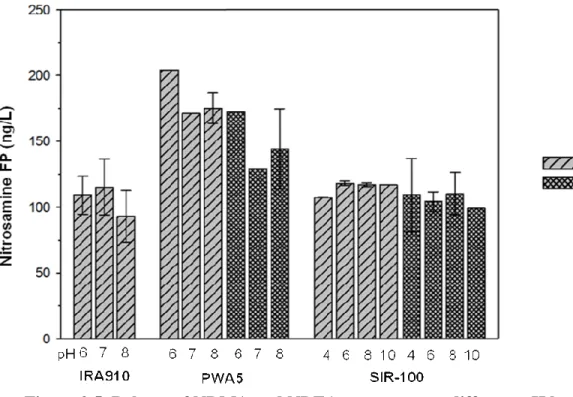
Figure 2.5. Release of NDMA and NDEA precursors at different pH levels.
As illustrated, there was no appreciable difference in NDMA/NDEA precursor release by Resins PWA5 and IRA910 from pH 6 to pH 8, or in NDMA/NDEA precursor release by Resin SIR100 from pH 4 to pH 10.
Summary
Chapter 3. Anion Exchange Resins as Sources of Nitrosamines and Nitrosamine Precursors. II. Simulated Treatment Operations
Introduction
Nitrosamines are a class of highly potent chemical carcinogens that include, among others, nitrosodimethylamine (NDMA), nitrosodiethylamine (NDEA) and N-nitrosodi-n-butylamine (NDBA). Nitrosamines, especially NDMA, have been detected in a number of drinking waters (Valentine et al., 2006; Charrois et al., 2007; Wang et al., 2011) and are candidates for EPA regulation. NDMA has been identified as a byproduct of the disinfection of drinking water with chloramines (Choi and Valentine, 2002a) and compounds containing dimethylamine (DMA) groups have been identified as important NDMA precursors (Mitch and Sedlak, 2004).
materials for resin synthesis strongly suggests a relationship between anion exchange resins and potential formation of nitrosamines.
Recent studies have found that anion exchange resins can serve as sources of nitrosamines and nitrosamine precursors. In a limited study (Najm and Trussel, 2001), four resins were soaked in NaCl, rinsed, and contacted with untreated groundwater, distilled water, and distilled water containing nitrite for 3 hours. Two resins containing TMA and DMEA functional groups released NDMA at concentrations up to 140 ng/L. Nitrosamine precursors and other nitrosamines were not investigated. A more comprehensive study investigated sixteen resins (see Chapter 2). The resins were rinsed with NaCl and laboratory-grade water before being contacted with water at pH 7 for 1 hour. Six of the resins were found to release nitrosamines, with NDMA releases below 9 ng/L, while NDEA levels up to 110 ng/L and NDBA levels as high as 970 ng/L were reported. Ten of the resins were found to release nitrosamine precursors, with NDEA precursor release as high as 1850 ng/L and NDMA and NDBA precursor releases above 2000 ng/L. Resins containing TEA and TBA functional groups were found to release NDMA precursors in addition to TEA and TBA precursors.
Kemper et al. (2010) conducted bench-scale column studies using a TMA resin, a DMEA resin and a TBA resin. The resins were subjected to a continuous flow of water containing chloride, sulfate and nitrate, buffered at pH 8.5. The resins released low levels of NDMA (rarely above 10 ng/L). The resins released high levels of NDMA precursors (1000 - 11,000 ng/L) at the beginning of the experiments, but the releases quickly subsided. NDMA precursor levels rose again after the resins were regenerated with NaCl, and nitrosamine levels increased considerably when free chlorine or preformed monochloramine was introduced to the feed water. The TBA resin released comparable levels of NDMA and NDBA.
Materials and Methods
Materials
NDMA, NDEA, NDBA, and d6-NDMA standards were obtained from Accustandard (New Haven, CT). d10-NDEA and d18-NDBA were obtained from CDN Isotopes (Pointe Claire, Quebec, Canada). EPA Method 521 method-specific activated carbon solid-phase extraction (SPE) cartridges were purchased from Restek (Bellefonte, PA). Laboratory-grade water (LGW) was prepared using a system consisting of filters, granular activated carbon adsorbers, mixed-bed ion exchange resins and UV irradiation treatment. The LGW was analyzed periodically and no nitrosamines or nitrosamine precursors were detected. All other chemicals were purchased from Fisher Scientific (Pittsburgh, PA) and were reagent-grade or higher. All glassware was rendered chlorine demand-free, rinsed with acetone and baked at 400 °C for four hours. Detergent, which often contains TEA, was not used at any time during glassware preparation. To avoid contamination, no rubber was used in the column setup.
The resins each came from one batch; possible batch-to-batch differences were not investigated.
Table 3.1. Characteristics of resins investigated.
Resin Functional Group Pore Structure Polymer Backbone
A300E DMEA Macroporous Styrene
A400E TMA Gel Styrene
A520E TEA Macroporous Styrene
A530E TEA/TBA Macroporous Styrene
A532E TEA/TBA Gel Styrene
A600E TMA Gel Styrene
A860E TMA Macroporous Acrylic
CalRes 2109 TBA Macroporous Styrene
IRA400 TMA Gel Styrene
PWA15 TMA Gel Styrene
PWA2 TBA Macroporous Styrene
PWA5 TEA Macroporous Styrene
SIR-100 TEA Macroporous Styrene
SIR-110 TBA Gel Styrene
TAN-1 TMA Macroporous Styrene
Continuous-flow Column Contact Experiments
with 600 mL (3 BV) of a 10% NaCl solution. Column flow was interrupted periodically and the resins were stored submerged in the columns for 12-14 hours. Feed water containing free chlorine (0.24 mg/L as Cl2) or preformed monochloramine (0.24 mg/L as Cl2) was introduced at the end of each experiment. At the conclusion of each experiment, the resin was removed from the column and discarded, and the column was cleaned with nitric acid and acetone and rinsed with LGW before being packed with a new resin.
Samples (2.0 L, 10 BV) were collected at the beginning of each column experiment and immediately before and after regenerations, flow interruptions and the introduction of oxidant, and were analyzed for nitrosamines and nitrosamine precursors.
Nitrosamine Analysis
NDMA, NDEA and NDBA were analyzed as previously reported (see Chapter 2). Briefly, samples were spiked with 50 ng/L d6-NDMA, d10-NDEA, and d18-NDBA for quantitation by isotope dilution before being concentrated with activated carbon SPE cartridges and eluted with methylene chloride. LGW was added to the extracts and methylene chloride was removed using a rotary evaporator. The extracts were analyzed by ultra performance liquid chromatography – tandem mass spectrometry (UPLC-MS/MS). Limits of quantitation (LOQ) were 4.9 ng/L for NDMA, 1.4 ng/L for NDEA and 1.3 ng/L for NDBA.
Nitrosamine Formation Potential Analysis
Results and Discussion
Illustrative Results
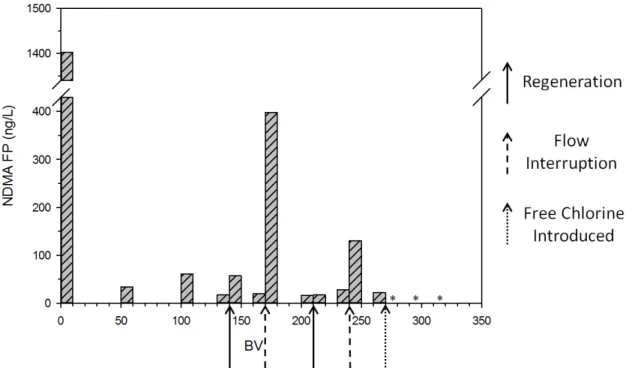
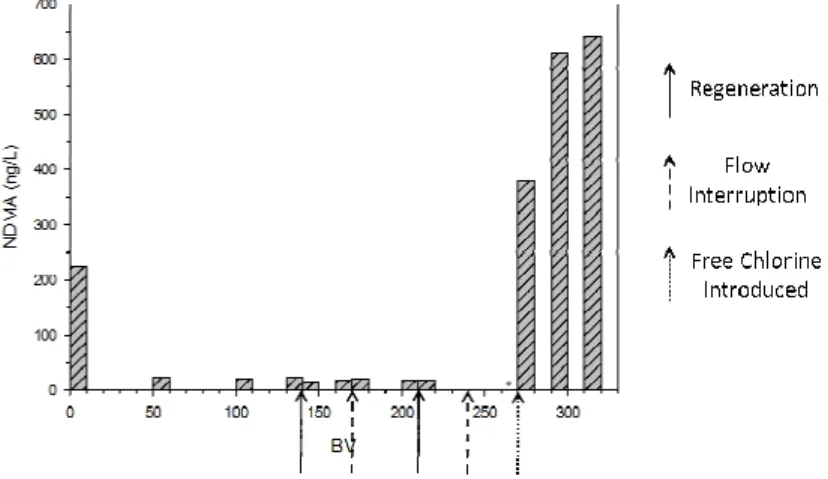
Illustrative results of a continuous-flow column contact experiment with Resin A300E, a Type II DMEA resin, are presented in Figures 3.1 and 3.2. Figure 3.1 presents NDMA released, while Figure 3.2 shows the release of NDMA precursors.
Figure 3.1. NDMA release by Resin A300E during a typical continuous-flow column experiment. (* Indicates that a sample was taken and nitrosamines were below the
LOQ.)
remained at a similar level, even after two regenerations, and it was not until 240 BV of water was processed that NDMA levels dropped below the LOQ of 4.9 ng/L. There was no apparent increase in NDMA levels as a result of regeneration or from the two 12-14 hour flow interruptions. When feed water containing 0.24 mg/L free chlorine was introduced, NDMA levels rose dramatically, reaching 380 ng/L within the first 10 BV and 642 ng/L within 50 BV. Column effluent contained the same free chlorine concentration as column feed water. No further samples were collected.
Figure 3.2. NDMA precursor release by Resin A300E during a typical continuous-flow column experiment. (* Indicates that a sample was taken and nitrosamine
formation potentials were below the LOQ.)
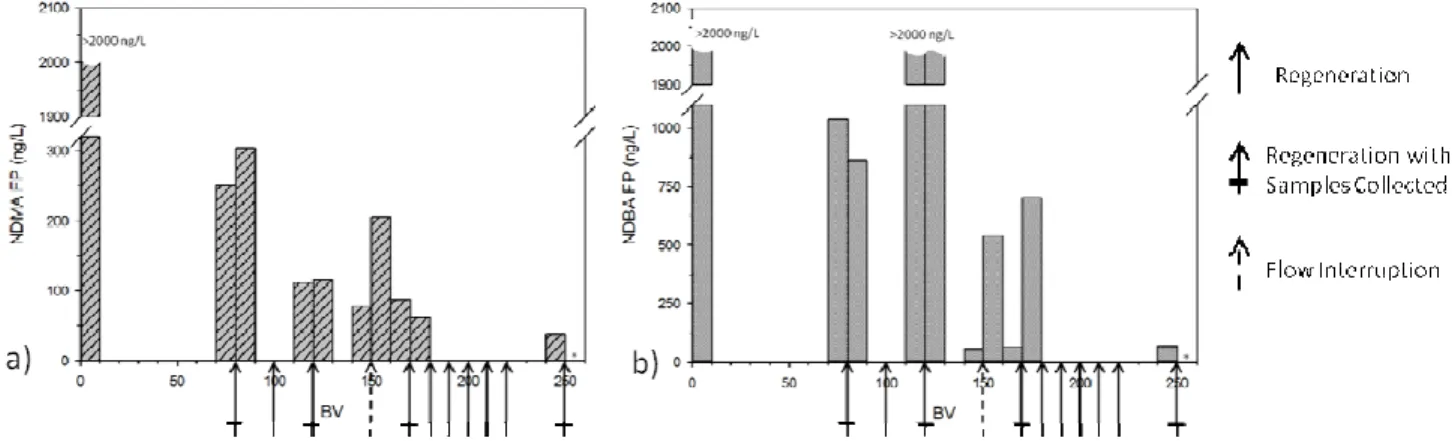
Figure 3.3. Nitrosamine release by Resin A530E during a typical continuous-flow column experiment. a) NDMA release; b) NDEA release; c) NDBA release (* Indicates that a sample was taken and nitrosamine formation potentials were
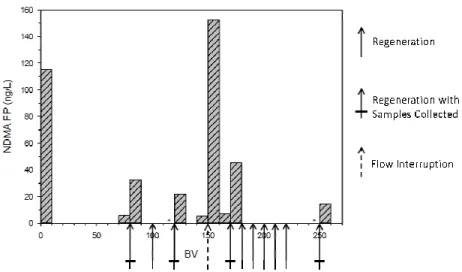
Figure 3.4. Nitrosamine precursor release by Resin A530E during a typical continuous-flow column experiment. a) NDMA precursor release; b) NDEA precursor release; c) NDBA precursors release. (* Indicates that a sample was taken
While the sample collected in the first 10 BV of water that passed through the resin was lost, the water passed through the column from 50 – 60 BV contained high levels of NDEA and NDBA precursors (1108 and 1569 ng/L, respectively), and even higher levels of NDMA precursors (>2000 ng/L, the highest calibration point used), despite the fact that this resin did not contain TMA functional groups. The concentration of NDBA precursors appeared to be lowered to non-detectable levels with continued flow. However, while their concentrations decreased over time, NDMA and NDEA precursors continued to leach from the resin. Regeneration caused an increase in NDMA and NDBA precursor levels but not for NDEA precursors, and the 12-14 hour flow interruption resulted in an increase in precursor levels for all three nitrosamines.
Additional Investigations
Resins A530E and PWA5 were subjected to ten successive regenerations in additional column experiments. Results (see Appendix B) indicated that nitrosamine precursor release decreased with repeated regenerations.
Column experiments were performed with Resins PWA5 and TAN-1 immediately after receipt of resin samples and after six months of storage in the dark at 4°C to test the stability of the resin during storage. Results were inconclusive, as Resin PWA5 released appreciably increased levels of both NDMA and NDEA precursors after six months, while Resin TAN-1 released comparable levels in both experiments (see Appendix B).
Reproducibility
experiments are included in Appendix C. None of the samples collected during these experiments contained quantifiable levels of nitrosamines themselves, although they did contain appreciable levels of nitrosamine precursors. NDMA precursor levels measured in samples collected before and after regeneration and before and after the 12-14 hour flow interruption agreed with each other within a relative standard deviation of 30%. The initial 10 BV replicate samples exhibited large standard deviations, but they were reproducible in that they all showed high NDMA formation potentials. An explanation for the high standard deviations among the first 10 BV replicates is given in Appendix C.
Summary of Results for all Resins Tested
Column experiments similar to those illustrated above were performed with each of the resins listed in Table 3.1. The results for the other resins are presented in Appendix D. Seven of the fourteen resins investigated released quantifiable levels of nitrosamines in the first 10 BV of flow. These nitrosamines are probably present as impurities from the resin synthesis process, as suggested by Kemper et al. (2010) and in Chapter 2. In each case, elevated levels of nitrosamine release dropped to low ng/L levels within 100 BV of flow. Resin A530E was the only resin to release elevated levels of nitrosamines after regeneration and flow interruption (see Figure D.7).
Table 3.2. NDMA precursor release by TMA and DMEA resins during continuous-flow column experiments.
First 10 BV Regeneration Effect Flow Interruption Effect
Resin Functional
Group Pore Structure
NDMA FP (ng/L) NDMA FP (ng/L) NDMA FP (ng/L)
IRA400 TMA Gel >2000 269 >2000
A600E TMA Gel >2000 184 >2000
A400E TMA Gel 1880 19 442
A860E TMA Macroporous >2000 <1.4 400
PWA15 TMA Gel 333 <1.4 821
TAN-1 TMA Macroporous 165 16 54
A300E DMEA Gel 1400 50 380
Table 3.3. NDMA, NDEA and NDBA precursor release by TEA, TBA and bi-functional TEA/TBA resins during continuous-flow column experiments.
First 10 BV Regeneration Effect Flow Interruption Effect
NFP (ng/L) NFP (ng/L) NFP (ng/L)
Resin Functional Group
Pore
Structure NDMA NDEA NDBA NDMA NDEA NDBA NDMA NDEA NDBA A530E TEA/TBA Macro >2000 >1000 >1000 136 <1.4 157 380 974 176
A532E TEA/TBA Gel 431 >2000 38 x** x x 959 12 >2000 CalRes
2109 TBA Macro <4.9 na* >2000 <4.9 na <1.3 <4.9 na <1.3 PWA2 TBA Macro 328 na 113 <4.9 na <1.3 <4.9 na <1.3
SIR-110 TBA Gel >2000 na 60 <4.9 na 20 <4.9 na 5
A520E TEA Macro >2000 >2000 na <4.9 <1.4 na 1340 >2000 na
PWA5 TEA Macro 300 400 na 67 <1.4 na 48 120 na
SIR-100 TEA Macro 130 300 na <4.9 <1.4 na x x x *na (not applicable) indicates that the resin was not expected to release precursors of the indicated nitrosamine and did not release such precursors at a quantifiable level.
**x indicates that the sample was lost during processing and analysis.
nitrosamine precursors. Precursor release typically dropped to low ng/L levels within 100 BV of column throughput.
It is noteworthy that TEA, TBA and bi-functional TEA/TBA resins also released NDMA precursors (see Table 3.3). TEA and TBA are used as starting materials during synthesis of these resins; thus they are likely the sources of the NDEA and NDBA formation potential. These trialkylamines are not expected to react with preformed monochloramine to form NDMA as TMA does. However, commercial trialkylamines have been shown to contain trialkylamines of differing alkyl chain lengths as impurities (de Zeeuw, 2011). The presence of TMA as an impurity in TEA and TBA likely accounts for the NDMA formation potential observed. No TMA resins released quantifiable levels of NDEA or NDBA or their precursors.
In general, NDMA precursors were washed away more quickly than NDEA or NDBA precursors when multiple nitrosamine precursors were released. This illustrates the ability of the resins to act as reverse-phase chromatographic media. The NDMA precursors have shorter carbon chains and so are less hydrophobic in nature and, accordingly, were not retained in the columns. In contrast, NDEA and NDBA precursors have longer carbon chains and are more hydrophobic, causing them to be retained by the resins and released at a slower rate
-counterions for specific contaminants such as NO3-. The resins need to equilibrate with all anions in solution and, in this controlled laboratory study, had the potential to take up H2PO4- and HPO42- to some degree when contacted with the pH 7 buffered water, according to Equation 3.1,
Cl- + X-(aq)↔ X- + Cl-(aq) (3.1)
expected to undergo different changes in swelling. Because macroporous resins are rigid and highly crosslinked while gel resins are looser, the two types of resins were expected to behave differently with respect to nitrosamine and nitrosamine precursor release, with gel resins possibly exhibiting greater swelling changes during regeneration, leading to higher releases. However, no discernable differences between the behaviors of the two types of resins were observed.
When flow was interrupted for 12-14 hours and resins were allowed to sit in prolonged contact with the water, there was typically an elevated level of nitrosamine precursors released in the first 10 BV of throughput after flow resumed. During the extended contact time of the flow interruption, water is able to more fully penetrate the polymer backbone of the resins and any residual trialkylamine precursors held within the polymer structure enters the aqueous phase, resulting in the increased levels of nitrosamine precursors observed. Tables 3.2 and 3.3 indicate that, in most cases, nitrosamine precursors in the first 10 BV of flow were higher than levels released after flow interruption, which were in turn higher than those released after regeneration. This suggests that most of the unreacted residual trialkylamine precursor material is at or near the surface of the resins and is rinsed away more quickly.
Impact of Oxidants
Effluent nitrosamine concentrations rose upon the addition of 0.24 mg/L of preformed monochloramine to the feed water. Table 3.4 presents the levels of nitrosamines released in the first 10 BV after the introduction of monochloramine. All but one of the eight resins contacted with monochloramine produced increased levels of nitrosamines in the first 10 BV of column throughput. None of the resins showed an increase in the levels of nitrosamine precursors.
Table 3.4. Nitrosamines in first 10 BV after introduction of monochloramine to feedwater.
Resin Functional Group Pore Structure NDMA (ng/L) NDEA (ng/L) NDBA (ng/L)
A400E TMA Gel 23 <10 na*
A520E TEA Macro 245 <10 na
A600E TMA Gel 160 na na
A860E TMA Macro <4.9 na na
IRA400 TMA Gel 847 na na
PWA2 TBA Macro 1240 na 212
PWA15 TMA Gel 123 na na
SIR-100 TEA Macro 80 <10 na
*na (not applicable) indicates that the resin was not expected to release precursors of the indicated nitrosamine and did not release such precursors at a quantifiable level.
styrene-divinylbenzene polymer backbones except for Resin A860E, which contains a methylacrylate polymer structure. The general structures of the resins are given in Figure 3.5.
Styrene-divinylbenzene Resins Polyacrylic Resins
Figure 3.5. General chemical structures of styrene-divinylbenzene and polyacrylic resins.
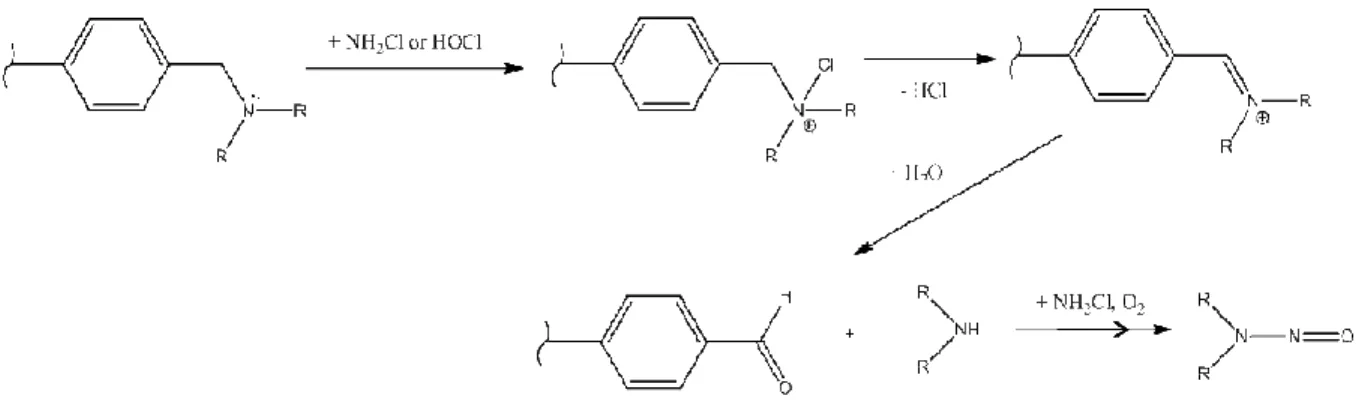
Figure 3.6. Proposed pathway for formation of nitrosamines from dialkylamine groups bound to polystyrene-divinylbenzene polymers.
The dialkylamines released are detected as nitrosamines, rather than as precursors, most likely because there is sufficient monochloramine in the feed water to react with them and convert them to nitrosamines prior to analysis. This does not agree with the findings of Kemper et al. (2010), who observed an increase in nitrosamine precursors when resins were contacted with monochloramine. As noted above, TEA and TBA resins were found to be sources of NDMA. This suggests that DMA, in addition to TMA, is an impurity in the TEA and TBA used in resin synthesis.
Resin A860E, the lone polyacrylic resin, did not produce any detectable nitrosamines upon contact with monochloramine. This is surprising, because polyacrylic resins are synthesized using dimethylaminopropylamine, which contains DMA, the most direct NDMA precursor.
Table 3.5. Nitrosamines in first 10 BV after introducing free chlorine to feedwater.
Resin Functional Group Pore Structure NDMA (ng/L) NDEA (ng/L) NDBA (ng/L)
A300E DMEA Gel 380 na na
A530E TEA/TBA Macro <4.9 <1.4 30
A532E TEA/TBA Gel 34 <1.4 <1.3
A600E TMA Gel <4.9 na na
A860E TMA Macro <4.9 na na
CalRes 2109 TBA Macro 31 na <1.3
IRA400 TMA Gel <4.9 na na
PWA2 TBA Macro <4.9 na <1.3
PWA5 TEA Macro 75 <1.4 na
*na (not applicable) indicates that the resin was not expected to release precursors of the indicated nitrosamine and did not release such precursors at a quantifiable level.
Of the resins contacted with free chlorine, five out of nine produced increased levels of nitrosamines and none produced increased concentrations of nitrosamine precursors. As with monochloramine, free chlorine can attack dialkylamine groups and cause them to be released from resin polymers. Because free chlorine is not expected to convert the dialkylamine precursors to nitrosamines, as is the case with chloramines, the dialkylamines released are expected to be observed as precursors rather than as nitrosamines. However, increases in nitrosamines themselves were observed after the introduction of free chlorine. These observations remain unexplained. In general, nitrosamine levels produced by monochloramine were much higher than those produced by free chlorine.
Summary
Chapter 4. The Impact of Anion Exchange Treatment on Nitrosamine and Nitrosamine Precursor Concentrations in Full-Scale Drinking Water Treatment
Plants
Introduction
Nitrosamines are a class of highly potent chemical carcinogens and include, among others, N-nitrosodimethylamine (NDMA), N-nitrosodiethylamine (NDEA), and N-nitrosodi-n-butylamine (NDBA). NDMA, the most thoroughly studied and most commonly detected nitrosamine, has been identified as a byproduct of the disinfection of water with chloramines (e.g. Choi and Valentine, 2002a). NDMA, NDEA and NDBA have been detected in a number of drinking waters (Valentine et al., 2006; Charrois et al., 2007; Zhao et al., 2007; Asami et al., 2009; Wang et al., 2011). Nitrosamines are regulated in drinking water in California with notification levels of 10 ng/L (CA DPH, 2008) and are candidates for Federal EPA regulation (USEPA, 2011b).
sites. TMA has been shown to degrade to DMA and further react to form NDMA (Lee et al., 2007), and it is likely that DMEA, TEA and TBA exhibit similar behaviors.
The link between anion exchange and nitrosamines has been demonstrated in the laboratory. Four resins having different functional groups were soaked in NaCl, rinsed, and contacted with water for 3 hours, and the resins containing TMA and DMEA released up to 140 ng/L NDMA (Najm and Trussel, 2001). A more comprehensive study (see Chapter 2) contacting 16 resins with buffered water after an NaCl rinse found that TMA and DMEA resins released NDMA and NDMA precursors. TEA and TBA resins released NDEA and NDBA and their precursors, respectively, while also releasing NDMA and NDMA precursors. Of the sixteen resins investigated in that study, six released notable levels of nitrosamines and ten released appreciable levels of precursors, with nitrosamine releases as high as 1000 ng/L and precursor releases reaching more than 2000 ng/L.
volumes after NaCl regeneration and after water stood in the columns during a 12-14-hour flow interruption. The introduction of monochloramine to the feed water caused elevated nitrosamine release. All resins, regardless of their functional groups or structure, released NDMA precursors, and TEA and TBA resins additionally released precursors of the corresponding nitrosamines, NDEA and NDBA.
Anion exchange has been previously identified as a contributory factor for the presence of nitrosamines in finished drinking waters. A study of 21 drinking water treatment plants (Valentine et al., 2006) found that a plant using anion exchange and chlorination had the highest NDMA levels (10-30 ng/L) in its finished water. That study included one other plant employing anion exchange to treat a portion of its water, but the finished water at this plant did not contain elevated NDMA levels. A survey conducted by the California Department of Health Services (CDHS) investigated NDMA in four plants using anion exchange (CDHS, 2002). One of the four plants had elevated NDMA concentrations (30-34 ng/L) in its finished water.
water treatment plants, using a total of nine different anion exchange resins for the removal of various contaminants under differing conditions, were identified for sampling. Samples of anion exchange process influent and effluent were taken to isolate the release of nitrosamines and their precursors by the anion exchange resins.
Materials and Methods
Approach
Table 4.1. Summary of sampling sites.
Site Resin
Resin Functional Group Target Contaminant Installation Date Sampling Date
1 A300E DMEA Nitrate March 2001 April and Aug
2011
2 A300E DMEA Nitrate Feb 2006 July 2011
3 CalRes
2109 TBA Perchlorate
Nov 2009/July
2010 July 2011
4 A532E TEA/TBA Perchlorate
Dec 2010/Jan 2011
Aug 2011
A520E TEA Nitrate March
2010/Jan 2005
5 A530E TEA Nitrate 2001 June 2011
6 PWA2 TBA Perchlorate Feb 2010 Aug 2011
SIR-100 TEA Nitrate June 2008 Oct 2011
7 A860 TMA NOM April 2009 March 2011,
Aug 2011
8 IRA400 TMA Nitrate 1992 Aug 2011
9 CalRes
2109 TBA Perchlorate July 2009
Sept 2011
PWA2 TBA Perchlorate Jan 2008/April
2011
10 SIR-100 TEA Perchlorate July 2005 Sept 2011
resins for perchlorate, which makes on-site regeneration difficult. All of these resins were found to release noteworthy levels of nitrosamine precursors in previous laboratory studies (see Chapters 2 and 3).
As the treatment trains at each plant had differing configurations and operated differently, each plant is described individually along with the results.
Materials
NDMA, NDEA, NDBA, and d6-NDMA standards were obtained from Accustandard (New Haven, CT). d10-NDEA and d18-NDBA were obtained from CDN Isotopes (Pointe Claire, Quebec, Canada). EPA Method 521 method-specific activated carbon solid-phase extraction (SPE) cartridges were purchased from Restek (Bellefonte, PA). Laboratory-grade water (LGW) was prepared using a system consisting of filters, granular activated carbon adsorbers, mixed-bed ion exchange resins and UV irradiation treatment. The LGW was analyzed periodically and no nitrosamines or nitrosamine precursors were detected. All other chemicals were purchased from Fisher Scientific (Pittsburgh, PA) and were reagent-grade or higher.
Sample Collection
until analysis. Samples were analyzed for NDMA, NDEA and NDBA and their corresponding precursors within one week of receipt.
Continuous-flow Column Experiments
A sample of exhausted Resin A532E, a bi-functional TEA/TBA resin, was obtained from one drinking water treatment plant when the exhausted resin was being replaced with fresh resin. A sample of the fresh Resin A532E being installed was also obtained, and the two resins were subjected to identical continuous-flow column experiments similar to those described previously (see Chapter 3). Two hundred mLs of the resin were packed into glass chromatographic columns with an inner diameter of 2.5 cm. LGW containing 10 mM phosphate buffer at pH 7 was passed through the columns at a flow rate of 66.7 mL/min, resulting in an empty bed contact time (EBCT) of 3 min. This EBCT is typical of contact times used for ion exchange in water treatment practice. After 100 bed volumes (BV) of flow, the resins were regenerated with 600 mL (3 BV) of a 10% NaCl solution. Samples (2.0 L, 10 BV) were collected at the beginning of the column experiments, after 40 BV of flow, and immediately before and after regeneration, and analyzed for nitrosamines and nitrosamine precursors.
Nitrosamine Analysis