Increased adsorption of nickel and chromium with grape’s organs caused by different amounts of ammonia fertilizers in root zone
Ličina, V. (1), Trajković, I. (1), Marković, N. (1), Atanacković, Z. (1)
(1) Belgrade University, Faculty of Agriculture, Nemanjina 6, 11080 Belgrade, Serbia, e- mail: [email protected]
Previous amelioration measures of sandy deposols from open coal mine pit around Kostolac TPP (Thermal Power Plant) caused an intensive uptake of nickel and chromium in the organs of annual agricultural plants, making them not suitable for human nutrition. The investigation conducted as a pot and field experiment was with perennial plant species (grapevine), where the immobilization effects of heavy metals (Cr, Ni) were investigated. Poor substrate was supplied with N and P different rates of fertilizers, while K was constant (100 kg/ha). Phosphorus nutrition was focused on the immobilization effects on deposol Cr and Ni availability, by using increasing doses of MAP fertilizer (5.000, 15.000, 30.000 and 45.000 kg/ha). Treatment with zeolite, which has similar immobilization effect as P, was also applied with MAP fertilizer treatments. The analysis of plant material from pot experiment pointed out a significant adsorption of nickel in some organs with higher doses of MAP fertilizer, overcoming 50 mg/kg Ni threshold concentration. Mostly the highest Ni concentration was found in the grape roots with highest dose of MAP (37,71-94,61mg/kg), while the all aboveground organs with MAP treatment had significantly increased concentrations of nickel than control. This significant difference, probably due to the acidification effect (NH4+ transfer to NO3-), was more pronounced in the pot experiment rather than in the field experiment. Increased chromium concentrations was found in root system in a both type of experiments (1,25-1,77mg/kg), but at the higher doses MAP, toxic level of Cr was also found even in the leaves (6.1mg/kg in treatment MAP 30.000kg/ha). Dispute the fact that in plants exist a low Cr mobility, this indicates its possible movements in aboveground parts of plants.
Key words: nickel, chromium, MAP fertilizer Introduction
materials and fertilizers to rehabilitate tailing soils fertility, some risks of heavy metals (Co, Cr, Pb, Ni, Cd i As) accumulation in edible part of plants from tailings still exist. The nature of the applied amandements (Palacios et al.,1999), or their concentration (Singh et al., 2004) also make an impact on heavy metals accumulation and their mobility and storage capacity in plant tissues (Riesen et al., 2005). Phosphate minerals show promise for environmental cleanup because they can form stable compounds with a wide range of cationic contaminants (Knox et al, 2005). The heavy metals in soil cannot be destroyed like (some) organic contaminants, but only be relocated from one place (contaminated site) to another, e.g. landfill, which is, however, a very expensive procedure. Therefore, alternative strategies were developed to reduce risks associated with the presence of heavy metals in soils and to minimize potential impacts on plants, animals, water quality, and consequently on human health. The spread of contaminants in soil can be hindered by the soil stabilization technique, which is based on an application of suitable immobilizing agents. Research on chemical immobilization of heavy metals has included alkaline and phosphate-based materials (Hooda and Alloway, 1996; Derome, 2000). Addition of phosphate materials has proven effective for immobilizing Pb. McGowen et al.(2001)found that highly soluble diammonium phosphate (DAP) was most effective for immobilizing Cd, Pb and Zn in soil.
Material and methods
The studying area concerned the location near the open coalmine pit at the one of the largest national coalmine power plant (Kostolac), located about 50 km from Belgrade. Experiment was set up using perennial plant cultures, grapevine, in pots and field. Pots were 3kg weight. The following materials were used for amelioration: NPK ( 1.200kg/ha ), slow release fertilizer (1.500kg/ha ), mono ammonium phosphate in amount of 5.000, 15.000, 30.000 and 45.000kg/ha (MAP1, MAP2, MAP3, MAP4 respective ly), zeolite in amount of 100.000 and 200.000kg/ha (Z, Z2) and zeolite in combination with previous amendments.
The plant material collected after the each experiment was washed, dried (80oC), weighed, ground and analyzed for the amount of heavy metals. The determination of total content of heavy metals (Cu, Co, Cr, Pb, Ni, Cd, As) in tailings was carried out by AAS (Varian SpectrAA 2200), in flame acetylene/air, after digestion with HNO3, with the addition of H2O2. Basic chemical properties of tailing soils (pH, CaCO3, organic C, total and available N and AL-available P and K) were determined by the standard methods of soil analysis (references). Heavy metals content in the plant material was also determined by AAS, after the digestion in acids: HNO3 and HClO4, with the addition of H2O2.
Results and discussion
Table I Chemical properties of tailing soil from Kostolac open coal mine pit
pH CaCO3 Org. C Total N NH4-N NO3-N NH4+ +
NO3-
P2O5 K2O
H2O KCl (%) (%) (%) (mg/kg) (mg/kg) (mg/kg) (mg/100g) (mg/100g)
7.83 7.37 - 0.139 0.059 4.2 4.2 8.4 5.5 5.4
Table II – Total content of trace elements and heavy metals in tailing soil from Kostolac open coalmine pit
Fe Mn Cu Zn Co Pb Ni Cr Cd
% mg/kg mg/kg mg/kg mg/kg mg/kg mg/kg mg/kg mg/kg
1.29 349.05 6.35 16.6 8.87 12.4 42.83 28.22 <0.05
Concentration of heavy metals was in normal range (Tabele II).
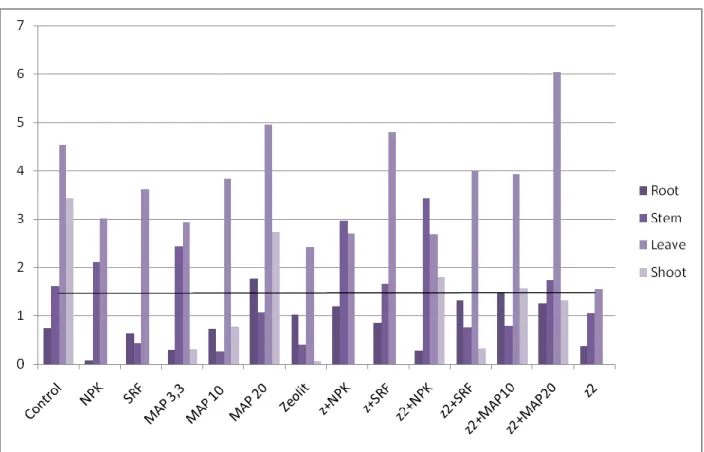
Figure II content of chromium in grape’s organs after fertilizer addition
Tabele III Content of nickel and chromium in grape’s organs in different treatments
Treatment Ni Cr
root stem shoot leaves root stem shoot leaves
1 control 5.13 2.99 1.99 5.28 0.75 1.61 3.44 4.53
2 NPK 5.79 3.34 3.19 6.68 0.07** 2.11 0.00** 3.02**
3 SRF 5.79 2.44 2.47 4.57 0.63 0.43* 0.00** 3.61
4 MAP1 9.61 3.73 2.20 3.68 0.3* 2.44 0.32** 2.93**
5 MAP 2 37.70** 11.09** 5.79 8.01* 0.74 0.27** 0.78 3.84
6 MAP3 94.61** 28.29** 18.56** 19.44** 1.765** 1.07 2.73** 4.96
7 Z 5.26 3.59 1.54 3.39 1.03 0.41* 0.07 2.42**
8 Z+NPK 7.61 5.75 11.29** 3.77 1.19* 2.97 0.00** 2.70**
9 Z+SRF 6.23 5.92 21.11** 5.65 0.86 1.66 0.00** 4.79
10 Z2+NPK 4.71 6.21 5.88 3.87 0.28* 3.43 1.80 2.69**
11 Zz2+SRF 5.46 3.57 2.58 5.51 1.32** 0.76** 0.32** 3.99
12 Z2+MAP2 71.22** 25.38** 19.60** 20.40** 1.47** 0.80 1.56* 3.93
13 Zz2+MAP3 79.09** 30.10** 16.59** 16.85** 1.25* 1.73 1.31* 6.04**
14 Z2 5.59 3.15 1.95 2.18* 0.38 1.06 0.00** 1.55**
lsd 0.01 6.86 6.05 6.77 3.131 0.56 1.22 2.5 1.292
In treatments with higher doses of MAP fertilizer, it was found increased adsorption of nickel, especially in the root. Nickel concentration in the root is above toxicity level ( 71.22, 79.09 and 94.61mg/kg). It is also found out that concentration of nickel in stem ( 11.09 - 30.10 mg/kg), shoot (11.29 - 21.11mg/kg) and leaves (8.01 - 20.40mg/kg) were considerably higher in treatments with phosphate fertilizer then control. This occurence may be implication of nitification process. The acidification effect was more pronounced with MAP than at the equivalent rate of N with AN (Andrew et al, 2002). Several authors also proved that acidic conditions mobilize Ni (Wiegand et al., 2009] and Miller et al., 2010 The lowest concentration of MAP fertilizer ( 5000kg/ha) did not shown increased adsorption of nickel. It could also be noticed translocation of chromium in leaves (6.04mg/kg).
According to Basta et al. (2001), metal bioavailability is related to its extractability. Additions of phosphate materials have proven extremely effective as a chemical immobilization treatment for Pb (Basta and McGowen, 2004). Ruby et al. (1994) indicated that adequate levels of soil phosphate were responsible for the formation of insoluble complexes and the reduction in potentially bioavailable Pb. ( Khan et al, 2009). Our research shown opposite results, in addition of phosphate nickel become more available. The reason for this aspect could be lowering of pH value caused by transformation of ammonium ions to nitrate and realize of hydrogen ions.
In phytotoxic studies (Kabata Pendias and Pendias, 1992), Ni is treated as a most mobile heavy metal, in comparison to some others (Cr, Pb) where its transfer into the fruits comes due to its particular mobility in phloem after the uptake of its considerable amounts (Cataldo et al., 1978). There are also some other investigations where Ni did not reached reproductive organs (Gigliotti et al.,1966).
Conclusion
The obtained results imply that monoammonium phosphate mobilize nickel and could not be used for remediation. Nickel translocate to aboveground organs and probably can reach fruits.
References
Adrian D.C., Wenzel W.W., Vangronsveld J., Bolan N.S.,(2004) Role of assisted natural remediation in environmental cleanup, Geoderma p.p.121-142
Knox A.S., Kaplan D.I. , Paller M.H.,(2006) Phosphate sources and their suitability for remediation of contaminated soils Science of the Total Environment 357 , p.p. 271– 279
Basta, N.T., Gradwohl, R., Snethen, K.L., Schroder, J.L., 2001. Chemical immobilization of lead, zinc and cadmium in smeltercontaminated sols using biosolids and rock phosphate. J. Environ. Qual. 30, 1222– 1230.
Hooda, P.S., Alloway, B.J., 1996. The effect of liming on heavy metal concentrations in wheat, carrots and spinach grown on previously sludge-applied soils. J. Agric. Sci. 127, 289–294
McGowen, S.L., Basta, N.T., Brown, G.O., 2001. Use of diammonium phosphate to reduce heavy metal solubility and transport in smelter-contaminated soil. J. Environ. Qual. 30, 493– 500.
Ruby, M.V., Davis, A., Link, T.E., Schoof, R., Chaney, R.L., Freeman, G.B., Bergstrom, P., 1993. Development of an in vitro screening test to evaluate the in vivo accessability of ingested mine-waste lead. Environ. Sci. Technol. 27, 2870– 2877.
Dudka, S., Chlopecka, A., 1990. Effect of solid-phase speciation on metal mobility and phytoavailability in sludge-amended soil. Water Air Soil Pollut. 51, 153– 160.
Khan M.J. and Jones D.L. Effect of Composts, Lime and Diammonium Phosphate on the
Phytoavailability of Heavy Metals in a Copper Mine Tailing Soil Pedosphere 19(5): 631–641, 2009
Kabata-Pendias A. and Pendias H., (1992) Trace elements in soils and plants. CRC Press Boca Ration USA
Cataldo D.A., Gerland T.R., Wildung R.E. and Drucker H.,(1978) Nickel in plants Distribution and chemical form in soybean plants, Plant Phisiology 62, 566-570
Gigliotti G., Businelli D. and Guisquiani P.L. (1966) Trace metals and distribution in corn plants grown on a 6-years urban waste compost amended soil, Agricul., Ecosys. and Environ. 58, 199-206
Soil Analysis, Part 1, Physical and Mineralogical Methods, 2nd edn. American Society of Agronomy,