ISSN(Online): 2320-9801
ISSN (Print): 2320-9798
I
nternational
J
ournal of
I
nnovative
R
esearch in
C
omputer
and
C
ommunication
E
ngineering
(An ISO 3297: 2007 Certified Organization)
Vol. 4, Issue 8, August 2016
e-Commerce and Cloud Computing: A Survey
Smt. Rachana C R
Associate Professor & Head, DoS in Computer Science, PG Wing of SBRR Mahajana First Grade College, Pooja
Bhagavat Memorial Mahajana PG Centre, K.R.S Road, Metagalli, Mysuru, India
ABSTRACT: The fast development of telecommunications technology in the past few decades is changing many
aspects of our lives – how we search for information, how we travel and not at least how we buy products or services. Although classic shop-based retail is still preferred, e-commerce or electronic commerce or online shopping, namely the buying and selling of products and services exclusively through electronic channels, is gaining popularity. E-Commerce in India is one of the fast growing sectors of India’s Digital Economy.One of the pioneers of the Indian IT Industry, Mr. Narayan Murthy recently announced that he would partner with Amazon India to launch a joint venture to create a new e-commerce entity for the Indian Market. The key factors driving the growth story of e-Commerce in India include:Considerable rise in the number of internet users, growing acceptability of online payments, Proliferation of internet-enabled devices and Favorable demographics. But, the phenomenal growth of the e-Commerce sector is accompanied by certain challenges like Absence of e-Commerce laws, Low entry barriers leading to reduced competitive advantages, rapidly changing business models, urban phenomenon, Shortage of manpower, and Customer loyalty. Cloud computing is a model for enabling convenient, on-demand network access to a shared pool of configurable computing resources (e.g., networks, servers, storage, applications, and services) that can be rapidly provisioned and released with minimal management effort or service provider interaction. This paper brings to light the growth, advantages of e-Commerce with relevance to cloud computing.
KEYWORDS: Cloud computing and e-commerce, challenges, PaaS, impact.
I. INTRODUCTION
Electronic Commerce is also known as e-commerce that consists of the purchasing and selling of products or services through electronic systems like computer networks and the Internet. In this modern world of technology, e-commerce is becoming a very significant option for many businesses as there are a lot of companies who are interested in developing and maintaining their own stores- online. Further, commerce has a number of applications in retail and wholesale. E-retailing or on-line E-retailing is the selling of goods from Business-to-Consumer through electronic stores that are designed using the electronic catalog and shopping cart model. Cybermall such as cybermallghana.com is a single Website that offers different products and services at one Internet location. It attracts the customer and the seller into one virtual space through a Web browser.
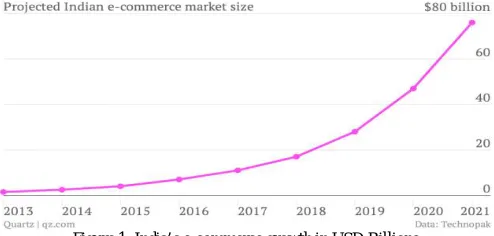
The e-commerce industry is expected to form the biggest chunk of the Indian internet market with a value of approximately USD 80 billion by 2021.
ISSN(Online): 2320-9801
ISSN (Print): 2320-9798
I
nternational
J
ournal of
I
nnovative
R
esearch in
C
omputer
and
C
ommunication
E
ngineering
(An ISO 3297: 2007 Certified Organization)
Vol. 4, Issue 8, August 2016
E-commerce enables people to go shopping without going to stores and select as many goods as they want without worrying about the time limit. As the cost of shopping falls considerably, people's willingness and demand on consumption would increase.
Figure 2: Internet users, by country.
Regarding the direction of investment, e-commerce will lead the government and enterprises to invest more in information network, particularly the new generation of information technology, and to keep improving the environment for economic and social development. The foregoing analysis indicates that since information consumption and e-commerce overlap to a great extent, government investment in promoting information consumption is also intended to propel the development of e-commerce, which can be verified from the State Council's documents on promoting information consumption.
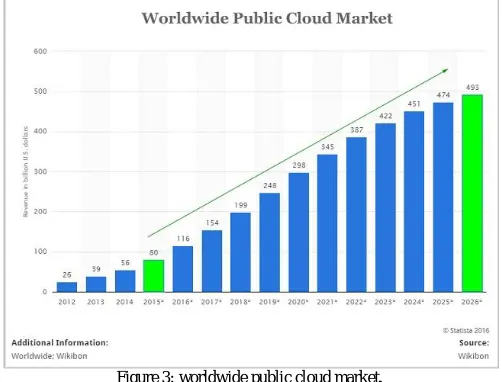
More importantly, the demand for e-commerce applications will give a boost to the investment in promoting the use of information technology in traditional manufacturing and service industries. In addition, due to the competition between e-commerce platform enterprises, e-commerce service providers will continue to invest more in developing a modern logistics system and cloud computing technology.
ISSN(Online): 2320-9801
ISSN (Print): 2320-9798
I
nternational
J
ournal of
I
nnovative
R
esearch in
C
omputer
and
C
ommunication
E
ngineering
(An ISO 3297: 2007 Certified Organization)
Vol. 4, Issue 8, August 2016
II. SAAS, PAAS, IAAS
There are three important services based on the cloud computing concept: SaaS, PaaS and IaaS.
SaaS is software as a service; applications that, instead of being downloaded onto aspecific PC and installed there (with the associated license cost), it is paid for as it is used.
PaaS, or Platform as a Service, are services that offer APIs, applications and platforms forthe development of e-commerce environments. They are designed for transactionalenvironments in which data can always be extracted and imported.
IaaS, or Infrastructure as a Service, implies a great deal of scalability depending onneeds, to adapt to periods of greater or lesser demand, and it is a more complex solutionthan SaaS.Developers of e-commerce solutions indicate that the top reasons for choosing PaaS as their eCommerce platform are modern environment, APIs, support for mobile, integration capabilities, security, and speed to deployment as the top reasons for choosing.
The platform as a service (PaaS) is an enhanced version of service infrastructure (IaaS). The company has an on demand infrastructure that can be adjusted according to the needs. Also, it has a minimum service from its service provider, since it is also responsible for operating systems and certain licenses, such as databases.In PaaS, the resources and software needed for the hosting of its platform and service is used for production. The service provider will install and configure servers, operating systems, databases and required licenses. The consumer will still be responsible for setting its applications and operations.The advantage is that the company has a highly flexible and scalable service. According to its needs, it can adjust its platform.
ISSN(Online): 2320-9801
ISSN (Print): 2320-9798
I
nternational
J
ournal of
I
nnovative
R
esearch in
C
omputer
and
C
ommunication
E
ngineering
(An ISO 3297: 2007 Certified Organization)
Vol. 4, Issue 8, August 2016
III. IMPORTANT BENEFITS OF CLOUD COMPUTING TO E-COMMERCE
Trust
One of biggest challenges facing e-commerce pioneers in the early days of the web turned out not to be a technical problem, but a human one-trust. It took time to build trust into the networks and establish a set of online credentials that made buyers feel comfortable initiating an online purchase.With the advent of cloud computing, existing businesses and startups can immediately leverage the trust built into established cloud systems such as Google, Amazon and Salesforce.
Speed
A company may be able to roll out an e-commerce application five times faster than before and begin selling immediately on the remote platform.
Scalability
Cloud computing makes a company more elastic and able to respond to seasonal changes or sudden increases in demand due to special promotions.
Cost Savings
Cost is generally one of the primary reasons for moving a business application or data center to the cloud.While there may be a low cost associated with developing and deploying an e-commerce application, the parallel need for hardware and bandwidth may turn out to be expensive.Generally, a cloud-based initiative on a virtualized server may save a company 80% of the costs normally associated with a traditional e-commerce roll out.
Interoperability
The explosive growth in cloud ecommerce offerings in the next few years will also see an increase in the ability to share information between clouds and communities of clouds. Leading-edge cloud vendors will offer a standards-based framework, which allows programmatic access for users, partners and others who want to leverage additional functionality from within the cloud.
IV. CONCLUSION
The term cloud computing in no longer a buzz word, but indicates how corporate information and ecommerce applications are stored online, can be accessed and shared. Cloud computing offers many benefits to the ecommerce market. The speed of building ecommerce websites, the cost savings of infrastructure and the reliability of a stable platform are just a few examples of the benefits of a cloud service.
ISSN(Online): 2320-9801
ISSN (Print): 2320-9798
I
nternational
J
ournal of
I
nnovative
R
esearch in
C
omputer
and
C
ommunication
E
ngineering
(An ISO 3297: 2007 Certified Organization)
Vol. 4, Issue 8, August 2016
[4] https://medium.com/@briannawillsss/18-major-benefits-of-e-commerce-business-for-retailers-customers-in-2015-63c5fc87f679#.gxqsypkig
[5]http://economictimes.indiatimes.com/tech/hardware/nokia-bets-on-indias-e-commerce-sector-to-grow-analytics-applications-business/articleshow/52218450.cms
[6] http://yourstory.com/2015/07/consumer-internet-app-mania/
[7] http://www.esds.co.in/blog/cloud-computing-impact-on-growth-of-ecommerce-applications/#sthash.Dsm4Syqr.dpbs [8] http://en.drc.gov.cn/2015-07/03/content_21170808.htm
[9] https://olinblog.wustl.edu/2015/11/business-innovation-ideas-saas-paas-iaas-for-e-commerce-or-vice-versa/ [10] https://www.b2becommerceworld.com/2016/05/12/paas-beats-saas-among-b2b-e-commerce-software-developers [11] http://www.biztechmagazine.com/article/2016/05/small-business-growth-requires-strategic-it-planning
[12] http://www.vi.net/blog/2010/11/the-benefits-of-cloud-computing-to-the-e-commerce-industry/