UCAR, REDIFE ASLIHAN. Utilization of Alternate Energy Sources in Cucumber Fermentations by Certain Lactic Acid Bacteria, Including Starter Culture Candidates and Spoilage-Associated Species. (Under the direction of Dr. Ilenys Pérez-Díaz).
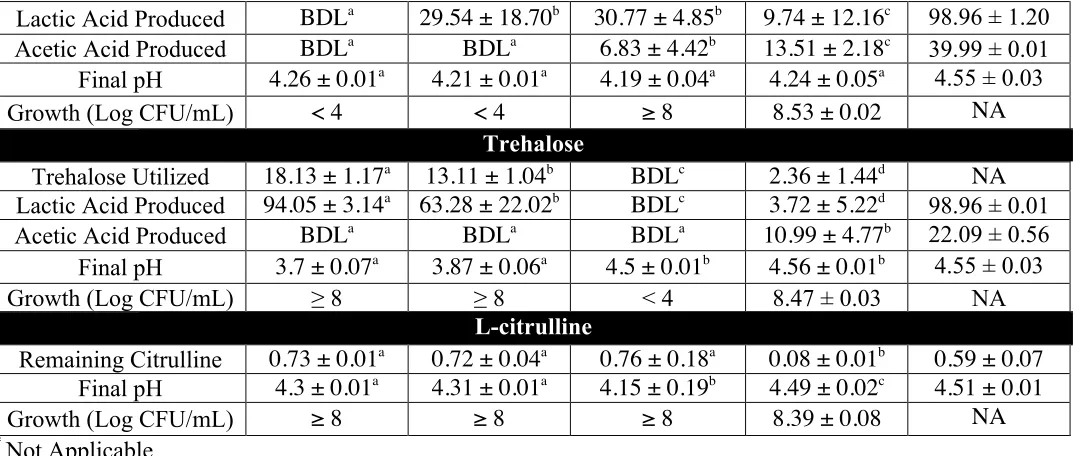
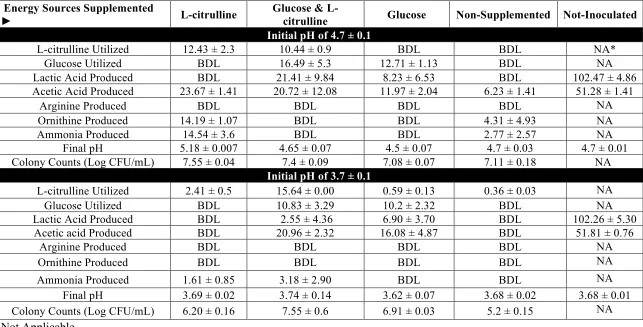
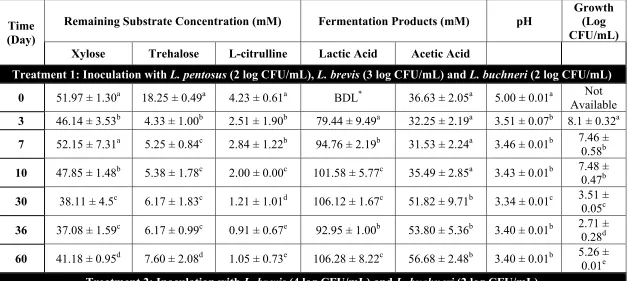
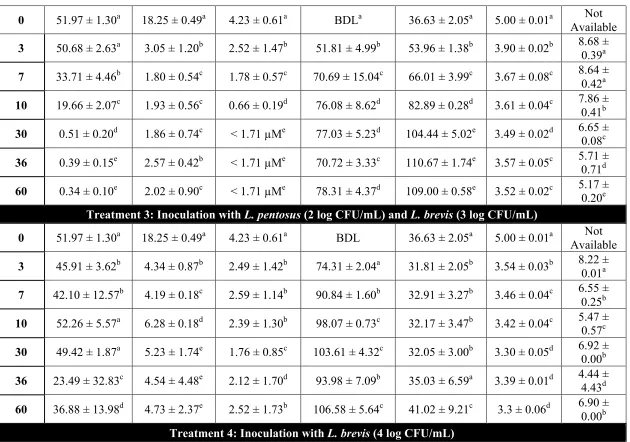
by the bioinformatics analysis, limited correlation was found with the phenotypes observed. L. plantarum and L. pentosus were able to utilize cellobiose, gentiobiose and trehalose in FCJM, but not citrulline, furfural or xylose. L. brevis was able to only utilize gentiobiose, xylose and furfural in FCJM at pH 4.7. P. pentosaceous utilized trehalose in FCJM at pH 4.7, and it is still uncertain if this species can utilize the other compounds. L. buchneri was able to utilize all the compounds tested in FCJM and was unique in converting citrulline to ammonia and ornithine in the presence of limiting glucose. The presence of excess glucose in the FCJM prevented the production of the biogenic amine, ornithine by L. buchneri. Additionally, L. plantarum, L. pentosus and L. brevis were able to produce citrulline presumably from arginine. Differences were observed in the ability of specific L. plantarum and L. pentosus strains to convert cellobiose or gentiobiose to lactic acid. Inoculation of L. brevis and L. buchneri in fresh cucumber juice medium (FrCJ) supplemented with 18.25 ± 0.49 mM trehalose, 51.97 ± 1.30 mM xylose, and 4.23 ± 0.61 mM citrulline resulted in a complete removal of the alternate energy sources prior to reaching a pH inhibitory for the fermentation itself (pH 3.3). Inoculation of unsupplemented FrCJ with a tripartite starter culture of L. pentosus, L. brevis and L. buchneri resulted in the removal of citrulline between days 10 and 30 of the fermentation and a stable pH (3.57 ± 0.01) and lactic acid and acetic acid concentrations for 55 days of long-term storage under
by
Redife Aslihan Ucar
A thesis submitted to the Graduate Faculty of North Carolina State University
in partial fulfillment of the requirements for the degree of
Master of Science
Food Science
Raleigh, North Carolina 2018
APPROVED BY:
_______________________________ _______________________________ Dr. Ilenys M. Pérez-Díaz Dr. Lisa L. Dean
Committee Chair
DEDICATION
BIOGRAPHY
Redife Aslihan Ucar was born in Aydin, Turkey on March 25, 1988 and has a wonderful sister and smart brother. She received her B.S. degree from the Pamukkale University (PAU) in Food Engineering. While at PAU, she did the internships at Taris Olive Oil Company,
ACKNOWLEDGMENTS
First, I would like to thank my advisor, Dr. Ilenys M. Pérez-Díaz for her constant support and encouragement throughout my graduate education. Second, I would like to thank my
committee members Dr. Lisa Dean and Dr. Sophia Kathariou for their comments, suggestions and technical support. I am also thankful to Janet Hayes for providing help with the laboratory techniques. I am very thankful to Robert Price for his technical support and Sandra Parker for her administrative support. I would like to acknowledge all my co-workers and friends including Rasi Fitria, Yawen Zhai, Trisha Bhatia, Morgan Caudil, Rong Reynolds, Lesley Montalvo-Sandoval and Dr. Blanca Escudero-Abarca. I would also like to acknowledge the Ministry of Food with the Turkish government for their financial support and help throughout my education in the U.S.
Many thanks to my family for being supportive, positive, and loving from afar. Finally, I would like to thank my husband, Erhan Ucar for his endless support, love, patience and
TABLE OF CONTENTS
LIST OF TABLES ... vii
LIST OF FIGURES ... ix
CHAPTER 1: Literature Review ... 1
1.1 Introduction ... 2
1.1.1 Cucumber Fermentation ... 2
1.1.2 Sugars in Fresh and Fermenting Cucumbers ... 3
1.1.3 Lactic Acid Bacteria Requirements for Growth and Metabolism ... 5
1.1.4 Carbohydrates Metabolism in LAB ... 11
1.1.5 Secondary Energy Sources for LAB in Cucumber Pickles ... 12
1.1.5.1 Metabolism and Chemical Characteristics of Cellobiose, Gentiobiose, and Trehalose ... 13
1.1.5.2 Metabolism and Chemical Characteristics of Xylose and Lyxose ... 16
1.1.5.3 Metabolism and Chemical Characteristics of Furfural ... 18
1.1.5.4 Metabolism and Chemical Chracteristics of Citrulline ... 19
1.1.6 Starter Cultures for Cucumber Fermentations ... 21
1.1.7 Spoilage of Cucumber Fermentation ... 24
1.2 References ... 26
CHAPTER 2: Content of Xylose, Trehalose, and L-citrulline in Cucumber Fermentations and Utilization of Such Compounds by Certain Lactic Acid Bacteria ... 44
2.1 Abstract ... 45
2.3 Material and Methods ... 51
2.4 Results ... 58
2.5 Discussion ... 65
2.6 Conclusion ... 71
2.7 Acknowledgements ... 71
2.8 References ... 72
CHAPTER 3: Gentiobiose and Cellobiose Content in Fresh and Fermenting Cucumbers and Utilization of Such Disaccharides by Lactic Acid Bacteria in Fermented Cucumber Juice Medium ... 92
3.1 Abstract ... 93
3.2 Introduction ... 94
3.3 Material and Methods ... 97
3.4 Results ... 102
3.5 Discussion ... 106
3.6 Conclusion ... 110
3.7 Acknowledgements ... 110
3.8 References ... 111
CHAPTER 4: Conclusion and Future Directions ... 124
4.1 References ... 130
LIST OF TABLES
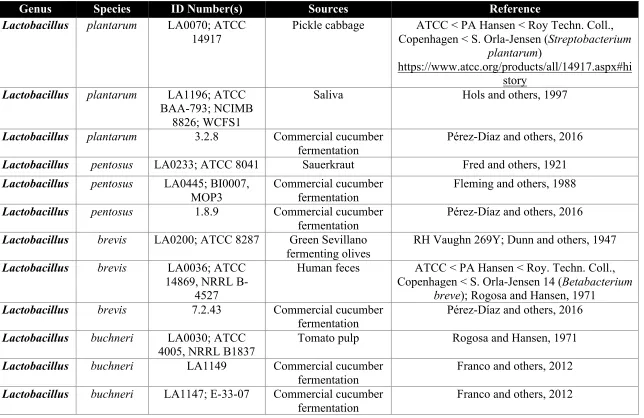
Table 2.1 Description of the lactic acid bacteria strains used in this study ... 80 Table 2.2 Measurements of trehalose, xylose and L-citrulline in fresh and fermented
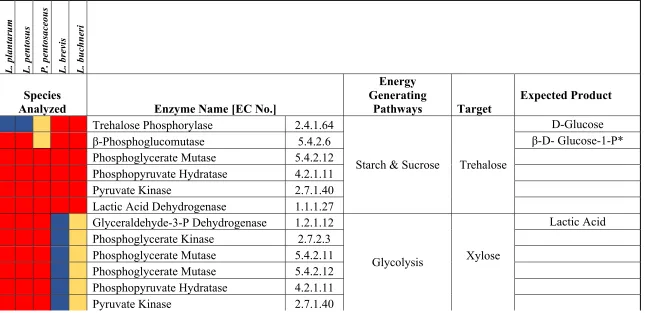
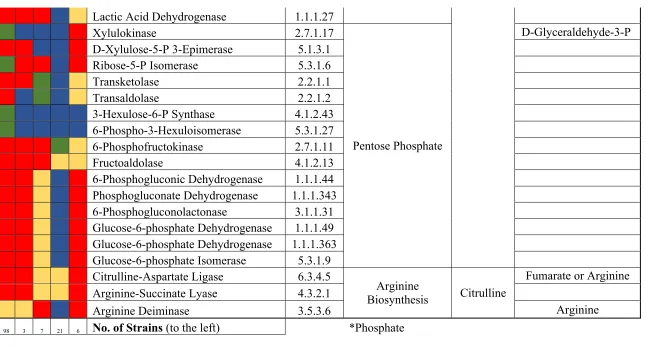
cucumbers by HPLC ... 81 Table 2.3 Bioinformatic analysis of the putative pathways involved in the utilization of
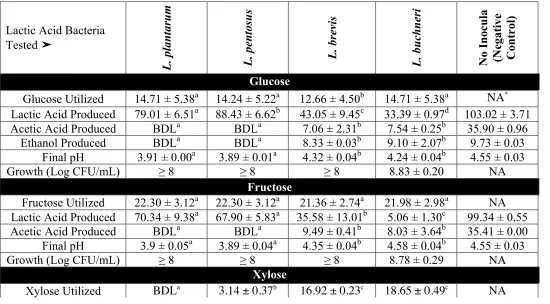
alternative energy sources by selected lactic acid bacteria (L. plantarum, L. pentosus, P. pentosaceus, L. brevis, and L. buchneri) ... 82 Table 2.4 Utilization of trehalose, xylose, and L-citrulline by selected lactic acid bacteria
in fermented cucumber juice (FCJM) at pH 4.7 ... 84 Table 2.5 Utilization of L-citrulline by Lactobacillus buchneri in the presence of
glucose ... 86 Table 2.6 Fermentation by certain LAB of fresh cucumber juice supplemented with
18.25 ± 0.49 mM trehalose, 51.97 ± 1.30 mM xylose and 4.23 ± 0.61 mM L-citrulline ... 87 Table 2.7 Fermentation by certain LAB of raw fresh cucumber juice medium
inoculated with mixed starter cultures ... 90 Table 3.1 Description of the lactic acid bacteria strains used in this study ... 118 Table 3.2 Bioinformatic analysis of the cellobiose and gentiobiose putative pathways
in certain lactic acid bacteria of relevance to cucumber fermentations ... 120 Table 3.3 Utilization of cellobiose and gentiobiose by certain lactic acid bacteria in
Table 3.4 Utilization of cellobiose by Lactobacillus pentosus and Lactobacillus plantarum in Fermented Cucumber Juice Medium with an adjusted pH of 4.7 ... 122 Table 3.5 Utilization of gentiobiose by Lactobacillus pentosus and Lactobacillus
plantarum in Fermented Cucumber Juice Medium with an adjusted pH of 4.7 ± 0.1 ... 123 Table 4.1 Utilization of furfural by selected lactic acid bacteria in fermented
cucumber juice medium (FCJM) with an initial pH of 4.7 ± 0.1 ... 131 Table 4.2 Utilization of furfural by strains of Lactobacillus plantarum under
anaerobiosis (top panel) and aerobiosis (bottom panel) in fermented
cucumber juice medium (FCJM) with an initial pH of 4.7 ± 0.1 ... 132 Table 4.3 Utilization of furfural by strains of Lactobacillus pentosus under anaerobiosis
(top panel) and aerobiosis (bottom panel) in fermented cucumber juice
LIST OF FIGURES
Figure 1.1 Proposed carbohydrate fermentation pathways for cellobiose, gentiobiose, trehalose, glucose, fructose, and citrulline used by selected lactic acid
1.1 Introduction
1.1.1 Cucumber Fermentation
cover brine and increasing lactic acid concentrations and the population of LAB (Tamang and Tamang, 2010; Franco and Perez-Diaz, 2013). Moreover, the growth of Enterobacteriaceae and Bacillus species is inhibited by the acid produced by the prevailing LAB, the limiting dissolved oxygen levels and the NaCl added in cover brines (Fleming, 1984; Panagou and Katsaboxakis, 2006; Con and Karasu, 2009; Franco and Pérez-Díaz, 2012; Yu and others, 2012; Soltan Dallal and others, 2017). Mostly yeasts such as Debaryomyces sp., Endomycopsis ohmeri, Zygosaccharomyces spp., Candida krusei, Pichia spp., Torulopsis spp., Brettanomyces versatilis, Hansenula subpelliculosa Torulaspora rosei and Kloeckera magna are present in the secondary stage of cucumber fermentation (Etchells and Bells,1950a and 1950b). The last stage of cucumber fermentation is dominated by film-forming oxidative yeasts and bacteria in outdoor-open-top tanks (Etchells and Bells,1950a). Microbial activity during the post-fermentation period often results in rising pH spoilage producing acetic, propionic and/or butyric acids and decreasing lactic acid concentration (Franco and others, 2012). The main spoilage organisms in cucumber fermentations include Acetobacter peroxydans, Acetobacter aceti, Acetobacter pasteurianus, L. rapi and L. buchneri (Medina and others, 2016). Controlled cucumber fermentations have been achieved by eliminating the initiation, secondary fermentation, and post-fermentation stages (Fleming, 1984).
1.1.2 Sugars in Fresh and Fermenting Cucumbers
extracted from cucumbers mesocarp, including rhamnose, fucose, arabinose, xylose, mannose, galactose, glucose and galacturonic acid, at concentrations between 0.1 and 7 mM, no changes occur as a function of tissue softening induced by heating or fermentation (McFeeters, 1992). While glucose, fructose, and sucrose are the major water-soluble sugars in cucumbers, stachyose has been also detected in the smaller fruits (Pharr and others, 1977). Selected strains of L. plantarum, L. brevis, Leuconostoc mesenteroides and Pediococcus pentosaceous are able to utilize stachyose and raffinose (Fleming and Pharr, 1980). Raffinose can also be utilized by Lactobacillus buchneri (Sanders and others, 2015).
Fermentable sugars in cucumber fermentations: Monitoring of the progression of cucumber fermentations have been focused on the conversion of the primary sugars naturally present in the fruits to lactic acid, acetic acid, and ethanol by lactic acid bacteria. The disappearance of 100% of the fructose and glucose naturally present in the fruits is considered the desired end-point of a cucumber fermentation. Thus, commercial production has capitalized on the use of reductive sugars strips to routinely monitor the completion of fermentation in batches prior to processing. The development of chromatography methods such as HPLC, enabling the concomitant detection of glucose and fructose to organic acids and ethanol, expanded the sensitivity threshold and ability to determine specific yields of the deriving fermentation end products (McFeeters and Barish, 2003).
GC-TFMS) for fermented cucumber brines and attributed 314 peaks to the process itself (Johanningsmeier and McFeeters, 2011). Thirty-three metabolites were found to change in laboratory scale fermentations that underwent spoilage, characterized by an increase in pH, reduction in lactic acid, increase in acetic acid and production of propionic acid (Johanningsmeier and McFeeters, 2011). Additional metabolite concentrations found to fluctuate as the result of fermentation spoilage included those corresponding to butyric acid, alcohols, n-propyl acetate and furfural. Furthermore, metabolic profiling of anaerobic fermented cucumbers spoilage by Lactobacillus buchneri revealed changes in 92 compounds including citrulline, trehalose, cellobiose, xylose, lyxose, gentiobiose and lactic acid (Johanningsmeier and McFeeters, 2015). Incremental concentrations were observed in alcohols and butanoic and pentanoic acids and were accompanied by decreases in the concentration of monosaccharides, disaccharides, amino acids, nucleosides, long chain fatty acids and ketones (Johanningsmeier and McFeeters, 2015). Especially, citrulline, D-trehalose, and D-cellobiose were utilized by L. buchneri prior to lactic acid degradation (Johanningsmeier and McFeeters, 2015).
1.1.3 Lactic Acid Bacteria Requirements for Growth and Metabolism Lactobacilli growth requirements
cytosine can be replaced by inosine or uracil, respectively (Elli and others, 2000). Iron is critical in the de novo synthesis of purines and pyrimidines (Elli and others, 2000). Three amino acids are essential for growth of lactobacilli including L-glutamic acid, L-valine and L-leucine (Ledesma and others, 1977). Some lactobacilli also need L-arginine, L-tyrosine and L-tryptophan (Ledesma and others, 1977). Some strains of Lactobacillus plantarum also need cysteine and L-phenylalanine (Ledesma and others, 1977). When compared to L. plantarum, L brevis and L. buchneri have more amino acid requirements (Ledesma and others, 1977). L. plantarum, L. buchneri and L. brevis require niacin and pantothenate for growth in synthetic medium (Ledesma and others, 1977). While L. plantarum needs riboflavin for growth in synthetic medium, L. brevis and L. buchneri require thiamin (Ledesma and others, 1977; Rogosa and others, 1961). The minerals manganese and potassium are essential for growth of most lactobacilli while magnesium is stimulatory (McLeod and Snell, 1947). Although, differences among amino acid and vitamin requirements of LAB have been shown among species and strains, fermentable carbohydrates are essential for growth of lactobacilli (Morishita and others, 1981).
L. plantarum is a facultative heterofermentor using hexoses and pentoses via the glycolytic and 6-phosphogluconate/phosphoketolase pathway, respectively (Axelsson, 2004; Khalid, 2011). L. plantarum NCIMB 8026 is able to utilize ribose, xylose and L-arabinose in the presence of glucose (Westby and others, 2008). When L. plantarum NCIMB8026 utilizes ribose and glucose, it produces 3 moles of lactic acid and 1 mole of acetic acid, limits growth to the presence of the hexose and continues to metabolize the pentose when present alone (Westby and others, 2008).
L. plantarum shows lower sugar consumption in cucumber juice containing glucose and fructose as compared to MRS broth containing mainly glucose. Even though, total hexose consumption by L. plantarum was low in cucumber juice; the bacterium growth was higher in MRS, as evidenced by colony forming units (Plumed-Ferrer and others, 2008). Such observation suggested a sugar independent growth efficiency in cucumber juice medium, presumably due to the metabolism of malic acid via the malolactic enzyme. In contrast, proteins involved in nucleotide metabolism, were minimally expressed in liquid feed as compared to MRS broth or cucumber juice, suggesting the presence of intrinsic sources for DNA and RNA building blocks in the feed (Plumed-Ferrer and others, 2008). A homolactic acid fermentation occurred in cucumber juice as evidenced by the production of 2 moles of lactic acid from each mole of glucose.
for fermentation in L. plantarum (Westby and others, 2008; Kandler, 1983; Hammes and Hertel, 2015).
A sugar utilization profile of 120 lactobacilli strains of six species (L. plantarum, L. brevis, L. buchneri, L. fermentum, L. casei, and L. fructovirons) under different preservation conditions of acidic pH, the presence of weak acids, and high salt was developed by Sanders and others (2015). L. plantarum strains were chosen for the study given the availability of genome sequences and phenotypic trees. All strains of L. plantarum, L. brevis and L. buchneri were inoculated in MRS medium (De Man and others, 1960) supplemented with 2% glucose and other carbon sources (>99% purity) such as D-xylose, amygdalin, glycerol, glucopyranoside, methyl-a-D-mannopyranoside, D-melibiose, dulcitol, D-melezitose, D-raffinose, D-lactose, L-rhamnose, starch, D-sorbitol, D-turanose, L-arabinose, potassium gluconate and D-trehalose and incubated at 30 0C for over 21 days (Sanders and others, 2015). All selected lactobacilli strains were able to grow on D-melezitose, starch, glucose, and D-melibiose and almost all strain were able to utilize amygdalin (118/120), D-raffinose (119/120), D-sorbitol (114/120), methyl-a-D-glucopyranoside (119/120), methyl-a-D-mannopyranoside (117/120), L-arabinose (113/120) (Sanders and others,
2015). Specifically, most of the L. plantarum, L. brevis, and L. buchneri strains showed an ability to utilize D-xylose and most strains of L. casei, L. plantarum, and L. brevis were able to grow on D-trehalose. However, none of bacteria tested grew on glycerol (Sanders and others, 2015).
levan and β-cyclodextrin.
Sugars transport/uptake by lactic acid bacteria:
Obviously, the first step in carbohydrates utilization is the translocation of the molecule into a cell. LAB mostly depend on the ATP-binding cassette transporters to translocate sugars and solutes and excrete toxic products such as xenobiotics and drugs (Poolman, 2002). Secondary transporters, including symporters, uniporters and antiporters are also present in LAB and operate on the free energy difference stored in the electrochemical gradient of the solutes (Poolman, 2002). Additionally, LAB use substrate transport by group translocation via the phosphoenol-pyruvate phosphotransferase systems (PEP-PTSs) (Poolman, 2002).
encoded cellobiose specific PTS ability to translocate lactose. Both disaccharides consist of at least one glucose molecule joined to a second monomer via a β-glucosidic bond. The cellobiose-specific-PTS in Lc. lactis is regulated by its substrate and/or the general catabolite repressor, CcpA (Aleksandrzak-Piekarczyk and others, 2011). While Lc. lactis strains are able to utilize the disaccharide cellobiose; the ability to metabolized β-gentiobiose is rare. Lactose assimilation, which is a requirement of PTS system in Lc. lactis, can occur when cellobiose is present (Aleksandrzak-Piekarczyk and others, 2011).
Lactobacilli are lactic acid bacteria known to utilize a variety of sugars via the phosphotransferase system (PTS) (Lorca and others, 2007), which are sugar-uptake systems unique to bacteria (Saier, 2000). The Lactobacillus plantarum genome encodes for 25 PTS, which correspond to a broad sugar utilization profile (Kleerebezem and others, 2003).
strains belonging to the L. casei, L. plantarum, L. buchneri and L. brevis species are able to grow on D-trehalose and D-xylose (Sanders and others, 2015). In an attempt to classify 185
Lactobacillus plantarum strains, Siezen and others (2011) determined that aside from glucose, such strains could utilize D-trehalose but not xylose. Xylose utilization was observed by co-inoculating 2 or more strains in MRS supplemented with the sugar (Siezen and others, 2011). Utilization of key sugars in fermented foods such as glucose, fructose, mannitol, and lactose by Lactobacillus pentosus LPS26, a green olives fermentation isolate, frequently dominates the bioconversion of vegetables for the production of exopolysaccahrides (EPS) (Sanchez and others, 2006).
1.1.4 Carbohydrates Metabolism in LAB
Glycolysis is the main metabolic pathway used by lactic acid bacteria (LAB) to convert sugars into lactic acid and generate adenosine triphosphate (ATP) for growth and maintenance of homeostasis. During glycolysis one mole of hexose is converted to 2 moles of lactic acid. For LAB, efficient carbohydrate fermentation also includes substrate-level phosphorylation to produce additional ATP and regenerate the cofactor NAD(P)H/H. Selected LAB preferentially utilize the 6-phosphogluconate pathway to convert one mole of hexose to 1 mole of carbon dioxide, 1 mole of ethanol (or acetic acid), and 1 mole of lactic acid, while generating two NAD(P)H/H+ molecules and two ATPs (Spector, 2009).
metabolic conversion generates 2 molecules of ATPs from one molecule of glucose. Heterofermentative LAB convert pentoses or hexoses to a mixture of lactic acid, formic acid, acetic acid and ethanol generating up to 3 molecules of ATP (Kleerebezem and others, 2003). Facultative heterofermentative bacteria, such as L. plantarum, are able to convert sugars to lactic acid, formic acid, acetic acid, ethanol, acetoin, and 2,3-butanediol via pyruvate using the Embden-Meyerhoff-Parnas (EMP) for hexoses or the phosphoketolase pathway for pentoses (Kleerebezem and others, 2003). However, L. plantarum is known to utilize the phosphoketolase pathway for the conversion of hexoses as well (Pieterse and others, 2005).
The phosphoenol pyruvate-phosphotransferase system (PEP-PTS) is used by homofermentative LAB to utilize glucose through the EMP (Romano and others 1979). As stated above, the phosphoenolpyruvate-dependent phosphate transferase system (PEP-PTS) provides transport of carbohydrates across the majority of bacterial membranes, an energetically efficient translocation that catalyzes the phosphorylation of the substrate (Aleksandrzak-Piekarczyk and others, 2011; Poolman, 2002). A wide range of monosaccharides, disaccharides, glucosides, and polyols are transported by PEP-PTS (Aleksandrzak-Piekarczyk and others, 2011).
LAB utilizing the Emden-Meyerhoff pathway to catabolize glucose preferentially transport carbohydrates via the PTS system, however, metabolism of sugars other than glucose is subject to carbon catabolite repression (Gänzle, 2015). In LAB fermenting glucose via the phosphoketolase pathway instead of the Emden-Meyerhoff pathway, the PTSs are dysfunctional, disaccharides are preferred over glucose, acetyl-phosphate is a central metabolic branching point and fructose is reduced to mannitol (Gänzle, 2015).
1.1.5 Secondary Energy Sources for LAB in Cucumber Pickles
cucumber fermentations. Lactic acid bacteria, in particular, L. plantarum catabolizes malic acid to lactic acid and CO2 by the malo-lactic enzyme during the first 7 days of cucumber fermentation (McFeeters and others, 1982). Production of CO2 in cucumber fermentations is associated with bloater defect (McFeeters and others, 1982; McFeeters and others, 1984). Once 12.5 mM of CO2 is produced from sources other than malic acid degradation (McFeeters and others, 1984), the internal tissue pressure increases producing enough force to displace the endocarp and/or seed cavity tissue towards the exocarp or skin, forming hollow cavities or gas pockets within the fruit. Malic acid is also a buffer in lactic acid fermentation, enabling increase utilization of the carbohydrates in cucumber juice fermentation (McFeeters and others, 1982). Utilization of malic acid in cucumber fermentations is defined by transport across the bacterial membrane, activity of the malolactic enzyme, the sugar usage, availability of energy, and the concentration of the organic acid.
Citrulline, trehalose, cellobiose were identified as potential energy sources during spoilage associated secondary cucumber fermentation (Johanningsmeier and McFeeters, 2015). Non-targeted metabolomics analysis of the volatile and nonvolatile compounds was applied to end of fermentation and spoiled cucumber fermentation samples identifying more than 600 metabolite peaks that changed as a function of anaerobic spoilage after 146-days (Johanningsmeier and McFeeters, 2015).
glucose when b-glucosidase is present in the environment or provided by LAB (Singhvi and others,
2010; Abdel-Rahman and others, 2011). Cellobiose is the product of the degradation of cellulose or related plant β-glucan. Trehalose, a 1-α-disaccharide, is produced by organism to avoid dehydration and respond to osmotic stress (Crowe and others, 2001; Gänzle and Follador, 2012; Goddijn and van Dun, 1999).
While L. plantarum, L. johnsonii, L. casei and L. acidophilus have a diversity of enzymes such as disaccharide hydrolases or disaccharide-phosphate hydrolases to breakdown disaccharides, some lactobacilli species, such as L. brevis, L. reuteri and L. delbrueckii have a weak enzymatic system yielding a restricted disaccharides utilization spectrum (Gänzle and Follador, 2012; Andersson and others, 2005; Barrangou and others, 2006; Francl and others, 2010). 90% of a group of 72 L. plantarum isolates from vegetables and fruits were able to use D-cellobiose, while less than 50% were capable of fermenting gentiobiose. Variability in the ability to utilize cellobiose and gentiobiose by 10 L. plantarum isolated from Thai fermented vegetables and fruits was also observed by Tanganurat and others (2009). A number of lactobacilli including L. paracasei subsp. paracasei, L. plantarum, L. paraplantarum, L. curvatus, L. herbarum, and L. rhamnosus as well as Pediococcus pentosaceous and Pediococcus acidilactici are able to ferment cellobiose producing L- and D-lactic acid as the result of homofermentation (Carr and others, 2002; Fitzsimons and others, 1999; Tamang and others, 2005; Mao and others, 2015; Soltan Dallal and others, 2017; Yu and others, 2012). However, L. brevis, L. buchneri and L. spicheri are unable to use such sugar (Fitzsimons and others, 1999; Yu and others, 2012; Rogosa and others, 1961). Although the machinery for the metabolism of disaccharides often enables the catabolism of tri- and tetrasaccharides, such conversions occur intracellularly and is limited by transport, which differentiates most LAB from members of the gastrointestinal tract microbiome, particularly Bifidobacterium spp (Gänzle and Follador, 2012).
across kingdoms (Crowe and others, 2001) and is metabolized by a number of lactic acid bacteria by PTSs and the intracellular phospho-glycosyl hydrolase (Gänzle and Follador, 2012;
Andersson and others, 2005; Barrangou and others, 2006; Francl and others, 2010). Bacteria that are freeze-dried in the presence of trehalose recover significantly better that those treated with sucrose and retained viability even after extended exposure to high humidity (Crowe and others, 2001; Leslie and others, 1995). Given that trehalose lacks reducing ends, it is resistant to heat, extreme pH and the Maillard’s reaction, it stabilizes biological structures under stress (Goddijn and van Dun, 1999). Trehalose forms a glass-like structure around biological membranes and enzymes after dehydration (Colaço, 1994). Although, some microbes such as Escherichia coli and Saccharomyces cerevisiae can synthesize trehalose, other studies recognize the ability of a wider spectrum of microbes capable of transporting and utilizing it (Romero and others, 1997). Studies of trehalose biosynthesis by transgenic plants engineered with the microbial genes revealed that limited amounts of trehalose accumulate in plants and the existence of trehalase in the same system (Goddijn and others, 1997). Trehalose is known to accumulate up to 12 % of the plant dry weight, in cryptobiotic species, and impart stress tolerance, particularly drought
(Goddijn and van Dun, 1999). Although, plant systems do not seem to accumulate trehalose in significant amounts, a substantial number of plant associated lactic acid bacteria are capable of assimilating the disaccharide.
1.1.5.2 Metabolism and Chemical Characteristics of Xylose and Lyxose
lactic acid via the pentose phosphate (PP)/glycolytic pathway via pyruvate (3-carbon) (Abdel-Rahman and others, 2011). Some LAB species, such as Lactoccocus lactis, are able to use the PK and PP pathways to fully metabolize xylose (Okana and others, 2009). However, early studies suggested that pentose sugars are converted to lactate or acetate via 6-P-gluconate pathway by heterofermentative LAB.
Five-carbon sugars such as D-xylose breaks down to D-xylulose-5P, the intermediate of pentose fermentation, prior to the production of lactic or acetic acids (Kandler, 1983). Xylose is converted to xylulose by xylose isomerase (XylA). Xylulose is metabolized by xylulokinase (XylB) to xylulose-5-phosphate (X5P) which is then converted to glyceraldehyde-3-phosphate (GAP) and acetylphosphate (acetyl-P) by a phosphoketolase. GAP is subsequently converted to pyruvate and then lactic and acetic acids using the phosphoketolase (PK) pathway (Tanaka and others, 2002; Okana and others, 2009). A detailed examination of a metabolic flux analysis showed that xylose is fermented via the PK pathway by 6 different strains of L. brevis and L. plantarum (Zhang and others, 2016). While the typical homofermentative LAB use the EMP to metabolize sugars, most heterofermentative LAB use the PK pathway to ferment carbohydrates
into lactic acid, acetic acid, ethanol and/or CO2 (Zhang and others, 2016; Gänzle, 2015). While the typical L. brevis can utilize glucose, xylose and/or both as carbon sources to
and a regulatory protein (XylR). The translocation of D-xylose is facilitated by XylP and XylQ through the EIIMan transporter system in L. pentosus (Lokman and others, 1994; Chaillou and others, 1999). According to a proteomic analysis, L. brevis can metabolize xylose alone and/or combine with glucose through the heterofermentative pathway (Kim and others, 2009).
Proteomic and transcriptomic analyses have also shown that cells supplemented with xylose alone or a combination of glucose and xylose express the xyl operon (Kim and others, 2009). Thus, it was concluded that L. brevis co-ferments xylose and glucose (Kim and others, 2009; Yu and others, 2012).
While, some L. plantarum strains are able to ferment pentoses, no growth was detected in culture media supplemented with arabinose, xylose, and ribose (Westby and others, 1993; Hammes and Hertel, 2015). It was speculated that carbohydrates may be co-metabolized with different purposes. Hexoses are known to participate of the biosynthesis of peptidoglycan and other building blocks and fructose is required as an electron acceptor rather than as a substrate for fermentation in L. plantarum (Westby and others, 1993; Kandler, 1983; Hammes and Hertel, 2015).
1.1.5.3 Metabolism and Chemical Characteristics of Furfural
Production of furfural from pentoses in lignocellulose based-fermentations is known to impair some biotransformations (Ran and others, 2014; Pornkamol and Franzen, 2015; Unrean, 2017; Horváth and others, 2003). Saccharomyces cerevisiae, an industrially robust fermentative yeast, increases the flux via the pentose phosphate pathway, the tricarboxylic acid cycle and the proline and serine biosynthesis in response to furfural to satisfy the increase need for the co-factor, NAD(P)H (Pornkamol and Franzen, 2015). The fungus Amorphotheca resinae, was found able to degrade furfural and 5-hydroxymethylfurfural derived from lignocellulose pre-treatments, preferentially over glucose in the presence of oxygen (Ran and others, 2014). Such metabolic capability enables the utilization of Amorphotheca resinae as a biodetoxifier in aerobic fermentation processes. A Saccharomyces cerevisiae engineered strain overexpressing isocitrate dehydrogenase, showed enhanced growth and furfural degradation when exposed to furfural with enhanced ethanol production (Unrean, 2017). However, the yeast Meyerozyma guilliermondii, a pentose-fermenting yeast, seemed resistance to furfural in concentrations similar to that found in hemicellulosic hydrolysates (Perna and others, 2018). Furfural metabolism by bacteria is not well documented. Significant reduction in furfural concentrations were observed during long term storage of fermented cucumbers prior to spoilage characterized by lactic acid degradation which was attributed to the metabolic activity of Lactobacillus buchneri (Johanningsmeier and McFeeters, 2015).
1.1.5.4 Metabolism and Chemical Characteristics of Citrulline
lactobacilli (Arena and others, 2002). In the conversion of L-arginine and water to L-citrulline and ammonia via the arginine deiminase (arcA), L-citrulline is phosphorylated to form L-ornithine and carbamyl phosphate via the ornithine transcarbamylase (arcB). Carbamyl phosphate and ADP react to form ATP, carbon dioxide and ammonia via the carbamate kinase (arcC). Thus, the catabolism of arginine can be used by LAB to derive energy in the form of ATP, particularly in the absence of sugars in acidic environments (Spano and others, 2002; Liu and others, 1996; Gänzle and others, 2007; Gänzle, 2015). However, conversion of ornithine into putrescine, a biogenic amine, and citrulline and/or carbamayl-phospate to ethyl-carbamate, a carcinogen, in the presence of ethanol are two of the undesired consequences of arginine catabolism in fermented foods. The production of ammonia induces an increase in the extracellular pH (Bauer and Dicks, 2004; Gänzle, 2015; Liu and others, 1996).
Several studies focusing on wine fermentations showed that a strain of L. buchneri (CUC-3) can metabolize either arginine or citrulline using the ADI pathway (Liu and others, 1995, Liu and others, 1996). Some strains of L. buchneri, L. brevis, L. hilgardii, and P. pentosaceus can synthesize citrulline from the degradation of arginine in wine fermentations (Araque and others, 2011). Two strains of L. plantarum (N8 and N4) have been found capable to utilize both citrulline
and arginine in a stressful environment such as orange juice (Arena and others, 1999). On the other hand, citrulline accumulation occurs in soy sauce fermentation during the lactic acid production stage and the alcoholic fermentation (Fang and others, 2018). Strains of Bacillus amyloliquefaciens are able to metabolize citrulline and ethyl carbamate in soy sauce fermentation (Zang and others, 2016; Fang and others, 2018).
3.69 mM. The physiological levels of citrulline in watermelons, including the Botswana and Domestic varieties (237.3 ± 59.5 mM), are on average 10-fold higher than those found in cucumbers (18.9 mM) and cantaloupe (21.6 mM) (Fish, 2012). Such high levels of L-citrulline in watermelon led to the investigation of the use of the fruit as a natural source for the amino acid, which is involved in the detoxification of catabolic ammonia, in the production of the vasodilator, nitric oxide and the precursor of arginine in the kidney of mammalians (Fish and Bruton, 2014). Thus, although citrulline is a non-proteinaceous and non-essential amino acid in mammalian systems, it has a significant physiological role. In plants, citrulline has been associated with protection against oxidative stress, particularly during periods of drought (Yokota and others, 2002). The L-citrulline content in watermelons can vary 2-fold as a function of growing conditions and can be altered by abiotic stresses (Fish and Bruton, 2014; Rimando and Perkins-Veazie, 2005). Citrulline accumulation in watermelon has also been associated with ripeness (Akashi and others, 2017). A study of fermented cucumber investigated citrulline as a preferred substrate as a residual energy source for anaerobic bacteria such as L. buchneri during the spoilage-associated secondary cucumber fermentation (Johanningsmeier and McFeeters, 2015).
1.1.6 Starter Cultures for Cucumber Fermentations
improvement for small-scale fermentation have been observed when starter cultures are used (Holzapfel, 2002). In their review of LAB as functional starter cultures for the food fermentation industry, Leroy and De Vuyst (2004) identified four crucial advantages in using starter cultures or co-cultures including effective food preservation and the enhancement of the organoleptic, technological, and nutritional qualities of the products (Leroy and De Vuyst, 2004). LAB are not only effective at converting sugars to lactic acid but also in the fermentation of sugar polymers and other raw plant- and animal-derived materials (De Vosand Hugenholtz2004).
fermented leafy vegetable) and Khalpi (a fermented cucumber) prepared using mixed starter cultures, including L. plantarum and P. pentosaceus for Gundruk, and L. plantarum, L. brevis, and Leuc. fallax for Khalpi in the Himalayas (Tamang and Tamang, 2010). The antagonistic activity
of L. plantarum and L. pentosus starter cultures isolated from 70 cucumber pickle and 16 olive fermentation samples, collected from the west part of Turkey, over the pathogenic bacteria, L. monocytogenes and E. coli, was associated with the ability to rapidly produce acid at the start of the fermentation (Çon and Karasu, 2009). Thus, L. plantarum is considered one of the most promising genera as a starter culture for vegetables fermentations.
1.1.7 Spoilage of Cucumber Fermentation
maintaining the NaCl content at or above 6% at a pH of 3.3 (Johanningsmeier and McFeeters, 2013).
1.2 References
Abdel-Rahman, M. A., Tashiro, Y., Zendo, T., Shibata, K., and Sonomoto, K. (2011). Isolation and characterisation of lactic acid bacterium for effective fermentation of cellobiose into optically pure homo L-(+)-lactic acid. Applied Microbiology and Biotechnology, 89(4), 1039-1049.
Agirrezabal-Telleria, I., Gandarias, I., and Arias, P. L. (2014). Heterogeneous acid-catalysts for the production of furan-derived compounds (furfural and hydroxymethylfurfural) from renewable carbohydrates: A review. Catalysis Today, 234, 42-58.
Akashi, K., Mifune, Y., Morita, K., Ishitsuka, S., Tsujimoto, H., and Ishihara, T. (2017). Spatial accumulation pattern of citrulline and other nutrients in immature and mature watermelon fruits. Journal of the Science of Food and Agriculture, 97(2), 479-487.
Alberto, M. R., Manca de Nadra, M. C., and Arena, M. E. (2012). Influence of phenolic compounds on the growth and arginine deiminase system in a wine lactic acid bacterium. Brazilian Journal of Microbiology, 43(1), 167-176.
Aleksandrzak-Piekarczyk, T., Polak, J., Jezierska, B., Renault, P., and Bardowski, J. (2011). Genetic characterization of the CcpA-dependent, cellobiose-specific PTS system comprising CelB, PtcB and PtcA that transports lactose in Lactococcus lactis IL1403. International Journal of Food Microbiology, 145(1), 186-194.
Andersen, J. M., Barrangou, R., Hachem, M. A., Lahtinen, S. J., Goh, Y. J., Svensson, B., and Klaenhammer, T. R. (2012). Transcriptional analysis of prebiotic uptake and catabolism by Lactobacillus acidophilus NCFM. PLoS One, 7(9), e44409.
Andersson, U., Molenaar, D., Rådström, P., and de Vos, W. M. (2005). Unity in organisation and regulation of catabolic operons in Lactobacillus plantarum, Lactococcus lactis and Listeria monocytogenes. Systematic and Applied Microbiology, 28(3), 187-195.
Antal Jr, M. J., Leesomboon, T., Mok, W. S., and Richards, G. N. (1991). Mechanism of formation of 2-furaldehyde from D-xylose. Carbohydrate Research, 217, 71-85.
Araque, I., Reguant, C., Rozès, N., and Bordons, A. (2011). Influence of wine-like conditions on arginine utilization by lactic acid bacteria. International Microbioogyl, 14, 225-233. Arena, M. E., and Manca de Nadra, M. C. (2002). Comparative survey in Lactobacillus
plantarum of the growth and metabolism of arginine and citrulline in different media. Journal of Agricultural and Food Chemistry, 50(22), 6497-6500.
Arena, M. E., Saguir, F. M., and de Nadra, M. M. (1999). Arginine dihydrolase pathway in Lactobacillus plantarum from orange. International Journal of Food Microbiology, 47(3), 203-209.
Axelsson, L. (2004) Lactic Acid Bacteria: Classification and physiology. In: Salminen, S., Wright, A.V. and Ouwehand, A., Eds., Lactic Acid Bacteria: Microbiological and Functional Aspects, 3rd edition, Marcel Dekker, New York, 1-67.
https://doi.org/10.1201/9780824752033.ch1
Bardowski, J., Ehrlich, S. D., and Chopin, A. (1995). A protein, belonging to a family of RNA-binding transcriptional anti-terminators, controls beta-glucoside assimilation in
Lactococcus lactis. Developments in Biological Standardization, 85, 555.
Barrangou, R., Altermann, E., Hutkins, R., Cano, R., and Klaenhammer, T. R. (2003). Functional and comparative genomic analyses of an operon involved in fructooligosaccharide
utilization by Lactobacillus acidophilus. Proceedings of the National Academy of Sciences, 100(15), 8957-8962.
Barrangou, R., Azcarate-Peril, M. A., Duong, T., Conners, S. B., Kelly, R. M., and
Klaenhammer, T. R. (2006). Global analysis of carbohydrate utilization by Lactobacillus acidophilus using cDNA microarrays. Proceedings of the National Academy of
Sciences, 103(10), 3816-3821.
Bauer, R., and Dicks, L. M. (2017). Control of malolactic fermentation in wine. A review. South African Journal of Enology and Viticulture, 25(2), 74-88.
Breidt, F., McFeeters, R.F., Pérez-Díaz, I.M. and Lee, C. (2013) Fermented vegetables. In Food Microbiology: Fundamentals and Frontiers, 4th edition Doyle, M.P. and Buchanan, R.L., Washington, D.C.: ASM Press, 841-855.
Bringel, F., Curk, M. C., and Hubert, J. C. (1996). Characterization of lactobacilli by Southern-type hybridization with a Lactobacillus plantarum pyrDFE probe. International Journal of Systematic and Evolutionary Microbiology, 46(2), 588-594.
Buckenhüskes, H.J. (1997) Fermented vegetables. In Food Microbiology: Fundamentals and Frontiers, 2nd edition Doyle, P.D. Beuchat, L.R. and Montville, T.J., Washington, D.C.: ASM Press, 595–609.
metabolism pathway on lactic acid production from hemicellulosic trimming vine shoots hydrolyzates using Lactobacillus pentosus. Biotechnology Progress, 21(3), 793-798. Carr, F. J., Chill, D., and Maida, N. (2002). The lactic acid bacteria: a literature survey. Critical
Reviews in Microbiology, 28(4), 281-370.
Chaillou, S., Pouwels, P. H., and Postma, P. W. (1999). Transport of d-Xylose in Lactobacillus pentosus, Lactobacillus casei, and Lactobacillus plantarum: Evidence for a mechanism of facilitated diffusion via the phosphoenolpyruvate: Mannose phosphotransferase
System. Journal of Bacteriology, 181(16), 4768-4773.
Colaço, C. A. L. S., Smith, C. J. S., Sen, S., Roser, D. H., Newman, Y., Ring, S., and Roser, B. J. (1994). Chemistry of protein stabilization by trehalose. In ACS symposium series, 222-240. DOI: 10.1021/bk-1994-0567.ch014.
Çon, A. H., and Karasu, N. (2009). Determination of antagonistic starter cultures for pickle and olive fermentation processes. Czech Journal of Food Science, 27(3), 185-193.
Crowe, J. H., Crowe, L. M., Oliver, A. E., Tsvetkova, N., Wolkers, W., and Tablin, F. (2001). The trehalose myth revisited: introduction to a symposium on stabilization of cells in the dry state. Cryobiology, 43(2), 89-105.
Daeschel, M. A., Andersson, R. E., and Fleming, H. P. (1987). Microbial ecology of fermenting plant materials. FEMS Microbiology Reviews, 3(3), 357-367.
Daeschel, M. A., and Fleming, H. P. (1984). Selection of lactic acid bacteria for use in vegetable fermentations. Food Microbiology, 1(4), 303-313.
Danon, B., Marcotullio, G., and de Jong, W. (2014). Mechanistic and kinetic aspects of pentose dehydration towards furfural in aqueous media employing homogeneous catalysis. Green Chemistry, 16(1), 39-54.
De Man, J. C., Rogosa, D., and Sharpe, M. E. (1960). A medium for the cultivation of lactobacilli. Journal of Applied Bacteriology, 23(1), 130-135.
De Vos W.M., and Vaughan, E.E. (1994). Genetics of lactose utilization in lactic acid bacteria. FEMS Microbiology Reviews, 15(2-3), 217-237.
De Vos, W. M., and Hugenholtz, J. (2004). Engineering metabolic highways in Lactococci and other lactic acid bacteria. Trends in Biotechnology, 22(2), 72-79.
Elli, M., Zink, R., Rytz, A., Reniero, R., and Morelli, L. (2000). Iron requirement of
Lactobacillus spp. in completely chemically defined growth media. Journal of Applied Microbiology, 88(4), 695-703.
Etchells, J. L., and Bell, T. A. (1950a). Film yeasts on commercial cucumber brines. Food Technology, 4(3), 77-83.
Etchells, J. L., and Bell, T. A. (1950b). Classification of yeasts from the fermentation of commercially brined cucumbers. Farlowia, 4(1), 87-112.
Etchells, J. L., Borg, A. F., and Bell, T. A. (1968). Bloater formation by gas-forming lactic acid bacteria in cucumber fermentations. Applied Microbiology, 16(7), 1029-1035.
Etchells, J. L., Bell, T. A., Fleming, H. P., Kelling, R. E., and Thompson, R. L. (1973). Suggested procedure for the controlled fermentation of commercially brined pickling
Fang, F., Zhang, J., Zhou, J., Zhou, Z., Li, T., Lu, L., Zeng, W., Du, G. and Chen, J. (2018). Accumulation of citrulline by microbial arginine metabolism during alcoholic fermentation of soy sauce. Journal of Agricultural and Food Chemistry, 66(9), 2108-2113.
Fish, W. W. (2012). A reliable methodology for quantitative extraction of fruit and vegetable physiological amino acids and their subsequent analysis with commonly available HPLC systems. Food and Nutrition Sciences, 3(06), 863.
Fish, W. W., and Bruton, B. D. (2014). The expression of citrulline and other members of the arginine metabolic family in developing watermelon fruit. International Journal of Agriculture Innovations and Research, 2(5), 2319-1473.
Fitzsimons, N. A., Cogan, T. M., Condon, S., and Beresford, T. (1999). Phenotypic and genotypic characterization of non-starter lactic acid bacteria in mature cheddar cheese. Applied and Environmental Microbiology, 65(8), 3418-3426.
Fleming, H. P. (1984). Developments in cucumber fermentation. Journal of Chemical Technology and Biotechnology. Biotechnology, 34(4), 241-252.
Fleming, H. P., and McFeeters, R. F. (1985). Residual sugars and fermentation products in raw and finished commercial sauerkraut. New York State Agricultural Experiment Station Special Report, 56, 25-29.
Fleming, H. P., and Pharr, D. M. (1980). Mechanism for bloater formation in brined cucumbers. Journal of Food Science, 45(6), 1595-1600.
Fleming, H. P., Thompson, R. L., Bell, T. A., and Hontz, L. H. (1978). Controlled fermentation of sliced cucumbers. Journal of Food Science, 43(3), 888-891.
Franco, W., Pérez-Díaz, I. M., Johanningsmeier, S. D., and McFeeters, R. F. (2012). Characteristics of spoilage-associated secondary cucumber fermentation. Applied and Environmental Microbiology, 78(4), 1273-1284.
Franco, W., and Pérez-Díaz, I. M. (2013). Microbial interactions associated with secondary
cucumber fermentation. Journal of Applied Microbiology, 114(1), 161-172.
Franco, W., and Pérez-Díaz, I. M. (2012). Role of selected oxidative yeasts and bacteria in cucumber secondary fermentation associated with spoilage of the fermented fruit. Food Microbiology, 32(2), 338-344.
Gänzle, M. G. (2015). Lactic metabolism revisited: metabolism of lactic acid bacteria in food fermentations and food spoilage. Current Opinion in Food Science, 2, 106-117.
Gänzle, M., and Follador, R. (2012). Metabolism of oligosaccharides and starch in lactobacilli: a review. Frontiers in Microbiology, 3, 340.
Gänzle, M. G., Vermeulen, N., and Vogel, R. F. (2007). Carbohydrate, peptide and lipid metabolism of lactic acid bacteria in sourdough. Food Microbiology, 24(2), 128-138. Goddijn, O. J., and van Dun, K. (1999). Trehalose metabolism in plants. Trends in Plant
Science, 4(8), 315-319.
Goddijn, O.J., Verwoerd, T.C., Voogd, E., Krutwagen, R.W., De Graff, P.T.H.M., Poels, J., van Dun, K., Ponstein, A.S., Damm, B. and Pen, J. (1997). Inhibition of trehalase activity enhances trehalose accumulation in transgenic plants. Plant Physiology, 113(1), 181-190. Hammes, W. P., and Hertel, C. (2015). Lactobacillus. Bergey's Manual of Systematics of
Handley, L. W., Pharr, D. M., and McFeeters, R. F. (1983). Relationship between galactinol synthase activity and sugar composition of leaves and seeds. Journal of the American Society for Horticultural Science, 108, 600-605.
Holzapfel, W. H. (2002). Appropriate starter culture technologies for small-scale fermentation in developing countries. International Journal of Food Microbiology, 75(3), 197-212.
Horváth, I. S., Franzén, C. J., Taherzadeh, M. J., Niklasson, C., and Lidén, G. (2003). Effects of furfural on the respiratory metabolism of Saccharomyces cerevisiae in glucose-limited chemostats. Applied and Environmental Microbiology, 69(7), 4076-4086.
Hutkins, R.W. (2006). Microbiology and Technology of Fermented Foods. Blackwell Publishing, Ames, IA: IFT Press, 1-473.
Johanningsmeier, S., McFeeters, R. F., Fleming, H. P., and Thompson, R. L. (2007). Effects of Leuconostoc mesenteroides starter culture on fermentation of cabbage with reduced salt concentrations. Journal of Food Science, 72(5), M166-M172.
Johanningsmeier, S. D., and McFeeters, R. F. (2015). Metabolic footprinting of Lactobacillus buchneri strain LA1147 during anaerobic spoilage of fermented cucumbers. International Journal of Food Microbiology, 215, 40-48.
Johanningsmeier, S. D., and McFeeters, R. F. (2013). Metabolism of lactic acid in fermented cucumbers by Lactobacillus buchneri and related species, potential spoilage organisms in reduced salt fermentations. Food Microbiology, 35(2), 129-135.
Johanningsmeier, S. D., and McFeeters, R. F. (2011). Detection of Volatile Spoilage Metabolites in Fermented Cucumbers Using Nontargeted, Comprehensive 2-Dimensional Gas
Jones, I. D., and Etchells, J. L. (1943). Physical and chemical changes in cucumber fermentation. Food Industries, 15, 62-64.
Kandler, O. (1983). Carbohydrate metabolism in lactic acid bacteria. Antonie van Leeuwenhoek, 49(3), 209-224.
Khalid, K. (2011). An overview of lactic acid bacteria. International Journal of Biosciences, 1(3), 1-13.
Kim, J. H., Shoemaker, S. P., and Mills, D. A. (2009). Relaxed control of sugar utilization in Lactobacillus brevis. Microbiology, 155(4), 1351-1359.
Kleerebezem, M., Boekhorst, J., van Kranenburg, R., Molenaar, D., Kuipers, O.P., Leer, R., Tarchini, R., Peters, S.A., Sandbrink, H.M., Fiers, M.W. and Stiekema, W. (2003). Complete genome sequence of Lactobacillus plantarum WCFS1. Proceedings of the National Academy of Sciences, 100(4), 1990-1995.
Koebmann, B. J., Andersen, H. W., Solem, C., and Jensen, P. R. (2002). Experimental determination of control of glycolysis in Lactococcus lactis. In Lactic Acid Bacteria: Genetics, Metabolism and Applications, Springer, Dordrecht, 237-248.
Le Guenic, S., Delbecq, F., Ceballos, C., and Len, C. (2015). Microwave-assisted dehydration of D-xylose into furfural by diluted inexpensive inorganic salts solution in a biphasic
system. Journal of Molecular Catalysis A: Chemical, 410, 1-7.
Ledesma, O. V., De Ruiz Holgado, A. P., Oliver, G., Giori, G. S. D., Raibaud, P., and Galpin, J. V. (1977). A synthetic medium for comparative nutritional studies of lactobacilli. Journal of Applied Bacteriology, 42(1), 123-133.
Leslie, S. B., Israeli, E., Lighthart, B., Crowe, J. H., and Crowe, L. M. (1995). Trehalose and sucrose protect both membranes and proteins in intact bacteria during drying. Applied and Environmental Microbiology, 61(10), 3592-3597.
Liu, S. Q., Davis, C. R., and Brooks, J. D. (1995). Growth and metabolism of selected lactic acid bacteria in synthetic wine. American Journal of Enology and Viticulture, 46(2), 166-174. Liu, S. Q., Pritchard, G. G., Hardman, M. J., and Pilone, G. J. (1996). Arginine catabolism in
wine lactic acid bacteria: is it via the arginine deiminase pathway or the arginase-urease pathway?. Journal of Applied Bacteriology, 81(5), 486-492.
Lokman, B. C., Leer, R. J., van Sorge, R., and Pouwels, P. H. (1994). Promotor analysis and transcriptional regulation of Lactobacillus pentosus genes involved in xylose
catabolism. Molecular and General Genetics MGG, 245(1), 117-125.
Lorca, G.L., Barabote, R.D., Zlotopolski, V., Tran, C., Winnen, B., Hvorup, R.N., Stonestrom, A.J., Nguyen, E., Huang, L.W., Kim, D.S. and Saier Jr, M.H., (2007). Transport capabilities of eleven gram-positive bacteria: comparative genomic analyses. Biochimica et Biophysica Acta (BBA)-Biomembranes, 1768(6), 1342-1366.
Lu, Z., Fleming, H. P., and McFeeters, R. F. (2002). Effects of fruit size on fresh cucumber composition and the chemical and physical consequences of fermentation. Journal of Food Science, 67(8), 2934-2939.
McLeod, R. A., and Snell, E. E. (1947). Some mineral requirements of the lactic acid bacteria. Journal of Biological Chemistry, 170(1), 351-365.
Mao, Y., Chen, M., & Horvath, P. (2015). Lactobacillus herbarum sp. nov., a species related to Lactobacillus plantarum. International Journal of Systematic and Evolutionary
McFeeters, R. F., Fleming, H. P., and Daeschel, M. A. (1984). Malic acid degradation and brined cucumber bloating. Journal of Food Science, 49(4), 999-1002.
McFeeters, R. F., Fleming, H. P., and Thompson, R. L. (1982). Malic acid as a source of carbon dioxide in cucumber juice fermentations. Journal of Food Science, 47(6), 1862-1865. McFeeters, R. F. (1992). Cell wall monosaccharide changes during softening of brined cucumber
mesocarp tissue. Journal of Food Science, 57(4), 937-940.
McFeeters, R. F. (1993). Single-injection HPLC analysis of acids, sugars, and alcohols in cucumber fermentations. Journal of Agricultural and Food Chemistry, 41(9), 1439-1443. McFeeters, R. F., and Barish, A. O. (2003). Sulfite analysis of fruits and vegetables by
high-performance liquid chromatography (HPLC) with ultraviolet spectrophotometric detection. Journal of Agricultural and Food Chemistry, 51(6), 1513-1517.
Medina, E., Pérez-Díaz, I. M., Breidt, F., Hayes, J., Franco, W., Butz, N., and Azcarate-Peril, M. A. (2016). Bacterial ecology of fermented cucumber rising pH spoilage as determined by nonculture-based methods. Journal of Food Science, 81(1), M121-M129.
Molenaar, D., Bringel, F., Schuren, F. H., De Vos, W. M., Siezen, R. J., and Kleerebezem, M. (2005). Exploring Lactobacillus plantarum genome diversity by using microarrays. Journal of Bacteriology, 187(17), 6119-6127.
Morishita, T., Deguchi, Y., Yajima, M., Sakurai, T., and Yura, T. (1981). Multiple nutritional requirements of lactobacilli: genetic lesions affecting amino acid biosynthetic
pathways. Journal of Bacteriology, 148(1), 64-71.
phosphate pathway in L-lactate dehydrogenase gene-deficient Lactobacillus plantarum. Applied and Environmental Microbiology, 75(24), 7858-7861.
Ortakci, F., Broadbent, J. R., Oberg, C. J., and McMahon, D. J. (2015). Growth and gas
production of a novel obligatory heterofermentative Cheddar cheese nonstarter lactobacilli species on ribose and galactose. Journal of Dairy Science, 98(6), 3645-3654.
Oshiro, M., Shinto, H., Tashiro, Y., Miwa, N., Sekiguchi, T., Okamoto, M., Ishizaki, A. and Sonomoto, K. (2009). Kinetic modeling and sensitivity analysis of xylose metabolism in Lactococcus lactis IO-1. Journal of Bioscience and Bioengineering, 108(5), 376-384. Panagou, E. Z., and Katsaboxakis, C. Z. (2006). Effect of different brining treatments on the
fermentation of cv. Conservolea green olives processed by the Spanish-method. Food Microbiology, 23(2), 199-204.
Pederson, C. S., and Albury, M. N. (1956). Variations in bacterial flora of low salt cucumber brines. Applied Microbiology, 4(5), 259.
Pérez-Díaz, I.M., Breidt, F., Buescher, R.W., Arroyo-Lopez, F.N., Jimenez-Diaz, R., Bautista-Gallego, J., Garrido-Fernandez, A., Yoon, S., Johanningsmeier, S.D. (2014). Fermented and acidified vegetables. Compendium of Methods for the Microbiological Examination of Foods, Washington, D.C: APHA press, 697-718.
Perna, M. D. S. C., Bastos, R. G., and Ceccato-Antonini, S. R. (2018). Single and combined effects of acetic acid, furfural, and sugars on the growth of the pentose-fermenting yeast Meyerozyma guilliermondii. 3 Biotech, 8(2), 119.
Pieterse, B., Leer, R. J., Schuren, F. H., and van der Werf, M. J. (2005). Unravelling the multiple effects of lactic acid stress on Lactobacillus plantarum by transcription
profiling. Microbiology, 151(12), 3881-3894.
Plumed-Ferrer, C., Koistinen, K.M., Tolonen, T.L., Lehesranta, S.J., Kärenlampi, S.O.,
Mäkimattila, E., Joutsjoki, V., Virtanen, V. and Von Wright, A. (2008). Comparative study of sugar fermentation and protein expression patterns of two Lactobacillus plantarum strains grown in three different media. Applied and Environmental Microbiology, 74(17), 5349-5358.
Poolman, B., Jensen, P.R. and Gruss, A. (2008). 9th International Symposium on Lactic Acid Bacteria. Applied and Environmental Microbiology, 74(15), 77-101.
Poolman, B. (2002). Transporters and their roles in LAB cell physiology. In Lactic Acid Bacteria: Genetics, Metabolism and Applications, Springer, Dordrecht, 147-164. Pornkamol, U., and Franzen, C. J. (2015). Dynamic flux balancing elucidates NAD (P) H
production as limiting response to furfural inhibition in Saccharomyces cerevisiae. Biotechnology Journal, 10(8), 1248-1258.
Postma, P. W., Lengeler, J. W., and Jacobson, G. R. (1993). Phosphoenolpyruvate: carbohydrate phosphotransferase systems of bacteria. Microbiological Reviews, 57(3), 543-594.
Ran, H., Zhang, J., Gao, Q., Lin, Z., and Bao, J. (2014). Analysis of biodegradation performance of furfural and 5-hydroxymethylfurfural by Amorphotheca resinae ZN1. Biotechnology for Biofuels, 7(1), 51.
Rimando, A. M., and Perkins-Veazie, P. M. (2005). Determination of citrulline in watermelon rind. Journal of Chromatography A, 1078(1-2), 196-200.
Rogosa, M., Franklin, J. G., & Perry, K. D. (1961). Correlation of the vitamin requirements with cultural and biochemical characters of Lactobacillus spp. Microbiology, 25(3), 473-482. Romano, A. H., Trifone, J. D., and Brustolon, M. (1979). Distribution of the
phosphoenolpyruvate: glucose phosphotransferase system in fermentative bacteria. Journal of Bacteriology, 139(1), 93-97.
Romero, C., Bellés, J. M., Vayá, J. L., Serrano, R., and Culiáñez-Macià, F. A. (1997).
Expression of the yeast trehalose-6-phosphate synthase gene in transgenic tobacco plants: pleiotropic phenotypes include drought tolerance. Planta, 201(3), 293-297.
Saier, M. H. (2000). Families of transmembrane sugar transport proteins. Molecular Microbiology, 35(4), 699-710.
Sánchez, J. I., Martínez, B., Guillén, R., Jiménez-Díaz, R., and Rodríguez, A. (2006). Culture conditions determine the balance between two different exopolysaccharides produced by Lactobacillus pentosus LPS26. Applied and Environmental Microbiology, 72(12), 7495-7502.
Sanders, J. W., Oomes, S. J. C. M., Membré, J. M., Wegkamp, A., and Wels, M. (2015). Biodiversity of spoilage lactobacilli: phenotypic characterisation. Food Microbiology, 45, 34-44.
Siezen, R. J., and van Hylckama Vlieg, J. E. (2011). Genomic diversity and versatility of
Lactobacillus plantarum, a natural metabolic engineer. In: Microbial cell factories. BioMed Central, 10(1), S3.
Singh, A. K., and Ramesh, A. (2008). Succession of dominant and antagonistic lactic acid bacteria in fermented cucumber: insights from a PCR-based approach. Food
Microbiology, 25(2), 278-287.
Singhvi, M., Joshi, D., Adsul, M., Varma, A., and Gokhale, D. (2010). d-(−)-Lactic acid production from cellobiose and cellulose by Lactobacillus lactis mutant RM2-2 4. Green Chemistry, 12(6), 1106-1109.
Smokvina, T., Wels, M., Polka, J., Chervaux, C., Brisse, S., Boekhorst, J., van Hylckama Vlieg, J.E. and Siezen, R.J. (2013). Lactobacillus paracasei comparative genomics: towards species pan-genome definition and exploitation of diversity. PloS One, 8(7), e68731.
Soltan Dallal, M.M., Zamaniahari, S., Davoodabadi, A., Hosseini, M., and Rajabi, Z. (2017). Identification and characterization of probiotic lactic acid bacteria isolated from traditional persian pickled vegetables. GMS Hygiene and Infection Control, 12.
Spano, G., Beneduce, L., Tarantino, D., Giammanco, G. M., and Massa, S. (2002). Preliminary characterization of wine lactobacilli able to degrade arginine. World Journal of
Microbiology and Biotechnology, 18(9), 821-825.
Spector, M.P. (2009). Metabolism, central (intermediary). Encyclopedia of Microbiology. Editor(s): 3rd edition Schaechter, M., Mobile, AL: Academic Press, 242-264.
Takagaki, A., Ohara, M., Nishimura, S., and Ebitani, K. (2010). One-pot formation of furfural from xylose via isomerization and successive dehydration reactions over heterogeneous acid and base catalysts. Chemistry Letters, 39(8), 838-840.
Tamang, B., and Tamang, J. P. (2010). In situ fermentation dynamics during production of gundruk and khalpi, ethnic fermented vegetable products of the Himalayas. Indian journal of Microbiology, 50(1), 93-98.
Tamang, J. P., Tamang, B., Schillinger, U., Franz, C. M., Gores, M., and Holzapfel, W. H. (2005). Identification of predominant lactic acid bacteria isolated from traditionally fermented vegetable products of the Eastern Himalayas. International journal of food microbiology, 105(3), 347-356.
Tamminen, M., Joutsjoki, T., Sjöblom, M., Joutsen, M., Palva, A., Ryhänen, E. L., and Joutsjoki, V. (2004). Screening of lactic acid bacteria from fermented vegetables by carbohydrate profiling and PCR–ELISA. Letters in Applied Microbiology, 39(5), 439-444.
Tanaka, K., Komiyama, A., Sonomoto, K., Ishizaki, A., Hall, S., and Stanbury, P. (2002). Two different pathways for D-xylose metabolism and the effect of xylose concentration on the yield coefficient of L-lactate in mixed-acid fermentation by the lactic acid bacterium Lactococcus lactis IO-1. Applied Microbiology and Biotechnology, 60(1-2), 160-167. Tanganurat, W., Quinquis, B., Leelawatcharamas, V., Bolotin, A. (2009). Genotypic and
phenotypic characterization of Lactobacillus plantarum strains isolated from Thai fermented fruits and vegetables. Journal Basic Microbioogyl, 49(4), 377-85.
Tuteja, J., Nishimura, S., and Ebitani, K. (2012). One-pot synthesis of furans from various saccharides using a combination of solid acid and base catalysts. Bulletin of the Chemical Society of Japan, 85(3), 275-281.
Unrean, P. (2017). Flux control-based design of furfural-resistance strains of Saccharomyces cerevisiae for lignocellulosic biorefinery. Bioprocess and Biosystems Engineering, 40(4), 611-623.
Westby, A., Nuraida, L., Owens, J. D., and Gibbs, P. A. (1993). Inability of Lactobacillus plantarum and other lactic acid bacteria to grow on D-ribose as sole source of fermentable carbohydrate. Journal of Applied Bacteriology, 75(2), 168-175.
Yan, P. M., Xue, W. T., Tan, S. S., Zhang, H., and Chang, X. H. (2008). Effect of inoculating lactic acid bacteria starter cultures on the nitrite concentration of fermenting Chinese paocai. Food Control, 19(1), 50-55.
Yokota, A., Kawasaki, S., Iwano, M., Nakamura, C., Miyake, C., and Akashi, K. (2002). Citrulline and DRIP-1 protein (ArgE homologue) in drought tolerance of wild watermelon. Annals of Botany, 89(7), 825-832.
Yu, J., Gao, W., Qing, M., Sun, Z., Wang, W., Liu, W., Pan, L., Sun, T., Wang, H., Bai, N. and Zhang, H. (2012). Identification and characterization of lactic acid bacteria isolated from traditional pickles in Sichuan, China. The Journal of General and Applied
Microbiology, 58(3), 163-172.
Figure 1.1 Proposed carbohydrate fermentation pathways for cellobiose, gentiobiose, trehalose, glucose, fructose, and citrulline used by selected lactic acid bacteria including L. plantarum, L. pentosus, L. buchneri, L. brevis, and P. pentosaceus. Drawn according to Refs. (Ganzle 2015; Plummed-Ferrer and others, 2008; Chen and others, 2016). Estimated transporters; ATP-binding cassette (ABC), phosphotransferase system (PTS), symport. EC numbers: alpha-trehalose phosphorylase [EC:2.4.1.64]; alpha-trehalase [EC:3.2.1.28]; cellobiose phosphorylase [EC:2.4.1.20]; beta-glucosidase [EC:3.2.1.21]; ketohexokinase [EC:2.7.1.3]; 1-phosphofructokinase [EC:2.7.1.56]; trehalose-6-phosphate hydrolase [EC:3.2.1.93]; glucose-6-phosphate isomerase [EC:5.3.1.9]; 6-phosphofructokinase 1 [EC:2.7.1.11]; fructose-bisglucose-6-phosphate aldolase, class I [EC:4.1.2.13]; L-lactate dehydrogenase [EC:1.1.1.27]; D-lactate dehydrogenase [EC:1.1.1.28]; gluconokinase [EC:2.7.1.12]; 6-phosphogluconate dehydrogenase [EC:1.1.1.44 1.1.1.343]; ribulose-phosphate 3-epimerase [EC:5.1.3.1]; transketolase [EC:2.2.1.1]; transaldolase [EC:2.2.1.2]; xylulose-5-phosphate/fructose-6-phosphate phosphoketolase [EC:4.1.2.9 4.1.2.22]; D-lyxose ketol-isomerase [EC:5.3.1.15]; xylose isomerase [EC:5.3.1.5]; xylulokinase [EC:2.7.1.17]; pyruvate oxidase [EC:1.2.3.3]; acetate kinase [EC:2.7.2.1]; beta-phosphoglucomutase [EC:5.4.2.6]; hexokinase [EC:2.7.1.1]; glucokinase [EC:2.7.1.2]; arginine deiminase [EC:3.5.3.6]; arginase [EC:3.5.3.1].
CHAPTER 2
Content of xylose, trehalose and L-citrulline in cucumber fermentations and utilization of such compounds by certain lactic acid bacteria
Redife Aslihan Ucar1, Ilenys M. Pérez-Díaz2, Lisa Dean3
1North Carolina State University, Department of Food, Bioprocessing, and Nutrition Sciences, Raleigh, North Carolina, USA; 2USDA-Agriculture Research Service, Food Science Research Unit, Raleigh, North Carolina, USA; 3USDA-Agriculture Research Service, Market Quality
2.1 Abstract
2.2 Introduction
The utilization of glucose and fructose by Lactobacillus pentosus and Lactobacillus plantarum was the main biochemical conversion monitored using HPLC to determine the progress of cucumber fermentation. However other compounds that could serve as energy sources for microbes have also been found in fresh and fermented cucumbers. Sucrose and xylose have been extracted from cucumber mesocarp and endocarp (Handley and others, 1983; McFeeters, 1992; Pharr and others, 1977). Rhamnose, fucose, arabinose, mannose, galactose, and galacturonic acid have been extracted from cucumber mesocarp at concentrations between 0.1 and 7 mM and found not to change as a function of tissue softening induced by heating or fermentation (McFeeters, 1992). The concentrations of L-citrulline, trehalose, cellobiose, xylose, lyxose, gentiobiose, furfural, and lactic acid were found to change in anaerobic fermented cucumber spoilage by L. buchneri using twodimensional time of flight mass spectrometry (TFMS) (Johanningsmeier and McFeeters, 2015).L-citrulline, D-trehalose, and D-cellobiose were utilized by L. buchneri prior to lactic acid degradation (Johanningsmeier and McFeeters, 2015). Cellobiose, trehalose, and gentiobiose have also been found in traditional pickles in Sichuan, China (Yu and others, 2012) and in the traditional Indian vegetable fermented products gundruk, sinki, and kalphi (Tamang and others, 2005). It has been postulated that the utilization of alternative energy sources in cucumber fermentation supports the growth and metabolic activity of spoilage associated microbes such as L. buchneri (Johanningsmeier and McFeeters, 2015).
plant-derived foods, meats, wine, cheese, beer and sourdough. L. plantarum NCIMB 8026 is able to utilize ribose, xylose and L-arabinose in the presence of glucose (Westby and others, 1993). A group of 185 Lactobacillus plantarum strains was found to utilize D-trehalose (Siezen and others, 2010). A substantial number of L. casei, L. plantarum, L. buchneri and L. brevis strains are able to grow on D-trehalose and D-xylose (Sanders and others, 2015).
We hypothesize that utilization of alternative energy sources by the organisms prevailing in cucumber fermentations, including L. pentosus, L. plantarum and L. brevis hampers the ability of spoilage associated microbes, such as L. buchneri, to derive energy for growth and/or metabolic activity post-fermentation. In a previous study, we observed that while the disaccharides cellobiose and gentiobiose can be utilized by several lactic acid bacteria (LAB) in a fermented cucumber juice model system at pH 4.7, the concentration of such disaccharides that is freely available in fresh and fermented cucumbers is less than 0.01 mM (Ucar and others, 2018, submitted). This study evaluates the intrinsic concentration of trehalose, xylose and L-citrulline in fresh and fermented cucumbers and determines the ability of certain LAB to utilize such compounds in FCJM to simulate conditions post-primary fermentation.
L-citrulline is a non-protein α-amino acid first isolated from watermelon in 1914 by Koga and Ohtake and identified in 1930 by Wada (Fragkos and Forbes, 2011). The physiological level of citrulline in cantaloupe, cucumbers and pumpkin is 22.23 ± 3.69 mM (Fish, 2012). L-citrulline is involved in the detoxification of catabolic ammonia, in the production of the
vasodilator, nitric oxide, and the precursor of arginine in the kidney of mammalians (Fish, 2014). Thus, although L-citrulline is a non-proteinaceous and non-essential amino acid in mammalian systems, it has a significant physiological role. In plants, L-citrulline has been associated with protection against oxidative stress, particularly during periods of drought (Yokota and others, 2002). L-citrulline can be used as an alternate source for the generation of ATP by bacteria when fermentable carbohydrates are insufficient in the environment (Spano and others, 2002;
Johanningsmeier and McFeeters, 2015; Liu and others, 1996). Some LAB produce L-citrulline from the degradation of arginine and the α-amino acid produced can be consumed by other lactobacilli (Arena and Manca de Nadra, 2002). In the conversion of arginine and water to citrulline and ammonia via arginine deiminase (arcA), citrulline is phosphorylated to form L-ornithine and carbamyl phosphate via the L-ornithine transcarbamylase (arcB). Carbamyl