Scholarship@Western
Scholarship@Western
Electronic Thesis and Dissertation Repository
8-28-2019 2:00 PM
The effect of spatial averaging on dB/dt exposure values for
The effect of spatial averaging on dB/dt exposure values for
implanted medical devices
implanted medical devices
Christopher AP Brown
The University of Western Ontario
Supervisor Chronik, Blaine A.
The University of Western Ontario Graduate Program in Physics
A thesis submitted in partial fulfillment of the requirements for the degree in Master of Science © Christopher AP Brown 2019
Follow this and additional works at: https://ir.lib.uwo.ca/etd Part of the Physics Commons
Recommended Citation Recommended Citation
Brown, Christopher AP, "The effect of spatial averaging on dB/dt exposure values for implanted medical devices" (2019). Electronic Thesis and Dissertation Repository. 6512.
https://ir.lib.uwo.ca/etd/6512
This Dissertation/Thesis is brought to you for free and open access by Scholarship@Western. It has been accepted for inclusion in Electronic Thesis and Dissertation Repository by an authorized administrator of
Abstract
Magnetic resonance imaging (MRI) is a medical imaging modality that has seen
continuous growth in the decades since its introduction. In conjunction with this
increase in the use of MRI, there has also been a growth in the number of patients
having implanted medical devices, such as pacemakers. These devices can have
undesirable interactions with the MR system. The safety of these interactions must
be guaranteed while ensuring that safety limits are not so conservative that they
would preclude too many patients from benefiting from MRI. One factor that could
make limits less restrictive is spatial averaging of the fields in MRI.
The objective of this investigation was to determine the effect that spatial
averaging would have on the predicted time-varying magnetic field (dB/dt) values
within realistic MRI gradient systems. ISO/TS 10974:2018(E) contains simulated
data describing the peak dB/dt values that active implantable medical devices
(AIMDs) could be exposed to when within varying volumes within the bore of the
MRI scanner to account for the device location dependence of the dB/dt. For
devices with realistic spatial extent (e.g. a 5 cm diameter component), the dB/dt
relevant for testing would need to include information about the spatial average of
the dB/dt over the device.
This investigation involved the development and validation of a numerical
software system to simulate the fields produced by arbitrary gradient coil designs
at any point within the gradient and for any device geometry placed within that
measurements, and it was shown that the mean and peak dB/dt values differ
between 2 and 17%. The difference between the peak and mean values increases
monotonically with the distance from the central axis of the gradient coils.
Keywords
Summary for lay audience
Magnetic resonance imaging (MRI) is a medical imaging modality that is becoming
more and more common. For healthy patients, it is known to be a very safe
imagining modality, as it does not make use of any of the damaging radiation
present in other imaging techniques like x-rays. However, when patients have an
implanted medical device, like a pacemaker, as part of their treatment, this can lead
to undesirable interactions with the MRI scanner. Patients with health
complications benefiting from these medical devices are often those who would
most benefit from MRI, so there is a need to guarantee that patient safety is assured
while still allowing as many people as possible to be scanned.
One of the most important parts of every MRI system is the gradient coil.
This coil produces a time varying magnetic field, called a dB/dt. In order to take
full advantage of the power of MRI, it is desirable for this dB/dt value to be as large
as safely possible. However, the larger the dB/dt, the greater the interaction with a
medical device.
Current safety standards only refer to the peak dB/dt values that devices
could be exposed to within the bore of the MRI scanner. But for devices realistic
devices, the dB/dt relevant for testing would need to include the spatial average of
the dB/dt over the device.
This investigation examined the effect that this spatial averaging would
have on dB/dt exposure to ensure that safety limits are not too conservative, so that
Co-Authorship Statement
The work presented in chapter 2 relies on data previously collected by Christine
Tarapacki using a probe designed by Ryan Chaddock controlled using a robotic
measurement system designed by Jack Hendriks. The dB/dt coil was designed by
Daniel Martire and built by the Chronik research group.
The work presented in chapter 3 has been submitted as an abstract to the
International Society of Magnetic Resonance in Medicine (ISMRM). This work
also seeks to be published. Brown lead the research and produced all scripts and
simulations and performed all analysis. Drs. Handler and Harris wrote the code to
design the gradient coils used in the simulations. Dr. Chronik funded and
Acknowledgements
This thesis could not have been completed without the support and generosity of
all those who have helped me not only over the past two years, but throughout my
entire education.
First and foremost, thank you to my supervisor, Dr. Blaine Chronik, not
only for the knowledge he has shared, but the invaluable opportunities provided by
working as a member of his research group for the past six years.
I would also like to especially thank Dr. William Handler, whose
knowledge, wisdom and expertise are more than made up for by his sense of
humour.
Thank you to the other members of the research group during my time here,
Dr. Geron Bindseil, Colin McCurdy, Justin Peterson, Christine Wawrzyn,
Krzysztof Wawrzyn, Dr. Ali Attaran, Dr. Saghar Batebi and Dr. John Drozd, for
their help and advice.
The apparatuses used in this research could never have been brought to life
without the expert technical knowledge of Frank Van Sas, Brian Dalrymple, Ryan
Chaddock, Jack Hendriks and Dereck Gignac.
Thank you to my fellow graduate students, past and present, Amgad Louka,
Eric Lessard, Kieffer Davieau, Arjama Halder, Xiao Fan Ding, Diego Martinez,
John Adams, Daniel Martire and Spencer Parent, with whom it has been a privilege
Thank you and much love to my parents and my sister Julia, who have been
there for me every step of the way with love and support.
I would also like to acknowledge the help of my advisory committee, Dr.
Lyudmila Goncharova and Dr. Giovanni Fanchini, as well as all the members of
my examination committee, Dr. Corey Baron, Dr. Alexei Ouriadov and Dr. Olga
Trichtchenko.
This work has been supported by the following sources of funding: NSERC,
Table of contents
Abstract ... i
Summary for lay audience ... iii
Co-Authorship Statement... iv
Acknowledgements ... v
List of Tables ... ix
List of Figures ... x
List of Abbreviations and Symbols... xiv
Chapter 1: Introduction ... 1
1.1 Motivation ... 1
1.1.1 Why MRI? ... 1
1.1.2 Why is considering medical devices important? ... 2
1.2 MRI systems ... 6
1.2.1 The main magnet... 7
1.2.2 The radiofrequency coils... 10
1.2.3 The gradient coils ... 11
1.3 Medical devices in the MR environment ... 20
1.3.1 Types of devices ... 20
1.3.2 Device safety ... 21
1.3.3 Types of interactions ... 23
1.4 Classification of medical devices ... 29
1.5 Research objectives ... 30
Chapter 2: Validation of Biot-Savart dB/dt modelling software ... 31
2.1 Introduction ... 31
2.2 Methods... 32
2.2.1 Experimental setup... 32
2.2.2 Simulation ... 34
2.3 Results ... 37
2.4 Discussion ... 40
Chapter 3: The effect of spatial averaging on dB/dt exposure values ... 42
3.2 Methodology ... 43
3.3 Results ... 50
3.4 Discussion ... 53
Appendix A: Simulating dB/dt values ... 55
A.1 Simulating dB/dt ... 55
A.2 Simulating spatial averages ... 58
A.3 Combining gradient fields ... 59
References ... 61
List of Tables
Table 3.2-1: The spatially averaged dB/dt compared to the peaks at three different
step sizes in z for the 60 cm inner diameter, 160 cm length, 45 cm imaging region
coils, at a 25 cm compliance radius. The angular resolution was at 10 degrees. A z
step of 10 cm was decided upon for the simulations of the final family of coils as a
trade off to still have a reasonable runtime.
Table 3.2-2: The spatially averaged dB/dt compared to the peaks at three different
step sizes in the angular spacing for the 60 cm inner diameter, 160 cm length, 45
cm imaging region coils, at a 25 cm compliance radius. A z step of 10 degrees was
decided upon for the simulations of the final family of coils as a trade off to still
have a reasonable runtime.
Table 3.2-3: The percent difference between the spatially averaged dB/dt and the
peaks by component and magnitude of the dB/dt vector. Three different step sizes
in z are shown for the 60 cm inner diameter, 160 cm length, 45 cm imaging region
coils, at a 25 cm compliance radius.
Table 3.3-1: The maximum dB/dt by compliance radius for the family of coils at
a slew rate of 200 T/m/s. Note that the dB/dt component labels shown above do
not correspond to gradient axes but indicate the components of the dB/dt vector.
The right-most three columns list the peak (no spatial averaging values) obtained
for the individual dB/dt components. Note also that the magnitude column does
not correspond to the quadrature sum of the peak x-, y-, z-components of the
List of Figures
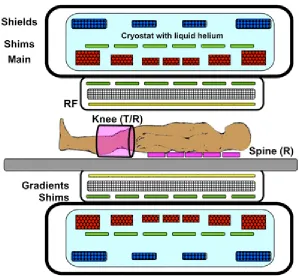
Figure 1.2-1: A cross-section of a modern, cylindrical bore superconducting MRI
system. The three main components are the main magnet, shown in the outer layer,
the gradient coil, shown in the second layer, and the RF coil, shown in yellow. Each
of these three main components will be discussed in this section [16].
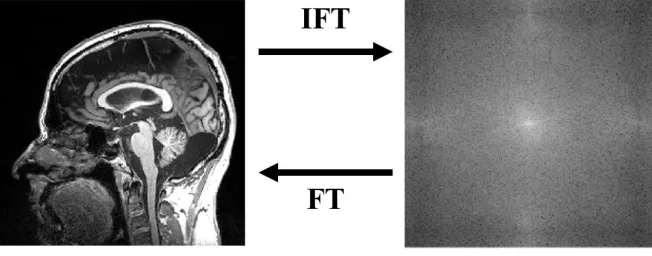
Figure 1.2-2: A sample 𝑘-space and its equivalent image [17]. Each pixel in the
𝑘-space represents a spatial frequency in the equivalent MR image, with the
intensity of that pixel representing the relative importance of that spatial frequency.
Note that this image only shows the real valued data. In practice, each point in 𝑘
-space is a complex number with both magnitude and phase. Points closer to the
center of 𝑘-space correspond to lower spatial frequencies, meaning broader, more
general shapes, while points closer to edge represent high frequency, small scale
details. The strength of the gradient influences the resolution of the images for a
given imaging time, since it determines how far out in k-space the scanner can go,
which gives higher and higher frequency information. Because of this, high
gradient strength is desirable. This figure also shows that the image on the left and
its 𝑘-space are equivalent in the information that they hold. One can be completed
reconstructed from the other.
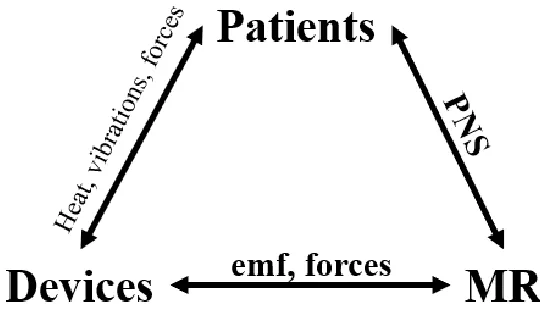
Figure 1.3-1: The three different broad categories of interactions that occur in MRI:
patient/device interactions, patient/MR scanner interactions, and device/MR
to consider not alone interactions between the patient and the scanner, but also
between devices, the scanner and the patient.
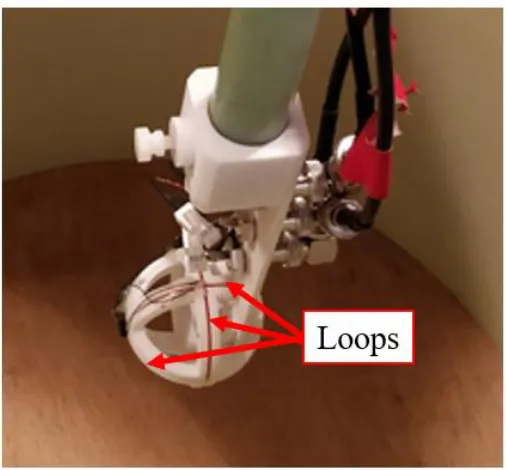
Figure 2.2-1: The probe used to collect dB/dt measurements. The probe had 3-axes
corresponding to the Cartesian axes, with the three loops consisting of 10 loops of
copper wire each with a 5.0 cm loop diameter, shown by the arrows. The set of
loops hidden by the lip of the white mound corresponds to the z axis in this case,
since it has its normal oriented along the bore of the coil.
Figure 2.2-2: The experimental setup. In the foreground is the robotic system used
to collect the field data over the volume of the dB/dt coil, the cylindrical system in
the midground. The grey regions contain the wire windings of the coil.
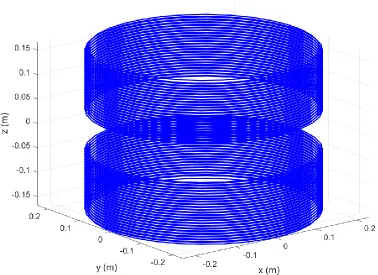
Figure 2.2-3: The wire pattern on the dB/dt coil. The coil is a large bore split
solenoid. Visible are the two layers of wire windings, with the inner layer having
24 windings, and the outer layer having 23.
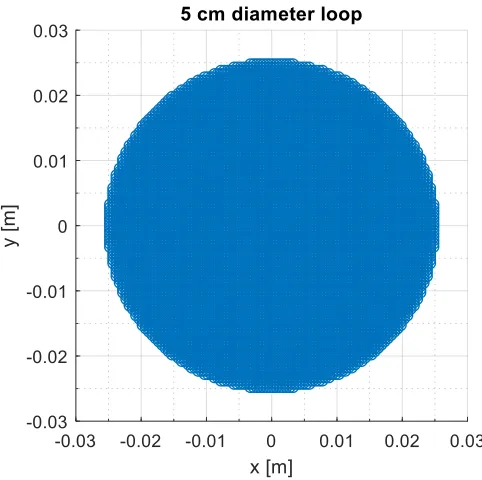
Figure 2.2-4: The simulated loop of the probe. It had a 5.0 cm diameter and a
surface discretization of 0.5 mm, resulting it of 7860 points on the device.
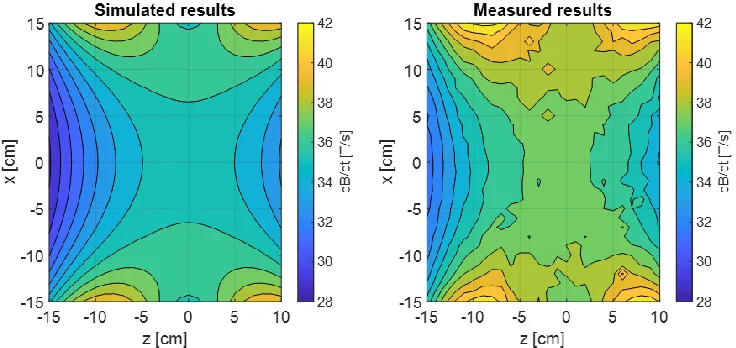
Figure 2.3-1: The spatial distribution of the simulated dB/dt within the bore for the
plane y = 0 cm. Note that the z-direction is along the bore of the coil.
Figure 2.3-2: The spatial distribution of the measured dB/dt within the bore of coil
for the plane y = 0 cm. Note that the z-direction is along the bore of the coil.
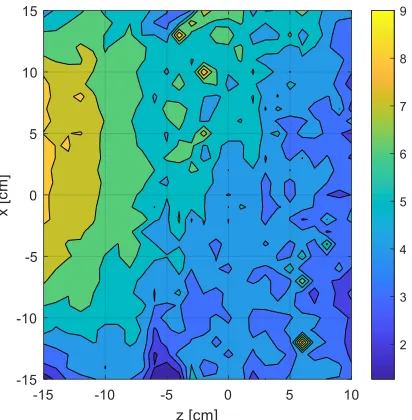
Figure 2.3-3: The spatial distribution of percent differences between the measured
and simulated values within the bore of coil for the plane y = 0 cm. Note that the z
the measurements is a result of the limitations of the reach of the positioning
system.
Figure 2.3-4: The spatial distribution of percent differences between the measured
and simulated values within the bore of coil for the plane z = -10 cm. Note that the
z-direction is along the bore of the coil.
Figure 2.3-5: A histogram of the percent differences between the measured values
and the simulated data. The distribution of the errors is influenced by the precision
limitations of the oscilloscope used to major the induced voltages, which in turn
determine the measured dB/dt values.
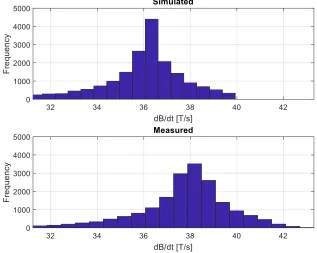
Figure 2.3-6: Histograms of the dB/dt distributions for both the simulated (top) and
measured (bottom) values. Note the systematic difference between the two. The
simulation consistently underpredicts the measurements.
Figure 2.3-7: A comparison between the predicted field values along y, and the
measured values along x. The ideal case of perfect equality is shown overlaid in
red.
Figure 3.2-1: The 5.0 cm diameter spherical volume used as the ‘device’ in these
simulations, with the points on the surface in red and the points in interior in blue.
The blue points are discretized in a grid with a 5 mm separation between points
along each axis. The red points are equal in number to the blue points but equally
Figure 3.2-2: The calculation grid for the 20 cm compliance radius case. Note that
the radius is slightly less than 20 cm at 17.5 cm so that the 5.0 cm diameter device
volume with its center at any point on this grid will extend to 20 cm at most.
Figure 3.2-3: The 5.0 cm diameter spherical device in red at a single point of
the surface of one compliance radius. The compliance radius it located within a
single example gradient, the 60 cm inner diameter, 140 cm length, and 35 cm
imaging region, for the z gradient, shown in black. The blue points, extending
from -1 m to 1 m, represent each position at which the device is positioned and
simulated for each coil combination.
Figure 3.3-1: Histogram of the dB/dt (magnitude) at all 777 points within one
example coil: x gradient of 60 cm diameter, 160 cm length, 45 cm imaging region
coil at a 25 cm compliance radius. Values are given as dB/dt per unit slew rate of
the gradient axes. For a 200 T/m/s scanner system, the values above need to be
multiplied by 200.
Figure 3.3-2: Histogram of all the data across all the coils (and all compliance
volumes) with the 95th and 99th percentiles shown (0.352 T/s per slew rate and
0.443 T/s per slew rate). For a 200 T/m/s scanner system, the values above need to
be multiplied by 200.
Figure 3.3-3: The peak spatially averaged dB/dt value across each coil in the
simulation space at 4 different compliance radii. Values are given as dB/dt per unit
slew rate of the gradient axes. For a 200 T/m/s scanner system, the values above
List of Abbreviations and Symbols
AIMD Active implantable medical device
ASTM American Society for Testing and Materials
B Magnetic flux density
CT Computed tomography
dB/dt Time-varying in magnetic field
FDA Food and Drug Administration
ISO International Organization for Standardization
MRI Magnetic resonance imaging
NMR Nuclear magnetic resonance
PET Positron emission tomography
PNS Peripheral nerve stimulation
RF Radiofrequency
TE Echo time
TR Repetition time
Chapter 1: Introduction
This chapter introduces Magnetic Resonance Imaging (MRI) as an imaging
modality and explains how some of the components within the scanner required to
produce images can interact with medical devices. These interactions must all be
considered when trying to classify the safety of devices for use in MRI, which
determines whether patients who have active implantable medical devices
(AIMDs), for example, can undergo an MR imaging procedure. A brief overview
of the entire MRI assembly is given. The electromagnetic interactions that these
devices experience with the MR system will be reviewed, focusing mainly on the
interactions with the subsystem called the gradient coils. The chapter concludes
with a description of the research objectives of this thesis.
1.1
Motivation
1.1.1
Why MRI?
Magnetic resonance imaging, or MRI, is a medical imaging modality. It is desirable
because it provides excellent soft tissue contrast at high resolution without the use
of ionizing radiation, or invasive intervention like biopsy [3]. In fact, MRI scans
can even be used to identify tumors or bone fractures that are too small for other
types of imaging like x-ray imaging [4].
Ionizing radiation includes any particle incident on the patient of sufficient
irreparable damage at higher doses. For example, computed tomography (CT),
another widespread medical imaging modality, makes use of x-rays, which are high
energy photons. In positron emission tomography (PET), gamma rays, which are
photons of even greater energy than x-rays, are emitted, among other particles. In
such imagining modalities, patient exposure to radiation must be carefully
monitored to ensure safety [5].
MRI does not require any such exposure limitations. If established safety
standards are followed, a patient could be scanned every day with no adverse effects
on their health. These safety standards, and the associated safety concerns, have
inspired the topic of investigation of this thesis, and will be discussed in more detail
in later sections of this chapter.
Because of the advantages of MRI, millions of MR imaging exams are now
conducted globally every year [32]. In Canada alone, around 1 million exams were
performed in 2007. That number increased to 1.7 million MR exams conducted in
2012 [6], and increased further in 2017, with an estimated 1.86 million MRI
examinations performed [7].
1.1.2
Why is considering medical devices important?
As standards of health care improve and new forms of treatment are developed,
there is not only an increase in the number of MRI scans performed, but it is
increasingly common for patients to have implanted medical devices as a part their
cardiac implants (i.e. pacemakers and implantable cardioverter defibrillators).
There were over 370,000 implants of cardiac pacemakers in the United States in
2003 [8], and over 135,000 implants of cardiac systems in Canada in 2006 [10, 11],
and this only for one of the many categories of device (see section 1.3.1). The
congruent growth in MRI availability and device use makes device safety within
MR an important problem.
As previously mentioned, a healthy volunteer could be scanned every day
with no adverse effects. However, because of their different material composition,
medical devices, they will behave differently than biological tissues when within
the complex electromagnetic environment of the scanner. These differences in
behavior must be characterized prior to any imaging procedure. Devices can
experience strong forces, heating, vibration, and operational failure. In addition to
direct patient safety concerns, the presence of devices can affect image quality,
reducing diagnostic effectiveness [13]. Later sections in 1.3.3 will go into these
hazards in more detail.
Since the individuals who get medical implants already have compromised
health, they are often those who would most benefit from the diagnostic capabilities
of MRI to monitor their health and to track the effectiveness of treatment. Because
of this, it is essential that MRI is safe and accessible for as many patients as
possible. For patients with the aforementioned cardiac implants, 50 to 75% are
expected to be referred to an MRI over the lifetime of the device in order to track
the current status of their health. However, in the United States alone, it is estimated
systems in 2004 [8]. Understanding these hazards is thus of vital importance to
ensure patient safety during scanning procedures, while also ensuring that safety
standards are not so restrictive that patients who could still benefit from an MRI are
being denied. Labeling provided by device manufacturers must be accurate so that
medical professionals can make an appropriate informed decision when
determining whether a patient may undergo an MR procedure.
The standards governing the safety of medical devices are decided upon by
the regulatory bodies ASTM (American Society for Testing and Materials) and ISO
(International Organization for Standardization) [20]. Under these organizations,
committees are formed to investigate interactions that devices can experience and
to quantify their impact on patient health. As new investigations are performed and
interactions are better understood, these safety standards are subject to change, with
revisions published every several years.
There is already such a wide array of devices (see section 1.3.1) and MRI
systems that there are far too many scenarios to physically test [22], and there are
new devices are also being developed constantly. Regulatory labelling often makes
use of physically validated computer simulations to model devices and MRI
systems. This aids in identifying a manageable number of worst-case scenarios
under which devices should be physically tested.
However, when considering safety scenarios, there must necessarily be a
balancing act between ensuring patient safety with respect to medical devices in
MRI and allowing as many patients as possible to benefit from MRI. If only
restrictive. This reduction in accessibility reduces the benefit of MRI as a diagnostic
tool.
This thesis seeks to develop a computer simulation for modeling the
magnetic environment produced by one of the MRI subsystems, the gradient coils,
across any arbitrary system design. The simulation tool is then used to evaluate the
effect that spatial averaging will have on the time-varying field exposure values
when compared to the peak exposure. It is predicted that the decrease in exposure
between the two will ensure that safety standards are not too conservative, and that
regulatory bodies have as much information as possible when deciding about
1.2 MRI systems
The research included in this thesis does not pertain to any new developments in
imaging or image processing. It is dedicated to ensuring that new advances in
imaging can be performed safely. To that end, discussion of MRI is limited to a
description of the magnetic environment necessary to image, and how this
environment can lead to safety concerns. For a more advanced discussion of the
process of image acquisition in MRI, refer to Magnetic resonance imaging:
Physical principles and sequence design, [1] in addition to a more detailed
description of the topics covered in this section.
Modern MRI systems are very complex and require many independent
subcomponents in order to create an image. A typical MR scanner will contain
several magnets: the main magnet, the radiofrequency (RF) coils, and the gradient
coils, each of which will be outlined in this section. Each of the different fields in
MRI interact with patients and implanted devices differently and have their own
Figure 1.2-1: A cross-section of a modern, cylindrical bore superconducting MRI system. The three main components are the main magnet, shown in the outer layer, the gradient coil, shown in the second layer, and the RF coil, shown in yellow. Each of these three main components will be discussed in this section [16].
1.2.1 The main magnet
Magnetic resonance imaging operates on the principle of nuclear magnetic
resonance (NMR). Imaging via NMR is possible because of the presence of
unpaired nucleons in the nuclei of atoms inside the body, producing a net spin and
magnetic moment in that nucleus. Most clinical MRI relies on the resonance of
protons found in water molecules throughout the body. Because of the abundance
to produce the best signal. Note that it is possible to obtain information similarly
using any atom with a net magnetic moment, such as carbon-13 or sodium-23.
When discussing MRI, it is common to consider the behaviour of nuclei as
described by classical physics. On its own, a single nucleus will not produce a very
strong signal. In the classical analogy, the magnetic moments of many atoms align
with the external field, producing a net magnetization within a sample. In MRI, this
initial external field is produced by the main magnet. It is referred to as 𝐵0, where
𝐵 is the standard variable in electromagnetism used to represent the magnetic flux
density, measured in tesla (T), and the subscript is used to emphasize its static
nature within the MR scanner. Clinical MR systems vary in main magnetic field
strength from 0.2 T to 10.5 T systems.
Nuclei that possess net magnetic moments will produce an electromagnetic
signal when perturbed by a specifically designed magnetic field oscillating at an
intrinsic resonant frequency. The rate of precession (𝜔0) of the magnetization about
the field in MRI is called the Larmor frequency, and it depends on the field strength
(𝐵0) and a nuclei dependent proportionality factor called the gyromagnetic ratio
(𝛾). In the presence of other fields, the 𝐵0 term is replaced by the net magnetic field
that the nuclei experience.
𝜔0 = 𝛾𝐵0 (1.2-1)
For protons, which are found unpaired in every water molecule, the
gyromagnetic ratio is 42.577 MHz/T. This means that in a 1 T field, they would
fields needed to produce this resonance are radiofrequency (RF) fields. The coils
used to produce these fields are discussed in the next section. The gyromagnetic
ratio of these protons is also higher than that of other nuclei that can be used in
imaging, like carbon-13 and sodium-23. This produces a stronger signal in the
receiver and makes it easier to spatially distinguish information.
At higher 𝐵0 fields, in addition to the increased resonant frequency, a
greater magnetization linearly proportional to the field is produced. In a
paramagnetic material like water, this relationship is described by Curie’s law.
𝑀⃑⃑ = 𝐶𝐵⃑ 𝑇
(1.2-2)
The magnetization (𝑀) is described in amperes per meter and is dependent on a
material specific Curie constant (𝐶) in kelvin amperes per tesla meter, the magnetic
flux density (𝐵) in tesla, and the temperature (𝑇) in kelvin. [1] This greater
magnetization produces a stronger signal, increasing the signal-to-noise ratio,
making it easier to acquire better quality images. However, higher 𝐵0 field strength
magnet systems produce greater heating, have a greater sensitivity to field
inhomogeneities, and cost much more.
In order to produce such high fields with a high magnetic field homogeneity
over a large volume, the main magnets in modern MRI scanners have evolved to
be cylindrical in shape, consisting of loops of superconducting wire wound around
the bore. The main windings of this magnet are shown as the red bundles in the
outer layer of figure 1.2-1.When a constant current is passed through the wires, a
𝐵⃑ (𝑟 ) = 𝜇0 4𝜋∫
𝐼𝑑𝑙⃑⃑⃑ × 𝑟̂′
|𝑟⃑⃑⃑ |′ 2 𝐶
(1.2-3)
Here, 𝐵⃑ is again the magnetic flux density described in tesla, 𝜇0 is the vacuum
permeability in henries per meter, I is the current in amperes, 𝑑𝑙⃑⃑⃑ is an infinitesimal
length of the wire conductor in meters, and 𝑟⃑⃑⃑ ′ is the vector representing the distance
between the conductor element and the point at which the 𝐵⃑ field is calculated.
The main magnet is designed such that the 𝐵0 field is oriented along the
axis of the bore of the magnet. When describing directions in MRI, the convention
is to orient the cartesian z-axis to be in the same direction as the 𝐵0. This field is
always on, and extends beyond the bore of the scanner itself, with significant fringe
field which can extend several meters into the surrounding environment [26].
1.2.2 The radiofrequency coils
The radiofrequency (RF) coils are responsible for both the resonant excitation of
nuclei and acquisition of the MR signal. RF coils produce an oscillating magnetic
field, referred to as 𝐵1. This field must have some component of its magnetic field
perpendicular to the 𝐵0 field of the main magnet. When this field is applied, it
causes the magnetization of the sample to rotate away from its thermal equilibrium
along z. How much it changes will depend on the amplitude and duration of the RF
pulse. This results in energy being deposited in the sample as heat via induction.
The RF frequency is tuned to the Larmor frequency of the nuclei being imaged,
After the application of the 𝐵1 field, the magnetizations will have some
component in the plane perpendicular to z, which is what is detected and constitutes
the MR signal. The detector can be the same coil that transmitted the field, or a
separate coil within the scanner. According to Faraday’s law (1.2-4), the
time-varying magnetic field will induce an electric field, 𝐸⃑ , in a conductive loop. This
produces a measurable voltage and is the principle upon which the MR signal is
acquired.
− 𝜕𝐵⃑
𝜕𝑡 = ∇⃑⃑ × 𝐸⃑
(1.2-4)
1.2.3 The gradient coils
If only the main magnetic field were present, all nuclei would experience the same
field, so they would precess at the same Larmor frequency. Recall from equation
1.2-1 that the resonant frequency depends on both the gyromagnetic ratio and the
field strength. The resultant MR signal would not contain differentiable information
about tissues within the body of the patient. Having the two systems that have been
presented so far, the main magnet and the RF coils, is sufficient to excite a nuclear
magnetic resonance (NMR) signal, but it is not enough for medical imaging.
In order to encode spatial information about tissues within the body, a
secondary magnetic field is needed on top of the main magnetic field. This
additional field is produced by magnets called gradient coils. These coils produce
a field that varies linearly as a function of position over the region of interest, or
i.e. the z-component of the field. The field varies not only spatially, but temporally.
The time-varying change in the magnetic field at a point in space is called dB/dt. A
higher dB/dt is produced by having either a greater gradient strength, a greater rate
of change of the gradient field, or both. The need for stronger such gradient fields,
and gradient coils able to vary their field more quickly, will be motivated in this
section.
Since nuclei at different spatial positions experience different magnetic
environments, they resonate at different frequencies, as described by equation
1.2-1. The fields produced by the gradient coil are smaller than the main field, only a
few millitesla, but since the gyromagnetic ratio is so large for protons, small
differences in field can produce meaningful differences in resonant frequency.
The gradient coils used to perform spatial encoding in MRI consist of three
separate resistive coils which vary the z-component of the field as a function of x,
y, and z, each with their own gradient strength 𝐺𝑥, 𝐺𝑦, 𝐺𝑧, respectively. Since the
field is designed to vary linearly as a function of position over the region of interest,
gradient strength is described in units of tesla per meter. When these fields are
combined with the field of the main magnet, 𝐵0, the field at any point (𝑥, 𝑦, 𝑧) in
space at some time can be described by the vector:
𝐵⃑ (𝑥, 𝑦, 𝑧) = (
0 0
𝐵0+ 𝐺𝑥𝑥 + 𝐺𝑦𝑦 + 𝐺𝑧𝑧 )
(1.2-5)
Since the rate of precession depends on this net field, it can be used to set
pulses synchronized with the RF field, which is tuned to excite a specific region of
interest. A specific combination of gradients and RF pulses is referred to as a pulse
sequence. Since the nuclei will be oscillating at different frequencies, a phase
difference will start to accrue between any two spatially distinct groups of nuclei.
This phase difference is proportional to the separation between the two groups, as
well as to the gradient strength and duration (𝜏), i.e. the time integral of the gradient
pulse. The stronger the gradient, the greater the difference in field will be between
two points. The greater the difference in field, the greater the difference in resonant
frequency, so a greater phase will accumulate.
Because the magnetic field is precisely controlled, the expected precession
frequency at any point in space will be known, as well as the phase accumulation
at any points relative to each other dependent on their distance from the geometric
center of the magnet (isocenter). This can then be cross-referenced with a
mathematical operation called the Fourier decomposition of induced voltage signal
in the receiver as a function of time. The Fourier transform allows a time dependent
signal to be decomposed into its constituent frequencies and phases and shows how
much each contributed to the total signal relative to the others. In doing this Fourier
transform of the signal, the scanner can determine what spatial locations
contributed more to the signal, and thus create the intensity map of proton density
or signal strength which becomes the greyscale MR image.
Equation 1.2-6 expresses the phase difference in mathematical terms for an
idealized gradient pulse. Note that in practice, a perfectly square gradient pulse (a
limitations on the rate at which the field can be ramped, and the phase accumulation
is more generally described by the time integral over the duration of the pulse rather
than a simple multiplication of the gradient strength and duration. The quantity in
brackets in equation 1.2-6 is singled out because of its importance in controlling
the image acquisition process. This factor has units of spatial frequency, so the
convention in physics is to refer to it by the variable 𝑘. Here, the 𝑘-value is defined
for a gradient along x, but it can be extended to y and z the same way.
𝜑(𝑥) = 𝛾𝐺𝑥𝑥 ∙ 𝜏 = 2𝜋 (𝛾
2𝜋𝐺𝑥𝜏) 𝑥
(1.2-6)
Returning to the precessing spins, according to Faraday’s law (1.2-4), the
induced voltage in the detector will be sum of all the different precessions produced
by the gradients. In MRI, these signals are detected at some ‘echo time’ (𝑇𝐸). For
some MRI pulse sequences, after the initial excitation, the spins are allowed to
dephase, and then they are rephased before signal acquisition, producing an ‘echo’
in signal. The detected signal from the RF coils is then demodulated from the carrier
RF frequency, taking the form:
𝑆(𝑡) ∝ ∫ 𝜌(𝑟 ) 𝑒𝑖𝜑(𝑟 )𝑑𝑉 ∫ 𝑒𝑖𝜔𝑡𝑑𝜔 (1.2-7)
In this case, the integral over frequency in the second term reduces to a
proportionality constant at the echo time. For the single gradient along x, the signal
from the volume can be decomposed then expressed as a function of 𝑘𝑥, from the
relationship in equation 1.2-6, with 𝑘 being the term in brackets:
The oscillating voltage in the detector is further decomposed via Fourier
analysis. The proton density distribution as a function of position along x can be
obtained by an inverse transformation of the signal as a function of 𝑘𝑥:
𝜌(𝑥) = ℱ−1{𝑆(𝑡 = 𝑇𝐸, 𝑘
𝑥)} (1.2-9)
In MRI, this process is extended to three dimensions by the other two
gradient axes, so the signal is a 3D spatial frequency space, referred to as 𝑘-space.
With data from the three axes collected, a 3D proton density can be retrieved from
the 3D inverse Fourier transform of the 𝑘-space data. When the pulse sequence is
repeated with different values for 𝑘𝑥, 𝑘𝑦, and 𝑘𝑧, a full sampling of the Fourier
transform of the proton density is acquired.
Recall that the values of 𝑘 describe spatial frequencies. From the definition
of 𝑘, as shown in 1.2-10, to encode higher spatial frequencies within some time 𝜏,
a stronger gradient is needed. The maximum spatial frequency that can be encoded
determines the resolution of the image. Thus, there is a desire to have stronger
gradient fields in order to be able to capture smaller details within tissues to obtain
better diagnostic information.
𝑘𝑖 = 𝛾
2𝜋𝐺𝑖𝜏, 𝑖 = 𝑥, 𝑦 or 𝑧
(1.2-10)
The 𝑘 parameter also depends on the gyromagnetic ratio. If imaging using nuclei
other than simple protons is to be performed, in order to acquire the same 𝑘-space
information, stronger gradients would be needed, because it takes more to get the
Figure 1.2-2: A sample 𝑘-space and its equivalent image [17]. Each pixel in the 𝑘-space represents a spatial frequency in the equivalent MR image , with the intensity of that pixel representing the relative importance of that spatial frequency. Note that this image only shows the real valued data. In practice, each point in 𝑘-space is a complex number with both magnitude and phase. Points closer to the center of 𝑘-space correspond to lower spatial frequencies, meaning broader, more general shape s, while points closer to edge represent high frequency, small scale details. The strength of the gradient influences the resolution of the images for a given imaging time , since it determines how far out in k-space the scanner can go, which gives higher a nd higher frequency information. Because of this, high gradient strength is desirable. This figure also shows that the image on the left and its 𝑘-space are equivalent in the information that they hold. One can be completed reconstructed f rom the other.
Recall that the dB/dt value is increased by having a stronger gradient field,
having a faster switching gradient, or both. In many situations, the dB/dt is has a
strict, more readily quantifiable upper limit. Consider that since the gradient coils
are resistive magnets, as current is passed through them during a pulse sequence,
power will be deposited. To produce a stronger gradient field, more current needs
to be applied, producing greater power deposition and thus heating within the coil
application could be limited by the cooling available to the resistive gradients, since
the coil must not be allowed to heat up so much that it is damaged. The dB/dt can
also be limited by peripheral nerve stimulation (PNS), which will be discussed
briefly in section 1.3.3.3.
For pulses in certain parts of sequences that aren’t repeated as quickly, like
a diffusion weighted sequence, a stronger gradient strength can be used without
pushing the dB/dt to an extent that PNS is a concern. In this type of sequence,
having stronger gradients is desirable because it allows the encoded data to be more
sensitive to the diffusion of molecules, helping identify lesions within the body or
nerve tracts within the brain [1].
Returning to the definition of the definition of 𝑘 in equation 1.2-10, to
produce a fully sampled image, every point in 𝑘-space should be acquired. The
most basic way that this data is collected is using a Cartesian sampling method,
though more advanced methods exist. In Cartesian sampling, the data is collected
one row at a time, where each row is collected around the echo time (TE), and the
time between each row is some repetition time (TR).
The time it takes to acquire an image is in part determined by how fast the
gradient coils can switch, since faster coils are able to produce shorter TEs. With
scans often taking in excess of half an hour, it is desirable to have even faster
gradients, especially for fast imaging techniques like echo planar imaging (EPI). In
these cases, even a relatively weaker gradient strength can produce a high dB/dt
The strength and speed of a gradient coil are described by its slew rate. The
slew rate is determined by the maximum gradient amplitude divided by the time it
takes to reach that peak gradient strength, in units of T/m/s. Unlike the
superconducting coils used in the main magnet, since gradient coils are resistive
magnets and produce a lot of heat during operation, and pulses are kept relatively
short for many types of imaging.
Even the fastest gradient coils available operate at relatively low
frequencies compared to the RF fields. Gradients are within the range of human
hearing, in the lower kilohertz. Becomes of this low frequency, the system is well
approximated as quasi-static. Thus, no wavelength effects or retarded potentials
need to be considered when calculating the gradient fields, unlike at RF
frequencies, where the wavelengths are on the scale of objects within the scanner,
and the quasi-static approximation is not applicable. The time variation for
gradients is completely separable from the spatial variation. The frequency of
oscillations is related to the wavelength through:
𝜆 =𝑐 𝑓
(1.2-11)
Here, 𝜆 is the wavelength in meters and c is the speed of light. For a 5 kHz
frequency, for example, the wavelength would be orders of magnitude greater than
the scale of the body within the scanner. Therefore, the presence of biological tissue
has no effect on the predicted dB/dt values at any point within the scanner, and
fields can be calculated as though the bore of the scanner were simply at vacuum.
The dB/dt produced by the coil described in this section has an impact on
device safety. The greater the dB/dt, the greater the effect. However, ensuring
device safety is not simply a matter of keeping dB/dt as low as possible. As has
been shown, there is a competing desire for stronger and faster gradients for
imaging, and thus there is a need to ensure that dB/dt limits are not too conservative
1.3 Medical devices in the MR environment
This section will provide some background on the breadth of the medical devices
relevant for consideration in MR safety, the interactions devices could experience
with the MR system, the types of classification given to these devices, and current
safety standards.
1.3.1 Types of devices
In the context of MR safety, a medical device is anything within the MRI
environment that is neither part of the MR system or a biological part of the patient.
The MRI environment is typically defined as the room in which a scanner is located
[3]. More than 1,700 types of devices, 500,000 medical device models, and 23,000
manufactures are regulated by the ASTM [22]. This wide array devices includes:
▪ Permanent medical implants (e.g. orthopedic implants like metallic joint
replacements, pacemakers, deep brain stimulators)
There are also devices that are removable, but are nonetheless useful when
employed in conjunction with an MR scan:
▪ Physiological monitors used to run medical diagnostic tests in conjunction
with the MRI scan (EEG, blood-pressure monitoring)
▪ Non-MR-based imaging or therapy modalities (PET, radiotherapy)
▪ Stimulus presentation and monitoring systems used in scientific studies
(visual goggles and mirror systems) [24].
Medical devices can be additionally classified as passive devices, which perform
their function without electrical power (e.g. orthopedic implants), and active
devices, which involve electrical power. (e.g. a cardiac pacemaker). These are
referred to by the acronym AIMD, meaning active implantable medical devices,
and are of particular interest for the purposes of this investigation [25].
Note that since the MRI environment extends beyond the bore of the
scanner itself, every object in the scanner room must be carefully considered. The
main magnetic field is always on, and significant fringe field can extend several
meters into the surrounding environment [26]. Care must be taken to avoid bringing
metallic objects such as oxygen tanks into the room, as they may become
projectiles, causing serious bodily harm or death to anyone in their path [27].
1.3.2 Device safety
When evaluating safety in MRI, every possible physical interaction must be
considered, as failure to do so can mean the difference between life or death. There
are not only interactions between the patient and the scanner, but interactions with
any medical devices present. Many devices when within the MR environment can
present a danger to the subject, and/or interfere with the normal operation of the
Figure 1.3-1: The three different broad categories of interactions that occur in MRI: patient/device interactions, patient/MR scanner interactions, and device/MR interactions. When evaluating device safety for patients in MRI, one must to ensure to consider not alone interactions between the patient and the scanner, but also between devices, the scanner and the patient.
MRI has a strong record of patient safety. Most incidents that occur are the
result of a failure to follow already established operational safety guidelines rather,
than accidents resulting from unprecedented interactions. More than 100,000,000
diagnostic procedures have been completed since its introduction [30], with nearly
35,000,000 performed annually in the United States alone [31], with approximately
seven deaths resulting as a direct consequence of some aspect of the MR procedure
[32-34].
Because of their material composition, medical devices will behave
differently than biological tissue in the magnetic environment of the MRI scanner.
Devices can interact in ways that can pose a significant safety risk, so they must be
tested extensively before hand. These interactions will be described in the following
1.3.3 Types of interactions
The interactions between a device and the MR system are complex, and extensive
testing and analysis is required to determine the conditions under which the device
can be safely used within the MR environment. When a medical device is within
this MR system environment it can experience forces and torques, heating, and it
can cause distortions in the images due to field inhomogeneities around the device
[13].
No two MR systems are identical, so there is a wide variety of magnetic
environments that must be considered. Even for mass produced scanners,
installation on site can require a setup configuration unique to that location,
depending on how closely manufacturing tolerances are controlled. Possible
interactions depend on field strength, field uniformity, pulse sequences parameters,
unique patient physiology, and specific medical devices.
Many factors affect a device’s behaviour. Its material composition
determines parameters such as its electrical and thermal conductivity, which
influences its electromagnetic interactions. Certain device geometries increase
heating and torques. Position and orientation within the MR environment are also
important, since exposure to the static, RF and gradient fields are spatially
dependent. Devices can experience forces, torques, heating, vibration, and
operational failure [25]. The standards for each type of interactions are described
1.3.3.1 Main field interactions
The effect of cumulative exposure to the strong, static, magnetic fields present in
MRI has been studied extensively and has been shown to have no hazardous effects
on human health when in the absence of foreign materials [32].
However, medical devices within the static main field of the scanner can
experience magnetic forces and torques, depending on their material composition.
Torque will tend to align the long axis of a medical device with the direction of the
static magnetic field. Magnetic forces will pull magnetic materials present in the
MR environment, such as oxygen tanks, toward the scanner, since a gradient in the
static field strength around the scanner as the field falls off with distance induces
displacement forces [12, 38, 42]. If a device implanted inside a patient experiences
such forces, it could lead to fatal internal damage [32-34]. If the object is
ferromagnetic, it can experience an induced force strong enough to become a
projectile [27]. Stronger magnetic fields produce stronger forces and torques [41].
Any patient to be imaged must undergo an extensive medical survey to
ensure that no unknown foreign materials are present within their body. For
example, a lifelong metal worker may have accidentally accumulated small metallic
shards in sinuses from grinding work [43].
When MR safety is considered, materials used in the manufacture of
medical implants are chosen so that it will interact as little as possible with this
1.3.3.2 RF field interactions
For RF frequency electromagnetic fields, the wavelengths are on the scale of
objects within the scanner, leading to potentially significant interactions with body
tissues and medical devices. RF fields deposit power in the human body even when
no device is present, so imaging parameters are constrained to limit this. In medical
devices, it can produce localized heating due to resistive losses of current flow even
through the small electrical conductivity of tissues [12].
Power deposition is quantified by the specific absorption rate (SAR),
measured in watts per kilogram of mass [25]. When a conducting medical device
is present, the interactions are even stronger, and the RF field leads to greater
heating [40]. SAR is related to the square of the main magnetic field, square of the
flip angle, square of the patient radius, patient conductivity, and the RF duty cycle
[36].
Medical devices can also cause increased electric fields around the device,
leading to higher levels of SAR, heating biological tissue near the device [15]. RF
heating is most prominent in long, extended devices which are of a resonant length
for the frequency used.
1.3.3.3 Gradient field interactions
As described in section 1.2.2, gradient coils produce a time-varying magnetic field,
stronger the dB/dt, the greater the effect. This can have several consequences in the
context of MRI.
Even when no device is present, dB/dt can affect body tissues. Since tissues
are small compared to the gradient wavelengths, there is little absorption [5].
However, when the electric fields induced by the dB/dt are strong enough near
nerves within the body, they can produce an action potential which involuntarily
activates the nerve. This phenomenon is known as peripheral nerve stimulation
(PNS) [21, 25, 44]. It can range in intensity from a harmless tingling sensation
synced with the pulsing of the gradients, to serious pain and discomfort for the
patient. PNS could be especially dangerous when occurring in or near cardiac tissue
[18], though limits on dB/dt for PNS that are now too restrictive for this to be of
concern to patients. The intensity to which PNS is experienced varies from patient
to patient.
When the electric field is produced in the vicinity of an electrically
conductive medical implant, the resultant voltage produces eddy currents in the
device. These voltages can occur anywhere in the device, whether within a single
electrical lead, between leads, or between electrodes and a conductive AIMD
enclosure. However, in the context of eddy current safety, only planar surfaces are
of concern for eddy currents. This may include the device enclosure, some internal
circuitry, or battery components.
When the electric energy of the eddy current flows through the conductive
material, it is converted into thermal power via resistive losses. At higher
For example, in the case of an idealized conductive disk used in test
standards, the power deposited by eddy currents is proportional to the square of the
dB/dt according to equation 1.3.1.
𝑃 = 𝜎𝑇𝜋𝑅
4
8 ( 𝑑𝐵
𝑑𝑡cos 𝛽)
2 (1.3.1)
Here, 𝜎 is the conductivity of the material, 𝑇 is the device thickness, 𝑅 is the device
radius, and 𝛽 is the angle of the dB/dt with respect to the normal vector of the disc,
reflecting the importance of device orientation within the scanner. In general,
maximum heating occurs when the dB/dt is orthogonal to the surface of the device.
Since dB/dt depends on a square term, even small changes can result in significant
differences in heating. The effect of heating increase with distance from the
magnetic isocentre [37]. Gradient coils are designed such that they produce a linear
field gradient over the imaging region, adding or subtracting from the main field
depending on the direction from the isocenter. Thus, the farther a point is from the
isocenter, the greater the change in field as the current changes polarity.
Gradient induced vibrations are also possible. Unlike the typical vibrations
that may occur on a device as a result of a patient’s day to day activity, for gradient
induced vibrations, the forces are not external to the device. Vibrations are also
most common on conductive planar surfaces. When an eddy current is induced on
a surface, it produces a time dependent magnetic moment that will interact with the
static main magnetic field. This torque produces vibrations of the device, which can
The higher the dB/dt values are, the greater their effect on devices and
patients. However, as mentioned above, for the sake of image quality and imaging
time, it is also desirable for gradients to be stronger and faster. Thus, it is important
not to be too conservative with dB/dt limitations while still maintaining patient
1.4 Classification of medical devices
The American Food and Drug Administration (FDA) recommends all medical
device testing be performed in accordance to procedures outlined in the safety
standards published by the American Society for Testing and Materials (ASTM).
These regulatory documents outline standard testing methods and safety limits. The
standard relevant to this research is outlined in ISO/TS 10974 [25]. Across the
whole range of devices that may be found in the MR environment, when all the
possible interactions described above have been investigated, a device can is given
one of three classifications:
▪ MR Safe – The device poses no known hazards within the MR
environment. MR Safe items are made of materials that are non-conductive,
non-metallic, and non-ferromagnetic.
▪ MR Conditional – The device has demonstrated safety in the MR
environment within certain specific conditions. Scanning is allowed only
when these limits are upheld. Determining just what these specific
conditions are poses a significant challenge. Conditions can include limits
on device positioning, field strength, etc.
▪ MR Unsafe – No conditions exist under which the device has been shown
to be safe, and as such it poses unacceptable risks within the MR
1.5 Research objectives
In this investigation, we seek to develop a simulation tool to predict the fields
produced by MRI gradient coils. Current safety standards described in ISO/TS
10974 [25] for dB/dt exposure only discuss the maximum dB/dt that a device may
be exposed to when within the scanner. While this is important information for
determining the safety of devices in the context of gradient coils, the average over
the device is also very relevant for device safety. From Faraday’s law, any voltages
induced in a conductive surface or volume depend on the flux of the field across
the entire volume of the device. In order to better inform regulatory labeling, this
thesis seeks to quantify the effect that spatial averaging will have on dB/dt exposure
Chapter 2: Validation of Biot-Savart dB/dt
modelling software
2.1 Introduction
The main objective of this thesis is to systematically investigate the magnetic fields
produced across a range of different scanner and device configurations that medical
implants may face, as well as to investigate the effects of spatial averaging on dB/dt
exposure in order to ensure that device safety limitations are not too conservative
in the context of MRI gradients while still guaranteeing patient safety. The first task
was to develop a software system that can be used for that investigation, and then
to validate the software by comparing its predictions to physical measurements.
To perform this validation, a physical magnetic coil system was constructed
for which a detailed software model of the coil wire patterns existed. Measurements
were taken of the field produced by this coil under standard operation by a field
probe.
Then, a simulation was conducted using the known coil wire pattern, and
the probe used to take the measurements was modelled. The simulated results were
2.2 Methods
2.2.1 Experimental setup
A resistive coil was constructed intended for use as a dB/dt device safety testing
platform, based on the designed high-resolution numerical model. This coil
consisted of 2 layers of axial wire pairs with an inner radius of 22.40 cm. The
constructed coil is shown in the midground of figure 2.2-1. It had an efficiency of
0.0937 mT/A. The constructed coil was connected to a PCI2100 amplifier. This
amplifier was used to produce a 25 T/s rms sine waveform at 270 Hz, a common
test configuration outlined in ISO/TS 10974 [25], producing a dB/dt field within
the volume of the coil.
The field produced by this coil was measured using the induction probe
shown in figure 2.2-1. The probe operated according to Faraday’s law of induction,
whereby the dB/dt produced by the coil induced a voltage in loops of wire. The
leads of the wire loops of the probe were connected to an 8-bit oscilloscope,
allowing measurements of the voltages induced in the loops. To relate the voltages
to the dB/dt, a conversion factor for the probe of 51 (T/s)/V was used, derived from
the area of the 5.0 cm diameter loops and the 10 wire windings per axis. The probe
had 3 perpendicular axes in total, allowing measurements of all the vector
components of the field. Only the data from the loop that was oriented along the z
axis of the coil (the axis oriented along the bore of the coil) was considered for
Using a robotic positioning system, the probe was positioned throughout the
volume of the bore of the coil to take measurements of the field. The robotic system
is shown in the foreground of figure 2.2-2. In consists of an extended arm holding
the probe, controlled by a set of three Nema 23 stepper motors and driven with a
software controller, allowing the precise positioning of the probe at arbitrary points
in three-dimensional space. The volume over which the probe was positioned
consisted of x- and y-positions from -15 cm to 15 cm and z-positions from -15 cm
to 10 cm, as constrained by the cylindrical bore of the coil, with the point (x = 0
cm, y = 0 cm, z = 0 cm) being the isocenter of the magnet, and a step size of 1 cm
in each direction.
Figure 2.2-2: The experimental setup. In the foreground is the robotic system used to collect the field data over the volume of the dB/dt coil, the cylindrical system in the midground. The grey regions contain the wire windings of the coil.
2.2.2 Simulation
The same wire pattern used in the prefabrication design of the dB/dt coil was used
for the simulations. It is shown in figure 2.2-3. It consisted of a two-layer split
solenoid, had an inner radius of 22.40 cm and a split distance of 7.69 cm. The wire
pattern is discretized into 3008 sections of infinitesimal diameter, with each section
having an xyz-coordinate for its center, dx, dy, and dz elements representing the
length of the section and a value for the electrical current in amperes running
current. The contribution of each wire component is added together in a Biot-Savart
law calculation. For more details on how the dB/dt is related to the magnetic field,
refer to the appendix, where details on field calculations are discussed for readers
of both chapters 2 and 3.
Figure 2.2-3: The wire pattern on the dB/dt coil. The coil is a large bore split solenoid. Visible are the two radially stacked layers of wire windings, with the inner layer having 24 windings, and the outer layer having 23.
The z loop of the probe, meaning the loop whose normal was oriented along
the bore of the coil, shown in figure 2.2-2 was modelled as a circle with a 5.0 cm
diameter at a 0.5 mm resolution, resulting it 7860 points over the surface of the
interior of the loop. This simulated device area is shown in figure 2.2-4. The device
bore of the coil, with x- and y- positions varying from -15 cm to +15 cm away from
the isocenter of the coil, as constrained by the geometry of the coil, and z-positions
varying from -15 cm to +10 cm from isocenter. For each position within the coil,
the field over the loop area is calculated at each of the 7860 points into which it is
discretized, and the average value is taken. This value is then compared to the
measurement from the probe at that position.
2.3 Results
Across all the positions at which measurements were taken, the measured values
differed from predictions by an average of 4.9%. The median error was 4.8%, and
the maximum error over the volume of interest was 11.7%. Shown below in figures
2.3-1 and 2.3-2 are the simulated and measured fields for a sample region along the
xz-plane. Figure 2.3-3 shows the percent difference between the results in figures
2.3-1 and 2.3-2. Figure 2.3-4 also shows a distribution of percent differences, but
for the plane z = -10 cm. Figure 2.3-5 shows the distribution of differences between
simulated results and measurements across the whole measurement volume. Figure
2.3-6 shows the distribution of the fields for the simulated and measured cases.
Finally, figure 2.3-7 compares the simulated and measured values compared against
the ideal case.
Figure 2.3-1 (left): The spatial distribution of the simulated dB/dt within the bore for the plane y = 0 cm. Note that the z-direction is along the bore of the coil.
Figure 2.3-3: The spatial distribution of percent differences between the measured and simulated values within the bore of coil for the plane y = 0 cm. Note that the z-direction is along the bore of the coil. The asymmetry in the extent in the z-direction the measurements is a result of the limitations of the reach of the positioning system.
Figure 2.3-5: A histogram of the percent differences between the measured values and the simulated data. The distribution of the errors is influenced by the precision limitations of the oscilloscope used to major the induced voltages, which in turn determine the measured dB/dt values.