Scholarship@Western
Scholarship@Western
Electronic Thesis and Dissertation Repository
6-6-2016 12:00 AM
Learning About Teaching Science: Improving Teachers' Practice
Learning About Teaching Science: Improving Teachers' Practice
Through Collaborative Professional Learning
Through Collaborative Professional Learning
Sarah E. Cloutier
The University of Western Ontario
Supervisor
Dr. Jacqueline Specht
The University of Western Ontario Graduate Program in Education
A thesis submitted in partial fulfillment of the requirements for the degree in Doctor of Philosophy
© Sarah E. Cloutier 2016
Follow this and additional works at: https://ir.lib.uwo.ca/etd
Part of the Educational Psychology Commons, Science and Mathematics Education Commons, and the Teacher Education and Professional Development Commons
Recommended Citation Recommended Citation
Cloutier, Sarah E., "Learning About Teaching Science: Improving Teachers' Practice Through Collaborative Professional Learning" (2016). Electronic Thesis and Dissertation Repository. 3831.
https://ir.lib.uwo.ca/etd/3831
This Dissertation/Thesis is brought to you for free and open access by Scholarship@Western. It has been accepted for inclusion in Electronic Thesis and Dissertation Repository by an authorized administrator of
ii Abstract
This single, descriptive qualitative case study provides a snapshot of elementary teachers and their school principal’s multiple and competing views about personal and contextual factors affecting teacher engagement in collaborative professional learning (CPL) related to science education within the school environment. This study was viewed through the lens of Situated Learning Theory primarily by Lave and Wenger (1991) because viewing knowledge as situated has implications for understanding teacher learning and the design of instructional activities.
Data were collected from three female elementary teachers and their school principal in Ontario for a period of six months. The data included: five principal
interviews; two teacher focus groups; three surveys (Science Teaching Efficacy Beliefs Instrument, Science Teachers’ Pedagogical Discontentment scale, Beliefs about Reform Science Teaching and Learning); two questionnaires (demographics questionnaire, Professional Development Continuum Rubric) and; monthly professional development logs. The process of thematic coding was employed to analyze the data, and the findings were written with thick descriptions based on the narratives from the participants and descriptive data.
Three interpretive insights and implications into the synthesis of the findings included: (a) the lack of emphasis on science in Ontario’s elementary education, (b) the limited time available for CPL about science, and (c) the limited number of teaching partners to collaborate about science. The interconnectedness of the three concepts highlights the multiple and complex domains that influence teacher engagement in collaborative professional learning related to elementary science education in Ontario, Canada.
iii
teachers across the school engaging in CPL related to inquiry-based science, and expanding the network of teachers who collaborate with one another regarding science within the school setting.
iv Dedication
To my guardian angel who provided me with the strength, perseverence and passion to follow my heart, dedicate myself, and to always work hard to acheive a dream. With his
v
Acknowledgments
It is my honour to have the opportunity to thank everyone who travelled with me during this journey.
My sincere gratitude goes to my supervisor, Dr. Jacqueline Specht, who believed in me and guided me through the last four years. Jacqui made this process seem less stressful than what it could have been and I believe that was of great help. Also knowing that Jacqui truly cared about how I was doing was something that I deeply appreciate.
To Dr. Jason Brown, my committee member, who provided wonderful insight during this process. I am thankful for all of the time that you dedicated to helping me achieve my this milestone.
I am grateful to the school principal of this study. Not only did he provide me with access to incredible teachers, he motivated me to keep working hard and dig deeper into the research topic. It was a pleasure to interact with the school principal and the teachers as it made data collection enjoyable and enlightening.
To Dr. E. Nowicki, Dr. M. Larsen, Dr. W. Martino, and Dr. P. Klein at the Faculty of Education, your teachings have changed my worldviews and I am grateful to see the world from new perspectives. Thank you for all of your hard work and time that you invested in me.
The biggest surprise that I encountered in this journey was meeting an incredible group of friends. To all of my WOWmates, going through this process with you was a pleasure – thank you for the hilarious memories.
vi
Table of Contents
Abstract and Keywords ... ii
Dedication ... iv
Acknowledgements ... v
Table of Contents ... vi
List of Tables ... viii
List of Figures ... ix
List of Appendices ... x
Chapter I: The Research Problem ... 1
Research Purpose and Goals ... 1
Research Questions ... 2
Contributions to the Field of Science Education ... 3
Researcher’s Perspective ... 5
Ogranization Overview of the Remaining Chapters ... 7
Chapter II: Literature Review ... 9
Section 1: The current state of elementary science education and teachers classroom practice ... 9
Section 2: Collaborative professional learning for science education ... 13
Section 3: External and internal contextual factors influencing teacher engagement in collaborative professional learning for science education ... 26
Chapter Summary ... 48
Chapter III: Theoretical Framework ... 50
Overview of Situated Learning as a Theoretical Framework ... 50
Philosophical Background of Situated Learning ... 51
Practicality of Situated Learning in Educational Contexts ... 53
Teachers-as-Learners in Communities of Practice ... 55
Application of Situated Learning to my Research ... 58
Chapter Summary ... 60
Chapter III: Research Design, Methodology, and Methods ... 61
Research Design Overview ... 61
Research Site/Participant Selection ... 62
Case and Participant Description ... 63
Data Collection ... 69
Data Analysis ... 85
Provisions for Trustworthiness ... 89
vii
Chapter V: Results ... 92
Section 1 ... 93
Section 2 ... 120
Chapter Summary ... 133
Chapter VI: Discussion ... 135
Research Question One ... 136
Research Question Two ... 143
Research Question Three... 145
Research Question Four ... 149
Research Question Five ... 155
Chapter Summary ... 159
Chapter VII: Research Implications, Limitations, and Future Recommendations 160 Research Implications ... 160
Limitations ... 175
Future Recommendations ... 177
Chapter Summary ... 180
References ... 182
Appendices ... 229
viii List of Tables
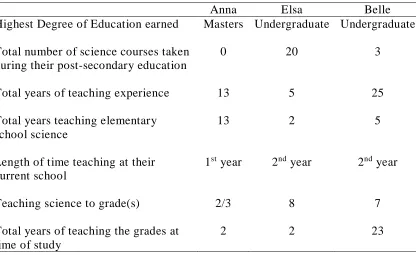
Table 1: Demographic Data for Teacher Participants ... 65
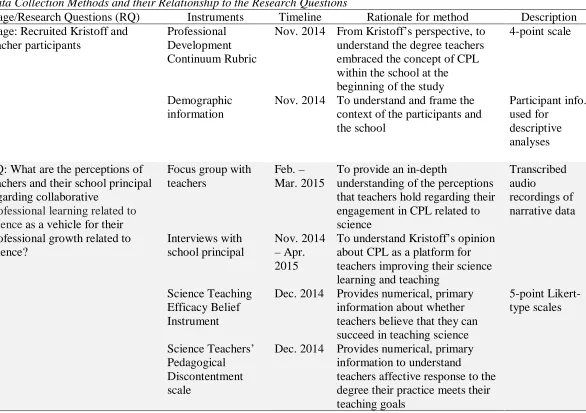
Table 2: Data Collection Methods and their Relationship to the Research Questions ... 71
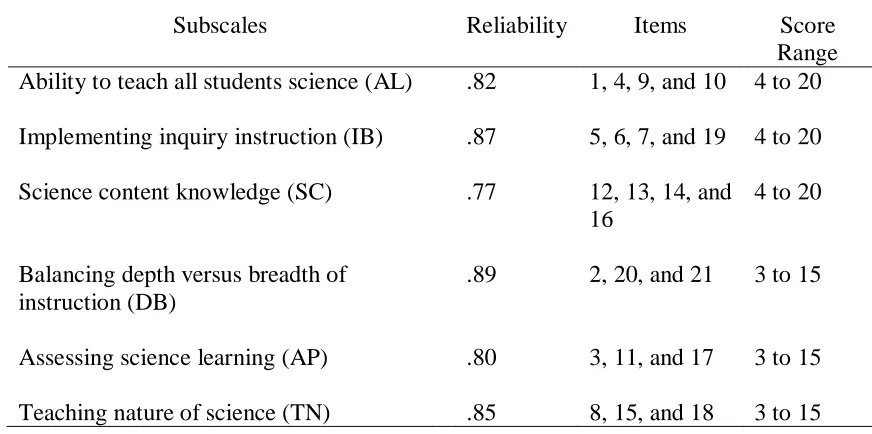
Table 3: STPD Scale Subscales and their Reliability, Items, and Range ... 77
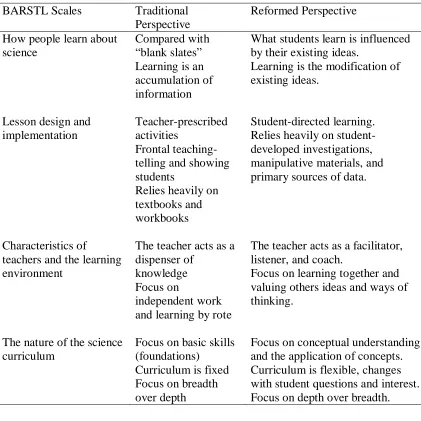
Table 4: Dimensions of Traditional and Reformed Minded Beliefs Associated with each Subscale of the BARSTL ... 79
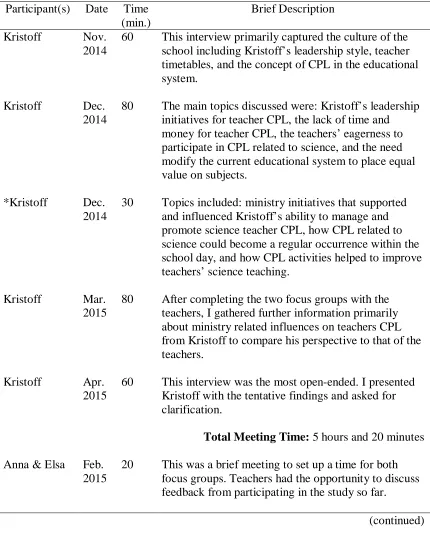
Table 5: Description of the Interviews and Focus Groups with the Participants ... 84
Table 6: Summary of the Data Analysis Protocol for Interview and Focus Groups ... 87
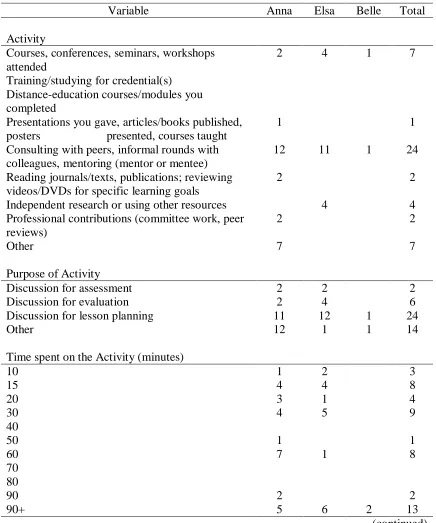
Table 7: Teachers Recorded Engagement in CPL Related to Science From December 2014 to April 2015... 121
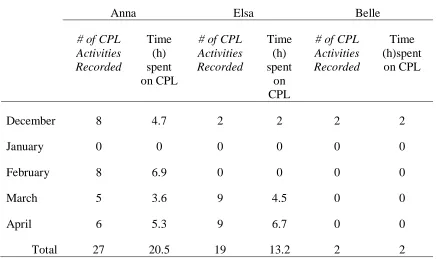
Table 8: Number of Activities Recorded and Time spend on CPL for Science ... 123
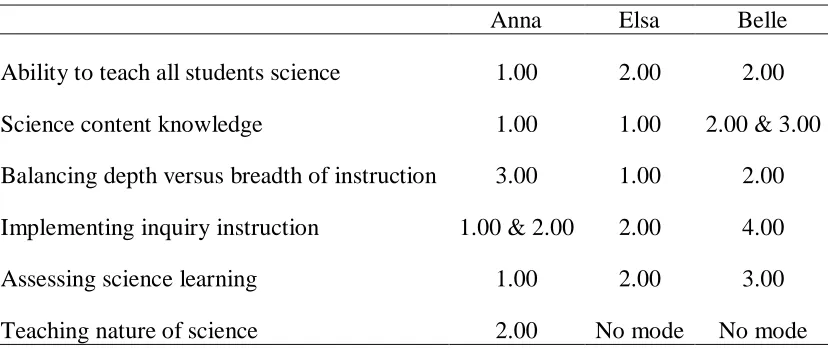
Table 9: Descriptive Statistics (Modes) for Teachers’ STPD Scores... 127
ix List of Figures
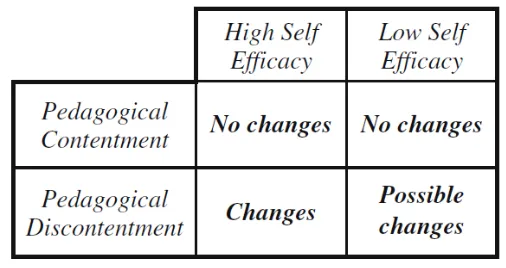
Figure 1: Model of Teacher Self-efficacy, Contgentment, and Anticipated Changes in Practice... 48
Figure 2: Example of the Balanced School Day at Participant School ... 67
x
List of Appendices
Appendix A: Western University Ethics Approval ... 229
Appendix B: Professional Development Continuum Rubric ... 230
Appendix C: Science Teaching Efficacy Belief Instrument-A ... 232
Appendix D: Science Teachers’ Pedagogical Discontentment Scale... 233
Appendix E: The Beliefs about Reformed Science Teaching and Learning ... 234
Appendix F: Professional Development Log ... 236
Appendix G: Sample of the Initial Data Reduction Process ... 240
CHAPTER I: THE RESEARCH PROBLEM
Student achievement is directly related to the quality of teaching students receive (Hattie, 2008; Katz & Dack, 2013). Nye and colleagues reported that seven to 21 percent of student variance in achievement gains has been associated with variations in teacher quality (Nye, Konstantopoulos, & Hedges, 2004). Also, Hattie ranked 138 factors that influence student achievement: seven of the top 10 factors were directly related to teacher factors such as the quality of their instruction, clarity, and feedback (Hattie, 2008).
Specifically related to science education, Jones and Leagon (2014) said: “perhaps the single most important factor in the quality of science education is the teacher” (p. 830). Considering that student understanding for science education, in part, begins with their teachers (Chen, Morris, & Mansour, 2015), “all students need teachers who can provide meaningful, authentic, and rigorous opportunities to learn science” (Lewis, Baker, & Helding, 2015, p. 897).
Discussing the influence of teaching quality on student academic achievement regarding science education is necessary because it is well documented by scholars and practitioners that there is a current “lack of sophistication that students have with regard to their basic scientific literacy” (Chen et al., 2015, p. 371). Given this, there is a need to improve the quality of elementary science education by developing teacher knowledge and instructional strategies. One means to help teachers develop their science knowledge and instructional strategies is by encouraging and supporting teachers to engage actively in ongoing, collaborative professional learning. The dilemma is that change to teachers’ science practice as a result of their engagement in collaborative professional learning related to science has been a small and slow (Roth, 2014).
This research focuses on reform-based collaborative professional learning related to elementary science education that is: (a) ongoing throughout teacher’s regular routine, (b) embedded in the school environment and engages multiple teachers in collaborative learning, and (c) relevant to teachers learning and teaching needs.
Research Purpose and Goals
within the school environment. By placing teachers and their administrators at the centre of this research, they are central to understanding the nature of collaborative professional learning within the elementary school and are key to better understand affordances and constraints associated with this enactment. To examine the complex relationships embedded within collaborative professional learning, the goals of this research are the following:
• To capture the daily experience of teacher engagement in collaborative professional learning related to science education.
• To expose the current support and challenges that elementary teachers face in a suburban school in Southwestern Ontario when attempting to learn about science, and to learn about how to teach science through engaging in collaborative
professional learning.
• To highlight the opinions of elementary teachers and their principal so they can work collaboratively to ensure that teacher needs are met when learning about science and how to teach science.
• To clearly and simply outline factors influencing teacherengagement in
collaborativeprofessional learning related to science education so that the findings are well communicated and relevant to other educational researchers, teacher educators, and the local school board.
Research Questions
This study was guided by the following research questions about collaborative professional learning and elementary science education:
1. What are the perceptions of teachers and their school principal regarding collaborative professional learning related to science as a vehicle for their professional growth related to science?
2. How do teachersperceive that participating in collaborative professional learning transforms their students’science learning?
4. What initiatives has the school principal taken to engage teachersin collaborative professional learning for science?
5. What factors contribute to, or hinder, teacher collaborative professional learning related to science?
Contributions to the Field of Science Education
Ongoing professional learning has been researched in depth from several perspectives (Goldsmith, Doerr, & Lewis, 2014), and much is known about how to design effective, ongoing professional learning for teachers that extends beyond traditional modes of teacher learning (Timperley, Wilson, Barrar, & Fung, 2007). Research has shown independent relationships between professional learning and teaching practice (Kang, Cha, & Ha, 2013), teacherknowledge (Penuel, Fishman, Yamaguchi, & Gallagher, 2007), and increased self-efficacy (Palmer, 2011). But only a few empirical studies have researched the relationship between professional learning, teacherknowledge, attitudes, and teaching practice (Banilower, Heck, & Weiss, 2007;
Garet, Porter, Desimone, Birman, & Yoon,2001; Heck, Banilower, Weiss, & Rosenberg, 2008). Moreover, fewer studies have included context variables such as principalsupport and curriculum materials (Banilower et al., 2007; Heck et al., 2008) and even less
research has focused on these factors within the domain of science (Heller, Daehler, Wong, Shinohara, & Miratrix, 2012). As a result, Loughran (2014) acknowledged this gap in the research literature and stated: “now is the time for science education research and practice to better demonstrate, articulate, and celebrate teachers’professional knowledge of practice and to highlight the place of science teacher learning in progressing the profession in positive and productive ways”(p. 825).
The research literature that currently exists for teacher professional learning related to science education will be strengthened by better understanding the affordances and constraints associated with teacherengagement in well-tailored professional learning programs (Rotherham, Mikuta, & Freeland, 2008). Crawford (2014) also agreed with Rotherham and colleagues and added that “it would be helpful to reexamine the issues science teachers themselves identify as being problematic”(p. 536). Capps and
and beliefs regarding science education. In the Handbook of Research on Science Education, Volume II, Roth (2014) expressed thattoo few studies exist that investigate the supports and challenges that teachers face for elementary science teaching.
It is understood that internal elements (e.g., the context, teacher beliefs, school culture, and teacher confidence, and attitude) and external elements (e.g, policy issues, leadership resources, student population) need to be taken into consideration when addressing the instructional science practices of teachers (Hayes & Trexler, 2015) and implementing effective collaborative professional learning. But first, it is important to understand the daily routine and needs of elementary teachers teaching science
considering that they are responsible for teaching multiple subject areas including science, along with managing multiple other daily activities that may or may not be in their control. Roth (2014) explains that one means to help improve science teaching is by identifying “high-leverage science teaching practices” (p. 365). The idea is that teachers would learn only a few core teaching strategies that could be applied in their teaching practice. Then they would build on these strategies by slowly adding a few more strategies. Over time, this could transform their science teaching. Although I agree that this strategy may be beneficial to improve science teaching, questions that must first be addressed include: when, where, and how will this learning take place? To help address these critical questions and to create a change to the way teachers learn about science and teach science, we must first understand the perceptions of teachers and their
administrators about science learning, and when, where, and how they believe it is possible for this learning to take place considering that teachers are at the front line of teaching science.
The qualitative, single case study design helped to provide an in-depth and
epistemological beliefs, pedagogical discontentment and self-efficacy, (b) monthly logs of teacher engagement in collaborative professional learning in real time, and (c) focus groups with the teachers and interviews with their school principal that focused on the affordances and constraints associated with teacherengagement in collaborative
professional learning related to science education. The findings of this study can help to: (a) tailor ongoing collaborative professional learning within a school setting by
understanding and adapting to contextual factors to support science teacherengagement in collaborative professional learning and their science learning and teaching; (b) bridge the gap between theory-driven academic endeavors about the process of how teacher science learning occurs via collaborative professional learning, and current practice-oriented approaches; and (c) open the lines of communication between educational science researchers, school administrators, and teachers alike to help align goals and improve efforts to strive for effective participation in collaborative professional learning to improve Ontario’s science education.
Researcher’s Perspective
Because of the case study approach, I was the primary research instrument of data collection, data analysis, and interpretation (Denzin & Lincoln, 2005). Merriam (1998) explained that the philosophical orientation of the researcher is a fundamental
consideration to the research. As such, the epistemological position of the researcher needs to be revealed to understand the possibility of bias given the final product of the research is an interpretation of the participantsviews filtered through the views
perspective of the researcher (Merriam, 1998). Therefore, to gain trustworthiness of the research findings, it is important to disclose my biases and to understand how my viewpoint toward teaching and learning science might have an effect on my research.
need to learn from mistakes and repeat investigations by modifying variables to understand the scientific concept. I hold this position based on my educational background and teaching experience.
Throughout elementary and high school, I loved studying science –I received the top grades and felt accomplished. Then I went to university and earned an Honors
Bachelor’s degree in Science. Throughout my university studies, I kept waiting to learn about how my knowledge could be applied to real life situations. However, by the end of my bachelor’s degree, I was tired of science –I was tired of memorizing facts and only studying to ensure I performed well on exams for the sake of being accepted into a graduate program. After earning my Master’s of Science, I taught English abroad to elementary aged students. Because of my strong science background, I was primarily teaching science. My primary focus was to have my students understand how the science concepts could be applied to their daily lives. However, my goal clashed with other teachers and administrators who wanted me to teach using teacher-centered pedagogy that was not focused on student learning, rather the grades on standardized tests. As such, my personal background in science may have affected how I view teachersteaching science to elementary-aged students. These experiences may have helped and hindered my research because they added sensitivity to the context of teaching, yet thoughtful skepticism. I appreciated how teachers are bound by their personal background and skill set, political influences, curriculum, and other unexpected occurrences happening within the multi-dimensional, dynamic school environment that can deter research suggestions from being put into practice.
with colleagues, and implements curriculum, for a greater more diverse student
population. Additionally, my investment in the educational research body means I cannot be an outsider to the research study. As a result, my position lies between the polar opposite outsider-insider designations which provide me an understanding of the research study by being aware of the intricacy of teachercollaborative professional learning within the school. As Dwyer and Buckle (2009) explain, this case study research does not force me to remain as a true insider or outsider: I “occupy the space between, with the costs and benefits this status affords”(p. 61).
Organizational Overview of the Remaining Chapters
In the following chapter, Chapter II, I detail a review of the relevant literature consulted in this study. Three major domains are addressed in the review: (a) the current state of elementary science education and teachers’ classroom practice; (b) collaborative professional learning for science education; and (c) external and internal contextual factors influencing teacher engagement in collaborative professional learning for science education. More specifically, contextual factors include school and policy related factors from the Ontario Ministry of Education, school principal leadership, and teacher beliefs (epistemological beliefs, self-efficacy, and pedagogical discontentment).
In Chapter III, I explore the utility of a social constructivist theoretical lens – called Situated Learning –for understanding teacherengagement in collaborative
professional learning related to science. I primarily use Lave and Wenger’s (1991) model ofSituated Learning Theory as the lens to address the research findings.
Chapter IV is a discussion on the methodology and methods applied to this study. This research was a qualitative case study of three elementary teachers teaching science at a suburban public elementary school. Data was collected for six months and included: principal interviews, teacher focus groups, surveys, questionnaires, and professional development logs. The process of thematic coding was employed to analyze the data, and the findings were written with thick descriptions that are based on the narratives from the participants and descriptive data. Lastly, issues of trustworthiness are discussed.
Chapter VI, the discussion, elutes to three interpretive insights and implications into the synthesis of the three findings highlighted in Chapter V. I discuss the
interconnectedness the three concepts and help readers to recognize that the concepts represent multiple and complex overarching domains that greatly influence teacher engagement in collaborative professional learning related to elementary science education in Ontario, Canada.
CHAPTER II: LITERATURE REVIEW
This chapter provides an overview of the research literature regarding teacher engagement in collaborative professional learning and related constructs. While there is a large body of research regarding this phenomenon, this review highlights topics related to collaborative professional learning and influential contextual factors related to
elementary science education. Specifically addressed are factors related to national and local policy, principal leadership and teachers beliefs (epistemological beliefs, self-efficacy, and pedagogical discontentment).
Section 1: The Current State of Elementary Science Education and Teachers
Classroom Practice
The National Research Council (2012) describes the goal of science as, “the construction of theories that can provide explanatory accounts of features of the world” (p. 52). To meet this goal in elementary science education, “the effective classroom teacher designs and adapts instructional materials and orchestrates the classroom to support children in learning how to carry out scientific practices and in understanding the nature of scientific inquiry” (Crawford, 2014, p. 526). Rather than teachers transmitting scientific facts to the students through lecture style instruction or observation and description activities, they facilitate students to be engaged in developing conceptual understandings though investigations and reasoning with evidence-based explanations - a process called inquiry (Roth, 2014). The National Research Council (2012) defines eight stages that guide scientific reasoning using an inquiry approach for elementary science teaching:
1. Asking questions
2. Developing and using models
3. Planning and carrying out investigations 4. Analyzing and interpreting data
5. Using mathematics and computational thinking 6. Constructing explanations
7. Engaging in an argument from evidence
8. Obtaining, evaluating, and communicating information
gathering evidence to help them build a strong knowledge base and to formulate explanations based on evidence to describe their experiences and their learning (Abell, Anderson & Chezem, 2000; Folsom, Hunt, Cavicchio, Schoenemann, & D’Amato, 2007; Gagnon & Abell, 2008; Zembal-Saul, 2009). Lewis et al. (2015) explained that teachers who use “scientific inquiry as a teaching paradigm provides students with more
opportunities, not only to engage with scientific questions, make observations, and make meaning from their own experiences, but also to talk with each other and not just their teacher” (p. 902). Moreover, Bevins and Price (2016) said: “inquiry is currently the best way for students” to learn as it provides students with “ownership of their learning and allows them to actively navigate the routes to increased understanding, greater
motivation, improved attitudes to scientific endeavor and growth in their self-esteem and their ability to handle new data in an increasingly complex world” (p. 19). However, the research literature highlights the “stark contrast” (Roth, 2014, p. 387) between current teaching practices in elementary school science and what can be done to help students understand science concepts and to consider themselves as “competent science learners” (Roth, 2014, p. 387). Crawford (2014) expressed that although inquiry teaching has been a longstanding buzzword in reform documents about science education, “today, inquiry in the science classroom is advocated and expected yet surprisingly rare and enigmatic” (p. 516). Crawford (2014) continued to acknowledge that it is challenging for elementary teachers to apply inquiry-based instruction: “these ways of teaching are sophisticated and challenging” - particularly when the skills are foreign to teachers, and they are not
regards to teaching science with an investigation-orientation, the science practice and perspectives that teachers hold have remained essentially unchanged for over the last fifty years (Duschl & Osborne, 2002); therefore, changes at the school level have been slow (Roth, 2014). Traditional ideas about teacher-centered pedagogy and the objectives of science education have prevailed. Rather than thinking of science as a process of discovery, teachers tend to view and teach science as a set of disconnected facts to be learned from a textbook, lectures, and worksheets (Gray & Bryce, 2006). As a result, students are largely engaged in activities that involve passively listening and taking notes. Rarely do they engage in investigations, and if they do, they are likely verifying known results (Crawford, 2014). Alternatively, teachers may engage students in hands-on activities without making the connection between the activity and science applications or real-life situations (Roth, 2014). Overall, “although there are pockets of excellent
elementary science teaching, the larger picture is grim” (Roth, 2014, p. 363). The larger picture of elementary science education being grim is evident in Ontario, Canada. In 2007, the Ontario Ministry of Education released a revised
curriculum for science and technology. It states that teachers are responsible for guiding students to learn critical and creative thinking skills through investigation, exploration, observation, and experimentation. The problem that Pedretti and Bellomo (2013)
highlighted in their work with 24 elementary teachers in a large school district in Ontario is that the new science curricula has been a challenge for teachers to adopt. Research has shown that the challenges for teachers to adapt to the new curriculum standards for science education may stem from the fact that elementary teachers are trained as generalists in their formal teacher education training; they are not experts in science (Appleton, 2006). Therefore, for the most part, they lack comprehensive science content knowledge (e.g., Bleicher & Lindgren, 2005; McDonnough & Matkins, 2010) and
pedagogy to teach reform-based science (e.g., Diaconu, Radigan, Suskavcevic, & Nichol,
2012; Penuel et al., 2007), have minimal training to teach inquiry-based science
education (e.g., Kidman, 2012; van Aalderene-Smeets, van der Molen, & Asma, 2012), and regardless of available curriculum materials, Schneider, Krajcik, and Blumenfeld (2005) found that teachers lacked the ability to teach using an inquiry approach.
to implement their inquiry-based method of instruction to students presenting challenges (Diaconu et al., 2012; Lee, Lewis, Adamson, Maerten-Rivera, & Secada, 2008; Smith & Southerland, 2007).As a consequence of inadequate content and instructional strategies, when teachers teach unfamiliar topics such as science, they are more likely to present questions prefaced by “what” and “how” rather than addressing questions that help students build conceptual understanding (Songer, Lee, & Mcdonald, 2003). Compared to elementary teachers with weaker content knowledge, teachers with strong content focus pose more questions, are more likely to have students consider alternative explanations, and propose more investigations (Alonzo, 2002). Additional reasons for why the larger picture of elementary science teaching is grim and teacher-oriented are: (a) engaging students in science inquiry means that teachers need to be comfortable with having unanticipated questions and ideas posed by their students. However, for decades, it has been known that elementary teachers often lack the confidence to teach science (e.g., Andersen, Dragsted, Evans, & Sørensen, 2004; Appleton, 2006; Northfield, 1998; Perkes, 1975; Riggs & Enochs, 1990); (b) teacher receptiveness to inquiry teaching depends on whether they foster the belief that this type of teaching is valuable, and whether they have a support system to help foster these beliefs (Crawford, 2014); and (c) science teaching is restricted by federal and local accountability demands in other subject areas. Therefore, developing new curricula and policy documents does not guarantee or promote teachers use of inquiry teaching in science (Crawford, 2014).
In addition, the results from the 2011 Trends in International Mathematics and Science Study (TIMSS) support the notion that the larger picture of elementary science education is grim in Ontario, Canada. Only 38% of Grade 8 students were taught by a teacher who largely studied science during his/her university years. Compared to other Canadian provinces (56% for Alberta and 69% for Québec), and the international average (79%), elementary school teachers in Ontario are not as well qualified to teach science.
Additionally, only 55% of Grade 4 students in Ontario were taught by teachers who
indicated that they considered themselves “very well”prepared to teach TIMSS science
topics compared to 66% in Alberta, 41% in Québec, and 62% internationally. For Grade
8, the percentage of students taught by teachers who felt “very well”prepared to teach
in Québec. Thus, not only are teachers in Ontario not as qualified to teach elementary
school science as their other counterparts across Canada and internationally, they do not
feel as well prepared either. The lack of teacher qualifications and preparedness to teach elementary school science was reflected in the 2011 science scores of Grade 4 and 8 students in Ontario. Concerning Grade 4, the Ontario results “improved significantly between 1995 and 2011. The 2011 average scale score is significantly higher than in 1995, but significantly lower than in 2003” (p. 16). Regarding the Grade 8 results, they steadily improved up until 2003 and declined onward. However, the 2011 results were still “significantly higher than the 1995 average” (p. 16). Due to the decline in science scores, Ontario’s international standing in science achievement declined from 2007 to 2011. When considering Ontario’s science achievement standing, 51% and 63% of the science items are covered by Grade 4 and 8 in the Ontario curriculum. Furthermore,
“when the Ontario averages are computed excluding the items that are not covered, there
is no significant difference in the average. The curricula of many of the top performing
countries cover fewer items than Ontario’s does” (p. 16).
Section 2: Collaborative Professional Learning for Science Education
The challenges that teachers face with implementing inquiry teaching for science education will persist (Crawford, 2014) unless teachers become engaged in authentic science activities in their school environment to further their science learning and teaching. Meaning, teachers need to engage in ongoing and effective collaborative
professional learning within the school environment that adopts a participatory and social constructivist-oriented approach. There are several titles for collaborative professional learning. For example, Weißenrieder, Roesken-Winter, Schueler, Binner, and Blӧmeke, (2015) provided a list of various titles for the term “professional learning community” that included: teachers’ collaboration with colleagues, professional community, communities of inquiry, and communities of practice. Other names include norms of collegiality (e.g., Little, 1982, 1990), learning community (McLaughlin & Talbert, 2001)
1992, 1996). A reason for the extensive list of varying names is that a universal definition fails to exist (Cranston, 2007; Hord, 1997; Stoll, Bolam, McMahon, Wallace, & Thomas, 2006; Toole & Louis, 2002) and there are numerous authors who write about
collaborative professional learning and use their terms (Plank, 1997). Although the names differ, the foundations are similar.
Opfer and Peddler (2011) described professional learning as a complex and iterative interaction between teachers, the school, and the activity in which they engage. The Ontario Ministry of Education explained that professional learning must be coherent, attentive to adult learning styles, goal-oriented, sustainable, and evidence-informed (Ontario Ministry of Education, 2007). As such, teacher learning is a predominate issue in educational policy and practice (Nova Scotia Department of Education & Early Childhood Development, 2011). In both educational research and practice, professional learning is said to remain an “urgent and relevant topic” (Enthoven & de Bruijn, 2010, p. 289), as in general, there is a disconnect between research and practice (Butler &
Schnellert, 2010). It is supposed to, in part, help teachers become lifelong learners (National Research Council, 1996), and to help teachers learn about and teach using inquiry-based strategies (Oliveira, 2010; Schneider & Plasman, 2011). For instance,
Darling-Hammond and colleagues (Darling-Hammond, Chung Wei, Andree, Richardson, & Orphanos, 2009a) explained the outcomes of “effective” professional learning relate to the improvement of teacher knowledge and instructional practice, and improved student learning.
practice-oriented are essential”; (c)Halverson, Feinstein, and Meshoulam (2011) expressed that central to teacher learning opportunities related to science education is their engagement in reform-oriented, ongoing professional learning; and (d) researchers such as Guskey (1986, 2002) and Wilson (2013) expressed that high-quality and effective professional learning is essential to improving science education.
Key characteristics of collaborative professional learning. Even though a universal definition and characteristics fail to exist (Stoll et al., 2006), there are similar aspects of collaborative professional learning that are noted by several researchers (e.g., Bouchamma & Michaud, 2014; Desimone, 2009; van Driel, Meirink, Van Veen, & Zwart 2012; Wilson, 2013; Zhang et al., 2015). For instance, Zhang and colleagues (2015) summarized a broad consensus of features that should be included for effective professional learning such as: informed by learning theories; intensive, sustained and ongoing learning; focus on content and curriculum; opportunities for rich and active learning; collaboration with other teachers, preferably from the same school; connected to teachers daily practice and their own learning goals; and aligned with local, state, and national standards and objectives (see p. 474).
Noteworthy is Desimone (2009), who is known for her article, Improving Impact Studies of Teachers’ Professional Development: Toward Better Conceptualizations and
Content focus. Desimone (2009) explained that empirical studies have shown content focused professional learning enhances teacher knowledge, reforms teaching practice, and improves student learning. Below is a brief overview of research about four forms of teacher knowledge that are discussed in detail by Abell (2007) in her article titled, Research on Science Teacher Knowledge.
Subject Matter Knowledge. Subject Matter Knowledgecan either stem from substantive and/or syntactic knowledge – both components of content knowledge
Pedagogical Knowledge. Pedagogical knowledge includes “knowledge of instructional principles, classroom management, learners and learning, and educational aims that are not subject-matter-specific” (Abell, 2007, p. 1120). Most literature regarding pedagogical knowledge for science education is placed under the category of pedagogical content knowledge because it is specific to the science domain.
Pedagogical Content Knowledge. A growing number of scholars have worked on the concept of Pedagogical Content Knowledge since its inception (e.g., Geddis, Onslow, Beynon, & Oesch, 1993; Grossman, 1990; Hashweh, 2005; Loughran, Gunstone, Berry, Milroy, & Mulhall, 2000; Loughran, Berry, & Mulhall, 2006; Magnusson, Krajcik, & Borko, 1999; Marks, 1990; van Driel, Verloop, & De Vos, 1998). Nonetheless,
Goodnough (2008) claimed that for teacher education, Pedagogical Content Knowledge is also most commonly defined by Lee Shulman (1987). Shulman’s (1987) idea of Pedagogical Content Knowledge was that it served as:
An amalgam of content and pedagogy into an understanding of how particular topics, problems, or issues are organised, represented and adapted to the diverse interests and abilities of learners, and presented in instruction [and was comprised of] the ways of representing and formulating the subject that makes it
comprehensible to others. (pp. 8-9)
termed “translation”, Bullough (2001) named “professionalizing”, and Dewey (1902/1983) called “psychologizing”.
Some researchers (e.g., Davis & Krajcik, 2005; Veal & Kubasko, 2003) view Pedagogical Content Knowledge as a generic level, discipline specific concept; however, more widely accepted is the notion that Pedagogical Content Knowledge concerns the teaching of specific topics (van Driel et al., 1998; Hashweh, 2005). For instance, Hashweh (2005) suggested that Pedagogical Content Knowledge grows from the
experiences teachers have teaching a topic and then new Pedagogical Content Knowledge develops as they construct new analogies for explaining concepts. So Pedagogical
Content Knowledge is expanded and elaborated with teaching practice, or as knowledge is refined in the teaching process (Chan & Yung, 2015). Either way, Pedagogical Content Knowledge is developed, it is not an innate concept (Kind, 2009). Also, researchers (e.g., Magnusson et al., 1999; van Driel et al., 1998) have defined Pedagogical Content
Knowledge with various components (see Goodnough & Nolan, 2008). For instance, the development of Pedagogical Content Knowledge also involves reflection in real time, or reflection-in-action, or after instructional practice (reflection-on-action), which is
described by Schön, (1983, 1987).
Regarding professional learning, there is a growing consensus that Pedagogical Content Knowledge should be the primary focus (Bausmith & Barry, 2011; Hashweh, 2013; van Driel & Berry, 2012) considering that there have been calls to improve science teaching through improving their Pedagogical Content Knowledge (Kind, 2009). The problem is that in practice, professional learning in education is yet to be topic-specific (Zhang et al., 2015). Yager (2005) emphasized that “one of the most serious problems concerning professional development is the fact that schools often plan general
workshops with general leaders – all seemingly having little to do with specific curriculum components or day-to-day teaching” (p. 99). Parallel to Yager’s findings, Hashweh (2013) stated that “research on teacher learning and development … still views teacher learning as a generic activity and neglects the domain or discipline specificity of teacher learning and development” (p. 136).
situational and “rooted in the day-to-day experience of particular educational situations” (Barnett & Hodson, 2001, p. 439).
Active Learning. Participating in effective professional learning should provide teachers with opportunities to be actively engaged in furthering their teaching and learning (Desimone, 2009) by means of: observing other teachers or being observed followed by interactive feedback and reflective discussions; reviewing student work to provide further facilitation in areas that students struggle; marking assessments followed by interactive feedback and discussion; developing and presenting lessons; and
interacting with fellow teachers to discuss steps to improve teaching practice (e.g., Banilower & Shimkus, 2004; Blank, de las Alas, & Smith, 2008; Borko, 2004; Corcoran, 2007; Desimone, 2002, 2009).
Coherence. Coherence isthe extent to which teacher learning opportunities are consistent with their knowledge and beliefs (Mokhele, 2013), and with school and district policies (Desimone, 2009; Garet et al., 2001). Anotheraspect of coherence is amongst teachers and their relationships. When teachers discuss and brainstorm ideas amongst themselves, implement new techniques in their practice, provide each other with
Collaboration. A feature of professional learning is collaborative participation - referring to multiple teachers from the same school, grade, or department participating in similar learning opportunities (Hochberg & Desimone, 2010; Mokhele, 2013). The concept of collaboration engages teachers, principals, and other administrators in co-learning processes and the opportunity to learn and consider the perspective of others to further refine their understandings (Lee, 2009). Collaborative participation also leads to discourse between educators and possibly administrators, which is a powerful resource for teacher learning (Banilower & Shimkus, 2004; Borko, 2004; Desimone, 2003). The collaborative process of deconstructing and reconstructing knowledge with colleagues signifies how collaboration within collaborative professional learning is designed with a social constructivist approach to learning. The diversity of perspectives and expertise shared helps educators reach better decisions (Surowiecki, 2005). For instance, Wenger (2000), whose work is underpinned by social constructivism, believes that within such collaborative professional learning, practice is developed and refined through the collaboration of teachers sharing common concerns, problems or interests, and who develop their knowledge by continuously and regularly interacting. Also, Vescio, Ross, and Adams (2008) found 11 studies that reported increased collaboration, teacher empowerment, and continuous learning that resulted in increased teacher learning, and that translated into improving teacher instructional practice and student outcomes. Notably, collaboration is easier in theory than in practice because the collaborative process can prove to be demanding and personally challenging (Mandzuk, 1999). Even though collaboration is extremely hard to master, it is key to the implementation of high-quality professional learning given that collaborative inquiry that challenges thinking and practice is the how of teacher professional learning (Katz & Dack, 2013).
Research has shown that teachers who engage in collaborative practices have increased teaching self-efficacy and satisfaction (Day, Kington, Sobart, & Sammons, 2006; Flores & Day, 2006) and develop refined values, beliefs, norms, and preferred behaviors (Fullan, 2007; McLeskey & Waldron, 2000, 2002a, 2006). A collaborative culture leads to higher levels of trust and respect among colleagues, improved
that collaborative environments can provide a means for teachers to take part in shared problem solving, decision making, data analysis, and distributed leadership (McLeskey & Waldron, 2000; Walther-Thomas, Korinek, McLaughlin, & Williams, 2000). Lastly, Lee, Songer, and Lee (2006) found that when reforms are implemented by a group of teachers, the reform is less vulnerable to external pressures and are easier to sustain.
Duration. Desimone (2009) stated that altering knowledge and pedagogy requires teachers to dedicate sufficient time to their professional learning. Desimone (2009) explained that the aspect of time is the “span of time over which the activity is spread (e.g., one day or one semester) and the number of hours spent in the activity” (p. 184). Conclusive research fails to exist regarding a definite length of time needed for
professional learning to be effective. However, research has shown that longer durations of professional learning activities are more likely to encourage in-depth discussions about content, student conceptions, and misconceptions (Desimone, 2009) and are more
effective in changing teachers practice (e.g., Banilower et al., 2007; Boyle, Lamprianou, & Boyle, 2005; Gerard, Varma, Corliss, & Linn, 2011).
according to student needs. Meaning, teachers were able to better able to formulate questions that helped students understand a scientific phenomenon from multiple “representations in the technology-enhanced materials” (p. 424). And, the teachers improved their feedback according to the student’s needs. Overall, the authors concluded that professional learning programs that “support teachers to engage in a comprehensive, constructivist-oriented learning process can improve students’ inquiry science learning experiences” (p. 438). Capps and Crawford (2013) also stated that for collaborative professional learning to be effective, teachers need time to engage in the activities and teachers need time to reflect on their learning from professional learning sessions before implementing inquiry teaching. Similarly, a study by Johnson, Kahle, and Fargo’s (2007) was longitudinal and included middle school science teachers. They addressed the
relationship between their 3-year engagement in whole-school collaborative professional learning and student achievement in science. The results showed a significant relationship between student achievement in science and teacher engagement in the learning
activities. Notably, the positive effects were found two and three years, not one year after teachers engaged in the learning activities. The authors suggested that the delay may be a result of teachers needing time to integrate their learning into their practice. Next, from an analysis of nine rigorous studies identified from the systematic review of professional learning impact studies, Yoon and colleagues (Yoon, Duncan, Lee, Scarloss, & Shapley, 2007) found the duration of professional learning activities had an effect on student learning. Out of six studies that provided sufficient contact hours of professional learning, the general range of hours needed to depict a statistically significant and positive effect on student achievement gains were 30 to 100 hours. The remaining three studies found 5 to 14 hours of professional learning activity showed no statistically significant effect on student learning. Yoon and colleagues considered professional learning to include a combination of traditional workshops, summer institutes and conferences, reform types including coaching and mentoring embedded in classroom teaching, and online
professional learning courses with virtual teacher-learning communities. Lastly, Supovitz and Turner (2000) analyzed cross-sectional data from 24 Local Systemic Change
to support teacher’s improvement to their science teaching. They found that to increase inquiry-based science practices, at least 80 hours of high quality professional learning are needed for teachers to establish an investigative classroom culture. Notably, the 24 initiatives involved in the research had science teachers participate in a wide range of high quality professional learning whereby some teachers were provided training, some relied on volunteers and provided incentives. Some teachers participated more intensely than others such that some teachers in the initiatives did not receive any professional learning (see Supovitz & Turner, 2000, p. 968).
Although it has been shown that teachers need to be continually engaged in collaborative professional learning for a prolonged period of time, studies have shown that this is problematic because that time is not always available. For instance, Brand and Moore (2011) studied 30 K-5 teachers implementation of inquiry science teaching in the classroom. Key to their findings was that time was a limiting factor for teachers to engage in professional learning to learn about and apply inquiry teaching. The lack of time was also addressed by Jones, Gardner, Robertson, and Robert (2013). They studied a total of 65 elementary teachers (K-5) who taught science and participated in collaborative professional learning activities related to science. The authors expressed that:
Time was a major constraint on the effectiveness of science PLCs that was mentioned by almost all the teachers. Within the theme of time, some teachers noted there was not enough time, their time in PLCs was interrupted by
administrators, and that PLC meetings were rushed. For others, the time in PLCs was viewed as wasted or of such a short duration that little was effectively accomplished. (p. 1768)
Lastly, although the research literature has identified that professional learning opportunities can produce fundamental changes in teacher knowledge, beliefs and practice (Lumpe Czerniak, Haney, & Beltyukova, 2012; Rushton, Lotter, & Singer,
2011), these changes can be counteracted by a short duration of professional learning (Borko, 2004) followed by a lack of fiscal resources to support follow-ups (Lee, Hart, Cuevas, & Enders, 2004).
in student achievement. For instance, Yoon and colleagues (2007) identified 1,300 studies that addressed the effectiveness of in-service professional learning for teachers on student achievement in science, reading, and mathematics. A total of nine studies met the standards for “evidence without reservation” in the What Works Clearinghouse standards - all of which focused on elementary teachers. Intense and sustained professional learning was directly related to student achievement in science, reading, and mathematics. A second example was a study conducted by Lee, Deaktor, Enders, and Lambert, (2008). The authors found that after third, fourth, and fifth grade teachers from six elementary schools in a large urban school district participated in a 3-year professional learning program, the science achievement of culturally and linguistically diverse elementary students improved at the end of each school year – measured by the Trends in International Mathematics and Science Study assessment.
Secondly, there have been studies to show that prolonged engagement in
professional development in the Ontario elementary school context regarding science education. Lastly, Smith (2015) conducted a 2-year professional learning program with primary teachers in a rural area of Ireland to focus on their content knowledge and attitudes toward science and to change their instructional practice. Their findings supported other research findings (e.g., Darling-Hammond, Chung Wei, Andree, Richardson, & Orphanos, 2009b; Desimone, 2009; Garet et al., 2001) by demonstrating that when teachers engage in effective professional learning, their classroom practice and attitudes toward learning primary science can change. The study participants shifted their science instruction away from teacher-centered to more student-centered approaches - likely because teachers were more confident and competent in their science teaching (Smith, 2014), so teachers began teaching hands-on, inquiry-based science (Smith, 2015).
Regardless of the benefits of collaborative professional learning, in general, Wenger, McDermott, and Snyder (2002) suggested that collaborative professional learning cannot be romanticized. In terms of trust, teachers are unlikely to participate in classroom observation and feedback, mentoring partnerships, discussion about
pedagogical issues, and curriculum innovation unless they feel safe. Trust and respect from colleagues is critical (Tschannen-Moran, 2009). If a level of trust amongst colleagues is absent when issues arise, teachers often react by feeling confused and personally attacked, and they often respond by distancing themselves from their
colleagues (Hargreaves, 2001). Bryk, Camburn, and Louis (1999) also noted that when teachers respect and trust each other, together they are powerful resources to assisting one another by deprivatizing practice and participating in reflective dialogue. Another reason as to why collaborative professional learning cannot be romanticized is that teachers and administrators have been accustomed to traditional professional learning that is viewed as “one shot workshops” that are: fragmented and superficial (Colantonio, 2005; Loucks-Horsley, Love, Stiles, Mundry, & Hewson, 2003); irrelevant or disconnected to the real work teachers do in the classroom and misaligned with their specific needs for
rarely providing the time for teachers to work together to plan lessons, create
assessments, discuss evaluations and assist administrators in making decisions (Darling-Hammond et al., 2009b). Additional factors that may influence limitations to the
effectiveness of collaborative professional learning include a fear of change and reduced autonomy, limits on the number of days or hours teachers can be out of the classroom for training, difficulty finding adequate substitute coverage, demands for high-stakes
assessment preparation and resources, lack of sustained professional learning, and teacher beliefs about teaching and learning (Blanchard, Southerland, & Granger, 2009; Luft, 2007).
Section 3: External and Internal Contextual Factors Influencing Teacher
Engagement in Collaborative Professional Learning for Science Education
Context is an important factor when addressing teacher’s high-quality
professional learning (Borko, 2004). Dufour and Eaker (1998) argued that in the right context, even flawed professional learning initiatives can have a positive effect on teacher learning. Inversely, in the wrong school context, “well-conceived and delivered activities are likely to be ineffective” (p. 25). Loughran (2014) emphasized that within the context of science education, collaborative professional learning can improve teachers
understanding of science when activities are “well-designed” (p. 816). But, to have effective collaborative professional learning within a school environment, Loughran emphasizes that contextual factors need to be taken into account:
We need to look into the past, to understand that simply creating policy
documents and new curricula, without attention to robustly supporting teachers,
will not necessary change the way we traditionally teach science. Science teacher education needs to change as well. PD programs for practicing teachers need to be designed with attention to the context of school, teachers’ backgrounds and beliefs, and grade level and culture of students. And we need to pay attention to policy issues and remove the roadblocks that prevent change from happening. (p. 537)
policies, the local school, the leadership of the school principal and teachers (beliefs, self-efficacy, and pedagogical discontentment).
External influences related to policy. Hardy (2012) claims that teacher professional learning and support for such practices is inherently political because the focus is on the implementation of province-wide educational policy and the specific needs of teacher professional practice that is meant to improve student achievement. It is necessary to acknowledge political factors to understand the implementation of teacher collaborative professional learning situated within school settings.
Political influences affecting professional learning related to science education
in Ontario, Canada. Teacher engagement in collaborative professional learning has become increasingly important as policy documents around the globe have “articulated the need for science teachers to receive ample professional development opportunities in order to enhance and improve their knowledge and practices” (Luft & Hewson, 2014, p. 890). The reason for improving teacher science knowledge and pedagogy is that policies call for students to become scientifically oriented citizens and for teachers to shift toward the use of inquiry teaching strategies for learning and teaching science education
(Crawford, 2014). Also, the Ontario Ministry of Education, Finland, Lebanon, the United States, Israel, Venezuela, Australia and Taiwan have advocated for these changes in their policies toward the teaching of elementary school science (Crawford, 2014). In Canada, a national education curriculum fails to exist: the 10 provincial governments and three territories develop independent educational decisions. However, Roberts and Bybee (2014) explained that the,
… science curriculum revision has been stimulated by a nationwide “framework” (Council of Ministers of Education, Canada [CMEC], 1997) to which provincial ministers of education subscribed in hopes of providing common ground and more consistency in learning outcomes for school science across the country. The framework “is guided by the vision that all Canadian students, regardless of gender of cultural background, will have an opportunity to develop scientific literacy” (p. 4). Scientific literacy (SL) is defined as “an evolving combination of the science-related attitudes, skills, and knowledge students need to develop
Professional Activity Days. In the Ontario Education Act, titled, Revised
Regulations of Ontario, 1990, c. E.2, Regulation 304: School year calendar, professional
activity days (referring the amendment from November 30th, 2015), the rules for professional activity days are outlined. First, professional activity days are school days within the school calendar that are designated for educators to engage in professional activities. More specifically, school days are not on holidays, and are within the school calendar year (after September 1st and before June 30th). Included in the minimum of 194 school days, each school board shall designate three days for professional activity days. In addition to the three full days, up to four full days can be designated by the local school board for professional activity days.
Literacy and Numeracy Secretariat. The Literacy and Numeracy Secretariat will be discussed concerning teacher learning. Hardy (2009) explained that since 1998, increased interest in Ontario’s student literacy and numeracy capabilities has come from the Education Quality and Accountability Office’s (EQAO) test results. In response to concerns about the results of these tests, in 2003, the Liberal Governments Ministry of Education financially and actively supported professional learning targeted at improving student literacy and numeracy. This led to the establishment in 2004 of a separate body – the Literacy and Numeracy Secretariat – within the Ontario Ministry of Education who is answerable directly to the Deputy Minister of Education. As a result of these actions, Volante (2004) worries that teacher learning may be limited to activities narrowly
public education” (Belchetz & Witherow, 2014, p. 19). Also, Giles and Hargreaves (2006) argue that the pressures of accountability have led public education systems to foster teacher learning communities. However, teacher learning has narrowly focused on improving standardized measures of learning focused on numeracy and literacy, rather than supporting broader conceptions of teacher learning where is it most needed in the individual school context.
Lastly, the Ontario Literacy and Numeracy Secretariat values teacher professional learning cultures and enhanced student learning, so they implemented Collaborative Inquiry programs in elementary schools (Ontario Ministry of Education, Capacity Building Series, September 2014; Ontario Literacy and Numeracy Secretariat, 2007, 2010). The Literacy and Numeracy Secretariat heavily encourages Collaborative Inquiry for teachers to foster reflection and to take an “inquiry stance” by making informed decisions through evidence, targeting student needs through various assessment
strategies, and using descriptive and constructive feedback. The concept of Collaborative Inquiry supports professional learning cultures on an ongoing basis as it provides
educators autonomy to collaborate, collect, analyze, and summarize data from multiple sources, and use that evidence to support their professional learning (see Ontario Ministry of Education, Secretariat Special Edition, Capacity Building Series, Collaborative
Teacher Inquiry, September 2010). Collaborative Inquiry is underpinned by a socio-constructivist philosophical approach to inquiry as it emphasizes dialogical sharing (shared participation, shared responsibility, shared leadership, shared values, goals and vision), taking action (teachers changing their instructional strategies to try new
approaches; discussing teacher beliefs), and reflecting (Bolden et al., 2014). The Ontario Literacy and Numeracy Secretariat, (2007a) stated that reflection can occur at the
individual level and it is fundamental to provoking learning that will change practice (Ontario Literacy and Numeracy Secretariat, 2007, 2010; Ontario Ministry of Education, 2007). The three main reasons for emphasizing Collaborative Inquiry is to improve student achievement, reduce achievement gaps, and increase confidence in public
Inquiry K-2 (EPCI), System Implementation and Monitoring (SIM), and the Student Work Study Teacher (SWST) initiative. However, successful implementation of the Collaborative Inquiry model is challenging (Kasian, Klinger, Maggi, & D’Angiulli, 2010). Although these programs have been implemented, Bolden et al. (2014) highlighted that: (a) it is unknown whether these initiatives are “effective professional learning
model[s] in Ontario elementary schools” (p. 8); (b) there is insufficient research and evidence supporting ways to maintain Collaborative Inquiry as a means of professional learning within schools and school districts in Ontario; and (c) the identification of ways to overcome challenges facing Collaborative Inquiry is necessary. Challenges identified were “cultural buy in, leadership, temporal constraints, and data literacy” (p. 29).Overall, educational reform for teacher professional learning in Ontario, Canada has been
influenced by a multitude of factors including provincial legislation and associated policies for educational reform (Hardy, 2009).
School context influences. It is believed that situating professional learning within the school environment optimizes its effectiveness (Dufour, 2004) by establishing an ideal context to improve the knowledge and skills of teachers, change teaching
practices, and improve student achievement (Desimone, Smith, & Ueno, 2006). For successful engagement in collaborative professional learning, helpful influential factors include scheduled time in teacher timetables, strategically distributing staff members and resources, developing confidence and mutual support amongst staff members, and supporting an environment for professional learning (Leclerc, Moreau, Dumouchel, & Sallafranque-St-Louis, 2012). Regarding a supportive environment, the culture of the school may have a greater influence over teacher learning than professional learning activities or programs (Luft & Hewson, 2014). Other factors that influence teacher
professional learning are the school size and particular mix of teachers. For instance, Lee, Smith, and Bryk (1993) found that smaller schools led to more engaging work
Leadership of school principals. School leadership plays an important role in teacher participation in professional learning activities and teacher instruction for science (Banilower et al., 2007; Corcoran, Fuhrman, & Belcher, 2001). In fact, principal
leadership ranks second beside classroom instruction amongst all potential factors contributing to student learning at school (Leithwood, Louis, Anderson, & Wahlstrom, 2004). Due to the insurmountable evidence regarding the benefits of effective leadership and that leaders are the main providers of professional learning, Whitworth and Chiu (2015) proposed that school and district leadership should be “emphasized more” in Desimone’s (2009) model of professional learning. Whitworth and Chiu placed the leaders at the start of the path toward student achievement, rather than as part of the context in Desimone’s pathway (see Figure 2, p. 129). Also, Whitworth and Chiu (2015) stated that because of the predominance of leadership in professional learning, “it is critical to understand school and district leaders’ views of professional development, and their practices, and the factors that influence school and district leadership in choosing and designing professional development” (p. 130). Other factors that are also important to understand the leadership role of the school principals and their facilitation and/or
guidance of professional learning is understanding “how principals organize schools, and the work they coordinate to develop a context that leads to a strong sense of collective efficacy, high trust, a steadfast press for academics, and a professional climate” (Tschannen-Moran, Salloum, & Goddard, 2015, p. 309).
Principals must first create a culture that is conducive to teacher learning. The reason is that principals are responsible for setting the conditions for teacher learning by “managing school resources, relate to teachers and students, support or inhibit social interaction and leadership in the faculty, respond to the broader policy context, and bring resources into the school” (McLaughlin & Talbert, 2001, p. 98). Included in setting the optimal conditions for professional learning is the principal creating cultural norms that foster positive learning interactions which lead to positive beliefs about teacher learning and teaching (Tschannen-Moran et al., 2015). Next, principals play a critical role in managing external and internal accountability systems by supporting the teachers to align their instruction with the goals of the school (Schleicher, 2012). To enable teacher
goals forstudent learning (Dufour, 2006); prioritize the professional growth of teachers to work collaboratively (Murphy & Lick, 2005); and to ensure teachers receive learning opportunities that expand their practitioner knowledge and instructional repertoire
(Murphy & Lick, 2005). Also, to support teacher learning, principals should be co-leaners and help analyze student data with teachers and provide teachers with scheduled time for uninterrupted meetings, space, resources to support their ideas, encouragement, and professional learning (Drago-Severson, 2004; Ermeling, 2010; Richardson, 2007; Slavit, Nelson, & Kennedy, 2010).
Emihovich and Battaglia (2000) explain that as models of professional learning change over time from traditional to reform-based, there is also a need to change the style of leadership. Researchers (e.g., Branch, Hanushek, & Rivkin, 2012; Coelli & Green, 2012; Grissom, Kalogrides, & Loeb, 2012) have documented variations in principal effectiveness across schools that highlight behavioral factors that lead some principals to be more effective than others. Through the mid-1980’s, the concept of instructional leadership was key to successful instructional improvement (see, for example, Berman & McLaughlin, 1978; Bossert, Dwyer, Rowan, & Lee, 1982; Edmonds, 1979; Leithwood & Montgomery, 1982; Lipham, 1981; Hallinger & Murphy, 1985) and student achievement (e.g., Matthews & Crow, 2010; Hargreaves & Fink, 2003; Sergiovanni, 2006; Lynch, 2012). Strong instructional leaders are “hands-on leaders, engaged with curriculum and instruction issues, unafraid to work directly with teachers, and often present in
classrooms” (Horng & Loeb, 2010, p. 66), and are committed to ensuring collaborative professional learning is active and enables teachers to partake in pedagogical learning activities, collaboration, and peer supervision to provide the best learning opportunities for students (Hopkins, 2003). When the school principal adopts an instructional approach, he/she is expected to provide resources for teacher learning, create a culture of teacher collaboration whereby teachers mindfully share the success and challenges of