Western University Western University
Scholarship@Western
Scholarship@Western
Electronic Thesis and Dissertation Repository
5-30-2016 12:00 AM
Nurses' Workplace Social Capital: Development and Validation of
Nurses' Workplace Social Capital: Development and Validation of
a Self-report Questionnaire
a Self-report Questionnaire
Emily A. Read
The University of Western Ontario
Supervisor
Dr. Heather K. Spence Laschinger The University of Western Ontario Graduate Program in Nursing
A thesis submitted in partial fulfillment of the requirements for the degree in Doctor of Philosophy
© Emily A. Read 2016
Follow this and additional works at: https://ir.lib.uwo.ca/etd
Part of the Leadership Studies Commons, Nursing Administration Commons, and the Organizational Behavior and Theory Commons
Recommended Citation Recommended Citation
Read, Emily A., "Nurses' Workplace Social Capital: Development and Validation of a Self-report Questionnaire" (2016). Electronic Thesis and Dissertation Repository. 3767.
Abstract
Background: Social capital refers to resources created by and embedded in social relationships and has been identified as an important aspect of nurses’ work life. There is
limited empirical evidence regarding its role and currently no valid and reliable
self-report instruments to measure workplace social capital comprehensively.
Purpose: This study aimed to develop and test a self-report questionnaire to measure nurses’ workplace social capital and examine the nomologicial network of the concept
including authentic leadership and structural empowerment as precursors of social capital
and team effectiveness and patient care quality as outcomes.
Methods: A cross-sectional survey of 1,000 Registered Nurses from Ontario was
conducted. Eligible participants were mailed a letter of information, study questionnaire,
and a return envelope, and a link to an online survey option. Non-responders received a
reminder letter four weeks later and a second survey eight weeks later. Descriptive
statistics were conducted using SPSS. Structural equation modeling in Mplus was used to
test the new measure and the hypothesized model.
Results: The final measurement model for the questionnaire had an adequate fit: χ²(544)
= 1043.237, p < .001; CFI = .882; TLI = .871; RMSEA = .063 (.057-.068); SRMR = .066.
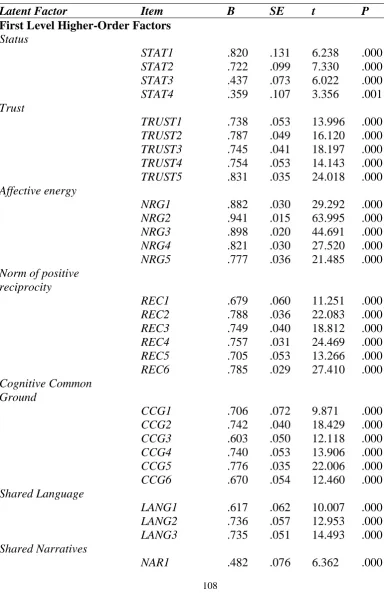
Item factor loadings were generally high (>.70) but ranged from .36 to .94. Reliability
estimates were high overall. The hypothesized model had an acceptable fit: χ²(219) =
420.617, p < .001; CFI = .923; TLI = .911; RMSEA = .066 (.056-.075); SRMR = .072.
Adding a direct path between social capital and quality of care improved the model fit:
χ²(218) = 405.884, p < .001; CFI = .928; TLI = .916; RMSEA = .063 (.054-.073) ; SRMR
= .067. All hypothesized relationships were significant except for the direct path between
Conclusions: Findings provide initial support for the new measure of nurses’ workplace
social capital. Authentic leaders play an integral role in cultivating nurses’ workplace
social capital by establishing empowering working conditions that promote positive
relationships and cooperation, creating value for nurses, patients, and organizations.
Keywords
Nursing, authentic leadership, structural empowerment, workplace social capital, team
Acknowledgements
This dissertation could not have happened without the help and support of many wonderful people.
Dr. Heather Laschinger, thank you for welcoming me into your research team and pushing me to keep moving the bar higher. Your mentorship and guidance has been instrumental to my success. Drs. Carol Wong, Joan Finegan, and Roberta Fida – thank you for sharing your expertise, thoughtful insights, and encouragement throughout my doctoral journey. I have learned much from each of you and appreciate your time and energy over the last few years. Thank you!
My past supervisors and mentors Drs. Robert Petrella, Kevin Shoemaker, Jonathon Fowles, and Susan Markham-Starr– thank you for introducing me to research (and APA) and providing me with an excellent foundation for my PhD. Sincerest thanks to Dr. Gary Ness for sparking my interest in healthcare policy and encouraging me to dream big and choose a career I am passionate about. Professor Ann Dodge, thank you for teaching me some valuable life lessons – sometimes they take longer than expected. Scott Rausch, thank you for teaching me the importance of leading by example and learning to pick my battles. Bob Howell, thank you for introducing me to leadership theory in high school – at the time I didn’t realize how valuable and central this would be in my life.
I have also been fortunate to take courses with wonderful faculty members throughout my doctoral journey. A special thank you to Drs. Chris Higgins and Fernando Olivera at the Richard Ivey School of Business, Dr. Don Saklofske in the Psychology Department, and Drs. Carole Orchard, Carol Wong, Heather Laschinger, Sue Anthony, Mary-Anne
Andrusyszyn, and Helene Berman from the Arthur Labatt Family School of Nursing. I am also grateful to my many professors at Acadia and Western in English, kinesiology, and nursing who have helped me better understand the human condition through literature, art, science, and movement.
A huge thank you to my friends and colleagues in SGS at Parkwood Hospital. You welcomed me with open arms and showed me the importance of positive relationships in the workplace. I loved working with you and you make me proud to be a nurse!
My fellow students and research lab friends, Ashley Grau, Lesley Smith, Christine Cullion-Hicks, Amanda Nosko, Michelle Pajot, Kevin Wood, Glen Gorman, Sheila Boamah, Karen Cziraki, Fatmah Fallatah, and Kathleen Leduc – thank you for sharing your intellectual energy, kindness, sweat, tears, and laughter.
Tower – thank you for helping me remember to have fun and be a little more awesome. I am so lucky to have had you all join me on my epic university adventure. Thank you Morgan Hoffarth, Heidi Elliot, Kristy Clark, Mary MacKenzie & Mark Watling, Kathleen & Bob Leduc, Angela Arnold, and the wonderful staff at the YMCA for taking such good care of Liam. I really couldn’t have done it without you!
I am ever grateful for the ongoing unconditional love and support of my family. Thank you to my beautiful, joyful son, Liam, for keeping me balanced and bringing delight to each day. Thank you to my amazing parents, David and Shannon Read, for teaching me the value of hard work, what it means to have the heart of a champion, and cultivating my love of learning. My sisters, Meghan Todd and Ally Read, thank you for sharing your valuable insights on work and life, your positive energy, and your generous supply of coffee when I visit. A very special thank you to Nancy Read, and Chris, Ian, and Fiona Watling for helping make London my second home. Finally, thank you to my
grandmother, Kay Read, for your endless love and support and many fine afternoons of laughter and canassda. I miss you.
Last but not least, thank you to my former teammates, coaches, and colleagues/friends from Amherst Regional High School, Camp Glenburn, the Cumberland YMCA, the Nova Scotia Lifeguard Service, the City of London, the Athletic Club, RNAO, Acadia
Residence Life, and Acadia Athletics who have taught me invaluable lessons about leadership, teamwork, and positive relationships at work.
“There is nothing like looking, if you want to find something. You certainly usually find something, if you look, but it is not always quite the something you were after.”
Table of Contents
Abstract ... i
Acknowledgements ... iii
Table of Contents ... v
List of Tables ... ix
List of Figures ... x
List of Appendices ... xi
Chapter 1: Introduction ... 1
1.1 Introduction ... 1
1.2 Background ... 2
1.3 Problem Statement ... 4
1.4 Study Purpose ... 5
1.5 Significance ... 5
1.6 Summary ... 6
Chapter 2: Theoretical Framework and Review of the Literature ... 7
2.1 Introduction ... 7
2.2 Social Capital within Organizations (Part 1) ... 7
2.2.1 Workplace social capital in nursing. ... 11
2.2.2 Social capital theory. ... 12
2.2.2.1 Origins of the concept. ... 13
2.2.2.2 Social network theory. ... 14
2.2.2.3 Network ties. ... 15
2.2.2.4 Resource-based theory. ... 16
2.2.3 Summary ... 18
2.3 Measurement of Workplace Social Capital ... 18
2.3.1 Reliability. ... 18
2.3.2 Validity. ... 19
2.3.3 Tsai and Ghoshal (1998). ... 20
2.3.4 O’Shea (2003). ... 23
2.3.5 Leana and Pil (2006). ... 25
2.3.7 Hsu et al. (2010). ... 27
2.3.8 Lee (2013). ... 28
2.3.9 Summary of instruments. ... 29
2.4 Theoretical Framework for a New Measure of Workplace Social Capital ... 34
2.4.1 Level of measurement... 35
2.4.2 Measurement model structure... 40
2.4.3 Structural social capital... 41
2.4.3.1 Network size. ... 42
2.4.3.2 Network functional diversity. ... 43
2.4.3.3 Network status. ... 47
2.4.4Relational social capital. ... 50
2.4.4.1 Trust. ... 51
2.4.4.2 Affective energy. ... 53
2.4.4.3 Norm of positive reciprocity. ... 55
2.4.5 Cognitive social capital. ... 57
2.4.5.1 Cognitive common ground... 57
2.4.5.2 Shared language. ... 59
2.4.5.3 Shared narratives. ... 61
2.4.6 Summary of measurement model. ... 62
2.5 Testing the Nomological Network of Workplace Social Capital ... 63
2.5.1 Authentic leadership. ... 63
2.5.2 Workplace empowerment. ... 64
2.5.3 Authentic leadership and structural empowerment ... 65
2.5.5 Structural empowerment and workplace social capital. ... 69
2.5.6 Team effectiveness. ... 71
2.5.7 Nurse-assessed patient care quality. ... 75
2.5.8 Summary of hypothesized nomological network ... 76
2.6 Chapter Summary ... 77
Chapter 3: Methods ... 79
3.1 Introduction ... 79
3.3 Setting and Sample ... 79
3.3.1 Inclusion/exclusion criteria. ... 80
3.3.2 Sample size. ... 80
3.4 Data collection procedures ... 80
3.5 Instrumentation ... 82
3.5.1 Authentic leadership. ... 82
3.5.2 Structural empowerment. ... 83
3.5.3.1 Structural social capital. ... 84
3.5.3.2 Relational social capital. ... 85
3.5.3.3 Cognitive social capital. ... 86
3.5.4 Team effectiveness. ... 86
3.5.5 Nurse-assessed patient care quality. ... 87
3.6 Data Management ... 87
3.6.1 Data integrity. ... 87
3.6.2. Missing Data. ... 87
3.6.2.1 Missing Data: Workplace Social Capital Questionnaire... 89
3.6.2.1 Missing Data: Hypothesized model. ... 89
3.6.3. Underlying assumptions. ... 90
3.6.3.1 Underlying Assumptions: Workplace Social Capital Questionnaire. ... 90
3.6.3.1 Underlying Assumptions: Hypothesized Model. ... 92
3.6.3 Data analysis. ... 95
3.7 Protection of Human Rights ... 98
3.8 Summary ... 99
Chapter 4: Results ... 100
4.1 Introduction ... 100
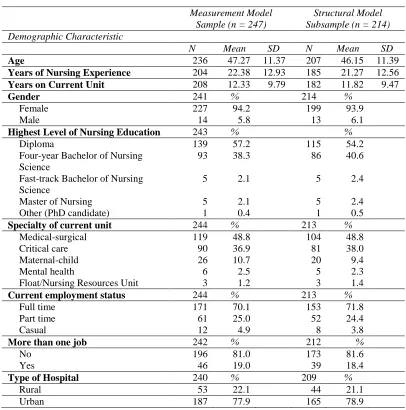
4.2 Participant Demographics ... 100
4.3 Confirmatory Factor Analysis of the Measurement Model for Nurses’ Workplace Social Capital ... 102
4.4 Testing the Nomological Network of Nurses’ Workplace Social Capital ... 110
4.4.1 Descriptive Statistics ... 111
4.5 Summary of Overall Findings ... 120
Chapter 5: Discussion ... 121
5.1 Introduction ... 121
5.2 Measurement model of the new questionnaire to assess nurses’ workplace social capital ... 121
5.2.1 Structural social capital... 122
5.2.2 Relational Social Capital ... 124
5.2.3 Cognitive Social Capital ... 131
5.3 Testing the Nomological Network of Workplace Social Capital ... 136
5.3.1 Proposed antecedents of social capital ... 137
5.2.3 Total and specific indirect effects ... 142
5.4 Implications ... 144
5.5 Strengths and Limitations ... 147
5.6 Avenues for future research ... 149
5.7 Conclusion ... 151
References ... 153
List of Tables
Table 1 Summary of instruments used to measure workplace social capital based on
Nahapiet & Ghoshal’s (1998) theory ... 31
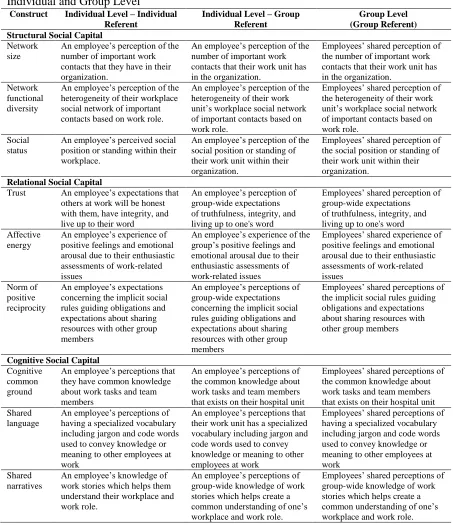
Table 2. Conceptualization of Nurses’ Workplace Social Capital Dimensions at the Individual and Group Level ... 37
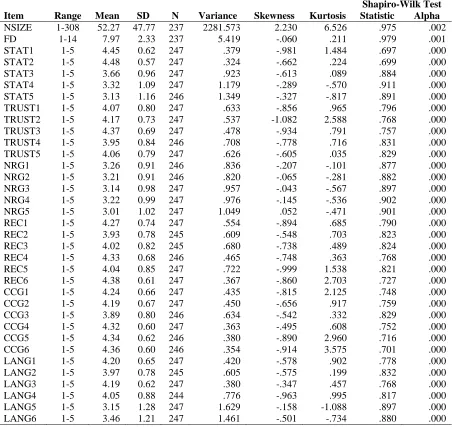
Table 3. Descriptive statistics for items of the workplace social capital questionnaire ... 91
Table 4.Descriptive statistics for transformed variable RTSIZE ... 92
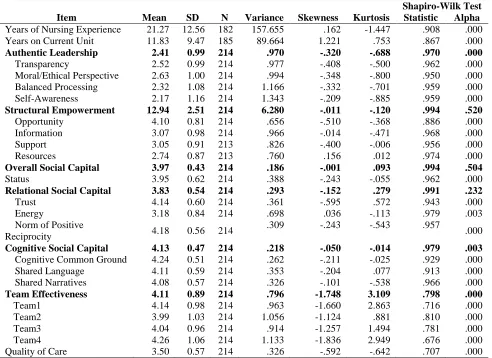
Table 5. Descriptive statistics for main study variables... 93
Table 6. Descriptive statistics for transformed team effectiveness items ... 94
Table 7. VIF and tolerance values for independent variables in the hypothesized model . 95 Table 8. Participant characteristics ... 102
Table 9. Standardized factor loadings for hypothesized measurement model of the workplace social capital questionnaire ... 104
Table 10. Standardized factor loadings for final measurement model of the nurses’ workplace social capital questionnaire ... 108
Table 11. Social capital questionnaire scale reliabilities (n = 247) ... 110
Table 12. Means, standard deviations, and correlations of main study variables (n = 214) ... 114
Table 13. Comparison of model fit for hypothesized model and final model ... 118
List of Figures
Figure 1. Proposed measurement model for social capital ... 41
Figure 2. Hypothesized study model ... 77
Figure 3. Revised measurement model for the workplace social capital questionnaire .. 106
Figure 4. Revised hypothesized model. ... 111
Figure 5. Standardized coefficients between study variables in the hypothesized model ... 115
List of Appendices
Appendix A: Letter of Information………175
Appendix B: Study Instruments………...177
Appendix C: Ethics Approval………184
Chapter 1: Introduction 1.1 Introduction
Work relationships play a key role in today’s healthcare organizations. Recent
reports have identified benefits of collaborative, interprofessional healthcare teams
including high-quality patient-centered care and improved efficiency by reducing
redundancy (Canadian Interprofessional Health Collaborative, 2010; Hall, 2005; Health
Force Ontario, 2010). Difficult interpersonal relationships can result in conflict and
incivility, making teams less effective (Hall, 2005). Positive relationships at work, on the
other hand, create social resources (social capital) and foster cooperation and teamwork
that may improve team performance, patient care, and provider satisfaction but have
received far less attention in the literature.
Social capital, which refers to resources created by and embedded in social
relationships, has been identified by healthcare leaders as an important resource that is
instrumental to the success of healthcare organizations (DiCicco-Bloom et al., 2007;
Hofmeyer, 2003). Yet, there is limited research about social capital in healthcare.
Furthermore, studies conducted to date have used a wide variety of social capital theories,
making it difficult to compare findings and fully understand the role of social capital in
healthcare work environments.
Nahapiet and Ghoshal’s (1998) theory of social capital in organizations provides a
framework for understanding workplace social capital in healthcare. This theory has been
used to examine the structural, relational, and cognitive aspects of social capital proposed
by Nahapiet and Ghoshal (1998) in the management and organizational literature
(Gianvito, 2007; O’Shea, 2003; Tsai & Ghoshal, 1998), as well as in nursing and
recognition that social capital is an important part of organizational life that can be
examined using this theoretical approach, there is not a comprehensive valid and reliable
measure based on Nahapiet and Ghoshal’s (1998) theory.
This research aimed to address the need for a self-report measure of workplace
social capital and advance our understanding of the role of workplace social capital in
nursing. This was accomplished by developing and testing a new self-report questionnaire
to assess nurses’ workplace social capital at work and examining the nomological
network of the concept.
1.2 Background
Registered nurses (RNs) are a valuable health human resource who contribute to
high-quality patient care (Aiken, Clarke, & Sloane, 2002). Canada is currently facing an
estimated shortfall of 60,000 full-time RNs by 2020 due to an aging workforce and
increasing healthcare demands as the population ages (Tomblin-Murphy et al., 2012).
Given these challenges, retaining highly qualified nurses is an important goal for hospital
organizations in order to provide high-quality patient care and prevent negative
consequences of employee turnover such as lost productivity and associated economic
costs (Hayes et al., 2012).
In recent years, it has become evident that the work environment is influential in
determining how nurses experience their work (Aiken et al., 2013; Djukic et al., 2013)
including the level of care they feel they are able to provide to patients (You et al., 2013).
In particular, research based on Kanter’s (1977; 1993) theory of structural empowerment
nurses experience their work (Laschinger, 2008; Laschinger, Finegan, & Shamian, 2001;
Laschinger, Finegan, & Wilk, 2011) and influences patient care quality (Aiken et al.,
2012; Laschinger, 2008; You et al., 2013). By providing nurses with access to the
information, resources, and support they need to accomplish their work, as well as
opportunities to develop and grow, nurse managers empower nurses to provide
high-quality patient care (Laschinger, 2008; Lu, Barriball, Zhang, & While, 2012; Manojlovich
& Laschinger, 2002). Relational leadership styles, such as authentic leadership, that focus
on building high-quality, trusting relationships using emotional intelligence and
self-awareness have been associated with structurally empowering workplaces (Laschinger,
Wong, & Grau, 2012; Laschinger & Smith, 2013; Wong & Laschinger, 2013), and have
been shown to influence nurses’ work outcomes (Wong & Laschinger, 2013; Giallonardo
et al., 2010) and patient care quality (Wong, Laschinger, & Cummings, 2010). Overall,
evidence suggests that authentic leaders play an instrumental role in creating structurally
empowering work environments and that relationships between nurse managers and their
staff are vitally important for positive patient outcomes.
Relationships between staff nurses have received less attention in the literature
than leader-follower relationships and have often focused on negative experiences such as
co-worker incivility and bullying (Laschinger et al., 2013; Wilson, Diedrich, Phelps, &
Choi, 2011). While these negative phenomena are important and need to be prevented,
there is also a need to examine positive relationships at work to understand how to create
healthy, vibrant workplaces where nurses, patients, and organizations can thrive. This
organizational scholarship and positive relationships at work as valuable new fields of
study in organizational and management research (Cameron, Dutton, & Quinn, 2003;
Dutton & Ragins, 2007). Applying this positive lens to understanding nurses’
relationships at work may provide new knowledge about how to create healthy work
environments that promote positive outcomes for nurses, patients, and healthcare
organizations.
1.3 Problem Statement
Although some studies have examined workplace social capital in healthcare and
other industries using Nahapiet and Ghoshal’s (1998) theoretical framework,
measurement approaches have been inconsistent. After reviewing the literature it became
evident that a valid and reliable self-report questionnaire to assess workplace social
capital from this multi-dimensional framework was needed to advance research in this
area. Nurse leaders have speculated that social capital is an important form of capital that
adds value to healthcare organizations (DiCicco-Bloom et al., 2007; Hofmeyer, 2003) and
initial evidence suggests that relational social capital may be an influential aspect of
nurses’ work life that influences work outcomes such as unit effectiveness in providing
timely patient care (Laschinger, Read, Finegan, & Wilk, 2014). However, current
knowledge regarding the role of nurses’ workplace social capital is limited, in part
because it is difficult to measure without a valid and reliable instrument. This study
addresses these needs by first developing and testing a new measure of nurses’ workplace
leadership and structural empowerment) and outcomes (team effectiveness and patient
care quality) in the nomological network of the concept.
1.4 Study Purpose
The purpose of this study was to develop and test a new self-report questionnaire
to measure nurses’ workplace social capital and examine the nomological network of
social capital by testing a theoretical model that integrates Avolio and Gardner’s (2005)
theory of authentic leadership, Kanter’s (1977, 1993) theory of structural empowerment,
and Nahapiet and Ghoshal’s (1998) theory of social capital within organizations.
Specifically, this model examined the influence of authentic leadership and empowerment
on workplace social capital, and the subsequent effects of workplace social capital on
team effectiveness and nurse-assessed patient care quality.
1.5 Significance
Results from this study improve our understanding of social capital within
healthcare organizations and advance research in the field by providing researchers with a
validated instrument that can be used in future studies. The study findings illuminate the
effects authentic leadership and structural empowerment have on nurses’ social capital at
work and how social capital, in turn, influences team effectiveness and patient care
quality in acute care hospital settings. These results provide nurse leaders with
theory-based evidence to support strategies that build nurses’ workplace social capital by
1.6 Summary
Workplace social capital has been identified as an important aspect of employees’
work life in many types of organizations, including hospitals. Yet, there is currently
limited research about social capital in nursing and healthcare, which may be related to
the lack of valid and reliable instruments to measure it. The intent of this study was to
develop and test a new self-report questionnaire to measure social capital based on
Nahapiet and Ghoshal’s (1998) theory and expand our understanding of the critical links
between authentic leadership and structurally empowering work environments and
nurses’ social capital at work, as well as the effects that social capital has on the
effectiveness of teams and the quality of care patients receive. Social capital theory and
the proposed measurement model, as well as the hypothesized model between key
Chapter 2: Theoretical Framework and Review of the Literature
2.1 Introduction
This chapter provides the theoretical foundation and empirical support from the
literature for the development of a new questionnaire to measure workplace social capital
in nursing and a hypothesized model to explore the nomological network of the concept.
This literature review is organized into two parts. Part 1 focuses on the rationale and
development of a conceptual framework for the new measure of nurses’ workplace social
capital. Nahapiet and Ghoshal’s (1998) theory of social capital within organizations is
introduced and instruments available to measure social capital using this theoretical
perspective are examined. Current evidence about the role of social capital in healthcare
work environments is reviewed and support for the proposed measurement model is
provided. Part 2 presents a theoretical model of precursors and outcomes of nurses’
workplace social capital to be tested. Gaps in current research are identified and the
rationale for the theoretical model is provided.
2.2 Social Capital within Organizations (Part 1)
The concept of social capital broadly refers to resources embedded within social
relationships and is built upon the notion that the relationships we have with other people
are resources in and of themselves and provide us with access to resources through
sharing and social exchange (Castiglione et al., 2008). In contrast to physical capital
which refers to machines, equipment, or space, economic capital (money and assets), and
human capital (reflected by education, knowledge, training, and/or experience), social
Bloodgood, 2002). This study focused on workplace social capital, which specifically
refers to the social resources embedded in the social fabric of workplace organizations.
For this study Nahapiet and Ghoshal’s (1998) definition of social capital is
adopted; that is, social capital is “the sum of the actual and potential resources embedded
within, available through, and derived from the network of relationships possessed by an
individual or social unit” (p. 243). By combining social network and resource-based
theories of social capital, Nahapiet and Ghoshal (1998) developed a comprehensive
model of social capital within organizations consisting of three interrelated components:
1) structural social capital, which refers to the overall pattern of connections between
actors, 2) relational social capital, describing the nature of the relationships that people
have with one another and which guide social interactions between group members, and
3) cognitive social capital, which refers to the shared meanings that are created and
sustained within a group. The authors proposed that increased social capital within
organizations leads to greater exchange and combination of ideas among employees,
ultimately creating more intellectual capital and providing a competitive advantage for
the company (Nahapiet & Ghoshal, 1998).
According to Nahapiet and Ghoshal (1998), the most important aspects of
structural social capital are the existence or absence of network ties between individuals
and the overall configuration of the social network, consisting of density, connectivity,
hierarchy, and appropriability (transferability). Network density, connectivity, and
hierarchy are different ways to think about the pattern of social relationships within a
leveraged for cross purposes (e.g., co-workers who develop a friendship may exchange
gifts or information unrelated to work). As will be discussed in more detail, network ties
are fundamental to understanding social capital and there is evidence that close and sparse
networks have different advantages (Adler & Kwon, 2000; Burt, 1992).
Drawing on Granovetter’s (1973) discussion of relational embeddedness (which
describes the nature of relationships people develop with one another over time),
relational social capital encompasses respect and friendship, personal attachment, trust
and trustworthiness, norms and sanctions, obligations and expectations, and identity and
identification (Nahapiet & Ghoshal, 1998). In other words, relational social capital
concerns the nature or quality of social relationships between people. Many researchers
have focused on this component of social capital, with trust (defined and measured in a
variety of ways) being the dominant construct used to represent relational social capital in
the literature. For instance, all of the instruments that will be reviewed included trust.
This is not entirely surprising because trust is an important and popular construct that has
been shown to influence employee and organizational outcomes.
Research outside of the social capital literature supports the importance of each of
the aspects of relational social capital named by Nahapiet and Ghoshal (1998) within
organizational life. For example, the concepts of identity (one’s perception of self) and
social identification (one’s perception of oneness or belonging with a group) are
fundamental to our broader understanding of human and organizational behaviour
(Albert, Ashford, & Dutton, 2000; Ashforth & Mael, 1989) and have also been explored
have proposed that other concepts such as reciprocity and high-quality connections are
important forms of social capital that reflect high-quality relationships. Overall, there is
little agreement about how best to conceptualize and measure relational social capital but
it has been established that the quality of social relationships at work is a vital part of the
work life of employees that influences performance, retention, and organizational success
(Baker & Dutton, 2007; Carmeli, Ben-Hador, Waldman, & Rupp, 2009; Dutton &
Heaphy, 2003; Dutton & Ragins, 2007).
Finally, cognitive social capital was conceptualized by Nahapiet and Ghoshal
(1998) as shared representations, interpretations, and meanings among employees,
including shared language and codes, and shared narratives. Underlying this
conceptualization is the idea that the language people use and the understandings they
share are influenced by the social context in which they occur. Cognitive social capital
also provides a medium for social exchange and facilitates social exchange with similar
others, while making it more difficult when differences are present (Nahapiet & Ghoshal,
1998). In the past cognitive social capital has been conceptualized as shared vision (the
collective goals and aspirations of an organization) by Tsai and Ghoshal (1998), shared
rhetoric (people at work use similar words and phrases to communicate) by O’Shea
(2003), and shared language (people at work use similar words and phrases to
communicate) and shared interpretations (people at work interpret events and happenings
similarly) (Gianvito, 2007). While cognitive social capital has received less attention than
structural and relational social capital, it has been associated with higher levels of
performance and organizational commitment and lower turnover intentions (Gianvito,
2007).
2.2.1 Workplace social capital in nursing.
Workplace social capital is emerging as an important concept in nursing research
and knowledge development (Hofmeyer, 2003). For the most part, social capital research
in healthcare has focused on population health to understand how social relationships
influence health outcomes (Rose, 2000; Snelgrove, Pikhart, & Stafford, 2009) and
mortality rates (Holt-Lunstad, Smith, & Layton, 2010). Only recently have researchers
begun to examine this important aspect of organizational life among nurses. Although
work in this area is new, several authors highlight the potential benefits of nurses’ social
capital within healthcare organizations. These include improved patient care and patient
safety, increased economic capital, a happier, more productive nursing workforce, and
improved nurse retention (Hofmeyer & Marck 2008; DiCicco-Bloom et al., 2007).
Empirically, social capital has been positively associated with higher levels of
organizational commitment, (Hsu, Chang, Huang, & Chiang, 2010), relational
coordination (Lee, 2013), patient safety risk management behaviours (Ernstmann et al.,
2009), and job satisfaction among hospital nurses (Huang, Tsai, & Wang, 2012), while
being negatively associated with burnout (Kowalski et al., 2010). More recently,
Laschinger, Read, Wilk, and Finegan (2014) found that structural empowerment at the
unit-level led to higher levels of relational social capital, which in turn led to higher unit
effectiveness and perceptions of patient care quality. Read and Laschinger (2015) also
relational social capital among new graduate nurses, which in turn had positive effects on
their mental health and job satisfaction.
These studies provide evidence that nurses’ workplace social capital is a valuable
resource for nurses within hospital organizations. These findings are promising but each
of these studies used a different measure of social capital, and none of them fully reflect
Nahapiet and Ghoshal’s (1998) model of the concept, highlighting the need to develop a
valid and reliable measure to further our understanding of the role and function of social
capital in nurses’ work life and be able to compare results across studies.
2.2.2 Social capital theory.
By examining both the structure and content of social relationships at work,
Nahapiet and Ghoshal (1998) provided a comprehensive theory of social capital that
combines elements of social network theory, which is primarily interested in examining
how people are connected to one another in social groups, and the resource-based view of
the firm, which holds that organizational success is contingent upon acquiring unique
resources (including economic, human, and social capital) that provide advantages over
competitors (Barney, 1991). Nahapiet and Ghoshal’s (1998) theory recognizes that
positive social relationships are valuable, difficult to transfer or imitate, and provide value
to customers, employees, and organizations (Bolino, 2002; Nahapiet & Ghoshal, 1998). It
is these relationships that grease the wheels that help employees work together, leading to
increased exchange and combination of ideas, and ultimately, providing organizations
development of the concept of social capital within organizations and describe the main
theoretical approaches in the literature.
2.2.2.1 Origins of the concept.
Modern scholarship on social capital developed out of the work of three key
scholars in sociology and political science: Bourdieu, Coleman, and Putnam (Castliglione
et al. 2008). Bourdieu (1979) examined social capital from a critical paradigm focusing
on social class. From this vantage point, social capital is the sum of actual or potential
resources accessible exclusively to individuals belonging to the wealthy elite or upper
classes of society. Coleman (1988) viewed social capital as a group resource that was not
exclusive to the elite. This makes sense considering the majority of us belong to the
non-elite classes of society. There is also a strong body of evidence that human brains are
hard-wired to be social (Leiberman, 2013), which supports Coleman’s (1988) view that
social relationships are important to all of us, regardless of one’s station in life or
circumstances. Coleman also proposed that social capital has productive capacity because
it creates outcomes that otherwise would not be achievable (Coleman, 1988). Finally,
Putnam (1993) used social capital to better understand civic engagement in Italy. Social
capital in Putnam’s work referred to characteristics of social organization such as trust,
social norms, and network structure that facilitate social coordination, thus leading to
increased efficiency.
Since the work of Bourdieu, Coleman, and Putnam, researchers have studied
social capital and developed new theoretical perspectives to explain the phenomenon and
views on social capital has made it difficult, if not impossible, to articulate one clear,
undisputed meaning of social capital that is relevant to all contexts (Castiglione et al.,
2008) but they all centre on the core idea that social relationships are valuable assets that
provide access to other forms of capital. In the management literature, two main
theoretical vantage points have been taken: (1) the social network theory perspective,
which focuses primarily on how social relationships are organized (i.e., who knows who)
and (2) the resource-based theory perspective which is primarily concerned with the
characteristics of social relationships and social exchange (i.e., what is the nature of those
relationships).
2.2.2.2 Social network theory.
Social network theory has proven to be a useful way to understand social
dynamics within the workplace. Kilduff and Brass (2010) point out four core ideas that
characterize this area of research. These include (1) social relations, whereby individuals
(also referred to as actors or nodes) have connections/ties with others (or not) which
create a social structure, (2) embeddedness, the extent to which actors are involved or
prefer to interact within a particular social network, (3) structural patterning, which refers
to the configuration or clustering of actors within a group, and (4) utility, the idea that
social relationships have consequences.
In contrast to work on social capital specifically, social network research is
concerned more globally with workplace relations and their functions. Yet, it makes little
sense to examine social capital without considering the social network within which it is
important aspect of social capital, thus social network theory underpins the structural
aspect of social capital in their three-dimensional framework. Structural social capital
captures the idea that actors hold different social locations within workplace social
networks that influence the creation and access to resources at work. It is important to
note that Nahapiet and Ghoshal (1998) distinguished the structure of social relationships
from their content (i.e., relational and cognitive social capital).
2.2.2.3 Network ties.
One of the key tenants of social capital theory is that network ties provide a means
for social resource exchange (Nahapiet & Ghoshal, 1998). Network ties refer to
connections or relationships between two people in a social network (Adler & Kwon,
2002). Both the structure and content of network ties have been explored in wide range of
ways including tie type, content, number (network size), density, centrality, strength, and
status. For example, ties can be categorized as being formal (due to formal position within
the organization) or informal (mutually chosen by actors for other reasons such as
personal liking or shared interests). They can be direct ties (when two people know each
other) or indirect ties (when two people share a common direct tie to a third person)
(Podolny & Baron, 1997), internal (within one’s organization or work group) or external
(outside one’s organization or work group) (Adler & Kwon, 2002).
Podolny and Baron (1997) also provided a typology of tie content, recognizing
that different ties provide different content or resources and thus have different functions.
Possible functions include task-advice, buy-in, strategic information, mentorship, and
intensity, intimacy (mutual confiding), and reciprocity between two people (Granovetter,
1973), and can be categorized as being weak, strong, or absent. Other work has focused
on the influence of network size, diversity (range), centrality, density, and status
(Marsden, 2002).
The terms bonding, bridging, and linking social capital have also been used to
describe social capital derived from different types of ties between actors (Tucker &
Woolcock, 2004). Bonding social capital (Adler & Kwon, 2002) refers to the social
exchange of resources through homogeneous intragroup social ties such as those within
the family and household structure, neighborhood social structure, neighborhood
participation, and homogeneous social networks (e.g., a nurse with a tie to another nurse)
(Woolcock & Narayan, 2000). Bridging social capital refers to intergroup social ties with
heterogeneous others (e.g., having a friend from a neighborhood with a different
socioeconomic status) (Woolcock & Narayan, 2000). Finally, linking social capital is
used to describe social connections with people of power and influence (Woolcock &
Narayan, 2000). In sum, it is clear that both the structure and content of network ties are
important and that researchers have used diverse approaches to understand this aspect of
social capital.
2.2.2.4 Resource-based theory.
Barney (1991) described three types of resources that provide organizations with a
competitive advantage over others: physical capital (equipment, space, technology, etc.),
human capital (training, knowledge, experience, relationships, intelligence, etc. of
and control, informal relations among groups within the firm and externally). One of the
main tenants of Barney’s (1991) theory is that when organizations have resources that are
valuable, rare, imperfectly imitable, and non-substitutable they have the upper hand over
competing organizations that do not have access to their particular bundle of resources.
Although social capital was not identified as a separate set of organizational
resources by Barney (1991), he did identify that socially complex resources such as
interpersonal relationships between managers, the firm’s reputation, and organizational
culture are resources that are valuable, rare, difficult to imitate, and cannot be substituted
for exactly. Nahapiet and Ghoshal (1998) advanced this idea by theorizing that workplace
social capital, that is, an organization’s resources embedded within social relationships
between employees, may provide organizations with a competitive advantage over others
by leading to unique intellectual capital and innovation.
The resource-based perspective of social capital parallels Bourdieu’s (1979) idea
that social capital provides individuals with unfair advantages over others except that
here, organizations, rather than individuals, serve to gain advantage. In addition, the
resource-based view suggests that workplace social capital leads to increased efficiency
and effectiveness and productive capacity within the firm, which creates the advantage in
the first place. These ideas are consistent with the idea that social capital is a catalyst that
allows people to achieve more together than alone (Coleman, 1988), and that it enhances
2.2.3 Summary
This review of the literature provided an overview of the development of the
concept of workplace social capital within organizations and described theoretical
approaches used in past research. Past studies show that social capital is an important
organizational resource because when employees know, understand, and trust one another
they work together more effectively and efficiently, providing competitive advantage for
organizations. Nahapiet and Ghoshal’s (1998) theory of social capital presents a useful
way to think about social resources created by and available to staff nurses working in
hospitals. Evidence to date suggests that social capital may be a valuable interpersonal
resource for nurses that promotes positive outcomes for nurses, patients, and
organizations.
2.3 Measurement of Workplace Social Capital
This section provides a description and analysis of measures of social capital that
have been reported in the literature based on Nahapiet and Ghoshal’s (1998) theory (see
Table 1 for summary). In order to assist with assessment of these measures, a brief
description of reliability and validity, along with assessment criteria is provided. Next,
each measure of social capital is examined. Strengths and limitations of each measure are
identified.
2.3.1 Reliability.
Reliability refers to the consistency of a measure (DeVellis, 2012; Polit & Beck,
2012). Item reliability is assessed by examining the factor loadings between indicators
Fidell, 2013; Worthington & Whittaker, 2006). Internal consistency reflects the overall
reliability of a set of items within a scale and is typically assessed using Cronbach’s α (all
items equally weighted) (Cronbach, 1951) or composite reliability which accounts for the
individual factor weights of each item (Raykov, 1997). It has been suggested that
differences between Cronbach’s α and composite reliability are inconsequential, and that,
therefore, both methods of reliability are interchangeable (Peterson & Kim, 2012).
Reporting Cronbach’s α and/or composite reliability is generally accepted in the
literature.
2.3.2 Validity.
Validity is concerned with whether the variable in question is the cause of
co-variation of items in a measure (DeVellis, 2012) and consists of several dimensions. Face
validity is simply whether or not a measure makes sense (Pedhazur &
Pedhazur-Schmelkin, 1991). Content validity refers to whether or not the items reflect the construct
and can be assessed by examining the match between the content of each item and the
definition of the construct they are purported to measure (DeVellis, 2012). Construct
validity is concerned with the theoretical relationship between the variable at hand and
other variables within its nomological network (Cronbach & Meehl, 1955; DeVellis,
2012; Polit & Beck, 2012). The nomological network refers to the theoretical framework
identifying the focal constructs, the empirical framework operationalizing them, and the
linkages between and among these constructs (Cronbach & Meehl, 1955). Assessment of
convergent, discriminant, and criterion validity help determine construct validity
refers to the relatedness of different measures of the same or closely-related constructs
whereas discriminant validity refers to the distinctiveness of measures of different
constructs (Pedhazur & Pedhazur Schmelkin, 1991; Polit & Beck, 2012). Convergent
validity can be assessed by evaluating the Average Variance Extracted (AVE) (>.50 is
acceptable) which tells the researcher how much variance in the construct is explained by
its items (Fornell & Larker, 1981a, 1981b). Discriminant validity can be tested by
examining latent factor correlations (i.e., the degree to which the latent constructs in the
model are related) (Fornell & Larcker, 1981a, 1981b; Tabachnick & Fidell, 2013).
Finally, criterion validity refers to whether or not the construct predicts outcomes as
expected (DeVellis, 2012). For example, Nahapiet and Ghoshal (1998) proposed that high
levels of social capital within organizations would lead to more opportunities for
information exchange and combination, ultimately leading to increased intellectual capital
and competitive advantage. Studies confirming these relationships would provide
criterion validity.
2.3.3 Tsai and Ghoshal (1998).
Tsai and Ghoshal (1998) were the first to conduct an empirical study based on the
theoretical framework of organizational social capital proposed by Nahapiet and Ghoshal
(1998). In their group-level study they surveyed directors and senior managers from 15
business units (total n = 45) of a large multi-national electronics company to test a model
linking the structural, relational, and cognitive dimensions of social capital to one another
and examine their influence on resource exchange and combination, and subsequent value
In this study Tsai and Ghoshal operationalized the three dimensions of social
capital as social interaction (structural), trust and trustworthiness (relational), and shared
vision (cognitive). Social interaction, defined as the centrality or relative importance of a
unit within a social network, was measured using a sociomatrix of mutual ties in response
to the following two questions: (1) "With people of which units do you spend the most
time together in social occasions?" and (2) "Please indicate the units which maintain close
social relationships with your unit" (Tsai & Ghoshal, 1998, p. 469). The data from each
question was used to calculate a betweenness index at the business unit level using the
formula suggested by Wasserman and Faust (1994, p. 190). The betweenness indices for
the two questions had a correlation of .86 (Tsai & Ghoshal, 1998).
Trust, defined by the authors as the interunit trusting relationships in the company,
was assessed using two questions developed by the researchers: (1) "Please indicate the
units which you believe you can rely on without any fear that they will take advantage of
you or your unit even if the opportunity arises" and (2) In general, people from which of
the following units will always keep the promises they make to you?" (Tsai & Ghoshal,
1998, p. 470). The responses to these two questions were used to create two relational
matrixes and calculate degree centrality of the trust and trustworthiness of each business
unit. The degree to which other business units trusted a unit (in-degree centrality) and the
degree to which a business unit trusted other units (out-degree centrality) were both
calculated to determine the trustworthiness and trust of each unit within the network of
Finally, shared vision, defined as the collective goals and aspirations of an
organizations’ members, was measured using two items developed by the authors (1)
"Our unit shares the same ambitions and vision with other units at work" and (2) "People
in our unit are enthusiastic about pursuing the collective goals and missions of the whole
organization" (Tsai & Ghoshal, 1998, p. 470). Items were ranked on a seven-point Likert
scale from 1 = strongly disagree to 7 = strongly agree. Responses from the three
participants in each unit were averaged to create a group score for each business unit. The
authors did not conduct an assessment of inter-rater agreement which is recommended
(Chan, 1998) to determine whether or not aggregation of individual data to the group
level is appropriate. This additional analysis would have strengthened their measure by
showing the agreement between the members of each business unit and providing
rationale for their group-level measurement approach.
The authors reported acceptable convergent and discriminant validity of their
measures. Confirmatory factor analysis (CFA) of the measurement model indicated an
adequate fit between the data and the model (χ2(12)=6.13, p=.91; GFI=.91; NFI=.96). The
coefficient estimates between each measure and its underlying construct were all
significant (p < .05) and cross-loadings were not significant, indicating that items were
measuring what they were supposed to be measuring (construct validity).
Overall, the measures used by Tsai and Ghoshal (1998) were valid and reliable
and were useful for measuring specific aspects of structural, relational, and cognitive
social capital using a social network approach at the group level. There were also some
assessment of each type of social capital, instead focusing on one particular element for
each. Another consideration is that the questions for structural and relational social capital
used by Tsai and Ghoshal (1998) measure group-level social capital rather than
individual-level. All things considered, Tsai and Ghoshal’s (1998) measurement approach
is an interesting one that provided initial empirical support for Nahapiet and Ghoshal’s
(1998) theory of social capital at the group level but it is not amenable to measuring
social capital from an individual perspective.
2.3.4 O’Shea (2003).
In his doctoral research study, O’Shea (2003) examined the effect of group-level
social capital on affective team commitment and team creativity among employees in a
pharmaceutical company. Based on the work of Tsai and Ghoshal (1998), O’Shea (2003)
operationalized the three components of social capital as social interaction (structural),
trust (relational), and shared rhetoric (cognitive). Social interaction was measured by
asking participants to respond to the question: “Please rate the amount of social time that
you spend with members of each of the project teams listed below” (O’Shea, 2003, p. 30).
As in Tsai and Ghoshal’s (1998) study, the responses were used to construct a
sociomatrix and then calculate a betweeness index as a measure of network centrality at
the group level. Trust was measured using a five-item intragroup trust scale (Simons &
Peterson, 2000) rated on a seven-point Likert scale from 1 = Strongly Disagree to 7 =
Strongly Agree (Cronbach’s α = .91). Scoring procedures were not reported by the
O’Shea attempted to improve the assessment of cognitive social capital by
operationalizing it as shared rhetoric instead of shared vision, used by Tsai and Ghoshal
(1998). Shared rhetoric was measured using four new items developed by the author
(O’Shea, 2003). Example items include: “I understand all of the technical language used
by my project team” and “To communicate ideas, I use stories that my project teammates
have experienced”. Cronbach’s α for this new scale was .67. It is interesting to note that
these items refer to the individual, though they are supposedly group-level constructs. It
may have been more appropriate to have a group referent in this case (e.g. “Team
members understand all of the technical language used by our project team”). As pointed
out by Chan (1998), this highlights the need to clearly define and differentiate constructs
at both the individual and group level before operationalizing them.
O’Shea (2003) did not assess the measurement model for each measure of social
capital and item factor loadings were not reported. Considering that all of the items were
different from those used by Tsai and Ghoshal (1998), assessing the reliability and
validity of these measures before testing the relationships between study variables would
have been desirable. Results supported a relationship between relational and cognitive
social capital and affective team commitment, as well as between structural and cognitive
social capital and team creativity, providing support for the criterion validity of this
measure. Overall, O’Shea’s (2003) findings provided some support for the use of these
measures to assess specific aspects of social capital at the group level. As suggested,
2.3.5 Leana and Pil (2006).
Leana and Pil (2006) defined social capital as a higher-order group-level construct
consisting of three factors: information sharing (structural), trust (relational), and shared
vision (cognitive). In their study, elementary school teachers were asked to report about
their school as a whole (rather than themselves) when responding to the questions.
Interclass correlation coefficients (ICC), a measure of agreement between raters, were
assessed before responses were averaged to create group-level scores for each school. As
shown in Table 1, the proposed measurement model was supported, demonstrated
acceptable internal consistency, and was found to predict student achievement. Therefore,
the reliability and validity of this measure were supported.
This instrument has many strengths but there are two specific areas that limit its
relevance to the present study. First, close reading of the items revealed that the wording
of some questions could be improved. For example double-barrelled items that contain
two questions (e.g., “Teachers engage in open and honest communication with one
another”) should be avoided because they are ambiguous (Clark & Watson, 1995;
Krosnick & Presser, 2010). In addition, simple language without adjectives and adverbs
that place conditions on statements should be used (Clark & Watson, 1995; Krosnick &
Presser, 2010). Some items in this questionnaire did not meet this requirement. For
example, the item “Teachers enthusiastically pursue collective goals and mission” is
conditional upon being enthusiastic and the item “Teachers in this school have no hidden
agendas or issues) asks about two things (hidden agendas and issues) that may or may not
was operationalized using one construct which does not provide a comprehensive
measure of workplace social capital.
2.3.6 Gianvito (2007).
In her doctoral dissertation, Gianvito (2007) developed a comprehensive
instrument to measure structural, relational, and cognitive social capital at the individual
level based on Nahapiet and Ghoshal’s (1998) theory. Participants were asked to list the
initials of up to 12 important contacts in their workplace and then identify their top five.
Respondents answered all questions five times, once for each contact. Gianvito (2007)
used three measures of network structure: network size (total number of contacts listed),
network strength (frequency of interaction), and network status (relative position of each
contact within the formal organizational hierarchy). Relational social capital was
operationalized as trust, liking, and identification. Cognitive social capital was
operationalized as shared language and shared interpretations.
Data from two pilot studies and a field study of retail employees was used to
conduct exploratory factor analysis (EFA) and develop the factor structure of the
questionnaire. The final version of each subscale had high internal consistency and
acceptable factor loadings were reported. Discriminant and criterion validity were
supported in her study.
Of the instruments included in this review, Gianvito’s (2007) tool was the most
comprehensive representation of Nahapiet and Ghoshal’s (1998) theory. In particular, her
“contact” approach to measuring structural social capital captured important information
other questionnaires. This is a valuable approach but also increases participant burden by
requiring participants to answer all of the questions multiple times. Despite this
disadvantage, the questionnaire had strong reliability and validity and has also been
successfully adapted to an outpatient clinic setting (Lee, 2013). In addition, it provides an
individual level measure of social capital which allows the questionnaire to be
administered to participants without having to conduct an organization-based study.
2.3.7 Hsu et al. (2010).
Hsu et al. (2010) adapted items from Leana and Pil’s (2006) study of teachers’
social capital and examined individual-level social capital of hospital nurses (n= 797).
They proposed a three-factor measurement model that included social interaction
frequency (2 items) to represent structural social capital, trust (credibility and
benevolence) (4 items) to represent relational social capital, and shared vision (collective
goals and aspirations) (4 items) as cognitive social capital. Items were rated on a
five-point Likert scale from 1 = strongly disagree to 5 = strongly agree. Example items were
not provided by the authors.
Factor loadings and reliability coefficients were analyzed in SmartPLS and
supported the internal reliability of the tool but the factor structure was not assessed.
Positive prediction of organizational commitment supported the criterion validity of the
instrument. The findings of this study provided empirical support for the reliability and
validity of the instrument but the specific items adapted from Leana and Pil’s (2006)
study were not provided therefore the content validity cannot be assessed. In addition,
may provide valid and reliable tools to measure specific aspects of each of social capital
but without the items it was difficult to fully assess them.
2.3.8 Lee (2013).
Lee (2013) measured the influence of nurse and physician social capital on
relational coordination in outpatient clinic settings in Ontario. Lee proposed a one-factor
measurement model that included open communication (structural social capital), trust
and liking (relational social capital), and shared language and interpretations (cognitive
social capital). Four items from Contractor, Wasserman, and Faust (2006) were used to
measure structural social capital, while three items were adapted from Gianvito (2007) for
each of the remaining components. All 16 items were measured on a five-point Likert
scale (1 = strongly disagree, 3 = neither agree nor disagree, and 5 = strongly agree). Two
items with high cross-loadings on the relational coordination construct were removed
from the scale following CFA resulting in a 14-item instrument. Statistically, the model
had an acceptable fit with the data (Model fit: χ2(177) = 321.39; CFI=0.911; TLI=0.894;
RMSEA=0.10; SRMR=0.054). Factor loadings were acceptable and the scale had high
internal consistency (see Table 1).
This instrument had several strengths but rather than proposing a hierarchical
factor structure that aligns with Nahapiet and Ghoshal’s (1998) theory (as used by
Gianvito, 2007), Lee (2013) combined all items to form one general social capital factor.
There is certainly nothing wrong with this approach but results from other studies show
that different components of social capital have different effects (Gianvito, 2007; Hsu et
can enhance our understanding of social capital. Second, Lee (2013) defined structural
social capital as communication openness. Based on Nahapiet and Goshal’s (1998)
theory, this fits better within relational social capital, as it characterizes the quality of the
interactions people have with one another rather than the configuration (i.e., structure) of
their relationships. In future studies it would make sense to re-examine both the
conceptual and operational definitions of structural social capital in Lee’s (2013) scale.
It is also important to point out that the instrument was intended to be used at the
group level using dyads of nurses and physicians but the ICC did not justify aggregation
of the data. This may be due to the fact that the referent for the items in Lee’s (2013)
scale was “The physicians in this clinic” rather than “The nurses and physicians in this
clinic” or “The healthcare professionals in this clinic” which may have yielded different
responses because both nurses and physicians were included in the sample. Finally, some
of the items contain ambiguous wording or double-barrelled questions. Further
development of this scale is recommended.
2.3.9 Summary of instruments.
To date, several questionnaires have been developed to measure various aspects of
social capital that align with Nahapiet and Ghoshal’s (1998) framework. This review
showed that social capital has been conceptualized and measured at both the group level
(Tsai & Ghoshal, 1998; Leana & Pil; O’Shea, 2003) and the individual level (Gianvito,
2007; Hsu et al, 2010; Lee, 2013) and that, at times, there has been a mismatch between
the referent for the items and the level of the construct (e.g., individual referent
traditional Likert-scale questionnaires have been used to capture different components of
social capital. In particular, structural social capital was often measured using group
members’ responses to one question to calculate a betweenness score or, as in the case of
Gianvito’s (2007) questionnaire, a contact approach was used and responses for each
contact were analyzed separately. This review highlights the diversity of conceptual and
operational definitions used to study structural, relational, and cognitive social capital and
shows that trust was unanimously identified as a core component of relational social
capital. The evidence suggests that development of a new instrument to measure
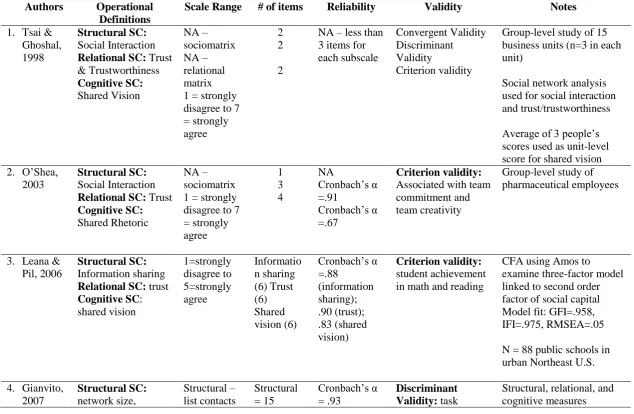
Table 1 Summary of instruments used to measure workplace social capital based on Nahapiet & Ghoshal’s (1998) theory
Authors Operational Definitions
Scale Range # of items Reliability Validity Notes
1. Tsai & Ghoshal, 1998
Structural SC:
Social Interaction
Relational SC: Trust & Trustworthiness Cognitive SC: Shared Vision NA – sociomatrix NA – relational matrix 1 = strongly disagree to 7 = strongly agree
2 2
2
NA – less than 3 items for each subscale
Convergent Validity Discriminant Validity
Criterion validity
Group-level study of 15 business units (n=3 in each unit)
Social network analysis used for social interaction and trust/trustworthiness Average of 3 people’s scores used as unit-level score for shared vision 2. O’Shea,
2003
Structural SC:
Social Interaction
Relational SC: Trust
Cognitive SC:
Shared Rhetoric
NA – sociomatrix 1 = strongly disagree to 7 = strongly agree 1 3 4 NA Cronbach’s α =.91 Cronbach’s α =.67 Criterion validity:
Associated with team commitment and team creativity
Group-level study of pharmaceutical employees
3. Leana & Pil, 2006
Structural SC:
Information sharing
Relational SC: trust
Cognitive SC: shared vision 1=strongly disagree to 5=strongly agree Informatio n sharing (6) Trust (6) Shared vision (6) Cronbach’s α =.88 (information sharing); .90 (trust); .83 (shared vision) Criterion validity: student achievement in math and reading
CFA using Amos to examine three-factor model linked to second order factor of social capital Model fit: GFI=.958, IFI=.975, RMSEA=.05
N = 88 public schools in urban Northeast U.S.
4. Gianvito, 2007 Structural SC: network size, Structural – list contacts Structural = 15 Cronbach’s α = .93 Discriminant Validity: task
network strength, network status
Relational SC: trust, liking, identification Cognitive SC: shared language, shared interpretation & rate interaction frequency and relationship strength for each contact Relational and Cognitive – 5 point Likert Scale from 1=strongly disagree to 5=strongly agree Relational – 9 items (3 each for trust, liking, and identificati on) Cognitive – 4 items (1 item for shared language + 3 items for shared interpretati on) (relational) and .90 (cognitive) Factor loadings: .46-.93 (relational); .38-.87
mastery, role clarity, social integration, acculturation Criterion Validity: task performance, contextual performance, organizational commitment, turnover intentions, career advancement
separate; analyzed using 2 pilot tests in undergraduate psychology students (n=205; n=255); EFA in SPSS (PCA with Promax rotation) + main field study (doctoral dissertation)
Field study: N = 170 retail employees in the U.S.
5. Hsu, Chiang, Chang, & Huang, 2010 Structural SC: Social interaction
Relational SC: trust
Cognitive SC: shared vision 1=strongly disagree to 5=strongly agree Social interaction (2) Trust (4) Shared vision (4) Social interaction: CR = .89; AVE=.80; item loadings .88-.90 Trust: CR = .95; AVE=.81; item loadings =.88-.92 Shared vision: CR=.96; AVE=.84; Criterion validity: organizational commitment
Unclear which items were selected from Leana & Pil’s (2006) scale or how they were adapted for the hospital context; reliability but not validity of 3-factor measurement model assessed using PLS software
item loadings =.91-.93 6. Lee,
2013
Structural SC; open communication
Relational SC: trust and liking
Cognitive SC: shared language and shared interpretation
5 point Likert scale from 1=strongly disagree to 5 = strongly agree
14 Cronbach’s α=.97 factor loadings .69-.91 Criterion validity: relational coordination communication and supportive relationships Measurement model analysed using CFA in AMOS in relation to relational coordination
Model fit :Chi-square = 321.39 (df=177); CFI=0.911; TLI=0.894; RMSEA=0.10;
SRMR=0.054