PROPERTIES OF MILK SYSTEM DURING CONCENTRATION AND
SUBSEQUENT HEATING
A thesis submitted in fulfilment of the requirements for the degree of Master
of Science (Research)
By
Tatijana Markoska
Institute for Sustainable Industries & Liveable Cities
College of Health and Biomedicine
Victoria University
ii
Abstract
Production of concentrated milk encounters several instabilities in regards to the quality of the final product. Main problems that concern industry are aggregation and gelation of milk during heat treatment, age-gelation and thickening during storage. Some shelf life improvements have been achieved by pre-warming/pre-heating of milk prior concentration process intended to denature whey proteins and prevent their further involvement in aggregations with casein micelle. Nevertheless, precise knowledge describing behaviour of these proteins at the molecular level is lacking. Moreover, multitude of factors needs to be considered as they all have an impact on concentrated systems during water removal and heat treatment, including mineral content, protein rearrangements and pH. Hence, the present study aimed at evaluating observations of physiochemical changes in skim milk in regards to reduce water content, sequential heat treatment and the effect of altered pH during heating, all observations performed under laboratory conditions intended to imitate common industrial applications.
During the first study, physiochemical changes of proteins in skim milk were investigated after evaporation process at 55ºC starting from 9% up to two solids concentration, 17 and 25%. Moreover, after reaching desirable concentration level, samples were analysed for protein portioning between the serum and colloidal phases, and how this affected electric dabble layer and particle size distribution, then variations of minerals (calcium, phosphate, magnesium and sodium) and changes in the secondary structure of proteins. Results shown that concentration indeed affected the overall stability of the system, which was dependent of total solids (TS)
content. Thus, reaching 17% TS αs- and β- casein dissociated from the micelle and became more
prominent in the serum. However, greater total solid concentration (25%) affected the level of κ-
iii
declined as it apparently interacted with the casein micelle. These modifications were confirmed with rearrangement of the secondary structure of the proteins advocated by slight shifting of minerals in the micellar state.
In the second study, it was established how the proteins were affected during heating by determining changes at 75, 85, 95, 100, or 110ºC and prolonged heating of 2.6 minutes at 121ºC. All three concentration level (9, 17 and 25% TS) were examined. Treated samples were analysed for changes in the particle diameter, zeta potential, changes in protein level between the serum and colloidal phase, protein rearrangement in the secondary structure and variations in the mineral content (calcium, magnesium, phosphate and sodium) between the serum and micellar state. According to the results applied temperature induced formation of aggregates, which intensity was dependant of concentration level. Moreover, whey proteins denaturation was delayed in increased solids contented, which moved to higher temperatures as TS increased. However, after reaching specific temperature they were involved in intense aggregation among themselves through thiol-sulfhydryl interchange reactions and with caseins by disulfide interactions forming particles with larger diameter. In skim milk with 9% TS this delay of denaturation of milk proteins was not present and aggregation resulted only in more soluble particles which did not affect the average size distribution. Other important detail was large variations in the casein level in the serum, thus involving intense dissociation of specific caseins at certain temperatures. Observed changes were supported with rearrangement of the secondary structure of the micelle that was variable in regards to concentration level and applied temperature.
iv
altered to pH 6.7, which was native pH of skim milk prior to concentration intending to return them to their native environment in the system. Other set of experiment was performed with all samples including unconcentrated milk which included alkali addition to pH 7.5. Properties of the samples were studied in regards to concentration levels and heat treatment under this condition. SDS Polyacrylamide gel electrophoresis and FTIR were used for protein portioning between the serum and micellar phase and modifications in proteins conformational rearrangement, respectively. For each observed concentration intensive aggregation occurred with formation of small and large aggregates composed of whey proteins, dissociated caseins and casein micelle. The intensity of aggregation increased as pH and TS were moved to higher level. The results in this study resulted in many variations in the casein levels between the serum and micellar phase promoting intense dissociation when concentration and temperature increased. However, conditions created by adjusting pH to 6.7 promoted transfer of dissociated αs- and β- caseins from the serum into the micelle. This transfer occurred at lower heating point for 25% TS in comparison to 17%TS, although this occurrence seized for both at 110ºC, indicating stabilization of the casein micelle to a certain extent or almost restoration of its native state. Adjusting pH to 7.5 had destabilizing effect on all observed proteins during heat treatment resulting in intense dissociation of caseins, covalent bonding and aggregations. In regards to whey protein changes it was observed that heating samples with pH > 6.5 and temperatures up to 110ºC, whey proteins formed soluble aggregated complexes among themselves or with the serum caseins. On the other hand, when temperature was raised above 110ºC in addition to formation of soluble aggregates these proteins were involved in aggregation with the casein micelle.
v
vii
Acknowledgement
Foremost, I would like to express my deepest gratitude to my principal supervisor Prof. Todor Vasiljevic. I am profoundly grateful to him for his scientific advice, knowledge, generous insights, patience and encouragement that gave me strength and confidence to complete this work. I am also thankful to my co-supervisor, Dr. Thom Huppertz, for his scientific advice. I am grateful to Manpreet Grewal, Dr. Samantha Liyanarachchi, Dr. Muditha Dissanayake. Dr. Nuwan Vithange and Robin A Wilson for their friendly support, valuable discussions and suggestions.
I would also like to thank technical staff at Victoria University, Werribee campus for their technical assistance Stacey Lloyd, Mary Marshall, Charmaine DiQuattro, Joseph Pelle and Min Nguyen.
viii
Table of Contents
Abstract……… ii
Declaration………... vi
Acknowledgement………... vii
Table of Contents……… viii
List of Figures..……… xiv
List of Tables………... xvii
Chapter 1 Introduction to thesis ... 1
1.1 Background ... 2
1.2 Research aims and objectives ... 5
1.3 Structure of thesis ... 5
Chapter 2 Literature review ... 7
2.1 Properties of Milk... 8
2.1.1 Lactose ... 9
2.1.2 Lipids ... 10
2.1.3 Minerals ... 11
2.1.4 Proteins ... 12
2.1.4.1 Whey proteins ... 15
2.1.4.2 Casein ... 16
ix
2.3 Concentration of milk by evaporation ... 22
2.3.1 Historical development and utilization of concentrated milk ... 22
2.3.2 Manufacturing process of evaporated milk ... 24
2.4 Changes in milk during concentration process ... 25
2.4.1 Chemical changes ... 26
2.4.1.1 Effect of evaporation on pH ... 26
2.4.1.2 Changes in proteins ... 27
2.4.1.3 Changes in particle size ... 29
2.4.1.4 Changes in mineral balance ... 30
2.4.2 Physical changes ... 30
2.4.2.1 Rheology ... 30
2.5 Packing and sterilization of concentrated milk ... 33
2.6 Heat treatment of milk and concentrated milk ... 33
2.7 Changes in concentrated milk during heat treatment ... 35
2.7.1 Chemical changes ... 35
2.7.1.1 pH ... 35
2.7.1.2 Denaturation of whey proteins. ... 37
2.7.1.3 Disintegration of the casein micelle. ... 39
2.7.1.4 Changes in mineral equilibrium. ... 41
x
2.7.1.6 Particle Size. ... 42
2.7.2 Physical changes ... 43
2.7.2.1 Fouling of heat exchangers ... 43
2.8 Fourier transform infrared (FTIR) spectroscopy ... 44
2.9 Summary ... 45
Chapter 3 Physiochemical changes during concentration of raw skim milk ... 47
3.1 Introduction ... 48
3.2 Materials and methods ... 50
3.2.1 Sample preparation ... 50
3.2.2 Particle size and zeta potential (ζ) ... 50
3.2.3 Determination of mineral content ... 51
3.2.4 Dodecyl Sulphate Polyacrylamide Gel Electrophoresis (SDS-PAGE) ... 52
3.2.5 Quantification of portioning between soluble and colloidal states ... 53
3.2.6 Fourier transform infrared (FTIR) spectroscopy ... 53
3.2.7 Data analysis and statistics... 54
3.3 Results ... 55
3.3.1 Effect of total solids concentration on physiochemical properties of the raw milk system 55 3.3.2 Changes in FTIR spectra due to concentration ... 59
xi
3.5 Conclusion ... 68
Chapter 4 Heat induced changes of milk proteins in concentrated raw skim milk ... 69
4.1 Introduction ... 70
4.2 Materials and methods ... 73
4.2.1 Sample preparation ... 73
4.2.2 Particle size and zeta potential (ζ) ... 74
4.2.3 Determination of mineral content ... 74
4.2.4 Dodecyl Sulphate Polyacrylamide Gel Electrophoresis (SDS-PAGE) ... 75
4.2.5 Fourier transform infrared (FTIR) spectroscopy ... 75
4.2.6 Statistics ... 75
4.3 Results ... 76
4.3.1 Effect of heating and concentration level on physiochemical properties of the raw skim milk systems ... 76
4.3.1.1 Particle size ... 76
4.3.1.2 Zeta potential (ζ) ... 77
4.3.1.3 Minerals ... 79
4.3.1.4 Proteins ... 83
4.3.2 FTIR ... 87
xii
4.4.1 Effect of different heating temperatures on whey protein aggregation in regards to
solids concentration ... 90
4.4.2 Disintegration of the casein micelle ... 94
4.4.3 Changes in the secondary structure of proteins ... 97
4.5 Conclusion ... 100
Chapter 5 Impact of pH adjustment on properties of concentrated raw milk during heating ... 102
5.1 Introduction ... 103
5.2 Material and methods ... 105
5.2.1 Sample preparation ... 105
5.2.2 Dodecyl Sulphate Polyacrylamide Gel Electrophoresis (SDS- PAGE) ... 106
5.2.3 Fourier transform infrared (FTIR) spectroscopy ... 106
5.2.4 Statistics ... 106
5.3 Results ... 106
5.3.1 Impact of pH adjustment on protein partitioning ... 107
5.3.2 Effect of pH adjustment on changes of the secondary structure of proteins in concentrated raw skim milk ... 115
5.3.3 Behaviour of concentrated systems during heating ... 117
5.4 Discussion ... 123
xiii
Chapter 6 Conclusions and Future Directions ... 133
6.1 Conclusions ... 134
6.2 Future directions ... 136
xiv
List of Figures
Figure 2.1: Peptide chain ... 12 Figure 2.2: Illustrative model of the casein micelle presented as a homogenous protein matrix
with CaP nanoclusters distributed in diameter of 18nm. κ-casein is present as rhemorphic
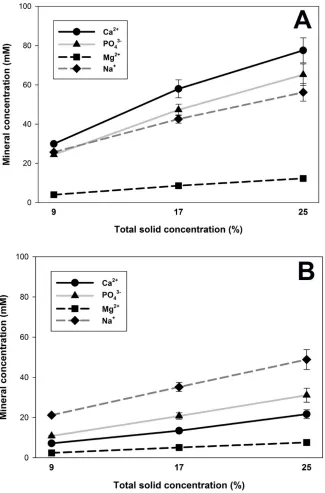
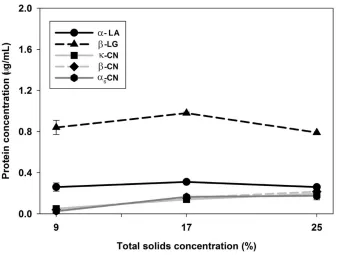
polypeptide chains providing steric stabilization the particle (De Kruif and Holt, 2003) ... 20 Figure 2.3: Manufacturing process of concentrated milk (based on Deeth and Lewis, 2016) .... 25 Figure 2.4: Heat induced denaturation and coagulation of casein micelle and whey proteins (adapted from Dumpler et al. (2017) ... 41 Figure 3.1: Effect of concentration on concentration of selected ions in the bulk (A) and the serum phase of the raw skim milk (B) ... 56 Figure 3.2: Protein concentration in the serum phase of raw milk containing 9, 17 or 25% total
xv
Figure 4.1: Zeta potential (mV) of concentrated raw milk samples containing 9, 17 or 25% total solids during heating and after sampling at indicated temperatures. The results are means of six measurements from two different batches of milk. ... 78 Figure 4.2: Mineral concentration in the serum phase (mM) of three samples containing 9, 17 and 25% TS. The results presenting calcium (A); magnesium (B); phosphate (C); and sodium (D) are means of four measurements from two batches of milk. ... 80 Figure 4.3: SDS PAGE of supernatant obtained by ultracentrifugation of milk samples
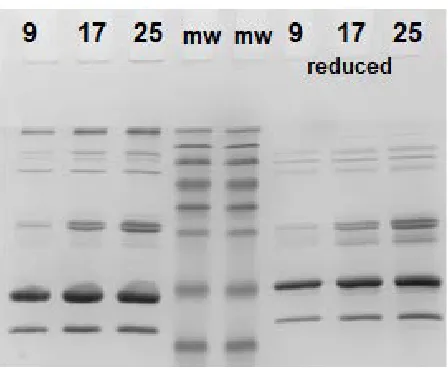
containing 9% TS (A, A1), 17% TS (B, B1), and 25% TS (C, C1). Where A,B,C are non-reduced gels and A1,B1,C1 are reduced gels. ... 84 Figure 4.4: Second derivative of the FTIR spectra of samples containing 9% (A), 17% (B) and 25% TS (C) heated to 121°C. The samples were assessed when the temperature reached
indicated levels... 89 Figure 5.1: Non- reducing (A) and reducing (A1) SDS PAGE of serum of raw milk containing 9% total solids and pH adjusted to 7.5. kCN is κ-casein and bLG is β-LG. The numbers indicate the temperature at which the samples were taken, mw – molecular weight markers. ... 108 Figure 5.2: Non-reducing (A, B) and reducing (A1, B1) SDS PAGE of supernatants obtained by ultracentrifugation of concentrated raw milk containing 17% TS and adjusted to pH 6.7 (A) or
7.5 (B). kCN is κ-casein and bLG is β-LG. The numbers indicate the temperature at which the samples were taken, mw – molecular weight markers. ... 111 Figure 5.3: Non-reducing (A, B) and reducing (A1, B1) SDS PAGE of supernatants obtained by ultracentrifugation of concentrated raw milk containing 25% TS and adjusted to pH 6.7 (A) or
xvi
Figure 5.4: Second derivative of raw milk samples containing 9, 17 or 25% TS with initial and altered pH to 6.7 and 7.5. ... 116 Figure 5.5: FTIR spectra of unconcentrated milk with pH 7.5 with control sample and samples heated at temperature range from 75, 85, 95, 100, 110, 121ºC... 118 Figure 5.6: FTIR spectra of milk (17% TS) with pH 6.7 with control sample and samples treated at sequential heat treatment at temperatures of 75, 85, 95, 100, 110 and 121ºC ... 119 Figure 5.7: FTIR spectra of milk with 17% TS and pH 7.5 with control and heated samples at temperatures of 75, 85, 95, 100, 110 and 121ºC ... 120 Figure 5.8: FTIR of milk with 25% TS and pH 6.7 with control sample and samples heated at 75, 85, 95, 100, 110 and 121ºC ... 121 Figure 5.9: FTIR of milk with 25% TS and pH 7.5 containing control sample and samples heated at 75, 85, 95, 100, 110 and 121ºC. ... 122 Figure 5.10: Changes in the casein micelle and whey proteins in milk and concentrated milk with
altered pH >6.7 heated at temperature below 110ºC (A) and above 110ºC (B). Where ●are whey
xvii List of Tables
Table 2.1: Composition of milk (Walstra et al., 2005) ... 9 Table 2.2: Mineral composition in milk (Fox et al., 2015c) ... 12 Table 2.3: Average concentration and molecular weight of major bovine milk proteins (Walstra and Jenness, 1984) ... 14 Table 2.4: Peaks distribution in Amide I region (Grewal et al., 2017a, Lefèvre and Subirade, 1999) ... 44 Table 3.1: Particle diameter, zeta potential and ionic Ca2+ concentration of samples with different solids concentrations (9, 17 and 25%); *SEM – pooled standard error of the mean. aMeans in
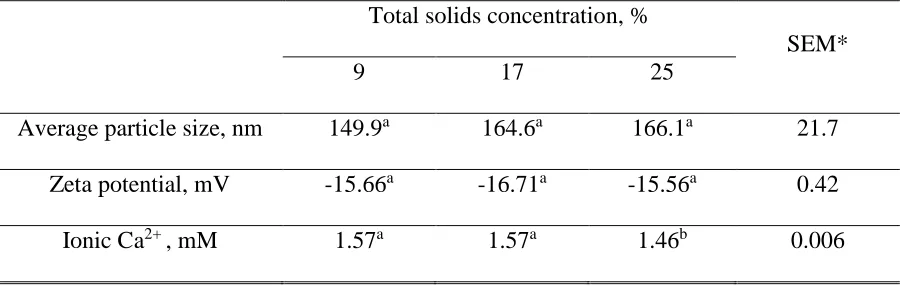
rows with different lower case superscripts differ significantly (P<0.05) ... 57 Table 4.1 Particle size diameter (nm) of concentrated raw milk samples containing 9, 17 or 25% total solids during heating and after sampling at indicated temperatures. The results are means of six measurements from two different batches of milk. Means in a row with different superscript lower case letters and in a column with different superscript upper case letters differ significantly (P<0.05); *SEM – pooled standard error of the mean. ... 77 Table 4.2: Ionic Ca2+ concentration in skim milk with 9, 17 and 25% TS during heating and after sampling at different temperatures. The results are means of four measurements from two
different milk samples. Means in a row with different superscript lower case letters and in a column with different superscript upper case letters differ significantly (P<0.05); *SEM – pooled standard error of the meanesults are means of four measurements from two different milk
1
2 1.1 Background
Prolonging shelf life of milk by concentrating using evaporation is an important step in dairy industry. Considering its high nutritional value, the final product is used as a food ingredient in different food preparations and as an essential processing step in further shelf life extension such as in case of production of milk powders. During thermal processing of concentrated milk various important compositional and structural changes of milk proteins take place that affect stability of the final product. These changes often include increased viscosity, aggregation of milk whey proteins and caseins, gel formation and changes in mineral balance as a result of increased concentration and thermal process (Walstra et al., 2005).
Extensive knowledge exists in regards to physicochemical properties of raw milk and how these properties are affected during heating process (Fox and Morrissey, 1977, Fox, 2009, Huppertz, 2016, McCrae and Muir, 1995, Singh, 2004). On the other hand, from a historical point of view there is a knowledge gap when it comes to properties of milk during concentration by evaporation and consequently heat treatment. During evaporation free water is removed more extensively than intramicellar water (Liu et al., 2012), thus that would initiate molecular changes in the mineral levels leading to a reduction in the amount of soluble calcium and increase in the levels of calcium incorporated into colloidal calcium phosphate located within the casein micelle (Bienvenue et al., 2003a, Hardy et al., 1984, Holt et al., 1986, Nieuwenhuijse et al., 1988). Water removal lowers distances between the micelles, which results in compaction of the particles (Cao et al., 2015). It is also expected that during the thermal processing whey proteins including β
3
with κ-casein (κ-CN) on the surface of the casein micelle (Sava et al., 2005). However, by increasing total solids and impacting molecular mobility of the particles, the reaction kinetics and final products of various reactions during concentration and heating may be affected, all of which is largely unknown.
Sterilization of concentrated milk creates several problems related to heat stability of proteins leading to coagulation, gel formation and excessive thickening during storage. By heating concentrated milk whey proteins start to denature and form aggregates with casein micelles of different sizes and structures, a process which is highly dependent of protein concentration, temperature, holding time and pH range (Zuniga et al., 2010). From the beginning of production of concentrated milk, manufacturers have tried to prevent these undesirable changes by preheating the milk, followed by evaporation and finally sterilization (Sommer and Hart, 1919). However, the thickening and coagulation still occur to a certain extent even today. Sommer and Hart (1919) proposed a relationship between heat instability of concentrated milk and the composition of milk salts and the difference in concentration. This was followed by Benton and Albery (1926), who used the alcohol test to control heat stability of evaporated milk. They found that adjustment of pH prior to sterilization had an effect on coagulation to a certain extent and addition of citrate or borate to the concentrated system resulted in an enhanced stability to a particular optimum, after which it declined. Therefore, the industry found a provisional solution to the problem by preheating the milk and adding stabilizers prior to evaporation even after some sediment was found in the product.
4
over the degree of association between whey proteins and κ casein in the serum or in the micellar
phase (Anema and Klostermeyer, 1997b, Anema and Li, 2003b, Anema et al., 2014, Sutariya et al., 2017, Tarassuk and Tamsma, 1956). For example, at pH above pH of raw milk (~6.7)
denatured whey proteins and κ-casein are found in the serum phase; on the other hand at a pH below that of raw milk, whey proteins were associated with the casein micelle. Singh and Creamer (1991a) provided more detailed analysis on changes of milk proteins upon heat treatment of concentrated milk with different pH values and heating rate. They found that with
more intense heat treatment and higher pH κ-, β- and αs-casein denatured more extensively.
5 1.2 Research aims and objectives
The main aim of the project was to provide a scientific foundation underpinning physical and chemical changes that take place in raw skim milk with different solids concentration as a function of process parameters such as concentration step, pH readjustment and heat treatment. The proposed project addressed the following questions:
1. What were the structural changes of the whey proteins and casein micelles when they were subjected to concentration?
2. What chemical and physical changes have taken place in the concentrated systems with different pH values during sterilization and how proteins are affected?
3. What would be the most suitable process techniques that could be proposed to prevent aggregation and gelation of concentrated milk?
1.3 Structure of thesis
6
concentrated skim milk systems and thus enable a better process control and more sustainable milk processing. The thesis contains following chapters:
Chapter 1 – Presents the background and general information of the study including aim, objectives and the structure of the thesis
Chapter 2 – Depicts a literature review with detailed information of so far known concentration, heat and pH induced changes on milk.
Chapter 3 – Focuses on physiochemical changes in milk that takes place during concentration process.
Chapter 4 – Focuses on heat induced changes of milk proteins in raw skim milk with different solids concentrations.
Chapter 5 – Focuses on pH adjustment on protein modifications in raw skim milk with different solids concentrations after heating.
7
8 2.1 Properties of Milk
According to the Code (2016a), milk can be defined as mammary secretion of milking animals excluding colostrum and products with phytosterols, phytostanols and their added esters which is obtained from one or more milkings as a liquid for further processing. The requirements for bovine milk to be placed in the markets are no less than 32 g/kg milk fat and 30 g/kg proteins; however skim milk is limited to 1.5 g/kg of milk fat and no less than 30 g/kg of proteins (Code, 2016a). The main milk product of concern to this thesis is concentrated or evaporated milk, which is defined as a product produced from milk or adjusted milk by partial removal of water by heat or other processes. Evaporated milk distributed on the market should not have less than 7.5% milk fat and no less than 25% total milk solids, on the other hand if the product is sold as skimmed evaporated milk should not contain more than 1% milk fat and no less than 20% total milk solids (Code, 2016b).
9
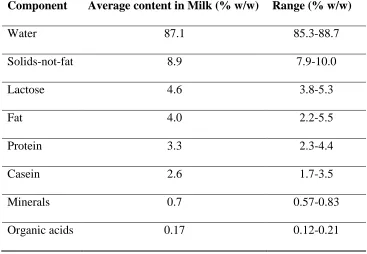
Table 2.1: Composition of milk (Walstra et al., 2005)
Component Average content in Milk (% w/w) Range (% w/w)
Water 87.1 85.3-88.7
Solids-not-fat 8.9 7.9-10.0
Lactose 4.6 3.8-5.3
Fat 4.0 2.2-5.5
Protein 3.3 2.3-4.4
Casein 2.6 1.7-3.5
Minerals 0.7 0.57-0.83
Organic acids 0.17 0.12-0.21
2.1.1 Lactose
Lactose is the main disaccharide in the milk composed of two monosaccharides, glucose and
10
can be formed that can affect density, viscosity, water activity, freezing and melting points and browning of the product (Fox et al., 2015a). Therefore, in regards to achieve smooth texture in concentrated milk products, a production process needs to be optimised by optimum preheating conditions for desirable effect on viscosity and vacuum cooling combined with seeding for best quality. Lactose also participate in non-enzymatic browning or Maillard reaction that involves interactions between the carbonyl group of lactose and amino groups of proteins mainly lysine (O’Brien, 2009). In this process newly formed products including Amadori compound (C=O), Shiff base (C=N) and pyrazines (C-N) are responsible for undesired browning, off-flavours and loss of nutritive value (lysine) of milk products (Fox et al., 2015a).
2.1.2 Lipids
11 2.1.3 Minerals
Minerals in milk are present as organic and inorganic salts. Hence, calcium, magnesium, sodium and potassium are main cations and inorganic phosphate, citrate and chloride are main anions in the milk (Gaucheron, 2005). Some of the mineral ions can be found as purely soluble such as sodium, potassium and chloride; however, some ions appear in a molecular form associated with the milk proteins (casein micelle) like in the case of calcium, magnesium, phosphate and citrate (Table 2.2). These ions interact to create a colloidal calcium phosphate (CCP) which includes other ions such as potassium, sodium, magnesium and citrate with a total amount of 7g/100g dry protein (Walstra et al., 2005).
12
Table 2.2: Mineral composition in milk (Fox et al., 2015c) Range in milk
(mM/kg)
Diffusate (%) Colloidal (%)
Calcium 26-32 33.5 66.3
Magnesium 4-6 67 33
Inorganic Phosphate 19-23
Sodium 17-28 92 8
Potassium 31-43 92 8
Citrate 7-11 94 6
Chloride 22-34 100
2.1.4 Proteins
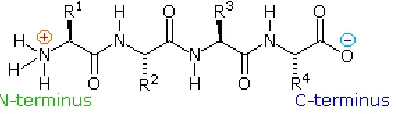
Proteins in general are composed of a different number of amino acids forming a short chain (peptide) or a long chain (polypeptide). This chain structure where amino acids are held through disulphide bridges and covalent bonding is also known as primary structure of proteins and is specific for every individual protein (Walstra et al., 2005). Identification of proteins is made based on the side chains (R) of the amino acids (Figure 2.1).
Figure 2.1: Peptide chain
13
chains as in the case of lysine may react with lactose and contribute to the Maillard reaction. Cysteine in the side chain of peptide chain may react with other cysteine from different peptide and generate cystine by formation of S-S (disulphide) linkage (covalent bonding). When
polypeptide chains are linked with steric relationship they develop more complex structures (α helix, β sheets) also known as secondary structure of proteins. Further association through steric relationship among protein residues is called tertiary structure of proteins (Walstra and Jenness, 1984).
14
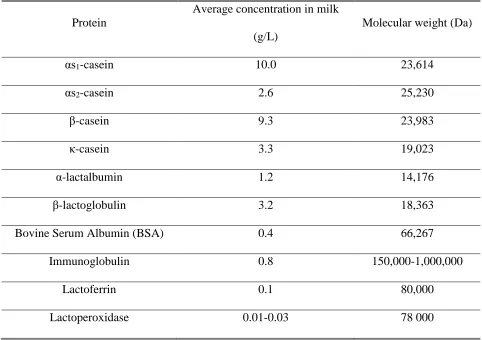
Table 2.3: Average concentration and molecular weight of major bovine milk proteins (Walstra and Jenness, 1984)
Protein
Average concentration in milk (g/L)
Molecular weight (Da)
αs1-casein 10.0 23,614
αs2-casein 2.6 25,230
β-casein 9.3 23,983
κ-casein 3.3 19,023
α-lactalbumin 1.2 14,176
β-lactoglobulin 3.2 18,363 Bovine Serum Albumin (BSA) 0.4 66,267
Immunoglobulin 0.8 150,000-1,000,000
Lactoferrin 0.1 80,000
15 2.1.4.1 Whey proteins
Whey proteins are found in an aqueous solution of milk termed as a serum or whey. This group
of proteins is highly heterogeneous and include a large number of different proteins such as β
-lactoglobulin (β-LG) (represents 50% of total whey proteins), α-lactalbumin (α-LA) (25%), Bovine Serum Albumin (BSA), lactoferrin and immunoglobulins (Farrell et al., 2004). Whey proteins are highly hydrophobic with folded peptide chains into a globular and defined secondary structure with a large proportion of α-helix and β-sheets (Walstra et al., 2005). These globular proteins are also known as serum proteins as they exist in milk as monomers or small quaternary structures, which are heat labile and completely denature at 90°C for 10 minutes (O’mahony and Fox, 2013).
β-Lactoglobulin (β-LG) is the main serum protein with a highly defined secondary structure, in milk with native pH (6.7) is present as a dimer containing two -S-S- bonds and one hidden cysteine residue per monomer (Walstra et al., 2005). The presence of free cysteine has a
significant role during thermal denaturation of β-LG and disulphide linking with other whey
proteins or κ-casein (κ-CN) that affects the heat stability of milk. This protein has very compact
globular structure with identified α-helix (10-15%), β-sheets (45%) and unordered structures including turns (47%) (Fox, 2003). Heat denaturation of β-LG was studied extensively (Anema, 2000, McKenna and O'sullivan, 1971, Oldfield et al., 2005, Oldfield et al., 1998b, Sawyer, 2003). When milk is heated at 70°C, native monomers start to unfold and transform into active
state with exposed thiol groups and some hydrophobic residues. Following this, activated β-LG
interacts via disulphide bonds with other β-LG molecules or caseins and forms irreversibly aggregated complexes. Many processing conditions that involve production of concentrated milk
16
concentration of solids in the system (Anema, 2000). Thus, a number of available active thiol
groups of β-LG are reduced due to covalent bonding with lactose molecules that impede denaturation or slow down the overall reaction.
α-Lactalbumin (α-LA) is a spherical molecule synthetised from lactose which contains a strongly bound Ca2+ exerting a profound effect on protein molecular stability (Brew, 2003, Walstra, 1999, Walstra et al., 2005). This protein has a regulatory function in lactose synthesis in
the Golgi apparatus in the mammary gland. The effect of thermal processing on α-LA is less
intense compared to β-LG and at high temperature it forms covalent bonds with β-LG or BSA and is found as aggregated complexes in the system (Havea et al., 2001). In concentrated milk
products the percentage of heat denaturation of α-LA is hardly affected by concentration (Anema, 2001).
Immunoglobulins are heterogeneous large glycoprotein molecules present in milk as five classes including IgG, IgA, IgM, IgE and IgD (Hurley, 2003, Walstra et al., 2005). Bovine serum albumin (BSA) is present in milk at a low level and contains 17 -S-S- bonds and one – SH group (Walstra et al., 2005). Protease peptone is a heat resistant protein fraction to denaturation which does not precipitate at pH 4.6 (Walstra et al., 2005). Lactoferrin is a large protein present in the milk as a single chain and is important as an inhibitor of some bacteria by removing Fe3+ ions from the serum (Lönnerdal, 2003).
2.1.4.2 Casein
17
caseins appear as a complex micellar structure in milk composed of four proteins of major
importance in dairy industry including αs1–casein (αs1-CN), αs2-casein (αs2-CN), β–casein (β
-CN) and κ-casein (κ-CN) with total concentration in bovine milk of 12-15, 3-4, 9-11 and 2-4 g/L respectively (Huppertz, 2013). Caseins are divided into calcium sensitive caseins (αs1-CN, αs2
-CN and β-CN) and calcium insensitive (κ-CN), moreover all caseins are phosphorylated containing a different number of phosphate groups which is partly accountable for their high surface charge (Walstra et al., 2005). All caseins are also highly hydrophobic with exposed hydrophobic groups which are the main attractive force among the caseins (Walstra et al., 2005). Owing to high proline levels, they have less defined secondary structure compared to whey proteins.
αs1-CN takes 40% of the total casein content in the milk (Huppertz, 2013) with eight
phosphorylated groups important for stabilization of calcium phosphate nanoclusters in the micelle (De Kruif and Holt, 2003). αs1-CN lacks cysteine and cystine, thus is not involved in the
disulphide bridging in the micelle (Fox, 2009). This casein has hydrophobic side chains that undergo limited hydrogen bonding which are important for formation of dimers from peptide chains which association is reversible and strongly dependant of concentration (Farrell Jr et al., 2003).
αs2–CN is an casein with ten phosphorylated groups and is least hydrophobic compared to other
caseins (De Kruif and Holt, 2003). In milk is found as a monomer and less as a dimer linked by
disulphide linkage or polymerized with κ-CN. It has a fairly defined secondary structure with
18
β-CN is a highly hydrophobic casein present in milk as a polymer with five phosphorylated groups (De Kruif and Holt, 2003, Huppertz, 2013). This casein has a less defined secondary
structure with a low level of helical structure (~15%) and more present turns and β sheets
(~30%) (Farrell Jr et al., 2003). This deficiency of a defined secondary structure is due to high proline concentration. Moreover, the shortage of cysteine and cystine in the molecule leads to inability for disulphide bridging (Fox, 2009).
Last casein is κ-CN which represents 10-12% of all caseins in the milk. It is present in milk as disulphide bonded aggregates with one phosphorylated group (De Kruif and Holt, 2003, Huppertz, 2013). This casein appears on the surface of the micelle with positive and hydrophobic N-terminal end oriented towards the micelle and negatively charged C-terminal oriented towards the serum, which is important for the micelle stability (Farrell Jr et al., 2003, Horne, 2006, McMahon and Oommen, 2013). κ-CN has a less defined thermostable secondary structure with
low levels of α-helix (15%), turns structure (~25%) and β-sheets (~30%) (Farrell Jr et al., 2003).
Casein micelle
Casein micelle is a complex of caseins as a spherical aggregate with average size in a range from 20 to 600 nm containing 2-4g water/g protein, out of which 15% is bound to the caseins and the rest is free in the micelle channels (McMahon and Oommen, 2013). Therefore, it has been reported that the micelle has a highly hydrated and sponge-like structure responsible for light scattering of white colour in the milk (De Kruif and Holt, 2003, Horne, 2006, McMahon and Oommen, 2013, O’mahony and Fox, 2013).
19
by Dalgleish (2011) illustrate “core polymers” containing hydrophobicaly bonded mixture of
αs1-, αs2- and β- casein that further form super polymers or casein micelles that are held with
calcium phosphate surrounded by surface κ- casein which is negatively charged and provides overall molecular stability through electrostatic and steric stabilisation. This stabilization is
20
Figure 2.2: Illustrative model of the casein micelle presented as a homogenous protein matrix
with CaP nanoclusters distributed in diameter of 18nm. κ-casein is present as rhemorphic polypeptide chains providing steric stabilization the particle (De Kruif and Holt, 2003)
Some properties of casein micelle related to its stability (Fox et al., 2015b, De Kruif and Holt, 2003)
• Casein is a heat stable protein that can maintain its micellar integrity up to 24 hours at 100°C or resist to coagulation when heated at 140°C up to 20 minutes. Heating milk at high
temperatures result in covalent interactions between κ- casein and β-LG affecting the stability of the micelle. According to De Kruif and Holt (2003), this stability is a result of three reasons related to biological function of caseins. Firstly, caseins are reomorphic and stable to heat denaturation; next, calcium phosphate holds the Ca-sensitive caseins through strong linkages and stabilizes the internal structure of the micelle; and finally, the surface of the micelle provides a
21
• Refrigeration of milk at temperatures from 0-5°C produce dissociation of β-CN and less extensively liberalization of other caseins from the micelle due to weakening of hydrophobic interactions among the casein.
• Commercial homogenization barely affects the casein micelle, on the other hand treatments with high pressure results in various changes of the micelle.
• Micelles show high stability when are subjected to ultracentrifugation followed by sedimentation. Thus the micelle can be re-dispersed to almost native state by crushing and milk agitation.
• When milk is subjected to concentration process, casein micelles become more crowded and destabilize intensively as the concentration factor increases. This effect of concentration on stability of the micelle is due to certain chemical changes that take place during concentration process such as decrease in pH, increase in Ca2+ activity and changes in the state of colloidal calcium phosphate.
• pH has a large effect on the casein micelle stability. Therefore, any alteration of native pH to more acidic or alkaline values would affect the integral stability of the micelle. Moreover, the micelle has an isoelectric point at pH 4.6 when individual caseins start to aggregate and precipitate. This mainly results from increased solubility of CCP that at certain point would disintegrate the micelle into small aggregated primary particles. On the other hand, increase in pH to more alkaline values would lead to super saturation of the micelle with additional CCP that again would destabilize the micelle.
22
methanol affects the micelle by dissociation of caseins. This dissociation is pH dependent by increased destabilization of the micelle when pH is increased or decreased.
• Addition of urea and sodium dodecyl sulphate (SDS) also results in dissociation of the caseins from the micelle by cleavage of molecular bonds in the micelle.
2.2 Milk processing
In the dairy industry, raw milk is processed into different fluid products and range of dairy products such as fermented milks, cheese, concentrated milk, dry milk powders, frozen and refrigerated deserts and many more. Milk processing includes some principles necessary for effective management of dairy plant including chemical, microbiological, physical and engineering principles (Chandan et al., 2009). Main aims of dairy industry are achievement of optimum conditions in processing, packing, storage and shipment of a final product where all sensory, chemical, physical and microbiological aspects are met for successful management of the plant. Main processing steps involve separation of raw milk into a cream and skim milk then standardization finalizing it with heat treatment, cooling, packing and storage of the final product. However, every product has defined processing steps that follow standard analytical procedures which are approved by regulatory authorities for optimum processing conditions.
2.3 Concentration of milk by evaporation
2.3.1 Historical development and utilization of concentrated milk
23
condensed milk - produced from skim milk which had a long shelf life and was resistant to spoilage. This product was main dairy product consumed during the First and the Second World War due to its long shelf life and easy transportation. However, this product showed several severe problems during the heat treatment such as coagulation, gelation and thickening during storage. These problems were controlled by preheating the milk before concentration and then sterilization (Sommer and Hart, 1919). It was also observed that addition of stabilizers improved heat stability (Benton and Albery, 1926). Nowadays, preheating and addition of stabilizers are part of standard commercial practice during manufacture of condensed or evaporated milk. The shelf life of final product is dependent on fat content and it can last up to 15 months.
Concentrated milk is used in its reduced form as reconstituted evaporated milk, which is equivalent to normal milk, also used as a mid-product in baking, ice cream processing and candy manufacturing and is the main ingredient or mid-step in production of milk powder. Evaporated milk after re-dilution with water is again returned to its native condition in regards to flavour and nutritive value.
24 2.3.2 Manufacturing process of evaporated milk
25
Figure 2.3: Manufacturing process of concentrated milk (based on Deeth and Lewis, 2016) However, industry endeavours to find appropriate approaches and solutions of many problems that appear in the process of production of evaporated milk. Some of the problems include fouling of evaporators and heat exchangers, which maintenance imposes a high cost; next, concentrated milk shows instability during sterilization, which may result in formation of large aggregates and finally main concern for industry is age gelation. However, finding optimum conditions in the process of manufacture of concentrated milk vary seasonally and with milk from different cows.
2.4 Changes in milk during concentration process
26 2.4.1 Chemical changes
2.4.1.1 Effect of evaporation on pH
Concentration process lowers the pH of milk which is less pronounced in comparison to preheating treatment or sterilization (Nieuwenhuijse et al., 1988). This difference in pH profile is a result of the temperature used for the treatment; hence, evaporation is performed at low heating temperatures compared to other more intense heat treatments. This acidification of concentrated milk appears as a result of increased concentration of organic acids resulting from lactose degradation, shifting of minerals from soluble to micellar state and release of H+ (Huppertz, 2013). The effect of lactose degradation during concentration process is less pronounced due to low heating temperatures used in the process, however increased solids concentration also means increase of lactose concentration in the system that may enhance the probability for interactions among crowded molecules, especially between lactose and lysine from proteins, but this process is mainly reversible under current conditions (Nieuwenhuijse et al., 1988). The effect of minerals is more pronounced in this process since the additional colloidal calcium phosphate in the micelle induce liberalization of H+ which reduces the pH and the milk becomes more acidic (Walstra et al., 2005).
Ca2+ + H
2PO4- CaHPO4 + H+
27 2.4.1.2 Changes in proteins
28
lower than the level of denaturation, because the temperature of evaporation has a minor effect on this modification (Brodkorb et al., 2016).
Increased solids concentration induces a collapse of the structure of the casein micelle by formation of swollen and diffuse micelles that at high concentration are fragmented into smaller structures (Singh, 2007). Thus, this modification of the micelle structure prompts more intense reformation and new interactions among proteins when milk is further processed by sterilization. The presence of aggregates during evaporation was confirmed in the study of Cao et al. (2015) in which they observed reduced –SH content in evaporated milk in comparison to unconcentrated milk, which was related to aggregation of β-LG through interchange disulphide reaction with α
-LA or creation of intermolecular disulphide bridges with κ- casein.
In regards to the effect of evaporation on the casein micelle structure it was reported by Anema and Li (2003b) that a slight dissociation of the total casein was observed from the micelle during mild heating which was pH dependant. In concentrated milk with pH 6.3 and 6.5 (which is native
pH of concentrated milk), they observed that β- and αs- casein slightly dissociated from the micelle. As previously described by Aoki et al. (1990) and Bienvenue et al. (2003a), β-casein is a predominant casein involved in solubilisation at low temperatures. This pH dependence of
solubility of β-casein and αs-casein at low temperatures was explained by destabilization of the micelle resulting from changes in colloidal CaP. Hence, the micelle loses its integrity because of saturation with colloidal CaP, which may affect its stability and result in release of some
29
Klostermeyer, 1997b). This correlation of colloidal CaP with dissociation of caseins depends on temperature and pH was previously observed by Dalgleish and Law (1988).
2.4.1.3 Changes in particle size
Reduction of water content in the system leads to increased voluminosity of the micelle, which occurs due to aggregation of some micelles and interactions of whey proteins on the micelle surface (Singh, 2007). It was observed by Liu et al. (2012) and Bienvenue et al. (2003b) that when total solids concentration is increased the diameter of the particles may be reduced due to shrinking of the micelle resulting from saturation with colloidal calcium phosphate (CCP) and dehydration of the micelles. However, this decrease in size at even higher concentration is reversed, and an average diameter of particles increases. Hence, increased concentration promotes formation of large particles due to non-covalent interactions among particles promoted by reduced net negative charge of the micelle and decrease in electrostatic repulsion between the particles (Bienvenue et al., 2003a, Nieuwenhuijse et al., 1991b). It was reported that the increase in the micelle voluminosity is mainly do shifting of soluble calcium and caseins into the micelle (Liu et al., 2012, Singh, 2007) or attachment of the whey proteins onto the micelle surface (Cao et al., 2015). If milk is preheated before concentration, the final product have particles with increased diameter compared to samples that were not heat treated before evaporation (Bienvenue et al., 2003b). This observation is due to attachment of denatured whey proteins to
30 2.4.1.4 Changes in mineral balance
Mineral composition is affected when water content in milk is reduced. During evaporation process, certain amount of soluble calcium and phosphate is transferred from the serum into the micellar state due minimised capacity of the mineral system to maintain soluble calcium and phosphate in their soluble form as a result of water removal and increased temperature (Liu et al., 2012). However, this shifting of minerals into the micelle is less pronounced during evaporation and more definite when the concentrate undergoes sterilisation (Hardy et al., 1984). Ionic strength of milk during concentration increases (Lewis, 2011). However, it was reported by Nieuwenhuijse et al. (1988) and Hardy et al. (1984) that concentration of ionic Ca2+ after
evaporation process slightly decreased and after sterilization it experienced even greater reduction. This decline of ionic Ca2+ resulting from water removal is related to pH reduction in concentrated milk (Nieuwenhuijse et al., 1988). As previously described, pH drop is a consequence of shifting of minerals to the colloidal state and liberation of H+. In regards to other minerals it was reported by Nieuwenhuijse et al. (1988) that the concentration of soluble Mg decreases and the amount of soluble Na increases proportionally with concentration step.
2.4.2 Physical changes
2.4.2.1 Rheology
31
permeate which is related to the volume of the particle (Walstra et al., 2005). However, the increase in particle size is regulated by preheating, moreover in preheated milk the apparent viscosity is high due to large molecules formed from denatured whey proteins and their linking to the casein micelle (Bienvenue et al., 2003b). This changes in voluminosity of the particles in regards to preheat treatment was observed by Bienvenue et al. (2003a) who reported particles with increased diameter in samples that were subjected to preheating and only small variation in particle size in non-treated concentrated milk. Moreover, increased solid concentration leads to nonlinear increase in viscosity which is due rearrangement of caseins and formation of new bonds which are converted from reversible to irreversible linkages during prolonged storage of the concentrate (Bienvenue et al., 2003a). This modification in viscosity and changes in voluminosity are due to formation of new molecular structures governed by week interactions easily disrupted by high shear.
Liu et al. (2012) in their research showed that during the entire process of milk concentration, water was preferably removed from the serum and less from the micelle. This behaviour was due to greater mobility and availability of intramicellar water, however, water bound to the micelle started to be removed only after a considerable amount of bulk water was evaporated. When large proportion of water is removed from the system, water activity (aw) decrease, which can be
32
in the system associated with the micelle which becomes denser with high refractive index (Liu, 2014).
When milk is evaporated, an undesirable deposit is created on the surface of the evaporator wall termed fouling. This deposit formation is more pronounced in multiple-effect evaporators where the cost for sanitation and milk losses can be more than a total running cost (Walstra et al., 2005). Main reasons for this problem in industry are deposit formation from denaturation and aggregation of whey proteins and low solubility of calcium phosphate during heating that precipitates in the system (Jeurnink et al., 1996). The caseins assembled in the micelle with their
33 2.5 Packing and sterilization of concentrated milk
Stabilized evaporated milk is filled into cans by leaving some head space of around 10 mm needed for appropriate mixing during sterilization. After filling, cans are vacuum sealed and sterilized with continual agitation. In practice, it is common to perform in cans sterilization at high temperatures to prevent bacterial growth, inactivate enzymes, improve and preserve the quality of the product and to ascertain specific properties of the products (Walstra et al., 2005). Sterilization of concentrated milk is carried out at 120°C for 15 minutes; since it is basically a static process, the cans are usually agitated to reduce coagulation and gel formation (Deeth and Lewis, 2016). Mixing is also important for prevention of attachment of aggregated proteins on the internal can surface that may reduce the heat transfer coefficient of the wall and affect the quality of the sterilization process (Early, 1998). Shelf life of caned concentrated milk products is usually one year at room temperature, however in practice longer storage times are commonly observed.
2.6 Heat treatment of milk and concentrated milk
The main aim of applying heat treatment on milk and milk products is to produce commercially sterile products, which addresses full safety to costumers by inactivation of enzymes and killing of pathogens including Mycobacterium tuberculosis, Coxiella burnetii, Staphylococcus aureus,
34
reaction to take a place for both heat treatments are needed three different period including heating period, holding period and cooling period where evaluation of all period is essential for determination of overall effect of temperature on quality of the final product (Lewis and Deeth, 2009).
Pasteurization process is used with an aim to prevent public health hazards that arise from present pathogenic microorganisms and to induce minimal physical, chemical and organoleptic changes in the final product (Lewis and Deeth, 2009). Pasteurized products induce minimal changes of flavour, colour and appearance of the milk and can be stored in a refrigerator for few days.
In regards to sterilization, the main objective of the process is production of a commercially sterile product with a long shelf life with the main attention focused on deactivation of heat resistant spores of Clostridium botulinum (Lewis and Deeth, 2009). The sterilization is mostly conducted in bottles or sealed containers or by Ultra High Temperature (UHT) processing followed by aseptic packing. The principal advantage of UHT processing is minimized changes of physical, chemical and organoleptic characteristics of a final product in comparison to in-container sterilization.
35
concentration, pH and other parameters. Unconcentrated milk during heat treatment show high stability at natural pH (6.6-6.7), while at high pH the stability decreases with the minimum stability around pH 6.9-7.0 (Huppertz, 2016, Darling, 1980). Controversially, concentrated milk is less heat stable than unconcentrated with maximum stability at pH 6.5-6.6 , any changes in pH makes the product even less stable to heat treatment (Huppertz, 2016, O’connell and Fox, 2003). The heat instability is referred to colloidal instability which results in coagulation mainly governed by changes and collapse of the micelle brush (κ-CN) important for steric and electrostatic stabilization of the micelle (Huppertz, 2016).
2.7 Changes in concentrated milk during heat treatment
Heating conditions promote several changes in the product mainly occurring during in-container sterilization that continue during storage. These changes can be divided into chemical changes that facilitate protein heat modifications such as denaturation of whey proteins, protein variations among the serum and micelle, disintegration of the casein micelle, Maillard reaction, dephosphorylation and many more reactions, and physical changes including fouling of heat exchangers due to sedimentation and gelation (Deeth and Lewis, 2016).
2.7.1 Chemical changes
2.7.1.1 pH
36
calcium and phosphate) in the colloidal state that results in liberation of H+ accompanied by dephosphorylation of caseins (Fox et al., 2015b).
The significance of pH on heat stability of milk and milk products was for the first time revealed by Rose (1961). For unconcentrated milks, two HCT-pH profiles were established, A and B, where the former is characterised with maximum stability at ~6.7 and minimum stability at ~6.9 while the latter shows increase in heat stability as a function of pH increase. In regards to concentrated milk the heat stability is lower in comparison to that at the same pH of unconcentrated milk.
Alkalization prior to heat treatment
37
suspected to be a result of lower solvent quality and less disruption in protein-protein interactions due high solids content. The reason for given alkaline disruption of casein micelle was reported by Vaia et al. (2006) to be increased solvent quality in milk due to decreased level of ionic calcium an phosphate at high pH, which further affects the cohesive interactions among caseins by micellar disruption. This micellar disruption is confirmed by intense dissociation of individual caseins from the micelle which is pH and temperature dependant (Anema and Li, 2000, Singh and Creamer, 1991a). Moreover, heat treatment of concentrated samples prepared from reconstituted milk adjusted to pH>6.7 reflected intensive dissociation of individual caseins from the micelle in the serum phase (Anema, 1998). Thus, liberation of the individual caseins from the micelle was reported to be temperature dependant for specific caseins and more intense in samples with high solids content. Maximum dissociation of αs- and β- casein is observed at a temperature between 60-80oC, followed by re-association at a temperature up to 100oC after
what further increase in temperature again results in intense dissociations. Correspondingly, the
dissociation behaviour of κ-casein is described by a continuous increase over the entire temperature range. However, in alkalized concentrated milk up to high pH values (8.0-11.0), the casein micelle undergoes extensive alkaline disruption into separated nanoclusters and improvement of solvent quality for the caseins, which is more pronounced when heating temperature is applied (Vaia et al., 2006). In addition, this disruption leads to increase of net negative charge of the caseins and their dissociation from the micelle.
2.7.1.2 Denaturation of whey proteins
38
concentrated milk this is more expected reaction (Huppertz, 2016). This instability of whey proteins is dependent on the process that is applied and the temperature-time profile, for example denaturation is almost 100% during in container sterilization and less pronounced by UHT treatment (Deeth and Lewis, 2016). This denaturation mainly involves β-LG and α-LA due to low concentration of other whey proteins in the milk and thus do not have a major influence on
total heat stability. β-LG and α-LA start to unfold or denature at 40°C, moreover at low temperatures, below 70°C, this reaction is reversible (Deeth and Lewis, 2016). Irreversible denaturation takes place at a temperature above 70°C when native molecules start to open and transfer into active state by exposure of a sulfhydryl group at Cyst121 (responsible for covalent
interactions) and some hydrophobic residues involved in hydrophobic interactions (Deeth and Lewis, 2016, Oldfield et al., 1998b). After denaturation, whey proteins start to interact with each
other or with κ-casein at the micelle surface or form soluble aggregates. This reaction is reliant on pH of heating and solids concentration. Thus, heating at pH>6.6 leads to formation of a
network of soluble aggregates containing whey proteins and κ-casein, however heating at pH<6.6 results in attachment of whey proteins on the micelle surface (Vasbinder and de Kruif, 2003) and the casein micelle is more or less stable on coagulation surrounded by network of denatured whey proteins (Huppertz, 2016, Nieuwenhuijse et al., 1991b).
In regards to solids concentration it was reported by Anema (2000) that at high solids
concentration during heating at 95°C the denaturation of β-LG is retarded in milk due to
increased lactose concentration responsible for interactions with β-LG and decrease of free thiol
39
milk heated at low pH whey proteins may form a gel like structure by forming aggregates in the serum; on the other hand, heating at high pH they are found attached to the micelle surface associated with κ-casein. It was observed by Dumpler and Kulozik (2016) that heat induced aggregation of whey proteins in concentrated milk products is depicted by four forms including whey-κ-CN complexes, soluble denatured whey complexes, native whey proteins and co-sediment of whey-casein aggregates. In order to reduce the level of aggregation in the concentrated milk, preheating of milk prior concentration is applied in industrial practice. With this procedure whey proteins are denatured prior to concentration and form gel-like structure in the serum that prevents heat gelation with the casein micelle during sterilization and improve overall heat stability of the concentrate (Huppertz, 2016). Still, this increased heat stability applies only when concentrated milk is preheated in acidic side of the maximum, contrary at alkaline side of the maximum heat stability preheating has little effect (Nieuwenhuijse et al., 1991b).
2.7.1.3 Disintegration of the casein micelle
Casein micelle in unconcentrated milk has high stability when is heated at high temperatures up to certain time. However, in concentrated milk products, heat stability is lower due to changes in the native equilibrium in the system induced by evaporation process. It is known that the stability
40
product (Huppertz, 2016). The main factor involved in dissociation of the caseins during heat treatment from the micelle is pH of the heated sample and other factors to a lesser extent such as interactions of whey proteins with the micelle, solids content and mineral composition. When evaporated milk is heated at native pH the hairy brush starts to disintegrate and separate from the micelle becoming more soluble and involved in new interactions with whey proteins (Figure 2.4), which is dependent on temperature and concentration level (Anema and Klostermeyer, 1997a, Anema and Klostermeyer, 1997b, Singh and Creamer, 1991a, Singh and Creamer, 1991b, Dumpler et al., 2017). Hence, if pH is increased more than optimal pH for heat stability in milk (6.5-6.6) dissociation of all caseins from the micelle is extensive and leads to destabilization in the system and coagulation (Anema and Klostermeyer, 1997a, Anema and Klostermeyer, 1997b, Huppertz, 2016, Singh and Creamer, 1991a, Singh and Creamer, 1991b). Inside the micelle β-
and αs- caseins are associated through hydrophobic and electrostatic bonds with CCP that plays an important role in their integration in the micelle (De Kruif and Holt, 2003, Singh, 2004). However, in concentrated milk it was reported that CCP is found in new alternative form resulting from precipitation of minerals in the colloidal state during evaporation process (Aoki et al., 1990). Thus, this re-equilibrated CCP show lower ability for cross-linking of caseins in the micelle, which during sterilization results in lower stability compared to the native one in unconcentrated milk. Another important factor that affects the stability of the micelle during sterilization is dephosphorylation or loss of phosphate groups that would decrease the binding
capacity of CaP and liberation of β- and αs-caseins (Singh, 2004). Following, β- and αs-caseins
41
mostly depends of pH prior to heating, while also other factors influence this dissociation such as the presence of whey proteins, solids concentration and composition of the serum and the micelle (Huppertz, 2016).
Figure 2.4: Heat induced denaturation and coagulation of casein micelle and whey proteins (adapted from Dumpler et al. (2017)
2.7.1.4 Changes in mineral equilibrium
42
al., 2010, Nieuwenhuijse et al., 1988, Singh, 2004). This reduction may promote association of calcium ions with the carboxyl acid group of the micelle surface and neutralize its charge leading to destabilization (Fox and Morrissey, 1977). However, it is known that heat treatment of milk promote dephosphorylation (Belec and Jenness, 1962), thus, calcium ions may form new association with released phosphate esters that form new balance in the system (Chandrapala et al., 2010). These modifications of Ca2+ are reversible to some point after cooling (Deeth and Lewis, 2016). Finally, mineral balance in the concentrated milk product is affected by the process of water removal to a lesser extend and more intensively by sterilization.
2.7.1.5 Millard reaction
Non-enzymatic browning of milk as a result of high temperature treatment is regularly reaction that takes place during sterilization of milk and evaporated milk. The process is carried out by interactions among carbonyl group of lactose with ε-NH2 group of lysine and formation of
lactosamine. This reaction is undesirable for milk products due to unacceptable changes in colour, alteration of milk flavour by formation of strong burned flavour, reducing the nutritional value of the milk by loss of lysine- main protein involved in the reaction (Fox et al., 2015a)
2.7.1.6 Particle Size
43
particles increased by 25-30 nm and at slightly higher pH (6.7) the increase in size is only 5-10 nm. These changes in the particle diameter are more intense if the milk is not preheated before
concentration and less intense in preheated concentrated milk because of less availability of β -LG to be involved in aggregations due to its denaturation during the preheating treatment (Bienvenue et al., 2003a). Changes in particle size in milk affects milk rheology and the quality of the products that may result in age-gelation.
2.7.2 Physical changes
2.7.2.1 Fouling of heat exchangers
44 2.8 Fourier transform infrared (FTIR) spectroscopy
Conformational changes of the proteins in the milk can be easily observed by FTIR spectroscopy. With this technique, infrared spectrum of wide spectral range is obtained from an absorption or emission of a sample. This method is fast alternative without high requirements for sample preparation and application (Grewal et al., 2017a). Changes in proteins that take place during concentration step and heat treatment induce conformational rearrangement of the secondary structure. Moreover, with FTIR the changes in covalent-bonding or other weak interactions including electrostatic and hydrophobic bonding can be observed. The absorption of the bands in the region 1700-1600cm-1 relates to Amide I region that assign strength of C=O and
N-H groups (Kher et al., 2007). The obtained spectrum in this region gives information of distribution of individual peaks that assign certain structure of polypeptide chain (Figure 2.4). Table 2.4: Peaks distribution in Amide I region (Grewal et al., 2017a, Lefèvre and Subirade, 1999)
Secondary structure Peaks distribution range
Aggregated β sheets ~1690
Antiparallel β sheets ~1680, 1620-1635
Turns ~1660-1670
α helix / loops ~1650
Unordered structures ~1645
Side chains ~1612
45
Peaks distribution in the spectrum obtained from milk samples can be depicted by different intensity and appearance which is dependent of the applied treatment. Moreover, in concentrated milk the solvent quality decrease, changes in pH, minerals equilibrium and ionic strength leads to conformational rearrangements of proteins due to high possibility of new interactions (Walstra et al., 2005).
2.9 Summary
Concentration of milk by evaporation is an important processing step in dairy industry that causes numerous changes in properties which are dependent on other conditions. In the current literature little is known about physio chemical changes in milk proteins that take place during concentration step of raw milk. Moreover, the existing knowledge is insufficient in regards for understanding the impact of increased solids content on conformational rearrangement of proteins and formation of new interactions. Moreover, practical application of processing conditions for production of concentrated products are established in early twenty century, however the scientific knowledge of changes in molecular level is lacking. Chapter 3 of this thesis would present the physiochemical behaviour of whey proteins and casein micelle resulted from the effect of different solids content studied in both serum and micellar state, conformational rearrangement of the molecules and how the other milk component influence newly formed condition.
46
barley understand due to insufficient knowledge of the reasons that induce these behaviours. In Chapter 4 the effect of different heating temperature on proteins rearrangement among serum and micelle and their conformational distribution would be studied. Additionally, the effect of salt equilibrium on protein changes would be taken in account.
47
3
Chapter 3: Physiochemical changes during
48 3.1 Introduction
49
Concentration of milk results in decrease in the water activity, changes in the mineral balance between the soluble and colloidal phases and close packing of colloidal particles, which all leads to establishment of a new equilibrium in the system (Walstra et al., 2005). In this new equilibrium characterized by lowered pH, greater ionic strength and increased total solid concentration, electrostatic repulsions are minimized (Singh, 2004). As a result, the casein micelles are distributed as particles of different sizes held together through relatively weak interactions (Bienvenue et al., 2003b). Lowered pH also partially destabilizes the casein micelle, which, along with other re-equilibrated constituents, leads to compromised heat stability of concentrated milk and its inability to withstand severe heat treatment leading to high fouling in heat exchangers and age-gelation of the final sterilized product.