THE ROLE OF DIGITAL IDENTITY IN THE
FINANCIAL SECTOR
Agriculture Sector
The agriculture sector remains the backbone of the Rwandan economy in terms of contributions to national gross domestic product (GDP) and employment and income generation for the majority of households. Agriculture contributed nearly one-third (32.7 percent) to national GDP in 2015, and it continues to be a critical driver of economic growth (4.8 percent during the 2000–16 period). Further, it contributed an estimated 35 percent to the decline in poverty over the past decade (World Bank 2017b). In 2014, the sector was the largest contributor to total employment in the country (more than 70 percent of 5.6 million total employment) and was the fourth largest contributor to nonfarm private sector jobs in the economy (contributing 7.4 percent of the estimated 351,000 jobs).
The agriculture sector has an estimated 3.65 million agricultural operators, and most cultivate extremely small plots of land. Of these agricultural operators, an estimated one million are women (Seasonal Agriculture Survey, NISR 2016). Although agricultural land plots are generally very small (often divided into three to four plots), this masks a wide range. About 30 percent of households cultivate less than 0.2 hectares (accounting for about 5 percent of total arable land), while about 25 percent cultivate more than 0.7 hectares (accounting for 65 percent of the national farmland).
Smartcrds
A key component of the PSTA is the Crop Intensification Program (CIP). In 2007, the GoR launched the Crop Intensification Program with the goals of increasing agricultural productivity of priority food crops, achieving food security, and increasing rural households’ income. The CIP had four main components: farm land use consolidation, access to affordable farm inputs through government subsidies, proximity extension services, and post-harvest handling and storage. The CIP’s design and implementation approach has evolved over the years; particularly relevant is that subsidy levels have fallen over time. Notwithstanding the need to strengthen the design and implementation further, the CIP is estimated to
have contributed substantially to the agricultural sector’s growth in general and productivity gains in the targeted crops. Rwanda is among the few African countries with close to 10 percent public spending on agriculture. A major policy reform particularly relevant to agriculture finance has been the land tenure regularization program (ADB n.d.). Rwanda is one of the few African countries that have undertaken major land tenure regularization programs. During the program implementation in 2009– 13, more than 10 million parcels of land, accounting for 97 percent of the total land, were demarcated. The Rwanda Natural Resource Authority issued titles for the 83 percent of the parcels that had claimants. Following these efforts, the majority of rural households report using their land as collateral for loans. In the fourth round of the Integrated Living Standards Survey (EICV4) undertaken during 2013/14, among rural households who reported having a loan in the past 12 months from a formal or semi-formal source, 54 percent reported having used land as collateral. Rwanda is among the few African countries with close to 10 percent public spending on agriculture. Rwanda is among the few African countries with close to 10 percent public spending on agriculture.
© 2018 The World Bank Group 1818 H Street NW
Washington, DC 20433 Telephone: 202-473-1000 Internet: www.worldbank.org All rights reserved.
This volume is a product of the staff and external authors of the World Bank Group. The World Bank Group refers to the member institutions of the World Bank Group: The World Bank (International Bank for Reconstruction and Development); International Finance Corporation (IFC); and Multilateral Investment Guarantee Agency (MIGA), which are separate and distinct legal entities each organized under its respective Articles of Agreement. We encourage use for educational and non-commercial purposes.
The findings, interpretations, and conclusions expressed in this volume do not necessarily reflect the views of the Directors or Executive Directors of the respective institutions of the World Bank Group or the governments they represent. The World Bank Group does not guarantee the accuracy of the data included in this work.
Rights and Permissions
The material in this publication is copyrighted. Copying and/or transmitting portions or all of this work without permission may be a violation of applicable law. The World Bank encourages dissemination of its work and will normally grant permission to reproduce portions of the work promptly.
All queries on rights and licenses, including subsidiary rights, should be addressed to the Office of the Publisher, The World Bank Group, 1818 H Street NW, Washington, DC 20433, USA; fax: 202-522-2422; e-mail: pubrights@ worldbank.org.
TABLE OF CONTENTS
ACKNOWLEDGEMENTS V
GLOSSARY VII
ABBREVIATIONS AND ACRONYMS XI EXECUTIVE SUMMARY XIII INTRODUCTION 1
Objective 1
TABLE OF CONTENTS
II
APPLICATIONS OF IDENTITY IN FINANCIAL SERVICES 19 Account Opening 21 Customer Authentication 21 Personal Identification Number (PIN) 22 Smartcards 23 Mobile SIM Authentication 23 Biometric Based Authentication 24 Payment Systems and Services 26
Combining ID and Payment Applications 26
Using the Digital ID Infrastructure for Authentication 26 Using the ID Credential as An ‘Address’ 27 Government To Person (G2P) Payments 28 Role in Humanitarian Assistance 28 Credit Reporting 31 Record-Keeping, Document Management and Digital Signature 32 Small Businesses 33
Insurance 34
KEY FINDINGS 37 POLICY CONSIDERATIONS 41 ANNEX 1: LEVELS OF ASSURANCE 45 ANNEX 2: THE IDENTITY LIFECYCLE 47 ANNEX 3: UNHCR ID SYSTEM 51 ANNEX 4: REFUGEE DIGITAL ID CASE STUDIES 53 ANNEX 5: COUNTRY CASE STUDIES 55
Canada 55
Mexico 57
Nigeria 59
Norway 59
Pakistan 60
Peru 61
ENDNOTES 65 LIST OF BOXES
Box 1: G20 High-Level Principles for Digital Financial Inclusion 1 Box 2: Defining Digital Identity 3 Box 3: Digital Identity and Gender Equality 5 Box 4: Historical Evolution of the Concept of Customer Due Diligence 8 Box 5: Case Studies Highlighting the Benefits of Digital ID to Governments 10 Box 6: Legal IDs: NADRA, Peru ID, Aadhaar, SPID 13 Box 7: Private Sector Initiatives: FIDO, BVN, Gov.UK Verify, BankID 15 Box 8: Case Study: India ‘JAM Trinity’ 21 Box 9: Case Study: Peru ‘Modelo Pero’ 22 Box 10: Near Field Communication (NFC) and Radio Frequency Identification (RFID) 23 Box 11: GSMA’s Mobile Connect 24 Box 12: Cross Border Systems 25 Box 13: Biometrics 25 Box 14: Case Study: Singapore ‘SingPass’ 27 Box 15: Case Study: Pakistan ‘NADRA’ 27 Box 16: Case Study: Pakistan ‘NADRA’ 31 Box 17: Case Study: Norway ‘Bank-ID’ 32 Box 18: Case Study: Canada ‘BN9’ 33 Box 19: Case Study: Serbia ‘UBI Digital ID’ 33 Box 20: Legal Entity Identifier (LEI) 34 Box 21: Case Studies: Estonia 34 Box 22: Case Study: Mexico ‘CURP’ 39
Box 23: eiDAS 49
LIST OF FIGURES
TABLE OF CONTENTS
IV
Figure 5: Dimensions of ID System Type 9 Figure 6: Lack of Appropriate Identity Characteristics and Its Impact on the
Financial System 11
Figure 7: Assessment of Authentication Robustness of Blockchain 17 Figure 8: Financial Service Stages and Phases 19
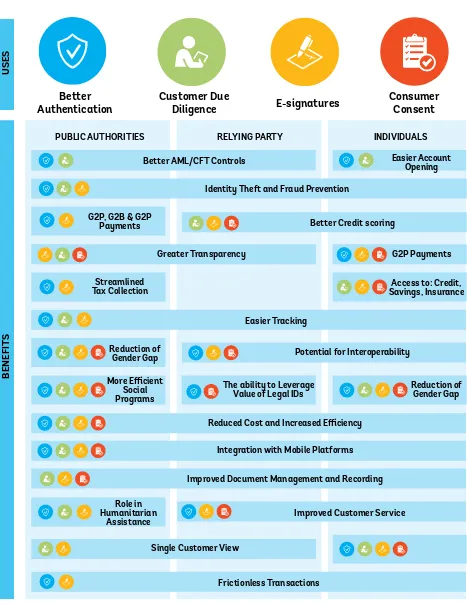
Figure 9: Benefits of Digital ID 20
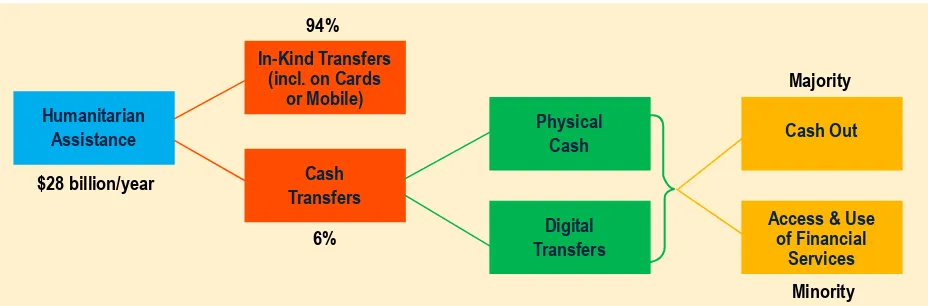
Figure 10: Overview of Humanitarian Assistance 28 Figure 11: Digital Identity Lifecycle and Key Roles 47 LIST OF TABLES
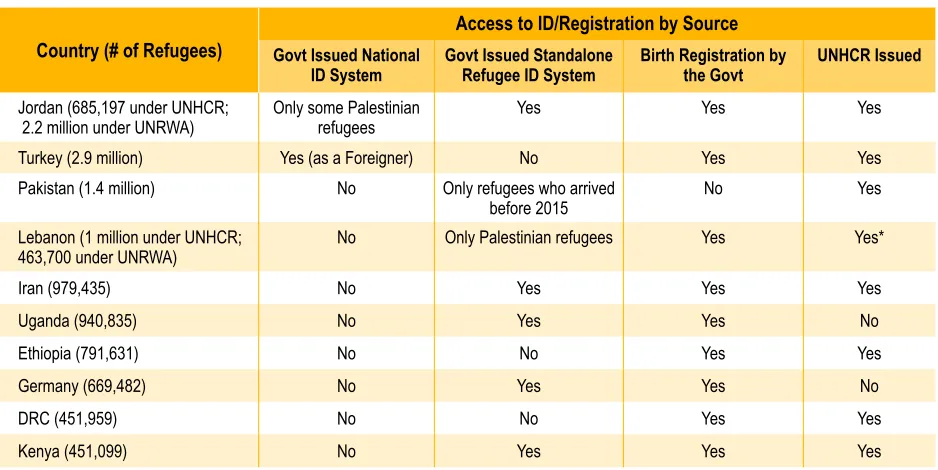
Table 1: Comparisons of Different ID Systems for Refugees 29
Table 2: Comparison of ID Registration Processes 30
ACKNOWLEDGEMENTS
This report was written and coordinated by a diverse range of stakeholders across the World Bank Group (WBG), Global Partnership for Financial Inclusion (GPFI) and G20 countries. The WBG, as an Implementing Partner for the Subgroup on Regulation and Standard-Setting Bodies, took leadership on this paper, with involvement from Subgroup members including CGAP (Consultative Group to Assist the poor), DFID (Department of International Development) and other implementing partners. The WBG core team was led by Harish Natarajan and consisted of team members: Sharmista Appaya (lead author) and Sriram Balasubramanian. Vyjayanti Desai, Seth Ayers, Julia Michal Clark, Jonathan Daniel Marskell, Emile De Willebois, Fredesvinda Montes and Margaret Miller (all WBG) provided inputs all through the process and Lauren Kaley Johnson supported on the graphics and publication. Mahesh Uttamchandani provided managerial oversight. Loretta Michaels (WBG), Minita Mary Varghese (WBG) and a Consult Hyperion team led by Paul Makin contributed to the development of the outline, early drafts and research. We are grateful for the leadership and support from the Argentinian G20 representative Gabriel R. Bizama and Francesca Brown (DFID) who chaired the discussions, as well as the GPFI committees, namely the Subgroup on Markets and Payment Systems, the Subgroup on Financial Consumer Protection and Financial Literacy, the Temporary Steering Committee on Forcibly Displaced Persons and the Subgroup on Regulations and SSB, and to the heads and team members of member countries such as Germany, Italy, India, Norway, Mexico, Canada, and the UK, among others. These include Rajesh Kumar Sharma (India), Monika Sethi (India), Hege Rottingen (Norway), Dr. José Luis Negrín (Mexico), Alexandra Rudolph (Germany), Francoise Felipe Dube (Canada), Joni Brennan (Canada), Tim Bouma (Canada) inter alia.
We would also like to thank the following WBG staff and consultants and G20 country representatives for research support and peer review: Anita Mittal (ID4D), Joscha Albert (Germany), Ricardo Settimo (Italy), Fabio Teramo (Italy), Sonia Guida(Italy), Angela Caporrini (Italy), Edgar Cortes (Mexico), Diego Lombardo (Argentina), Nadezhda Prasolova(Russia), Paul Nelson (US AID), Timothy Lyman (CGAP), Nadine Chehadi (CGAP), Antonio Navarro (CGAP), Laura Ellison (DFAT), Maria Do Ceu Pereira (WBG), Matei Dohotaru (WBG), Kuntay
Celik (WBG), Emilie Van der Does (WBG), Himanshu (Bill Gates Foundation) and Yannis Theodorou (GSMA). Lastly, we thank Aichin Lim Jones and Amy Quach for overall design and production services.
GLOSSARY
Attribute: A named quality or characteristic inherent in or ascribed to someone or something. In identification systems, common personal identity attributes include name, age, sex, place of birth, address, fingerprints, a photo, a signature, an identity number, date and place of registration, etc.1
Authentication: The process of proving that a person is who they claim to be. Digital authentication generally involves a person electronically presenting one or more “factors” or “authenticators” to “assert” their identity— that is, to prove that they are the same person to whom the identity or credential was originally issued. These factors can include something a person is (e.g., their fingerprints), knows (e.g., a password or PIN), has (e.g., an ID card, token, or mobile SIM card), or does (e.g., their handwriting, keystrokes, or gestures).2
Biometrics: Physical or behavioral attributes of an individual, including fingerprints, irises, facial images, gait, signatures, keystrokes, etc.3
Biometric identification: Digital biometric identification involves comparing a template generated from a live biometric sample to a previously stored biometric in order to determine the probability that they are a match. One-to-one (1:1) matching is a comparison against a single template (e.g., one stored on an eID card) and is typically used for authentication and verification. One-to-many (1:N) matching is a comparison against all or a subset of templates stored in a database, and can be used for identification (e.g., a criminal record search) or deduplication (i.e., ensuring that each individual exists only once in the database). In principle, 1:N deduplication allows identity providers to establish statistical uniqueness in a population.4
Blockchain: A ‘blockchain’ is a particular type of data structure used in some distributed ledgers which stores and transmits data in packages called “blocks” that are connected to each other in a digital ‘chain’. Blockchains employ cryptographic and algorithmic methods to record and synchronize data across a network in an immutable manner.5
Credential: A document, object, or data structure that vouches for the identity of a person through some method of trust and authentication. Common types of identity credentials include—but are not limited to—ID cards, certificates, numbers, passwords, or SIM cards. A biometric identifier can also be used as a credential once it has been registered with the identity provider.6
Customer Due Diligence: FATF Recommendation 10 on CDD is based on four pillars, requiring: 1) identification and verification of customers, 2) identification and verification of beneficial owners, 3) understanding the nature and purpose of transactions, 4) monitoring the clients and their transactions on an ongoing basis. Customer On-Boarding: The process of a financial services provider establishing a business relationship with a customer.
De-duplication: In the context of identification systems, it is a technique to identify duplicate copies of identity data. Biometric data—including fingerprints and iris scans—are commonly used to de-duplicate identities in order to identify false or inconsistent identity claims and to establish uniqueness.7
Digital identity: A set of electronically captured and stored attributes and/or credentials that uniquely identify a person.8
Digital identification (ID) system: An identification system that uses digital technology throughout the identity lifecycle, including for data capture, validation, storage, and transfer; credential management; and identity verification and authentication.6
GLOSSARY
VIII
across multiple data stores (or ledgers). This technology allows for transactions and data to be recorded, shared, and synchronized across a distributed network of different network participants.5
Foundational identification system: An identification system primarily created to provide general identification and credentials to the population for public administration and a wide variety of public and private sector transactions, services, and derivative credentials. Common types of foundational ID systems include civil registries, national IDs, universal resident ID systems, and population registers.9
Functional identification system: An identification system created to manage the identity lifecycle for a particular service or transaction, such as voting, tax administration, social programs and transfers, financial services, and more. Functional identity credentials— such as voter IDs, health and insurance records, tax ID numbers, ration cards, driver’s licenses, etc.—may be commonly accepted as proof of identity for broader purposes outside of their original intent, particularly when there is no foundational ID system.9
Identification: The process of establishing, determining, or recognizing a person’s identity.7
Identification (ID) system: The databases, processes, technology, credentials, and legal frameworks associated with the capture, management, and use of personal identity data for a general or specific purpose.10
Identity: A set of attributes that uniquely identify a person.10
Identity lifecycle: The process of registering, issuing, using and managing personal identities, including enrollment of identity data; validation through identity proofing and deduplication; issuing credentials; verification and authentication for transactions; and updating and/or revoking identities and credentials.6
Identifiers: Unique data used to represent a person’s identity and associated attributes. A name or a card number are examples of identifiers.11
Interoperability: The ability of databases, devices, or systems to talk with each other, exchanging information or queries. In some cases, interoperable databases or systems may be directly connected, allowing for the real-time exchange or updating of information; in others, databases or systems may be interoperable via a trusted third-party exchange layer that facilitates communication across disparate systems.4
KYC Registry: A KYC Registry refers to a centralized repository of CDD records of customers in the financial sector. It allows inter-usability of the CDD records across the sector with the objective to reduce the burden of producing CDD documents and getting those verified each time the customer creates a new relationship with a financial entity.
Legal Entity Identifier: A 20-character, alpha-numeric code, to uniquely identify legally distinct entities that engage in financial transactions.12 The organizational structure of the LEI consists of a federated group of registrars, Local Operating Units (LOUs); a central operational body, the Global LEI Foundation (GLEIF); and a regulatory body charged with oversight of the LEIs, the Regulatory Oversight Committee (ROC). The GLEIF is a Swiss foundation inaugurated in June 2014 and founded by the Financial Stability Board (FSB). It is overseen by 70 global regulators in the Regulatory Oversight Committee (ROC).
Legal identification (ID) system: Identification systems that register and identify individuals to provide government-recognized credentials (e.g., identifying numbers, cards, digital certificates, etc.) that can be used as proof of identity.13
Levels of Assurance: The ability to determine, with some level of certainty or assurance (LOA), that a claim to a particular identity made by some person or entity can be trusted to actually be the claimant’s “true” identity. Each LOA is broken down into three component parts that are scored individually. Please refer to Annex 1
Protocol: Set of rules and formats, semantic (meaning), and syntactic (format), that enable information systems to exchange information.14
Relying Party: An individual or organization that relies on another party to verify the identity of the user; the validity of the public key, associated algorithms and any relevant parameters; and the user’s possession of the corresponding private key.15
Revocation: The process of permanently ending the binding between a certificate and the identity asserted in the certificate from a specified time forward.16
Unique ID number (UIN): In the context of identification systems, a number that uniquely identifies a person—i.e., each person only has one UIN and no two people share the same UIN—for their lifetime. UINs are typically assigned after validating a person’s identity and statistical uniqueness through a process such as biometric deduplication.
User: Individual or (system) process authorized to access an information system.14
ABBREVIATIONS AND ACRONYMS
AI Artificial IntelligenceAEBA Aadhaar Enabled Bank Accounts API Application Programming Interface AML Anti-Money Laundering
APB Aadhar payment bridge system BVN Bank Verification Number CBN Central Bank of Nigeria CDD Customer Due Diligence
CFT Combating the Financing of Terrorism CNIC Computerized National Identity Card CRS Credit reporting systems
CTF Combating Terrorist Financing; an alternative acronym to CFT DBT Direct Benefit Transfer
DFS Digital Financial Services DLT Distributed Ledger Technology eCIB Electronic Credit Information Bureau
eIDAS electronic Identification, Authentication and Trust Services EU European Union
FATF Financial Action Task Force FIDO Fast Identity Online (Alliance) FinTech Technology application to finance FSB Financial Stability Board
FSP Financial Service Provider G20 Group of Twenty
G2P Government to Person
GPCR General Principles for Credit Reporting GSMA Groupe Spéciale Mobile Association GPFI Global partnership for Financial Inclusion ICAO International Civil Aviation Organization ID Identity
ACRONYMS AND ABBREVIATIONS
XII
ICCR International Committee on Credit Reporting IIN Institution Identification Number
ISO International Organization for Standardization ITU International Telecommunications Union KRA Know Your Client Registration Agency KYC Know Your Customer
LEI Legal Entity Identifier LOA Levels of Assurance
MF-CIB Microfinance Credit Information Bureau MMO Mobile Money Operator
MNO Mobile Network Operator
MSME Micro, Small and Medium Enterprises
NADRA National Database and Registration Agency (Pakistan) NFC Near Field Communication
NIMC National Identity Management Commission NIRA National Identification and Registration Agency
NIST National Institute of Standards and Technology, US Department of Commerce NPCI National Payments Corporation of India
PASA The Payments Association of South Africa PIN Personal Identification Number
PoS Point of Sale
RAIS Refugee Assistance Information System RBI Reserve Bank of India
RENIEC National Registry of Identification and Civil Status (in Spanish, Registro Nacional de Identificación y Estado Civil) Regtech Technology as applied to regulation
RIMS Refugee Information Management System RFID Radio frequency identification
RSD Refugee status determination SCA Strong customer authentication SDG Sustainable Development Goals SEBI Securities and Exchange Board of India SIM Subscriber Identity Module
SSID Self-sovereign identity UFA Universal Financial Access
UIDAI Unique Identification Authority of India UIN Unique Identification number
UNHCR United Nations High Commissioner for Refugees
EXECUTIVE SUMMARY
A unique, legal identity is necessary to allow all individuals to participate fully in society and the economy. The ability to prove one’s identity underlies the ability to access basic services and entitlements from healthcare through to pensions and agriculture subsidies. This is especially true for marginalized segments of society such as women, poor rural farmers, refugees and also extends to MSMEs (micro, small and medium enterprises). The importance of legal identity has been acknowledged by the international community through agreement of target 16.9 of the Sustainable Development Goals, which calls for all UN member States to “provide legal identity for all, including birth registration” by 2030.
National and subnational governments play a primary role in the registration and recognition of a legal identity. Without such official recognition, the authenticity of an identity may lack a formal or legal basis (referred to as legal ID in this document). However, a number of developing countries have no robust official legal ID system that is universally available. The inability to credibly prove one’s identity can be a source of economic, political and social exclusion. In the financial sector, it hampers access to basic services such as bank accounts and loans.
According to the 2017 Global Findex Survey, the lack of documentation was the primary barrier to access to financial services cited by 26 percent of unbanked individuals in low income countries. Beyond extending legal ID in order to address these gaps, the introduction of a legal, digital ID could potentially increase the adoption of financial services, furthering the financial inclusion agenda and supporting development goals. Digital ID lowers barriers by: a) making it easier for the unbanked to open a transaction account19 in conjunction with simplifying documentation requirements, b) enabling more cost-effective customer onboarding that can be conducted remotely and c) contributing to financial sector embedding by supporting the delivery of additional services to the individual.
Governments are adopting electronic means of cash transfer to streamline processes and prevent leakage. Digital IDs can substantially strengthen the efficiency and effectiveness of the state in providing critical services such as Government to Person (G2P) payments and
supporting the provision of humanitarian aid. A legal digital ID for those forcibly displaced not only provides them with a sense of identity but also supports efficient benefit distribution reducing fraud and duplication while allowing them to participate in the real economy. Another vulnerable population especially bolstered by a digital ID is women; while a legal ID is seen as increasingly essential to both men and women to drive socio-economic development, of the 1 billion20 people without access to an ID, a disproportionate number are women and girls. The 2017 Global Findex survey found that the poorest 40 percent of women in low income countries are less at least 30 per cent less likely to have an ID than men in the same wealth quintiles. The absence of ID documents is both, an effect and the cause of gender inequalities. A universal ID with digital capabilities will enable women to open accounts at low cost and will also substantially reduce the cost for the financial services providers (FSP). Digital ID also has clear benefits for small businesses. This is relevant at both the level of the company directors and senior management as well as at the level of the entity, helping reduce costs and time for registration as well as introducing efficiencies in conducting financial transactions.
EXECUTIVE SUMMARY
XIV
mandate set by the Group of 20 (G20), the report looks at how financial services can leverage digital ID systems to increase efficiency, enhance effectiveness and enable new ways of conducting existing business processes in the financial sector. The analysis is underpinned by the ‘G20 High-Level Principles of Digital Financial Inclusion’21 (HLP) and the ‘Principles on Identification for Sustainable Development’22 developed by the World Bank Group and endorsed by over 20 international organizations and development agencies since 2017. Principle 7 of the G20 HLP specifically refers to ID and will form the guiding principle for this report.
Three characteristics of an identification system that matter most for financial services are a legal basis, uniqueness
and the ability to exist in a digital format. Digital IDs are important to broaden public policy, especially for financial inclusion and can help bring more MSMEs into the formal financial sector. It needs to be noted that there are several other implicit aspects that are essential, notably that the ID should be robust and secure. In many jurisdictions, not all IDs have all the attributes, and even those that possess them might not have universal coverage in the jurisdiction. The analysis points out, that while the absence of any form of legal ID impacts all access to basic financial services, a lack of unique ID obscures a reliable view of customer activity and can impact access to the full range of financial services, especially credit and insurance. Meanwhile, the lack of a unique digital ID increases the costs of providing financial services to certain segments of society, thereby impacting financial inclusion. Finally, for financial inclusion and inclusion more broadly, universal coverage of legal ID in a given jurisdiction is paramount. Traditionally, countries have two types of ID systems: foundational ID systems, which are typically the source of ‘legal identity documents’ and provide proof of legal identity in accordance with national law- these can include civil registries and unique national IDs; and functional ID systems, which cover population subsets and are introduced in response to a demand for a particular service or transaction such as voter registration and can, in some cases, provide proof of legal identity including serving as a de facto national ID when a national ID system does not exist.23 On the proviso that an identity has uniqueness and a legal basis, with universal coverage (either at an individual level or collectively across all IDs in the jurisdiction) then, there is potential for the government or private sector entities to overlay them with digital features.
Digital IDs however, come with risks which need to be managed and mitigated to build trust and harness the
benefits of identification responsibly. Foremost among the risks that arise, is the issue of data privacy and the potential for leakage, theft or misuse of personal data and the risks that arise from non-regulated players outside the traditional financial system. It is of vital importance to secure the data while at rest and in transit. The appropriate classification of data and adherence to data governance rules and procedures are the main ways that this can be contained. Data classification and its associated rules ensure that the more sensitive the data, the more stringent the security controls and the rules regarding the access and sharing of the data; hence, the process of classifying and categorizing data is imperative to maintaining a robust digital ID framework. While the high initial infrastructure cost is a hurdle that must be crossed, the importance of having a robust and effectively functioning system instead of several suboptimal initiatives cannot be stressed enough. Another important challenge that merits consideration is the rapidly evolving nature of the technologies, and it is important that central authorities and public bodies consistently incorporate new technologies and business models while protecting the financial sector and its customers.
Digital ID has immense potential and it is important that country’s financial service supervisory framework recognizes this. Financial sector regulations, specifically those related to AML/CFT, have longstanding requirements related to identity validation, authentication and retention of records, to ensure the safety and integrity of the financial system, based in large part on the Financial Action Task Force (FATF)24 recommendations. Furthermore, of the ten Principles on Identification for Sustainable Development,25 three specifically focus on the issue of governance, including of the regulatory framework.
Seven policy measures, that governments should consider in order to have an identity effective ID system that meets the needs of the financial sector, have been identified:
1. Ensure an integrated identity framework;
2. Consider the appropriateness of the regulatory framework to capture the challenges related to digital ID, and risks to its appropriate implementation; deliberate updates to the regulatory framework including the issuance of new regulations where necessary;
4. Build authentication and service delivery systems that protect user privacy, and provide individuals with the right to access rheir data and oversight over how their data is shared;
5. Establish clear and well-publicized procedures for citizen redress, including defining where the onus of responsibility lies in the event that errors emerge or that the security of a person’s identity is compromised;
6. Support and empower development of private sector led services to leverage the legal ID infrastructure for building out digital layers. In doing so, the public authorities should ensure that these services are safe, reliable and efficient; these services are interoperable; and that the market is competitive;
7. New approaches to ID are constantly emerging and public authorities should closely monitor these developments with a view to share knowledge and establish common legal frameworks at both the domestic and international level.
The report is divided into four broad sections; first, the section on the role and need for digital ID focusses on the importance, principles, characteristics, risks and challenges of digital ID in the financial sector as related
INTRODUCTION
Objective
The G20 recognizes the key role of financial inclusion in supporting the move towards an Innovative, Invigorated, Interconnected and Inclusive World Economy.21 The World Bank Group was requested by its G20 partners under the 2018 Argentine presidency, to produce this report as part of the Global Partnership for Financial Inclusion (GPFI) forum- an inclusive platform to carry forward work on financial inclusion.
Box 1: G20 High-Level Principles for Digital Financial Inclusion
Principle 7: Facilitate Customer Identification for Digital Financial Services
Facilitate access to digital financial services by developing or encouraging the development of customer identity systems, products and services that are accessible, affordable, and
verifiable and accommodate multiple needs and risk levels for a risk-based approach to customer due diligence. The primary objective of this paper is to analyze the
role of a robust, inclusive and responsible digital identification system in financial sector development; in particular, the role it plays in furthering global financial inclusion commitments. This paper will provide insights and recommendations for country-level implementation by policymakers in line with Principle 7 of the G20 HLP developed by the GPFI.
This report is neither intended to inform nor interpret the work of the global financial sector standard-setting bodies.
Background and Definitions
The GPFI, the Alliance for Financial Inclusion (AFI) as well as several other multilateral forums have advocated and launched initiatives for furthering financial inclusion. Financial inclusion is one of the critical drivers of poverty reduction and economic growth in emerging markets and developing economies. Currently, an estimated 1.7 billion adults globally do not have access to the formal financial economy. Virtually all these unbanked adults live in the developing world. Indeed, nearly half live in
just seven developing economies: Bangladesh, China, India, Indonesia, Mexico, Nigeria, and Pakistan.26 The World Bank Group in partnership with public and private sector institutions set an ambitious target to achieve Universal Financial Access (UFA) for adults globally to a have access to a transaction account27 to store money and send and receive payments by 2020 as a stepping stone to broader financial inclusion.28
A transaction account is a foundation for financial inclusion because it serves as a gateway to other financial services including savings, insurance, and credit. One of the primary barriers to opening a transaction account is the ability to prove one’s identity.
2
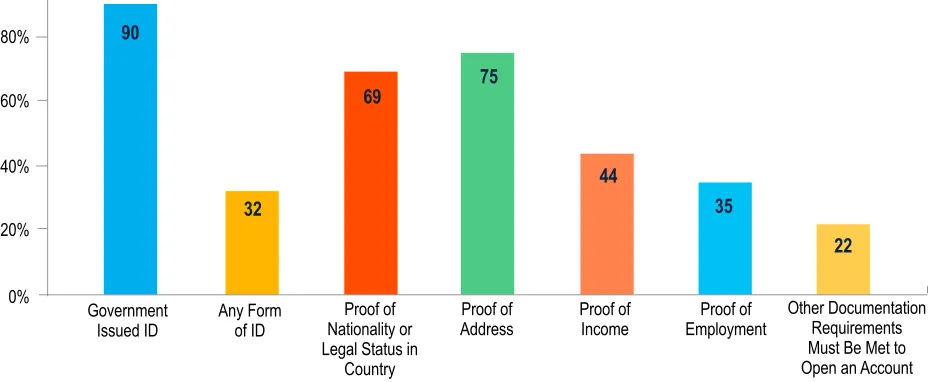
1. INTRODDUCTION 26 percent for unbanked adults in low income countries,and 19 per cent in developing countries cited the lack of documentation as the main barrier.29 30 percent reported that financial institutions are too far away. This has been to some extent mitigated by opening the market to non-bank players; however, this will only be successful and reduce financial services barriers only if such non-bank players have lower/different identification requirements. Beyond access to documentation, the high cost incurred Source: UFA2020 Overview- World Bank
Figure 2: Document Type Needed for Account Opening
Source: 2017 Global Financial Inclusion & Consumer Protection (FICP) Survey, WBG. 124 jurisdictions participated in the survey
100%
Government
Issued ID Any Form of ID Nationality or Proof of Legal Status in
Country
Proof of
Address Proof of Income EmploymentProof of Other Documentation Requirements Must Be Met to Open an Account 80%
60%
40%
20%
0%
% of responding jurisdictions that require documentation type to open an account at a Commercial Bank
90
32
69 75
44
35
22
Figure 1: Universal financial Access by 2020
Implication for
providers:
Large volume of low value transactions
Sustainable provision of services will require a high degree of automation and straight-through processing
How to Get There?
UNSERVED
• Have no basic bank account
• Have no (or restricted) services
• Rely on a cash economy
Transaction account
Banks
Institutions Mobile Network Operators
Card Companies Postal Networks Financial Cooperatives
SERVED
• Have a transaction account
• Use broad range
services
Rem
ittances
Payments
Credit Savings
Insura
nce
in validating to the appropriate degree, identity documents constrain FSPs in expanding access to finance and hence, stunts financial inclusion. When the identity authentication can be carried out automatically using technology, this reduces costs for FSPs and enables the use of agents, which also reduces distance.
documentation, for example by enabling system based online validation including validation at agent locations. Identity includes not only the original acquisition of identity credentials, but also the many aspects of how and why that identity is used and maintained.
As the issuance of identity grows in importance for policymakers, regulators and the private industry, various reports use different terms and definitions. It is therefore important to clarify the terminology used in this report. As mentioned previously, traditionally, countries have two types of ID systems: foundational ID systems, which provide general identification covering the entire population these include birth certificates, identity cards, unique identity numbers or digital certificates,33 and functional ID systems, which usually cover population subsets. Moreover, a non-public authority issued identity, if recognized as valid by the government as a proof of identity, would be included in the definition of legal ID. It is important to note that under this inclusive definition, legal ID need not be linked with nationality or citizenship. The uniqueness of the ID (i.e.) the ability to relate an ID to a singular person (or entity) and one person receiving only one such ID is paramount to ensure the usefulness of the ID.
While this report considers identity as a whole and its role in financial inclusion, particular focus has been placed on digital ID and the emerging areas in the financial sector where identity systems can be leveraged to increase efficiency, enhance effectiveness and enable innovative ways of conducting existing business processes. Notably, digital ID is increasingly becoming central to the effectiveness of technology innovations like open banking and marketplace lending; both of which have impacts on financial inclusion by enabling customers to securely share their banking data with trusted third parties, giving
Box 2: Defining Digital Identity
32A digital identity is a collection of electronically captured and stored identity attributes that uniquely describe a person within a given context and is used for electronic transactions. It provides remote assurance that the person is who they purport to be. A digital identification system refers to the systems and processes that manage the lifecycle of individual digital identities.
A person’s digital identity may be composed of a variety of attributes, including biographic data (e.g., name, age, gender, address) and biometric data (e.g., fingerprints, iris scans, hand prints) as well as other attributes that are
more broadly related to what the person does or something someone else knows about the individual. When these data are collected and verified, they can be used to identify a person by answering the question “who are you?”. These attributes, along with credentials issued by the service provider (e.g., unique ID number, eDocument, eID, mobile ID) can then also be used as authentication factors to answer the question “are you who you claim to be?”. The attributes and authentication factors used in a digital identity may vary from one context or country to the next depending on the type of identity system.
Many jurisdictions require customers to provide additional information beyond basic identification in order to open an account.
However, the ability to securely validate and verify a customer’s details against a reliable database remains imperative, and a large portion of those in the developing world lack basic IDs. The ability to prove one’s identity is increasingly recognized as the basis for participation in social, political, economic, and cultural life. Yet, the World Bank estimates that more than 1.1 billion individuals do not have any form of officially recognized ID.30 This problem disproportionally impacts rural residents, poor people, women, children, and other vulnerable groups.31 Furthermore, poor identification systems mean that states have difficulty collecting taxes, targeting social programs, and ensuring security. Achieving inclusive development therefore requires a sustained effort to address the world’s identity gap. These goals have been recognized in the 2030 Sustainable Development Goals (specifically SDG 16.9) and by other multilateral bodies.
4
INTRODDUCTION rise to a new generation of tools that will help individualsmake better decisions based on their data.
Digital ID, combined with the extensive use of mobile devices in the developing world, offers a transformative solution to this global challenge and promotes efficiency gains, financial savings, social inclusion and access to basic services and rights. However, they come with their own unique set of challenges especially that of data protection, privacy and a sustainable business model. These are elaborated further in the document.
Moreover, digital ID has been instrumental in playing a key role in reducing gender gaps in various societies, especially in emerging markets and developing countries. The following box item provides an overview of its benefits:
Methodology
Analysis of developments in different country settings, current views on best practices and dialogue with key stakeholders have informed this report. Country specific case studies have contributed to the understanding of the application and role of ID in the financial sector. Interpretation of international practices, specifically the FATF Recommendation 10, has strongly influenced the policy considerations put forward. It should be noted, however, that case studies have been chosen to showcase and to compare and contrast market practices, and that their inclusion does not necessarily endorse them as examples of best practice.
This report also discusses some private sector led digital initiatives, including those by FIDO (Fast Identity
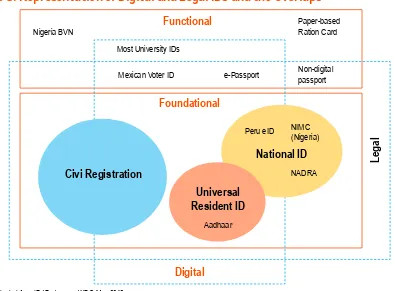
Figure 3: Representation of Digital and Legal IDs and the Overlaps
Source: Adapted from ID4D glossary, WBG May 2018.
Functional
Nigeria BVN
Lao PDR Birth Certificate
Peru Birth Certificate
Paper-based Ration Card Most University IDs
Mexican Voter ID e-Passport
Foundational
Digital
Civi Registration
Universal
Resident ID
National ID
Non-digital passport
Peru eID NIMC (Nigeria)
NADRA
Aadhaar
The widespread lack of official identification in developing countries disproportionality affects women and girls due to higher barriers they face for obtaining an ID. The 2017 Global Findex 27 report indicates that women in developing economies remain 9 percentage points less likely than men to have a bank account. While lack of sufficient funds is the most commonly cited reason reported by more than half of unbanked adult women, a large proportion also cite the lack of documentation as another key reason. The other barriers include distances involved, along with the restrictions on the freedom to travel, opposition from family members, financial cost, time constraints and illiteracy combined with the lack of awareness. An efficient digital ID system has the ability to overcome the most common barriers to opening a bank account.
In combination with simplified CDD, digital ID enables women to more easily open transaction accounts and when combined with agent models also enables easier access to account services. A digital ID can also empower women to register to vote, claim inheritance rights, register the ownership of business and land and access government benefits and services.
With the use of digital ID, governments can transfer G2P payments, intended for women, directly into their accounts.
For example, in Pakistan, the use of biometric IDs is a precondition for accessing cash transfer programs, ensuring that payments to female beneficiaries are delivered directly to them rather than to their husbands or brothers- as was traditionally the case. Not only did this boost their social standing, it also served as trigger for greater social freedoms within their societies.34
The use of these digitized G2P payments together with the integration with mobile platforms holds great promise for the achievement of financial independence for women. More than 80 percent of women in Kenya now have access to a mobile account which is being increasingly leveraged to reduce the gender gap.26 Through the integration of digital ID and mobile money (M-Pesa), substantial progress has been made in enabling women to gain access to social protection and financial saving schemes.35
As an additional benefit, the use of a digital ID can help authorities better monitor gender targets via the use of electronic databases and the collection of transaction data remotely, supporting the ability to provide better oversight and monitoring of national targets.
Box 3: Digital Identity and Gender Equality
Online) Alliance – created by a consortium of private sector players to achieve interoperability between authentication mechanisms, Mobile Connect - a GSMA initiative and Digital Identification and Authentication Council of Canada (DIACC). The paper delves into the identity solutions that leverage these private sector initiatives and looks at the fundamental dependence on an individual’s ability to present a legal ID on which basis the digital ID is created.
This report covers digital ID as applicable to all financial services provided by banks and non-banks including e-money services and microfinance institutions, with a focus on those areas most pertinent to financial inclusion.
The use of digital ID in the humanitarian context and the operational efficiencies it provides is also studied. In addition, developments on the horizon such as social data derived identity and applications of innovative technologies including distributed ledger technologies in identity management are briefly discussed.
THE ROLE OF DIGITAL IDENTITY
IN THE FINANCIAL SECTOR
The Importance of Identity
In 2016, the G20 endorsed the High-Level Principles for Digital Financial Inclusion which specifically asked that ‘Governments worldwide acknowledge the importance of identity as a fundamental necessity for daily life. For approximately 1.1 billion people,38 the majority of them living in Asia and Africa, the inability to prove their identity prevents them from accessing basic services, enjoying their full rights, and participating in the formal economy. Evidence shows that individuals who lack official forms
of identification are typically the most vulnerable people in the poorest countries. The recent Global Findex Report26 cites that 26 percent of unbanked adults in low income countries, and 19 per cent in developing countries without an account at a financial institution reported lacking the documentation needed to open one. Lack of ID was an even more commonly-cited barrier in countries like Zambia (35 percent), the Philippines (45 percent), and Zimbabwe (49 percent). Inclusive, robust, and responsible legal ID systems are needed to close this gap. Beyond paper-based legal ID systems, however, digital IDs have additional benefits, including the potential to provide entities with new and efficient ways to reach and serve their populations, especially the poorest and most disadvantaged. Identity systems that have universal coverage, have a legal basis and ensure uniqueness— as noted previously—also play an important role in the improvement of government efficiency, accountability and transparency. Further, through online transactions and other e-services, digital capabilities of these systems reduce operational costs and the corruption and theft that can occur in paper-based systems, such as entitlement payments siphoned off from their intended recipients.39 As countries increasingly rely on digital networks for delivering important public and private services, the ability of consumers to remotely access those services through digital identification becomes acutely important.
Accessible, robust, and verifiable ID systems can help service providers carry out Customer Due Diligence (CDD) requirements and expand the use of financial services. One of the key components of financial inclusion strategies in many countries is to introduce a basic account—offered by either banks or non-bank entities— with very stringent limits on number of transactions and value of transactions. The main objective behind introducing this type of account is to prevent identity theft, financial fraud, money laundering and terrorist financing, while at the same time enhancing access to transaction accounts. A digital ID enables an efficient means of meeting the CDD needs for a basic account and further it enables enforcing transaction limits and monitoring how many accounts a person has.
8
THE ROLE OF DIGITAL IDENTITY IN THE FINANCIAL SECTOR The Financial Action Task Force (FATF) 40 recommendations,which constitute the international standards on anti-money laundering and counter-terrorist financing, were first issued in 1990. The first version of the FATF 40 Recommendations included a section on ‘Customer Identification and Record Keeping’. The section had a limited scope that focused on identifying and verifying the customers and the beneficial owners of the legal persons and financial transactions. The FATF Recommendations have gone through major revisions in 1996, 2001*, 2003, and 2012. The limited and relatively static scope of customer identification in the 1990 version was expanded during these revisions, evolving towards a much more comprehensive and dynamic set of requirements. FATF introduced the concept of “Customer Due Diligence” (CDD) in the 2003 Recommendations to define the full range of requirements that aims to understand, know, and monitor all natural and legal person
Box 4: Historical Evolution of the Concept of Customer Due Diligence
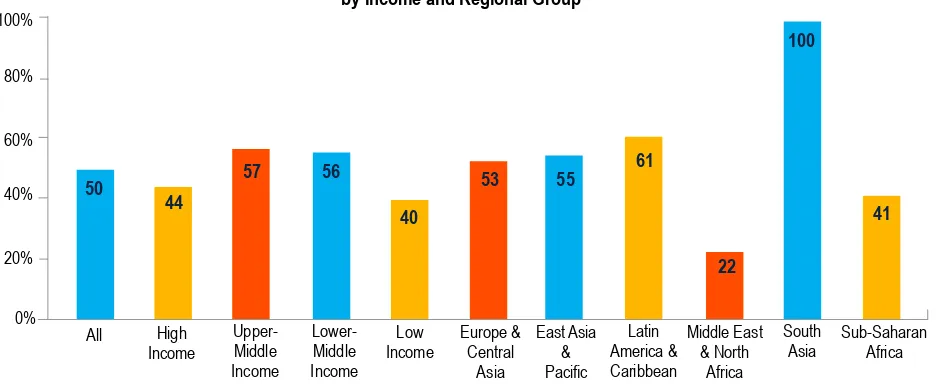
The graph below shows that a significant amount of exceptions are made to CDD requirements in the 120 different jurisdictions sampled. While all responding jurisdictions in the South Asia region report that FSPs— mainly banks- have simplifications or exemptions in place; in the Middle-East and North Africa region, only 22
clients, their transactions, and beneficial owners. The CDD concept has been maintained by the current version of the FATF Recommendations (2012) with further refinements. Currently, FATF Recommendation 10 on CDD is the most comprehensive and elaborate among the 40 Recommendations. It is based on four pillars, requiring: 1) identification and verification of customers, 2) identification and verification of beneficial owners, 3) understanding the nature and purpose of transactions, 4) monitoring the clients and their transactions on an ongoing basis.
The term “Know Your Customer” has been used widely by some government authorities and the private sector since the 1990s to express the broader set of requirements that go beyond identification and verification. However, this term has never been officially used or defined by the FATF Recommendations. There fore, the meaning attributed to KYC can differ based on users and national contexts.
percent of jurisdictions indicate that similar simplifications exist. A digital ID can provide a unified CDD regime. This means that once a CDD check is conducted for a person linked with a digital identity, the identity and its corresponding check can be held on a KYC registry (see glossary). Later, should that individual wish to
Figure 4: Acceptance of Simplified Customer Due Diligence Requirements
Source: 2017 Global Financial Inclusion & Consumer Protection (FICP) Survey, WBG
% of Responding Jurisdictions That Have Simplifications or Exemptions to Customer Due Diligence Requirements, by Income and Regional Group
All High
Income Upper- Middle Income
Lower-Middle Income
Low
Income Europe & Central Asia
East Asia & Pacific
Latin America & Caribbean
Middle East & North
Africa
South
Asia Sub-Saharan Africa 100%
80%
60%
40%
0% 20%
50
44
57 56
40
53 55 61
22
41 100
subscribe to a new financial product or service, they will not need to go through the burdensome process of submitting various documents to prove their identity again. It is important to note here that information collected and verified for CDD purposes can be extensive and a KYC registry might not have all the required or up-to-date information highlighting the need for effective supervision and oversight of KYC registries and third-party identity services by the financial sector authorities and FSPs to conduct their own due diligence. KYC registries can enforce transaction limits for individuals across all FSPs and this has been illustrated through the use of mobile money platforms in Jordon (JoMoPay) and Peru. This mitigating measure can provide financial sector authorities with a great degree of confidence in mitigating risks from AML/CFT measures.
Simplifying CDD however, does not do away with physical, in person applications and verification of an acceptable form of ID. Paper records will often still need to be maintained to provide a document trail for audits. Both the verification and paper records add additional costs to the process. Further, there is also the risk of fraudulent documents and the ability to evade controls if there is no assurance of a customer’s unique identity. The introduction of a digital ID solves both the issue of costs as well as the security and reliability concerns.
Even if the verification is done in person, the digital process can reliably prove that validation was completed. Furthermore, efforts to enhance flexibility on where and who can open an account can be accelerated with a reliable digital ID system. Thus, a digital ID can empower financial sector regulators and public authorities to simplify the CDD requirements and thus removing one of the enduring barriers to expanding financial inclusion.
Important Characteristics of ID
for the Financial System
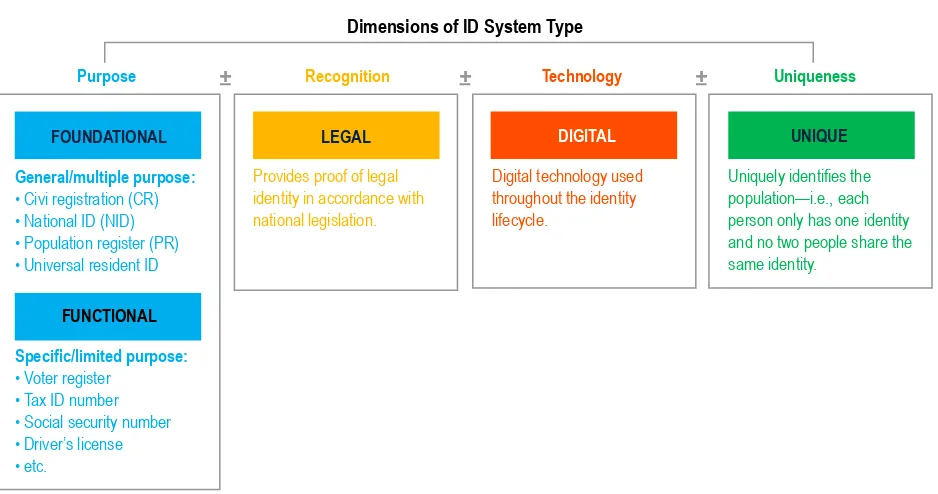
There are three main characteristics of an identification system/credential that matter most for financial services and transactions: (1) legality, (2) uniqueness and (3) the ability to be in a digital format, each of which has implications on the quality and utility of the identity within the financial sector. These characteristics are not mutually exclusive, and an ID credential can possess one or all of these characteristics to varying degrees.
Legal: National and local governments play the primary role in issuing legal identity documents— those recognized as providing proof of legal identity in accordance with national law. Without such official recognition, the value of an identity credential may lack a formal or legal basis, and therefore be unreliable for CDD checks in the financial sector. However, as mentioned
Figure 5: Dimensions of ID System Type
Source: ID4D Glossary: Definitions and Usage, May 2018.
Dimensions of ID System Type
Purpose Recognition Technology Uniqueness
FOUNDATIONAL
General/multiple purpose: • Civi registration (CR) • National ID (NID) • Population register (PR) • Universal resident ID
FUNCTIONAL
Specific/limited purpose: • Voter register
• Tax ID number • Social security number • Driver’s license • etc.
LEGAL DIGITAL UNIQUE
Provides proof of legal identity in accordance with national legislation.
Digital technology used throughout the identity lifecycle.
Uniquely identifies the population—i.e., each person only has one identity and no two people share the same identity.
THE ROLE OF DIGITAL IDENTITY IN THE FINANCIAL SECTOR
10
previously, sometimes an ID issued by a private entity can become a legal ID if the government recognizes the validity of it.
Generally, jurisdictions require an individual to have a form of legal ID to open and operate a transaction account, the most basic of financial services. A lack of suitable legal identity restricts this access and as such access to the wider financial ecosystem contributing to financial exclusion.
Uniqueness: FSPs prefer to use an identity credential that has the characteristic of being ‘unique’—i.e., that no individual (or entity) will have the same identifier, and that there is only one identifier associated with one individual. The utility of uniqueness is significantly enhanced when it is also universally available. An example of a common ID with the ‘unique’ and ‘universal’ characteristics would be the Aadhaar system in India. The characteristic of uniqueness in an ID allows for a particular financial institution to have a single view of the customer in their internal system and also across the entirety of the financial ecosystem. This is also valid for legal entities as recognized by the G-20 adoption of the establishment of an LEI in June 2012, to be able to better identify counterparty and contagion risks, particularly those related to cross border exposures to over-the-counter (OTC) derivatives.
Digital: When an individual’s attributes can be captured and stored electronically and issued on digital credentials that can uniquely identify a person, the identity is referred to as digital ID. A digital identity provides a potentially
transformative solution the global challenge of inclusion by offering countries the ability to leapfrog the development of paper-based systems and rapidly establish robust identification infrastructure. As described, in the section on authentication of the technologies, extensive use of mobile devices in developing countries can be leveraged for this purpose. Moreover, digital IDs can have benefits beyond the financial sector, such as in enhancing gender equality as noted previously.
These three characteristics highlight varying levels of quality and sophistication, and have important implications on access to financial services, customer oversight, and the efficiency of financial service provision. As policymakers consider how they approach identification systems within their jurisdictions, it is useful to have a sense of the trade-offs and cost/benefit implications of the options being considered.
Each of these characteristics impacts the sustainability, affordability and reach of financial services affecting financial inclusion objectives. The lack of legal, unique ID captured consistently across institutions impedes efforts to gain a complete view of the customer hence limiting the services available to the individual. From the perspective of the regulators, the lack of a unique, digital ID, limits the ability to gauge household credit exposure. This lack can add inefficiencies and costs as all verifications must be done manually along with maintaining paper trails. It is important that policymakers keep these characteristics and the utility they offer in mind during the design phase of planning their own identity programs.
Box 5: Case Studies Highlighting the Benefits of Digital ID to Governments
In 2015, Nigeria began a biometric verification pilot for all civil servants in an effort to get an accurate record of the personnel and ensure that ‘ghost’ salaries were not paid out. The Central Bank of Nigeria, required that all customers enroll with their banks to get their unique Bank Verification Numbers (BVN), operated by the Nigeria Inter-Bank Settlement System (NIBSS). In early 2016, they announced the removal of 24,000 (ghost) workers,42 and that number has since doubled – saving the tax payer equivalent of USD $74million.
Risks and Challenges in
Implementing Digital ID
Despite the numerous benefits of an inclusive, robust, and responsible digital ID system, governments are faced with challenges, such as those mentioned below. To ensure that trust is maintained in the system, governments should consider and work to mitigate these risks.
Exclusion Risks
Demographics, culture and ethical considerations all require attention when defining a digital Identity. An effective digital ID is inclusive, but there might be certain segments of the population from whom collecting biometric information is difficult, inaccurate or impossible.
Such populations might include vulnerable populations (including tribal and ethnic populations or those with unclear migration status) as well as those with low digital literacy or lack of connectivity. Infants or those affected by skin or eye diseases might have unformed or disfigured features which might make fingerprint and iris capture of sufficient detail and quality, problematic. Advances are being made using a mixture of anatomical studies, artificial intelligence (AI) and deep learning algorithms to overcome these hurdles.44 Other considerations are religious beliefs or conflicts with one’ values against capturing of biometrics leading to self-exclusion. Such reasons need to be carefully measured when designing a digital ID for an entire population sample especially in the context of personal freedom and democratic rights.
Privacy and Data Protection
A key consideration are the privacy and data protection issues, including ethical concerns, that are inherent in the collection of personal and biometric information. The (most likely) centralized nature of sensitive data storage also exacerbates the cybersecurity concerns and privacy risks associated with digital IDs. It is vital that governments set out a robust governance procedure including for data management systems, and that this be maintained and consistently updated. It will be the responsibility of the government to define data protection policies, including rules around the collection, use, management and disclosure of the data. Governments may also think about mechanisms to minimize the amount of personal data which is collected and how data systems will be maintained, especially to safeguard against data leakages and (cyber) attacks.
Preservation of the confidentiality and integrity of the data should be the primary responsibility of the data collector; although the data processor and others involved in accessing, storing and using personal data also have a role to play. There should be appropriate mechanisms to ensure that consent from individuals is obtained which covers the basis on which the data will be collected, maintained, used and disclosed. Individuals should be aware of who holds and has access to their personal data and have an opportunity to inspect the data held about them and to ask for corrections for any errors or out of date (or incomplete) data. Regimes should also provide for expungement or deletion of specific data if the original purpose for the data collection has expired. Moreover, suitable independent oversight
Figure 6: Lack of Appropriate Identity Characteristics and Its Impact on the
Financial System
Legal Unique Digital
• Financial exclusion • No clear view of customer • Inhibits accounts to add-on
financial services (i.e. credit/insurance) • Issues of fraud
• High costs for both customers and provider
• Low scale of access to financial services
THE ROLE OF DIGITAL IDENTITY IN THE FINANCIAL SECTOR
12
and enforcement mechanisms should be available to individuals who have complaints regarding misuse or other non-compliance with rights guaranteed under the privacy and data protection regime.
The EU has recently introduced the General Data Protection Regulation (GDPR) to deal with this challenge and harmonize data privacy laws across Europe. GDPR requires companies that collect data on EU citizens to comply with strict rules on consumer data and rights regarding their data. The implementation of the law has had to address a number of contentious issues from data portability – the ability to transfer data across interoperable applications – as well as how to define data controllers and the associated designation of a dedicated Data Protection Officer.45
Misuse of data and breaches in security can result in identity theft, physical harm, discrimination, and emotional distress to individuals causing them to lose trust in the system. Organizations also suffer considerably, causing both financial and reputational damage.
Cost and Sustainability
The infrastructure required to build a digital ID system and registration of the eligible population can be a costly and time-consuming process that is likely to require extensive investment in building or updating infrastructure and technology, buy-in from key stakeholders especially consumers, adequate knowledge and understanding of the system.
It is vital that economic feasibility, and infrastructure constraints are adequately evaluated and that systems are future proofed to keep up with the changes so the resilience of the system is not compromised.
Governments should:
• Design digital infrastructure appropriate for the context, including strategies to reach remote areas and ensure ‘last mile connectivity’. Off-line solutions can complement the absence or loss of on-line connectivity.46
• Develop robust procurement guidelines and contemplate open design standards to promote innovation and allow for greater flexibility, efficiency and functionality of the system both within and across borders.
• Ensure the technical capacity of government agencies, private sector and other stakeholders in the digital identity ecosystem (including end-users) to operate and maintain new systems and devices.
• Consider opportunities for savings and revenue generation for both the public and private sector that may offset some of the costs of implementing a robust digital ID system.
APPROACHES TO INTEGRATE ID INTO
THE FINANCIAL SECTOR
Using Existing Legal IDs
In many countries, as a matter of general practice, all FSPs collect a specific ID which is in generally considered reliable and universal. In general, the financial sector relies on existing legal IDs, traditionally based on physical interactions and physical exchange of documents,- between the user and the relying party, to allow access to services (public or private) such as healthcare, education, financial services. With the rapid development in technology, FSPs in many countries have access to identification systems to help validate credentials. In the case of digital IDs, the validation and subsequent verification can be conducted in real-time at the time of account opening, either in-person or even remotely. (Please refer to Annex 2 for details of the validation and verification process)
The box below highlights examples that show the
potential of using legal ID’s to integrate with the financial sector and the significant benefits that are accrued from this integration.
Box 6: Legal IDs: NADRA, Peru ID, Aadhaar, SPID
Peru ID
The National Registry of Identification and Civil Status (Registro Nacional de Identificación y Estado Civil, or RENIEC) is the premier national digital ID system in Peru. RENEIC has been used as a form of identification for a wide range of public and private services. For example, RENIEC serves as the core verification database for e-money platform called ‘Modelo Peru’ serving millions of customers across Peru for e-money transactions. In addition, a new service using RENIEC known as Billetera Movil (BiM), was launched in February 2016, which provides services such as cash in/cash out at agents, the ability to check balances, conduct P2P payments and top-up airtime credit.47
Aadhaar
In the case of India, its universal digital ID named Aadhar (a 12-digit number issued by Unique Identification Authority of India (UIDAI)), provides biometric verification for a variety of services through CDD/e-KYC authentication platforms. The Central KYC Records Registry (CKYCR) is envisaged
as a repository of the CDD records obtained and uploaded by the Regulated Entities (REs) across the financial sector. CKYCR has been set up through an amendment in the relevant Prevention of Money Laundering (PML) Rules: specifically, those regarding the maintenance of records which mandate financial sector entities to upload the customer information onto a common database of the proposed registry. This database aims to facilitate inter-usability of the CDD records across the sector(s), with one of the objectives to reduce the burden for both individuals and the RE of obtaining and verifying CDD documents each time a customer creates a new relationship with a financial entity. 48
NADRA
14
APPROACHES TO INTEGRATE ID INTO THE FINANCIAL SECTORPrivate Sector Initiatives
In a few countries with reliable and universal coverage of legal ID, banking and other industry consortiums have developed digital capabilities that are built on top of these legal IDs and leverage the value of them. Moreover, in the recent past, dedicated general-purpose digital features and solutions have been developed as an overlay on legal ID. These services seek to offer an open and general-purpose authentication which can be used to avoid the need for dedicated passwords and security credentials. These general-purpose services are now also being targeted at the financial sector. Examples of this include FIDO alliance and Mobile Connect and other services based on federated architectures that are being developed. In this model, a diverse set of underlying legal ID and information held with private sector institutions could be used and the individual choses which underlying legal ID or private sector information source is used to assert one’s identity in a given context.
Some examples of these initiatives are highlighted in the boxes next page.
Social Data for Identity Proofing
The increasing use of online social and professional networks, e-commerce platforms, and use of connected devices (IoT) that can track location and service usage data, generates a vast amount of data points about an individual. These data points can be aggregated to determine, with some degree of confidence, informationsuch as: where the person lives (based on, for example, shipment of e-c