RESEARCH ARTICLE
EFFECT OF DIFFERENT COCENTRATION OF ACID CHLORIDE AND NEUTRAL CHLORIDE
MEDIUM ON AL 1100 ALLOY AT LABORATORY TEMPERATURE
Vishwa Prakash and Pruthviraj, R.D.
R&d Centre, Department of Chemistry, Rajarajeswari College of Engg, Bangalore, Karnataka, India
ARTICLE INFO
ABSTRACT
This paper evaluates corrosion properties of Al 1100 alloy directly purchased from the industry. The corrodent used for the test is different concentration of acid chloride & Neutral Chloride mediums that is 0.1N 0.05N 0.075N 0.025N of HCl & 3.5%,0.35%,0.035% NaCl respectively .As a concentration of acid chloride & Neutral Chloride medium increases the corrosion rate is also increases. All the test are conducted at laboratory temp. The weight loss potentiodynamic and EIS was studies in all the cases the corrosion rate is decreases an attempt is made in the paper to provide explanation for these phenomena.
Copyright©2017,Vishwa Prakash and Pruthviraj.This is an open access article distributed under the Creative Commons Attribution License, which permits
unrestricted use, distribution, and reproduction in any medium, provided the original work is properly cited.
INTRODUCTION
Al 1100 is an aluminum-based alloy in the "commercially pure" wrought family (1000 or 1xxx series). With a minimum of 99.0% aluminum, it is the most heavily alloyed of the 1000 series. It is also the mechanically strongest alloy in the series, and is the only 1000-series alloy commonly used in rivets. At the same time, it keeps the benefits of being relatively lightly alloyed (compared to other series), such as high electrical conductivity, thermal conductivity, corrosion resistance, and workability. It can be strengthened by cold working, but not by heat treatment Aluminum / Aluminum alloys have strong corrosion resistance. They are sensitive to high temperatures ranging between 200 and 250°C (392 and 482°F) and might lose some of their strength. However, the strength of the aluminum alloys can be increased at subzero temperatures, making them ideal low-temperature alloys. The aluminum 1100 alloy is a pure aluminum alloy with excellent forming characteristics. The following datasheet will provide more details about Aluminium / Aluminum 1100 alloy. Advanced material currently being developed to an increasing extent today there are more than 80000 engineering materials are available in market and the figure is increasing rapidly among these advances materials are finds Al 1100. Al 1100 alloy have been used extensively in industry this is attributed to their
*Corresponding author: Vishwa Prakash,
R&d Centre, Department of Chemistry, Rajarajeswari College of Engg, Bangalore, Karnataka, India
excellent castability good mechanical property and chemical properties among the Al alloys Al 1100 alloy has been widely used during the past few years in this paper an attempt is made to evaluated corrosion behavior of Al 1100alloy in different concentration of HCl solution a corrodent commonly used for corrosion resting since its provided a high concentration of chlorides as ions which acts as passive film be stabilizersMetal matrix composites are important class of materials, which contain metal or alloy as matrix and a ceramic particulate or fiber or whiskers as reinforcements. Aluminum based Metal Matrix Composites exhibit enhanced corrosion resistance, wear and mechanical properties. They provide significantly enhanced properties over metals and alloys. They are used for applications in aerospace, power utility, automotive, and military sectors (Deve, 1995 and Vikulin, 2004). MMCs reinforced with short fibers offer outstanding specific strength and stiffness along the fiber direction when compared to those with particulate reinforcements that have more isotropic properties. Most research on particulate reinforced MMCs has focused on their manufacturing and mechanical properties (Asthana, 2005 and Vassel, 1999). Relatively little research has been conducted on their corrosion behaviour, and therefore, corrosion mechanisms are not well understood. Conflicting data and interpretations exist regarding fundamental issues, such as corrosion initiation sites and the role of reinforcement in corrosion susceptibility (EzhilVannan and Paul Vizhian Simson, 2014; DeSalazar, 1999 and Castle, 1994). Corrosion can affect the metal matrix composite in a
ISSN: 0976-3376
Asian Journal of Science and Technology Vol. 08, Issue, 05, pp.4851-4857, May,2017ASIAN JOURNAL OF
SCIENCE AND TECHNOLOGY
Article History:
Received 12th February, 2017 Received in revised form 26th March, 2017
Accepted 17th April, 2017
Published online 30th May, 2017
Key words:
variety of ways which depend on its nature and the environmental conditions prevailing. Studying corrosion resistance of Al-based materials is important especially for automotive and aircraft applications. The major advantages of Aluminium1100 composites compared to unreinforced materials are as follows: greater strength, improved stiffness, reduced density, good corrosion resistance, improved high temperature properties, controlled thermal expansion coefficient, thermal/heat management, improved wear resistance and improved damping capabilities (Rajan, 1998; Rodel, 1994).
MATERIALS AND METHODS
The following table shows the chemical composition of Aluminum 1100 alloy. Corrosion involves both chemical and electrochemical reaction of a metal with its environment. This means that corrosion process requires at least two reactions namely anodic and cathodic reactions to form a current flow. The metal transfers electrons to the electrolyte and give the anodic reaction which is a chemical or electrochemical oxidation process. The various mechanisms involved in these processes have been reported by many researchers
Composition of Al 1100 alloy in wt% (ASTM B669-82)
The material selected for the present research work is popularly used Aluminum 1100 alloy which is commercially available. Its composition is given in Table 1.
Table 1. Composition of Aluminium 1100 Alloy
Cu Si Fe Mg Others Al 0.10% 0.5% 0.6% 0.1% 0.1% Balance
Specimen preparation
The specimen are prepared from the bar castings. Cylindrical specimen of size 20 mm x 20mm are machined from the bar castings of the composites and the matrix alloy. All the specimens are subjected to standard metallographic techniques as done by S. EzhilVannan and Paul Vizhian Simson8 before subjecting them to static weight loss corrosion tests. Specimen will be prepared as [ASTM] Standard 20mmx20mm which is used for immersion test method and similarly for potentiodynamic and ocpt test should be conducted and as per ASTM standard specimen such as 2cmx1cm can be prepared.
Experimental Procedure
Weight loss Corrosion test
The corrosion behavior of AL 1100 alloy was studied by immersion test. The static immersion corrosion method was adopted to measure the corrosion loss. 0.1N, 0.075N, 0.05N, 0.025N hydrochloric acid & 0.035%, 0.35% and 3.5% solutions of sodium chloride.200 ml of the prepared solution were taken in a beaker. Samples were suspended in the corrosive medium for different time intervals up to 96 hours in the steps of 24 hrs. To minimize the contamination of the aqueous solution and loss due to evaporation, the beakers were covered with paraffin paper during the entire test period. After the specified time the samples were cleaned mechanically by using a brush in order to remove the heavy corrosion deposits
on the surface. The corresponding changes in the weights noted. At least three samples were tested and average value was taken. Corrosion rates were computed using the equation.
Corrosion rate: 534 W/DAT mpy
Where W is the weight loss in gms, D is density of the specimen gm/cc, A is the area of the specimen (cm2) and T is the exposure time in hours.
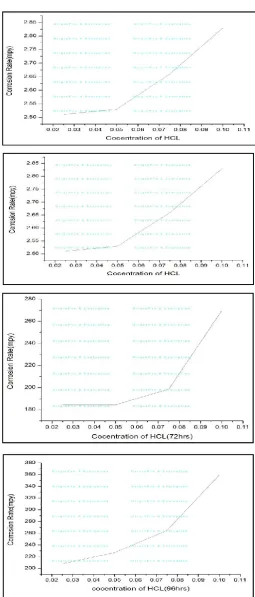
Fig. 1. Weight Loss Corrosion Test of Al 1100 in Different
Potentiodynamic Polarization Studies
The changes observed in the polarization curves after addition of the inhibitor are usually used as criteria to classify inhibitors as cathodic, anodic or mixed. From Figure 5, it can be seen that the anodic and cathodic current densities obtained in the presence of inhibitor are lower than as compared to that of in the absence of inhibitor. The corrosion potential (Ecorr) values
in the presence of inhibitor are shifted to negative direction and leftward displacement in the cathodic branch of the curves. EIS research has proved that EIS is a powerful and accurate method for measuring corrosion rates. In order to access the charge transfer resistance and polarization resistance that is proportional to the corrosion rate at the monitored interface, EIS results is interpreted by model of the interface. Advantage of EIS techniques is the possibility of using very small amplitude signals without disturbing the properties being measured.
In EIS measurement, a small amplitude signal, usually a voltage between 5 to 50 mV is applied to a specimen over frequency range of 0.001 Hz to 100,000 Hz.
Open Circuit Potential Test
For Open Circuit Potential test the composite along with matrix were cut in to rectangular shaped specimens of 2 cm length, 1 cm width and 1mm thickness and made ready as described above and dimensions were noted down using Vernier gauze. 1Sq.cm should be exposed to corrodent medium. For Stress Corrosion Test Three point loaded specimens, typically flat strips of dimension 8mm thickness, 40mm wide and 150mm long were prepared from the composites and the matrix alloy by adopting standard metallographic procedure for the stress corrosion testing. Before subjecting the specimens for the tress corrosion test they were ground with silicon carbide paper of 1000 grit and
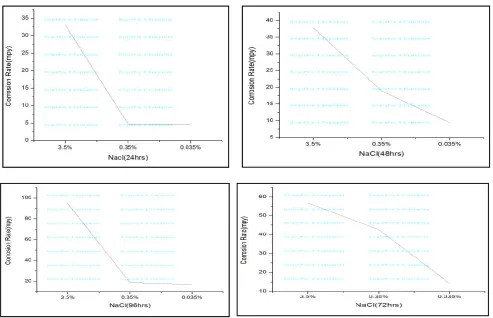
Fig. 2. Weight Loss Corrosion Test of Al 1100 in Different Concentration of NaCl Solution at 250C
then polished in steps of 15 to 3 m diamond paste to obtain a fine surface finish and degreased in acetone then dried.
Fig. 4. Potentiodynamic Studies of Al 1100 in Different Concentration of NaCl Solution
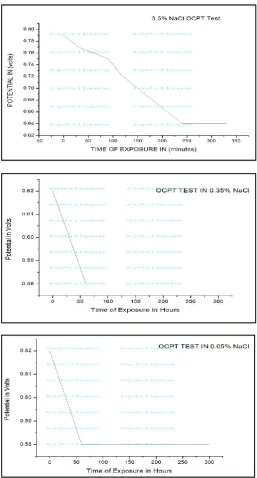
Fig. 5. OCPT Studies of Al 1100 in Different Concentration of HCl Solution
Electrochemical Impedance Spectroscopy (EIS)
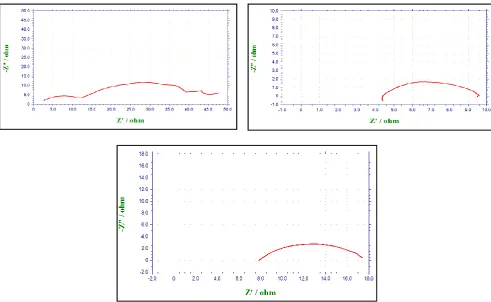
The EIS method is very useful in characterizing electrode behaviour. The electrode characterization includes the determination of the polarization resistance (Rp), corrosion rate and the electrochemical mechanism. The usefulness of these data permits the analysis of the alternating current (AC) impedance data, which are based on modeling a corrosion process by an electrical circuit. The EIS technique is based on the response of an equivalent circuit for an electrode/solution interface. The response can be analyzed by transfer functions due to an applied small-amplitude potential excitation at varying signals and sweep rates. In turn, a sine-wave perturbation of small amplitude is employed on a corroding system being is modeled as an equivalent circuit for determining the corrosion mechanism and polarization resistance.12Table 5 lists the impedance parameters of the
Nyquist plots of the ethyl acetate extract of gambir in different concentrations. From this experiment, the Nyquist plot shows that, at a concentration of 150 ppm, the percentages of inhibition efficiency are highest when the charge transfer potential, Rct, is also in good agreement (Fig. 4). In these spectra, the variation of impedance responses of mild steel after the addition of the ethyl acetate extract of gambir to the pH 5 aqueous solution is remarkable. The Randles CPE circuit was known as the equivalent circuit in our study.
Fig. 6. OCPT Studies of Al 1100 in Different Concentration of NaCl Solution
RESULTS AND DISCUSSION
Effect of Time on Exposure
The trend observed in all the cases show decrease in corrosion with increase in test duration. It is clear from the graphs that the resistance of the composite to corrosion increases as the exposure time increases. This eliminates the possibility of hydrogen bubbles clinging on to the surface of the specimen
and forming a permanent layer affecting the corrosion process. The phenomenon of gradually decreasing corrosion rate indicates the possible passivation of the matrix alloy. De Salazar [9] explained that the protective black film consists of hydrogen hydroxy chloride, which retards the forward reaction. Castle et. al. pointed out that the black film consists of aluminum hydroxide compound. This layer protects further
Fig. 7. Impedence studies of Al 1100 in different cocentration of HCl solution
corrosion in acid media. But exact chemical nature of such protective film still is not determined. From the Fig 1 to 2 it can be clearly observed that for both as cast and composite, corrosion rate decreases monotonically with increase in Concentration of mediums. In the present case, the corrosion rate of the matrix alloy is predominantly due to t
of pits and cracks on the surface. In the case of base alloy, the strength of the corrosion medium used induces crack formation on the surface, which eventually leads to the formation of pits, thereby causing the loss of material. The presence of cracks and pits on the base alloy surface was observed clearly.
Open Circuit Potential Test
In ocpt the potential of the specimen Al1100 decreases as the exposure of time increases after certain hours the potential becomes constant. This is because the formation of aluminum chloride on the surface of the metal.
Potentiodynamic studies & Electrochemical
Spectroscopy Measurement
CH instrument [608E] USA is used for the potentio dynamic studies i.e. anodic and cathodic polarization of aluminum 1100 metal corrosion current increases as the concentration corrosion media HCl and NaCl increases. The
decreases as a concentration of corrosion media decreases.The anodic and cathodic polarization curve recorded on Al1100 in
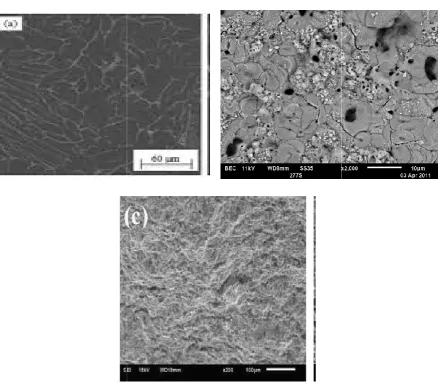
Fig. 9. SEm Micrographs of Al 1100 alloy with and without corrosion in HCL and NaCl solution
corrosion in acid media. But exact chemical nature of such ned. From the Fig 1 to 2 it can be clearly observed that for both as cast and composite, corrosion rate decreases monotonically with increase in Concentration of mediums. In the present case, the corrosion rate of the matrix alloy is predominantly due to the formation of pits and cracks on the surface. In the case of base alloy, the strength of the corrosion medium used induces crack formation on the surface, which eventually leads to the formation of pits, thereby causing the loss of material. The of cracks and pits on the base alloy surface was
the potential of the specimen Al1100 decreases as the exposure of time increases after certain hours the potential becomes constant. This is because the formation of aluminum
Electrochemical Impedance
CH instrument [608E] USA is used for the potentio dynamic studies i.e. anodic and cathodic polarization of aluminum 1100 metal corrosion current increases as the concentration corrosion media HCl and NaCl increases. The corrosion rate decreases as a concentration of corrosion media decreases.The anodic and cathodic polarization curve recorded on Al1100 in
Different Cocentration of HCl at 25 The cathodic current densities (I
extrapolation of the cathodic Tafel lines to the corrosion potential (E-corr). In acid solution the anodic process of
corrosion is the passage of metal ion from metal surface in to the solution and the principle cathodic process is the discharge of hydrogen ion to produce hydrogen gas or oxygen reduction.The effect of the concentration of HCl & NaCl was shown in Figure 3-4 which presents the anodic and cathodic Tafel curves of Al 1100. The result indicates that the decreased proportionally with incre
concentrations, that mean the metal dissolve in to the solution
was decreased. The anodic and cathodic Tafel lines of Al 1100.
Corrosion morphology
By the visual examination of the specimen of Al1100 after the weight loss ocpt potentiodynamic corrosion experiment showed pits, cracks and flakes are formed on the surface of the specimen. The cracks is found to be perpendicular to the axis of the specimen the wide spread pitting are also observed on the surface of the specimen.
2Al + 6HCl 2AlCl3 +3H
2Al + 6H20 2Al (0H)
The above reaction raises directly influenced by the variables i.e. the temperature of the acidic solution specimen exposure
SEm Micrographs of Al 1100 alloy with and without corrosion in HCL and NaCl solution
Different Cocentration of HCl at 25oC is shown in Fig 3-4. The cathodic current densities (I-corr) were determined by
extrapolation of the cathodic Tafel lines to the corrosion ). In acid solution the anodic process of corrosion is the passage of metal ion from metal surface in to the solution and the principle cathodic process is the discharge en ion to produce hydrogen gas or oxygen reduction.The effect of the concentration of HCl & NaCl was 4 which presents the anodic and cathodic Tafel curves of Al 1100. The result indicates that the Icorr
decreased proportionally with increase inhibitor concentrations, that mean the metal dissolve in to the solution
was decreased. The anodic and cathodic Tafel lines of Al
By the visual examination of the specimen of Al1100 after the weight loss ocpt potentiodynamic corrosion experiment showed pits, cracks and flakes are formed on the surface of the specimen. The cracks is found to be perpendicular to the axis n the wide spread pitting are also observed on
+3H2
2Al (0H)3 +3H2
The above reaction raises directly influenced by the variables i.e. the temperature of the acidic solution specimen exposure
area hydrogen concentration in solution exposure time of the specimen and the specimen area is exposed the researcher have reported on static corrosion the rate of corrosion decreases with increase in exposure of the time.
Acknowledgement
The authors gratefully acknowledge VGST, Govt.of Karnataka for financial support under the project CISEE /2014-15/ GRD No. 325.Also express their gratitude to Management and Principal, RajaRajeswari College of Engineering, Bangalore for providing infrastructural facilities.
REFERENCES
Asthana, R., M. Singh, N. Sobczak, The role of wetting and reactivity in infiltration of ceramic-metal composites,
Ceram. Eng. Sci. Proc. Vol 26, pp 249-261, 2005.
Castle, J.E., Sun L. and Yan, H. 1994. The use of scanning auger microscopy to locate cathodiccenters in SiC/Al6061 MMC And to determine the current density at which they operate, Corrosion Science, Vol 36(6), pp1093-1110. DeSalazar, J.M.G., Urefia, A., Mazanedo, S. and Barrens, M.
1999. Corrosion behaviour of AA6061 and AA7075 reinforced with Al2O3 particulates in aerated 3.5%chloride solution potentiodynamic measurements and microstructure evaluation, Corrosion Science, Vol 41, pp529-545,1999.
Deve, H.E. C. McCullough, Continuous-fiber reinforced Al composites: A new generation, JOM vol 47, pp 33-37, 1995. J. D. Poston and W. D. Horne, “Discontiguous OFDM considerations for dynamic spectrum access in TV channels,” in Proc. IEEE DySPAN, 2005.
EzhilVannan, S. and Paul Vizhian Simson, Corrosion Behaviour of Short Basalt Fiber Reinforced with Al7075 Metal Matrix Composites in Sodium Chloride Alkaline Medium, J. Chem. Eng. Chem. Res. Vol 1(2), pp122-131, 2014.
Krupakara, P.V. 2013. Corrosion Characterization of Al6061/Red Mud Metal Matrix Composites, Portugaliae Electro chimicaActa Vol 31(3), pp157- 164.
Pruthviraj, R. D., Krupakara, P.V., Parashuram, B.S. Effect of reinforcement content on the corrosion properties of ALUMINIUM 7075/SiC composites in equimolar solution of sodium hydroxide and sodium chloride solution, Bulletin of Electrochemistry, Vol 22(6), pp 281-284, 2006. Rajan, T.P.D., Pillai, R.M., Pai, B.C. 1998. Reinforcement
coatings and interfaces in aluminium metal matrix composites, J. Mater. Sci. Vol 33, pp 3491-3503.
Rodel, J., Prielipp, H., Knechtel, M. 1994. N. Claussen, Better ceramics through metal Modification, Trans. Mater. Res. Soc. Jpn. Vol 19B, pp 763-776.
Vassel, A. 1999. Continuous fibre reinforced titanium and aluminium composites: A comparison, Mater. Sci. Eng. A Vol 263, pp 305-313.
Vikulin, V.V., I.Y. Kelina, A.S. Shatalin, L.N. Rusanova, Advanced ceramic structural materials, Refract. Ind.Ceram. Vol 45, pp 383-386, 2004.
Wu.Jianxin, Liu Wei LiPeng Xing & Wurenjie, “Effect of matrix alloying elements on the corrosion resistance of C /Al composites materials, Jr.of.Mat.Sci. lett. Vol.12, pp1500-1501, 1993.