INTERNATIONAL RESEARCH JOURNAL OF PHARMACY
www.irjponline.com
ISSN 2230 – 8407
Research Article
EVALUATION OF FREE RADICAL SCAVENGING CAPACITY AND REDUCING POWER OF
POLYHERBAL FORMULATION COMPRISING OF THREE SELECTED PLANTS
Poongodi T *, Nazeema.T.H.
Department of Biochemistry, Rathnavel Subramaniam College of Arts and Science, Sulur, Tamil Nadu, India
*Corresponding Author Email: [email protected]Article Received on: 19/01/19 Approved for publication: 22/02/19
DOI: 10.7897/2230-8407.1004140
ABSTRACT
The present study was carried out to evaluate the free radical scavenging activity in the Polyherbal formulation of Kedrostis foetidissima, Mimusops elengi and Artemisia vulgaris. The free radical scavenging potential of Polyherbal formulation (PHF) was assessed for DPPH, Nitric oxide, Superoxide, Hydroxy radical and ABTS free radicals. Total Reducing power was studied by FRAP method. The Polyherbal formulation (PHF) showed effective free radical scavenging activity. IC50 value of Polyherbal formulation was compared against standard Ascorbic acid. IC50 value for DPPH is 45.16µg/ml, nitric oxide is 85.73 µg/ml, superoxide is 48.9 µg/ml, Hydroxy radical is 113.2 µg/ml and ABTS is 93.14 µg/ml. Ferric reducing power increased with increase in concentration of Polyherbal formulation. Polyherbal formulation of Kedrostis foetidissima, Mimusops elengi and Artemisia vulgaris has potent free radical scavenging activity, therefore can be used for treatment of diseases related to oxidative stress.
Keywords: Kedrostis foetidissima, Mimusops elengi, Artemisia vulgaris
INTRODUCTION
Free radicals play an important role in pathogenesis of various diseases in our body. They are formed as a result of physical, chemical and biological stress. Plants are the rich source of secondary metabolites which also acts as free radical scavengers thereby offer protection against various diseases. Single disease is not characterised by a single target protein. Multi drug - multi target approach is more brilliant way to fight against chronic diseases. Nowadays polyherbal formulation is widely used for treatment of chronic diseases as it has multiple targets and has proven to be more effective.
According to studies carried out in humans, oxidative damages are detrimental in immune function. 1 Moreover, aerobic
organisms must possess effective antioxidant defenses that, in part, depend on dietary supply of antioxidants being, by definition, molecules capable of inhibiting the oxidation of other molecules. Thus, antioxidants are able to stop oxidation reactions by removing ROS. 2 Knight showed that an antioxidant
supplementation essentially reverses age-associated immune deficiencies, for example, augmenting specific antibody response and decreasing lipid peroxidation. 1 Therefore, dietary
antioxidants preserve an adequate function of immune cells against homeostatic disturbances caused by oxidative stress occurring when the ROS generation rate exceeds that of their removal.3, 4 The excess of ROS is responsible for lipid and protein
oxidation, including DNA, as well as peroxidation of unsaturated fatty acids, essential for cellular membrane function. 5
The Ayurveda contains several polyherbal formulations and this has been effective in treating wide range of ailments. The diverse combination of different plants would be more effective than individual plants itself as these formulations have the ability to act by various mechanisms. 6Kedrostis foetidissima belong to the
family of Cucurbitaceae. Different parts of the plant has rich source of secondary metabolites and is used in treatment of diarrhoea, measles, asthma, small pox and opportunistic infections. 7Artemisia vulgaris L. (mugwort) is a medicinal plant
belonging to the family Asteraceae and is a tall aromatic perennial herb. In traditional medicine, this plant is used for the treatment of diabetes and the extracts of the whole plant are used for epilepsy and in combination for psychoneurosis, depression, irritability, insomnia, anxiety and stress. 8 This plant also showed
antispasmodic, antiseptic, antibacterial, antimalarial, antitumor, antirheumatic and hepatoprotective properties. 9, 10
Mimusops elengi Linn commonly known as Bakul belongs to the family Sapotaceae and is a small to large evergreen tree found all over the different parts of Bangladesh, Pakistan and India. It is cultivated in gardens as an ornamental tree for sweet-scented flowers. It has been used in the indigenous system of medicine for the treatment of various ailments. 11 There are several herbal
formulations in the ayurvedic system of medicine which has been used to treat a wide variety of diseases. The formulations have the ability to act by various mechanisms and therefore it could be possible that different combinations of different plants will be more effective than the individual plant itself. 12 The present study
was carried out to investigate the free radical scavenging potential (DPPH, NO, SO●, OH & ABTS) of polyherbal formulation of
three plants Kedrostis foetidissima, Mimusops elengi and Artemisia vulgaris.
MATERIALS AND METHODS
Plant collection and Authentication
Three plants Mimusops elengi, Kedrostis foetidissima and
authenticated from Botanical Survey of India (BSI), TNAU, Coimbatore. The authentication reference number for Mimusops elengi is BSI/SRC/5/23/2018/Tech/1224, Kedrostis foetidissima
is BSI/SRC/5/23/2018/Tech/1225 and Artemisia vulgaris is BSI/SRC/5/23/2018/Tech/1226.
Preparation of Polyherbal Formulation
The leaf samples of three plants were washed thoroughly with water to remove dust particles, shade dried till no moisture remained and coarsely powdered using blender individually.
For preparation of polyherbal formulation, Kedrostis foetidissima, Mimusops elengi and Artemisia vulgaris were mixed in ratio 1:1:1, followed by Soxhlet extraction using 80% ethanol. Polyherbal extract, was evaporated using rotavaporator till no solvent remained. The resultant sample was stored in refrigerator for future studies after dissolving in DMSO.
In-vitro Antioxidant activity
DPPH free radical scavenging activity
The free radical scavenging activity of Polyherbal formulation was measured using 2, 2-diphenyl-1-picrylhydrazyl (DPPH). The scavenging activity for DPPH free radicals was measured according to the procedure described by Braca et al.13 An aliquot
of 3 ml of 0.004% DPPH solution in methanol and 0.1 ml of plant extract/ascorbic acid at various concentrations 20-100 µg/ml were mixed. The mixture was shaken vigorously and allowed to reach a steady state at room temperature for 30 minutes. Decolorization of DPPH was determined by measuring the absorbance at 517 nm. A control was prepared using 0.1 ml of respective vehicle in the place of plant extract/ascorbic acid. The percentage inhibition activity was calculated as
[(A0-A1)/A0] ×100
where A0 was the absorbance of the control, and A1 was the
absorbance of the plant extract/ ascorbic acid.
Nitric oxide (NO) free radical scavenging activity
Nitric oxide free radical scavenging activity was performed by the method of Garrat DC. 14 Nitric oxide scavenging activity of
sample was determined by adding 400 μl of 100 mM sodium nitroprusside, 100 μl of PBS (pH - 7.4) and 100 μl of different concentration of plant extract. This reaction mixture was kept for incubation at 25°C for 150 minutes. To 0.5 ml of above solution, 0.5 ml of Griess reagent was added (0.1 ml of sulfanilic acid and 200 μl naphthylethylenediamine dichloride (0.1%) w/v). This was kept on incubation at room temperature for 30 minutes, and finally absorbance was observed at 540 nm. All the reactions were performed in triplicates, and their percentage inhibition was calculated by the following formula:
% Inhibition = ((Acontrol-Asample)/Acontrol) ×100
Percentage Inhibition data were linearized against the concentrations of each polyherbal plant extract and standard antioxidant. IC50 which is an inhibitory concentration of each
extract required to reduce 50% of the nitric oxide formation was determined.
Superoxide anion scavenging activity
Measurement of superoxide anion scavenging activity of resveratrol was based on the method described by Liu et al. 15 In
these experiments the superoxide anion was generated in 3 ml of Tris-HCl buffer (100 mM, pH 7.4) containing 0.75 ml of NBT (300 μM) solution, 0.75 ml of NADH (936 μM) solution and 0.3 ml of different concentrations of the extract. The reaction was
initiated by adding 0.75 ml of PMS (120 μM) to the mixture. After 5 min of incubation at room temperature, the absorbance at 560 nm was measured in spectrophotometer. The superoxide anion scavenging activity was calculated according to the following equation.
(% Inhibition = ((A0-A1) / A0 × 100)
Where A0 was the absorbance of the control (blank, without
extract) and A1 was the absorbance in the presence of the extract.
Hydroxy radical scavenging activity
Hydroxyl radical scavenging activity of the extracts was determined according to the method reported by Klein et al. 16
The reaction mixture contained 1.0 ml of different concentration of extracts (2–10 mg/ml), 1.0 ml of iron-EDTA solution (0.13% ferrous ammonium sulphate 0.26% EDTA), 0.5 ml of 0.018% EDTA, 1.0 ml of DMSO (0.85% in 0.1 mol/L phosphate buffer pH 7.4) and 0.5 ml of 0.22% ascorbic acid. The tubes were capped tightly and heated in a water bath at 80-90ºC for 15 min, the reaction was terminated by adding 1.0 ml of ice cold TCA (17.5%). To the above reaction mixture 3.0 ml of Nash reagent (75.0 g of ammonium acetate, 3.0 ml of glacial acetic acid and 2.0 ml of acetyl acetone were mixed and distilled water was added to a total volume of 1 liter) was added and incubated at room temperature for 15 min for color development. The intensity of the yellow color formed was measured at 412 nm against a reagent blank. Ascorbic acid was used as standard. The percentage of inhibition was determined by comparing test with standard.
Ferric reducing/antioxidant power (FRAP) assay
Antioxidant capability of Polyherbal formulation of different concentrations 20-100 µg/ml was estimated by method as described by Pulido et al. 17 FRAP reagent (900 µl), prepared
freshly and incubated at 37˚C was mixed with 90 µl of distilled water and 30µl of test sample or methanol (for the reagent blank). The test samples and reagent blank were incubated at 37˚C for 30 min in a water bath. The final dilution of the test sample in the reaction mixture was 1/34. The FRAP reagent contained 2-5 ml of 20 µmol/L 2,4,6-tripyridyl-2-triazine (TPTZ) solution in 40 µmol/L HCl, 2.5ml of 20µmol/l FeCl3.6H2O and 25 ml of 0.3
mol/L acetate buffer (pH 3.6) as described by Siddhuraju and Becker. 18 At the end of incubation the absorbance readings were
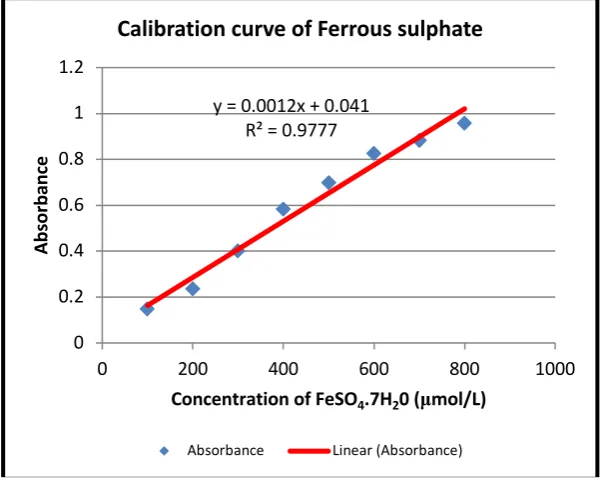
taken immediately at 593nm using spectrophotometer. Methanolic solutions of known Fe II concentration ranging from 100 to 2000 µmol/L, FeSO4.7H2O were used for the preparation
of the calibration curve. The FRAP value is expressed as mmol Fe (II) equivalent/mg extract.
ABTS radical scavenging activity
The antioxidant activity of the Polyherbal formulation was also assessed by ABTS assay. 19 ABTS was dissolved in deionised
water to 7 mM concentration, and Ammonium persulphate added to a concentration of 2.45 mM. The reaction mixture was left to stand at room temperature overnight (12 to 16 h) in the dark before usage. 0.5 ml of methanol extract (0.1 – 200 µg/ml) was diluted with 0.3 ml ABTS solution and made up to the volume with methanol. Absorbance was measured spectrophotometrically at 745nm. The assay was first carried out on Ascorbic acid, which served as a standard. The percentage of inhibition was measured similar to that of DPPH assay.
Statistical analysis
The half-maximal Inhibitory concentrations (IC50) were inspected
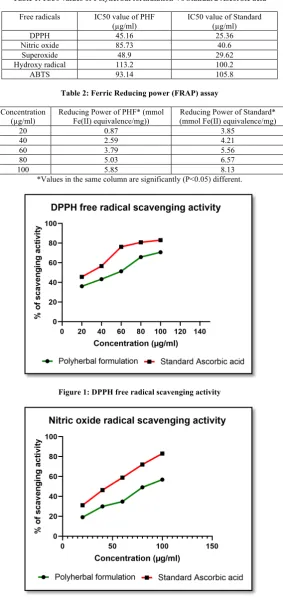
Table 1: IC50 values of Polyherbal formulation Vs Standard Ascorbic acid
Free radicals IC50 value of PHF (µg/ml)
IC50 value of Standard (µg/ml)
DPPH 45.16 25.36
Nitric oxide 85.73 40.6
Superoxide 48.9 29.62
Hydroxy radical 113.2 100.2
ABTS 93.14 105.8
Table 2: Ferric Reducing power (FRAP) assay
Concentration
(µg/ml) Reducing Power of PHF* (mmol Fe(II) equivalence/mg)) (mmol Fe(II) equivalence/mg)Reducing Power of Standard*
20 0.87 3.85
40 2.59 4.21
60 3.79 5.56
80 5.03 6.57
100 5.85 8.13
*Values in the same column are significantly (P<0.05) different.
Figure 1: DPPH free radical scavenging activity
Figure 3: Superoxide radical scavenging activity
Figure 4: Hydroxy radical scavenging activity
Figure 6: Ferric Reducing Power Assay (Absorbance)
Figure 7: Calibration curve of Ferrous sulphate
RESULTS AND DISCUSSION
DPPH free radical scavenging activity
DPPH is a stable free radical and accepts an electron or hydrogen radical to become a stable diamagnetic molecule. DPPH radical was usually used as a substrate to evaluate antioxidant activity of antioxidants. It involves reactions of specific antioxidant with stable free radical 2, 2-diphenyl-1-picryl-hydrazyl (DPPH). As a result, there is reduction of DPPH concentration by the antioxidant, which decreases the optical absorbance of DPPH, and it is detected at 517nm. 20
The DPPH free radical scavenging activity of Polyherbal formulation and standard Ascorbic acid is graphically represented in Figure 1. It is evident from the result that the percentage DPPH free radical scavenging activity increased with increase in the concentration of PHF. The minimum concentration of 20 µg/ml of PHF exhibited 36.04±0.06% scavenging activity and the maximum concentration of 100 µg/ml of polyherbal sample exhibited 70.71±0.72% scavenging activity.
IC50 of Polyherbal formulation was found to be 45.16 µg/ml and
IC50 for standard Ascorbic acid was found to be 25.36 µg/ml,
which is given in the Table 1.
Nitric oxide (NO) scavenging activity
Polyherbal formulation exhibited potent nitric oxide scavenging activity, whose percentage scavenging activity increased with increase in sample concentration. The minimum concentration 20 µg/ml of PHF showed 19.16±0.77% nitric oxide scavenging activity and maximum concentration of 100 µg/ml of PHF showed 56.9±1.01% nitric oxide scavenging activity. IC50 value
of PHF is 85.73 µg/ml and for standard Ascorbic acid, IC50 value
is 40.6 µg/ml (Table 1). Graphical representation of nitric oxide free radical scavenging activity of PHF and standard Ascorbic acid is displayed in Figure 2.
Nitric oxide plays a vital role in various inflammatory processes. Higher levels of these radical are toxic to tissue and contribute to the vascular collapse, various carcinoma, and ulcerative colitis. The toxicity of nitric oxide increases when it reacts with superoxide radical forming highly reactive peroxy nitrate anion.
21 Polyherbal formulation has potent nitric oxide scavenging
y = 0.0012x + 0.041
R² = 0.9777
0
0.2
0.4
0.6
0.8
1
1.2
0
200
400
600
800
1000
Abs
or
banc
e
Concentration of FeSO
4.7H
20 (
μ
mol/L)
Calibration curve of Ferrous sulphate
activity so that it prevents the formation of nitrate anion which is responsible for tissue damage.
Superoxide free radical scavenging activity
Polyherbal sample exhibited strong superoxide free radical scavenging activity, which is compared against Standard Ascorbic acid. Percentage scavenging activity of Polyherbal formulation and Standard Ascorbic acid is shown in Figure 3. It is apparent from the results, that there is remarkable increase in superoxide free radical scavenging activity with increase in concentration of Polyherbal formulation and Standard Ascorbic acid. IC50 values are mentioned in Table 1.
IC50 value of Polyherbal formulation was found to be 48.9 µg/ml
and for standard Ascorbic acid is 29.62 µg/ml. The superoxide anion has been implicated in several pathophysiological processes due to its transformation into more reactive species such as hydroxyl radical that initiate lipid peroxidation. 22
Polyherbal formulation has superoxide scavenging activity thereby preventing lipid peroxidation.
Hydroxy radical scavenging activity
Hydrogen peroxide itself is not very reactive, but sometimes it is toxic to cells because it may give rise to hydroxyl radical. Therefore, removing hydrogen peroxide is very important for antioxidant defence in a cell system. 23
The results shown in Figure 4 indicates the effective hydroxyl radical scavenging potential of Polyherbal formulation. IC50 of
polyherbal sample was found to be 113.2µg/ml and Ascorbic acid 100.2 µg/ml.
ABTS radical scavenging activity
ABTS radical scavenging activity is relatively recent, and involves a more drastic radical, chemically 25 range have raised
interest in the use of ABTS for the estimation of antioxidant activity. 24
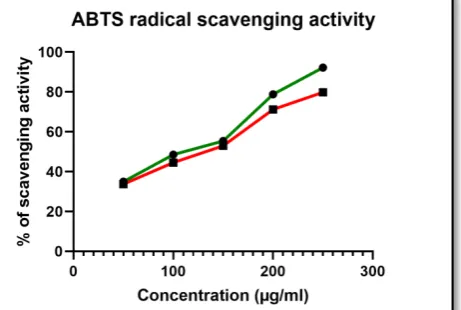
The percentage scavenging activity of Polyherbal formulation and Standard Ascorbic acid for ABTS free radical is mentioned in Figure 5. The results clearly indicated that ABTS free radical scavenging activity is higher for Polyherbal formulation compared to Standard Ascorbic acid.
IC50 value of polyherbal sample was observed to be 93.14 µg/ml
and standard Ascorbic acid 105.8 µg/ml.
Ferric reducing/antioxidant power (FRAP) assay
Reducing power is a measure of ability of the extracts to reduce Fe3+ to Fe2+. Substances which have reduction potential reacts with potassium ferric-cyanide to form potassium ferro-cyanide which then react with ferric chloride to form ferric ferrous complex that has become one of the antioxidant capacity indicators of medicinal plant as it may accord with overall antioxidant activity. This is because antioxidants are strong reducing agents and this is principally because of the redox properties of their hydroxyl groups and the structural relationships of any parts of their structure. 26, 27
The Ferric reducing antioxidant activity of the polyherbal formulation is given in terms of mmol Fe (II) equivalence in Table 2 and in terms of Absorbance in Figure 6.
Ferrous sulphate calibration curve illustrated in Figure 7, was used to calculate the Reducing Power and expressed as mmol Fe (II) equivalence/mg of sample. The ethanolic extract of polyherbal formulation (100µg/ml) had a strong ferric reducing antioxidant power of 5.85 mmol Fe II/ mg of Sample and for
standard ascorbic acid, it was found to be 8.13 mmol Fe II/ mg of Sample shows the similar ferric reducing property like that of Ascorbic acid.
CONCLUSION
Above results, clearly confirmed that Polyherbal formulation is a rich source of antioxidants which can scavenge free radicals like DPPH, Nitric oxide, Superoxide, Hydroxy radical and ABTS. Also it is evident from the study, that Polyherbal formulation has significant ferric reducing antioxidant power. This antioxidant property of polyherbal formulation of Kedrostis foetidissima, Mimusops elengi and Artemisia vulgaris enables its use in treatment of various diseases involving free radicals like cancer, heart ailments, inflammatory disorders in skin, liver and kidneys, etc.
REFERENCES
1. Knight JA. Review: free radicals, antioxidants and the immune system. Annals of Clinical and Laboratory Science 2000; 30 Suppl 2:145–158.
2. Bendich A. Physiological role of antioxidants in the immune system. Journal of Dairy Science 1993; 76 Suppl 9: 2789– 2794.
3. Fuente MD. Effects of antioxidants on immune system ageing. European Journal of Clinical Nutrition 2002; 56 Suppl 3:S5–S8.
4. Sies H. Biochemistry of oxidative stress. Angewandte Chemie International Edition 1986; 25:1058-1071.
5. Lykkesfeldt J, Svendsen O. Oxidants and antioxidants in disease: oxidative stress in farm animals. Veterinary Journal 2007; 173 Suppl 3:502–511.
6. Bylka W, Szaufer MH, Matalawska I, Goslinka O. Antimicrobial activity of isocytisoside and extracts of
Aquilegia vulgaris L. Letters in Applied Microbiology 2004; 39:93-97.
7. Pavithra K, Vadivukkarasi S. Evaluation of free radical scavenging activity of various extracts of leaves from
Kedrostis foetidissima (Jacq.) Cogn. Food Science and Human Wellness 2015; 4:42-46.
8. Walter HL, Memory PF, Elvin L. Medicinal botany. 2nd ed. New Hersey: John Wiley and Sons; 2003.p. 345.
9. Lee SJ, Chung HY, Lee IK, Oh SU, Yoo ID. Phenolics with inhibitory activity on mouse brain monoamine oxidase (MAO) from whole parts of Artemisia vulgaris L (Mugwort). Food Science And Biotechnology 2000; 9:179-182.
10. Terra DA, Amorim L, Catanho MTJ, Fonseca A, Filho SD, Neto BJ, et al. Effect of an extract of Artemisia vulgaris L. (Mugwort) on the in vitro labeling of red blood cells and plasma proteins with technetium-99m. Brazilian Archives of Biology and Technology 2007; 50: 123-128.
11. Ghani A. Medicinal Plants of Bangladesh. 2nd ed. Dhaka: The Asiatic Society of Bangladesh; 2003.p. 303.
12. Srivastava S, Lal VK, Pant KK. Polyherbal formulations based on Indian medicinal plants as antidiabetic phytotherapeutics. Phytopharmacology 2012; 2:1-15. 13. Braca A, Tommasi ND, Bari LD, Pizza C, Politi M, and
Morelli I. Antioxidant principles from Bauhinia terapotensis. Journal of Natural Products 2011; 64: 892–895.
14. Garrat DC. The Quantitative analysis of Drugs. 3rd ed. Japan: Chapman and Hall Limited; 1964.p. 456‐458.
15. Liu F, Ooi VEC, Chang ST. Free radical scavenging activity of mushroom polysaccharide extracts. Life Sciences 1997; 60: 763-771.
hydroxyl radical generating system. Biochemistry 1981; 20:6006–6012.
17. Pulido R, Bravo L, Calixto SF. Antioxidant activity of dietary polyphenols as determined by a modified ferric reducing/antioxidant power assay. Journal of Agricultural and Food Chemistry 2000; 48:3396–3402.
18. Siddhuraju P, Becker K. Studies on antioxidant activities of Mucuna seed (Mucuna pruriens var. utilis) extracts and certain non-protein amino acids through in vitro models. Journal of the Science of Food and Agriculture 2003; 83:1517-1524.
19. Re R, Pellegrini N, Proteggente A, Yang M, Rice-Evans C. Antioxidant activity applying an improved ABTS radical cation decolorization assay. Free Radical Biology and Medicine 1999; 26:1231-7.
20. Dhalwal K, Deshpande YS, Purohit AP and Kadam SS. Evaluation of the antioxidant activity of Sida cordifolia. Pharmaceutical Biology 2005; 43 Suppl 9: 754-761. 21. Suresh S, Suriyavathana M. In vitro antioxidant potential of
ethanolic extract of Anisomeles malabarica. International Research Journal of Pharmacy 2012; 3:394-398.
22. Pietta PG. Flavonoids as antioxidants. Journal of Natural Products 2000; 63:1035-1042.
23. Battu GR, Ethadi SR, Vedhapriya G, Swathipriya K, Chandrika K, Venkateswara RA, et al. Evaluation of antioxidant and anti-inflammatory activity of Euphorbia
heyneana Spreng. Asian Pacific Journal of Tropical Biomedicine 2011; 1 Suppl 2:S191-S194
24. Senthil Kumar R, Rajkapoor B, Perumal P. Antioxidant activities of Indigofera cassioides Rottl. Ex. DC. using various in vitro assay models. Asian Pacific Journal of Tropical Biomedicine 2012; 2:256-261.
25. Halvorson BL, Holte K, Myhrstad MCW, Baikmo I, Hvattum E, Remberg SF. A synthetic screening of total antioxidants in dietary plants. Journal of Nutrition 2002; 132:461-471. 26. Oboh G, Puntel RL, Rocha JWT. Hot pepper (Capsicum
annum, Tepsin and Capsicum Chinese, Habenero) prevents Fe2+ induced lipid peroxidation in brain in-vitro. Food
chemistry 2007; 102:178-185.
27. Eleazu CO, Okafor PN, Ahamefuna I. Total antioxidant capacity, Nutritional composition and Inhibitory activity of unripe plantain (Musa paradiasica) on oxidative stress in alloxan induced diabetic rabbits. Pakistan Journal of Nutrition 2010; 9:1052-1057
Cite this article as:
Poongodi T and Nazeema.T.H. Evaluation of free radical scavenging capacity and reducing power of polyherbal formulation comprising of three selected plants. Int. Res. J. Pharm. 2019;10(4):143-149
http://dx.doi.org/10.7897/2230-8407.1004140
Source of support: Nil, Conflict of interest: None Declared