Introduction of Complementary Foods and the
Relationship to Food Allergy
WHAT’S KNOWN ON THIS SUBJECT: Breast milk is protective against many conditions, but its role in allergy has not been established. Infant-feeding recommendations support exclusive breastfeeding for 26 weeks, whereas allergy prevention recommendations advise exclusive breastfeeding for 4 to 6 months with continued breastfeeding thereafter.
WHAT THIS STUDY ADDS: Evidence that continued breastfeeding while solids are introduced into the diet and delaying the introduction of solids until at least 17 weeks of age are associated with fewer food allergies.
abstract
OBJECTIVES:To address questions regarding breastfeeding, comple-mentary feeding, allergy development, and current infant-feeding recommendations.
METHODS:This was a nested, case-control within a cohort study in which mothers of 41 infants diagnosed with food allergy by the age of 2 years (according to double-blind, placebo-controlled food challenge) and their 82 age-matched controls kept prospective food diaries of how their infants were fed in thefirst year of life.
RESULTS:Infants who were diagnosed with food allergy by the time they were 2 years of age were introduced to solids earlier (#16 weeks of age) and were less likely to be receiving breast milk when cow’s milk protein wasfirst introduced into their diet.
CONCLUSIONS:This study supports the current American Academy of Pediatrics’ allergy prevention recommendations and the European Society of Pediatric Gastroenterology, Hepatology and Nutrition rec-ommendations on complementary feeding to not introduce solids before 4 to 6 months of age. It also supports the American Academy of Pediatrics’ breastfeeding recommendations that breastfeeding should continue while solids are introduced into the diet and that breastfeeding should continue for 1 year, or longer, as mutually de-sired by mother and infant.Pediatrics2013;132:e1529–e1538
AUTHORS:Kate E.C. Grimshaw, PhD, RD,aJoe Maskell,
MSc,bErin M. Oliver, MSc,aRuth C.G. Morris, DipHE RN
(Child),cKeith D. Foote, MBBS, FCPCH,dE.N. Clare Mills,
PhD,eGraham Roberts, DM, MRCPCH,aand Barrie M.
Margetts, PhD, FFPHf
aClinical and Experimental Sciences Academic Unit andfPrimary
Care and Population Sciences Academic Unit, University of Southampton Faculty of Medicine, Southampton, United Kingdom;
bPublic Health Sciences and Medical Statistics, University of
Southampton, Southampton, United Kingdom;cWellcome Trust
Clinical Research Facility, University Hospital Southampton NHS Foundation Trust, Southampton, United Kingdom;dHampshire
Hospitals Foundation Trust, Winchester, United Kingdom; and
eInstitute of Inflammation and Repair, Manchester Academic
Health Science Centre, Manchester Institute of Biotechnology, The University of Manchester, Manchester, United Kingdom
KEY WORDS
breastfeeding, food allergy, infant feeding, prevention
ABBREVIATIONS
DBPCFC—double-blind, placebo-controlled food challenge PIFA—Prevalence of Infant Food Allergy Study
WHO—World Health Organization
Dr Grimshaw was involved in writing the original study protocol, data collection, diagnosis of food allergy, statistical analysis and data management, and initial drafting and revision of the manuscript; Mr Maskell was involved in statistical analysis and data management, and revision of the manuscript for important intellectual content; Ms Oliver and Ms Morris were involved in data collection, diagnosis of food allergy, and revision of the manuscript for important intellectual content; Dr Foote was involved in the initiation and set up of the study, data collection, diagnosis of food allergy, and revision of the manuscript for important intellectual content; Prof Mills was involved in the conception and design of the original study protocol and revision of the manuscript for important intellectual content; Prof Roberts was involved in the initiation and set-up of the study, data collection, diagnosis of food allergy, statistical analysis and interpretation of the data, and revision of the manuscript for important intellectual content; and Prof Margetts was involved in the initiation and set-up of the study, statistical analysis and interpretation of the data, and revision of the manuscript for important intellectual content. All authors approved thefinal manuscript as submitted.
Since announcement of the World Health Organization (WHO) recom-mendation that all infants be exclu-sively breastfed for 26 weeks, there has been an ongoing debate as to whether the recommendation is wholly appropriate for all infants from de-veloped countries. The debate is well illustrated by a review by Fewtrell et al1
and the letters of response published in 2011.2–4
Although there is no doubt as to the nutritional and emotional benefits of breastfeeding, the crux of the argu-ment is the benefit of exclusive breastfeeding to 26 weeks. One side (pro– exclusive breastfeeding to 26 weeks) believe breast milk to be nu-tritionally adequate to the age of 6 months, that exclusive breastfeeding is protective against a plethora of in-fant conditions,5–8 and that these
benefits are demonstrated in de-veloped as well as underdede-veloped countries.9 This view is currently
ad-vocated by the American Academy of Pediatrics, the European Society of Pediatric Gastroenterology, Hepatol-ogy and Nutrition, and the UK De-partment of Health.10–12The other side
of the argument is that although ex-clusive breastfeeding for 26 weeks is undoubtedly the best recommenda-tion for infants in underdeveloped countries, in developed countries, where the risk of gastrointestinal infections are reduced and allergic conditions are increased, the benefits of exclusive breastfeeding for this long are not as strong. Calls for fur-ther work in this area have been made, with the American Academy of Pediatrics recommending that solids be introduced between 4 and 6 months of age for allergy prevention.10,13Failure
to resolve the debate undermines the authority of current infant-feeding rec-ommendations, which can cause con-fusion in health care workers and parents alike.
To inform the debate, we examined the relationship between breast-feeding, complementary breast-feeding, and allergy development in a nested, case-control study within a cohort study in which mothers kept pro-spective food diaries of how their infants were fed in thefirst year of life. The study design facilitated the col-lection of accurate data on the initi-ation, duriniti-ation, and exclusivity of breastfeeding, as well as the nature of introduction of solids.
METHODS
The PIFA (Prevalence of Infant Food Al-lergy) study is a prospective birth co-hort of 1140 infants recruited between 2006 and 2008, and it was the UK cohort of the EuroPrevall project14with study
size and eligibility criteria determined by that study’s protocol.15 It received
approval from the research and de-velopment departments at the Royal Hampshire County Hospital, Winchester and Southampton General Hospital, and ethical approval was granted by the North and Mid Hampshire Local Research Ethics Committee and the Southampton and South West Hamp-shire Local Research Ethics Committee (05/Q1703/34).
Infants from the PIFA study who had been diagnosed as having a food al-lergy (according to a double-blind, placebo-controlled food challenge [DBPCFC]15) and their 2 age-matched
controls were included in a “nested within a cohort, case-control study.” Controls comprised infants with birth-days closest to the index cases and whose parents consented. They were assessed by using the same symptom-atic questionnaire and physical exami-nation to ensure that they exhibited no signs of food allergy.
Study Design
The PIFA study has a longitudinal pro-spective cohort design starting from
birth. Interested women met 1 of the study research fellows; informed consent was recorded, and baseline information on socioeconomic, envi-ronmental, and family allergy history was collected. Women were also in-vited to keep food diaries for their infants from birth until 1 year of age. Mothers/caregivers returned the food diaries to the study office monthly. Mothers were also sent a new symp-tom sheet every 2 months to facilitate identification of symptomatic infants, with parents being asked to contact the study team if they thought their child developed signs of allergic dis-ease. One of the parents was asked to complete the EuroPrevall telephone questionnaire when their infant reached the age of 12 months and again at 24 months. The symptomatic sheets and the 12- and 24-month questionnaires also served to identify infants who may have a food allergy. Prospective completion of food diaries and symptom sheets reduced the po-tential for experimental bias.
Food Allergy Diagnosis
Possible cases of food allergy were triaged via telephone, and those patients fulfilling the EuroPrevall-wide criteria for assessment were invited for a symptomatic visit, at which the EuroPrevall symptomatic question-naire was completed, a physical ex-amination was performed, skin prick testing was completed, and a blood sample was taken.15 Any infant with
DBPCFC (which included delayed reac-tions up to 48 hours after the chal-lenge).
Dietary Intake Data
At recruitment, parents were asked to record daily anything their child ate or drank for thefirst year of life on food diary sheets designed for the purpose, and they were instructed on their completion. Diary sets (which con-sisted of 4 weekly sheets) were sent out every 2 months, with parents being asked to return each diary to the study office once it was completed. Freepost envelopes were provided for their return.
To reduce the burden of food diary completion, parents were asked to re-cord what the child consumed but not the amounts of food taken. Upon re-ceipt, diaries were reviewed, and where they lacked adequate detail (eg, type of infant formula given), parents were contacted by telephone so these data could be recorded. The data from all diaries were analyzed in the same manner to determine the timing of specific events such as when infant formula or any solid/semi-solid food wasfirst introduced into the diet and the age at which breastfeeding stopped. In the current article, “exclusive breastfeeding”is defined as when an infant receives only breast milk, water, or vitamin/mineral drops. “ Introduc-tion of solid foods”refers to when the infants first received solid/semi-solid foods.
Statistical Analysis
A descriptive analysis of baseline characteristics (obtained via standard questionnaire administered at re-cruitment15), any health and clinical
symptoms (obtained by using a symp-tomatic questionnaire and physical examination), and dietary intake data (obtained via food diary analysis) for infants involved in the study was
conducted by using SPSS version 17 (IBM SPSS Statistics, IBM Corporation, Armonk, NY). Continuous variables were described in terms of means6 standard deviations or medians and ranges depending on their distribution. Categorical variables were described in terms of numbers and percentages. Descriptive statistics, x2 tests, and Mann-WhitneyUtests were used on all available dietary intake data. Kaplan-Meier survival analysis was used to establish additional details about breastfeeding duration. The study sample size had sufficient power to detect an odds ratio of $0.48 at 80% power and a significance level of .05. This equates to infants who went on to develop a food allergy receiving solids 2 weeks earlier than for the infants who did not develop a food allergy.
Finally, analysis by using a multivariable logistic model was conducted. This analysis included variables that the previous analyses had identified as being significantly different between the study groups and also factors which are considered to be associated with allergy development.
RESULTS
Participants
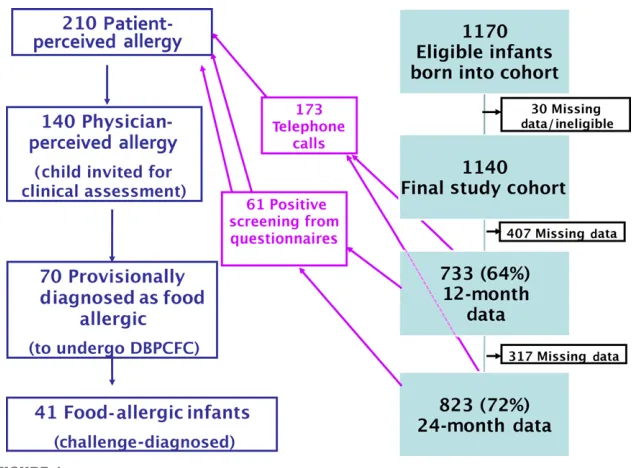
Infants were from the PIFA study (N= 1140) who had either been diagnosed as having a food allergy according to DBPCFC (n = 41) or were their age-matched controls (n = 82). Figure 1 shows infant numbers at each stage of the main PIFA study and also the stages of diagnosis of the food-allergic infants. The study infants (N= 123) were born between January 2006 and October 2007. Median ma-ternal age was 33 years (range: 19–43 years), and median infant weight was 3420 g (range: 2160–5060 g). Baseline characteristics for the infants who became food allergic and their con-trols are detailed in Table 1. The de-mographic characteristics of the main PIFA study population (N = 1140) dif-fered from those of the community from which it was recruited because it had a large proportion of older, well-educated mothers. However, the in-fants in the 2 experimental groups of the current study (N = 123) did not differ significantly from each other for any demographic or environmental
FIGURE 1
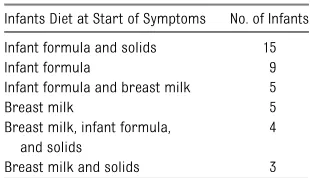
measurement. Median age at start of symptoms of food allergy was 24 weeks (range: 0–64 weeks). Median age at DBPCFC was 56 weeks. The most common causative food was hen’s egg (22 infants), closely followed by cow’s milk (20 infants). Twelve infants were allergic to.1 food. Infants displayed differing symptoms, with some infants displaying .1 symptom. The most common symptom was physician-diagnosed eczema (12 infants), with vomiting being the second most com-mon (11 infants). Details of the infant diet when symptoms started are given in Table 2. No infant who was allergic to egg experienced symptoms before consuming egg; however, 1 peanut-allergic infant experienced cutane-ous symptoms after contact with the allergen before any peanut consump-tion.
Breastfeeding
Ninety-five percent of all mothers in-cluded in the study initiated breast-feeding, with a median duration of 20 weeks (range: 0–64 weeks). Median duration for exclusive breastfeeding was 8 weeks (range: 1–26 weeks), with
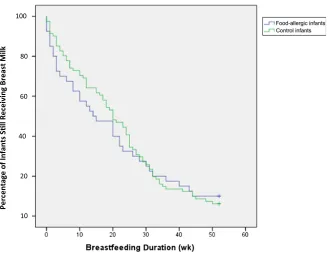
50% of mothers still exclusively breastfeeding at 9 weeks. There was no statistically significant difference between breastfeeding initiation, ration, or exclusive breastfeeding du-ration between the symptomatic and control infants (Table 3). Exclusivity was lost to whey-predominant infant formula in 78% of infants, with only 2 infants losing exclusivity due to a different type of formula (casein-predominant and extensively hydro-lyzed formula). The second most common way for infants to lose their exclusive breastfeeding status was to have rice introduced into the diet (in the form of“baby rice”).
Kaplan-Meier analysis indicated how the nature of breastfeeding differed between the 2 study groups (Fig 2). This difference was not significant (gener-alized Wilcoxon [Breslow] test, P = .335).
Concurrent Feeding With Cow’s Milk Protein and Breast Milk
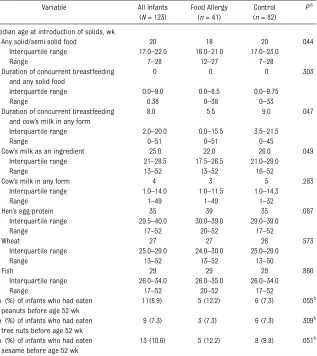
There was no statistically significant difference between groups for the age cow’s milk (in any form) was introduced into the diet (Table 4). However, among
infants who received both cow’s milk in any form and breast milk (n= 27, allergy group; n= 72, control group), the du-ration of concurrent feeding was 5.5 weeks in the allergy group versus 9 weeks in the control group (P= .047). To investigate whether the duration of overlap was important, the variables were recoded to provide a categorical
“concurrent breastfeeding” variable. Again, there was a statistically signifi -cant difference between the groups for concurrent feeding with cow’s milk in any form and breast milk (P = .015), suggesting that any concurrent feeding is beneficial. Because the timing of the overlap may be important, a post hoc analysis was conducted to compare whether the ages when concurrent breastfeeding occurred differed be-tween the 2 groups, and no significant difference was found (Mann-Whitney Utest,P= .300).
There were insufficient numbers of infants commencing foods other than cow’s milk while being breastfed to explore whether this factor affected the development of food allergy.
Introduction of Solid Foods
The mean age of any solid introduction was 20.3 weeks. The food with the ear-liest median age of introduction was rice at 20 weeks (given predominantly as
“baby rice”), with carrots introduced at a median age of 21 weeks and apples and bananas at a median age of 22 weeks. The food that was most com-monly introduced before 17 weeks of age was rice (20 infants). The other common foods introduced before 17 TABLE 1 Characteristics of the Mother and Infant Pairs Included in This Prospective Case-Control
Study
Characteristic Food Allergy (n= 41) Control (n= 82) Pa
Male gender 24 (58.5) 43 (52.4) .522
Median birth weight, g 3480.0 (2160–4120) 3370.0 (2270–5060) .913b
Median length, cm 53.0 (48–59) 52.0 (47–61) .909b
Duration of pregnancy, wk 39.5 (36–42) 40.0 (36–42) .062b
Median maternal age, y 31.0 (19–43) 33.0 (22–42) .192b
Median paternal age, y 33.5 (21–42) 34.0 (23–49) .247b
Maternal education
Did not complete basic education 0 (0) 0 (0) .448
Completed basic education 4 (9.7) 6 (7.3)
Junior college/vocational training 11 (26.8) 15 (18.3)
University/college 26 (63.4) 61 (74.4)
Median maternal prepregnancy BMI, kg/m2 22.9 (16.6–43.0) 22.8 (16.5–49.2) .323b
Maternal asthma 11 (26.8) 11 (13.4) .067
Maternal allergy 22 (53.7) 31 (37.8) .105
Maternal smoking 1 (2.4) 3 (3.7) 1.000
Only child 24 (58.5) 49 (59.8) .570
Urban dwelling 8 (19.5) 11 (13.4) .378
Pet ownership 26 (63.4) 40 (48.8) .142
Data are presented asn(%) or median (range). ax2
test.
bMann-WhitneyUtest.
TABLE 2 Details of Infant Diet at Time When Symptoms Started
Infants Diet at Start of Symptoms No. of Infants
Infant formula and solids 15
Infant formula 9
Infant formula and breast milk 5
Breast milk 5
Breast milk, infant formula, and solids
4
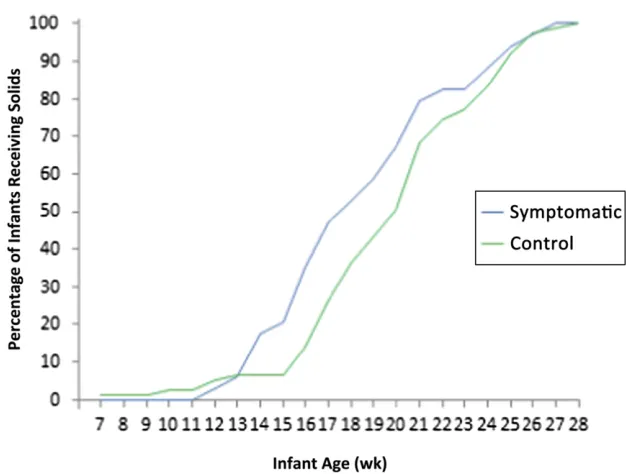
weeks of age were apples, bananas, and pears (11, 8, and 8 infants, respectively). Thefirst cow’s milk protein taken as an ingredient was most likely to be from yogurt/fromage frais. Solids were in-troduced significantly earlier in food-allergic infants compared with control infants (P= .044), as was cow’s milk as an ingredient (P= .049) and peanut (P= .037) (Table 4). Control infants were in-troduced to solidsfirst, but between 12 and 16 weeks, 15% of food-allergic infants were introduced to solids com-pared with only 9% of control infants (Fig 3). A post hoc analysis was
undertaken that stratified the timing of complementary food introduction into 2 groups: introduction before and including 16 weeks of age and intro-duction at $17 weeks of age. Signifi -cantly more food-allergic infants were introduced to complementary foods at #16 weeks than control infants (35% vs 14%;P= .011).
Multivariable Logistic Model
The model included age at solid intro-duction, concurrent breastfeeding, and cow’s milk in any form, which were variables that the previous analyses
had identified as being significantly different between the study groups. Age at solid introduction was changed to a categorical variable because the result of the post hoc analysis found that solid introduction before 17 weeks of age was strongly associated with food allergy development. The concur-rent breastfeeding and cow’s milk vari-able was also recoded into a categorical variable because earlier analysis showed any concurrent breastfeeding seemed to be beneficial. Cow’s milk as an ingredient was not included in the model due to multicollinearity, and age atfirst peanut consumption was not included due to reverse causation. Factors considered to be associated with allergy development (maternal asthma, allergy, education, age, pet ownership, infant gender, and single birth) were also included in this model. Maternal smoking was not in-cluded in the model because the proportion of smoking mothers was rare for all infants (3.3%) and was not significantly different between the groups.
TABLE 3 Breastfeeding Characteristics for Infants With Food Allergy and Control Infants in the Study
Characteristic Food Allergy (n= 41) Control (n= 82) P
No. (%) initiating breastfeeding 38 (92.7) 79 (96.3) .210a Breastfeeding duration, wk
Median 21.0 24.0 .295b
Interquartile range 3.0–30.5 7.0–31.0
Range 0–64 0–52
Exclusive breastfeeding duration, wk
Median 5.0 8.5 .933b
Interquartile range 2.8–16.3 4.0–15.0
Range 1–26 1–24
ax2test.
bMann-WhitneyUtest.
FIGURE 2
This analysis found that the association between solid introduction beyond 17 weeks of age and the concurrent breastfeeding and cow’s milk intro-duction and allergy development re-mained once the effects of other potentially confounding variables were controlled for (odds ratio: 0.292 [95% confidence interval: 0.099–0.859]; odds ratio: 0.279 [95% confidence interval: 0.080–0.971], respectively [data not shown]). However, because a model with 10 variables may be too many for a sample size of 123, the model was reduced by removing the variables that had a small effect (odds ratio between 0.80 and 1.25), and the results are shown in Table 5. Results were similar if the analysis was stratified according
to maternal asthma and maternal al-lergy (data not shown).
DISCUSSION
Within this nested case-control study, we found that early introduction of solids was associated with the de-velopment of food allergy. Infants with food allergy were much more likely to have had solids introduced between 12 and 16 weeks than con-trol infants.
The delayed introduction of solids into the infant diet (particularly of aller-genic foods) has in the past been ad-vocated for preventing allergy,16but it
has led to disappointing results in clinical trials.17,18 A number of birth
cohort studies have failed to show any benefit on allergic outcome by delaying the introduction of solids, and 2 found an association between the delayed introduction of milk19and egg20,21and
increased incidence of eczema and atopic sensitization.19–22However, these
studies did not indicate an age before which solids should not be introduced into the diet to avoid allergies. Our
findings, conversely, suggest 17 weeks is a crucial time point, with solid food introduction before this time ap-pearing to promote allergic disease whereas solid food introduction after that time point seems to promote tol-erance. This finding implies that the mechanism, which acts post–17 weeks of age, is a nonallergen-specific tol-erogenic immunologic mechanism be-cause the food diary data showed that the foods introduced at this time were mainly fruit and vegetables, which are not considered allergenic. Epigenetic or immunologic mechanisms may be implicated because the foods that are introduced during this time deliver the substrates required for the induction of such processes.23–26Fruits and
veg-etables have been shown to modify immune responses in older children,19,20
with the proposed mechanism being due to their antioxidant action on
in-flammatory processes27 and Treg
cells28 or their action on the gut
mi-croflora.29,30
In addition, we demonstrated a pro-tective effect on food allergy de-velopment when cow’s milk protein, in whatever form, was given in the infant’s diet concurrently with breast milk. One of the perceived benefits of breastfeeding is the reduced risk of allergy due to the presence of a num-ber of immunomodulatory factors in breast milk.31–33However, the evidence
that breastfeeding prevents allergies is contradictory, with some reviews showing a benefit while others did not.34–38Thesefindings may be due to
TABLE 4 Age at Introduction of Complementary Foods Given for All Infants (N= 123) and for Each Study Group
Variable All Infants
(N= 123)
Food Allergy (n= 41)
Control (n= 82)
Pa
Median age at introduction of solids, wk
Any solid/semi-solid food 20 18 20 .044
Interquartile range 17.0–22.0 16.0–21.0 17.0–23.0
Range 7–28 12–27 7–28
Duration of concurrent breastfeeding and any solid food
0 0 0 .303
Interquartile range 0.0–9.0 0.0–8.5 0.0–9.75
Range 0.38 0–38 0–33
Duration of concurrent breastfeeding and cow’s milk in any form
8.0 5.5 9.0 .047
Interquartile range 2.0–20.0 0.0–15.5 3.5–21.5
Range 0–51 0–51 0–45
Cow’s milk as an ingredient 25.0 22.0 26.0 .049
Interquartile range 21–28.5 17.5–26.5 21.0–29.0
Range 13–52 13–52 16–52
Cow’s milk in any form 4 3 5 .283
Interquartile range 1.0–14.0 1.0–11.5 1.0–14.3
Range 1–49 1–49 1–32
Hen’s egg protein 35 39 35 .087
Interquartile range 29.5–40.0 30.0–39.0 29.0–39.0
Range 17–52 20–52 17–52
Wheat 27 27 26 .573
Interquartile range 25.0–29.0 24.0–30.0 25.0–29.0
Range 13–52 13–52 13–50
Fish 29 29 29 .860
Interquartile range 26.0–34.0 26.0–35.0 26.0–34.0
Range 17–52 20–52 17–52
No. (%) of infants who had eaten peanuts before age 52 wk
11(8.9) 5 (12.2) 6 (7.3) .055b
No. (%) of infants who had eaten tree nuts before age 52 wk
9 (7.3) 3 (7.3) 6 (7.3) .309b
No. (%) of infants who had eaten sesame before age 52 wk
13 (10.6) 5 (12.2) 8 (9.8) .051b
variations in breast milk composition, differences in maternal diet,39–42
dif-ferences in specific infant-feeding practices, or a lack of precision in the way infant feeding has been measured. However, another explanation is that the immunomodulatory role of breast milk is only apparent when the immune system is exposed to an antigen at the same time as breast milk (the“ over-lap”effect).43,44Breast milk is thought
to play an important role in the de-velopment of oral tolerance because there are a number of immunologic factors in breast milk, particularly transforming growth factor–b, which has an positive association with infant wheeze31; interleukin-12, which
pro-motes Th-1 cytokine mileau32; and
sol-uble CD14, whose levels in breast milk
have been shown to be negatively associated with eczema at 6 months of age.33In the current study, it may be
allergen-specific immunoglobulins in the mother’s milk that are promoting tolerogenic mechanisms, and this theory is supported by the fact that there was no benefit of overlap seen with “any foods.” It was not possible to determine if there was a similar association for other allergenic food because there were insufficient num-bers of infants consuming these foods while still being breastfed. This out-come occurred because wheat, egg,
fish, and the other allergenic foods are generally introduced after 26 weeks of age, and 66% of the study mothers had stopped breastfeeding by that time.
Breastfeeding initiation and duration have increased over the last decades,45,46
as has the mean age at which solids, particularly allergenic ones, are in-troduced into the infant diet.46,47 Both
these changes are due to amended infant-feeding recommendations.48,49
The net result of these changes may be that the duration that infants receive solids while still being breastfed (ie, the period of overlap) has been re-duced. Consequently, population-wide and allergy-specific infant-feeding rec-ommendations may have had a role in the increase in food allergy rates. A number of countries and specialist bodies now recognize this possibility and have amended their infant-feeding recommendations to incorporate the potential role of concurrent breast-feeding on food allergy development50,51;
other professional bodies have called for further research into the topic.10,52
The findings from the current study add support to the possible protective effect of concurrent breastfeeding on allergy development and add addi-tional data to the current discussion focusing on the benefits of exclusive breastfeeding (at least until 17 weeks of age).
The main strength of this study is in its design. Infant-feeding data were col-lected prospectively from birth before any symptoms of food allergy had de-veloped in all but 3 of the food-allergic infants; thus, the likelihood of bias resulting from an allergy diagnosis or by recall error was minimized. In ad-dition, infants were diagnosed as food allergic by using a DBPCFC, considered the gold standard of food allergy di-agnosis. However, due to the pro-spective nature of the diaries,“reverse causality”in the data cannot be ruled out, but early symptoms of food allergy would likely lead to prolonged breast-feeding and delayed solid/allergenic food introduction, which was not seen except for peanut and tree nuts. This FIGURE 3
Timing of introduction of solids to food-allergic and control infants.
TABLE 5 Adjusted Multivariable Logistic Model for Assessment of Variables Associated With Food Allergy Development
Variable Adjusted OR (95% CI)
Age at solid introduction ($17 wk vs,17 wk) 0.245 (0.088–0.679)a
Concurrent feeding with breast milk and cow’s milk protein (concurrent feeding versus no concurrent feeding)
0.267 (0.086–0.828)a Maternal asthma (no asthma versus asthma) 0.568 (0.177–1.821) Maternal allergy (no allergy versus allergy) 0.579 (0.226–1.482)
action occurred because parents of allergic children were happier to in-troduce these foods due to skin prick test results, which control children did not have. Consequently, it is appropri-ate to consider that this study’sfi nd-ings reflect a possible causal link with food allergy development. A weakness of the study is that the demographic characteristics of the study population differed from the demographic char-acteristics of the community from which it was recruited. However, the infants in the 2 experimental groups of this study (N = 123) did not differ significantly from each other for any demographic or environmental mea-surement, although due to under-powering (51% for asthma and 43% for maternal allergy), the analysis may not have been able to identify weak asso-ciations.
CONCLUSIONS
This study supports current allergy prevention recommendations that sol-ids should not be introduced before 17 weeks of age10,11 and the general
feeding recommendations that breast-feeding should continue while solids
are introduced into the diet and be-yond.13 These guidelines are in line
with the WHO recommendation for breastfeeding to continue alongside solid foods until 2 years of age.53
However, it does not provide evidence on the relationship between exclusive breastfeeding to 26 weeks of age (compared with 17 weeks) and allergy development because insufficient num-bers of women in the study were able to exclusively breastfeed for that long. This situation is reflected in general population data which show that in 2010, only 12% of UK women managed to exclusively breastfeed to 17 weeks.46
Exclusive breastfeeding rates in the United States seem to be higher, with 46% of US women exclusively breast-feeding for 3 months,45but this value
still falls short of the WHO recommen-dation. One reason for the low levels of exclusive breastfeeding may be that the recommendations seem to offer conflicting advice.
Although we are waiting for more re-search to be conducted to determine the optimum duration of exclusive breastfeeding for the best overall health outcome of all infants, health
professionals can provide advice that is consistent by encouraging exclusive breastfeeding for as long as possible, followed by continued breastfeeding alongside the introduction of comple-mentary foods to maximize the duration of concurrent breastfeeding and solid food introduction.
ACKNOWLEDGMENTS
We thank all families who took part in the PIFA study and the midwives of Winchester and Eastleigh Health Care Trust for their support of the study and help in recruitment, particularly T. Kemp. We also thank all staff involved in the daily running of the study and the staff in the Child Health and Well-come Trust Clinical Research Facility at Southampton General Hospital for following up the participants and per-forming the clinical work needed to es-tablish the diagnosis of food allergy, particularly L. Gudgeon, R. King, J. Garland, E. Francis, S. Pestridge, K. Scally, E. Gatrell, L. Bellis, A. Acqua, and R. Kemp. Our thanks also go to Pro-fessor Jonathan Hourihane for his crucial role in initially setting up the PIFA study.
REFERENCES
1. Fewtrell M, Wilson DC, Booth I, Lucas A. Six months of exclusive breast feeding: how good is the evidence?BMJ. 2011;342:c5955 2. Renfrew MJ, McGuire W, McCormick FM. When to wean. Analysis article on breast feeding was misleading.BMJ. 2011;342:d987 3. Wright CM. When to wean. Infection more important than anaemia or allergy. BMJ. 2011;342:d1000
4. Williams AF, Prentice A. Scientific Advisory Committee on Nutrition replies to Mary Fewtrell and colleagues.BMJ. 2011;342:d980 5. Howie PW, Forsyth JS, Ogston SA, Clark A, Florey CD. Protective effect of breast feed-ing against infection.BMJ. 1990;300(6716): 11–16
6. Wilson AC, Forsyth JS, Greene SA, Irvine L, Hau C, Howie PW. Relation of infant diet to
childhood health: seven year follow up of cohort of children in Dundee infant feeding study.BMJ. 1998;316(7124):21–25 7. Lucas A, Cole TJ. Breast milk and neonatal
necrotising enterocolitis.Lancet. 1990;336 (8730):1519–1523
8. Raisler J, Alexander C, O’Campo P. Breast-feeding and infant illness: a dose-response relationship?Am J Public Health. 1999;89 (1):25–30
9. Kramer MS, Kakuma R. Optimal duration of exclusive breastfeeding. Cochrane Data-base Syst Rev. 2012;(8):CD003517 10. Greer FR, Sicherer SH, Burks AW; American
Academy of Pediatrics Committee on Nu-trition; American Academy of Pediatrics Section on Allergy and Immunology. Effects of early nutritional interventions on the
development of atopic disease in infants and children: the role of maternal dietary restriction, breastfeeding, timing of in-troduction of complementary foods, and hydrolyzed formulas. Pediatrics. 2008;121 (1):183–191
11. Agostoni C, Decsi T, Fewtrell M, et al; ESPGHAN Committee on Nutrition. Com-plementary feeding: a commentary by the ESPGHAN Committee on Nutrition. J Pediatr Gastroenterol Nutr. 2008;46(1):99– 110
13. Section on Breastfeeding. Breastfeeding and the use of human milk. Pediatrics. 2012;129(3). Available at: www.pediatrics. org/cgi/content/full/129/3/e827
14. McBride D, Keil T, Grabenhenrich L, et al. The EuroPrevall birth cohort study on food allergy: baseline characteristics of 12,000 newborns and their families from nine European countries.Pediatr Allergy Immu-nol. 2012;23(3):230–239
15. Keil T, McBride D, Grimshaw K, et al. The multinational birth cohort of EuroPrevall: background, aims and methods. Allergy. 2010;65(4):482–490
16. Kleinman RE. American Academy of Pe-diatrics recommendations for comple-mentary feeding.Pediatrics. 2000;106(5): 1274
17. Zeiger RS, Heller S. The development and prediction of atopy in high-risk children: follow-up at age seven years in a pro-spective randomized study of combined maternal and infant food allergen avoid-ance. J Allergy Clin Immunol. 1995;95(6): 1179–1190
18. Koplin J, Osborne N, Martin P, et al. Can early introduction of egg prevent egg al-lergy in infants? A population based study of an infant cohort.J Allergy Clin Immunol. 2010;126:807–813
19. Snijders BE, Thijs C, van Ree R, van den Brandt PA. Age atfirst introduction of cow milk products and other food products in relation to infant atopic manifestations in the first 2 years of life: the KOALA Birth Cohort Study.Pediatrics. 2008;122(1). Avail-able at: www.pediatrics.org/cgi/content/ full/122/1/e115
20. Zutavern A, Brockow I, Schaaf B, et al; LISA Study Group. Timing of solid food in-troduction in relation to eczema, asthma, allergic rhinitis, and food and inhalant sensitization at the age of 6 years: results from the prospective birth cohort study LISA. Pediatrics. 2008;121(1). Available at: www.pediatrics.org/cgi/content/full/121/1/ e44
21. Filipiak B, Zutavern A, Koletzko S, et al; GINI-Group. Solid food introduction in relation to eczema: results from a four-year pro-spective birth cohort study.J Pediatr. 2007; 151(4):352–358
22. Zutavern A, von Mutius E, Harris J, et al. The introduction of solids in relation to asthma and eczema.Arch Dis Child. 2004; 89(4):303–308
23. Prescott SL, Smith P, Tang M, et al. The importance of early complementary feed-ing in the development of oral tolerance: concerns and controversies. Pediatr Al-lergy Immunol. 2008;19(5):375–380
24. Pali-Schöll I, Renz H, Jensen-Jarolim E. Up-date on allergies in pregnancy, lactation, and early childhood.J Allergy Clin Immu-nol. 2009;123(5):1012–1021
25. Calder PC, Albers R, Antoine JM, et al.
In-flammatory disease processes and inter-actions with nutrition.Br J Nutr. 2009;101 (suppl 1):S1–S45
26. Lack G. Epidemiologic risks for food allergy.
J Allergy Clin Immunol. 2008;121(6):1331– 1336
27. Chatzi L, Kogevinas M. Prenatal and childhood Mediterranean diet and the development of asthma and allergies in children. Public Health Nutr. 2009;12(9A):1629–1634 28. Tan PH, Sagoo P, Chan C, et al. Inhibition of
NF-kappa B and oxidative pathways in hu-man dendritic cells by antioxidative vita-mins generates regulatory T cells. J Immunol. 2005;174(12):7633–7644 29. Blaut M. Relationship of prebiotics and
food to intestinal microflora.Eur J Nutr. 2002;41(suppl 1):I11–I16
30. Claesson MJ, Jeffery IB, Conde S, et al. Gut microbiota composition correlates with diet and health in the elderly.Nature. 2012; 488(7410):178–184
31. Oddy WH, Halonen M, Martinez FD, et al. TGF-beta in human milk is associated with wheeze in infancy.J Allergy Clin Immunol. 2003;112(4):723–728
32. Camporota L. Interleukin-12 and the de-velopment of atopy.Clin Exp Allergy. 2001;31 (10):1481–1484
33. Jones CA, Holloway JA, Popplewell EJ, et al. Reduced soluble CD14 levels in amniotic
fluid and breast milk are associated with the subsequent development of atopy, ec-zema, or both.J Allergy Clin Immunol. 2002; 109(5):858–866
34. Muraro A, Dreborg S, Halken S, et al. Dietary prevention of allergic diseases in infants and small children. Part III: critical review of published peer-reviewed observational and interventional studies andfinal recommendations.Pediatr Allergy Immunol. 2004;15(4):291–307
35. Friedman NJ, Zeiger RS. Prevention and natural history of food allergy. In: Leung DYM, Sampson HA, Geha RS, Szefler SJ, eds. Pediatric Allergy. Principles and Practice. St Louis, MO: Mosby; 2003:495– 509
36. Gdalevich M, Mimouni D, David M, Mimouni M. Breast-feeding and the onset of atopic dermatitis in childhood: a systematic review and meta-analysis of prospective studies.J Am Acad Dermatol. 2001;45(4):520–527 37. Gdalevich M, Mimouni D, Mimouni M.
Breast-feeding and the risk of bronchial asthma in childhood: a systematic review
with meta-analysis of prospective studies.J Pediatr. 2001;139(2):261–266
38. Kramer MS, Matush L, Vanilovich I, et al; Promotion of Breastfeeding Intervention Trial (PROBIT) Study Group. Effect of pro-longed and exclusive breast feeding on risk of allergy and asthma: cluster randomised trial.BMJ. 2007;335(7624):815
39. Patin RV, Vítolo MR, Valverde MA, Carvalho PO, Pastore GM, Lopez FA. The influence of sardine consumption on the omega-3 fatty acid content of mature human milk. J Pediatr (Rio J). 2006;82(1):63–69
40. Furuhjelm C, Warstedt K, Larsson J, et al. Fish oil supplementation in pregnancy and lactation may decrease the risk of infant allergy. Acta Paediatr. 2009;98(9):1461– 1467
41. Hoppu U, Kalliomäki M, Isolauri E. Maternal diet rich in saturated fat during breast-feeding is associated with atopic sensiti-zation of the infant.Eur J Clin Nutr. 2000;54 (9):702–705
42. Hoppu U, Rinne M, Salo-Väänänen P, Lampi AM, Piironen V, Isolauri E. Vitamin C in breast milk may reduce the risk of atopy in the infant.Eur J Clin Nutr. 2005;59(1):123–128 43. Poole JA, Barriga K, Leung DY, et al. Timing
of initial exposure to cereal grains and the risk of wheat allergy.Pediatrics. 2006;117 (6):2175–2182
44. Norris JM, Barriga K, Klingensmith G, et al. Timing of initial cereal exposure in infancy and risk of islet autoimmunity.JAMA. 2003; 290(13):1713–1720
45. Centers for Disease Control and Prevention. Breastfeeding report card, United States, 2012. Available at: http:// www.cdc.gov/breastfeeding/ data/reportcard.htm. Accessed August 1, 2012 46. Health and Social Care Information Centre. Infant Feeding Study 2010. Available at: www. hscic.gov.uk/catalogue/PUB08694. Accessed October 9, 2013
47. Grummer-Strawn LM, Scanlon KS, Fein SB. Infant feeding and feeding transitions dur-ing the first year of life.Pediatrics. 2008; 122(suppl 2):S36–S42
48. American Academy of PediatricsCommittee on Nutrition. Pediatric Nutrition Handbook. 6th ed. Elk Grove Village, IL American Academy of Pediatrics; 2008
49. Department of Health.Infant Feeding Rec-ommendation. London, UK: The Stationery Office; 2004
51. Muche-Borowski C, Kopp M, Reese I, Sitter H, Werfel T, Schäfer T; German Society for Allergology and Clinical Immunology (DGAKI); Society of German Allergologists (ADA); German Society for Pediatric and Adolescent Medicine (DGKJ); German
Society of Dermatology (DDG); German So-ciety of Pediatric Allergology (GPA). Allergy prevention.J Dtsch Dermatol Ges. 2010;8 (9):718–724
52. Høst A, Halken S, Muraro A, et al. Dietary prevention of allergic diseases in infants
and small children.Pediatr Allergy Immu-nol. 2008;19(1):1–4
53. World Health Organisation (WHO). 55th World Health Assembly. Infant and young child nutri-tion. Available at: www.who.int/nutrition/topics/ WHA55.25_iycn_en.pdf. Accessed October 9, 2013
(Continued fromfirst page)
www.pediatrics.org/cgi/doi/10.1542/peds.2012-3692
doi:10.1542/peds.2012-3692
Accepted for publication Sep 13, 2013
Address correspondence to Kate E.C. Grimshaw, PhD, RD, Clinical and Experimental Sciences Academic Unit, Mailpoint 803, Level F, South Academic Block, Southampton General Hospital, Tremona Rd, Southampton, SO16 6YD, UK. E-mail: [email protected]
PEDIATRICS (ISSN Numbers: Print, 0031-4005; Online, 1098-4275).
Copyright © 2013 by the American Academy of Pediatrics
FINANCIAL DISCLOSURE:Dr Roberts declares an association with Danone Baby Nutrition (sat on scientific advisory board 2011–2012), Dr Grimshaw declares an association with Nutricia Ltd (November 2011 for input into meeting regarding the“state of the art”of infant feeding and allergy development and June 2012 for a lecture given to pediatric gastroenterologists entitled“Nutritional Management of Food Allergy”), and Dr Mills declares an association with Novartis (for attending 1 board meeting in 2010 regarding the use of a double-blind, placebo-controlled food challenge as an outcome measure in a food allergy immunotherapy study), Pepsico International (for advice on plant food allergen management in a factory environment), and DBV Technologies (for food challenge meal preparations). The other authors have indicated they have nofinancial relationships relevant to this article to disclose.
DOI: 10.1542/peds.2012-3692 originally published online November 18, 2013;
2013;132;e1529
Pediatrics
E.N. Clare Mills, Graham Roberts and Barrie M. Margetts
Services
Updated Information &
http://pediatrics.aappublications.org/content/132/6/e1529
including high resolution figures, can be found at:
References
http://pediatrics.aappublications.org/content/132/6/e1529#BIBL
This article cites 43 articles, 14 of which you can access for free at:
Subspecialty Collections
ub
http://www.aappublications.org/cgi/collection/allergy:immunology_s Allergy/Immunology
http://www.aappublications.org/cgi/collection/nutrition_sub Nutrition
http://www.aappublications.org/cgi/collection/blood_disorders_sub Blood Disorders
following collection(s):
This article, along with others on similar topics, appears in the
Permissions & Licensing
http://www.aappublications.org/site/misc/Permissions.xhtml
in its entirety can be found online at:
Information about reproducing this article in parts (figures, tables) or
Reprints
http://www.aappublications.org/site/misc/reprints.xhtml
DOI: 10.1542/peds.2012-3692 originally published online November 18, 2013;
2013;132;e1529
Pediatrics
E.N. Clare Mills, Graham Roberts and Barrie M. Margetts
Kate E.C. Grimshaw, Joe Maskell, Erin M. Oliver, Ruth C.G. Morris, Keith D. Foote,
Introduction of Complementary Foods and the Relationship to Food Allergy
http://pediatrics.aappublications.org/content/132/6/e1529
located on the World Wide Web at:
The online version of this article, along with updated information and services, is
by the American Academy of Pediatrics. All rights reserved. Print ISSN: 1073-0397.