R E S E A R C H
Open Access
“
Low-
”
versus
“
high
”
-frequency oscillation
and right ventricular function in ARDS. A
randomized crossover study
Spyros D. Mentzelopoulos
*, Hector Anninos, Sotirios Malachias and Spyros G. Zakynthinos
Abstract
Background:Recent, large trials of high-frequency oscillation (HFO) versus conventional ventilation (CV) in acute respiratory distress syndrome (ARDS) reported negative results. This could be explained by an HFO-induced right ventricular (RV) dysfunction/failure due to high intrathoracic pressures and hypercapnia. We hypothesized that HFO strategies aimed at averting/attenuating hypercapnia, such as“low-frequency”(i.e., 4 Hz) HFO and 4-Hz HFO with tracheal-gas insufflation (HFO-TGI), may result in an improved RV function relative to“high-frequency”(i.e., 7 Hz) HFO (which may promote hypercapnia) and similar RV function relative to lung protective CV.
Methods:We studied 17 patients with moderate-to-severe ARDS [PaO2-to-inspiratory O2fraction ratio (PaO2/FiO2) < 150]. RV function was assessed by transesophageal echocardiography (TEE). Patients received 60 min of CV for TEE-guided, positive end-expiratory pressure (PEEP)“optimization”and subsequent stabilization; 60 min of 4-Hz HFO for“study mean airway pressure (mPaw)”titration to peripheral oxygen saturation≥95%, without worsening RV function as assessed by TEE; 60 min of each tested HFO strategy in random order; and another 60 min of CV using the pre-HFO, TEE-guided PEEP setting. Study measurements (i.e., gas exchange, hemodynamics, and TEE data) were obtained over the last 10 min of pre-HFO CV, of each one of the three tested HFO strategies, and of post-HFO CV. Results:The mean“study HFO mPaw”was 8–10 cmH2O higher relative to pre-HFO CV. Seven-Hz HFO versus 4-Hz HFO and 4-Hz HFO-TGI resulted in higher mean ± SD right-to-left ventricular end-diastolic area ratio (RVEDA/LVEDA) (0.64 ± 0.15 versus 0.56 ± 0.14 and 0.52 ± 0.10, respectively, bothp< 0.05). Higher diastolic/systolic eccentricity indexes (1.33 ± 0.19/1.42 ± 0.17 versus 1.21 ± 0.10/1.26 ± 0.10 and 1.17 ± 0.11/1.17 ± 0.13, respectively, allp< 0.05). Seven-Hz HFO resulted in 18–28% higher PaCO2relative to all other ventilatory strategies (allp< 0.05). Four-Hz HFO-TGI versus pre-HFO CV resulted in 15% lower RVEDA/LVEDA, and 7%/10% lower diastolic/systolic eccentricity indexes (allp< 0.05). Mean PaO2/FiO2improved by 77–80% during HFO strategies versus CV (allp< 0.05). Mean cardiac index varied by ≤10% among strategies. Percent changes in PaCO2among strategies were predictive of concurrent percent changes in measures of RV function (R2= 0.21–0.43).
Conclusions:In moderate-to-severe ARDS,“short-term”4-Hz HFO strategies resulted in better RV function versus 7-Hz HFO, partly attributable to improved PaCO2control, and similar or improved RV function versus CV.
Trial registration:This study was registered 40 days prior to the enrollment of the first patient at ClinicalTrials.gov, ID no.NCT02027129, Principal Investigator Spyros D. Mentzelopoulos, date of registration January 3, 2014.
Keywords:High-frequency ventilation, Respiratory distress syndrome, Adult, Heart ventricles, Hypercapnia, Echocardiography, Transesophageal
* Correspondence:[email protected];
First Department of Intensive Care Medicine, National and Kapodestrian University of Athens Medical School, Evaggelismos General Hospital, 45-47 Ipsilandou Street, GR-10675 Athens, Greece
Background
High-frequency oscillation (HFO) is a ventilatory strategy employing tidal volumes (Vts) of < 4 mL/kg predicted body weight administered at frequencies of 3–15 Hz [1]. Despite previous encouraging findings [2–6], two recently pub-lished, multicenter, randomized clinical trials (RCTs) that compared HFO with conventional ventilation (CV) in early acute respiratory distress syndrome (ARDS) reported either neutral results [7] or an HFO-induced harm [8]. These RCTs employed“high-frequency”(i.e., mean, day 1 and day 2 frequency settings of 5.5–7.8 and 6.6–7.5 Hz, respect-ively) HFO without tracheal tube cuff leak and CV with moderate or low-Vt and moderate or high-positive end-ex-piratory pressure (PEEP) [7, 8]. These results might be partly attributable to right ventricular (RV) overload, dysfunction, and failure caused by concurrent high intra-thoracic pressures and hypercapnia, and consequent hemodynamic instability and increased need for inotropic/ vasopressor support [9–12]. Indeed, mortality rate is in-creased in ARDS patients with acute cor pulmonale [13].
Notably, prior two-center data on moderate-to-severe ARDS suggested a survival benefit from the intermittent use of “low-frequency” (i.e., approximately 4 Hz) HFO with tracheal tube cuff leak and tracheal gas insufflation (TGI) [14]. “Low”-HFO frequency, cuff leak, and TGI augment CO2elimination [14,15], with potential benefit
on RV function.
The development of lung protective CV aimed at min-imizing lung injury and organ dysfunction [16] was based on decades of laboratory and clinical research. This research subsequently paved the way for the con-ception and conduct of the conclusive ARDSnet trial [17]. In sharp contrast, recently proposed and tested HFO strategies [7, 8] were based just on pilot clinical data and expert consensus [8]; furthermore, these HFO strategies were focused at preventing lung injury, with-out concurrently protecting the RV [7–12, 18]. There-fore, discrepant prior data [6, 14] and recent RCT results [7,8] might partly reflect differences in protocol-employed HFO ventilator settings and their impact on RV function and patient outcomes.
In the present physiological study, we used trans-esophageal echocardiography (TEE) and tested the hy-pothesis that “short-term” “low-frequency” HFO with cuff leak and with or without TGI,—i.e., HFO strategies aimed at preventing hypercapnia [14, 15]—might result in (1) improved RV function as compared with a“ high-frequency” HFO strategy without cuff leak or TGI, which may promote hypercapnia [7, 8], and (2) similar RV function relative to lung protective CV. Avoiding ex-cessive hypercapnia might prevent or attenuate RV dys-function/failure during the application of high-HFO mean airway pressure (mPaw) aimed at augmenting lung recruitment [9–13].
Methods
Additional details, including pre-study patient prepar-ation, are presented in Additional file1.
Research ethics committee approval and informed consent
This study was approved by the Evaggelismos Hospital Scientific Committee (approval no. 271-30-10-2013), and written informed consent was obtained from the next-of-kin of all participating patients. The study was registered 40 days prior to the enrollment of the first patient at ClinicalTrials.gov (NCT02027129, Principal Investigator Spyros D. Mentzelopoulos, date of registra-tion January 3, 2014).
Patients
We studied patients with early (onset within preceding 72 h) ARDS and a PaO2-to-inspiratory O2 fraction
(FiO2) ratio of < 150. Patients were for ≥24 h on low-Vt
CV [14,17] with FiO2set within 0.50–0.90 and PEEP set
within 10–17 cmH2O. Eleven patients had moderate
ARDS and 6 patients had severe ARDS according to the Berlin definition [19]. Patients were nursed in the 27-bed Intensive Care Unit of Evaggelismos Hospital, Athens, Greece. Study eligibility criteria are presented in Additional file1: Table S1. The departmental, lung pro-tective CV protocol is presented in Additional file 1: Table S2. Figure 1 displays a study protocol schema. Continuous patient monitoring comprised electrocardio-graphic lead II, peripheral oxygen saturation (SpO2),
intraarterial pressure, and cardiac index by pulse-in-duced contour cardiac output (PiCCO) Plus (PICCO Plus, Pulsion Medical Systems) [14, 15]. Patients were anesthetized and paralyzed throughout the study [15].
Study protocol
Pre-HFO CV—TEE guided setting of PEEP—part 1 of optimization phase (Fig.1)
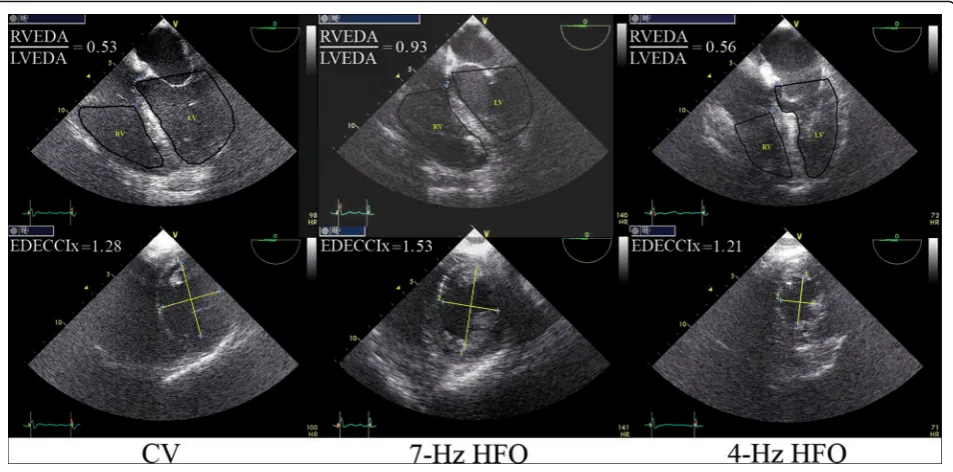
During an initial, 60-min CV period, PEEP was to be optimized according to consecutive assessments of RV function with TEE; these TEE assessments were termed as patient safety measurements (SMs). A 7-MHz trans-ducer connected to a Vivid 7 Expert machine (General Electric) was passed into the esophagus; the TEE probe was to be left within the esophagus throughout the study. The first (baseline) TEE-SM comprised a mideso-phageal, four-chamber view enabling determination of RV end-diastolic area (RVEDA) and left ventricular end-diastolic area (LVEDA). An RVEDA/LVEDA of > 0.8 triggered at least one downward PEEP titration of 2– 3 cmH2O, with a consequent, equal decrease in
both immediately improving RV function and minimiz-ing the risk of subsequent RVEDA/LVEDA > 0.90 (i.e., RV failure [9]) due to high-HFO-associated intrathoracic pressures. Any adjustment in pre-HFO CV settings was to be followed by ≥15 min of “stabilization” (i.e., CV with settings maintained unchanged). The TEE-SM was to be repeated within 15–20 min after a PEEP decrease (Fig. 1). Failure to achieve RVEDA/LVEDA < 0.9 after two consecutive PEEP reductions was to result in proto-col termination. Study physiological measurements, i.e., gas exchange, respiratory mechanics (by rapid end-in-spiratory/end-expiratory airway occlusion and determin-ation of the respective plateau pressures [14]), and hemodynamics [14, 15], and TEE midesophageal, four-chamber, and transgastric, two-four-chamber, short-axis views
(to determine the eccentricity index [9]) were obtained within 50–60 min after study initiation (Figs.1and2).
HFO initiation—SpO2/TEE-guided setting of HFO mPaw—part 2 of optimization phase (Fig.1)
This 60–80-min period was aimed at titrating HFO mPaw so as to achieve adequate oxygenation without causing any significant deterioration of RV function relative to pre-HFO CV. Patients were switched to the Sensormedics 3100B HFO ventilator. Care was taken to avoid patient disconnection times of > 3 s. HFO frequency was set at 4 Hz, and FiO2and mPaw were initially set at 1.0 and at
10 cmH2O above the mPaw of the preceding CV,
respect-ively. Five minutes thereafter, a 40-s-lasting recruitment maneuver (RM—continuous positive airways pressure of
45 cmH2O for 40 s with the oscillator piston off [14,15])
was performed; RMs were to be canceled if the first study TEE-SM (see above) yielded an RVEDA/LVEDA ratio of
≥0.70; in addition, RM protocol safety features are detailed in the Additional file 1. Subsequently, HFO was resumed, and a cuff leak of 3–5 cmH2O was placed as
previously described [14,15,20], and over the subsequent 10 min, HFO-FiO2 was adjusted to preceding CV-FiO2.
Target SpO2 was ≥95%. Whenever SpO2was < 95%, the
initial HFO mPaw was decreased by 3 cmH2O, and if after
10 min, SpO2was still < 95%, HFO mPaw was increased
by 6 cmH2O (i.e., to 13 cmH2O above the mPaw of the
preceding CV). A TEE-SM was then performed to confirm
“RV tolerance of HFO (relative to CV)”; this was defined as RVEDA/LVEDA < 0.9 and not > 0.1 above the RVEDA/ LVEDA determined during the latest TEE-SM of pre-HFO CV. If the “RV tolerance criterion” was not met, HFO mPaw was to be reduced by 2–3 cmH2O and RVEDA/
LVEDA was to be re-determined after 15–20 min. Failure to achieve “RV tolerance of HFO” after two consecutive adjustments in HFO mPaw was to result in protocol ter-mination and patient switching to CV. Maximum period duration was 80 min.
Lowest acceptable SpO2during optimization phase
The lowest acceptable SpO2 for protocol continuation
after any protocol-mandated adjustment in CV or HFO ventilator settings was 90%. During CV, any SpO2drop
to < 90% was to be treated with FiO2 increase by ≥0.1,
whenever RVEDA/LVDEA exceeded 0.6; otherwise, PEEP was increased by 2–3 cmH2O.
HFO strategy testing phase (Fig.1)
Patients were studied during 60-min testing periods of 4-Hz HFO with cuff leak, or 4-Hz HFO-TGI with cuff leak, or 7-Hz HFO without cuff leak. Employed, stable HFO ventilator settings are presented/reported in Fig. 1
and Table 1. Table 1 also displays estimates of HFO-Vt based on previously published data [1, 15]; see the Additional file 1 for additional details. The HFO mPaw setting associated with SpO2≥95% and “RV tolerance of
HFO” was termed as “study HFO mPaw,” and was used during 4-Hz and 7-Hz HFO. During 4-Hz HFO-TGI, mPaw was set at 2–3 cmH2O below“study HFO mPaw”to
counterbalance a previously determined, TGI-associated increase of similar magnitude in tracheal pressure [14,15].
Fig. 2Examples of transesophageal echocardiographic (TEE) determination of two primary study outcome variables. Upper panel: determination of the right-to-left ventricular end-diastolic area ratio (RVEDA/LVEDA). Lower panel: determination of the end-diastolic eccentricity index (EDECCIx). The left vertical pair of images was obtained from study participant no. 12 during conventional ventilation (CV), the middle pair of images was obtained from participant no. 7 during 7-Hz high-frequency oscillation (HFO), and the right pair of images was obtained from participant no. 13 during 4-Hz HFO. In the lower panel (short-axis, transgastric views),“2”corresponds to the diameter of the left ventricle (LV) that was perpendicular to and bisecting the interventricular septum, whereas“1”corresponds to the diameter that was perpendicular to“2.”TEE measurements were repeated and averaged over 2–4 consecutive cardiac cycles (see also Additional file1); EDECCIx was calculated as diameter
HFO strategies were employed in random order (Fig.1
and Additional file 1: Figure S2). “Low-frequency” and
“high-frequency”strategy settings approximated those of prior [14] and recent [7,8] trials, respectively; the feasi-bility of “high-frequency” (i.e., > 6 Hz) HFO has been previously documented [21]. Within 25–30 min after the start of 7-Hz HFO, the last TEE-SM was performed; an RVEDA/LVEDA of > 0.9 was to trigger completion of the protocol’s physiological measurements over the next 10 min and patient switching to the next ventilatory strategy (Fig. 1); over this 10-min period, oscillatory pressure amplitude was to be (temporarily) increased to 100 cmH2O to prevent further PaCO2 rise and
associ-ated RV stress.
Return to CV—concluding phase (Fig.1)
Following completion of HFO strategy testing, patients were switched to CV; care was taken to avoid patient disconnection times of > 3 s. CV ventilator settings were identical to those of pre-HFO CV after the final PEEP adjustment. Physiological measurements were repeated within 50–60 min of return to CV, and the study proto-col was concluded.
Study TEE measurements
All TEE imaging was performed by a single, experienced echocardiographer [22]. In contrast to TEE-SMs, which were used for the optimization of PEEP and HFO mPaw according to RVEDA/LVEDA, the study TEE measurements
were performed“offline”as described below and further de-tailed in the Additional file1. The corresponding, study TEE data were collected during the time intervals of the study’s physiological measurements (Fig. 1). The study TEE data were encoded and saved onto Vivid 7 hard disc. Following study completion, another experienced echocardiographer— not aware of the sequence of the tested ventilatory strat-egies—used (1) the saved TEE midesophageal, four-chamber imaging data to determine the RVEDA, LVEDA, RVEDA/ LVEDA, and RV end-systolic area (RVESA); RV fractional area change was then calculated as (RVEDA – RVESA)/ RVEDA; tricuspid annular plane systolic excursion (TAPSE) [23] was also determined as a post hoc (unprespecified) out-come and (2) the saved TEE transgastric imaging data to determine the end-diastolic and end-systolic eccentricity index [9,22].
TEE imaging was focused at determining major RV function variables also used by preceding echocardio-graphic studies to compare HFO with lung-protective CV [9, 22]. Consequently, we did not assess pulmon-ary artery pressure or flow by using continuous or pulsed Doppler [9], respectively, or employ Tissue Doppler Imaging to measure myocardial systolic/dia-stolic velocities.
Definitions
RV dysfunction: RVEDA/LVEDA > 0.6 to 0.9; RV fail-ure: RVEDA/LVEDA > 0.9; Eccentricity index: quotient
Table 1Tested strategies of high-frequency oscillation (HFO)
HFO strategy 4-Hz HFO 4-Hz HFO-TGI 7-Hz HFO
mPaw (cmH2O)a + 10 cmH2Ob + 7–8 cmH2Ob + 10 cmH2Ob
FiO2 FiO2of preceding CVc FiO2of preceding CVc FiO2of preceding CVc
ΔP (cmH2O)d 80–90 80–90 80–90
Bias flow (L/min) 60 60 60
I/E ratio 1/2 1/2 1/2
Cuff leak (cmH2O) 3–5 3–5 NA
TGI (L/min)e NA 50% of MV of preceding CV NA
Estimated Vt (mL)f 181.2 ± 6.5 190.0 ± 6.5 118.5 ± 4.1
RMg CPAP of 45 cmH2O for 40 s
mPawmean airway pressure,TGItracheal gas insufflation,FiO2inspired oxygen fraction,CVconventional ventilation,ΔPoscillatory pressure amplitude,I/E ratio
inspiratory-to-expiratory time ratio,TGItracheal gas insufflation,MVminute ventilation,Vttidal volume,RMrecruitment maneuver,CPAPcontinuous positive airway pressure,NAnot applicable
1 cmH2O = 0.098 kPa a
Values correspond to the initial setting of the HFO mPaw and are referred to the mPaw of the pre-HFO CV (see also text and Fig.1)
b
During HFO-TGI, the mPaw was set at 2–3 cmH2O lower than the mPaw of standard HFO to counterbalance the estimated, TGI-induced increase in tracheal
pressure [15]; the maximum allowable upper limit of HFO mPaw was 40 cmH2O c
Provided that peripheral oxygen saturation could be maintained above 90%
d
Corresponds to actual ventilator-displayed values after the setting of the“Power”within 80–90% of its maximal value
e
TGI FiO2was equal to the FiO2of the preceding CV; see also Supplement to Methods in Additional file1 f
Values are mean ± SD; estimates were based on previously published data on Vt delivery during HFO [1], and a previously published Vt estimate of ~ 200 mL for a specific combination of HFO frequency (i.e., 3.5 Hz),ΔP(i.e., 90 cmH2O), bias flow (i.e., 40 L/min), tracheal tube internal diameter (i.e., 8.5 mm), mPaw level (i.e.,
30 cmH2O), and respiratory compliance (i.e., ~ 31 cmH2O) [15]; further details (including a calculated possible bias and other limitations of these estimates) are
reported in Additional file1
g
of 2 LV diameters plotted as shown in Fig. 2 (lower panel) [9,22].
Main outcome measures
The main outcome measures are as follows: Primary: RVEDA/LVEDA ratio, and end-diastolic and end-systolic eccentricity index. Secondary: PaO2/FiO2, PaCO2,
arter-ial pH, mean intraarterarter-ial pressure, cardiac index, and respiratory compliance (during CV).
Statistical analysis
Additional methodological information is provided in the Additional file 1. According to an a priori power analysis for a repeated measures analysis of variance (ANOVA) design with one, within-subjects, five-level factor (i.e., ventilatory strategy [20]) and a large effect size index of 0.40 [24], 14 patients would be required, for alpha = 0.05 and power = 0.80. To compensate for
possible incomplete observations, we pre-specified a sample size of 17 patients. In case of missing of any of the consecutive ventilatory strategy data points, we specified that we would conduct a linear mixed-model analysis instead of ANOVA. In such a case, the analysis would include “ventilatory strategy” as fixed factor and
“patient” as random factor. The mixed-model method-ology enables efficient use of data from patients with missing values, thus resulting in more precise estimates of the treatment effect [25].
Analyses were performed with IBM SPSS Statistics versions 22 and 25. Distribution normality was assessed by Kolmogorov Smirnov test. As further de-tailed below, there were three patients with missing data points (see also Fig. 3). Consequently, TEE and physiological data collected over the five pre-specified, 10-min intervals (Fig. 1) were analyzed with linear mixed-model analysis;pvalues were adjusted by applying
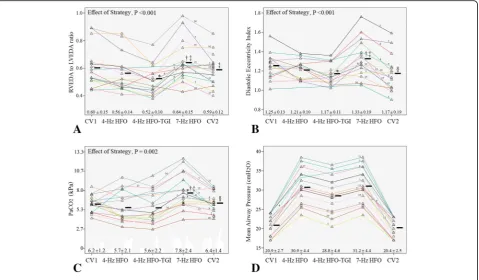
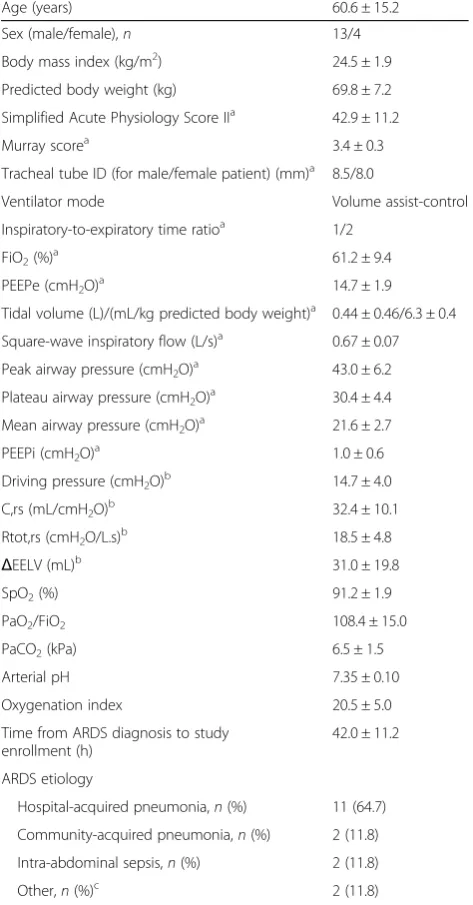
Fig. 3Individual patient data on two primary study outcomes and major determinants of right ventricular function.aPrimary outcome no. 1, the right-to-left ventricular end-diastolic area ratio (RVEDA/LVEDA).bPrimary outcome no. 2, the end-diastolic eccentricity index.cDeterminant of right ventricular function no. 1, the arterial carbon dioxide tension (PaCO2).dDeterminant of right ventricular function no. 2, the mean airway pressure. CV1 first period of conventional ventilation, HFO high-frequency oscillation, TGI tracheal gas insufflation, CV2 second period of conventional ventilation (see also“Methods”and Fig.1). Numbers (from 1 to 17) just above the colored lines that connect the data points (triangles) indicate patient no.; the color of each“data-point-connecting line”is unique for each one of the patients. Horizontal black bars correspond to mean values. For each ventilatory strategy, summary data are also reported as mean ± SD.“Effect of Strategy”corresponds to the level of significance of the effect of the fixed, within-subjects factor (i.e., ventilatory strategy) in linear mixed-model analysis (see also the
“Statistical Analysis”subsection); additional mixed-model data:aPercent variation explained 87, calculated as 100 ×R2value of bivariate linear regression between observed and mixed model-predicted values;bpercent variation explained, 72;cpercent variation explained, 74. *p< 0.05 versus CV1.†p< 0.05 versus 4-Hz HFO.‡p< 0.05 versus 4-Hz HFO-TGI.§
Bonferroni’s correction. Significance was set at two-sided p< 0.05.
Linear regression
Multiple, stepwise linear regression was used to explore possible associations among ventilatory strategy-associated, relative (i.e., percent) changes in TEE outcome variables (dependent variables) and central venous pressure, RV frac-tional area change, and PaCO2(independent variables). The
first two independent variables were selected because they reflect RV filling pressure and contractility, and PaCO2was
selected because it is considered as a major determinant of RV afterload. In addition, we used bivariate linear regres-sion to explore possible associations between the (1) change in PaCO2from baseline CV to 7-Hz HFO (dependent
vari-able) and total respiratory system resistance (Rtot,rs) and (2) the aforementioned PaCO2 change and the baseline
CV’s change in end-expiratory lung volume due to intrinsic PEEP. Further details are provided in Additional file1.
Results
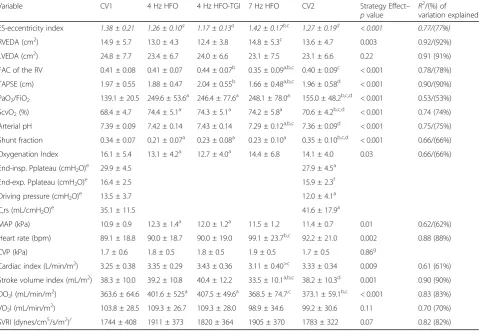
Additional file1: Figure S2 displays the study flow chart. From February 11, 2014, to October 27, 2016, 17 out of 45 screened ARDS patients (37.8%) were enrolled. Table 2 displays the summary baseline data recorded at 60 min before study initiation; patient-level data on baseline respiratory pathology and mechanics are re-ported in Additional file1: Table S3.
Recruitment maneuvers were canceled or aborted in five patients (see also Additional file1: Methods). Seven-hertz HFO was discontinued at 40 min in two patients (see Fig.1
and Additional file 1). However, the criteria for early protocol termination (Fig. 1) were not met in any case. Additional details regarding the setting of study HFO mPaw, patient safety, the stable hemodynamic support (including vasopressor infusion rates) throughout the study period, and in-hospital outcome are provided in Additional file1.
Missing data
Patient no. 6 did not receive the 60-min sessions of 4-Hz HFO and 4-Hz HFO-TGI because of HFO ventila-tor malfunction and return to CV just after the comple-tion of 60 min of 7-Hz HFO. In patient no. 8, the concluding TEE measurements of CV (Fig. 1) were not performed because the echocardiographer was asked to emergently assist in the resuscitation of a young trauma patient in cardiac arrest. Lastly, in patient no. 16, the protocol’s transgastric TEE views were not saved on the Vivid 7 machine’s hard disc due to operator error, and the eccentricity index could not be determined. Conse-quently, for each one of the five time intervals of physio-logic measurements (Fig. 1), the study data were available from at least 15 patients.
Effect of ventilatory strategy on RV function
New-onset RV dysfunction (n= 5) or RV failure (n= 2) developed in a total of 7 out of 17 patients (41.2%) during 7-Hz HFO. In all cases, this“new RV dysfunction or failure”
Table 2Baseline patient data
Age (years) 60.6 ± 15.2
Sex (male/female),n 13/4
Body mass index (kg/m2) 24.5 ± 1.9
Predicted body weight (kg) 69.8 ± 7.2
Simplified Acute Physiology Score IIa 42.9 ± 11.2
Murray scorea 3.4 ± 0.3
Tracheal tube ID (for male/female patient) (mm)a 8.5/8.0
Ventilator mode Volume assist-control
Inspiratory-to-expiratory time ratioa 1/2
FiO2(%)a 61.2 ± 9.4
PEEPe (cmH2O)a 14.7 ± 1.9
Tidal volume (L)/(mL/kg predicted body weight)a 0.44 ± 0.46/6.3 ± 0.4
Square-wave inspiratory flow (L/s)a 0.67 ± 0.07
Peak airway pressure (cmH2O)a 43.0 ± 6.2
Plateau airway pressure (cmH2O)a 30.4 ± 4.4
Mean airway pressure (cmH2O)a 21.6 ± 2.7
PEEPi (cmH2O)a 1.0 ± 0.6
Driving pressure (cmH2O)b 14.7 ± 4.0
C,rs (mL/cmH2O)b 32.4 ± 10.1
Rtot,rs (cmH2O/L.s)b 18.5 ± 4.8
ΔEELV (mL)b 31.0 ± 19.8
SpO2(%) 91.2 ± 1.9
PaO2/FiO2 108.4 ± 15.0
PaCO2(kPa) 6.5 ± 1.5
Arterial pH 7.35 ± 0.10
Oxygenation index 20.5 ± 5.0
Time from ARDS diagnosis to study enrollment (h)
42.0 ± 11.2
ARDS etiology
Hospital-acquired pneumonia,n(%) 11 (64.7)
Community-acquired pneumonia,n(%) 2 (11.8)
Intra-abdominal sepsis,n(%) 2 (11.8)
Other,n(%)c 2 (11.8)
Values are mean ± SD unless otherwise specified. For males, predicted body weight was calculated as 50 + [height (cm)−152.4] × 0.91; for females as 45.5 + [height (cm)−152.4] × 0.91
IDinternal diameter,FiO2inspired oxygen fraction,PEEPeexternal positive
end-expiratory pressure,PEEPiintrinsic positive end-expiratory pressure,C,rs
respiratory system compliance,Rtot,rsrespiratory system resistanceΔEELV
chang e in end-expiratory lung volume due to PEEPi,PaO2arterial oxygen
tension,SpO2peripheral oxygen saturation,PaCO2arterial carbon dioxide
tension,ARDSacute respiratory distress syndrome,MOFmultiple organ failure
a
Variables determined/recorded within 1 h before study enrolment
b
Variables calculated according to standard formulas presented in Additional file1
c
was effectively reversed (i.e., RVEDA/LVEDA dropped below 0.60 or 0.90, respectively) following discontinuation of 7-Hz HFO and transition to another ventilatory strategy, i.e., 4-Hz HFO (n= 2), or 4-Hz HFO-TGI (n= 4), or post-HFO CV (n= 1). Accordingly, and regarding the total study group, RVEDA/LVEDA was significantly higher dur-ing 7-Hz HFO compared to 4-Hz HFO and 4-Hz HFO-TGI; notably, RVEDA/LVEDA was lower during HFO-TGI relative to pre-HFO and post-HFO CV (Fig.3a).
Similarly to RVEDA/LVEDA, end-diastolic (Fig.3b) and end-systolic (Table 3) eccentricity indexes increased
during 7-Hz HFO relative to 4-Hz HFO, 4-Hz HFO-TGI, and post-HFO CV, and these changes were reversed following discontinuation of 7-Hz HFO and transition to another ventilatory strategy. Notably, end-diastolic eccen-tricity index was lower during 4-Hz HFO-TGI, and end-systolic eccentricity index was lower during both 4-Hz HFO and 4-Hz HFO-TGI relative to pre-HFO CV (Fig.3band Table3).
Other TEE results were also suggestive of a reversible deterioration of RV function during 7-Hz HFO. More spe-cifically, RVEDA was higher during 7-Hz HFO compared
Table 3Results of physiological measurements (see also Fig.3)
Variable CV1 4 Hz HFO 4 Hz HFO-TGI 7 Hz HFO CV2 Strategy Effect–
pvalue R
2 /(%) of variation explained
ES-eccentricity index 1.38 ± 0.21 1.26 ± 0.10a 1.17 ± 0.13a 1.42 ± 0.17b,c 1.27 ± 0.19d < 0.001 0.77/(77%)
RVEDA (cm2) 14.9 ± 5.7 13.0 ± 4.3 12.4 ± 3.8 14.8 ± 5.3c 13.6 ± 4.7 0.003 0.92/(92%)
LVEDA (cm2) 24.8 ± 7.7 23.4 ± 6.7 24.0 ± 6.6 23.1 ± 7.5 23.1 ± 6.6 0.22 0.91 (91%)
FAC of the RV 0.41 ± 0.08 0.41 ± 0.07 0.44 ± 0.07b 0.35 ± 0.09a,b,c 0.40 ± 0.09c < 0.001 0.78/(78%)
TAPSE (cm) 1.97 ± 0.55 1.88 ± 0.47 2.04 ± 0.55b 1.66 ± 0.48a,b,c 1.96 ± 0.58d < 0.001 0.90/(90%)
PaO2/FiO2 139.1 ± 20.5 249.6 ± 53.6 a
246.4 ± 77.6a 248.1 ± 78.0a 155.0 ± 48.2b,c,d < 0.001 0.53/(53%)
ScvO2(%) 68.4 ± 4.7 74.4 ± 5.1
a
74.3 ± 5.1a 74.2 ± 5.8a 70.6 ± 4.2b,c,d < 0.001 0.74 (74%)
Arterial pH 7.39 ± 0.09 7.42 ± 0.14 7.43 ± 0.14 7.29 ± 0.12a,b,c 7.36 ± 0.09d < 0.001 0.75/(75%)
Shunt fraction 0.34 ± 0.07 0.21 ± 0.07a 0.23 ± 0.08a 0.23 ± 0.10a 0.35 ± 0.10b,c,d < 0.001 0.66/(66%)
Oxygenation Index 16.1 ± 5.4 13.1 ± 4.2a 12.7 ± 4.0a 14.4 ± 6.8 14.1 ± 4.0 0.03 0.66/(66%)
End-insp. Pplateau (cmH2O)e 29.9 ± 4.5 27.9 ± 4.5a
End-exp. Pplateau (cmH2O)e 16.4 ± 2.5 15.9 ± 2.3f
Driving pressure (cmH2O)e 13.5 ± 3.7 12.0 ± 4.1a
C,rs (mL/cmH2O)e 35.1 ± 11.5 41.6 ± 17.9a
MAP (kPa) 10.9 ± 0.9 12.3 ± 1.4a 12.0 ± 1.2a 11.5 ± 1.2 11.4 ± 0.7 0.01 0.62/(62%)
Heart rate (bpm) 89.1 ± 18.8 90.0 ± 18.7 90.0 ± 19.0 99.1 ± 23.7b,c 92.2 ± 21.0 0.002 0.88 (88%)
CVP (kPa) 1.7 ± 0.6 1.8 ± 0.5 1.8 ± 0.5 1.9 ± 0.5 1.7 ± 0.5 0.86g
Cardiac index (L/min/m2) 3.25 ± 0.38 3.35 ± 0.29 3.43 ± 0.36 3.11 ± 0.40>c 3.33 ± 0.34 0.009 0.61 (61%)
Stroke volume index (mL/m2) 38.3 ± 10.0 39.2 ± 10.8 40.4 ± 12.2 33.5 ± 10.1a,b,c 38.2 ± 10.3d 0.001 0.90 (90%)
DO2I (mL/min/m2) 363.6 ± 64.6 401.6 ± 525a 407.5 ± 49.6a 368.5 ± 74.7,c 373.1 ± 59.1b,c < 0.001 0.83 (83%)
VO2I (mL/min/m 2
) 103.8 ± 28.5 109.3 ± 26.7 109.3 ± 28.0 98.9 ± 34.6 99.2 ± 30.6 0.11 0.70 (70%)
SVRI (dynes/cm5/s/m2)/ 1744 ± 408 1911 ± 373 1820 ± 364 1905 ± 370 1783 ± 322 0.07 0.82 (82%)
Values are mean ± SD.CV1first protocol period of conventional ventilation,HFOhigh-frequency oscillation,TGItracheal gas insufflation,CV2second protocol period of conventional ventilation (see also Fig.1);“Strategy effect—pvalue”pertains to the level of significance of the fixed factor“ventilatory strategy”as determined by linear mixed model analysis (see also“Statistical Analysis”of the current text and Additional file1);“R2
/(%) variation explained”has been derived by bivariate linear regression between observed and mixed model-predicted values (see also legend of Fig.3);ESend-systolic,RVEDAright-ventricular end-diastolic area,LVEDAleft ventricular end-diastolic area,RVright ventricle,FAC of the RVRV fractional area change between end-diastole and end-systole [calculated as RVEDA-to-RV end-systolic area difference divided by RVEDA),TAPSEtricuspid annular plane systolic excursion,PaO2arterial oxygen tension,FiO2
inspiratory oxygen fraction,ScvO2central venous oxygen saturation,End-insp.end-inspiratory,End-exp.end-expiratory,Pplateauplateau pressure,C,rsquasistatic
compliance of the respiratory system,MAPmean arterial pressure,bpmbeats per min,CVPcentral venous pressure,DO2Ioxygen delivery index,VO2Ioxygen
consumption index,SVRIsystemic vascular resistance index. Primary outcome (i.e., ES-eccentricity index) data are highlighted in italics
a
p< 0.05 versus CV1
b
p< 0.05 versus 4 Hz HFO
c
p< 0.05 versus 4 Hz HFO-TGI
d
p< 0.05 versus 7 Hz HFO
e
Variables compared between CV1 and CV2 by a paired t-test. Actualpvalues of pairwise comparisons are reported in Additional file2
f
In one patient, CV1 external positive end-expiratory pressure (PEEP) was 18 cmH2O and was set at 15 cmH2O during CV2 by error of the attending investigator
(see also Fig.1)
g
to 4-Hz HFO-TGI, whereas LVEDA was not significantly affected by ventilatory strategy. Fractional area change of the RV [calculated as (RVEDA – RV end-systolic area)/ RVEDA] and TAPSE was lower during 7-Hz HFO com-pared to 4-Hz HFO and 4-Hz HFO-TGI and pre/post-HFO CV. Lastly, fractional area change of the RV was higher during 4-Hz HFO-TGI compared to 4-Hz HFO, 7-Hz HFO, and post-HFO CV, whereas TAPSE was higher during 4-Hz HFO-TGI compared to 4-Hz HFO (Table3).
Gas exchange
Oxygenation and shunt fraction improved during HFO strategies compared to pre-HFO CV; these changes were either largely or fully reversed during post-HFO CV (Table 3). PaO2/FiO2 exceeded 150 [12, 13] in 14/17
(76.5%), and 16/16 (100.0%) and 15/16 (93.8%) patients during 7-Hz HFO, 4-Hz HFO and 4-Hz HFO-TGI, respectively. Oxygenation index was lower during 4-Hz HFO and 4-Hz HFO-TGI compared to pre-HFO CV (Table3).
PaCO2 increased and arterial pH decreased during
7-Hz HFO compared to all other ventilatory strategies; the 7-Hz HFO-induced worsening in PaCO2 (Fig. 3c)
and pH (Table 3) was effectively reversed after its discontinuation and transition to another strategy. While on 7-Hz HFO, 10/17 patients (58.8%) exhibited “high PaCO2s” of 6.4 to 12.4 kPa [12, 13], while being
venti-lated at“high-mPaws”of 30.0 to 38.5 cmH2O [9] (Fig.3c, d); 5 of these patients were among those who developed
“new RV dysfunction (n= 3) or failure (n= 2).”
Respiratory mechanics
Respiratory compliance, end-inspiratory plateau pressure, and driving pressure of post-HFO CV were improved compared to pre-HFO CV (Table3).
Hemodynamics
The consecutive use of different ventilatory strategies was associated with relatively minor hemodynamic alter-ations. Mean arterial pressure was higher (by approxi-mately 1.1–1.3 kPa on average) during 4-Hz HFO and 4-Hz HFO-TGI compared to pre-HFO CV. Cardiac index was relatively stable throughout the study period, but it was lower (by approximately 10% on average) dur-ing 7-Hz HFO relative to 4-Hz HFO-TGI. Mean heart rate was 10% higher during 7-Hz HFO compared to 4-Hz HFO and 4-Hz HFO-TGI. Stroke volume index was lower during 7-Hz HFO compared to all other ven-tilatory strategies. Central venous pressure and oxygen consumption index were not significantly affected by ventilatory strategy. Oxygen delivery index was lower during 7-Hz HFO and pre/post-HFO CV compared to 4-Hz HFO-TGI, and during pre/post-HFO CV com-pared to 4-Hz HFO. Systemic vascular resistance
index did not exhibit any significant change during the study period (Table 3).
Linear regression
See Additional file1for details. Percent changes in PaCO2
among tested ventilatory strategies were predictive of concurrent percent changes in measures of RV function (R2= 0.21–0.43; Additional file1: Figure S3). Baseline CV Rtot,rs was predictive of the percent change in PaCO2
between baseline CV and 7-Hz HFO (R2= 0.27,p= 0.03) (Additional file1: Figure S4).
Discussion
In this physiological study of 17 moderate-to-severe ARDS patients, a short period of≤60 min of 7 Hz HFO without cuff leak was associated with acute, reversible worsening of RV function compared to 4-Hz HFO with cuff leak and with/without TGI, and CV. Seven-Hz HFO was also associated with CO2 retention and acidosis,
likely contributing to RV dysfunction. The tested 7-Hz HFO strategy was aimed at approximating the HFO ventilatory conditions of the recent, large, and neutral/ negative HFO trials [7, 8]. These trials actually assessed the effect of HFO on lung protection without concur-rently focusing on RV protection [9, 10]; according to our results, simultaneous RV exposure to high intratho-racic pressures and hypercapnia can promptly cause new RV dysfunction or failure.
The tested 4-Hz HFO strategies resembled to our previ-ously employed strategy of intermittent HFO-TGI, inter-spersed with lung-protective CV [14]. This potentially beneficial HFO strategy improved oxygenation, likely through lung recruitment [5,14,15,20,26], without con-current deterioration of PaCO2 relative to pre-HFO-TGI
CV [14,15,20,26,27]. The HFO-TGI-induced increase in aerated lung volume was indicated by the lower plateau pressures and higher respiratory compliance of post-HFO-TGI CV versus pre-post-HFO-TGI CV [14,28]. Further-more, in contrast to the OSCILLATE trial [8], in our preceding HFO-TGI trial [14] and physiological studies [15, 18,20,26,27] as well (total number of HFO-treated patients, 137), we could not determine any “ low-fre-quency” HFO strategy-related, hemodynamic deterior-ation relative to CV. Accordingly, in the present study, 4-Hz HFO strategies resulted in similar hemodynamics and similar or even improved TEE measures of RV func-tion compared to CV.
at the same administered Vt (Fig. 1 and Table 3), again suggesting an increase in aerated lung volume during post-HFO versus pre-HFO CV [14,28].
In ARDS, main goals of ventilation include adequate gas exchange, lung protection, and RV protection [12,
17]. Factors increasing the risk of RV failure include pneumonia as ARDS cause PaO2/FiO2 < 150, driving
pressure ≥18 cmH2O, and PaCO2≥6.4 kPa [12, 13]. In
the present study, 2, 3, and 4 risk factors were present at baseline in 7, 6, and 3 patients, respectively. The moderate-to-severe oxygenation disturbance was effectively reversed and mean shunt fraction decreased by≥0.12 dur-ing HFO strategies (Table3), suggesting reversal of regional lung derecruitment [26] and attenuation of hypoxic pul-monary vasoconstriction [29]—both mechanisms of RV unloading [12]. Such mechanisms were likely partly coun-terbalanced by a high-mPaw-associated pulmonary micro-vascular closure [12] during all HFO strategies. Notably, this high-mPaw afterloading effect on the RV may be atten-uated by the recruitment of dependent lung regions [9,12,
26], and such a potential mechanism could have contrib-uted to the observed, favorable RV function results of 4-Hz HFO and 4-Hz HFO-TGI versus CV (Fig.3 and Table3). During 7-Hz HFO, RV unloading mechanisms were likely overwhelmed by the acute, hypercapnic acidosis-induced, pulmonary vasoconstriction [12, 30–32]. This interpret-ation is supported by the linear associinterpret-ations between changes in PaCO2 and changes in RVEDA/LVEDA, and
the eccentricity indexes (Additional file 1: Results and Figure S3); the absolute values of the eccentricity in-dexes indicated RV pressure overload during 7-Hz HFO (Fig. 3 and Table 3) [9, 33].
Clinical evidence-based RV function concerns regard-ing HFO pertain to the prolonged (i.e.,≥24 h) and com-bined use of a “high mPaw” (i.e., ≥30 cmH2O) and a “high frequency”(e.g., 6–7 Hz) resulting in severe hyper-capnia (i.e., PaCO2 ≥6.7 kPa) [8, 34–36]. These factors
predispose to acute cor pulmonale [9, 12, 13]. Current
“short-term” results are consistent with the hypothesis that RV protection might be achievable during 4-Hz HFO or HFO-TGI with cuff leak contributing to PaCO2
control [36].
Limitations
Study sample size was relatively small and included ARDS patients with probably higher lung recruitability [37], thereby casting doubt upon results’generalizability as regards“short-term” “low-frequency”HFO/HFO-TGI. However, higher recruitability is more frequent among patients with poorer oxygenation [37]. Therefore, further study of “low-frequency” HFO/HFO-TGI seems meaningful, especially in patients with PaO2/
FiO2 < 100 hypoxemia [38].
We did not directly measure tracheal pressure to titrate the mPaw of tested HFO strategies to an“identical”mean tracheal pressure level [15, 20]. Notably, prior measure-ments of tracheal pressure during “low-frequency”HFO/ HFO-TGI indicated mean pressure drops of 5–7 cmH2O
along endotracheal tubes with cuff leak and internal diam-eters of 7.5–9.0 mm [14, 15]. This indicates only partial transmission of set HFO mPaws to the lung parenchyma. Pressure drops along 7.5–9.0-mm endotracheal tubes have not been reported to-date for 7-Hz HFO without a cuff leak. Consequently, our RV function results could be partly due to unmeasured differences in tracheal and al-veolar pressures between “low-frequency” and “ high-fre-quency”HFO strategies. Moreover, we did not test a 7-Hz HFO strategy with cuff leak. However, our objective was to“approximately reproduce”HFO ventilatory conditions of unfavorable [7, 8] and favorable [14] HFO studies and compare their“short-term”effect on the RV.Τhis“ simu-lation” was feasible only according to standard HFO set-tings (i.e., mPaw, frequency, and cuff leak) reported by all the aforementioned studies.
In addition, we did not systematically record PICCO plus-derived extravascular lung water and pulmonary vascular permeability; however, it was unlikely to detect significant changes in such variables in a short-lasting physiological study; indeed, longer lasting prior studies have reported either slightly favorable or neutral results for HFO strategies versus CV [18,22].
Lastly, we did not use transthoracic Doppler echocar-diography to assess systolic pulmonary artery pressure (SPAP) by measuring tricuspid regurgitation peak vel-ocity (TVR) [39]. However, TVR measurements would have increased protocol complexity since they require obtainment of the best alignment between regurgitant flow and Doppler signal [39]; indeed, the repeatability of this condition might have proven challenging during different ventilatory techniques and a potentially chan-ging extent of lung recruitment and inflation that might even modify the position of the heart. Furthermore, RV dysfunction was absent (i.e., RVEDA/LVEDA was < 0.6) on several measurements’ time-points (Fig. 3), and this might have been associated with“trivial”regurgitant jets [39] and possible underestimation of SPAP. Conse-quently, the comparability of TVR-estimated SPAP among the tested ventilatory strategies might have been uncertain.
Clinical and research implications
Our “short-term” results imply that in moderate-to-se-vere ARDS with favorable oxygenation response to HFO,
described in “Methods”), in severe ARDS [19, 38]. TGI limitations have been detailed elsewhere [15]. In our current routine practice, we consider the intermittent [14,27] use of“low-frequency”HFO-TGI with cuff leak {if tracheal tube internal diameter (ID)≥8.0 mm [15]} or
“low-frequency” HFO with cuff leak (if tracheal tube ID = 7.0–7.5 mm [15]) in ARDS patients fulfilling the following criteria: PaO2/FiO2< 150 [14,19, 37,38], while
on low-Vt CV with FiO2≥60%, PEEP≥14 cmH2O [37],
and driving pressure≥15 cmH2O [40]. Sixteen out of 17
(94%) of the current study’s participants fulfilled≥2 of the aforementioned criteria.
Conclusions
In moderate-to-severe ARDS exhibiting favorable oxygen-ation response to HFO with mPaw“optimized”according to pre-specified SpO2 and TEE-derived RVEDA/LVEDA
criteria, short-term 4-Hz HFO or 4-Hz HFO-TGI with cuff leak resulted in better RV function compared to 7-Hz HFO without cuff leak, and similar or even improved RV function relative to lung protective CV. These results could be partly explained by an effective PaCO2control
during 4-Hz HFO and 4-Hz HFO-TGI.
Additional files
Additional file 1:Supplemental Methods and Results. (DOC 2 kb)
Additional file 2:Actualpvalues for results reported in Fig.3of the main paper. (RTF 2267 kb)
Abbreviations
ANOVA:Analysis of variance; ARDS: Acute respiratory distress syndrome; CV: Conventional ventilation; FiO2: Inspiratory O2fraction; HFO: High-frequency oscillation; LVEDA: Left ventricular end-diastolic area; mPaw: Mean airway pressure; PEEP: Positive end-expiratory pressure; PiCCO: Pulse-induced contour cardiac output; RCT: Randomized clinical trial; Rtot,rs: Total respiratory system resistance; RV: Right ventricular; RVEDA: RV end-diastolic area; SM: Safety measurement; SPAP: Systolic pulmonary artery pressure; SpO2: Peripheral oxygen saturation; TAPSE: Tricuspid annular plane systolic excursion; TEE: Transesophageal echocardiography; TGI: Tracheal gas insufflation; TRV: Tricuspid regurgitation peak velocity; Vt: Tidal volume
Acknowledgements
The authors wish to thank Director Cardiologist—Intensivist Panagiotis Politis—for his valuable contribution to the analysis of stored echocardiographic imaging data.
Funding
This study was funded by the Special Account for Research Funds, University of Athens Medical School, Athens, Greece. The funding source had no role in the study design; in the collection, analysis, and interpretation of data; in the writing of the report; and in the decision to submit the report for publication.
Availability of data and materials
“De-identified”datasets used and/or analyzed during the current study are available (in the form of Microsoft Excel Worksheets) from the corresponding author on reasonable request.
Important note
According to an applicable law, individual patient data must not lead to patient identification and can therefore be shared ONLY in de-identified form.
Authors’contributions
SDM conceived and designed the study, oversaw the application of the study protocol, analyzed the data, and drafted the paper. HA applied the study protocol, collected the data, and revised the manuscript for important intellectual content. SM applied the study protocol, collected the data, and revised the manuscript for important intellectual content. SZ contributed to study conception and design, helped with the obtainment of funding, and revised the manuscript for important intellectual content. All authors had full access to all of the data in the study and take responsibility for the integrity of the data and the accuracy of the data analysis. The contributions of the second and third author were equally important. All authors read and approved the final manuscript.
Ethics approval and consent to participate
This study was approved by the Evaggelismos Hospital Scientific Committee (approval no. 271-30-10-2013; Chairman, Athanassios Skoutelis, MD, PHD, Professor of Internal Medicine), and written informed consent was obtained from the next-of-kin of all participating patients.
Consent for publication
Surrogates who provided informed consent for study participation also granted permission to the sharing of de-identified study data with persons authorized by the principal investigator and first author.
Competing interests
The authors declare that they have no competing interests.
Publisher’s Note
Springer Nature remains neutral with regard to jurisdictional claims in published maps and institutional affiliations.
Received: 4 July 2018 Accepted: 22 August 2018
References
1. Hager DN, Fessler HE, Kaczka DW, Shanholtz CB, et al. Tidal volume delivery during high-frequency oscillatory ventilation in adults with acute respiratory distress syndrome. Crit Care Med. 2007;35(6):1522–9.
2. Fort P, Farmer C, Westerman J, et al. High-frequency oscillatory ventilation for adult respiratory distress syndrome—a pilot study. Crit Care Med. 1997; 25(6):937–47.
3. Mehta S, Lapinsky SE, Hallett DC, et al. Prospective trial of high-frequency oscillation in adults with acute respiratory distress syndrome. Crit Care Med. 2001;29(7):1360–9.
4. Derdak S, Mehta S, Stewart TE, Multicenter Oscillatory Ventilation For Acute Respiratory Distress Syndrome Trial (MOAT) Study Investigators, et al. High-frequency oscillatory ventilation for acute respiratory distress syndrome in adults: a randomized, controlled trial. Am J Respir Crit Care Med. 2002; 166(6):801–8.
5. Ferguson ND, Chiche JD, Kacmarek RM, et al. Combining high-frequency oscillatory ventilation and recruitment maneuvers in adults with early acute respiratory distress syndrome: the Treatment with Oscillation and an Open Lung Strategy (TOOLS) trial pilot study. Crit Care Med. 2005;33(3):479–86. 6. Sud S, Sud M, Friedrich JO, et al. High frequency oscillation in patients with
acute lung injury and acute respiratory distress syndrome (ARDS): systematic review and meta-analysis. BMJ. 2010;c2327:340.
7. Young D, Lamb SE, Shah S, For the OSCAR Study Group, et al. High-frequency oscillation for acute respiratory distress syndrome. N Engl J Med. 2013;368(9): 806–13.
8. Ferguson ND, Cook DJ, Guyatt GH, OSCILLATE Trial Investigators, Canadian Critical Care Trials Group, et al. High-frequency oscillation in early acute respiratory distress syndrome. N Engl J Med. 2013;368(9):795–805. 9. Guervilly C, Forel JM, Hraiech S, et al. Right ventricular function during
high-frequency oscillatory ventilation in adults with acute respiratory distress syndrome. Crit Care Med. 2012;40(5):1539–45.
10. Guervilly C, Roch A, Papazian L. High-frequency oscillation for ARDS. N Engl J Med. 2013;368(23):2233.
12. Vieillard-Baron A, Matthay M, Teboul JL, et al. Experts’opinion on management of hemodynamics in ARDS patients: focus on the effects of mechanical ventilation. Intensive Care Med. 2016;42(5):739–49.
13. Mekontso Dessap A, Boissier F, Charron C, et al. Acute cor pulmonale during protective ventilation for acute respiratory distress syndrome: prevalence, predictors, and clinical impact. Intensive Care Med. 2016;42(5):862–70. 14. Mentzelopoulos SD, Malachias S, Zintzaras E, et al. Intermittent recruitment
with high-frequency oscillation/tracheal gas insufflation in acute respiratory distress syndrome. Eur Respir J. 2012;39(3):635–47.
15. Mentzelopoulos SD, Malachias S, Kokkoris S, Roussos C, Zakynthinos SG. Comparison of high-frequency oscillation and tracheal gas insufflation versus standard high-frequency oscillation at two levels of tracheal pressure. Intensive Care Med. 2010;36(5):810–6.
16. Ranieri VM, Suter PM, Tortorella C, et al. Effect of mechanical ventilation on inflammatory mediators in patients with acute respiratory distress syndrome: a randomized controlled trial. JAMA 1999;282(1):54–61. 17. Network ARDS, Brower RG, Matthay MA, Morris A, Schoenfeld D, Thompson
BT, Wheeler A. Ventilation with lower tidal volumes as compared with traditional tidal volumes for acute lung injury and the acute respiratory distress syndrome. N Engl J Med. 2000;342(18):1301–8.
18. Vrettou CS, Zakynthinos SG, Malachias S, Mentzelopoulos SD. The effect of high-frequency oscillatory ventilation combined with tracheal gas insufflation on extravascular lung water in patients with acute respiratory distress syndrome: a randomized, crossover, physiologic study. J Crit Care. 2014;29(4):568–73.
19. Definition Task Force ARDS, Ranieri VM, Rubenfeld GD, Thompson BT, et al. Acute respiratory distress syndrome: the Berlin definition. JAMA. 2012; 307(23):2526–33.
20. Mentzelopoulos SD, Roussos C, Koutsoukou A, et al. Acute effects of combined high-frequency oscillation and tracheal gas insufflation in severe acute respiratory distress syndrome. Crit Care Med. 2007;35(6):1500–8. 21. Fessler HE, Hager DN, Brower RG. Feasibility of very high-frequency
ventilation in adults with acute respiratory distress syndrome. Crit Care Med 2008;36(4):1043–1048.
22. Ursulet L, Roussiaux A, Belcour D, et al. Right over left ventricular end-diastolic area relevance to predict hemodynamic intolerance of high-frequency oscillatory ventilation in patients with severe ARDS. Ann Intensive Care 2015; 5(1):25.
23. Schmid E, Hilberath JN, Blumenstock G, et al. Tricuspid annular plane systolic excursion (TAPSE) predicts poor outcome in patients undergoing acute pulmonary embolectomy. Heart Lung Vessel. 2015;7(2):151–8. 24. Cohen J. The analysis of variance and covariance. In: Cohen J, ed. Statistical
power analysis for the behavioral sciences. 2nd Ed. Lawrence Erlbaum Associates, Hillsdale, 1988; pp. 273–406.
25. Brown H, Prescott R. Introduction. In: Brown H, Prescott R, editors. Applied mixed models in medicine. 2nd ed. Chichester: Wiley Ltd; 2006. p. 1–32. 26. Mentzelopoulos SD, Theodoridou M, Malachias S, et al. Scanographic
comparison of high frequency oscillation with versus without tracheal gas insufflation in acute respiratory distress syndrome. Intensive Care Med. 2011;37(6):990–9.
27. Vrettou CS, Zakynthinos SG, Malachias S, Mentzelopoulos SD. High-frequency oscillation and tracheal gas insufflation in patients with severe acute respiratory distress syndrome and traumatic brain injury: an interventional physiological study. Crit Care. 2013;17(4):R136.
28. Henzler D, Pelosi P, Dembinski R, et al. Respiratory compliance but not gas exchange correlates with changes in lung aeration after a recruitment maneuver: an experimental study in pigs with saline lavage acute lung injury. Crit Care. 2005;9(5):R471–82.
29. Naeije R, Brimioulle S. Physiology in medicine: importance of hypoxic pulmonary vasoconstriction in maintaining arterial oxygenation during acute respiratory failure. Crit Care. 2001;5(2):67–71.
30. Brimioulle S, Lejeune P, Vachiery JL, Leeman M, Melot C, Naeije R. Effects of acidosis and alkalosis on hypoxic pulmonary vasoconstriction in dogs. Am J Phys 1990; 58(2 Pt 2):H347-H353.
31. Puybasset L, Stewart T, Rouby JJ, et al. Inhaled nitric oxide reverses the increase in pulmonary vascular resistance induced by permissive hypercapnia in patients with acute respiratory distress syndrome. Anesthesiology. 1994;80(6):1254–67. 32. Mekontso Dessap A, Charron C, Devaquet J, et al. Impact of acute
hypercapnia and augmented positive end-expiratory pressure on right ventricle function in severe acute respiratory distress syndrome. Intensive Care Med. 2009;35(11):1850–8.
33. Ryan T, Petrovic O, Dillon JC, Feigenbaum H, Conley MJ, Armstrong WF. An echocardiographic index for separation of right ventricular volume and pressure overload. J Am Coll Cardiol. 1985;5(4):918–27.
34. Goffi A, Ferguson ND. High-frequency oscillatory ventilation for early acute respiratory distress syndrome in adults. Curr Opin Crit Care. 2014;20(1):77–85. 35. Nin N, Muriel A, Peñuelas O, VENTILA Group, et al. Severe hypercapnia and
outcome of mechanically ventilated patients with moderate or severe acute respiratory distress syndrome. Intensive Care Med. 2017;43(2):200–8. 36. Derdak S. High-frequency oscillatory ventilation for acute respiratory distress
syndrome in adult patients. Crit Care Med. 2003;31(4 Suppl):S317–23. 37. Gattinoni L, Caironi P, Cressoni M, et al. Lung recruitment in patients with the
acute respiratory distress syndrome. N Engl J Med. 2006;354(17):1775–86. 38. Meade MO, Young D, Hanna S, et al. Severity of hypoxemia and effect of
high frequency oscillatory ventilation in ARDS. Am J Respir Crit Care Med. 2017;196(6):727–33.
39. Bossone E, D’Andrea A, D'Alto M, et al. Echocardiography in pulmonary arterial hypertension: from diagnosis to prognosis. J Am Soc Echocardiogr. 2013;26(1):1–14.