_____________________________________________________________________________________________________
*Corresponding author: E-mail: [email protected];
Effect of Oral Administration of Diclofenac Sodium
on Coagulation Factors and Some Hematological
Parameters in Wister Rats
Abraham Zorte
1, Jonathan Esima
1, Waribo Helen
1and Onwuli, Donatus O.
1*1Department of Medical Laboratory Science, Faculty of Science, Rivers State University, P.M.B. 5080,
Nkpolu Oroworukwo, Port Harcourt, Nigeria.
Authors’ contributions
This work was carried out in collaboration among all authors. Author ODO designed the study and wrote the first draft of the manuscript. Author AZ performed the experiments and statistical analysis. Author JE wrote the protocol, while Author WH managed the analyses of the study and the literature searches. All authors read and approved the final manuscript.
Article Information
DOI: 10.9734/IJBCRR/2019/v28i430154 Editor(s): (1) Dr. Sultan Ayesh Mohammed Saghir, Department of Medical Analysis, Princess Aisha Bint Al-Hussein College of Nursing and Medical Sciences, Al-Hussein Bin Talal University, Jordan. Reviewers: (1) Ochieng O Anthony, Sumait University, Tanzania. (2)Tabe Franklin Nyenty, University of Yaounde 1, Cameroon. Complete Peer review History:http://www.sdiarticle4.com/review-history/53420
Received 13 October 2019 Accepted 23 December 2019 Published 28 December 2019
ABSTRACT
Diclofenac sodium is a nonsteroidal anti-inflammatory drug often obtainable as a prescription drug or over the counter. It is very effective in the control of inflammation and pain due to arthritis or pains arising following many disease conditions because of its antipyretic, anti inflammatory and analgesic potentials. Despite the beneficial effects of diclofenac sodium, it has been implicated in some adverse effects. In this study, we examined the effect of acute and chronic administration of diclofenac sodium on some hematological (PCV, WBC differentials) and coagulation (prothrombin time, activated partial prothrombin time and platelets count) parameters of albino Wister rats using the standard methods. Twenty four Albino Wister rats were divided into three groups of 8 rats and grouped as control, acute study and chronic study. The rats were administered 0.2 mg of diclofenac sodium for 24 hours for acute and 3 weeks for chronic studies respectively. The rats were sacrificed and blood collected for analysis of PCV, WBC differentials, prothrombin time, activated partial prothrombin time and platelets count using the standard methods. Results show that
acute administration of diclofenac sodium at 0.2 mg has no effect on hematological and coagulation parameters, but chronic administration could instigate significant reduction in PCV, platelets count, neutrophils and monocytes (p<0.001), while there is a significant increase in PT, INR, lymphocytes (p<0.001). Considering these alterations, it is advisable that this drug should be made a strictly prescription drug in order to prevent indiscriminate use of this medication and to prevent attendant anemia and coagulopathy that may follow chronic use.
Keywords: Diclofenac sodium; prothrombin; activated partial tromboplastin; arachidonic acid; cyclo-oxygenase.
1. BACKGROUND INFORMATION
Diclofenac sodium is a nonsteroidal anti-inflammatory drug (NSAIDs) of the phenylacetic acid class. NSAIDs are generally used to reduce pain in different diseases as they act as anti-inflammatory, antipyretic and analgesics. The inflammatory activity of nonsteroidal anti-inflammatory drugs is primarily attributed to inhibition of distinct steps in the arachidonic acid cascade, particularly, the cyclo-oxygenase pathway. Inhibition of cyclo-oxygenase activity causes a sharp reduction in the formation of prostaglandin, prostacyclin, and thromboxane products, all key mediators of inflammation [1,2,3]. Diclofenac inhibits cyclooxygenase (COX)-2 enzyme with great capacity than it does with COX-1 [3]. It is one of the most widely prescribed NSAID, and used worldwide [4]. Similar to other members of NSAIDs, diclofenac is mostly associated with serious dose dependent adverse effects because of the ease of abuse since it is also an over the counter drug.
Since it was introduced, different types of diclofenac products have been developed with the aim of improving efficacy, tolerability and the convenience of patients. Extended- release and delayed forms of diclofenac sodium were initially developed with the aim of improving the safety profile of diclofenac and providing convenience. Diclofenac is administered as a daily dose for the treatment of acute and chronic pain. The advent of topical formulation of diclofenac helps in local treatment of pain and inflammation while it minimizes systemic absorption of diclofenac [5,6].
The specific physiochemical and spatial characteristics were anticipated to ensure the effective transport across biological membranes and also to enhance strong inhibition of the cyclooxygenase (COX)-dependent oxidation of the arachidonic acid molecules [7,8]. Diclofenac sodium was synthesized by Alfred Sallmann and
Prudolf Pfister and it was first introduced by Ciba-Geigy (now known as Novartis AG, Basal Switzerland in 1973 [9,10].
In spite of the beneficial effects of Diclofenac, they have been implicated in some adverse effects among which are gastrointestinal bleeding, hepatotoxicity and renal papilary necrosis [11], therefore sufficient concern should be taken to study the toxicity of this drug due to its clinical use and potential adverse effects. Information on the effect of diclofenac on the hematological parameters and coagulation function is inadequate, hence this study is aimed at exploring the hematological (packed cell volume (PCV)), differential white cell count) and coagulation parameters (prothrombin time (PT), activated partial prothrombin time (aPTT) and platelets count) changes following acute and chronic administration of diclofenac sodium to albino Wister rats.
2. MATERIALS AND METHODS
2.1 Diclofenac Sodium Slow Release
Diclofenac sodium (HOVID Bhd. Malaysia) and marketed in Nigeria by Phamatex Nig LTD, Batch Number BH10596 was used in this study.
2.2 Experimental Animals and
Management
A total of thirty (30) male Albino rats weighing between 120-140 g were obtained from Ogive Integrated farms, Aba, Abia state, South Eastern Nigeria. The rats were housed in a metal cage at normal room temperature and were fed with finisher chicken mash, and water
ad libitum. The animals were allowed to acclimatize for two weeks before commencement of treatment.
2.3 Preparation of Diclofenac Sodium
drinking water, making a solution of approximately 0.2 mg/mL.
2.4 Toxicity Study of Diclofenac Sodium
A total of six (6) male rats with average weight of 120 g were used for toxicity study. The rats were treated with 1.2ml of diclofenac sodium in solution of clean water (corresponding to 0.2 mg of diclofenac sodium, an equivalent of human adult dose of 100 mg), the animals were observed for 1 week. It was observed that none of the animals displayed any form of restlessness or died. Therefore this dose was adopted for the research.
2.5 Experimental Design and Grouping of Animals
Twenty four (24) male Wister albino rats were randomly selected and divided into three (3) groups, group 1 was used as control, group 2 and 3 was used for acute and chronic study respectively. Group 1 was administered 1.2 mL of normal saline solution equivalent 0.00 mg of diclofenac sodium in addition to their normal diet. Group 2 received by oral gavages 1.2 ml diclofenac sodium solution equivalent corresponding to 0.2 mg of diclofenac sodium for 24 hours, while group 3 received by oral gavages a daily administration of 1.2 ml of diclofenac sodium solution equivalent to 0.2 mg of diclofenac for 3 weeks in addition to their normal diet respectively.
2.6 Sacrifice of Animals
Twenty four (24) hours after the last drug administration, the rats were anaesthetized with chloroform and sacrificed. 5 ml of blood sample was obtained from each rat by cardiac puncture, with needle and syringe. Then 3 mL of blood was placed in a tube containing sodium citrate anticoagulant and was used for coagulation studies, while 2 mL of blood was emptied into a tube containing EDTA (Ethylene diamine tetra acetic acid) as anticoagulant and was used for the estimation of hematological parameters.
2.7 Haematological Parameters
All hematological parameters were assayed using the method as described by Cheesbrough [12]. Briefly, for PCV, a non-heparinized microhaematocrit tube was dipped into a well mixed blood sample in an EDTA container, the tube was filled to two third (2/3), and one end of
the tube was sealed using a sealant. The tube was placed in the microhaematocrit centrifuge and spun at 1200 rpm for 5 minutes, and PCV results were read using the microhaematocrit reader following the manufacturer’s instruction.
2.7.1 Determination of white cell differentials
Thin blood film were made on glass slide and allowed to air dry and labeled. The film was stained with Leishman stain which consists of a mixture of eosin (an acidic dye), and methylene blue (a basic dye) in methyl alcohol. The acidic components (eosin) stain the basic component of the cell (cytoplasm) while the basic components (methylene blue) stain the acidic component (nucleus) of the cell. The film was covered with undiluted Leishman stain solution and allowed for 2 mins, the methanol present in the stain fixes the smear into the glass slide, after 2 mins, twice the amount of distilled water was added and content mixed by swirling. The slides were incubated for at least 10 mins at 37ºC. The slides were thoroughly rinsed with phosphate buffer solution until it acquired a purple-pinkish tinge. It was allowed to air dry, the slides were observed under the microscope using oil immersion of X100 objective lens, and the different white blood cells determined.
2.8 Coagulation Factors
Prothrombin time (PT). Prothrombin time was
determined by manual method using Agappe diagnostics kit, product code 52601003 (Agappe diagnostics Switzerland), according to manufacturer’s instruction.
2.9 INR
INR was determined by calculation, using the values of test prothrombin time and control prothrombin time values utilizing the formula INR
= (PT- test/PT –control)ISI Where ISI is international sensitivity index, obtained from INR conversion table as provided by Agappe diagnostics (prothrombin time kit manufacturers).
2.10 Activated Partial Thromboplastin Time (aPTT)
4
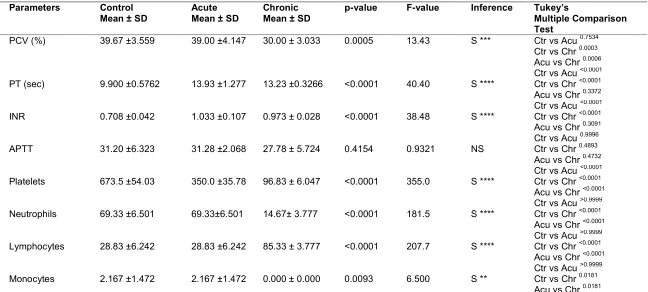
Table 1. Hematological and coagulation Parameters before and after treatment
Parameters Control
Mean ± SD
Acute Mean ± SD
Chronic Mean ± SD
p-value F-value Inference Tukey’s
Multiple Comparison Test
PCV (%) 39.67 ±3.559 39.00 ±4.147 30.00 ± 3.033 0.0005 13.43 S *** Ctr vs Acu 0.7534 Ctr vs Chr 0.0003 Acu vs Chr 0.0006
PT (sec) 9.900 ±0.5762 13.93 ±1.277 13.23 ±0.3266 <0.0001 40.40 S ****
Ctr vs Acu <0.0001 Ctr vs Chr <0.0001 Acu vs Chr 0.3372
INR 0.708 ±0.042 1.033 ±0.107 0.973 ± 0.028 <0.0001 38.48 S ****
Ctr vs Acu <0.0001 Ctr vs Chr <0.0001 Acu vs Chr 0.3091
APTT 31.20 ±6.323 31.28 ±2.068 27.78 ± 5.724 0.4154 0.9321 NS
Ctr vs Acu 0.9996 Ctr vs Chr 0.4893 Acu vs Chr 0.4732
Platelets 673.5 ±54.03 350.0 ±35.78 96.83 ± 6.047 <0.0001 355.0 S ****
Ctr vs Acu <0.0001 Ctr vs Chr <0.0001 Acu vs Chr <0.0001
Neutrophils 69.33 ±6.501 69.33±6.501 14.67± 3.777 <0.0001 181.5 S ****
Ctr vs Acu >0.9999 Ctr vs Chr <0.0001 Acu vs Chr <0.0001
Lymphocytes 28.83 ±6.242 28.83 ±6.242 85.33 ± 3.777 <0.0001 207.7 S ****
Ctr vs Acu >0.9999 Ctr vs Chr <0.0001 Acu vs Chr <0.0001
Monocytes 2.167 ±1.472 2.167 ±1.472 0.000 ± 0.000 0.0093 6.500 S **
Ctr vs Acu >0.9999 Ctr vs Chr 0.0181 Acu vs Chr 0.0181
2.11 Platelet Count
Blood sample was diluted 1 in 20 in a filtered solution of 1% ammonium oxalate reagent which lyses the red cells and white blood cells. Platelets are preserved and counted microscopically using an improved Neubauer ruled counting chamber and the number of platelets per liter of blood was determined.
2.12 Statistical Analysis
Data obtained from laboratory analysis was processed using a one way ANOVA graph pad prism 8.2, Sandiego, USA. The result was expressed as mean±SD. Statistical difference was considered when p<0.05.
3. RESULTS
The results for PCV, prothrombin time, activated partial prothrombin time and WBC differentials are shown on Table 1. The parameters did not differ when 0.2 mg of diclofenac was administered for a short period of time (24 hours). However, on chronic administration, there were statistically significant reduction in Packed Cell Volume, (P= 0.0005), Platelets count (P<0.0001), monocytes (P= 0.0093) and Neutrophils (P<0.0001), while there was an increase in Prothrombin time (sec), (P < 0.0001), International Normalised Ratio (P<0.0001), Lymphocytes (P<0.0001), however the activated Partial Tromboplastin Time remained unchanged.
4. DISCUSSION
The results obtained shows no significant effect in acute administration of Diclofenac sodium of 0.2 mg within 24 hours of treatment in both coagulation factors (PT, APTT and platelet) and some hematological parameters (packed cell volume and WBC differentials). These findings agree with the report of Corum et al., 2018. This implies that the use of Diclofanac sodium may be safe when administered for momentary relief of pain.
However there was a significant alteration in hematological and coagulation parameters in albino rats when treated with diclofenac sodium over a long period of time (3 weeks) at dose of 0.2 mg. There was a significant reduction in PCV. The mechanism responsible for this reduction is not fully understood, but may be
explained by destruction of red blood cells resulting in anaemia [13,14]. This result agrees with similar findings observed by [15,16,17,18] who reported that diclofenac sodium is implicated as the cause of immune haemolytic anaemia, with significant decrease in PCV, significant neutropenia and lymphocytosis. Our results are also in agreement with the report of [16], who reported that administration of diclofenac sodium to adult male rats for 14 days induced significant reduction in PCV and WBC. It is also possible that the chronic use of diclofenac sodium might impair with normal erythropoesis, giving rise to reduced red blood cell formation.
Prothrombin time and activated partial thromboplastin tests are coagulation parameters that give an indication of the coagulation status of an individual [14]. The cascade of reactions that lead to clotting of blood is divided into three pathways: the intrinsic, extrinsic and the common pathways. These pathways work in concert to collectively play a central role that initiates clotting of blood and arrest bleeding [1,4]. The results of this work show that chronic administration of diclofenac sodium reduced the platelet count and also increased the prothrombin time is in agreement with the report of [19]. The alteration in these indicators of clotting mechanism by diclofenac sodium can be explained by the inhibitory action of diclofenac on cyclooxygenase system with concomitant interference with the pathway of prostaglandin biosynthesis with resultant reduction in prostacyclin and thromboxane components, and these are the principal actors of fibrin formation and blood clotting. PT and aPTT therefore evaluate the overall ability of the subject to produce a clot in a reasonable time. The alteration of homeostatic parameters of the test animals implies these animals are at risk of bleeding disorders a result of disordered homeostasis [20]. This may explain the attendant gastrointestinal bleeding occurring as one of the adverse effects of diclofenac administration.
5. CONCLUSION
The results of this work shows that diclofenac sodium may cause significant alteration in coagulation factors (PT, aPTT and Platelets count) and some haematological parameters of albino rats when treated for longer periods of time, while being safe if administered for a short period of time to release momentary pain. However it is unknown if the action of this drug will be replicated on human subjects or not. Hence further work on human subjects is warranted. But as at present, the result of this work implies that in as much as diclofenac is a safe pain reliever, its chronic use should be discouraged based of the attendant alteration of coagulation parameters hence users are at the risk of excessive bleeding should they suffer from traumatic injury.
6. RECOMMENDATION
It is therefore the authors recommendation that in developing countries with limited healthcare facilities, this drug should be made a strictly prescription drugs in order to prevent indiscriminate use of this medication and prevent attendant coagulopathy that may follow chronic use.
ETHICAL APPROVAL
As per international standard written ethical approval has been collected and preserved by the author(s).
ACKNOWLEDGEMENT
The authors acknowledge the technical assistance of the staff of Hematology unit of Rivers State University teaching Hospital, Port Harcourt Nigeria, and the Laboratory Scientists of Department of Medical Laboratory Science, Rivers State University Port Harcourt, Nigeria.
COMPETING INTERESTS
Authors have declared that no competing interests exist.
REFERENCES
1. Kuchaska-Newton AM, Couper DJ, Pankow JS, Prineas RJ, Rea TD. Hemostasis inflammation and fatal nonfatal coronary heart disease.
Arterosclerosis, thrombosis, Vascular Biology. 2009;29:2182-2190.
2. Rainsford KD, Kean WF, Ehrilich GE. Review of the pharmaceutical properties and clinical effects of the topical NSAIDs formulation diclofenac epolamine. Current Medical Research and Opinion. 2008; 24(10):2967–2992.
3. Vane JR. Inhibition of prostaglandin synthesis as a mechanism of action for aspirin – like drugs. Nature Chemical Biology. 1971;231(25):232–235.
4. Merlo C, Wuillemin WA, Redondo M, Furlan M, Sulzer I. Elevated levels of plasma prekallikrein, higher molecular weight kininogen and factor XI in coronary heart disease. Arterosclerosis. 2002;161:261-267.
5. Altman R, Bill B, Brune K, Patrigrnan P, Young C. Advances in NSAIDs development: Evolution of diclofenac products using pharmaceutical technology. Review Article of Crossmark. 2015;75(1): 859–867.
6. Aydin GI, Alparslan G, Umen K, Meral NC, Ekr UE, Nermin K, Kalp G. Histopathologic changes in liver and renal tissues induced by different doses of diclofenac sodium in rats. Turkish Journal of Veterinary and Animal Sciences. 2003;27:1131–1140. 7. Ku EC, Lee W, Lothari HV, Scholer DW.
Effect of diclofenac sodium on the arachidonic acid cascade. American Journal of Medicine. 1986;80(4B):18-23. 8. Sallmann AR. The history of diclofenac.
The American Journal of Medicine. 1986; 80(1):29–33.
9. Lesney MS. Three paths to novartis. Mod drug Discovered. 2004;7(4):19–20. 10. McGethigan P, Henry D. Use of
non-steroidal anti-inflammatory drugs that elevate cardiovascular risk: An examination of sales and essential medicines lists in low, middle and high income countries. Procedures for Library of Science Medicine. 2013;10(2):1371– 1388.
11. Brune K. How aspirin might work: A pharmacokinetic approach agents action. The Lancet. 1974;4(4):230–232.
12. Cheesbrough M. Haematological tests, in Cheesbrough, M. (Ed), Distric Laboratory Practice in Tropical Countries (2nd ed; New York Cambridge University Press. 2010;268-347.
toxicity in albino rats infected with Klebsiella Pneumoniae. International Journal of Biological and Chemical Sciences. 2016;10(1):369-383.
14. Hinchcliff KW, Kaneps AJ, Geor RJ. Equine sports medicine and surgery. In Basic and clinical science of equine athlets. W B Saunders, Philadelphia PAP. 2004;1295-1302.
15. Saady MAJ, Abdul-Latif A-R, Al-Shemmery HN. Pharmacological Effects of Diclofenac Sodium on Some Hematological Parameters of Male Rabbits. Medical Journal of Babylon.
2011;8(3):441-453.
16. El-Maddawy ZKH, El-Ashmawy IM. Hepato-Renal and Haematological effects of diclofenac sodium in Rats. Global J. Pharmaco!.2013;7(2):123-132.
17. Orinya A, Orinya A, Yahaya A, Ogbe RJ. Heamatological and biochemical studies on the effect of diclofenac sodium on
wistar Rattus norvegicus. International Journal of Biological and Chemical Sciences. 2016;10(5):2231-2242.
18. Saches S, Santoso L, Roder E, Mark S, Bein G, Kroll H. Diclofenac-induced antibodies against red blood cells are heterogeneous and recognize different epitopes. Trans/us. J. 2004;44(8):1226-1230.
19. Orham C, Ramazan Y, Orkun A, Kamil U. Effect of repeated administration of diclofrnac sodium and Meloxicam on coagulation parameters in sheep. Eurasain Journal of Veterinary Science. 2018;213.
20. Power I, Chambers WA, Greer IA, Ramage D, Simon E. Platelet function after intramuscular diclofenac. Anaesthesia.1990;45:916-919.
21. Ignjatovic V. Prothrombi time/ international normalized ratio. Methods in Molecular Biology. 2013;992: 121-129.
________________________________________________________________________________ © 2019 Zorte et al.; This is an Open Access article distributed under the terms of the Creative Commons Attribution License (http://creativecommons.org/licenses/by/4.0), which permits unrestricted use, distribution, and reproduction in any medium, provided the original work is properly cited.
Peer-review history: