ISSN 0000 ©2013 WEJ Journal
Optimizing and describing the influence of planting
dates and seeding rates on flax cultivars under
Middle Egypt region conditions
1 2 3
Agronomy Department, Faculty of Agriculture, Cairo University, El-Gamaa Street, P.O. Box12613 Giza, Egypt.
Corresponding author email: [email protected], [email protected].
ABSTRACT: Cultivar selection, time of planting and seeding rate is important factors that influence flax growth and yield variables. The objectives of this study were to evaluate the effects of planting date, seeding rate and their interactions on yield and yield components of two flax cultivars. Cultivars, planting date and seeding rate had significant effects on flax yield and yield components. In general, the interaction between planting date and seeding rate and between planting date and cultivar was non significant. Results indicated that, no interaction occurred between cultivar and each of planting date and seeding rate suggesting that planting date and seeding rate affected the cultivars similarly. The two tested cultivars exhibited significant differences for almost traits. The early planting on November 15 was superior to the other two dates on November 30 and December 15 for seed yield and yield components and straw, fiber yield and related traits. Maximum seed, oil,
- 1 - 1
- 1
higher yield of flax cultivars Sakha 1 and Sakha 2. Significant linear relationship between planting dates and each of seed and oil yield provides the clue that these traits are dependent upon planting dates. Linear regression for planting date suggested that increase in one unit (15 days delaying) of
- 1 - 1
Regression analysis indicated that seed and fiber yields was positively correlated with seeding rates (r = 0.99 and r= 0.99) and increased linearly when the seeding rates increased from 140 to 180 kg
- 1 - 1
- 1 - 1
Key words: Flax, cultivar, planting date, seeding rate, regression analysis, yield, quality traits.
INTRODUCTION
Flax (Linum usitatissimum L.) is ranked second plant after cotton as a fiber crop regarding the cultivated area or its importance in industry. Flax is one of the ancient important crop grown for fiber and oil locally used in textile industry. Linseed oil is one of the oldest commercial oils used in food painting and varnish industry. Flax is considered one of the most important dual purpose crops for oil and fiber production in Egypt and the world, flax is rich in oil (41%), protein (20%), and dietary fiber (28%), Bakry et al. (2012).
In Egypt, it is one of the oldest crops cultivated for its seeds and fibers as double purpose crop since pharaoh age. Flax is an important economic crop which plays a role in our policy through its local fabrication as well as exportation. Today, however, there is renewed interest in oil-seed crops such as flax because of their potential use as bio-fuels, as replacements for petroleum products, and for human consumption. In the recent years many efforts were devoted to increase the productivity of flax through improving the best cultural practices such as planting date and seeding rates for improving the productivity and quality of flax. In Egypt, many attempts have made to maximize total production of oil crops to bridge the gab between local production and consumption from edible vegetable oils by improving cultivation of flax. The cultivated area through the last 20 years was decreased from 25 000 to 12 500 hectare due to the great competition of other economic winter crops resulting in a gap between production and consumption. Therefore, it is necessary to increase flax productivity per unit area which could be achieved by using high yielding cultivars and improving the agricultural treatments (Hussein, 2007 and Ibrahim, 2009).
It is necessary to increase flax productivity per unit area which could be achieved by using high yielding cultivars (Verma and Pathak ,1993 and Abu El-Dahab, 2002). For maximization of flax yield, proper agronomic management is very important. Among the management practices, planting date and seeding rate are the most
Ashraf A. Abd El-Mohsen , Amany M. Abdallah and Gamalat O. Mahmoud
straw and fiber yields ha was produced when seeding rate was applied at the rate of 180 kg ha Therefore, early planting time November 15 with seeding rate 180 kg ha is recommended to obtain
planting date lead to decreased seed and oil yield by 162.7 kg ha and 63.66 kg ha , respectively.
ha . Finally coefficients of regression results suggest that an increase by one unit (20 kg ha ) of seeding rate lead to increase seed and fiber yields by 62.55 kg ha and 249.5 kg ha , respectively.
as recommended seed rate and planting date measures are not in consonance. Therefore, optimum planting date and seeding rate for a cultivar in a region is considered to be the most important manageable factors in flax crop. This goal can be achieved by using the suitable flax variety, planting of crop at the optimum time and use of appropriate seeding rate (Kandil et al., 2009 and Al-Doori , 2012). There are many factors responsible for low yield, such as planting times, selection of unsuitable varieties, inappropriate seeding rates, improper planting geometry and soil type etc. Among all these agronomic practices, planting time is the most powerful factor that influences the yield.
Keeping the importance of cultivar, planting date and seeding rate in view, the aim of this investigation was to study the effected of these factors on yield, yield components and quality traits of flax and select the best planting date and seeding rate under Middle Egypt conditions at Giza Governorate. Also, to develop statistical models to describe the relationships between such variables and each of seed, oil and fiber yields, using regression analysis.
MATERIAL AND METHODS
Experimental site and agro-meteorological conditions
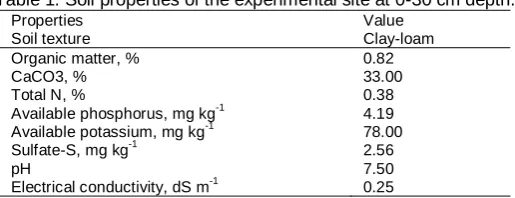
A field experiment was conducted during the two successive winter seasons of 2010-2011 and 2011-2012 at the Experimental Farm of the Faculty of Agriculture, Cairo University (30° 02' N latitude and 31° 13' E longitude, altitude 22.50 m above sea level) at Giza Governorate, Middle Egypt. The Tables 1 and 2 show different soil characters and some meteorological data of experimental location.
Table 1. Soil properties of the experimental site at 0-30 cm depth.
Properties Value
Soil texture Clay-loam
Organic matter, % 0.82
CaCO3, % Total N, %
Available phosphorus, mg kg Available potassium, mg kg Sulfate-S, mg kg
pH
Electrical conductivity, dS m
33.00 0.38 4.19 78.00 2.56 7.50 0.25 - 1
- 1 - 1
- 1
Table 2. Meteorological data for the study period in 2010/11 and 2011/12 at Giza Governorate*.
Month Mean monthly temperature (°C)
Mean relative humidity Precipitation (mm) (%)
2010/11 2011/12 2010/11 2011/12 2010/11 2011/12 November
December January February March April
18.60 16.85 15.25 13.50 15.55 12.70 15.95 14.30 18.00 16.85 20.40 19.30
55.50 65.16 55.00 69.65 55.00 60.00 54.36 60.13 56.00 54.00 56.10 55.00
0.00 0.00 0.00 0.00 0.00 0.00 0.00 0.00 0.00 0.00 0.00 0.00
*Data obtained from the Central Laboratory for Agriculture Climate (CLAC), A.R.C. Egypt.
Treatments and experimental design
Treatments includes: Each experiment included 18 treatments which were the combination of two cultivars (Sakha 1 and Sakha 2 ), three planting date (15 Nov., 30 Nov. and 15 Dec.) and seeding rate (140,
- 1
Sakha 1 and cv. Sakha 2 (a dual purpose for oil and fiber productions) were procured from Fiber Crops Research Section, Field Crops Research Institute, Agricultural Research Center, Giza, Egypt. Pedigree and the descriptions of the two cultivars are shown in Table 3.
Table 3. Pedigree of two flax cultivars.
160 and 180 kg seeds ha ) on growth, yield, yield components and quality of flax plants. Seeds of flax cv.
Cultivar Performance Pedigree or origin Purpose
Sakha 1 Local cultivar L. Bombay (U.S.A.) x L. 1485 (U.S.A.) Egyptian dual purpose type Sakha 2 Local cultivar L.2348 (Hungary ) x Hera (India) Egyptian dual purpose type
The experimental design was a split-split plot based on Randomized Complete Block Design with three replications, according to Gomez and Gomez (1984). The main plot consisted of cultivars, the planting date were allocated to sub plots while seeding rate were assigned to sub-sub plots. Each sub-sub plot consisted of
2
and physical soil properties. Phosphorous at a rate of 50 kg P O in the form of ordinary super phosphate
- 1 2 5
was divided into two equal dose first and second part were applied at 3 and 9 weeks after planting. The first irrigation was applied after 21 days from planting and the following irrigations were applied at 21 day intervals. Manual weeding was practiced twice during both seasons. The normal cultural practices of growing flax were followed till symptoms appearance of full maturity, then harvest was carried out.
Measurements
At full maturity stage, ten plants were taken at random from each sub-sub plot to estimate plant height
- 1
- 1 - 1 - 1
central area of one square meter of each sub-sub plot. Plants were harvested, tied and left to dry, thereafter they were threshed to remove the capsules and weighted to determine straw yield per one square meter and
- 1
- 1
using retting process. Fiber percentage was calculated as percentage of the fiber yield to the air dried straw
- 1 - 1
oil content (%) was determined by Soxhlet extraction apparatus using petroleum ether (40-60º) according to the
- 1 - 1
Statistical analysis
Firstly, we performed data normalization test for all traits by SPSS software before variance analysis and all data were subjected to statistical analysis by the technique of analysis of variance of the split-split plot design according to Gomez and Gomez (1984). Before combining across years, Bartlett’s (1937) test was used to test homogeneity of error variance across years. Combined analysis of both seasons was done according to Steel et al. (1997). Main effects and interactions were tested using the error terms appropriate for the combined analysis of split-split plot design. Treatment means were compared at 5% level of probability using the least significant difference (LSD) method (Steel et al., 1997). Finally, all statistical analysis was carried out using "MSTAT-C" computer software package (Freed et al., 1989) and SPSS 17.0 (2008) statistical package was used to run regression analysis.
RESULTS AND DISCUSSION
In the present study, the response of flax cultivars to planting date and seeding rate was evaluated under agro ecological conditions in Middle Egypt. Firstly, the results given in (Tables 4, 5 and 6) represent that the seed yield and its related characters or straw yield and its related characters was significantly affected by different cultivars, planting dates and varying seeding rates whereas, interaction between them was non-significant (P > 0.05) therefore data was pooled over main effects (Tables 4, 5 and 6). In general, F test in combined analysis revealed that the interaction between planting date and seeding rate was non significant. In addition, results indicated that, no interaction occurred between cultivar and each of planting date and seeding rate suggesting that planting date and seeding rate affected the cultivars similarly. Based on the statistical analysis results, the main factors had independent (constant) effects for these characteristics measured which is an indication that the three sets of treatment were independent in their effects on flax.
Cultivars performance
Results of statistical analysis of this study revealed that seed yield and its related characters or straw yield and its related characters components revealed highly significant differences between cultivars indicating the presence of differences between the cultivars for most characters. Statistical analysis should that cultivar by planting date and seeding rate interactions were not significant for all traits (P > 0.05) therefore data was pooled over main effect.
A summary of flax production of two cultivars grown under different planting dates and seeding rates is
- 1 - 1
- 1 - 1 - 1 - 1 - 1
two cultivars showed similar means of the remainder characters including oil content (%) and biological yield
- 1
2 5
(15.5% P O ) was applied to all plots pre planting. The nitrogen fertilizer in the form of urea 80 kg ha (46% N)
(cm), technical length (cm), fruiting zone length (cm), number of capsules plant , 1000-seed weight (g), straw yield plant and seed yield plant (g). Seed, biological, straw and fiber yields ha was estimated from the
then converted to straw yield in ton ha . Seeds were cleaned from straw and other residuals and weighed to the nearest gram and converted to record seed yield in kg ha . Flax fiber was separated from the stems by
yield after removing fruit capsules. Fiber yield (kg ha ) was calculated by straw yield (kg ha ) x fiber (%). Seed
method described by A.O.A.C. (2000). Oil yield (kg ha ) was calculated by multiplying seed oil percentage by seed yield (kg ha ).
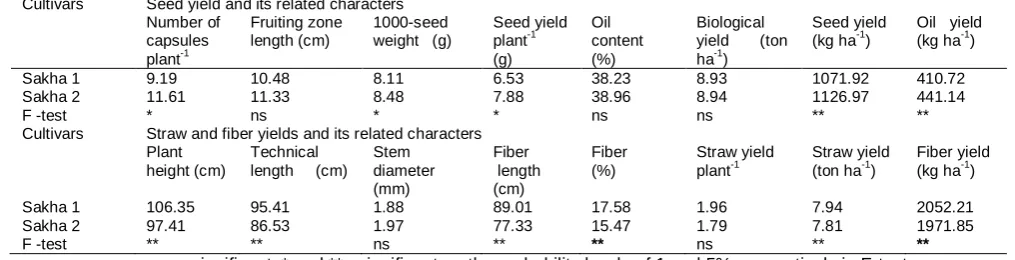
shown in Table 4. The two tested cultivars exhibited significant differences for number of capsules plant , fruiting zone length, 1000-seed weight, seed yield plant , plant height, technical length, stem diameter, fiber length, fiber %, straw yield plant , seed yield ha , oil yield ha , straw yield ha and fiber yield ha whereas, the
Table 4. Main effect of flax cultivars on seed, oil, straw and fiber yields and its related characters (average of 2 years).
Cultivars Seed yield and its related characters
Number of Fruiting zone 1000-seed Seed yield Oil Biological Seed yield Oil yield
- 1 - 1 - 1
- 1 - 1
capsules length (cm) weight (g) plant content yield (ton (kg ha ) (kg ha )
plant (g) (%) ha )
Sakha 1 9.19 10.48 8.11 6.53 38.23 8.93 1071.92 410.72
Sakha 2 11.61 11.33 8.48 7.88 38.96 8.94 1126.97 441.14
F - test * ns * * ns ns ** **
Cultivars Straw and fiber yields and its related characters
Plant Technical Stem Fiber Fiber Straw yield Straw yield Fiber yield
- 1 - 1 - 1
(mm) (cm)
Sakha 1 106.35 95.41 1.88 89.01 17.58 1.96 7.94 2052.21
Sakha 2 97.41 86.53 1.97 77.33 15.47 1.79 7.81 1971.85
F - test ** ** ns ** ** ns ** **
height (cm) length (cm) diameter length (%) plant (ton ha ) (kg ha )
n.s. = non-significant; * and **= significant on the probability levels of 1 and 5%, respectively in F-test.
- 1 - 1
- 1 - 1
produced from the cultivar Sakha 1. The differences between the two flax cultivars in seed yield per hectare might be attributed to their differences in growth traits such as number of fruiting zone length reflected differences in yield components such as number of capsule per plant as well as 1000-seed weight and hence increased seed yield per plant as well as per unit area. This result reflects great differently of behavior and performance of the two cultivars which may be due to that both were initially bred from non related genetic sources. Significant differences were detected among flax genotypes by several investigators either in Egypt or other countries such as Sharief (1999), Zahana et al. (2004), Kandil et al. (2009), Al-Doori (2012), Mirshekari et al. (2012) and Amiri et al. (2013).
The manner of the two cultivars regarding their responses to seed yield and its related parameters or straw yield and its related characters was different from one character to another indicating existing variation in studied cultivars to measured traits. At this experiment conditions, comparison of evaluated flax cultivars (Table
- 1 - 1 -1
- 1 - 1
- 1 - 1
- 1
2005; Kandil et al., 2012) who reported that there were significant differences between cultivars of linseed for seed yield, 1000-seed weight and oil yield. These results also support our findings.
In the other side, over both seasons, it could be noticed that Sakha 1 cultivar had the highest plant
- 1 - 1
- 1 - 1
cultivars may be due to the different genetical make up which affects growth habit and purpose of its products. The obtained findings are in agreement with those gained by other investigators (El-Sweify et al., 2003; Kineber et al., 2006; Abd El - Fatah 2007; Khalifa et al., 2011; El - Hariri et al., 2012 and Bakry et al., 2012) they showed that there were large differences in straw yield and its components among flax genotypes.
Planting dates Effects
Choosing the optimal sowing date for a particular region is important for both yield and fiber quality. The rainfall and mean values for temperatures which related to the main stages of vegetative and reproductive development of flax planting at the different dates in 2010-11 and 2011-12 are presented in Table 2.
Seed yield and its related characters
Planting date is a major agronomic factor affecting both seed and oil yield in flax. Therefore, determining optimum planting date and selecting suitable variety for growing regions are necessary to obtain flax with high yield and quality. The purpose of determining the planting date is to find the best time for germination, establishment and survival seedling of seed using environmental factors that affected plant development growth. In general, any delay in planting will result in low potential yield of plant.
Results of statistical analysis of this study revealed that planting date treatments had significant effects
- 1 - 1 - 1
rates were recorded by the plants sown at the first sowing date (15 November) (Table 5). The average seed, oil and biological yields and its related characters and F values from the analysis of variance are given in Table 5. Seed yield in cultivated plants is the most important character influenced by genetic and environmental factors. Seed yield of flax was influenced significantly (P<0.01) by date of planting (Table 5). The maximum seed yield Over both seasons the highest seed and oil yields (1126.97 kg ha and 441.14 kg ha ) were produced from the cultivar Sakha 2 and the highest straw and fiber yields (7.94 ton ha and 2052.21 kg ha ) were
4) showed that the maximum number of capsules plant , 1000-seed weight, seed yield plant , seed yield ha and oil yield ha belonged to Sakha 2 cultivar. The superiority in seed yield ha may be due to the increases in seed yield plant and 1000-seed weight. Moreover, the superiority in oil yield ha may be attributed to the increase in seed yield ha . These results are in agreement with (Fontana et al., 1996; Kurt, 1996; Khan et al.,
height, technical length, fiber length, fiber %, straw yield plant , straw yield and fiber yield ha , respectively. The increase in fiber yield ha may be due to the increase in straw yield ha . Differences among tested
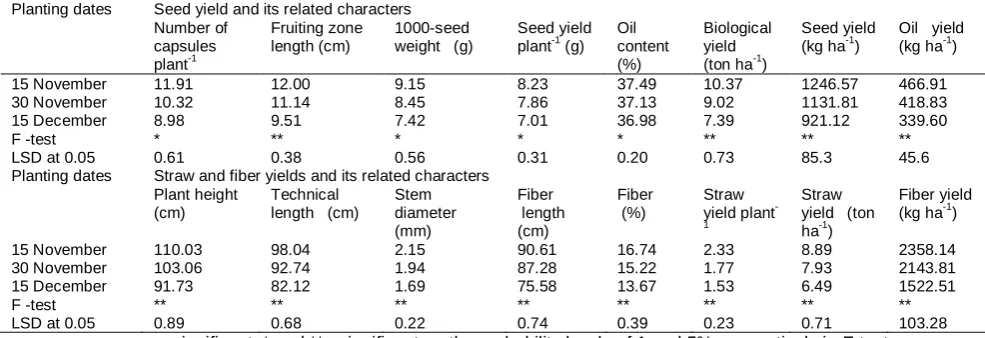
of 1246.57 kg ha was obtained by planting flax on 15 November, which was found superior to seed yield
three sowing dates. The increases in seed yield ha due to planting on 15 November may be due to the
- 1
corresponding to the latter dates of planting. This may be because the crop gets sufficient time for its growth and development under suitable climatic conditions. Similarly, according to Ottai et al. (2011) found that among planting dates, November 15th planted crop gave highest seed yield.
Superiority of early planting may be due to prevalence of favorable climatic factors such as temperature and light energy, and this provide the plant full chance to develop well canopy and biomass and increased its capacity to absorb enough of water and nutrients, and consequently possessed more effective productive organs. Also, early planting date resulted in the prevailing of optimum temperature for better flowering and pollination. In connection with this, Ghanem (1990) reported that increases of seed yield due to increases of dry matter accumulation in the later formed capsules may be attributed to high temperature and long photoperiod that exist during capsules development. Ottai et al. (2011) suggested that the effect of sowing dates was more pronounced than seasons for almost flax traits which due to the differences of climatic factors prevail in the
- 1
increases in number of capsules per plant, fruiting zone length and 1000-seed weight reflecting increase in seed yield (Table 5). Similar conclusions were reported by El-Refaey et al. (2010) and Al-Doori (2012).
Table 5. Main effect of planting dates on seed, oil, straw and fiber yields and its related characters (average of 2 years).
Planting dates Seed yield and its related characters
Number of Fruiting zone 1000-seed Seed yield Oil Biological Seed yield Oil yield
- 1 - 1 - 1
- 1 - 1
capsules length (cm) weight (g) plant (g) content yield
plant (%) (ton ha )
(kg ha ) (kg ha )
15 November 11.91 12.00 9.15 8.23 37.49 10.37 1246.57 466.91
30 November 10.32 11.14 8.45 7.86 37.13 9.02
15 December 8.98 9.51 7.42 7.01 36.98 7.39
F - test * ** * * * **
LSD at 0.05 0.61 0.38 0.56 0.31 0.20 0.73
Planting dates Straw and fiber yields and its related characters
Plant height Technical Stem Fiber Fiber Straw
(cm) length (cm) diameter length (%) yield plant yield
1 - 1
15 November 110.03 98.04 2.15 90.61 16.74 2.33 8.89
30 November 103.06 92.74 1.94 87.28 15.22 1.77 7.93
15 December 91.73 82.12 1.69 75.58 13.67 1.53 6.49
F - test ** ** ** ** ** ** **
LSD at 0.05 0.89 0.68 0.22 0.74 0.39 0.23 0.71
1131.81 418.83 921.12 339.60
** **
85.3 45.6
Straw Fiber yield
- - 1
ha )
2358.14 2143.81 1522.51 ** 103.28
(mm) (cm)
(ton (kg ha )
n.s. = non significant; * and **= significant on the probability levels of 1 and 5%, respectively in F-test..
Reduction of seed yield at second and third planting date compared to first planting date was 10.13% and 35.33%, respectively. When choosing a planting date, attention must first be paid to the maturity of the variety. By contrast, in case of early flowering due to late planting, maximum growth and yield will not be achieved. The reduction in seed yield due to delay in planting could be attributed, among other factors, to shorter growth period at the disposal of the late planting crop as the time taken by the crop to mature decreased with delay in planting. The shorter period from first flowering to harvest may have resulted in insufficient time for correct seed filling and development. Mirshekari et al. (2012) reported that sowing date was a very important management tool in minimizing the negative impact of high temperature and moisture stress during the critical flowering and seed filling periods. Also, the decrease in yield due to delayed planting was due to decreases in all yield components. This might be the cause of the lower average seed yield. Delay in sowing led to increase in environmental temperature during reproductive growth of crop resulting in lower seed quality (Greven et al., 2004; Mirshekari et al., 2012)
Since oil yield equals to: seed yield × oil content, hence oil yield was also affected significantly by planting dates (Table 3). Similar results were reported by Garsid (2004) and Mirshekari et al. (2012). Statistically significant effect of planting date on oil yield was obtained which agrees with studies of Mirshekari et al. (2012). Due attention to Table 5, the highest oil yield was achieved in 15 November planting date. In
- 1 - 1
between first and second planting date. Delaying seeding to November 30 and December 15 reduced oil yield by 11.47% and 37.48%, respectively (Table 5). The results are similar to the findings of El-Refaey et al. (2010) who conducted a study in Egypt, and found that oil yield decreased when seeding was postponed past November 25th.
A deviation in the oil yield per hectare values is observed; this might be due to different planting dates, oil content, seed yield per hectare, cultivars and ecological conditions under which the experiments were
- 1
dates may be due to the increases in both oil percentage and seed yield per hectare.
general results of this study showed that the first planting date produced the highest oil yield (466.91 kg ha ) and the third planting date had the lowest oil yield (339.60 kg ha ). But no significant differences were seen
Planting date and its influence on flax performance is linked to weather, with early or later seeded flax having a higher chance of encountering frost or drought (Casa et al., 1999). An early spring frost may injure a crop, but the potential loss from a fall frost is far greater. Sheppard and Bates (1988) also found earlier seeding resulted in greatest seed yield. Later seeding significantly decreased the mean yields. A study conducted in Alexandria University in Egypt, found that a late sowing date to December 1st and December 15th led to reduced seed, oil yield and oil percentage (Ibrahim, 2009). Similar conclusions were reported by (El-Deeb and Abd El-Fatah, 2006; Ibrahim, 2009 and Al-Doori, 2012).
Final yield is the combined effect of various yield components under particular environmental conditions. Thus any variation in them is liable to bring about variation in seed yield. It is evident from the
- 1 - 1
last planting date all flax traits decreased statistically and indicated that yield components were adversely
- 1 - 1
- 1
were reduced. The lowest rates of yield components were obtained by flax plants sown on 15 December (the third sowing date). The lowest capsule numbers was observed with later flowering may be due to a temperature effect on pollination, ovary survival in delayed planting dates. These results affirmed by Ford (1964).
Delay in sowing led to an increase in environmental temperature during reproductive growth of crop resulting in lower seed quality. Climatic conditions could be considered as a determining factor for oil percentage and yield. In delay planting, the reduction of oil percentage and yield (Table 5) was due to unfavorable weather conditions. This may be due to that increased temperature and water stress during seed filling was a major cause of reduced oil percentage and yield. Similar results have been reported by Garsid (2004) and Mirshekari et al. (2012).
Relationships between planting dates and flax seed and oil yields
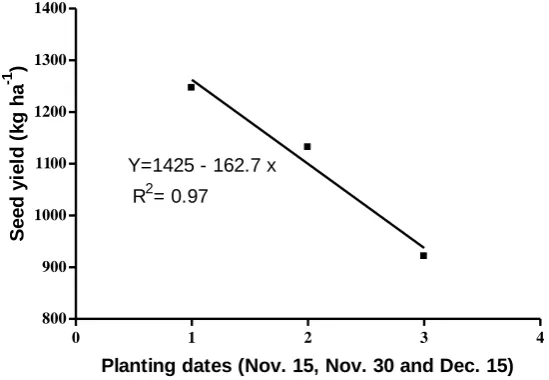
Regression analysis to reveal the relations between the two variables, i. e., planting date (x) and seed yield (y) indicated a linear relation as well as a highly significant (P ≤ 0.01) correlation coefficient (r=-0.98,
P-2
the variability in seed yield (y), to planting date. The relationship between planting dates and seed yield was negative and followed the linear equation: of Y=1425 – 162.7 x, representing a high negative value of coefficient of regression (b), which means yield decrease against late planting dates (Fig. 1). Also, analysis of regression indicated that a best described response as a linear regression for oil yield and planting dates (oil
2
each of seed and oil yields provides the clue that these traits are dependent upon planting dates. Linear regression equations for planting date suggested that increase in one unit (15 days delaying) of planting date
- 1 - 1
statistical analysis of data that number of capsules plant , fruiting zone length, 1000-seed weight, seed yield plant and oil content (%) in flax affected by planting dates at 5% level (P<0.05). Data also cleared that in the
affected in delay planting condition (Table 5). The highest number of capsules plant (11.91), fruiting zone length (12.00 cm), 1000-seed weight (9.15 g), seed yield plant (8.23 g), oil content % (37.49) and biological yield (10.37 ton ha ), were obtained in first planting date whereas, by later sowing dates, these characters
value < 0.01). Besides, R (coefficient of determination), revealed that it was possible to account up to 97% of
yield = 535.8 – 63.66 x, R = 0.98; p ≤ 0.01), (Fig. 2). Significant linear relationship between planting dates and
lead to decreased seed and oil yield by 162.7 kg ha and 63.66 kg ha , respectively.
0 1 2 3 4
800 900 1000 1100 1200 1300 1400
Y=1425 - 162.7 x 2
R = 0.97
Planting dates (Nov. 15, Nov. 30 and Dec. 15)
S
e
ed yi
el
d (
kg h
a
-1 )
Figure2. The relation between planting dates and oil yield which follows the linear equation: of Y=535.8 – 63.66 x
2
0.97 and 0.98 indicated that the planting dates involved in this study affected the total variability of seed and oil yield by 97% and 98%, respectively.
Straw and fiber yields and its related characters
Data pertaining to straw and fiber yields are presented in Table 5, which indicate that straw and fiber yields was significantly affected by planting dates. Mean values of straw and fiber yields per plant and per hectare as well as fiber quality, which is represented by fiber length, of flax plant are given in Table (5). Over both seasons, early planting date of 15th November recorded the highest means of plant height, technical
- 1
December recorded the lowest means of all previously mentioned traits. The increase in straw and fiber yields per hectare with the early planting date of 15th November can be attributed mainly to the increase in all straw and fiber yields attributes, i.e. plant height, technical length, fruiting zone length, fiber length and straw yield
- 1
Data collected in Table 5 show that planting dates significantly affected straw and fiber yields and its related characters. The preset study suggest that November 15 is the most optimum time of planting of flax crop, because the crop sown on November 15 produced the maximum straw and fiber yields. Combined analysis of the two years experiments showed that, the highest plant height (110.03 cm), technical length
- 1
- 1 - 1
date, these characters were reduced. Similar findings were reported by earlier research workers Mirshekari et al. (2012).
Seeding rates effects
Crop yield is a complex character depending upon a large number of environmental, morphological and physiological characters. In the present study, yield and yield components were significantly affected by seeding rate. The formation of yield components is not influenced only by the variation of planting dates seeding, but also by the variation of seeding rates (Table 6). The variation in seeding rate is reflected mainly not only in the change in the number of plants per unit area, but also prevailed in the variation of the formation of yield and its components of each plant.
Seed yield and its related characters
Results presented in Table (6) indicated that the seeding rate treatments were significantly affected in all plant studied characteristics, reflecting the importance of seeding rate for flax growth, yield and yield components. The data listed in Table 6 manifested that there were significant differences in seed and oil yield
- 1
statistical analysis of the data revealed that the difference between maximum and minimum of oil yield obtained at different seeding rate levels was statistically significant (Table 6). Averaged over both years of the From the above mentioned results, it could be concluded that the coefficients of determination (R ) of
length, fiber length and straw yield plant as well as straw and fiber yields per hectare. The late planting of 15th
plant . Similar conclusions were reported by Kandil et al. (2009).
(98.04), stem diameter (2.15 mm), fiber length (90.61 cm), fiber % (16.74), straw yield plant (2.33 g), straw yield ha (8.89 ton) and fiber yield ha (2358 kg), were obtained in first sowing date whereas, by later sowing
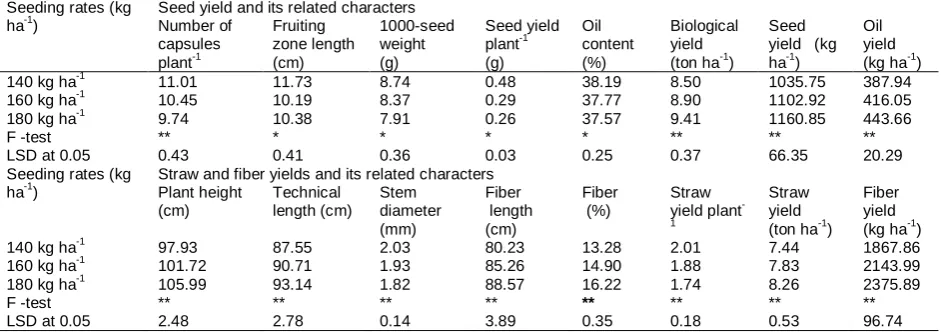
experiment, oil yield ha increased from 387.93 kg ha to 443.66 kg ha with increasing seeding rate from 140 to 160 and 180 kg ha , respectively (Table 6).
Results demonstrate that seed yield plant , number of capsules plant , fruiting zone length, 1000-seed
this intra competition would be more intense. Averaged over two years, the lowest seeding rate (140 kg ha ) produced the maximum seed yield plant (7.97 g) and vice versa. This might be attributed to a higher capsules plant (11.01), and heavier 1000-seed weight (8.74 g). Reduction in seed yield plant associated with
- 1 - 1 - 1
- 1
- 1 - 1
weight and oil content (%), were negatively related to seeding rate (Table 6). There was a trend for seed weight to decrease with increasing seeding rate (Table 6). Since there is competition between vegetative and gen-erative parts of the plant for receiving photosynthesis matter, with increasing density and inter plant competition
- 1 - 1
- 1 - 1
increasing seeding rate confirmed the findings of Gubbels and Kenaschuk (1989), Mostafa and El-Deeb (2003).
Table 6. Main effect of seeding rates on seed, oil, straw and fiber yields and its related characters (average of 2 years).
Seeding rates (kg Seed yield and its related characters - 1
ha ) Number of Fruiting 1000-seed Seed yield Oil Biological Seed Oil - 1
- 1 - 1 - 1 - 1
capsules zone length weight plant content yield yield (kg yield
plant (cm) (g) (g) (%) (ton ha ) ha ) (kg ha )
140 kg ha- 1 11.01 11.73 8.74 0.48 38.19 8.50 1035.75 387.94
160 kg ha 10.45 10.19 8.37 0.29 37.77 8.90 1102.92 416.05
180 kg ha 9.74 10.38 7.91 0.26 37.57 9.41 1160.85 443.66
F - test ** * * * * ** ** **
LSD at 0.05 0.43 0.41 0.36 0.03 0.25 0.37 66.35 20.29
Seeding rates (kg Straw and fiber yields and its related characters - 1
-1 - 1 - 1
140 kg ha 97.93 87.55 2.03 80.23 13.28 2.01 7.44 1867.86
160 kg ha 101.72 90.71 1.93 85.26 14.90 1.88 7.83 2143.99
180 kg ha 105.99 93.14 1.82 88.57 16.22 1.74 8.26 2375.89
F - test ** ** ** ** ** ** ** **
LSD at 0.05 2.48 2.78 0.14 3.89 0.35 0.18 0.53 96.74
- 1 - 1
ha ) Plant height Technical Stem Fiber Fiber Straw Straw Fiber
(cm) length (cm) diameter length (%) yield plant yield yield
(mm) (cm) (ton ha ) (kg ha )
- 1 - 1 - 1
n.s. = non-significant; * and **= significant on the probability levels of 1 and 5%, respectively in F-test.
- 1
- 1 - 1 –1
- 1 - 1
- 1 - 1
- 1
plants in higher seed rate thus plants in the plots of lower seed rate had more feeding area and more above ground space for photosynthesis. Eventually they absorbed more nutrients, intercepted more light and prepared
- 1
2 - 1
- 1 - 1 2
and oil yields per unit area.
Straw and fiber yields and its related characters
It is clear from Table (6) that, fiber yield per hectare was gradually increased with each increase in seeding rate. Thus the highest fiber yield per hectare (2375.89 kg) was obtained from the highest seeding rate. This was due to the increase in all fiber yield components, (plant height, and technical length, straw yield per plant and per hectare as well as fiber percentage) by increasing seeding rate. These findings are in accordance with that of Abu El-Dahab (2002).
- 1
hectare by (27.19%). This was attributed to an increase in plant height (7.60%), technical length (6.00%) and
2
decrease in metabolites synthezed owing to sever competition between plants in the same unit area. These results were greatly in accordance with that obtained by, Abdalla et al. (1989), Casa et al. (1999) and Hassan and Leitch (2000).
Generally, increasing the seeding rate lead to increased the plant population and increased competition among plants for soil moisture, nutrient, light and carbon dioxide. Moreover, the low population plants grew as isolated units for most of their early life and interfered less with each other than at higher densities. This might explain the significant effect of seeding rate on most of the parameters measured in the present study. Concerning seeding rate, studies raveled that increasing seeding rate increased straw and fiber yield per unit As shown in Table (6), seed rate also significantly affected the number of capsules plant . Maximum number of capsules plant were observed in 140 kg seed rate ha (11.01) followed by 160 kg seed rate ha with 10.45 and minimum number of capsules plant (9.74) were recorded in plots with 180 kg seed rate ha averaged across two years investigation. On average, number of capsules plant was decreased 11.53 % when seed rate was increased from 140 to180 kg ha . The reasons for negative relationship between the seed rate and seed yield plant is that plants in the lowest seed rate had greater area per plant as compared to
more photosynthates, which ultimately resulted in more number of capsules plant . Elayan et al. (2009) found that, use of 1500 seeds/m resulted in a significant increase in number of capsules plant , number of seeds capsule and seed yield plant , while increasing plant density to 2000 seeds/m increased significantly seed
As shown in Table (6), increasing seeding rate from (140 to 180 kg ha ) increased fiber yield per
area. On the other hand, straw and fiber yield per plant were decreased by increasing seeding rate (Abdlwahed, 2002; Kineber, 2003 and Kandil et al., 2009).
In general, from the previous results it could be concluded that, higher seeding rate (plant populations) lead to higher fiber content. More plants per unit area mean that individual stems will be thinner, increasing the proportion of fiber in each stem, compared to thin stands where individual plants stems are thicker because they have more room to grow (Fig. 3).
Figure 3. Plants from a sub-plot with high seeding rate (180 kg ha ) versus low seeding rate (140 kg ha-1
Relationships between seeding rates and flax seed and fiber yields
Regression analysis was used on the combined data (both years) to relate values of the three seeding rates to seed yield. A highly significant (P<0.01) relationship existed between increasing seeding rates and seed yield (Fig. 4). Seed yield was positively correlated with seeding rates (r = 0.99) and increased linearly
- 1
among seeding rate levels and seed yield was characterized by significant linear trend (Y= 974.7 + 62.55 x,
2
between flax fiber yield and seeding rates was found significant (r=0.99) and increased linearly (P<0.01) (Fig.
2
seeding rates. These results suggest the seed and fiber yields of flax were affected throughout the seeding rate
- 1 - 1 - 1
-1
(P<0.01) when the seeding rates increased from 140 to 180 kg ha (Fig. 4). The shape of the relationships
R = 0.99) where x is seeding rates. Also, according to the two-year results of this research, relationship
5). Fiber yield can be expressed by the following regression equation (Y= 1321 + 10.39 x, R = 0.99) where x is
treatments. Finally coefficients of regression results suggest that an increase by one unit (20 kg ha ) of seeding rate lead to increase seed and fiber yields by 62.55 kg ha and 249.5 kg ha , respectively.
).
Figure 5. The relation between seeding rates and fiber yield which follows the linear equation: of Y=1633 + 249.5 x
CONCLUSION
The data obtained from this study could be useful for flax researchers and seed producers in order to increase seed yield and quality traits under different planting dates and seeding rates. In addition, the results of this research should be implemented to increase the productivity of flax. The findings of the study indicate that the optimum planting date and seeding rate treatments improved the yield contributing character efficiency of flax leading to higher seed yield and quality traits . So, the further research is needed i n this direction with other varieties of flax to establish the present findings . The earliest date (November 15) ranked as the first effective date increasing seed, oil, straw and fiber yields per hectare followed by the intermediate date (November 30), an d both surpassed the late planting date (December 15) which caused the lowest values for these characters. These results revealed that early sowing on No. 15 was the best for producing high seed yield with higher quality traits. For this reason, planting d ate on mid- November for Middle Egypt can be recommended in order to obtain high yield from flax. Generally, it can be stated that raising flax fiber yield per hectare can be achieved by planting the flax cultivar Sakha 1 and the highest seed yield can be o btained by planting the cultivar Sakha 2
- 1
given to planting dates and seeding rates to maximize seed yield were found to maintain adequate seed oil qua lity and quantity. Lastly, significant linear relationship between planting dates and seeding rates and each of seed, oil and fiber yields provides the clue that these traits are dependent upon planting dates and seeding rates. In addition, the linear resp onse of flax yield and other studied characters to seeding rate treatments
- 1
experiment would be done in other climates in the world under irrigat ion levels, and soil types.
REFERENCES
Abd El-Fatah AAE.2007. Comparative study on some flax cultivars. J. Agric. Sci. Mansoura Univ. Egypt 32(9): 7111-7119.
Abdalla AF, Osman MS, Nasr El-Din T, Zedan SZ.1989. Effect of nitrogen fertilization and seeding rates on yield and technological characteristics of two varieties of flax (linum usitatissimum L.) Egypt. J. Appl. Sci. 4(3):879-887.
Abdlwahed AA.2002. Effect of seeding rate on yield of some flax cultivars. J. Agric. Sci. Mansoura Univ. Egypt 27(4): 2005-2017. Abu El- Dahab AA.2002. Effect of seeding rate on yield of some flax cultivars. J. Agric. Sci., Mansoura Univ. Egypt 27(4): 2005-2017. Al-Doori SAM.2012. Influence of sowing dates on growth, yield and quality of some flax genotypes (Linum usitatissimum L.). College of
Basic Education Researchers J. 12(1): 733-746.
Amiri R, Irannejad H, Javanmardi Z.2013. Adaptation of different genotypes of oil flax according to their quantitative and qualitative yield in semi-tropical condition of Iran. Advanced Crop Sci. l3(2):148–161
AOAC.2000. Association of Official Analytical Chemists. Official methods of Analysis17 Ed. AOAC International, Washington, D.C., USA. Bakry AB, Elewa TA, Ali OAM.2012. Effect of Fe foliar application on yield and quality traits of some flax varieties grown under newly
reclaimed sandy soil. Australian J. Basic and Applied Sci. 6(7): 532-536.
Bartlett MS.1937. Properties of sufficiency and statistical tests. Proceedings of the Royal Society of London Series A 160:268–282. Casa R, Russell G, Locascio B, Rossini F.1999. Environmental effects on linseed (Linum usitatissimum L.) yield and growth of flax at
different stand densities. European J. Agro. 11: 267 - 278.
Elayan SED, El-Ssadi SA, Abdallah AM, Mostafa SHA, Riham HH.2009. Effect of different NPK combination and plant density on some flax varieties under sandy soil conditions. Egypt. J. of Appl. Sci. 24(7): 117-140.
El-Deeb EEA, Abd El-Fatah AA.2006. Effect of sowing and harvesting dates on yield and its quality for some flax varieties. J. Agric. Sci. Mansoura Univ. Egypt 31(9): 5557-5566.
when planting date on November 15 and seeding rate with 180 kg ha . In conclusion, attention needs to be
El-Hariri DM, Bakry AB, Elewa TA, Ibrahim OM.2012. Evaluation of some flax (Linum usitatissimum, L.) varieties under newly reclaimed sandy soil conditions. International J. of Academic Res. 4(1): 98 - 102.
El-Refaey RA, El-Seidy EH, El-Deeb IAE.2010. Effect of sowing dates under different environment condition on yield and quality of some flax genotypes. Alex. J. Agric. Res. Egypt 55(2): 33 - 41.
El-Sweify Amna HH, Tag El-Din MA, Sharaf El-Deen HAM.2003. Effect of some flax genotypes and harvesting dates on seed chemical composition, yield and fiber quality. Annals of Agric. Sci. Moshtohor, Egypt 41(1): 19- 37.
Fontana F, Cremaschi D, Vender CCM, Natarelli L.1996. Comparison of two sowing dates for linseed (Linum usitatissimum L.) cultivars. Rivista Di Agron. 30: 248- 251.
Ford JH.1964. Influence of time of flowering on seed development of flax. Crop. Sci. 4: 52-54.
Freed RSP, Eisensmith S, Goetz D, Reicosky V, Smail W, Wolberg P.1989. User’s Guide to MSTAT - C: A Software Program for the Design, Management and Analysis of Agronomic Research Experiments Michigan State University, East Lansing, ML, USA.
Garsid A.2004. Sowing time effects on the development, yield and oil of flaxseed in semi arid tropical. Aust. J. Prod. Agric. 23: 607-612. Ghanem SAI.1990. The influence of N fertilization and sowing, harvesting dates on oil, fiber yields and their contributing ch aracters of flax.
Zagazig J. Agric. Res. Egypt 17(3): 575-587.
Gomez KA, Gomez AA.1984. Statistical Procedures for Agricultural Research. 2nd ed., New York: John Wiley and Sons, Inc. pp:138-153. Greven MM, Mckenzie BA, Hampton IG, Hill MJ, Sedcole JR, Hill GD.2004. Factors affecting seed quality in dwarf French bean (Phaseolus
vulgaris L.) before harvest maturity. Seed Sci. Technol. 32: 797-811.
Gubbels GH, Kenaschuk EO.1989. Effect of seeding rate on plant and seed characteristics of new flax cultivars. Canadian J. Plant Sci. 69(3): 791-795.
Hassan FU, leitch MH.2000. Influence of seeding density on contents and uptake of N,P and K in linseed (Linum usitatissimum L.). J. Agron. and Crop Sci. 185:193-199.
Hussein MMM.2007. Response of some flax genotypes to bio and nitrogen fertilization. Zagazig J. Agric. Res. Egypt 34(5): 815-844. Ibrahim HM.2009. Effect of sowing date and N-fertilizer levels on seed yield, some yield components and oil content in flax. Alex. J. Agric.
Res. Egypt 54(1): 19- 28.
Kandil AA, Hob Allah AA, El-Hariri DM, Zeidan MS, Bakri AB.2009. Effect of seeding rate on yield and quality traits of some flax varieties (Linum usitatissimum L.) grown in newly reclaimed sandy soils. Scientific Bulletin of Escorena 1:16 - 21.
Kandil AA, Shareif AE, Abo-Zaied TA, Moussa AGT.2012. Multyvariat analysis of economic characters in flax. Pakis. J. of Biolo. Sci. 15(2):85-91.
Khalifa RKM, Manal RM, Bakry BA, Zeidan MS.2011. Response of some flax varieties to micronutrients foliar application under newly reclaimed sandy soil. Aust. J. of Basic and Applied Sci. 5(8): 1328-1334.
Khan MB, Yasir TA, Aman M.2005. Growth and yield comparison of different linseed (Linum usitatissimum L.) genotypes planted at different row spacing. J. Agric. Biol. 7: 515 - 517 .
Kineber MEA, El-Emary FA, El-Nady MF.2006. Botanical studies on some fibrous flax (Linum usitatissimum, L.) genotypes grown under Delta conditions. J. Agric. Sci. Mansoura Univ. Egypt 31(5): 2881-2890.
Kineber MEA.2003. Flax plants performance as influenced by planting methods and seeding rate. J. Agric. Res. Tanta. Univ. Egypt 29(1): 64-73.
Kurt O.1996. Study on the yield and yield components and some agronomic characters of linseed (Linum usitatissimum L.) cultivars. J. Ondokuzmayis Universitesi, Ziraat Fakultesi Dergisi 11: 87-92.
Mirshekari M, Amiri R, Nezhad HI, Noori SAS, Zandvakili OR.2012. Effects of planting date and water deficit on quantitative and qualitative traits of flax seed. American-Eurasian J. Agric. & Environ. Sci. 12 (7): 901-913.
Mostafa SH, El-Deeb EI.2003. Response of flax and quality to seeding rates and micronutrients. Alex. J. Agric. Res. Egypt 24: 425-442. Ottai MES, Al-Kordy MAA, Afiah SA.2011. Evaluation, correlation and path coefficient analysis among seed yield and its attributes of oil flax
(Linum usitatissimum L.) genotypes. Aust. J. Basic and Applied Sci. 5(11): 252-258.
Sharief AE.1999. Performance of some flax cultivars in response to nitrogen fertilizer rates and yield analysis. Bull. Fac. Agric. Cairo Univ. Egypt 50:394-415.
Sheppard SC, Bates TE.1988. Probability of response of flax to nitrogen fertilizer dependent upon planting date and weather. Canadian J. of Soil Sci. 68: 271-286.
SPSS Statistics 17.0.0. 2008. SPSS for Windows. SPSS Inc. 2008.
Steel RGD, Torrie JH, Dickey DA.1997. Principles and procedures of statistics: A biometrical approach. McGraw Hill Book Inter national Co., New York.
Verma KP, Pathak PK.1993. Response of linseed (Linum usitatissmum L.) Varieties to different dates of sowing. Indian J. of Agron. 38(1): 160-163.