Original Research Article
Prevalence and risk factors of dyslipidemia among male industrial
workers in India
Pratibha Suresh Wankhade
1, Ratnaprabha Bhalchandra Pedhambkar
2*, Rajani Satish Pagare
3,
Bhalchandra Sonu Pedhambkar
4INTRODUCTION
Dyslipidemia is elevation of plasma cholesterol, triglycerides (TGs), or both, or a low high-density lipoprotein (HDL) or high low density lipoprotein (LDL) levels that contributes to the development of atherosclerosis.1 Atherosclerosis of the arterial vessel
walls is the most important underlying cause of cardiovascular diseases (CVD) and dyslipidemia is a major and primary risk factor of atherosclerotic CVD.2
Cardiovascular diseases are the leading cause of death in the world, leading to almost 32% of all deaths in women and 27% in men in 2004. 35 million deaths (60% of total
ABSTRACT
Background: Lipid Abnormalities are major risk factors for coronary artery diseases. Prevalence of dyslipidemia is high in India shown by various studies due to lifestyle changes. This study was conducted to estimate the prevalence of dyslipidemia and its association with body fat percentage, body mass index, diabetes, tobacco use and hypertension.
Methods: A cross-sectional study was conducted among 300 male employees from a packaging and binding industry in Maharashtra. Behavioural data, anthropometric measurements and blood collection were conducted by trained staff using standard instruments.
Results: Majorityof the participants were in the age group between 30-60 years.Overall prevalence of dyslipidemia was 50.7% among study subjects.15.3%, 27% 62%, 23% and 50.7% of participants had high serum cholesterol, high triglycerides, low high density lipoprotein (HDL), high low density lipoprotein (LDL) and high cholesterol/HDL ratio respectively. Logistic regression analysis showed abnormal cholesterol level was associated with high body fat percentage and hypertension. Abnormal triglyceride level was associated with high blood sugar and hypertension. High LDL level was associated only with hypertension. Abnormal HDL level and high cholesterol/HDL ratio was strongly associated with age (>40 years).
Conclusions: The prevalence of dyslipidemia was high among male industrial workers in India. Screening programs should be conducted at work places for early detection of dyslipidemia. Information, education and communication (IEC) programs based on lifestyle modification like healthy diet habits, regular physical activity for weight control and tobacco cessation need to be implemented at work places.
Keywords: Prevalence, Dyslipidemia, Risk factors, Industrial workers
1
Department of Occupational Health, 2Department of Preventive Medicine, MedInd Concepts Health Services, Mulund West, Mumbai, Maharashtra, India
3
Department of Physiotherapy, Deccan Education Society’s Brijlala Jindal College of Physiotherapy, Fergusson Campus, Shivaji Nagar, Pune, Maharashtra, India
4
Occupational Physician, Owens Corning India Private Limited, Taloja, Raigad, Maharashtra, India
Received: 31 December 2017
Accepted: 02 February 2018
*Correspondence:
Dr. Ratnaprabha Bhalchandra Pedhambkar, E-mail: [email protected]
Copyright: © the author(s), publisher and licensee Medip Academy. This is an open-access article distributed under the terms of the Creative Commons Attribution Non-Commercial License, which permits unrestricted non-commercial use, distribution, and reproduction in any medium, provided the original work is properly cited.
global mortality) annually are due to cardiovascular diseases.3-5
Association of dyslipidemia with the development of cardiovascular disease (CVD) is well studied and guidelines for management of dyslipidemia have been published. Serum total cholesterol is usually used as a measure for monitoring at the population level, especially in developing countries. In the past few decades, data from several countries reported a high prevalence of dyslipidemia and unsatisfactory results of dyslipidemia management.6-10
Economicdevelopment and improvement in the standard of living have led to changes in eating habits and lifestyle in India. This has contributed to increase in the number of people suffering from dyslipidemia and atherosclerotic cardiovascular diseases (ASCVD). Studies have demonstrated that low-density lipoprotein cholesterol (LDL-C) seemingly crucial for ASCVD while high-density lipoprotein cholesterol (HDL) protect against ASCVD. As per guidelines of NCEP (adult treatment panel III) an elevated level of cholesterol, including non-HDL-C and LDL-C, is a root cause of atherosclerosis, the key underlying process contributing to most of clinical ASCVD.6 Most dyslipidemia guidelines recognize LDL as the major atherogenic lipoprotein and consequently identify LDL-C as the primary target of therapy and also cholesterol levels >200 and triglyceride levels >150 are considered for therapy.11,12
Strong evidence indicates that high LDL concentrations initiate atherogenesis and promote atherosclerosis at every stage.13 Hypertension is a major risk factor for coronary artery disease and ischaemic as well as haemorrhagic stroke.14
The major risk factors for atherosclerotic cardiovascular disease (ASCVD) include cigarette smoking, hypertension, low HDL-C, and diabetes mellitus. They act at one or more steps in atherogenesis to enhance the formation of plaques or cause plaque rupture. These factors include proinflammatory and prothrombotic states, and some forms of dyslipidemia. Underlying risk factors are atherogenic diets, obesity, physical inactivity, and genetic tendencies.5 Advancing age is usually listed as a major risk factor; but age per se is not a cause of atherosclerosis, as atherogenesis progresses throughout life, a person’s age commonly reflects atherosclerotic burden; importantly, however, the extent of atherosclerotic burden at a given age varies greatly from one individual to another.15,16
Behavioural risk factors, including tobacco use, alcohol abuse, physical inactivity and unhealthy diet are responsible for 80% of coronary heart disease and cerebrovascular diseases.17 Dyslipidemia is one of the modifiable risk factors for the development of atheroscelorosis, stroke and cardiovascular diseases (CVDs). Besides cholesterol lowering, public health
preventive measures are needed to identify and treat individuals with risk factors, especially obesity, physical inactivity, tobacco use and hypertension.18
Several epidemiological studies have proved the value of reducing T-C and LDL-C in primary and secondary prevention of CVD. The seven countries study, WHO MONICA project, multiple risk factor intervention trial, Framingham Heart Study, Migration and Stockholm studies have established the association of high serum cholesterol with risk of CVD.19 ICMR INDIAB study reported high prevalence of dyslipidemia (79%) among adults in 4 regions of India. The highest prevalence of dyslipidemia was found in Chandigarh followed by Jharkhand Tamil nadu and Maharashtra.20
The objective of this health study was to assess the prevalence of dyslipidemia, hypertension, diabetes mellitus and factors associated with dyslipidemia among male industrial workers in the Maharashtra state of India.
METHODS
Study sample and design
This cross sectional study on prevalence of dyslipidemia and risk factors associated with it was conducted in a packaging and binding industry in Palghar district of Maharashtra, India This health survey was conducted among 300 male employees above 30years of age in the company over a period of one week in March 2014.
Data collection and measurements
A detailed questionnaire was administered to 316 male employees by trained medical staff. Data on demographic characteristics, medical history, tobacco consumption, and family history of hypertension and diabetes were recorded in the questionnaire. Anthropometric measurement was conducted by trained persons. Out of total 316, 16 employees who were suffering from any of the ailments such as heart disease, tuberculosis, COPD were excluded from the study.
Body weight and height was measured with participants standing without shoes and in light clothes. Body weight was measured in Kilograms. Height was measured in centimetres. Body mass Index (BMI) was calculated as weight in kg/ (height in meters)2.Body fat percentage was estimated using Omron Body Fat monitor Model: HBF -306. Blood pressure was measured using standard mercury sphygmomanometer on right arm in sitting position after participant rested for minimum 10 minutes. Blood pressure was measured twice and the average reading was recorded.
LDLC were measured using SD auto analyzer Transasia Biomedicals Ltd, Model: Biochemistry Analyser Erba Chemical Touch (Domestic) 106304.
Definition of variables
Diabetes Mellitus was defined as Fasting blood sugar 126mg/dl according to WHO diagnostic criteria for diabetes mellitus.21 Blood pressure ≥140/≥90mm Hg was defined as hypertension (WHO classification for hypertension).22
Body mass index (BMI) was classified based on World Health Organization classification. In this study, the data was analysed for those with BMI between 18.5- 24.9 classified as normal weight and those above 25 were overweight/obese.
Body fat percentage was calculated as 15-20 acceptable, 21-24 overweight and >24 obese for males.23
Lipid abnormalities were calculated as total cholesterol (TC) >200, serum triglyceride >150, low density lipoprotein (LDL) >130 mg/dl, high density lipoprotein (HDL) <40. Cholesterol/ HDL ratio >4.5 according to the criteria set by the National Cholesterol Education Program-Adult Treatment Panel III (NCEP ATP III).6
Statistical analysis
The data was analysed using SPSS-17 version. Continuous variables were presented as mean ±S.D. correlation. Multiple logistic regression analysis was used to find out association between various risk factors like age, body mass index, body fat percentage, hypertension, diabetes mellitus and tobacco use with dyslipidemia. The exponential B value with 95% Confidence Interval for Exp (B) were presented and p<0.05 was considered to be statistically significant.
RESULTS
Table 1: Age wise distribution of study subjects.
Age group (years) Number Percentage (%)
30-40 112 37.33
41-50 128 42.67
51-60 58 19.33
>60 02 0.67
Total 300 100
Table 1 shows 37.3% were in the age group of 30-40 years, 42.7% were in the age group of 41-50 years and 19.3% were in the age group of 51-60 years.
Table 2: Mean standard deviation and confidence Intervals of risk factors associated with coronary heart disease.
Variables Mean Std. deviation LCI UCI
Body mass index (BMI) 24.8475 3.89424 24.4050 25.2899
Body fat percentage 27.8083 4.72501 27.2715 28.3452
Systolic blood pressure 120.1867 11.09363 118.9262 121.4471
Diastolic blood pressure 80.2067 9.97106 79.0738 81.3396
Fasting blood sugar 97.07 32.799 93.34 100.80
Serum cholesterol 170.2360 31.46789 166.6607 173.8113
Serum triglycerides 127.6790 58.31284 121.0536 134.3044
High density lipoprotein (HDL) 40.3813 8.53708 39.4114 41.3513
Low density lipoprotein (LDL) 108.5533 29.47713 105.2042 111.9025
Cholesterol/HDL 4.3140 .95996 4.2049 4.4231
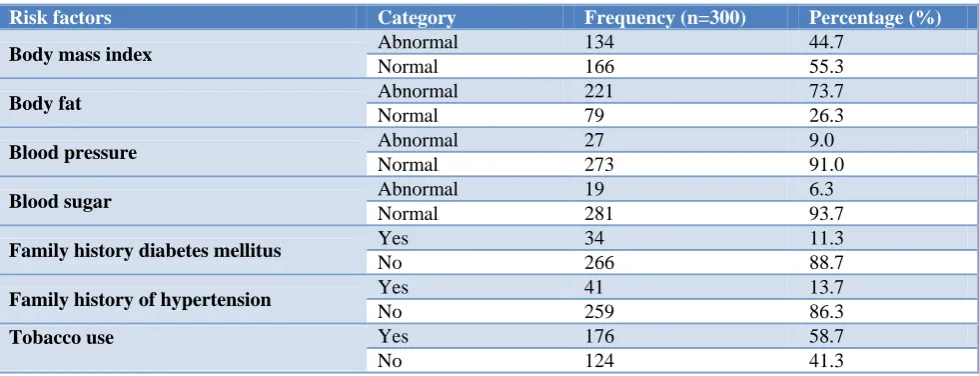
Table 3: Prevalence of risk factors associated with dyslipidemia among study subjects.
Risk factors Category Frequency (n=300) Percentage (%)
Body mass index Abnormal 134 44.7
Normal 166 55.3
Body fat Abnormal 221 73.7
Normal 79 26.3
Blood pressure Abnormal 27 9.0
Normal 273 91.0
Blood sugar Abnormal 19 6.3
Normal 281 93.7
Family history diabetes mellitus Yes 34 11.3
No 266 88.7
Family history of hypertension Yes 41 13.7
No 259 86.3
Tobacco use Yes 176 58.7
Table 4: Prevalence of dyslipidemia among study subjects.
Lipid profile Category Frequency (n=300) Percentage (%)
Cholesterol Normal 254 84.7
Abnormal 46 15.3
Triglycerides Normal 219 73.0
Abnormal 81 27.0
High density lipoprotein (HDL) Normal 114 38.0
Abnormal 186 62.0
Low density lipoprotein (LDL)
Normal 231 77.0
Abnormal 69 23.0
Cho/HDL Normal 148 49.3
Abnormal 152 50.7
Table 5: Age wise distribution of lipid abnormalities.
Age group (years) Hypercholesterolemia (%)
Hypertriglyceridemia (%)
Abnormal cholesterol/ HDL ratio (%)
30-40 13.4 34.8 35.7
41-50 14.1 21.1 56.3
51-60 20.7 25.9 65.5
>60 50 0 100
Table 6: Prevalence of dyslipidemia among males with the risk factors associated with coronary heart disease.
Risk Factors Hypercholesterolemia Hypertriglyceridemia
Abnormal Cholesterol/HDL ratio
BMI (%) Abnormal 18.7 31.3 54.5
Normal 12.7 23.5 47.6
Body Fat (%) Abnormal 18.6 30.8 51.1
Normal 6.3 16.5 49.4
Blood Pressure (%) Abnormal 40.7 44.4 66.7
Normal 12.8 25.3 49.1
Blood sugar (%) Abnormal 15.8 63.2 42.1
Normal 15.3 24.6 51.2
Family h/o HT (%) Yes 14.6 39 41.5
No 15.4 25.1 52.1
Family h/o DM (%) Yes 20.6 35.3 61.8
No 14.7 25.9 49.2
Tobacco users (%) Yes 16.9 25 54
No 14.2 28.2 48.3
Table 2 shows the mean body mass index (BMI) and body fat percentage of study subjects was 24.85 and 27.81 respectively. Mean systolic and diastolic blood pressure was 120.19 and 80.21 respectively. Mean fasting blood sugar was 97.07. Mean serum total cholesterol, triglyceride, HDL, LDL, cholesterol/HDL ratio was 170.24, 127.68, 40.38, 108.55 and 4.31 respectively.
Table 3 shows 44.7% participants had high BMI ≥25, 73.7% had high body fat percentage. 9% of study participants were found to have high BP (Hypertension) for first time. 6.3% had high blood sugar. 58.7% had habit of chewing tobacco.
Table 4 shows 15.3% of the participants had hypercholesterolemia. 27% had hypertriglyceridemia, 62% had low serum HDL and 23% had high serum LDL, 50.7% had high cholesterol/HDL ratio.
Table 6 shows 18.7%, 31.3% and 54.5% with high BMI had hypercholesterolemia, hypertriglyceridemia and abnormal cholesterol/HDL ratio respectively as compared to those with normal BMI. 18.6%, 30.8% and 51.1% with high body fat% had hypercholesterolemia, hypertri-glyceridemia and abnormal cholesterol/HDL ratio respectively as compared to those with normal body
fat%. 40.7%, 44.4% and 66.7% having hypertension had hypercholesterolemia, hypertriglyceridemia and abnormal Cho/HDL ratio respectively as compared to those with normal blood pressure. 16.9% and 54% tobacco users had hypercholesterolemia and abnormal Cholesterol/HDL ratio respectively as compared to non users.
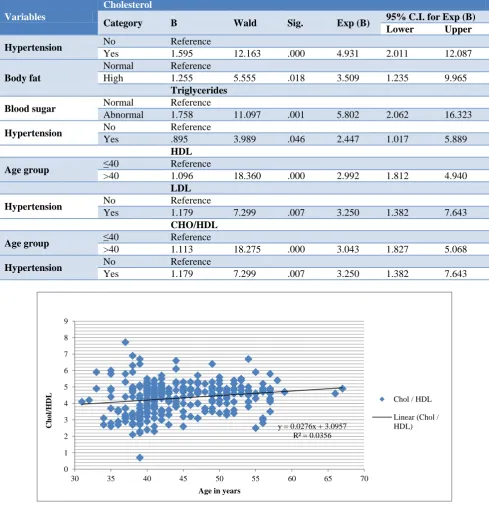
Table 7: Logistic regression analysis showing relationship between risk factors and lipid profile values.
Variables
Cholesterol
Category B Wald Sig. Exp (B) 95% C.I. for Exp (B)
Lower Upper
Hypertension No Reference
Yes 1.595 12.163 .000 4.931 2.011 12.087
Body fat
Normal Reference
High 1.255 5.555 .018 3.509 1.235 9.965
Triglycerides
Blood sugar Normal Reference
Abnormal 1.758 11.097 .001 5.802 2.062 16.323
Hypertension No Reference
Yes .895 3.989 .046 2.447 1.017 5.889
HDL
Age group ≤40 Reference
>40 1.096 18.360 .000 2.992 1.812 4.940
LDL
Hypertension No Reference
Yes 1.179 7.299 .007 3.250 1.382 7.643
CHO/HDL
Age group ≤40 Reference
>40 1.113 18.275 .000 3.043 1.827 5.068
Hypertension No Reference
Yes 1.179 7.299 .007 3.250 1.382 7.643
Figure 1: Graph shows linear correlation between age and cholesterol/HDL ratio.
Table 7 shows logistic regression analysis, abnormal serum cholesterol level was associated with high body fat percentage and hypertension. Abnormal serum triglyceride level was associated with high blood sugar
and hypertension. High LDL level was associated only with hypertension. Abnormal HDL level was associated with age and high cholesterol/HDL ratio was associated with age (>40 years) and hypertension.
y = 0.0276x + 3.0957 R² = 0.0356
0 1 2 3 4 5 6 7 8 9
30 35 40 45 50 55 60 65 70
Cho
l/H
DL
Age in years
Chol / HDL
The linear correlation graph shows positive correlation of cholesterol/HDL ratio levels with age. The cholesterol/ HDL ratio increases with age.
DISCUSSION
Overall the prevalence of dyslipidemia was high (50.7%) among male industrial workers. Hypercholesterolemia, hypertriglyceridemia, low HDL levels, high LDL levels and high cholesterol/HDL ratio was observed in 15.3%, 27%, 62%, 23% and 50.7% study subjects respectively. Multivariate analysis showed dyslipidemia was significantly associated with age, obesity, tobacco use, hypertension and diabetes.
This study findings are almost similar to the ICMR INDIAB study which also showed majority of Indians had high percentage of low HDL, Of the subjects studied, 13.9% had hypercholesterolemia, 29.5% had hypertriglyceridemia, 72.3% had low HDL-C, 11.8% had high LDL-C levels. Blood pressure was significantly higher in those with any lipid abnormality. Dyslipidemia was strongly and positively associated with age ≥60 years, urban residence, overweight, obesity, diabetes and hypertension.20,24 Prevalence of dyslipidemia and hypercholesterolemia was 52.7% and 63.8% respectively among males in Warangal (AP). Association of hypercholesterolaemia with age, sex, body mass index and blood pressure was tested using logistic regression analysis.26 In a village population, in North Kerala, the prevalence of hypercholesterolaemia was 63.8%. High prevalence was seen in those who had a BMI ≥25 kg/m2
(69%) and hypertension (68.8%).26 The findings of these studies almost correlate with the present study.
When compared with studies conducted in different countries. The prevalence of dyslipidemia in this study was higher than Korean population (44%).15 Among the Chinese population it was 35.5%. 44.2% had isolated hypertriglyceridemia, 14.7% had hypercholesterolemia and 28.0% had isolated low high-density lipoprotein cholesterol. Multivariable logistic regression analysis revealed that dyslipidemia was associated with age, education level, and physical activity, obesity in both men and women.19
Dyslipidemia was high in Jordan population (75%) 48.8% had high TC level, 40.7% had high LDL-C, 40.1% had low HDL-C, 43.6% had high triglyceride levels. Age was associated with high triglycerides, high LDL-C, and high TC. Overweight and obese subjects had greater odds of having high triglycerides, high TC, and low HDL-C. Diabetes was associated with increased odds of high triglycerides only.27 The findings were similar to the present study.
Studies from Asia Pacific region showed 33% prevalence of low HDL-C, Overall, low HDL-C levels were more associated obesity and diabetes mellitus compared with
normal levels of HDL-C.28 Dyslipidemia was identified in 14% study subjects in a Canadian cohort study.29
Prevalence of dyslipidemia was 51.8% among Iranian population similar to this study. The prevalence of hypercholesterolemia was 11.4%, hyper-low-density lipoprotein cholesterol was 9.6%, hypertriglyceridemia was 25% and hypo-high-density lipoprotein (HDL) was 34.3%.30
Overall, 66.5% of Thai population had some form of dyslipidemia. Prevalence of high LDL-C, low HDL-C, and high triglycerides were 29.6%, 47.1%, and 38.6%, respectively.31
The prevalence of dyslipidemia and hypertriglceridemia among Saudi population was about 40% and 44% respectively. Logistic regression analysis revealed that obesity/overweight, age, diabetes were the most important significant predictors of dyslipidemia.32
A meta-analysis study from 29 articles in Iran showed high prevalence of dyslipidemia. The prevalence of hypercholesterolemia, hypertriglyceridemia, high LDL and low HDL among Iranian people was 41.6%, 46.0%, 35.5% and 43.9% respectively, except for low HDL which was much higher in this study.33
The Trabzon lipid study showed prevalence of hypercholesterolemia was 37.5%, elevated LDL-C was 44.5%, HDL-C was 21.1%, hypertriglyceridemia was 30.4% among Turkish adults.34 Dyslipidemia was highly prevalent in all the geopolitical zones of Nigeria with the consistent pattern being low HDL-Cholesterol and high LDL-C.35
The prevalence of high blood cholesterol associated with increasing BMI was greatest among Mexican American younger men. Men aged 20 to 39 years with a BMI of ≥27 had more than twice the prevalence of high blood cholesterol as men of that age with a BMI of <25. For men, the direct effects of age and the interaction between BMI and age were significant for high blood pressure and low HDL-C. In regression analysis, low HDL-C was related positively to BMI.36 The results were similar to this study.
help to prevent the development of atherosclerotic cardiovascular diseases (ASCVDs).
ACKNOWLEDGEMENTS
The authors are grateful to Mr. Sushant Korane, statistician from YASHADA, Pune for his statistical assistance.
Funding: No funding sources Conflict of interest: None declared Ethical approval: Not required REFERENCES
1. Merck Manual Last full review/revision 2015 by Anne Carol Goldberg, MD.
2. Caroll MD, Lacher DA, Sorlie PD. Trends in serum lipids and lipoproteins of adults, 1960–2002. JAMA. 2005;294:1773–81.
3. Alwan A. Action Plan for the Global Strategy for the Prevention and Control of Non-communicable Diseases. Report World Health Organization, 2009. 4. Murray CJ, Lopez AD. Mortality by cause for eight
regions of the world: Global Burden of Disease Study. Lancet. 1997;349:1269–76.
5. The global burden of disease: 2004 update. World Health Organization, 2008.
6. NCEP. National Cholesterol Education Program (NCEP) Expert Panel on Detection, Evaluation, and Treatment of High Blood Cholesterol in Adults (Adult Treatment Panel III). Third report of the National Cholesterol Education Program (NCEP) expert panel on detection, evaluation, and treatment of high blood cholesterol in adults (Adult Treatment Panel III) final report. Circulation. 2002;106(25):3143–421.
7. Grundy SM, Cleeman JI, Merz CNB. Implications of recent clinical trials for the national cholesterol education program adult treatment panel III guidelines. Circulation. 2004;110(2):227–39. 8. Reiner Z, Catapano AL, De Backer G, Graham I,
Taskinen MR, Wiklund O, et al. ESC/EAS guidelines for the management of dyslipidemia: the task force for the management of dyslipidemia of the European society of cardiology (ESC) and the European atherosclerosis society (EAS). Eur Heart J. 2011;32(14):1769–818.
9. Stone J, Robinson J, Lichtenstein AH, Merez CNB, Conrad B, Eckel RH, et al. ACC/AHA guideline on the treatment of blood cholesterol to reduce atherosclerotic cardiovascular risk in adults: a report of the American college of cardiology/American heart association task force on practice guidelines. J Am Coll Cardiol. 2013.
10. Anderson TJ, Gregoire J, Hegele RA, Couture P, Mancini J, Pherson RM, et al. 2012 update of the Canadian cardiovascular society guidelines for the diagnosis and treatment of dyslipidemia for the
prevention of cardiovascular disease in the adult. Canadian J Cardiol. 2013;29(2):151–67.
11. Bonow RO, Smaha LA, Smith Jr SC, Bonow RO, Smaha LA, Smith Jr SC, et al. World Heart Day 2002: the international burden of cardiovascular disease: responding to the emerging global epidemic. Circulation. 2002;106:16.
12. In: Mendis S, Puska P, Norrving B, eds. Global atlas on cardiovascular disease prevention and control. Geneva: World Health Organization; 2011.
13. Groundy SM, Small LDL. Atherogenic dyslipidemia and the metabolic syndrome. Circulation. 1997;95:1–4.
14. Global status report on Non Communicable Diseases 2010, WHO Library Cataloguing-in-Publication Data Global status report on non-communicable diseases 2010. Chronic disease - prevention and control, 2010.
15. Lee MH, Kim HC, Vogue S, Wook N, Phil D, Gyu C, et al. Prevalence of Dyslipidemia among Korean Adults: Korea National Health and Nutrition Survey 1998-2005. Diabetes Metab J. 2012;36(1):43-55. 16. Action Plan for the Global Strategy for the
Prevention and Control of Noncommunicable Diseases endorsed by the World Health Assembly in 2008.
17. An International Atherosclerosis Society Position Paper: Global Recommendations for the Management of Dyslipidemia.
18. Wu Z, Yao C, Zhao D, Wu G, Wang W, Liu J. Cardiovascular disease risk factor levels and their relations to CVD rates in China – Results of Sino-MONICA project. Eur J Cardiovasc Prev Rehabil. 2004;11:275–83.
19. Qi L, Ding X, Tang W, Li Q, Mao D, Wang Y. Prevalence and Risk Factors Associated with Dyslipidemia in Chongqing, China, Int J Environ Res Public Health. 2015;12:13455-65.
20. Joshi SR, Anjana RM, Deepa M, Pradeepa R, Bhansali A, Dhandania VK, et al. Prevalence of dyslipidemia in urban & rural India. The ICMR INDIAB study (ICMR-INDIAB-7), PLoSOne. 2014;9:e96808.
21. Definition and Diagnosis of Diabetes Mellitus and Intermediate Hyperglycemia. Report of WHO/IDF Consultation, 2006.
22. A global brief on Hypertension, silent killer, global public health crises World Health Day 2013. 23. Sport and Nutrition, second edition (Human
Kinetics, normal ranges of body weight and body fat by Asker Jeukendrup, and Michael Gleeson). 24. Anjana RM, Pradeepa R, Deepa M, Datta M, Sudha
25. Estari M, Reddy AS, Bikshapathi T, Satyanarayana J, Venkanna L, Reddy MK. The investigation of serum lipids and prevalence of dyslipidemia in urban adult population of Warangal district, Andhra Pradesh, India. Biol Med. 2009;1(2):61-65.
26. Prabhakaran O, Jayasree AK, Karunakaran U, Venugopalan A, Divakaran B, Mayamol TR, et al. Prevalence of hypercholesterolaemia among adults aged over 30 years in a rural area of north Kerala, India: a cross-sectional study, WHO South-East Asia Journal of Public Health, 2016.
27. Khader YS, Batieha A, El Khateeb M. Prevalence of dyslipidemia and its associated factors among Jordanian adults. J Clin Lipidol. 2010;4(1):53–8. 28. Huxley RR, Barzi F, Lam TH. Isolated Low Levels
of High-Density Lipoprotein Cholesterol Are Associated With an Increased Risk of Coronary Heart Disease, An Individual Participant Data Meta-Analysis of 23 Studies in the Asia-Pacific Region, Circulation AHA, 111, 2011.
29. Petrella RJ, Merikle E, Jones J. Prevalence and treatment of dyslipidemia in Canadian primary care: A retrospective cohort analysis. Clin Therap. 2007;29(4):742-50.
30. Mohammadbeigi A, Moshiri E, Mohammadsalehi N, Ansari H, Ahmadi A. Dyslipidemia Prevalence in Iranian Adult Men: The Impact of Population-Based Screening on the Detection of Undiagnosed Patients. World J Mens Health. 2015;33(3):167-73. 31. Aekplakorn W, Taneepanichskul S, Pattapong K,
Virasakdi C, Panwaadeede P, Sritara P, et al. Prevalence of Dyslipidemia and Management in the
Thai Population, National Health Examination Survey IV, 2009 Journal of Lipids. 2014(2014):249584.
32. Al-Kaabba AF, Al-Haman NA, El Tahir A, Abdalla AM, Saeed AA, Hamza MA. Prevalence and Correlates of Dyslipidemia among Adults in Saudi Arabia: Results from a National Survey, Open J Endocrine Metabolic Dis. 2012;2(4):89-97.
33. Tabatabaei-Malazy O1, Qorbani M2, Samavat T3, Sharifi F4, Larijani B5, Fakhrzadeh H. Prevalence of Dyslipidemia in Iran: A Systematic Review and Meta-Analysis Study, Int J Prev Med. 2014;5(4):373-93.
34. Erem C, Hacihasanoglu A, Deger O, Kocak M, Topbas M. Prevalence of dyslipidemia and its associated risk factors among Turkish adults. Trbzon Lipid study. Endocrine, 2008,34:36-51. 35. Oguejiofor OC, Onwukwe CH, Odenigbo CU.
Dyslipidemia in Nigeria: Prevalence and pattern. Annals African Med. 2012;11(4):197-202.
36. Brown CD, Higgins M, Donato KA, Rohde, Robert Garison FC, Obaranek E, et al. Body Mass Index and the Prevalence of Hypertension and Dyslipidemia. Obesity Res. 2000;8(9):605-19.