Harmony Search (HS) Algorithm for Solving
Optimal Reactive Power Dispatch Problem
K. Lenin, B. Ravindranath Reddy, and M. Surya Kalavathi
Jawaharlal Nehru Technological University Kukatpally, Hyderabad 500 085, IndiaEmail: [email protected], www.jntu.ac.in
—In this paper, a new Harmony Search algorithm (HS) is proposed to solve the Optimal Reactive Power Dispatch (ORPD) Problem. The ORPD problem is formulated as a nonlinear constrained single-objective optimization problem where the real power loss and the bus voltage deviations are to be minimized separately. In order to evaluate the proposed algorithm, it has been tested on IEEE 30 bus system consisting 6 generator and compared other algorithms reported those before in literature. Results show that HS is more efficient than others for solution of single-objective ORPD problem.
Index Terms—modal analysis, optimal reactive power, transmission loss Harmony Search, metaheuristic, optimization
I. INTRODUCTION
In recent years the optimal reactive power dispatch (ORPD) problem has received great attention as a result of the improvement on economy and security of power system operation. Solutions of ORPD problem aim to minimize object functions such as fuel cost, power system loses, etc. while satisfying a number of constraints like limits of bus voltages, tap settings of transformers, reactive and active power of power resources and transmission lines and a number of controllable Variables [1], [2]. In the literature, many methods for solving the ORPD problem have been done up to now. At the beginning, several classical methods such as gradient based [3], interior point [4], linear programming [5] and quadratic programming [6] have been successfully used in order to solve the ORPD problem. However, these methods have some disadvantages in the Process of solving the complex ORPD problem. Drawbacks of these algorithms can be declared insecure convergence properties, long execution time, and algorithmic complexity. Besides, the solution can be trapped in local minima [1], [7]. In order to overcome these disadvantages, researches have successfully applied evolutionary and heuristic algorithms such as Genetic Algorithm (GA) [2], Differential Evolution (DE) [8] and Particle Swarm Optimization (PSO) [9]. It is reported in those that evolutionary or heuristic algorithms are more efficient than classical algorithms for solving the RPD problem.
Manuscript received May 20, 2013; revised December 1, 2013.
During the last decades a lot of population-based Meta heuristic algorithms were proposed. One population-based category is the evolutionary population-based algorithms including Genetic Programming, Evolutionary Programming, Evolutionary Strategies, Genetic Algorithms, Differential Evolution, Harmony Search algorithm, etc. Other category is the swarm based algorithms including Ant Colony Optimization, Particle Swarm Optimization, Bees Algorithms, Honey Bee Mating Optimization, etc. The harmony search algorithm (Geem et al. 2006) is one of the most recently developed optimization algorithm [10] and at a same time, it is one the most efficient algorithm in the field of combinatorial optimization (Geem 2007a) [11]. Consequently, this algorithm guided researchers to improve on its performance to be in line with the requirements of the applications being developed. The remarkable property of this algorithm is that it is capable of global search in a rather large space, insensitive to initial values and not easy to stick in the local optimal solution. In this paper, we propose this powerful algorithm for solving reactive power dispatch problem. The effectiveness of the proposed approach is demonstrated through IEEE-30 bus system. The test results show the proposed algorithm gives better results with less computational burden and is fairly consistent in reaching the near optimal solution.
II. FORMULATION OF ORPDPROBLEM
The objective of the ORPD problem is to minimize one or more objective functions while satisfying a number of constraints such as load flow, generator bus voltages, load bus voltages, switchable reactive power compensations, reactive power generation, transformer tap setting and transmission line flow. In this paper two objective functions are minimized separately as single objective.In this paper and constraints are formulated taking from [1] and shown as follows.
A. Minimization of Real Power Loss
It is aimed in this objective that minimizing of the real power loss (Ploss) in transmission lines of a power system.
This is mathematically stated as follows.
∑
(1)
where n is the number of transmission lines, gk is the
conductance of branch k, Viand Vjare voltage magnitude
at bus i and bus j, and θij is the voltage angle difference
between bus i and bus j.
B. Minimization of Voltage Deviation
It is aimed in this objective that minimizing of the deviations in voltage magnitudes (VD) at load buses. This is mathematically stated as follows.
Minimize VD = ∑ | | (2)
where nl is the number of load busses and Vk is the
voltage magnitude at bus k.
C. System Constraints
In the minimization process of objective functions, some problem constraints which one is equality and others are inequality had to be met. Objective functions are subjected to these constraints shown below.
Load flow equality constraints:
∑ [
]
(3)
∑ [
]
(4)
where, nb is the number of buses, PGand QGare the real
and reactive power of the generator, PD and QD are the
real and reactive load of the generator, and Gijand Bijare
the mutual conductance and susceptance between bus i and bus j.Generator bus voltage (VGi) inequality
constraint:
(5)
Load bus voltage (VLi) inequality constraint:
(6)
Switchable reactive power compensations (QCi)
inequality constraint:
(7)
Reactive power generation (QGi) inequality constraint:
(8)
Transformers tap setting (Ti) inequality constraint:
(9)
Transmission line flow (SLi) inequality constraint:
(10)
where, nc, ng and nt are numbers of the switchable reactive power sources, generators and transformers. The load flow equality constraints are satisfied by Power flow algorithm. The generator bus voltage (VGi), the
transformer tap setting (Ti) and the Switchable reactive
power Compensations (QCi) are optimization variables.
The limits on active power generation at the slack
bus(PGs), load bus voltages (VLi) and reactive power
generation (QGi), transmission line flow (SLi) are state
variables. They are restricted by adding a penalty function to the objective functions.
III. HARMONY SEARCH ALGORITHM
Harmony search (HS) Geem et al. [10], [11] is a relatively new population-based metaheuristic optimization algorithm, that imitates the music improvisation process where the musicians improvise their instruments’ pitch by searching for a perfect state of harmony. It was able to attract many researchers to develop HS-based solutions for many optimization[12]-[16] problems such as music composition ,ground water modeling (Ayvaz 2007, 2009) [17]-[23]. HS imitates the natural phenomenon of musicians’ behavior when they cooperate the pitches of their instruments together to achieve a fantastic harmony as measured by aesthetic standards. This musicians’ prolonged and intense process led them to the perfect state. It is a very successful metaheuristic algorithm that can explore the search space of a given data in parallel optimization environment, where each solution (harmony) vector is generated by intelligently exploring and exploiting a search space It has many features that make it as a preferable technique not only as standalone algorithm but also to be combined with other metaheuristic algorithms.Harmony search as mentioned mimic the improvisation process of musicians’ with an intelligent way. The analogy between improvisation and optimization is likely as follows [10], [11]:
1. Each musician corresponds to each decision variable; 2. Musical instrument’s pitch range corresponds to the decision variable’s value range;
3. Musical harmony at a certain time corresponds to the solution vector at certain iteration;
4. Audience’s aesthetics corresponds to the objective function.
Just like musical harmony is improved time after time, solution vector is improved iteration by iteration. In general, HS has five steps and they are described as in Geem et al. [10], [11] as follow:
The optimization problem is defined as follow: minimize\maximize f (a),
Subject to ai∈Ai, i = 1, 2, . . . , N (11)
where f (a) is an objective function; a is the set of each decision variable (ai );Ai is the set of possible range of values for each decision variable, ; and
N is the number of decision variables.
Then, the parameters of the HS are initialized. These parameters are:
1. Harmony Memory Size (HMS) (i.e. number of solution vectors in harmony memory);
2. Harmony Memory considering Rate (HMCR), where HMCR ∈ [0, 1];
3. Pitch Adjusting Rate (PAR), where PAR ∈ [0, 1];
A. Initialize Harmony Memory
The harmony memory (HM) is a matrix of solutions with a size of HMS, where each harmony memory vector represents one solution as can be seen in Eq. 3. In this step, the solutions are randomly constructed and rearranged in a reversed order to HM, based on their objective function values such as
f( a1 ) ≤ f( a2 ) ... ≤ f ( a HMS ) .
HM
=
[
|
|
]
(12)
This step is the essence of the HS algorithm and the cornerstone that has been building this algorithm. In this step, the HS generates (improvises) a new harmony vector,
= ( ). It is based on three operators:
memory consideration; pitch adjustment; or random consideration. In the memory consideration, the values of the new harmony vector are randomly inherited from the historical values stored in HM with a probability of HMCR. Therefore, the value of decision variable ( is chosen from ( that is ( is chosen from ( and the other decision variables, ( are chosen consecutively in the same manner with the probability of HMCR ∈ [0, 1]. The usage of HM is similar to the step where the musician uses his or her memory to generate an excellent tune. This cumulative step ensures that good harmonies are considered as the elements of New Harmony vectors. Out of that, where the other decision variable values are not chosen from HM, according to the HMCR probability test, they are randomly chosen according to their possible range, This case is referred to as random consideration (with a probability of (1−HMCR)), which increases the diversity of the solutions and drives the system further to explore various diverse solutions so that global optimality can be attained. The following equation summarized these two steps i.e. memory consideration and random consideration.
(13)
Furthermore, the additional search for good solutions in the search space is achieved through tuning each decision variable in the new harmony vector,
=
( ) inherited from HM using PAR operator.These decision variables
(
)
are examined and to be tuned with the probability of PAR ∈ [0, 1] as in Eq. (14).(14)
If a generated random number rnd ∈ [0, 1] within the probability of PAR then, the new decision variable ) will be adjusted based on the following equation:
) = )±rand()*bw (15)
Here, bw is an arbitrary distance bandwidth used to improve the performance of HS and (rand()) is a function that generates a random number ∈ [0, 1]. Actually, bw determines the amount of movement or changes that may have occurred to the components of the new vector. The value of bw is based on the optimization problem itself i.e. continuous or discrete. In general, the way that the parameter (PAR) modifies the components of the new harmony vector is an analogy to the musicians’ behavior when they slightly change their tone frequencies in order to get much better harmonies. Consequently, it explores more solutions in the search space and improves the searching abilities.
B. Update the Harmony Memory
In order to update HM with the new generated vector
the objective function is calculated for each New Harmony vector f ( If the objective function value for the new vector is better than the worst harmony vector stored in HM, then the worst harmony vector is replaced by the new vector. Otherwise, this new vector is ignored.
(16)
However, for the diversity of harmonies in HM, other harmonies (in terms of least-similarity) can be considered. Also, the maximum number of identical harmonies in HM can be considered in order to prevent premature HM.
C. Check the Stopping Criterion
The iteration process in steps 3&4 is terminated when the maximum number of improvisations (NI) is reached. Finally, the best harmony memory vector is selected and is considered to be the best solution to the problem under investigation.
IV. HARMONY SEARCH CHARACTERISTICS
adjustment, is a fine-tuning process of local solutions that ensures that good local solutions are retained, while it adds a new room for exploring new solutions. Further to that, pitch adjustment operator can also be considered as a mechanism to support the intensification of HS through controlling the probability of PAR. The intensification in the HS algorithm is represented by the third HS operator, memory consideration. A high harmony acceptance rate means that good solutions from the history/memory are more likely to be selected or inherited. This is equivalent to a certain degree of elitism. Obviously, if the acceptance rate is too low, solutions will converge more slowly.
A. Variants of Harmony Search
Harmony search algorithm got the attention of many researchers to solve many optimization problems such as engineering and computer science problems. Consequently, the interest in this algorithm led the researchers to improve and develop its performance in line with the requirements of problems that are solved. These improvements primarily cover two aspects: (1) improvement of HS in term of parameters setting, and (2) improvements in term of hybridizing of HS components with other metaheuristic algorithms. This section will highlight these developments and improvements to this algorithm in the ten years of this algorithm’s age. The first part introduces the improvement of HS in term of parameters setting, while the second part introduces the development of HS in term of hybridizing of HS with other metaheuristic algorithms.
B. Variants Based on Parameters Setting
The proper selection of HS parameter values is considered as one of the challenging task not only for HS algorithm but also for other metaheuristic algorithms. This difficulty is a result of different reasons, and the most important one is the absence of general rules governing this aspect. Actually, setting these values is problem dependant and therefore the experimental trials are the only guide to the best values. However, this matter guides the research into new variants of HS. These variants are based on adding some extra components or concepts to make part of these parameters dynamically adapted. The proposed algorithm includes dynamic adaptation for both pitch adjustment rate (PAR) and bandwidth (bw) values. The PAR value is linearly increased in each iteration of HS by using the following equation:
PAR (gn) = PAR min +
(17)
where PAR(gn) is the PAR value for each generation, PARmin and PARmax are the minimum pitch adjusting rate and maximum pitch adjusting rate respectively. NI is the maximum number of iterations (improvisation) and gn is the generation number. The bandwidth (bw) value is exponentially decreased in each iteration of HS by using the following equation:
bw(gn) = bwmin +
(18)
where bw(gn) is the bandwidth value for each generation, bwmax is the maximum bandwidth, bwmin is the minimum bandwidth and gn is the generation number.
V. SIMULATION RESULTS
TABLE I. BEST CONTROL VARIABLES SETTINGS FOR DIFFERENT TEST CASES OF PROPOSED APPROACH
Control Variables setting
Case 1: Power Loss
Case 2:
Voltage Deviations
VG1 1.034 0.981
VG2 1.016 0.942
VG5 1.014 1.032
VG8 1.018 1.011
VG11 1.023 1.090
VG13 0.964 1.051
VG6-9 1.058 0.902
VG6-10 1.077 1.023
VG4-12 1.090 1.025
VG27-28 1.028 0.913
Power Loss (Mw) 3.89004 5.283 Voltage deviations 0.7881 0.1090
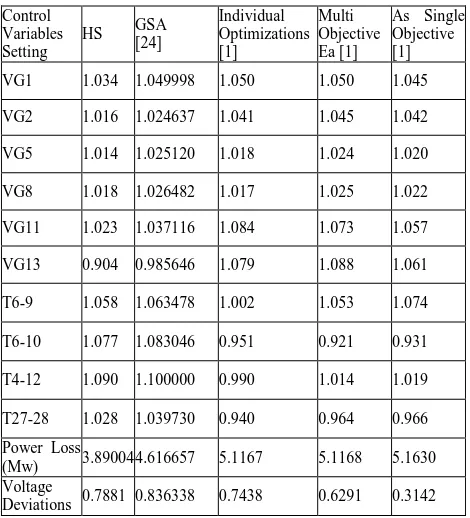
TABLE II. COMPARISON OF THE SIMULATION RESULTS FOR POWER LOSS
Control Variables Setting
HS GSA [24]
Individual Optimizations [1]
Multi Objective Ea [1]
As Single Objective [1]
VG1 1.034 1.049998 1.050 1.050 1.045
VG2 1.016 1.024637 1.041 1.045 1.042
VG5 1.014 1.025120 1.018 1.024 1.020
VG8 1.018 1.026482 1.017 1.025 1.022
VG11 1.023 1.037116 1.084 1.073 1.057
VG13 0.904 0.985646 1.079 1.088 1.061
T6-9 1.058 1.063478 1.002 1.053 1.074
T6-10 1.077 1.083046 0.951 0.921 0.931
T4-12 1.090 1.100000 0.990 1.014 1.019
T27-28 1.028 1.039730 0.940 0.964 0.966
Power Loss
(Mw) 3.89004 4.616657 5.1167 5.1168 5.1630 Voltage
Deviations 0.7881 0.836338 0.7438 0.6291 0.3142
number of the optimized control variables is 10 in this problem. The minimum voltage magnitude limits at all buses are0.95 pu and the maximum limits are 1.1 pu for generator buses 2, 5, 8, 11, and 13, and 1.05 pu for the remaining buses including the reference bus 1. The minimum and maximum limits of the transformers tapping are 0.9 and 1.1pu respectively [1]. The optimum control parameter settings of proposed approach are given in Table I. The best power loss and best voltage deviations obtained from proposed approach are 3.89004 MW and 0.7881 respectively. The results obtained from Proposed algorithm have been compared other methods in the literature. The results of this comparison are given in Table II. The results in Tables I and II show’s that the reactive dispatch and voltage deviations solutions specified by the proposed HS approach lead to lower active power loss and voltage deviations than that by the ref. [1] simulation results, which confirms that the proposed approach is well capable of specification the optimum solution.
VI. CONCLUSION
In this paper, one of the recently developed stochastic algorithms HS has been demonstrated and applied to solve optimal reactive power dispatch problem. The problem has been formulated as a constrained optimization problem. Different objective functions have been considered to minimize real power loss, to enhance the voltage profile. The proposed approach is applied to optimal reactive power dispatch problem on the IEEE 30-bus power system. The simulation results indicate the effectiveness and robustness of the proposed algorithm to solve optimal reactive power dispatch problem in test system. The HS approach can reveal higher quality solution for the different objective functions in this paper.
REFERENCES
[1] M. A. Abido and J. M. Bakhashwain, “A novel multiobjective evolutionaryalgorithm for optimal reactive power dispatch problem,” in Proc. Electronics, Circuits and Systems Conf., vol. 3, 2003, pp. 1054-1057.
[2] W. N. W. Abdullah, H. Saibon, A. A. M. Zain, and K. L. Lo, “Genetic algorithm for optimal reactive power dispatch,” in Proc. Energy Management and Power Delivery Conf., vol. 1, 1998, pp. 160-164.
[3] K. Y. Lee, Y. M. Park, and J. L. Ortiz, “Fuel-cost minimisation for both realandreactive-power dispatches,” in Proc. Generation, Transmission and Distribution Conf., vol. 131, 1984, pp. 85-93. [4] S. Granville, “Optimal reactive dispatch trough interior point
methods,” IEEE Trans. on Power Systems, vol. 9, pp. 136-146, 1994.
[5] N. I. Deeb and S. M. Shahidehpour, “An efficient technique for reactive power dispatch using a revised linear programming approach,” Electric Power System Research, vol. 15, pp. 121-134, 1988.
[6] N. Grudinin, “Reactive power optimization using successive quadratic programming method,” IEEE Trans. on Power Systems, vol. 13, pp. 1219-1225, 1998.
[7] M. A. Abido, “Optimal power flow using particle swarm optimization,” Electrical Power and Energy Systems, vol. 24, pp. 563-571, 2002.
[8] A. A. Ela, M. A. Abido, and S. R. Spea, “Differential evolution algorithm for optimal reactive power dispatch,” Electric Power Systems Research, vol. 81, pp. 458-464, 2011.
[9] V. Miranda and N. Fonseca, “EPSO-evolutionary particle swarm optimization, a new algorithm with applications in power systems,” in Proc. of Transmission and Distribution Conf., vol. 2, 2002, pp. 745-750.
[10] Z. Geem, “Improved harmony search from ensemble of music players,”. in Knowledge-Based Intelligent Information and Engineering Systems, B. Gabrys, R. J. Howlett, L. Jain, Eds. Springer, Heidelberg, 2006, pp. 86–93.
[11] Z. Geem, “Optimal scheduling of multiple dam system using harmony search algorithm,” in Computationaland Ambient Intelligence, Springer, Berlin, 2007, pp. 316–323.
[12] Y. M. Cheng, L. Li, T. Lansivaara, S. C. Chi, and Y. J. Sun, “An improved harmony search minimization algorithm using different slip surface generation methods for slope stability analysis,” Eng Optim, vol. 40, pp. 95–115, 2008.
[13] S. Degertekin, “Optimum design of steel frames using harmony search algorithm,” Struct Multidisciline Optimum, vol. 36, no. 4, pp. 393–401, 2008.
[14] M. Fesanghary, M. Mahdavi, M. Minary-Jolandan, and Y. Alizadeh, “Hybridizing harmony search algorithm with sequential quadratic programming for engineering optimization problems,” Comput Methods Appl Mech Eng., vol. 197, no. 33–40, pp. 3080– 3091.2008
[15] X. Z. Gao, X. Wang, and S. J. Ovaska, “Modified harmony search methods for uni-modal and multi-modal optimization,” in Proc. 8th International Conference on Hybrid Intelligent Systems, 2008, pp. 65–72.
[16] X. Z. Gao, X. Wang, and S. J. Ovaska, “Uni-modal and multi-modal optimization using modified harmony search methods,” Int J Innov Comput Inf Control, 2009.
[17] O. M. Alia, R. Mandava, and M. E. Aziz, “A hybrid harmony search algorithm to mri brain segmentation,” in Proc. 9th IEEE International Conference on Cognitive Informatics, Tsinghua University, Beijing, China, 2010, pp. 712–719.
[18] M. Al-Betar, A. Khader, and I. Liao, “A harmony search with multi-pitch adjusting rate for the university course timetabling,” in Recent Advances in Harmony Search Algorithm, Z. Geem, Ed, Springer-Verlag, Berlin, Heidelberg, 2010, pp. 147–161. [19] M. A. Al-Betar, A. T. Khader, and T. A. Gani, “A harmony search
algorithm for university course timetabling,” in Proc. 7th International Conference on the Practice and Theory of Automated Timetabling, Montreal, Canada, 2008.
[20] M. A. Al-Betar, A. T. Khader, and F. Nadi, “Selection mechanisms in memory consideration for examination timetabling with harmony search,” in Proc. 12th Annual Conference on Genetic and Evolutionary Computation. ACM, Portland, Oregon, USA, 2010, pp. 1203–1210.
[21] M. T. Ayvaz, “Simultaneous determination of aquifer parameters and zone structures with fuzzy c-means clustering and meta-heuristic harmony search algorithm,” Adv Water Resour, vol. 30, no. 11, pp. 2326–2338, 2007.
[22] M. T. Ayvaz, (2009) “Application of harmony search algorithm to the solution of groundwater management models,” Adv Water Resour, vol. 32, no. 6, pp. 916–924, 2009.
[23] M. T. Ayvaz, A. H. Kayhan, H. Ceylan, and G. Gurarslan, ”Hybridizing the harmony search algorithm with a spreadsheet ‘solver’ for solving continuous engineering optimization problems,” EngOptim., vol. 41, no. 12, pp. 1119– 1144, 2009.
[24] S. Duman, Y. Sonmez, U. Guvenc, and N. Yorukeran, “Application of gravitational search algorithm for optimal reactive power dispatch problem,” IEEE Trans on Power System, pp. 519-523, 2011.
K. Lenin has received his B.E., Degree, electrical
M. Surya Kalavathi has received her B.Tech. Electrical and Electronics Engineering from SVU, Andhra Pradesh, India and M.Tech, power system operation and control from SVU, Andhra Pradesh, India. she received her Phd. Degree from JNTU, hyderabad and Post doc. From CMU – USA. Currently she is Professor and Head of the electrical and electronics engineering department in JNTU, Hyderabad, India and she has Published 16 Research Papers and presently guiding 5 Ph.D. Scholars. She has specialised in Power Systems, High Voltage Engineering and Control Systems. Her research interests include Simulation studies on
Transients of different power system equipment. She has 18 years of experience. She has invited for various lectures in institutes.
Bhumanapally Ravindhranath Reddy, Born on 3rd September,1969.