I
nternational
J
ournal of
Agriculture and Biosciences
www.ijagbio.com; [email protected]Research Article
Performance and Blood Profiles of Feedlot Bunaji Bulls Fed Diets Containing
Graded Levels of Shea Nut Cake
Wuanor AA
1*, Abang PB
2, Agbo C
2and Haruna IY
21Department of Animal Nutrition, University of Agriculture, Makurdi, Nigeria 2Department of Animal Production, University of Agriculture, Makurdi, Nigeria
*Corresponding author: [email protected]
Article History: Received: February 15, 2018 Revised: May 17, 2018 Accepted May 22, 2018
AB ST RACT
This preliminary study was carried out to assess the effect of feeding diets containing varying levels of Shea nut cake (SNC) on the growth performance and blood profiles of feedlot Bunaji bulls. Six Bunaji bulls, aged two years and weighing averagely 142 Kg were allotted to three dietary treatments (T1, T2 and T3) in which Shea nut cake was included at 0.0, 5.0 and 10.0% respectively at the expense of maize offal in a Completely Randomized experimental Design. Other feed inputs used in formulating the diets included palm kernel cake, brewer dried grain, melon seed husk meal, bone ash and table salt. The experimental diets were fed to the bulls for 90 days at the rate of 3.0% body weight while elephant grass and drinking water were offered ad libitum. Growth performance indices measured were feed intake, water intake, daily body weight change and feed conversion ratio while haematological indices assessed were white blood cells, red blood cells, haemoglobin, parked cell volume, mean corpuscular volume, mean corpuscular haemoglobin, mean corpuscular haemoglobin concentration, neutrophils, lymphocytes, eosinophils, monocytes, basophils and platelets. Results showed that, of the growth performance indices measured, only the average daily concentrate intake, average daily water intake and total body weight gain differed significantly (P<0.05) while the average daily forage intake, average daily total feed intake, average daily body weight gain, feed conversion ratio and final body weight did not differ significantly (P>0.05). In a similar vein, only the WBC differed significantly (P<0.05) while the other haematological parameters did not show any significant difference (P>0.05). It was concluded that dietary inclusion of SNC did not exhibit any deleterious effect on growth performance and haematological indices of the Bunaji bulls. It was recommended that Bunaji cattle farmers could include SNC at 5% in diets for feedlot fattening of Bunaji bulls.
Key words: Performance; Haematological parameters; Bunaji bulls; Shea nut cake
INTRODUCTION
Cattle, like other ruminants, feed mainly on scabrous forages as their basal diets. These forages have scant nutritional profiles (Bonnier et al., 2004) and need to be supplemented with concentrates to ensure enhanced performance of the stock, particularly in the tropical world where forages grow fast due to high sunshine rate and lignify early leading to reduced nutrient content. Among these concentrates, many agro industrial by products have been used to supplement forage feeding of ruminants, and enhanced growth performance and other evaluated parameters were reported (Ikurior and Akem, 1998; Bamikole and Ikhatua, 2007; Ayoade, 2010; Wuanor et al., 2015; Adelusi et al., 2018; Oloche et al., 2018). The
necessity of feeding the ruminants quality rations lies in the utility derived from the stock in form of meat, milk, aesthetic value, economic benefits, draft power amongst many other uses.
The geometrical increase in human population in Nigeria has necessitated research into production and management techniques that will ensure production of food to feed the populace. Of this food requirement, meat stands out in importance in ensuring health of the people as it provides essential nutrients that cannot be harvested from feeding on cereal based food (Akinusu, 1999; Atteh, 2011). The internal meat production of Nigeria is supplied mainly by cattle, of which the Bunaji or White Fulani makes up to 50% (Olayiwole and Olorunju, 2015). Current pressure on land usage and the need to migrate
Cite This Article as: Wuanor AA, PB Abang, C Agbo and IY Haruna, 2018. Performance and blood profiles of feedlot
bunaji bulls fed diets containing graded levels of shea nut cake. Inter J Agri Biosci, 7(2): 106-111. www.ijagbio.com
from traditional to modern day animal agriculture has led to emphasis on the intensive system of cattle production (Bozkurt, 2012). The feedlot system of feeding cattle has been attributed with many advantages including enabling the animals to put on appreciable body weights in comparably smaller time frame (Kiely, 2011), reducing the cattle feeding cost without impact on the animal gain (Angelo et al., 2014), reaping of economic benefits (Olayiwole, 1982) and elimination of violent and fatal crashes between crop farmers and cattle rearers (Wuanor
et al., 2015). Previous reports have reported encouraging performance when Bunaji and other cattle breeds were managed in feedlot (Olayiwole and Olorunju, 2015). The need to expand the feed resource base for intensive feeding of cattle led to conception of the idea to evaluate use of Shea nut cake in feedlot fattening of Bunaji bulls.
Shea nut cake (SNC) is generated as a waste product during Shea butter extraction from fruits of Shea nut tree (Vitellaria paradoxa) and it abounds in most West African countries. Abdul-Mumeen et al. (2013) estimated the annual production of Shea kernels in excess of 2.5 million tons with approximately 55% ending up as Shea nut cake. Shea nut cake has been reported to be composed of proximate constituents, minerals, and phyto-chemical components (Atuahene et al., 1998; Oddoye et al., 2012). It can be used to replace high cost energy and protein supplements and reduce feed cost due to its cheaper cost (Kumar, 2015). The quality of the Shea nut cake is determined by the levels of constituents of each of these parameters. The fruits of the Vitellaria paradoxa tree which abounds in Nigeria, on ripening, are collected and processed for Shea butter extraction giving rise to Shea nut cake as a waste product. Use of the cake in feeding monogastric animals is constrained by its composition of anti nutritive components (Atuahene et al., 1998; Rhule, 1999; Dei et al., 2007). However, in ruminant feeding, Konlan (2010) reported that the inclusion of Shea nut cake up to 23% in the supplemental diets of growing Djallonke sheep fed crop residues (rice straw and groundnut haulms) led to improved growth performance, depression in the straw intake, increased dry matter digestibility and positively improved the average daily growth rate of the sheep. It is reasoned that converting Shea nut cake to feedlot fattening of Bunaji bulls will add an additional feed resource, necessary for reducing feed scarcity and ensuring productivity of the animals. Additionally, the Shea butter extractors will enjoy enhanced revenue generation accruing from sale of the cake to Bunaji bulls’ fatteners. The objective of the study was to evaluate the effect of dietary inclusion of Shea nut cake (SNC) on growth performance and haematological profiles of feedlot Bunaji bulls.
MATERIALS AND METHODS
Study environment
The study was conducted at the Cattle Unit of the Livestock Teaching and Research Farm of the University of Agriculture, Makurdi. Makurdi is located on Latitude 7°43'N and Longitude 7°3'E and a height of 90 meters above sea level in the Southern Guinea Savannah ecological zone of Nigeria. The rainy season spans from May to October, while dry season spans from November
to April, mean annual rainfall ranges from 1270 to 1397 mm. Mean temperature ranges from 22.3°C to 33.41°C; the mean relative humidity is 64.58% (Ahemen et al., 2011). The University of Agriculture is located on a land mass of 7,986.22 hectares (FGN Visitation Report 2011) out of which less than half is occupied by buildings and crop farm, the rest of the land is natural grassland unto which cattle are grazed.
Experimental Animals and Management
The feeding trial was conducted using a total of six, two year old Bunaji bulls (White Fulani bulls), averagely 142 Kg body weight sourced from the International Cattle Market, North Bank, Makurdi. The animals were housed individually in stalls measuring 3.6 m X 2.5 m (Length and width) constructed of wood and roofed using corrugated iron sheets and fed the experimental diets for a period of 90 days. Before the arrival of the bulls, the feeding and watering troughs as well as the stalls were thoroughly cleaned and disinfected. The bulls, on arrival were quarantined for a period of three weeks during which they were ear tagged for individual identification and all other acclimatization protocols were administered on them before the commencement of the study. The bulls underwent a prophylactic treatment against parasites and diseases as outlined below:
a. Tridox® L.A. injection (antibiotic) was administered 1ml /10kg body weight intramuscularly.
b. Albendazol 2.5% (anti helminthic) was given orally c. Samorin ®injection (against Trypanosomiasis) was
administered intramuscularly (i/m) at the rate of 2.0 ml per bull.
d. Vita-flash, a multivitamin was administered intramuscularly at the rate of 1.0 ml per 10 kg body weight
e. Amguard body spray (against ecto parasites) was reconstituted at 15mls / 15.5 litres of water and sprayed topically on the bulls.
Sources of feedstuffs
The feed inputs used in formulating the experimental diets were bought from reputable local dealers.
Experimental diets
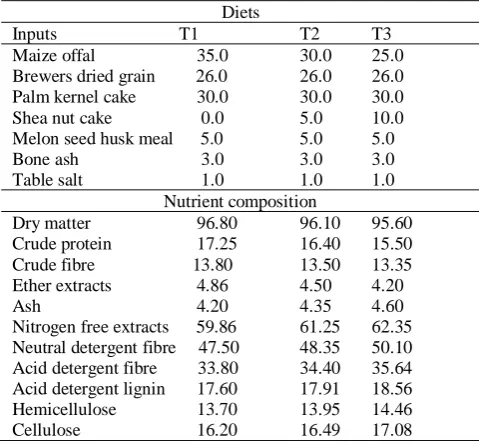
Three experimental diets were formulated to contain 0.0% (T1), 5.0 (T2) and 10.0% Shea nut cake respectively (Table 1).
Experimental feeding
On a daily basis, the bulls were fed the experimental diets at 3.0% of body weight while elephant grass and drinking water were fed ad libitum for a period of thirty days.
Experimental design
The Completely Randomized Experimental Design was used for the study.
Nutrient and chemical determination
Table 1: Composition of experimental diets containing Shea nut cake fed to feedlot Bunaji bulls (%).
Diets
Inputs T1 T2 T3 Maize offal 35.0 30.0 25.0 Brewers dried grain 26.0 26.0 26.0 Palm kernel cake 30.0 30.0 30.0 Shea nut cake 0.0 5.0 10.0 Melon seed husk meal 5.0 5.0 5.0 Bone ash 3.0 3.0 3.0 Table salt 1.0 1.0 1.0
Nutrient composition
Dry matter 96.80 96.10 95.60 Crude protein 17.25 16.40 15.50 Crude fibre 13.80 13.50 13.35 Ether extracts 4.86 4.50 4.20 Ash 4.20 4.35 4.60 Nitrogen free extracts 59.86 61.25 62.35 Neutral detergent fibre 47.50 48.35 50.10 Acid detergent fibre 33.80 34.40 35.64 Acid detergent lignin 17.60 17.91 18.56 Hemicellulose 13.70 13.95 14.46 Cellulose 16.20 16.49 17.08
Table 2: Proximate composition of Shea nut cake. Component Value (%) Dry matter
Crude protein Crude fibre Ether extracts Ash
Nitrogen free extracts
93.65 14.50 8.60 14.70
5.38 56.82
Production performance assessment
Daily feed and water intakes were determined by weighing the remnant of the previous day weighed feeds and water served the bulls. Body weight changes were estimated as the difference between initial and final weights, feed conversion ratio (FCR) was calculated using the formula FCR = Total body weight gain/total feed intake. The bulls were weighed at the beginning of the experiment (initial body weight) and weekly thereafter. The weekly body weight gain was obtained by subtracting the current week’s weight from previous week’s weight while daily body weight gain was obtained by dividing the weekly weight by seven. Total body weight gain was calculated as the difference between the initial weight and the final weight. Feed conversion ratio was obtained as the ratio of the total feed consumed to the total weight gain.
Haematological Performance assessment
On the last day of the study, blood samples were taken from the bulls by jugular vein puncture and used for haematological parameters assessment by 3500 Autohaemo analyzer
Statistical analysis
Collected were subjected to analysis of variance (ANOVA) using the one – way ANOVA package of Minitab Statistical Software which also separated means where significant differences occurred.
RESULTS AND DISCUSSION
Proximate analysis of the Shea nut cake
The proximate composition of the Shea nut cake used in the study is shown in table 2. Values for dry matter, crude protein, crude fibre, ether extract, ash and nitrogen free extracts were 93.65, 14.50, 8.60, 14.70, 5.38 and 56.82% respectively. The dry matter content compares favourably with values reported by other authors which ranged from 93.50 to 98.20% (Ugese et al., 2010; Abdul-Mumeen et al., 2013). This could be explained that drying of the cake was under similar conditions reported by these authors; additionally the SNC used in this study would contain as much nutrients as SNC nutrient profile reported by the other authors because nutrients are contained in the dry matter. The crude protein content was higher than values of 2.50 to 10.30% reported by Pousga et al. (2007) and the 7.60 to 10.10% reported by Ugese et al. (2010) but fall within the range reported by Umali and Nikiema (2002) who reported values of 8-25% and Abdul-Mumeen
et al. (2013) values which ranged from 8.0 to 25%. Crude protein content of Shea nut cake depends on the thoroughness of butter extraction which affects crude protein content. The fibre content also fell within values reported by other others which were in the ranges of 7.11 to 19.3% (Ugese et al. 2010; Abdul-Mumeen et al., 2013; Pousga et al., 2007; Umali and Nikiema 2002). The similarity in values could be attributed to the processing method used. The fat content was higher than the 5.30 to 9.60% and the 2.80 to 4.00% reported by Pousga et al.,
(2007) and Ugese et al. (2010) but compare favourably with the values of 2.0 to 20.0% reported by Umali and Nikiema (2002) and the 6.25 to 36.50% reported by Abdul-Mumeen et al. (2013).The reported differences in fat levels could be attributed to the differences in the
pre-Table 3: Performance of feedlot Bunaji bulls fed diets containing Shea nut cake.
Parameters T1 T2 T3 SEM LOS Initial weight (kg) 138.25 139.50 148.50 7.55 NS Av. forage intake 9.70 10.11 9.54 0.50 NS Av. conc. intake 3.73a 3.43a 2.84b 0.14 *
Av.T. feed intake 13.42 13.54 12.38 0.50 NS Av.water intake 16.35a 13.52b 13.39b 0.41 *
Av. daily wt gain 0.80 0.85 0.59 0.07 NS Total wt.gain(kg) 72.0𝑎 76.50𝑎 53.10𝑏 2.57 *
Feed conv. Ratio 16.88 15.96 21.05 0.95 NS Final weight (kg) 210.25 216.00 201.60 2.60 NS
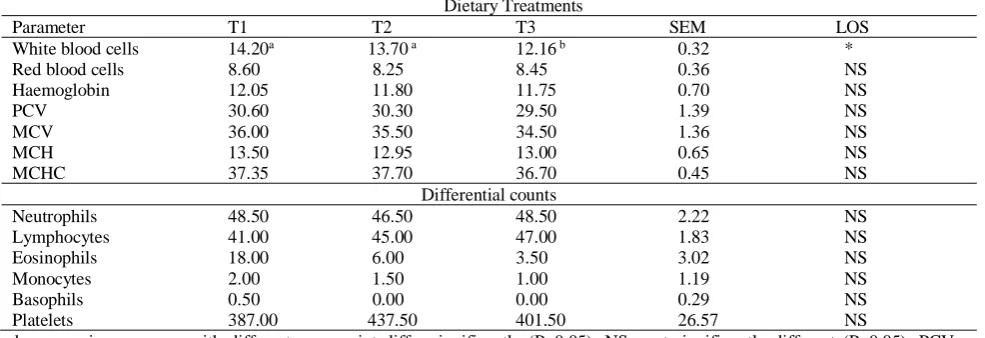
Table 4: Haematological parameters of feedlot Bunaji bulls fed diets containing Shea nut cake. Dietary Treatments
Parameter T1 T2 T3 SEM LOS White blood cells 14.20a 13.70 a 12.16 b 0.32 *
Red blood cells 8.60 8.25 8.45 0.36 NS Haemoglobin 12.05 11.80 11.75 0.70 NS PCV 30.60 30.30 29.50 1.39 NS MCV 36.00 35.50 34.50 1.36 NS MCH 13.50 12.95 13.00 0.65 NS MCHC 37.35 37.70 36.70 0.45 NS
Differential counts
Neutrophils 48.50 46.50 48.50 2.22 NS Lymphocytes 41.00 45.00 47.00 1.83 NS Eosinophils 18.00 6.00 3.50 3.02 NS Monocytes 2.00 1.50 1.00 1.19 NS Basophils 0.50 0.00 0.00 0.29 NS Platelets 387.00 437.50 401.50 26.57 NS
a,b, means in same row with different superscript differ significantly (P<0.05); NS= not significantly different (P>0.05); PCV= ; MCV= ; MCH= ; MCHC= ; T1= had 0.00% SNC inclusion; T2= had 5.00% SNC inclusion; T3= had 10.00% SNC inclusion.
treatment, stages of processing for oil extraction and the level of efficiencies reached, differences in fat levels of the Shea trees due to their genetic disparities or probably due to their different geographical and ecological zones (Pousga et al., 2007). The ash content generally agreed with the values of Ugese et al. (2010), Umali and Nikiema (2002) and Abdul-Mumeen et al. (2013) implying possible similarity in mineral content.
Performance of feedlot Bunaji bulls fed diets containing graded levels of Shea nut cake
Performance response of feedlot Bunaji bulls fed diets containing varying levels of Shea nut cake is shown in table 3. The average daily forage intake values were not affected (P>0.05) by the SNC inclusion though they were numerically superior in T2, followed by T1 and inferior in T2. The forage intake values are comparable to values reported by Wuanor et al. (2018) for Bunaji bulls in same environment but lower than the report of Wuanor et al.
(2015), but note is taken of factors affecting feed intake in general. Similarity in forage intake was reasoned to be due largely to absence of any factor in the SNC included diets that could have affected forage intake. Average daily concentrate intake responded positively to dietary SNC inclusion such that T1 and T2 were similar while T3 was significantly lower (P<0.05). Average daily concentrate intake values were generally lower than the reports of Wuanor et al. (2015) and Wuanor et al. (2018) who reported on feedlot Bunaji bulls in same environment. The International Centre for Research in Agro-forestry (ICRAF) (2000) reported that although Shea nut cake was already being used as a livestock and poultry feed, one key disadvantage of its use was the presence of tannins which exhibit a bitter taste. It was reasoned that the 10% inclusion of SNC in the diet could possibly have caused bitter taste leading to the bulls eating less of the diet.
Average daily total feed intake was not affected by dietary SNC inclusion; values were however higher in T2, followed by those for T1 and lowest in T3. These values are lower than those reported by Wuanor et al. (2015) but higher than those of Wuanor et al. (2018). The higher feed intake of T2 was suspected to be due to a synergistic effect of the SNC inclusion at that level with other components of the concentrate diet. Average daily water
intake was significantly (P<0.05) affected by inclusion of SNC in the diet. T1 value was significantly higher (P<0.05) than values of T2 and T3 which were statistically similar (P>0.05). These water intake values are higher than values reported by Wuanor et al. (2015) and Wuanor et al. (2018).
Average daily body weight gain was not affected by dietary SNC inclusion. The values are comparable with those of Bozkurt (2012), Olayiwole et al. (2013) and Wuanor et al. (2015) but higher than those of Wuanor et al. (2018). The low weight gain observed by bulls in T3 could be attributed to the fall in feed intake which would also have reduced nutrient intake because nutrient intake is the most important factor that affects animal performance (Mcdonald et al., 1995). Total body weight gain was significantly affected by inclusion of Shea nut cake in the diets; highest value was obtained for T2 which was similar to T1, both of which were higher than T3 which was significantly (P<0.05) the least. Highest total body weight gain of T2 was noted to correspond with the treatment’s higher total feed intake. Feed conversion ratio was not affected by dietary SNC inclusion; however best value was obtained for T2, followed by T1 while value for T3 was the worst. These values are higher than those of Wuanor et al. (2015) but lower than those of Wuanor et al. (2018). However the best feed conversion by T2 was reasoned to be caused by better utilization of the diet by the bulls.
Haematological indices of feedlot Bunaji bulls fed diets containing graded levels of Shea nut cake
The haematological indices of the feedlot Bunaji bulls are shown in table 4. The white blood cells showed significant difference (P<0.05) among the dietary treatments; the other parameters were statistically similar (P>0.05). All the haematological parameters fell within the reference range values (RAR, 2009). The values of lymphocytes showed numerical increase as the level of inclusion of SNC in the diets increased while the white blood cells, haemoglobin, packed cell volume, mean corpuscular volume, eosinophils, monocytes and basophils showed the reverse.
the bodies of the animals that would have necessitated increase in WBC count so as to fight the invasion. This effect could not however be attributed to the SNC introduction since the high WBC levels were also noticed in T1 that had no SNC inclusion. The non significance in the haemoglobin and PCV values show that inclusion of SNC aided production of enough red blood cells and transport of oxygen to tissues of the bulls for oxidation of food for energy release necessary for preventing anaemia and aiding absorption of nutrients (Isaac et al., 2013; Kubkomawa et al., 2015). The normal lymphocytes count showed that inclusion of SNC in the diets did not encourage introduction of any infection while the low neutrophils count portrayed absence of any potential inflammatory process (Isaac et al., 2013). The level of eosinophils also showed that SNC as a feed input did not introduce any allergic substances that the body would have reacted to. Similarity in monocytes count showed that SNC inclusion did not introduce harmful organisms in the body or increased dead body cells that needed to be removed. Similarity in leucocytes showed absence of any negative effect on immune system of the bulls. Normal platelets values also meant that the blood clotting potential of the bulls was not compromised (Nse Abasi et al., 2014). In general it can be summarized that the varying levels of SNC inclusion in the diets in this study did not have any detrimental effect on the haematological parameters of the feedlot Bunaji bulls and by implication, their health because these are important in assessing health of animals and also in disease diagnosis (Mbanasor
et al., 2003).
Conclusion
It was concluded from the results obtained that dietary inclusion of SNC did not exert any deleterious effects on the growth performance, haematological profiles and by implication the health of the feedlot Bunaji bulls used in this study.
Recommendation
It was recommended that Bunaji bulls’ fatteners should include 5% SNC in the diets of feedlot bulls.
REFERENCES
Abdul-Mumeen I, HD Zakpaa and FC Mills-Robertson, 2013. Biochemical and microbial analysis of Shea nut cake: A waste product from Shea butter processing. J. Agri Biotech and Sust Dev, 5: 61-68.
Adelusi OO, AO Oni, RY Aderingboye, OM Arigbede and CFI Onwuka, 2018. Effect of coconut oil on the weight and blood status of grazing cattle fed concentrate as supplementary feed. Nig J Anim Prod, 45: 316-324
Ahemen T, II Bitto and FOI Anugwa, 2011. Sperm production rate, gonadal and extragonadal sperm reserves of West African Dwarf rams in the Southern Guinea Savannah of Nigeria. Nig J Anim Sci, 13: 29-35.
Akunisu O, 1999. Utilization of rice milling waste (RWW) in cockerel finishers. Proceedings, 26th Annual Conference of Nigerian Society for Animal Production, pp: 83-86.
Angelo PN, OR Roberto, HB Renata, MFB Sarah, AN Ernanai, LS Corvino and FB Gomes, 2014. Animal performance, feeding behaviour and carcass traits of feedlot cattle fed diet with agro-industrial by-products as fat source. J Agr Sci 2 6: 54-65
AOAC, 2005. Official methods of Analysis, 18th Ed.
Association of official Analytical Chemists, Washington DC.
Atteh JO, 2011. Developing strategies for adding value to local livestock feed. Paper presented at plenary session of the 16th annual conference of Animal
Sience Association of Nigeria 24pp
Atuahene CC, A Donkoh and F Asante, 1998.Value of Shea nut cake as a dietary ingredient for broiler chickens. Anim Feed Sci Tech, 72: 133-142.
Ayoade JA, 2010. Poor Man’s Cow: Sheep and goats. Inaugural lecture series 11, August 25th 2010,
University of Agriculture, Makurdi, Nigeria. 34pp Bamikole MA and UJ Ikhatua, 2007. Utilization of melon
seed husk in feeding goats. Proceedings, 32nd Annual
Conference, Nigerian Society for Animal Production pp: 582-586.
Bonnier P, A Maas and J Rjiks, 2004. Dairy cattle husbandry. Agromisa foundation, Wageningen. Printed by Digigrafi, wageningen, the Netherlands. pp70.
Bozkurt Y, 2012. Seasonal performance of different breeds of feedlot beef cattle grown under the Mediterranean conditions. Bulgarian J Agr Sci, 18: 443-445.
Dei HK, SP Rose, and AM Mackenzie, 2007. Shea nut (Vitellaria paradoxa) as a feed ingredient for poultry. World’s Poult Sci J, 63: 611-624
FGN Visitation Report, 2011. Federal Republic of Nigeria. Views of the Government of the Federal Republic of Nigeria on the Visitation pane report into the affairs of the University of Agriculture, pp42. ICRAF, 2000. International Centre for Research in Agro
forestry. Agroforestree Database.
Ikurior SA and JD Akem, 1998. Replacing maize with cassava root meal or its mixture with brewer’s yeast slurry in rabbit diets. Nig J Anim Prod, 25: 31-35. Isaac LJ, G Abah, B Akpan and IU Ekaette, 2013.
Haematological properties of different breeds and sexes of rabbits. Proceedings of the 18th Annual
Conference of Animal Science Association of Nigeria, pp:24-27
Kiely PO, 2011. Intake, growth and feed conversion efficiency of finishing beef cattle offered diets based on triticale, maize or grass silages, or ad libitum concentrate. Irish J Agri and Food Res, 50: 189-201. Konlan SP, 2010. Shea nut cake in supplemental
concentrate for growing Djallonke rams fed a basal diet of rice straw and groundnut haulms in the dry season. Thesis submitted to the Kwame Nkrumah University of Science and Technology, Kumasi pp 180.
Kumar MK, 2015. Utilization of Shea nut cake in livestock feeding. J Vet Sci Tech, 6: 27-33.
Mbanasor UU, BM Anene, AB Chime, TO Nnaji, JI Eze and AG Ezekwe, 2003. Haematology of normal and trypanosome- infected Muturu cattle in south eastern Nigeria. Nig J Anim Prod, 30: 27-35.
McDonald P, RH Edwards and JFD Greenhalgh, 1995. Anim Nutrition, 5th edition. Longman Publishers Ltd., Singapore, pp: 583-585.
Nse Abasi NE, EW Mary, A Uduak and EA Offiong, 2014. Haematological parameters factors and factors affecting their values. Agri Sci, 2: 37-47.
Oddoye EOK, F Atemawor, K Agyante-Badu, and VP Dzogbefia, 2012. Proximate analysis of Shea nut kerne/meal samples from industry and cottage industry and some methods of removal of anti-nutritional factors. Int J Biochem and Biotech, 1: 239-242
Olayiwole MB, 1982. Cattle feedlot operation in Nigeria. In: Beef production in Nigeria, Proceeding of National Conference on Beef Production, pp: 310-337.
Olayiwole MB and SA Olorunju, 2015. Feedlot performance of yearling steers previously maintained on different crop residues/supplementation regimes. FAO corporate corporate document repository. Retrieved on line from the following website http://www.fao.org/wairdocs/ilri/x5494e/5494e09.ht m on 6/25/2015
Oloche J, JT Anum and J Adanebi, 2018. Effect of high levels of water soaked sweet orange peel meal on the performance response and blood profile of West African Dwarf goats. Nig J Anim Prod, 45: 289-297.
Pousga S, H Boly, JE Lindberg and B Ogle, 2007. Evaluation of traditional orghum (Sorghum bicolor) beer residue, Shea-Nut (Vitellaria paradoxa) cake and cottonseed (Gossypium spp) cake for poultry in Burkina Faso: Availability and amino acid digestibility. Int J Poul Sci, 6: 666-672.
RAR, 2009. Reference values for laboratory animals: Normal haematological values. Research Animal Research, University of Minenesota. Retrieved on line from http://www.ahc.umn.edu/rar/refvalues.html.
Rhule SWA, 1996. Growth rate and carcass characteristics of pigs fed on diets containing palm kernel cake. Anim Feed Sci Tech, 61: 167-172.
Ugese FD, KP Baiyeri and BN Mbah, 2010. Proximate traits of the seed and seed cake of Shea butter tree (Vitellaria paradoxa C. F. Gaertn.) in Nigeria’s
savannah ecozone. J Appl Biosci, 31:1935-1941. Umali BE and A Nikiema, 2002. Vitellaria paradoxa.
Record from Protabase. Oyen LPA and Lemmens RHMJ (Editors). PROTA, Wageningen, the Netherlands.
Van Soest, PJ, JB Robertson and BA Lewis, 1991. Methods for dietary fibre, neutral detergent fibre, and non – starch polysaccharides in relation to animal nutrition. J Dairy Sci, 74: 3583-3597
Wuanor AA, JA Ayoade and T Yusuf, 2018. Performance of Bunaji bulls fed Pleurotus tuber regium
biodegraded rice offal incorporated diets. J Anim Husb Dairy Sci, 2: 22-29.
Wuanor AA, JA Ayoade and FO Ani, 2015. Performance of feedlot Bunaji bulls supplemented varying levels of an agricultural industrial by- products based diet. J Agri Vet Sci, 8: 74 -78.