Summary
Background
Catatonia is a neuropsychiatric syndrome that may occur in as-sociation with mental, neurological and medical disorders. A delay in diagnosis and treatment of catatonic symptoms is re-lated to a high risk of medical complications such as dehydra-tion, malnutridehydra-tion, pressure ulcers, thrombotic events, aspiration pneumonia and infections.
Objectives
The authors present the case of a bipolar patient, admitted to the Psychiatric Clinic of the Azienda Ospedaliero-Universitaria Pis-ana for catatonic syndrome, complicated by weight loss, deep vein thrombosis (DVT), pressure ulcers and systemic infection.
Results
Supportive therapy, including hydration, electrolytic restoration and antibiotics was adopted to stabilize the patient’s general conditions. Treatment with low molecular weight heparin was
given for DVT and to prevent pulmonary embolism. Catatonic symptoms were initially treated with intravenous administration of delorazepam, with some improvement in catalepsy and waxy flexibility. As treatment with benzodiazepines was not complete-ly effective, electroconvulsive therapy (ECT) was used in combi-nation with delorazepam, which led to progressive resolution of catatonic symptoms.
Conclusions
The existence of medical complications requires a multidiscipli-nary therapeutic strategy, with the intervention of different spe-cialists. Our experience confirms the efficacy and safety of ECT in catatonia, even in the presence of serious complications such as DVT. In these cases, combination of ECT and benzodiazepines should be considered elective treatment to achieve quick resolu-tion of symptoms and reduce morbidity and mortality.
Key words
Catatonia • Bipolar disorder • Electroconvulsive therapy • Benzodi-azepines
Introduction
Catatonia is a complex neuropsychiatric syndrome char-acterized by onset of psychomotor manifestations (nega-tivism, mutism, mannerisms, stereotypies, immobility, rigidity) in association with a number of pathologies, not only psychiatric, but also physical such as neuro-logic, toxiconeuro-logic, endocrinologic or infective. Despite the original description of catatonia by Kalbahum 1, who highlighted some clinical characteristics such as cyclic course, interepisode remission and frequent association with affective symptoms shared with mood disorders, for many years, influenced by the studies of Kraepelin and Bleuler 2 3, catatonia has been classified as a subtype of schizophrenia. In recent years, several clinical and epi-demiological studies 4-6 have shown that catatonia is not only underdiagnosed, but that patients with bipolar disor-der have a higher prevalence of catatonic symptoms than
patients with schizophrenia. Thus, both clinicians and researchers have acknowledged the need for better classi-fication and diagnosis. Other authors, such as Taylor and Fink 7, have proposed that the next edition of the DSM should classify catatonia as a separate diagnostic entity, while still others have stressed the need to reformulate di-agnostic criteria, noting the currently inadequate psycho-pathologic description and the lack of evaluation criteria on severity and duration 8 9.
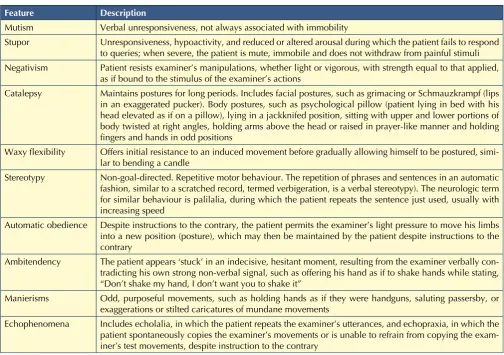
The main epidemiological studies 10, even if conducted in apparently homogenous patient populations, such as psychiatric in-patients, report a prevalence of catatonia that varies widely, from 7% to 31%. Clinical expres-sion of catatonia, in fact, includes a large and variable spectrum of motor, behavioural, affective and cogni-tive manifestations (Table I) that consider the complex-ity of presentation and diagnostic difficulties. Mutism, negativism and catalepsy are classic symptoms that are
Electroconvulsive therapy in a case of catatonia with severe somatic
complications
Trattamento con terapia elettroconvulsivante di un caso di catatonia complicato da gravi
manifestazioni somatiche
A. Callari, L. Lattanzi, N. Bartolommei, L. Cosentino, F. Luchini, P. Medda, M. Mauri
Dipartimento di Psichiatria, Neurobiologia, Farmacologia e Biotecnologie, Università di Pisa
Correspondence
tagonists may have a role in treatment of catatonia 14 18. Two case reports have also described the use of repeated transcranial magnetic stimulation (TMS) 19 20, while the role of atypical antipsychotics is still under investigation even if they appear to be limited to forms of catatonia as-sociated with schizophrenic psychosis 9 10.
Clinical case
D. is a 43-year-old woman, divorced, with a 24-year-old daughter. She had been previously followed by Psychiat-ric Services at a hospital near her home for bipolar type I disorder with psychotic features, and was admitted to our Psychiatric Clinic following the appearance of catatonic manifestations. Clinical history, with the help of family members, revealed the onset of psychiatric symptoms following puerperium, with a depressive episode having both mood-incongruent and mood-congruent psychotic features. In later years, the patient presented numerous recurrences with the same symptoms that needed hospi-highly suggestive of diagnosis, but are not consistent or
exclusive, and have no pathognomonic relevance. Psy-chomotor investigations are often needed as these signs may not be immediately recognized due to their overlap with prominent affective and/or cognitive symptoms. Frequent alterations in symptoms, with the possibility of dramatic changes, requires clinical observation that is lengthy and/or repetitive 11 12.
There is general agreement that benzodiazepines and
electroconvulsive (ECT) are the most effective treatment
for 10 13. Parenteral administration of lorazepam (IM or IV) at an initial dose of 2-6 mg/day, which can be increased up to 12-16 mg/day, is the most commonly used therapy,
while ECT is generally used as second-line therapy in pa -tients with partial or no response to lorazepam 12 13. The appearance of hyperthermia or other signs of instability of the autonomic nervous system, indicative of evolution to
a malignant form, impose immediate use of ECT, which
can often resolve these forms12,13. Some recent data, even if preliminary, suggest that antiepileptics and NMDA
an-TablE I.
Main clinical features of catatonia (from Fink and Taylor) 6. Principali caratteristiche cliniche della catatonia (da Fink e Taylor) 6.
Feature Description
Mutism Verbal unresponsiveness, not always associated with immobility
Stupor Unresponsiveness, hypoactivity, and reduced or altered arousal during which the patient fails to respond to queries; when severe, the patient is mute, immobile and does not withdraw from painful stimuli Negativism Patient resists examiner’s manipulations, whether light or vigorous, with strength equal to that applied,
as if bound to the stimulus of the examiner’s actions
Catalepsy Maintains postures for long periods. Includes facial postures, such as grimacing or Schmauzkrampf (lips in an exaggerated pucker). Body postures, such as psychological pillow (patient lying in bed with his head elevated as if on a pillow), lying in a jackknifed position, sitting with upper and lower portions of body twisted at right angles, holding arms above the head or raised in prayer-like manner and holding fingers and hands in odd positions
Waxy flexibility Offers initial resistance to an induced movement before gradually allowing himself to be postured, simi-lar to bending a candle
Stereotypy Non-goal-directed. Repetitive motor behaviour. The repetition of phrases and sentences in an automatic fashion, similar to a scratched record, termed verbigeration, is a verbal stereotypy). The neurologic term for similar behaviour is palilalia, during which the patient repeats the sentence just used, usually with increasing speed
Automatic obedience Despite instructions to the contrary, the patient permits the examiner’s light pressure to move his limbs into a new position (posture), which may then be maintained by the patient despite instructions to the contrary
Ambitendency The patient appears ‘stuck’ in an indecisive, hesitant moment, resulting from the examiner verbally con-tradicting his own strong non-verbal signal, such as offering his hand as if to shake hands while stating, “Don’t shake my hand, I don’t want you to shake it”
Manierisms Odd, purposeful movements, such as holding hands as if they were handguns, saluting passersby, or exaggerations or stilted caricatures of mundane movements
To avoid pulmonary embolism, in anticipation of ECT,
antiplatelet therapy was substituted with dalteparin so-dium 10,000 IU/day.
In the following days, while the psychopathological picture was substantially unvaried, except for the loss of waxy flexibility, the general conditions of the patient began to worsen with an increase in febrile episodes (> 38°C) until reaching a state of constant hyperpyrexia (with the appearance of frequent bigeminal ventricular
extrasystoles by ECG), in spite of a change in antimycotic
i.v. therapy (tigecycline, fluconazole) based on the results of the antibiogram of cultures from the pressure ulcer (S. haemoliticus, E. coli, C. albicans). Haemoculture was positive for Pseudomonas aeruginosa. Considering this, at 14 days after admission, the patient was transferred to the Internal Medicine department, and three days later, to the Intensive Care Unit due to loss of ventilatory capacity. In the ICU, vital functions were stabilized and after a neg-ative cerebrospinal fluid test, with consent of her legal
guardian, began a cycle of ECT. Four applications of ECT
were performed during the first week in the ICU. Therapy with dalteparin sodium was effective in prevention of
pul-monary embolism: vital signs remained stable, peaks of
fever were reduced in both frequency and entity (< 38°C), although anaemia was revealed (Hb 8 g/dl), which was likely not identified at admission due to haemoconcen-tration. The psychopathological state was not substantial-ly modified, and catatonic manifestations continued. On day 28 after admission, considering the improvement in general somatic conditions, it was decided to transfer the
patient back the Psychiatric Clinic. Enteral nutrition was
supplemented with parenteral nutrition, and system anti-biotic treatment was continued (meropenem, amphoter-icin B), as well as antithrombotic therapy with dalteparin sodium s.c. in addition to i.v. delorazepam. At 32 days, a
fifth application of ECT was administered, and the patient began to show signs of reawakening: she asked who the
doctors were, where she was and why she was in hospi-tal. She responded adequately to questions, and showed preservation of memory of past events, even if there was some amnesia about events in recent months. The patient was disorientated from a spatial-temporal standpoint, but recognized people and familial objects. Passive mobility to all four limbs was normalized, while active mobility was present but limited to severe and diffuse muscular hypotrophy. Upon interview, neither delusional thinking nor dysperceptions were present, while assessment of the affective domain showed a mild depressive symptoms that were partly due to pain from the pressure ulcer. The next day the patient began to feed herself, and enteral and parenteral nutrition were substituted with a semi-liquid diet integrated with protein and potassium.
During the next 10 days, the patient received another 5
ECT sessions, with consolidation of previous results. Dur -tal admission, and maintained a low level of social and
work functioning with residual psychotic symptomology characterized by persecutory delusions, self-harm and auditory hallucinations with mixed content.
About 3 months prior to coming under our observation, the patient showed gradual sitophobia (she suspected poisoning) that led to progressive, severe weight loss (about 35 kg in 3 months), with hospitalization at a local psychiatric clinic. Despite a number of therapies, mostly typical and atypical antipsychotics (haloperidol, olan-zapine, risperidone, clozapine) and benzodiazepines (delorazepam), there was no improvement in clinical symptoms, and catatonic manifestations began to de-velop (psychomotor arrest, mutism, negativism, rigidity with catalepsy, sitophobia, oppositivity). The patient was transferred to our clinic, which is a level III regional refer-ence centre for severe and complex pathologies, and is
licensed to perform ECT.
Upon admission, the patient was under treatment with risperidone (1.5 mg/day), delorazepam (2 mg/day) and enoxaparin sodium (4000 IU/day, s.c.), was immobile, stuporous, with waxy flexibility. She was mute, negativist and oppositive and refused both food and therapy. Severe malnutrition was present (BMI = 15 kg/m2), with marked diffuse muscular hypotrophy and dehydration. Objective examination revealed a deep vein thrombosis (DVT) at the popliteal region of the left leg, grade IV pressure ul-cer at the sacral level and modest fever (37.8°C). Arterial
pressure, cardiac frequency and ECG were within normal
limits. Laboratory investigations showed no relevant al-terations with the exception of modest hypoalbuminae-mia (3.14 mg/dl) and high levels of D-dimer (0.67 mg/dl). An emergency encephalic CT was carried out with nega-tive results, while objecnega-tive neurological examination revealed waxy flexibility in all four limbs that was more predominant in the arms, an a distal tremor at resting in the left arm, which could be attributed to iatrogen-ic damage subsequent to neuroleptiatrogen-ic therapy. Therapy with delorazepam (8 mg/day i.v.) and systemic antibiot-ics were initiated (levofloxacin and teicoplanin i.v.) for pressure ulcers at the sacral level. A urinary catheter and a nasogastric tube for parenteral nutrition enteral were inserted after placing a peripherally inserted cen-tral catheter (PICC). Antiplatelet therapy with enoxaparin was administered, and it was also decided to start topi-cal therapy for the pressure ulcers with collagenase and polyurethane film.
On the first day after admission, the patient initiated
diag-nostic work-up for ECT. Cardiac and respiratory patholo
-gies that would contraindicate ECT were excluded by echocardiography and thoracic radiography. Echo colour
accompanied by a depressive psychotic episode. In the following years, the disorder was characterized by recur-rent affective episodes of prevalent mixed/psychotic po-larity, with partial recovery and persistence of psychotic symptoms in the intervals between episodes. The last epi-sode, occurring 3 months before the patient came under our observation, needed recovery at a psychiatric clinic near the patient’s home for severe weight loss due to si-tophobia, sustained by fear of poisoning. The successive worsening of clinical conditions, with the appearance of catatonic manifestations such as mutism, negativism and rigidity, led to her transfer to our clinic.
Correct diagnosis required identification of the pathology at the basis of her condition, together with the recognition
of catatonic symptoms. Even in the presence of a posi -tive psychiatric anamnesis, such as in the present case, it is necessary to exclude that catatonic symptoms have a somatic origin, taking particular attention to acute, life-threatening pathologies such as infective, neurological or toxicological (meningoencephalitis, stroke, cerebral haematoma, brain tumour) 12. Thus, in the first instance, objective psychiatric assessment must be integrated with accurate general and neurological examination; based on these findings, additional laboratory and instrumental investigations can be carried out.
In the case described, laboratory exams and encephalic CT upon admission excluded a somatic cause, and con-firmed a clinical diagnosis of a mixed episode of bipolar type I disorder with catatonic manifestations. In
anticipa-tion of ECT, the patient underwent addianticipa-tional diagnostic
work-up that included cardiologic, neurologic and other
investigations (encephalic CT, ECG, thoracic radiogra
-phy) to exclude contraindications for ECT. The prolonged
immobility and malnutrition led to the appearance of se-vere complications including weight loss, diffuse muscu-lar hypotrophy, dehydrations, DVT in the popliteal re-gion and grade 4 pressure ulcers at the sacral level. Thus, a urinary catheter was promptly inserted along with a na-sogastric tube for enteral nutrition, later integrated with parenteral nutrition following the placement of a PICC. The early administration of antibiotic prophylaxis (pul-monary, urinary, pressure ulcers) did not prevent progres-sion of infection for which the patient was transferred first to Internal Medicine and then to the ICU. The patient’s recovery in the ICU was decisive for resolution of sepsis and stabilization of vital signs. Our experience also con-firms the crucial role of an early and integrated multidis-ciplinary approach to a catatonic patient involving psy-chiatrists, internists, infectologists, anaesthesiologists and
physiotherapy specialists. In expectation of ECT, particu -lar attention was paid to the risk of pulmonary embolism associated with DVT at the popliteal area of the left leg. In the literature, pulmonary embolism is one of the most feared complications that an untreated catatonic patient ing this time, transfusion of red blood cell concentrate
was given for chronic anaemia, with improvement of haemoglobin values (from 7.5 to 10.7 g/dl), and i.v. po-tassium was also administered (with an increase in serum
values from 2.6 to 4.4 mEq/l). At 39 days after admis -sion, the dose of delorazepam was reduced (from 8 mg/ day i.v. to 4 mg/day oral) and antidepressant therapy with mirtazapine was introduced at an initial dose of 15 mg/ day, which was progressively increased over 2 weeks to 30 mg/day along with olanzapine at 5 mg/day. A new echo colour Doppler exam of the lower limbs showed resolution of DVT (dalteparin sodium was reduced from 10,000 to 5000 IU s.c.), and the pressure ulcers showed improvement (from grade 4 to grade 3) with the aid of vacuum assisted closure therapy (VAC).
Over the following weeks, the patient gradually recovered both spatiotemporal orientation and long-term memory. Nonetheless, mild depression was present with feelings of anguish and abandonment, associated with psychotic symptoms characterized by persecutory delusions, par-tially accessible to criticism, in the absence of visual and auditory dysperceptions. Based on this, the dose of olan-zapine was increased to 7.5 mg/day. Oral iron, folates and vitamin B12 were administered orally for anaemia. Considering the inadequate response in psychotic symp-toms, olanzapine was substituted with clozapine after 15 days at an initial dose of 25 mg/day, and increased to 50 mg/day over a 2-week period.
At one month after the first cycle, 6 new ECT sessions
were administered over a 4-week period for depressive and psychotic symptoms and to reinforce the
improve-ment in catatonic symptoms. After this new cycle of ECT,
the patient experienced partial remission of psychotic symptoms (residual delusions of reference) and gradual improvement in the affective domain, with recovery of energy levels, diminution of feelings of anguish and de-spair, with sleep and feeding patterns that were substan-tially normal. The patient underwent physiotherapy with recovery of sphincter control and autonomous ambula-tory capacity in about 5 weeks. The patient also experi-enced modest weight gain (BMI = 17 kg/m2).
After 105 days of admission, the patient was discharged in good overall condition (except for moderate anaemia and pressure ulcers, which were both showing improve-ment) with stable psychopathologic conditions (good memory capacity, substantial euthymia with residual psychotic symptoms). At discharge, the patient was on clozapine 50 mg/day, mirtazapine 45 mg/day and delorazepam 3 mg/day.
Discussion
in good clinical conditions with the ability to feed herself and walk autonomously, despite of the difficulties due to muscular hypotrophy, and in a stable psychopathological state, characterized by residual psychotic symptoms such as self-reference and interpretive schemes.
Acknowledgements
The authors wish to thank prof. Pietro Sarteschi and Gio -vanni B. Cassano, who have taught a generation of psy-chiatrists at Pisa about the appropriate use of electrocon-vulsive therapy.
References
1 Kahlbaum K. Die Katatonie oder das Spannungsirresein.
Berlin: Hirshwald 1874.
2 Kraepelin E Dementia Praecox and Paraphrenia. Leipzig:
Barth 1913.
3 Bleuler E. Dementia praecox oder Gruppe der
Schizophren-ien. In: Aschaffenburg G, editor. Handbuch der Psychiatrie. Spezieller Teil 4. Abteilung 1. Leipzig: Haelfte 1911.
4 Abrams R, Taylor MA. Catatonia, a prospective clinical
study. Arch Gen Psychiatry 1976;33:579-81.
5 Abrams R, Taylor MA. Stolurow KAC. Catatonia and
ma-nia: patterns of cerebral dysfunction. Biol Psychiatry 1979;14:111-7.
6 Fink M, Taylor M. Catatonia. A clinician’s guide to diagnosis
and treatment. Cambridge: University Press 2003.
7 Taylor M, Fink M. Catatonia in psychiatric classification: a
home of its own. Am J Psychiatry 2003;160:1-9.
8 Heckers S, Tandon R, Bustillo J. Catatonia in the DSM –
Shall we move or not? Schizophr Bull 2010;36:205-7.
9 Ungvari GS, Caroff SN et al. The Catatonia Conundrum:
Evi-dence of Psychomotor Phenomena as a Symptom Dimen-sion in Psychotic Disorders. Schizophr Bull 2010;36:231-8.
10 Daniels J. Catatonia: clinical aspects and neurobiological
cor-relates. J Neuropsychiatry Clin Neurosci 2009;21:371-80.
11 Bush G, Fink M, Petrides G, et al. Catatonia I: rating scale
and standardized examination. Acta Psychiatr Scand 1996;93:129-36.
12 Francis A. Catatonia: diagnosis, classification, and
treat-ment. Curr Psychiatry Rep 2010;12:180-5.
13 Bush G, Fink M, Petrides G, et al. Catatonia. II. Treatment
with lorazepam and electroconvulsive therapy. Acta Psychi-atr Scand 1996;93:137-43.
14 McDaniel WW, Spiegel DR, Sahota AK. Topiramate effect
in catatonia: a case series. J Neuropsychiatry Clin Neurosci 2006;18:234-7.
15 Yoshida I, Monji A, Hashioka S, et al. Prophylactic effect of
valproate in the treatment for siblings with catatonia: a case report. J Clin Psychopharmacol 2005;5:504-5.
16 Carroll BT, Goforth HW, Thomas C, et al. Review of
ad-junctive glutamate antagonist therapy in the treatment of can encounter 21 22. The increased risk for
thromboem-bolic events is mostly related to immobility, although the concomitant presence of pre-existing cardiovascular comorbidities or other complications such as dehydra-tion are also factors for increased risk 22. Further infor-mation is needed, however, on the association between
ECT and the risk of thromboembolic events as only rare
cases of pulmonary embolism have been described in the
literature in patients subjected to ECT 23 24. In reality, a
direct cause-effect relationship between ECT and throm -boembolic events has not been demonstrated, although
the efficacious use of ECT in catatonic patients with a
recent history of pulmonary embolism and anticoagu-lant treatment has been described 24 25. For prophylaxis of thromboembolic events, our patient was administered enoxaparin (4000 IU/day s.c.) which was substituted with dalteparin sodium (10,000 IU/day s.c.). This strategy
was effective even during ECT, confirming the validity
of indications in the literature regarding the use of low molecular weight heparin formulations for prevention of thromboembolic events in catatonic patients 23-25.
On the basis of literature data, treatment of catatonia with
parenteral administration of benzodiazepines and ECT
should be considered elective 10-13. Lorazepam is the most frequently used drug, with a reported remission rate of catatonic symptoms between 70% and 80% 12. In Italy at present, lorazepam is not available in a liquid formula-tion, which is a serious limitation in management of cata-tonic patients; in the case described, we administered a drug with a high efficacy, namely delorazepam (8 mg/ day i.v.). Considering the reported synergism between
ECT and benzodiazepines 26, some authors have
sug-gested that combined treatment with ECT and lorazepam
should be initiated immediately, especially when the critical conditions of the patient require rapid resolution of catatonic symptoms 27.
In the present case, initial treatment with i.v. delorazepam led to only a slight improvement in neurologic symp-toms; therefore, once vital signs were stabilized, a first
cycle of 10 sessions of ECT over 2 weeks was initiated,
which led to a progressive improvement in both affec-tive and motor symptoms. In literature, it is reported that, especially in severe cases of malignant catatonia at initial
management phase, several applications of ECT should
be administered over short intervals, sometimes with dai-ly sessions 6 28.
After remission of catatonic symptoms in our patient, depressive symptoms with psychotic features appeared, which was resistant to initial treatment with mirtazapine and olanzapine. It was therefore decided to initiate a
23 Mamah D, Lammle M; Isenberg KE. Pulmonary embolism
after ECT. J ECT 2005;21:39-40.
24 Singh G, Wahi S. Pulmonary embolism in ECT patient:
a case report and discussion. Gen Hosp Psychiatry
2008;30:97-89.
25 Suzuky K, Takamasu K, Takano T et al. Safety of
electro-convulsive therapy in psychiatric patients shortly after the occurrence of pulmonary embolism. J ECT 2008;24:286-8.
26 Petrides G, Divadeenam K, Bush G, et al. Synergism of
lo-razepam and ECT in the treatment of catatonia. Biol Psy-chiatry 1997;42:375-81.
27 Zisselman M, Jaffe R. ECT in the treatment of a patient with
catatonia: consent and complications. Am J Psychiatry 2010;167:127-32.
28 Petrides G, Malur C, Fink M. Convulsive therapy. In: Caroff
SN, Mann SC, Francis A, et al., editors Catatonia: from psy-chopatology to neurobiology. Washington, DC: American
Psychiatric Publishing 2004, pp. 151-6.
catatonic syndromes. J Neuropsychiatry Clin Neurosci 2007;19:406-12.
17 Carpenter S, Hatchett AD, Fuller MA. Catatonic
schizo-phrenia and the use of memantine. Ann Pharmacother 2006;40:344-6.
18 Munoz C, Yulan N, Achaval V, et al. Memantine in major
depression with catatonic features. J Neuropsychiatry Clin Neurosci 2008;20:119-20.
19 Saba G, Rocamora JF, Kalalou K, et al. Catatonia and
transcra-nial magnetic stimulation. Am J Psychiatry 2002;159:1794.
20 Vittorio DM, Bolino F. A novel treatment option of bipolar
depression with psychotic and catatonic features. Gen Hosp
Psychiatry 2006;28:364-5.
21 Mc Call WV, Mann SC, Shelp FE et al. Fatal pulmonary
em-bolism in the catatonic syndrome: two case reports and a literature review. J Clin Psychiatry 1995;56:21-5.
22 Ignatowsky M, Sidhu S, Rueve M. Pulmonary Embolism as