www.ijper.org
Development and Evaluation of a System for Colonic
Delivery of Budesonide
Nikita Maruti Gaikwad*, Karimunnisa Sameer Shaikh, Pravin Digambar Chaudhari
Department of Pharmaceutics, Modern College of Pharmacy, Sector 21, Yamuna agar, Nigdi, Pune, Maharashtra 411044, INDIA.
ABSTRACT
In the present study an attempt has been made to address low solubility issue and colonic delivery of Budesonide by developing enteric coated capsule containing Budesonide in a nano emulsifying drug delivery system. Herein, the formulated liquid SNEDDS was transformed to a solid form by spray draying method. Subsequently, it was filled into capsules coated with pH sensitive polymer, Eudragit S- 100 along with band sealing. However, the drug solubility is an important parameter which was determined in different oils, surfactants and co-surfactants. Ternary phase diagrams were constructed to obtain maximum nano-emulsion area. SNEDDS containing Capmule ®MCM L8 as oil, Tween-80
as surfactant and polyethylene glycol 400 as co-surfactant were formulated to get maximum nano-emulsion in the phase diagram. In vitro drug release of the optimized SNEDDS (particle size 116.32 nm) revealed enhanced drug release in colonic pH as compared to pure drug. The developed SNEDDS of budesonide also demonstrated better activity against ulcerative colitis as evidenced by the gradually diminishing morphological damages in the histopathological studies in the TNBS induced ulcerative colitis in rats. Thus, SNEDDS enhanced the solubility of Budesonide while the enteric coating provides its colonic release.
Key words: SNEDDS, Colonic Release, Budesonide, Solubility, In vitro, In-vivo, Ulcerative Colitis.
DOI: 10.5530/ijper.51.4.84
Correspondence: N. M. Gaikwad1,
Department of Pharmaceutics, Modern College of Pharmacy, Sector 21, Yamuna agar, Nigdi, Pune, Maharashtra 411044, INDIA.
Contact no.: 09420806590 E-mail: nikigaikwad09@ gmail.com
INTRODUCTION
Budesonide (BUD) is a locally acting
corti-costeroid with high affinity for glucocorti -coid receptors. It offers several therapeutic advantages such as negligible oral bioavail-ability, rapid clearance and no formation of active metabolites and hence is preferred over old steroids such as hydrocortisone, prednisolone and dexamethasone for the
localized treatment of inflammatory bowel
diseases.1 However, budesonide has poor
solubility and bioavailability, a property which limits its dissolution and therapeutic potential. Nevertheless, the solubility of BUD needs much improvement and a formulation for effective drug targeting. Moreover, the Self nano-emulsifying drug delivery system (SNEDDS) is composed of with a peculiar isotropic mixture of lipids and surface coating emulsion. These systems with drugs particles size less than 100 nm appear optically clear
Submission Date: 02-02-2017;
Revision Date: 17-03-2017;
Accepted Date: 13-07-2017 and thermodynamically stable. Amongst
the various lipid-based systems, SNEDDS accelerates and improves the permeability rate of drug through biological membrane. SNEDDS spread readily in vivo and motility of the stomach and the intestine causes
self-emulsification.2 Rapid emulsion forma-tion helps to keep the drug in soluble form whereas the high surface area provided by
the small droplets enables more efficient drug
transport through the membrane leading to improved oral bioavailability.3,4 Thus a SNEDDS containing BUD would enhance its solubility and permeability into the tissue
and cells at the site of inflammation.
releasing it into stomach and small intestine. Hence, this study was mainly focused to increase the effectiveness of BUD through the concept of an oral enteric coated capsule containing its solid SNEDDS. For colonic delivery of BUD, many approaches such as preparation of BUD loaded microspheres coated with guar gum, microencapsulated cellulosic cores, solid dispersion in dextran, pH and time dependent polymeric nanoparti-cles and eudragit coated pellets etc. are available. These reported dosage forms have been formulated with the aim of only targeting drug BUD to colon to enhance
its anti-inflammatory activity. The anti-inflammatory
activity of BUD is a function of its solubility too. Nevertheless, the solubility of BUD is low and this issue also has to be dealt. The current investigation deserves merit as it addresses both the issues of solubility enhancement and colon targeting by SNEDDS formu-lation and enteric coating respectively. The formuformu-lation of SNEDDS contains Capmule MCM L8, Tween–80 and polyethylene glycol as oil, surfactant and co-surfactant respectively. Subsequently the emulsion form of
SNEDDS was spray dried and filled into capsules with
coating of pH sensitive polymer of Eudragit S-100 to achieve colonic targeting. The colon targeted SNEDDS were evaluated for pharmacokinetics and pharmacody-namics parameters.5-8
MATERIALS AND METHODS
Materials
Budesonide was procured from Lupin pharmaceutical, Inc, Pune, Maharashtra, India. Oils that is Capmule® L8, Cremophor® EL, Captex® 300, Captex® 355,
MaisineTM were purchased from Abitec Ingredient company. Polyetlylene glycol-400, Tween-80 and Tween-20 were received from Loba Chemie Pvt. Ltd, Mumbai. Co-surfactants like Plurol Oleique® and
Labrafil M 1944 CS were purchased from Gattefosse,
France through Colorcon Asia Ltd, Mumbai. For All others reagents used were of pharmaceutical and analytical grade.
METHODS
SNEDDS Components
SNEDDS was composed of three main components such as oil, surfactant and co-surfactant. Maximum solubility of BUD in each of these components was determined by weighing 40 mg drug in 1 ml of different components such as Capmul® MCM L8, Captex®300,
Captex® 355, MaisineTM, Labrafil® M 1944 CS and
emulsifiers like Tween-80, tween-20, Cremophor® EL,
polyethylene glycol-400, Propylene glycol and plurol Olieque ® in a 5-10 ml vial. This mixture was stirred for 15 min on magnetic stirrer and further in orbital shaker for 72 h at 370C, followed by centrifugation for 15m at 3000 rpm. 1ml of supernatant obtained was diluted with methanol to make up 10 ml and its absorption measured by UV Spectroscopy at 247 nm.3-9
Diagrammatic Study
Pseudo ternary phase diagram was built up by water titration method to obtain concentration ranges of oils and S-Mix (a mixture of both Surfactant and co-surfactant). S-mix was prepared in different ratios of 1:1, 1:2, 1:3, 2:1, & 3:1 (w/w) of surfactant and co-surfactant
respec-tively. An appropriate fixed ratio of S-mix was selected
and then it was combined with oil in different ratios of
oil-S-Mix such as 1:9, 2:8, 3:7, 4:6, 5:5, 6:4, 7:3, 8:2 and 9:1 (w/w) respectively. As per water titration method,
oil and S-mix were taken in above mentioned ratios in pre-weighted vials and slowly water drops were added in to this liquid mixture with the help of burette until clear bluish liquid is seen then stopped adding water. This indicated formulation of a nano emulsion by further adding 2-3 water drops in it, the mixture become opaque. CHEMIX School software was used for construction of ternary phase diagram.
SNEDDS Formulation
The results obtained from solubility study and ternary phase diagram were used to select concentration of Capmul® MCM L8, Tween® 80, polyethylene glycol-400
for the preparation of nano emulsion formulation. The BUD loaded SNEDDS were prepared by dissolving
accurately weighed drug (budesonide-6mg) properly in
S-mix and oil. The mixture was homogenized the formulation at 40-500C, cooled to 25-300C and stored at same temperature.
Evaluation of Liquid SNEDDS Microscopic Examination
Microscopic study exhibits certain unique characteristics regarding, whether any changes has taken places or not during its storage at normal condition (at 300C); like homogeneity, color, transparency and phase separation.
Percent Transmission Measurement
Transmission study data revealed stability of the formu-lation; higher is the percent transmission more stable is the formulation. The formulation (100mg) was diluted into 100 ml of distilled water, 0.1 N HCl and pH 7.4 phosphate buffer solutions. Percent transmission was
measured by UV spectrophotometer at 628nm in
Self-emulsification Time Analysis
Self-emulsification time of SNEDDS was estimated
by type II USP dissolution apparatus. The formulation (500 mg) was added drop wise into 500 ml distilled water maintained at 37±0.50C and at 50 rpm. Emulsification time was assessed visually.11
Determination of Cloud Point
Cloud point measurement is an essential parameter to form a stable nano emulsion. In this method its deter-mination was done by addition of distilled water to
for-mulation in 1:250 ratio in a water bath at 600C. The time required for solution to become opaque and cloudy was noted as the cloud point.
Particle Size Measurement and Polydispersity Index
Nanophox particle size analyzer instrument was used to measure particle size and polydispersity index of liquid SNEDDS.
Dilution Factor
Robustness of dilution test was performed by diluting SNEDDS to 10, 100 and 1000 times with dissolution
media like 0.1 N HCl, pH 6.8 and pH 7.4 phosphate
buffer solution. These dilutions were kept for 12 hr and observed for turbidity or phase separation.
Drug stability
Temperature Stability
SNEDDS of BUD was kept under ambient room temperature (20-250) for 3 months and observed for changes in physical stability. The stored samples were evaluated every 4 weeks for appearance, color, drug content and percent transmission.
Centrifugation Stability
The liquid SNEDDS preparation was subjected to centrifugation (5000 rpm for 30 m) for observing the changes in homogeneity of nano emulsion. In this method 100 mg formulation was diluted with 100 ml distilled water and then centrifuged.
Spray Drying of Liquid SNEDDS
It was felt necessary to convert liquid SNEDDS into its most stable solid SNEDDS form. The liquid SNEDDS formulation was added into a solid carrier (Aerosil) previously dissolved in ethanol and stirred for 20 m at 250 rpm. This liquid was subjected to spray drying.
Hard gelatin capsules of size 00 were used to fills dry
powder and stored at 15 to 250 till further use.12
Characterization of Solid SNEDDS DSC Study
The differential scanning calorimeter (DSC 823 Mettler Toledo, Japan) was used to study thermogram of pure drug and prepared solid SNEDDS. A closed pierced aluminum pan was used to heat sample (near about 2-5 mg) at temperature from 300 to 1800C. Heating rate and
nitrogen flow rate were maintained at 50/m and 50ml/m respectively to obtain the thermogram.
XRD Analysis
The powder X-Ray diffractometer was used to studied crystalline nature of pure drug and solid SNEDDS.
Surface Morphological Determination
Scanning electron microscopy (JSM-6360A, JEOL,
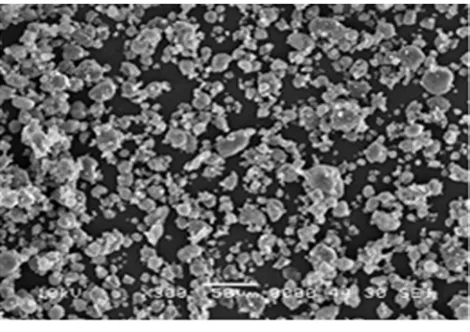
Japan) was used to determined surface morphological characteristics like shape and texture of particles. The samples were coated by platinum which was placed on aluminum stub and then this coated sample was observed under scanning electron microscope.
Drug Content Determination
The solid SNEDDS sample (10 mg) was dissolved in 10ml methanol and stirred by vortex mixing followed
by membrane filtration technique using 0.45 µm filter.
The concentration of drug was estimated by UV visible spectroscopy using methanol as solvent at 247 nm.
pH Sensitive Polymer Coating Solution
A polymeric coating solution of Eudragit S-100 was
used for coating capsules filled with solid SNEDDS.
The coating solution constituted of Eudragit S-100 (15 g), talc (3 g) and triethyl citrate (3 g) in isopropyl alcohol (280 g).
The Eudragit S-100 coated capsule was further given a band seal. Band sealing solution consisted of gelatin
type-B (1200 g), Polysobate 80 (10 g), purified water
(4800 g) and colorant (q.s).
In vitro Study
The release pattern of drug from pH sensitive polymer coated capsules was evaluated by using type II USP dissolution test apparatus (parameters was set at 50rpm and 370C). Drug release from solid SNEDDS and pure
drug (Budesonide) was checked by using 900 ml dissolu
-tion media of pH 1.1 (0.1 N HCl), pH 6.8 and pH 7.4
(phosphate buffer). Drug released study was performed
in 0.1 N HCl for 1h, pH 6.8 for 3h and in pH 7.4 for
concentration of each sample was determined using UV spectrophotometer at 247 nm.
In vivo Evaluation of Budesonide Loaded SNEDDS in Colitis
Animal ethics approved protocol referred number is
(MCP/IAEC/61/2012). Treatment Groups
According to weight of rats they were grouped into
three, each group consisting of 3 animals. Group I
(normal control group) received 0.5 ml oral saline daily.
Group II (colitis control group) received TNBS (Trini -trobenzenesulphonic acid in ethanolic solution) and
Group III received BUD loaded SNEDDS formulation.
Ulceration was induced by TNBS and after 24h of induction, rectal administration of solid SNEDDS (reconstituted) was given daily to the rats up to 7 days.13
Induction of Ulcerative Colitis
Colonic ulcer was produced in anesthetic rat by using 20mg TNBS dissolved in 0.5ml (40%v/v) ethanol. Intra colonic ulcer was produced by administration of TNBS solution which was introduced with the help of infant feeding tube (25cm long) rectally. Rats were held
upside-down with the help of tail for 1–2 m to minimize outflow
of the dose and were then returned to their cages until recovery. The above mentioned method was used for control group also by giving normal saline solution. After the 3 days treatment of TNBS, treatment group
and normal group rats were sacrificed at 4th day. Ulcer induced colons were analyzed histopathologically.
Histopathological Determination
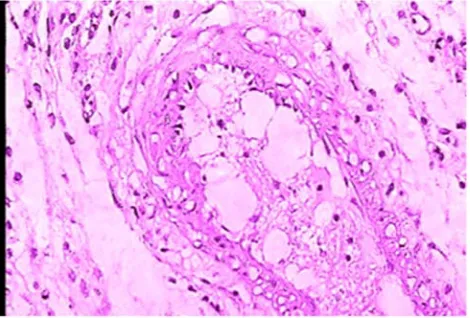
Thin sections of epithelium tissues of colon (6µm) were stained with conventional method using staining agent (hematooxylin and eosin). Then interpretation of slides was done after microscopic examination.
RESULT AND DISCUSSION
Formulation and Development of SNEDDS Solubility Study
The components such as oils, surfactant and co-surfac-tant, in which the drug has maximum solubility were
identified in this study. The importance of this study was to improve drug loading efficiency and reduce final
volume of SNEDDS formulation.14 The oils investigated were capable of solubilising remarkable amounts of BUD. As seen in Table 1, from selected oils, Capmul®
MCM L-8 could significantly solubilise in higher amount
of BUD (38.28 ± 0.02 mg/ml). Hence, it was selected as ideal oil for SNEDDS formulation.
Surfactants are amphiphilic in nature and due to their high HLB and hydrophilicity most hydrophobic drugs are solubilized readily. Non-ionic surfactants were pre-ferred for formation of SNEDDS due to less toxicity and due to effectiveness at all pH effectiveness. Also, surfactants of HLB 12-18 were chosen to form stable o/w nano emulsion. Among all the surfactants tested, Tween 80 had maximum solubilization potential for BUD and was selected as the surfactant for formation of SNEDDS.
Co-surfactants help to reduce the concentration of surfactants which are otherwise harmful in maximum
amount. They also provide flexibility to interfacial film
to attain the required curvature to form nano emulsion.
The co-surfactants screened included PEG 400, propylene
glycol and Plurol Olieque®. BUD showed maximum
solubility in PEG-400 and hence it was used for formation
of SNEDDS.
Construction of Ternary Phase Diagram
The final ratio of selected components was playing an
essential role in stability of formulation. By constructing ternary phase diagram components ratio (oil:surfactant: co-surfactant) was optimized. The ratio of oils and
S-mix were taken as 1:9, 2:8, 3:7, 4:6, 5:5, 6:4, 7:3, 8:2 and 9:1. The ratio of surfactant:co-surfactant to obtain
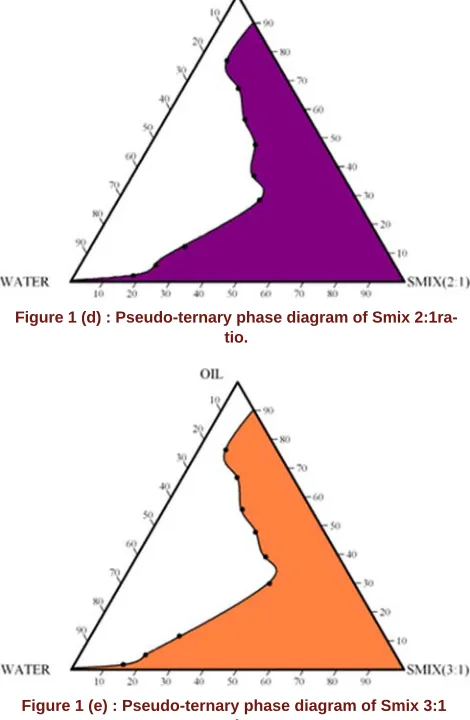
SNEDDS (designated as S-Mix) studied were as 1:1, 2:1, 3:1, 1:2, 1:3 (data not shown). It was found that S-mix:oil ratio of 3:7 showed excellent stability. Hence,
this ratio was finalized to further check effect of different
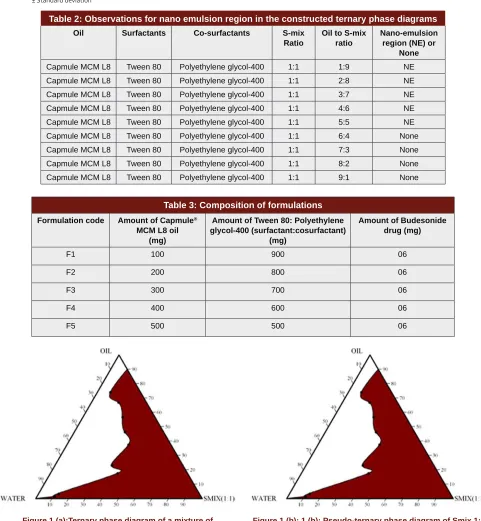
S-mix combinations. All the components in different combination are listed in Table 2. If nano-emulsion region was obtained then it is mentioned as NE and if nano-emulsion region was not obtained then it is mentioned as NO.
In Figure 1 ternary phase diagram, colored region shows formation of nano emulsion region. A mix-ture of surfactant: co-surfactant i.e S-mix of Tween 80: Polyethylene glycol-400 in the ratio of 1:1 along with Capmule® MCM L8 oil in the ratio of 3:7 showed maximum nano emulsion area than others and hence
were selected as the final composition of the BUD
SNEDDS.
Preparation of drug loaded SNEDDS
Table 1: Solubility of Budesonide in different oils, surfactant and co-sufactant components
Oils Solubility
(mg/ml) Surfactant
Solubility
(mg/ml) Co-surfactant
Solubility (mg/ml)
Capmule® MCM L8 38.23±0.04 Cremophor® EL 14.47±0.10 Plurol olieque® 32.80±0.11
Labrafil® M 1944 CS 22.85±0.09 Tween 80 38.46±0.17 PEG-400 33.95±0.12
Captex®355 16.85±0.06 Tween 20 19.39±0.07
Captex® 300 25.33±0.06
Maisine TM 13.39±0.08
± Standard deviation
Table 2: Observations for nano emulsion region in the constructed ternary phase diagrams
Oil Surfactants Co-surfactants S-mix
Ratio
Oil to S-mix ratio
Nano-emulsion region (NE) or
None
Capmule MCM L8 Tween 80 Polyethylene glycol-400 1:1 1:9 NE Capmule MCM L8 Tween 80 Polyethylene glycol-400 1:1 2:8 NE Capmule MCM L8 Tween 80 Polyethylene glycol-400 1:1 3:7 NE Capmule MCM L8 Tween 80 Polyethylene glycol-400 1:1 4:6 NE Capmule MCM L8 Tween 80 Polyethylene glycol-400 1:1 5:5 NE Capmule MCM L8 Tween 80 Polyethylene glycol-400 1:1 6:4 None Capmule MCM L8 Tween 80 Polyethylene glycol-400 1:1 7:3 None Capmule MCM L8 Tween 80 Polyethylene glycol-400 1:1 8:2 None Capmule MCM L8 Tween 80 Polyethylene glycol-400 1:1 9:1 None
Table 3: Composition of formulations Formulation code Amount of Capmule®
MCM L8 oil (mg)
Amount of Tween 80: Polyethylene glycol-400 (surfactant:cosurfactant)
(mg)
Amount of Budesonide drug (mg)
F1 100 900 06
F2 200 800 06
F3 300 700 06
F4 400 600 06
F5 500 500 06
Figure 1 (a):Ternary phase diagram of a mixture of surfactant:co-surfactant in different ratio with oil. (Colored region indicated nanoemulsion areas) 1 (a):Pseudo-ternary
phase diagram of Smix 1:1 ratio
Figure 1 (c): Pseudo-ternary phase diagram of Smix 1:3 ratio.
Figure 1 (d) : Pseudo-ternary phase diagram of Smix 2:1ra-tio.
Figure 1 (e) : Pseudo-ternary phase diagram of Smix 3:1 ratio.
in the preceding section. The compositions of formula-tions F1 to F5 is given in Table 3.
Characterization of Liquid SNEDDS Macroscopic Evaluation
After storing the liquid SNEDDS at 300C ± 20C for 3 months, no phase separation had occurred and formula-tion was seen to be clear and homogeneous.
Transmission Test
The percent transmittance of each formulation after
dilution with 0.1 N HCl, pH 6.8 and 7.4 phosphate buffer
was checked with the help of UV-spectrophotometer
at 628 nm (Figure 2). A higher concentrations of oil
in formulation produced low percent transmission and slightly cloudy dispersions were obtained. When concentra-tion of surfactant was increased it resulted in a propor-tionate increase in percent transmission and produced a clear solution. The percent transmittance of
formula-tions, F1-F5 (composition as in Table 3) was above 95%
in all media tested indicating that the droplet size was in nanometer range and a transparent nanoemulsion was formed. The maximum percent transmission had shown optically clear nano emulsion formulation.
Robustness Test
The liquid SNEDDS were diluted with dissolution
media (0.1 N HCl, pH 6.8 and 7.4 phosphate buffer)
except F4 and F5; remaining formulations did not show any phase separation, precipitation and cloudiness in 24h. SNEDDS formulations were exposed to different media in an attempt to mimic the in vivo condit4ion. Each SNEDDS formulation except F4 & F5, on dilutions with distilled water, 0.1 N HCl, and phosphate buffer
pH 6.8, phosphate buffer pH 7.4 did not show signs
of precipitation, cloudiness or separation after 24 h. Slightly turbidity observed in F4 and F5 formulation may have been due to the higher percentage of oil.
Self-emulsification Analysis
Need of this analysis was to find efficiency of nano
emulsion formulation. On gentle agitation, the time
required to self emulsification of SNEDDS was found to be 2m and all the batches showed emulsification time
of not more than 2 m.
Cloud Point Measurement
Most of the hydrophilic surfactant showed turbidity above certain temperature that is known as cloud point. As the temperature increased, phase separation appears and drug absorption gets affected due to dehydration of ingredients of formulation. Hence, to avoid this, the formulation must be stabilized to above 370C (above normal body temperature). It was found that all
formu-lation showed cloud point above 600C.16 Droplet Size Determination
The average globule size of micro emulsion formed
by F1-F3 was between 90 -94 nm (Table 4). The small
Polydispersity index for F1-F3 was found to be 0.069 to
0.128 indicating uniformity of droplet size.17
Optimized Batch
F3 batch was finalized on the basis of highest percent
transmittance, higher amount of S-mix, lower mean droplet size and polydispersity index. Optimized compo-nents are shown in Table 5. Its droplet size distribution is shown in Figure 3.
Stability
Although, the stability studies directly co-relates with shelf life of the formulation it is also an important to study temperature stability by subjecting optimized batch to variant stress conditions like temperature (at 37-400) and centrifugation (at 5000 rpm for 30 m). The formulation F3 did not show evidence of phase
separation or flocculation or precipitation at 37-400 temperature.
Evaluation of Solid SNEDDS
The stability of solid formulation is more as compared to liquid formulation reported by Mishra et al., 2009.18 Hence, with the help of spray drier machine, liquid SNEDDS was converted into its solid form. The BUD loaded solid SMEDDs was characterized for the following study:
DSC Study
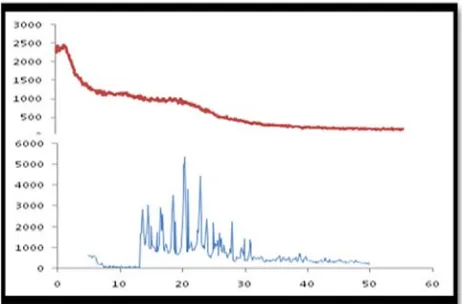
If the drug showed sharp endothermic peak, then it was in its crystalline form. Here, pure Budesonide DSC thermogram showed endothermic peak at 234.30 and there was no drug peak found in the solid SNEDDS of budesonide, indicating loss of crystallinity of drug. The SNEDDS showed no sharp peaks indicating BUD was in molecularly dissolved state in optimized formulation.
Powder X-ray Diffraction
A further confirmation that drug is in structurally
dissolved state was carried out by X-ray powder diffrac-tograms. X-ray powder diffractogram for pure drug and solid SNEDDS is shown in Figure 4 The BUD dis-played a peak of reduced crystallinity in SNEDDS.
Scanning Electron Microscopy
The scanning electron micrograph of solid SNEDDS shown in Figure 5 indicated that the powder particles had smooth surface and were spherical in shape.
Drug Content in Solid SNEDDS
The optimized batch (F3) contained 6 mg drug out of total weight of 190 mg of capsule contents.
Figure 2: Percent transmission test at 628 nm in distilled water, 0.1 N HCl, phosphate buffer 6.8, phosphate buffer 7.4.
Figure 3: Droplet size distribution of Formulation code F3. The average droplet size of optimized formulation was
found to be 116.52 nm.
Figure-4 :X-ray powder diffract gram a) pure Budesonide and b) formulation F3 (solid SNEDDS)
Transmission Test
A transmittance of more than 97 % in all the media
of drug. Also, the ‘n’ value in all the cases was within 0.5
which meant that it followed Fickian diffusion (Table 6). Stability Study
Solid SNEDDS on dilution did not show precipitation
of drug and percent transmission was near 99 % that
indicated formation of nanoemulsion having globule size less than 100 nm. No change was observed in globule size of solid SNEDDS. Thus, solid SNEDDS of BUD was physically and chemically stable. Results showed that there
was no significant drug loss during the stability test periods. In vivo Study
The histopathological sections of colon receiving different treatments are shown in Figure 7. The histo-pathological sections of normal colon (Figure 7-I) did not show any damage in microscopic examination (arrow-Mucosal and sub-mucosal layer). As seen in (Figure 7-II), histopathological section of severely damaged colon by TNBS, showed ulceration to mucosa and sub-mucosa layer of epithelium tissue (arrow). Fig-ure 7-III showed tissue damages induced by adminis-tration of TNBS were diminished by after seven days treatment of SNEDDS formulation.
Figure 5 : SEM of solid SNEDDS of optimized formulation (F3).
Figure 6 : In vitro drug release studies in pH 0.1 N HCl, phosphate buffer pH 6.8 and phosphate buffer pH 7.4
Table 4: Globule size and polydispersity index Formulation
Code
Globule size (nm) Mean ± S.D
Polydispersity index Mean ± S.D
F1 93.10±0.05 0.069±0.001
F2 93.54±0.045 0.023±0.001
F3 93.84±0.056 0.128±0.001
S.D- Standard deviation
Table 5: Optimized composition of SNEDDS
Ingredient Quantity (mg)
Capmul MCM C8 300
S-mix 700
Drug 06
Total 1006
S-mix-Surfactant-cosufactant mixture, SNEDDS-Self-nanoemulsifying drug delivery system
Table 6: Drug release kinetics for formulations
Formulation Best fit model N k R
F3 peppas 0.3907 0.0690 0.6472
Pure drug peppas 0.3338 0.0632 0.5949 F3-Formulation code
Mean Particle Size Determination
The reconstituted solid SNEDDS and liquid SNEDDS were evaluated for its particle size and polydispersity
index and it was found to be 116.52 ± 0.75, 0.289 ± 0.0026 & 98.48 ± 0.77, 0.326 ± 0.0035 respectively.
Since, Aerosil was used as adsorbent in spray dryer this has resulted in the slight increase in particle size.
Flow Properties
The bulk density (0.160 ± 0.0084 g/ml) and tapped density
(0.183 ± 0.058 g/ml) indicated that the prepared solid SNEDDS had higher bulk volume. The Carr’s
com-pressibility index was 12.56 ± 0.040 % while the Hausner’s ratio was less than 1.25.
Drug Release Study
Firstly the solid SNEDDS formulation filled into capsules
then coating solution of pH sensitive polymer Eudragit S-100 sprayed on capsules with the help of spray gun in pan coater. These coated capsules remained intact in dissolution media used 0.1 N HCl of pH 1.1 and
phos-phate buffer solution of pH 6.8. As soon as the capsule
comes in a contact with pH 7.4 phosphate buffer, capsules began to dissolve to give immediate and
com-plete release of BUD in 1 h. As seen in Figure 6, a sig
-nificantly higher amount of BUD (more than 95 %) was released at 6 h from the solid SNEDDS than pure
Figure 7 (a) : Representative histological appearance of rat
colonic mucosa I-normal control (mucosal layer) Figure 7 (d) : Representative histological appearance of rat colonic mucosa II- colitis control (submucosal layers).
Figure 7 (b): Representative histological appearance of rat
colonic mucosa I- normal control (submucosal layers). colonic mucosa III- budesonide enteric coated capsules (300 Figure 7 (e): Representative histological appearance of rat µg/kg/day) (mucosal layers).
Figure 7 (c) : Representative histological appearance of rat
The histopathological study thus revealed that SNEDDS
formulation demonstrated anti-inflammatory activity of BUD and thereby has potential in inflammatory bowel
disease.
CONCLUSION
The SNEDDS of Budesonide were found to enhance the aqueous solubility. The SNEDDS was successfully targeted to the colon via encapsulating in a capsule coated by a pH dependent polymer. In vitro dissolution test studies demonstrated high release of drug from the formulated SNEDDS. In-vivo study concluded enhanced
anti-inflammatory efficacy of budesonide loaded in
SNEDDS. Thus, SNEDDS loaded with budesonide may prove better formulation for treatment of Ulcer-ative colitis. The present study has brought out the potential of enteric coated SNEDDS formulation in ulcerative colitis. Extensive clinical studies will further substantiate the merit of this novel formulation.
ACKNOWLEDGEMENT
The authors are thankful to the principal, progressive education society, Modern college of Pharmacy, Nigdi, Pune for providing well equipped laboratory and all other necessary facilities to carry out our research work.
CONFLICT OF INTEREST
The authors declare no conflict of interest.
ABBREVIATION USED
SNEDDS: Self-nanoemulsifying Drug Delivery Sys-tem; BUD: Budesonide; S-Mix: Mixture of surfac-tant and Co-surfacsurfac-tant; W/W: Weight by weight; V/V:
Volume by volume; nm: Nanometer; ml: Milliliters;
HLB: Hydrophilic lipophilic balance; XRD: X-Ray dif-fractometer; DSC: Differential scanning calorimeter;
TNBS: Trini trobenzenesulphonic acid; NE: Nano-emulsion area; NO: Not Obtained; F1-F5: Formulation code.
REFERENCES
1. http://www.drugbank.ca
2. Shukla JB, Koli AR, Ranch KM, Parikh RK. Self-micro emulsifying drug
delivery system. An international journal of pharmaceutical sciences. 2010;1(2):13-33.
3. Constantinides PP. Lipid microemulsions for improving drug dissolution and
oral absorption: physical and biopharmaceutical aspects. Pharmaceutical
research. 1995;12(11):1561-72. https://doi.org/10.1023/A:1016268311867;
PMid:8592652.
4. Cortesi R, Esposito E, Maietti A, Menegatti E, Nastruzzi C. Formulation study
for the antitumor drug camptothecin: liposomes, micellar solutions and a
microemulsion. International journal of pharmaceutics. 1997;159(1):95-103.
https://doi.org/10.1016/S0378-5173(97)00275-5.
5. Kumar KV, Sivakumar T, Mani TT. Colon targeting drug delivery system:
A review on recent approaches. Int J Pharm Biomed Sci. 2011;2(1):11-9.
6. Sreelatha D, Brahma CK. Colon targeted drug delivery–a review on primary
and novel approaches. Journal of Global Trends in Pharmaceutical Sciences.
2013;4(3):1174-83.
7. Zhang L, Zhu W, Yang C, Guo H, Yu A, et al. A novel folate-modified
self-microemulsifying drug delivery system of curcumin for colon targeting. Int J
Nanomedicine. 2012;7:151-62. PMid:22275831 PMCid:PMC3263408.
8. Borhade V, Nair H, Hegde D. Design and evaluation of self-microemulsifying
drug delivery system (SMEDDS) of tacrolimus. Aaps Pharmscitech. 2008;
9(1):13-21. https://doi.org/10.1208/s12249-007-9014-8; PMid:18446456
PMCid:PMC2976874.
9. Singh AK, Chaurasiya A, Jain GK, Awasthi A, Asati D, et al. High performance
liquid chromatography method for the pharmacokinetic study of Bicalutamide
SMEDDS and suspension formulations after oral administration to rats.
Talanta. 2009;78(4):1310-4. https://doi.org/10.1016/j.talanta.2009.01.058;
PMid:19362193.
10. Balakrishnan P, Lee BJ, Oh DH, Kim JO, Hong MJ, et al. Enhanced
oral bioavailability of dexibuprofen by a novel solid self-emulsifying
drug delivery system (SEDDS). European Journal of Pharmaceutics
and Biopharmaceutics. 2009;72(3):539-45. https://doi.org/10.1016/j.
ejpb.2009.03.001; PMid:19298857.
11. Yi T, Wan J, Xu H, Yang X. A new solid self-microemulsifying formulation
prepared by spray-drying to improve the oral bioavailability of poorly water
soluble drugs. European Journal of Pharmaceutics and Biopharmaceutics.
2008;70(2):439-44. https://doi.org/10.1016/j.ejpb.2008.05.001; PMid:18603415.
12. Varshosaz J, Emami J, Tavakoli N, Minaiyan M, Rahmani N, et al. Pectin
film coated pellets for colon-targeted delivery of budesonide: In-vitro/in-vivo
evaluation in induced ulcerative colitis in rat. Iranian journal of pharmaceutical
research: IJPR. 2012;11(3):733. PMid:24250500 PMCid:PMC3813129
13. Pouton CW, Porter CJ. Formulation of lipid-based delivery systems for oral
administration: materials, methods and strategies. Advanced Drug Delivery
Reviews. 2008;60(6):625-37. https://doi.org/10.1016/j.addr.2007.10.010;
PMid:18068260.
14. Jaiswal P, Aggarwal G. Bioavailability Enhancdement Of Poorly Soluble
Drugs By Smedds: A Review. Journal of drug delivery and therapeutics.
2013;3(1).
15. Kumar M, Pathak K, Misra A. Formulation and characterization of
nanoemulsion-based drug delivery system of risperidone. Drug
development and industrial pharmacy. 2009;35(4):387-95. https://doi.
org/10.1080/03639040802363704; PMid:19016058.
16. Nidhi M, Shikha S. New Strategy for Solubilization of poorly soluble
drug-SEDDS. Der Pharmacia Lettre. 2009;1(2):60-7.
17. Hauss DJ, Fogal SE, Ficorilli JV, Price CA, Roy T, et al. Lipid-based delivery
systems for improving the bioavailability and lymphatic transport of a
poorly water-soluble LTB4 inhibitor. Journal of pharmaceutical sciences.
Cite this article: Gaikwad NM, Shaikh KS, Chaudhari PD. Development and Evaluation of a System for Colonic Delivery of Budesonide. Indian J of Pharmaceutical Education and Research. 2017;51(4):551-61.
Dr. Pravin D. Chaudhari: Is presently working as Principal & Professor of Pharmaceutics at Modern College of Pharmacy, Pune (MS), INDIA. & President of Association of Pharmaceutical Teachers of India. He has completed M. Pharm from NDMVP'S College of Pharmacy, Nashik and doctoral degree from Bundelkhand University. He has around 18 years of Professional experience. He has filled Two Patent and has published more than 116 research papers. He was worked as a Dean, Faculty of Pharmaceutical Sciences, University of Pune. He has received prestigious Dr. R.L.Nicore award 2009 and IDMA award 2011 for best research paper. He is actively associated with various professional bodies. He is a recipient of MPA award 2008 by Maharashtra Pharmacist Association and Rashtriya Gaurav Award 2010 by Indian International Friendship society, New Delhi for his outstanding performance, remarkable role and meritorious services for pharmacy profession.
Dr. Karimunnisa S. shaikh: Obtained her PhD in pharmacy faculty from Bharati Vidyapeeth Deemed University, Pune, Maharashtra. Currently she is working as Associate Professor & Head of Quality Assurance Techniques department at Modern College of Pharmacy, Nigdi, Pune. She has vast experience in teaching and research in field of Nanotechnology. She has guided many post graduate students as well as ph.D students also. She has contributed as author for many publications in international, national journals along with paper presentation in many conferences.
About Authors
Ms. Nikita M. Gaikwad: She obtained her Master degree in pharmacy faculty from Progressive Education Society, Modern college of pharmacy, Nigdi, Pune, Maharashtra. Currently working as Assistant Professor at Modern College of Pharmacy, Nigdi, Pune in the department of Quality Assurance Techniques. She has good experience in teaching and research in field of pharmaceutics also contributed as author for international journal.
PICTORIAL ABSTRACT SUMMARY
• The Self-nanoemulsifying Drug Delivery System was developed for colonic delivery of budesonide drug as novel technique to effi-ciently improve drug solubility and enhance bioavailability. • The drug Solubility is an important parameter which was
deter-mined in different oils, surfactants and co-surfactants. Ternary phase diagrams were constructed to obtain maximum nano-emul-sion area. SNEDDS containing Capmule ®MCM L8 as oil, Tween-80 as surfactant and polyethylene glycol 400 as co-surfactant were formulated to get maximum nano-emulsion in the phase diagram
• The formulated liquid SNEDDS was transformed to a solid form by spray draying method. Subsequently, it was filled into capsules coated with pH sensitive polymer, Eudragit S- 100 along with band sealing.
• The prepared formulations were characterized for physicochemi-cal parameters and In vitro drug release study. The optimized SNEDDS (particle size 116.32nm) revealed enhanced drug release in colonic pH as compared to pure drug.