ergonomics methods based on a virtual space on
computer users with neck pain
Mojtaba Babaei Khorzoghi1, Mhammad Ali Nadi2, Nader Rahnama3,
Parinaz Sajjadian4
Abstract
Neck pain is one of the most common injuries at computer environments. This study aimed to compare the effect of exercise rehabilitation and ergonomic methods based on virtual space over 12 weeks on computer users with neck pain. The statistical population of this study included 150 patients with neck pain. This study was quasi experimental and participants were randomly assigned into two ergonomic and combined (exercise rehabilitation and ergonomic) groups. Both groups received their treatment through virtual space; the ergonomic group received ergonomic treatment interventions and combined group in addition to receiving ergonomic treatment interventions performed exercise rehabilitation as well. Pain and disability in the pretest and posttest were studied by a corrective Nordic questionnaire (for neck pain). Neck pain was decreased in participants with neck abnormalities in the experimental group (exercise rehabilitation and ergonomic based on virtual space) compared to the control group at 12 month assessment and also in past 7 days assessment, although the passage of time shows a stronger significant level in 12 months compared to 7 days. Using exercise rehabilitation and ergonomic based on virtual space can improve patients with neck pain, save medical expenses resulting from spatial displacement and program according to appropriate time for patients.
Keywords: Ergonomics, Exercise Therapy, Neck Pain Journal of Research & Health
Social Development & Health Promotion Research Center
Vol. 7, No. 3, May & Jun 2017 Pages: 869 - 876 DOI: 10.18869/acadpub.jrh.7.3.869
Original Article
1. Correspondence to: Department of Sport Injury and Corrective Exercises, Faculty of Physical Education and Sport Sciences, Shahid Bahonar University, Kerman; Center of Physical Education, Isfahan University of Technology, Isfahan, Iran
Email: [email protected]
2. Department of Educational Sciences, Faculty of Education Sciences and Psychology, Islamic Azad University, Khorasgan Branch, Isfahan, Iran
3. Department of Pathology & Corrective Exercise, Faculty of Physical Education and Sport Sciences, University of Isfahan, Isfahan, Iran.
4. Department of Psychology, Feizol Eslam
Non-Profit Higher Education Institution,
Isfahan, Iran
Received: 22 Nov 2013 Accepted: 19 Oct 2014
How to cite this article: Babaei Khorzoghi M, Nadi MA, Rahnama N, Sajjadian P. Comparative effect of exercise therapy and ergonomics methods based on a virtual space on computer users with neck pain. J Research & Health2017; 7(3): 869 - 876.
Introduction
Work-related musculoskeletal disorders area public health problem throughout the world and are one of the leading causes of disability [1]. In industrial developing countries, workplace problems and injuries are very serious [2] and are considered as one of the major problems in a number of active economic sectors in industrialized countries [3]. These disorders also affect muscles, tendons, joints, peripheral nerves and blood
vessels [4]. Areas of the body which are more prone to injuries include the low back, neck, shoulder, forearm and hand [5].
humans and is a source of valuable services for them, it has had, and still has, several complications [6]. One of the effects of these complications is that people’s physical and mental health are endangered mainly due to factors such as poverty movement and bad habits; although ergonomic exposures are not the only cause of musculoskeletal disorders and they are also dependent on age, gender individual sensitivities, hours of work per day, psychological stress, job satisfaction, physical fitness, etc. [7,8].
Although, computer solved many of modern man’s problems as an efficient tool, damages that users may suffer area new problem [9] so that many studies have been conducted in different parts of the world on musculoskeletal disorders related to working with computer and administrative tasks and confirm that [10,11]. Studies show that pain in different parts of the musculoskeletal system is the main problem in workplaces so that is the main reason for absenteeism from work. Also these disorders lead to temporary and permanent disabilities in people and are associated with symptoms such as pain, numbness, tingling in hands and feet, resulting in a loss of time, reduced productivity and increased labor compensation costs [5]. A study in America showed that the prevalence of musculoskeletal disorders in computer users was 54%and it was especially observed in women and in neck and shoulders [11]. According to a study conducted in Germany on computer users, the highest disorder was found in neck and shoulders and then elbows and these symptoms were higher in people who used computer more than 6 hours [12]. In this regard, the high frequency of musculoskeletal disorders has been reported in other studies [13].
The results of the United States department of education suggest that 97% of high school students, 91% of middle school students and 80% of children in Kindergarten use computer [14] and it shows that a lot of people deal with computers in different jobs, so it is better that an efficient, appropriate and low cost treatment be provided to many computer and
Internet users by a computer method.
Due to the widespread use of computers, even relatively small risks are considered as public health problems such as musculoskeletal complications in different parts of body, particularly neck. Neck pain beginning without a known cause has been reported 68-71% showing that two-thirds of people experience neck pain during their lifetime [15].
The results of a study on 1428 computer users showed the prevalence rate at 12 months as follows: head and neck42%, lower back 34%, upper back 28%, wrists and hands 20%, shoulders16%, ankles 13%, knees12%, hips 6% and elbows 5% [16]. Performing repetitive tasks in a long term, skeletal structural factors, lack of familiarity with correct body physics and mechanics and inharmonious and wrong movements occur in life [17]. Computer is one of the tools that currently its use is growing rapidly in many communities and people spend lots of time in workplaces with it and perform the main part of their works by it [18]. Generally, we should know that computers are an integral part of modern human and considering this the correct use of this tool is very important to maintain users’ health [10]. We should understand that prevalent musculoskeletal diseases are the most occupational diseases and are considered a common cause of absenteeism from work which can decrease productivity [19]. Repetitive movements, improper body positions during work, stress from local contact and body stationary states are major occupational causes of creating these diseases while working with computers [19,20].
two times more than other people. It has been also shown in various studies that neck pain can cause a decrease in quality of life [9,22,23]. According to a report of the European Public Health Association, neck and shoulder pains were respectively 1.3 and 2.5 times higher among users who used computer 2 to 3 hours and more than 6 hours per day than non-users [24]. Juul-Kristensen et al. mentioned one-year prevalence of neck and shoulder pain in 1065 Visual Display Terminal (VDT) users 55 and 38%, respectively, and reported that there is a significant relationship between the duration of daily VDT use and neck pain score [11]. Also, Rempel et al. reported the incidence of neck pain in 73% of users [12].
Review of previous research shows that most of them focused on the prevalence of musculoskeletal disorders among computer users and reported the high prevalence of especially neck pain among these users. One of the main objectives of researchers is to find an appropriate treatment method with the lowest complications for groups with neck pain. Exercise therapy is widely considered as one of the appropriate interventions in treatment and return to work in occupational care and musculoskeletal disorders [19]. Numerous studies have shown the effect of exercise therapy on reducing low back, shoulder and upper limbs disorders [5,20]. Generally, physical activity and exercise are considered as one of the basic methods for primary care in the face of chronic musculoskeletal pain that reduce the feeling of pain in addition to positive effects on the musculoskeletal system [9]. Other researchers also have studied the fact that ergonomic interventions can reduce musculoskeletal pain and disorders caused by work among clerks [10].
Therefore, given the high frequency of occupational factors among computer users and the high frequency of musculoskeletal disorders in this group, especially neck pain, the importance of prevention and treatment of these disorders in workplaces is considered necessary by computer. This paper aimed to compare the effect of two exercise
rehabilitation and ergonomic methods through virtual space (Internet and its various services “companies such as Google, Yahoo, etc.”) on neck pain.
Method
This study was a quasi-experimental study with two experimental and control groups, which was conducted in a three-month period (October, November and December, 2012). The statistical population was selected from 300 computer users (including users in Isfahan University and those who were introduced by them) that at least 4 hours a day worked with computer; benefits and facilities of this study were completely described for them via email. Computer users were invited to cooperate and during the follow-up 168 participants as the research community announced that they were ready for the study that 18 participants were excluded from the study due to lacking specific and chronic neck pain (which is a pain in neck for nearly three months or longer) so inclusion criteria were the same in terms of the main features of chronic neck pain for the remaining 150 participants. To collects demographic information, a demographic digital checklist (including age, gender, activity’s background) was prepared and then the Nordic Musculoskeletal Questionnaire (NMQ), Iranian edition [25-27] and digitalized (which was prepared in electronic form on jot-form site) was submitted for users. In the end, 150 participants filled out these forms and musculoskeletal disorders of different areas of the body were obtained.
accurate and efficient use of the tools needed in daily activities (work with computer, sitting on chair, watching TV, sleeping, etc.) and they were followed-up by daily alerts via email and Yahoo Messenger, and the relevant variable (exercise rehabilitation including stretching exercises and endurance training with isometric exercise approach) was provided to the second group in addition to corrective ergonomic interventions. All interactions in this treatment method were done through telecommunications in both groups; for this purpose, to homogenize users in terms of relevant software of telecommunications, the download link of Yahoo Messenger software version 10, Skype version 4.2 and Yahoo Mail new system was posted on PC download site for users and how to install and work with them were taught to them by e-books. Exercises and corrective ergonomic interventions were prepared through proposed sites in this area in flash format (FLV) and video files (Gif) and were given to
users; Wells Chiropractic Group (WCG) was the most important resource used in this study. The way and accuracy of exercises via flash instructional videos and exercises display were carefully followed-up by an operator expert in the field of exercise rehabilitation. Participants entered the study consciously and selectively and a digital consent was obtained from each of them. Data were analyzed by SPSS-19 and by using descriptive statistics methods (frequency and percentage) and chi-square test χ2 was used in inferential level.
Results
Table 1 illustrates the demographic characteristics of computer users interested in participating in this research. The results show that both groups had similar demographic characteristics.
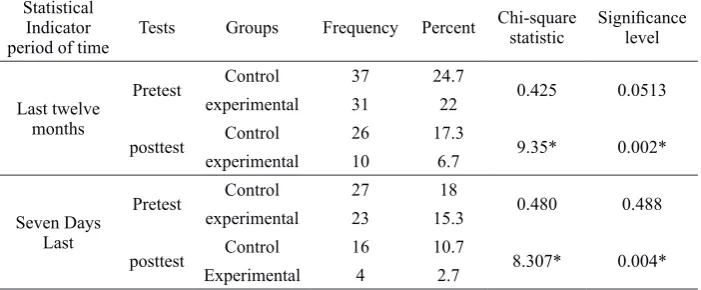
Information related to the effect of exercise therapy on the pain of the participants with neck pain is presented in Table 2.
Table 1 Demographic characteristics of computer users
Men Woman Age Height (m) Weight (kg)
Control group 34 41 2.97±24.08 4.3±160 3.65±77.04
Examination group 35 40 2.27±24.04 4.5±160.05 4.54±79.06
Total 69 81 2.62±24.06 4.4±160.25 4.1±78.05
* Asterisk sign on values denotes the significance of data obtained.
The results in Table 2, related to last 12 months, suggest that neck pain in patients with neck abnormalities in the experimental group was decreased compared to the control group (p=0.002). According to the results in this Table,
the practical significance in treatment method based on virtual space was approved at a higher level in posttest compared to pretest confirming the strong effect of the treatment method in posttest. Thus the research hypothesis is confirmed i.e. the effect of treatment method based on virtual space (tele-method).
Table 2 Compare the frequency, percentage and chi-square and Cramer’s values, neck pain in both control and experimental groups
Statistical Indicator
period of time Tests Groups Frequency Percent Chi-square statistic
Significance level
Last twelve months
Pretest Control 37 24.7 0.425 0.0513
experimental 31 22
posttest Control 26 17.3 9.35* 0.002*
experimental 10 6.7
Seven Days Last
Pretest Control 27 18 0.480 0.488
experimental 23 15.3
posttest Control 16 10.7 8.307* 0.004*
Experimental 4 2.7
Also, the findings in Table 2 related to the past 7 days indicate that the prevalence of neck pain was significantly decreased in the posttest compared to in the pretest in the experimental group (p=0.004) and in terms of the frequency this decrease was significant compared to the control group, so that findings suggest no significant
difference in the frequency in both groups in the pretest; therefore, the research hypothesis is confirmed i.e. the effect of tele-exercise therapy on reducing the frequency of neck pain in people with neck abnormalities over the past 7 days which indicates a decrease in neck pain in recent days of the research.
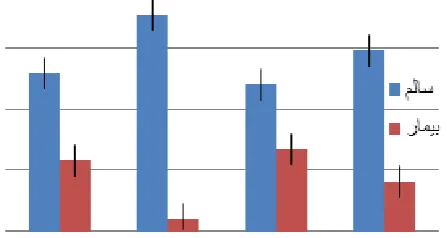
A: Healthy (users who are not experiencing neck pain or treated) & B: Patient (users who are experiencing neck pain)
Figure 1 The effectiveness of exercise therapy in experimental group compared to the control group in the last twelve months
A: Healthy (users who are not experiencing neck pain or treated) & B: Patient (users who are experiencing neck pain) Figure 2 The effectiveness of exercise therapy in experimental group compared to
the control group in seven Days Last
Discussion
In this study, there was a high prevalence of chronic neck pain without trauma among users that was similar to the studies of Hakkinen et al. [24], Hakala et al. [28], Klussmann et al. [29], Korhonen et al. [30]. Also, Taheri et al. in their study on the effect of exercise therapy and self-therapy on neck pain in computer users reported 42.85% of neck pain which is consistent with this research. These researchers reported a relative high prevalence of neck pain between communities surveyed that most of them were computer users who work in offices. This is
quite expected due to the type of exposure of these people while sitting on chair and the type of seat and wrong sitting positions on chair; so, ergonomic training and also using appropriate exercise are recommended to prevent this complication [17].
Hakkinen et al. [24], Randlov et al. [33], Ylinen et al. [25], Taimela et al. [34], Falla et al.[35] and Cassidy et al. [36]. It seems that exercise program of this research which was specific for neck pain in virtual space and also ergonomic interventions for neck had very positive effects on subjects and decreased their neck pain for reasons such as conducting corrective exercises and ergonomic intervention simultaneously in neck area, treatment duration, frequency and intensity of exercises. Viljanen et al. stated that exercises should be compact enough (half-hour, 3 times a week for several months) to be effective enough on reducing disorders [37]. Totally, arthritis and neck muscle weakness in patients with chronic neck pain will lead to decreased activity, limitation of joint movement and thus inability to perform daily tasks [37]. Several studies show that forward bending and forward head posture are one of the most common habits of computer users [38]. In this situation, forward transfer of the center of gravity and increased torque arm will cause extra burden on antigravity muscles of neck and lead the muscles in the area to be contracted regularly to tolerate the head's weight. So these muscles are in stretched position with fatigue [39,40].
Training program specific for neck based on flexion exercises with an emphasis on maintaining the correct position of head and neck and ergonomic interventions related to this area, which were prepared by training pre-exercises by Flash software, led to a significant decrease in pain of neck. Falla et al. studied on how exercise therapy reduces pain and reported that people with neck pain cannot keep their head position, they also reported that after a period of exercise therapy, strength, endurance, range of motion, proprioception, movability and ability to hold the head in patients with neck pain improved. So, exercise therapy with strengthening to keep the correct head position will lead to reduced pressures on head and neck [32,35,40].
As computer users are affected by isometric contractions of neck muscles for a long time
of the day, repetition in a long run will reduce perfusion and the production of lactic acid in muscles resulting in muscles fatigue and decreased their strength and endurance and pain occurs in muscles if they do not have time to return to the initial state [39].
People with neck pain may also be influenced by psychological and social factors in addition to physical factors [36].
In summary, it can be concluded that the prevalence of neck pain was relatively high among computer users surveyed. Numerous studies have been conducted in the world on musculoskeletal disorders in computer users due to working with computer.
As in this study chronic pain was diagnosed in virtual space according to individual criteria with self-declaration, this sample selection method can be considered as a limitation to generalize the findings.
In addition to ergonomic factors and standards that should be used in the manufacture of equipment to follow-up occupational hazards, it is suggested that musculoskeletal disorders in computer users be largely prevented by exercise activities and special attention to corrective exercises and observing exercise scientific principles so that through virtual space (Internet) productivity can be increased and rehabilitation, treatment and lateral neck pain costs can be reduced. To conduct this study on larger samples, it is recommended to future researchers that in addition to use digital questionnaires in virtual space, take the advantage of clinical diagnosis and medical examination.
Conclusion
follow-up occfollow-upational hazards, it is suggested that musculoskeletal disorders in computer users be largely prevented by exercise activities and special attention to exercise rehabilitation and observing exercise scientific principles so that productivity can be increased and treatment costs can be reduced.
Acknowledgments
The authors gratefully acknowledge the all participants who had active presence in this research.
Contribution
Study design: MBKH
Data collection and analysis: MBKH, PS, MBKH, MAN, NR
Manuscript preparation: PS, NR, MAN, MBKH
Conflict of Interest
"The authors declare that they have no competing interests."
Funding
The author (s) received no financial support for the research, authorship and/or publication of this article.
References
1- David G, Woods V, Li G, Buckle P. The development of the Quick Exposure Check (QEC) for assessing exposure to risk factors for work-related musculoskeletal disorders.
Appl Ergon2008; 39(1): 57-69.
2- Shahnavaz H. Workplace injuries in the developing
countries. Ergonomics1987; 30(2): 397-404.
3- Denis D, St-Vincent M, Imbeau D, Jette C, Nastasia I. Intervention practices in musculoskeletal disorder prevention: A critical literature review. Appl Ergon2008; 39(1): 1-14.
4- Podniece Z, Heuvel S, Blatter B. Work-related
musculoskeletal disorders: prevention report. Bilbao: European agency for safety and health at work; 2008.
5- Punnett L, Wegman DH. Work-related musculoskeletal
disorders: the epidemiologic evidence and the debate. J Electromyogr Kinesiol2004; 14(1): 13-23.
6- Gallis C. Work-related prevalence of musculoskeletal symptoms among Greek forest workers. Int J Ind Ergon2006; 36(8): 731-6.
7- Gibson T. A measure of university employees' exposure to risk factors for work-related musculoskeletal disorders.
AAOHN J2008; 56(3): 107-14.
8- Bongers PM, Kremer AM, Ter Laak J. Are psychosocial factors, risk factors for symptoms and signs of the shoulder, elbow, or hand/wrist: A review of the epidemiological literature. Am J Ind Med2002; 41(5): 315-42.
9- Delisle A, Larivière C, Plamondon A, Imbeau D.
Comparison of three computer office workstations
offering forearm support: impact on upper limb posture and muscle activation. Ergonomics2006; 49(2): 139-60. 10- Johnston V, Souvlis T, Jimmieson NL, Jull G. Associations between individual and workplace risk factors for self-reported neck pain and disability among
female office workers. Appl Ergon2008; 39(2): 171-82. 11- Juul-Kristensen B, Jensen C. Self-reported workplace related ergonomic conditions as prognostic factors for musculoskeletal symptoms: the “BIT” follow
up study on office workers. Occup Environ Med2005; 62(3): 188-94.
12- Rempel D, Krause N, Goldberg R, Benner D, Hudes
M, Goldner G. A randomised controlled trial evaluating the effects of two workstation interventions on upper body pain and incident musculoskeletal disorders among computer operators. Occup Environ Med2006; 63(5): 300-6.
13- Rurkhamet B, Nanthavanij S. Analytic and rule-based decision support tool for VDT workstation adjustment and computer accessories arrangement. J Human Ergo2004; 33(1-2): 1-17.
14- Bathaei A, Khalili K. Diseases due to computer work. Tehran: Environment and occupational health center, ministry of health and medical education; 2005. 15- Javanshir Kh, Mohseni-Bandpei MA, Amiri M, Rezasoltani A, Rahgozar M. The comparison of Longuscolli muscle size and shape ratio between healthy subjects and chronic neck pain patients using ultrasonography. Journal of Gorgan University of Medical Sciences2010; 12(1): 33-7.
16- Hoogendoorn WE, van Poppel MN, Bongers
PM, Bouter LM, Koes BW. Systematic review of psychosocial factors at work and private life as risk factors for back pain. Spine (Phila Pa 1976) 2000; 25(16): 2114-25.
17- Taheri H, Mahdavinejad R, Minasian V, Karimi
A. The effects of an eight-week selected therapeutic exercises course and self-treatment by pamphlet programs on the rate of chronic neck pain and disability among computer users. Journal of Isfahan Medical School2012; 29(169): 2562-73.
18- Mirmohammadi SJ, Mehrparvar AH, Soleimani H, Lotfi MH, Akbari H, Heidari N. Musculoskeletal
disorders among video display terminal (VDT) workers
comparing with other office workers. Iran Occupational Health Journal2010; 7(2): 11-4.
environmental medicine. New York: McGraw-Hill; 2007. 20- Mirmohammadi SJ, Mehrparvar AH, Hafezi R. Office
Ergonomics. 2 ed. Tehran: Farzaneh Books; 2009. pp:103-121.
21- Rezasoltani A, Ali-Reza A, Khosro KK, Abbass R. Preliminary study of neck muscle size and strength
measurements in females with chronic non-specific neck
pain and healthy control subjects. Man Ther2010; 15(4): 400-3.
22- Fejer R, Kyvik KO, Hartvigsen J. The prevalence of
neck pain in the world population: a systematic critical review of the literature. Eur Spine J2006; 15(6): 834-48.
23- Salo PK, Häkkinen AH, Kautiainen H, Ylinen JJ.
Effect of neck strength training on health-related quality of life in females with chronic neck pain: A randomized controlled 1-year follow-up study. Health Qual Life Outcomes2010; 8: 48.
24- Häkkinen A, Kautiainen H, Hannonen P, Ylinen J.
Strength training and stretching versus stretching only in the treatment of patients with chronic neck pain: A randomized one-year follow-up study. Clin Rehabil2008; 22(7): 592-600.
25- Ylinen J, Takala EP, Nykänen M, et al. Active neck
muscle training in the treatment of chronic neck pain in women: A randomized controlled trial. JAMA2003; 289(19): 2509-16.
26- Crawford JO. The nordic musculoskeletal questionnaire. Occup Med2007; 57(4): 300-1.
27- Dawson AP, Steele EJ, Hodges PW, Stewart S.
Development and test–retest reliability of an extended version of the Nordic Musculoskeletal Questionnaire (NMQ-E): A screening instrument for musculoskeletal pain. J Pain2009; 10(5): 517-26.
28- Hakala PT, Rimpelä AH, Saarni LA, Salminen JJ.
Frequent computer-related activities increase the risk of neck–shoulder and low back pain in adolescents. Eur J Public Health2006; 16(5): 536-41.
29- Klussmann A, Gebhardt H, Liebers F, Rieger MA.
Musculoskeletal symptoms of the upper extremities and the neck: A cross-sectional study on prevalence and symptom-predicting factors at visual display terminal (VDT) workstations. BMC Musculoskelet Disord2008; 9: 96.
30- Korhonen T, Ketola R, Toivonen R, Luukkonen
R, Häkkänen M, Viikari-Juntura E. Work related and individual predictors for incident neck pain among office
employees working with video display units. Occup Environ Med2003; 60(7): 475-82.
31- Rezasoltani A, Khaleghifar M, Tavakoli A, Ahmadipour AR. The comparison of neuromuscular facilitation exercises and traditional exercise therapy programs in the treating of patients with chronic
non-specific neck pain. Journal of Rafsanjan University of Medical Sciences2009; 8(1): 59-68.
32- Karimi A, Mozafari F, Kamaledini H, Jokar S.
The effectiveness of therapeutic exercises and general care by educational booklet on reduction of neck pain.
Journal of Research in Rehabilitation Sciences2011; 6(2): 201-10.
33- Randløv A, Østergaard M, Manniche C, Kryger
P, Jordan A, Heegaardand S, et al. Intensive dynamic
training for females with chronic neck/shoulder pain: A randomized controlled trial. Clin Rehabil1998; 12(3): 200-10.
34- Taimela S, Takala E-P, Asklöf T, Seppälä K,
Parviainen S. Active treatment of chronic neck pain: A prospective randomized intervention. Spine (Phila Pa 1976)2000; 25(8): 1021-7.
35- Falla D, Jull G, Russell T, Vicenzino B, Hodges P.
Effect of neck exercise on sitting posture in patients with chronic neck pain. Phys Ther2007; 87(4): 408-17.
36- Cassidy J, Quon J, LaFrance L, Yong-Hing K. The
effect of manipulation on pain and range of motion in the cervical spine: A pilot study. J Manipulative Physiol Ther1992; 15(8): 495-500.
37- Viljanen M, Malmivaara A, Uitti J, Rinne M, Palmroos P, Laippala P. Effectiveness of dynamic muscle training, relaxation training, or ordinary activity for chronic neck pain: Randomised controlled trial.
BMJ2003; 327(7413): 475.
38- Pascarelli EF, Hsu Y-P. Understanding work-related upper extremity disorders: Clinical findings in
485 computer users, musicians, and others. J Occup Rehabil2001; 11(1): 1-21.
39- McLean SM, May S, Klaber-Moffett J, Sharp DM,
Gardiner E. Risk factors for the onset of non-specific
neck pain: A systematic review. J Epidemiol Community Health2010; 64(7): 565-72.
40- Harman K, Hubley-Kozey CL, Butler H.
Effectiveness of an exercise program to improve forward head posture in normal adults: A randomized, controlled 10-week trial. J Man Manip Ther2005; 13(3): 163-76.