1
INTERNATIONAL JOURNAL OF ADVANCES IN ENGINEERING RESEARCH
A STUDY ON IMPLEMENTATION OF LEAN
MANUFACTURING PRACTICES FOR AN AUTOMOBILE
INDUSTRY
* Dr. Ramachandra C G,
** Rishi J P, *** Dr. Srinivas T R
* Department of Mechanical Engineering Srinivas Institute of Technology, Mangaluru, India
** Department of Mechanical Engineering Vidyavardhak College of Engineering, Mysuru, India
*** Department of Industrial and Production Engineering Sri Jayachamarajendra College of Engineering, Mysuru, India
ABSTRACT
At present scenario, Lean Manufacturing has become a worldwide phenomenon. It is quite successful in drawing the attention of companies of all sizes. A large number of organizations are following Lean technologies and experiencing vast improvements in quality, production, customer service, and profitability... The manufacturing industry in India must also look to leverage its advantages, its large domestic market, good conditions in terms of raw materials and skilled labour and the quality focus. In India at, some of the automobile companies are vigorously following the Lean manufacturing techniques to eliminate waste and downsize the cost.
Keywords: Lean Manufacturing; Industry; Waste; Elimination; Implementation;
INTRODUCTION
2
INTERNATIONAL JOURNAL OF ADVANCES IN ENGINEERING RESEARCH The basic ideas behind the lean manufacturing system, which have been practiced for many years in Japan, are waste elimination, cost reduction, and employee empowerment [12]. The term “lean” as Womack and his colleagues define it denotes a system that utilizes less, in term of all inputs, to create the same outputs as those created by a traditional mass production system, while contributing increased varieties for the end customer. Lean Manufacturing started as the Toyota Production System (TPS), developed by the Toyoda (now Toyota) Motor Car Company. In time to follow, Toyoda (now Toyota) began production of engines, small delivery vehicles, trucks, and cars. Jim Womack, Daniel Jones and Daniel Roos [07] define Lean manufacturing as the systematic elimination of waste. Hayes and Pisano [03] highlight that Lean uses less, or the minimum, of everything required to produce a product or perform a service. Womack and Jones [07] elaborate that Lean manufacturing requires that not only should technical questions be fully understood, but existing relationships between manufacturing and the other areas of the firm should also be examined in depth, as should other factors external to the firm. Dankbaar reiterates that Lean Manufacturing will be the standard manufacturing mode in the 21st century. Shah and Ward [04] mention that Lean manufacturing has become an integrated system composed of highly inter-related elements and a wide variety of management practices, including Just-in-Time (JIT), quality systems, work teams, cellular manufacturing etc.
RATIONALE OF STUDY
The main purpose of this project is to study how Lean Manufacturing Practices are being implemented in automobile Industries located in the industrial townships. The broad objectives are to:
O1. Identify lean manufacturing tools that can help the automobile industries to eliminate waste. O2. Find out impact of LMS implementation in the selected Automobile Industry.
O3. Assist manufacturers to improve their company’s operations. O4. Suggest effective measures for LMS implementation.
RESEARCH FRAME WORK
A. Sampling
The sampling method in this project design is combination of convenience sampling (generally used in exploratory research where the researcher is interested in getting an inexpensive approximation of the truth. As the name implies, the sample is selected because they are convenient) & Judgment [05].
B. Sampling unit
3
INTERNATIONAL JOURNAL OF ADVANCES IN ENGINEERING RESEARCH C. Samle Size
The sample size of the study was 100 respondents. The method used for sample technique was random sampling method. This method was used because it was not known previously as to whether a particular person will be asked to fill the questionnaire. Considering the constraints, it was decided to conduct the study based on sample size of 100 respondents. Scientific method was not adopted in this study because of financial constraints and also because of lack of time.
D. Instrument Development
In this research both primary & secondary data has been used. Primary data has been collected from an Automobile Industry. Primary data has been collected through survey method [11]. The researcher has used a structured questionnaire in the technical language i.e. English, keeping in mind the objectives of the study. The questionnaire was designed on an extensive review of the literature, research papers and relevant thesis on Lean Manufacturing Processes. After each stage, feedback was obtained and the questionnaire was modified. Majority of the feedback from the experts gave positive remarks and certify that the questionnaire was acceptable for data collection. Although no new items were added for the data collection phase, but many items were reworded or modified.
E. Data Collection
The primary data is collected on the response received from the given questionnaires as the project conduct questionnaire sessions at the office of the company. The respondents include officers, engineers, managers and senior managers from planning production, purchase, quality control, sales, marketing, maintenance, research and development, human resources, store, supply chain, and material department of the Automobile Industry. Hence to have uniformity in sample only 100 were questionnaires were retrieved for final analysis. The fundamental background of the Lean Manufacturing process and consultant's work execution procedure was learned by information gathering from academic books, the Internet, and various academic journals
F. Results and Discussions
Data analysis in qualitative research is a challenging and highly creative process. It starts with data collection. The researcher is intimately involved with the respondents and the data that are generated. That is, data from all returned questionnaires are used to study Lean Manufacturing practices in Automobile manufacturing Industry. But it is submitted that the level of details provided by the respondents more than compensate for any deficiency in this regard. Any potential bias is further mitigated by the systematic documentation and presentation of the data collected. The questionnaire responses were analyzed and discussed in this section.
4
INTERNATIONAL JOURNAL OF ADVANCES IN ENGINEERING RESEARCH
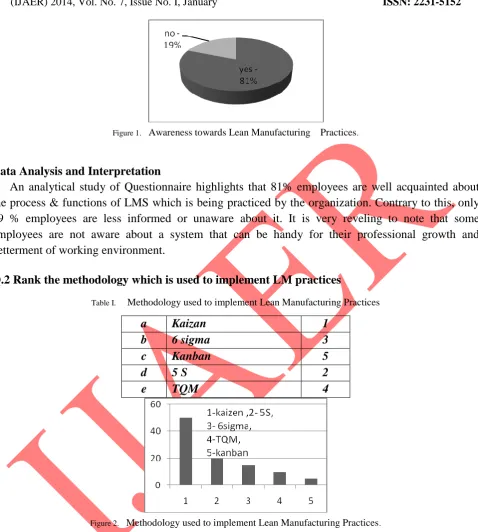
Figure 1. Awareness towards Lean Manufacturing Practices.
Data Analysis and Interpretation
An analytical study of Questionnaire highlights that 81% employees are well acquainted about the process & functions of LMS which is being practiced by the organization. Contrary to this, only 19 % employees are less informed or unaware about it. It is very reveling to note that some employees are not aware about a system that can be handy for their professional growth and betterment of working environment.
Q.2 Rank the methodology which is used to implement LM practices
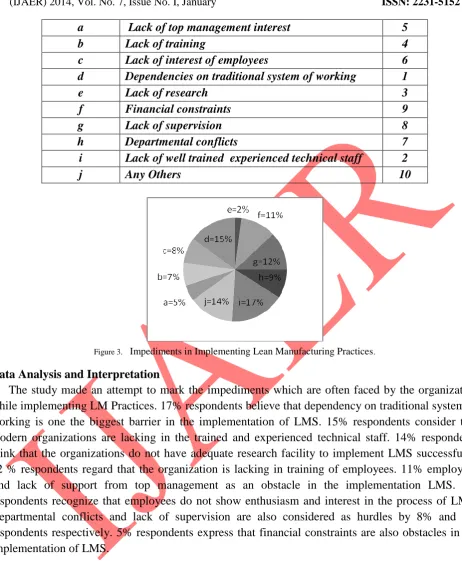
Table I. Methodology used to implement Lean Manufacturing Practices
a Kaizan 1
b 6 sigma 3
c Kanban 5
d 5 S 2
e TQM 4
Figure 2. Methodology used to implement Lean Manufacturing Practices.
Data Analysis and Interpretation
The study reveals that the selected organization Kaizen is being used mostly (50%) which is followed by other methodologies like as 5S (20%), Six Sigma (15%), TQM (10%) and Kanban (5%). Kaizen can play a leading role in making lean process successful one as it helps the organization to meet the challenge of doing more with the same - or less - resources. This is achieved by eliminating unnecessary steps in achieving that end.
Q.3 Rank the following obstacles which are often faced while implementing LM Practices
5
INTERNATIONAL JOURNAL OF ADVANCES IN ENGINEERING RESEARCH
a Lack of top management interest 5
b Lack of training 4
c Lack of interest of employees 6
d Dependencies on traditional system of working 1
e Lack of research 3
f Financial constraints 9
g Lack of supervision 8
h Departmental conflicts 7
i Lack of well trained experienced technical staff 2
j Any Others 10
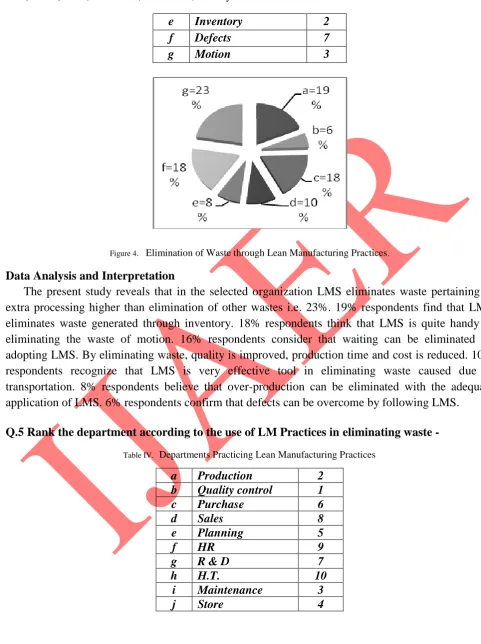
Figure 3. Impediments in Implementing Lean Manufacturing Practices.
Data Analysis and Interpretation
The study made an attempt to mark the impediments which are often faced by the organization while implementing LM Practices. 17% respondents believe that dependency on traditional system of working is one the biggest barrier in the implementation of LMS. 15% respondents consider that modern organizations are lacking in the trained and experienced technical staff. 14% respondents think that the organizations do not have adequate research facility to implement LMS successfully. 12 % respondents regard that the organization is lacking in training of employees. 11% employees find lack of support from top management as an obstacle in the implementation LMS. 9% respondents recognize that employees do not show enthusiasm and interest in the process of LMS. Departmental conflicts and lack of supervision are also considered as hurdles by 8% and 7% respondents respectively. 5% respondents express that financial constraints are also obstacles in the implementation of LMS.
Q.4 Rank the kinds of waste that LM Practices eliminate in your
Table III. Elimination of Waste through Lean Manufacturing Practices
a Transportation 5
b Over-production 6
c Waiting 4
6
INTERNATIONAL JOURNAL OF ADVANCES IN ENGINEERING RESEARCH
e Inventory 2
f Defects 7
g Motion 3
Figure 4. Elimination of Waste through Lean Manufacturing Practices.
Data Analysis and Interpretation
The present study reveals that in the selected organization LMS eliminates waste pertaining to extra processing higher than elimination of other wastes i.e. 23%. 19% respondents find that LMS eliminates waste generated through inventory. 18% respondents think that LMS is quite handy in eliminating the waste of motion. 16% respondents consider that waiting can be eliminated by adopting LMS. By eliminating waste, quality is improved, production time and cost is reduced. 10% respondents recognize that LMS is very effective tool in eliminating waste caused due to transportation. 8% respondents believe that over-production can be eliminated with the adequate application of LMS. 6% respondents confirm that defects can be overcome by following LMS.
Q.5 Rank the department according to the use of LM Practices in eliminating waste
-Table IV. Departments Practicing Lean Manufacturing Practices
a Production 2
b Quality control 1
c Purchase 6
d Sales 8
e Planning 5
f HR 9
g R & D 7
h H.T. 10
i Maintenance 3
7
INTERNATIONAL JOURNAL OF ADVANCES IN ENGINEERING RESEARCH
Figure 5. Departments Practicing Lean Manufacturing Practices.
Data Analysis and Interpretation
The present study highlights that quality control department of the selected organization is the most efficient in the elimination of the waste which is clearly indicated by 20% respondents. Eliminating any waste, no matter how much, will add up and make things more productive. Kaizen methodology appears to be very significant and result oriented in eliminating such kinds of waste. It is also disclosed that production department is also quite watchful about the elimination of waste related to production. Higher production is always touted as a good thing, but higher production means nothing if there is any demand for the product. Otherwise, it simply represents the amount of money tied up in producing the product. It has a vital role restraining over production. 15% respondents confirm this view. The onus lies on maintenance department to maintain the symphony in the different operations. 13% respondents consider the role of maintenance department very crucial in removing the waste. 11% respondents acknowledge store department as the main department in reducing the waste. Planning department is regarded as the back bone for any organization. 10% respondents feel that by sound performance of planning department eradication of waste can be managed in a well balanced manner. Purchasing of raw materials and other production stuff must be done with utmost care otherwise it may hamper the manufacturing process. 9% respondents ranked purchase department is instrumental in get rid of waste. Research and development is nowadays of great importance in business as the level of competition, production processes and methods are rapidly increasing. 7% respondents believe that function of this department is inevitable in eliminating the waste. 6% respondents find that sales department also renders its great help in removing the waste. It is very necessary for any organization to use human resources at the optimum level. 5% respondents feel that a well structured human resource department can be a big helping hand in mitigating waste. 4% respondents consider responsibility of H.T. department is very vital in eliminating the waste.
CONCLUSION
8
INTERNATIONAL JOURNAL OF ADVANCES IN ENGINEERING RESEARCH people to align their thinking and behaviors with the redesigned processes, systems and management approaches to achieve positive change. It is also observed that the Automobile Industry has non-effective use of staff talents and under utilization of expertise, skills, creativity, innovation, leadership, Motivation etc. It is better to empower and give them responsibility to manage their work areas. It is disclosed that quality defects prevent the customers from accepting the defected product. Defects, rework, scrap, corrections come under this category of waste. The defects are caused by parts mismatch, forgotten parts in assembly, Scratches on, Spoiled parts, useless because dirty, or scratched, poor instructions, lack of training, not following the right sequence, lack of maintenance. Defects lead to waste of money, decrease in throughput and in some instances loss of customers. To resolve these issues, the Automobile Industry should apply prevention prior to detection, failure mode effects analysis, building quality at source, root cause analysis and error proofing. Implementing a lean program is not an easy task. It requires extensive work both within and outside the organization but at the end it will yield long-term benefits. Tools & techniques should be applied successfully in order to attain the objective of LMS. There are certain obstacles in the implementation of Lean Manufacturing Practices. But they can be overcome by successful planning.
REFERENCES
[1] Bhasin, S. & Burcher, P. (2006). Lean viewed as a philosophy. Journal of Manufacturing Technology Management.
[2] Dankbaar, B., 1997, “Lean production: denial, confirmation or extension of socio-technical systems design?,” Human Relations, 50(5).
[3] Hayes, R.H. and Pisano, G.P., 1994. “Beyond world class: the new manufacturing strategy”, Harvard Business Review, January-February.
[4] Shah, R. and Ward, P.T., 2003. “Lean manufacturing: context, practice bundles, and performance”,
[5] Journal of Operations Management.
[6] Wilson, L. (2010) How To Implement Lean Manufacturing. New York: McGraw-Hill
[7] Womack, J., Jones, D.T. and Roos, D., 1990,“The machine that changed the world,” Rawson Associates, NY.
[8] Achanga, P., Shehab, E., Roy, R. and Nelder, G. 2006. Critical success factors for lean implementation within SMEs. Journal of Manufacturing Technology Management 17 (4): 460-471.
[9] Anthony, J. and Kumar, M. 2005. Six sigma in small and medium sized UK manufacturing enterprises. International Journal of Quality and Reliability Management 22 (8):860-874
9
INTERNATIONAL JOURNAL OF ADVANCES IN ENGINEERING RESEARCH
[11] Doolen, T.L. & Hacker, M.E. 2005. A review of lean assessment in organizations: An Exploratory Study of Lean Practices by Electronics Manufacturers. Journal of Manufacturing System 24(1):55-67.