RESEARCH
Assessment of mercury pollution sources
in beach sand and coastal soil by speciation
analysis
José Luis R. Gallego
1, Maria Antonia López‑Antón
2*, Deva Martínez de la Rosa
2, Eduardo Rodríguez‑Valdés
1,
Nerea García‑González
1, Elena Rodríguez
2and Maria Rosa Martínez‑Tarazona
2Abstract
Background: An essential requisite for controlling and monitoring mercury in the environment is to identify its spe‑ cies in different types of soils and sediments, as this will help not only to establish its mobility in the environment and ecosystem and the degree of its toxicity, but also to establish the source of contamination. The objective of this work was to identify the origin of mercury in beach sands and soil taken from a coastal region with previously high min‑ ing and industrial activity by characterizing the mercury species using the technique known as thermal desorption (HgTPD).
Results: Apart from quartz, the main mineral species identified in the raw sands and soil were calcite, fluorite and barite. The concentration of mercury ranges from 5 to 23 µg g−1, and although it is distributed in different proportions
in the function of the size, thermal desorption profiles demonstrated that the mercury species present in the sam‑ ples do not vary with the mercury concentration and the particle size. By means of HgTPD, mercury oxide (HgO) was identified in the beach sands, whereas mercury sulfide (HgS) was found in the soil sample taken from the vicinity of the beach. Complementary methodologies foster the HgTPD conclusions and verify that mercury is present mostly in insoluble stable (HgS) or low‑mobility (HgO) forms in the samples studied. Analyses by ICP‑MS after sequential extrac‑ tion and HPLC separation of mercury species show that inorganic mercury is the predominant form in the samples. Conclusions: The technique HgTPD is a very useful tool to ascertain the origin of mercury in contaminated beach sands and shoreline soils. In the particular area studied in this work, the species identified indicate that previous mining activity was the source of the mercury and rule out the possibility that contamination is derived from coal combustion activities ongoing in the region.
Keywords: Mercury, Speciation, Thermal desorption
© The Author(s) 2019. This article is distributed under the terms of the Creative Commons Attribution 4.0 International License (http://creat iveco mmons .org/licen ses/by/4.0/), which permits unrestricted use, distribution, and reproduction in any medium, provided you give appropriate credit to the original author(s) and the source, provide a link to the Creative Commons license, and indicate if changes were made.
Background
Mercury is a heavy metal of great concern due to its high level of toxicity and the serious effects it has on health and the environment. Although all mercury species are toxic, certain species-specific toxic mechanisms have been demonstrated to have an effect on human organ-isms [26]. For instance, methylmercury, which is the spe-cies of mercury that can be incorporated into humans
through food, may cause very serious harm to the cen-tral and peripheral nervous system [49]. The enormous alarm caused by mercury toxicity as a consequence of the presence of its compounds in the environment led to the Minamata Convention on Mercury, which came into force in August 2017 [48]. The Minamata Convention is the first global environmental agreement negotiated in the 21st millennium. The objective of the Convention is to protect human health and the environment from anthropogenic emissions and the release of mercury and mercury compounds, and it has set out a range of meas-ures to meet this objective.
Open Access
*Correspondence: [email protected]
2 Instituto Nacional del Carbón (CSIC), Francisco Pintado Fe, 26,
33011 Oviedo, Spain
Due to emissions of mercury to the atmosphere and their subsequent deposition onto the land and into the water as a result of the proximity of industrial activ-ity zones or the transport process, some areas may contain high concentrations of mercury [32, 35]. In addition, point-source pollution associated with the inappropriate disposal of mining waste, metal smelt-ers and other industrial activities have increased the environmental threat from mercury [9, 18, 31, 46]. Asturias, NW Spain, has had a long history of indus-trial activity, especially in the form of coal mining, but mercury mining and metallurgy were also important activities up until the end of the 1970s. This, coupled with other industrial processes, such as coal combus-tion, the production of steel and cement, exposed the region’s soils, beaches and coastal environments to the risk of contamination (see e.g., [6, 42]), especially by mercury [21, 27, 34]. Local and regional studies based on geological records, such as peat bogs or estuarine sediments, have also revealed a dramatic increase in mercury accumulation over the last 200 years [15, 23, 25]. On a global scale, coal combustion and the pro-duction and processing of metals are the main anthro-pogenic sources of mercury emissions in Europe and the USA [11, 47]. The contamination of beaches by mercury comes mainly from anthropogenic sources such as industrial waste, stormwater runoff and sew-age outfalls [10, 13, 29]. Chlor-alkali plants are also important sources of mercury, and the area surround-ing these plants has been found to have high mercury concentrations [4]. Proximity to such industrial activi-ties is in itself suggestive of the source of mercury con-tamination, but when several different activities occur in the same area or when the polluting species are transported by air or water from elsewhere, the origin of the mercury species is often difficult to pinpoint. Ascertainment of the source of mercury contamina-tion will help to determine the risk of exposure, and being able to determine the chemical form (specia-tion) of the mercury present in the land is essential for understanding and modeling metal-contaminated sys-tems since the way in which the mercury compounds are distributed determines their environmental mobil-ity and bioavailabilmobil-ity [14].
The objective of this study is to identify the mer-cury species present in samples of beach sands and soil taken from a coastal area of Asturias by the tech-nique based on programmed temperature desorption (HgTPD) [3, 5, 36, 37]. Because the samples come from a region (Asturias), where different industrial activities have taken place, the study aims to relate the species of mercury to their source of origin.
Experimental part Site description and samples
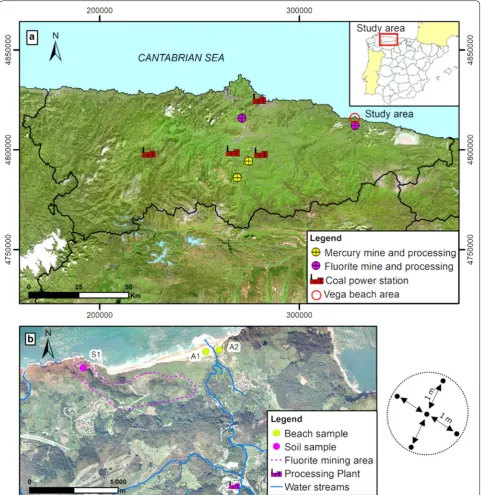
During a sampling campaign of 13 sandy beaches with dunes in the Cantabrian area (unpublished data), it was found that sand samples from the Vega beach (Asturias, NW Spain) showed anomalously high mercury concen-trations when compared to other areas sampled. The high mining and industrial activity in this region (Fig. 1a) suggests several possible sources for the presence of this heavy metal. Accordingly, three different composite sam-ples were taken for a comprehensive addressing of mer-cury sourcing (Fig. 1b), namely A1 (supratidal sand), A2 (white dune) and S1 (coastal soil on the shoreline). Each sample was composed of five increases taken from each vertex of a 1 m edge square and its central point, from the top 30 cm of the material, using an Edelman Auger (Fig. 1b). In situ sieving of the samples through a 2-cm mesh screen was carried out to remove the large material and then the remaining samples were kept in plastic bags until their pre-treatment in the laboratory. Afterward, the samples were dried in an oven at 30 °C to prevent the volatilization of the mercury. The fractions smaller than 2 mm were separated by dry sieving, and the representa-tive subsamples were generated using a riffler.
Devices for mercury determination and speciation
The concentration of total mercury in the raw samples and in the sieved sub-size fractions (see below) was determined by means of a mercury analyzer (AMA 254). The mercury species were identified by temperature-pro-grammed desorption (HgTPD) using a setup developed by the authors [38]. This device consists of a temperature-programmed furnace coupled to a PYRO 915 furnace from LUMEX and a continuous mercury analyzer (RA-915) [39]. The peculiarity of this device is that the mer-cury species are desorbed in the first furnace using N2 as
an inert gas, while at the same time O2 is introduced into
the PYRO furnace to ensure the total decomposition of volatile matter. Desorption profiles are obtained by heat-ing the sample at a rate of 50 °C min−1 under a N
2 flow
of 500 mL min−1. The PYRO 915 unit is kept at
approxi-mately 800 °C under an O2 flow of 500 mL min−1. In this
unit, all the mercury species that have been vaporized from the sample in an inert atmosphere are transformed into elemental gaseous mercury (Hg0). As Hg0 reaches
similar to the selected samples. Mercury reference mate-rials used in this study included HgS, HgO, Hg0, HgCl
2
and mercury associated with humic acid (Hg-HA). In addition to the total mercury content analyzed in the AMA equipment, the determination of the identified spe-cies was carried out in the HgTPD device. The equipment was calibrated for total mercury content by analyzing
reference samples containing different amounts of HgS in a pure commercial sand matrix. The detection limit of the system was 3 ng for a maximum sample weight of 100 mg (0.03 mg kg−1), assuming that the release of all
the Hg occurs in a single peak. Each mercury standard and sample were analyzed 2 to 4 times. The precision of the analysis was evaluated from the standard deviation
(SD) and relative standard deviations (%RSD). An RSD value < 10% was achieved.
To balance the HgTPD study, two supplementary techniques were applied. First, a sequential extraction [45] was conducted. In brief, extracts with solutions of increasing strengths were attained from subsam-ples of the samsubsam-ples under study; i.e., the following frac-tions were obtained: exchangeable (extracted in MgCl2),
carbonate-bound (extracted in a buffer of CH3COONa/
CH3COOH), Fe–Mn oxide-bound (extracted in
NH2OH-HCl); organic matter-bound (extracted in
sev-eral steps using H2O2, HNO3 and NH4NO3); and the
residual fraction (extracted in aqua regia); in all fractions, the supernatants were separated after centrifugation for 15 min at 8000 rpm, filtered and analyzed in an Agilent Technologies 7700 ICP-MS (inductively coupled plasma mass spectrometry). In addition, a second approach by chemical speciation was also performed after extraction of representative subsamples using a solution of 7.6% HCl and 10% 2-mercaptoethanol in an ultrasonic bath. The extract was then centrifuged and diluted. The deter-mination was carried out in a 1260 Infinity HPLC cou-pled to a 7700 ICPMS, using a ZORBAX Eclipse XDB C18 (2.1 mm i.d. × 50 mm, 5 µm) column and 0.06 M ammonium acetate, 5% methanol and 0.1% 2-mercaptoe-thanol (pH = 6.8) as mobile phase.
Complementary analyses
Granulometric separation was performed in three frac-tions (800–224 µm, 224–125 µm, < 125 µm), to ascer-tain the distribution and speciation of mercury as a function of its size and composition. Fraction > 800 µm was rejected as no mercury was detected in this frac-tion. Before being examined, the material was cleaned to eliminate any possible remains of vegetal matter or fauna from the samples.
The mineral species of the samples were identified by X-ray diffraction (XRD), in a Bruker D8 Discover appa-ratus with Cu Kα radiation (λ = 1.54059 Å). The scan was performed between 10º and 90º (2θ) using a step size of 0.02º s−1 and a step time of 2 s.
Results
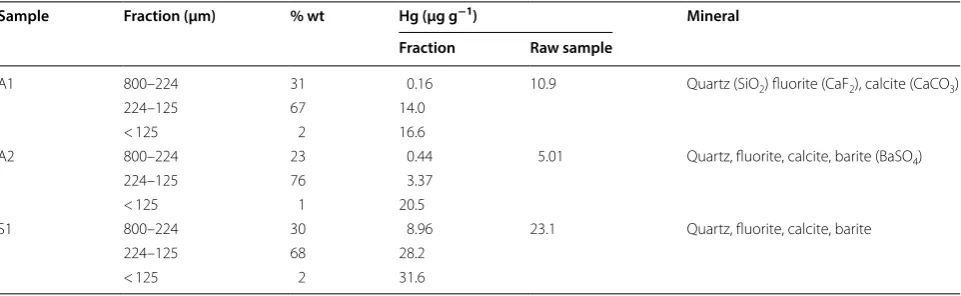
The concentration of mercury in the raw sands and soil, and in the different size fractions together with the min-erals identified by XRD, is shown in Table 1; note that mercury values found in the raw samples are well above the background/screening levels valid in the region [7]. As might be expected, the main mineral species identi-fied was quartz in all the samples (Additional file 1: Fig-ure S1). Calcite was also present in the sands and in the soil in different proportions. However, there was also an abundance of other minerals such as fluorite in all of the samples and of barite in two of them.
As can be appreciated from the data, the mercury con-tent of the raw samples selected for this study ranges from 5 to 23 μg g−1. Moreover, the mercury
concentra-tion is distributed in different proporconcentra-tions in the sepa-rated fractions (Table 1), the highest concentration being found in the fraction of the smallest particle size. As men-tioned above, the objective of this work was restricted to identifying the mercury species and relating them to their origin in a particular area. Extensive samplings and analyses of the area are being carried out with the aim of creating a catalog of the type and level of contamination of this coastal area. Although the analyses performed for this study do not provide yet a conclusive picture about the pollution of the total area, as a preliminary study it may serve to identify the mercury species and to relate them to the source of contamination.
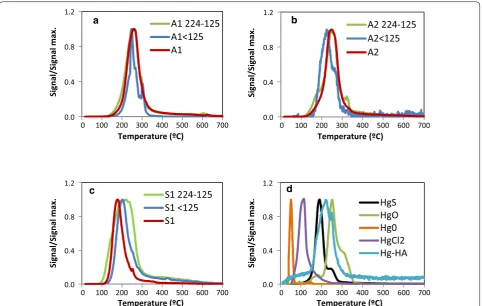
Figure 2 shows the thermal desorption profiles of the beach sands and soil together with the mercury stand-ards used as reference materials. As shown in Fig. 2a–c,
Table 1 Mercury concentrations and mineral compositions of the raw samples and fractions
Sample Fraction (µm) % wt Hg (µg g−1) Mineral
Fraction Raw sample
A1 800–224 31 0.16 10.9 Quartz (SiO2) fluorite (CaF2), calcite (CaCO3)
224–125 67 14.0
< 125 2 16.6
A2 800–224 23 0.44 5.01 Quartz, fluorite, calcite, barite (BaSO4)
224–125 76 3.37
< 125 1 20.5
S1 800–224 30 8.96 23.1 Quartz, fluorite, calcite, barite
224–125 68 28.2
the maximum temperature peak of desorption is the same for each group of samples studied. Hence, the mer-cury species present in the samples do not vary with the mercury concentration and the particle size (Table 1). The thermograms of the mercury species from the beach sands (A1 and A2) analyzed show a maximum peak at 240 ± 10 °C. This peak corresponds to the HgO pure mer-cury compound (Fig. 2d). However, in the case of the soil sample (S1), the temperature of maximum desorption is at 180 ± 11 °C. This peak is assigned to HgS, the most abundant and stable mineral species of mercury in nature [43].
The analyses carried out by ICP-MS after sequential extraction and HPLC separation of mercury species show that inorganic mercury is the predominant form in the samples (Table 2). In fact, only in the soil sample very minor traces of organic mercury were found. In addition, Tessier’s extracts of the samples revealed neg-ligible amounts of mercury in all the fractions being the predominant fraction the residual one.
0.0 0.4 0.8 1.2
0 100 200 300 400 500 600 700
Signal/Signal max.
Temperature (ºC)
a A1 224-125
A1<125 A1
0.0 0.4 0.8 1.2
0 100 200 300 400 500 600 700
Signal/Signal max.
Temperature (ºC)
b A2 224-125
A2<125 A2
0.0 0.4 0.8 1.2
0 100 200 300 400 500 600 700
Signal/Signal max.
Temperature (ºC)
c S1 224-125
S1 <125 S1
0.0 0.4 0.8 1.2
0 100 200 300 400 500 600 700
Signal/Signal max.
Temperature (ºC)
d
HgS HgO Hg0 HgCl2 Hg-HA
Fig. 2 Thermal profiles of A and B sand samples, C soil sample and D mercury pure compounds (HgS, HgO, Hg0, HgCl
2 and Hg‑HA)
Table 2 (Left) Percentages of the five fractions obtained in the Tessier sequential extraction results; EX (exchangeable), CB (carbonate bound), OX (Fe/Mn oxides bound), OM (organic matter bound), and immobile fraction (residue), (Right) percentages of inorganic vs. organic mercury in the samples studied
Sample % Hg (sequential extraction) % Chemical speciation
EX CB OX OM Residue Hg inorganic Hg organic
A1 n.d n.d n.d n.d 100 100 n.d
A2 n.d n.d n.d n.d 100 100 n.d
Discussion
The HgTPD method has already demonstrated its capa-bility for the identification of mercury species in differ-ent types of solids [3, 5, 36, 37]. However, its potential to explore the sources of contamination on a beach sur-rounded by mines and industries is a new issue. The identification of mercury species in similar samples was already been carried out by using other methods of anal-ysis [2, 8, 50], and in all cases the results were of great relevance from the environmental and social point of view. However, the HgTPD method entails some advan-tages when compared with X-ray absorption spectros-copy (EXAFS) and classic extraction methods, such as its low detection limit and high selectivity. The application of the HgTPD technique has been shown to be an effec-tive means of identifying mercury species in two environ-mental compartments that are difficult to assess using more conventional techniques based on Hg chemical extraction. In fact, soils in former mining areas, and espe-cially sandy sediments in coastal areas, usually present abundant refractory complex minerals such as silicates together with sulfides and oxides, leading to difficulties in the quantification or speciation of metals linked to them and requiring very strong acidic extractions. This problem was overcome in this study by the application of HgTPD.
The results obtained by HgTPD technique and con-firmed by ICP-MS after sequential extraction and HPLC separation verify that mercury is present mostly in insol-uble stable (HgS) or low-mobility (HgO) forms in the samples studied, while other possible mercury species such as HgCl2, Hg0 and mercury associated with humic
acids (Hg-HA) are virtually absent.
On the basis of the mercury species identified in the samples and the industrial activities carried out in the zone studied, the possible sources of mercury contamina-tion to be considered are the following:
HgS, one of the mercury species identified in this study (Fig. 2), is found associated with different types of par-ticles, such as airborne particulate matter [1, 12] and fly ash particles [40]. Given that in Asturias there are four coal-fired power plants currently operating at less than 100 km from the Vega beach (Fig. 1a) and that coal power plants are the main source of anthropogenic mercury emissions, the particles emitted from coal combustion should be considered as one potential source of mercury in this particular area. However, in the samples analyzed in this study it cannot be confirmed whether the mercury came from coal or the particles produced by the process itself. If the contamination had come from air deposits, then the soil and the beach sand should have been simi-larly affected given their close proximity to each other but no HgS was detected in the beach sands (Fig. 2). Neither
were any other mercury species, such as HgCl2, HgSO4 or
HgO which are often present in coal fly ashes, detected [28, 40]. It is also significant that the levels of mercury found in other beaches closer to the coal power plants than Vega beach were much lower (0.13 ± 0.01 µg g−1 as
an average value).
A second hypothesis could be the influence of former Hg mining and metallurgy activities that were carried out in the region up until the 1970s and the subsequent aban-donment of huge amounts of Hg waste. This is highly likely in the case of the sites known as La Soterraña [30], El Terronal [16] and their surroundings (Fig. 1a), as a consequence of which the river sediments in the hydro-graphic basin where these sites are located were also affected [19]. The effects are especially noticeable in the river mouth of the Nalón River, the main river in the region (see e.g., [17]. However, the distance between the Hg mining cores and the studied area, which is located in a different basin, would seem to rule out any possi-ble relationship. In addition, previous studies on mer-cury speciation in the mining and metallurgy waste of the above-mentioned Hg sites of central Asturias [41] present different profiles to those of the mercury spe-cies obtained here, i.e., several mercury spespe-cies such as metacinnabar, HgCl2, Hg-FeS2 or even Hg(0) were
present in Rumayor’s study but not in this study of the Vega beach. Therefore, the second hypothesis seems very unlikely in the case of the present study.
As mentioned in the Results section, X-ray diffrac-tion data of both the soil and the sand samples indicate the abundant presence of fluorite (Table 1, Additional file 1: Figure S1). This is clearly related to the proxim-ity of several fluorite mines in the vicinproxim-ity of the studied area, i.e., the so-called Caravia-Berbes mining district (Fig. 1b) where the paragenesis of the mineralization involves fluorite (CaF2) and abundant barite (BaSO4) [22,
44], in coincidence with the minerals found in this study (Table 1, Additional file 1: Figure S1). Furthermore, cin-nabar (HgS) is present in the form of fine inclusions in the fluorite and copper minerals that are also plentiful in the area [22]. It is possible therefore that the extraction and treatment of fluorite in this zone could lead to con-tamination by mercury.
which is mainly performed by means of flotation (see [51] and references therein) may cause a separation of HgS and HgO species in different fractions. In addition, although mercury is usually found as HgS, other minerals such as montroydite (HgO) may also be present in mine wastes [24], as is the case of the studied area. These facts would explain the differences found between the soil and sand samples. Stable and insoluble forms of mercury, such as HgS, show a different mobility pattern in soils to that of other more reactive species of mercury, and this determines the potential impact on groundwater and hence on the health of human beings [33].
Conclusions
Use of the HgTPD technique has made it possible to identify the presence of HgO in the beach sands and HgS in shoreline soil, while discarding the presence of other possible mercury species such as HgCl2, Hg0 or mercury
associated with humic acids. The results have been cor-roborated by sequential extraction and HPLC-ICP-MS.
The mercury concentration is higher in the samples of the smallest particle size, but the thermal profiles are similar for the different fractions, suggesting that there is no change in the speciation of mercury.
Based on the mercury species identified and the indus-trial activities carried out in the area, the results suggest that the main source of pollution is the previous local fluorite mining activity. Other sources such as coal com-bustion or other practices involved in the exploitation of coal, and also mercury, in the region are unlikely.
In addition to contribute to understanding the behav-ior and the presence of mercury in the environment, this study is a relevant contribution to the validation of the desorption technique at programmed temperature.
Supplementary information
Supplementary information accompanies this paper at https ://doi. org/10.1186/s1230 2‑019‑0264‑3.
Additional file 1: Figure S1. X‑ray diffraction patterns of sand samples (A1 and A2) and soil sample (S1).
Abbreviations
Å: Angstrom; A1: supratidal sand; A2: white dune; AMA: Advanced Mercury Analyzer; B: barite (BaSO4); BOPA: Bulletin of Asturias (Spain) legislation; °C:
Celsius degrees; C: calcite (CaCO3); CB: fraction bound to carbonates; CSIC:
Consejo Superior de Investigaciones Científicas. (Spanish National Research Council); Cu Kα radiation: λ = 1.54059 Å; E‑PRTR : European Pollutant Release and Transfer Register; EX: fraction exchangeable; F: fluorite (CaF2); g: grams;
Hg0: elemental gaseous mercury; HgTPD: mercury temperature‑programmed
desorption; HPLC: high‑performance liquid chromatography; INDUROT: Institute of Natural Resources and Territorial Planning (University of Oviedo); ICP‑MS: inductively coupled plasma mass spectrometry; km: kilometer; λ: wavelength; µg: microgram; µm: micrometer; min: minutes; mL: milliliter; mm: millimeter; n.d: non‑detectable; OM: fraction bound to organic matter; OX: fraction bound to Fe and Mn oxides; Q: quartz (SiO2); s: second; S1: coastal soil
on the shoreline; UNEP: United Nations Environmental Program; URICI: Unit of Information Resources for Research; WHO: World Health Organization; % wt: weight percentage; XRD: X‑ray diffraction; 2θ: angle between the diffracted and transmitted X‑ray.
Acknowledgements
The authors are grateful to the Environmental Assay Unit of the Scientific and Technical Services of the University of Oviedo for its technical support. We acknowledge the support of the publication fee by the CSIC Open Access Publication Support Initiative through its Unit of Information Resources for Research (URICI).
Authors’ contributions
JLRG is the person in charge of all the fieldwork. He has actively participated in the discussion of results. MAL‑A is the coordinator of the work. She has participated from the design of the experimental part to the writing, interpre‑ tation and discussion of results. DMdlR has carried out the preparation and analysis of the samples by thermal desorption. ER‑V and NG‑G are the people in charge of sampling campaign, preparation and analysis by sequential extraction and ICP‑MS. ER has carried out the preparation and analysis of the samples by XRD and has participated in the interpretation of the results. MRM‑T has participated in the writing, interpretation and discussion of the results. All authors read and approved the final manuscript.
Funding
The study was part of the Ramón y Cajal contract (RYC‑2013‑12596) funded by the Spanish Ministry of Economy and Competitiveness and the project GRUPIN ID2018‑000234 funded by Plan Regional I+D+i of Principado de Asturias (Spain).
Availability of data and materials
The datasets used and/or analyzed during the current study are available from the corresponding author on reasonable request.
Ethics approval and consent to participate Not applicable.
Consent for publication Not applicable.
Competing interests
The authors declare that they have no competing interests.
Author details
1 INDUROT, Campus de Mieres, Universidad de Oviedo, 33600 Mieres, Spain. 2 Instituto Nacional del Carbón (CSIC), Francisco Pintado Fe, 26, 33011 Oviedo,
Spain.
Received: 22 April 2019 Accepted: 26 September 2019
References
1. Beldowska M, Saniewska D, Gębka K, Kwasigroch U, Korejwo E, Kobos J (2018) Simple screening technique for determination of adsorbed and absorbed mercury in particulate matter in atmospheric and aquatic environment. Talanta 182:340–347. https ://doi.org/10.1016/j.talan ta.2018.01.082
2. Bełdowski J, Szubska M, Bełdowska M, Jankowska K, Kotlarska E, Graca B (2018) Seasonal changes of mercury speciation in the coastal sedi‑ ments. J Soil Sediment 18:3424–3436. https ://doi.org/10.1007/s1136 8‑018‑1993‑4
3. Biester H, Gosar M, Covelli S (2000) Mercury speciation in sediments affected by dumped mining residues in the drainage area of the Idrija mercury mine, Slovenia. Environ Sci Technol 34:3330–3336. https ://doi. org/10.1021/es991 334v
5. Biester H, Nehrke G (1997) Quantification of mercury in soils and sedi‑ ments–acid digestion versus pyrolysis. Fresenius J Anal Chem 358:446– 452. https ://doi.org/10.1007/s0021 60050 444
6. Boente C, Matanzas N, García‑González N, Rodríguez‑Valdés E, Gallego JR (2017) Trace elements of concern affecting urban agriculture in industri‑ alized areas: a multivariate approach. Chemosphere 183:546–556. https :// doi.org/10.1016/j.chemo spher e.2017.05.129
7. BOPA, Boletín Oficial del Principado de Asturias, 91, April 21, 2014. Generic reference levels for heavy metals in soils from Principality of Asturias, Spain. http://sede.612as turia s.es/bopa/2014/04/21/2014e 06617 .pdf. Accessed Apr 2019
8. Chakraborty P, Babu PVR, Vudamala K, Ramteke D, Chennuri K (2014) Mercury speciation in coastal sediments from the central east coast of India by modified BCR method. Mar Pollut Bull 81:282–288. https ://doi. org/10.1016/j.marpo lbul.2013.12.054
9. Cheng X, Danek T, Drozdova J, Huang Q, Qi W, Zou L, Xiang Y (2018) Soil heavy metal pollution and risk assessment associated with the zn–pb mining region in yunnan, southwest china. Environ Monit Assess 190:194.
https ://doi.org/10.1007/s1066 1‑018‑6574‑x
10. Eckley CS, Branfireun B, Diamond M, Van Metre PC, Heitmuller F (2008) Atmospheric mercury accumulation and washoff processes on impervious urban surfaces. Atmos Environ 42:7429–7438. https ://doi. org/10.1016/j.atmos env.2008.06.013
11. E‑PRTR. The European Pollutant Release and Transfer Register (2016)
http://prtr.ec.europ a.eu/#/pollu tantr eleas es
12. Feng X, Lu J, Gregoire DC, Hao Y, Banic CM, Schroeder WH (2004) Analysis of inorganic mercury species associated with airborne particulate matter/ aerosols: method development. Anal Bioanal Chem 380:683–689. https :// doi.org/10.1007/s0021 6‑004‑2803‑y
13. Fulkerson M, Nnadi FN, Chasar LS (2007) Characterizing dry deposition of mercury in urban runoff. Water Air Soil Poll 185:21–32. https ://doi. org/10.1007/s1127 0‑007‑9396‑y
14. Gai K, Hoelen TP, Hsu‑Kim H, Lowry GV (2016) Mobility of four common mercury species in model and natural unsaturated soils. Environ Sci Technol 50:3342–3351. https ://doi.org/10.1021/acs.est.5b042 47
15. Gallego JLR, Ortiz JE, Sierra C, Torres T, Llamas JF (2013) Multivariate study of trace element distribution in the geological record of Roñanzas Peat Bog (Asturias, N. Spain). Paleoenvironmental evolution and human activi‑ ties over the last 8000cal yr BP. Sci Total Environ 454–455:16–29. https :// doi.org/10.1016/j.scito tenv.2013.02.083
16. Gallego JR, Esquinas N, Rodríguez‑Valdés E, Menéndez‑Aguado JM, Sierra C (2015) Comprehensive waste characterization and organic pollution co‑occurrence in a hg and as mining and metallurgy brownfield. J Hazard Mater 300:561–571. https ://doi.org/10.1016/j.jhazm at.2015.07.029
17. Garcia‑Ordiales E, Covelli S, Rico JM, Roqueñí N, Fontolan G, Flor‑Blanco G, Loredo J (2018) Occurrence and speciation of arsenic and mercury in estuarine sediments affected by mining activities (Asturias, Northern Spain). Chemosphere 198:281–289. https ://doi.org/10.1016/j.chemo spher e.2018.01.146
18. Gil‑Díaz M, Alonso J, Rodríguez‑Valdés E, Gallego JR, Lobo MC (2017) Comparing different commercial zero valent iron nanoparticles to immo‑ bilize Ss and Hg in brownfield soil. Sci Total Environ 584–585:1324–1332.
https ://doi.org/10.1016/j.scito tenv.2017.02.011
19. González‑Fernández B, Rodríguez‑Valdés E, Boente C, Menéndez‑Casares E, Fernández‑Braña A, Gallego JR (2018) Long‑term ongoing impact of arsenic contamination on the environmental compartments of a former mining‑metallurgy area. Sci Total Environ 610–611:820–830. https ://doi. org/10.1016/j.scito tenv.2017.08.135
20. Gutiérrez Claverol M (2009) La fluorita: un siglo de minería en Asturias. 565 p. ISBN: 9788461325856
21. Higueras P, Fernández‑Martínez R, Esbrí JM, Rucandio I, Loredo J, Ordóñez A, Alvarez R (2014) Mercury soil pollution in Spain: a review. Environment, energy and climate change. Handb Environ Chem 32:135–158
22. Iglesias JG, Loredo J (1994) Geological, geochemical and mineralogical characteristics of the Asturias fluorspar district, northern Spain. Explor Min Geol 1:31–37
23. Irabien MJ, Cearreta A, Leorri E, Gómez J, Viguri J (2008) A 130 year record of pollution in the Suances estuary (southern Bay of Biscay): implications for environmental management. Mar Pollut Bull 56:1719–1727. https :// doi.org/10.1016/j.marpo lbul.2008.07.006
24. Kim CS, Brown GE Jr, Rytuba JJ (2000) Characterization and speciation of mercury‑bearing mine wastes using X‑ray absorption spectroscopy. Sci Total Environ 261:157–168. https ://doi.org/10.1016/S0048 ‑9697(00)00640 ‑9
25. Leorri E, Mitra S, Irabien MJ, Zimmerman AR, Blake WH, Cearreta A (2014) A 700 year record of combustion‑derived pollution in northern Spain: tools to identify the Holocene/Anthropocene transition in coastal envi‑ ronments. Sci Total Environ 470–471:240–247. https ://doi.org/10.1016/j. scito tenv.2013.09.064
26. Lohren H, Blagojevic L, Fitkau R, Ebert F, Schildknecht S, Leist M, Schw‑ erdtle T (2015) Toxicity of organic and inorganic mercury species in differentiated human neurons and human astrocytes. J Trace Elem Med Biol 32:200–208. https ://doi.org/10.1016/j.jtemb .2015.06.008
27. López‑Alonso M, Benedito JL, Miranda M, Fernández JA, Castillo C, Hernández J, Shore RF (2003) Large‑scale spatial variation in mercury concentrations in cattle in NW Spain. Environ Pollut 125:173–181. https :// doi.org/10.1016/S0269 ‑7491(03)00073 ‑3
28. López‑Antón MA, Perry R, Abad‑Valle P, Díaz‑Somoano M, Martínez‑ Tarazona MR, Maroto‑Valer MM (2011) Speciation of mercury in fly ashes by temperature programmed decomposition. Fuel Process Technol 92:707–711. https ://doi.org/10.1016/j.fupro c.2010.12.002
29. Macsween K, Tang C, Edwards GC, Gan T, Tran S, Geremia S, Campbell J, Howard D (2017) Sampling of total mercury in sand on Sydney beaches and assessment of risk of exposure to children. Int J Environ Health 8:120–138. https ://doi.org/10.1504/IJENV H.2017.08397 4
30. Matanzas N, Sierra MJ, Afif E, Díaz TE, Gallego JR, Millán R (2017) Geo‑ chemical study of a mining‑metallurgy site polluted with as and hg and the transfer of these contaminants to equisetum sp. J Geochem Explor 182:1–9. https ://doi.org/10.1016/j.gexpl o.2017.08.008
31. Millán R, Gamarra R, Schmid T, Sierra MJ, Quejido AJ, Sánchez DM, Vera R (2006) Mercury content in vegetation and soils of the almadén mining area (Spain). Sci Total Environ 368:79–87. https ://doi.org/10.1016/j.scito tenv.2005.09.096
32. Navarro A, Cardellach E, Corbella M (2009) Mercury mobility in mine waste from Hg‑mining areas in Almería, Andalusia (Se Spain). J Geochem Explor 101:236–246. https ://doi.org/10.1016/j.gexpl o.2008.08.004
33. O´Connor D, Hou D, Ok Y‑S, Mulder J, Duan L, Wu Q, Wang S, Tack FMG, Rinklebe J (2019) Mercury speciation, transformation, and transporta‑ tion in soils, atmospheric flux, and implications for risk management: a critical review. Environ Int 126:747–761. https ://doi.org/10.1016/j.envin t.2019.03.019
34. Ordóñez A, Álvarez R, Loredo J (2013) Asturian mercury mining district (Spain) and the environment: a review. Environ Sci Pollut Res 20:7490– 7508. https ://doi.org/10.1007/s1135 6‑013‑1663‑4
35. Pacyna EG, Pacyna JM, Sundseth J, Munthe J, Kindbom K, Wilson S, Steen‑ huisen F, Maxson P (2010) Global emission of mercury to the atmosphere from anthropogenic sources in 2005 and projections to 2020. Atmos Environ 44:2487–2499. https ://doi.org/10.1016/j.atmos env.2009.06.009
36. Reis AT, Coelho JP, Rodrigues SM, Rocha R, Davidson CM, Duarte AC, Pereira E (2012) Development and validation of a simple thermo‑des‑ orption technique for mercury speciation in soils and sediments. Talanta 99:363–368. https ://doi.org/10.1016/j.talan ta.2012.05.065
37. Reis AT, Coelho JP, Rucandio I, Davidson CM, Duarte AC, Pereira E (2015) Thermo‑desorption: a valid tool for mercury speciation in soils and sediments? Geoderma 237–238:98–104. https ://doi.org/10.1016/j.geode rma.2014.08.019
38. Rumayor M, López‑Antón MA, Díaz‑Somoano M, Martínez‑Tarazona MR (2015) Device for identification of mercury species in solids. Consejo Superior de Investigaciones Científicas (CSIC). Patent ES1641.1031 Appli‑ cation number: P201530310
39. Rumayor M, Lopez‑Anton MA, Díaz‑Somoano M, Martínez‑Tarazona MR (2015) A new approach to mercury speciation in solids using a thermal desorption technique. Fuel 160:525–530. https ://doi.org/10.1016/j. fuel.2015.08.028
40. Rumayor M, Díaz‑Somoano M, López‑Antón MA, Martínez‑Tarazona MR (2015) Application of thermal desorption for the identification of mercury species in solids derived from coal utilization. Chemosphere 119:459–465.
https ://doi.org/10.1016/j.chemo spher e.2014.07.010
polluted brownfields by means of thermal desorption. J Hazard Mater 325:1–7. https ://doi.org/10.1016/j.jhazm at.2016.11.068
42. Sierra C, Boado C, Saavedra A, Ordóñez C, Gallego JR (2014) Origin, patterns and anthropogenic accumulation of potentially toxic elements (PTEs) in surface sediments of the Avilés estuary (Asturias, northern Spain). Mar Pollut Bull 86:530–538. https ://doi.org/10.1016/j.marpo lbul.2014.06.052
43. Skyllberg U (2012) Chemical Speciation of mercury in soil and sediment. In: Environmental chemistry and toxicology of mercury. Wiley, Hoboken. pp. 219–258
44. Tejerina JJ, Zorrilla BJ (1980) Descripción geológica del distrito minero de Caravia‑Berbes (Asturias). Bol Geol Min 91(6):716–731
45. Tessier A, Campbell PG, Bisson M (1979) Sequential extraction procedure for speciation of particulate trace metals. Anal Chem 51:844–850 46. Tomiyasu T, Kodamatani H, Imura R, Matsuyama A, Miyamoto J, Akagi
H, Horvat M (2017) The dynamics of mercury near Idrija mercury mine, slovenia: Horizontal and vertical distributions of total, methyl, and ethyl mercury concentrations in soils. Chemosphere 184:244–252. https ://doi. org/10.1016/j.chemo spher e.2017.05.123
47. UNEP, United Nations Environment Programme (2013) Global mercury assessment 2013: sources, emissions, releases and environmental trans‑ port. UNEP Chemicals Branch, Geneva
48. UNEP (United Nations Environment Programme) 2017 Minamata Con‑ vention on Mercury, 2017. https ://www.mercu rycon venti on.org
49. WHO (World Health Organization) 2017 http://www.who.int/news‑room/ fact‑sheet s/detai l/mercu ry‑and‑healt h
50. Wolfenden S, Charnock JM, Hilton J, Livens FR, Vaughan DJ (2005) Sulfide species as a sink for mercury in lake sediments. Environ Sci Technol 39:6644–6648. https ://doi.org/10.1021/es048 874z
51. Zhang C, Sun W, Hu Y, Tang H, Yin Z, Guan Q, Gao J (2018) Investiga‑ tion of two‑stage depressing by using hydrophilic polymer to improve the process of fluorite flotation. J Clean Prod 193:228–235. https ://doi. org/10.1016/j.jclep ro.2018.05.055
Publisher’s Note