ScholarWorks @ Georgia State University
ScholarWorks @ Georgia State University
Psychology Dissertations Department of Psychology
Summer 2012
Developmental Trajectories of Marriage, Coparenting, and
Developmental Trajectories of Marriage, Coparenting, and
Parenting Stress for Parents of Adolescents and Young Adults
Parenting Stress for Parents of Adolescents and Young Adults
with Intellectual Disability
with Intellectual Disability
Shana S. Richardson Georgia State University
Follow this and additional works at: https://scholarworks.gsu.edu/psych_diss
Recommended Citation Recommended Citation
Richardson, Shana S., "Developmental Trajectories of Marriage, Coparenting, and Parenting Stress for Parents of Adolescents and Young Adults with Intellectual Disability." Dissertation, Georgia State University, 2012.
https://scholarworks.gsu.edu/psych_diss/100
This Dissertation is brought to you for free and open access by the Department of Psychology at ScholarWorks @ Georgia State University. It has been accepted for inclusion in Psychology Dissertations by an authorized
administrator of ScholarWorks @ Georgia State University. For more information, please contact
PARENTING STRESS FOR PARENTS OF ADOLESCENTS AND YOUNG ADULTS WITH
INTELLECTUAL DISABILITY
by
SHANA STRICKLAND RICHARDSON
Under the Direction of Frank Floyd, Ph.D. and Diana Robins, Ph.D.
ABSTRACT
This study assessed marital quality, coparenting, and parenting stress over time for parents of
children with intellectual disability by creating developmental trajectories from longitudinal data.
Both mothers and fathers (N = 152 couples), with children ages 6-18 at the first wave, evaluated
their relationship and parenting stress on up to 4 occasions over a 14-year period. The study
provided separate models of change over time for mothers and fathers which showed that marital
quality, coparenting, and parenting stress are dynamic relationship constructs that changed
during the child‟s development. Overall, marital quality was found to follow a curvilinear
pattern, with declines when children were adolescents and increases as children entered young
family life cycle, trajectories included indicators of the child‟s development to allow for periods
of discrete change in the trajectories based on the child‟s entrance into adolescence and young
adulthood. The child‟s entrances into these developmental periods were associated with changes
in levels of marital quality and coparenting for mothers only. Patterns for stress over time
depended on the parent reporting, with mothers reporting decreases in parent and family
problems over time and a quadratic trend for pessimism, with initial growth in reported
pessimism followed by declines as the children exited adolescence. Fathers, however, did not
report significant changes for parent and family problems and perceived increases in pessimism
with time. The study also assessed how support in the marital and coparenting roles with time is
associated with levels of parenting stress. Marital quality consistently predicted lower levels of
parent and family problems for both parents, but findings for associations between marital
quality and pessimism, and coparenting with both types of stress, varied depending on the parent
reporting.
PARENTING STRESS FOR PARENTS OF ADOLESCENTS AND YOUNG ADULTS WITH
INTELLECTUAL DISABILITY
by
SHANA STRICKLAND RICHARDSON
A Dissertation Submitted in Partial Fulfillment of the Requirements for the Degree of
Doctor of Philosophy
in the College of Arts and Sciences
Georgia State University
Copyright by
PARENTING STRESS FOR PARENTS OF ADOLESCENTS AND YOUNG ADULTS WITH
INTELLECTUAL DISABILITY
By
SHANA STRICKLAND RICHARDSON
Committee Chair: Dr. Diana Robins
Committee: Dr. Lisa Armistead
Dr. Lindsey Cohen
Dr. Frank Floyd
Dr. Christopher Henrich
Electronic Version Approved:
Office of Graduate Studies
College of Arts and Sciences
Georgia State University
ACKNOWLEDGEMENTS
I would like to thank all of my committee members (Lisa Armistead, Lindsey Cohen,
Frank Floyd, Chris Henrich, & Diana Robins) for their assistance with this project. In particular,
I would like to thank Frank Floyd, who has dedicated a great amount of support and guidance to
this project as well as every other project and requirement that I have completed along the way to
reach this point. Frank‟s mentorship, wise counsel, support, patience, and countless hours spent
editing this project and many others have played a major role in my accomplishments in the
clinical program. I would also like to thank Diana Robins for taking on the role of chair and her
additional assistance with preparing this project. Additionally, Chris Henrich‟s willingness to
provide consultation on the statistical analyses greatly benefited the project.
Finally, I would like to thank my husband for his support and patience during this project
and through all my years of graduate school. His encouragement and willingness to help out in
all other areas of our life made it possible for me to devote the necessary time to finish graduate
TABLE OF CONTENTS
ACKNOWLEDGEMENTS ... iv
LIST OF TABLES ... vi
LIST OF FIGURES ... viii
1 INTRODUCTION ... 1
2 METHODS ... 23
3 RESULTS ... 34
4 DISCUSSION ... 62
REFERENCES ... 83
LIST OF TABLES
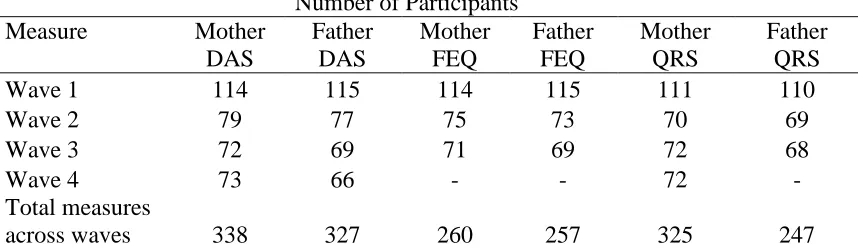
Table 1. Number of Participants Completing Each Measure by Wave ... 44
Table 2. Number of Data Points Completed by Participants for Each Measure ... 44
Table 3. Sample Characteristics ... 45
Table 4. Means and Standard Deviations for Mothers ... 46
Table 5. Means and Standard Deviations for Fathers ... 46
Table 6. Correlations between Measures at Time 1. ... 46
Table 7. Correlations between Measures at Time 2. ... 47
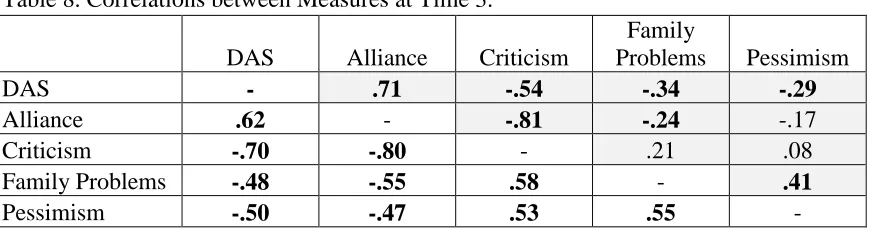
Table 8. Correlations between Measures at Time 3. ... 47
Table 9. Correlations between Measures at Time 4. ... 47
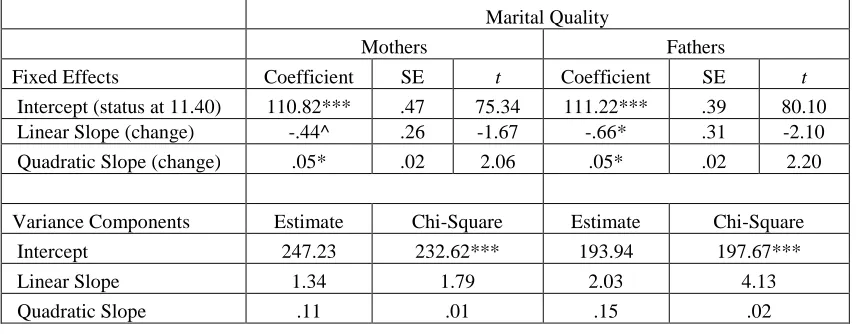
Table 10. Hierarchical Linear Modeling Results for Marital Quality ... 48
Table 11. Marital Quality with Continuously Married Couples ... 48
Table 12. Hierarchical Linear Modeling Results for Coparenting ... 49
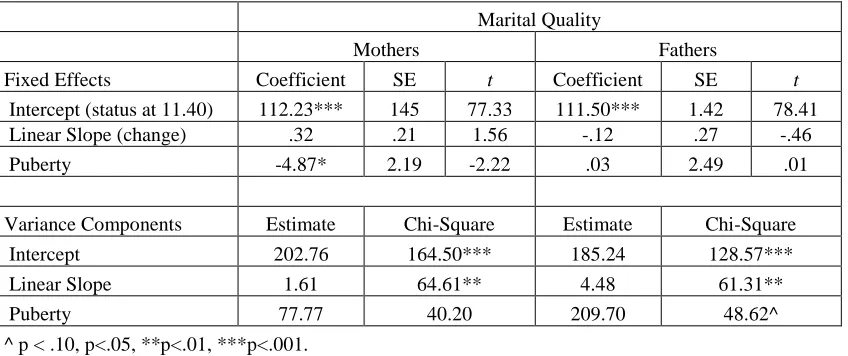
Table 13. Hierarchical Linear Modeling Results for Marital Quality and Puberty Status 49 Table 14. Hierarchical Linear Modeling Results for Marital Quality and Graduation ... 50
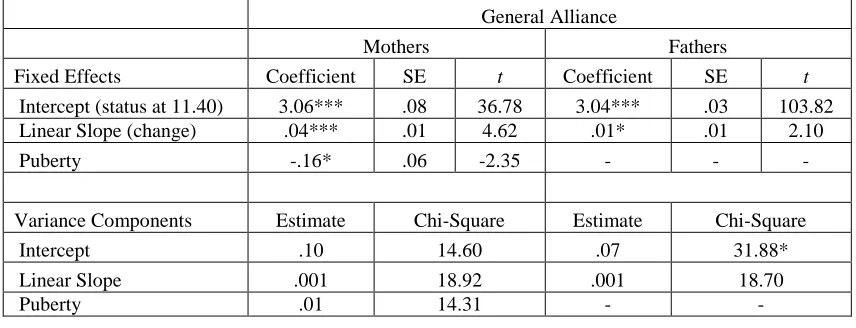
Table 15. Hierarchical Linear Modeling Results for General Alliance and Puberty ... 50
Table 16. Hierarchical Linear Modeling Results for Spouse Criticism and Puberty... 51
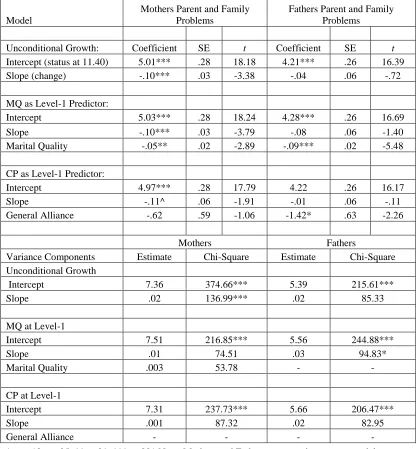
Table 17. Hierarchical Linear Modeling Results for Parent and Family Problems ... 52
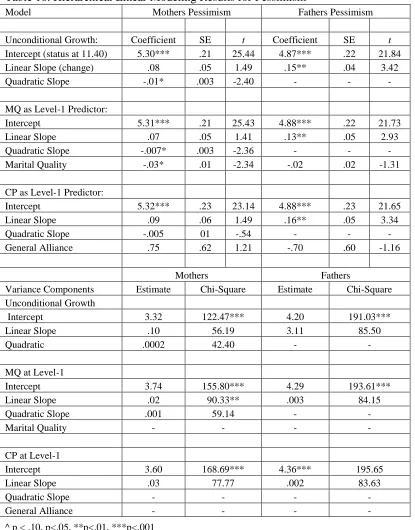
Table 18. Hierarchical Linear Modeling Results for Pessimism ... 53
Table 19. Exploratory Hierarchical Linear Modeling Results for Marital Quality ... 103
Table 20. Exploratory Hierarchical Linear Modeling Results for General Alliance ... 104
Table 22. Exploratory Hierarchical Linear Modeling Results for Parent and Family
Problems ... 106
LIST OF FIGURES
Figure 1. Data Collection Timeline ... 54
Figure 2. Overlapping Cohort Design. ... 54
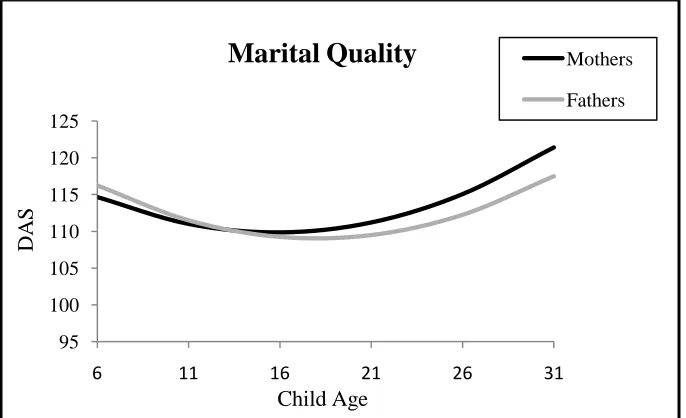
Figure 3. Quadratic Growth Trajectory for Marital Quality ... 54
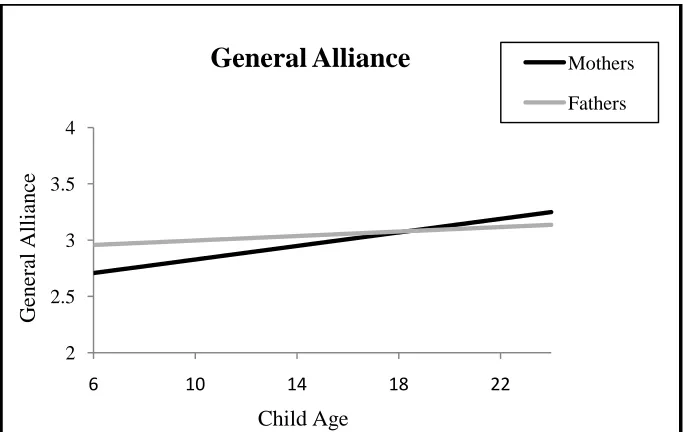
Figure 4. Growth Trajectory for General Alliance. ... 55
Figure 5. Growth Trajectory for Spouse Criticism. ... 55
Figure 6. Growth Trajectory with Pubertal Status Predicting Mothers' Marital Quality Based on the Average Age of Pubertal Onset for this Sample………...56
Figure 7. Growth Trajectory with Graduation Date Predicting Mothers' Marital Quality Based on the Modal Age for Graduation ... 56
Figure 8. Growth Trajectory with Pubertal Status Predicting Mothers' General Alliance Based on the Average Age of Pubertal Onset for this Sample ... 57
Figure 9. Growth Trajectory with Pubertal Status Predicting Mothers' Spouse Criticism Based on the Average Age of Pubertal Onset for this Sample ... 57
Figure 10. Growth Trajectory for Mothers' Parent and Family Problems ... 58
Figure 11. Growth Trajectory for Fathers' Parent & Family Problems ... 58
Figure 12. Growth Trajectory for Mothers' Pessimism ... 58
Figure 13. Growth Trajectory for Fathers' Pessimism ... 59
Figure 14. Mothers' Marital Quality Predicting Mothers' Parent and Family Problems .. 60
Figure 15. Fathers' Marital Quality Predicting Fathers' Parent and Family Problems ... 60
Figure 16. Fathers' General Alliance Predicting Fathers' Parent and Family Problems ... 61
1 INTRODUCTION
The family system over time
The family life cycle can be described as the family moving through time as the structure
of the family system, and patterns of interaction between family members, develop in response to
normative transitions and unexpected events (McGoldrick & Carter, 2003; McGoldrick, Heiman,
& Carter, 1993). The first major developmental transition for a beginning system occurs when
two individuals come together as a couple to form their own system. According to family
systems theory, a spouse subsystem forms based on supportive and complimentary patterns of
behavior in the relationship which, at this stage, form the basis for evolving patterns as the
system moves through time (Minuchin, 1974; Montgomery & Fewer, 1988). As couples have
children, healthy systems develop clear generational boundaries and a vertical power structure
that differentiates the parental or “executive” subsystem from children. Within the boundaries of
the parental subsystem, parents can develop relationships with children and effectively manage
the tasks of raising a family while protecting the marital relationship from the effects of
child-related stressors (McHale, Kuersten-Hogan, & Rao, 2004; Minuchin, 1974). The quality of the
couple‟s relationship and their ability to parent together have implications for the functioning of
the individual members of the couple as well as the rest of the family system. A satisfying
marital relationship has been linked to a general sense of well-being, whereas marital distress
and divorce have been linked to declines in emotional well-being, social support, and physical
health for parents (Barrett, 2000; Graham, Christian, & Kiecolt-Glaser, 2006; Simon &
Marcussen, 1999; Waite, Luo, & Lewin, 2009; Williams, 2003). Marital quality and the
emotional and behavioral functioning of children (Almeida, Wethington, & Chandler, 1999;
Feinberg, 2003; Howes & Markman, 1989).
Family life cycle theory (Duvall, 1957) proposes a common set of normative challenges
and transitions that are associated with parenting. Systems typically experience the greatest
amount of stress at normative transition points in the life cycle, such as the addition of children,
children entering adolescence, young adult children leaving home, and aging parents
(McGoldrick et al., 1993). The initial renegotiation of boundaries as children enter the system
can place stress on the couple subsystem, resulting in conflict over child-rearing responsibilities
and strain on the marital relationship (McGoldrick & Carter, 2003; McGoldrick et al., 1993;
Twenge, Campbell, & Foster, 2003). As children develop and family roles change, boundaries
must be clear, yet permeable enough to accommodate necessary shifts in family patterns
(Minuchin, 1974; Montgomery & Fewer, 1988). Although boundaries are constantly
renegotiated, the next major developmental task occurs when children reach adolescence and
parents must alter their role in response to the child‟s growing need for independence
(McGoldrick et al., 1993). In addition to stress caused by the renegotiation of boundaries, the
onset of puberty and subsequent pubertal development for children is related to declines in
marital satisfaction for the parents over time (Whiteman, McHale, & Crouter, 2007). The next
defining stage, and the longest stage in the family life cycle, is centered on transitioning young
adult children out of the home (McGoldrick & Carter, 2003). Although this stage requires
shifting the parental role as children obtain their independence, it is associated with some
benefits for the marital relationship including more enjoyment of time spent with one‟s spouse
and transient increases in marital satisfaction (Gorchoff, John, & Helson, 2008; VanLaningham,
Although all families must adapt to changes and negotiate stress in the system,
transitional points highlighted in family life cycle theories are generally based on normative
patterns of child development.Yet, a distinction between normative and non-normative
transitions and events is essential in a life-course view of families, as these challenges have
different implications for stress and coping over time (Parke, 1998; Seltzer & Ryff, 1994). For
example, the addition of children and their maturation are normative transitions for typical
families, thus, the stress generated from these transitions may not have the same negative
implications for the marital relationship as unexpected events such as economic hardships or
injury or illness of a family member. Researchers hypothesize that the predictability of normative
transitions helps families set realistic expectations about the event (Karney & Bradbury, 1995;
Parke, 1998; Seltzer & Ryff, 1994). Thus, families may be more vulnerable to the unanticipated
stress generated by non-normative, unexpected events. Because fewer families experience these
non-normative transitions, compared to normative transitions, they are less likely to receive
social support during the transition and the families have fewer social models of family
adaptation to guide their responses (Seltzer & Ryff, 1994).
To date, the research is limited to addressing how a non-normative event, such as the
birth of a child with a disability, and subsequent non-normative childcare, affect the marital
relationship and parenting roles over time. That is, in addition to daily caregiving stressors,
parents of children with intellectual disability must manage stress generated from children‟s
difficulty completing developmental transitions within a normative time frame. However, despite
the changing nature of challenges for these parents, most studies of family functioning use
cross-sectional designs to study child care demands and parents‟ functioning at one point in time,
Hong, 2005; Paczkowski & Baker, 2007; Plant & Sanders, 2007; Roach, Orsmond, & Barratt,
1999; White & Hastings, 2004). Thus, it is unclear from the current literature how marital quality
and parenting support change over time. Therefore, the purpose of this investigation is to
describe parents‟ marital quality, coparenting relationship, and stress associated with raising
children with intellectual disability as the children transition through adolescence and into young
adulthood, periods that have typically been ignored in the literature. Two types of stress will be
considered: strains for parents and the family as a whole and pessimism related to the child‟s
future. Transition periods will be emphasized since the entrances into adolescence and young
adulthood are likely particularly salient times that highlight the child‟s difficulties in meeting
typical expectations of these stages (Olshansky, 1962; Wikler, Wasow, & Hatfield, 1981).
Although mutual support between spouses in their roles as marital partners and parents is
correlated with parents‟ experiences of stress (Floyd, Costigan, & Phillippe, 1997; Kersh,
Hedvat, Hauser-Cram, & Warfield, 2006), research has not considered how the relationship
between mutual support and stress might change with different phases of the family life cycle.
Thus, the investigation will also examine how changing satisfaction in these subsystems is
related to the experience of stress over time.
Coparenting
Parents‟ ability to work together to manage the stressors associated with parenting is
addressed by the construct of the coparenting alliance. This construct evolved from Minuchin‟s
(1974) description of the executive subsystem formed by two partners working together to
manage family life. More recent theory and research have identified the primary components of
coparenting to include solidarity and support among partners, levels of dissonance, antagonism,
(Feinberg, 2003; McHale, 1995; McHale, Kuersten-Hogan, & Rao, 2004; Van Egeren &
Hawkins, 2004). Studies show that the partner‟s satisfaction with support in these areas is more
important than the actual division of child-care related tasks (Essex & Hong, 2005; Simmerman,
Blacher, & Baker, 2001). Although coparenting between partners is mainly studied in families
transitioning to parenthood with the birth of their first child (McHale et al., 2004), these skills
seem critical for managing lifelong stressors related to raising a child with a disability, including
managing the adolescent and young adult transitions.
For married or cohabitating couples, coparenting specifically describes aspects of the
relationship involved in parenting and does not cover other aspects of adult partner relationships
such as intimacy, companionship, or management of a home and finances (Feinberg, 2003).
Thus, coparenting is a distinct concept from marital quality (Floyd, Gilliom, & Costigan, 1998;
Rogers & White, 1998; Van Egeren & Hawkins, 2004). Yet, it is likely that coparenting
dynamics and marital quality within a relationship mutually influence one another (Floyd et al.,
1998; Rogers & White, 1998). Strong marital quality seems to provide a foundation for
supportive coparenting and increases confidence in the parenting role for couples new to
parenthood (McHale et al., 2004; Weiss, 2002). In turn, coparenting dynamics established early
in the child-rearing process are related to marital quality later in the marriage, even more so than
initial levels of marital quality (Belsky & Hsieh, 1998; Schoppe-Sullivan, Mangelsdorf, Frosch,
& McHale, 2004). Similarly, unsupportive coparenting and parenting disagreements are
predictive of later marital dissolution, even when initial marital quality is high (Belsky & Hsieh,
1998; Block, Block, & Morrison, 1981). Coparenting, as opposed to marital quality, is also more
strongly associated with other parenting experiences, such as feelings of efficacy and
Parenting a child with an intellectual disability
Coparenting seems particularly important for parents of children with intellectual
disability as these children require extensive caretaking over the life course. Intellectual
disability is defined by global deficits in intellectual functioning and corresponding limitations to
adaptive functioning in areas such as daily living skills, communication, health and safety, social
skills, and functional academic skills (Joy, Lord, Green, & Fein, 2003). These limitations in
cognitive and adaptive functioning require extra effort and support from parents to teach new
skills and manage behavior. Parents experience stress related to characteristics of the child such
as behavior problems, level of disability, and adaptive functioning, and parents of children with
intellectual disability report spending more time addressing care demands than comparison
parents, demands that include supervision, teaching activities, direct care, management of
behavior, and advocating for their child (Baker et al., 2002; Baker, Blacher, Kopp, & Kraemer,
1997; Plant & Sanders, 2007; White & Hastings, 2004). Many studies assessing parenting stress
focus on child behavior problems because children with disabilities exhibit more problem
behavior than nondisabled children and these problems have been linked to high levels of
parenting stress in both populations (Baker et al., 2005, 2002; Kersh et al., 2006; Nachshen &
Minnes, 2005; Paczkowski & Baker, 2007; Plant & Sanders, 2007). Parenting a child with a
disability is also related to financial strains, less time spent in social and leisure activities, and
lower rates of employment than other parents, particularly for mothers (Baker et al., 2002, 1997;
Seltzer & Krauss, 2001).
The extra time spent in caregiving tasks, the level of daily stress, and characteristics of
the child with intellectual disability are associated with the quality of the marital relationship
of behavior problems, with inconsistent results depending on the parent reporting. For mothers, a
combination of cross-sectional studies shows that child behavior problems are negatively related
to marital quality at all stages of child development (Essex & Hong, 2005; Floyd & Zmich, 1991;
Kersh et al., 2006). Yet, findings are somewhat mixed when considering fathers‟ reports from the
same studies, with some studies finding associations with child behavior and marital quality
(Essex & Hong, 2005; Floyd & Zmich, 1991) and others showing no significant relation (Kersh
et al., 2006). Although these studies did not consider fathers‟ daily involvement with the child, it
is possible that involvement in childcare plays a role in the association between child
characteristics and marital quality for fathers. The present study will address inconsistencies in
mothers‟ and fathers‟ reports by exploring several issues that have not been addressed in
previous research, including possible differences between mothers and fathers in overall levels
and trajectories of marital quality over time.
Although inconsistencies exist between studies, research shows that coparenting and
parenting confidence are also influenced by the unique parenting experiences associated with
raising a child with intellectual disability. Parents of young children with intellectual disability
report less parenting competence and more restrictions in the parenting role than comparison
parents (Roach et al., 1999). When considering child characteristics, some studies show that
parents of elementary school-aged children with disabilities who perceive more problem
behaviors report more negativity in their parental role than parents who report fewer behavior
problems (Kersh et al., 2006; Plant & Sanders, 2007).
Despite consistent evidence for additional caregiving demands in this population and
strains in the marital and parenting relationships based on child characteristics, discrepancies
parents, parents of children with disabilities report greater child-related stress but do not show
greater difficulties on more general measures of well-being such as depression or physical health
(Baker et al., 2005; Bristol, Gallagher, & Schopler, 1988; Seltzer, Greenberg, Floyd, Pettee, &
Hong, 2001). Yet other studies do find greater difficulties in general areas of functioning (Baker
et al., 2002; Blacher, Lopez, Shapiro, & Fusco, 1997; Nachshen & Minnes, 2005; Roach et al.,
1999; Weiss, 2002), including a meta analysis finding mothers of individuals with a disability
likely to report higher levels of depression than other mothers (Singer, 2006). Despite
discrepancies in studies assessing general well-being for parents, studies specifically assessing
parenting stress, such as daily caregiving demands, consistently show higher levels of
child-related stress for parents of children with intellectual disability than comparison parents (Baker
et al., 2005, 2002; Bristol et al., 1988; Roach et al., 1999). These comparison studies usually
focus on one point in time, typically early childhood or later in life caregiving. However, a small
number of longitudinal studies show that the nature of stress changes over time for these parents
(Glidden & Schoolcraft, 2003; Hauser-Cram et al., 2001), based on the child‟s needs, the
accumulation of constant daily stressors, and parents‟ ability to increasingly match
accommodations to the child‟s needs.
Studies assessing stress and caregiving demonstrate a “resilient-disruption” pattern in
which families evidence disruptions and strains in family functioning while also showing signs
of resiliency and successful adaptation to their child‟s unique needs (Costigan, Floyd, Harter, &
McClintock, 1997). One sign of this resilient-disruption pattern may be seen in the family‟s use
of accommodation strategies and support services. The need for accommodations shows that
family members perceive stress that needs to be managed, yet the ability to make successful
balance between the level of disruption to family functioning and families‟ use of positive
strategies changes with time.For example, in a longitudinal study of children with
developmental disabilities through age 11, Keogh, Garnier, Bernheimer, and Gallimore (2000)
found that the impact of the child with a disability on the family‟s daily routine remained
constant across time and that the intensity of accommodations, including time and resources
required, did not change over time. Yet, the types of accommodations families made in terms of
daily routine, family roles, and seeking support outside of the home grew increasingly varied as
children aged. For example, parents of older children looked to the community for recreational
activities more than parents of younger children. Associations between child characteristics and
accommodations also increased, highlighting the families‟ ability to match supports to the child‟s
changing needs. Thus, the same types of demands when children were very young, compared to
when they were school aged, were responded to differently. It is possible that this increasing
ability to adapt to the child‟s needs may correspond to later decreases in parent and family stress.
Studies assessing stress that consider the child‟s stage of development show that
childhood is a particularly hard time for parents as they learn to make necessary
accommodations, but that parents of adolescents report less stress, which may be related to
parents gaining skill in their unique parenting role over time. A longitudinal study of children
through age 10 found linear increases in stress related to the child‟s characteristics (adaptability,
demandingness, mood, behavior) and stress in the parent role, including decreased feelings of
competence and well-being (Hauser-Cram et al., 2001). However, these increases in parent and
child-related stress do not appear to continue through adolescence. In a cross-sectional study,
Orr, Cameron, Dobson and Day (1993) found that parents of children in middle childhood (age
adolescents. Consistent with this finding, a meta-analysis of research on mothers‟ depression
when raising a child with an intellectual or developmental disability found a significant
difference in effect sizes between studies of parents of adult children and parents of children in
early to middle childhood (Singer, 2006). Although this difference is only based on one
comparative study that included mothers of adults, findings show that mothers of adults are more
similar to comparison groups on depression than mothers of younger children. It is notable that
the authors only found one study focused on mothers of adult children and, notably, no studies
with mothers of adolescents. Although findings from these studies indicate variability in stress
and adaptation based on the child‟s stage of development, longitudinal studies are needed to
confirm the trajectory of stress past the childhood years, particularly focused on adolescence.
Parenting and the family life cycle
Although the pattern of general decreases in stress over time illustrates parents‟
adaptation to raising a child with intellectual disability, major transition points, such as entering
adolescence, likely disrupts the family system and parenting roles. The focus of parents‟
concerns also likely changes based on the development of the child and the family system.
Although adolescence is a period that has typically been neglected in previous research
addressing families of individuals with intellectual disability, research with parents of
nondisabled adolescents highlights the challenges of this period for parents.
Adolescence is a developmental stage in which change occurs gradually over time as
children transition to meeting more typically adult expectations in terms of cognitive,
psychological, social, and physical development (Lerner & Galambos, 1998; Petersen, 1988).
Skills acquired in adolescence typically allow adolescents to increase independence from parents
towards future independent living (McElhaney, Allen, Stephenson, & Hare, 2009; McGoldrick et
al., 1993). Signaled by the onset of puberty, patterns in the family system change as the
parent-child relationship transforms and parents realign boundaries to adapt to the adolescent‟s
development (McGoldrick & Carter, 2003; Paikoff & Brooks-Gunn, 1991; Petersen, 1988). The
transition often leads to higher levels of parent-child conflict, although this increase in conflict is
not typically long lasting (Hill, Holmbeck, Marlow, Green, & Lynch, 1985a, 1985b; Paikoff &
Brooks-Gunn, 1991). In addition to changes for the individual and family, the environment also
changes for adolescents with school transitions into middle school and high school. Thus,
physical maturation, indicated by the onset of puberty, and school transitions often serve as two
key markers of the beginning of adolescence (Graber & Brooks-Gunn, 1996; Seltzer & Ryff,
1994). That is, the transitions in individual physical and cognitive maturation, the family system,
peer relationships, and school environment tend to co-occur, so that studies can use pubertal
development as the index of the larger set of transitions that occur in adolescence (Graber,
Nichols, & Brooks-Gunn, 2010; Graber, Petersen, & Brooks-Gunn, 1996). Therefore, the present
study will consider the child‟s pubertal status as an indicator of the adolescent transition to assess
the impact of this period on parent functioning.
The developmental tasks of adolescence pose particular challenges for individuals with
intellectual disability and their families. Parents must learn how to help their child mange some
of the typical aspects of this transition as well as navigate issues specific to their disability.
Individuals with intellectual disability must also navigate physical changes associated with the
onset of puberty, but without the same corresponding level of growth in cognitive and
social-cognitive skills seen with nondisabled adolescents. Thus, adolescents with intellectual disability
domains (Baker et al., 1997). In adolescence, the discrepancy between the individual‟s physical
appearance and limitations in cognitive and adaptive functioning grows, and it may be harder for
the adolescent to participate in age-appropriate activities, with psychological and social
implications (Baker et al., 1997; Parmenter, Harmon, Yazbeck, & Riches, 2007). Contextually,
the adolescent must also manage school transitions in a school and social environment that may
be unsupportive and unaccommodating to the adolescent‟s needs (Parmenter et al., 2007).
Additionally, individuals with intellectual disability are more likely to develop internalizing and
externalizing problems, and puberty is associated with the onset of psychological disorders,
causing more concerns and challenges for parents (Einfeld, Ellis, & Emerson, 2011; Einfeld &
Tonge, 2007; Emerson, 2003; McIntyre, Blacher, & Baker, 2002; Pfeiffer & Baker, 1994).
However, the majority of previous research has failed to address parents‟ functioning during this
challenging time.
Despite the inability of adolescents with intellectual disability to reach the same
expectations for independence as nondisabled adolescents, the few studies addressing parenting
practices in these families show that families do make accommodations to their child‟s changing
needs. Similar to patterns seen in family relationships with non-disabled children, parents
decrease the level of commands issued to adolescents with intellectual disability, compared to
younger children, who in turn, respond with increased compliance and involvement in family
discussions (Costigan et al., 1997; Floyd et al., 1997). Parents also report that adolescents
demonstrate higher adaptive functioning skills and less need for parent management (Floyd &
Gallagher, 1997). Nevertheless, there are unique features of family relationships in this
population, such as a higher level of parental directiveness in family discussions than seen in
families as children aged (Floyd et al., 1997). Overall, findings show that adolescents with
intellectual disabilities do show developmental progress in terms of requiring less care from
parents but continue to require many supports as compared to typically developing adolescents.
The unique trajectory of development for adolescents with disabilities likely leaves many
questions for parents who must struggle to figure out what family accommodations and
boundaries are appropriate. This situation, in particular, likely requires a supportive coparenting
relationship for the parents. Similar to the transient effects of pubertal onset on family
functioning for nondisabled adolescents, parents likely improve their ability to manage their
adolescent child throughout this transition. However, longitudinal research is needed to address
these assumptions about families‟ resiliency over time. Despite possible resiliency, what may
become increasingly stressful for parents at this stage is concern for the child‟s future. At this
stage, the adolescent‟s need for continued support, which becomes increasingly divergent from
nondisabled adolescents, causes parents to realistically appraise their child‟s abilities and begin
to establish corresponding plans for their future (Baker et al., 1997).Thus, concern and
pessimism for the future may grow even as parents‟ perceptions of strain for themselves and the
family improve.
Transitioning out of adolescence and into young adulthood for the individual with
intellectual disability is likely another stressful transition for the parents, since similar to the start
of adolescence, the child‟s difficulty achieving normative developmental milestones has
implications for parents‟ functioning (Seltzer & Ryff, 1994). For parents of nondisabled children,
their child‟s entrance into young adulthood signals the beginning of the “launching phase” of the
family life cycle when parents launch their children out of the home (McGoldrick et al., 1993).
obtaining employment, financial independence from parents, responsible decision making, and
entering into a new relationship with parents as an equal (Arnett, 2001; McGoldrick et al., 1993).
Parents of individuals with intellectual disability face unique worries about future independence
and long-term care for their child (Floyd & Gallagher, 1997). Many young adults with
intellectual disability live in their parents‟ home, few gain financial independence, and traditional
employment is uncommon (Carr, 2005; Floyd, Costigan, & Piazza, 2009; Seltzer, Greenberg, et
al., 2001). Although some individuals with intellectual disability attain typical markers of
adulthood such as independent living, employment, involvement with peer social networks, and
starting a family of their own, they tend to have more difficulty in these roles than their
nondisabled peers (Richardson & Koller, 1996). Thus, parents remain very involved with their
adult children, even if they live out of the home, continuing to provide care and remaining in
frequent contact (Floyd et al., 2009; Seltzer, Greenberg, Krauss, & Hong, 1997; Seltzer, Krauss,
Hong, & Orsmond, 2001).
With all the expectations that typically accompany young adulthood and the family‟s
launching phase, a concern for the child‟s future, and what happens when the parents can no
longer provide care, becomes prominent at this time (Blacher, 2001). Despite parents‟ reports of
concern for the future and the decreased availability of support services in adulthood (Floyd &
Gallagher, 1997), one study of adolescents and young adults with autism spectrum disorder did
not find a relationship between the end of high-school and mothers‟ pessimism about their
child‟s future or change in pessimism over two time points spanning 1.5 years (Lounds, Seltzer,
Greenberg, & Shattuck, 2007). However, among the individuals leaving high school during the
study, over half of the sample was enrolled in college or employed, despite two-thirds of the
study seems to differ from other studies assessing this stage, which may have implications for the
mothers‟ reports of pessimism. The present study will include data that were used in a previous
study by Floyd et al. (2009) examining young adulthood for individuals with mild and moderate
intellectual disability. In this sample, only one young adult was in college and one-third of the
sample was employed. It is expected that pessimism will increase as children enter young
adulthood and transition out of formal schooling, and, that by assessing pessimism over a greater
span of time, changes will be evidenced.
Although the initial transition into young adulthood has the potential to cause strain for
parents, studies also show signs of resiliency as families learn to adapt to the challenges of this
stage of the family life cycle. A study of parents‟ perceptions of adulthood found that most
parents endorsed that their child had reached adulthood, despite their child‟s difficulty achieving
typical milestones, highlighting the parents‟ ability to reframe tasks of this stage to goals that
were attainable for their child. Parents in the study tended to focus on skills their child gained
rather than on their limited abilities (Floyd et al., 2009).It is also possible that pessimism will
decrease after the initial disruption to the family system brought on by this transition. For
example, some families complete the launching stage by transitioning all children out of the
home, including a move to a residential setting for the child with intellectual disability. In these
families, mothers report decreased pessimism and caregiving burden after the child‟s move
(Seltzer et al., 1997; Seltzer, Krauss, et al., 2001). Additionally, mothers‟ reports of emotional
involvement with their children increased over time (Seltzer, Krauss, et al., 2001). Thus, despite
expected strains due to the disruption of family roles and questions about the future at the
beginning of the young adult transition, families likely find their own unique way to manage this
Marital quality and coparenting support
Even though parents of children with disabilities report more caregiving stress than
parents of nondisabled children, stress does not consistently correlate with general well-being or
family functioning (Baker et al., 2005; Dyson, 1991). Inconsistencies between studies addressing
stress may be related to the support parents receive, in terms of instrumental support in
caregiving as well as emotional support. Support from one‟s partner is a key form of social
support that helps many families successfully adapt to the challenges of raising a child with a
disability. Informal support from a spouse or other family members is more beneficial for parent
well-being than formal, professional support, and families increase their reliance on these
informal supports, compared to formal supports, as children age (Keogh et al., 2000; White &
Hastings, 2004). Support in the marital relationship is related to positive coping skills, lower
levels of stress, and satisfaction with parenting experiences (Friedrich, Wilturner, & Cohen,
1985; Kersh et al., 2006). Floyd et al. (1998) found that marital quality was related to supportive
coparenting, which, in turn, predicted increased parenting confidence over time. These
relationships remain, despite challenges presented by the child. Simmerman et al. (2001) found
that mothers‟ satisfaction with father‟s assistance with caregiving predicted marital adjustment
above and beyond the child‟s problem behaviors. On the other hand, Bristol et al. (1985) found
that incongruence between the current level of support received from one‟s partner and the
expectations for support from the partner was the best predictor of negative adaptation in these
families.
Despite the importance of the marital and coparenting relationships for parent well-being,
little is known about the nature and quality of these relationships for parents of children with
cross-sectional studies exist, marital quality seems to be relatively similar to comparison groups. Some
studies do not find differences in marital adjustment between parents of young children with
developmental delays and comparison groups (Baker et al., 2005, 2002) whereas others find that
parents of children with developmental disabilities report lower levels of marital quality (Bristol
et al., 1988). Floyd and Zmich (1991) found that parents of children with intellectual disability
engaged in more negative marital interactions than comparison parents, but that there were no
differences in their reports of marital quality. The authors concluded that couples likely attribute
negative aspects to expected parenting stress and family strains, an interpretation which allows
them to preserve their sense of marital satisfaction and highlights resilience in the system. A
meta-analysis found that parents of children with disabilities reported lower marital adjustment,
compared to other parents, but the effect size for the difference was small (Risdal & Singer,
2004). Additionally, the meta-analysis included parents of children with autism spectrum
disorders and physical disabilities, disabilities that may have different influences on marital
quality than raising a child with intellectual disability. Thus, despite discrepancies, differences
between groups seem relatively small, and studies show that parents of children with intellectual
disability typically have positive marital relationships (Stoneman & Gavidia-Payne, 2006).
Although even fewer studies have evaluated coparenting, one study found that parents of
children with intellectual disability did not differ from comparison groups in their perceptions of
this relationship (Floyd & Zmich, 1991).
Although previous research has failed to address how marital quality evolves over time
specifically for parents of individuals with intellectual disability, longitudinal research shows
that, in general, marital quality diminishes over time for couples with and without children
Umberson, Williams, Powers, & Chen, 2005; Vaillant & Vaillant, 1993; VanLaningham et al.,
2001). Even though this general trend persists, the few studies evaluating marital quality for
parents of older children confirm that the presence of these children is related to parents‟ marital
quality throughout the lifespan, though the impacts differ at different points in time (McGoldrick
et al., 1993; Rogers & White, 1998). The importance of considering the developmental stage of
the child is evidenced by studies showing a negative association between pubertal development
and parents‟ marital satisfaction, and that the rate of decline in satisfaction and increase in
negative experience slows after children leave the home (Umberson et al., 2005; VanLaningham
et al., 2001; Whiteman et al., 2007). Even less is known about coparenting over time, but it is
likely that the restructuring of parental roles in response to the child‟s development causes strains
during transition periods, particularly at the start of adolescence (McGoldrick & Carter, 2003;
McGoldrick et al., 1993; Parke, 1998).
Marital quality for parents of children with intellectual disability likely follows a similar
course to that of parents of children without disabilities, although discrepancies may exist based
on the child‟s development due to the different implications of transition periods for these
families. For example, it is unclear if the rate of decline in marital quality will slow for parents of
young adult children if these parents never complete the launching phase and experience a
household without children. Individuals with intellectual disability are more likely to be living in
their home as adults, compared to nondisabled adult children (Seltzer, Greenberg, et al., 2001),
and the presence of an adult child in the home has been associated with low levels of marital
satisfaction for parents of nondisabled children (Umberson et al., 2005). Even for adults with
disabilities that do move out of the parents‟ home, the caregiving role for parents continues
unique nature of parenting experiences for this population, there is a need for studies such as this
that specifically describe marital trajectories for this population.
Although there are some discrepancies between studies, evidence also exists for
differences in marital stability (parents remaining together) over time for parents of children with
disabilities compared to parents of nondisabled children. Although marital quality and stability
are related, data suggest that having children has the effect of decreasing marital quality while
increasing stability (Heaton, 1990), although these effects are less clear for parents of children
with disabilities. Hartley, Baker, Seltzer, Floyd, Orsmond, et al. (2010) found that until age 8, the
risk for divorce in families of children with an autism spectrum disorder (ASD) was similar to
comparison families. However, after this age, parents of children with ASD continued to be at a
high-risk for divorce throughout the child‟s adolescent and young adulthood stages, whereas risk
for comparison parents decreased. This pattern is consistent with interpretations that ongoing
caregiving demands cause strains for parents that persist over time. However, another study did
not find differences in divorce rates between parents of children with and without disabilities
during their early years of parenting or during the parents‟ middle-age (Seltzer, Greenberg, et al.,
2001). This study will also consider marital stability over time when assessing marital quality to
address inconsistencies in the current literature.
Since previous research on coparenting over time is limited, both in disability and
nondisability samples, it is harder to draw conclusions on how this will look over time for
parents of children with intellectual disability. In addition to a lack of longitudinal studies, the
majority of cross-sectional studies fail to consider coparenting in parents of children past the
preschool years, with the exception of a limited number of studies on post-divorce coparenting
Feinberg, Kan, & Hetherington, 2007; Maccoby, Depner, & Mnookin, 1990). One study, novel
in both age range and focus on parents of individuals with intellectual disability, demonstrated
that the association between coparenting and marital quality exists with older children (Floyd et
al., 1998), although this study did not look at how coparenting changed based on the age of the
child. Information on coparenting at different stages of child development is available from a
cross-sectional study comparing the coparenting relationship of parents of preschoolers and
parents of preadolescents. The authors found that parents of preschoolers evidenced significantly
higher levels of cooperation (discussions about the child, sharing opinions on parenting issues)
than parents of preadolescents (Margolin, Gordis, & John, 2001). The authors suggested that
ratings of cooperation might be higher in parents of preschoolers since this group requires more
everyday parenting coordination then older, more independent children. Although a significant
difference was found between child age groups, longitudinal research is needed to evaluate
whether the findings reflect a decline that occurs with coparenting over time or whether findings
reflect a process specific to parenting preschoolers.
Purpose
The purpose of this study is to assess the longitudinal course of the marital relationship
and parenting roles over time, particularly across the transitions through the child‟s adolescence
and into young adulthood, for parents with non-normative childcare experiences associated with
raising a child with intellectual disability. The investigation uses lifespan development theory,
including notions about the family life cycle, to examine longitudinal trajectories of
development. The extant research literature fails to provide information on how marital quality
and parenting relationships change over time for these families, or how support in marital and
growth trajectories to detail the course of marital quality, coparenting, and child-related stress for
mothers and fathers over time. The study also examines the expectation that parents experience
increased difficulty in their marital and coparenting relationships as they navigate their child‟s
transitions through adolescence and into young adulthood. A second goal of the study is to assess
how marital quality and coparenting affect parenting stress across the life course.
Hypotheses
Hypothesis 1
Cross-sectional research on marital quality for parents of individuals with intellectual
disability shows similarities between these parents and parents of nondisabled children. Based on
longitudinal studies of the general population showing that marital quality declines over time,
particularly as the couple‟s children enter adolescence, marital quality was predicted to show a
similar longitudinal decline over time for parents of children with intellectual disability.
Highlighting the influence of non-normative transitions on family functioning as described in
family life cycle theories, the upturns in marital quality that are typically seen in normative
samples as children leave home were not expected to occur for parents of older children with
intellectual disability. Thus, the pattern over time was predicted to decline linearly. Similarly,
due to mutual influences between the marital and coparenting relationships, we hypothesized that
coparenting would show the same longitudinal pattern of declining quality, thus, with positive
aspects of coparenting decreasing and negative dimensions increasing over time. Since
predictions for coparenting are based on limited evidence from past research, it is also possible
that the course of coparenting will diverge from marital quality, highlighting the need to consider
these constructs separately.
Hypothesis 2
Based on family life cycle theory and challenges associated with parenting children with
disabilities, the family transition into raising an adolescent with an intellectual disability,
followed by the transition into young adulthood, were predicted to evidence periods of elevated
strain by causing discontinuity in the trajectories of marital quality and coparenting. Specifically,
in addition to predicted general declines for marital quality and the general coparenting alliance,
the entrance to adolescence, marked by the onset of puberty, and young adulthood, marked by
the ending of formal schooling, were predicted to be negatively associated with the parent
relationship variables, causing a drop in the elevation of these trajectories. A positive association
was predicted between spouse criticism and transition periods, with parents evidencing a higher
level of criticism following the transition period.
Hypothesis 3
Cross sectional research suggests that resiliency and adaptation increase for these families
over time. Thus, parents‟ perceptions of stress for themselves and strains on the family were
predicted to decrease over time as parents learn to adapt to the unique caregiving needs of their
child and gain skill in their parenting role. However, parents‟ levels of pessimism and concern
for their child‟s future were expected to increase over time. A curvilinear trajectory for
pessimism also was assessed based on findings that pessimism decreases after parents adapt to
this transition by either launching children out of the home or making plans for their future.
Hypothesis 4
Based on cross-sectional studies showing that support in the marital and coparenting
were predicted to affect parents‟ reports of stress and pessimism. Increases in marital quality and
positive coparenting were expected to predict lower levels of stress.
2 METHODS
Longitudinal Design Overview
Data from this study came from a longitudinal investigation of family interactions and
adaptation in families of individuals with intellectual disability spanning 14 years with four data
collection points. The original study employed an overlapping-cohort design in which families
were divided into cohorts based on the time of their recruitment into the study and the age of the
child with intellectual disability. The design uses cross-sectional information on age as well as
longitudinal changes over time to construct developmental trajectories. Families were included in
this study if they participated in at least one time point over the 4 waves. Most of the families
(87%) were recruited for the investigation at time 1, but some additional families entered the
study at time 3. All participants were sought out at time 4 to participate, including those that may
have dropped out of the study after the first or second time point. There was an 18-month gap
between waves 1 and 2, a 3-year gap between the 2nd and 3rd waves, and a 9-year gap between
the 3rd and final waves (figure 1). Please see Tables 1 and 2 for more complete information on
the number of families that participated at each wave and how many of these families completed
multiple time points.
The design provides data on multiple cohorts of families with children in middle
childhood through their early twenties, with the oldest cohort also providing data through the late
twenties. Cohort A is composed of 90 families who were originally recruited at time 1 and had a
functioning before the adolescent transition, and, depending on the child, provided data on
functioning before or after the entry to adolescence at times 2 and 3. At the fourth time point,
these participants were transitioning to young adulthood. The second cohort, Cohort B, is
composed of 81 families with an adolescent (aged 12-18) at the original time 1 recruitment.
These participants transitioned through adolescence at times 1, 2 and 3, with some having begun
the young adult transition by wave 3. All of these participants had completed school by time 4.
The final cohort, Cohort C, is composed of 29 families recruited at T3 with children aged 6-15
years old. Younger participants from Cohort C transitioned from childhood to adolescence by
time 4, and those who were already in adolescence at the time of recruitment completed the adult
transition by T4 (see Figure 2). Over the span of the entire study, the children ranged in age from
6-31.
Participants
Families of school-aged children with a mild or moderate intellectual disability were
originally identified through public school systems, community groups, and agencies that served
these families within 100 miles of the research headquarters. These families were mailed letters
describing the project. A total of 200 of these families initially participated, 152 of which were
included in the sample for the present study. All of the children with disabilities had been
assessed through the school systems within 3 years of the recruitment with standardized tests of
intellectual and adaptive functioning. Individualized Education Plans (IEP) reports were obtained
from the schools to confirm that the children met diagnostic criteria for mild or moderate
intellectual disability. In the sample for the current investigation, 102 of the target children have
a diagnosis of mild intellectual disability and 50 are diagnosed with moderate intellectual
intellectual functioning that is accompanied by limitations in adaptive functioning in at least 2
areas. Individuals with mild intellectual disability have IQ scores ranging from 50-55 to
approximately 70; individuals with moderate intellectual disability have IQ scores ranging from
35-40 to 50-55. Both groups showed deficits in adaptive functioning (American Psychiatric
Association, 2000). Over the course of the study, 39 of the 152 target children moved out of the
family home. Additionally, 52 target children were identified as having significant behavior
problems at study entry based on the clinical cut-off scores on the externalizing factor of the
Child Behavior Checklist, Parent Report (Achenbach, 1991).
For the parents, the current sample consists of 152 adult heterosexual couples (N= 138
married couples, N = 14 cohabitating couples) that were in a relationship during at least one time
point. At the original recruitment, 115 couples were in a relationship and another 16 couples who
were not in a relationship at that time were included in subsequent waves after entering a married
or cohabitating relationship. The remaining couples entered the study at wave 3. In 16 of the
couples, one partner (N =14 fathers & N = 2 mothers) did not complete questionnaires during
one of the waves; this primarily occurred at time 4 when the parents were mailed questionnaires.
At the first time point that participants completed as a couple (depending on the time of
recruitment and relationship status) the average relationship duration was 11.24 years (SD =
7.92). Eighty-seven of the couples were in their first marriage, and 65 couples included at least
one partner who was previously married. These 65 couples include couples who remarried before
starting the study, and some before having the target child, as well as the 16 couples who entered
a relationship during the course of the study and were included in the sample. The sample
includes 4 step-mothers and 49 step-fathers. Twenty-eight couples who provided marriage and
later time point. Information on relationship quality was not available once the relationship was
terminated. Similarly, if an individual remarried during the course of the study, only data with
the original partner from earlier time points were included. Further information on the family
characteristics is given in Table 3.
Measures
Marital Quality
Marital quality was assessed with the Dyadic Adjustment Scale (DAS; Spanier, 1976) which
was completed by both partners at each time point. The scale addresses multiple aspects of
marital adjustment and is widely used in research on marital relationships (Piotrowski, 1999).
The 32-item measure produces scores on 4 subscales: Dyadic Consensus, Dyadic Satisfaction,
Dyadic Cohesion, and Affectional Expression, as well as a total score on the Total Dyadic
Adjustment Scale. The measure assesses shared activities, agreement on various issues,
affection, happiness, and commitment to the relationship through yes/no questions and Likert
scales. This study uses the Total Dyadic Adjustment score as a global measure of marital
satisfaction. The internal consistency coefficients (Cronbach‟s alpha) have been found to exceed
.70 on all of the subscales and the alpha reliability for the Total Dyadic Adjustment Scale is .96
(Spanier, 1976). In this sample, Cronbach‟s alphas from wave 3 (the only wave with item level
data available for all measures) were .94 for both mothers and fathers on the Total Dyadic
Adjustment Scale. The average scores at each wave, as well as correlations among this measure
and the other primary measures, are presented in Tables 4 – 9.
Coparenting
Mothers and fathers completed the Family Experiences Questionnaire (FEQ; Frank,
coparenting with their partner. The full Family Experiences Questionnaire is a 133 item measure,
with items rated on 4-point Likert scale ranging from “strongly disagree” to “strongly agree,”
forming 11 factor-analytically derived subscales. This study will focus on two subscales that
were administered at the three time points, the General Alliance subscale and the Denigrated
Spouse subscale, which measures spouse criticism. Both scales have been used in previous
research to assess coparenting (Floyd et al., 1998; Floyd & Zmich, 1991; Van Egeren &
Hawkins, 2004) and specifically focus on how the partners parent together. Other scales
assessing aspects specific to the individual parent such as gratification from their parenting role,
confidence, and specific child-rearing skills were not administered at all time points and are not
relevant to this study. The General Alliance subscale consists of 32 items assessing positive
aspects of coparenting such as perceptions of support in the parenting role, mutual respect,
satisfaction with shared parenting responsibilities, and agreement on child-related issues (e.g.,
“When I feel at my wits end as a parent my spouse gives me the extra support I need”). The
Spouse Criticism subscale (10 items) assess negative dimensions of coparenting such as
perceptions of criticism and disapproval from the partner and behaviors that undermine their
parental role (e.g., “My spouse makes me look like a „bad person‟ in the eyes of our children).
The scales from this sample showed strong internal consistency for General Alliance, alpha = .96
mothers and alpha = .95 fathers, and Denigrated Spouse, alpha = .87 mothers and alpha = .89
fathers.
Parenting Stress
To assess stress and care demands, mothers and fathers completed The Questionnaire on
Resources and Stress (QRS; Holroyd, 1987) during the first three time points. At the fourth time
mothers only. The QRS was specifically developed to measure stress associated with raising a
child with a disability or chronic illness and the original form, along with various short forms, is
frequently used with families of individuals with intellectual disability (Crnic, Friedrich, &
Greenberg, 2002; Dyson, 1991; Floyd & Gallagher, 1997; Saloviita, Itälinna, & Leinonen, 2003;
Saloviita et al., 2003). The QRS includes 285 T/F items evaluating multiple areas of possible
stress. The Friedrich short form contains 52 items from the original QRS forming four factor
analytically derived scales: Parent and Family Problems, Pessimism, Child Characteristics, and
Physical Incapacitation. The short form total score was significantly correlated with the QRS
total score (r = .99, p <.001) and the internal reliability coefficient (Kuder-Richardson) was .95
(Friedrich et al., 1983).
This study focuses on two factors to address parenting stress and pessimism for the
child‟s future. The Parent and Family Problems factor consists of 20 items assessing the
respondents‟ perception of problems for themselves as well as stress and inconveniences for
other family members and the family as a whole (e.g., “the constant demands to care for [my
child] limit growth and development of someone else in our family”). At wave 4, an item from
Friedrich‟s version was unintentionally omitted from the scale created for data collection. For
consistency, the 19 item version with the omitted item was used to compare scores across time.
The 19 and 20 item versions from times 1-3 were highly correlated (r > .99 at all 3 points for
mothers and fathers). The Pessimism factor consists of 11 items measuring the parents‟ concerns
about the child‟s future and opportunities for independent functioning (e.g., “I worry about what
will happen to [my child] when I can no longer take care of him/her”). The internal consistency
coefficient for the parent and family problems factor is alpha = .80 for mothers and fathers. On
Puberty Status
At time 4, mothers completed a retrospective questionnaire assessing the onset of puberty
for their child with a disability. An accelerated rate of growth is typically the first indicator of the
beginning of puberty and age at menarche is one of the most typically used and easily identified
indicators for females (Parent et al., 2003). The questionnaire asked mothers for the child‟s age
when he/she gained the most height/went through a growth spurt for males and females, and the
beginning of menstruation for females. Mothers were also asked to endorse how certain they
were of the age provided for each question with a 3-point Likert scale ranging from “uncertain”
to “completely certain.” Of the 104 mothers who completed this measure at time 4, 33 mothers
endorsed that they were “uncertain” and 71 mothers reported that they were either “certain” or
“completely certain” of the date they provided for when their child reached the specific
indicators. Another 12 mothers indicated that they were uncertain of the date and did not answer
the questions for the age that their child reached puberty.
Developmental History
A comprehensive form assessing the child‟s developmental milestones, health history,
school placements and accommodations, and diagnoses was administered in interview format
when the family entered the study. A briefer interview was conducted to update the form with
any changes to educational history and diagnoses at follow-up time points. At time 4, parents
completed a written form with questions regarding the target‟s child educational placements, job
history, and changes to living arrangements. This information was used to ensure that children
later diagnosed with autism (n = 5) were not included in the study and construct information on
Procedure
During the 1st-3rd data collection points, each family completed two sessions lasting
approximately two hours. Sessions were conducted by graduate and undergraduate students in
psychology and took place in the family‟s home, typically one week apart. At time 4, one parent,
typically the mother, completed a 60-minute phone interview and both parents were mailed a
packet of questionnaires. Research assistants scanned returned measures for incomplete or
inaccurate responses and called participants if necessary to complete missing responses. Families
received small financial rewards for their participation at each time point.
Analytical Strategy
Growth trajectories were analyzed using Hierarchical Linear Modeling (HLM) using the
HLM 6 computer program (Raudenbush, Bryk, Cheong, & Congdon,, 2004). HLM creates
growth trajectories to model change over time. The “within-subjects,” or Level-1, model
represents individual change over time and the “between-subjects,” or Level 2, model allows the
intercept and slope of the Level-1 model to vary between individuals (Bryk & Raudenbush,
1987; Singer & Willett, 2003). This study will focus on Level-1 growth models to focus
specifically on change over time in the relationship variables for parents of individuals with
intellectual disability. HLM is ideal for the current longitudinal data because it allows for uneven
spacing between waves and variation in the number of waves completed by participants (Singer
& Willett, 2003). HLM also allows for unbalanced data in models for dyadic data and can still
include data from a couple when one partner is missing data points (Lyons & Sayer, 2005;
Raudenbush, Brennan, & Barnett, 1995).
For hypotheses addressing the nature of marital quality and coparenting, the models for