International Journal for Research in Applied Science & Engineering Technology (IJRASET) ISSN: 2321-9653; IC Value: 45.98; SJ Impact Factor:6.887 Volume 5 Issue XI November 2017- Available at www.ijraset.com
1776
©IJRASET (UGC Approved Journal): All Rights are Reserved
Review Paper on Dual Band Dielectric Resonator
Antenna for Wireless Application
Deepika Pathak1, Sudhir Kumar Sharma2, Vivek Singh Kushwah3
1,2
Department of Electronics Engineering, Jaipur National University, Jaipur, Rajasthan, India 3
Department of Electronics Engineering, Amity School of Engineering & Technology, Gwalior, India
Abstract: In Today’s wireless era, need of a highly optimized antenna having compact size, low cost, high efficiency, larger bandwidth is must. This increases demand of designing antennas having such benefits. This research study is a short description carried out in the past few years and latest progression of Dielectric Resonator Antenna for different uses. Special character of Dielectric Resonator Antenna provides compactness, high gain, and negligible metallic and surface losses. It also gives wider bandwidth. In modern communication, Dielectric Resonator Antenna is utilized for many implications as radar technology, nano-technology, wireless communication and satellite communication. This paper represents a study of simulation of a Dielectric Resonator based on its cylindrical shape for wireless application. Various technique of cylindrical Dielectric Resonator Antenna is described in this paper.
Keywords: DRA, Microstrip strip patch antenna, Return loss, Slot antenna, S-Parameters
I. INTRODUCTION
Wireless communication system is chiefly made up of Antennas. Various types of antennas are ready to use for transmitting and receiving EM waves. Antenna researchers largely gave emphasis on two Micro strip antenna and DRA. Mobile radio and wireless communication uses microstrip antenna for commercial purpose. Microstrip antennas have confinement in efficiency, bandwidth and size. Moreover, negligible metallic losses are its considerable characteristics over microstrip antenna. It is capable of banding easily without breaking to different excitation position and wide bandwidth. S.A. Long, M.W. McAllister and L.C. Shen was introduced Dielectric Resonator as an antenna in 1983. Dielectric resonator antenna was originally designed for millimeter-wave to microwave frequencies .Dielectric Antenna is frequently used due to its easy fabrication n and provides us wider freedom to control the resonant frequency and quality factor. Still, a high Q factor restricted the bandwidth, which regulates its utility as an antenna. Dielectric Resonator Antenna has two peculiar characteristics these are Dielectric constants and quality factor. The quality factor is an example of the antenna losses.
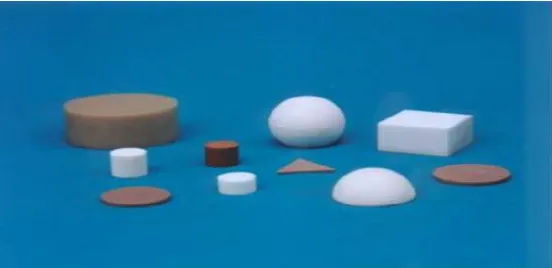
[image:2.612.173.449.584.718.2]The DRA introduced by Long, has many useful features like light weight, high gain small size, and adaptability in desirable shapes and feeding mechanism. Many existing wireless applications and other which came into view require light weight s such qualities which are fulfilled by DRA characteristics. Therefore to a, great extent a lot research towards on increase of Bandwidth by keeping its size compact is to be done because of Dielectric Resonator Antenna has low cost and low profile which shows Dielectric Resonator Antenna to be well convenient for WLAN/ Wi-MAX application systems. DRA are reachable in many size but three elementary shapes are Rectangular, hemispherical, cylindrical. But cylindrical shape is well recognize one due to its compact surface area, diversified far-field pattern and ease of availability in market.
Accessible various techniques are available to excite a dielectric resonator antenna. Hardly any known in short time ago are used feeding methods given below
A. Coaxial probe coupling
Fig.2 Coaxial probe coupling the H field
B. Micro strip feeding line and coplanar
Fig.3 Micro strip feeding line and coplanar Waveguide
C. Aperture coupling
Fig.4 Aperture coupling
II LITERATURE REVIEW
International Journal for Research in Applied Science & Engineering Technology (IJRASET) ISSN: 2321-9653; IC Value: 45.98; SJ Impact Factor:6.887 Volume 5 Issue XI November 2017- Available at www.ijraset.com
1778
©IJRASET (UGC Approved Journal): All Rights are Reserved
DRA: (i) originate the higher order modes along with fundamental mode in DRA [5]; (ii) combination of DRA and other resonating assemblies (hybrid radiator) [6-7]; (iii) combine DRA with parasitic element (not directly connected to feeding structure) [8]. In the modern age of mobile communication, multiband/dual-band circularly polarized radiators are widely preferred over linearly polarized radiators because such type of antennas provide stable link between transmitter and receiver irrespective of their orientation. Similarly, circularly polarized radiators can shrink the multipath fading efficiently [4]. Fang et.al. proposed a dual-band circularly polarized CDRA. 3-dB ARBW of a fore mentioned CDRA is approximately 12.4% and 7.4 % in lower and upper frequency band respectively. They achieved CP characteristics in CDRA with the help of complex feeding structure i.e. quadrature coupler which increase its fabrication complexity [9]. In order to overcome the drawback of complex feeding network, Ngan and his research-mate proposed chamfered DRA. However, chamfered DRA reduced the feed complexity but the antenna structure suffered from narrow 3-dB AR bandwidth (approx. 5.2% and 1.4 % in lower and upper frequency band respectively) [10]. Diagonal grooving in chamfered DRA improved the 3-dB AR bandwidth to some extend but it is not very sufficient (approx. 6.3% and 3.68 % in lower and upper frequency band respectively) [11]. Similarly, Pan et.al. Presented dual-band circularly polarized CDRA with modified circular patch. This structure also suffered from narrow 3-dB AR bandwidth.
III. CONCLUSION
Dielectric Resonator Antenna has broad spectrum of dielectric materials to be used for intended application. This paper presents the review on past done work in the field of Dielectric Resonator Antenna. After study of various research papers it concluded that by choosing proper structure for DRAs we can easily increase the bandwidth. Many different excitation schemes are available which helps to have greater efficiency and high directivity. Moreover, DRA doesn’t have metallic loss, so low-loss dielectric material can be useful for high radiation efficiency.
IV. ACKNOWLEDGMENT
Authors would like to thank Jaipur National University Rajasthan and Amity University Madhya Pradesh for supporting the project.
REFERENCES
[1] Petosa, A.,“Dielectric Resonator Antenna Handbook” Norwood, MA, USA: Artech House, 2007.
[2] Long, S. A., M.W.McAllister, and L. C.Shen, “The resonant dielectric cavity antenna,” IEEE Transaction on Antennas and Propagation, Vol.31, No.3, 406– 412, Mar. 1983.
[3] Luk, K.M. and K.W. Leung, “Dielectric resonator Antenna”, Baldock, Hertfordshire, England: Research Studies Press Ltd., 2003. [4] Balanis,Constantine A., “Antenna Theory: Analysis and Design”, A John Wiley & Sons, INC., Publication, 3rd Edition, 2005.
[5] Guha, D., P. Gupta and C. Kumar, “Dual Band Cylindrical Dielectric Resonator Antenna employing HE11δ and HE12δ mode excited by new composite
structure,”IEEE Transaction on Antennas and Propagation, Vol. 63, No.1, 433-438, Jan. 2015.
[6] Din, Y. and K.W. Leung, “On the Dual-Band DRA-Slot Hybrid Antenna,”IEEE Transaction on Antennas and Propagation, Vol. 57,No.3, 624-630, Mar. 2009. [7] Li, Y.F., H.M. Chen and C.H. Lin, “Compact Dual-Band Hybrid Dielectric Resonator Antenna With Radiating Slot,”IEEE Antenna and Wireless Propagation
Letters,Vol. 8,6–9, 2009.
[8] Chen, H.M., Y.K. Wang, Y.F.Lin, S.C. Lin and S.C. Pan, “A Compact Dual-Band Dielectric Resonator Antenna Using a Parasitic Slot,”IEEE Antenna and Wireless Propagation Letters, Vol.8, 173–176, 2009.
[9] Fang, X.S. and K.W. Leung, “Linear-/Circular-Polarization Designs of Dual-/Wide-Band Cylindrical Dielectric Resonator Antennas,”IEEE Transaction on Antennas and Propagation, Vol. 60,No.6, 2662-2671, Jun. 2012.
[10] Ngan, H.S., X.S. Fang, andK.W. Leung, “Design of dual-band circularly polarized dielectric resonator antenna using a high-order mode,”in Proc. IEEE-APS APWC,424–427, 2012.
[11] Fang, X.S., K.W. Leung and E.H. Lim, “Singly-fed dual-band circularly polarized dielectric resonator antenna,”IEEE Antenna and Wireless Propagation Letters,Vol.13, 995–998, 2014.
[12] Pan, Y.M., S.Y. Zheng and W. Li, “Dual-band and dual-sense omnidirectional circular polarized antenna,”IEEE Antenna and Wireless Propagation Letters,Vol. 13, 706–709, 2014.
[13] Mongia, R.K. and P. Bhartia, “Dielectric resonator antennas-a review and general design relations for resonant frequency and bandwidth,”InternationalJournal of Microwave and Millimeter-wave Computer Aided Engineering, Vol. 4,No.3, 230-247, 1994.
[14] Kajfez, D., A.W. Glisson and J. James, “Computed modal field distributions for isolated dielectric resonators,”IEEE Transaction on Microwave Theory and Techniques, Vol. 32,No.12, 1609-1616, Dec. 1984.
[15] Guha, D., A.Banerjee, C. Kumar and Y.M.M. Antar, “Higher order mode excitation for high-gain broadside radiation from cylindrical dielectric resonator antennas,”IEEE Transaction on Antennas and Propagation, Vol.60,No. 1, 71-77, Jan. 2012.
[16] Kandasamy, K., B. Majumder, J. Mukherjee and K.P. Ray, “Dual-band circularly polarized split ring resonators loaded square slot antenna,”IEEE Transaction on Antennas and Propagation, Vol.64,No.8, 3640-3645,Aug.2016.
[17] Stutzman, W.L. and G.A. Thiele, “Antenna theory and design,” A John Wiley & Sons, INC., Publication, 578-580, 2013.