The Effect of Integrated Affective-Cognitive
Learning Approach on Classroom Behavioral
Engagement of Engineering Students
Tahira Anwar Lashari*
Faculty of Technical and Vocational Education Universiti Tun Hussein Onn Malaysia (UTHM).
Batu Pahat , Malaysia [email protected]
Maizam Bte Alias
Faculty of Technical and Vocational Education Universiti Tun Hussein Onn Malaysia (UTHM).
Batu Pahat , Malaysia [email protected]
Mohd Jahaya Kesot
Department of Civil Engineering, Diploma Study Universiti Tun Hussein Onn Malaysia (UTHM).
Batu Pahat , Malaysia [email protected]
Zainal Abidin Bin Akasah
Faculty of Civil and Environmental Engineering Universiti Tun Hussein Onn Malaysia (UTHM).
Batu Pahat , Malaysia [email protected]
Abstract- Students classroom engagement has been shown to be
an indicator of active learning process which is important in ensuring learning. However, classroom engagement is a multifaceted construct that includes cognitive, affective, and behavioral aspect of engagements which makes it difficult to get a holistic measure of the construct. Thus, behavioral engagement alone has been often used to provide an indication of classroom engagement that represents the two aspects of engagement (positive/negative). Generating behavioral engagement that reflects affective engagement would require a teaching and learning approach that integrates affects and cognitive needs in the teaching and learning approach. Therefore, the purpose of this study is to get a better understanding on the impact of an integrated affective-cognitive learning approach on students‘ behavioral engagement during the learning process via observation. The proposed affective-cognitive learning approach integrates the affective and cognitive aspects of learning into teaching and learning activities. The study used quasi-experimental design method with a control group involving civil engineering diploma students. The experimental group (n=36) was taught mechanics of material using the proposed learning approach while the control group (n=34) was taught the same course using the conventional method. Results revealed that the experimental group was more engaged during class compared to the control group resulting in more of them submitting classroom tasks on time and less of them showing negative behavioral engagement such as yawning and sleeping in class.
Keywords: behavioral engagement, affective-cognitive learning approach, observation method.
1 INTRODUCTION
The importance of student engagement has long being recognized by educators. The term engagement is used to refer students‘ association and participation in academic and non-academic activities [1]. Engagement is an essential element in the learning process because learning requires engagement for mastery attainment and knowledge
acquisition [2]. From the educational perspective, the teacher plays a fundamental role in motivating the students which leads to engagement. A teacher‘s interest is not limited to engaging the students, but teachers are also interested in determining the influential factors that leads students towards greater engagement in learning. Interesting, such learning phenomenon only occurs in face to face interaction [3-4].
Student engagement is a multifaceted construct which is composed of three aspects namely cognitive, affective, and behavioral [1], [5-6]. Students engagement is a learning process used to refer students cognitive involvement, active participation, and emotional engagement with specific learning task. Thus, based on the information on the categorization; student engagement can be referred as students‘ emotional attachment towards the learning process which be perceived as a motivated behavior. That motivated behavior furthermore, can be indexed by the kinds of cognitive strategies. To sum up, it implies the use of three interrelated criteria to assess students‘ engagement.
use of ―time-base indices‖ which measure the time engaged in assignment completion.
This paper focuses on the two types of behavioral engagement namely positive behavioral engagement and negative behavioral engagement [5-6]. Positive indicators of behavioral engagement are the willingness of students, task management and students participation in routine class activities. On the other hand, negative indicators of behavioral engagement are cheating on tests, frequent absence from class, damaging school properties or having delinquent behavior [7]. Research has revealed that behavioral engagement is associated with academic achievement and it is more evident among academically resilient students and motivation [7], [13, 14, and 15]. Furthermore, students who positively engaged during classroom activities tend to reduce the likelihood of distracting and deviant behaviors. Research has revealed that behavioral engagement is associated with academic achievement and it is more evident among academically resilient students and motivation [12, 13, 14, and 15]. Hence, based on the literature information, a checklist for behavioral observation was formulated as shown in table 4.
Learning not only associated with cognition rather emotional aspects are also attached to the learning goals [16]. Looking at the engineering content, profession and learning goal in particular, the educators have emphases the need to promote cognitive learning mediating affective learning considerations [17]. However, current educational pedagogy is lacking in certain areas of engineering education as their focus is more on the acquisition of knowledge which is cognitive dimension instead of valuing the acquired knowledge; which is affective dimension. Therefore, engineering often perceived as object-oriented rather than people-oriented [18]. Subsequently, there is no consensus on how to integrate affect into cognitive teaching and learning [19]. Thus it is important to synthesize the affective and cognitive learning to get the deep understanding to their inter-dependent role and to make learning effective for future learners. The relationship between teaching and learning promotes students empowerment, especially in a classroom. To make a balance between pursuit of cognitive and affective goals where each goal is pursued as both; a means and ends of education in such a way that neither should be seen as subservient to the other rather they can be blended naturally into any lesson plan [20]. Moreover, behavioral observations are desirable as they enable the researcher to investigate outcomes ―in-action‖ and evaluate the individuals‘ ability to function in the higher level of learning domains [21].
Therefore, the purpose of the paper is to study the effect of the integrated affective-cognitive learning approach on learning engagements through the means of observation method. The study is expected to lead to improvement in the understanding of teaching and lesson provisions [22].
Based on the above background, the following objectives are formulated:
To determine if differences exist in the positive behavioral engagement between the experimental and the control group.
To determine if differences exist in the negative behavioral engagement between the experimental and the control group
To identify the prominent type of positive behavioral engagement among groups.
To identify the prominent type of negative behavioral engagement among groups.
2 RESEARCH METHODOLOGY
This section describes the overall research methodology which consists of three phases namely the research design, sample, and data gathering instruments. Each phase is discussed in detail in the next sub-sections.
A) Research Design
This study utilizes the non-equivalent quasi-experimental design with the control group. The study did not make use of the true experimental design because randomizations of participants were not desirable. Randomization will not be the desirable in this study because putting the students into groups of unfamiliar faces may influence the outcome of the study or may bring threat to internal validity [23]. The quasi-experimental method was appropriate to determine the causal impact of the intervention on the target population. The quasi-experimental research design includes sequential procedure of pre-test, treatment, and posttest as illustrated in table 1. The time span between pretest and posttest was eight weeks [24]. The pretest was given to students on 12 January while the post test was given on 8 March 2012. However, the pre-test results and the post test results are not reported in this paper. This paper will only focus on the effect of the intervention on the teaching and learning process. The pre-test and post pre-test results will be reported in somewhere else as part of a larger study.
TABLE 1 PROCEDURE OF QUASI EXPERIMENTER DESIGN
Pre-Test Intervention Post-Test
Experimental Group 011
X1 012
Control Group 01 X2 02
Key
011 Pre-test on experimental group
012 Post-test on experimental group 01 Pre-test on control group
02 Post-test on control group
1
X Intervention, use of integrated affective-cognitive learning approach
2
X No intervention, does not use of integrated affective-cognitive learning approach
Figure 1: Research Design
(Adapted: Alias & Tukiran, [25]) The affective-cognitive learning approach was used as intervention. The independent variable was teaching method (using or not using integrated affective-cognitive learning) and the dependent variable was behavioral engagements.
B) Sample
Malaysia (UTHM). The sample for control and experimenter group was taken from the same university. The experimental group consists of 36 students and the control group consists of 34 students. The average range of age in both classes was between 18 to 24 years old. The reason for choosing two different samples from same university was to avoid confounding variables from arising from teacher‘s personality and teaching style [25].
C) Data Gathering Instruments
As the study was limited to observation of behavioral engagement, therefore participant observation technique and video camera recording techniques were used to gather the data. In brief, the mixed method approach was used for the data collection with qualitative and quantitative approaches. The use of both qualitative and quantitative approaches provides sufficient evidence to offset the weakness of the individual approach [26].
Official permission and informed consent was sought to draw a sample from Universiti Tun Hussein Onn Malaysia (UTHM). A debriefing on the study was given at the beginning of the study as required by ethics [27].
i) Participant Observation
Participation Observation schedule and video recording - frequently used approaches in the education setting - were employed to gather data on classroom learning process. Participation observation is the systematic attempt to discover the knowledge of a group that is used to make decision regarding future lesson and to make learning effective [28-29]. In naturalistic setting (e.g. classroom), an observer cannot observe everything. Therefore, researcher needs to target the behavior(s) prior to observation and make checklist to examine the types of behavior in which students are engaged and record the frequency of the occurrence of the identified behavior [22]. It is time-consuming method of action research. Nevertheless, it provides rich description and valuable outcomes regarding what is actually happening in the classroom. Moreover, it gives a ideas on how to enhance and to provide better future lesson plans and teaching aids [30]. Furthermore, classroom observation is an effective way to transcribe the process of teaching and learning being investigated. The common ethical issue to participant observation is ―invasion of privacy‖. Therefore, the obtained information is kept confidential and it will be used only for educational purpose.
An observation schedule was divided into three sections. It was a mini time-series interpretation that has been used for the time-on task investigations [31]. Since there were two groups (experimental and control), the time observation frequency was once in 3 weeks, every Thursday from 11 am to 1 pm for the experimental group and from 4 pm to 6 pm for the control group. Both times is equally less than desirable time for learning. So no class is in a better position than the other.
Two observers took part in the data collection process. One researcher set in front while other set at the back with the stop watch, observation checklist and blank pages for recording the observations. Afterwards, at the end of each session, the researcher discussed their coding [31]. Prior to the main data collection observation, there was initial training session which was about an hour on the purpose of
the observation study, to get the deeper understanding about the coded items and the way to observe the frequency of the behavior. It was also the time to practice using the instrument. Since the study utilizes systematic participant observation method so the two hour class time was divided into 10 min until 2 hour pattern. A total three sessions were observed by the two observers.
Observation was recorded and divided into two behavioral engagement categories namely positive behavioral engagement and negative behavioral engagement. The checklist for positive behavioral engagement includes asking questions voluntarily, responding voluntarily, responding only when teacher pose questions, interacting with classmates (peer learning), writing down notes, giving opinions freely, and submitting class assignment on time. The negative behavioral engagement includes yawning/sleeping in the class, wasting time when teacher a lot class assignment, disruptive behavior (taking with other while teacher is explaining the concept or delivering the lecture), wasting time (with headphone, stationary, and any other entity), looking outside, daydreaming, and looking at watch [7], [15], [25]. An assistant was trained to assist in the data collection. Both researchers record the data. Furthermore, a video camera was also used to make the study empirical and unbiased. The reason to conduct dual-way observation is to get accurate and valid results. Researcher doesn‘t depend on video recording solely because it can only be possible with the utilization of exceptionally wide-angel lens that enable to capture enough details clearly [22]. However, the video camera was particularly helpful in capturing the detailed information which could have been lost if the researcher had just depended on human observation. What the critical importance was to reduce the ―Hawthorne effect‖ where the students could easily change their normal way of responding being aware that their action are being observed, which could have an adverse effect through eye contact. Students are likely to be on their best behavior if they know they are being watched and their behavior is being observed. This will result in students being unlikely to perform as normal during the learning session. Thus, both classes were video-recorded to minimize differential effect of camera. Efforts were also made to ensure that the classroom learning is as ―real-life‖ as possible as it is important if learning are to take place [32].
ii) Research Procedure
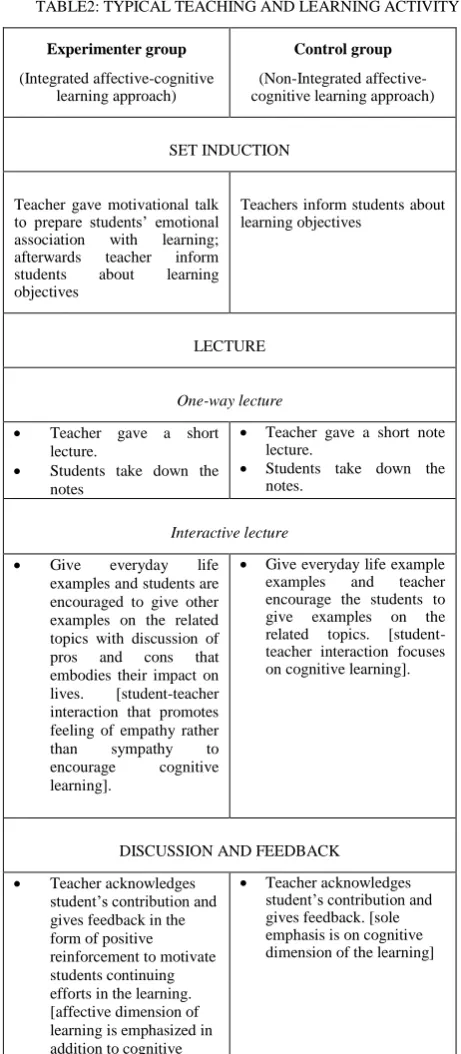
The subject taught by the teacher in the study was mechanics of material (mechanics of rigid body) to diploma level student in Universiti Tun Hussein Onn Malaysia (UTHM). The topics covered in this semester were normal force (stress and stain), transverse force (beam bending), torsion, short member in compression and deflection respectively. Students in both classes had the same instructor, course content, materials and notes [35]. The only difference between the two groups was the teaching and learning technique; i.e. the integrated affective-cognitive learning approach was taught to the experimental group. The difference between both techniques is illustrated in table 2. At the end of the semester, students were prescribed the post test which consists of the same items as the pre-test.
TABLE2: TYPICAL TEACHING AND LEARNING ACTIVITY
Experimenter group
(Integrated affective-cognitive learning approach)
Control group
(Non-Integrated affective-cognitive learning approach)
SET INDUCTION
Teacher gave motivational talk to prepare students‘ emotional association with learning; afterwards teacher inform students about learning objectives
Teachers inform students about learning objectives
LECTURE
One-way lecture
Teacher gave a short lecture.
Students take down the notes
Teacher gave a short note lecture.
Students take down the notes.
Interactive lecture
Give everyday life examples and students are encouraged to give other examples on the related topics with discussion of pros and cons that embodies their impact on lives. [student-teacher interaction that promotes feeling of empathy rather than sympathy to encourage cognitive learning].
Give everyday life example examples and teacher encourage the students to give examples on the related topics. [student-teacher interaction focuses on cognitive learning].
DISCUSSION AND FEEDBACK
Teacher acknowledges student‘s contribution and gives feedback in the form of positive reinforcement to motivate students continuing efforts in the learning. [affective dimension of learning is emphasized in addition to cognitive
Teacher acknowledges student‘s contribution and gives feedback. [sole emphasis is on cognitive dimension of the learning]
emphasis]
PRACTICE BY STUDENTS
Students doing exercises Students doing exercises
CLOSURE
A summary of what has been learnt; reflection by students; teachers highlighted students strengths and potentials while giving positive feedback on personality to promote improvement, comments of self worth and contribution of personality in every field of life.
Students were given assignments.
A summary of what has been learnt and what to be learnt; explanation on next assignments.
At the end of the semester, students received the post test which consists of the same tools.
3 RESULT AND DISCUSSION
[image:4.595.30.261.238.766.2]Before discussing the results obtained from the observations; data from the pre-test that indicates group equivalence will be presented first. Table 3 indicates that there is no statistically significant difference on academic achievement between the groups and the groups are assumed to be equivalent with respect to their initial academic achievement (t = -1.180, d.f = 66, p > 0.05).
TABLE 3: T TEST RESULT ON MEAN DIFFERENCE OF ACADEMIC ACHIEVEMENT (CGPA) BETWEEN GROUPS
Levene‘s test for equal variance t-test for equality of Means
F P t df P (2-tailed)
1.937 .169 -1.180 66 .242
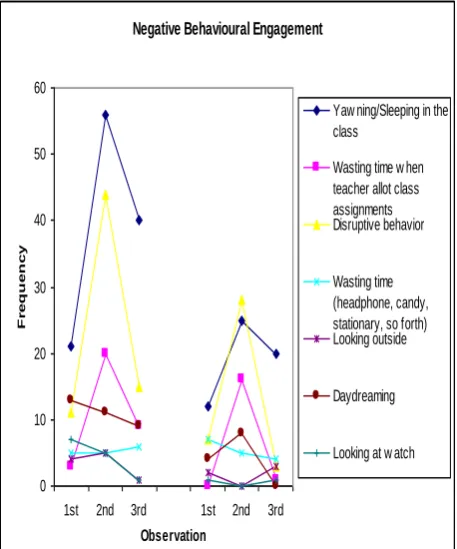
[image:4.595.325.542.439.502.2]The types of behaviors and the related frequencies and occurrence of the behavior are given in table 4 while the graphic representation is given in figure 2.
TABLE 4: TYPES OF AND FREQUENCIES OF THE BEHAVIORS
Observation 1 Observation 2 Observation 3
Behavioral indicators
G 1 G 2 G 1 G 2 G 1 G 2
Positive Behavioral Engagement
Asking questions voluntarily
5 17 9 6 1 2
Responding voluntarily
9 11 6 7 3 3
Responding only when teacher pose questions
7 25 34 36 11 25
Interacting with classmates
8 20 16 29 13 34
Writing down notes 34 36 34 36 31 36
Giving opinions freely
Submitting class assignments on time
17 25 12 36 33 36
Negative Behaviora1 Engagement
Yawning/Sleeping in the class
21 12 56 25 40 20
Wasting time when teacher allot class assignments
3 0 20 16 9 1
Disruptive behavior 11 7 44 28 15 3
wasting time (headphone, stationary, so-forth)
5 7 5 5 6 4
looking outside 4 2 5 0 1 3
Daydreaming 13 4 11 8 9 0
looking at watching 7 1 5 0 1 1
Key: G1 is control group and G2 is experimenter group
[image:5.595.321.550.75.350.2]From table 4 and figure 2, it is observed that experimental group exhibits higher frequency of positive behavioral engagements and less frequency of negative behavioral engagements. Prominent positive behavior indicators include interacting with classmates and submitting class assignments on time. The two positive behaviors indicate persistence in hard-work, positive attitude towards the subject as well as their sense of belongingness with their fellow classmates [15]. The experimental group was also exhibits more teachers –student interactions and class participations compared to the control group. Whereas, the control group was only active they have to such as when the teacher poses a question.
Figure 2: Graphic illustration on positive behavioral engagement between groups.
Figure 3 Graphic illustration on negative behavioral engagement between groups.
As far as the negative behavioral engagement is concerned, the prominent types of behavior are yawning, sleeping in the class and disruptive behavior. In general, the frequency of negative behavior was high among all observations in the control group whereas the frequency in experimental group was relatively low. The high frequency of negative behaviors indicates students‘ disengagement in learning tasks in general [36].
Research has revealed that positive behavioral engagement is associated with academic achievement and resilient students and motivation [13-15], [37-38]. Furthermore, students who positively engaged during classroom activities tend to reduce the likelihood of distracting and deviant behaviors [39-40].
The result also indicated that the use of integrated affective-cognitive learning approach keep the students motivated and engaged during their instructional and learning process. The approach has also provided a learning environment that may have promoted positive attitude towards learning. This conclusion is based on previous work that finds supportive learning environment which encourages learning responsibilities can develop a positive attitude towards the subject because it is not just what is taught, but how the material is taught influences the learning [41].
4 CONCLUSION
The study has established the worthiness of the integrated affective-cognitive learning approach in promoting positive behavioral engagement among engineering students based on the observational data. Lowering of negative engagement was also observed among students undergoing the integrated approach which further supports positive impact of the approach. Higher positive engagement and lower negative Positive Behavioural Engagement
0 5 10 15 20 25 30 35 40
1st 2nd 3rd 1st 2nd 3rd
Observation
F
r
e
q
u
e
n
c
y
Asking questions voluntarily
Responding voluntarily
Responding only w hen teacher pose questions
Interacting w ith classmates
Writing dow n notes
Giving opinions freely
Submitting class assignments on time
Negative Behavioural Engagement
0 10 20 30 40 50 60
1st 2nd 3rd 1st 2nd 3rd
Observation
F
r
e
q
u
e
n
c
y
Yaw ning/Sleeping in the class
Wasting time w hen teacher allot class assignments Disruptive behavior
Wasting time (headphone, candy, stationary, so forth) Looking outside
Daydreaming
[image:5.595.46.275.450.722.2]engagement indicate positive attitude towards learning in general. Since, learning in past studies has been found to be not only associated with cognition but also with emotion. Therefore, the integrated approach which supports positive emotion as indicated by the positive behavioral engagements is expected to enhance students‘ learning experience making teaching more efficient and learning more effective. Future studies could look at the mediating effect of positive behavioral engagement and academic achievement.
ACKNOWLEDGEMENT
The authors would like to express their gratitude to the Ministry of Higher Education (MOHE) for supporting this research under the Fundamental Research Grant Scheme (FRGS) Vot 0757 and also to center of graduate studies (CGS) of Universiti Tun Hussein Onn Malaysia (UTHM) for providing the financial support for attending this conference.
REFERENCE
[1] J. J Appleton, S. L. Christenson, & M. J. Furlong, ―Student engagement with school: critical conceptual and methodological issues of the construct. Psychology in the Schools”, Vol. 45(5), 2008, Wiley Periodicals, Inc. Published online in Wiley InterScience.
[2] S. Shi, ―Teacher Moderating and Student Engagement in Synchronous Computer Conferences‖.Journal of Online Learning and Teaching.
Vol. 6, No. 2, June 2010.
[3] B, Cazden, ―Classroom Discourse: the Language of Teaching and Learning”, (2001), Heinemann, Portsmouth: NH.
[4] Furrer, & E. A. Skinner, ―Sense of relatedness as a factor in children‘s academic engagement and performance‖. Journal of Educational Psychology, 95, 148–162, 2003.
[5] J. A. Fredricks, P. C. Blumenfeld & A. H. Paris, ―School engagement: Potential of the concept, state of the evidence‖. Review of Educational Research, 74, 59–109, 2004.
[6] M. Wang, ―Adolescents' Perceptions of School Environment, Engagement, and Academic Achievement in Middle School‖.
American Educational Research Journal, September 2010, Vol. 47, No. 3, pp. 633–662. DOI: 10.3102/0002831209361209
[7] E Chapman, ―Alternative approaches to assessing student engagement rates. Practical Assessment”, Research & Evaluation, 8(13), 2003.
Retrieved December 4, 2011 from
http://PAREonline.net/getvn.asp?v=8&n=13
[8] M. F. Tinio, Academic Engagement Scale for Grade School Students.
The Assessment Handbook, Vol. 2, pp. 64-75, ISSN 2094-1412, PEMEA, 2009.
[9] M. J. Furlong, A. D. Whipple, G. St. Jean, J. Simental, A. Soliz, & S. Punthuna, ―Multiple contexts of school engagement: Moving towards a unifying framework for educational research and practice‖. California School Psychologist, 8, 99-114, 2003.
[10] J. Reeve, H. Jang, D. Carrell, S. Jeon & J. Barch, ―Enhancing Students‘ Engagement by Increasing Teachers‘ Autonomy Support.
Motivation and Emotion”, Vol. 28, No. 2, June 2004.
[11] M.A. Griffin, S.K. Parker, & A. Neal, ―Is behavioral engagement a distinct and useful construct‖? In Press Industrial and Organizational Psychology: Perspectives on Science and Practice, Volume 1, Issue 1 (2008)
[12] R. M. Ryan, & E. L. Deci,. ―Overview of self-determination theory: An organismic dialectical perspective”. In E. L. Deci & R. M. Ryan (Eds.), Handbook of self-determination research, 2002 (pp. 3–33). Rochester, NY: University of Rochester. J. D Finn & D. A. Rock, ‖Academic Success among Students at Risk for School Failure‖.
Journal of Applied Psychology, 1997, 82, 221-234.
[13] G. D. Borman, & L. T. Overman, ―Academic Resilience in Mathematics among Poor and Minority Students‖. Elementary School Journal, 104, 177-195. 2004.
[14] S. L, Christenson, A. L. Reschly, J. J. Appleton, S. Berman, D. Spangers, & P. Varro, ―Best Practices in Fostering Students Engagement”. 2008 In A. Thomas & J. Grimes (Eds). Best Practices in Psychology V (pp. 1099-1120). Washington, DC: National Association of School Psychologists.
[15] J.S. Lee, ―School Socialization Style, Student Engagement, and Academic Performance”. Ph.D. Thesis, 2008.
[16] J. M. Dirk, ―New Directions for Adults and Continuing Education‖, Jossey-Bass, A publishing unit of John Wiley & Sons, Inc no. 89, spring 2001.
[17] J. Strobel, C. W. Morris, L. Klingler, R.C. Pan, M. Dyehouse, & N. Weber, (2011). Engineering as a Caring and Empathetic Discipline: Conceptualizations and Comparisons. Proceedings of the Research in Engineering Education Symposium 2011 – Madrid
[18] S. M. Malcom, ―The Human Face of Engineering. Journal Of Engineering Education, Special Issue: Educating Future Engineers‖:
Who, What, How, 97 (3), 237-238, 2008.
[19] R. W. Picard, S. Papert, W. Bender, B. Blumberg, C. Breazeal, D. Cavallo, T. Machover, M. Resnick, D. Roy, & C. Strohecker, ―Affective learning- A Manifesto‖, BT Technology Journal, Volume 22 Issue 4, October 2004.
[20] I.J Putt and F. R. Annesley, ―Affective Development in Primary Students: An Instruments for Teachers and Students use in the Measurement of Affective Development in Primary Students‖, 2009.
Retrieved from 26, February, 2011 from
http://www.merga.net.au/documents/RP_Putt_Annesley_1993.pdf [21] M. Besterfield-Sacre, L.J. H. Shuman, R.M. WolfeClark, P. Yildirim,
―Development of a Work Sampling Methodology for Behavioral Observations: Application to teamwork‖. Journal of Engineering Education, Volume. 96. Issue. 4. October 2007.
[22] A.M. Turner, ―Voices of the People: Experiences with Two-Way Interactive Television in the City Colleges of Chicago‖. Unpublished Doctoral Dissertation, Northern Illinois University, 2000.
[23] M. Alias, & N.A. Hafir, ―The relationship between academic self-confidence and cognitive performance among engineering students‖. Proceedings of the Research in Engineering Education Symposium 2009, Palm Cove, QLD
[24] J.J. Shaughnessy, E.B. Zechmeister, and J.S. Zechmeister, ―Research Methods in Psychology”, 2002. (6th ed.). New York: McGraw- Hill, Inc.
[25] M.Alias & A. Tukiran. ―The Effect of Teacher Generated Concept Maps on the Learning of Linear Motion Concepts in Elementary Physics‖. Journal of Turkish Science Education, Volume. 7, issue. 3, September 2010.
[26] J.W Creswell and V.L.P. Clark, Educational Research. ―Planning, Conducting, and Evaluating Qualitative and Quantitative Research‖, (2011). 2nd e.d. New Jersey: Pearson.
[27] K.F. Krista, ―Impact OF Journaling on Students‘ Self-efficacy and Locus of Control‖. Insight: A journal of Scholarly Teaching: Vol 3, 2008.
[28] C. J. Goodwin, ―Research in Psychology: Methods and Design”. (6th ed.). ISBN: 978-0-470-52278-3. John Wiley and Sons, 2009. [29] Y., Yusof., R. Roddin, H. Awang, M. Mohamed, N. Ahmad, ― An
innovative multi methods approach to data collection in conducting a case study in Malaysian polytechnics‖. Journal of Technical Education and Training (JTET). Vol. 4, No. 2, Dec 2012, ISSN. 2229-8932. [30] K. J. Searle, ―Participant Observation: A Way of Conducting
Research‖. 1993, ERIC, ED359259, 11.
[31] B. Atweh, C. Christensen, & T. Cooper, ―The Structured Classroom Interactions Schedule (SCIS): A Validation Study‖. Conference
Proceedings herd at Hawkaid Conference. Centre, University of Western Sidney, 4-8 July, 1992.
[32] N. Phuong-Mai, C. Terlouw, A. Pilot, and J. Elliott, ―Cooperative learning that features a culturally appropriate pedagogy‖, British Educational Research Journal, 2009.6(35): pp 857-875.
[33] J.E. Ormrod, ―Educational Psychology: Developing Learners”. (3rd. ed.). Merrill Prentice Hall, Columbus, Ohio, 2000.
[34] L.A. Pervin, ―Personality: Theory and Research”. 2007, (10th. Ed.). New York: John Wiley & Sons, Inc.
[35] L. Kyei-Blankson, ―Enhancing Student Learning in a Graduate Research and Statistics Courses with Clickers‖. EDUCAUSE Quarterly (EQ). Volume 32, Number. 4, 2009.
[36] L., Overton & A.M. Sullivan, ―Non-Compliance in a Democratic Classroom‖: Is it Prevalent? Australian Association for Research in Education International Education Research Conference, OVE08528, Brisbane, Australia 2008.
[37] J. D. Finn, & D. A. Rock, Academic Success among Students at Risk for School Failure. Journal of Applied Psychology, 82, 221-234, 1997. [38] A.M. Dotterer, & K. Lowe, ―Classroom context, school engagement,
[39] B.K. Hamre, & R. C. Pianta, ―Early teacher-student relationships and the trajectory of children‘s school outcomes through eighth grade‖.
Child Development, 72, 625–638, 2001.
[40] H., Patrick, A. M. Ryan, & A. Kaplan, ―Early adolescents‘ perceptions of the classroom social environment, motivational beliefs, and engagement‖. Journal of Educational Psychology, 99, 83–98, 2007. [41] J. Bransford,, ―How People Learn: Brain, Mind, Experience, and